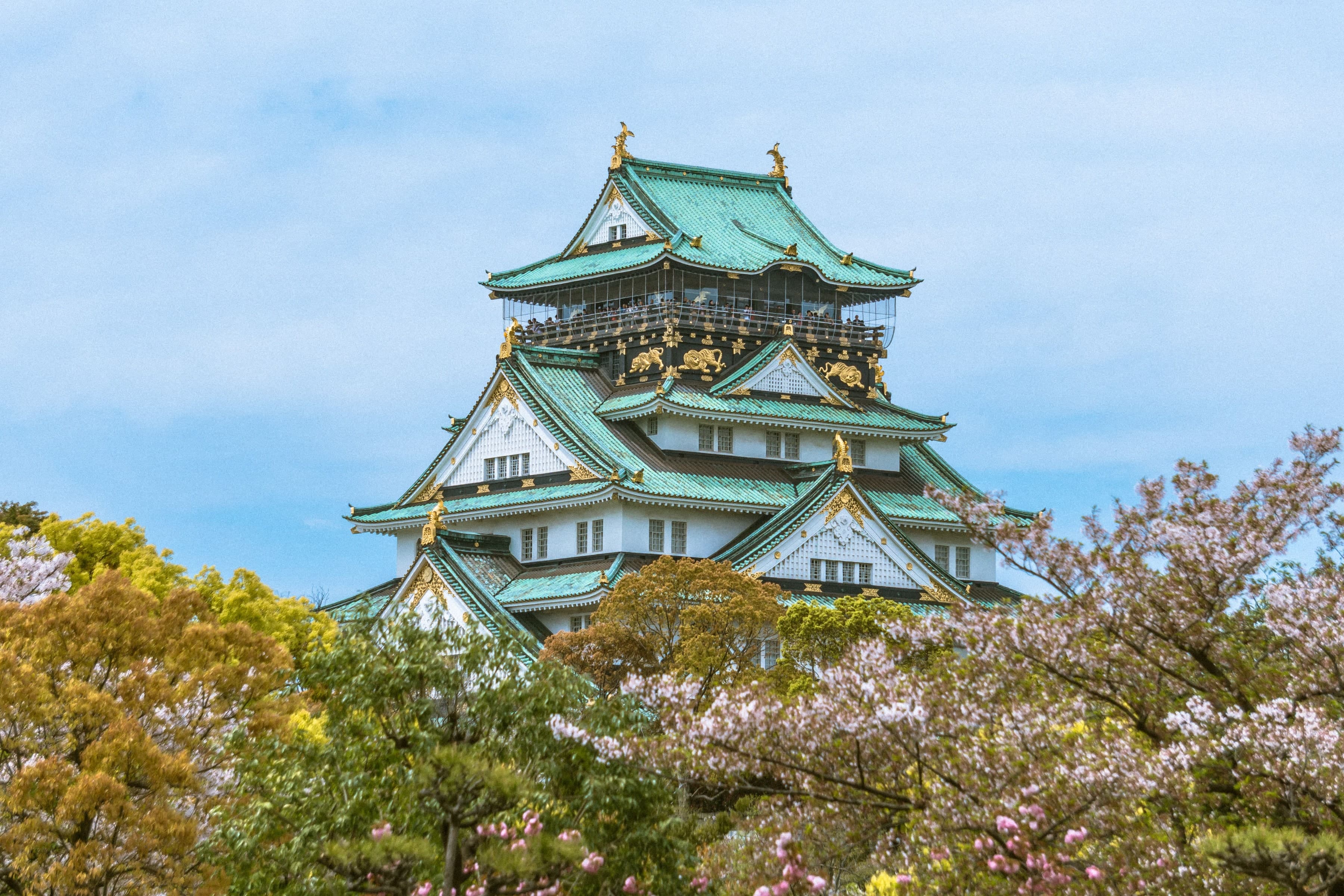
Osaka Castle's keep went up in 1931, paid for by its citizens; its giant walls are the Tokugawa shoguns' work of the 1620s; and Hideyoshi's castle, the first great one here, is still buried beneath them. Nine stops inside the walls, from Otemon and the Octopus Stone to the keep, the newly opened buried wall, the Yamazato-maru where the Toyotomi fell, Gokurakubashi and Aoyamon. Your pace, your order, no group and no schedule.
Start · Otemon Gate: The Shogun's Front Door
DirectionsStops
- 1
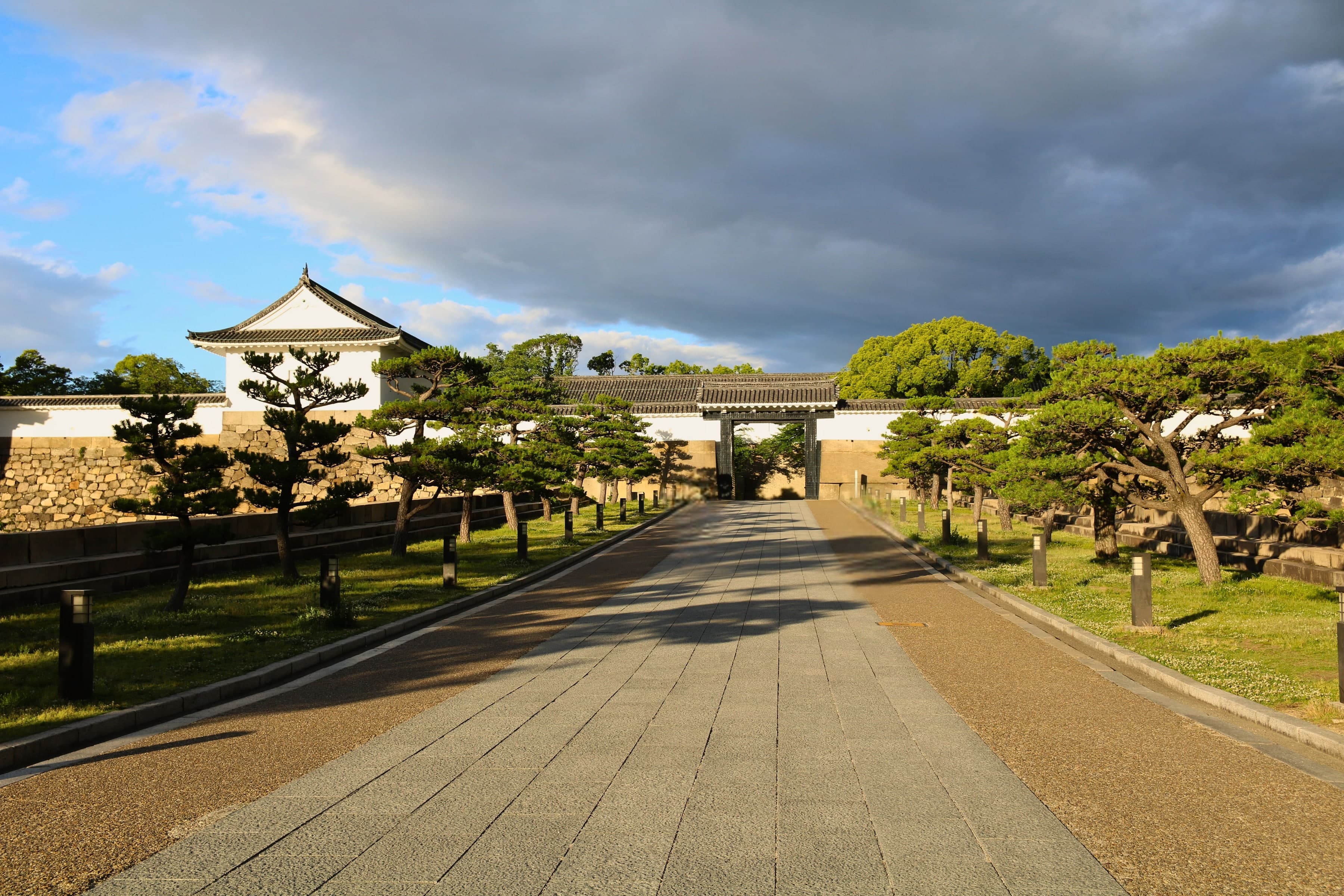
Otemon Gate: The Shogun's Front Door
Otemon is Osaka Castle's main gate, built in 1628 by the Tokugawa. Beside it, Sengan-yagura dates from 1620, one of the two oldest buildings in the park.
- 2
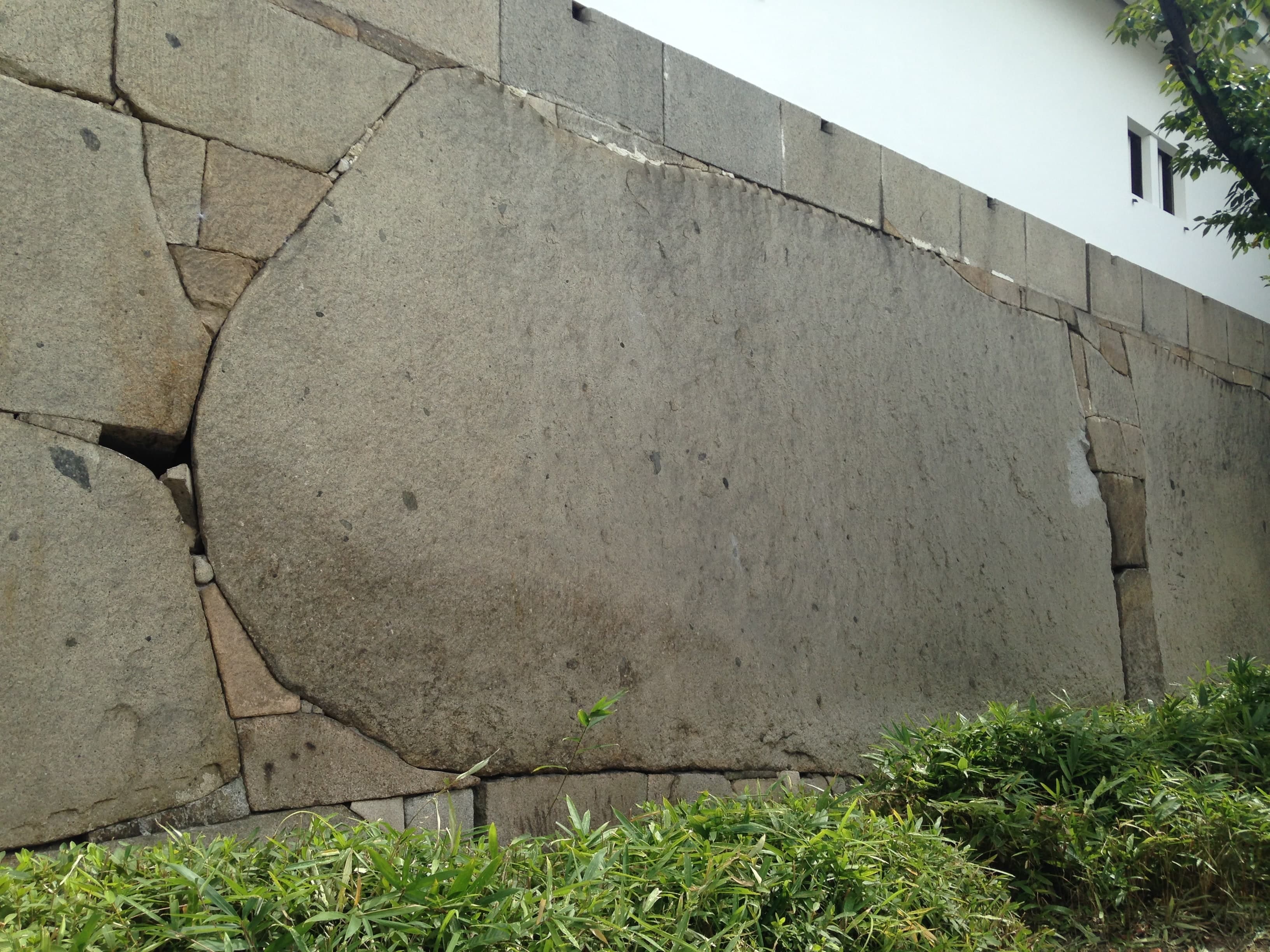
Otemon Masugata: One Boulder, Split in Two
The Otemon masugata is a walled square built to trap attackers. Two of its giant stones were cut from one boulder, and the Tamon-yagura gallery above is the only one of its kind left at the castle.
- 3
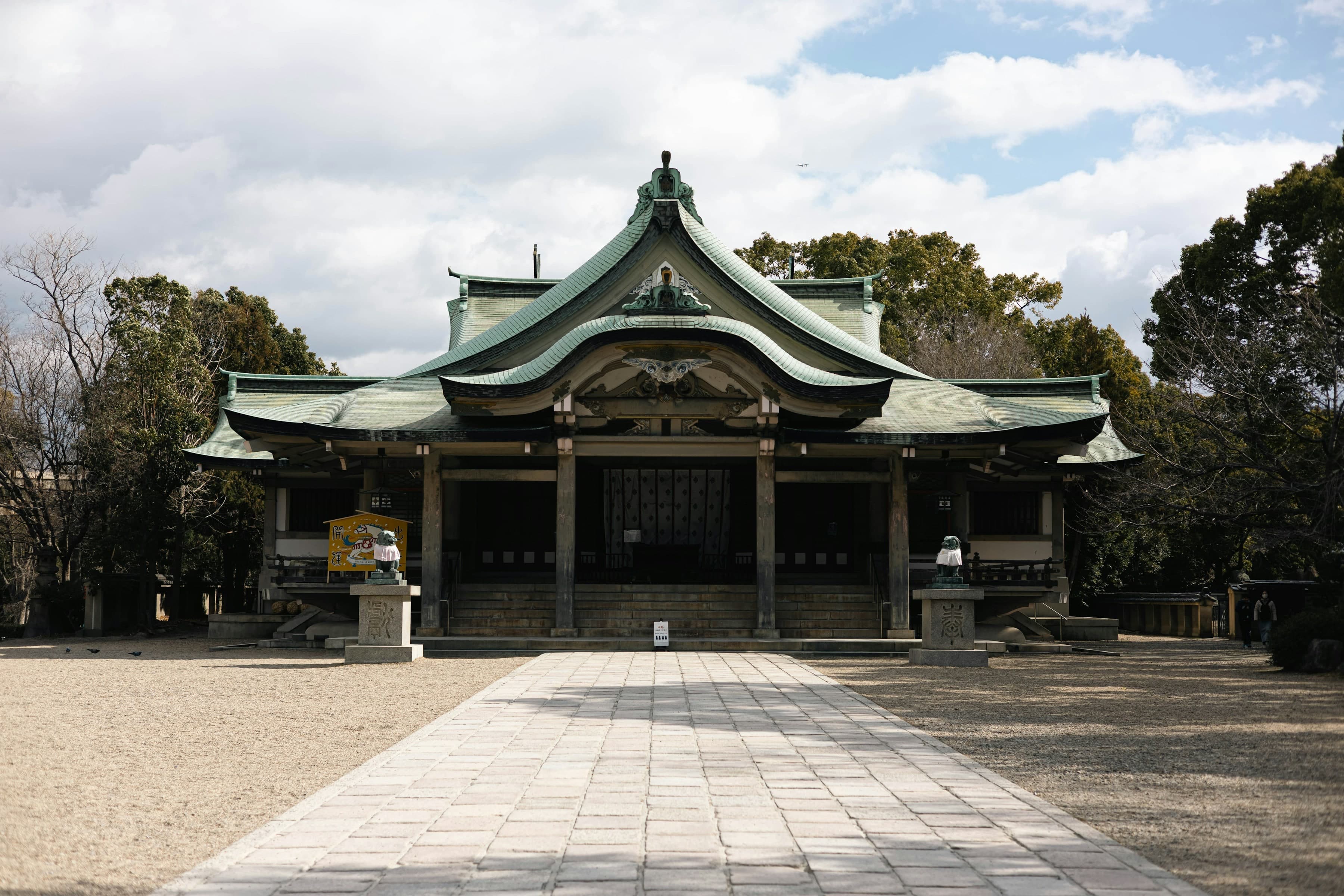
Hokoku Shrine: The Warlord Who Became a God
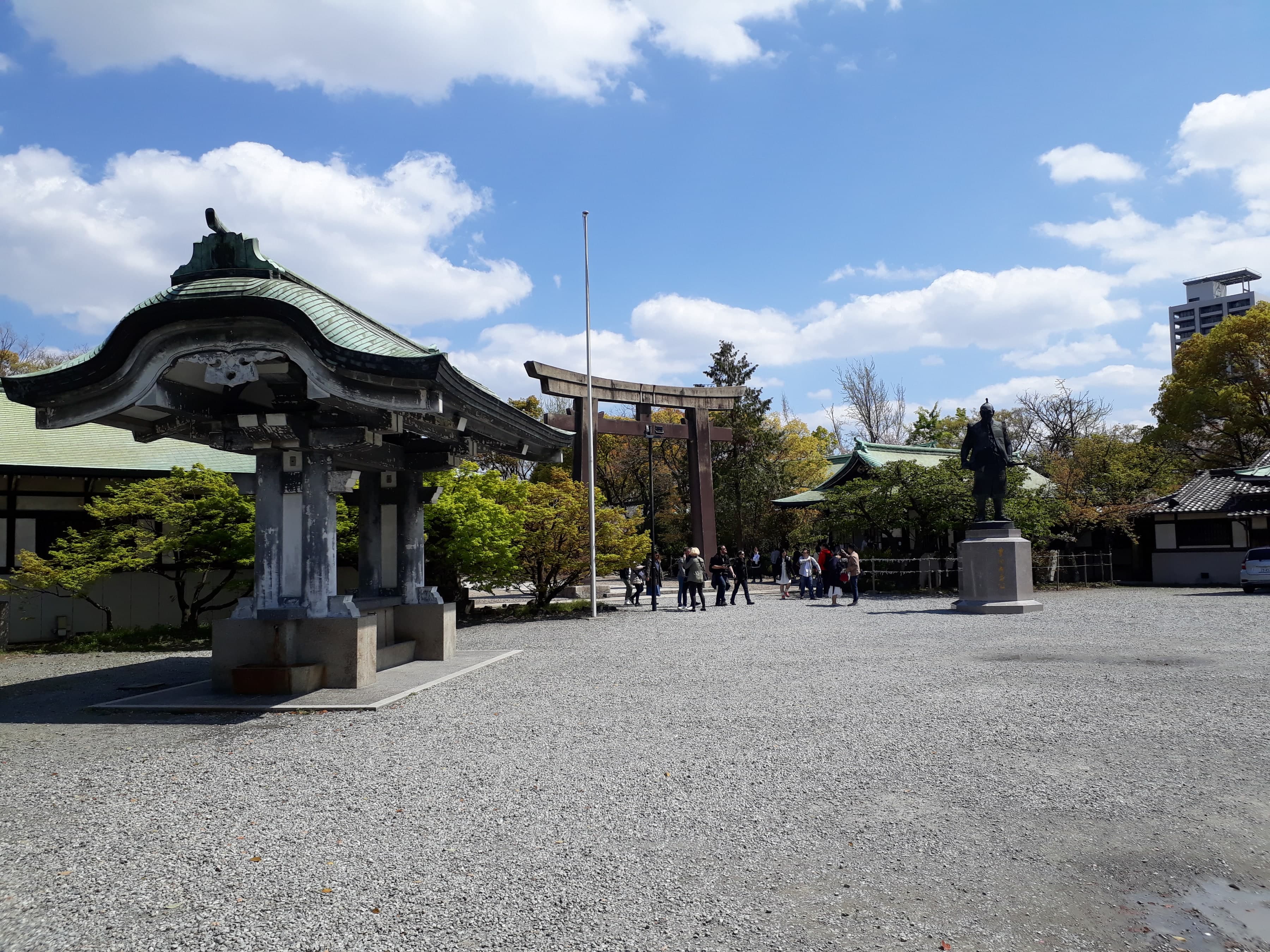
Hokoku Shrine honours Toyotomi Hideyoshi, who began the first great castle here in 1583 and was made a god after his death. His 2007 statue replaces one melted down for the war.
- 4
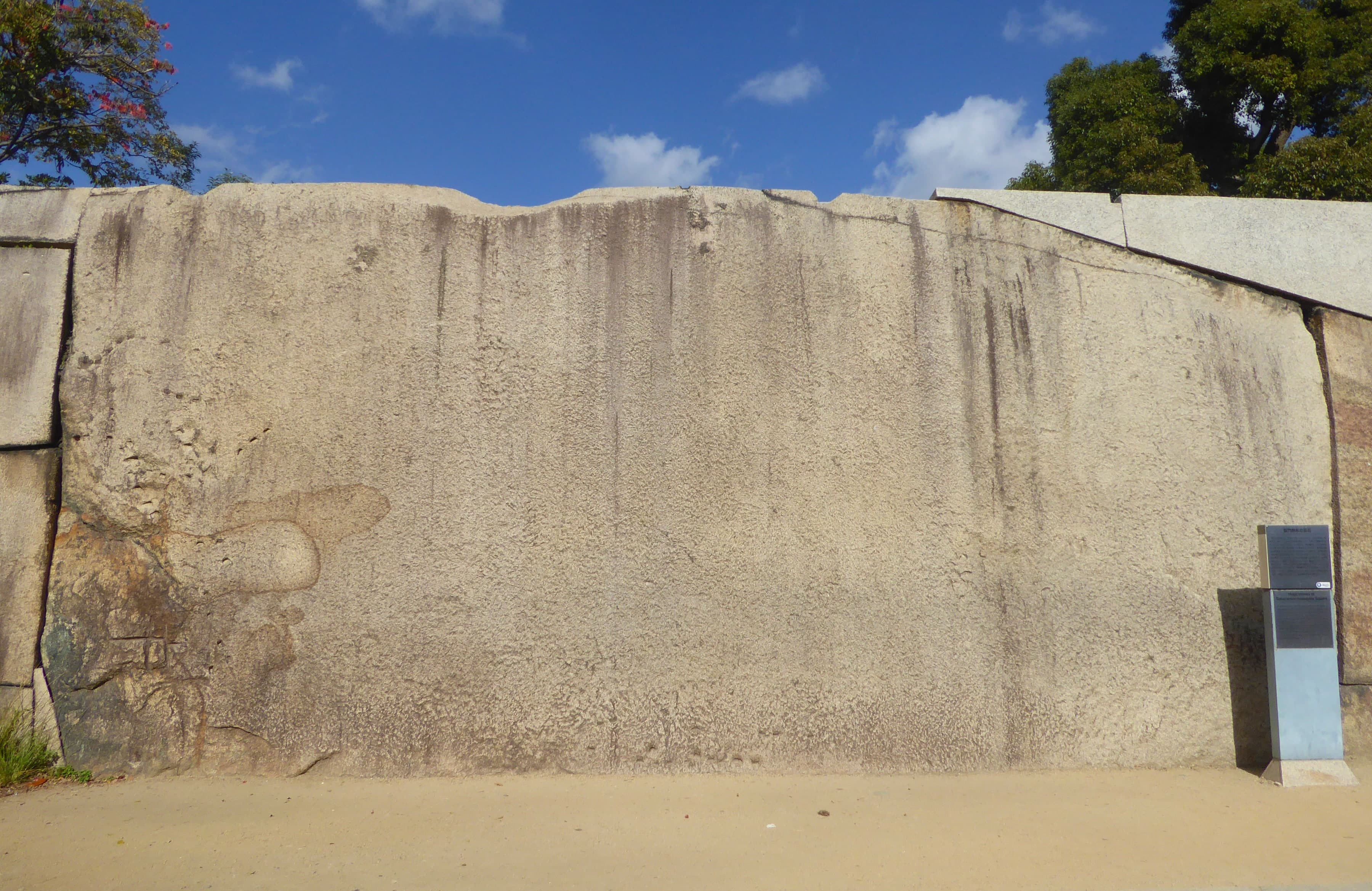
Sakuramon: The Octopus Stone
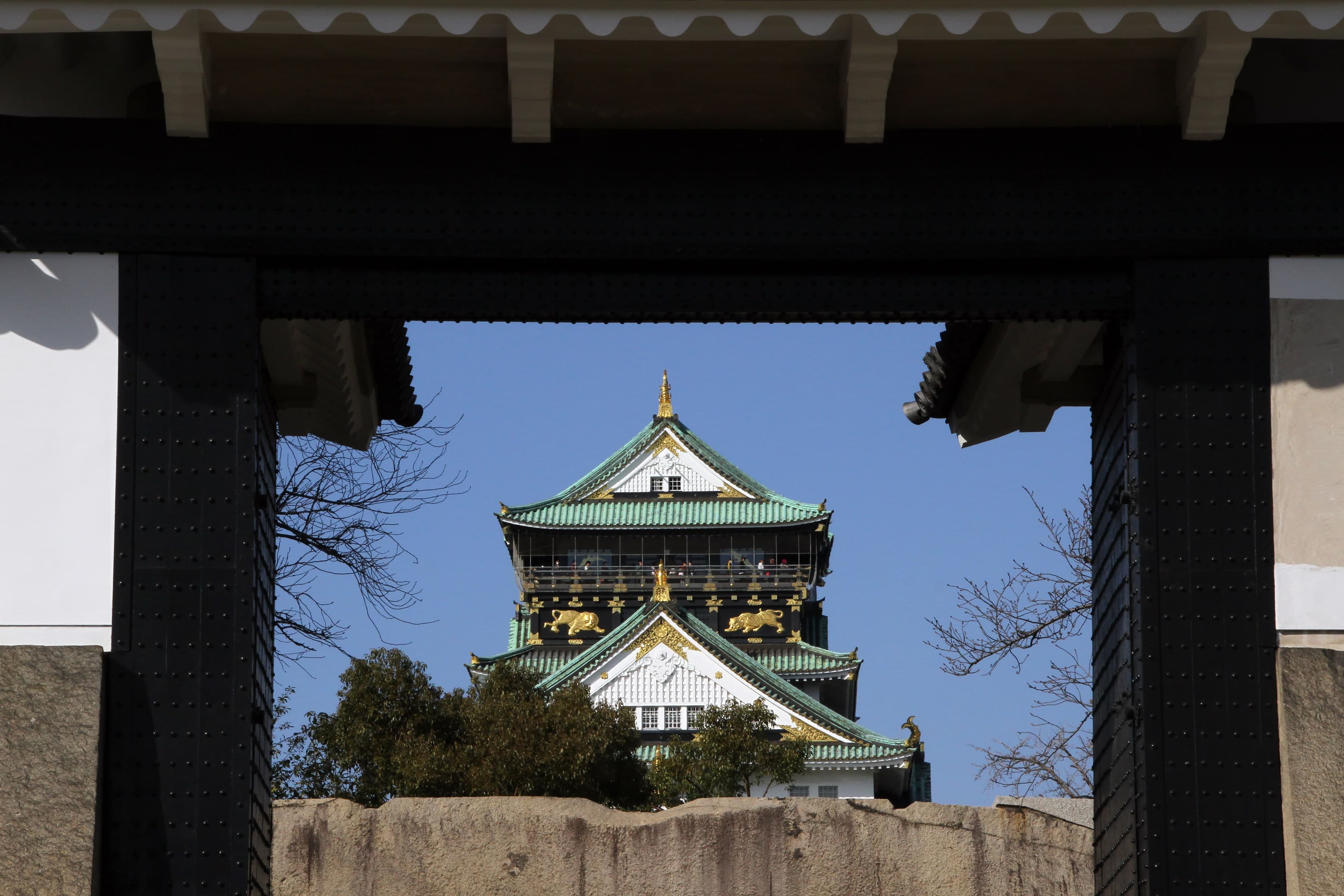
Sakuramon is the gate to the inner citadel, rebuilt by the Army in 1887. Inside it stands Takoishi, the Octopus Stone, about 108 tonnes and the largest stone in the castle.
- 5
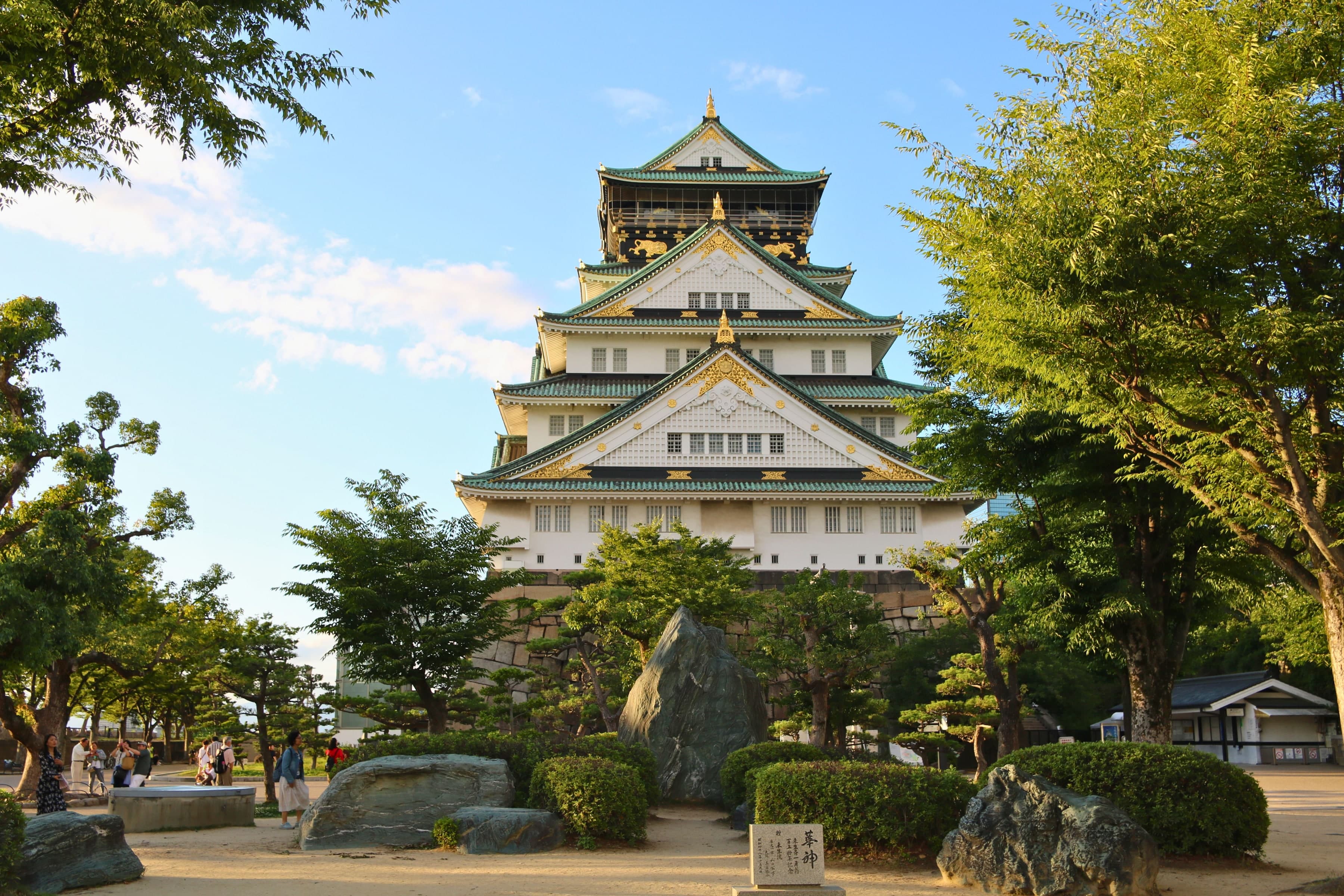
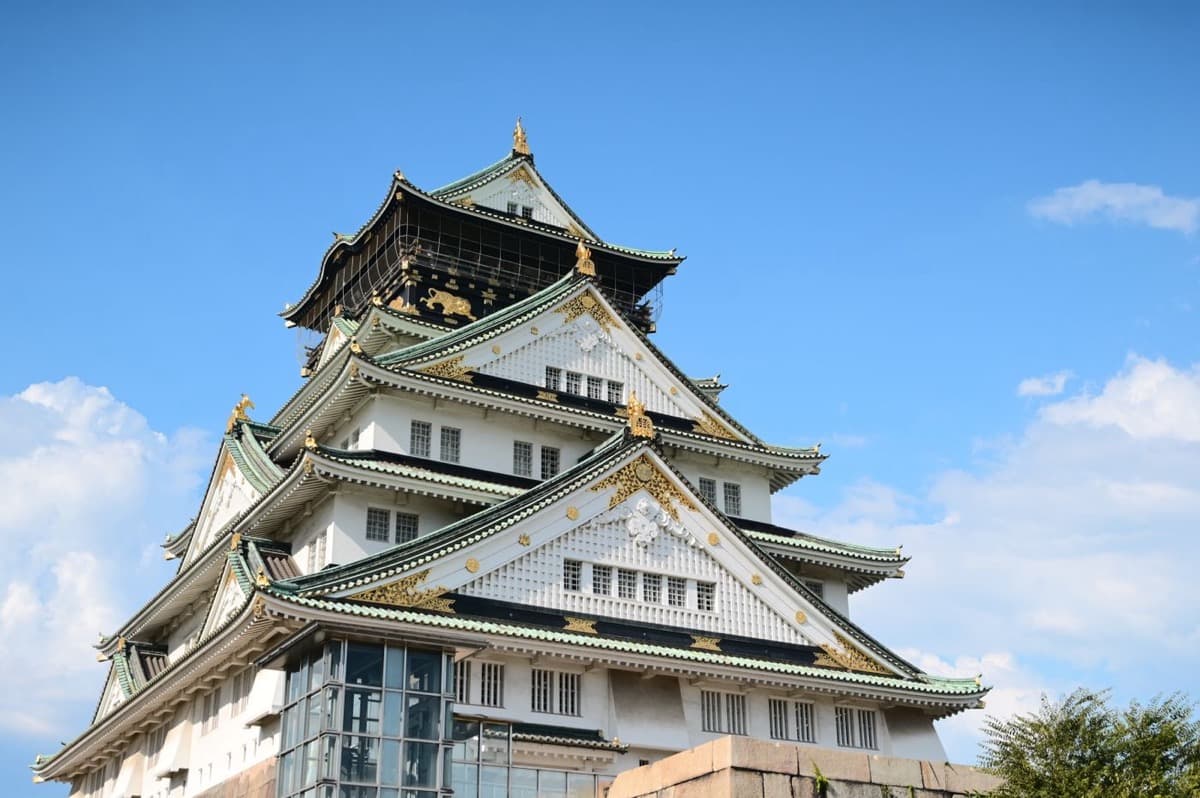
The Keep: The Tower Osaka Paid For
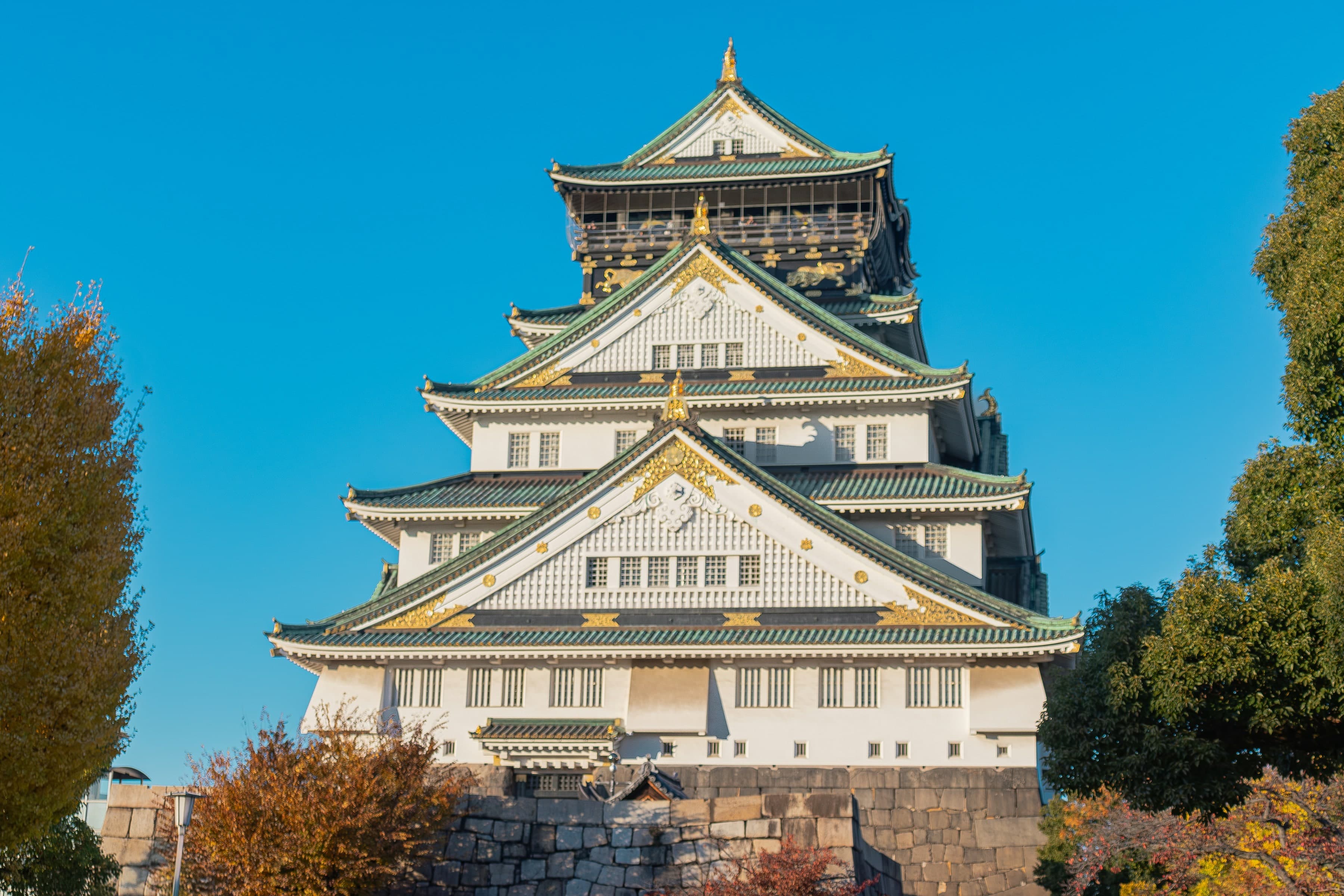
The keep is Osaka Castle's third, built in 1931 with money raised from the city's citizens. More than half the fund went on the Army headquarters next door.
- 6
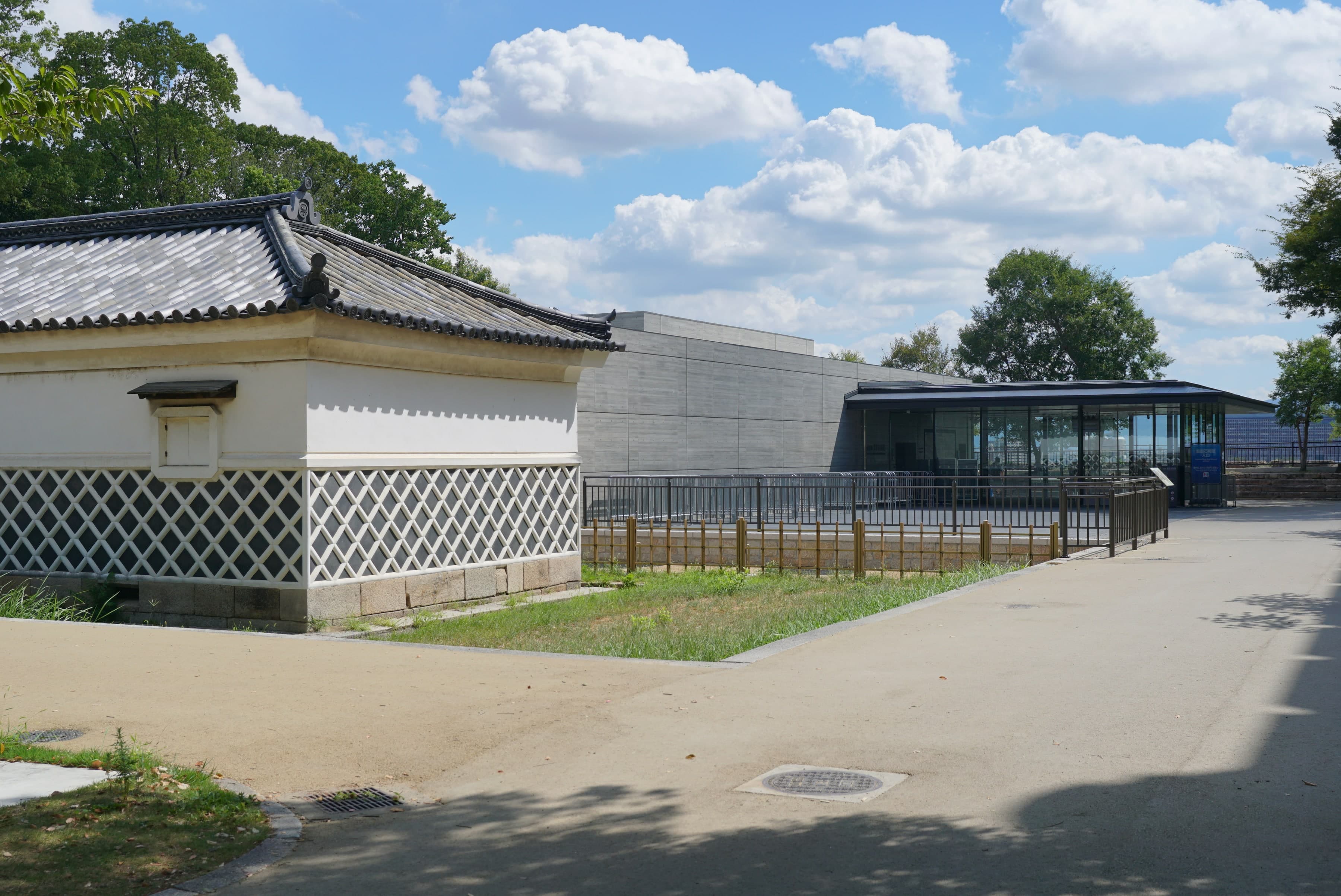
The Toyotomi Stone Wall Museum: The Castle Beneath the Castle
The Toyotomi Stone Wall Museum shows Hideyoshi's own castle wall, buried by the Tokugawa and found by a water main trench in 1984. Beside it stands the Kinzo, the shogunate's treasury.
- 7
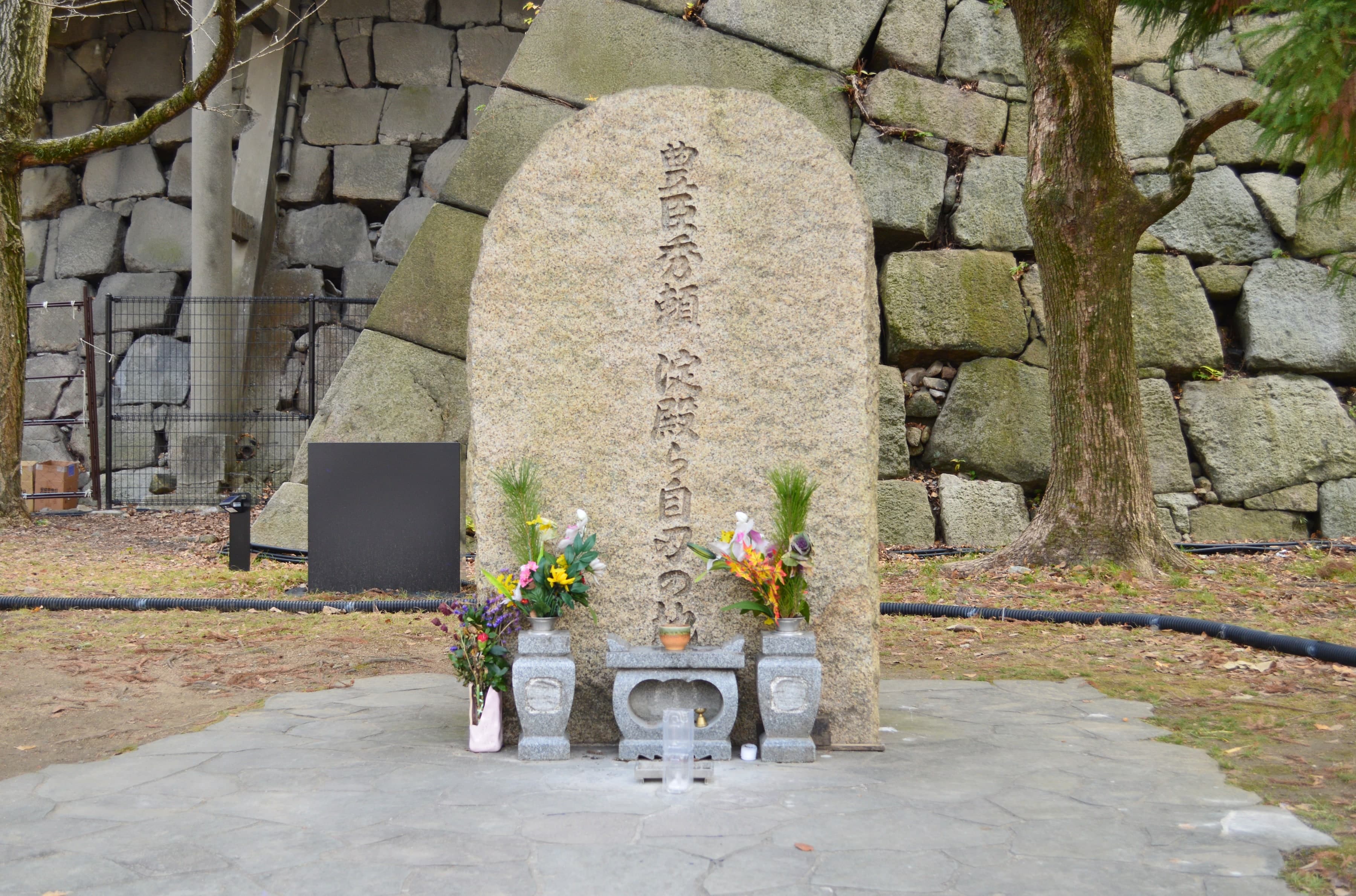
Yamazato-maru: Where the Toyotomi Story Ended
Yamazato-maru is the lower courtyard where most accounts place the deaths of Hideyori and his mother Yodo-dono in 1615, the day after the castle fell. Marks on its walls are thought to date from the 1945 air raids.
- 8
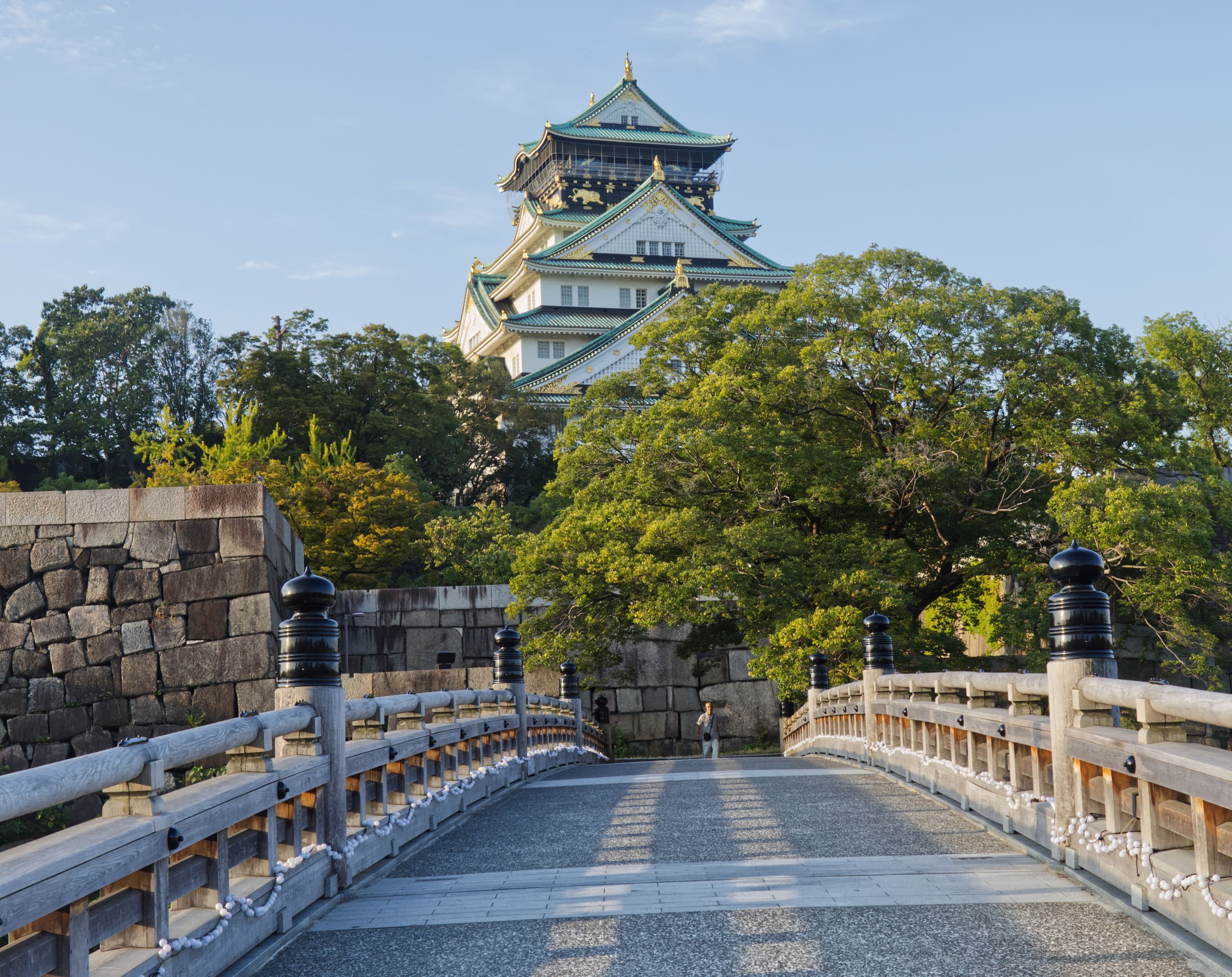
Gokurakubashi: The Bridge That Went to Lake Biwa
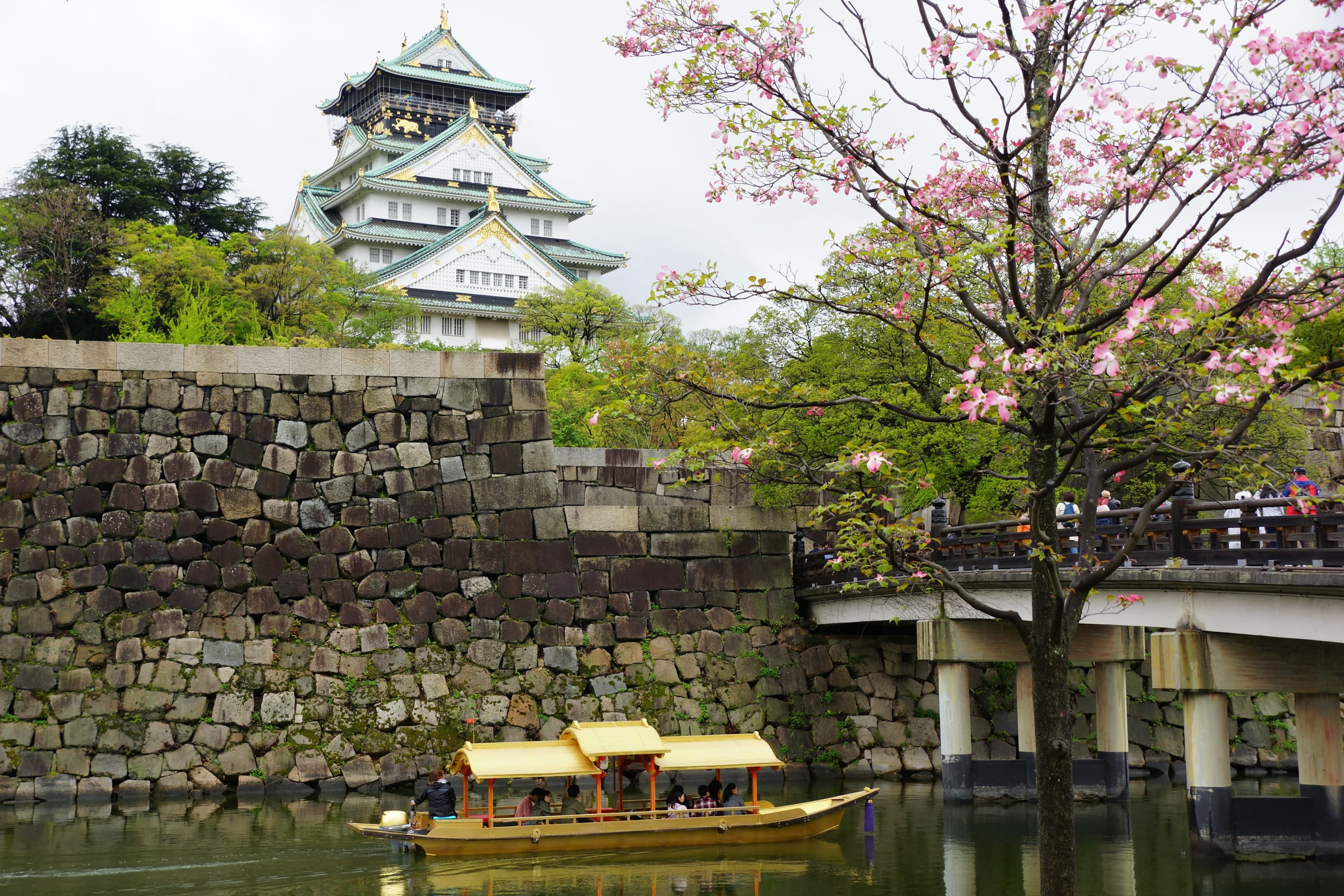
Gokurakubashi is the bridge over the north moat, with the classic view of the keep. Hideyoshi's gilded bridge here may survive as a gate on an island in Lake Biwa.
- 9
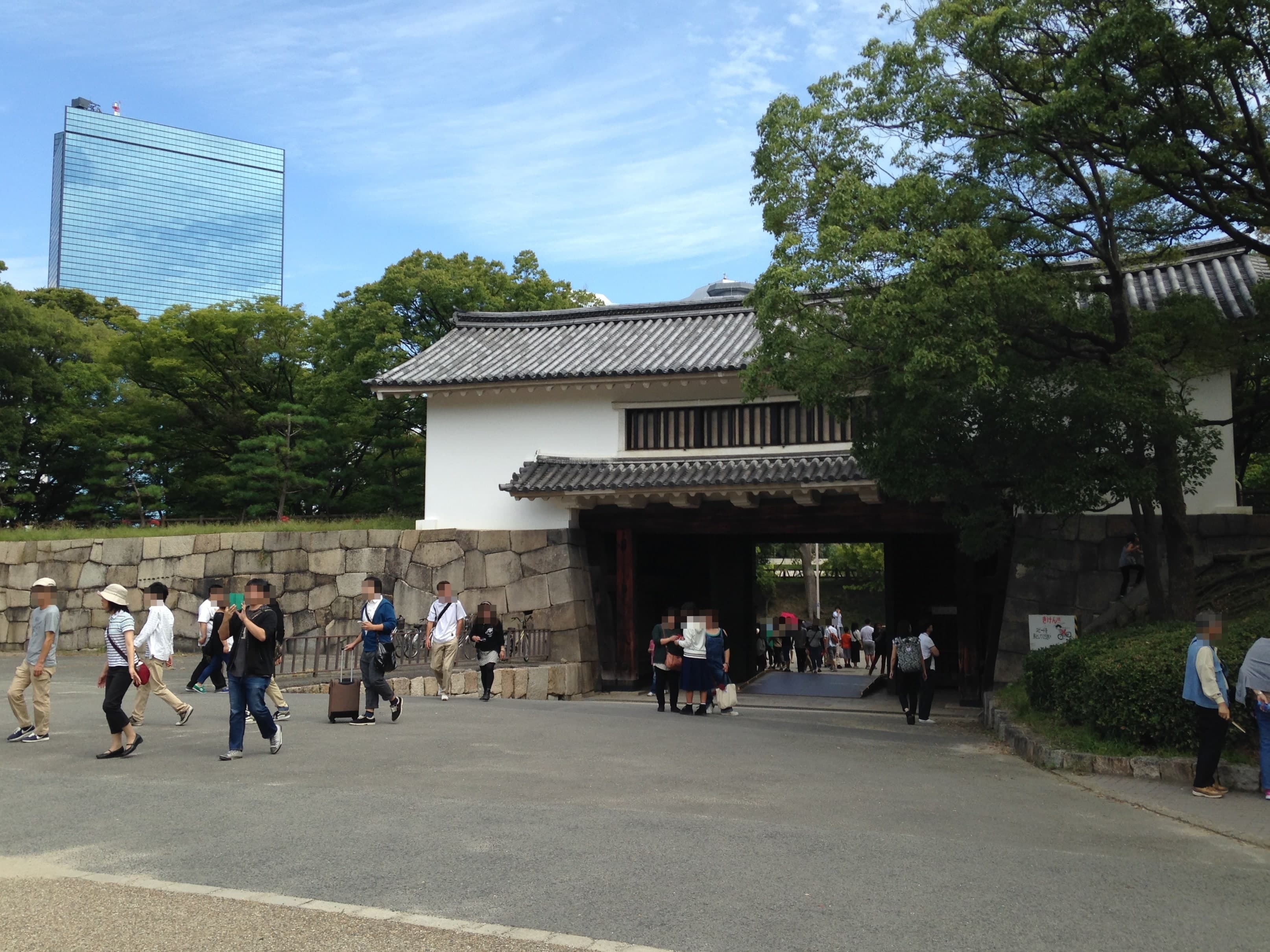
Aoyamon: The Arsenal and the Last Raid
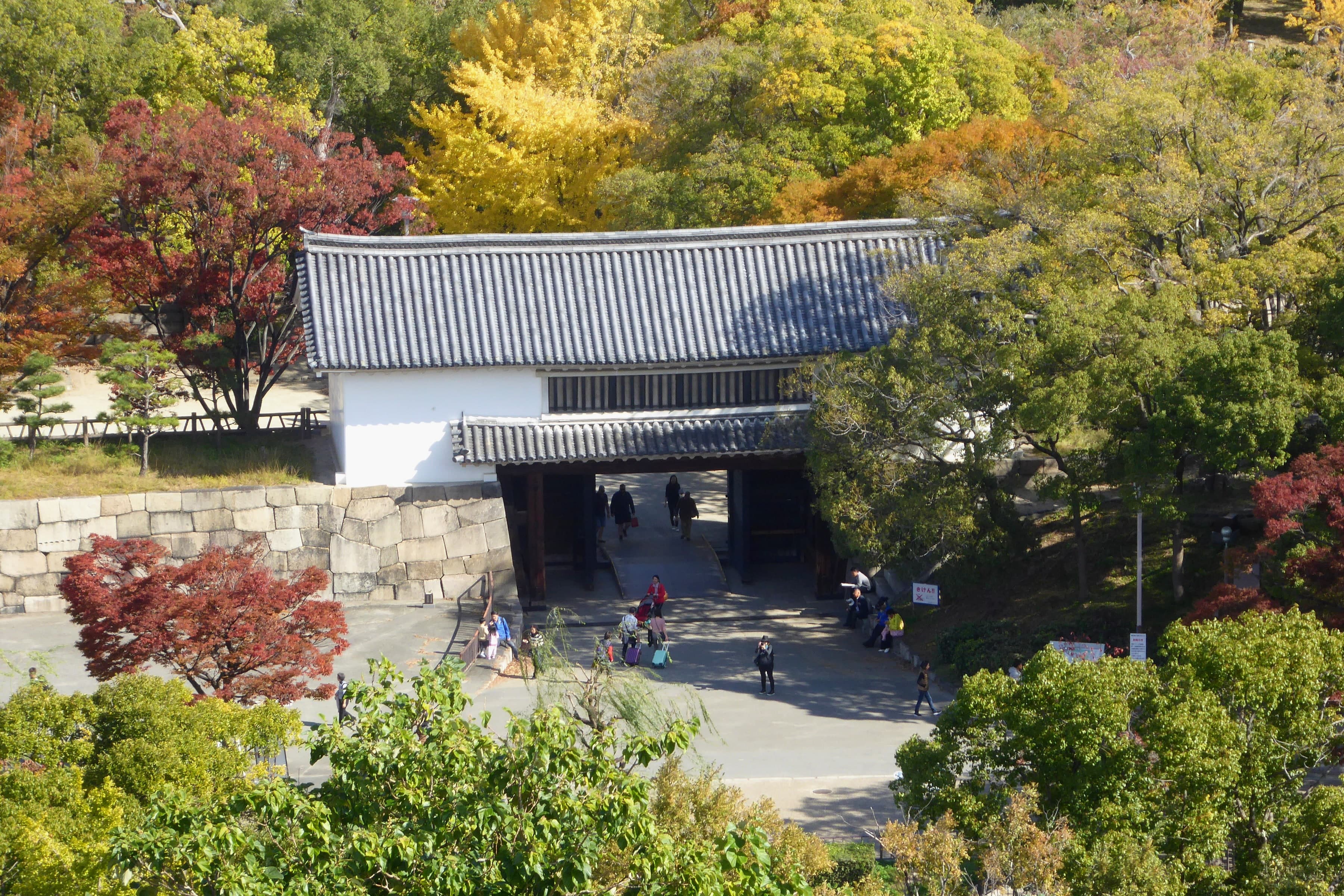
Aoyamon is the north-east gate, burned in 1945 and rebuilt in 1969. Beyond it stood the Osaka Army Arsenal, bombed on 14 August 1945, the day before Japan's surrender was announced.
Details
Best Time to Visit
Early morning is best. The park grounds are open around the clock, and early morning is when the gates, the causeway and the keep plaza are at their quietest, with soft light on the stone. On summer afternoons the plazas and causeways have little shade. Cherry blossom season, usually late March into early April, is spectacular and very crowded, especially around Nishinomaru Garden. After dark the keep is floodlit, but the carved marks and wartime scars are much easier to see in daylight.
Pro Tips
- •The keep (Main Tower) museum is open 9:00 to 18:00, last entry 17:30, and closed 28 December to 1 January. Adults pay 1,200 yen, which also covers the Toyotomi Stone Wall Museum; the two are separate buildings with separate ticket gates, so keep your ticket. Checked 18 September 2026 on osakacastle.net.
- •The Toyotomi Stone Wall Museum has no toilets inside and may close at short notice when the wall needs attention. Checked 18 September 2026 on osakacastle.net.
- •Nishinomaru Garden, the lawn west of the keep with Sengan-yagura and Inui-yagura at its corners, costs 300 yen for adults since 1 April 2026. It opens 9:00 to 17:00 from March to October and 9:00 to 16:30 from November to February, last entry 30 minutes before closing, and closes on Mondays (Tuesday when Monday is a holiday) and 28 December to 4 January. Checked 18 September 2026 on osakacastlepark.jp.
- •In autumn 2026 the interiors of Tamon-yagura and Sengan-yagura open on Saturdays, Sundays and holidays from 5 September to 29 November, and every day from 19 to 27 September, 10:00 to 16:30. Tickets (900 yen, including Nishinomaru Garden) are sold at the Nishinomaru Garden reception. Checked 18 September 2026 on the Osaka City site.
- •The golden Gozabune boats circle the inner moat in about 20 minutes from a pier just west of Gokurakubashi, 10:00 to 16:30, about 1,800 yen for adults, same-day tickets only. Checked 18 September 2026.
- •For a clear view of the keep from the Aoyamon end, climb the steps on the inner side of the wall beside the gate.
- •Taxis cannot drive into the park; the drop-off is at Otemon (checked 18 September 2026 on osakacastlepark.jp). The nearest stations are Tanimachi 4-chome for Otemon and JR Osaka Castle Park (Osakajokoen) for Aoyamon.
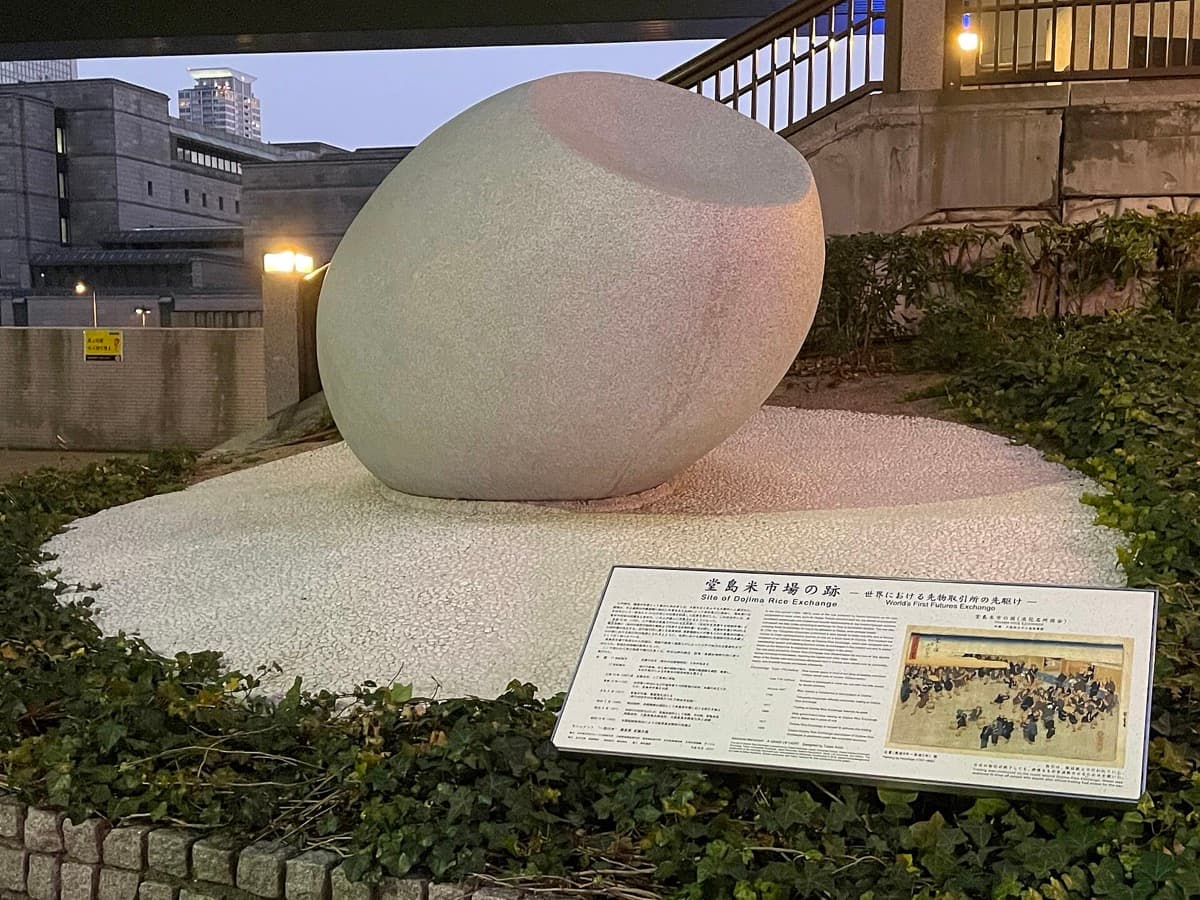
- •Osaka's old merchant heart, Dojima, where the Edo-period rice exchange traded, is about three kilometres west of the castle along the river; our Learn article on the Dojima Rice Exchange makes a good companion for an afternoon there.
- •The site of Sanada-maru, the outwork that defended the Toyotomi castle in the winter of 1614, is about 1.5 km south of the castle, around Osaka Meisei Gakuen in Tennoji Ward, where the ward has put up a memorial stone.
- •From 15 to 25 October 2026 the keep's south face hosts an evening projection-mapping show. Checked 18 September 2026 on osakacastlepark.jp.
Safety & Precautions
- •Osaka summers are hot and humid from June to September, and the causeways and plazas have little shade. Carry water and a hat.
- •There are steps on the way down into the Yamazato-maru and to Gokurakubashi. The route from Otemon to the keep is the gentlest; if you need to avoid steps, check the park's barrier-free map before you go.
- •Hokoku Shrine is a working shrine. Keep your voice down near the hall and don't block people praying.
- •Don't climb the faces of the stone walls, and keep away from the moat edges.
- •The park is very crowded at weekends and in cherry blossom season, and the Main Tower queue can be long by late morning.
Travel advisory: Exercise Normal Precautions (Level 1).
Gallery
Related Reading
Go deeper on what you'll see, hear, and walk through.
Overview
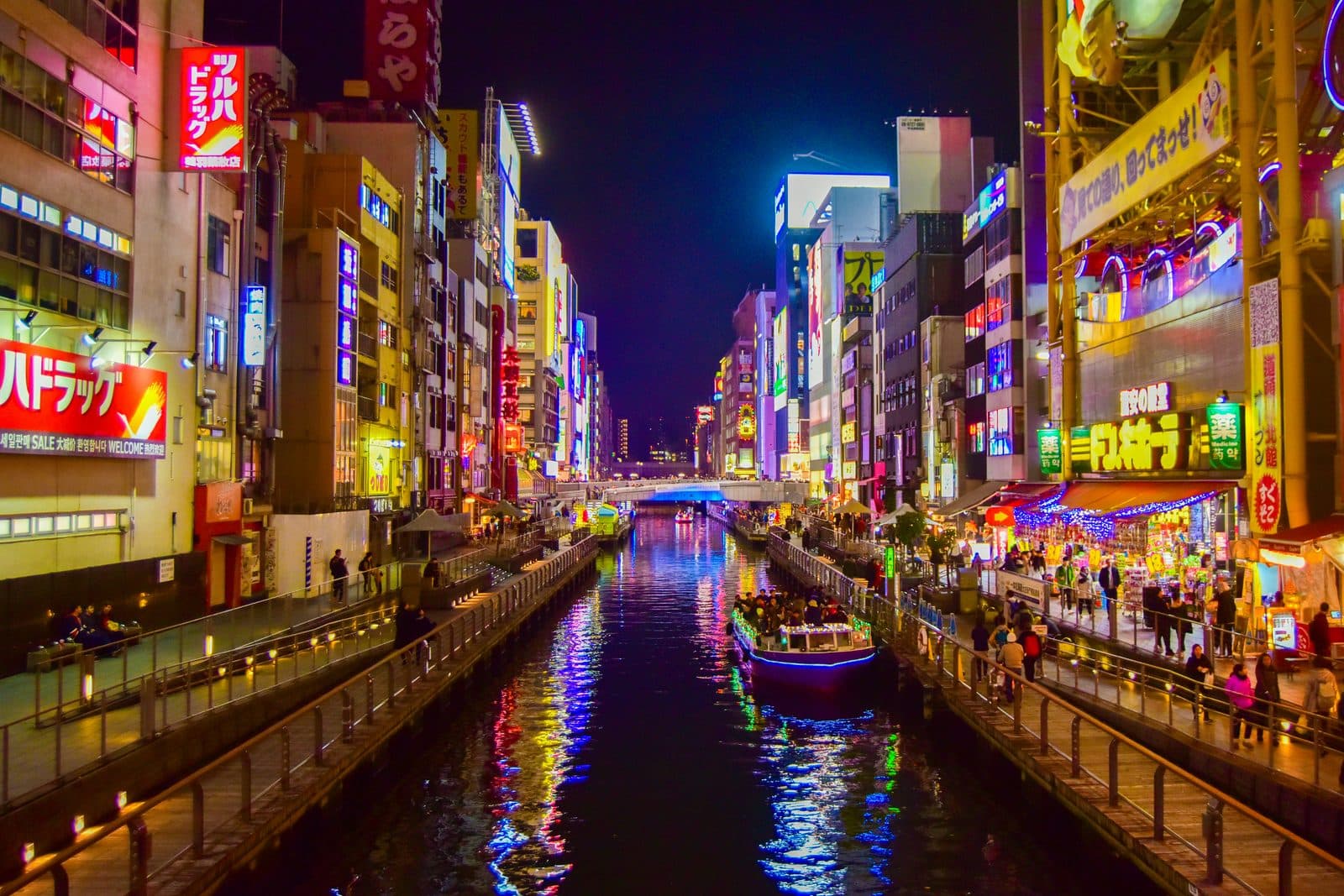
Best Self-Guided Walking Tours in Osaka (2026)
4 min
Overview
One Day in Osaka: A Walkable Castle-to-Kitchen Itinerary (2026)
6 min
Overview
Osaka Travel Guide: How Many Days, Getting Around, When to Go (2026)
5 min
Companion
The Dojima Rice Exchange: How Osaka Invented Futures Trading Before Wall Street Existed
7 min
Deep dive
Osaka Castle: The Warlord's Fortress That Is Now a Concrete Museum
8 min
Read the walk
The full story of Osaka Castle: The Castle Beneath the Castle, in words. Prefer to listen? Play it narrated, from home or on location.
Introduction
Osaka Castle is the great landmark of Osaka, Japan, and almost nothing about it is quite what it seems. The white and gold keep on the hill went up in nineteen thirty one, paid for by the people of this city. The giant stone walls around it were raised in the sixteen twenties by the Tokugawa shoguns, the family that destroyed Hideyoshi's heirs. And the first great castle here, Toyotomi Hideyoshi's, never left. It is still on this hill, buried underneath.
This walk reads the castle in layers: the gates and giant stones of the shoguns, the god that Hideyoshi became, the keep the city paid for, the buried wall that went on permanent show in twenty twenty five, the place where his family's story ended, a bridge that may survive a hundred kilometres away, and the scars of the Second World War.
Nine stops, just under a kilometre and a half, about seventy five minutes, all inside the castle walls. Every stop is free to see; the museum in the keep is an optional extra. No group, no schedule, just your own pace.
When you reach Otemon, the main gate on the west side of the park, begin with stop one.
1. Otemon Gate: The Shogun's Front Door
Welcome to Osaka Castle. Stop here on the causeway, with a moat on either side, and look ahead at the gate. This is Otemon, the main gate, the castle's front door.
Here is the first thing to know about everything you will see today. The castle museum says it plainly: every wall, every moat and every old building you can see above ground here dates from the Tokugawa era or later. Not one of them is Hideyoshi's.
Toyotomi Hideyoshi built the first great castle on this hill in the fifteen eighties. In sixteen fifteen his family lost it in a siege, and five years later the second Tokugawa shogun, Hidetada, began to build it again, over the top. For about ten years, sixty four lords, most of them from western Japan, raised these walls for the shogunate, each lord answering for his own stretch.
The gate ahead was long listed as an eighteen forty eight rebuild. When it was taken apart for repair in the nineteen sixties, its main timbers turned out to be early Edo work: it went up in sixteen twenty eight. It carries the Tokugawa hollyhock crest, a badge announcing whose castle this had become.
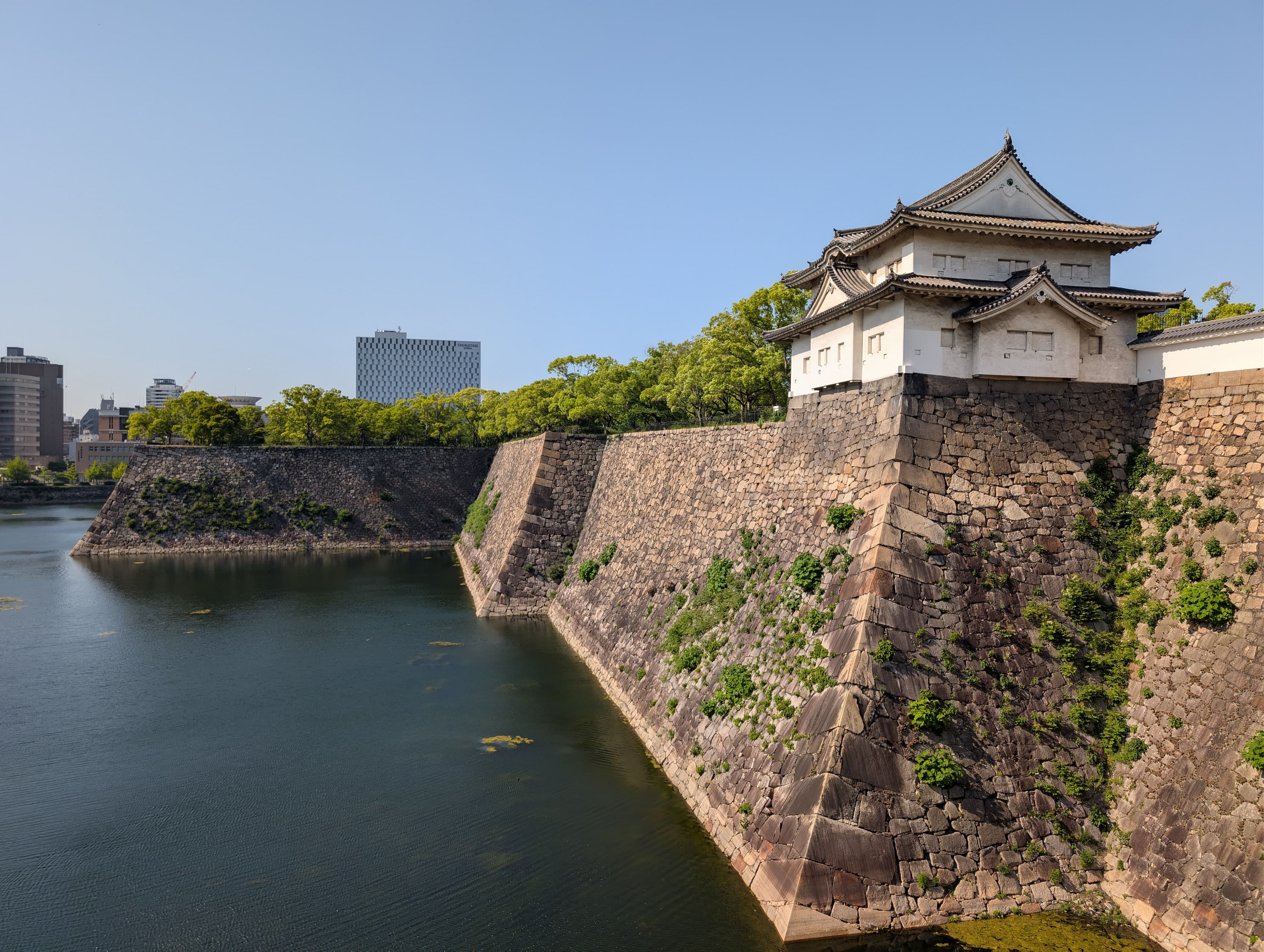
Now look left, across the corner of the moat, at the two storey turret on the wall. That is Sengan-yagura, the thousand kan turret. When it was repaired, workers found writing on a timber recording the day its pillars went up: in our calendar, the eighth of October, sixteen twenty. It and the Inui turret, at the far end of this moat, are the oldest buildings in the park.
Its name is older still. The story goes that when the warlord Oda Nobunaga besieged the fortified temple that stood on this hill before any castle, one corner turret tormented his soldiers so badly that they said they would pay a thousand kan of coin to take it. Hideyoshi's castle had a Sengan-yagura too. The Tokugawa kept the name and replaced everything else.
When you're ready, walk through the gate into the square courtyard beyond, and stop facing the wall of giant stones.
2. Otemon Masugata: One Boulder, Split in Two
Stop here, inside the square, facing the wall of giant stones. You have just done what every visitor, and every attacker, had to do. This walled box is a masugata. You come through the outer gate, run into a wall, and have to turn left, under the long white turret above you, to get any further, with defenders above you all the way.
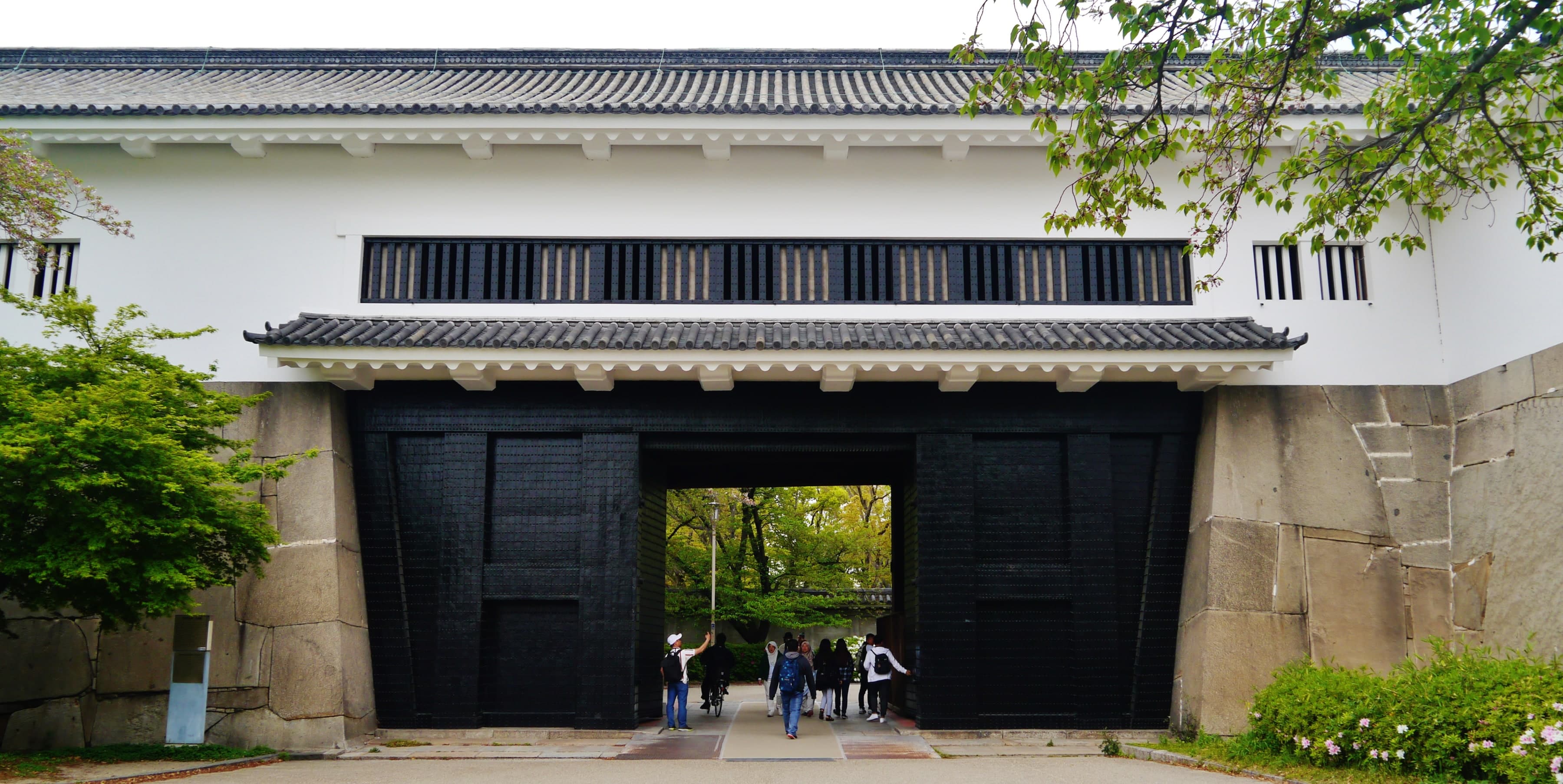
That turret is the Tamon-yagura. Over its big gate is a slot for dropping spears on anyone trying to force it. Other gateways into this castle once had galleries like this one. This is the only one left: the one at the Kyobashi gate burned in the air raid of the fourteenth of August, nineteen forty five. And this one is itself a rebuild. Lightning burned the original in seventeen eighty three, and it went up again in eighteen forty eight.
Now the stones. The one in the middle, facing you, is the Ote Mitsuke-ishi, the stone you see on entering: about forty eight square metres of granite, the fourth largest in the castle. The one to its left is the fifth largest. This stretch was built by Kato Tadahiro, the lord of Kumamoto, in Kyushu, and the lords competed. A government article on these walls says they staked their prestige on the quality of their workmanship.
In twenty sixteen, researchers at Osaka University photographed these two stones, rebuilt them in three dimensions, and fitted them back together along the lines of their wedge holes. They had been one boulder, split in two by the stonecutters. A senior curator at the castle museum goes further: all three stones, he says, are slices of a single rock.
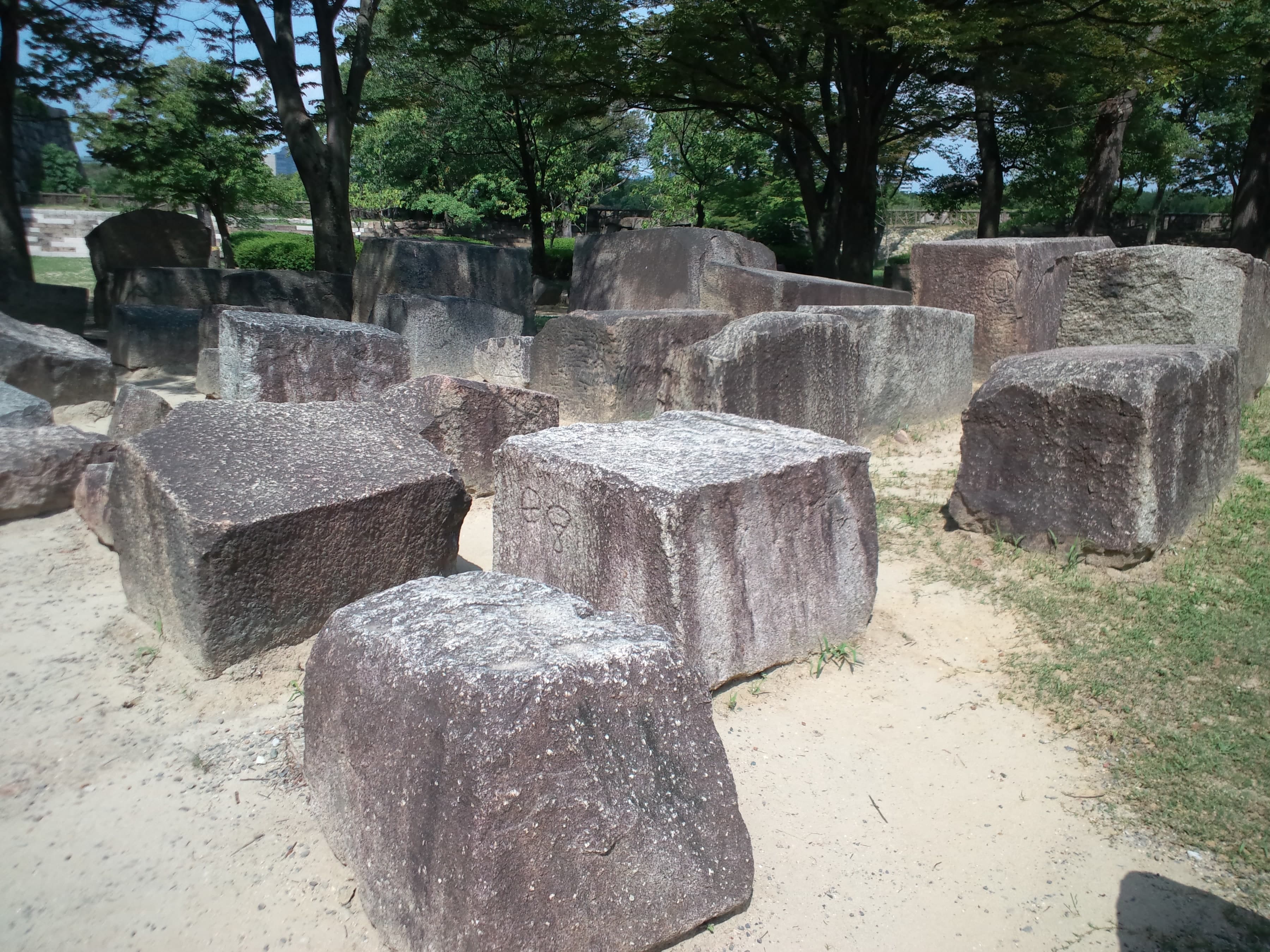
Look closely at the stones around you and you may find carved symbols. Across the castle, thousands of stones carry marks like these, showing which lord was responsible for which stretch of wall.
When you're ready, turn left and walk out under the turret, then follow the broad path east through the park, about five minutes. Where a stone causeway leads to a gate on your left, turn right instead, down the path toward the shrine.
3. Hokoku Shrine: The Warlord Who Became a God
Walk down the path toward the shrine and stop by the big bronze statue on your right. That is Toyotomi Hideyoshi, the man who built the first great castle on this hill, in armour, a war fan in his hand, looking out into the distance.
Hideyoshi was born in Owari province with no rank at all, and rose to rule Japan. In the autumn of fifteen eighty three he began a castle here, on the site of Ishiyama Hongan-ji, a fortified temple that had held out through ten years of war before it burned in fifteen eighty. The heart of his castle was built in about a year and a half.
He did not die here. He died at Fushimi Castle, in Kyoto, on the eighteenth of September, fifteen ninety eight. Within a year the imperial court had made him a god, Toyokuni Daimyojin, the great bright deity of the bountiful land. By sixteen thirteen there was even a Toyokuni shrine inside this castle, as its guardian. After his family fell in sixteen fifteen, the Tokugawa had his great shrine in Kyoto shut down and pulled apart.
His worship came back with Emperor Meiji, who in eighteen sixty eight ordered him honoured again in Osaka. This shrine opened in eighteen eighty, not here, but on Nakanoshima, the island in the river west of the castle. It only moved into the castle in nineteen sixty one, because the city wanted its old site to extend City Hall, and the castle was chosen for its link to the men honoured here: Hideyoshi, his son Hideyori, and his brother Hidenaga.
The statue is a second attempt. The first, put up inside the castle in nineteen oh three, was handed over in nineteen forty three to be melted down for the war. This one, by the sculptor Nakamura Shinya, went up in two thousand seven, recreated from photographs of the lost original.
One more neighbour: the small Inari shrine in these grounds began in the house of Yodoya, the merchant family who supplied Hideyoshi. The warlord's god and the merchants' god, side by side.
When you're ready, walk back up the path to the main path and bear right, over the stone causeway, to the gate ahead.
4. Sakuramon: The Octopus Stone
Walk on through the gate and stop inside the square courtyard. The enormous stone facing you is Takoishi, the Octopus Stone. It covers about fifty nine square metres, the size of thirty six tatami mats, and is estimated to weigh one hundred and eight tonnes. It is the largest…
Full narration for this stop unlocks with the tour.
5. The Keep: The Tower Osaka Paid For
Walk on until the keep fills the view ahead, and stop. This is the third keep to stand on this hill, and the youngest. Hideyoshi's went up in the fifteen eighties; painted screens show it roofed with gold leafed tiles, and pieces of them have been dug up here. It burned in…
Full narration for this stop unlocks with the tour.
6. The Toyotomi Stone Wall Museum: The Castle Beneath the Castle
Walk on a few steps and stop by the storehouse on your right. This is the Kinzo, the shogunate's treasury, where gold and silver coin was kept behind fireproof, damp proof and thief proof walls. It dates from seventeen fifty one and was heavily rebuilt in eighteen thirty seven,…
Full narration for this stop unlocks with the tour.
7. Yamazato-maru: Where the Toyotomi Story Ended
Walk on along the lower courtyard. Ahead on your right, often with flowers laid in front of it, is a stone memorial. This enclosure is the Yamazato-maru, and this is where the Toyotomi story ended. Its name means mountain village; tradition says Hideyoshi kept a rustic tea…
Full narration for this stop unlocks with the tour.
8. Gokurakubashi: The Bridge That Went to Lake Biwa
Walk out to the middle of the bridge, then turn round. The keep rises over the moat and the walls in front of you. This is Gokurakubashi, the Bridge of Paradise. The bridge under your feet is concrete, built in June nineteen sixty five and given traditional railings. The…
Full narration for this stop unlocks with the tour.
9. Aoyamon: The Arsenal and the Last Raid
Just ahead on your left is Aoyamon, the castle's north east gate. North east is the direction Japanese tradition treats as unlucky, the demon's gate, and in Edo times this one was reportedly kept shut. Today it is the nearest gate to the station. Its name is thought to come…
Full narration for this stop unlocks with the tour.
- Giant stone of the Otemon masugata — そらみみ (Soramimi), CC BY-SA 4.0 · source
- Tamon-yagura gate from inside the Otemon masugata — Zairon, CC BY-SA 4.0 · source
- Hokoku Shrine precinct with Hideyoshi statue — William.q.trang, CC BY-SA 4.0 · source
- Takoishi, the Octopus Stone, Sakuramon masugata — Ethan Doyle White, CC BY-SA 4.0 · source
- The keep framed by Sakuramon — Hyppolyte de Saint-Rambert, CC BY-SA 4.0 · source
- Kinzo and the Toyotomi Stone Wall Museum — 掬茶, CC BY-SA 4.0 · source
- Engraved stones, Yamazato-maru — Yanajin33, CC BY-SA 3.0 · source
- Aoyamon from inside the castle — そらみみ (Soramimi), CC BY-SA 4.0 · source
- Aoyamon from above in autumn — Ethan Doyle White, CC BY-SA 4.0 · source
Images may be cropped or resized. Other photos via Unsplash and Pexels.