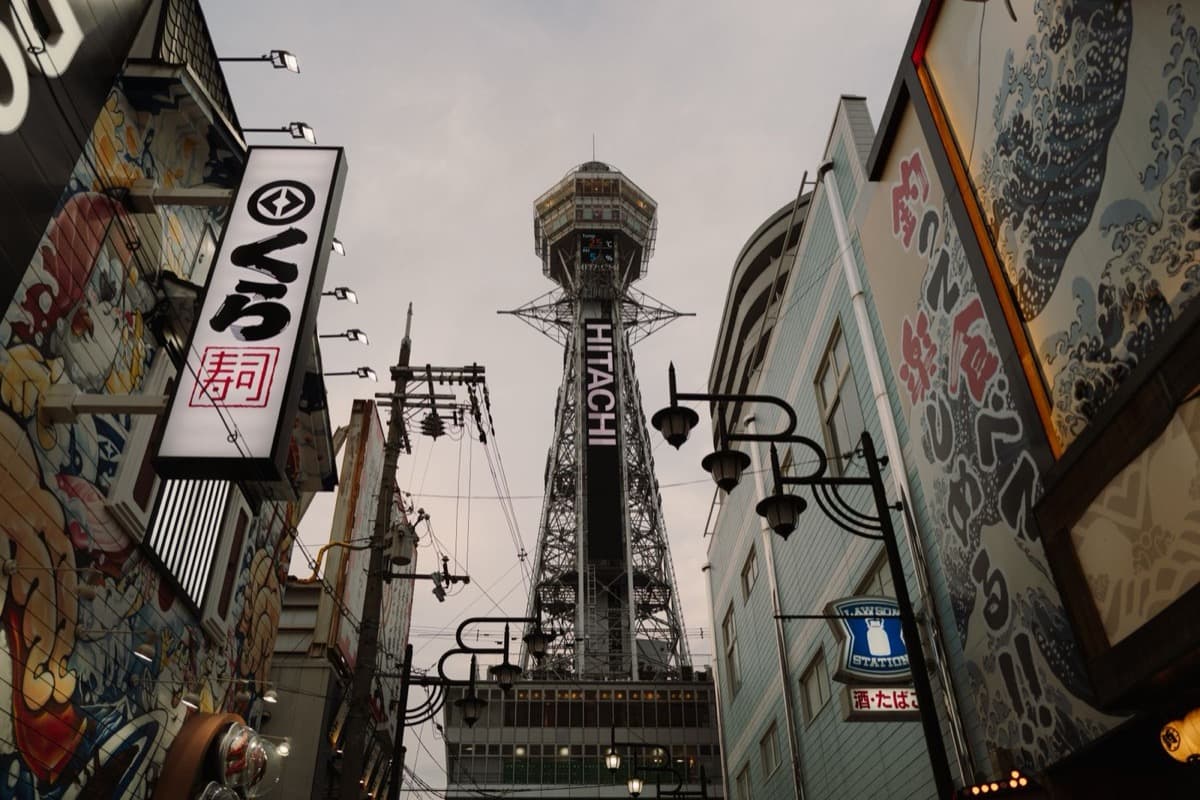
Tsutenkaku is the tower that will not die. It stands at the heart of Shinsekai, the New World, an Osaka district that time seems to have left in the early twentieth century, and the tower is the reason the neighborhood has a heart at all. What most visitors do not realize is that the Tsutenkaku they see is not the original. The first tower was scrapped and melted for the war effort, and the one standing today was rebuilt in 1956 by a neighborhood that refused to lose its symbol. Read Tsutenkaku as a resurrection, and the whole nostalgic, defiant character of Shinsekai comes into focus.
The New World and its Eiffel Tower
To understand the tower you have to understand the district. Shinsekai, meaning New World, was built in 1912 as an ambitious entertainment quarter, its northern half inspired by Paris and its southern half by Coney Island in New York. At its center rose the original Tsutenkaku, a tower explicitly patterned after the Eiffel Tower and the Arc de Triomphe, standing sixty-four meters tall and ranking, on completion, among the tallest structures in Asia. An aerial cable car connected it to the adjacent amusement park, Luna Park. This was Osaka reaching for the modern world, a slice of Paris and New York planted in the west of Japan, and the tower was its emblem.
The dream faded. Luna Park closed, the district's fortunes dimmed, and then the war came.
Melted for the war
Hear a stop from this walk
Shinsekai Streetscape: Billiken, Fugu, and the Frozen New World
In 1943 a fire badly damaged the original tower, and rather than repair it, the authorities dismantled it and recycled its steel for the war effort. The symbol of the New World was fed into the machinery of the war, and for over a decade Shinsekai stood without its tower, its center gone. For a neighborhood whose identity was built around a single landmark, that was a kind of erasure.
Rebuilt by the neighborhood
What happened next is the real story. After the war, local citizens campaigned to bring the tower back, and in 1956 a new Tsutenkaku opened, designed by the engineer Tachu Naito, a man so associated with such structures that he was called Japan's father of towers. The new tower is an eight-sided structure rising to about a hundred and eight meters, taller than the original, with an observation deck partway up. It was not built by the state as a monument. It was willed back into existence by the people of Shinsekai who could not accept a New World without its center. That is why the tower feels less like an attraction and more like a proud, stubborn heart.
Billiken, the god of things as they ought to be
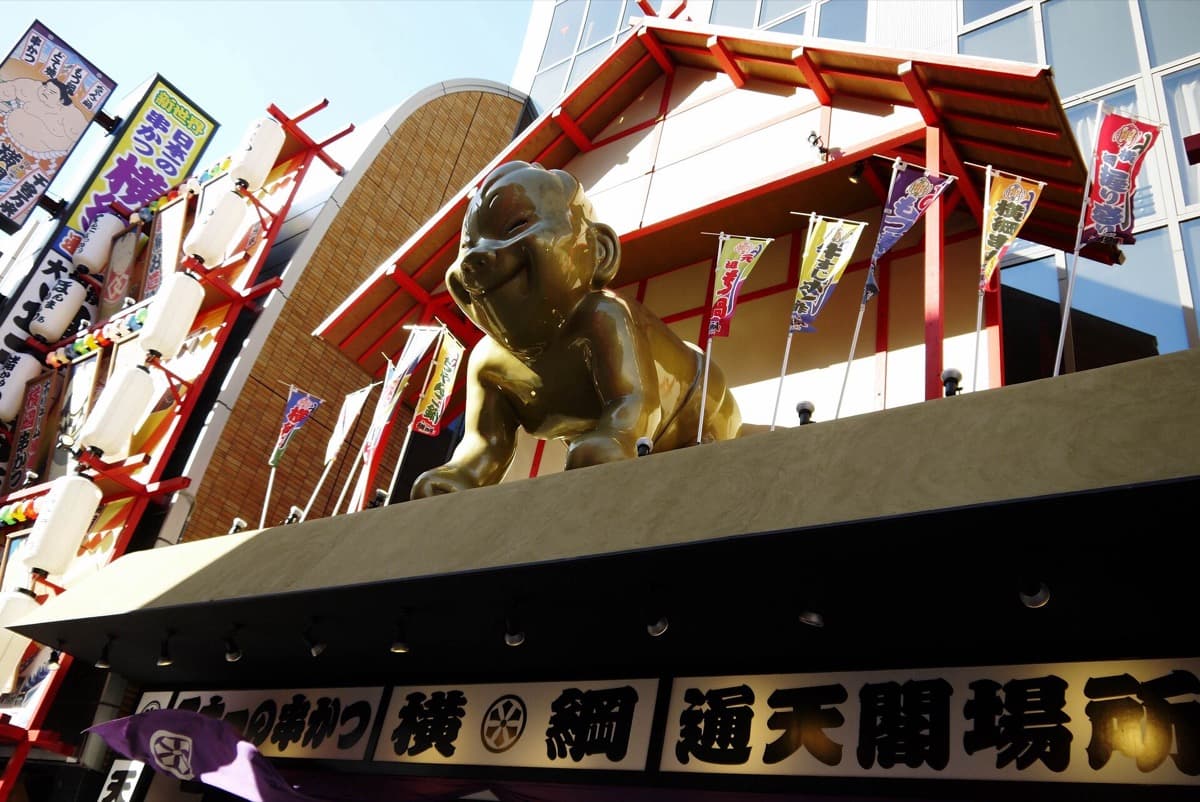
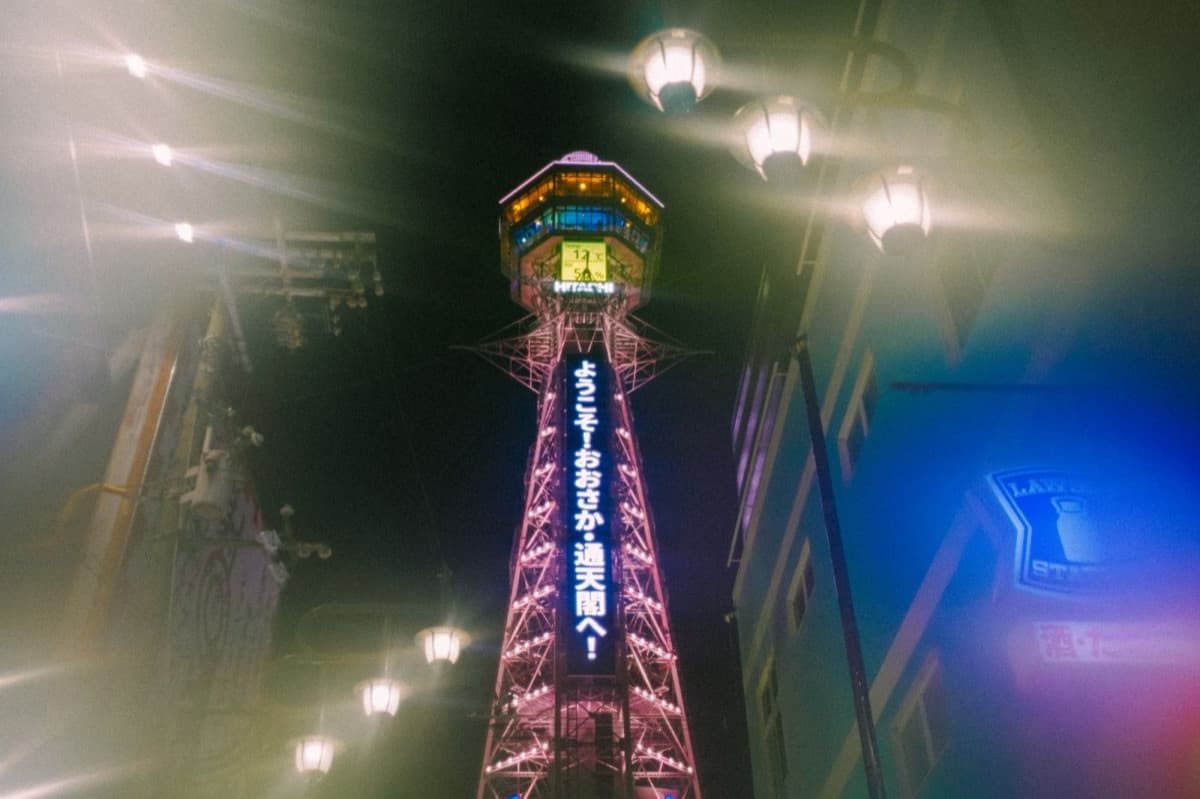
At the top of the story, literally, sits Billiken, the pointy-headed good-luck god who presides over the tower. Billiken was an American charm figure that arrived in Osaka and was enshrined in Luna Park around 1910, and he became a mascot of the district. A version of him sits in the tower today, his feet rubbed for luck, a small imported god who has watched over Shinsekai through boom, war, and rebuilding. The full, strange story of how an American lucky charm became an Osaka deity is told in Roamer's companion piece on Billiken. Since 1957 the tower has also carried the sponsorship of the Hitachi company, and its lights, once neon and now LED, still change with the seasons and signal the weather over the district.
Reading it in place
Approach Tsutenkaku through the streets of Shinsekai, past the kushikatsu shops and the retro signage, so you feel the district before you reach its tower. Look up and remember the silhouette is a rebuild of 1956, willed back by the neighborhood after the original was scrapped for war. Rub Billiken's feet for luck, and take in the view. Come in the evening, when the tower lights up and Shinsekai is at its most gloriously nostalgic.
The tower anchors Roamer's Shinsekai: The New World That Time Forgot. To fit it into a day, see one day in Osaka, and for the full set of routes, browse Osaka walking tours.
Sources
- Wikipedia, Tsutenkaku: the district of Shinsekai built in 1912 with the original tower patterned after the Eiffel Tower and the Arc de Triomphe at 64 meters and connected to Luna Park by cable car, the 1943 fire and dismantling of the tower with its steel recycled for the war effort, the citizen campaign and the current eight-sided tower opened in 1956 designed by Tachu Naito (called Japan's father of towers) at about 108 meters, the Billiken statue originally enshrined in Luna Park around 1910 and associated with the tower, and the Hitachi sponsorship from 1957 with the changing lights.
- Roamer tour transcript, Shinsekai: The New World That Time Forgot (osaka-shinsekai), fact-audited: Tsutenkaku as the rebuilt heartbeat of the district.
Ready to experience it?
Shinsekai: The New World That Time Forgot
90 min · 3 km · easy
More from Osaka
Explore more at your own pace.
One Day in Osaka: A Walkable Castle-to-Kitchen Itinerary (2026)
Osaka Travel Guide: How Many Days, Getting Around, When to Go (2026)

What to Eat in Osaka: A Food Guide (2026)
The Dojima Rice Exchange: How Osaka Invented Futures Trading Before Wall Street Existed
Osaka Castle: The Warlord's Fortress That Is Now a Concrete Museum