Dotonbori and Minami: The Nation's Kitchen
75 min · 1.5 km · easy
Osaka food is defined by abundance over refinement, the exact opposite of Kyoto restraint an hour up the line. For centuries Osaka was Japan wholesale market, the place where the country rice and produce were traded, which earned it the nickname Tenka no Daidokoro, the nation kitchen. That role built a cuisine of cheap, filling, hot-off-the-griddle street food, and a word for the city own appetite: kuidaore, literally "eat until you drop" (or eat yourself into ruin). To eat well in Osaka is to eat standing up, at a stall, with the crowd. This guide covers the dishes worth seeking out and where that food culture actually lives, and it pairs naturally with a slow walk on one of our Osaka self-guided tours.
The dishes to seek out
Takoyaki. Osaka signature snack: batter griddled in a special dimpled pan into piping-hot balls, each with a piece of octopus (tako) at the centre, brushed with sauce and mayonnaise and dusted with bonito flakes and seaweed. Eat them fresh off the griddle and mind the molten centre. This is the quintessential kuidaore street food.
Okonomiyaki. A savoury pancake whose name means roughly "grilled how you like it": cabbage, egg, and flour batter mixed with your choice of pork, seafood, or cheese, grilled on a hot iron teppan, then finished with sauce, mayonnaise, bonito, and seaweed. The Osaka style mixes everything into the batter, and many restaurants let you grill it yourself at a griddle set into the table.
Kushikatsu. Deep-fried skewers of meat, seafood, and vegetables, crisp and hot, dipped into a shared tub of tangy brown sauce. This is where Osaka most famous eating rule lives: never double-dip. The sauce is communal, so you dip each skewer once, before you bite it, and if you want more, you use the free raw cabbage on the table as a scoop. The rule began for hygiene and thrift, and the Shinsekai institution Kushikatsu Daruma, which traces itself to 1929, makes it its whole identity with an angry mascot brandishing crossed skewers. Shinsekai is the district to eat this in.
The wider spread. Beyond the big three, look for fugu (pufferfish, a Shinsekai specialty flagged by lantern-shaped signs), kitsune udon (Osaka is said to be its birthplace, thick noodles topped with sweet fried tofu), and negiyaki, a thinner, scallion-heavy cousin of okonomiyaki.
Where the food culture lives
Hear a stop from this walk
Hozenji Yokocho and the Mizukake Fudo: The Hush Inside the Carnival
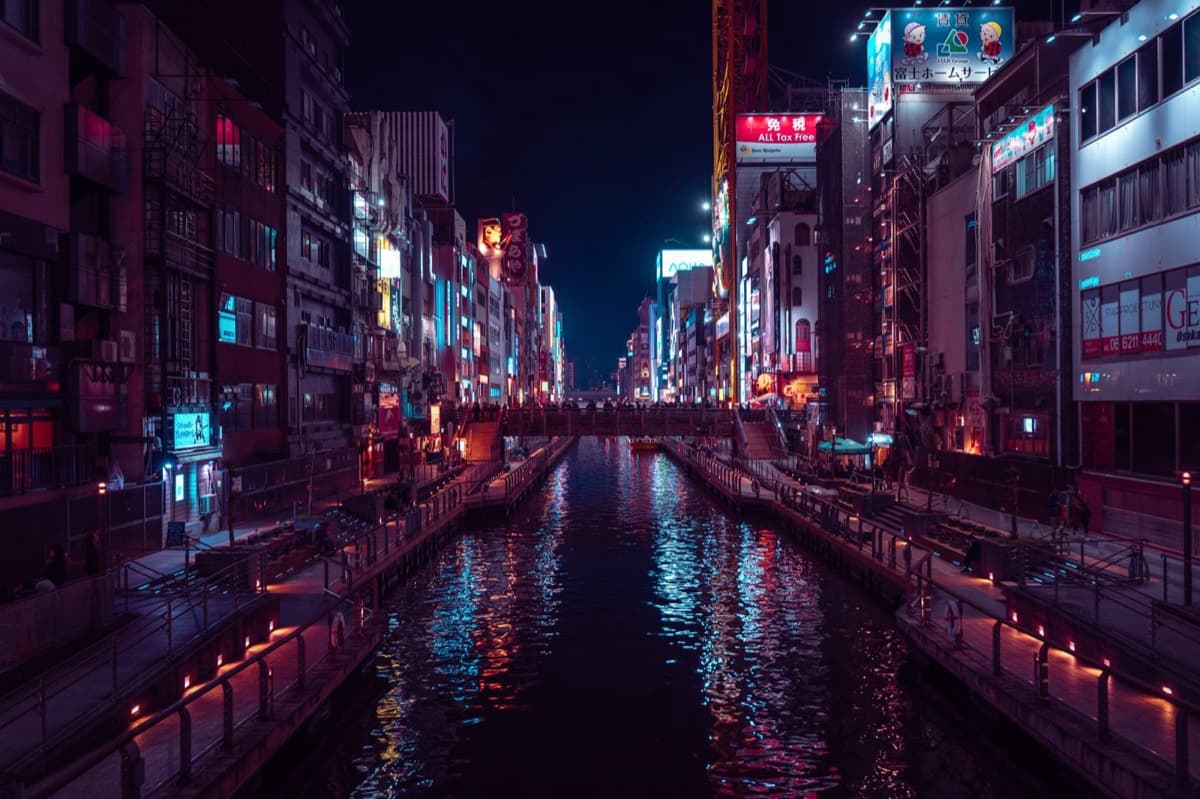
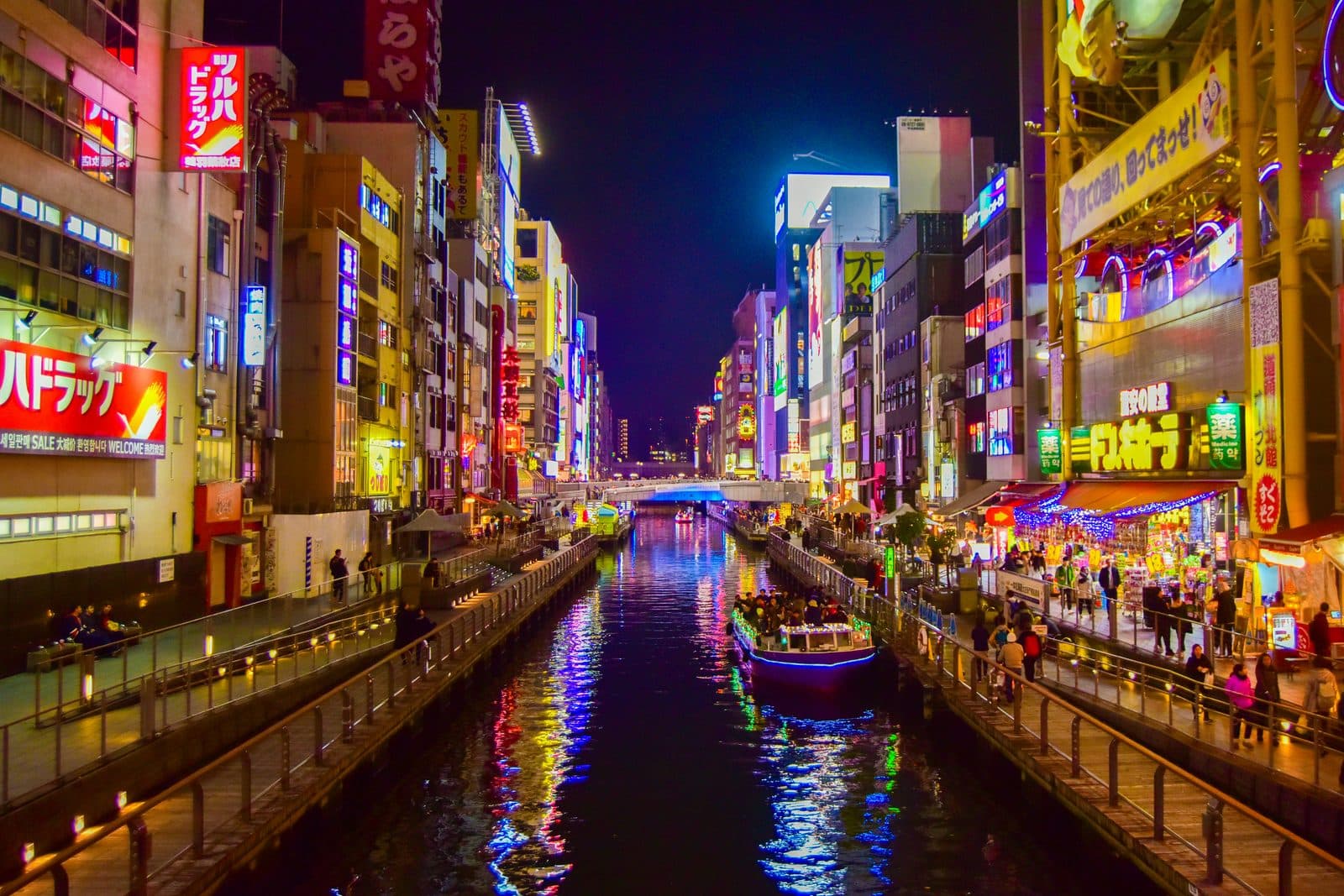
Dotonbori and Minami. The neon canal is the beating heart of Osaka street-food culture, lined with takoyaki and okonomiyaki stalls under the running Glico sign and a giant mechanical crab. Walk the Dotonbori district at dusk and it doubles as your route to dinner. The tour also carries you into Kuromon Market at its end. For the story of how the canal itself was engineered, see the Dotonbori canal founding story.
Kuromon Ichiba Market. A covered arcade of around 150 stalls running near Nippombashi, long known as Osaka kitchen, where fish traders have gathered since the early 19th century. It is the single best place to graze: fresh seafood grilled to order, takoyaki, fruit, pickles, and skewers, all eaten on the spot. It sits a short walk from Dotonbori, so the two combine into one long, delicious evening.
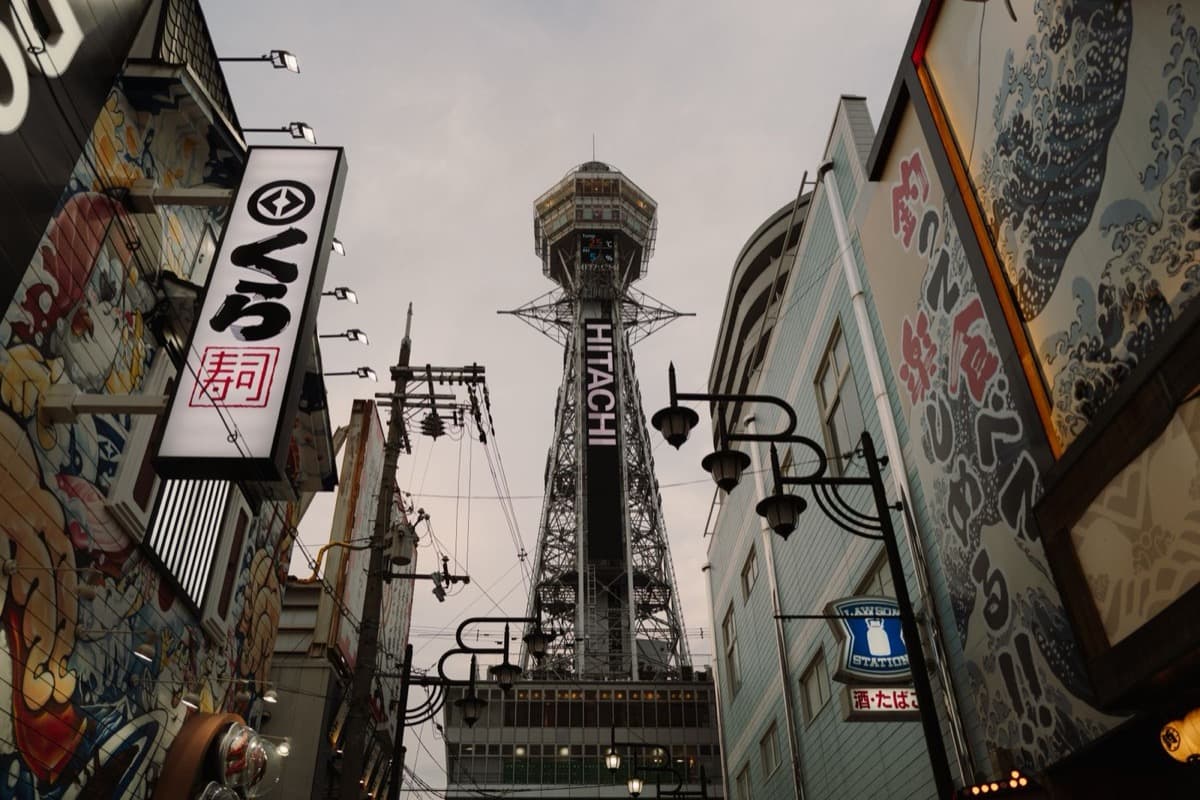
Shinsekai, for kushikatsu. The retro district around Tsutenkaku Tower is the spiritual home of kushikatsu and its no-double-dipping rule, with the fry shops clustered along Jan-Jan Yokocho. Walk it with the Shinsekai tour, which reads the whole New World as a district frozen in the year it was built. For the lucky god who watches over the fry shops, see the companion piece on the Billiken of Shinsekai.
Eat as you walk
The best way to work through this list is on foot, one district at a time. Pair an afternoon in Shinsekai with a plate of kushikatsu, and an evening in Dotonbori with takoyaki, okonomiyaki, and a graze through Kuromon Market. Route your day with the one day in Osaka itinerary, plan the practical side with the Osaka travel guide, and browse all Osaka tours. Every tour is free to start: the introduction and first stop play in full, and every later stop plays a short preview before an optional purchase.
Frequently asked questions
- What food is Osaka known for?
- Osaka is Japan food capital, and its headline dishes are street food you eat standing up: takoyaki (griddled octopus balls), okonomiyaki (a savoury cabbage-and-batter pancake grilled on a teppan), and kushikatsu (deep-fried skewers). The city sums up its own attitude with the word kuidaore, "eat until you drop." Its historic role as Japan wholesale market earned it the nickname Tenka no Daidokoro, the nation kitchen.
- What is the kushikatsu no-double-dipping rule?
- Kushikatsu are deep-fried skewers of meat, seafood, and vegetables, dipped once into a shared communal tub of tangy sauce at your table. The one rule is that you never dip a skewer you have already bitten, because the sauce is shared. It started for hygiene and to keep costs down. If you want more sauce, use the free raw cabbage on the table as a spoon to scoop it onto your plate. The famous Shinsekai chain Kushikatsu Daruma even uses an angry mascot holding crossed skewers to hammer the rule home.
- Where should you eat in Osaka?
- For street food and neon, Dotonbori and the wider Minami district, where the takoyaki and okonomiyaki stalls line the canal. For fresh ingredients and grazing, Kuromon Ichiba Market, the covered arcade of around 150 stalls known as Osaka kitchen, a short walk from Dotonbori. For kushikatsu, Shinsekai, the district where the dish and its no-double-dipping rule are most at home.
- Is Osaka good for street food?
- Yes, better than almost anywhere in Japan. Osaka whole food culture is built around cheap, hot, hand-held food you eat on the spot, so the city is unusually welcoming to grazing your way through a meal rather than sitting down for one. Dotonbori and Kuromon Market are the two densest concentrations of stalls, and both are best explored on foot.
Ready to experience it?
Dotonbori and Minami: The Nation's Kitchen
75 min · 1.5 km · easy
More from Osaka
Explore more at your own pace.
One Day in Osaka: A Walkable Castle-to-Kitchen Itinerary (2026)
Osaka Travel Guide: How Many Days, Getting Around, When to Go (2026)
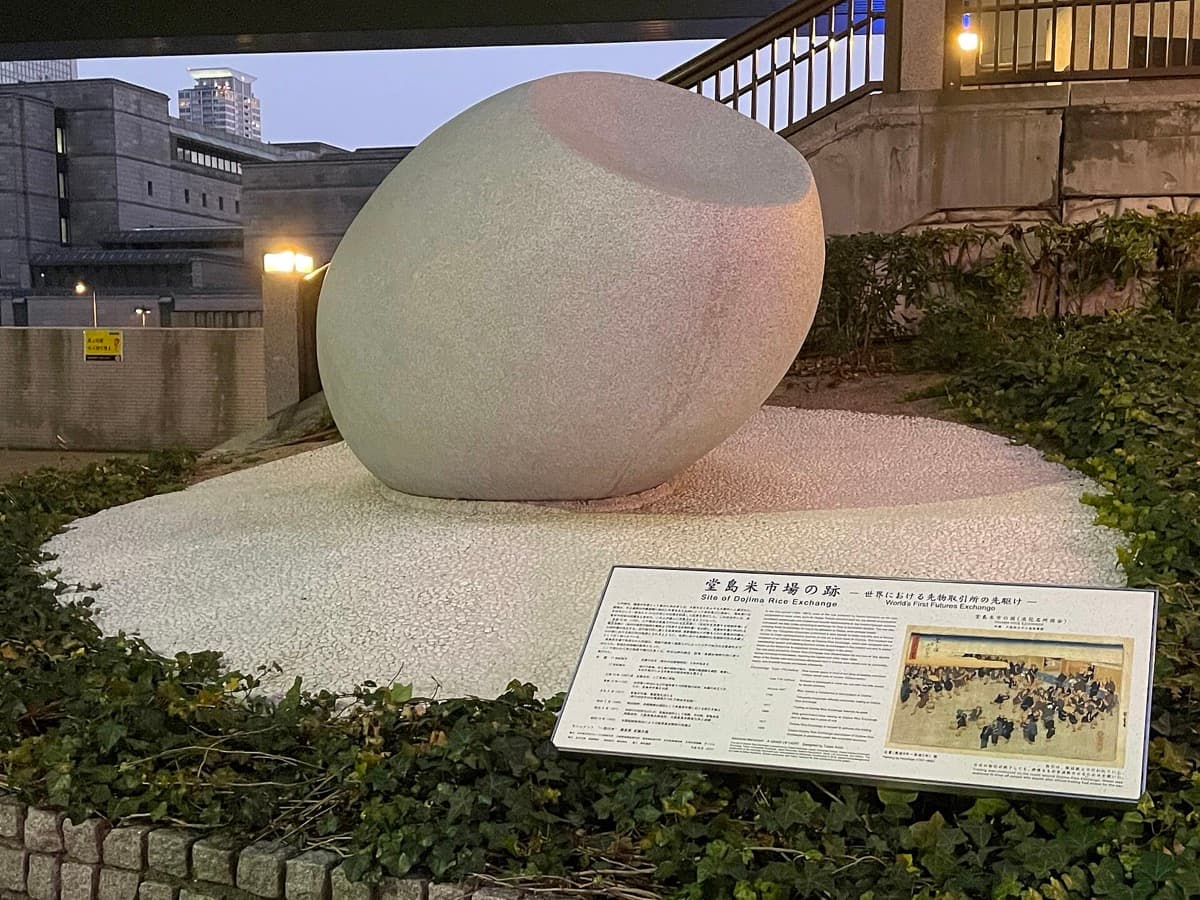
The Dojima Rice Exchange: How Osaka Invented Futures Trading Before Wall Street Existed
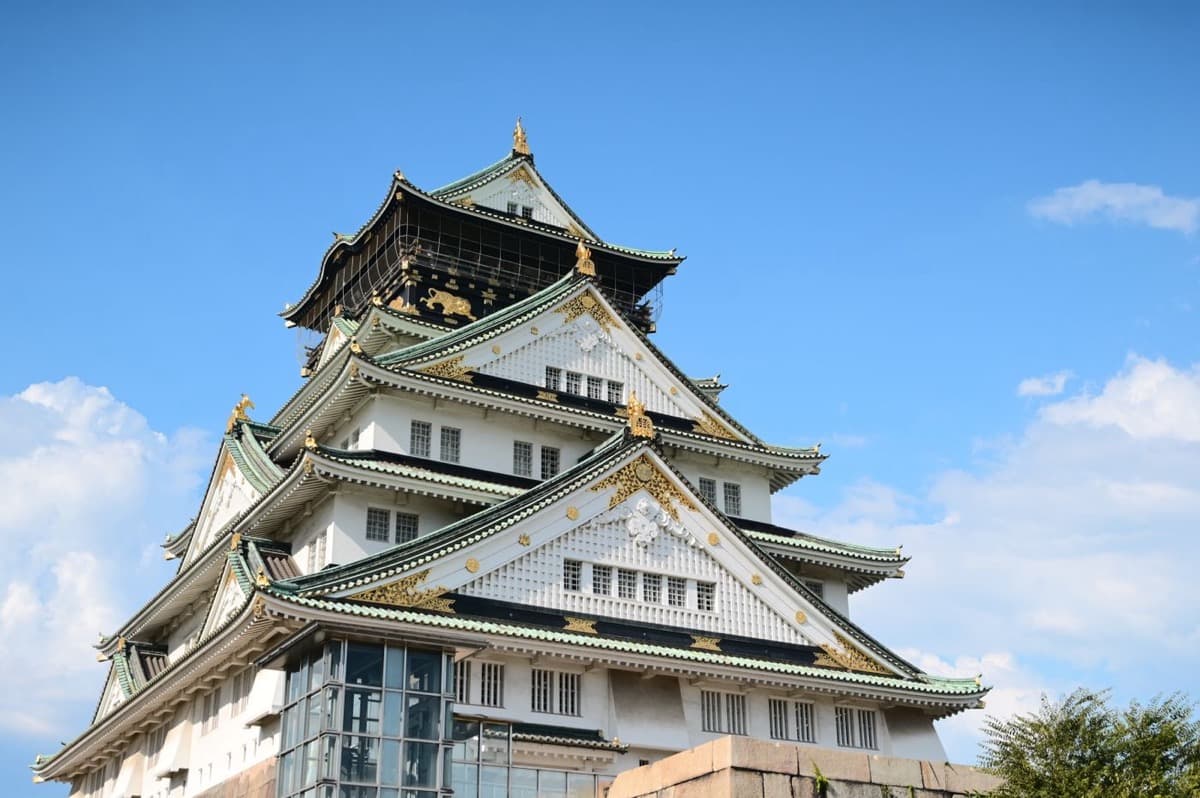
Osaka Castle: The Warlord's Fortress That Is Now a Concrete Museum
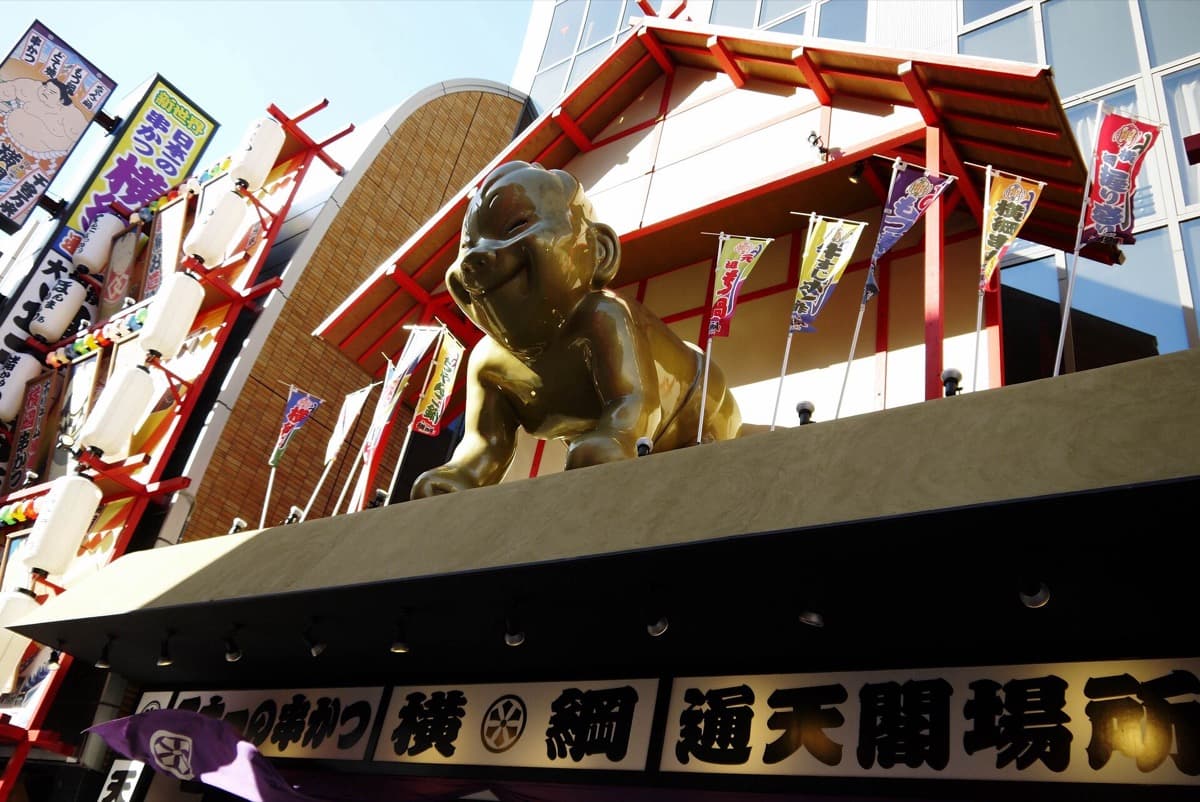
The Billiken: How an American Lucky Doll Became the God of Osaka's New World