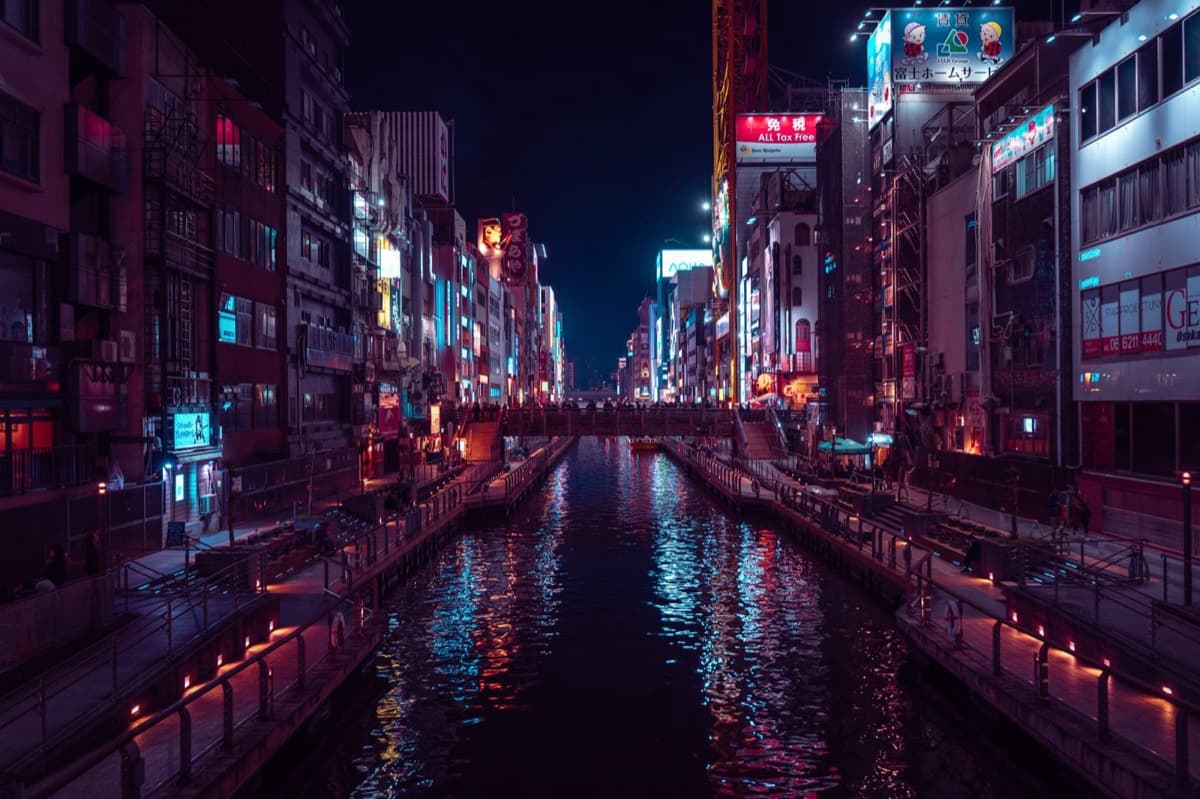
Osaka's loudest street looks like pure neon spectacle, but every gaudy surface sits on a dated, deliberate decision: a canal dug by hand, a district zoned for theatre, and a word this merchant city coined for its own appetite. Walk from the running Glico sign to a moss-covered stone Buddha to Osaka's kitchen, and watch four centuries of engineered pleasure explain itself.
Start · Ebisubashi Bridge and the Glico Sign: The Overture
DirectionsStops
- 1
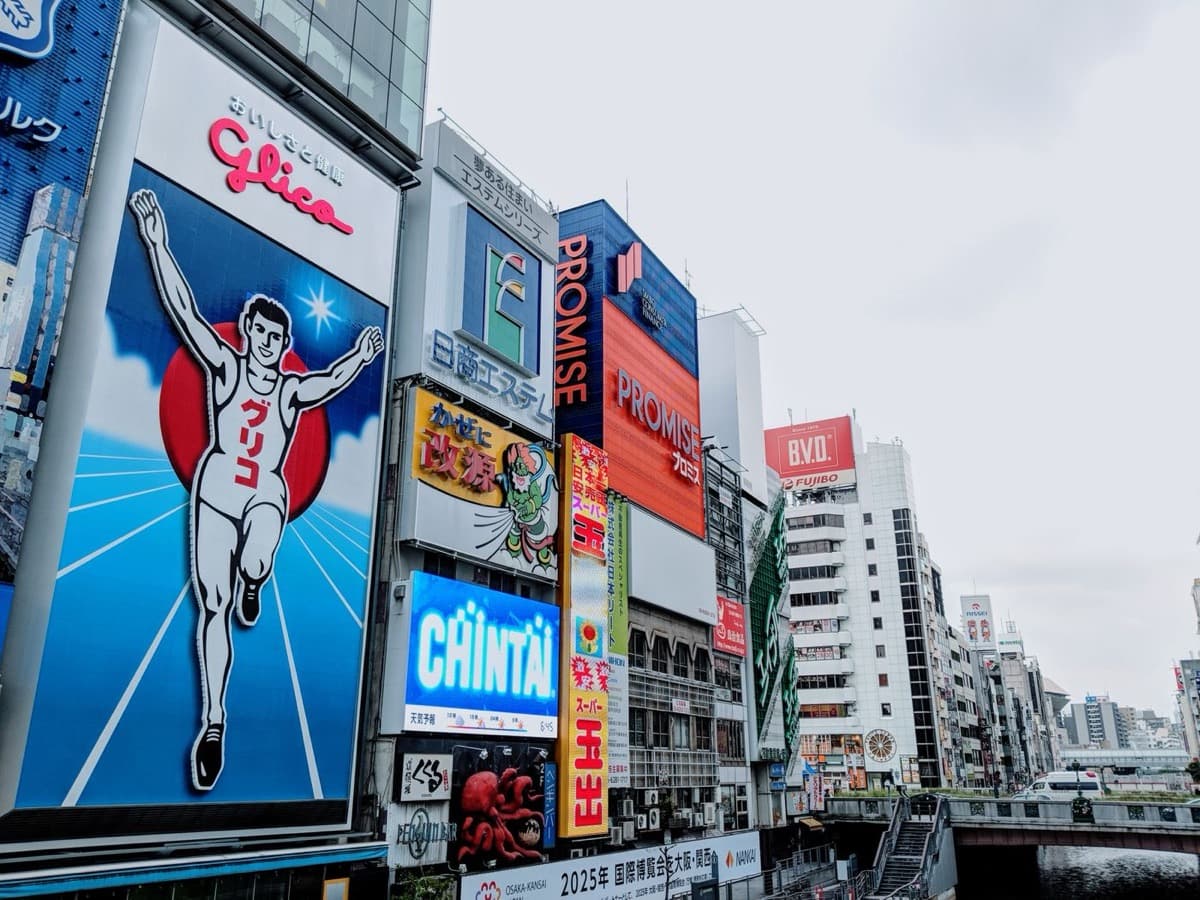
Ebisubashi Bridge and the Glico Sign: The Overture
The pedestrian bridge over the Dotonbori canal, and the running neon man who has been Osaka's rendezvous point for generations.
- 2
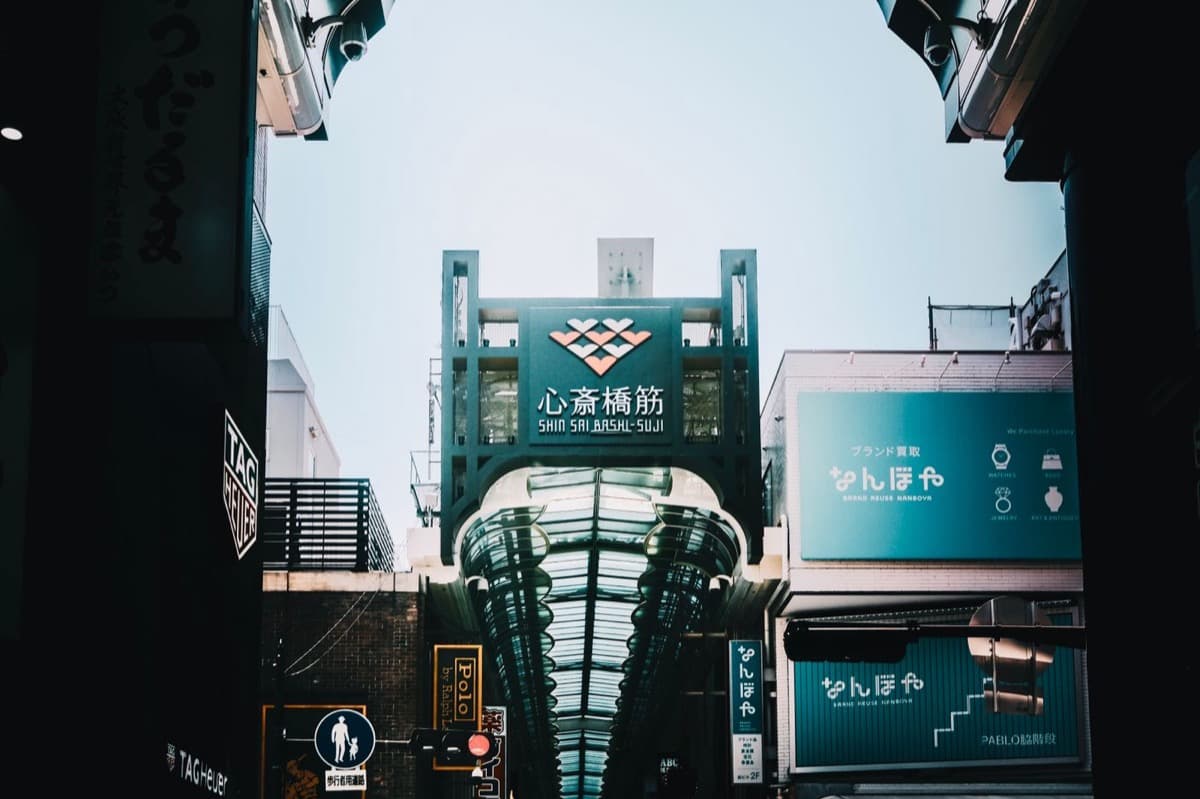
Shinsaibashi-suji Arcade: The Merchant City First
A covered shopping arcade with roughly a three hundred and eighty year history, where Osaka's merchant identity was funded long before the neon.
- 3
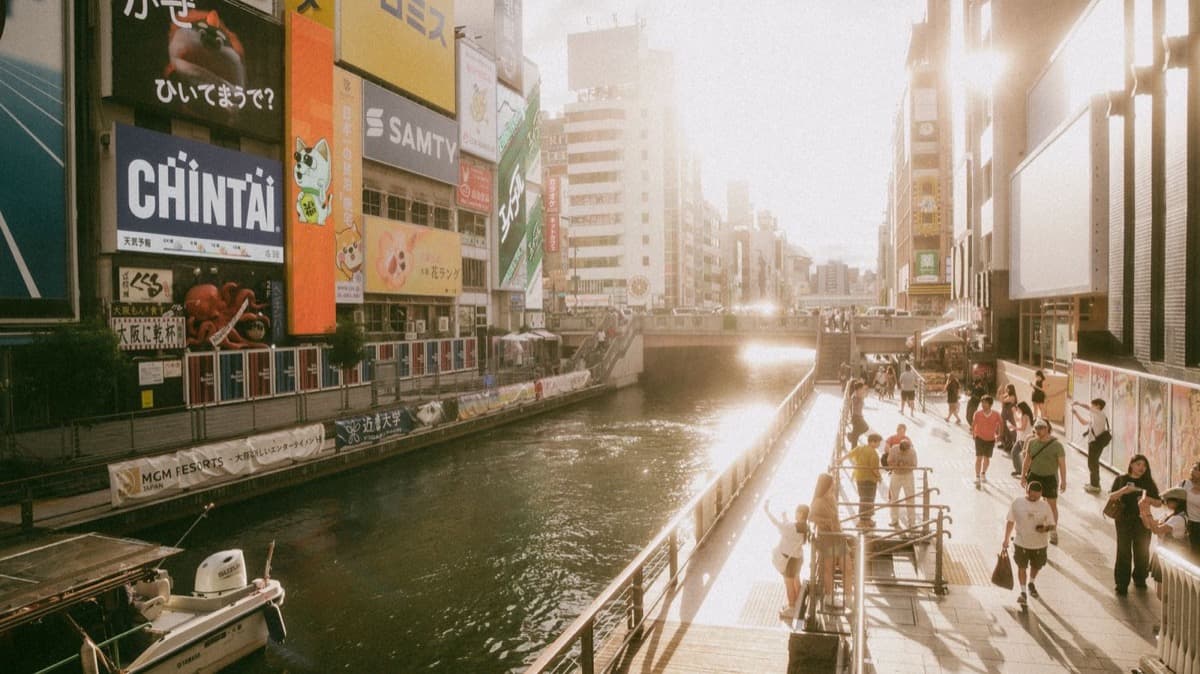
The Dotonbori Canal: Engineered on Purpose
The hand-dug waterway whose founding story, a dig and a death, explains why the whole district exists.
- 4
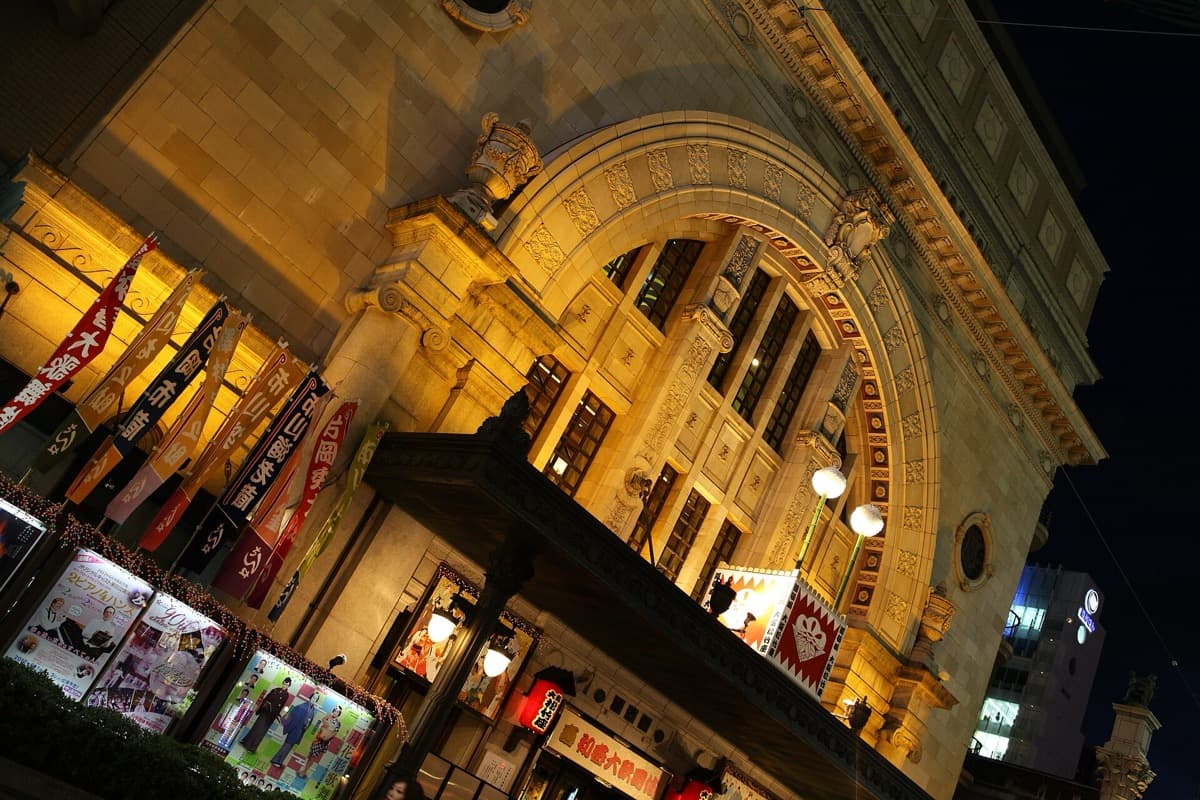
Dotonbori's Theatre Row: Where the Crowds Came
The canal's south bank, once lined with the great kabuki and puppet theatres that drew the crowds and, with them, the food.
- 5
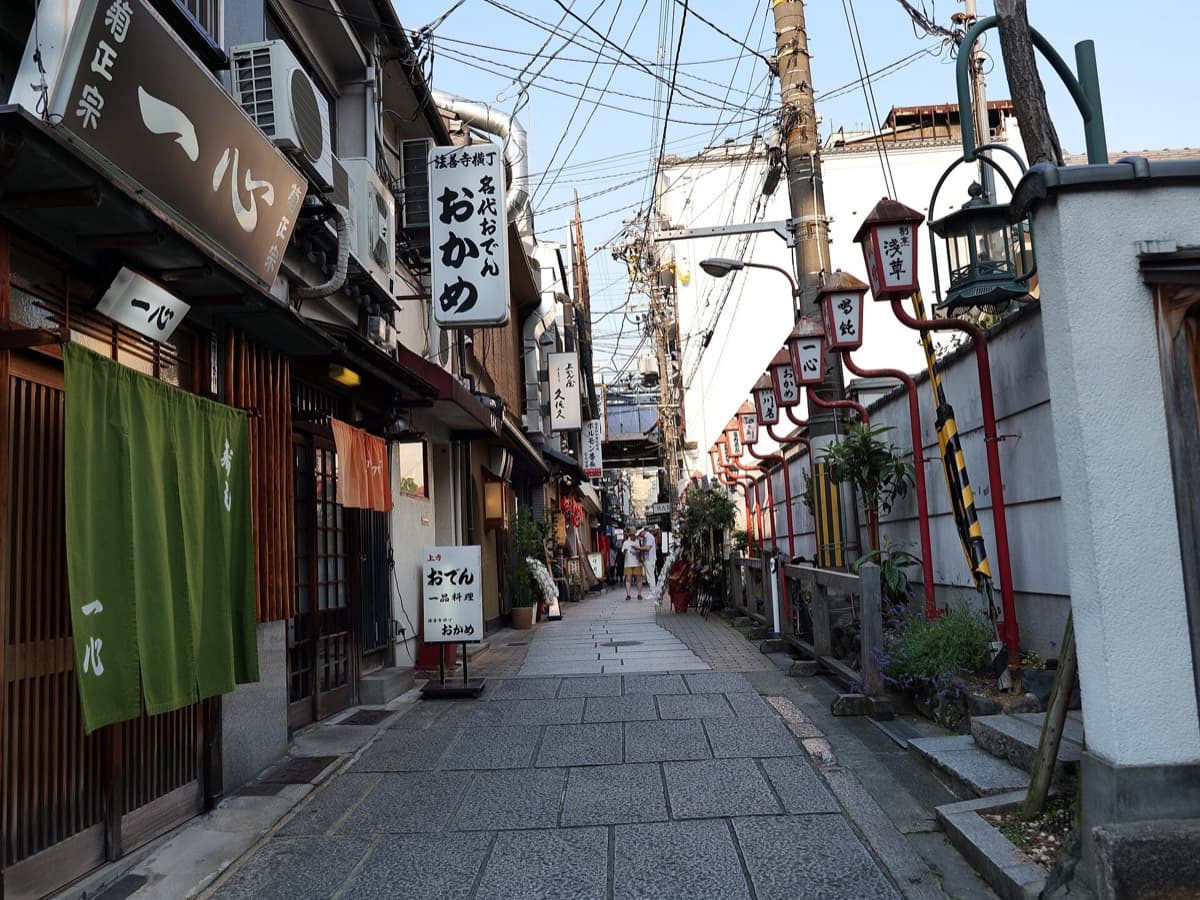
Hozenji Yokocho and the Mizukake Fudo: The Hush Inside the Carnival
A narrow Edo-flavored stone lane around a moss-covered stone Buddha that people have watered with their prayers for generations.
- 6
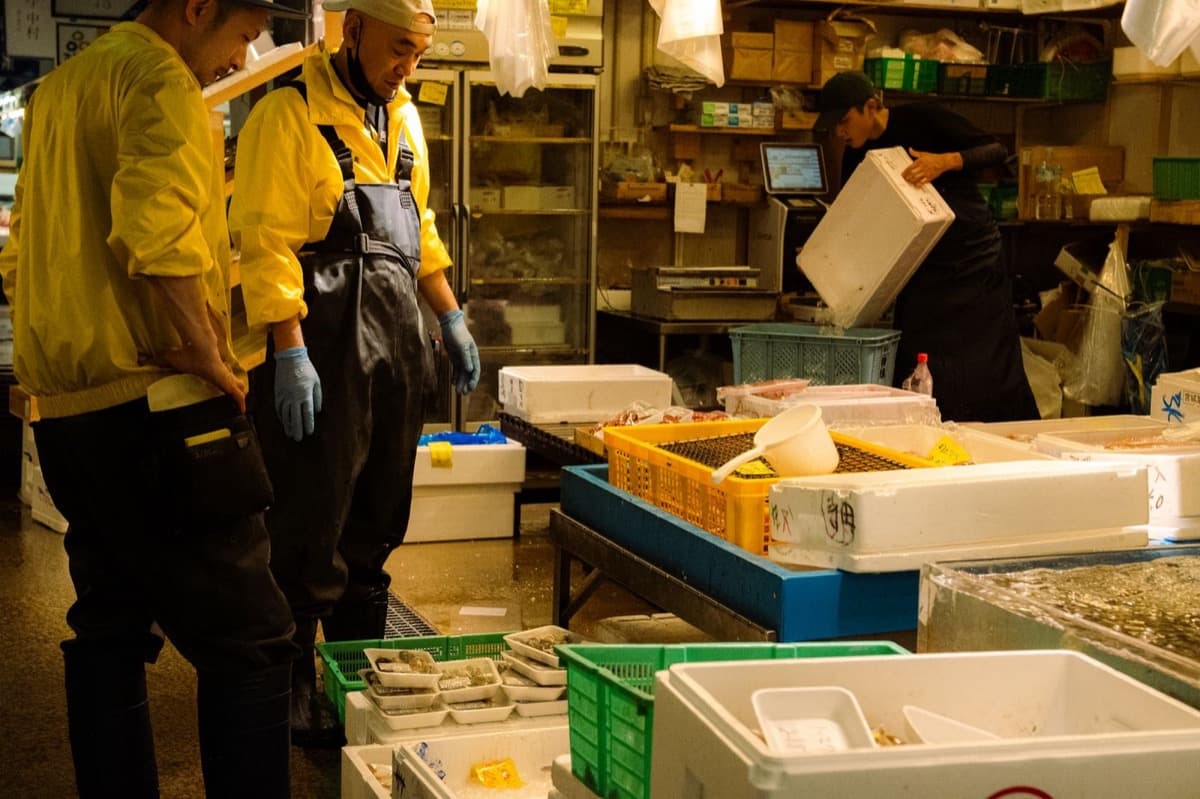
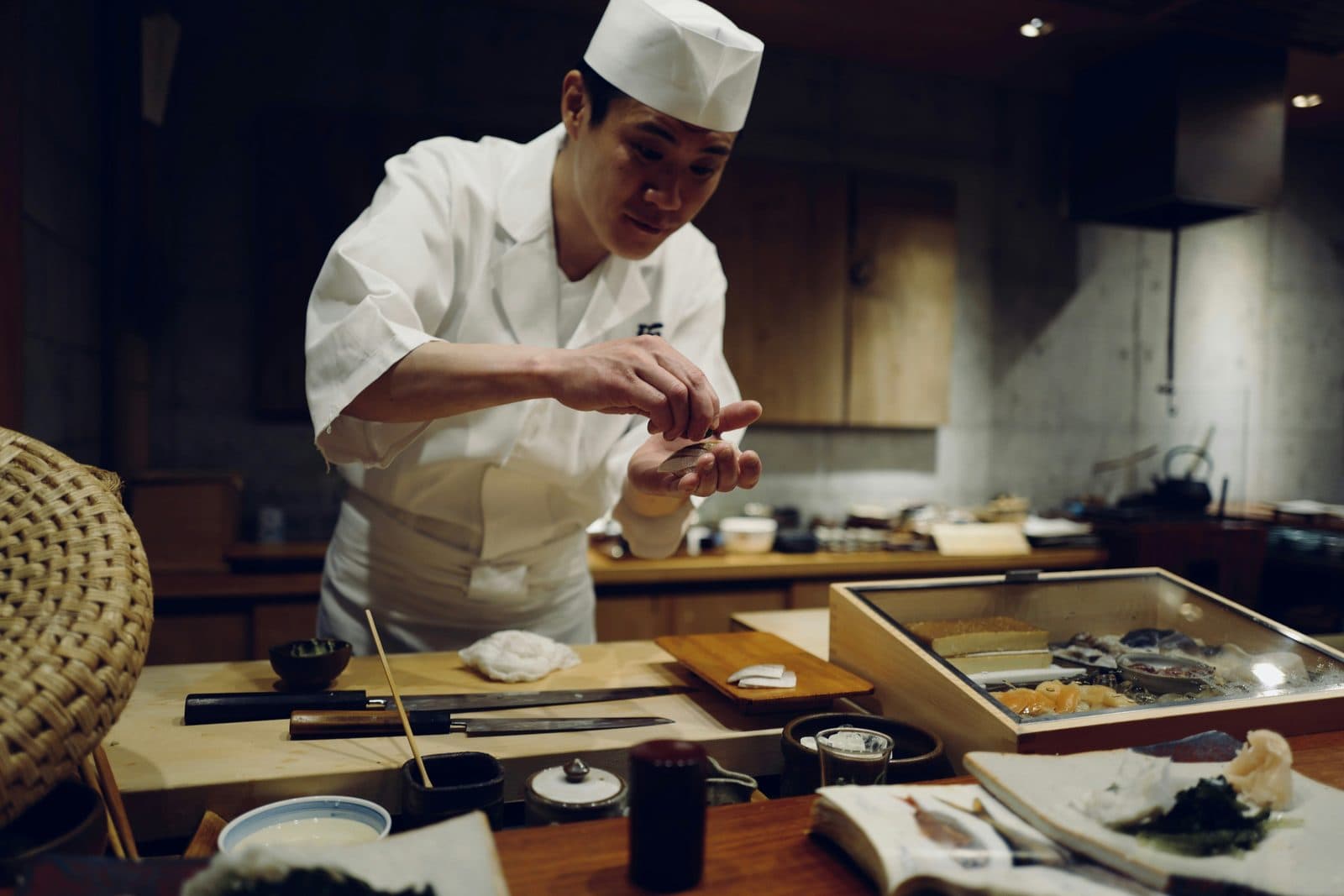
Kuromon Ichiba Market: Osaka's Kitchen
The covered market nicknamed Osaka's kitchen, where kuidaore stops being a slogan and becomes something you can smell.
Details
Best Time to Visit
Late afternoon into early evening. Arrive around four or five, walk the daylight stops through the arcade and the theatre bank, then reach the canal as the neon comes on and the Glico sign lights the water. Kuromon Ichiba is liveliest in the morning and can wind down by late afternoon, so if the market finale matters most to you, run the walk in reverse and start there before the stalls close.
Pro Tips
- •Osaka is a food city first. Build in time and appetite to graze as you go; the point of kuidaore is to spend it slowly, not to rush between photos.
- •The Glico sign reflects best in the canal at night from Ebisubashi. Come back after dark even if you walk the rest by day.
- •Hozenji Yokocho is only about two point seven meters wide and easy to miss. Look for the narrow stone lane just south of the canal and step in quietly; it is a hush, not a highlight reel.
- •Kuromon Ichiba shops tend to open in the morning and thin out by late afternoon, so hit the market earlier in the day than the neon stops.
- •Carry a small amount of cash. Many market stalls and tiny lane eateries do not take cards, even where the big arcades do.
- •Get a rechargeable IC transit card such as ICOCA for the trains and subway; the nearest stations, Namba and Nipponbashi, put you a short walk from either end of this route.
Safety & Precautions
- •Osaka summers are hot and very humid. If you walk between June and September, carry water, use the covered arcades for shade, and pace yourself, because heat exhaustion is a real risk on crowded pavement.
- •Dotonbori and Ebisubashi get extremely crowded in the evenings and on weekends. Keep bags zipped and in front of you, and step to the side of the bridge to take photos rather than stopping in the flow.
- •Kushikatsu, the deep-fried skewers of this district, come with one firm rule of local etiquette: never double-dip a skewer in the shared sauce. Dip once before you bite. It is a point of manners, not a suggestion.
- •Many small market stalls and lane eateries are cash-only, and ATMs that accept foreign cards can be scarce in the moment, so draw cash before you are hungry.
Travel advisory: Exercise Normal Precautions (Level 1).
Gallery
Related Reading
Go deeper on what you'll see, hear, and walk through.
Overview
Best Self-Guided Walking Tours in Osaka (2026)
4 min
Overview
One Day in Osaka: A Walkable Castle-to-Kitchen Itinerary (2026)
6 min
Overview
Osaka Travel Guide: How Many Days, Getting Around, When to Go (2026)
5 min
Thematic
Best Culture Walking Tours in Osaka (2026)
2 min
Thematic
What to Eat in Osaka: A Food Guide (2026)
4 min
Deep dive
The Dotonbori Canal Was Dug by a Man Who Died for the Losing Side
6 min
Read the walk
The full story of Dotonbori and Minami: The Nation's Kitchen, in words. Prefer to listen? Play it narrated, from home or on location.
Introduction
This is Dotonbori, the loudest street in Osaka, Japan, and one of the loudest in the whole country. Neon runs across the water. Steam rises off the griddles. A giant runner has been sprinting across a billboard since the nineteen thirties. It looks like pure spectacle, and it is easy to read it that way. But every gaudy surface here sits on a decision someone made, dated and deliberate, four centuries deep. A canal was dug by hand. A district was zoned for theatre. A word was coined for a city that made eating its highest art.
This walk has six stops and covers roughly one and a half kilometres. Give it about ninety minutes, longer if you stop to eat, and you should, because that is the whole point. Every stop stands mostly on its own, so linger where you want and skip what you do not. There is no group to keep up with and no schedule but yours.
We start at the canal's most famous crossing and its running neon sign, the sensory overture. We step into an Edo merchant arcade to remember this was a trading town first. We return to the water for the founding story, the dig and the death behind it. We stand where the great theatres stood. We duck into a hushed lane around a moss-covered stone Buddha. And we finish in a market where Osaka's appetite stops being a slogan and becomes something you can smell. When you arrive at Ebisubashi Bridge, begin with stop one.
1. Ebisubashi Bridge and the Glico Sign: The Overture
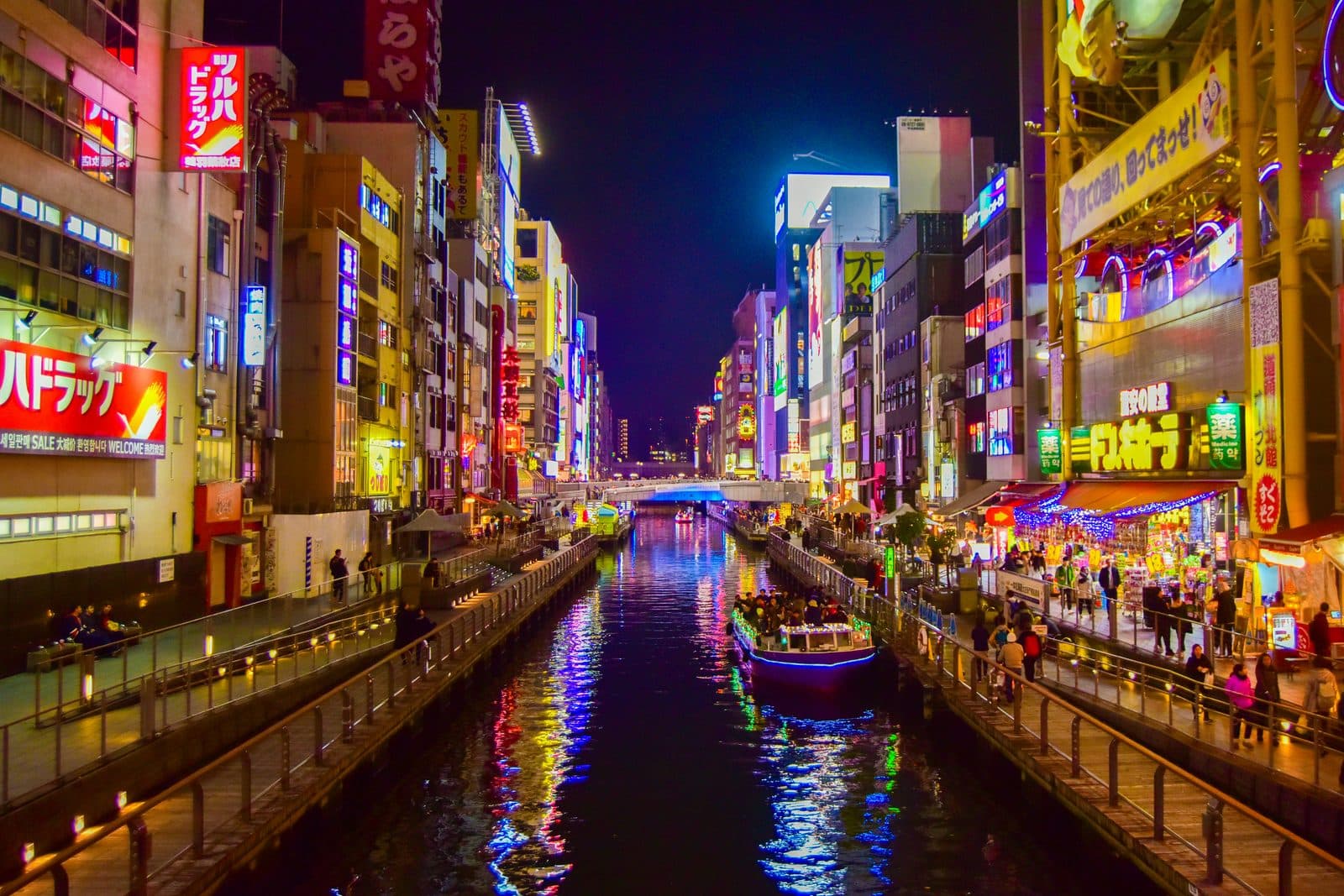
You are standing on Ebisubashi, the pedestrian bridge over the Dotonbori canal, and this is where Osaka meets. For generations people have said the same thing to each other: meet me at the Glico sign. Look west along the water and you will see him, a giant athlete frozen mid-stride, arms up, crossing a finish line on a blue track. That runner belongs to the Ezaki Glico confectionery company, and by the company's own history he first went up in nineteen thirty-five. He has been rebuilt six times since. The version glowing in front of you now is the sixth, a high-resolution LED display installed in October of twenty fourteen. The five before it were neon.
The bridge itself is older than the sign and quieter about it. According to the historical record, Ebisubashi was originally built to give people access to a nearby shrine dedicated to Ebisu, one of the gods of fortune and, fittingly for this city, a patron of merchants and good business. Today it stitches together two great covered arcades, one running north and one running south, funneling the crowds down onto the water.
Stand here a moment before you move. This is the overture. At night the neon pours into the canal and the runner's colors break apart on the surface. Take the photo everyone takes. Then remember that all of this noise, the signs, the crowds, the steam drifting up from the banks, is not an accident of the modern age. It is the surface of something engineered on purpose a long time ago. Over the next stops we will dig down to the engine underneath. For now, just let it be loud.
2. Shinsaibashi-suji Arcade: The Merchant City First
Walk north off the bridge and the noise changes register. You are now under the long roof of Shinsaibashi-suji, a covered shopping arcade that has been Osaka's retail spine for a very long time. It feels modern, all bright storefronts and moving crowds, but according to Osaka's own records this arcade carries roughly a three hundred and eighty year history and was already an established shopping street back in the Edo period.
The name tells you why. Shinsaibashi means Shinsai's bridge, and it remembers a merchant named Okada Shinsai, who helped excavate the nearby Nagahori canal around sixteen twenty-two and built a bridge across it. A merchant, digging a canal, leaving his name on the map. That pattern is the whole story of this city, and you will see it again at the next stop by the water.
By the middle of the seventeen hundreds this was already a serious commercial address. A kimono shop opened here that would grow, over the centuries, into one of Japan's big department stores. I am not going to send you shopping. The point is not what is for sale today. The point is that Osaka was a merchant town first, before a single neon tube was ever lit. This was a place where fortunes were made in cloth and rice and trade, and where the merchant class, not the nobility, set the tone.
Hold that thought. Kyoto, just up the river valley, was the city of the imperial court and refined restraint. Osaka was the city of the deal and the appetite. This quiet arcade of commerce is where that appetite was funded. Walk back down toward the canal when you are ready, and we will find where it was spent.
3. The Dotonbori Canal: Engineered on Purpose
Back at the water. This canal is the reason everything else exists, and its story is stranger and darker than the neon lets on. The popular version, the one you will hear on the street, is simple: a merchant named Yasui Doton dug this canal and the city named it after him. The…
Full narration for this stop unlocks with the tour.
4. Dotonbori's Theatre Row: Where the Crowds Came
Stand on the south bank and picture it stripped of neon. After the shogunate zoned Dotonbori for entertainment in sixteen twenty-one, this side of the canal filled with theatres, and for a couple of centuries this was the beating heart of Osaka's stage culture. By the sixteen…
Full narration for this stop unlocks with the tour.
5. Hozenji Yokocho and the Mizukake Fudo: The Hush Inside the Carnival
Turn off the bright canal into a narrow stone lane and the temperature of the place drops. This is Hozenji Yokocho, a passage roughly eighty meters long and only about two point seven meters wide, barely enough for two people to pass. Lantern light, worn flagstones, low wooden…
Full narration for this stop unlocks with the tour.
6. Kuromon Ichiba Market: Osaka's Kitchen
This is where the whole walk lands. Kuromon Ichiba, Osaka's kitchen. The nickname is literal: both home cooks and professional restaurant chefs come to this covered market to buy their ingredients. The arcade runs roughly five hundred and eighty meters and holds around one…
Full narration for this stop unlocks with the tour.