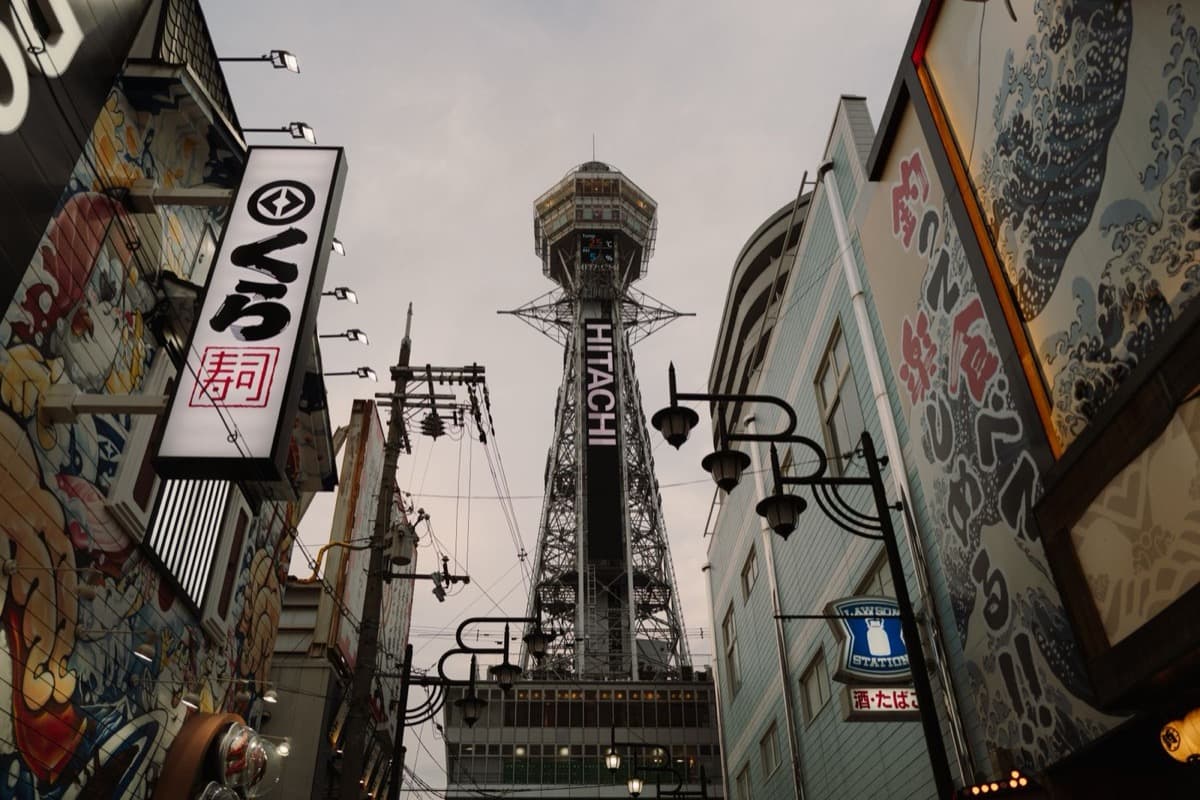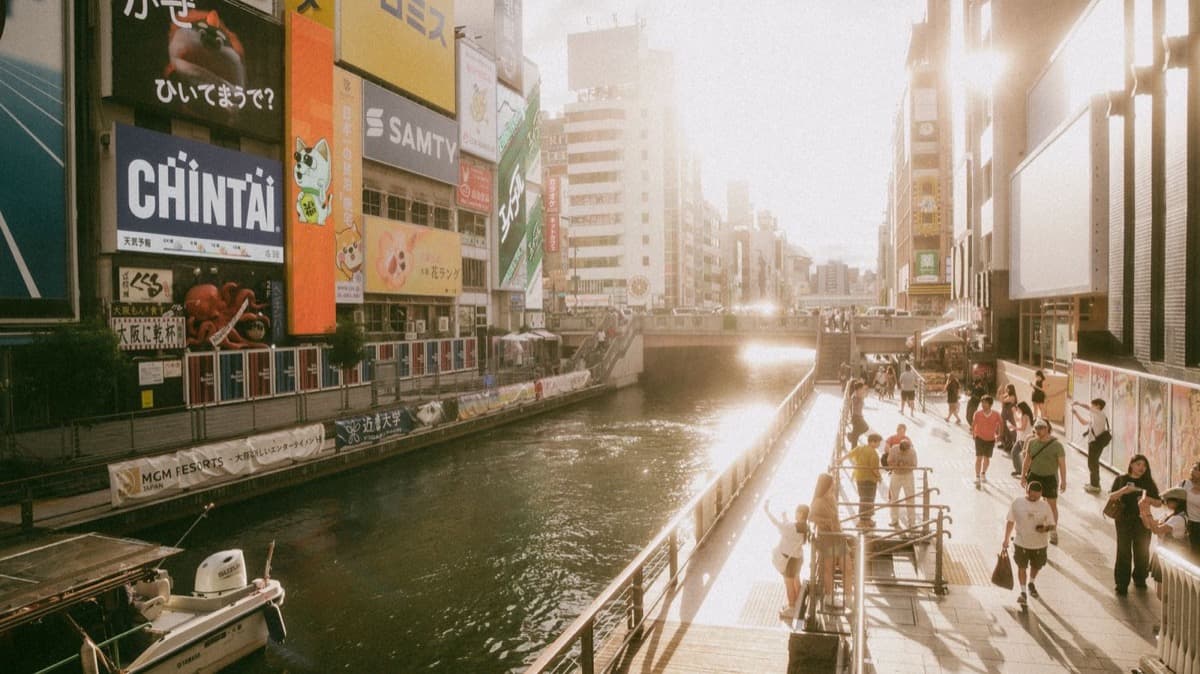
Construction of Osaka's Dotonbori canal began in 1612, led by a local canal administrator recorded as Nariyasu Doton with partners from the Yasui and Hirano families. Doton died at the Siege of Osaka in 1615, fighting for Toyotomi Hideyori. His partners finished it by September 1615. Matsudaira Tadaaki, the new Tokugawa lord, named it Dotonbori after him.
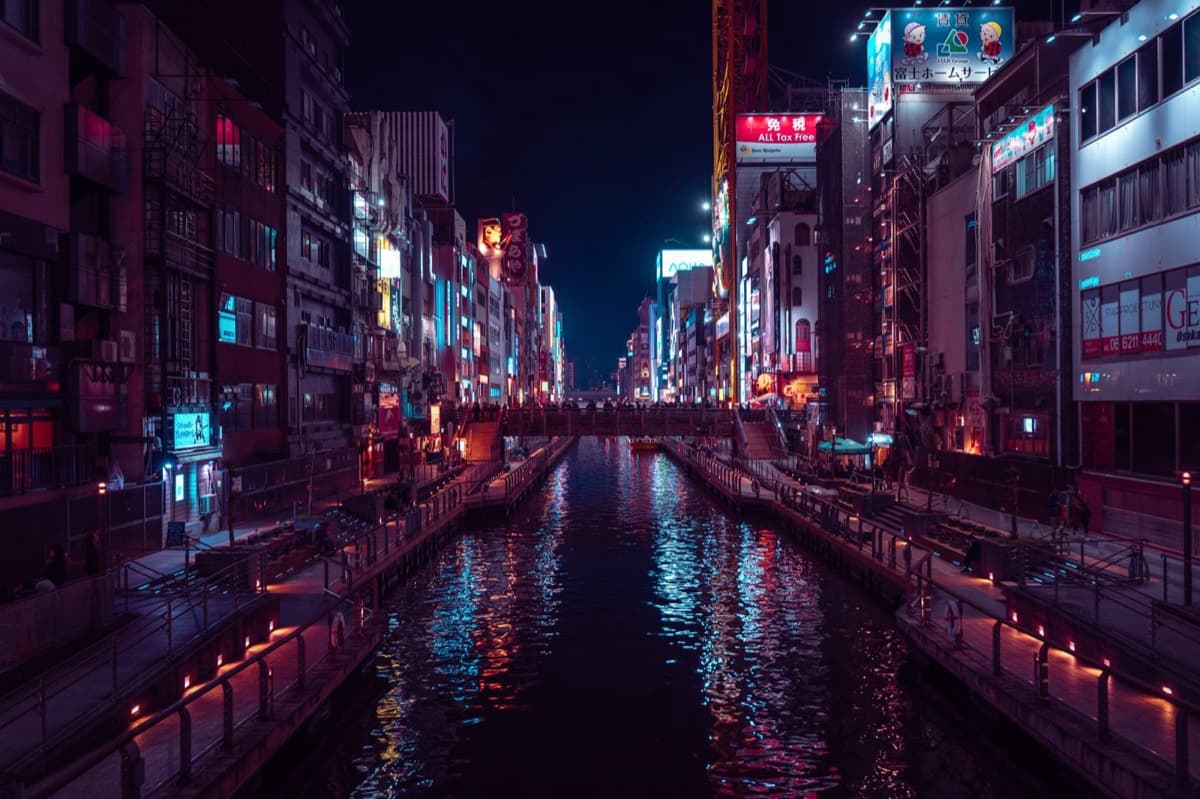
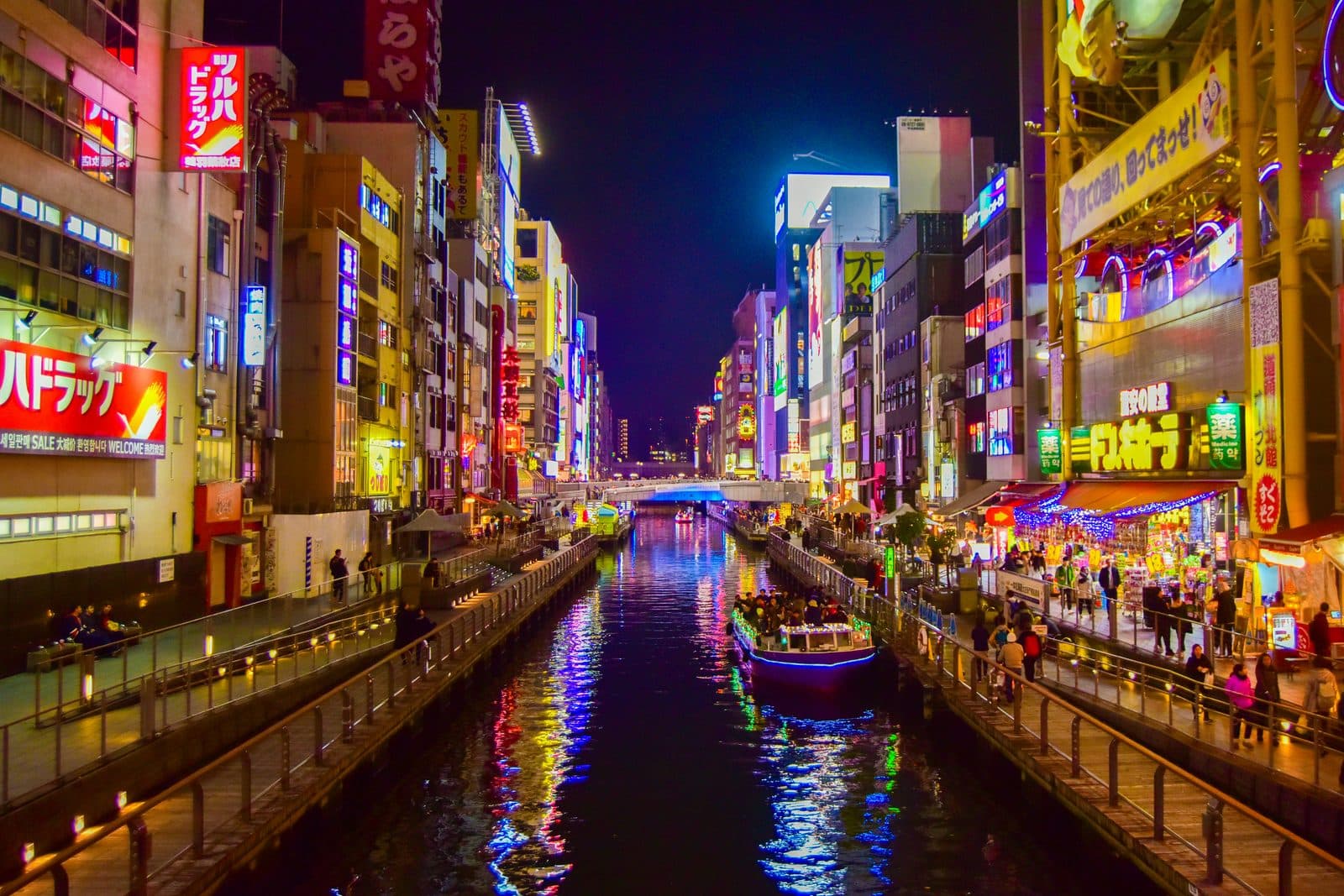
Stand on any bridge over the Dotonbori canal at night and the water reads as pure spectacle: neon breaking apart on the surface, steam off the griddles, the crowds pressing in from two directions. It is easy to treat the canal as scenery. It is not. This waterway is the piece of hand-dug infrastructure that made the entire district possible, and it carries the name of a man who died fighting on the losing side of a war, honored by the very side that killed his cause. The founding story of the Dotonbori canal is stranger and darker than the lights let on, and once you know it, the whole street reorganizes itself around the water.
A canal, a war, and a builder who died mid-project
Construction of the canal began in 1612, on the southern edge of what was then a fast-growing merchant Osaka. The work was led by a local canal administrator recorded as Nariyasu Doton, who dug alongside several partners, among them men of the Yasui and Hirano families. The plan was ordinary enough: cut a waterway to open the south bank for development. Canals were how a low, flat, river-fed city like Osaka moved goods and made land useful.
Then the war arrived. In 1614 and 1615 the Tokugawa besieged Osaka Castle to destroy the last resistance of the Toyotomi clan, the family of the late warlord Toyotomi Hideyoshi. This is the conflict remembered as the Siege of Osaka. Nariyasu Doton fought in it, on the side of Toyotomi Hideyori, and he died in the summer of 1615 as that side collapsed. One of his fellow diggers had already died of illness. The canal sat unfinished with its lead builder dead and his army defeated.
His surviving partners finished the cut anyway. By September of 1615, the same year Doton died, the waterway was complete. It ran east to west along the south edge of the entertainment quarter it would eventually define.
The victors named it after the man who fought against them
Hear a stop from this walk
Hozenji Yokocho and the Mizukake Fudo: The Hush Inside the Carnival
Here is the detail that makes the canal worth a whole essay. The new lord installed over Osaka Castle after the Tokugawa victory was a Tokugawa man, Matsudaira Tadaaki. He was, in effect, the occupying authority. And he chose to name the canal and the avenue beside it Dotonbori, after Nariyasu Doton, the builder who had died fighting the Tokugawa. The suffix "bori" comes from "hori," meaning canal or moat. So the name reads, roughly, as Doton's canal.
Think about what that means. The winners named a piece of the city after a member of the losing side. There is no swagger in it, no erasure. A man dug this, and died for the wrong army, and got a canal named after him regardless. Whether Tadaaki did it out of respect, pragmatism, or simple accuracy about who actually did the work, the result is a landmark whose name is a small act of grace toward the defeated.
The merchant who may never have existed
Over the centuries the story softened. The version you will hear on the street today usually names a heroic merchant, Yasui Doton, who single-handedly dug the canal and gave Osaka its name. That telling is tidier and more flattering, and it is at least partly a legend. In 1965 a Japanese court, ruling on a dispute over the canal's ownership, concluded that the famous merchant figure of Yasui Doton was a fictional character, built up over time out of old Yasui family records. The real history is a group of canal diggers, a war, a death, and an act of naming, not a lone hero with a shovel.
So carry both versions at once. The legend gives you a merchant hero. The record gives you something more human and more interesting: a project that outlived the people who started it, and a name that survived the politics that should have buried it.
Why the canal explains everything loud around it
The dig was the infrastructure. The spectacle came after, and it came by design. In 1621, six years after the canal was finished, the Tokugawa shogunate formally zoned the south bank of Dotonbori as Osaka's official entertainment district. That single administrative decision is why the street looks the way it does. Theatres filled the bank. By the 1660s the district held six kabuki theatres and five puppet theatres, plus a mechanical puppet house running clockwork automatons. The great playwright Chikamatsu Monzaemon, often called the Shakespeare of Japan, wrote his puppet-play tragedies for the popular crowds who came to this district.
The theatres pulled the crowds. The crowds got hungry. The banks that fed them turned into a food street that never really closed, and Osaka built its whole civic identity around eating and appetite. The neon you photograph tonight is the direct descendant of those vanished stages, and none of it exists without the water cut into the ground four centuries ago. This is a city that engineered its own pleasure on purpose and dated the paperwork: 1612 for the dig, 1615 for the finish, 1621 for the entertainment zoning.
That is the thing to hold onto at the water's edge. The canal is not a backdrop to the district. It is the reason there is a district at all. Everything gaudy stands on a decision someone made, and the first decision was to dig.
If you want to walk this ground yourself, from the running Glico sign to the theatre bank to the market that Osaka calls its kitchen, the full route through Osaka starts a few steps from this canal crossing.
Sources
- Dotonbori, Wikipedia. The core account of the 1612 to 1615 construction, Nariyasu Doton's death at the Siege of Osaka fighting for Toyotomi Hideyori, the completion by his Yasui and Hirano partners, Matsudaira Tadaaki naming the canal, the 1965 Dotonbori Trial ruling Yasui Doton fictional, the 1621 entertainment zoning, and the six kabuki and five puppet theatres by 1662.
- Chikamatsu Monzaemon, Encyclopaedia Britannica. Background on the bunraku playwright, often called the Shakespeare of Japan, whose works were staged in Osaka.
- Osaka Station travel guide, "Dotonbori Area: The Bright Heart of Osaka." Independent corroboration of the district's theatre history and the 1621 entertainment-district designation.
- Rakuten Travel, "Everything you need to know about Osaka's Dotonbori district." Supporting detail on the canal's origins and the district's development after zoning.
Ready to experience it?
Dotonbori and Minami: The Nation's Kitchen
75 min · 1.5 km · easy
More from Osaka
Explore more at your own pace.
One Day in Osaka: A Walkable Castle-to-Kitchen Itinerary (2026)
Osaka Travel Guide: How Many Days, Getting Around, When to Go (2026)
What to Eat in Osaka: A Food Guide (2026)
Osaka Castle: The Warlord's Fortress That Is Now a Concrete Museum
The Billiken: How an American Lucky Doll Became the God of Osaka's New World