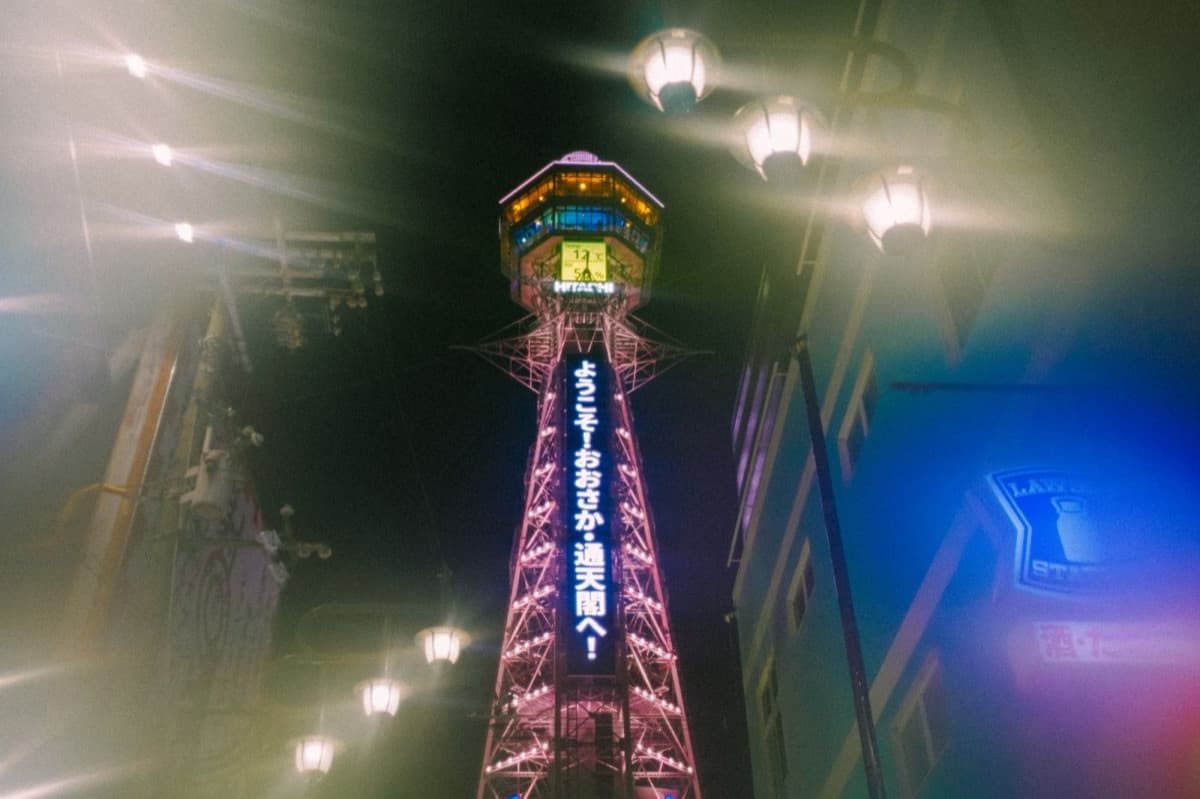
A walk through the Osaka district engineered in nineteen twelve to be the future, and beloved today precisely because it never became one. Follow the paradox of the New World from its rebuilt tower out to a temple thirteen centuries older and a skyscraper that is the real thing.
Start · Tsutenkaku Tower: The Rebuilt Heartbeat
DirectionsStops
- 1
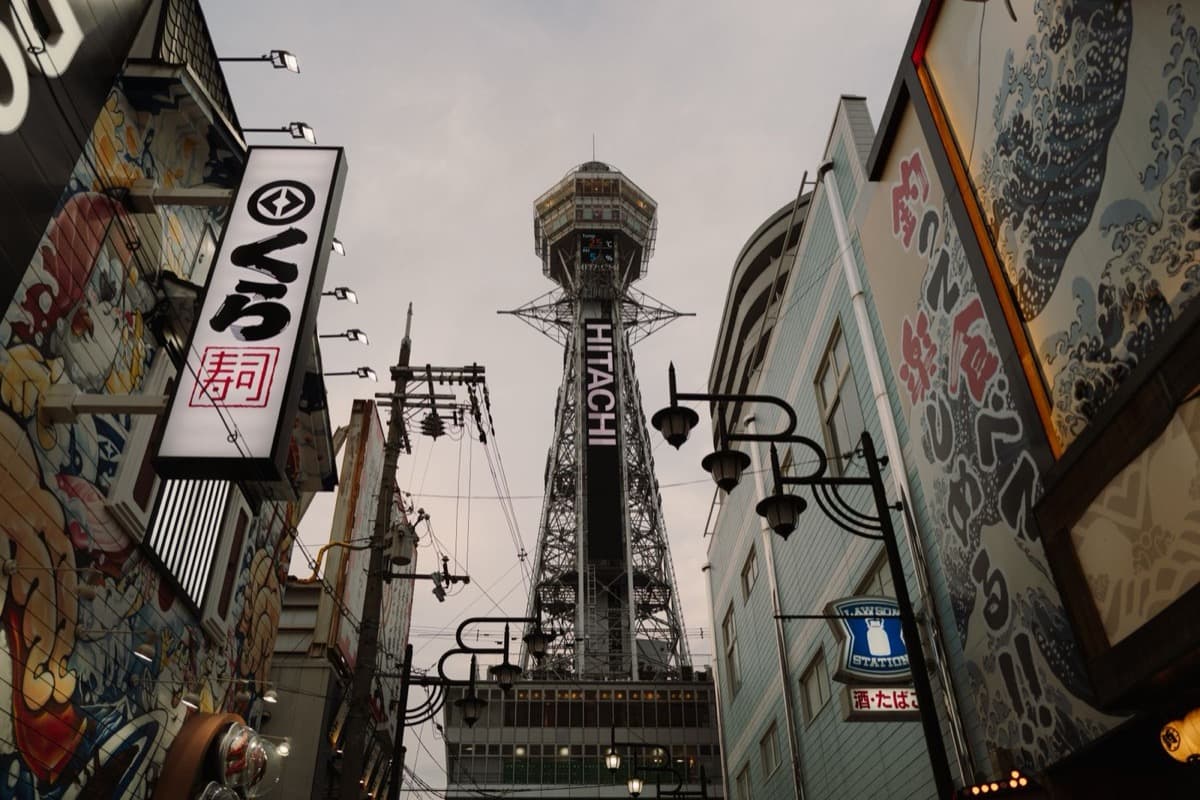
Tsutenkaku Tower: The Rebuilt Heartbeat
The eight-sided tower at the center of Shinsekai, a nineteen fifty-six replacement standing where a slender iron original once modeled itself on Paris.
- 2
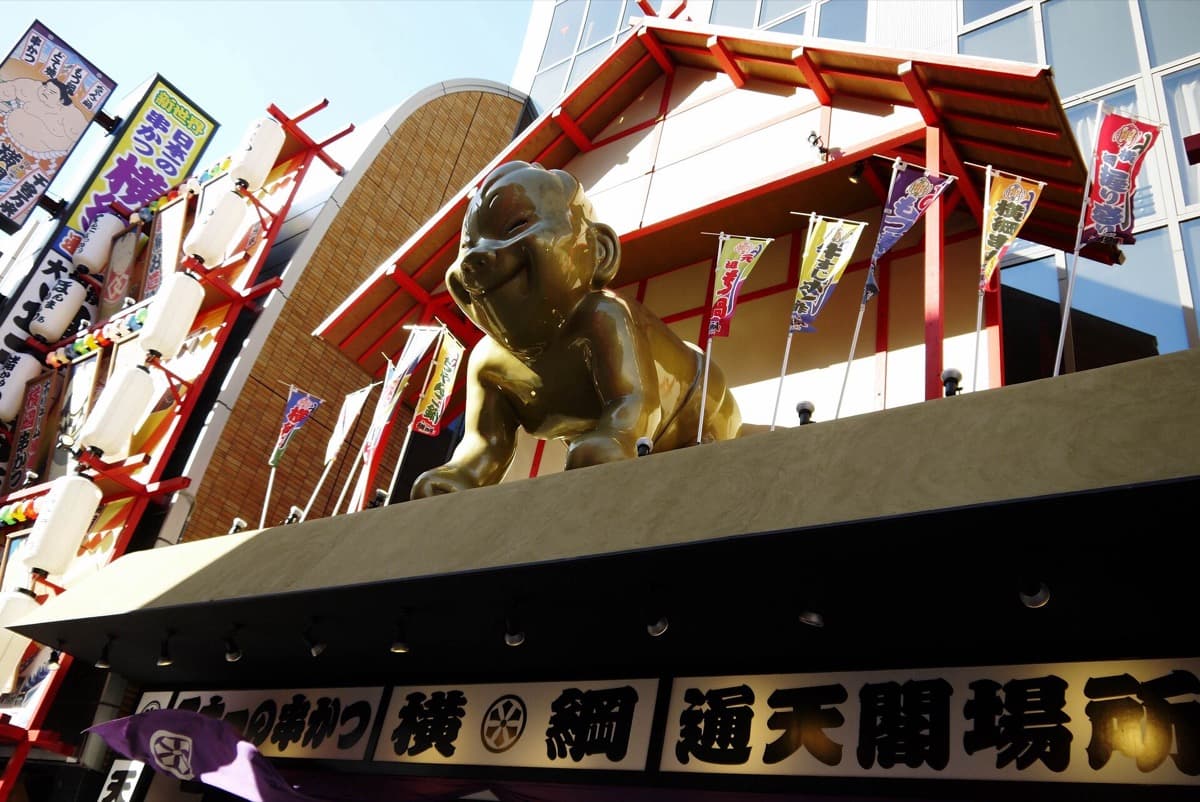
Shinsekai Streetscape: Billiken, Fugu, and the Frozen New World
The gaudy retro drag just south of the tower, where an imported American charm doll became the mascot of Osaka's New World.
- 3
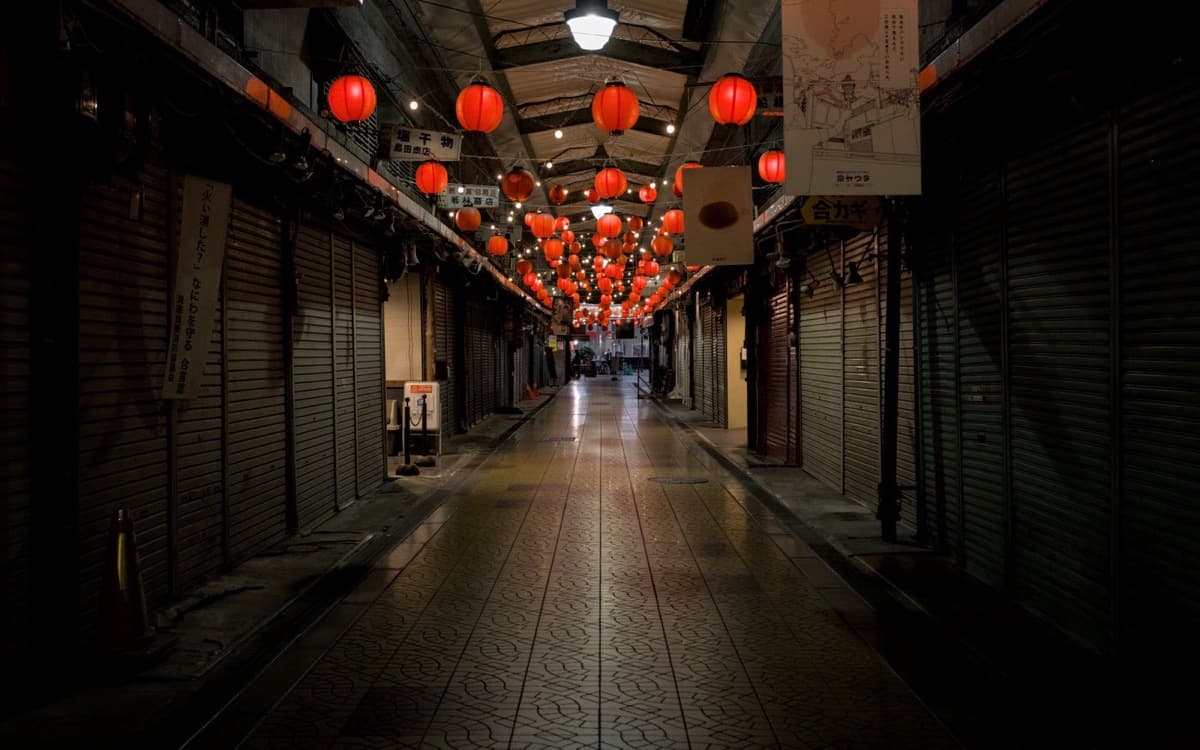
Jan-Jan Yokocho: The Arcade Named for a Sound
A covered arcade of roughly one hundred eighty meters whose nickname imitates the plucking of shamisen strings used to lure customers.
- 4
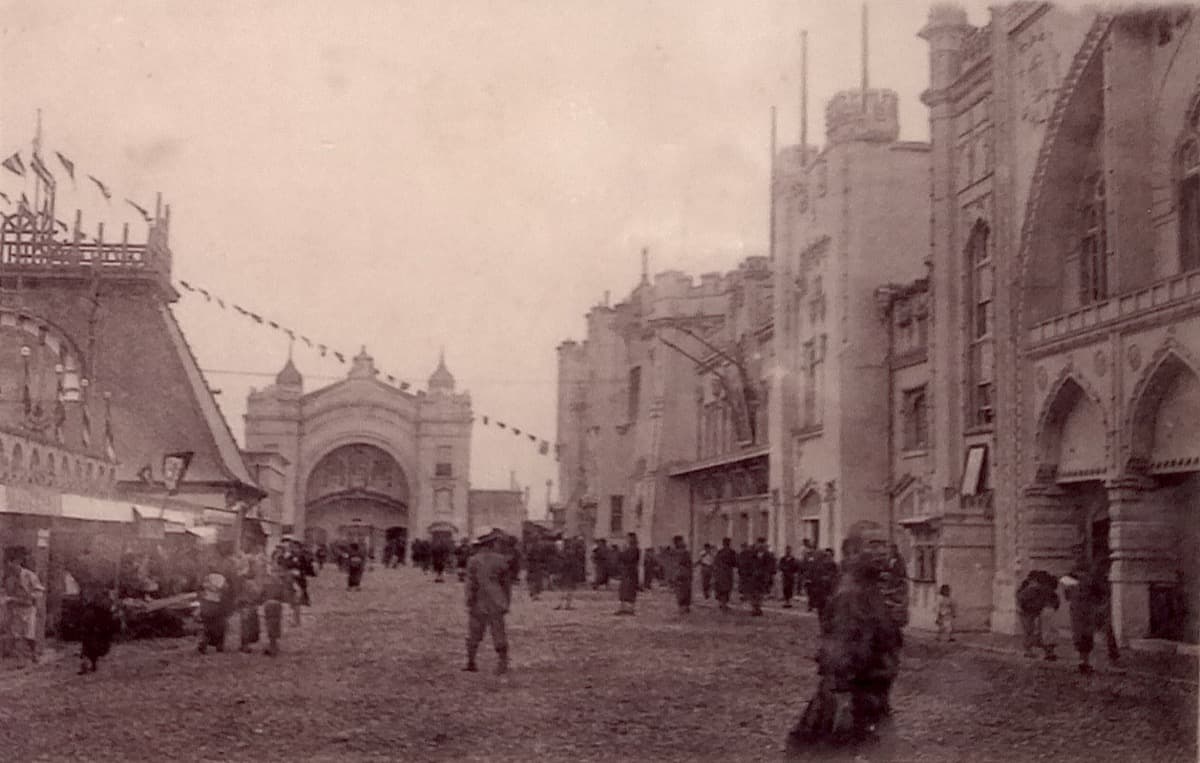
Site of Luna Park: The Vanished Flying Ride
The built-over ground south of the tower where an American-style amusement park once floated visitors in on an aerial cable car.
- 5
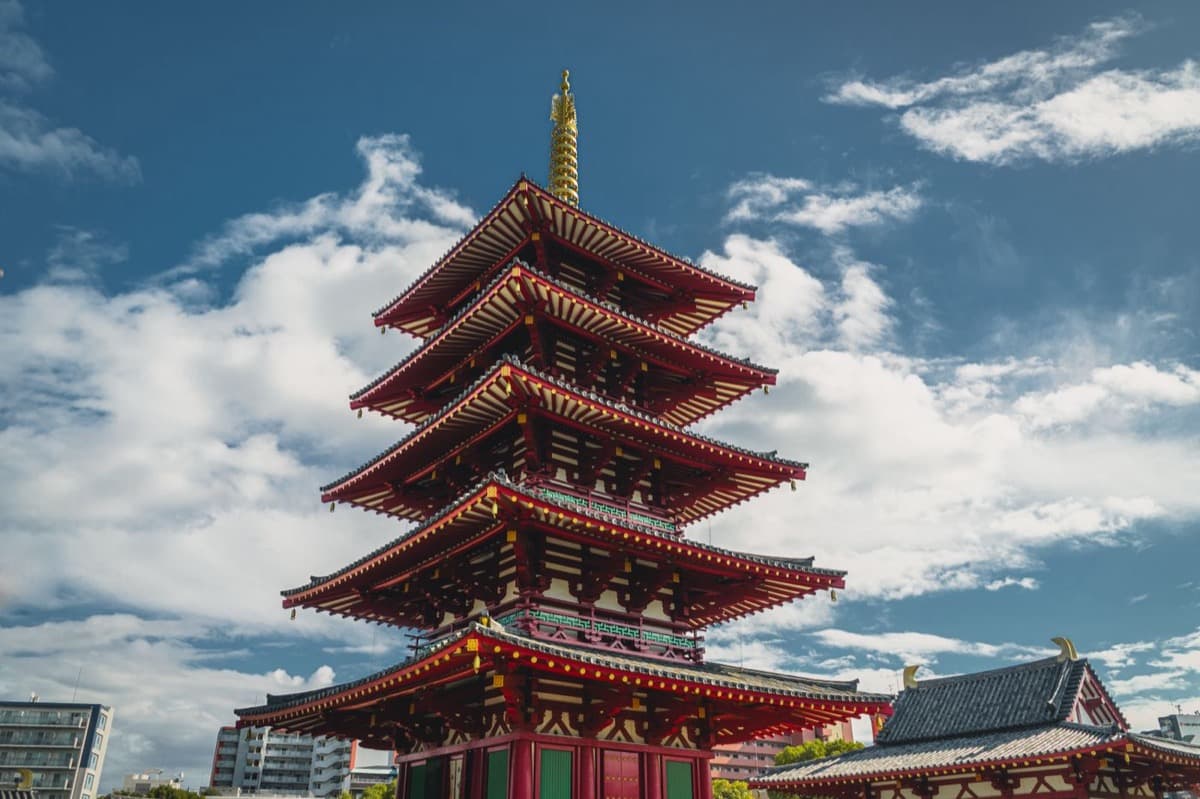
Shitenno-ji Temple: Real Deep Time
A temple founded in five ninety-three, often called one of the oldest in Japan, standing just beyond the edge of the New World.
- 6
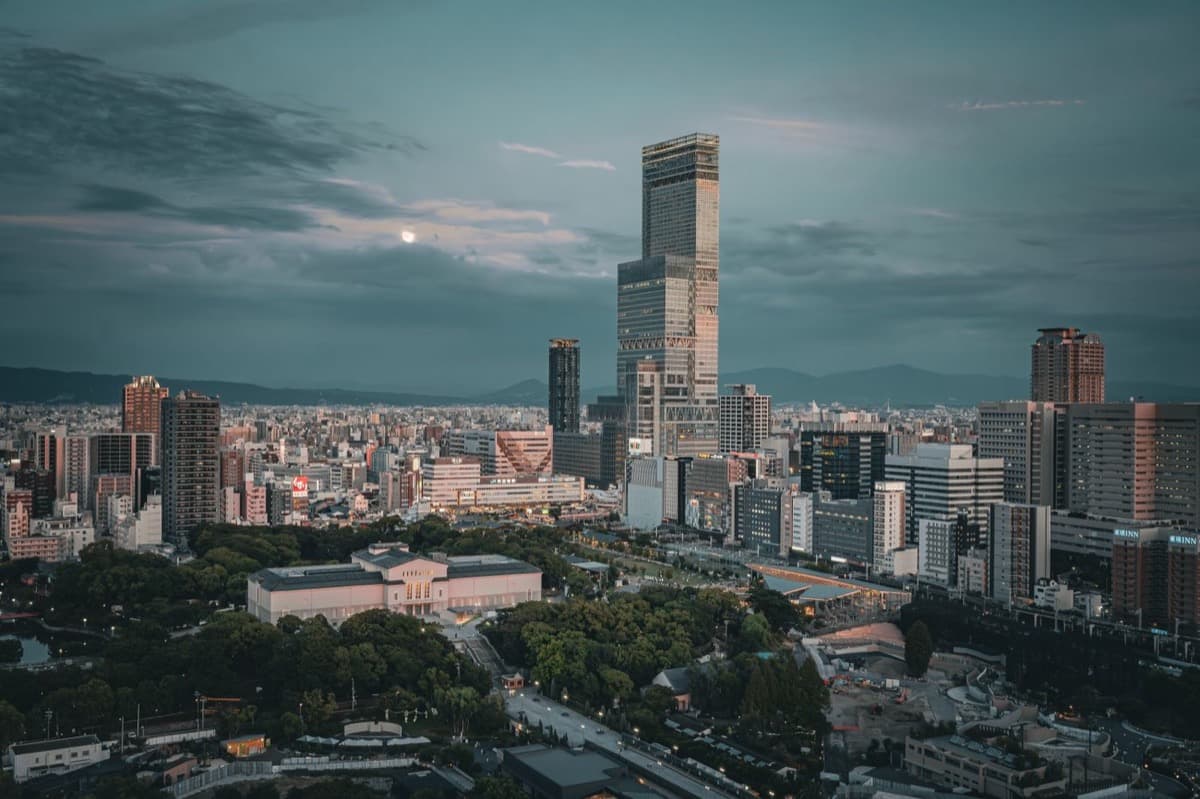
Abeno Harukas: The Actual Future
A three-hundred-meter tower opened in twenty-fourteen, the genuine skyline the New World only ever pretended to be.
Details
Best Time to Visit
Late afternoon into early evening is the sweet spot. Come around four in the afternoon to read the streetscape in daylight, then linger as the tower's neon and the arcade signs light up after dark, when Shinsekai looks most like its preserved self. Weekday visits are calmer than weekends. If you want the temple's central precinct and garden open, arrive before their late-afternoon closing, since the grounds stay walkable later than the ticketed halls.
Pro Tips
- •Every stop is short and skippable, so treat the route as a loose thread and stop wherever a sign, a smell, or a side lane pulls you in. You set the pace, not the tour.
- •Carry cash. Small arcade stalls, standing bars, and older shops around Shinsekai often do not take cards, even where the big stations nearby are fully cashless.
- •Load an IC transit card such as ICOCA before you start. Ebisucho and Dobutsuen-mae stations bracket the district, and the card also works on buses and in many convenience stores.
- •Treat kushikatsu etiquette as local heritage, not a gimmick: dip your skewer in the shared sauce only once, before your first bite, because the pot is communal. Cabbage on the counter is usually free for scooping extra sauce.
- •The tower, temple, and Abeno Harukas all have paid observation decks, but this walk works entirely from street level. Skip the tickets unless you specifically want the view, and put that time into wandering instead.
- •Look up often. Much of Shinsekai's story is in its overhead signage, the pufferfish, the lanterns, and the tower's changing colored lights, which locals still read as a rough season and weather signal.
Safety & Precautions
- •Osaka summers are hot and humid, and the covered arcade traps heat. If you walk between roughly June and September, carry water, use the shade, and pace yourself, since much of this route is outdoors.
- •Shinsekai borders some of Osaka's poorer streets just beyond its edges. It is an ordinary neighborhood, so walk with everyday courtesy and normal awareness, keep photos respectful of residents, and do not treat anyone's home as a spectacle.
- •Popular stalls, standing bars, and the arcade can get crowded and tight, especially on weekend evenings. Watch your bag in the press of people, and step to the side rather than blocking the narrow lane when you stop to look or eat.
- •Distances between the last stops are longer than inside Shinsekai, roughly a kilometre each to the temple and to Abeno Harukas. Wear comfortable shoes and check station exits in advance if you would rather ride part of the way.
Travel advisory: Exercise Normal Precautions (Level 1).
Gallery
Related Reading
Go deeper on what you'll see, hear, and walk through.
Overview
Best Self-Guided Walking Tours in Osaka (2026)
4 min
Overview
One Day in Osaka: A Walkable Castle-to-Kitchen Itinerary (2026)
6 min
Overview
Osaka Travel Guide: How Many Days, Getting Around, When to Go (2026)
5 min
Thematic
Best Culture Walking Tours in Osaka (2026)
2 min
Thematic
What to Eat in Osaka: A Food Guide (2026)
4 min
Deep dive
The Billiken: How an American Lucky Doll Became the God of Osaka's New World
6 min
Deep dive
Tsutenkaku: The Osaka Tower That Was Scrapped for War and Rebuilt by Its Neighborhood
5 min
Read the walk
The full story of Shinsekai: The New World That Time Forgot, in words. Prefer to listen? Play it narrated, from home or on location.
Introduction
Here is a strange thing about the corner of Osaka, Japan, we are about to walk. It is called Shinsekai, which means New World, and in nineteen twelve that is exactly what it was built to be: a speculative pleasure district with a tall iron tower at its heart, a northern half modeled on Paris and a southern half modeled on Coney Island in New York. Then the money drained away, the tower's steel was recycled for the war, and the neighborhood simply stopped moving forward. The place named for the future is now the most old-fashioned corner of the city, and people love it for exactly that reason. The nostalgia is the product. This tour has six stops and runs about two and a half kilometres over roughly ninety minutes, though every stop is short and skippable, so go at whatever pace suits you and linger where you like. We start under the rebuilt tower, read the gaudy preserved streetscape and its imported lucky charm, walk a shamisen-named arcade where fried skewers became heritage, and stand where a vanished amusement park once floated visitors in on a cable car. Then time telescopes: we step out of the New World into a temple founded in five ninety-three, and finish facing a three-hundred-meter tower opened in twenty-fourteen, the genuine future the New World only ever pretended to be. I will point things out and remember what stood here, but the walking is yours. When you arrive at the base of Tsutenkaku, begin with stop one.
1. Tsutenkaku Tower: The Rebuilt Heartbeat
Stand at the base and look straight up. This tower feels ancient to the district, and in a sense it is the whole reason Shinsekai exists, but the steel above you is younger than it looks. The original Tsutenkaku opened here in nineteen twelve, a slender iron tower whose silhouette borrowed from two Paris landmarks: the outline of the Eiffel Tower up top, and the base shaped like the Arc de Triomphe. According to the tower's own history, it was connected to a neighboring amusement park by an aerial cable car, so arriving visitors floated in with a flying sensation. That first tower did not survive. It was damaged by fire in nineteen forty-three, and rather than being repaired it was taken apart and its steel handed over for the war effort. So the tower you are looking at is a rebuild. It opened in nineteen fifty-six, designed by the engineer Tachu Naito, a man so associated with these structures that he was called Japan's Father of Towers. It rises about one hundred eight meters, eight-sided, with an observation deck partway up. Since the late nineteen fifties it has carried sponsor lighting near the top, and locals learned to read the changing neon and colored lights as an informal signal of season and weather. You do not need a ticket to feel the point of this stop. Everything around you was sold as the future in nineteen twelve. What endures is a loving copy of that ambition, rebuilt in the nineteen fifties and frozen ever since. Keep the paradox in your pocket as we walk: the New World's beating heart is a replica of a dream that never quite arrived.
2. Shinsekai Streetscape: Billiken, Fugu, and the Frozen New World
Look around at the signage. Giant pufferfish, oversized lanterns, hand-painted faces, colors turned up past good taste and proud of it. This is the visual language of Shinsekai, and it is not an accident of decay, it is a preserved style. The district was established in nineteen twelve and named the New World, planned with Coney Island in New York as the model for its southern half and Paris for the northern half, with the tower as the centerpiece. Those puffed-up fish on the signs point to fugu, blowfish, one of the local dining traditions the neighborhood is known for. Now find a small grinning figure with a pointed head and a contented smile. That is the Billiken, and here is a lovely twist that sits right on the heart of this place. The Billiken is not an ancient Japanese god. It is American. It was designed by an illustrator and art teacher named Florence Pretz, who received a United States design patent for it on October sixth, nineteen oh eight. It was nicknamed the god of things as they ought to be. When Osaka's amusement park opened around nineteen twelve, the Billiken was enshrined here as a piece of imported Americana. The original wooden figure vanished when that park closed in nineteen twenty-three, and a replica was installed in the rebuilt tower in nineteen eighty. Think about that. The mascot of a district named the New World is an American good-luck doll patented in nineteen oh eight. The whole neighborhood is like this: a hundred-year-old idea of the future, lovingly kept exactly as it was. Just beyond its edges sit some of Osaka's poorer streets, so wander with the same courtesy you would bring anywhere.
3. Jan-Jan Yokocho: The Arcade Named for a Sound
Step into the covered arcade and notice how the light changes and the sound closes in. This narrow lane runs about one hundred eighty meters, officially the Nanyo-dori shopping street, but almost nobody calls it that. Everyone calls it Jan-Jan Yokocho, and the name is a sound.…
Full narration for this stop unlocks with the tour.
4. Site of Luna Park: The Vanished Flying Ride
Here is where you have to use your imagination, because the most futuristic thing this district ever built left almost no trace. South of the tower, on the ground built over around where you now stand, an amusement park called Luna Park operated from nineteen twelve to nineteen…
Full narration for this stop unlocks with the tour.
5. Shitenno-ji Temple: Real Deep Time
Now the frame breaks. You have spent this walk inside a place that calls itself old, and its oldness is really about a hundred years of preserved nostalgia. Here, a short distance from Shinsekai, is what actual deep time looks like. Shitenno-ji was founded in five ninety-three…
Full narration for this stop unlocks with the tour.
6. Abeno Harukas: The Actual Future
Turn and find the tall one. That sheer glass tower on the horizon is Abeno Harukas, and it makes the perfect final note for a walk about a district named for a future that never came. Because this, at three hundred meters, is the real thing. It opened on March seventh,…
Full narration for this stop unlocks with the tour.