Speicherstadt: The City of Warehouses on Oak
105 min · 4 km · easy
Spend one day in Hamburg on foot and you can read the whole city in a single loop: start in the merchant old town around the Rathaus, walk the brick canals of the Speicherstadt to the Elbphilharmonie by lunch, then follow the Elbe west into St. Pauli and the Reeperbahn for the evening. The three neighborhoods sit close enough that the entire day is walkable, roughly six to eight kilometers total, with the harbour and the Alster lake never far from your shoulder. Below is a morning-to-evening plan, with verified hours and prices, and the self-guided audio tours that narrate each stretch as you walk it.
If you want the map view and the full set of routes first, here is the Hamburg walking tours hub and the /germany/hamburg city page.
The short answer: one walkable loop, three moods
Hamburg's center is compact and flat, so a single day covers a lot without a car. A sensible order runs east to west following the water:
- Morning (roughly 9:00 to 12:00): the merchant old town. Rathaus, the Chamber of Commerce, the Binnenalster, and the ruins of St. Nikolai. This is the self-governing Hanseatic city in stone. Audio companion: the Hamburg merchant republic tour, about 2.9 km and 100 minutes.
- Midday (roughly 12:00 to 15:00): the warehouse district and the harbour front. Speicherstadt, the Wasserschloss, Chilehaus, HafenCity, and the Elbphilharmonie plaza. Audio companion: the Hamburg Speicherstadt tour, about 4 km and 105 minutes.
- Afternoon into evening (roughly 15:00 onward): St. Pauli and the Reeperbahn. Landungsbrücken piers, the Reeperbahn, Beatles-Platz, and the St. Pauli waterfront. Audio companion: the Hamburg Reeperbahn and Beatles tour, about 5.1 km and 120 minutes.
You do not have to walk every meter of all three routes. Each stop is self-contained, so you can drop in and out and let the audio fill the gaps between the sights you actually want.
Morning: the Republic of Merchants
Hear a stop from this walk
The Chilehaus: Brick as a Ship's Prow
Begin at the Hamburger Rathaus on the Rathausmarkt. Hamburg governed itself for centuries as a Free and Hanseatic City, a republic run by merchants rather than a court, and the city hall makes that argument in stone: a palace crowned by no monarch. The lobby is free to enter; guided interior tours run for a few euros and are worth checking on the day, since availability depends on parliamentary sittings.
From there it is a short walk to the Handelskammer on Adolphsplatz, the chamber of commerce, then north to the Binnenalster and the elegant Jungfernstieg promenade along the lake. Turn south toward Deichstrasse and the Nikolaifleet, the old canal-side merchant houses, and finish the morning at Mahnmal St. Nikolai, the burnt shell of a church left standing as a war memorial. The memorial grounds are free. A glass panoramic lift climbs the surviving spire to a viewing platform, and a documentation center sits in the former crypt; both are covered by a modest combined admission (generally in the region of a few euros), and the lift runs during daytime hours, so check the current schedule on the official memorial site before you go up.
Give the St. Nikolai ruin a slow, quiet pause rather than treating it as a quick photo. The crypt exhibition adds the context the ruin above cannot.
Midday: brick, water, and a glass wave
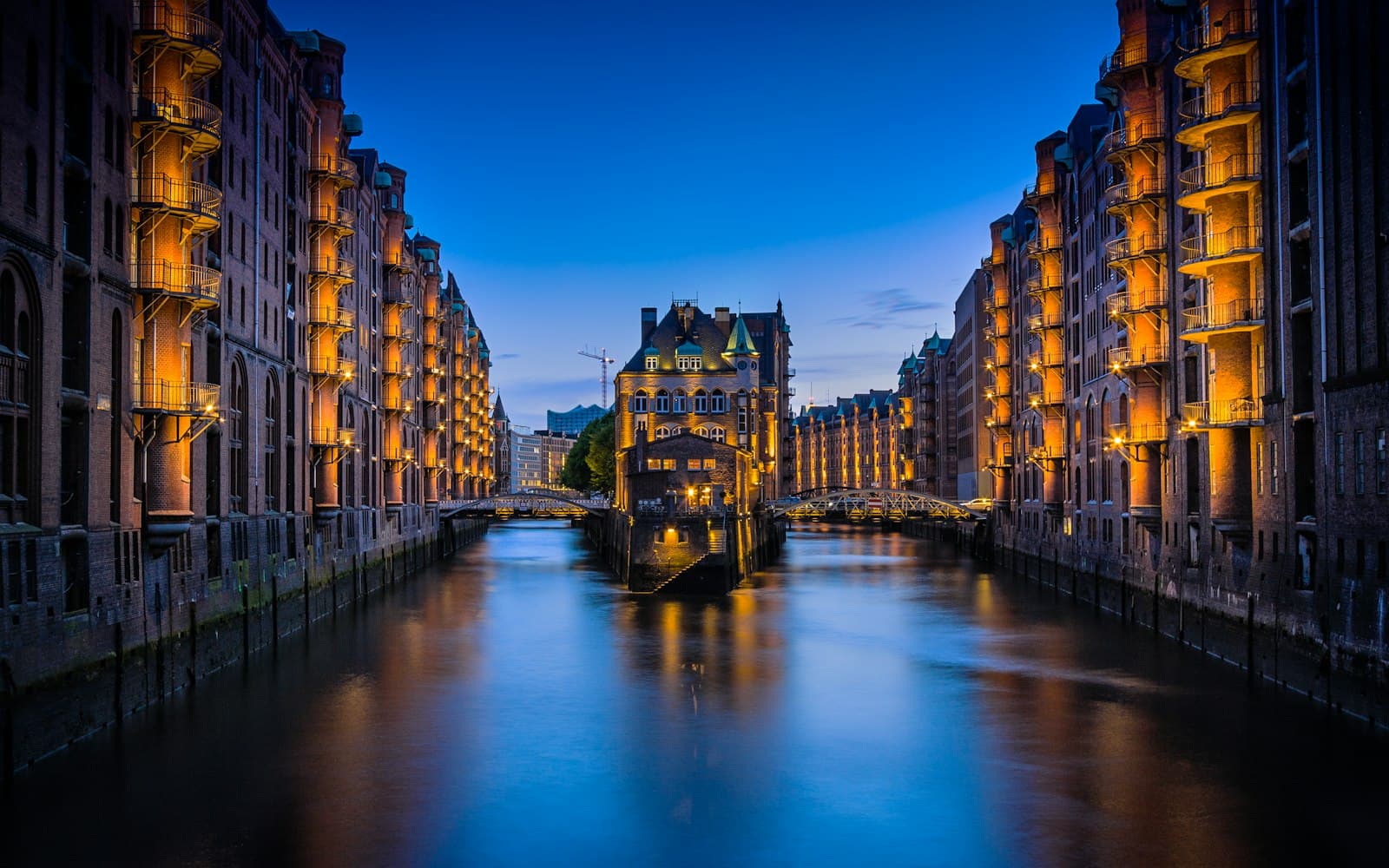
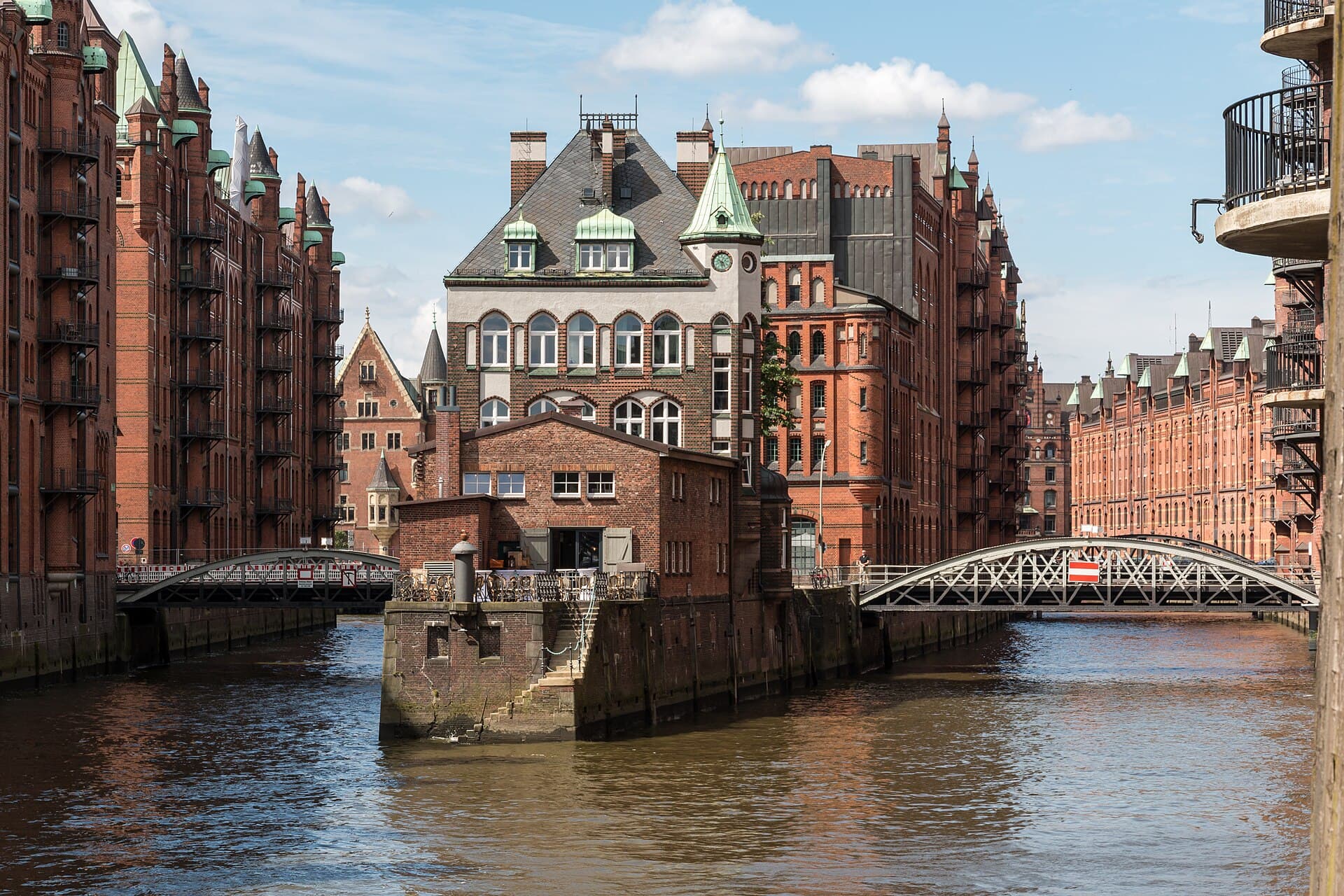
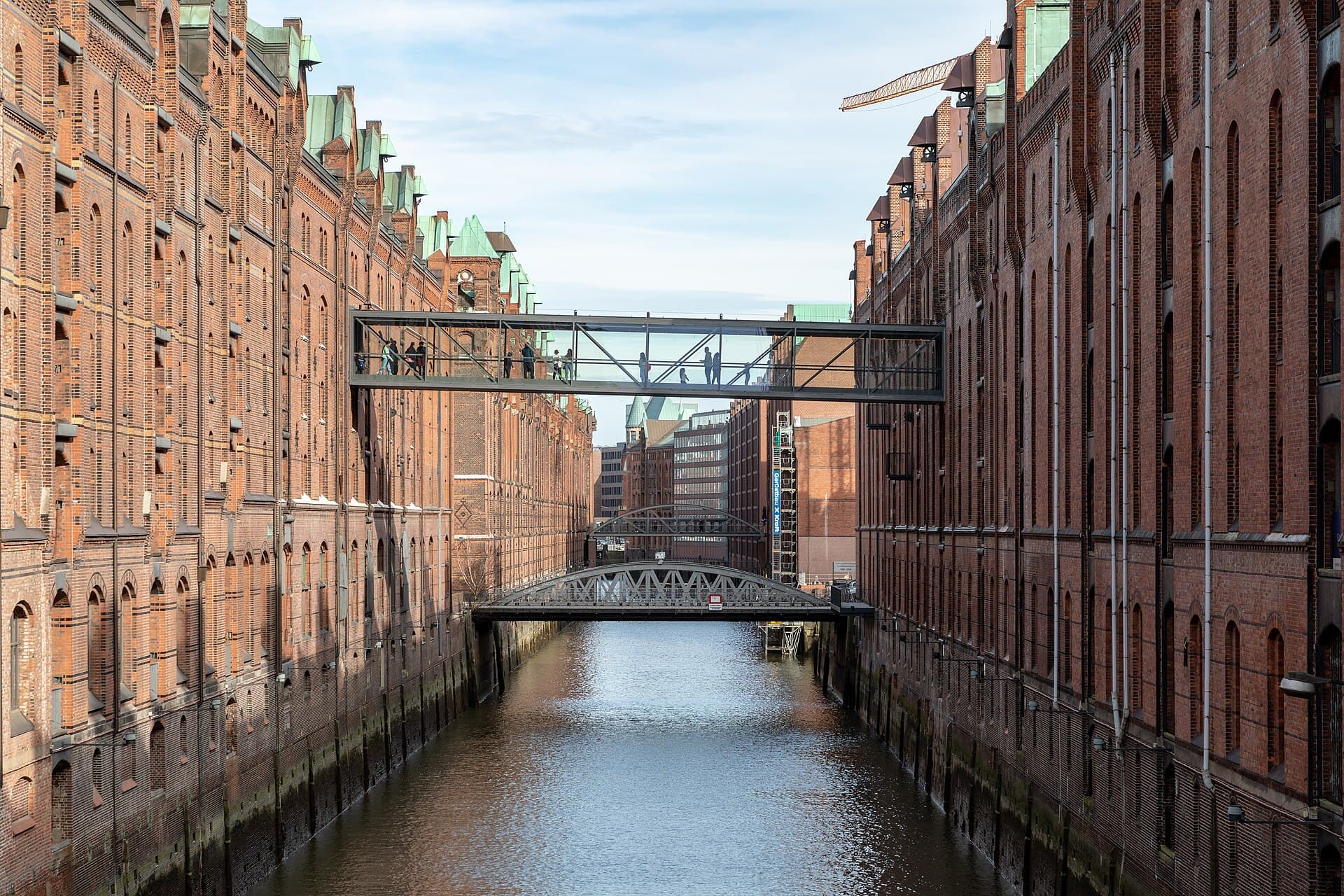
Walk south into the Speicherstadt, the warehouse district built on oak piles driven into marshy ground, and now a UNESCO World Heritage site alongside the neighboring Kontorhaus district. This is the visual heart of the day: red brick warehouses with loft doors and winch beams standing directly over the Fleete, the tidal canals. Cross and re-cross the bridges to get the best angles down the water, and time your walk near high tide if you can, when the canals fill and the reflections are strongest. The Wasserschloss, a small brick building marooned at a canal junction, is the signature shot.
Head east to the Chilehaus, an expressionist office block whose sharp corner reads like the prow of a ship when you stand close and look along both facades. Then swing back south through HafenCity, the new district built on the old port basins, toward the Elbphilharmonie.
The Elbphilharmonie's public Plaza, a viewing level 37 meters above ground with a 360-degree walkway, is the payoff. One important 2026 detail: entry to the Plaza is free until 5 October 2026, after which a small fee (5 euros) applies. Even while free, a timed ticket carries a small booking fee if you reserve in advance, and same-day free tickets can run out on busy afternoons. Reserve ahead if you can, especially on weekends. The Plaza is open daily, generally from 10:00 to midnight, with last admission shortly before closing. The concert hall and guided building tours are separate paid experiences and are not required to enjoy the view.
Afternoon and evening: St. Pauli and the Reeperbahn
Follow the Elbe west to the Landungsbrücken, the floating piers, where the working harbour is at its most theatrical. Two things here cost nothing: the free foot passage through the historic Old Elbe Tunnel under the river, and the public HVV harbour ferries, which run on a normal transit ticket. Ferry line 62 in particular passes the Elbphilharmonie and the piers and doubles as a cheap harbour cruise if you want to rest your feet.
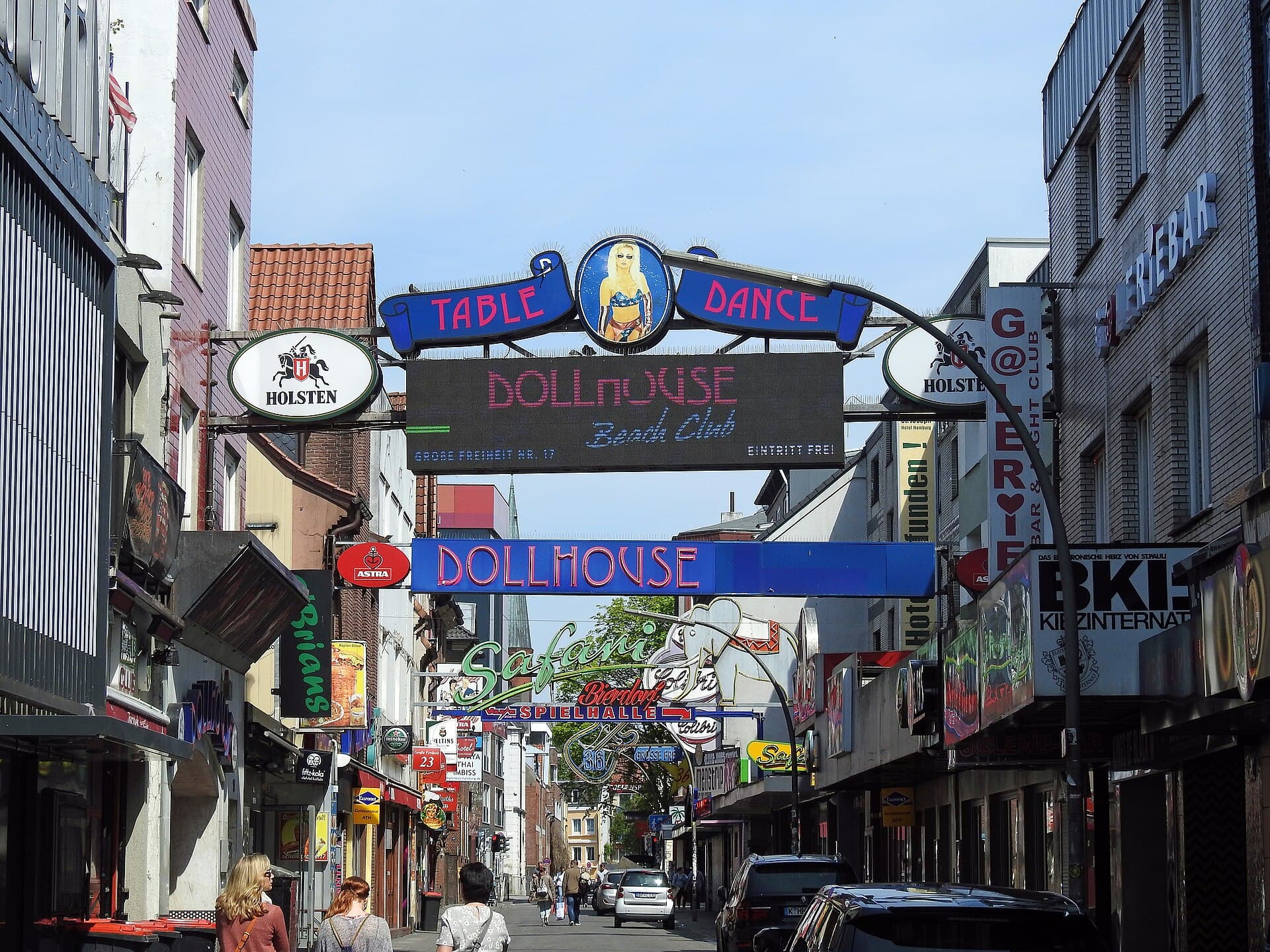
From the piers, climb inland to the Reeperbahn, the strip at the center of St. Pauli. This is the quarter respectable Hamburg once pushed to its edge, and the tour makes the counter-intuitive case that relegation is exactly what let St. Pauli export one of the city's most durable cultures. Beatles-Platz and the Grosse Freiheit mark where a young band from Liverpool played the rough clubs in the early 1960s. The venues themselves are gone, so let the square and the street carry the story rather than hunting for a surviving stage. Nearby sit the Davidwache police station, Herbertstrasse (a screened red-light lane restricted to adult men), and the Millerntor-Stadion, home of FC St. Pauli.
Handle the harder corners of this quarter plainly and respectfully: obey the posted entry restrictions and do not photograph people. St. Pauli is a lively but ordinary urban neighborhood at night. Keep your valuables secure and your wits about you as you would in any busy nightlife district, and you will be fine.
The one early-morning bonus: the Fischmarkt
If your one day includes a Sunday, set an alarm. The St. Pauli Fischmarkt runs only on Sunday mornings, from about 5:00 in summer (April to October) or 7:00 in winter (November to March) until roughly 9:30, when fish, flowers, and fruit are sold off by shouting criers as the night crowd and the morning traders overlap. It is the most atmospheric hour in the whole quarter, and it is free. If your day is not a Sunday, you simply skip it; the rest of the loop stands on its own.
Getting around and practical notes
Most of this route is genuinely walkable, and the three neighborhoods connect along the waterfront. When you want to skip a stretch, Hamburg's HVV network of U-Bahn, S-Bahn, buses, and harbour ferries covers everything. A single ride in the central AB zone runs about 4.10 euros and a day ticket about 8.20 euros in 2026, with the day ticket also valid on the public harbour ferries and covering up to three children aged 6 to 14 with one adult. Buy and validate a ticket before boarding, since inspectors are common and traveling without a valid ticket leads to a fine.
A few walking notes that hold across all three routes:
- Wear shoes with grip. Cobbles, kerbs, and embedded tram and rail tracks are uneven and turn slick in rain, which northern Germany supplies often. Bring a light waterproof layer whatever the forecast says.
- Watch for fast, near-silent cyclists at crossings, and keep back from canal and harbour edges, many of which have low railings or none at all.
- Most of the day is free. The paid extras are optional: the Rathaus tour, the St. Nikolai lift and museum, the St. Michaelis tower (if you add it: adults 8 euros, generally open daily with seasonal hours), and the Elbphilharmonie booking fee or, from October 2026, its Plaza entry.
The most rewarding light is late afternoon into early evening, when the low sun warms the Speicherstadt brick and the district's floodlighting begins after dark. If you can, aim to be on the canals or the Elbphilharmonie Plaza around then, and let the walk carry you into St. Pauli as the evening turns on.
Sources
Frequently asked questions
- Can you see Hamburg in one day on foot?
- Yes. Hamburg's center is compact and flat, and the main neighborhoods sit close together along the water. A single east-to-west loop of roughly six to eight kilometers covers the merchant old town around the Rathaus, the Speicherstadt canals and the Elbphilharmonie, and St. Pauli with the Reeperbahn. You can walk it in a day and use the HVV transit network to skip any stretch.
- Is the Elbphilharmonie Plaza free in 2026?
- Entry to the Elbphilharmonie Plaza viewing level is free until 5 October 2026, after which a fee of 5 euros applies. Even while free, reserving a timed ticket in advance carries a small booking fee, and same-day free tickets can sell out on busy afternoons. The Plaza is open daily, generally from 10:00 to midnight with last admission shortly before. The concert hall and guided tours are separate paid experiences.
- What time is the Hamburg Fischmarkt and which day?
- The St. Pauli Fischmarkt runs only on Sunday mornings. In summer (April to October) it opens around 5:00, and in winter (November to March) around 7:00, closing at roughly 9:30 year-round. Entry is free. If your day in Hamburg is not a Sunday, you simply skip it and the rest of the walking loop stands on its own.
- How much does public transport cost in Hamburg?
- In 2026 a single ticket in the central AB zone costs about 4.10 euros and a day ticket about 8.20 euros. Both are valid on the U-Bahn, S-Bahn, buses, and the public HVV harbour ferries. The day ticket also covers up to three children aged 6 to 14 with one adult. Buy and validate a ticket before boarding, since fare inspections are common.
- Is the Reeperbahn safe to walk?
- St. Pauli and the Reeperbahn are lively but ordinary urban areas, busiest at night with nightlife crowds. Walk with normal city awareness, keep your valuables secure, and treat the red-light lane Herbertstrasse with respect: it is restricted to adult men and photographing people is not allowed. Handle the quarter's harder corners plainly and you will be fine.
- Do you need tickets for Hamburg's main sights?
- Most of the day is free, including the Rathaus lobby, the Speicherstadt canals, HafenCity, the Landungsbrücken piers, the Old Elbe Tunnel on foot, and the St. Nikolai memorial grounds. Paid extras are optional: guided Rathaus tours, the St. Nikolai lift and museum, the St. Michaelis tower (adults 8 euros), and the Elbphilharmonie Plaza booking fee or, from October 2026, its 5 euro entry.
Ready to experience it?
Speicherstadt: The City of Warehouses on Oak
105 min · 4 km · easy
More from Hamburg
Explore more at your own pace.
Hamburg, the Free Port of Merchants: A Republic Built on Trade and the Tide
Hamburg's Speicherstadt: Reading a Port Through Brick on Oak Over Water
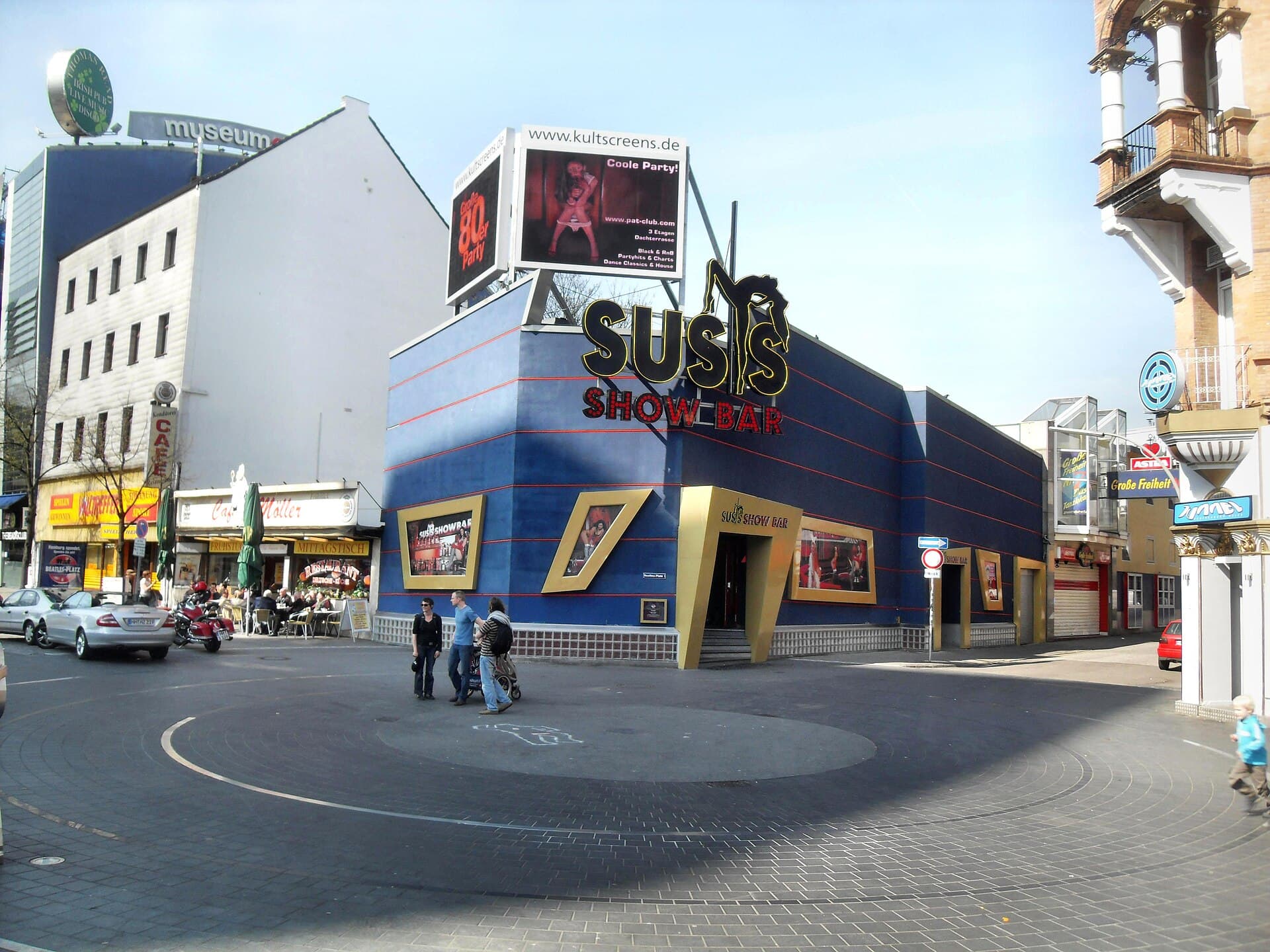
On the Grosse Freiheit, Where the Beatles Grew Up
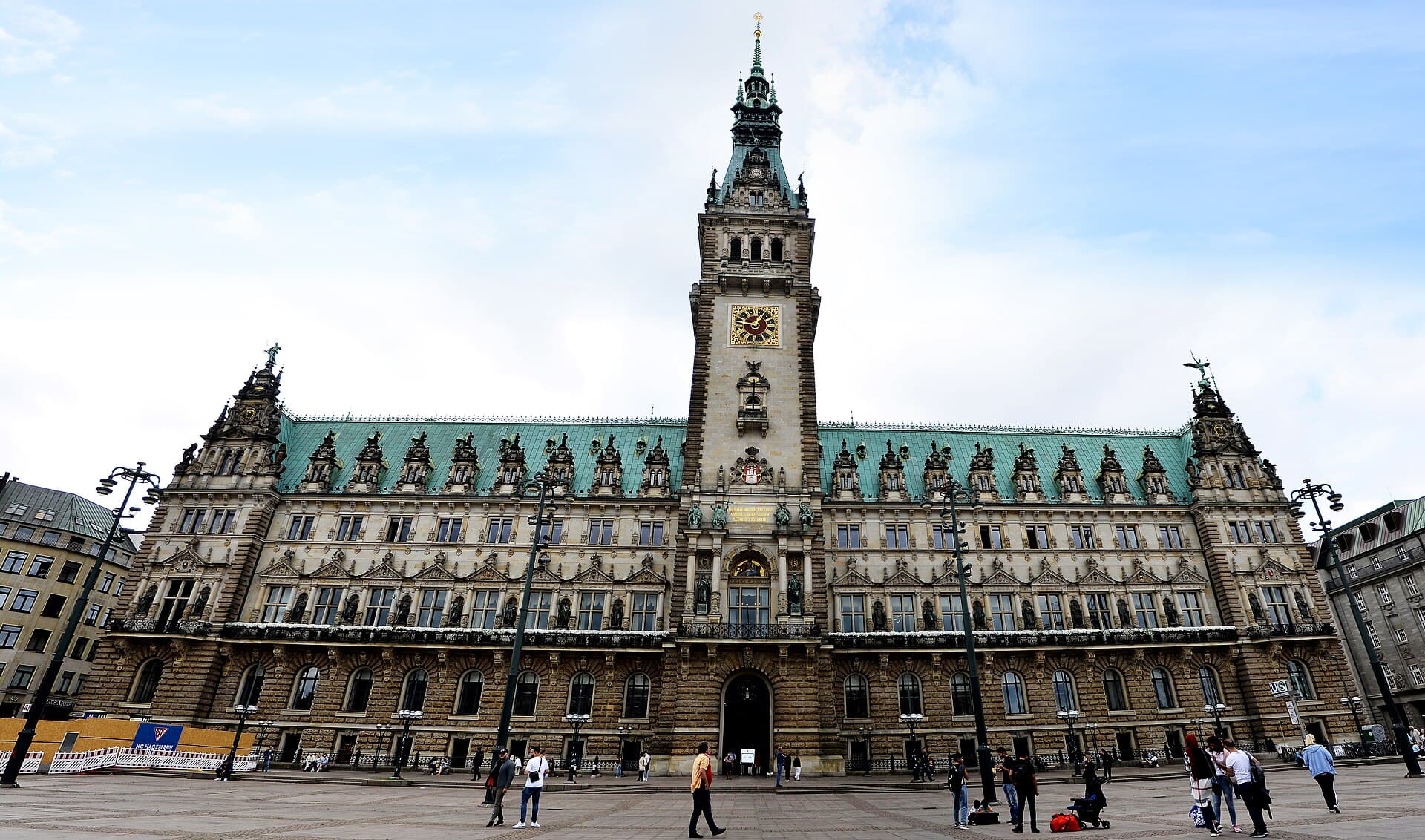
The Hamburg Rathaus: A Palace Built by a Republic With No Throne
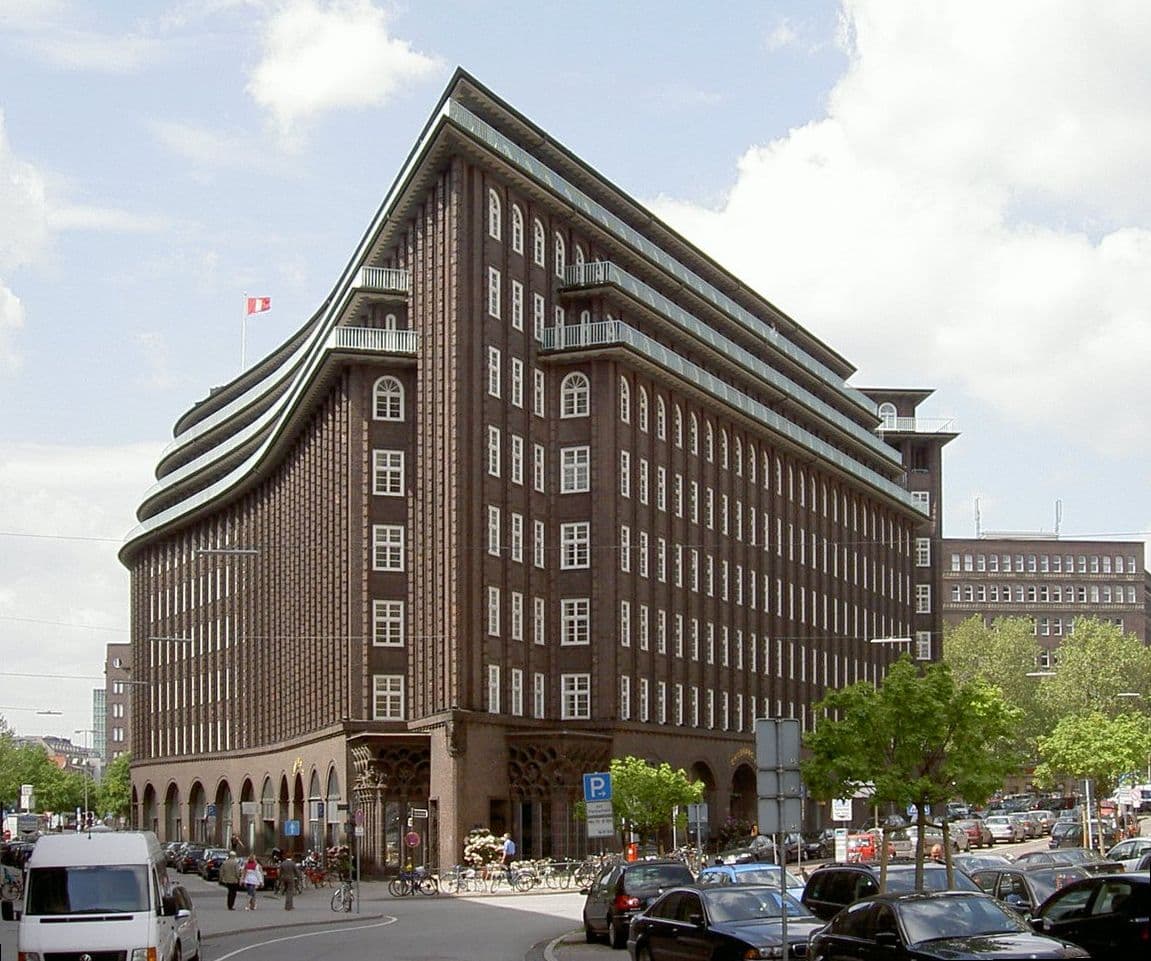
The Chilehaus: Reading Hamburg's Brick Ship