The Reeperbahn is a street whose name is a receipt. Reep is the Low German word for rope, Bahn means track, and the mile that Hamburg came to call sinful began as an honest, essential piece of harbour infrastructure: a long, straight rope walk where cordage for sailing ships was twisted and stretched to its full working length. Walk it today and you are reading two stories laid over the same paving, the industrial one underneath and the neon one on top. The rope came first, and it explains everything that followed.
A street named for a trade
Until the sixteen twenties, Hamburg's rope makers laid out their lines in the inner city near the Elbe. As the town grew crowded, they were pushed outside the city walls, along the country road that ran west toward Altona, then a separate city. That road took the name Reeperbahn. Through the seventeenth and eighteenth centuries it functioned as a literal rope walk, a stretch long enough to lay out the full length of rope a ship required.
The logic here is worth pausing on, because it is the logic of the whole quarter. Sailing ships could not exist without rope. Rope needed length. Length needed the edge of town. So the trade that kept the port alive was relegated to the margin precisely because it was useful and unglamorous, and the strip it created ran about nine hundred and thirty metres, roughly the distance a rope maker needed. When you stand on the Reeperbahn, you are standing inside a piece of preindustrial engineering that survived as a street.
From rope to the sinful mile
Hear a stop from this walk
Die Grosse Freiheit und der Beatles-Platz: The Crucible
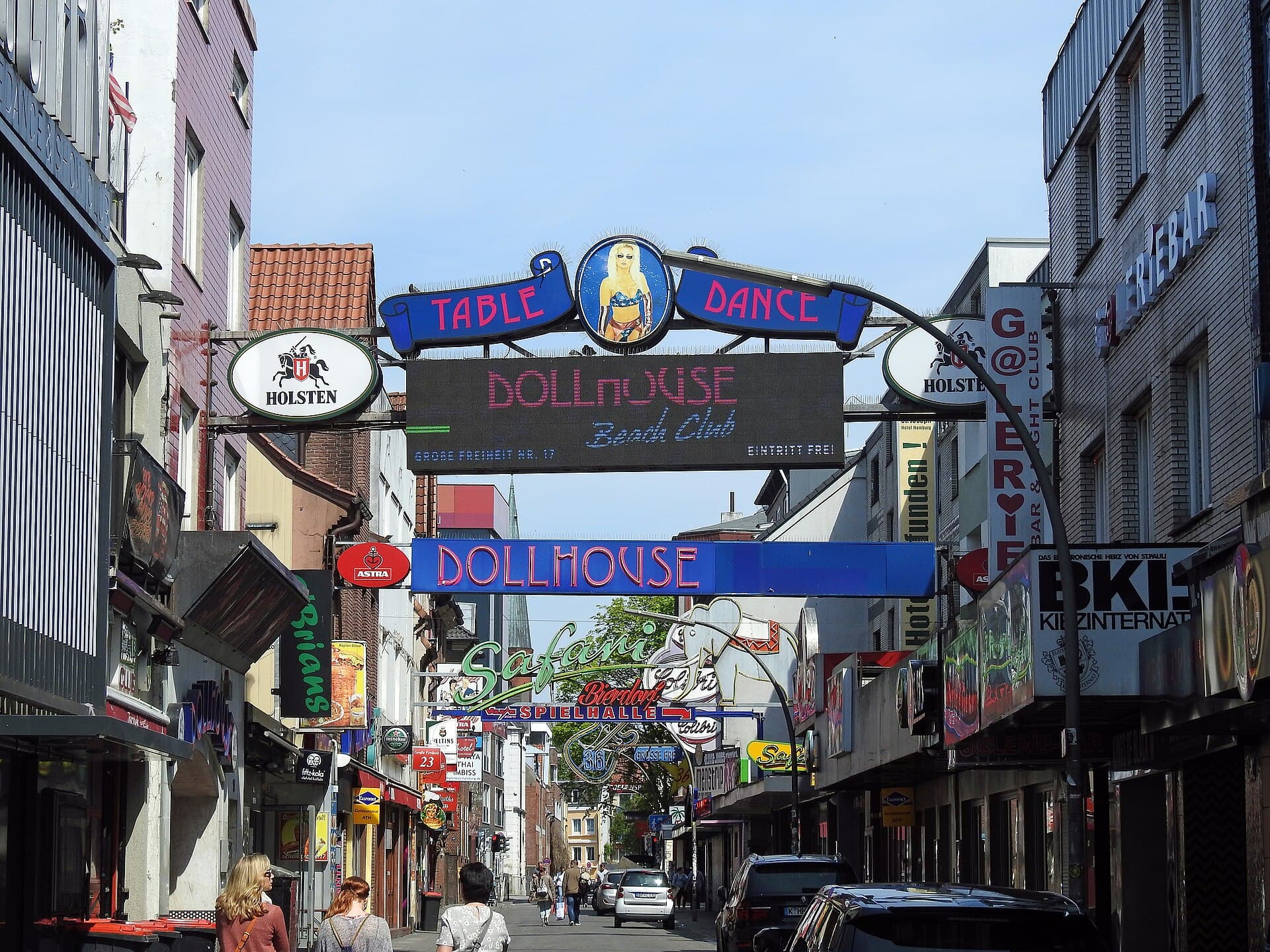
Over time the entertainment gathered where the sailors already were. Theatres, bars, and the trade in pleasure filled in around the old rope ground, and Hamburg gave the mile a nickname it has half regretted and half embraced ever since: die suendige Meile, the sinful mile. It is worth hearing that phrase for what it is, a civic label that mixes embarrassment and pride, rather than a literal description of every doorway. Locals more often just call the quarter the Kiez, the neighbourhood, which tells you how ordinary and lived in it feels to the people who actually walk it.
That double naming captures the tension of the place. Respectable Hamburg pushed the rope makers out to keep the smell and the sprawl beyond its gates, and the edge it manufactured became one of the city's most defining and most exported places. The relegation was meant to contain and diminish. It did the opposite. This is the counter-intuitive spine of the whole district, and the Reeperbahn is where you can see it in a single line of pavement: honest labour at the bottom of the story, and the reputation the city both scolded and sold at the top.
The one thing to understand standing here
If you take one idea away from the Reeperbahn, make it this. The strip is not a naturally wild place that Hamburg failed to tame. It is a place Hamburg deliberately created by exclusion, and then could not keep at a distance. The rope makers were sent here. Later the marginal trades and marginal people that the respectable city preferred not to see were sent here too, out into the gap between Hamburg and Altona where neither city's rules fully reached. The entertainment, the nightlife, and eventually the culture the city now advertises all grew in ground that was chosen for its distance.
That reframing changes how you read the neon. The lights are not the point. The point is underneath them: an edge that the city drew on purpose, and a margin that refused to stay marginal. Once you carry that idea, every side street around the Reeperbahn starts to make sense as part of one argument rather than a collection of unrelated attractions.
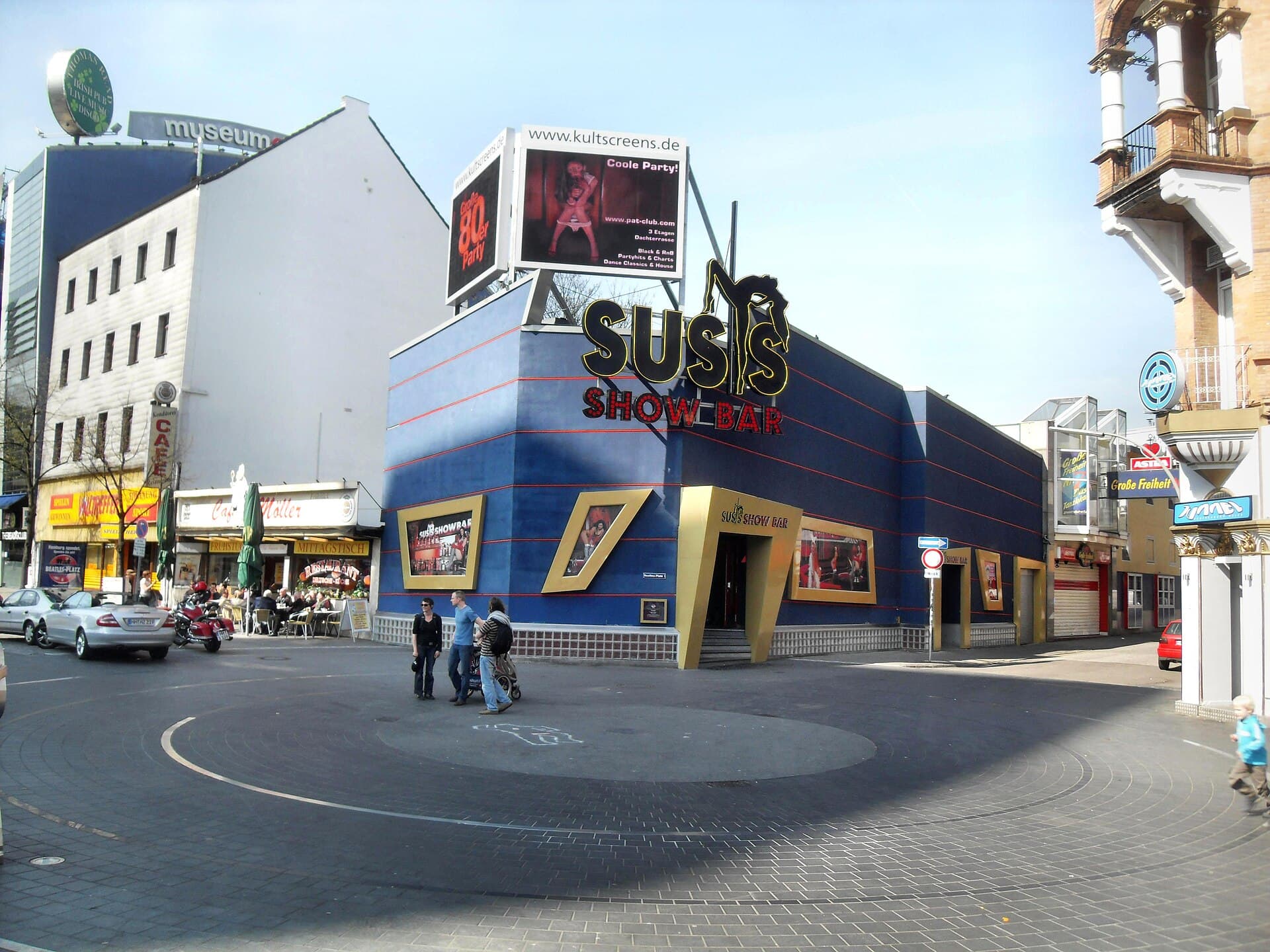
And the side streets carry the argument well. Just off the Reeperbahn runs the Grosse Freiheit, where between roughly August nineteen sixty and May nineteen sixty-two a young band from Liverpool played hundreds of all night sets and grew up on a few paving stones, remade by cheap, brutal, hours long labour that the clubs bought on the cheap. Nearby stands the Davidwache, the small red brick police station that has kept its demanding beat on this corner since a police post first appeared here in eighteen forty. Order and margin, the institution and the edge, sit within sight of each other. The Reeperbahn is the seam that stitches them together.
How to read the street
Give yourself time to walk it slowly rather than rushing to a specific address. The Reeperbahn rewards attention to proportion and direction more than to any single facade. Notice how straight and how long it runs, and remember that the straightness is a working measurement, not an accident of city planning. Notice that it points toward the harbour, because the harbour is the reason any of this exists: the port both connected Hamburg to the world and dumped the world's arrivals onto the district's edge.
Timing matters too. Late afternoon into early evening is a good window, when the strip is waking up but the quarter is still calm enough to read its history without the crush of the late crowd. If you are here on a Sunday, an early start lets you finish at the dawn Fischmarkt on the Elbe, where the last of the night's wanderers cross paths with the first traders of the morning, the two halves of St. Pauli meeting in one place. That contrast, the same one you feel on the Reeperbahn between rope and neon, runs through the entire neighbourhood.
You will also read some of it soberly. The quarter's harder history, including its gated red light street, deserves plain attention and dignity rather than spectacle. Reading the Reeperbahn honestly means holding both truths at once: the working rope walk and the reputation, the exported culture and the human hardship. That is what makes it a genuinely rich place to walk rather than a backdrop for photographs.
The best way to hold all of this together is to walk the strip with the harbour behind you and the story unspooling ahead, one stop at a time. Our self-guided audio tour, Where the Beatles Grew Up, begins at the water and moves inland through the Reeperbahn and its side streets, so you hear each layer where it actually stands. You can find it, along with the rest of our Hamburg walking tours, on the Hamburg city page, and set out at your own pace, lingering where the rope beneath the neon catches your interest.
Sources
- Reeperbahn, Wikipedia. Origin of the name from the rope walk, relocation of rope makers outside the city walls in the sixteen twenties, the roughly nine hundred and thirty metre length, and the suendige Meile nickname.
- St. Pauli, Wikipedia. The district's growth as an extramural suburb between Hamburg and Altona and its relegated origins, context for why the Reeperbahn sits where it does.
- The Beatles in Hamburg, Wikipedia. The band's Grosse Freiheit residencies off the Reeperbahn between nineteen sixty and nineteen sixty-two.
- Davidwache, Wikipedia. The police post on the Reeperbahn corner dating from eighteen forty, used here for the order-and-margin pairing beside the strip.
Ready to experience it?
Reeperbahn: Where the Beatles Grew Up
120 min · 5.1 km · moderate
More from Hamburg
Explore more at your own pace.
Hamburg, the Free Port of Merchants: A Republic Built on Trade and the Tide
Hamburg's Speicherstadt: Reading a Port Through Brick on Oak Over Water
On the Grosse Freiheit, Where the Beatles Grew Up
The Hamburg Rathaus: A Palace Built by a Republic With No Throne
Der Michel: How Hamburg's Copper Spire Guided Ships Home