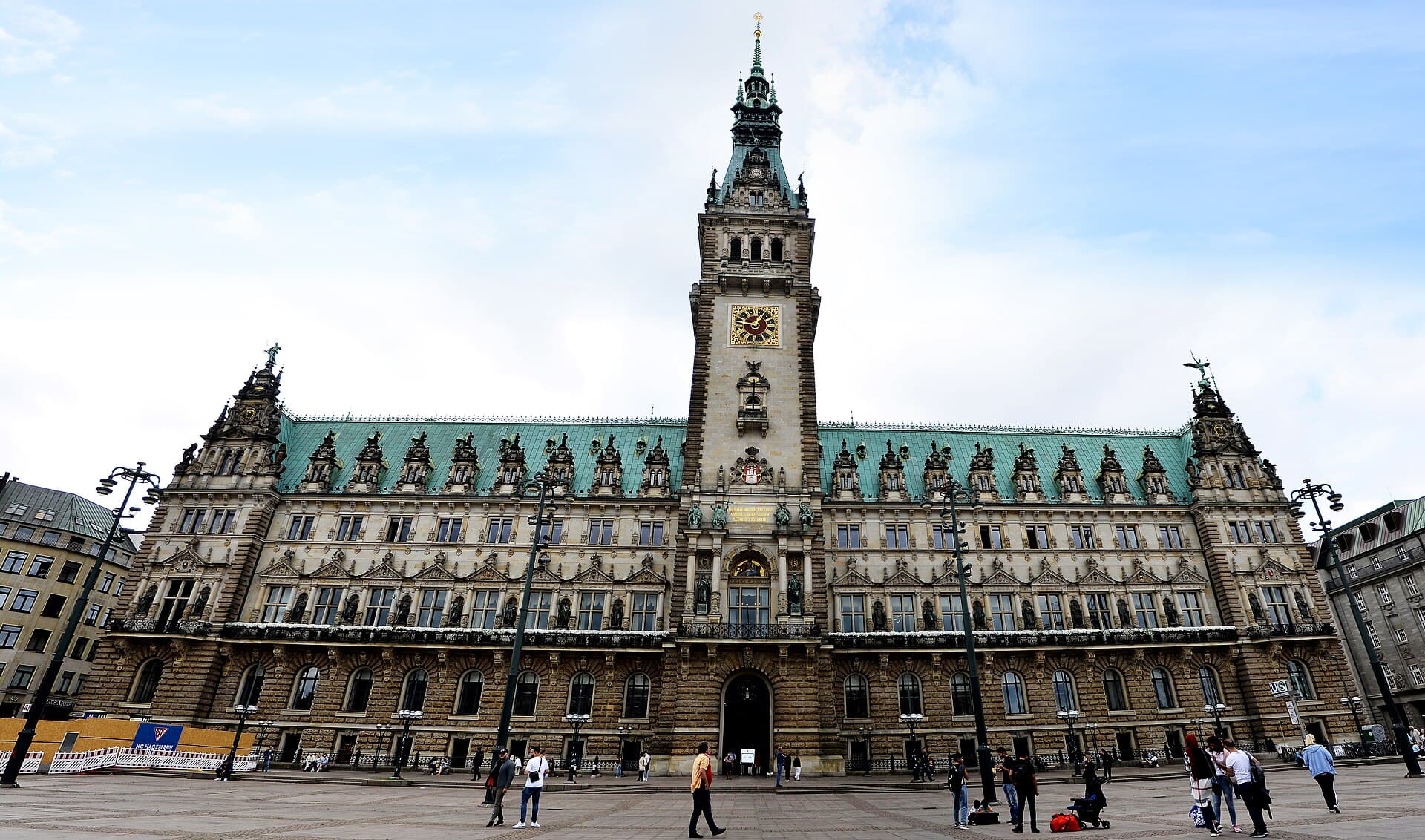
Hamburg built a town hall with the face of a royal palace and then left out the throne room, because the city that raised it answered to trade and the sea rather than to a king. Stand in front of the Hamburger Rathaus and the contradiction is right there in the stone: a hundred-and-twelve-metre tower, a facade heavy with carved figures, roughly six hundred forty-seven rooms behind it, and nowhere in all of it a place for a monarch to sit. That absence is the key to the whole city. This one building explains why Hamburg looks and behaves the way it does, and it is the natural first stop on a walk that reads a self-made republic in stone and water.
A palace that celebrates no monarch
The grandeur is deliberate, and so is the omission. The Rathaus was completed and inaugurated in eighteen ninety-seven in a proud neo-Renaissance style by the architect Martin Haller and his team of seven. It borrows the vocabulary of royal palaces on purpose, but it puts that vocabulary in the service of a different idea. Hamburg is officially the Free and Hanseatic City of Hamburg, and for centuries it ruled itself. When this building opened, it was not celebrating a crown. It was celebrating a merchant republic that had governed its own affairs for generations and wanted the world to register the fact.
Look closely at what the carved wealth actually points toward. Not a scepter or a coat of arms handed down from a court, but ships, trade, industry, and the sea. A city that made itself rich by its own hand built a palace to say so, and then declined to invent a monarch to live in it.
There is a modern echo of the same idea. Even now the Rathaus holds two governments at once. Hamburg is one of Germany's sixteen states, so the same building houses the city parliament and the state senate together. The room count carries its own small comedy: the building holds about six hundred forty-seven rooms, so many that in nineteen seventy-one one of them, up in the tower, was found only by accident during a search for a document that had fallen behind a filing cabinet. A building this size can lose track of itself, which is why the figure is better held loosely than treated as a settled number.
The engine that paid for the palace
Hear a stop from this walk
Mahnmal St. Nikolai: The Church Kept as a Warning
A palace like this needs an engine, and the engine sits just behind it. On Adolphsplatz, sharing the block, stands the Handelskammer, the chamber of commerce, founded in sixteen sixty-five as the Commercial Deputation and generally described as the oldest chamber of commerce in Germany. It grew from an assembly of merchants organized enough to govern their own trade, which is the quiet mechanism behind everything the Rathaus advertises in stone.
That wealth was old even by the seventeenth century. Hamburg was a leading member of the Hanseatic League, the medieval alliance of trading towns that, according to Britannica, grew from a pact between Luebeck and Hamburg dated to twelve forty-one. Hamburg controlled the salt trade coming down from Lueneburg and turned itself into a great transshipment point for grain, cloth, furs, and above all spices. The merchants who grew rich on that traffic earned a mocking nickname, Pfeffersaecke, pepper sacks, a jibe aimed at men fattened on the spice trade. It is a nickname that keeps the powerful humble, and it is still lobbed at Hamburg's upper class today. The city received Free Imperial City status in fifteen ten, and the arc from that self-rule to the palace on the square is short and direct.
Water the city shaped for itself
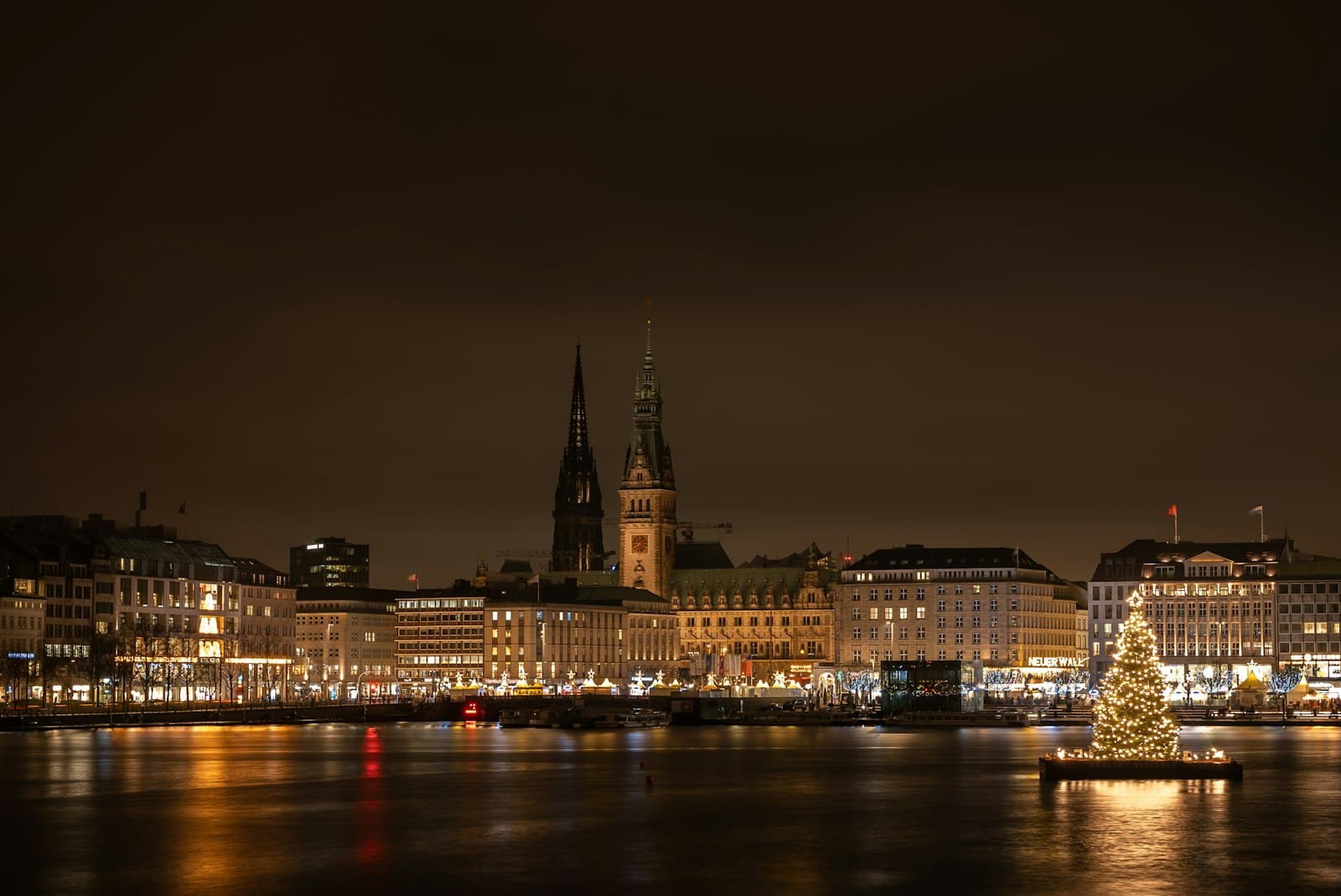
Walk a few minutes north and the same self-made instinct shows up in the landscape. The Binnenalster looks like a natural lake, calm and ornamental, but it exists because Count Adolph the Fourth commissioned a mill dam on the small Alster river back in twelve thirty-five. The dam served the mill and then, unplanned, backed the water up into a lake at the center of town. Beside it runs the Jungfernstieg promenade, which in eighteen thirty-eight became Germany's first asphalted street. A city that would later dam and shape everything for trade began by accidentally making itself a lake, then paved the country's first modern street along its edge.
Fire, memory, and the sea
The republic's confidence was tested by catastrophe, and the walk turns there next. On the fifth of May, eighteen forty-two, a fire broke out in a cigar factory at Deichstrasse number forty-two and burned for about three days. The Grosser Brand destroyed roughly a third of the old town, including seven churches, two synagogues, sixty schools, and the old town hall first built in twelve ninety. Hamburg rebuilt with rules: no wooden buildings, firewalls and fireproof gables required, modern sewers, widened streets. The elegant modern center grew out of the ashes, which is why the Rathaus you started at is itself a post-fire building.
Two churches carry the rest of the story. The Mahnmal St. Nikolai is a gutted shell the city refuses to rebuild, held as a memorial and a warning after Allied bombing on the twenty-eighth of July, nineteen forty-three, during Operation Gomorrah. The honest version stands there in the stone: the firestorm killed tens of thousands of civilians, and Germany began the war that made such bombing possible. Both truths are held at once. A short walk away, St. Michaelis, the church everyone calls Der Michel, gives the opposite answer. Its one-hundred-thirty-two-metre copper spire served as a seamark for ships coming up the River Elbe, and the city has rebuilt it again and again through lightning, fire, and war. One church Hamburg raises every time so sailors can find their way home; the other it keeps broken so no one forgets. A self-governing city gets to make that choice, and Hamburg made both.
Where the palace leads
The Rathaus is the thesis, and the rest of the route is the argument. Between the town hall with no throne and the two churches with opposite fates lies the last row of gabled merchant houses on Deichstrasse, where families lived above their own ledgers and hoisted cargo straight off the canal. The whole walk covers roughly three kilometers of mostly flat, easy ground, and every stop stands on its own, so you can linger where something holds you and skip what does not. Start in the Rathausmarkt, look up at the palace a republic built, and let the contradiction pull you toward the water. You can plan the full route from the Hamburg walking tours hub or browse everything on offer in Hamburg.
Sources
- Hamburg City Hall, Wikipedia: room count, tower height, architect Martin Haller and his team of seven, eighteen ninety-seven inauguration, and dual seat of parliament and senate.
- Hamburg Chamber of Commerce, Wikipedia: the sixteen sixty-five founding as the Commercial Deputation and its standing as Germany's oldest chamber of commerce.
- Hanseatic League, Britannica: the twelve forty-one Luebeck and Hamburg pact and Hamburg's role in the salt and spice trade.
- Great Fire of Hamburg, Wikipedia: the eighteen forty-two fire's origin on Deichstrasse and the scale of destruction and rebuilding rules.
- St. Nicholas Church and St. Michael's Church, Hamburg, Wikipedia: the two churches' contrasting fates after wartime bombing.
Ready to experience it?
Rathaus and Altstadt: The Republic of Merchants
100 min · 2.9 km · easy
More from Hamburg
Explore more at your own pace.
Hamburg, the Free Port of Merchants: A Republic Built on Trade and the Tide
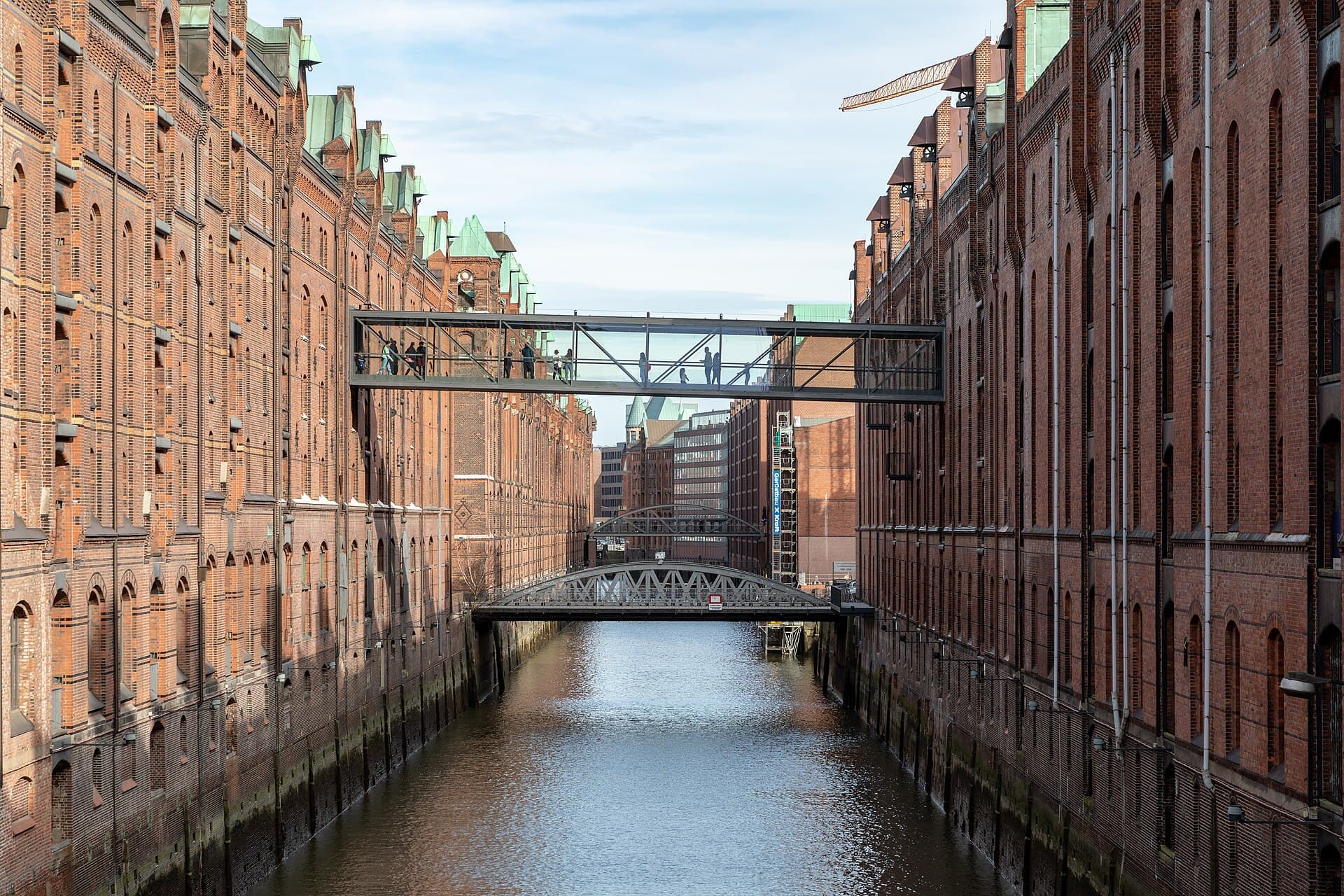
Hamburg's Speicherstadt: Reading a Port Through Brick on Oak Over Water
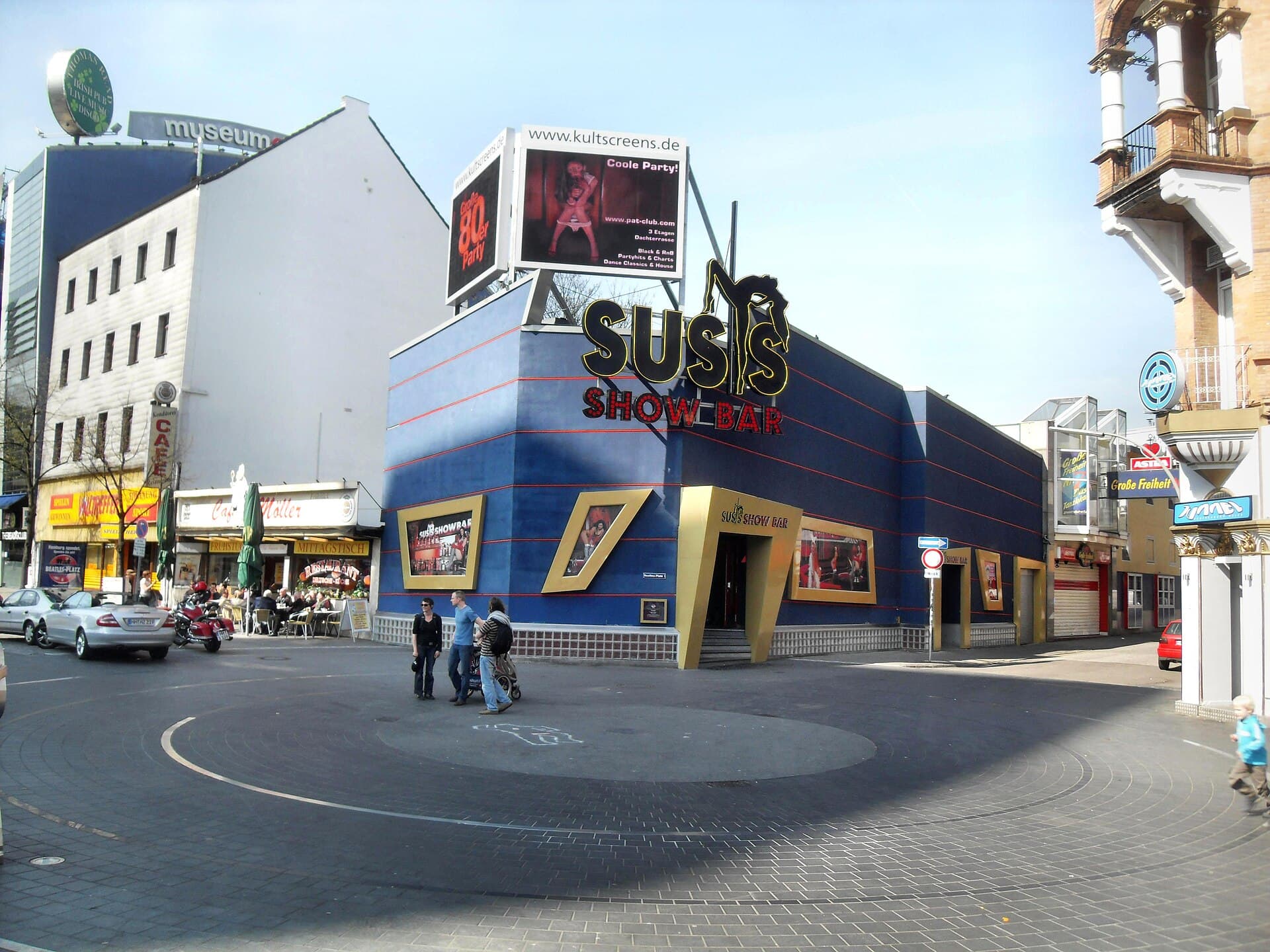
On the Grosse Freiheit, Where the Beatles Grew Up
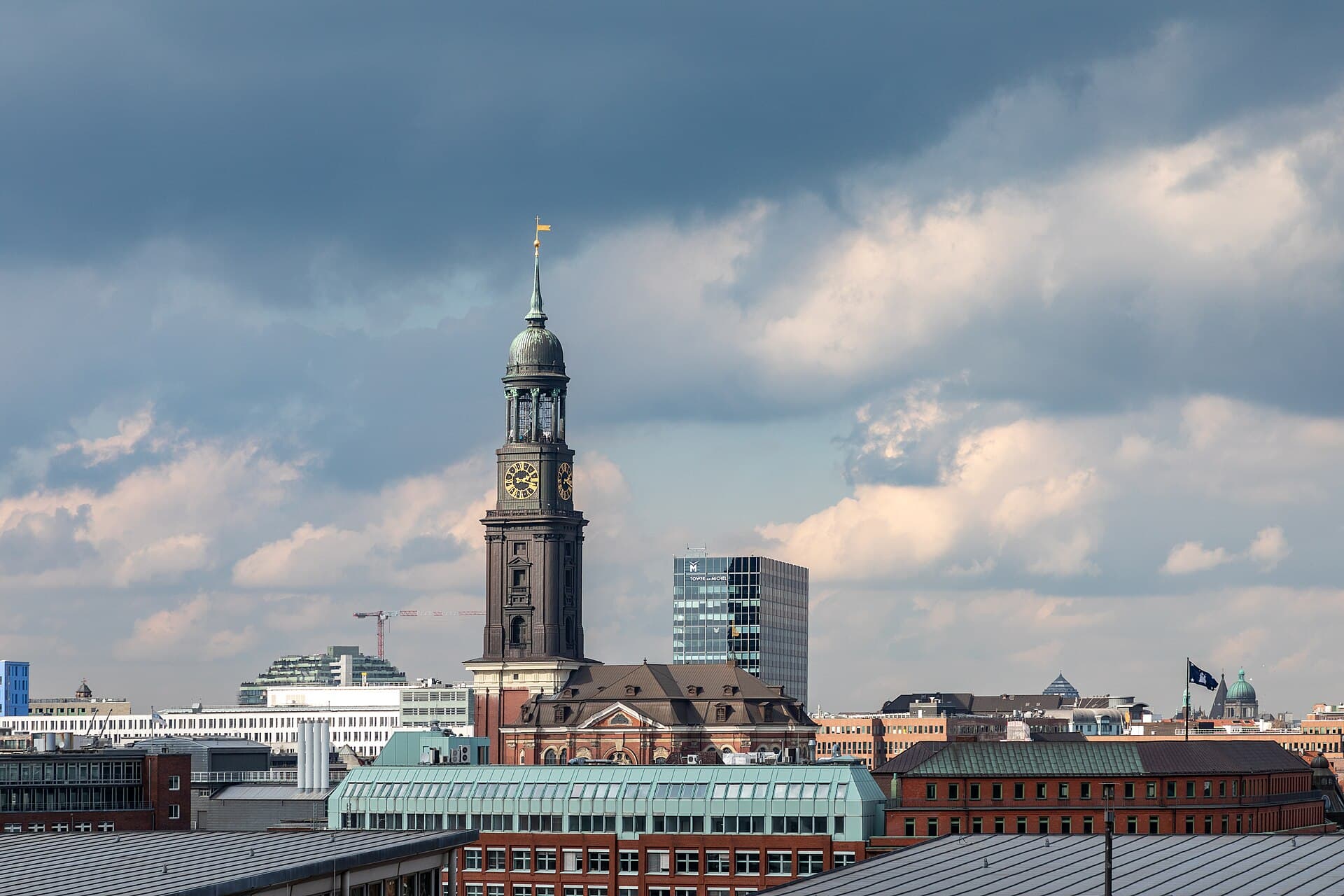
Der Michel: How Hamburg's Copper Spire Guided Ships Home
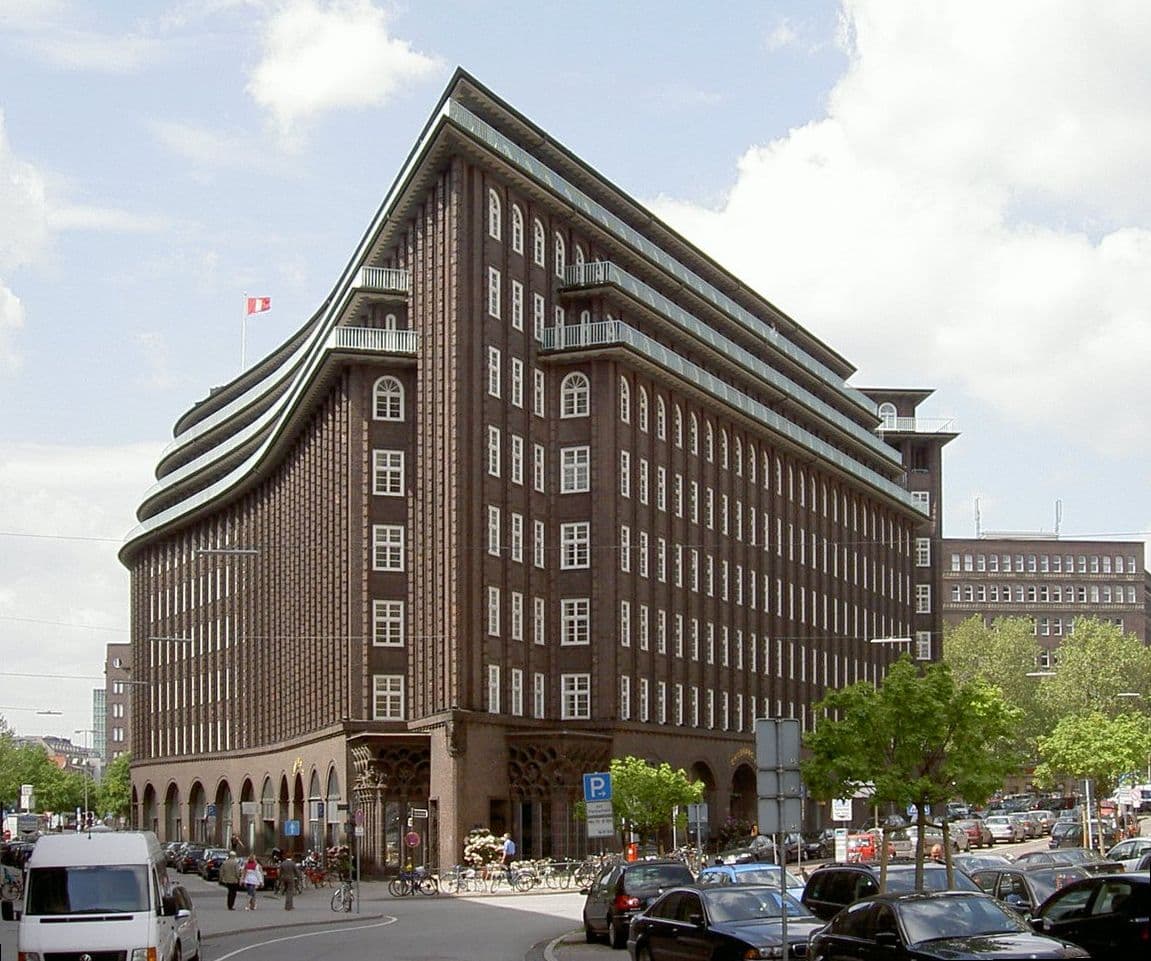
The Chilehaus: Reading Hamburg's Brick Ship