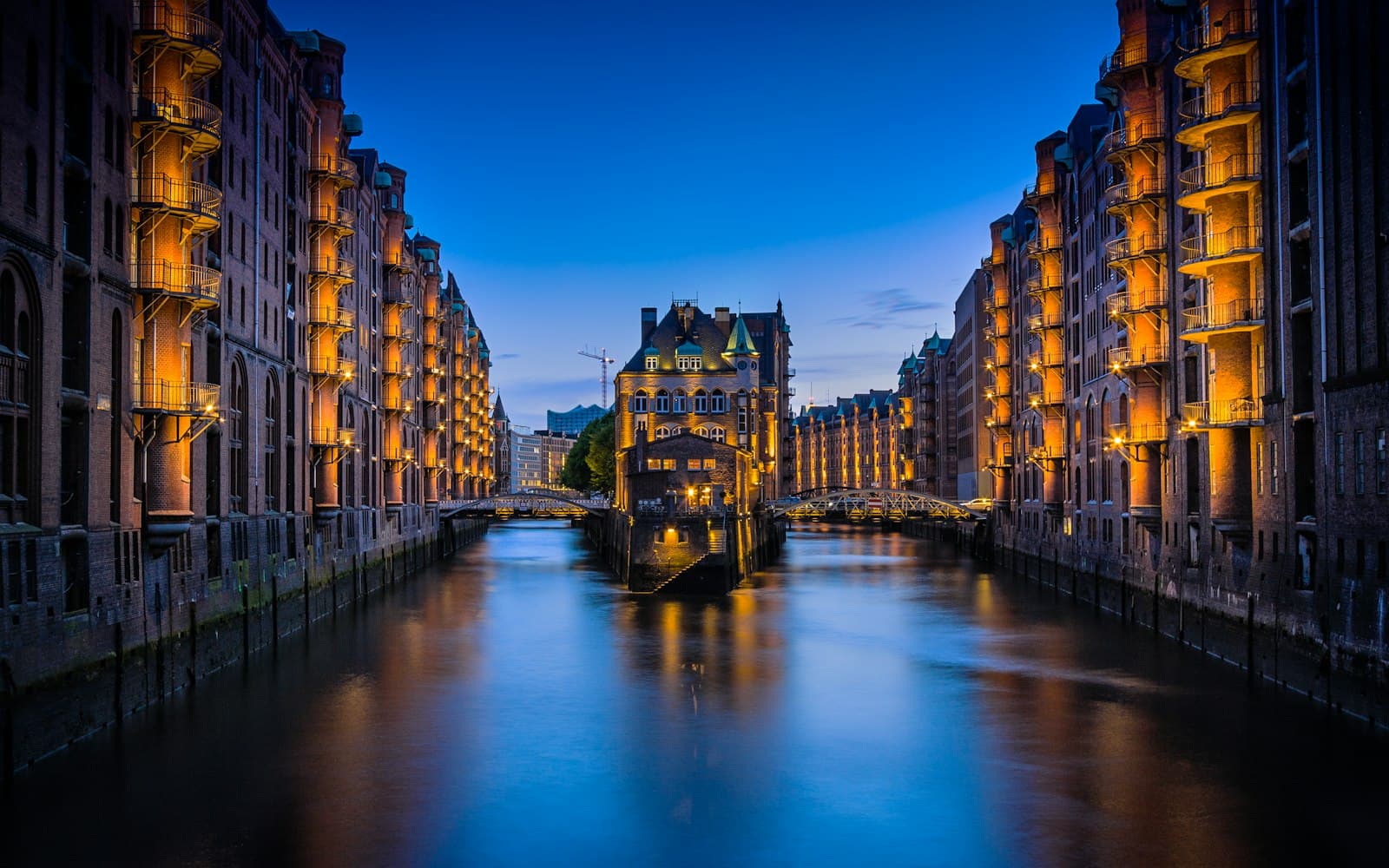
Read Hamburg's port through its brick: the world's largest timber-pile warehouse district, a ship-prow office block, and a concert hall crowned with a glass wave. One material, laid on wood over water, spelling out storage, commerce, and spectacle.
Start · The Zollkanal and the Free Port: Where the Bargain Was Struck
DirectionsStops
- 1
The Zollkanal and the Free Port: Where the Bargain Was Struck
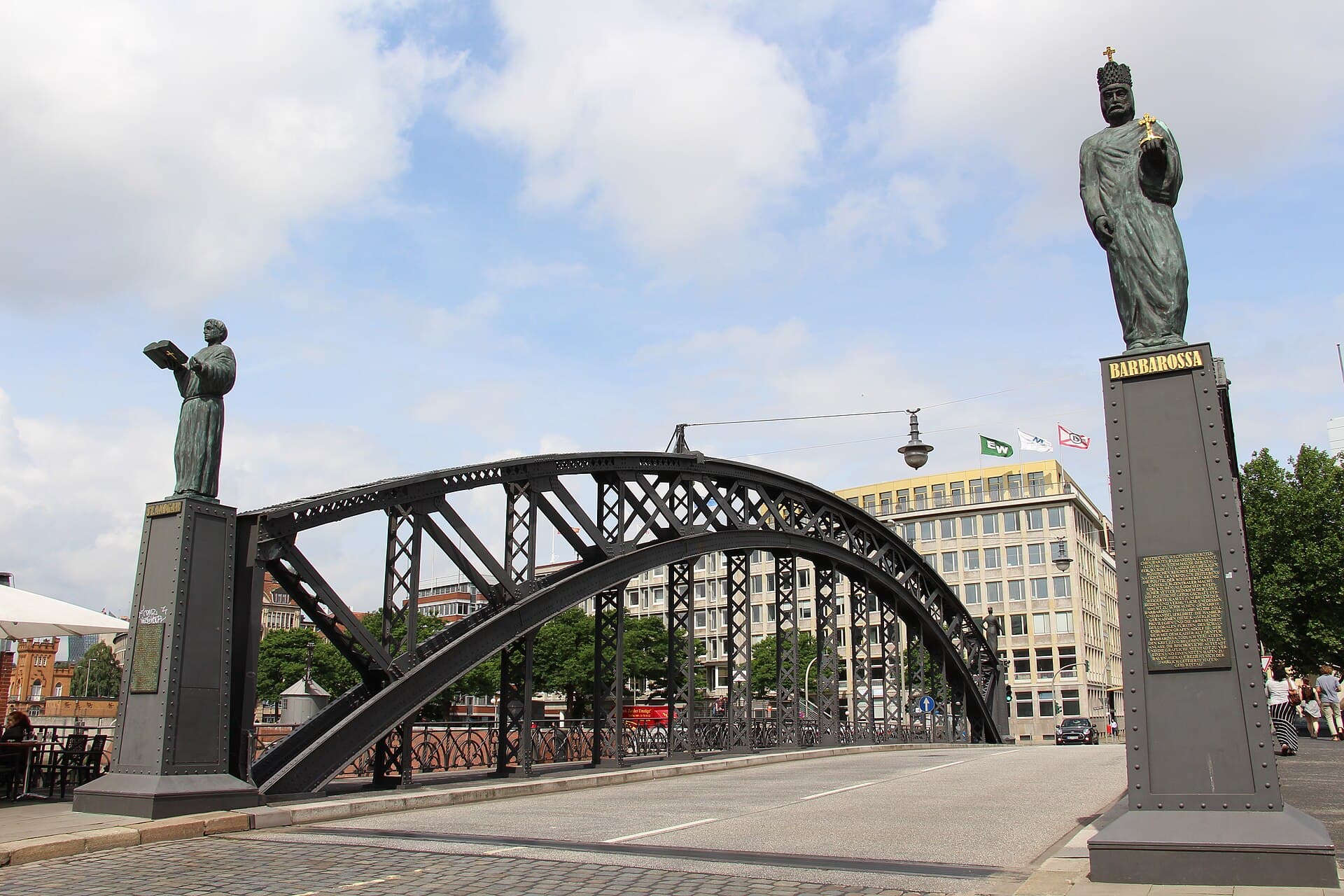
The customs canal that formed the tax boundary between Hamburg's old town and its tax-free free port, born of the city's decision to join the German customs union.
- 2
The Speicherstadt: The City of Warehouses
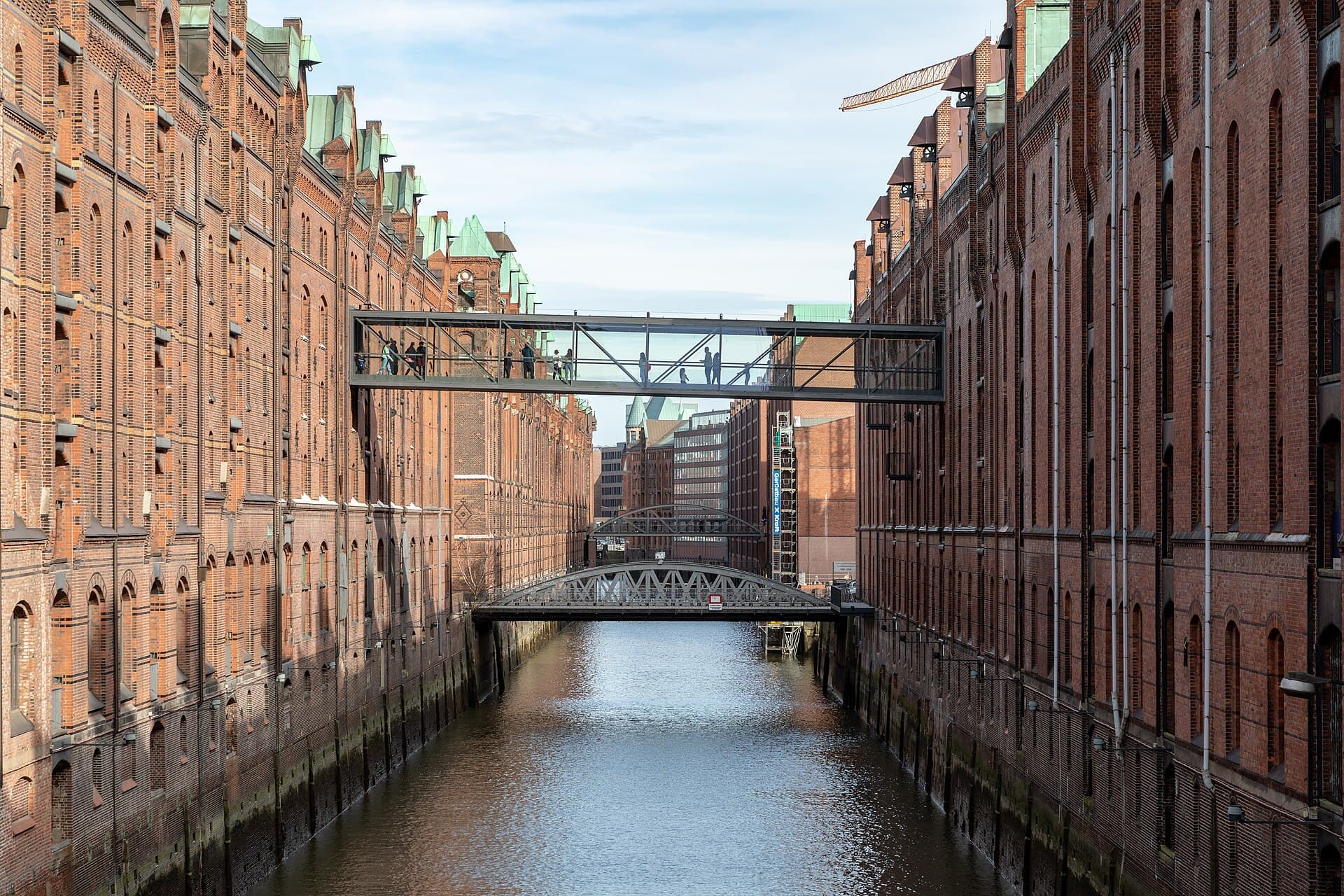
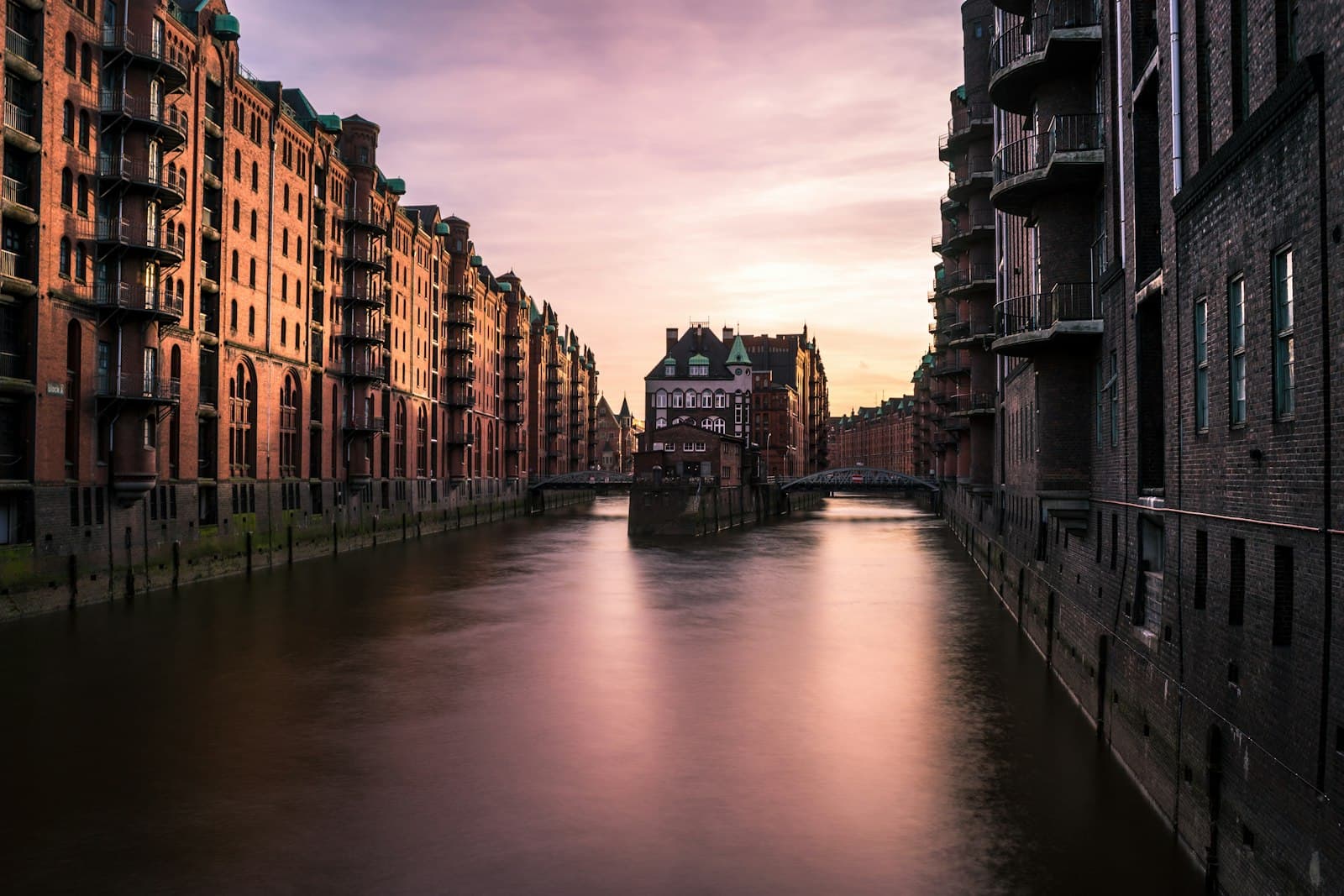
Hamburg's vast red-brick, neo-Gothic warehouse district, built from the eighteen eighties and commonly described as the largest warehouse complex in the world standing on timber-pile foundations.
- 3
The Oak Piles and the Fleete: The Engineering Underneath
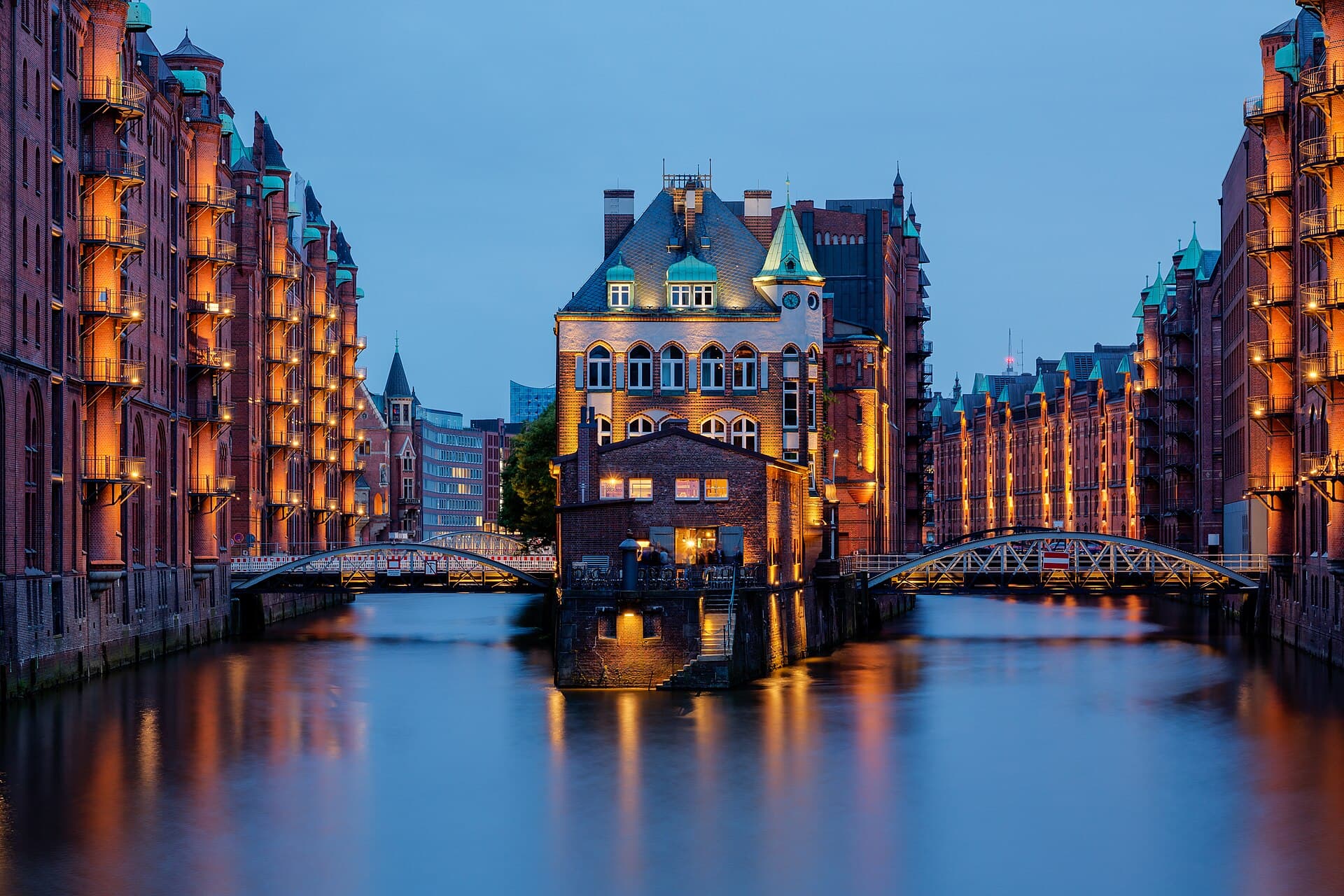
The tidal loading canals and the countless oak logs beneath the warehouses that let barges unload straight into the lofts above.
- 4
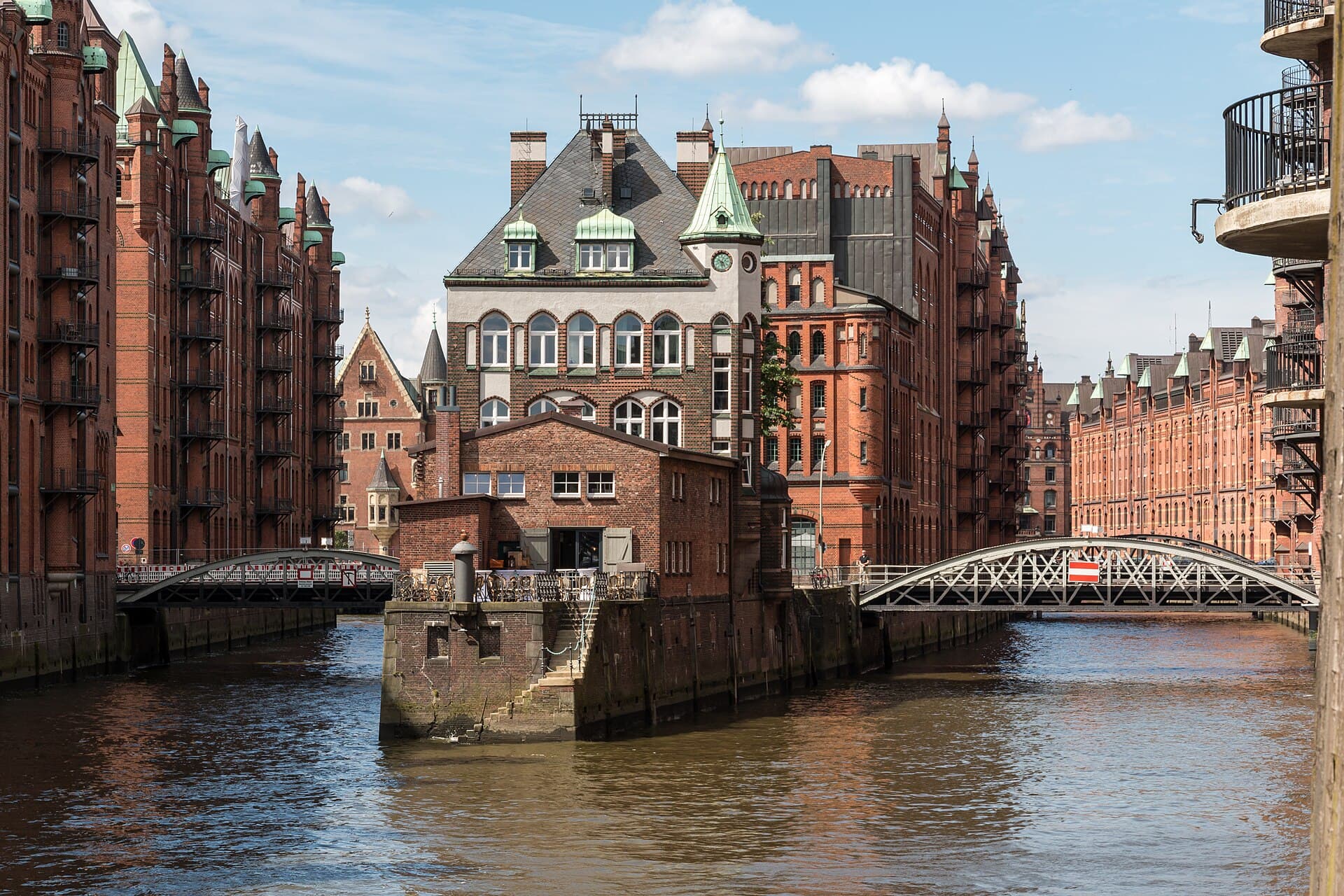
The Wasserschloss: The Little Water-Castle
A small brick building at a canal junction, built in the early twentieth century as a workplace for the winch keepers, and commonly called the most-photographed spot in the district.
- 5
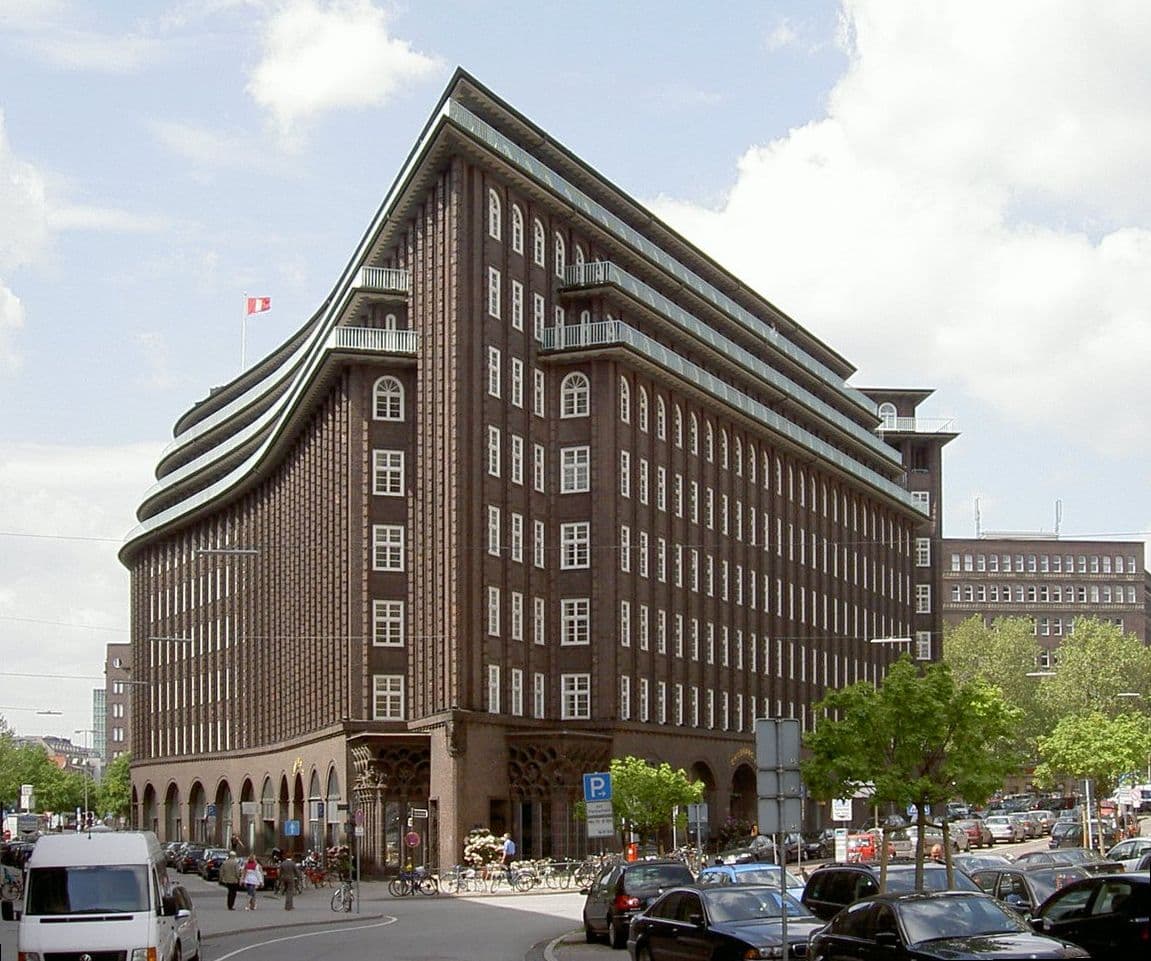
The Chilehaus: Brick as a Ship's Prow
A ten-storey office building of Brick Expressionism designed by Fritz Höger, its sharp eastern corner shaped like the prow of a ship, funded by a Chilean saltpetre fortune.
- 6
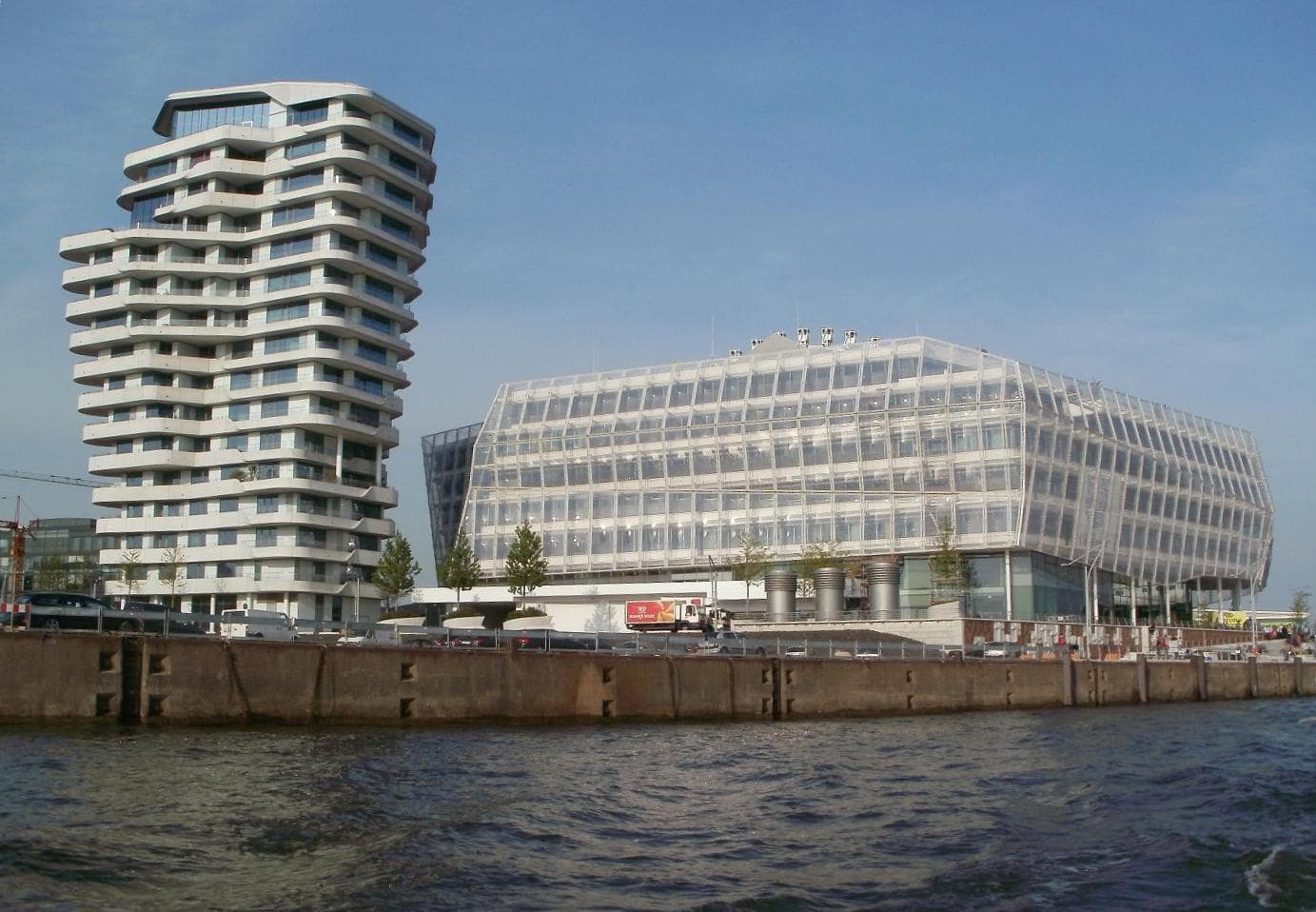
HafenCity: The Brick City on Raised Ground
A vast new district built out into the former port basins on artificial ground raised more than seven metres for flood safety, described as Europe's largest inner-city redevelopment by area.
- 7
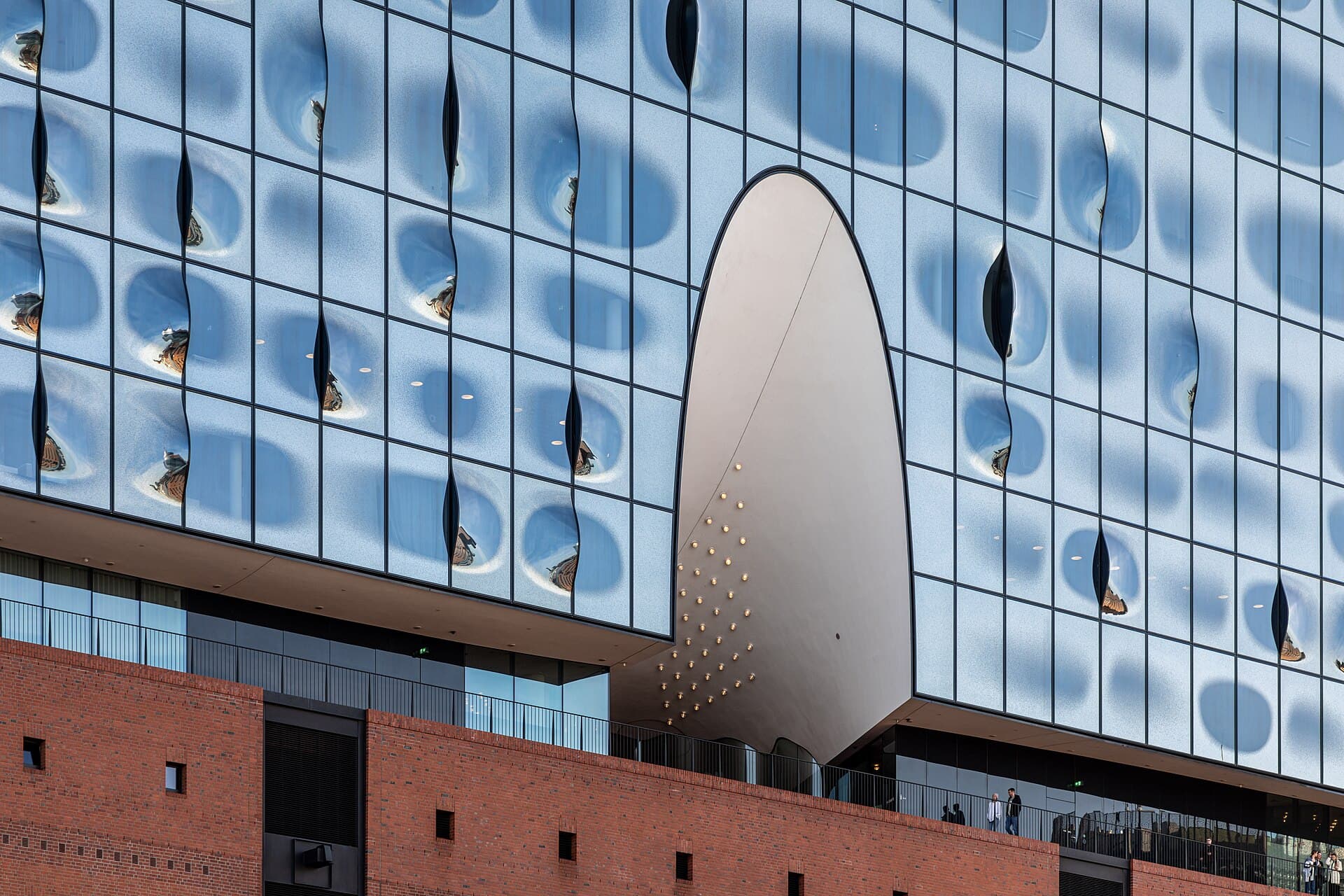
The Elbphilharmonie: A Glass Wave on an Old Warehouse
A concert hall that crowns a nineteen-sixties brick warehouse with a rippling glass superstructure, storage transfigured into public spectacle.
Details
Best Time to Visit
Late afternoon into the early evening is the most rewarding window. The low sun warms the red brick to a deep glow and sets the canals shimmering, and the Speicherstadt's floodlighting begins after dark, making the Wasserschloss and the warehouse gables look especially dramatic. Weekday mornings are the quietest for photographs at the Wasserschloss and for the Elbphilharmonie Plaza, which fills up on weekends and holidays. Any dry, clear day works, since almost the entire walk is outdoors and canal-side.
Pro Tips
- •Reserve a free timed Plaza ticket for the Elbphilharmonie in advance if you can, since same-day tickets can run out on busy afternoons; the viewing level itself is free, and only the concert hall and guided tours are paid.
- •Walk the water side of the warehouses, not just the streets, to see the loft doors and external winch beams that tell the real story of how cargo moved.
- •Cross and re-cross the bridges over the Fleete for the best angles: much of the Speicherstadt's drama is only visible from the middle of a Brücke, looking down the canal.
- •Time your visit near high tide if you can, so the Fleete are full and the reflections are strongest, especially at the Wasserschloss junction.
- •Give yourself a moment at the Chilehaus to walk right up to the sharp eastern corner and look along the two facades: the ship-prow effect only appears from close and at an angle.
- •Bring a rain layer regardless of the forecast, since the whole route is exposed to the harbour and Hamburg's weather can turn from dry to drizzle within minutes.
Safety & Precautions
- •Watch for fast, near-silent cyclists and for trams and traffic when crossing; the cobbles and any embedded tracks are uneven and can catch a heel or a wheel, so look down as well as ahead.
- •Many canal and harbour edges here have low railings or none at all, and the brick gets slick in the drizzle; keep well back from the water, especially when framing a photo near an edge.
- •If you take the U-Bahn or S-Bahn to reach the district, buy and validate a valid ticket before boarding, since fare checks are common and being unable to show one leads to a fine.
- •At the Elbphilharmonie and other busy sites, expect timed-entry queues and security checks; keep a calm, respectful manner in the crowds and keep your valuables secure.
Travel advisory: Exercise Increased Caution (Level 2).
Gallery
Related Reading
Go deeper on what you'll see, hear, and walk through.
Overview
Best Self-Guided Walking Tours in Hamburg (2026)
3 min
Overview
Hamburg Travel Guide: Days, Transport, Season, Safety, Cost
7 min
Overview
One Day in Hamburg: A Walkable Morning-to-Evening Itinerary
8 min
Thematic
Hamburg, the Free Port of Merchants: A Republic Built on Trade and the Tide
8 min
Companion
Hamburg's Speicherstadt: Reading a Port Through Brick on Oak Over Water
7 min
Deep dive
The Chilehaus: Reading Hamburg's Brick Ship
7 min
Read
What to Eat in Hamburg
7 min
Read the walk
The full story of Speicherstadt: The City of Warehouses on Oak, in words. Prefer to listen? Play it narrated, from home or on location.
Introduction
Hamburg, in Germany, built its wealth in brick, standing on wood, over water. This walk reads that story through the architecture of the port, and it takes about seven stops over roughly two hours, covering about four kilometres of mostly flat, cobbled, canal-side ground. Here is the bargain at the heart of it. In the year eighteen eighty-one Hamburg, a proud free city, agreed to join the German customs union, effective the fifteenth of October, eighteen eighty-eight. It kept only one thing: a tax-free harbour zone. To use that zone it raised an entire district of red-brick warehouses on countless oak piles driven into the marshy Elbe islands, threaded by tidal canals so barges could unload straight into the storeys above. We will begin at that customs boundary, the canal that explains why the whole district exists. Then we step into the Speicherstadt itself and read its scale, descend into its engineering of oak and tide, and pause at the little water-castle where the machinery was tended. From there brick stops being mere storage: it becomes a ship's prow at the Chilehaus, then rises onto the flood-safe new ground of HafenCity, and finally is transfigured into a glass wave at the Elbphilharmonie. Move at your own pace. The stops are short, and you can skip any that do not pull you. Keep an eye on the canals, breathe in the harbour, and let the brick spell out its grammar. When you arrive at the Zollkanal by the Brooksbrücke, begin with stop one.
1. The Zollkanal and the Free Port: Where the Bargain Was Struck
Stand by this water and you are standing on a border. The canal in front of you is the Zollkanal, the customs canal, and Kanal simply means canal. For more than a century it did the quiet work of a moat. On one side lay Hamburg's old town, where German customs duties applied. On the other side lay the free port, a tax-free zone where goods could be landed, stored, and sent onward without paying a cent of duty. Here is why that mattered. For centuries Hamburg was a proud free city that ran its own customs. In the year eighteen eighty-one it agreed to fold into the German customs union, a bargain that took effect on the fifteenth of October, eighteen eighty-eight. Hamburg gave up its ancient independence, and in exchange it kept this single tax-free harbour. The Zollkanal was shaped from existing Elbe waterways to be a fluid, flowing border, curling around the northern edge of the warehouse district like a wet fence. According to German records, it served as that customs boundary right up until the year two thousand three. The bridge crossing here is the Brooksbrücke, and Brücke means bridge. At the grand opening in eighteen eighty-eight, Kaiser Wilhelm the Second is reported to have laid its headstone, marking the free-port line. It is a picturesque scene, the brick and the barges, but do not be fooled by the romance. Every warehouse you are about to see exists because of tariffs, of a hard political trade, of a city choosing commerce over sovereignty. The whole district is an answer to a question about taxes.
2. The Speicherstadt: The City of Warehouses
Now look at the sweep of it. Speicher means warehouse, and Speicherstadt means, quite literally, the city of warehouses. What stands around you is roughly one and a half kilometres of dark red brick, laced with canals, ranked in tall neo-Gothic gables and turrets like a fortress built for cargo. Construction began from about the year eighteen eighty-three and carried on in phases all the way to nineteen twenty-seven, and the district opened as a tax-free zone in eighteen eighty-eight. This is the point of the whole bargain we just discussed, made physical. It is commonly described as the largest warehouse district in the world where the buildings stand on timber-pile foundations, and that qualifier matters, because the wood beneath your feet is the secret we will get to shortly. Think of what moved through here. Coffee and tea, tobacco and spices, cocoa, and carpets, hauled off ships and packed into these brick lofts, waiting to be re-exported without ever paying duty. Every gable, every winch, every canal-facing door was designed for one purpose: storage at industrial scale. In the year twenty fifteen, on the fifth of July, the Speicherstadt was inscribed as a UNESCO World Heritage Site, jointly with the nearby office-district we will visit later, under the name Speicherstadt and Kontorhaus District with Chilehaus. Notice that it does not look like an industrial machine. It looks timeless and romantic, all pointed arches and reflections in the water. But that picturesque skin covers a ruthlessly practical engine, purpose-built to conquer a marsh and dodge a tax. Walk into it slowly, and let the scale settle on you.
3. The Oak Piles and the Fleete: The Engineering Underneath
This is where you meet the genius under the romance. The Speicherstadt sits on soft, waterlogged marsh, the ground of the old Elbe islands, and you cannot build heavy brick warehouses on mud. So the builders drove countless oak logs down into the soft ground, a forest of timber piles, and set the whole district on top of them. Here is the strange part. Oak in the open air rots, but oak kept permanently soaked, sealed away from oxygen below the water table, does not. So the wet marsh that made building hard is the very thing that preserves the wood. The district floats on a submerged forest that survives precisely because it never dries out. Now look at the canals threading between the buildings. In Hamburg a canal like this is called a Fleet, and these Fleete are not still ornamental pools. They are tidal arms of the Elbe, rising and falling with the sea. That was the whole design. A barge could slide in on the tide, and goods were hoisted straight up into any storey through loft doors on the water side, lifted by external winches mounted on the canal-facing walls. Look for those winch beams and loft hatches still fixed high on the brick. Notice the two faces of every warehouse. The street side is the polite address, the front door for clerks and paperwork. The water side is the working face, all doors and hoists and open hatches, built for cargo, not for show. That split, the address and the working face, is the honest signature of this place. Storage over tide, over a drowned forest of oak.
4. The Wasserschloss: The Little Water-Castle
Here is the district at its most human, and its most photogenic. This little brick building, ringed by water on two sides where the canals meet by the Poggenmühlenbrücke, is the Wasserschloss. Wasser means water, and Schloss means castle or manor, so the name promises a…
Full narration for this stop unlocks with the tour.
5. The Chilehaus: Brick as a Ship's Prow
Step out of pure storage and into commerce, and watch what brick can do when it stops merely holding cargo and starts making a statement. This is the Chilehaus, a ten-storey office building, or Kontorhaus, and its most famous feature is impossible to miss. Walk toward the…
Full narration for this stop unlocks with the tour.
6. HafenCity: The Brick City on Raised Ground
The old district conquered the marsh with oak. This new one conquers the flood by rising above it. You are now in HafenCity, a whole new quarter built out into the former port basins south and east of the Speicherstadt, on the old Grasbrook Elbe island. It covers about two…
Full narration for this stop unlocks with the tour.
7. The Elbphilharmonie: A Glass Wave on an Old Warehouse
Here is the last sentence of the whole grammar. Look up at the Elbphilharmonie. The bottom half is solid brick, a heavy warehouse called Kaispeicher A, built in the year nineteen sixty-three to store cocoa, tea, and tobacco. The top half is something else entirely: a rippling…
Full narration for this stop unlocks with the tour.