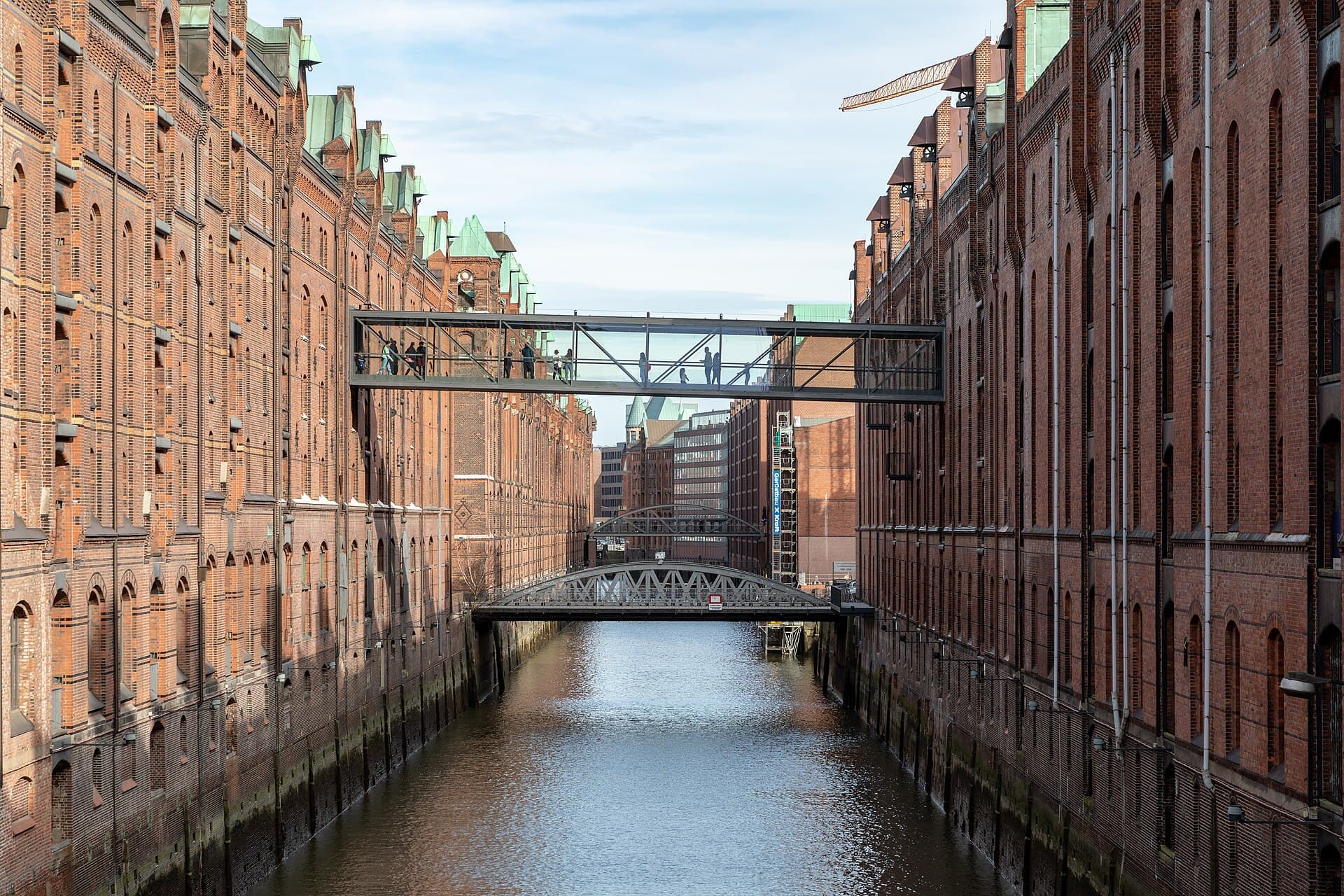
Speicherstadt: The City of Warehouses on Oak
105 min · 4 km · easy
Eat your way through Hamburg's harbor by starting with four dishes that grew out of the port: a Fischbrötchen (fish in a roll) at the water, Labskaus (the sailor's mash of salted beef, potato, and beetroot), Finkenwerder Scholle (pan-fried plaice with bacon and shrimp), and a Franzbrötchen (a buttery cinnamon pastry) for the walk between them. Hamburg cooks the way a trading city eats: preserved fish, hearty one-pans built for long voyages, and a sweet roll born under French occupation. Order those four and you have tasted the place.
Below is what each dish actually is, where the tradition comes from, and how to ask for it without hesitating at the counter. When you want to walk the port that shaped this food, the Hamburg walking tours hub and the /germany/hamburg city page line up the routes.
Fischbrötchen: the fish roll you order standing up
A Fischbrötchen is fish in a bread roll, eaten at a counter or on a harbor wall, and it is the single most Hamburg thing you can eat. The base is a crusty roll (Brötchen) split and filled, then topped with raw onion, pickles, and sauce. The point is speed and freshness, not fuss.
You order by the fish. The common fillings:
- Matjes: young, lightly cured herring with a soft texture and a mild, slightly sweet taste. The gentle starting point.
- Bismarckhering: pickled herring, tangier than Matjes and milder than a tightly rolled Rollmops.
- Backfisch: battered and fried white fish, warm and crisp, which pairs well with a creamy remoulade.
- Krabben: small North Sea brown shrimp, technically not fish but sold from the same window.
Ask for it "mit Zwiebeln" (with onions) or "ohne" (without), and say yes to remoulade if you want the creamy, herby mayonnaise-based sauce that most stands keep on hand. The Landungsbrücken piers and the stalls along the Elbe are the classic spots to eat one looking at the water, which is also where the Hamburg walking tours along the harbor begin.
Labskaus: the pink sailor's plate
Hear a stop from this walk
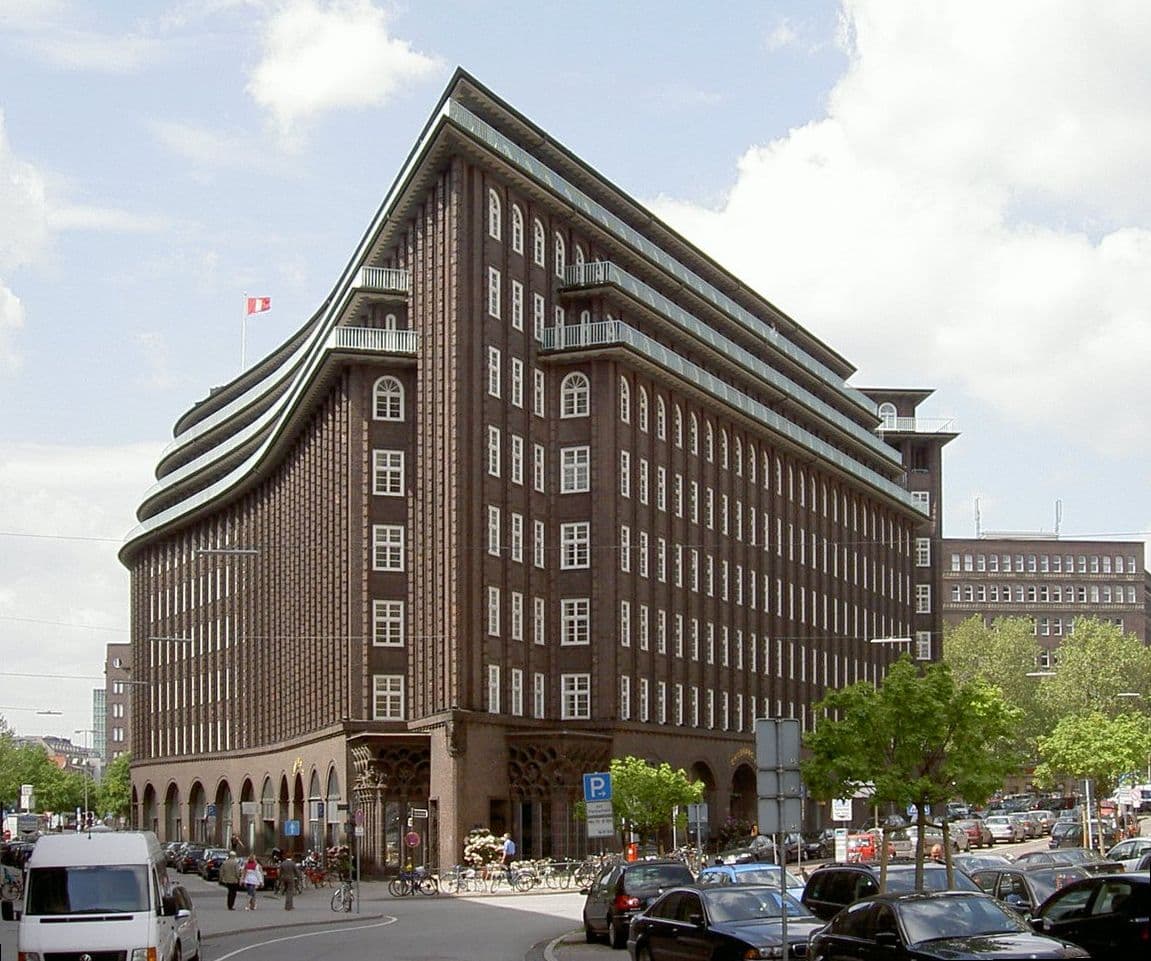
The Chilehaus: Brick as a Ship's Prow
Labskaus is a mash of salted or corned beef, potato, and beetroot, cooked together until it turns a distinctive pink, then topped with a fried egg and ringed with pickled gherkins and either rollmops or matjes herring. It looks unusual and tastes savory, sharp, and rich all at once.
The origin is the sea. The dish spread among sailors during the Age of Sail, with roots traced to around the 16th century, when crews on months-long voyages had no refrigeration and cooked from what kept: salted meat, pickled fish and vegetables, and long-lasting roots like onion, potato, and beetroot. Everything was mashed so it was easy to eat and easy to stretch. Labskaus is a specialty of northern Germany broadly, associated in particular with Bremen, Hamburg, and Lübeck, and it has cousins up the coast: Norway has lapskaus and Sweden has lapskojs, which is why the name is often traced to Scandinavian roots.
How to eat it like a local: mash the fried egg into the beef and potato, and use the gherkin and herring to cut the richness. If a menu offers the herring on the side rather than on top, that is normal regional variation.
Finkenwerder Scholle: plaice with bacon and shrimp
Finkenwerder Scholle is a whole plaice (a flatfish) pan-fried until the skin crisps, served with fried bacon, onions, and North Sea brown shrimp scattered over the top. It is the plate to order when you want a proper sit-down fish meal rather than something in a roll.
The name comes from Finkenwerder, once a fishing settlement on the Elbe that Hamburg later absorbed. The combination is a fishing village's logic: the day's flatfish, the bacon and onion from the pantry, and the shrimp the same boats brought in. Expect boiled or fried potatoes alongside. Peak plaice season runs through the warmer months, so a spring or summer visit is the surest time to find it fresh.
Franzbrötchen: the cinnamon pastry born under occupation
A Franzbrötchen is a small, flattened pastry made with plenty of butter and cinnamon, sweet and slightly caramelized where it presses against the tray. It is the pastry to carry between stops. The name means "French roll," and the story behind it is Hamburg's own.
During the French occupation of Hamburg (roughly 1810 to 1814), local bakers were pushed to make French-style pastry for Napoleonic troops. What emerged was not a croissant but something heavier and folded with cinnamon sugar, a Hamburg answer to a French demand. For a long time you could only find Franzbrötchen in Hamburg and its surrounding towns. They have since spread to Bremen, Berlin, and beyond, but Hamburg is where the tradition lives and where nearly every bakery makes its own version.
Order one fresh in the morning. Ask if they have variations (some bakeries fold in apple, poppy seed, or chocolate), but the plain cinnamon original is the one to try first.
The deeper cuts: Aalsuppe, Pannfisch, and Rote Grütze
If you have room to go further, three more dishes round out the local table.
Aalsuppe is a sweet-and-sour Hamburg soup that today includes eel along with cured beef, vegetables, dried fruit, and dumplings. Its name is a small controversy: one long-repeated story says early versions contained almost everything except eel, the "Aal" being a mistaken reading of a Low German word for "all" or "everything," so that the soup was a leftovers pot. A 1788 recipe is often cited in that vein. Not everyone accepts the folk etymology, and some scholars argue the soup did contain eel from the start. Modern Hamburg has settled the argument in practice: order Aalsuppe here and you can expect actual eel in the bowl.
Pannfisch is pan-fried fish served with a mustard sauce and fried potatoes. It began as a thrifty way to use up leftover fish, and it remains a comforting, everyday plate rather than a showpiece.
Rote Grütze is the dessert to end on: a red pudding of cooked summer berries such as cherries, raspberries, and currants, usually served cold with cream, milk, or vanilla sauce.
Where and when to eat: the Sunday Fischmarkt
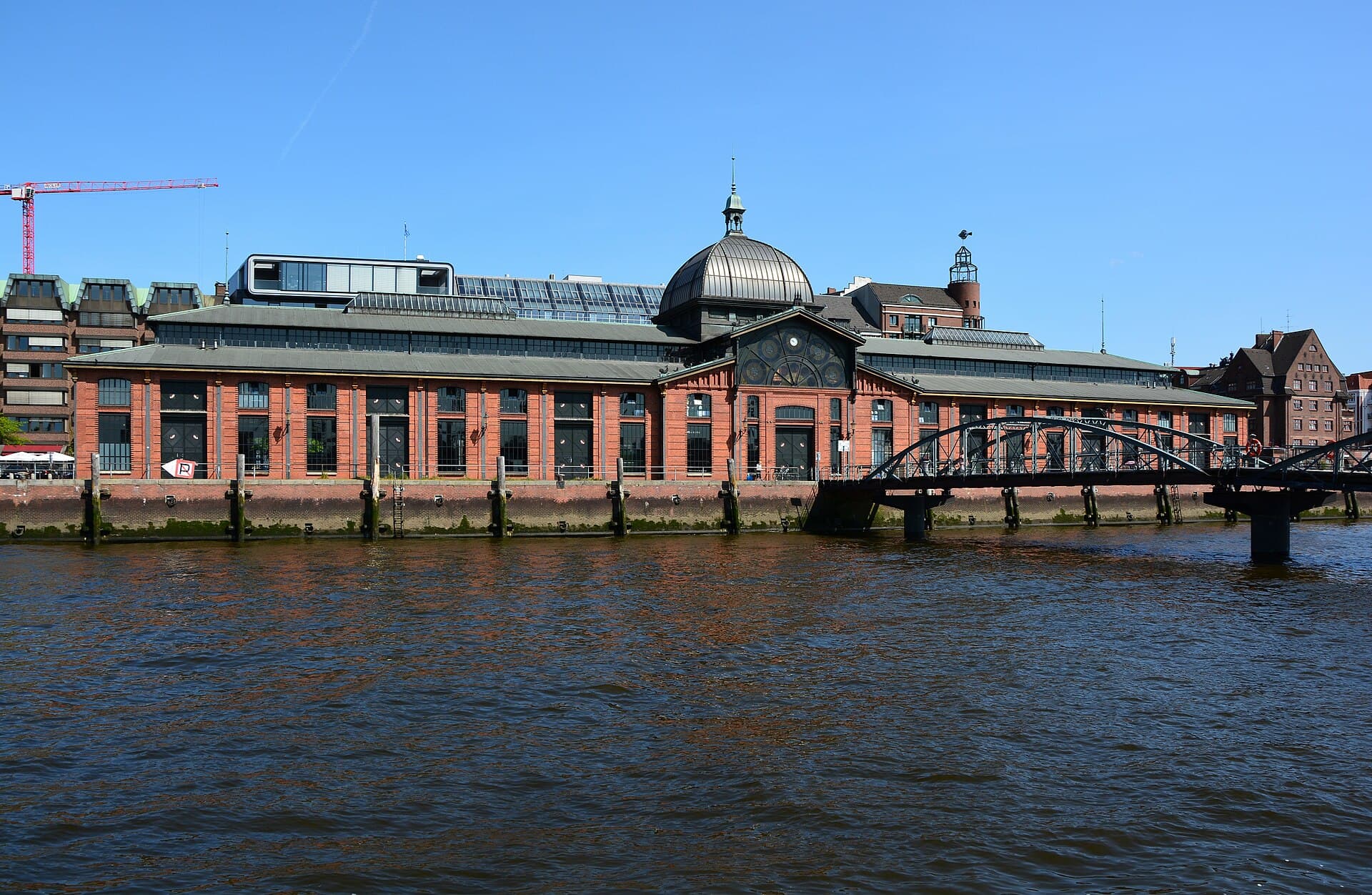
For the full harbor-food experience in one place, go to the Altona Fischmarkt on a Sunday morning. The market has run on Sundays since 1703, and it is where you can line up Fischbrötchen, fresh fish, produce, and the market's shouting vendors in a single early hour by the Elbe.
The hours are early and seasonal, so plan around them. In the summer season (roughly April through October) the market runs from about 5:00 a.m. to 9:30 a.m.; in the winter season (roughly November through March) it starts later, around 7:00 a.m., and still wraps by 9:30 a.m. Sources differ slightly on the exact changeover dates, so treat the season boundaries as approximate and the 9:30 a.m. close as firm. There is no entry fee to walk in. It is a busy, boisterous crowd rather than an unsafe one; keep your bag zipped as you would in any packed market, come hungry, and arrive well before the 9:30 close.
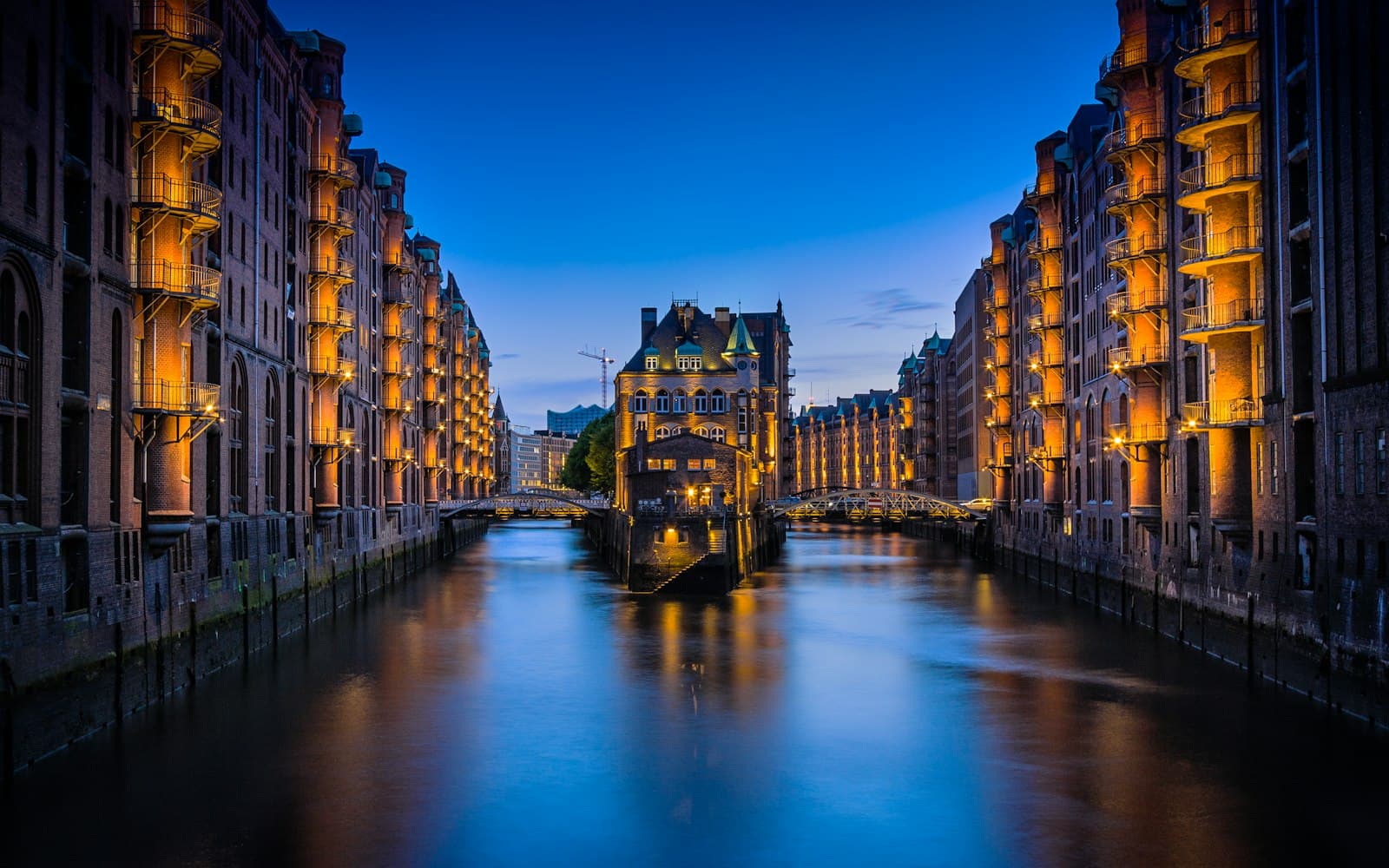
From the market, the harbor and the warehouse district are an easy walk, which is exactly the ground the self-guided routes cover. Browse them on the Hamburg walking tours hub or the /germany/hamburg city page, put a Fischbrötchen in one hand and a Franzbrötchen in your bag, and let the port tell you the rest.
Sources
Frequently asked questions
- What food is Hamburg famous for?
- Hamburg is known for harbor and maritime food: the Fischbrötchen (a fish roll with onions, pickles, and remoulade), Labskaus (a sailors' mash of salted beef, potato, and beetroot topped with a fried egg), Finkenwerder Scholle (pan-fried plaice with bacon and North Sea shrimp), and the Franzbrötchen, a buttery cinnamon pastry. Aalsuppe (eel soup), Pannfisch, and the Rote Grütze berry pudding round out the local table.
- What is Labskaus and why is it pink?
- Labskaus is a northern German dish of salted or corned beef, potato, and beetroot cooked and mashed together, which turns it pink from the beetroot. It is served with a fried egg and pickled gherkins plus rollmops or matjes herring. The dish spread among sailors during the Age of Sail, with roots traced to around the 16th century, when crews cooked from preserved ingredients on long voyages.
- What is a Franzbrötchen and where did it come from?
- A Franzbrötchen is a small, flattened pastry made with butter and cinnamon, sweet and slightly caramelized. The name means French roll. It is linked to the French occupation of Hamburg around 1810 to 1814, when local bakers made a heavier, cinnamon-folded answer to French-style pastry. For a long time it was found only in Hamburg and nearby towns before spreading to Bremen, Berlin, and beyond.
- How do you order a Fischbrötchen like a local?
- Order by the fish: Matjes (mild cured herring), Bismarckhering (tangier pickled herring), Backfisch (battered fried fish), or Krabben (North Sea brown shrimp). Add 'mit Zwiebeln' for onions or 'ohne' for none, and accept remoulade, the creamy herb sauce, if offered. The Landungsbrücken piers and stalls along the Elbe are classic spots to eat one by the water.
- When is the Hamburg Fischmarkt open?
- The Altona Fischmarkt runs on Sunday mornings and has done so since 1703. In the summer season (roughly April through October) it opens around 5:00 a.m., and in the winter season (roughly November through March) it starts later, around 7:00 a.m. It closes at 9:30 a.m. year round. Entry is free. Season changeover dates vary slightly by source, so arrive well before the 9:30 close.
- Does Hamburg Aalsuppe actually contain eel?
- Today, yes. Aalsuppe served in Hamburg now includes eel along with cured beef, vegetables, dried fruit, and dumplings in a sweet-and-sour broth. There is a long-running story that early versions contained everything except eel, the name being a mistaken reading of a Low German word for 'all,' though some scholars dispute that folk etymology. Either way, modern Hamburg versions include real eel.
Ready to experience it?
Speicherstadt: The City of Warehouses on Oak
105 min · 4 km · easy
More from Hamburg
Explore more at your own pace.
Hamburg, the Free Port of Merchants: A Republic Built on Trade and the Tide
Hamburg's Speicherstadt: Reading a Port Through Brick on Oak Over Water
On the Grosse Freiheit, Where the Beatles Grew Up
The Hamburg Rathaus: A Palace Built by a Republic With No Throne
The Chilehaus: Reading Hamburg's Brick Ship