Reading the Alhambra: A Nasrid Architectural Specimen
105 min · 1.6 km · moderate
Yes, you can see the essential Granada in a day. But the whole plan hinges on one thing you must do before you arrive: book your Alhambra ticket.
Granada packs its three great sights close together on facing hills, which is why one focused day works here better than in most cities. The Alhambra sits on its ridge above the town. The whitewashed Albaicín climbs the hill opposite, with the Mirador de San Nicolás at the top framing the palace across the ravine. And Sacromonte, the cave-house quarter where flamenco took root, spreads along the slope just beyond. This itinerary routes those three around a comfortable walking day and names the self-guided Granada walking tour that anchors each block so the history walks with you.
One warning before anything else. The Alhambra sells out. Daily numbers are capped, and the Nasrid Palaces admit a limited group every 30 minutes on a strictly enforced timed ticket. In summer and at Easter, popular dates go weeks in advance. Book on the official site as early as you can, then build your day around the palace time printed on your ticket. The rest of this plan assumes a morning slot, which is ideal for light and cooler air. If yours is in the afternoon, just flip the morning and afternoon blocks below.
Morning: the Alhambra
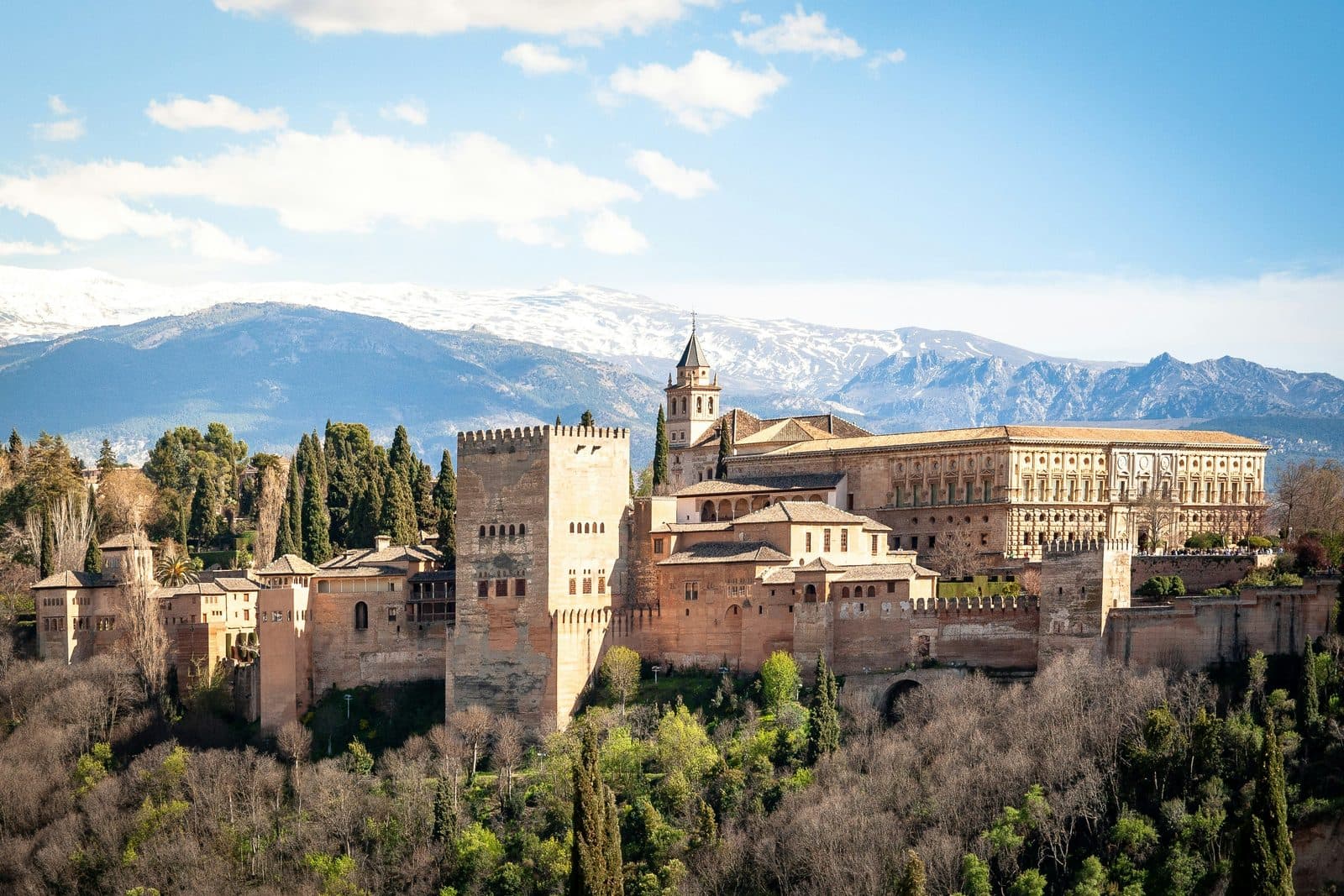
Start at the Alhambra, the most complete surviving Nasrid palace complex in the world, and the reason most people come to Granada at all. Arrive with margin before your Nasrid Palaces slot, because miss the printed time and you will not be admitted that day. Work through the Alcazaba fortress, the Nasrid Palaces, and the Generalife gardens. Early light on the red walls and the cool of the morning make this the best window to be here.
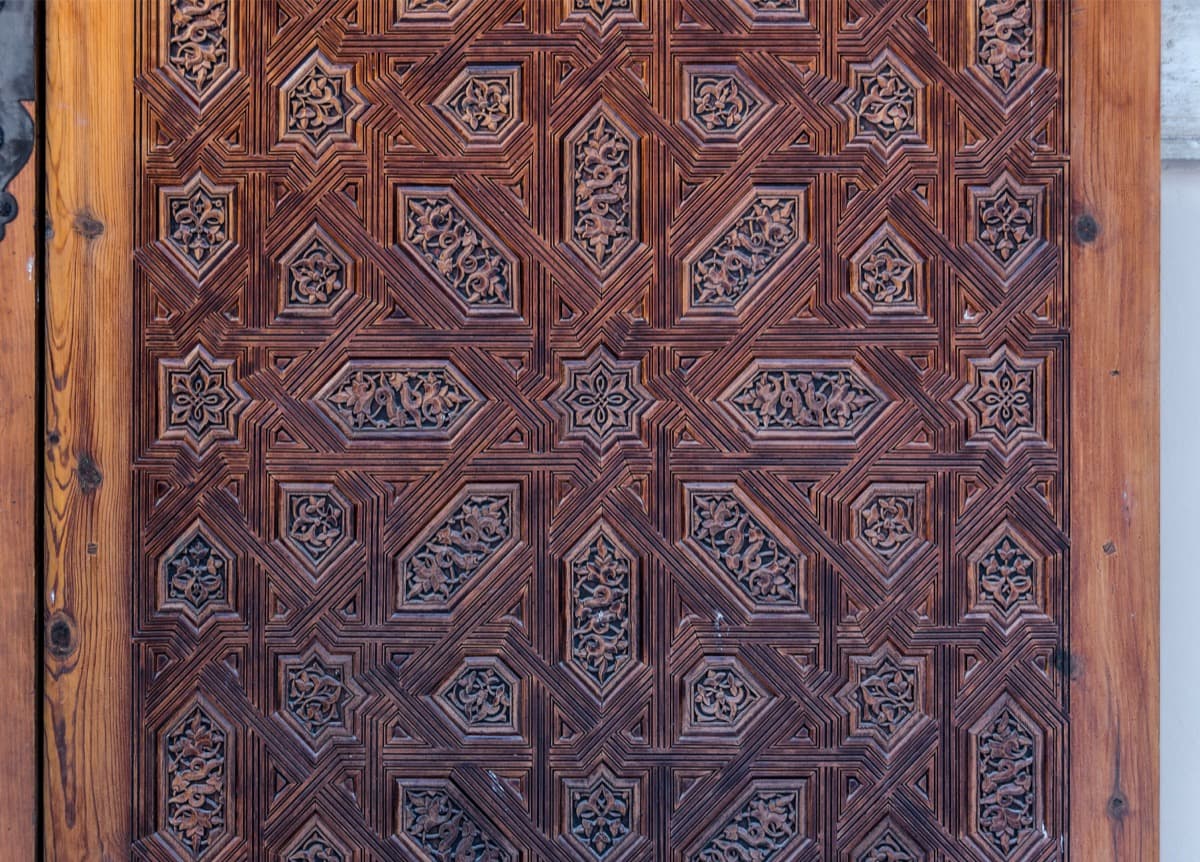
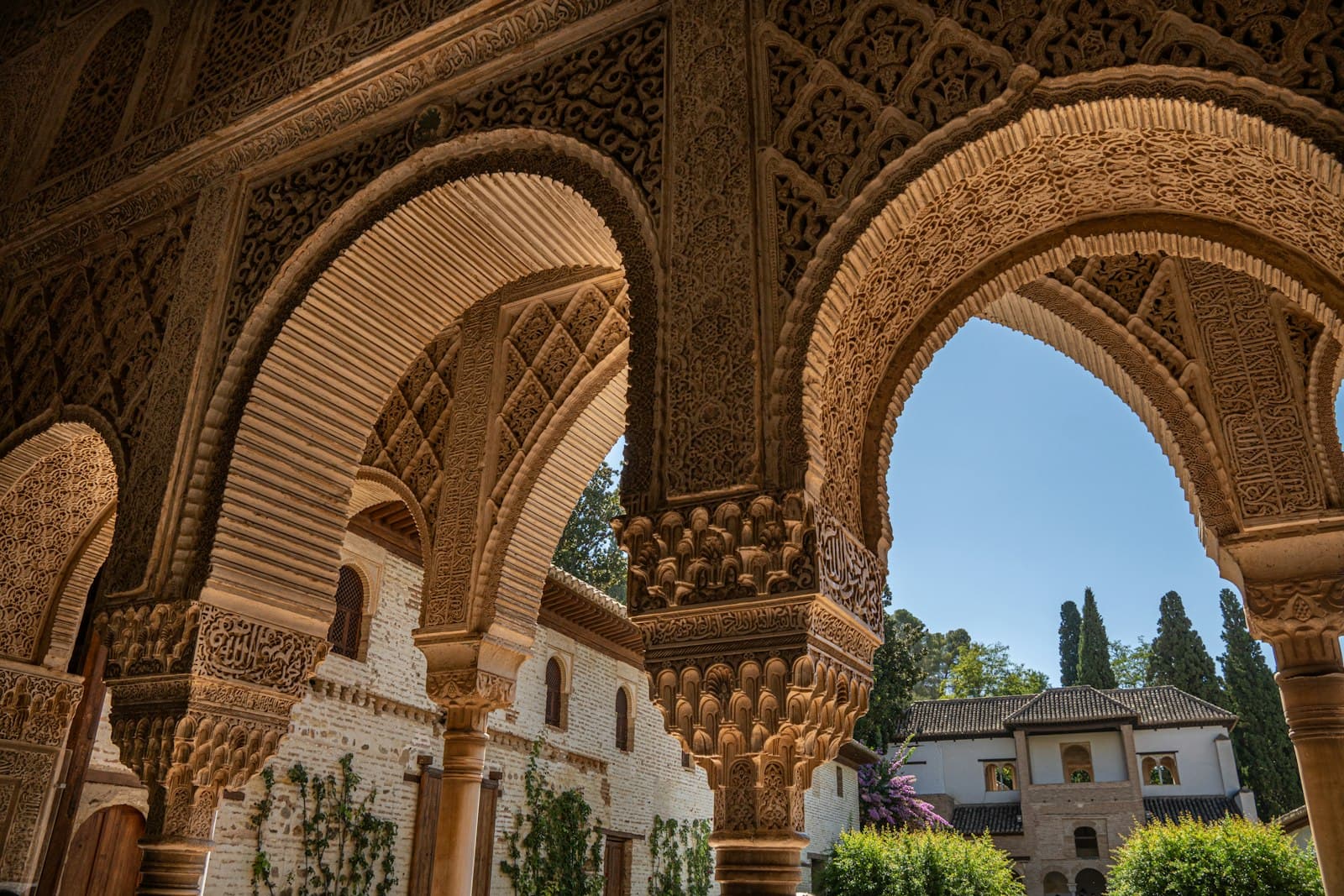
This is the block to walk with the Reading the Alhambra: A Nasrid Architectural Specimen self-guided audio tour, which reads the palace as a language: seven stops, seven elements of Nasrid architecture, from the trabeated arch to the muqarnas vault to water used as a building material, tied together by geometric strapwork. You leave able to read Islamic architecture anywhere. If you want to go deeper before you walk, the companion piece on the Court of the Lions fountain is a fine primer on the complex's most famous room, and Reading the Language of the Alhambra sets up the whole grammar.
Midday: cross to the Albaicín
Hear a stop from this walk
Generalife (Patio de la Acequia): The Literacy Applied Outward
Come down off the Alhambra hill and cross toward the Albaicín, the old Moorish quarter of whitewashed houses and Arab-era lanes that climbs the hill opposite the palace. The tourist minibuses do the steep work the map hides: line C32 links the Alhambra directly to the Albaicín, and lines C31 and C34 run up from Plaza Nueva. This is a natural point to eat. The streets at the foot of the hill, around Calle Elvira and the tea-house lane of Calderería Nueva, are dense with tapas bars and North African teterías. See what to eat in Granada for what to order, and note the local rule that a plate of food comes free with every drink.
Afternoon: the Albaicín and the San Nicolás viewpoint
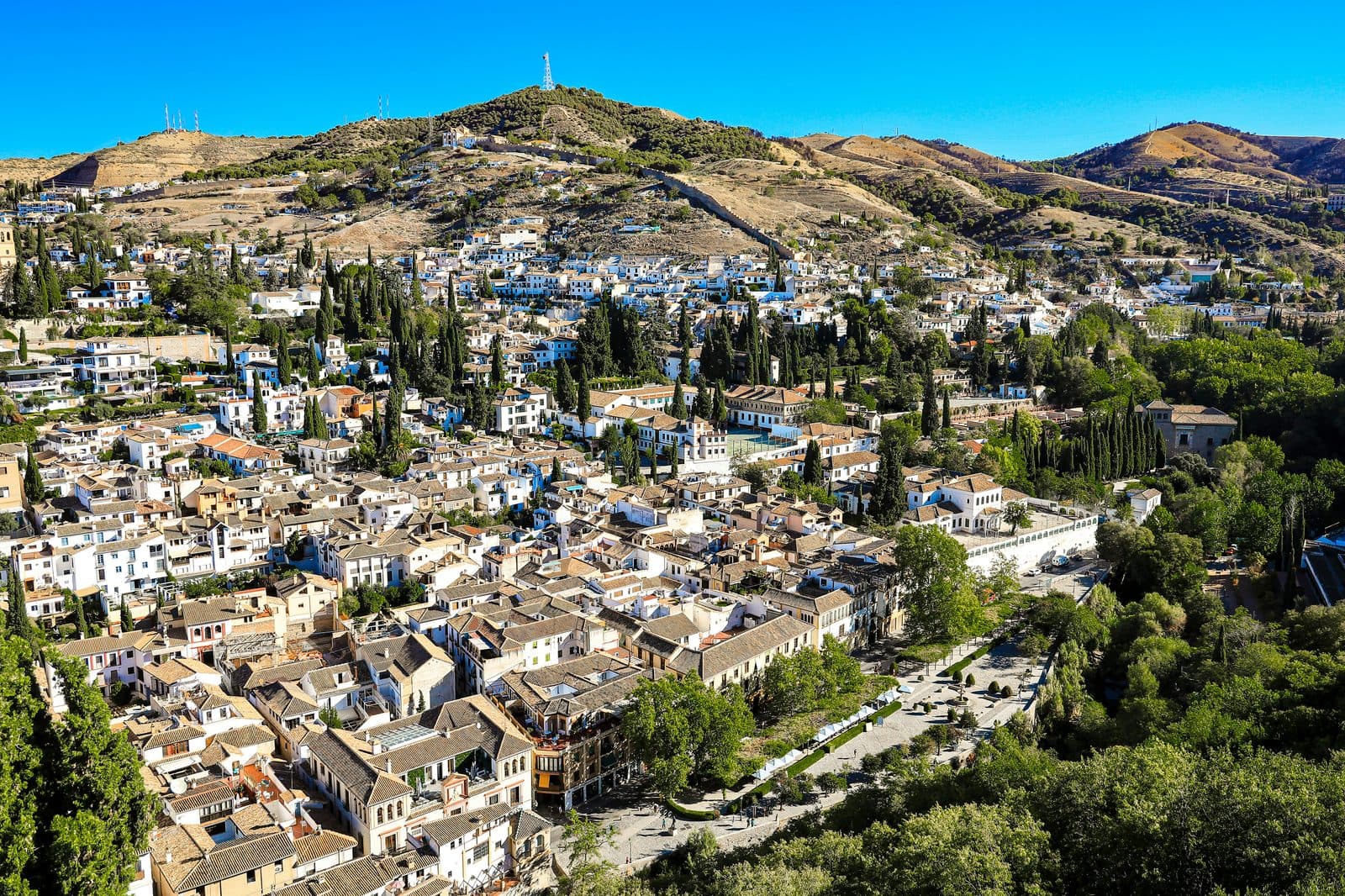
Spend the afternoon walking up through the Albaicín itself, a UNESCO-listed medieval quarter and a genuinely lived-in neighborhood rather than an open-air museum. Wind uphill through its lanes and small squares, timing the climb so you reach the Mirador de San Nicolás as the light softens. This is Granada's signature view: the whole Alhambra spread across the ravine with the snow-capped Sierra Nevada behind it, at its most beautiful when the palace glows warm at sunset.
Walk this block with the Albaicín: 800 Years on a Hillside self-guided tour, which reads the quarter as one continuous hillside carrying 800 years of building, from Zirid cisterns and Nasrid streets to the churches inserted into mosque foundations after 1492. For the neighborhood behind the postcard, the companion piece on the real medieval Albaicín is worth reading first. One practical note: the San Nicolás viewpoint draws tight sunset crowds, which invite distraction pickpockets, so keep your bag in front of you and your phone in hand.
Evening: Sacromonte and free tapas
As the light goes, follow the hill east into Sacromonte, the quarter of whitewashed cave-houses cut into the slope, where Granada's Roma and Morisco communities settled and where a wedding-form of flamenco called zambra was born. Line C34 runs up here from the center. Walk it with the Sacromonte: The Cave-Houses Where Zambra Was Born tour, which reads the slope as the meeting place of two displaced peoples, from Casa del Chapiz up to the highest tower on the Nasrid wall.
End the day back down in the tapas streets below the Albaicín. Granada is the one city in Spain where the tapa still comes free with the drink, so the move is to bar-hop: one drink per bar, eat what the kitchen sends, move on. A few rounds is a full dinner. The free-tapas custom is the perfect close to a day of walking these hills.
The one-day route at a glance
| Block | Where | Anchor tour |
|---|---|---|
| Morning | Alhambra: Alcazaba, Nasrid Palaces, Generalife | Reading the Alhambra |
| Midday | Cross to the Albaicín, lunch on Calderería Nueva | (transition) |
| Afternoon | Albaicín lanes, Mirador de San Nicolás at sunset | Albaicín: 800 Years on a Hillside |
| Evening | Sacromonte cave-houses, free tapas below the hill | Sacromonte: The Cave-Houses |
Plan the rest of your trip
One day covers the essential axis. For how many days Granada really deserves, how to book the Alhambra, and how to get around the hills, read the Granada travel guide. For every route in the city, see the best self-guided walking tours in Granada, or browse all Granada tours. Every tour is free to start: the introduction and first stop play in full, and every later stop plays a short preview before an optional purchase.
Frequently asked questions
- Can you see Granada in one day?
- You cannot see all of Granada in a day, but you can see its essential axis well: the Alhambra, the Albaicín with the San Nicolás viewpoint, and Sacromonte. All three sit close together and are reachable on foot or by short minibus rides. The one hard requirement is booking your Alhambra ticket in advance, ideally weeks ahead, because the Nasrid Palaces have a strict timed entry and sell out. Build your whole day around your Alhambra time slot.
- Do I have to book the Alhambra in advance for a one-day visit?
- Yes, and this is the single most important thing to get right. The Alhambra caps daily visitors, and the Nasrid Palaces admit a limited number every 30 minutes on a strictly enforced timed ticket. In peak season, popular dates and morning slots sell out weeks ahead. Book on the official site as early as you can, ideally a few weeks out and at least two months ahead for summer or Easter, and plan the rest of your day around the palace time printed on your ticket.
- What is the best order to see Granada in a day?
- Book the Alhambra for the morning if you can: the light is best early and the day is cooler for climbing. Then cross to the Albaicín in the afternoon, timing your walk uphill to reach the Mirador de San Nicolás toward sunset for the classic view of the Alhambra against the Sierra Nevada. Finish in Sacromonte and the tapas streets below the hill in the evening. If your Alhambra slot is in the afternoon, simply flip the morning and afternoon blocks.
- How much walking is a one-day Granada itinerary?
- Expect roughly 5 to 8 km on foot, much of it uphill on the steep, cobbled lanes of the Alhambra hill and the Albaicín. Wear real walking shoes. The tourist minibuses (lines C30, C31, C32, C34) climb the hills the taxis and city buses cannot, so use them to save your legs between the Alhambra, the Albaicín, and Sacromonte.
Ready to experience it?
Reading the Alhambra: A Nasrid Architectural Specimen
105 min · 1.6 km · moderate
More from Granada
Explore more at your own pace.
Granada 1492: The Hinge Year You Are Standing On

Granada's Free Tapas: The Only City in Spain Where the Food Still Comes Free
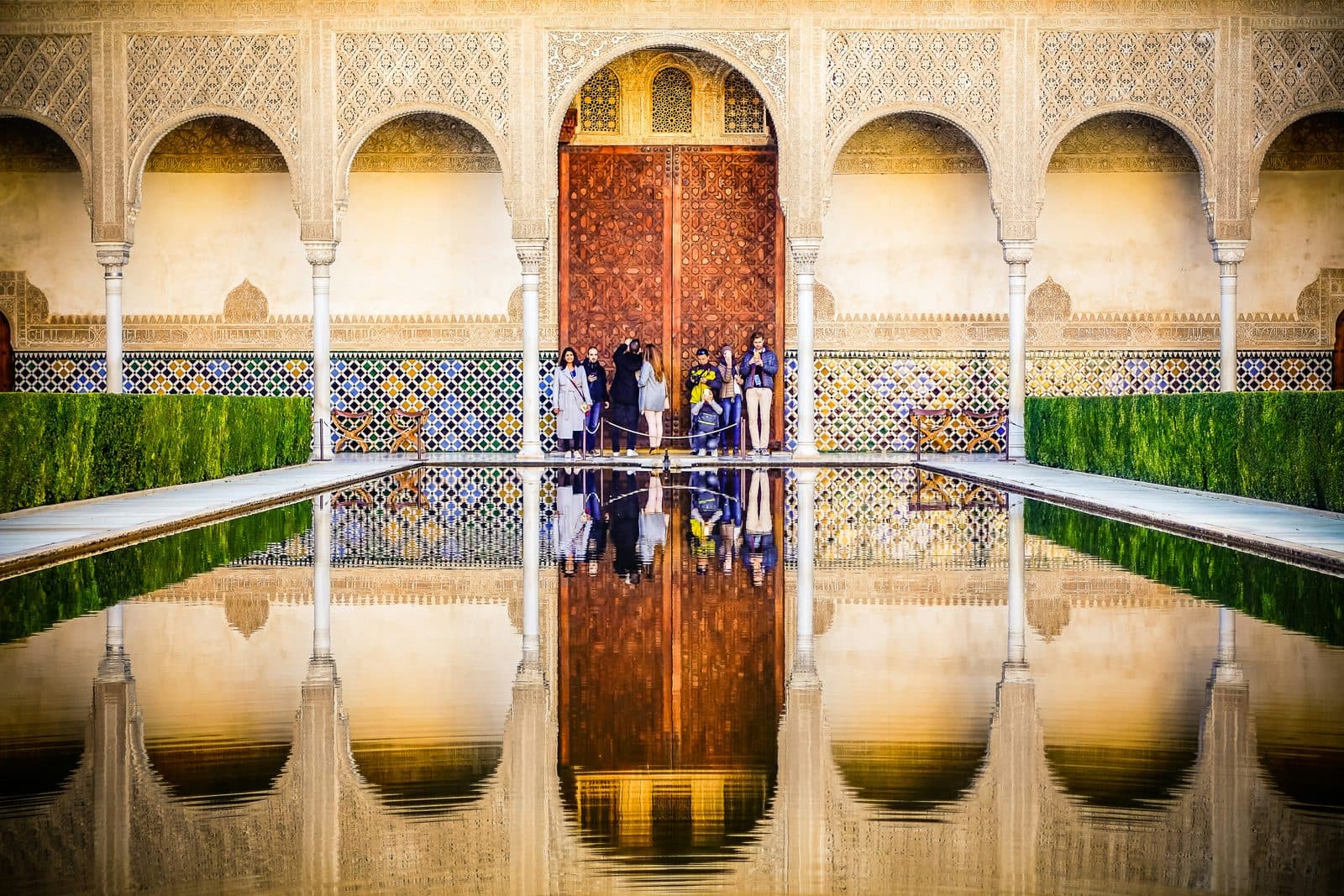
How to Read the Alhambra: The Seven Elements of a Nasrid Sentence
The Albaicín Is the Real Thing the Barri Gòtic Only Imitates
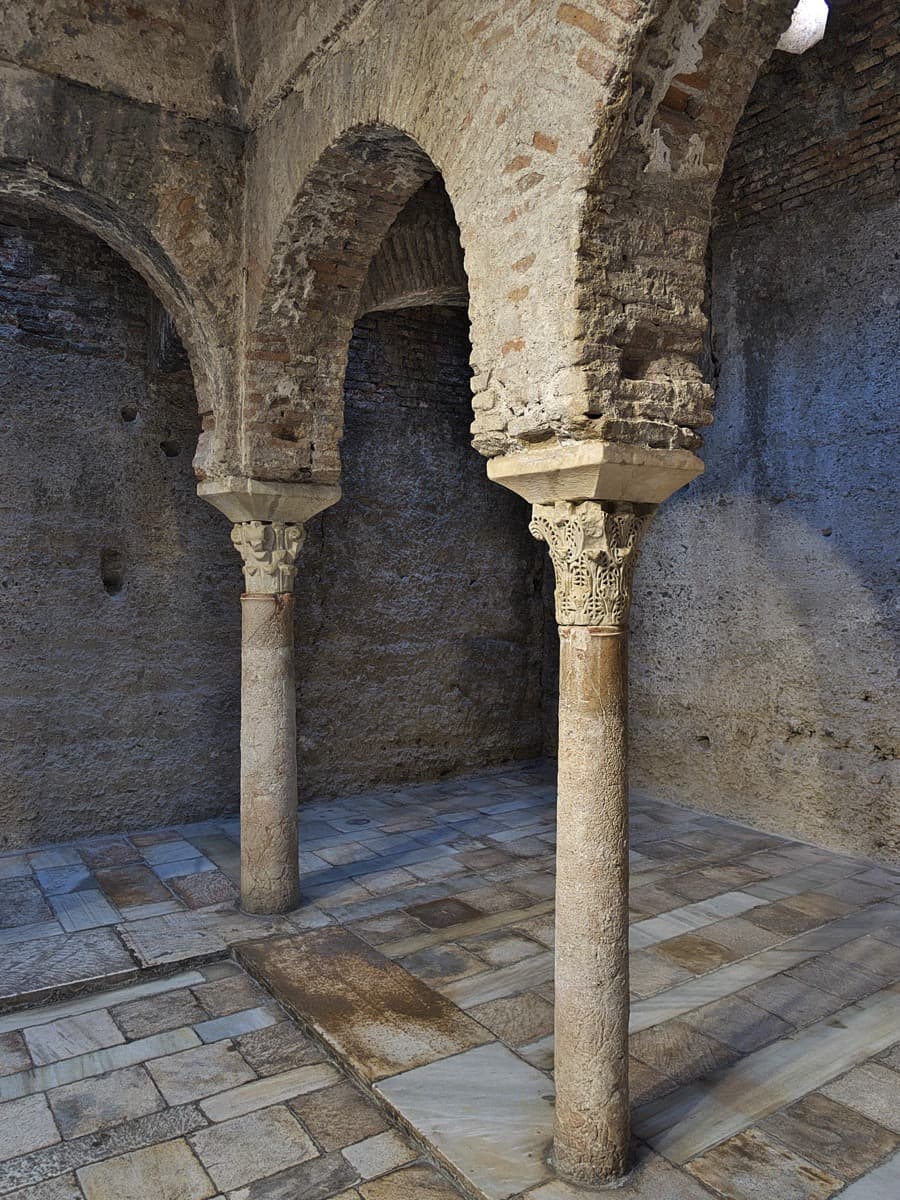
El Bañuelo: The Eleventh-Century Bath That Survived by Hiding in Plain Sight