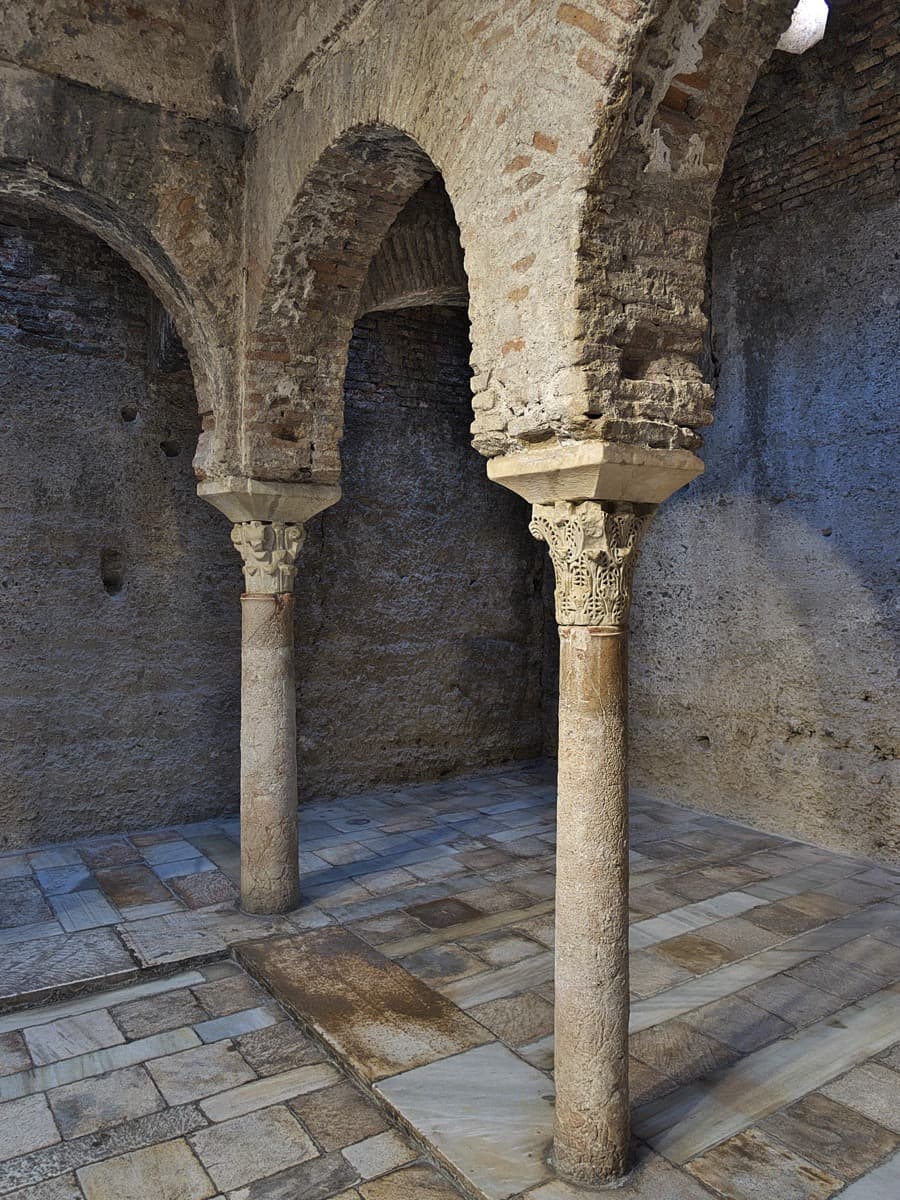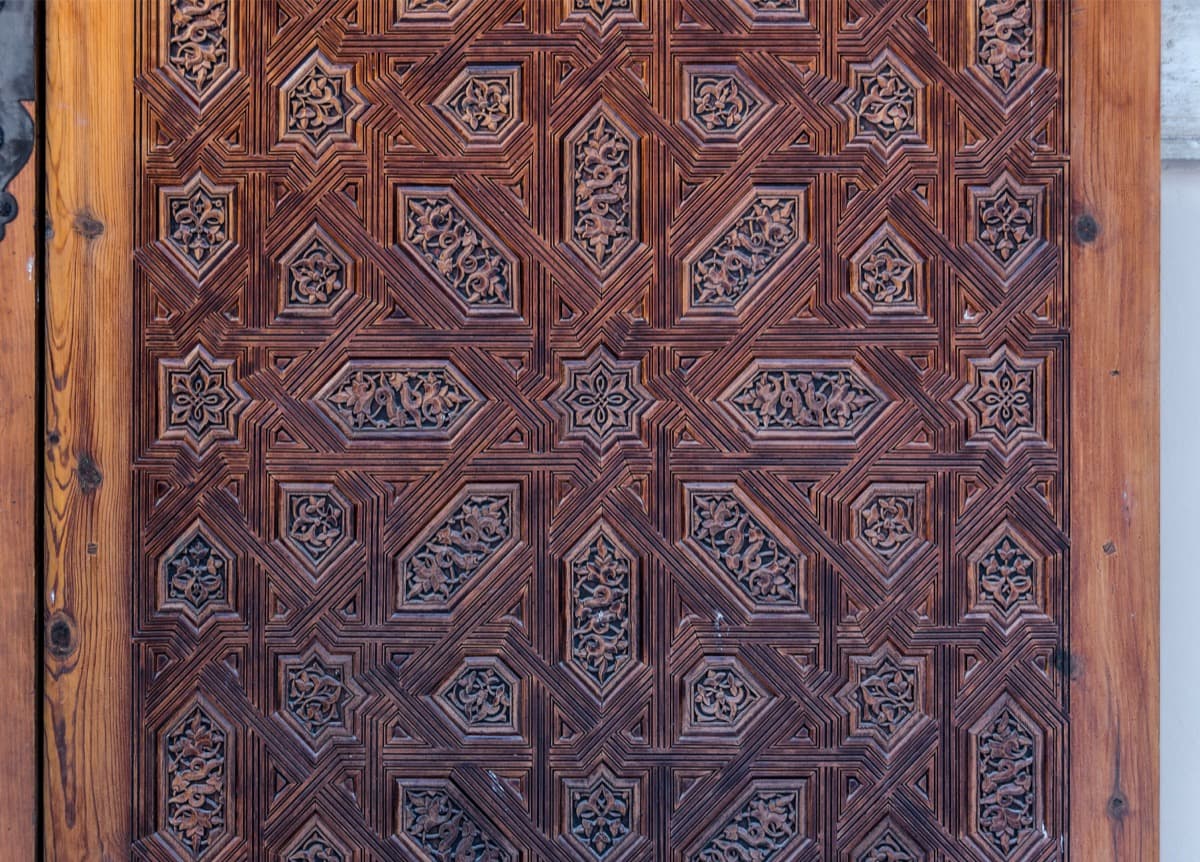
Stand at the center of the Court of the Lions and you are standing at the point where the whole Alhambra resolves into a single object. Twelve marble lions carry a basin. Four water channels run out from beneath them toward the four halls around the court, forming a cross on the floor. The fountain still works. Six hundred years after it was carved, water still rises through the lions and flows out along the channels exactly as it was engineered to. On the Nasrid architecture tour this is the stop where the language of the building stops being a lesson and becomes a demonstration.
When and by whom
The Palace of the Lions was built by Muhammad V during his second reign, from 1362 to 1391. That period is generally agreed to be the high point of Nasrid art, the moment its craft reached its most confident. Muhammad V had spent a stretch of his reign in exile and returned to build his masterpiece, so this court is the work of a ruler making a statement about permanence at a court that was, in the long view, running out of time. Within a century Granada would fall, as recounted in Granada 1492: The Hinge Year. This is the sound of a civilization at its peak, unaware it is near the end.
The fountain is a machine, not an ornament
Hear a stop from this walk
Generalife (Patio de la Acequia): The Literacy Applied Outward
The twelve lions are not decoration around a fountain. They are the fountain. A central marble basin rests on their backs, and the hydraulic system feeds water up into the basin and out through spouts, driven by the pressure differential of the Alhambra's larger water network descending the hill. The Nasrids were serious hydraulic engineers, and the whole palace runs on a gravity-fed water system that this fountain sits at the delicate center of. To make a fountain that distributes evenly in four directions from a single raised basin, and to keep it running for centuries, is a real feat of medieval engineering, not a decorative flourish.
This is the seventh element of the architectural language the tour teaches, water as structure, in its purest form. Take the water out and the court is a shell. With the water in, the entire design is doing what it was built to do.
The lions themselves
The twelve lions are carved from white marble, stylized rather than naturalistic, each slightly different. They are old. After a major restoration and study of the fountain completed in the twenty-first century, the marble of the basin, fountain, and lions was confirmed to date to the fourteenth century, contemporary with the palace itself. So the beasts you see are the beasts Muhammad V's masons carved, not later replacements. That matters, because so much of what tourists assume is medieval in Spain turns out to be nineteenth-century restoration, a problem discussed in the Albaicín companion. Here the lions are the real thing.
The poem that describes its own fountain
Around the edge of the basin runs an inscription: a poem by Ibn Zamrak, the court poet, written in praise of the fountain and dedicated to Muhammad V, the sultan who built it. This is the fifth element of the language, calligraphic epigraphy, doing something no European building of the age attempts. The object narrates itself. The poem describes the water, the lions, and the sultan, carved into the very basin it describes, so that the fountain speaks in the first person about being a fountain. The building is not merely decorated with text. It is authored, signed, and self-aware.
The room next door that breaks your heart
Off the court sits the Sala de los Abencerrajes, whose eight-pointed star muqarnas dome is one of the great ceilings of world architecture, the sixth element, the muqarnas vault, at its most virtuosic. Legend attaches a massacre to the room, a story of a noble family killed at a banquet, and points to rust-colored staining in the fountain basin as their blood. The staining is iron oxide, not blood, and the legend is later folklore rather than documented history. It is worth naming precisely because the real thing above your head, that impossible cascading dome, needs no invented gore to be astonishing.
Why this is the synthesis stop
The tour teaches seven elements one at a time, then brings you here, where all of them are present at once. The trabeated columns that look fragile and carry little. The stucco dissolving the walls. The tile below and plaster above. The calligraphy that speaks. The muqarnas overhead. And the water tying every axis of the court together on a single geometric grid. The Court of the Lions is the sentence the whole tour has been teaching you to read. Stand at the center, watch the water run, and read it. That is what the Nasrid architecture tour is for.
Ready to experience it?
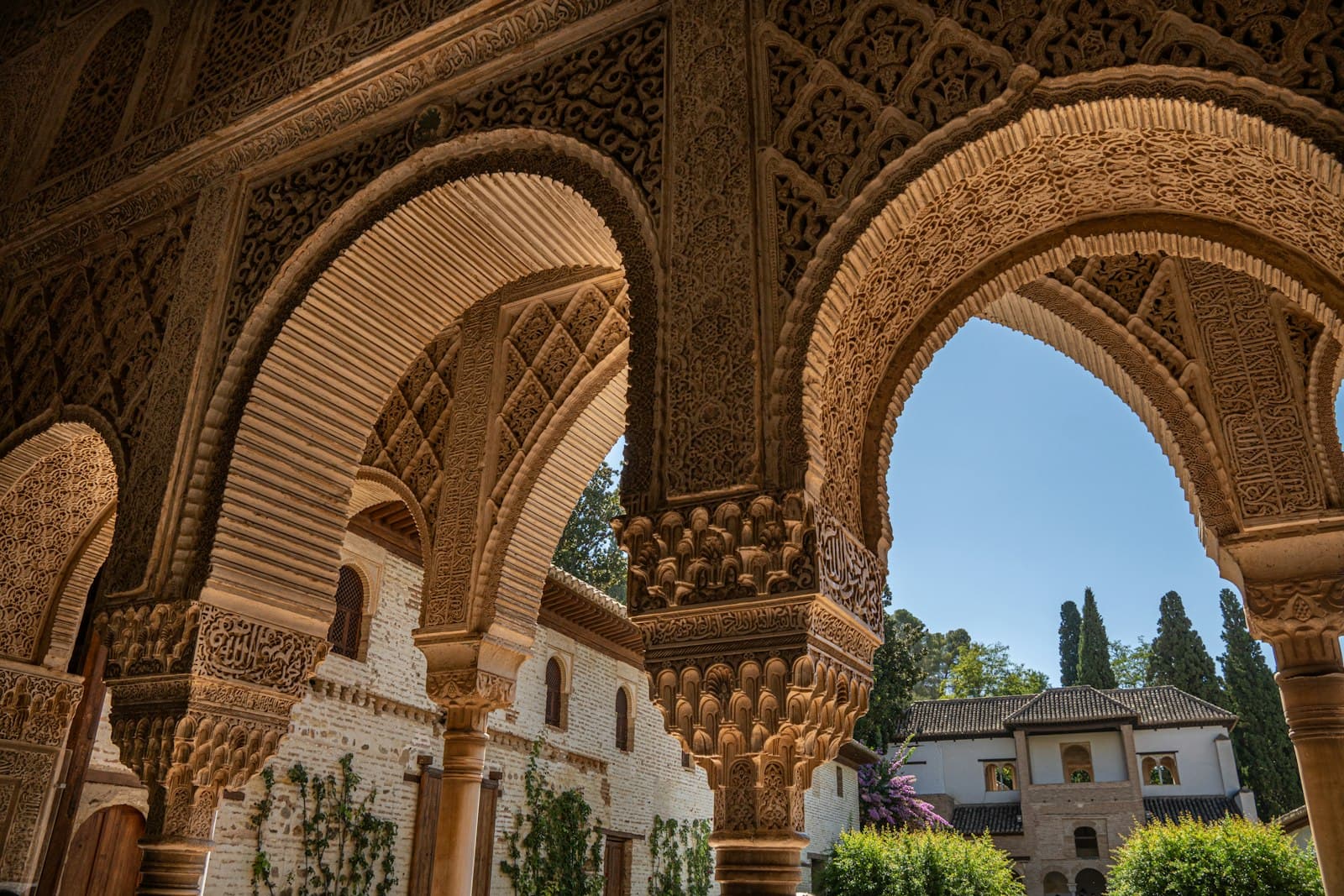
Reading the Alhambra: A Nasrid Architectural Specimen
105 min · 1.6 km · moderate
More from Granada
Explore more at your own pace.
Granada 1492: The Hinge Year You Are Standing On
Granada's Free Tapas: The Only City in Spain Where the Food Still Comes Free
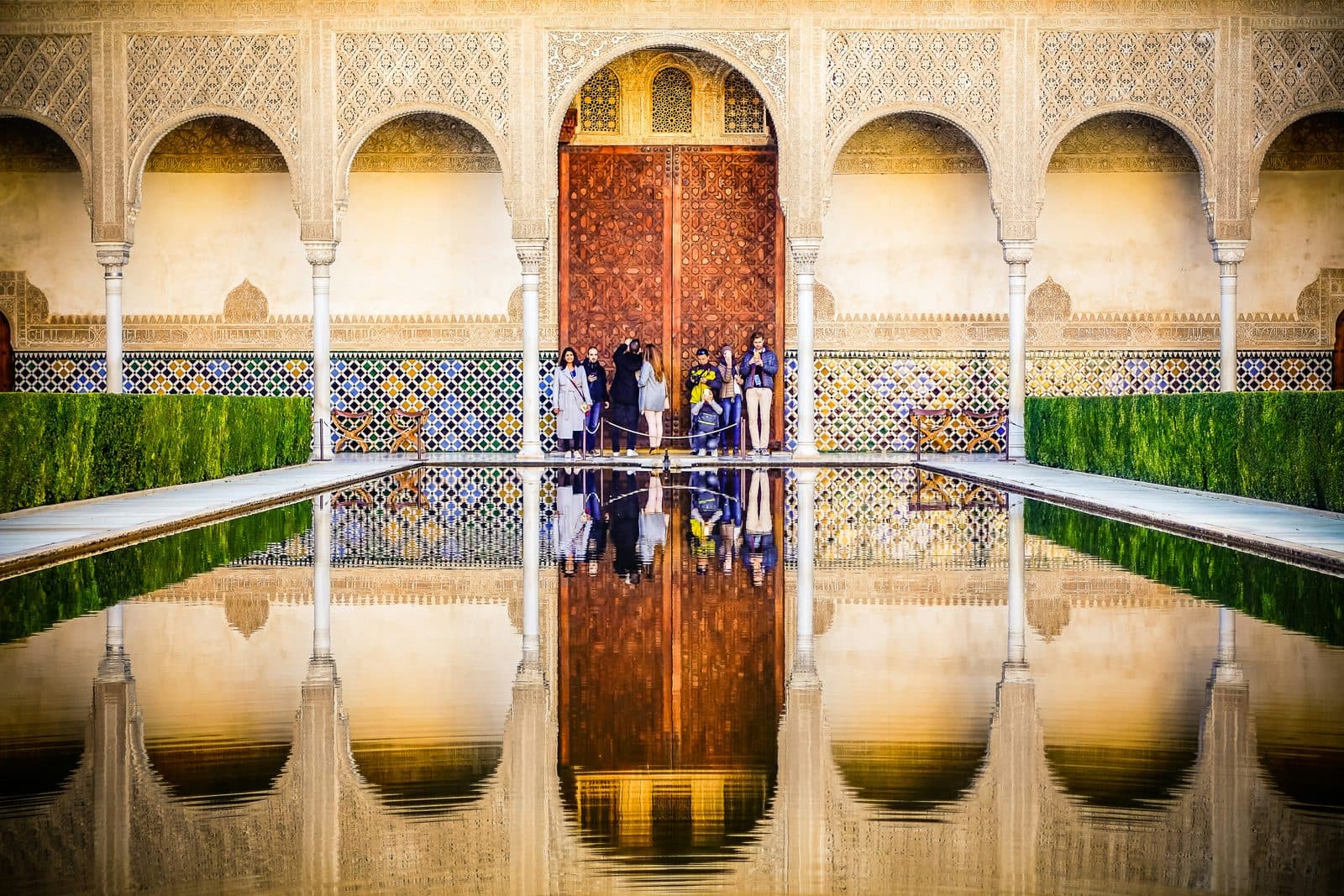
How to Read the Alhambra: The Seven Elements of a Nasrid Sentence
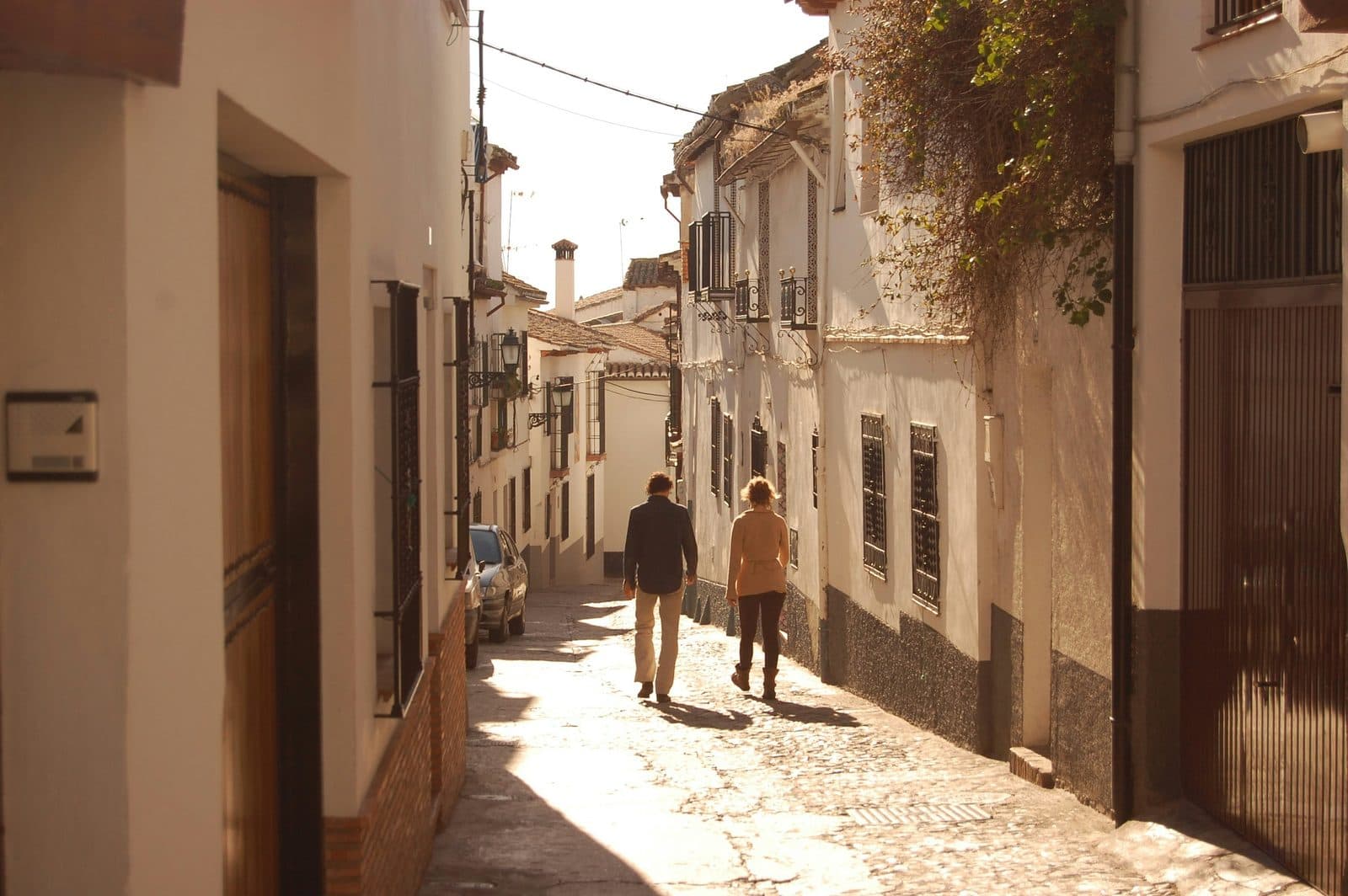
Sacromonte: Where Two Losing Sides Made a New Culture in the Caves
The Albaicín Is the Real Thing the Barri Gòtic Only Imitates