The Vieux-Port history tour walks seven stops in about ninety-five minutes, and its whole method is one idea held steady: the harbour basin in front of you has been a working port without meaningful interruption for roughly 2,600 years, and each stop is a different regime using the same water. The functions changed. The inlet never stopped. This companion lays out the chronological spine so the seven stops read as one continuous story rather than seven separate sights. It is the deep background to the reasons Marseille is the oldest city in France that was never really French.
Stop 1 to 2: The Greek city, still under the modern one
The tour opens at the Jardin des Vestiges, the exposed Greek harbour walls and quays that sit under a 1960s shopping arcade in the city centre. This is the literal evidentiary anchor of the whole 2,600-year claim: the soil here is the soil the Phocaean Greeks first walked around 600 BCE. The remains, including three square towers and a gateway, were unearthed during 1967 construction work and preserved. If you want the full weight of this stop, the dedicated piece on the Jardin des Vestiges and the Greek harbour is where the archaeology gets its own room.
Stop two, the Place de Lenche up in Le Panier, sits where the Greek agora, the civic and market heart of Massalia, is believed to have stood. Two stops in, you have already covered the founding: a Greek trading colony with a fortified harbour below and a public square above.
Stop 3 to 4: The royal and imperial layers arrive
Hear a stop from this walk
Le Panier: The Wound and What Survived
The Centre de la Vieille Charité at stop three jumps the story forward to the royal period. Built from 1671 to a design by the Marseille-born architect and sculptor Pierre Puget, it was a workhouse for the poor, a piece of seventeenth-century social architecture that survives today as a cultural centre.
Stop four, the Cathédrale de la Major, adds the nineteenth-century imperial layer at the seam between the medieval old town and the new industrial docks. Its foundation stone was laid in 1852 by Louis-Napoléon Bonaparte, and it was built across three architects (Vaudoyer, then Espérandieu, then Révoil) in a striped Romano-Byzantine style. On this tour the Major reads as a chronological beat, the moment the French empire stamped the harbour. The Canebière architecture tour reads the very same building differently, as an architectural specimen, which is a good example of how two Roamer tours can share a monument without repeating each other.
Stop 5: The climax at the harbour mouth
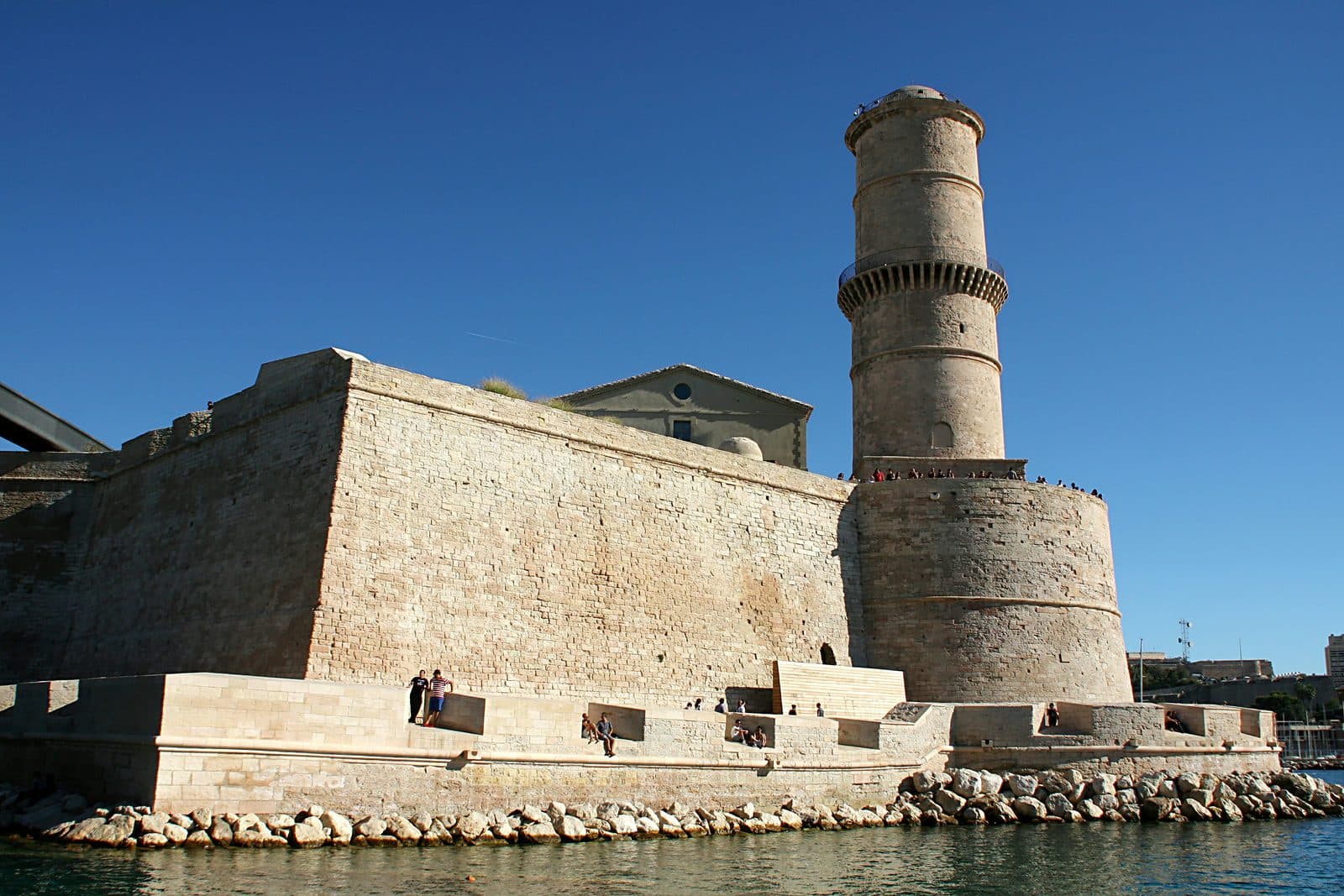
The tour's climax stands at Fort Saint-Jean and the MuCEM, the pair of buildings that guard the harbour mouth. Fort Saint-Jean is one of the two forts Louis XIV built after 1660 with their guns pointed inward at the city, punishment architecture rather than defence, a detail worth carrying with you. Beside it, connected by a slender concrete footbridge, is the MuCEM, Rudy Ricciotti's 2013 museum wrapped in a lattice of ultra-high-performance concrete. The diptych of a seventeenth-century punishment fort and a twenty-first-century museum of Mediterranean civilisations, joined by a bridge, is the tour's single most concentrated image. The full story of that pairing is in the piece on Fort Saint-Jean and the MuCEM.
Stop 6 to 7: The modern harbour and the wound
Stop six brings you to L'Ombrière at the Quai de la Fraternité, Norman Foster's polished stainless-steel canopy installed in 2013, a mirror that reflects the harbour, the crowd, and the sky back at itself. Standing under it you get the 2,600-year view: the same inlet, now a civic and cultural square rather than a cargo dock.
The tour resolves in Le Panier, the medieval heart of the port corridor, and it does not end on a triumphant note. In February 1943 the German occupation dynamited around 1,500 buildings and erased 50 streets in this quarter, after a roundup of its residents. The inlet survives every foreclosure; the neighbourhoods that wrap it sometimes do not. That is the tour's honest closing argument, and it is why this history tour hands naturally to the Noailles and Cours Julien tour, which picks up the living present-tense stakes of the same port-city.
How to walk it
The route runs about 2.3 km and is rated easy, but it climbs into Le Panier's stepped lanes, so wear real shoes. Ninety-five minutes is the narration length; give yourself longer if you want to actually descend into the Jardin des Vestiges or go inside the MuCEM. Because it is self-guided, you set the pace and can linger at the harbour mouth as long as the light is good. Start with the best walking tours in Marseille overview if you want to see how this tour fits with the other two.
Ready to experience it?
Vieux-Port: 2,600 Years on the Same Inlet
100 min · 4.9 km · easy
More from Marseille
Explore more at your own pace.
Reading the Empire in Stone: A Companion to the Canebière Architecture Tour
The Belly of Marseille: Noailles, the Marché des Capucins, and the Truth About Bouillabaisse
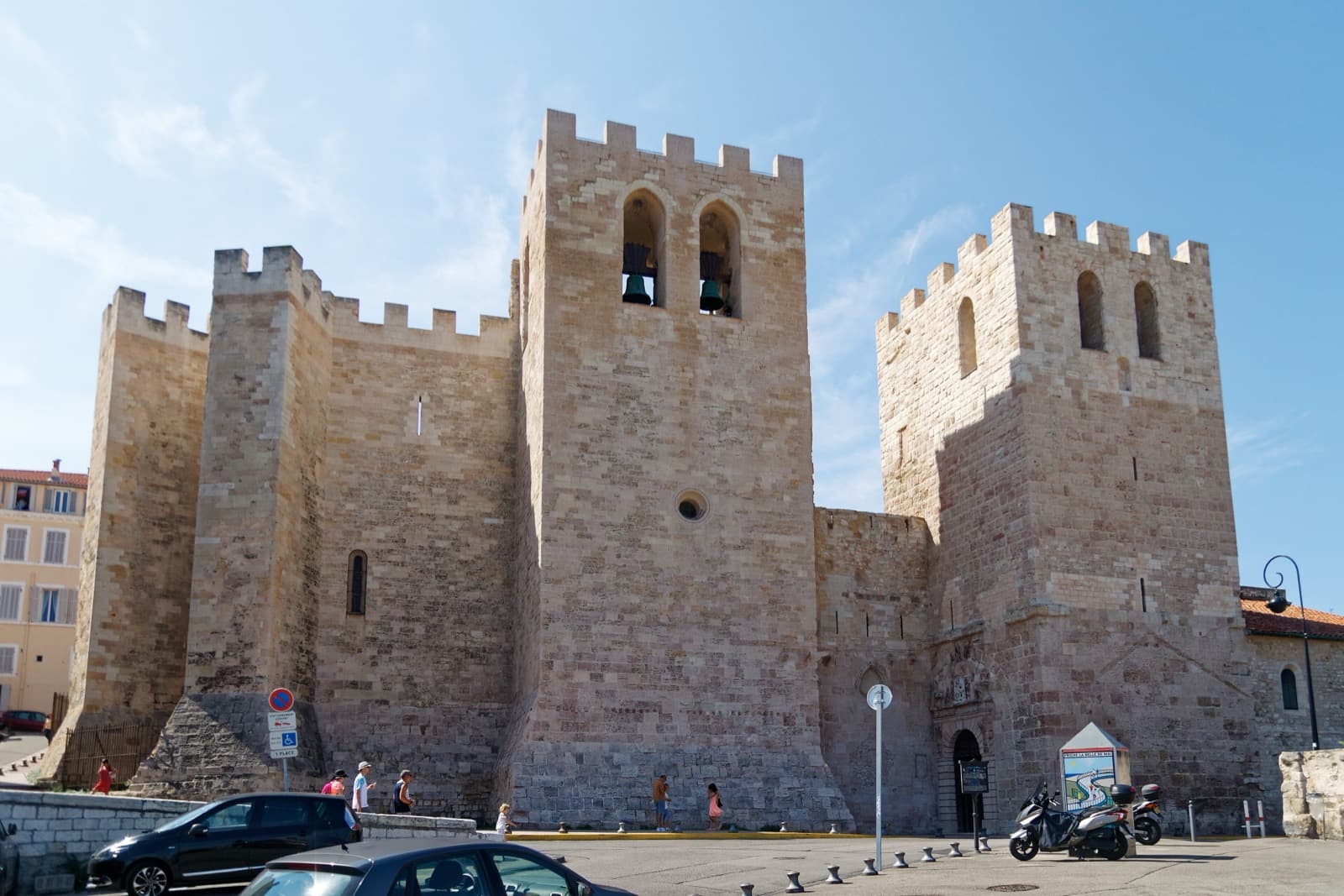
Abbaye Saint-Victor: The Port That Was Christian Before France
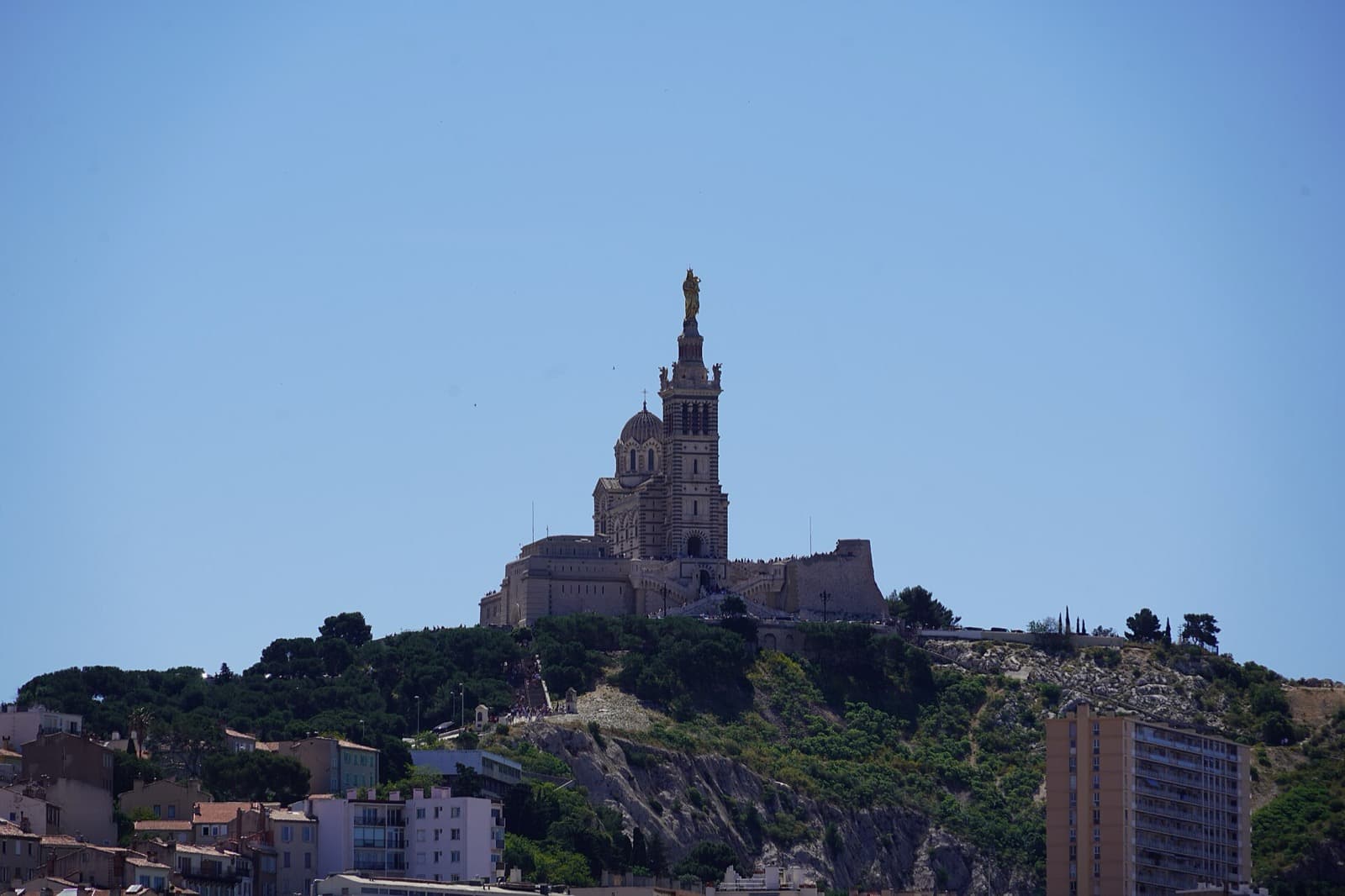
Notre-Dame de la Garde: The Good Mother Watching the Sea

The Bridge Between 1660 and 2013: Fort Saint-Jean and the MuCEM
