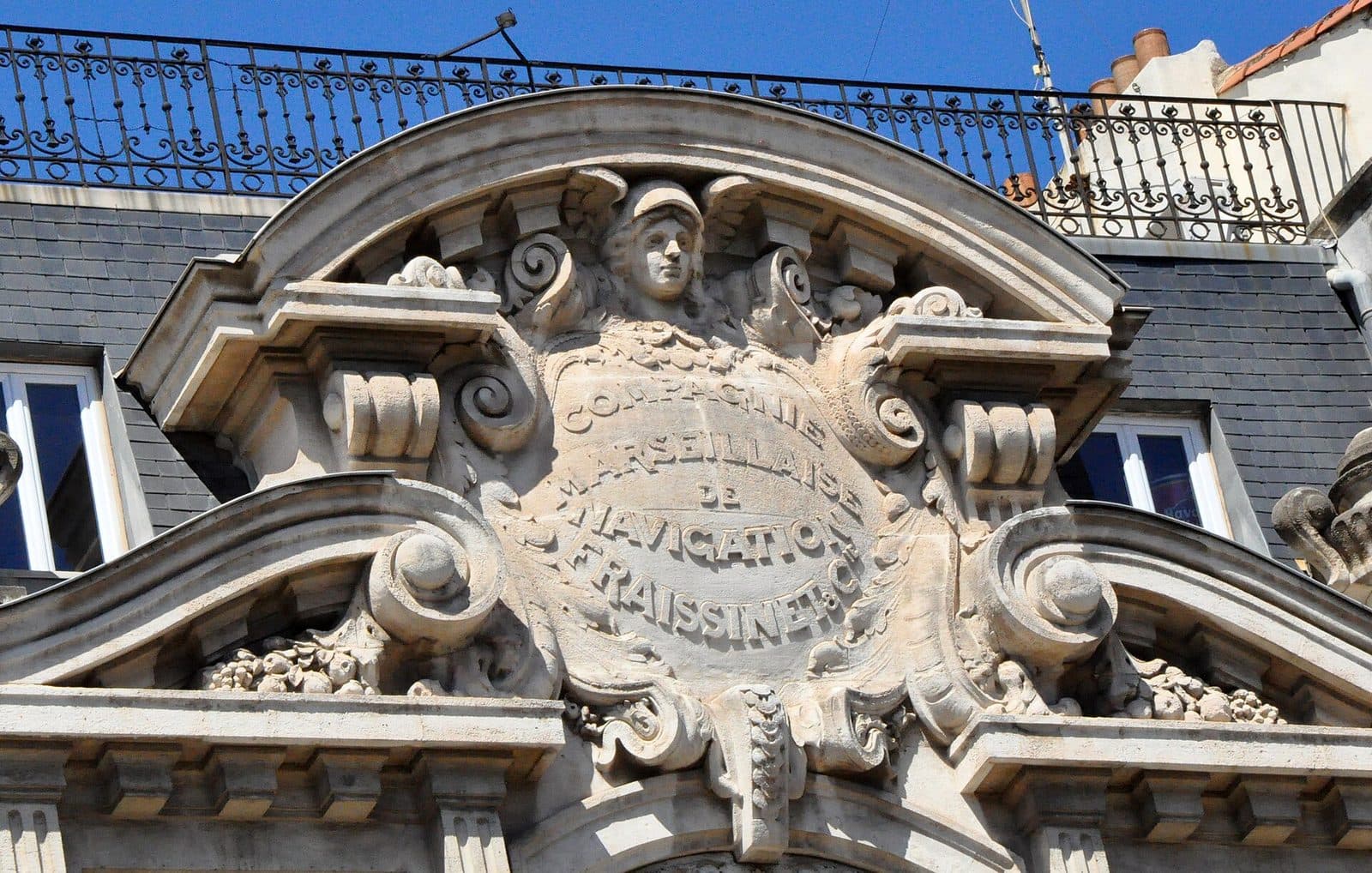
The Canebière architecture tour walks six monuments in about seventy-five minutes and treats them as one connected composition rather than a list of pretty buildings. The claim is precise: between roughly 1860 and 1900, Marseille rebuilt its centre in a grand Second-Empire grammar that the money flowing through the port had suddenly made affordable, and that grammar reads the empire that paid for it. This companion gives you the vocabulary and the economic premise before you set out, so the buildings connect. For the longer view of how this imperial layer sits on a far older city, read why the oldest city in France was never really French.
The economic premise: why 1860 to 1900
You cannot read the buildings without the money. In the second half of the nineteenth century Marseille's population roughly doubled, reaching about 500,000 by 1900. The 1869 opening of the Suez Canal shortened the sea route to Asia and poured cargo through the port. The historian Xavier Daumalin has documented that the city's exports to Algeria alone grew 258 percent between 1855 and 1874. That surge of colonial and Mediterranean trade wealth is the thing that financed the rebuild. Every monument on the tour was paid for, directly or indirectly, by the port's imperial traffic. The architecture is the receipt.
The vocabulary you will hear
Hear a stop from this walk
Saint-Vincent-de-Paul (Les Réformés): The Synthesis Vantage
The tour is built in the Engineer voice, so it teaches you to read a few repeating elements rather than just admire them. A fronton is the triangular or curved crown over a facade or window, the place where a building often puts its most emphatic statement. Allegorical sculpture is the human figures that stand for abstract ideas, Commerce, the Colonies, the rivers, carved into the monuments to spell out what the building is for. Polychrome stripe-work is the alternating bands of light and dark stone you will see most dramatically on the cathedral. Once you can name these three, the whole avenue starts speaking in a single language.
Stop 1 to 3: The empire plants its institutions
The tour opens at the Palais de la Bourse, the stock exchange at the foot of the Canebière, whose public-utility decree was signed by Louis-Napoléon Bonaparte in 1851 and which Napoleon III himself inaugurated in 1860. It is the empire putting its foot down at the head of the bourgeois avenue.
Stop two, the Hôtel-Dieu, is the older stone the empire renovated: an eighteenth-century hospital given a Second-Empire facelift and inaugurated in its renewed form by Napoleon III in 1866, and today an InterContinental hotel. Stop three, the Préfecture des Bouches-du-Rhône, is the imperial administrative seal, a Florentine-palazzo-inspired seat of state power completed in the 1860s. Three stops in, you have the empire's commerce, its charity, and its administration, all in the same grammar.
Stop 4 to 5: The synthesis vantage and the water monument
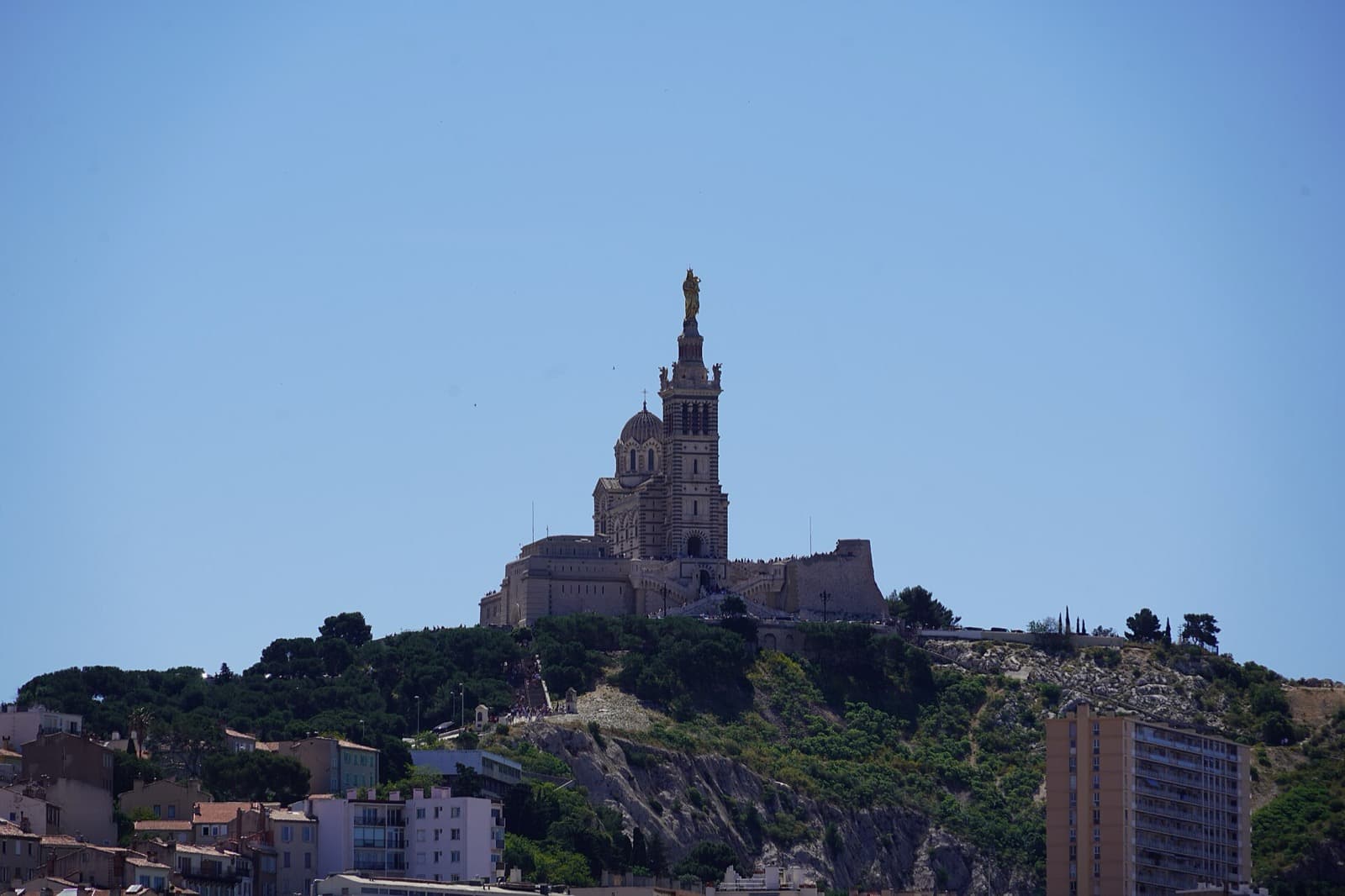
From the vantage of Saint-Vincent-de-Paul at the top of the Canebière, a neo-Gothic church with two 70-metre towers, the tour points out two off-corridor monuments that complete the argument. One is Notre-Dame de la Garde, the gold-crowned basilica on the hill whose Madonna is gilded with about 500 grams of gold across tens of thousands of leaves. The other is the Palais Longchamp, and it is worth its own visit.
The Palais Longchamp is the single clearest statement of what this whole era was doing. It is not a palace at all; it is a monumental water tower, a château d'eau, built by Henri-Jacques Espérandieu and inaugurated in 1869 to celebrate the arrival of clean water in a city that had been ravaged by drought and cholera in the 1830s. It dresses a piece of civic plumbing in a triumphal colonnade with allegorical fountains and two museums. The same Espérandieu who built it also worked on the harbour cathedral this tour climaxes at, and on Notre-Dame de la Garde, which is a good measure of how much of Belle-Époque Marseille one architect signed.
Stop 6 to 7: The terminal monument and the composed view
The climax is the Cathédrale de la Major, the striped Romano-Byzantine cathedral at the docks whose foundation stone was laid by Louis-Napoléon in 1852 and which took three architects and four decades to finish. This is where the polychrome stripe-work, the dome, and the allegorical program all come together into one terminal monument. The tour resolves on the Esplanade de la Tourette, a terrace between the cathedral and the harbour, where you can see the whole composition arranged at once: the empire's cathedral, its docks, and the ancient port it was all built to crown.
How to walk it
The route is about 2 km and rated easy, though it climbs gently toward Saint-Vincent-de-Paul. Seventy-five minutes is the narration; add time if you want to go inside the cathedral or make the detour to Palais Longchamp, which is a fifteen-minute walk off the main line. When you finish, the natural next tour is Noailles and Cours Julien, which walks the living immigrant city that grew inside the housing stock this imperial century built. See how all three connect in the best walking tours in Marseille guide.
Ready to experience it?
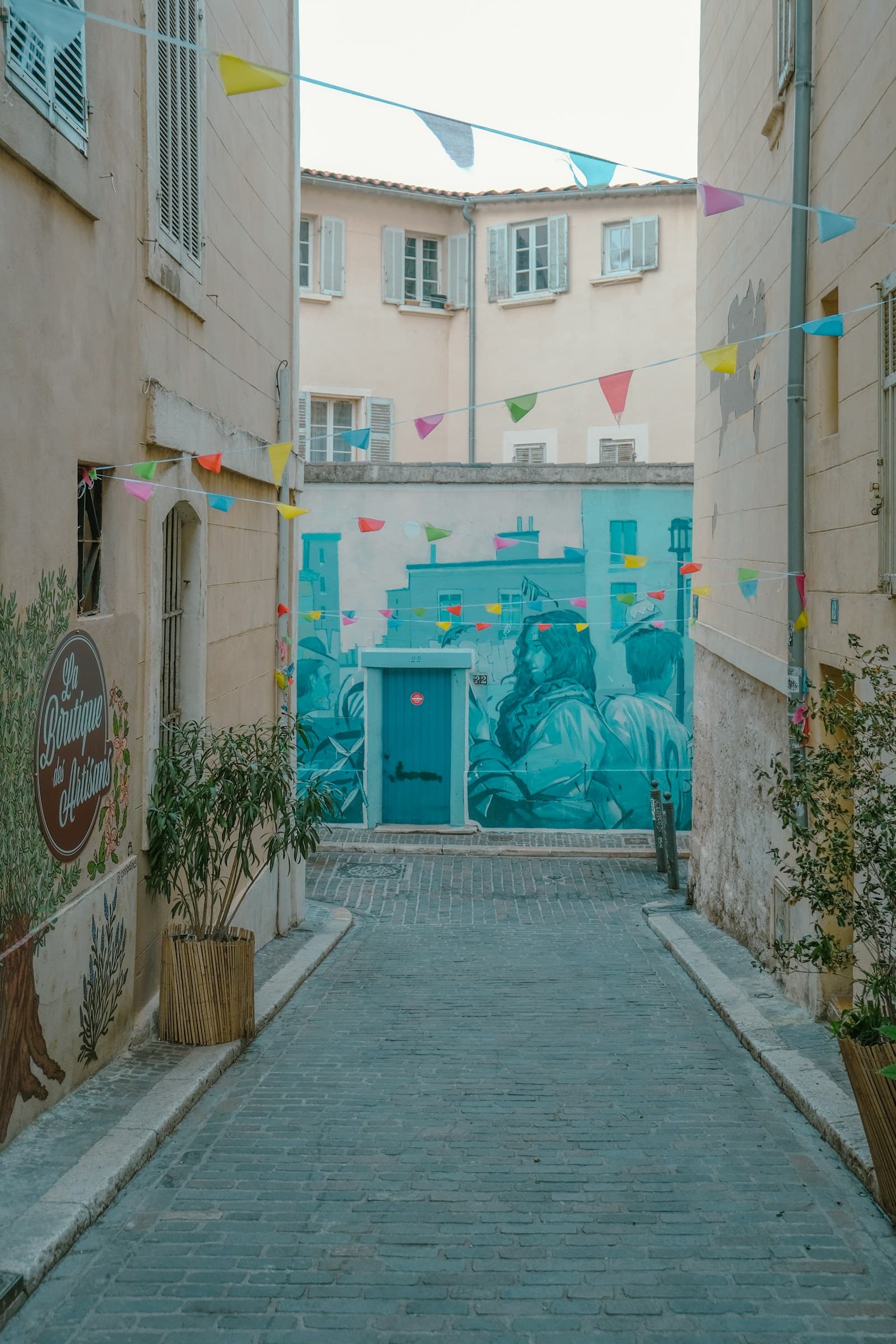
La Canebière: Reading the Empire off the Canebière
110 min · 5.3 km · easy
More from Marseille
Explore more at your own pace.
The Belly of Marseille: Noailles, the Marché des Capucins, and the Truth About Bouillabaisse
The Port-City France Hasn't Decided About: A Companion to the Noailles and Cours Julien Tour
Abbaye Saint-Victor: The Port That Was Christian Before France
Notre-Dame de la Garde: The Good Mother Watching the Sea

The Bridge Between 1660 and 2013: Fort Saint-Jean and the MuCEM
