Vieux-Port: 2,600 Years on the Same Inlet
100 min · 4.9 km · easy
Yes, you can see the heart of Marseille in a day. Here is the route.
You cannot fit 2,600 years of harbour, empire, and arrival into a single day, and you should not try. What you can do is walk the dense, connected core where the city's essential sights sit within reach of each other: the Vieux-Port and the old quarter of Le Panier, the market food of Noailles, and the hilltop basilica of Notre-Dame de la Garde watching over all of it. This itinerary routes those around a comfortable walking day, and names the self-guided Marseille walking tour that anchors each block so the history walks with you.
A note on pace before you start. This is a full day on foot, roughly 6 to 9 km, nearly all flat except one climb to the basilica, so wear comfortable shoes and treat the lunch stop below as part of the plan, not an interruption to it.
Morning: the Vieux-Port and Le Panier
Start at the Vieux-Port, the old harbour that has been a working inlet without meaningful interruption since Greek sailors from Phocaea anchored here around 600 BCE. Come early enough to catch the small morning fish market on the quay, then walk the water's edge under Norman Foster's mirror-ceilinged Ombrière pavilion. From the north quay, climb into Le Panier, the city's oldest quarter, a maze of ochre lanes, washing lines, and street art that is the oldest inhabited ground in France.
This is the block to walk with the Vieux-Port: 2,600 Years on the Same Inlet self-guided audio tour, which reads the harbour as a physical ledger of every era that has used it, from the Greek foundation to the modern quay. If you want to go deeper before you walk, the companion piece on the Greek harbour under the shopping mall is a good primer on how old this ground really is.
At the harbour's mouth, don't miss the MuCEM and Fort Saint-Jean, a seventeenth-century fort joined by a footbridge to a museum of black concrete lattice that opened in 2013. Walking from one to the other is walking from 1660 to now in a few hundred metres, a contrast the companion on the Fort Saint-Jean and MuCEM diptych draws out in full. The rooftop terraces are free and the view over the sea is one of the best in the city.
Midday: Noailles, the belly of the city
Hear a stop from this walk
Le Panier: The Wound and What Survived
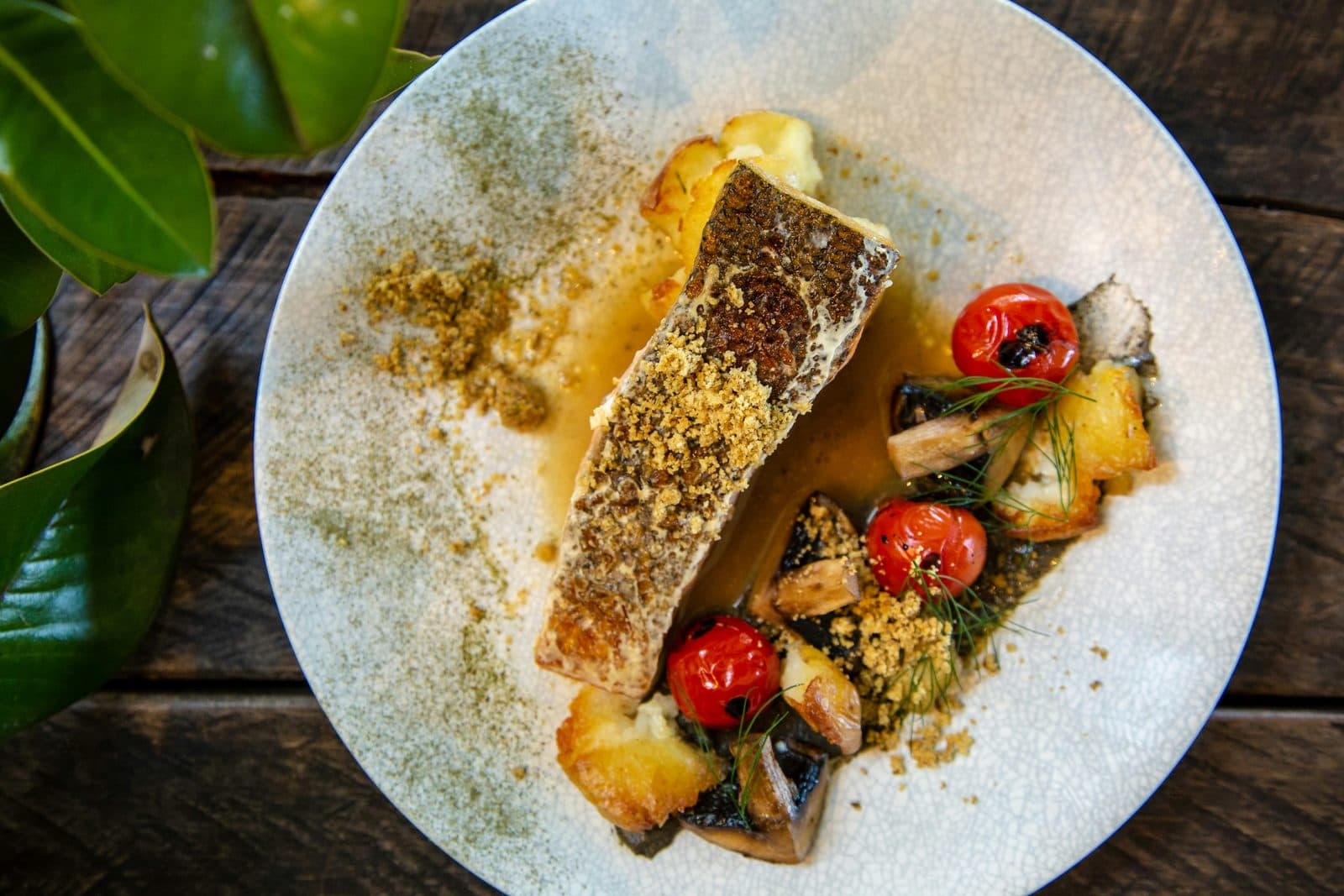
Come back around the port and head a few minutes east off the Canebière, the city's grand nineteenth-century avenue, into Noailles. This is the market district, the social and edible heart of Marseille, where North African groceries, spice stalls, and Provençal produce fill the Marché des Capucins. It is the right place for lunch: panisse and street food from the stalls, or a plate of couscous from one of the neighbourhood's Maghrebi kitchens.
Walk it with the Noailles and Cours Julien self-guided tour, which reads the neighbourhood as the port-city France has never quite decided about. For what to actually order here, from bouillabaisse to navettes, see what to eat in Marseille, and for the neighbourhood's own food story, the belly of the city companion.
Afternoon: the Canebière and Notre-Dame de la Garde
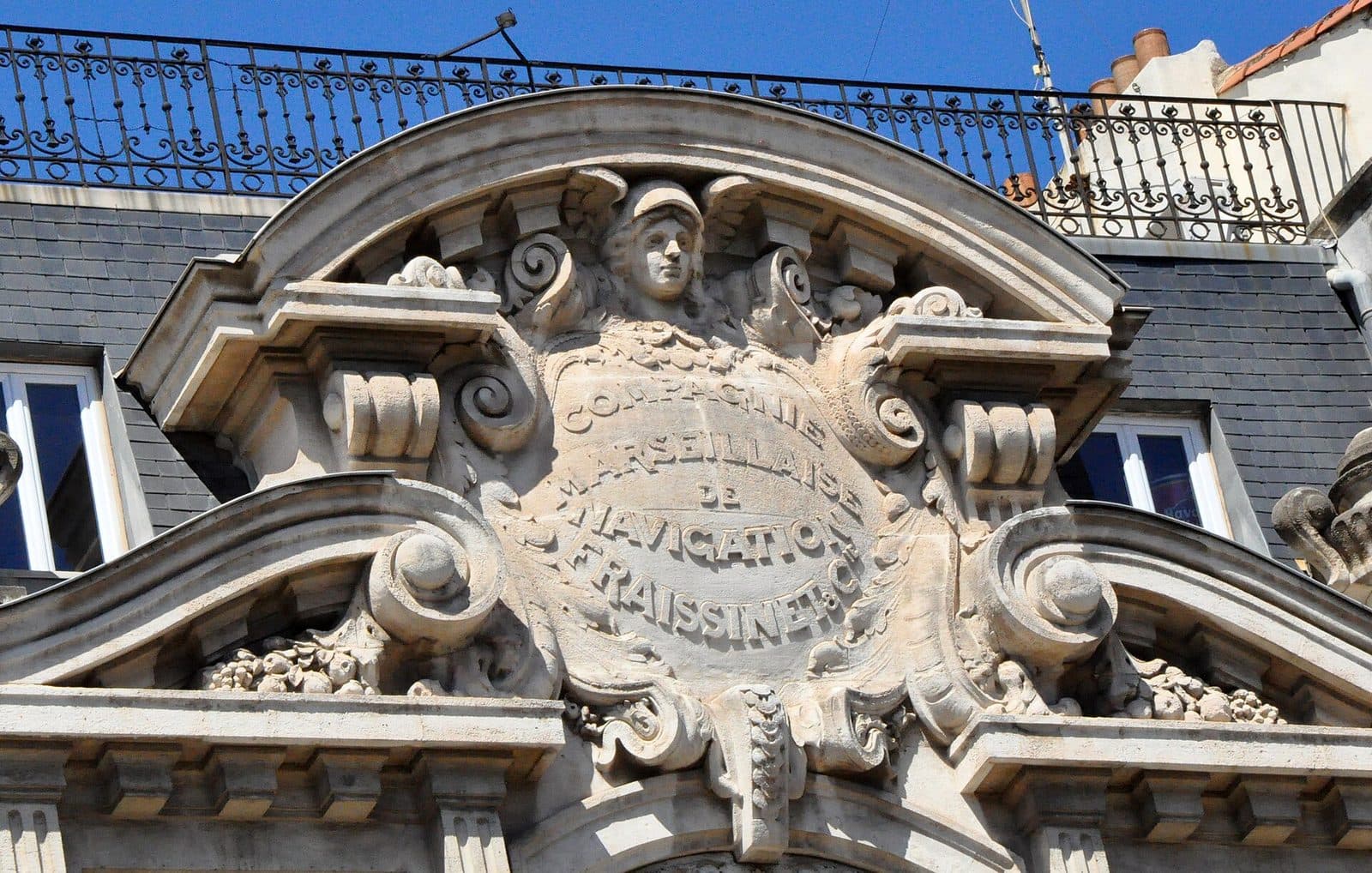
Give the early afternoon to the Canebière itself. The avenue is a single reading of Belle-Époque Marseille, rebuilt on the tonnage the Suez Canal poured through the port after 1869, and the Reading the Empire off the Canebière tour teaches you to read the whole grammar of it off the facades. The empire in stone companion goes further on the architecture.
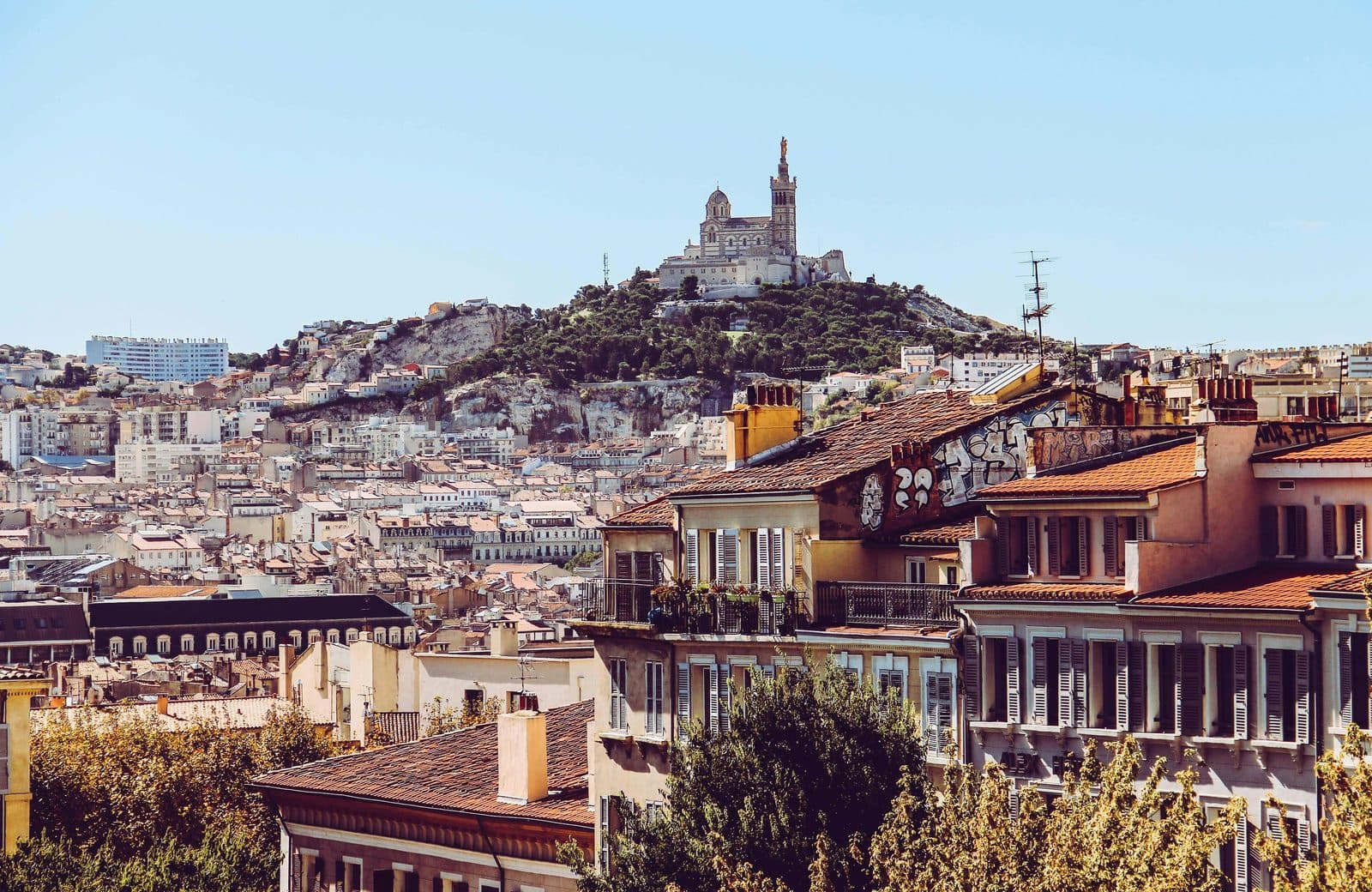
Then climb to Notre-Dame de la Garde, the basilica crowned with a gilded Virgin that stands on the city's highest hill, 154 metres up, watching over every sailor who ever left the port. It is a real climb, so take the number 60 bus or the tourist train up if your legs are done, and walk down. The 360-degree view over the harbour, the islands, and the sea is the payoff of the day, and it is best in the late-afternoon light.
Evening: back to the port
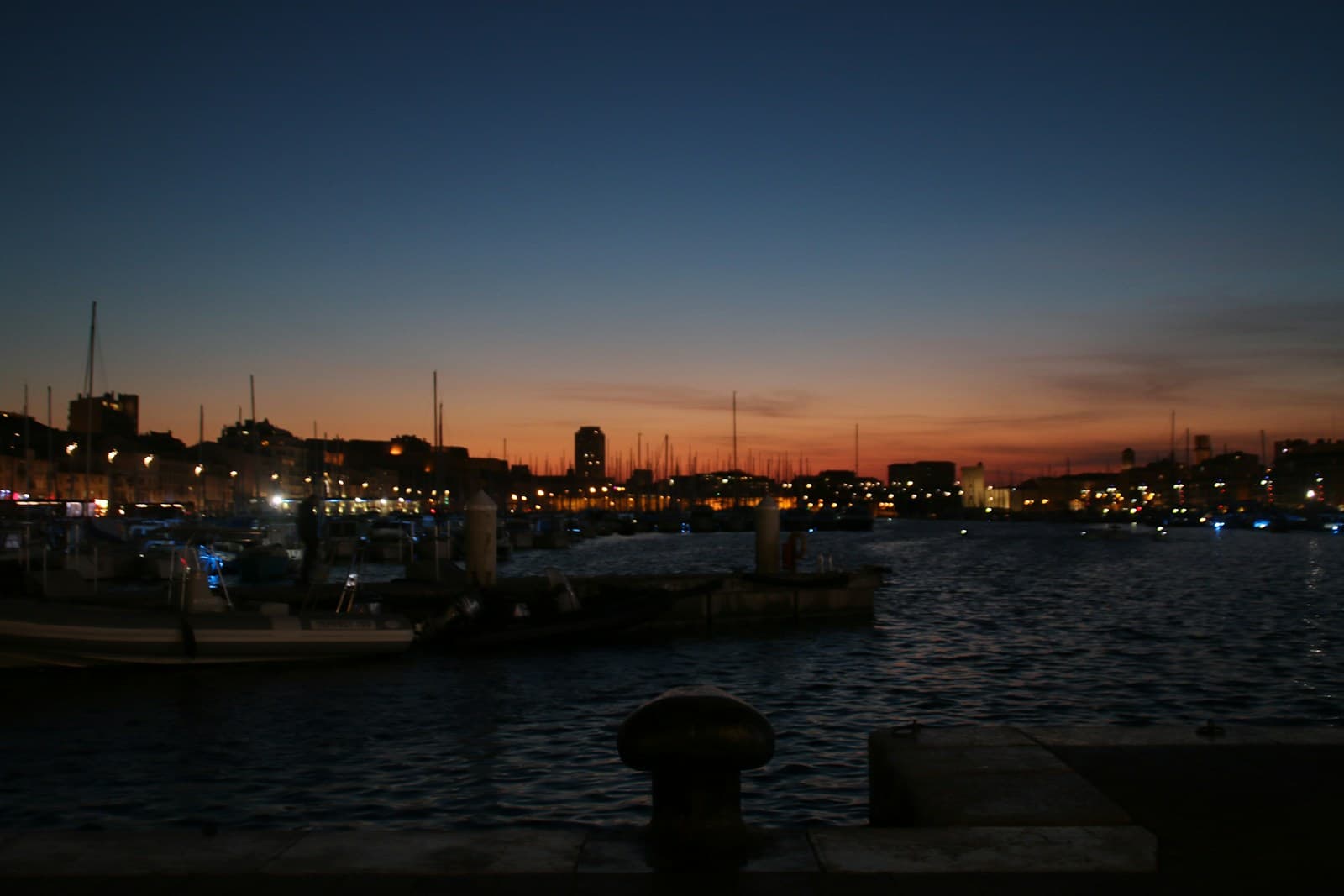
End where you began, on the Vieux-Port at dusk, when the quays fill with people and the water holds the last light. This is dinner: a pastis on a terrace as the ritual apéritif, then fish. For a proper bouillabaisse, the fisherman's soup that became the city's signature, plan a reserved table at a serious restaurant down by the port or in the fishing coves, and expect to pay for it. If you are keeping it simple, the terraces around the port and up toward the Cours Julien plateau serve everything from Provençal plates to the city's layered immigrant kitchens.
The one-day route at a glance
| Block | Where | Anchor tour |
|---|---|---|
| Morning | Vieux-Port, Le Panier, MuCEM and Fort Saint-Jean | Vieux-Port: 2,600 Years on the Same Inlet |
| Midday | Noailles, Marché des Capucins, lunch | Noailles and Cours Julien |
| Afternoon | Canebière, Notre-Dame de la Garde | Reading the Empire off the Canebière |
| Evening | Vieux-Port, dinner | (return to the port) |
Plan the rest of your trip
One day covers the core. For how many days Marseille really deserves, how to get around, whether it is safe, and how to reach the Calanques, read the Marseille travel guide. For every route in the city, see the best self-guided walking tours in Marseille, or browse all Marseille tours. Every tour is free to start: the introduction and first stop play in full, and every later stop plays a short preview before an optional purchase.
Frequently asked questions
- Can you see Marseille in one day?
- You cannot see all of Marseille in a day, but you can see its heart well. A focused day covers the Vieux-Port, the old quarter of Le Panier, the MuCEM and Fort Saint-Jean, the market district of Noailles, and the hilltop basilica of Notre-Dame de la Garde. All of it sits in a compact core reachable on foot with one short bus or metro hop to the basilica. What a single day cannot add is the Calanques or the island of Château d'If, both of which need a half-day boat trip of their own, so most visitors save those for a second day.
- What is the best area to base a one-day visit to Marseille?
- Base yourself around the Vieux-Port, the old harbour at the centre of the city. Everything on a one-day route radiates from it: Le Panier climbs the hill on its north side, the MuCEM sits at its mouth, Noailles is a few minutes east off the Canebière, and the basilica rises on the hill to the south. Staying near the port keeps your walking time low and puts you at the metro line 1 that reaches the rest of the city.
- How much walking is a one-day Marseille itinerary?
- Expect roughly 6 to 9 km on foot across the day, most of it flat around the port and through Le Panier and Noailles, with one real climb to Notre-Dame de la Garde. If you would rather save your legs for the old town, take the number 60 bus or the tourist train up to the basilica and walk the rest. Wear comfortable shoes and build in a proper lunch.
- Do I need to book anything in advance for one day in Marseille?
- Most of this route needs no booking: the Vieux-Port quays, the Le Panier lanes, the outdoor terraces of the MuCEM and Fort Saint-Jean, the Marché des Capucins, and the Notre-Dame de la Garde grounds are all free to walk up to. The exceptions worth planning ahead are a proper bouillabaisse dinner, which is expensive and often reservation-only, and any Calanques or Château d'If boat if you extend to a second day. The self-guided audio tours that anchor each block are free to start and can be downloaded in advance for offline listening.
Ready to experience it?
Vieux-Port: 2,600 Years on the Same Inlet
100 min · 4.9 km · easy
More from Marseille
Explore more at your own pace.
Reading the Empire in Stone: A Companion to the Canebière Architecture Tour
The Belly of Marseille: Noailles, the Marché des Capucins, and the Truth About Bouillabaisse
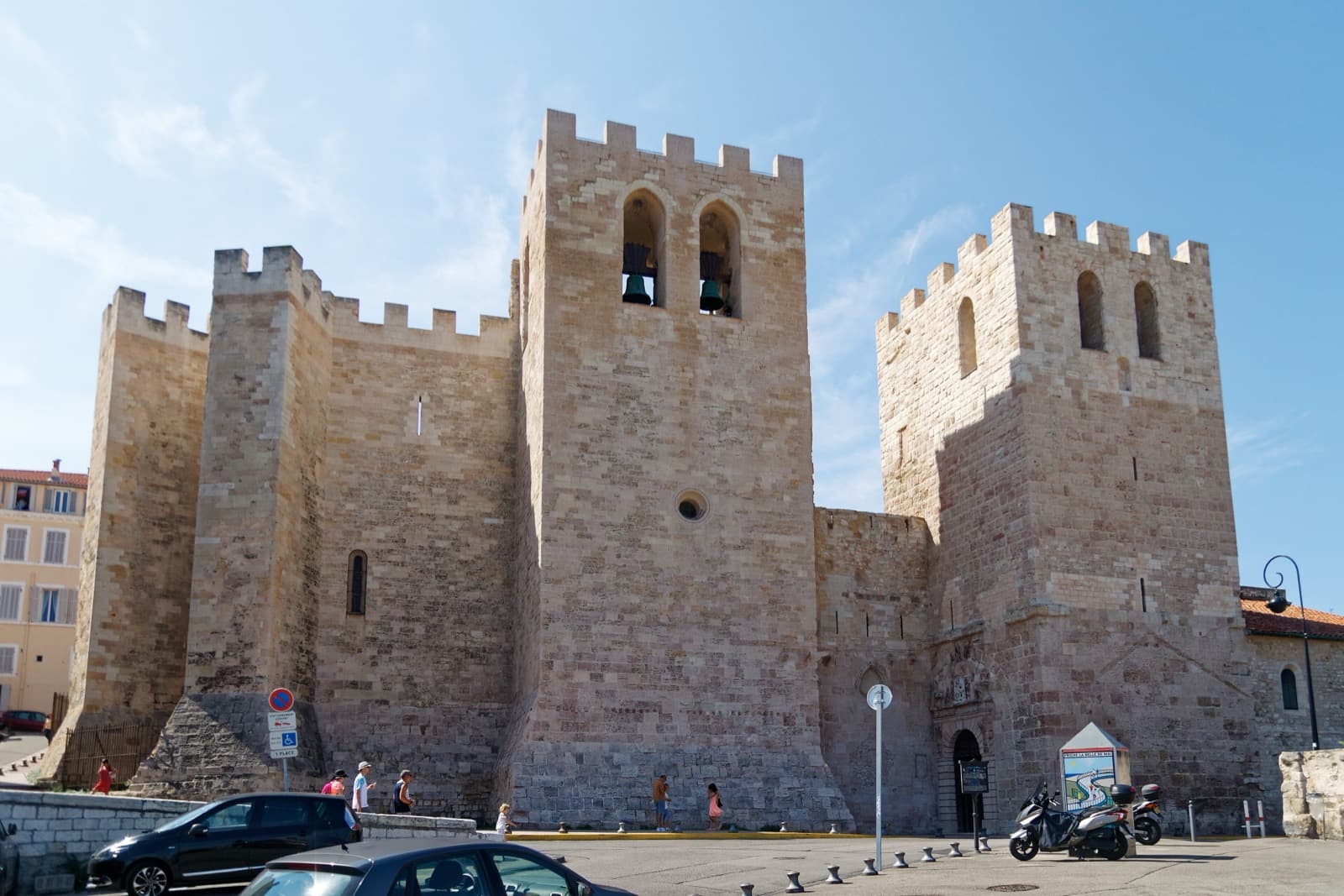
Abbaye Saint-Victor: The Port That Was Christian Before France
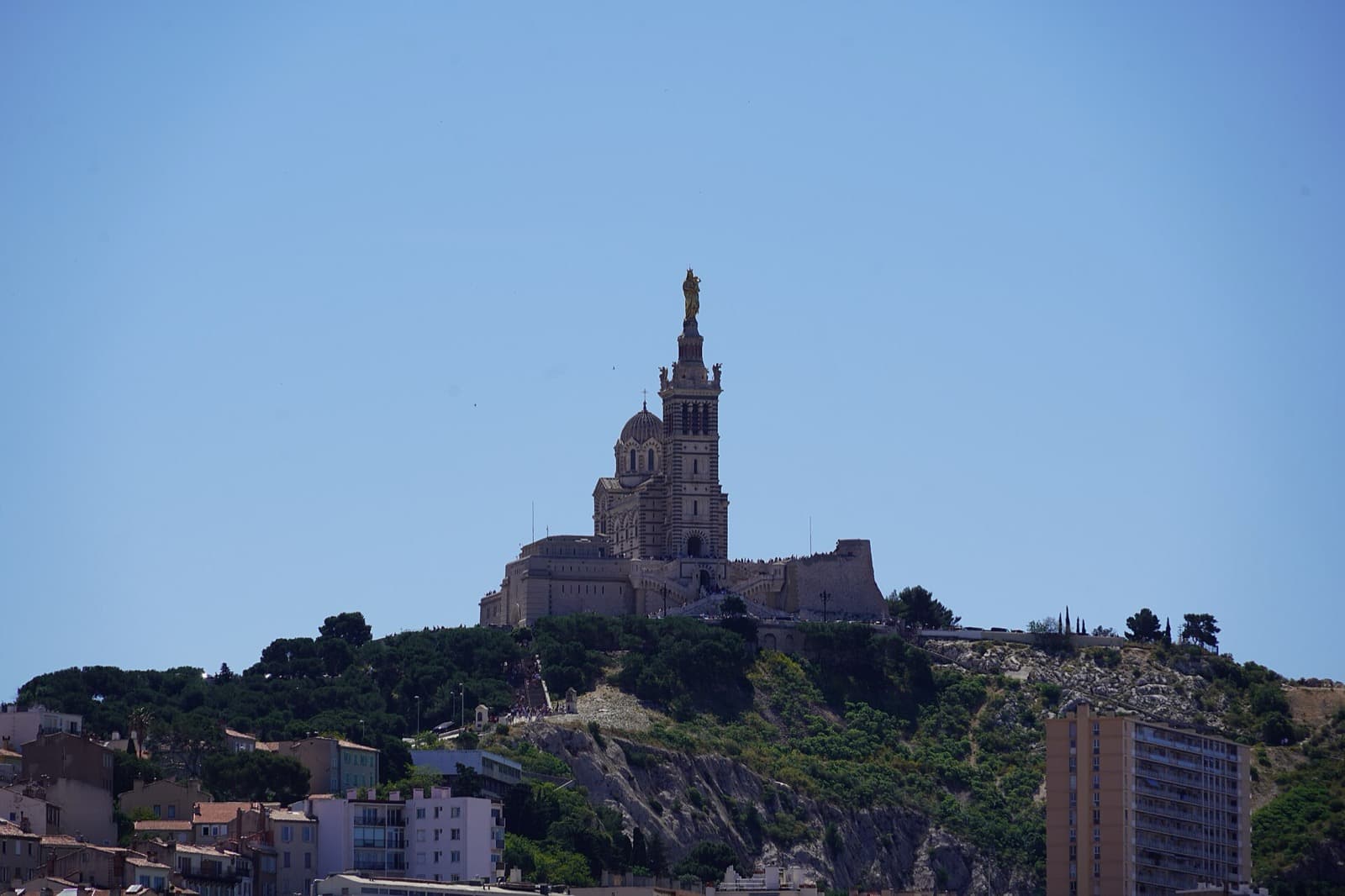
Notre-Dame de la Garde: The Good Mother Watching the Sea

The Bridge Between 1660 and 2013: Fort Saint-Jean and the MuCEM
