Vieux-Port: 2,600 Years on the Same Inlet
100 min · 4.9 km · easy
The oldest city in France is Marseille, and the fact that surprises most visitors is that for the first six centuries of its life there was no France for it to be the oldest city of.
Greek sailors from the Ionian city of Phocaea, on the coast of what is now western Turkey, rowed into a sheltered inlet on the southern coast of Gaul around 600 BCE. They called the place Massalia. That is roughly 2,600 years ago, and the harbour they anchored in has been a working port more or less continuously ever since. Marseille predates Paris as a real city, predates the Romans in Gaul, and predates the very concept of France by more than a thousand years. Its difference from the rest of the country is not a matter of accent or attitude. It is the founding condition. Marseille was a Mediterranean port long before it was ever a French one, and it has behaved like a port of arrivals in nearly every century since.
The founding was already about a stranger arriving by sea
The Greeks who founded the city told a story about how it happened, and the Roman historians Pompeius Trogus and, before him, Aristotle preserved versions of it. The Phocaean sailor Protis came ashore and was invited to a banquet held by Nannus, chief of the local Ligurian people, on the day his daughter Gyptis was to choose a husband. By custom she would signal her choice by handing a cup to the man she wanted. She handed it to the foreigner. From that marriage, the story says, grew Massalia.
Historians treat this as a founding legend rather than biography, but it is worth noticing what the legend is about. It is a story of a stranger arriving by sea and being taken in, of a marriage between the newcomer and the local. The very first thing Marseille said about itself was that it began with an arrival from across the water. Twenty-six centuries later, the city is still telling that same story about itself, and the Vieux-Port history tour is built to read all of it off a single inlet.
The inlet the Greeks chose is still there under the shopping mall
Hear a stop from this walk
Le Panier: The Wound and What Survived
The specific cove the Phocaeans anchored in was called the Lacydon, the sheltered inner basin that is now the Vieux-Port. Under a 1960s shopping arcade in the city centre you can still see the Greek harbour walls, the towers, and the quays, exposed during 1967 construction work and preserved as the Jardin des Vestiges. It is one of the strangest sightlines in France: a concrete mall built in the 1960s directly above a wall built before Rome existed. If you want the full weight of that continuity, the piece on the Jardin des Vestiges and the Greek harbour reads the soil under the arcade as the evidentiary anchor of the whole 2,600-year story.
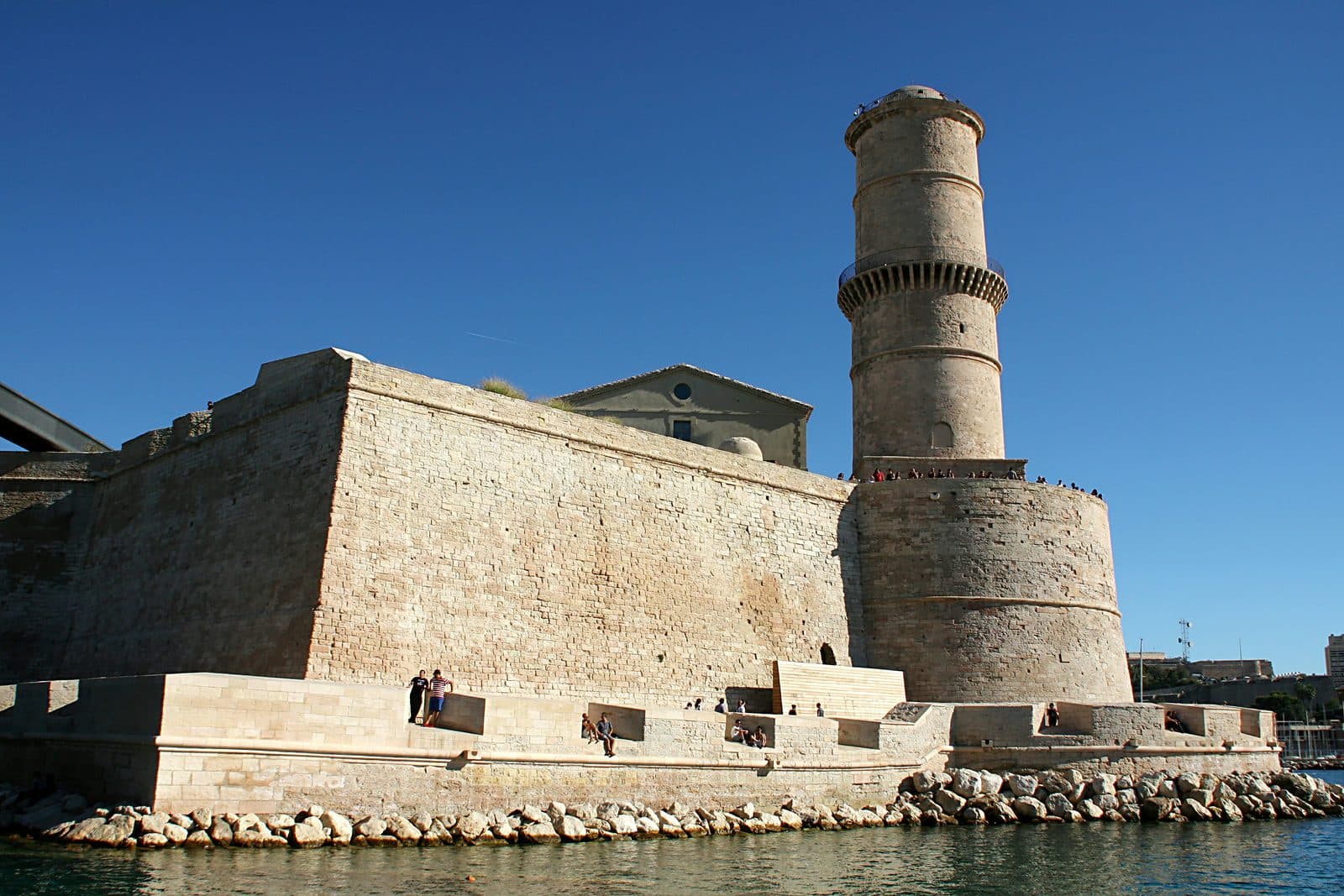
The port kept working through every regime change that followed. It was a Roman tributary after Caesar besieged it in 49 BCE. It was a medieval Provençal county harbour. It became a punishment port under Louis XIV, whose forts at the harbour mouth pointed their cannon inward at the city rather than out at the sea. It was bypassed as a cargo harbour in the nineteenth century when bigger docks were built up the coast at La Joliette. It survived the German dynamiting of the old quarter in 1943. Through all of it, the same inlet stayed a port. That is the rarest thing about Marseille. The functions changed constantly. The harbour never stopped.
Every century brought new arrivals
The founding legend of a stranger arriving by sea turned out to be the city's whole biography. Because Marseille was a port before it was French, and because it faced the Mediterranean rather than Paris, its population has been renewed by arrival in almost every era. Italians, Greeks, Armenians, Spaniards, and Corsicans came in waves across the nineteenth and early twentieth centuries. After the wars of decolonisation, the arrivals came from the former French empire: Algerians after independence in 1962, Tunisians and Moroccans after 1956, Comorians after 1975. Today Marseille hosts the largest Comorian community outside the Comoros archipelago itself.
This is not a footnote to the city's character. It is the character. Walk the market at the Marché des Capucins on a weekday and you are standing in the living present tense of a 2,600-year habit. The Noailles and Cours Julien tour reads exactly this: a Mediterranean port-city that the French Republic has never fully admitted is post-colonial, holding Maghrebi, Comorian, sub-Saharan, and Chinese populations on the same two square kilometres. The names of the newcomers change from century to century. The pattern is the oldest thing in the city.
The nineteenth century tried to make it look French
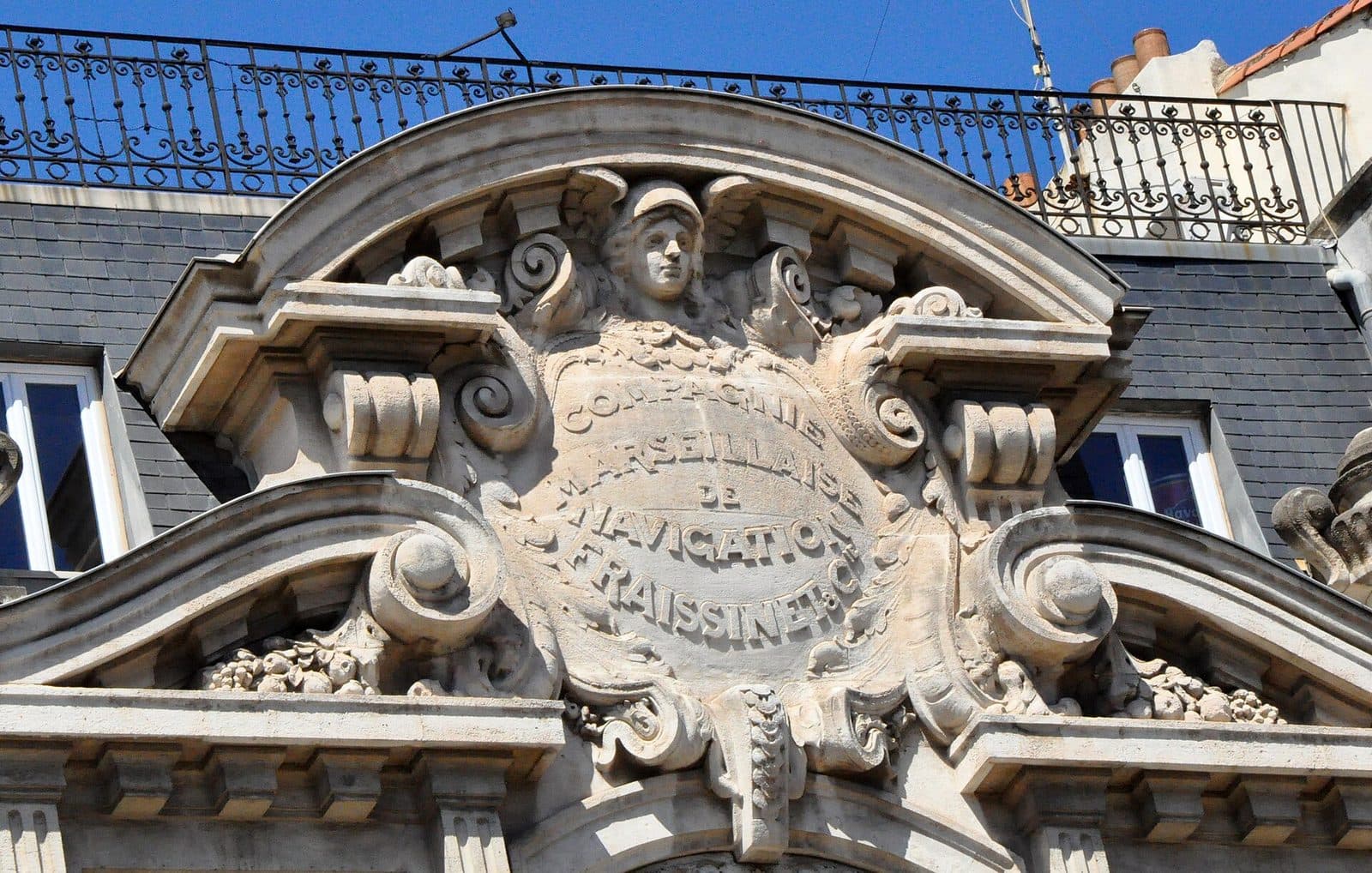
There was one era when Marseille deliberately dressed itself in the architecture of the French state. Between roughly 1860 and 1900, on the wealth that the 1869 opening of the Suez Canal poured through the port, the city rebuilt itself in the grand Second-Empire style: the Canebière as a bourgeois boulevard, the Palais Longchamp as a monument to the water that finally reached the city, the Cathédrale de la Major as an imperial cathedral at the docks. That rebuild is a real and legible layer, and the Canebière architecture tour reads it as a single grammar. But it is worth seeing it for what it was: a nineteenth-century attempt to make a Greek-founded Mediterranean port look like an official French city. The stone is French-imperial. The city underneath it is still the port the Phocaeans anchored in.
Why this matters for a visit
Most guidebooks introduce Marseille as France's second city, a gritty southern port with good food and a rough reputation. That framing gets the order backwards. Marseille is not a French city that happens to be on the Mediterranean. It is a Mediterranean city that happens, after two and a half millennia, to be in France. Once you see it that way, everything that seems contradictory about the place, its independence from Paris, its polyglot streets, its refusal to be tidy, stops being a contradiction and becomes the single most consistent thing about it. This is a port of arrivals, and it has been one since before there was a France to arrive into.
To read the full sweep on foot, start with the best self-guided walking tours in Marseille, or step back to the country view with self-guided walking tours in France.
Frequently asked questions
- What is the oldest city in France?
- Marseille is the oldest city in France. It was founded around 600 BCE by Greek settlers from the Ionian city of Phocaea, who named it Massalia. That makes it roughly 2,600 years old and one of the oldest continuously inhabited settlements in Europe, predating Paris, Lyon, and the idea of France itself by centuries.
- Who founded Marseille?
- Marseille was founded by Ionian Greeks from Phocaea, on the coast of what is now western Turkey, around 600 BCE. They were traders looking for a Mediterranean outpost, not Phoenicians and not Romans. The city's founding legend has the Phocaean sailor Protis marrying Gyptis, daughter of the local Ligurian chief Nannus, at a banquet where she offered him a cup to signal her choice.
- Why does Marseille feel so different from the rest of France?
- Marseille was a Greek and then Mediterranean port for roughly six centuries before it was ever ruled from Paris, and it has taken in newcomers by sea in nearly every era since. Its identity was formed by arrival and trade across the Mediterranean rather than by the French state, which is why it reads as a port city first and a French city second.
- Was Marseille founded by the Phoenicians?
- No. This is a common mix-up. Marseille was founded by Phocaeans, who were Ionian Greeks, not Phoenicians. The two peoples were rival Mediterranean traders, but the settlers who founded Massalia around 600 BCE came from the Greek city of Phocaea.
Ready to experience it?
Vieux-Port: 2,600 Years on the Same Inlet
100 min · 4.9 km · easy
More from Marseille
Explore more at your own pace.
Reading the Empire in Stone: A Companion to the Canebière Architecture Tour
The Belly of Marseille: Noailles, the Marché des Capucins, and the Truth About Bouillabaisse
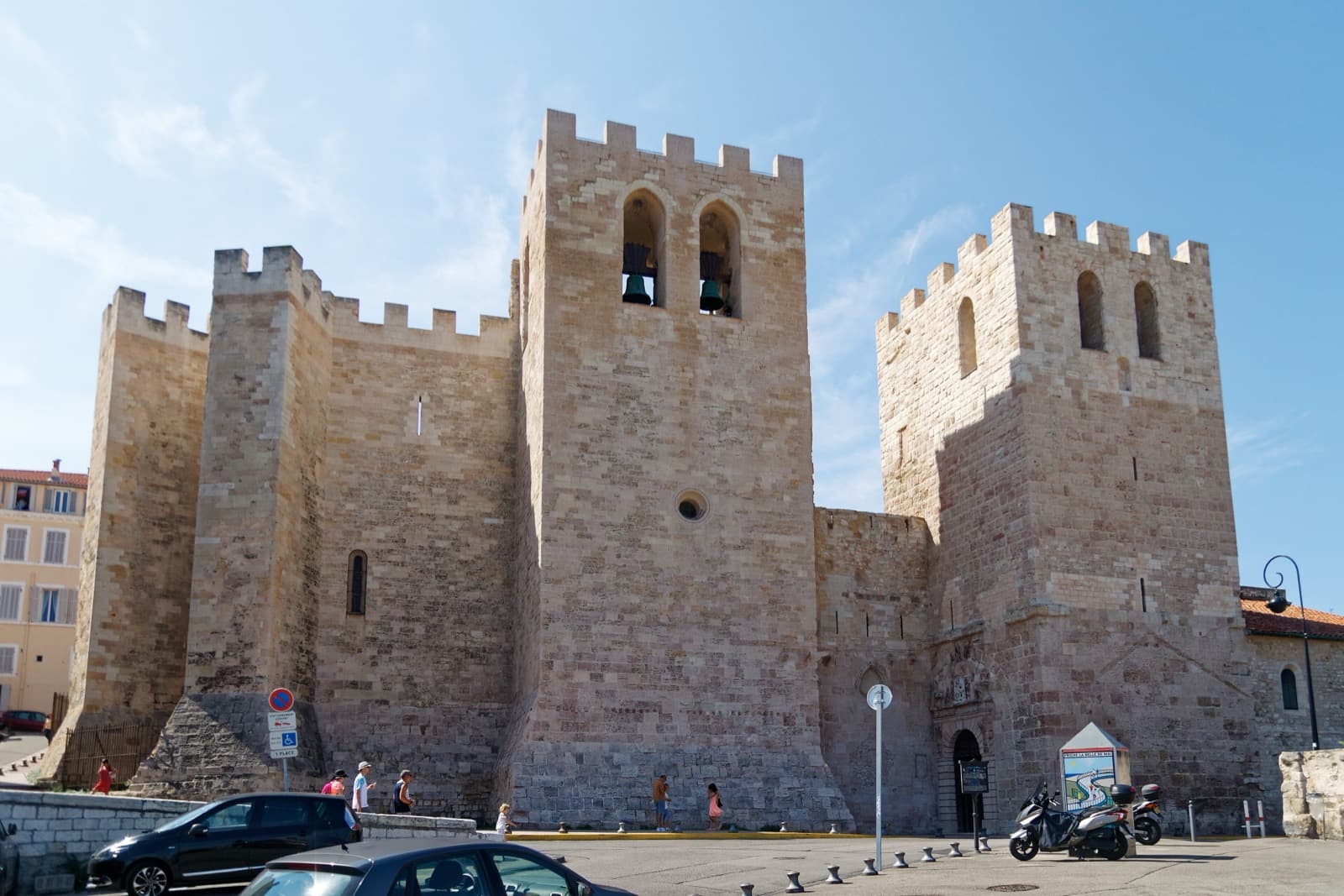
Abbaye Saint-Victor: The Port That Was Christian Before France
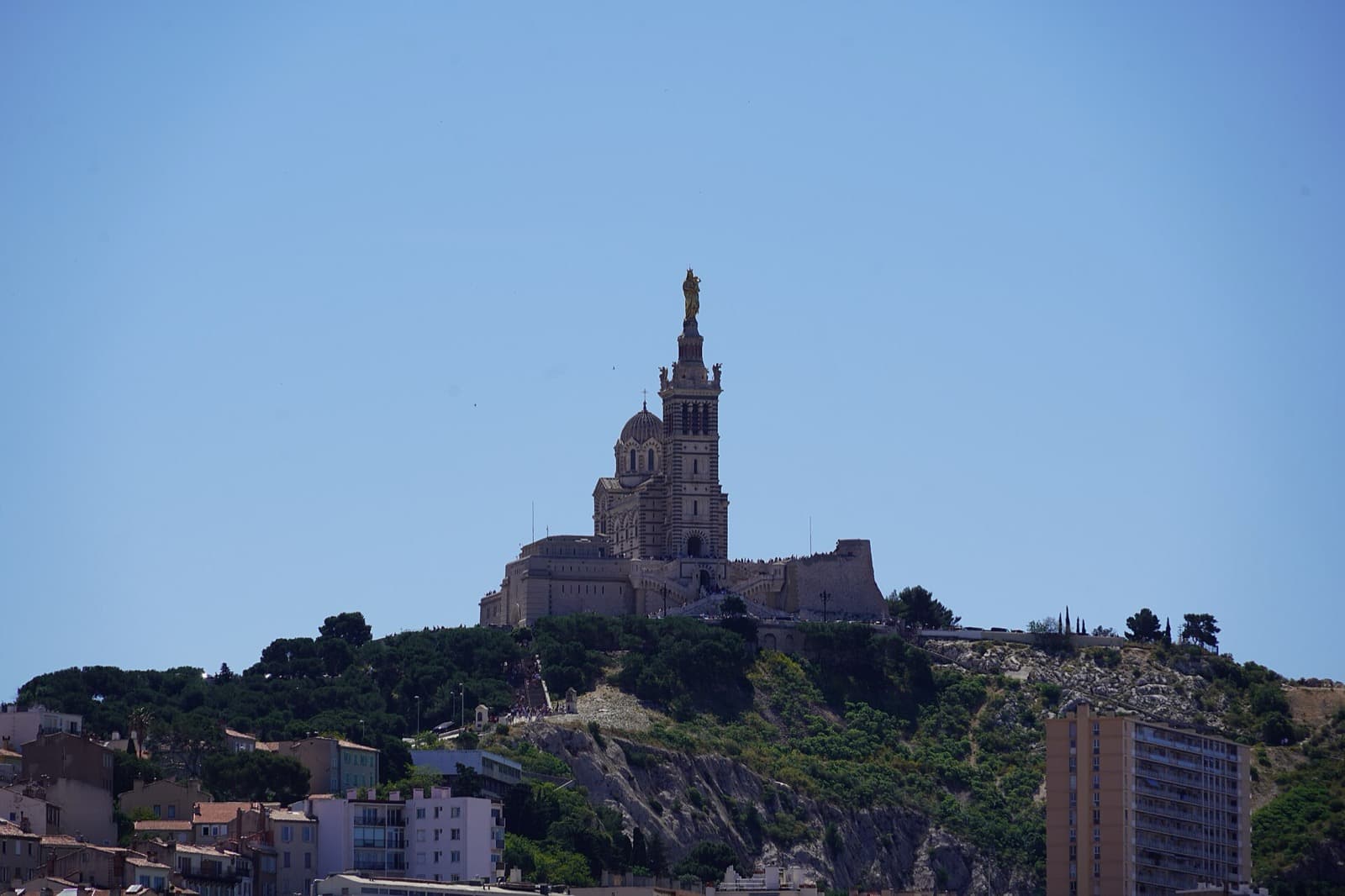
Notre-Dame de la Garde: The Good Mother Watching the Sea

The Bridge Between 1660 and 2013: Fort Saint-Jean and the MuCEM
