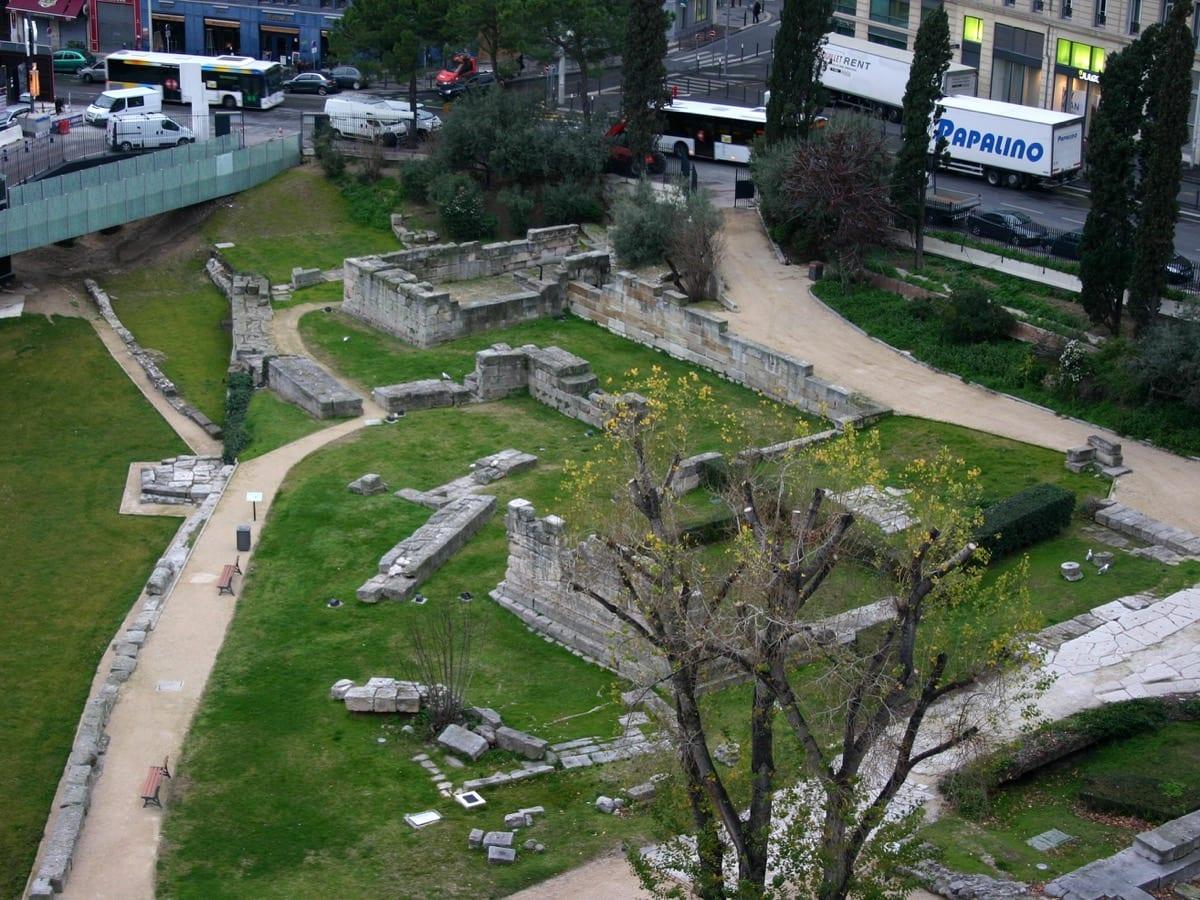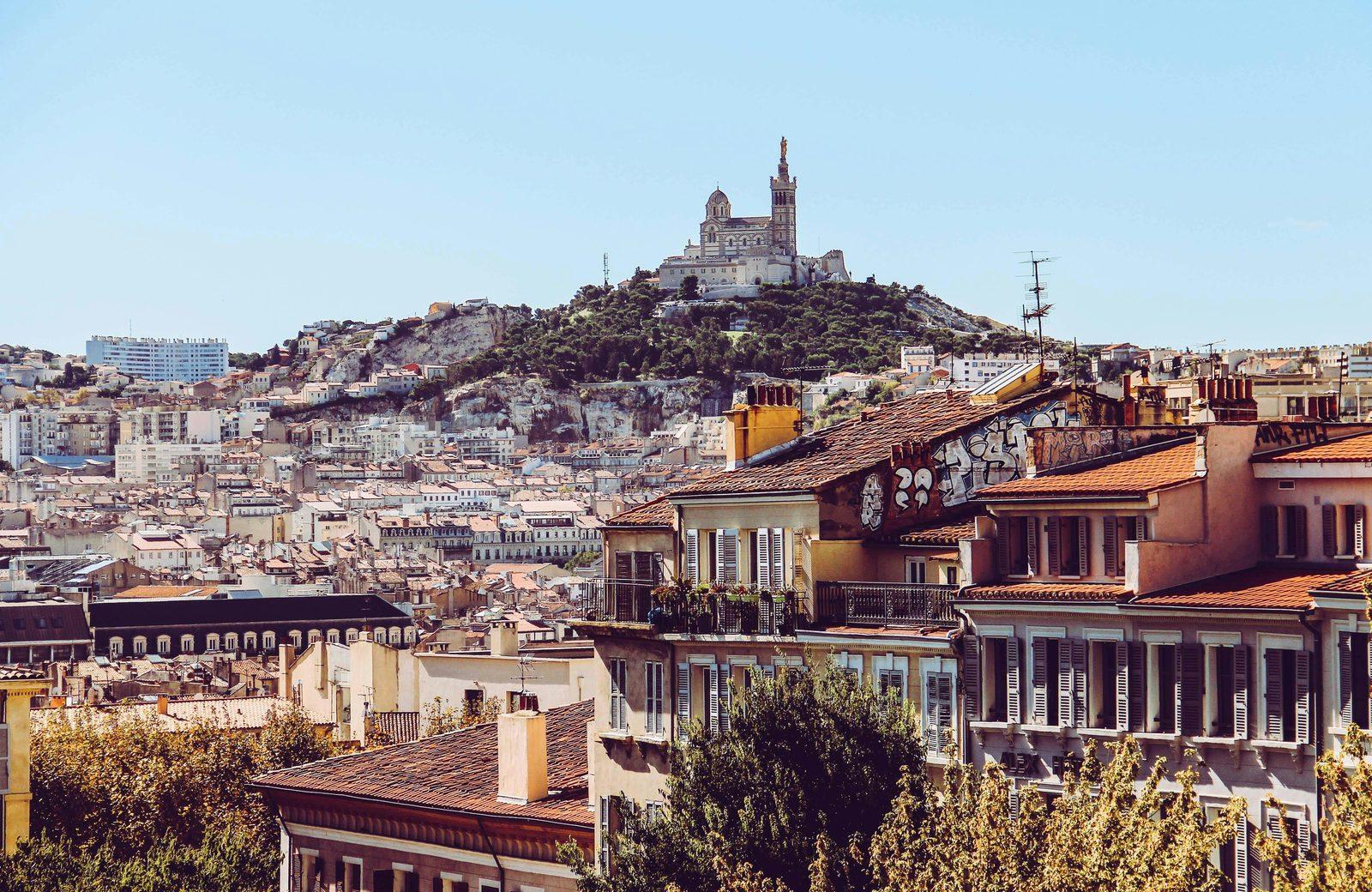
Marseille reads itself from a single hill. From the gilded Bonne Mere on the city's highest natural point, a walk down through the old abbey, out to an emperor's headland palace, into a fishing cove the size of a courtyard and onto the seafront balcony tells the city's story in one direction: downhill, toward the water. The thread is the sea. Everything on this route was built to watch it, to bless it, or to be blessed on it, and the easiest way to understand Marseille is to follow that thread on foot.
Starting at the top
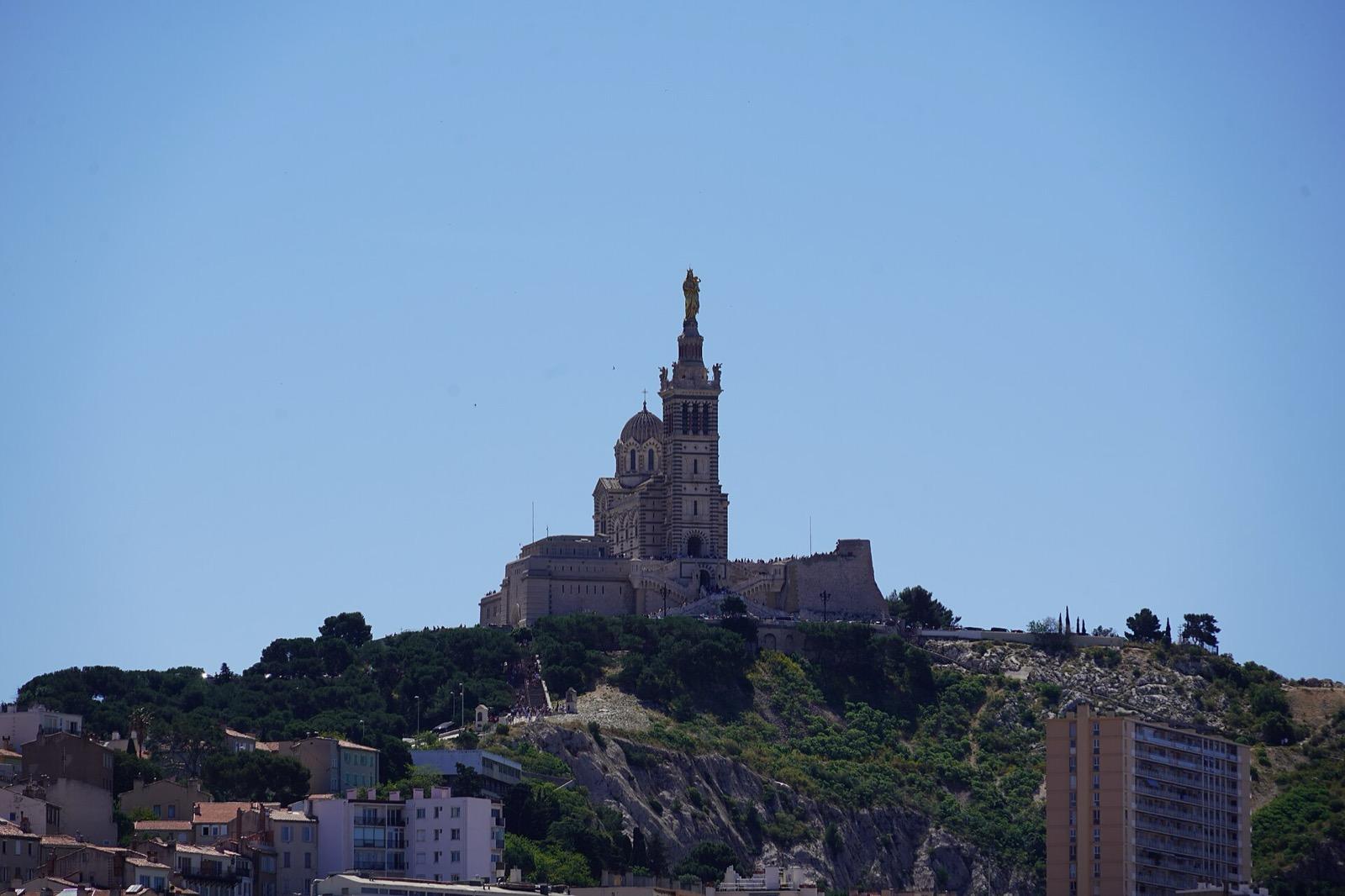
La Garde hill rises 149 metres above the sea, and long before the basilica it carried a fort begun for Francis the First, whose garrison helped repel the troops of Charles the Fifth in 1536. The Neo-Byzantine church by Henri-Jacques Esperandieu, consecrated in 1864, stands on those foundations, its walls striped in white limestone and green sandstone, the gilded Madonna on its bell tower visible from almost everywhere below. Inside, the ex-votos left by sailors since the late sixteenth century, model ships and painted thank-yous for storms survived, make the theme plain before you have taken a step down. Our deep-dive on the basilica covers the building and its Good Mother in detail.
The abbey below
Hear a stop from this walk
The Corniche: Where the Whole City Faces the Sea
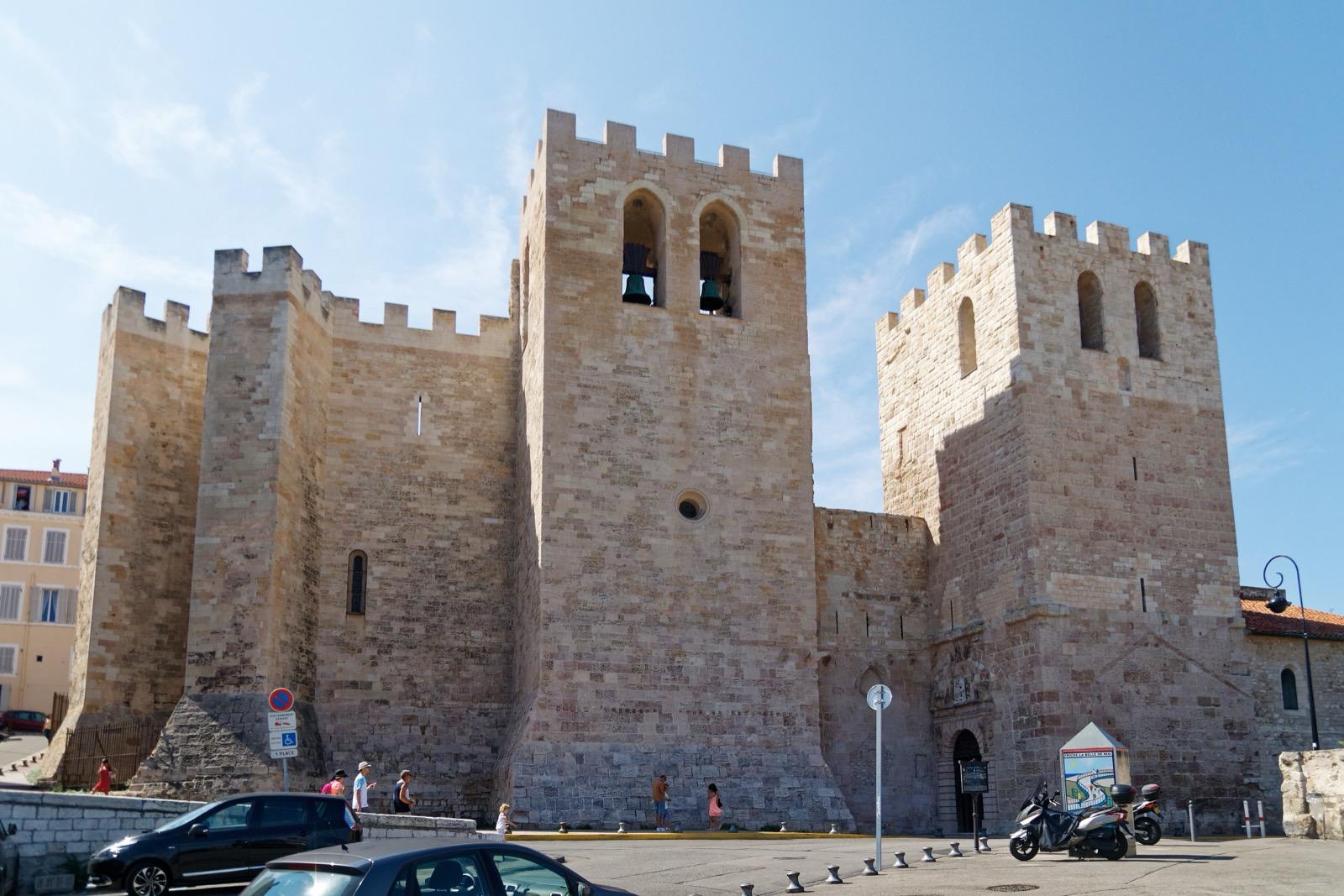
On the slope toward the Old Port, the Abbey of Saint-Victor is the oldest thing on the walk, with crypts that run from a Greek-era quarry through a Roman necropolis to Christian burials, and a community founded by John Cassian around 415. Its crenellated walls, raised in the 1360s under Pope Urban the Fifth, make it look more like a fortress than a church. It has its own piece on Learn: a port that was praying before there was a France.
An emperor's balcony
The walk reaches the water at the Jardin du Pharo, on the headland just west of the Old Port. Napoleon the Third built the Palais du Pharo here for the Empress Eugenie, begun in 1858 and finished by 1870, the year the Second Empire fell, so the imperial couple barely used it. Its Second Empire front faces the Mediterranean and the mouth of the Vieux-Port, the channel every ship uses to enter and leave the city. The building has had several lives since: a cholera hospital in 1884, a tropical medicine school of the French military health service from 1905 to 2013, and since 2015 the headquarters of Aix-Marseille University. The gardens are public. Turn around at the top of the lawn and look back: across the harbour, the Bonne Mere stands small and gold on her hill, where the walk began.
A cove the size of a courtyard
The Vallon des Auffes, about two kilometres southwest of the Old Port in the Endoume district, is the opposite of a palace and the stop many people remember longest. Its name comes from the Provencal aufo, the esparto grass once twisted here into rope, mats and nets. Fishermen settled the cove around 1750. Look down into it: roughly eighty moorings for small traditional boats, including the pointu with its pointed stern, about fifty cottages and restaurants pressed together around the water, and a rock jetty about a hundred metres long guarding the entrance. Then look up. A nineteenth-century viaduct with three semicircular arches carries the Corniche road straight over the cove, framing the boats beneath. It is one of the most photographed corners of the city, and it is also a working harbour.
Facing the water
The walk ends on the Corniche, about three kilometres of seafront in the seventh arrondissement built for one purpose: to sit and look at the sea. The road was developed between 1954 and 1968 under Mayor Gaston Defferre and renamed for President Kennedy in 1963. Along it runs a prefabricated concrete bench installed in 1965, often called one of the longest benches in the world. Offshore lies the Frioul archipelago, and on the small island of If, the fortress of the Chateau d'If, built for Francis the First between 1524 and 1531 and later a prison, made famous by Alexandre Dumas in The Count of Monte Cristo. Beside the overlook, the Monument aux Morts de l'Armee d'Orient, inaugurated in 1927, opens its gateway onto the sea.
Walking it
This is a long downhill walk with a climb at the start, best done at your own pace with stops for the views; linger in the cove, or end early on any bench along the Corniche. The basilica is a living place of worship, so keep the visit quiet inside. The walk is Notre-Dame de la Garde: The Good Mother Watching the Sea, six stops over about 4.4 kilometres in roughly two and a half hours, from the basilica to the Corniche. See all routes on the Marseille page.
Sources
- Palais du Pharo, Wikipedia: the palace for Empress Eugenie, its 1858 to 1870 construction, the later hospital, school and university uses.
- Vallon des Auffes, Wikipedia (French): the name from aufo, the 1750 settlement, the moorings, cottages, jetty and viaduct.
- Corniche Kennedy, Wikipedia: the road's development under Defferre, the 1963 renaming and the long bench.
- Chateau d'If, Wikipedia: the fortress built for Francis the First, its prison years and Dumas.
- Notre-Dame de la Garde, Wikipedia: the fort, the basilica and the ex-votos.
Ready to experience it?
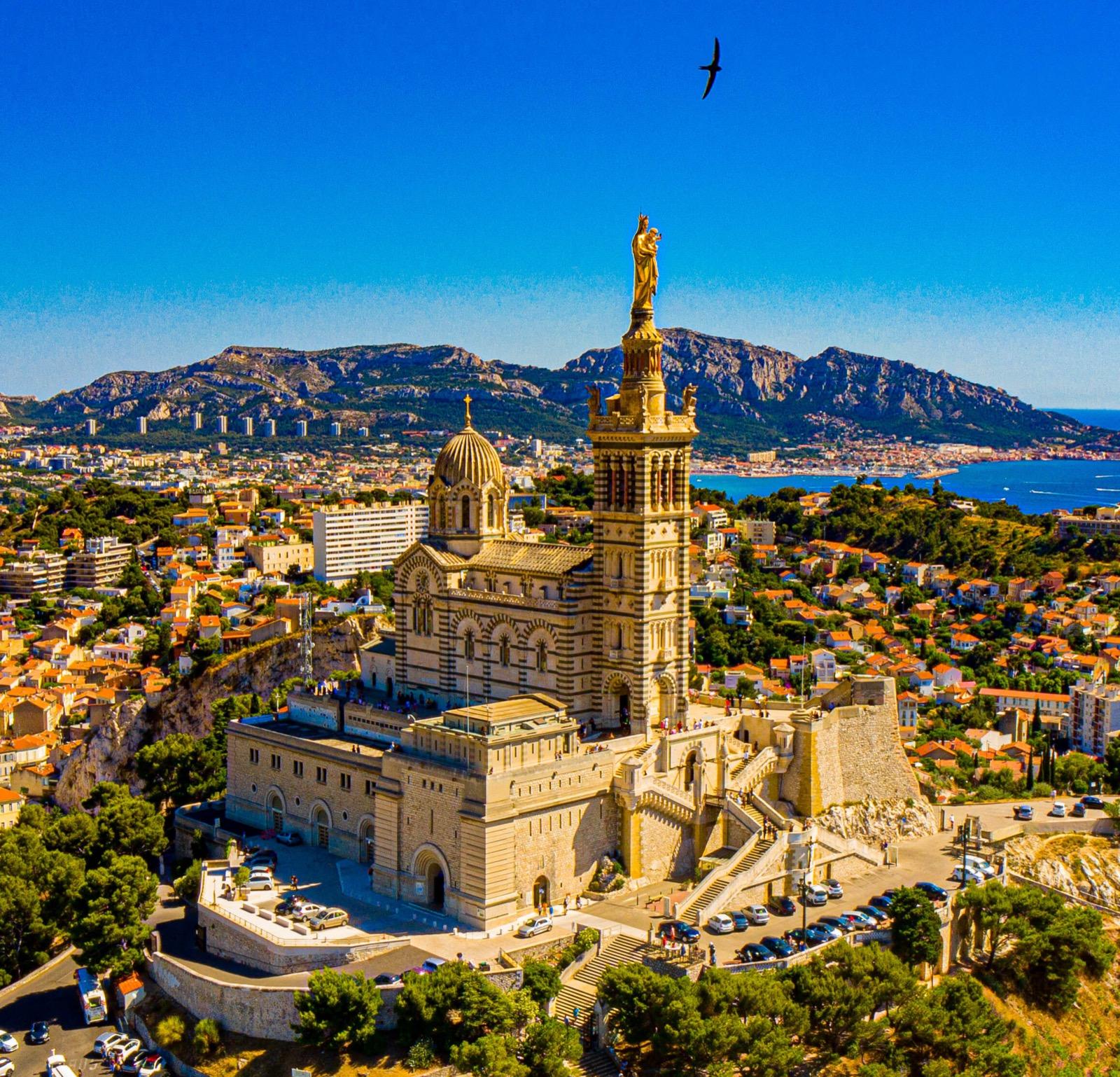
Notre-Dame de la Garde: The Good Mother Watching the Sea
150 min · 4.4 km · moderate
More from Marseille
Explore more at your own pace.
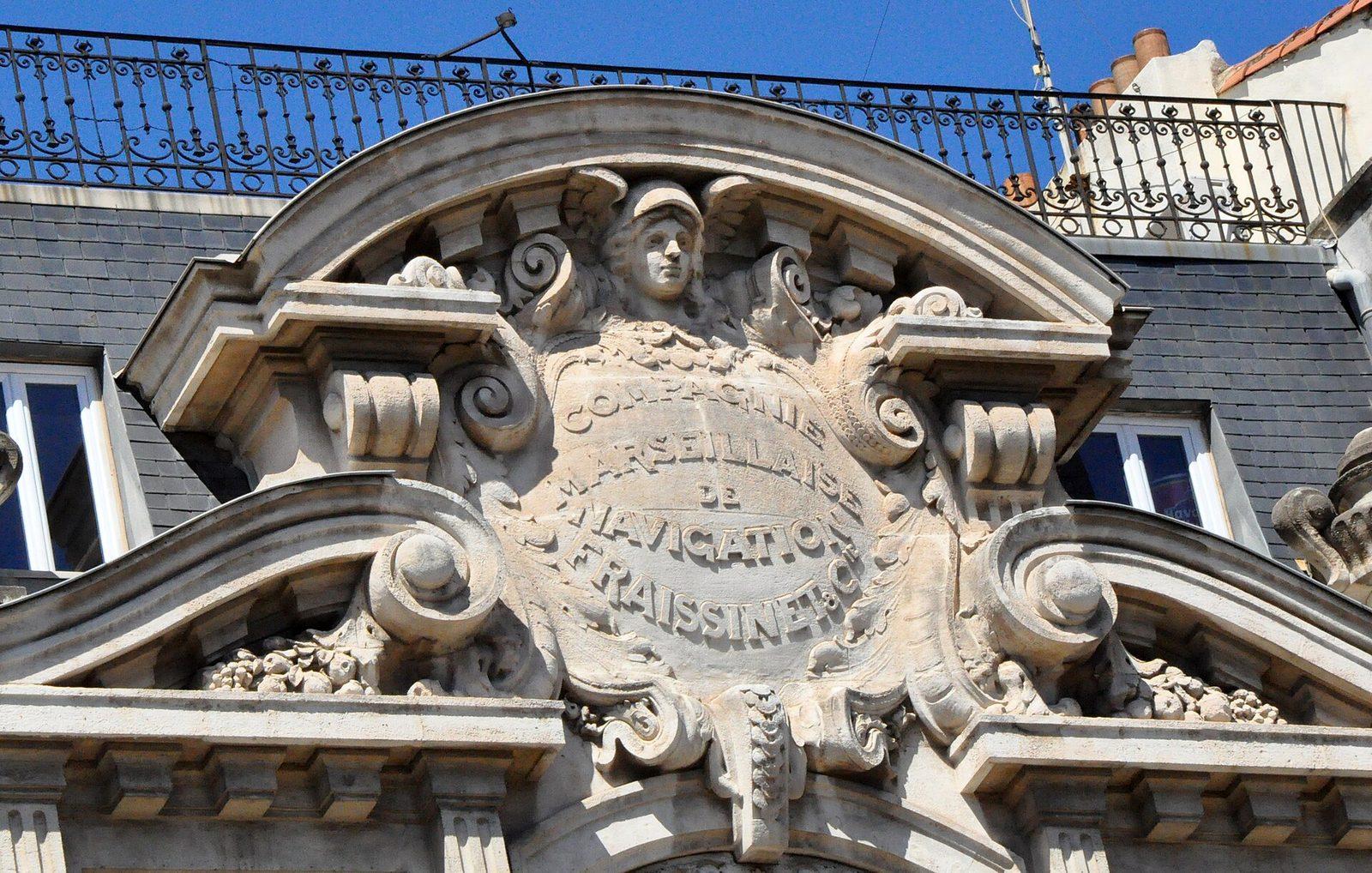
Reading the Empire in Stone: A Companion to the Canebière Architecture Tour
The Belly of Marseille: Noailles, the Marché des Capucins, and the Truth About Bouillabaisse
Abbaye Saint-Victor: The Port That Was Christian Before France
Notre-Dame de la Garde: The Good Mother Watching the Sea
The Bridge Between 1660 and 2013: Fort Saint-Jean and the MuCEM