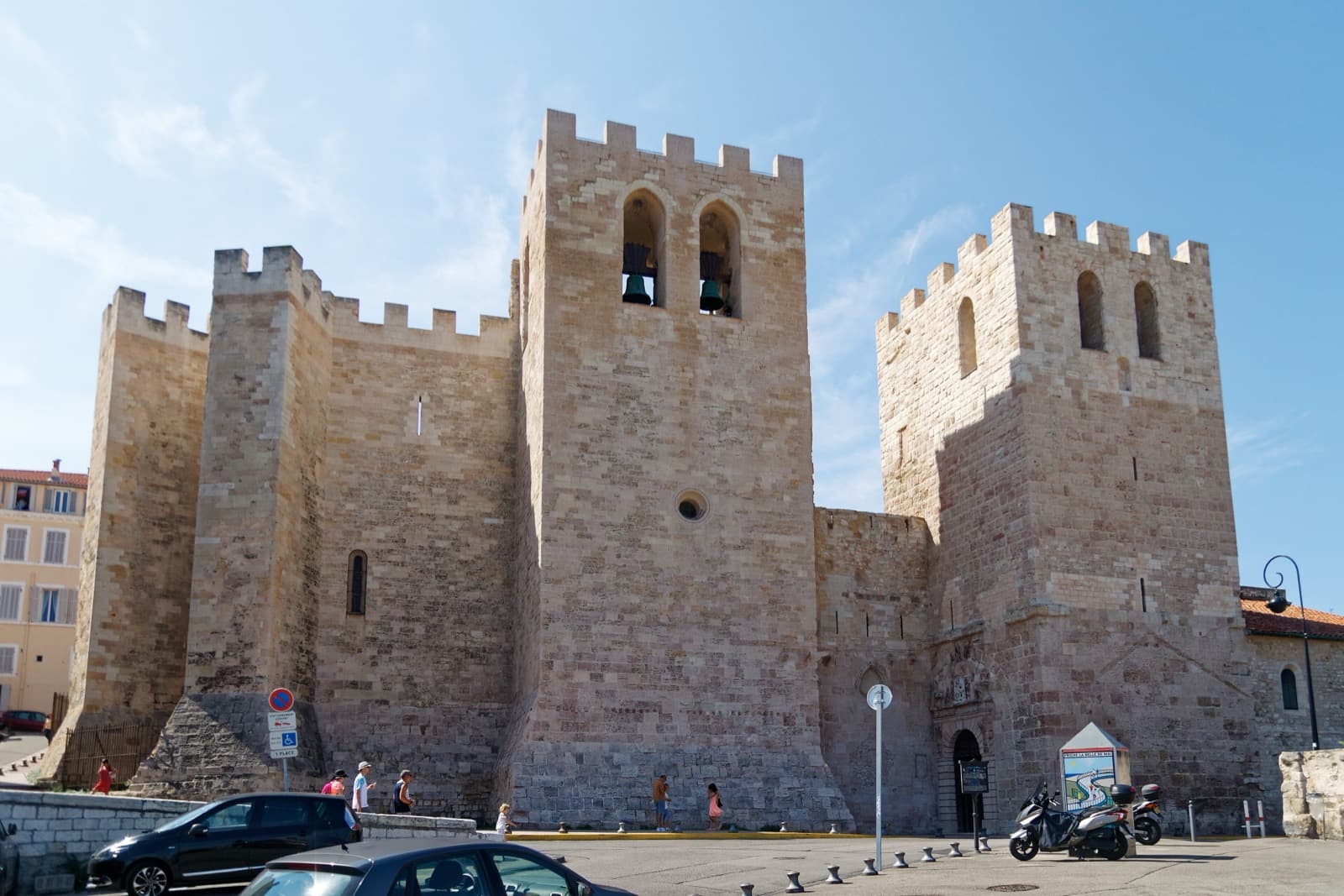
There is a moment on this tour when the walk stops feeling like sightseeing and starts feeling like time travel. It happens at Saint-Victor, a squat, crenellated church near the Vieux-Port that looks less like a place of worship than a small castle that lost its army. That impression is not wrong, and the reason it is not wrong is the whole story. This companion piece is the deep background to the tour's stop at the abbey, and it argues one thing: Marseille was a serious centre of Christianity long before there was any such country as France, and Saint-Victor is where you can stand inside the proof.
A monk from the desert of Egypt
The abbey was founded in 415 CE by John Cassian, a monk and theologian who did not arrive with local ideas about how to live a holy life. He came out of the monasteries of Egypt, the harsh desert communities of the early Christian east, and he brought their discipline west with him. At Marseille he established two monasteries, and from that foundation Saint-Victor grew.
Hold that date for a second. 415 CE. The western Roman Empire was still standing, if barely. There was no France, no Frankish kingdom, no Charlemagne, nothing that anyone today would recognise as the country the abbey now sits in. Marseille was already a very old port when Cassian arrived, a Greek foundation turned Roman city, and it was old enough and connected enough to the wider Mediterranean world that a man could carry the monastic customs of the Egyptian desert straight into it. The abbey is therefore one of the oldest sites of Christian worship in all of France, which is another way of saying it is older than the idea of France.
The crypts that never stopped being used
Hear a stop from this walk
The Corniche: Where the Whole City Faces the Sea
Go down into the crypts and the continuity becomes something you can touch. The lower levels of Saint-Victor were not built all at once for a single purpose. They show continuous use across the centuries, and the sequence is remarkable. The rock here was first worked as a quarry in the Greek era. In the Roman era the same excavated ground became a necropolis, a city of the dead outside the living city. And then, as Christianity took hold, it became a Christian burial place.
That is an unbroken chain of human use running from pagan antiquity into the Christian age, all in the same cut rock. The people of Marseille kept coming down to this ground to bury their dead and, later, to honour their holy dead, without a real interruption. Few places in France let you read that kind of deep time so plainly. You descend past the strata of one civilisation into another, and the walls have been doing this quiet work the entire time.
Building up, and building strong
The church you see above the crypts came later. The upper church, its tower, and its altar were begun in 1020 under Abbot Isarn, and the completed church was dedicated by Pope Benedict IX in 1040. So by the eleventh century the ancient burial ground had a grand medieval church rising over it, and the abbey was a power in the region.
Then came the fortifications that give Saint-Victor its startling castle-like appearance. Between 1361 and 1367 it was ringed with high crenellated walls under Pope Urban V, who had himself once been the abbot here under his earlier name, Guillaume Grimoard. This was the fourteenth century, an age of war, plague, and roving companies of soldiers, and even an abbey needed to be able to shut its gates and hold. The result is a church that wears armour, its holiness protected behind battlements. When you look up at those walls today, you are looking at a religious community that decided its continuity was worth defending in stone.
Relics, rank, and a long fade
For centuries Saint-Victor's importance was anchored by what it held. The crypt kept the relics of Saint John Cassian, the founding monk himself, which turned the abbey into a place of pilgrimage as well as burial. To pray here was to pray at the tomb of the man who had carried the desert into Marseille.
But no institution runs forever on its founding energy. The community declined, and the decline was sealed by catastrophe: the great plague of 1720, which devastated Marseille. In 1726, in the aftermath, the abbey was secularized, its monastic life brought to an end. What had begun in the fifth century as a desert monk's foundation was, after roughly thirteen hundred years, no longer a working abbey.
The story did not stop there, though. The old church endured, and its ancient standing was formally recognised again in the modern age. In 1934 it was raised to the rank of minor basilica by Pope Pius XI, a papal acknowledgement of what the crypts had always quietly insisted: that this was one of the deep roots of Christian France, worth honouring by name.
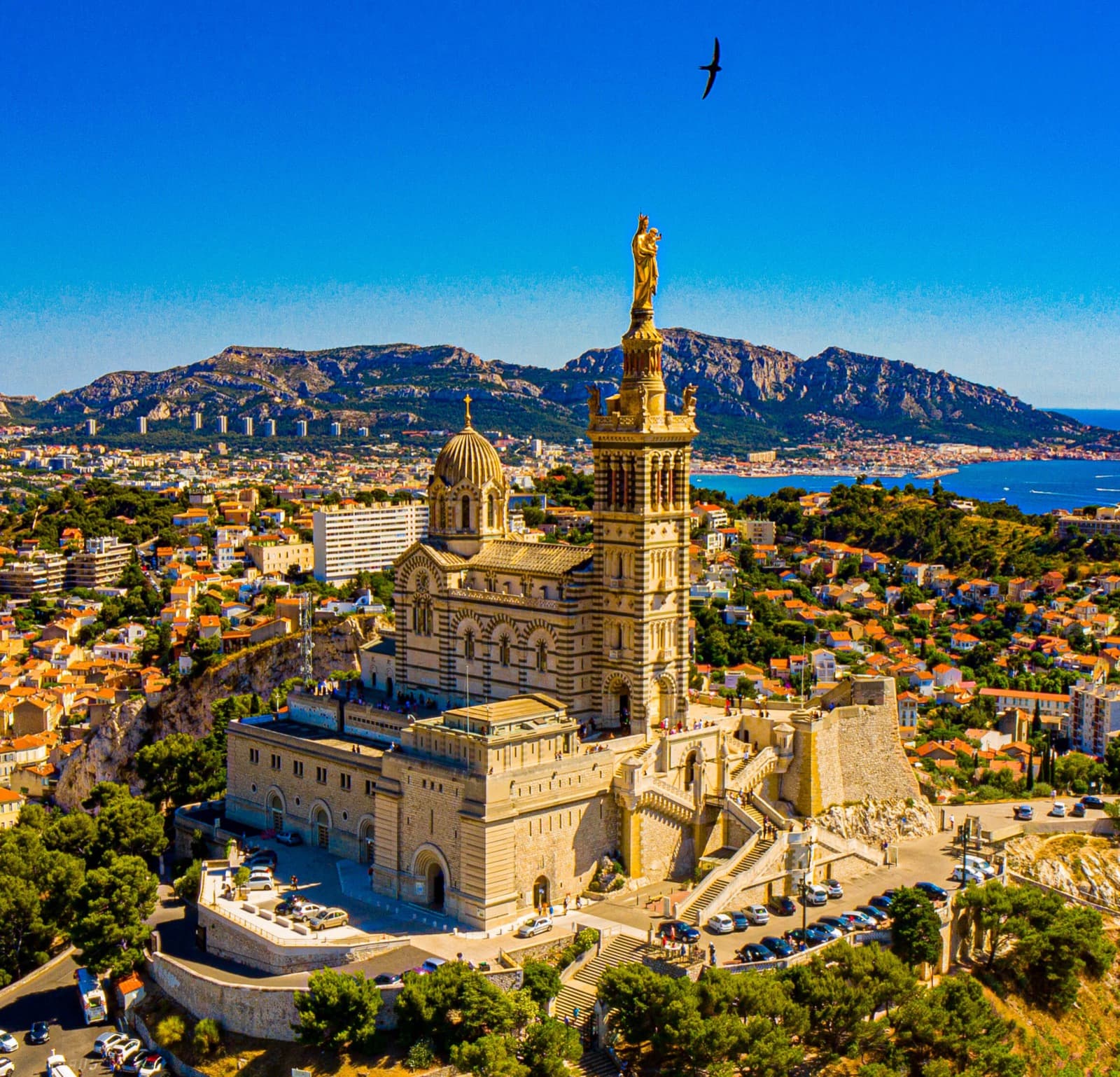
That is why the tour brings you here. Notre-Dame de la Garde shows you Marseille looking outward from its highest point. Saint-Victor shows you Marseille looking downward and backward, into the oldest ground it has. The gilded Madonna on the hill is barely more than a century and a half old; the crypts below this fortress church were already ancient when she was cast. To understand how the city holds both, read the companion piece on the Good Mother watching the sea, and for the wider picture see the Marseille city page or the full best walking tours of Marseille.
Before you climb back up into the daylight, stand in the crypt one more time. The Greeks quarried this stone, the Romans buried their dead in it, the early Christians followed, a medieval abbey rose and armoured itself over it, and a plague finally emptied it. France, as a nation, arrived somewhere in the middle of all that and is, by this ground's reckoning, a relatively recent development. In Marseille the port came first, and so did the faith.
Sources
- Wikipedia, "Abbey of Saint Victor, Marseille" (en.wikipedia.org)
- Roamer audio tour transcript, "Notre-Dame de la Garde," stop 3
Ready to experience it?
Notre-Dame de la Garde: The Good Mother Watching the Sea
150 min · 4.4 km · moderate
More from Marseille
Explore more at your own pace.
Reading the Empire in Stone: A Companion to the Canebière Architecture Tour

The Belly of Marseille: Noailles, the Marché des Capucins, and the Truth About Bouillabaisse
The Port-City France Hasn't Decided About: A Companion to the Noailles and Cours Julien Tour
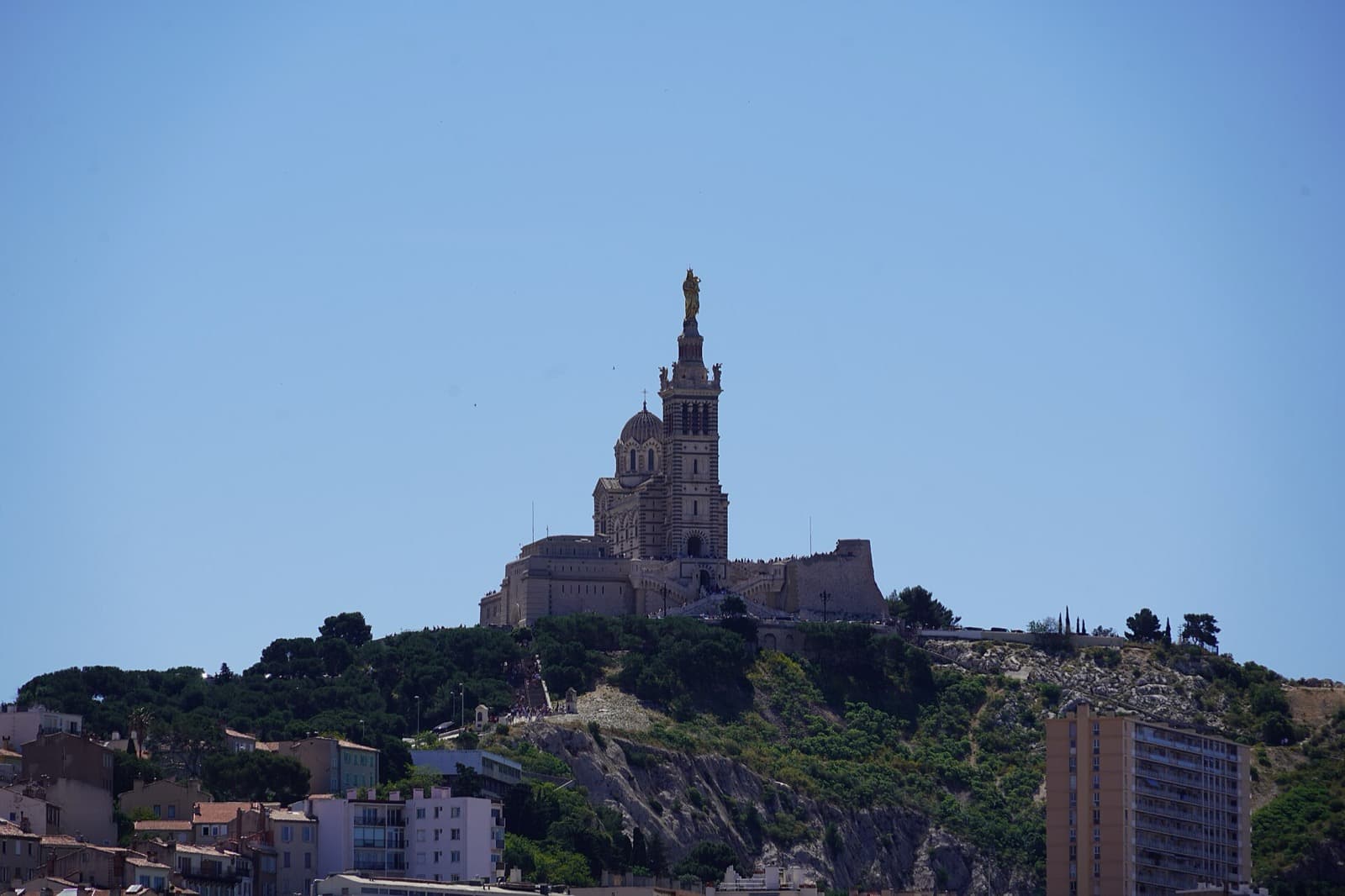
Notre-Dame de la Garde: The Good Mother Watching the Sea

The Bridge Between 1660 and 2013: Fort Saint-Jean and the MuCEM
