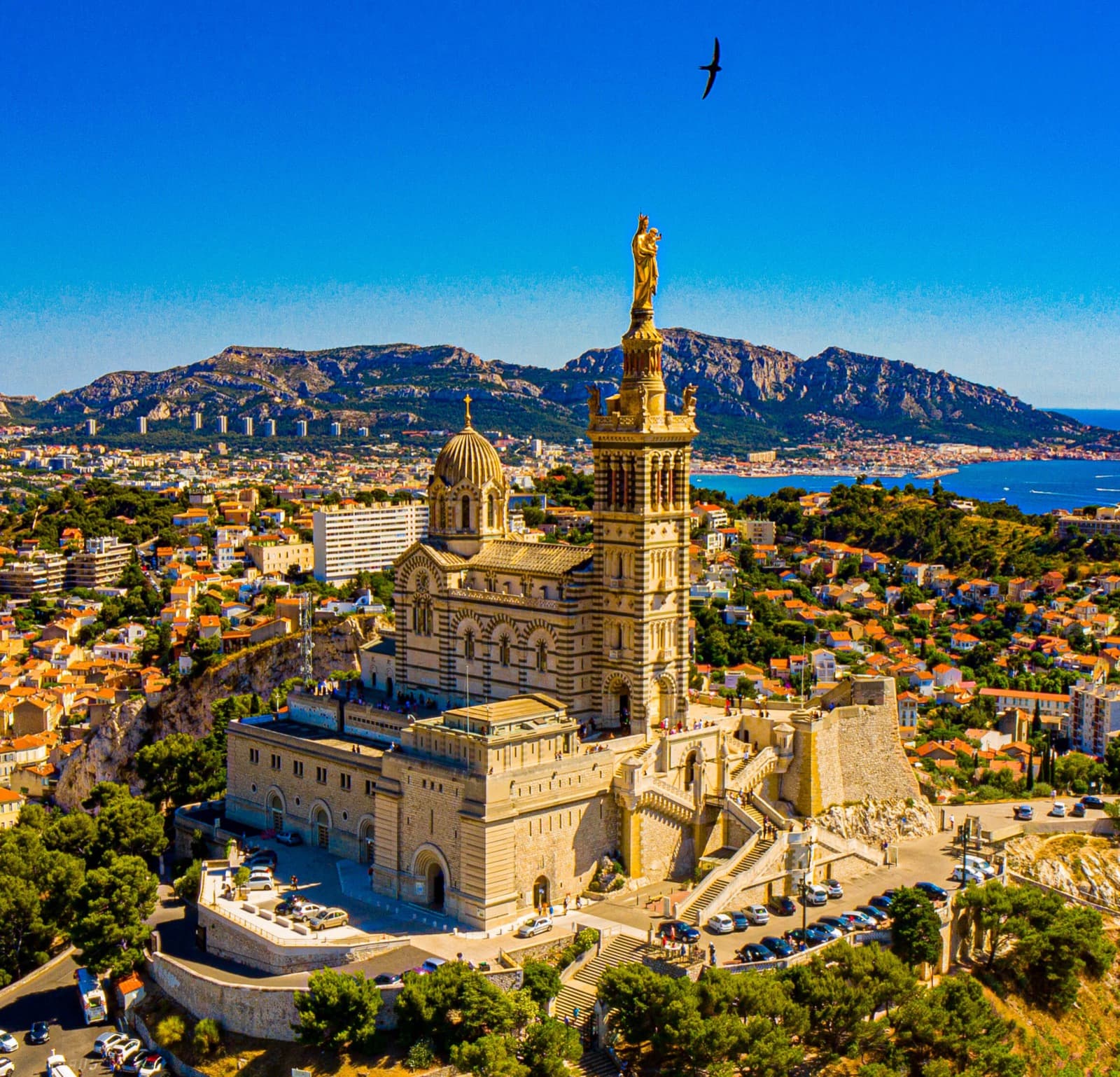
A descending walk from Marseille's highest point down to the sea, following the city's oldest churches, an emperor's garden, a tiny fishing cove, and the long seafront that faces the water.
Start · Notre-Dame de la Garde: The Bonne Mere on the City's Highest Point
DirectionsStops
- 1
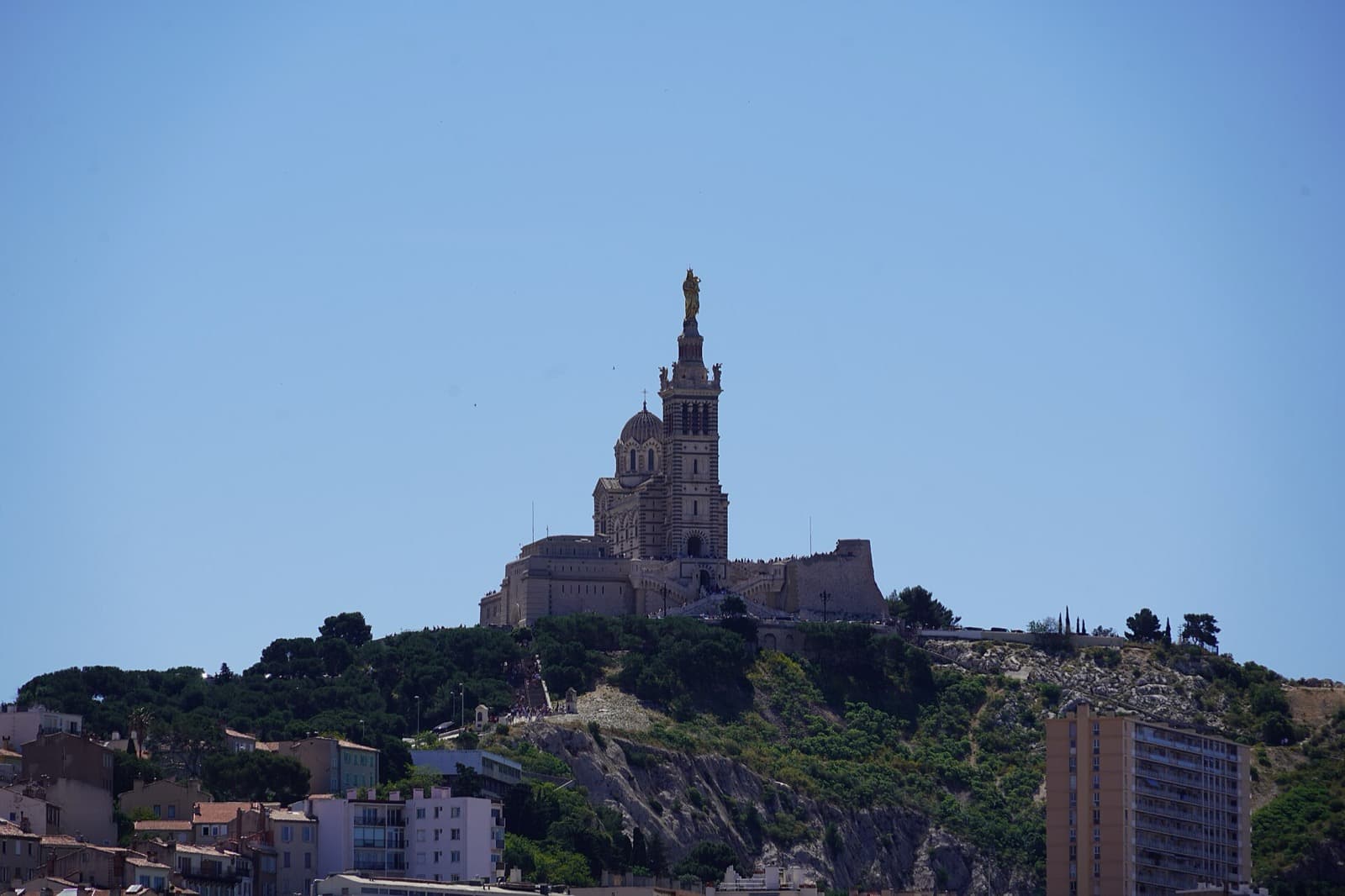
Notre-Dame de la Garde: The Bonne Mere on the City's Highest Point
The gilded Neo-Byzantine basilica crowning Marseille's highest natural point, guardian of the city's sailors.
- 2
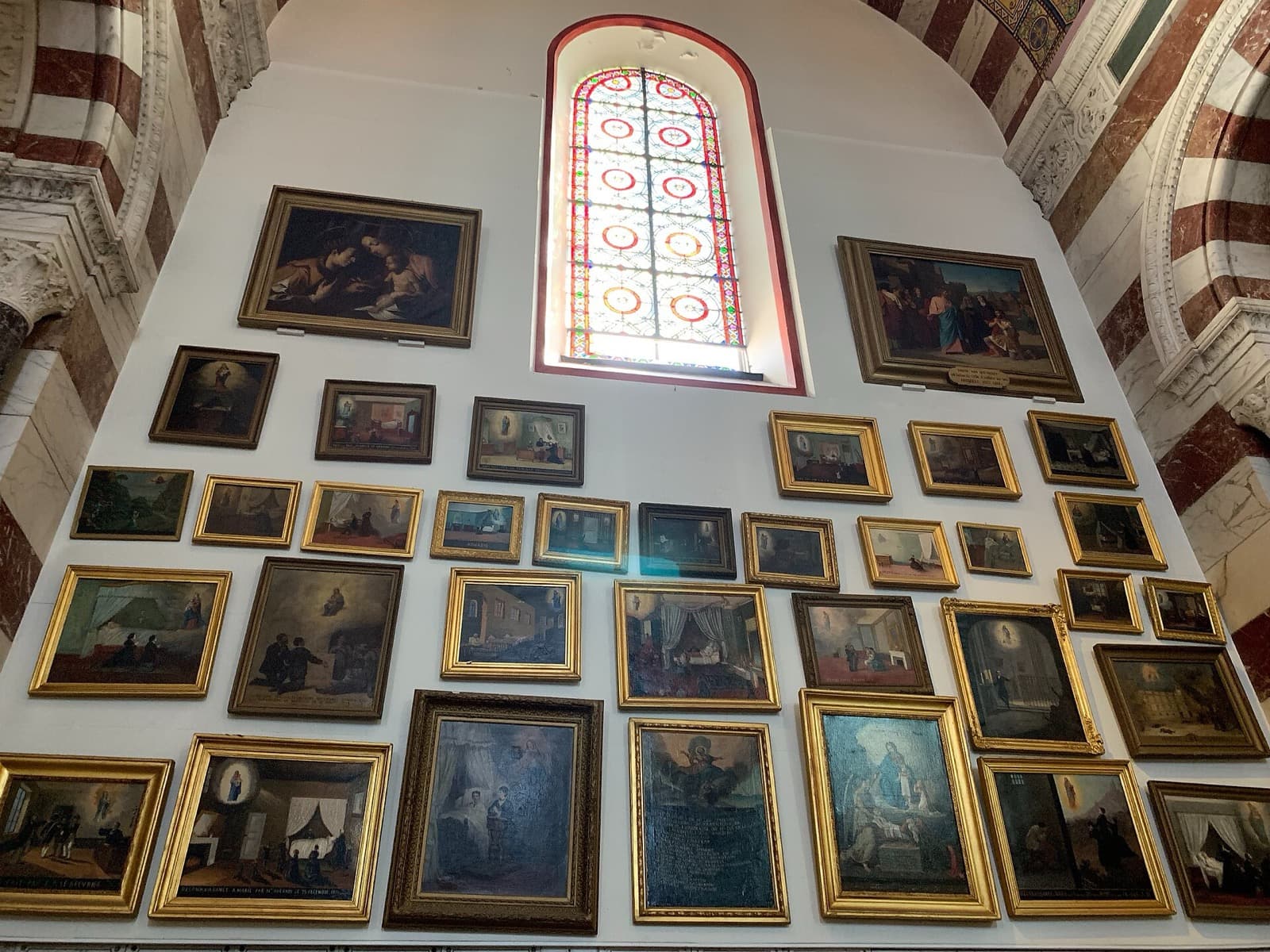
The Mosaics and Ex-Votos: A Sailors' Thank-You in Gold
The shimmering upper church and its offerings from sailors who survived the sea, over a deliberately dim crypt.
- 3
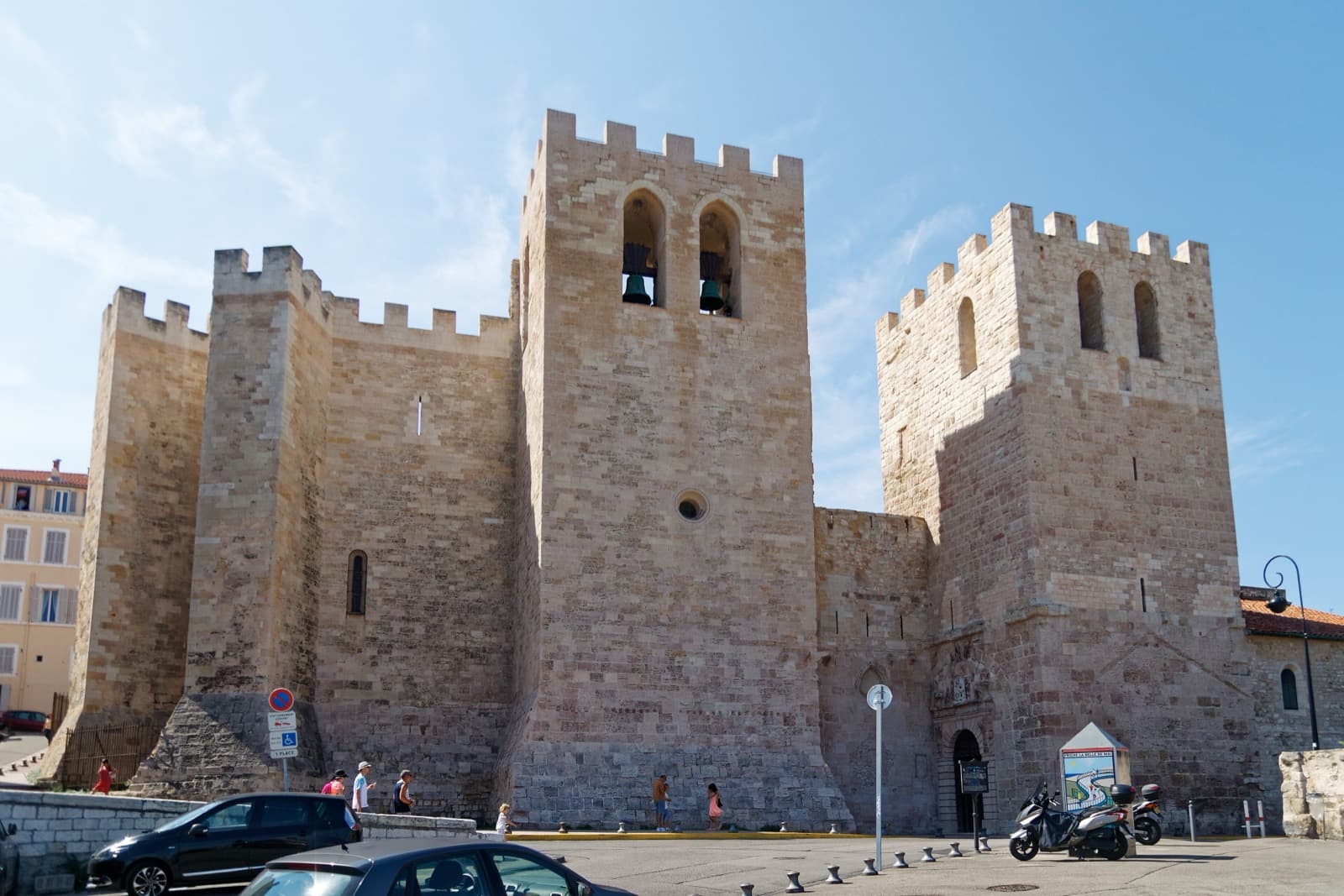
Abbaye Saint-Victor: The Port That Was Christian Before There Was a France
One of the oldest Christian sites in France, a fortress-abbey founded by an Egyptian-trained monk in the fifth century.
- 4
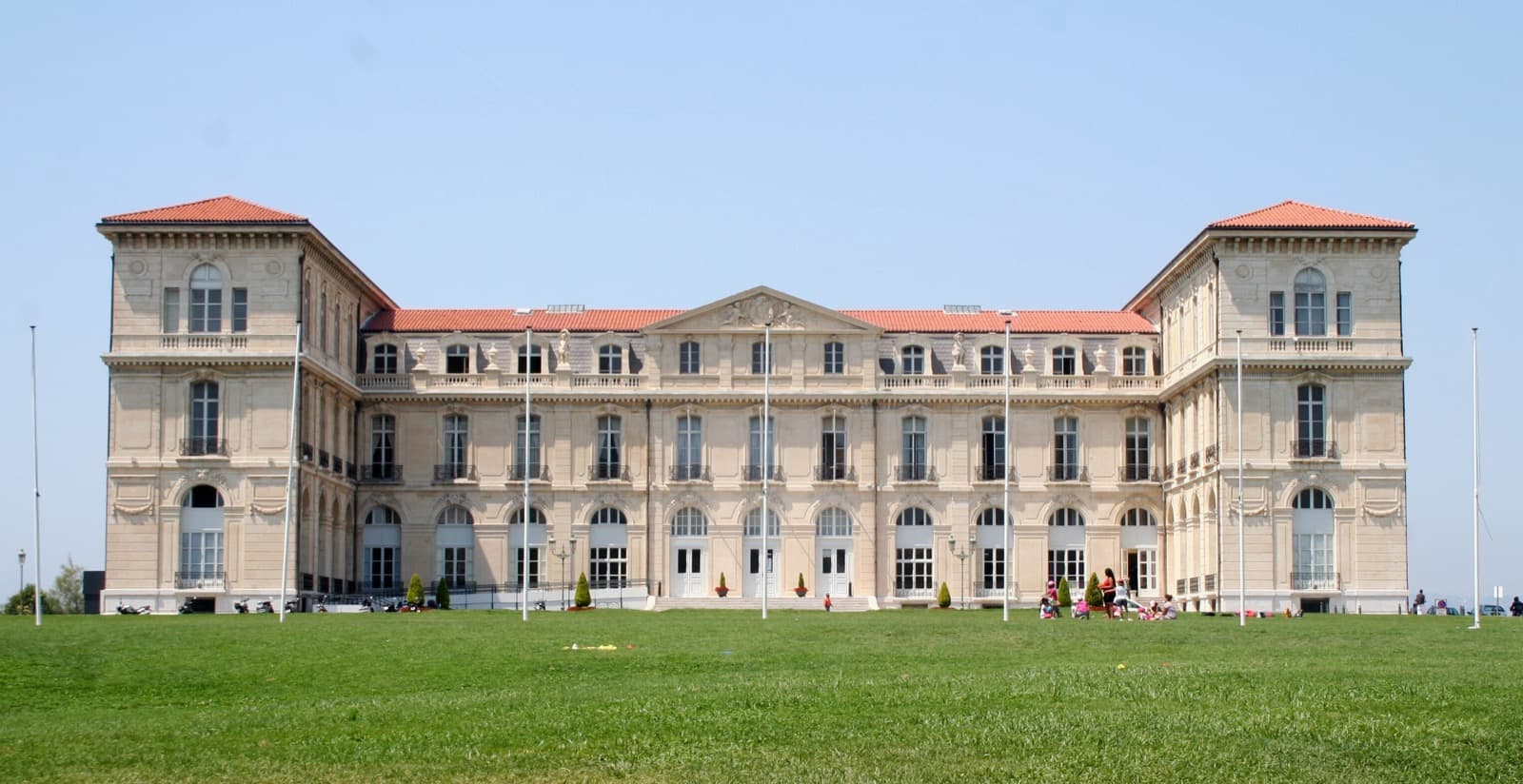
Jardin du Pharo: An Emperor's Balcony Over the Harbour
A public garden on a headland around a Second Empire palace, offering one of the best free views back to the basilica.
- 5
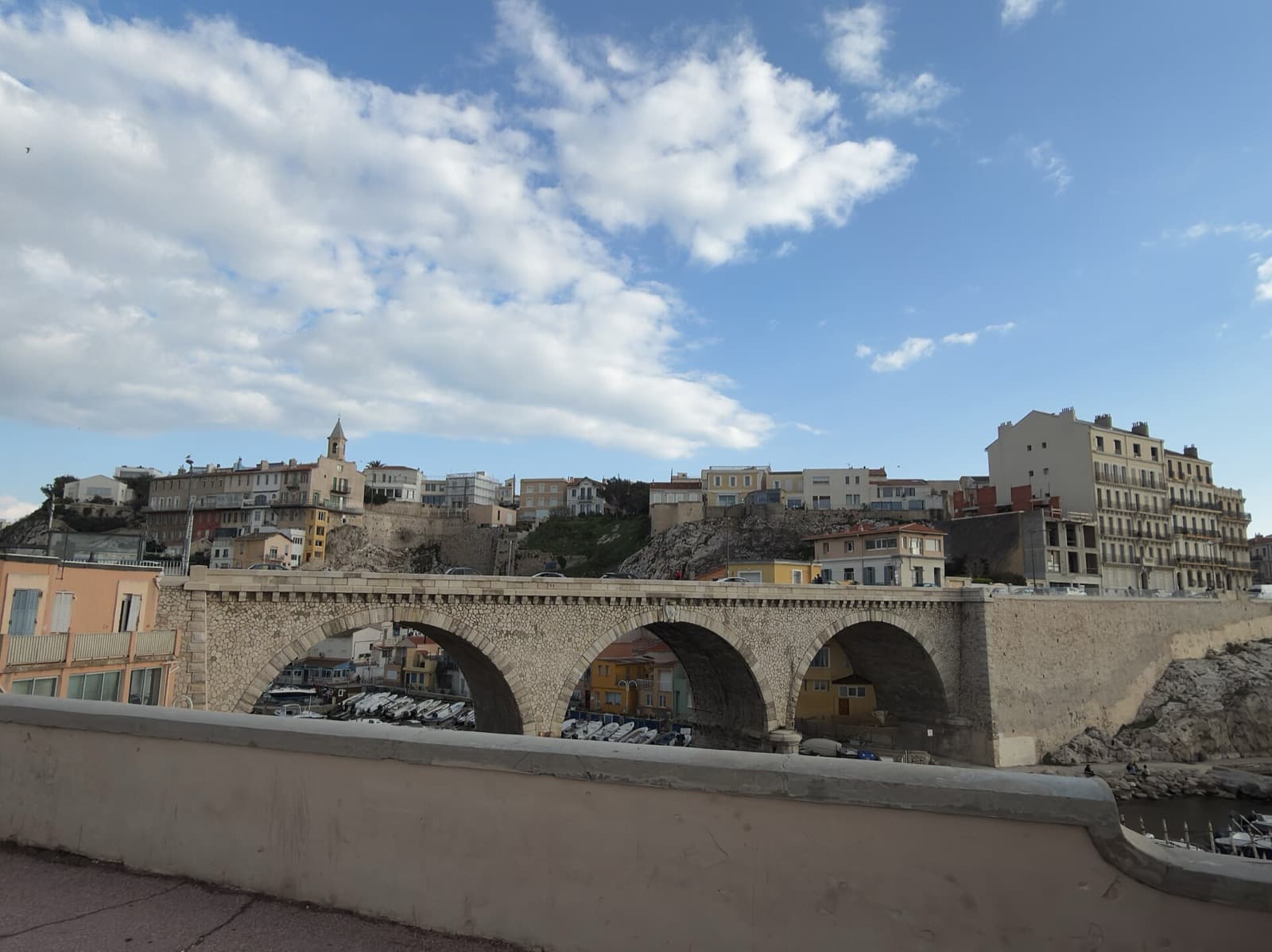
Vallon des Auffes: A Fishing Cove the Size of a Courtyard
A tiny working fishing harbour of pointu boats and cottages, tucked beneath a nineteenth-century viaduct on the Corniche.
- 6
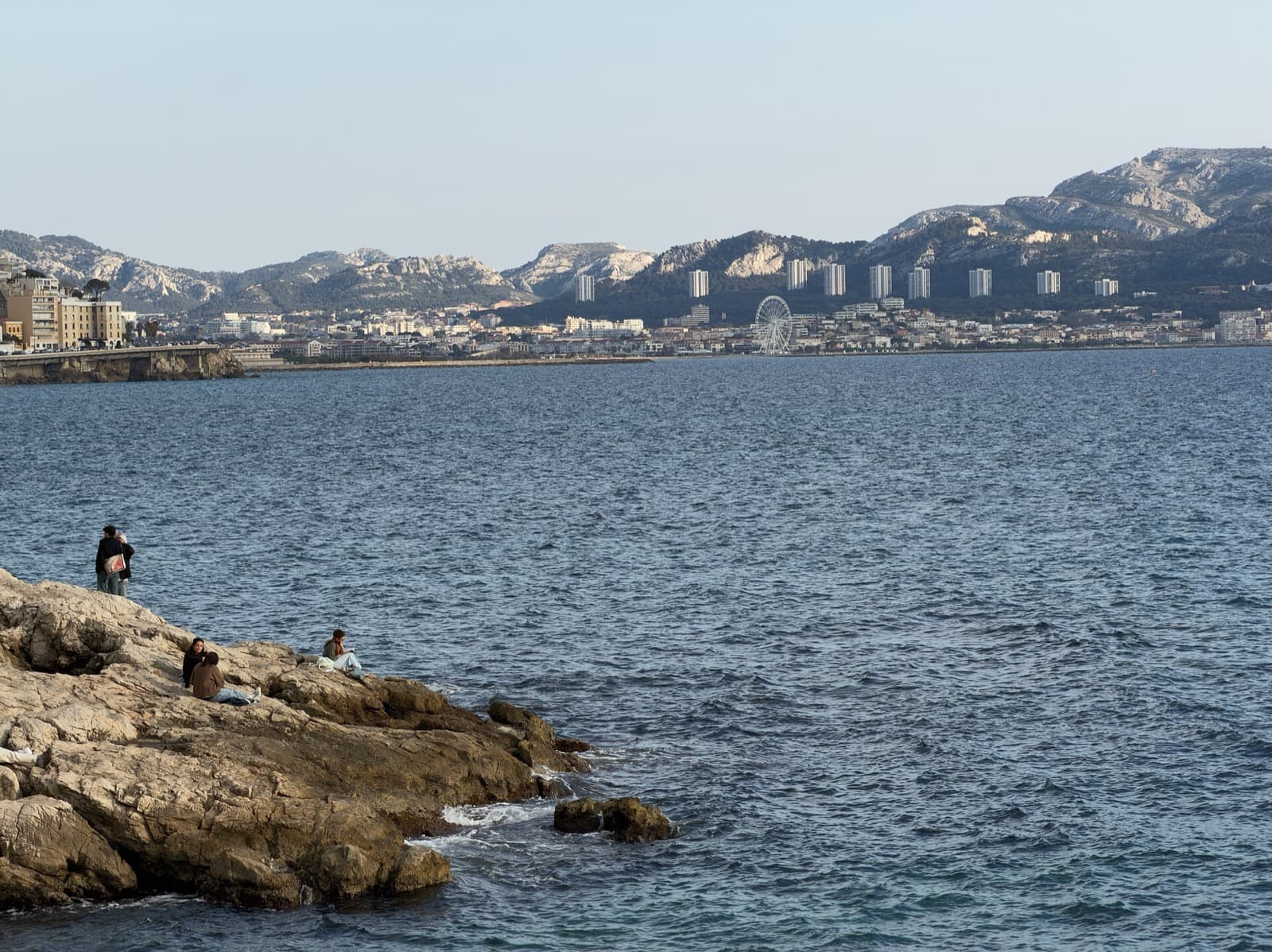
The Corniche: Where the Whole City Faces the Sea
The long seafront road and its record-breaking bench, looking out to the Frioul islands and the Chateau d'If.
Details
Best Time to Visit
Late afternoon into early evening is ideal: the basilica terrace and the Corniche both face west, so you descend into the light and finish with the sun setting over the Frioul islands. Aim to reach the summit by mid to late afternoon. The basilica interior is open daily; the abbey crypt keeps shorter hours, so check before you set out if you want to see it.
Pro Tips
- •Ride bus line 60 or the little tourist train up the steep hill to the basilica rather than climbing it. The whole route runs downhill from the summit, so save your legs for the descent.
- •The basilica and its terrace are completely free to enter, and the terrace views alone are worth the trip up.
- •At the Abbaye Saint-Victor the main church is free, but the ancient crypt with its early Christian tombs charges a small fee. It is the oldest and most atmospheric part, so it is worth it.
- •The Jardin du Pharo is a free public garden and offers the single best view back across the harbour to Notre-Dame de la Garde. Turn around and find her small and gilded on her hill.
- •The full descent is about 4.4 km, most of it downhill but long, so wear comfortable shoes with good grip for the sloping streets.
- •If the Chateau d'If captures your imagination, boats leave from the Vieux-Port for the island, so you can plan a separate half-day out to the fortress that inspired The Count of Monte Cristo.
Safety & Precautions
- •The Corniche is fully exposed to the sea and can be very windy. Bring a light layer even on warm days, especially near sunset.
- •The route is long and mostly downhill on sloping streets and steps, which is harder on knees than it looks. Pace yourself and take breaks at the viewpoints.
- •The Vallon des Auffes is a real working fishing harbour and a lived-in neighbourhood, not a tourist attraction. Keep noise down, do not block the boat ramps, and be respectful of residents.
- •Carry water and sun protection. Much of the walk, especially the basilica terrace and the seafront, offers little shade during the middle of the day.
Travel advisory: Exercise Increased Caution (Level 2).
Gallery
Related Reading
Go deeper on what you'll see, hear, and walk through.
Read the walk
The full story of Notre-Dame de la Garde: The Good Mother Watching the Sea, in words. Prefer to listen? Play it narrated, from home or on location.
Introduction
Marseille was built by people who spend their lives looking at the sea. It is the oldest city in France, founded by Greek sailors roughly twenty-six hundred years ago, and every story on this walk keeps returning to the water. This tour has six stops, covers about four and a half kilometres, and takes around two and a half hours at an easy pace, here in Marseille, in France. It begins at the very top, on the summit of the hill where the basilica of Notre-Dame de la Garde stands one hundred and forty-nine metres above the harbour. Most visitors ride the bus or the little tourist train up the steep slope rather than climb it, and from that summit the whole route runs downhill toward the shore. From the terrace of the Good Mother, the thread of the walk unspools: down past the ancient abbey of Saint-Victor, along the edge of the Old Port, out to an emperor's garden on its headland, into a fishing cove the size of a courtyard, and finally onto the long seafront road where the city turns its face to the Mediterranean. The sea is the through-line. Sailors prayed to be spared it, fishermen lived by it, an emperor built a balcony to watch it, and a whole city lined its shore with benches to sit and look at it. When you arrive at the basilica terrace on the summit, begin with stop one.
1. Notre-Dame de la Garde: The Bonne Mere on the City's Highest Point
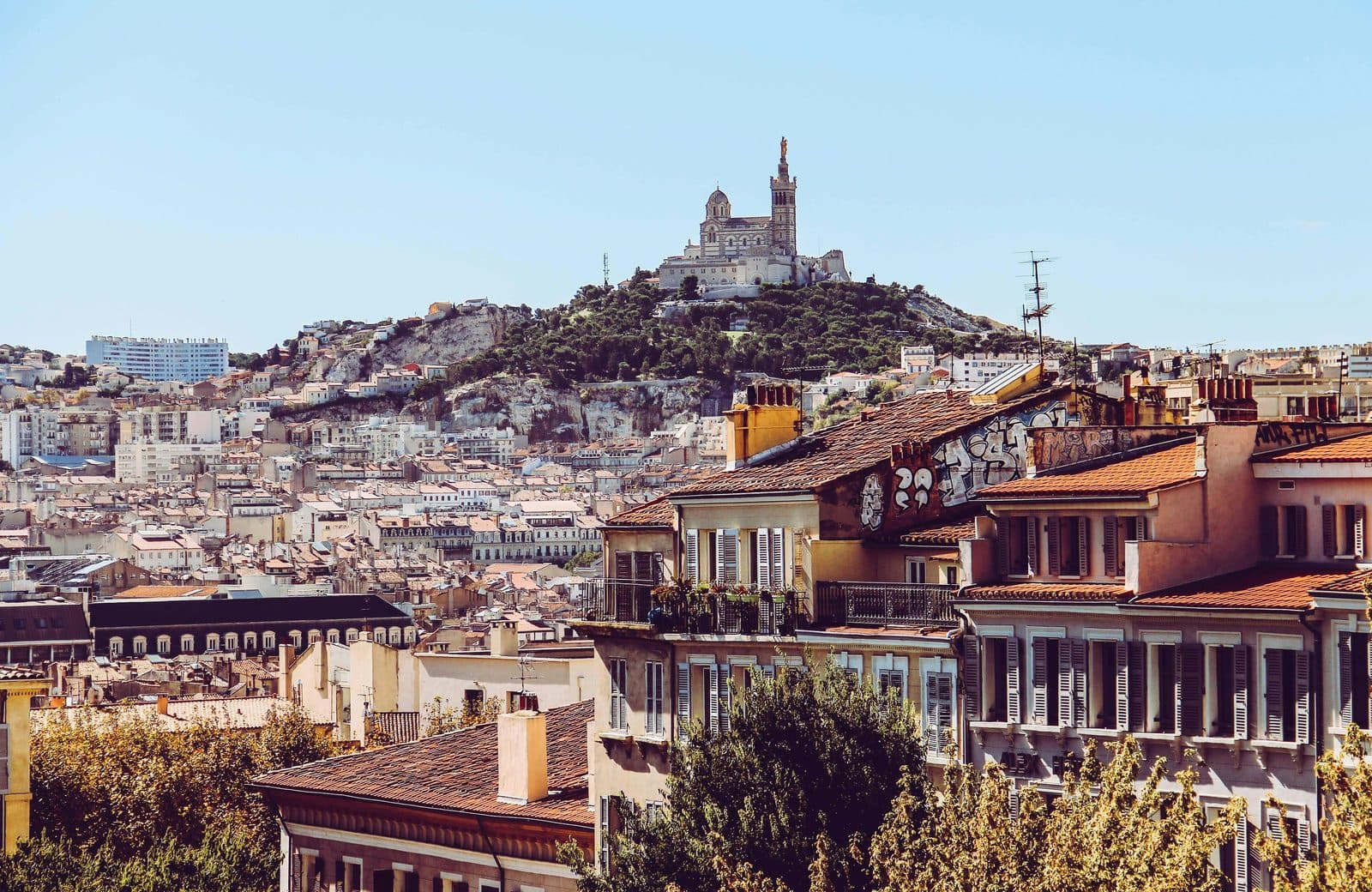
Welcome. You are standing on the highest natural point in Marseille, a limestone outcrop called La Garde hill, one hundred and forty-nine metres above the sea. Every direction gives you water and rooftops, which is exactly why this spot was chosen. Long before the church, this was a fortress. A fort was begun here for King Francis the First to defend the city, and in fifteen thirty-six its fortified sanctuary helped repel the troops of Charles the Fifth. The basilica you see rose later, on those same foundations. Marseille's bishop, Monseigneur de Mazenod, laid the first stone on the eleventh of September, eighteen fifty-three, and the church was consecrated on the fifth of June, eighteen sixty-four. The architect was Henri-Jacques Esperandieu, who gave it its Neo-Byzantine shape. Look closely at the walls and you will see them striped, alternating bands of white Calissane limestone and green sandstone. Above it all, on a square bell tower, stands the reason sailors have always looked to this hill: a monumental statue of the Madonna and Child in gilded copper, eleven point two metres tall, sculpted by Eugene-Louis Lequesne. It took about five hundred grams of gold leaf to cover her. The people of Marseille do not usually call this place by its full name. They call her la Bonne Mere, the Good Mother, and they mean it plainly. This is the most visited site in the whole city and the traditional guardian of its sailors and fishermen. Before any of them left the harbour far below, they always looked up here first, and many still do.
2. The Mosaics and Ex-Votos: A Sailors' Thank-You in Gold
Welcome. Step inside and the light changes. The upper church glows because it is lined with about twelve hundred square metres of mosaics, laid between eighteen eighty-six and eighteen ninety-two, composed of roughly twelve million tiny tesserae. Every one of those small pieces catches the light differently, which is why the walls seem to move as you do. The interior carries the same striped logic as the outside, banded here with alternating red and white marble columns and pilasters, echoing the Byzantine-revival stonework you saw on the facade. Now look at what fills the space between the mosaics. These are ex-votos, thanksgiving offerings. From the late sixteenth century, mariners came up this hill to give thanks for their survival, and they left behind model ships, plaques and paintings, the marks of sailors and fishermen who had been spared by the sea. Each one is a private story of a storm outlived, hung in public gratitude. The statue you admired on the roof was not cast in the traditional way. It was made by galvanoplasty, an electro-forming technique that builds the metal up rather than pouring it. Before you leave, go down. Beneath this bright church lies a lower level, a Romanesque-Revival crypt, a nave of low barrel vaults bordered by six side chapels. It is deliberately dim, a deep quiet directly under all that shimmer. The contrast is the point. The Good Mother offers both the dazzle of gratitude in the light above and the hush of shelter in the dark below, and the people who climbed this hill needed both in equal measure.
3. Abbaye Saint-Victor: The Port That Was Christian Before There Was a France
Welcome. This severe, castle-like building is one of the oldest sites of Christian worship in the whole of France, and its foundations are older still. The crypts below show continuous human use across a thousand years and more: first a Greek-era quarry cut into the rock, then a…
Full narration for this stop unlocks with the tour.
4. Jardin du Pharo: An Emperor's Balcony Over the Harbour
Welcome. You have come down to the water now, onto a headland just west of the Old Port, and the building behind you was meant to command exactly this view. It is the Palais du Pharo, built in Second Empire style by Emperor Napoleon the Third for his wife, the Empress Eugenie.…
Full narration for this stop unlocks with the tour.
5. Vallon des Auffes: A Fishing Cove the Size of a Courtyard
Welcome. After the grandeur of an emperor's palace, this is the opposite kind of place, and it may be the one you remember longest. You are looking down into the Vallon des Auffes, a small traditional fishing port tucked into the coast in the Endoume district of the seventh…
Full narration for this stop unlocks with the tour.
6. The Corniche: Where the Whole City Faces the Sea
Welcome. This is the last stop, where the walk comes to rest, facing the water. The Corniche runs about three kilometres along the Mediterranean seafront through the seventh arrondissement, built for exactly this purpose: to sit and look at the sea. The road was developed…
Full narration for this stop unlocks with the tour.