The Throne Room (Salón del Trono) is the last and most important room of the Royal Palace of Madrid's visit, planned by Charles III and decorated by 1772. Giambattista Tiepolo reached Madrid in June 1762 to paint its ceiling, which celebrates the Spanish Monarchy. Bronze lions that Velázquez ordered in Italy in 1650 stand in the room, and the two thrones are twentieth century copies of Charles III's throne chair.
Royal Palace of Madrid audio guide
Madrid · 2 floors · stories room by room
If you are asking where the throne room of the Royal Palace of Madrid is: it is the last room of the visit, after the state rooms. If you are asking why it matters: it was planned as the most important of Charles the Third's rooms, and it is still used by kings today.
What you see
The walls are covered in Genoese velvet embroidered by Andrea Cotardi, and the room is also called the Hall of Realms or the Hall of Ambassadors. Four 18th century figures of Justice, Prudence, Fortitude and Temperance stand around the throne. Twelve consoles and mirror frames made in Naples line the walls, with mirror glass from the royal glass factory of La Granja. Felice Gazzola directed the decoration, finished in 1772, and Patrimonio Nacional says the room keeps its original scheme.
Tiepolo came to Spain for this ceiling
Hear a stop from this walk
Puerta Cerrada: The Closed Gate
Giambattista Tiepolo, the Venetian painter, was invited to the court and reached Madrid in June 1762. He expected to finish this ceiling in two years and go back to Venice. His sons Giandomenico and Lorenzo came with him and helped. He never went home: he stayed on to paint more ceilings in the palace and died in Madrid in 1770.
The ceiling celebrates the greatness of the Spanish Monarchy and the reach of its empire. We do not have a reliable date for its completion: one scholarly page says 1764, while Patrimonio dates the whole room's decoration to 1772. Tiepolo's oil sketch of 1762, now in the National Gallery of Art in Washington, shows Spain enthroned at the centre with Fame blowing a trumpet above, and Christopher Columbus on the deck of his ship with his arms flung wide. The finished fresco may differ, so use the sketch as a game and see how much of it you can find overhead.
The lions are older than the palace
In 1650, on a journey to Italy, the court painter Diego Velázquez ordered twelve bronze lions from the sculptor Matteo Bonuccelli. They went to the Hall of Mirrors in the old Alcázar, where they held up marble tabletops; a portrait of the boy king Charles the Second by Juan Carreño de Miranda, painted in 1673, shows the room they stood in. After the Alcázar burned, Charles the Third had the lions placed in this room as a sign that his line ran back through the kings before him. Sources differ on how many of the twelve survive, so we say only that most do, shared between the Prado and the palace.
The thrones are copies
The two thrones on the dais are twentieth century copies of Charles the Third's throne chair, and the royal arms on the canopy cloth were embroidered in the 1990s. The original chair, made in Naples, with lion's claws for legs and the king's face in relief on the back, is shown a few rooms earlier, in the Crown Room.
How to see it
The Throne Room is one of the rooms the King still uses. The Pascua Militar, when the King and Queen meet the armed forces to thank them, and the receptions where guests greet the royal family are held here, and the room can close at short notice on a ceremony day. Photographs are allowed for personal use without flash. In the Roamer guide the Throne Room has its own story, and its ceiling and lions are stops on The Royal Palace in an Hour, The Palace and the Armoury in Two Hours, A Working Palace and Lions, Clocks and Small Wonders routes. You can listen at your own pace, with no group, and skip anything you do not want. The guide is independent and not affiliated with the palace, and admission is separate. Start here: the Royal Palace of Madrid guide, or read the whole visit in Royal Palace of Madrid: what to see, room by room.
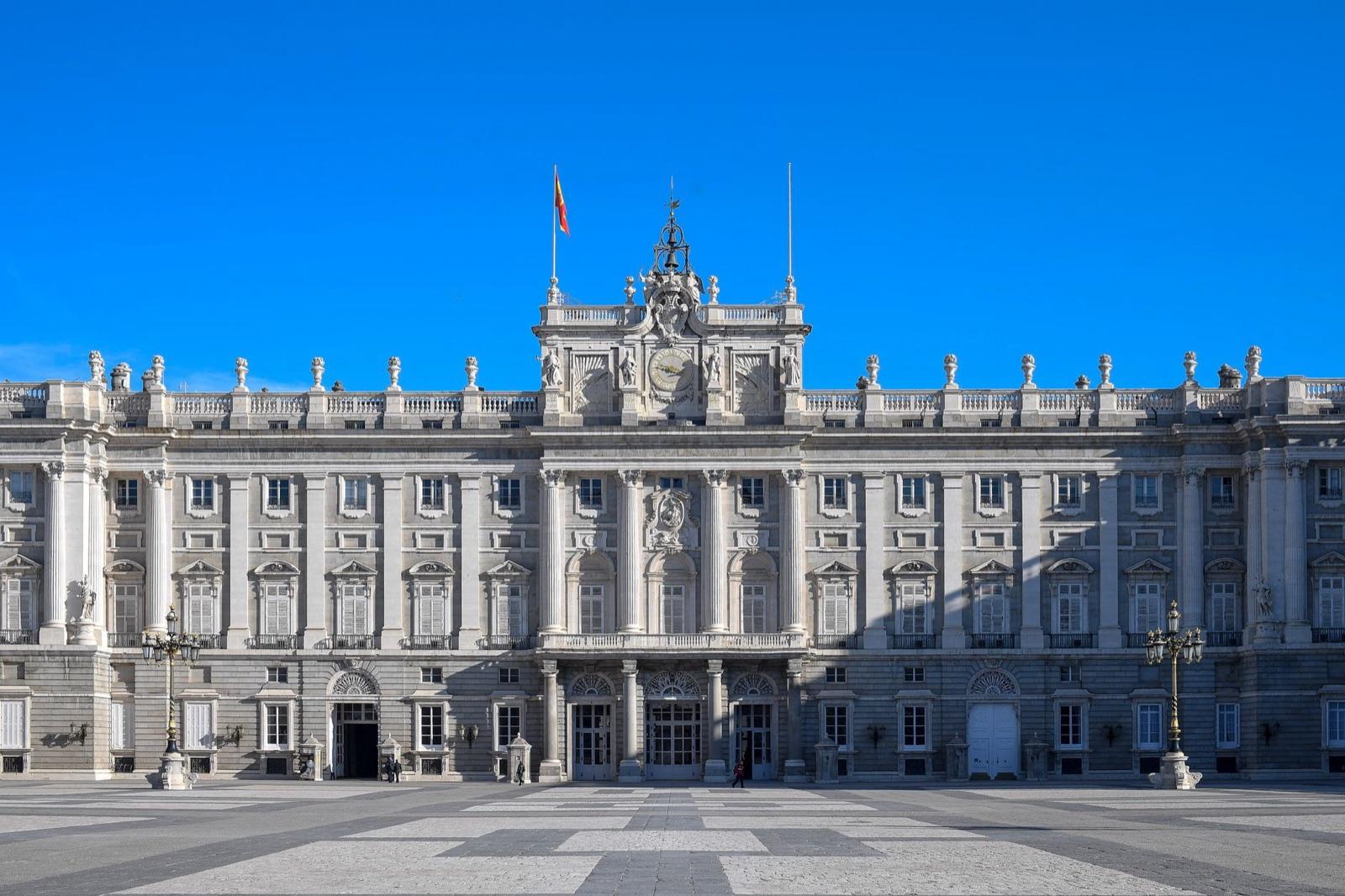
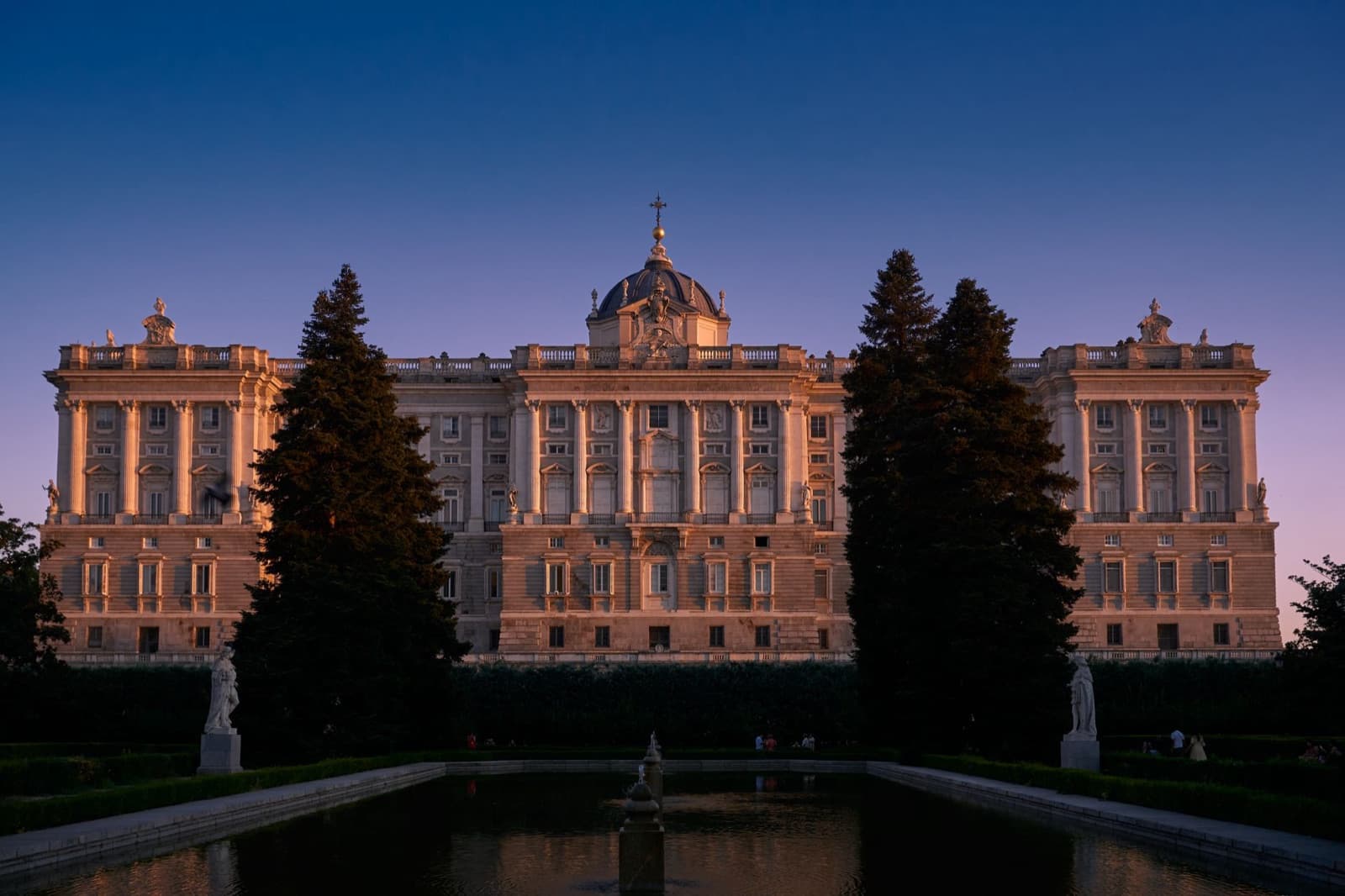
Cover: the south front of the Royal Palace, seen across the Plaza de la Armería. Photograph by Margo Evardson, Pexels. The palace interiors are not photographed here.
Ready to experience it?
Historic Center: The Wall Madrid Built Over
75 min · 2.4 km · easy
More from Madrid
Explore more at your own pace.
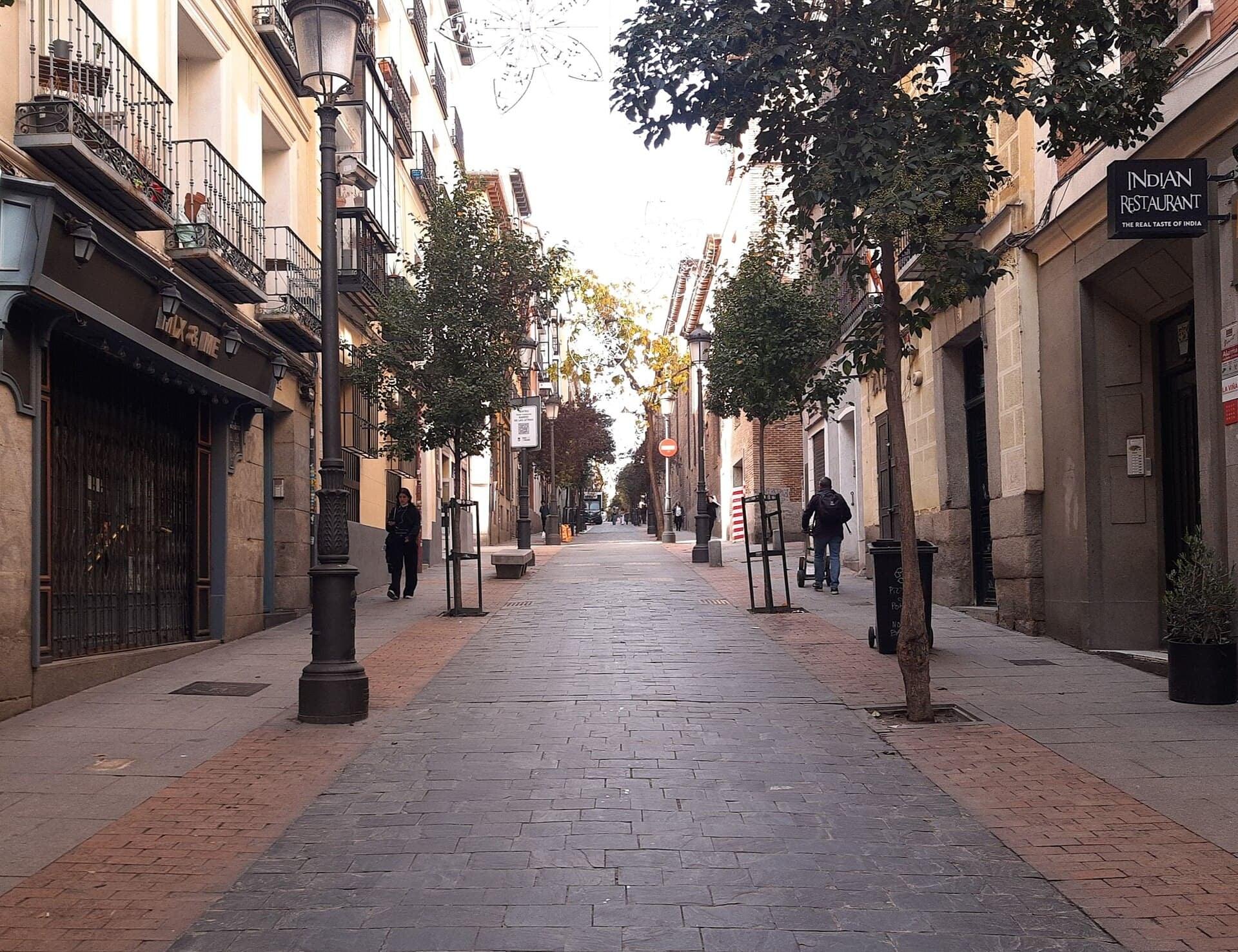
Barrio de las Letras: Madrid's Writers' Quarter in Three Layers
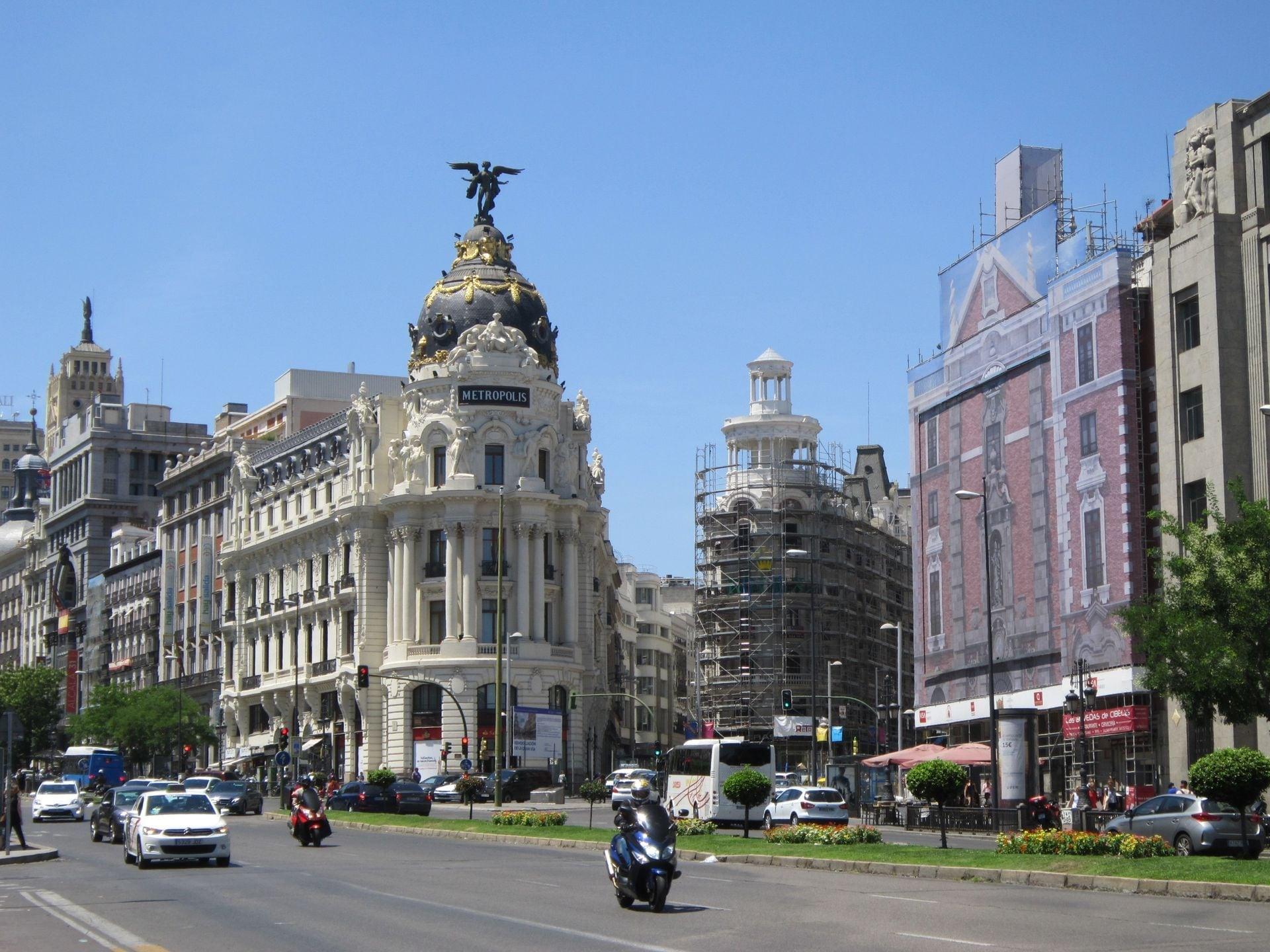
Gran Vía: How Madrid's Great Way Grew Wider and Taller as It Was Cut
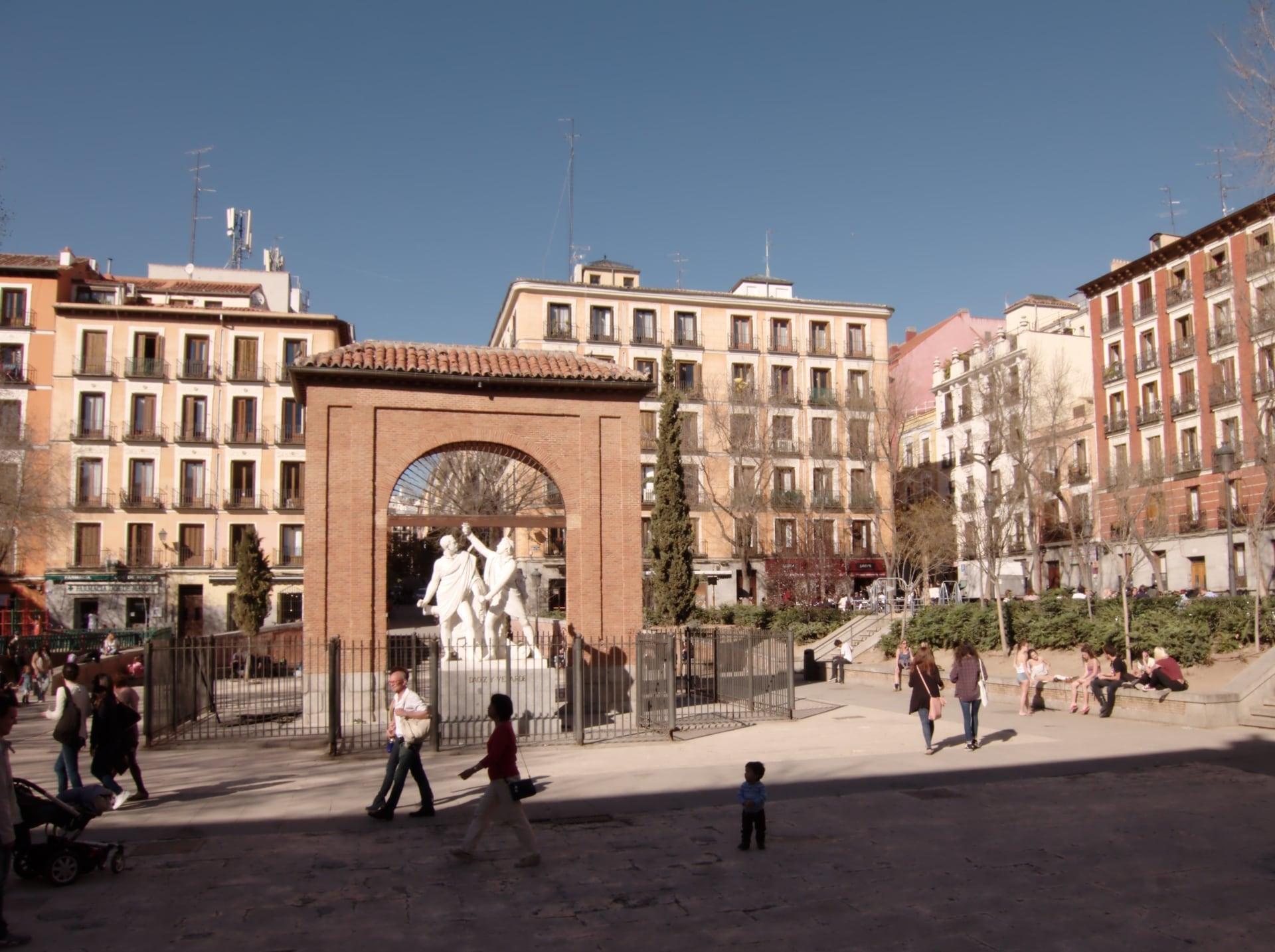
Malasaña and Chueca: Madrid's Old Northern Edge, Taken Back by the City
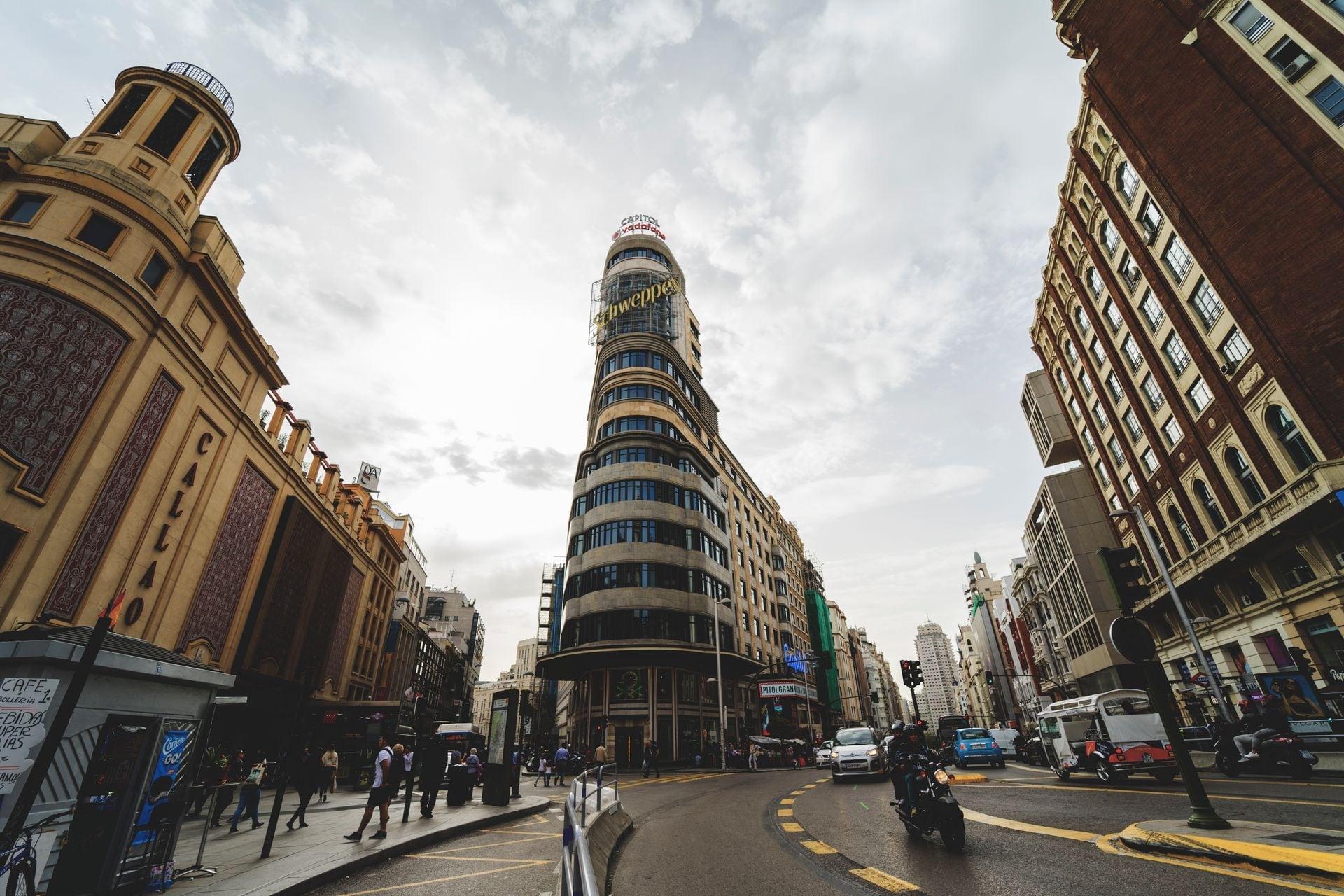
Edificio Carrión: The Curved Corner at Callao and the Sign That Stayed
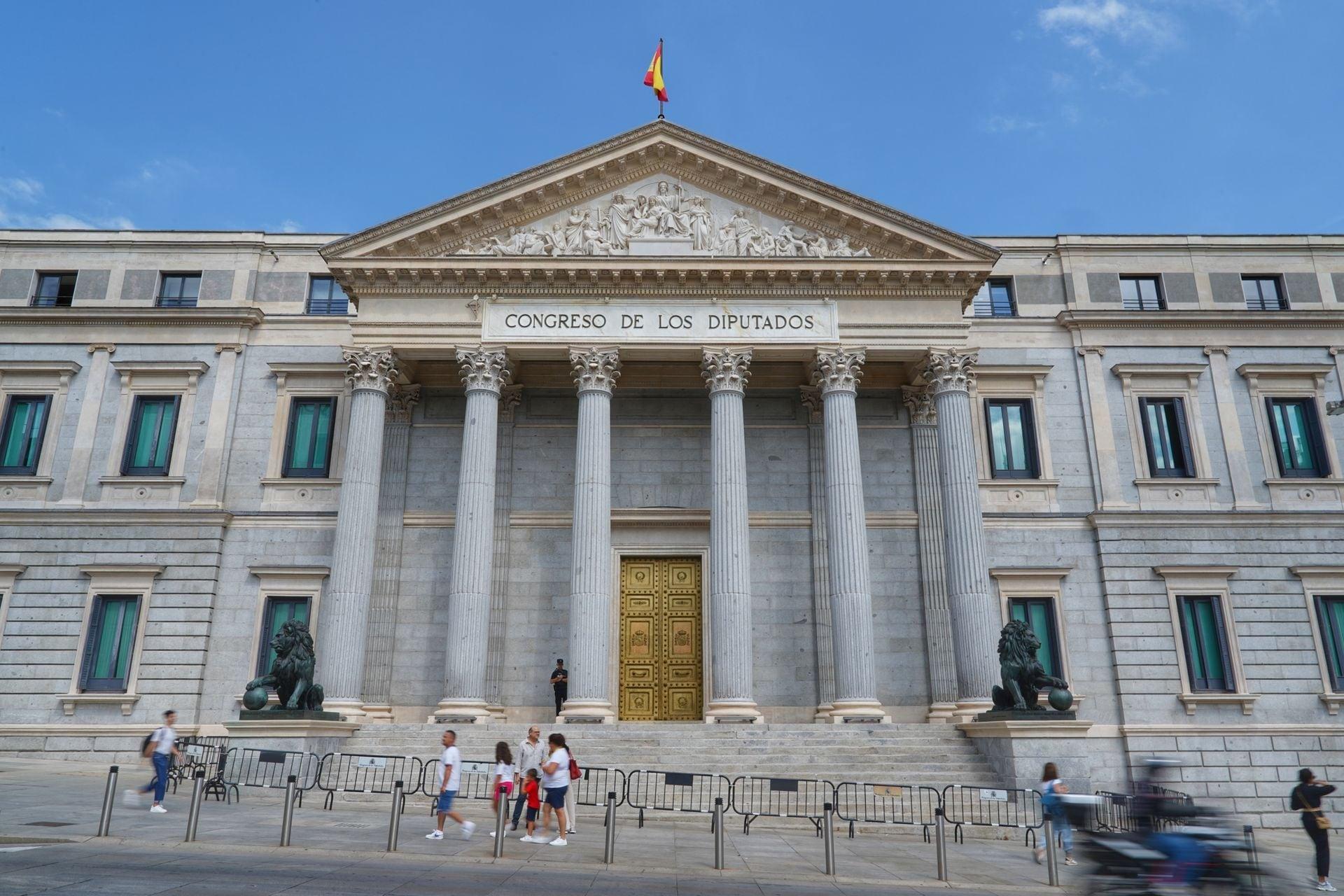
Plaza de las Cortes: Cervantes, His Lion and the Congreso Lions