Madrid cut the Gran Vía in three stretches over two decades, and each time it cut, the street got wider and the buildings got taller. The first stretch is twenty-five meters across. The second is thirty-five. The third was planned at twenty-five and widened to thirty-five halfway through the job, and those ten extra meters on paper brought down a Jesuit house and made room for a block of hotel, flats and theater. Along the way the skyline rose from a French insurer's dome to the city's first skyscraper to the two towers that close the street. Walk it from end to end and you are reading a ruler laid across a city.
A cut through the old town
Work began on the fourth of April, 1910, when King Alfonso the Thirteenth struck a pickaxe at an old house known as the Priest's House, beside the church of San José on Calle de Alcalá. The plan swept away more than three hundred buildings and some fifteen streets. A new, straight avenue was drawn across a tangle of medieval lanes, and that one decision explains a lot of what you see.
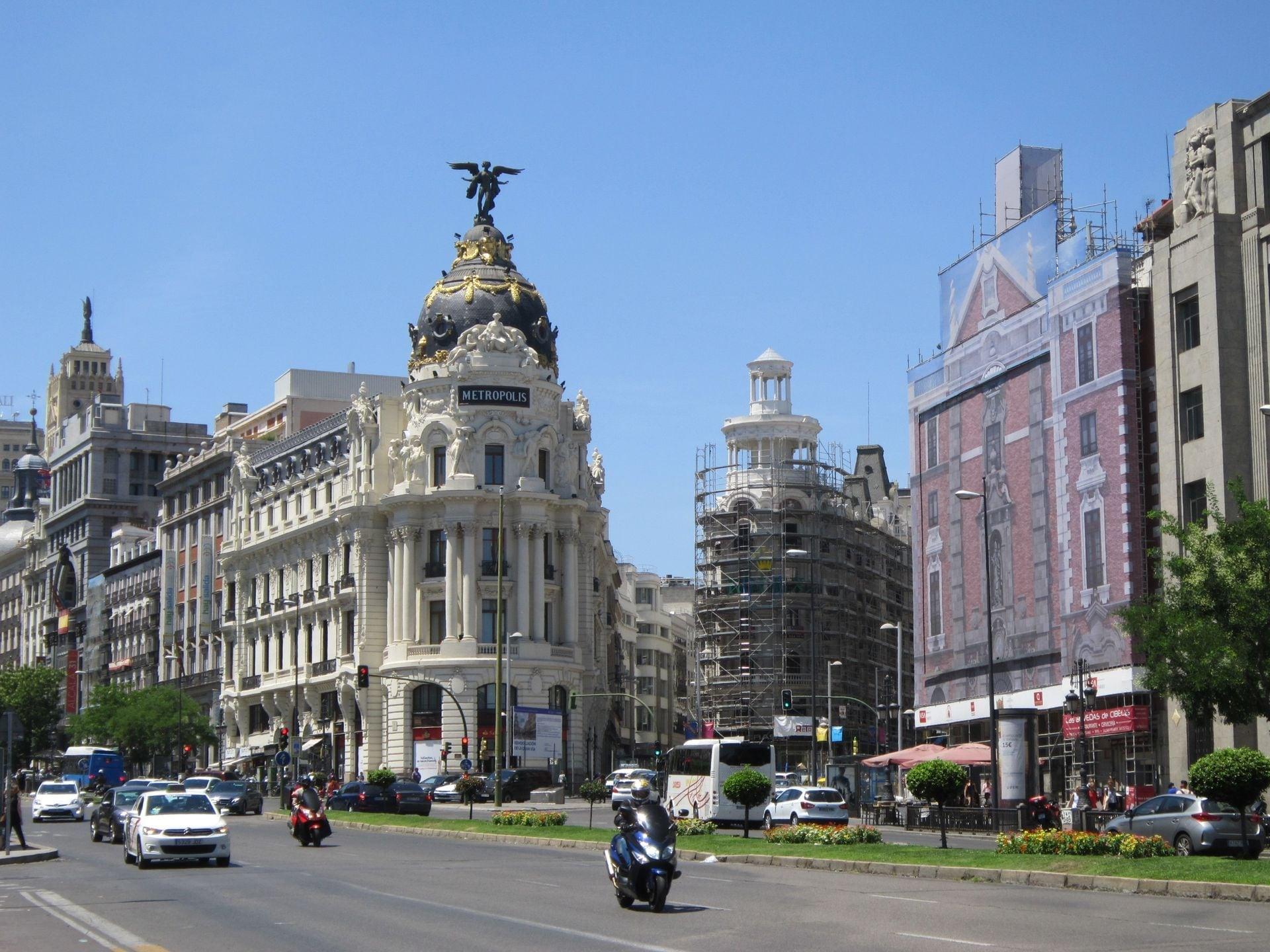
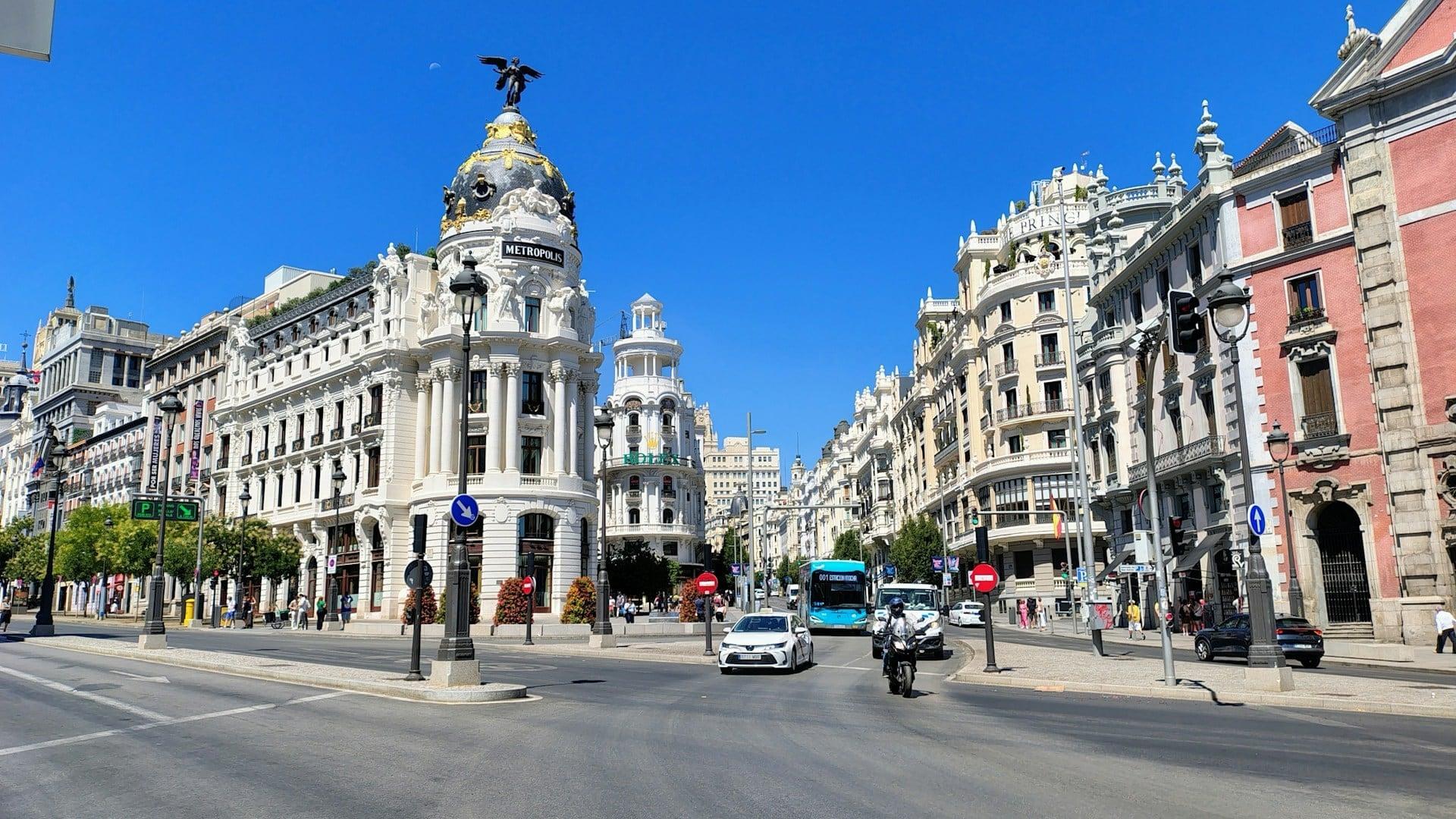
Where a straight line crosses crooked streets, it leaves wedges of land with pointed ends. The Edificio Metrópolis, designed in 1905 for the insurer La Unión y el Fénix and opened in January 1911, sits on one of those points at the fork of Alcalá and the Gran Vía. Its architects rounded the point into a tower and crowned it with a slate dome set with gilded inlays. A little way up, the Edificio Grassy of 1916 and 1917 fills another sharp wedge and solves it the same way, with a round corner tower. Two buildings, one geometric problem, one answer.
The first stretch: twenty-five meters
Hear a stop from this walk
Monumento a Cervantes: Half a Century in the Making
The opening stretch runs from Alcalá to the Red de San Luis, the crossroads at the top of the street's gentle rise. It is the narrowest part of the avenue, and its buildings are mostly of the street's first decade. Just off it, the Oratorio del Caballero de Gracia shows what the cut did to the town it passed through. Juan de Villanueva, the architect of the Prado, designed its classical front in the 1780s on a quiet side street. The new avenue took the back of the church. For decades the Gran Vía saw only a plain street front added in 1916, until late in the twentieth century the apse was rebuilt to face the avenue. The church now faces two ways at once.
At the Red de San Luis the street reaches its high point, and the first tall building in Madrid stands over it. The Telefónica building went up between 1926 and 1929 for the national telephone company. At eighty-nine meters it was the tallest building in the city until 1953, and Madrid's rules had to be changed before it could be built. Its frame and stepped shape follow the Chicago School; its doorway and crown wear baroque ornament.
The second stretch: thirty-five meters
Below the Red de San Luis the street opens out to thirty-five meters. You can feel the difference on the pavement. This stretch swallowed most of an old street of booksellers and was built for business: hotels, offices, cinemas and department stores. Gran Vía 32 opened as the Madrid-París, a department store laid out on the Paris model, and was later raised by several floors. At the Plaza del Callao the Edificio Carrión of 1931 to 1933 swings round its corner in one long banded curve, with a neon sign on the roof that has become one of the city's landmarks.
The third stretch: widened mid-project
The final run from Callao to the Plaza de España began in 1925 at twenty-five meters. In February 1926 the council widened it to thirty-five, to match the stretch before it. That change put the Jesuits' house in the line of the street. After years of appeals, the house was set on fire on the eleventh of May, 1931. On its ground the Otamendi brothers later built Los Sótanos, a long block that packs a hotel, flats, offices, shops and a theater into one plot, with the Lope de Vega theater tucked at the back behind a single entrance so the street front could earn its keep.
A few steps on, the Edificio Coliseum, designed in 1931, stacks homes and offices above a great auditorium in a manner the city's own history ties to New York's Rockefeller Center. Then the street runs downhill to its end, and two towers close it: the Edificio España, finished in 1953 at one hundred and seventeen meters, and the Torre de Madrid, roughly one hundred and forty meters, finished later that decade. Both are by the Otamendis. The España took the Telefónica's height record, and within a few years the same architects beat themselves.
Walking it
The tour is eleven stops over about 1.8 kilometers, roughly an hour, climbing gently to the Red de San Luis and then running mostly downhill to the Cervantes monument in the Plaza de España. Because it is self-guided, you set the pace: linger at a corner to compare two wedge buildings, skip ahead past a crowded crossing, or stop for a coffee at Callao and pick up the story when you are ready. Every stop works from the street, so the two ticketed rooftops along the way are optional.
The thing to carry with you is the ruler. At each stop, look at the width of the road and the height of what stands beside it, and you will see the street's own history in its dimensions.
The walk starts at stop 1 of Gran Vía: The Street That Grew Wider and Taller, at the Metrópolis on Calle de Alcalá. See every route on the Madrid page.
Sources
- Ayuntamiento de Madrid, Patrimonio Cultural y Paisaje Urbano, "Gran Vía": the 1910 start at the Priest's House, the three stretches and their widths, the 1926 widening, the Casa Profesa fire, Telefónica as the first skyscraper and the rule change, the Coliseum and Rockefeller Center, the Edificio España and Torre de Madrid.
- esmadrid, Metropolis Building: the 1905 design for La Unión y el Fénix, the 1911 opening, the slate dome with gilded inlays.
- esmadrid, Telefónica Building: the building's role in the Civil War and its height of nearly ninety meters.
- esmadrid, Edificio España: the tower by the Otamendi brothers and its height.
Ready to experience it?
Gran Vía: The Street That Grew Wider and Taller
60 min · 1.8 km · easy
More from Madrid
Explore more at your own pace.
Barrio de las Letras: Madrid's Writers' Quarter in Three Layers
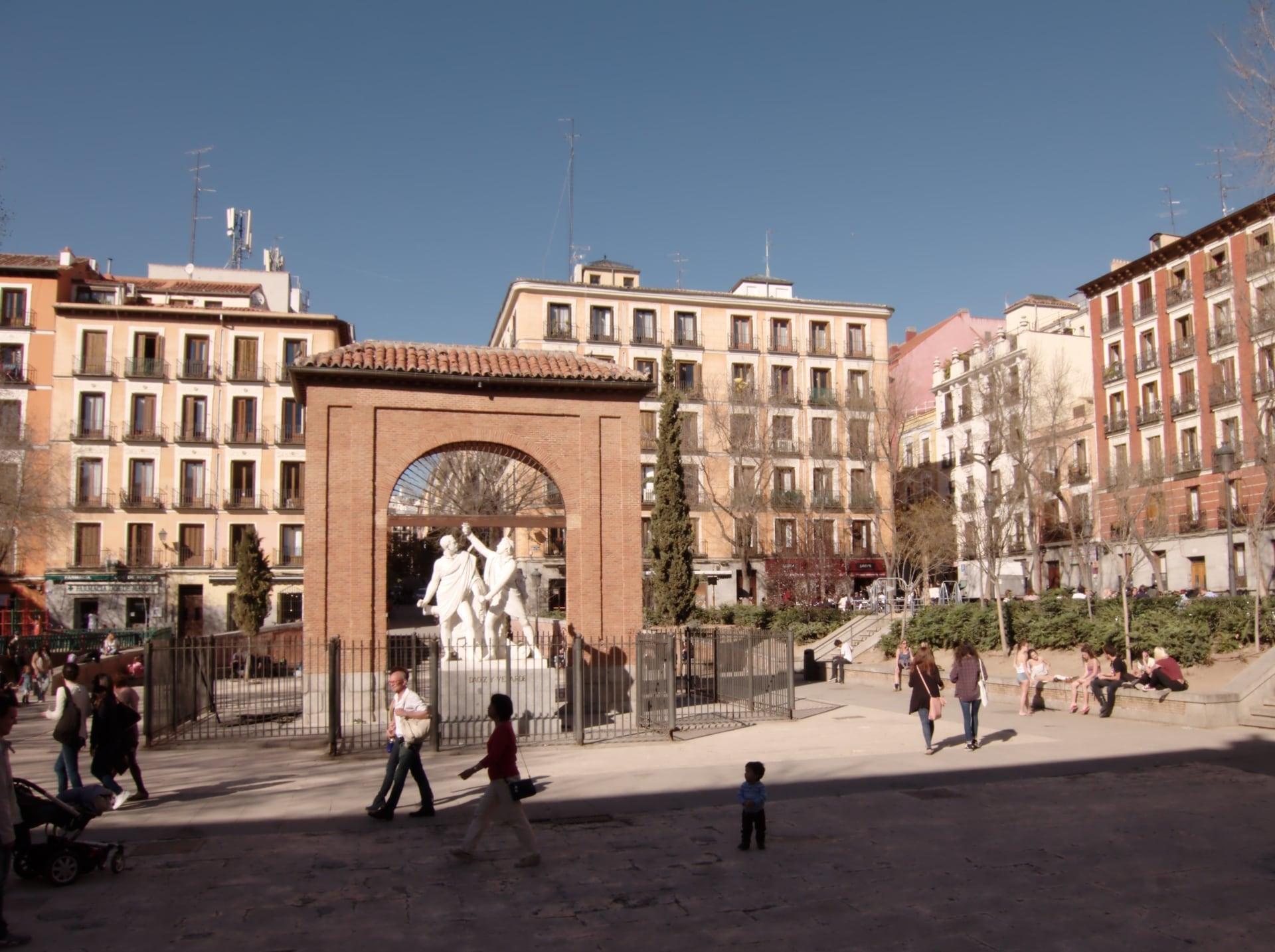
Malasaña and Chueca: Madrid's Old Northern Edge, Taken Back by the City
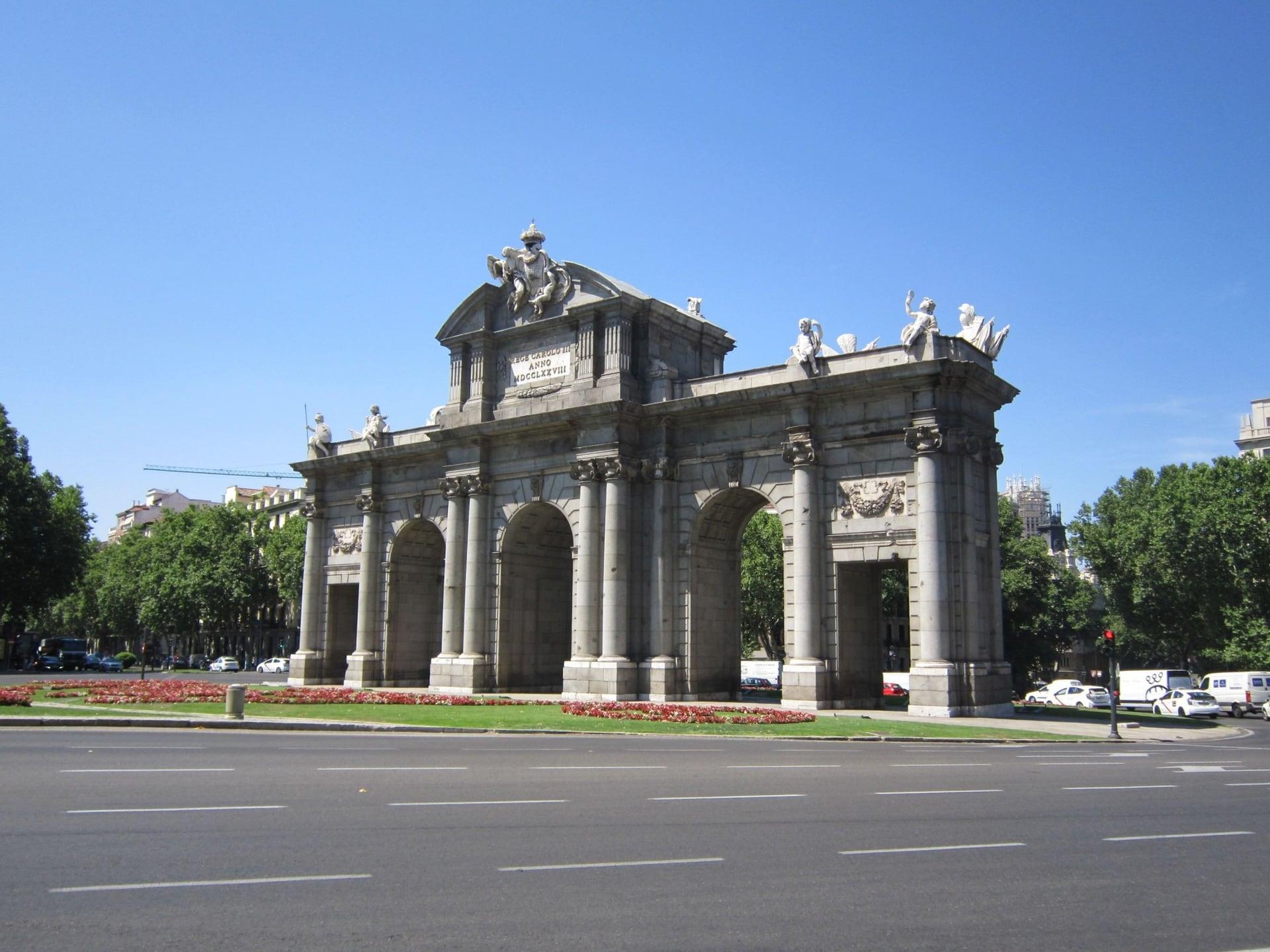
Retiro Park: How a King's Garden Became Madrid's
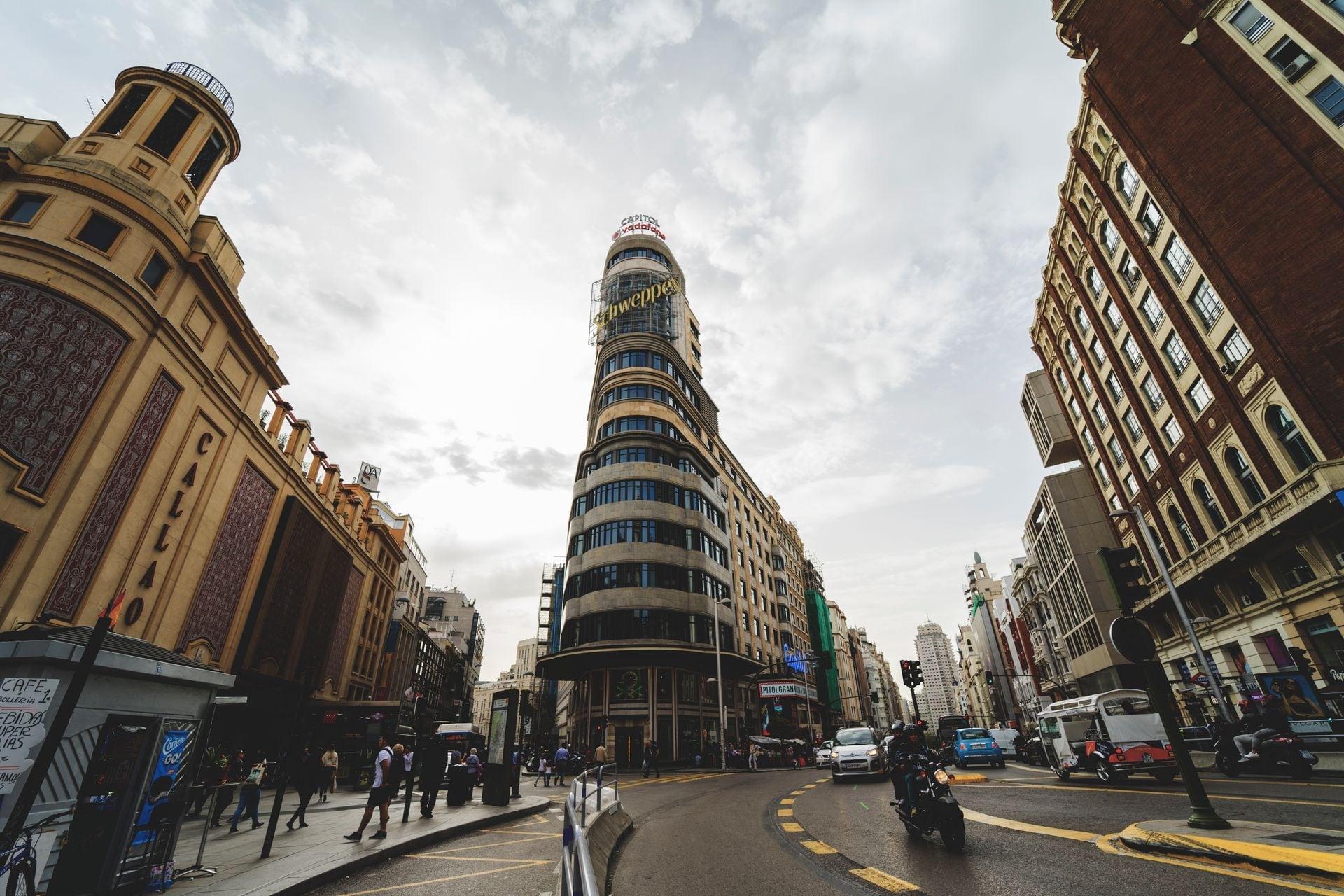
Edificio Carrión: The Curved Corner at Callao and the Sign That Stayed
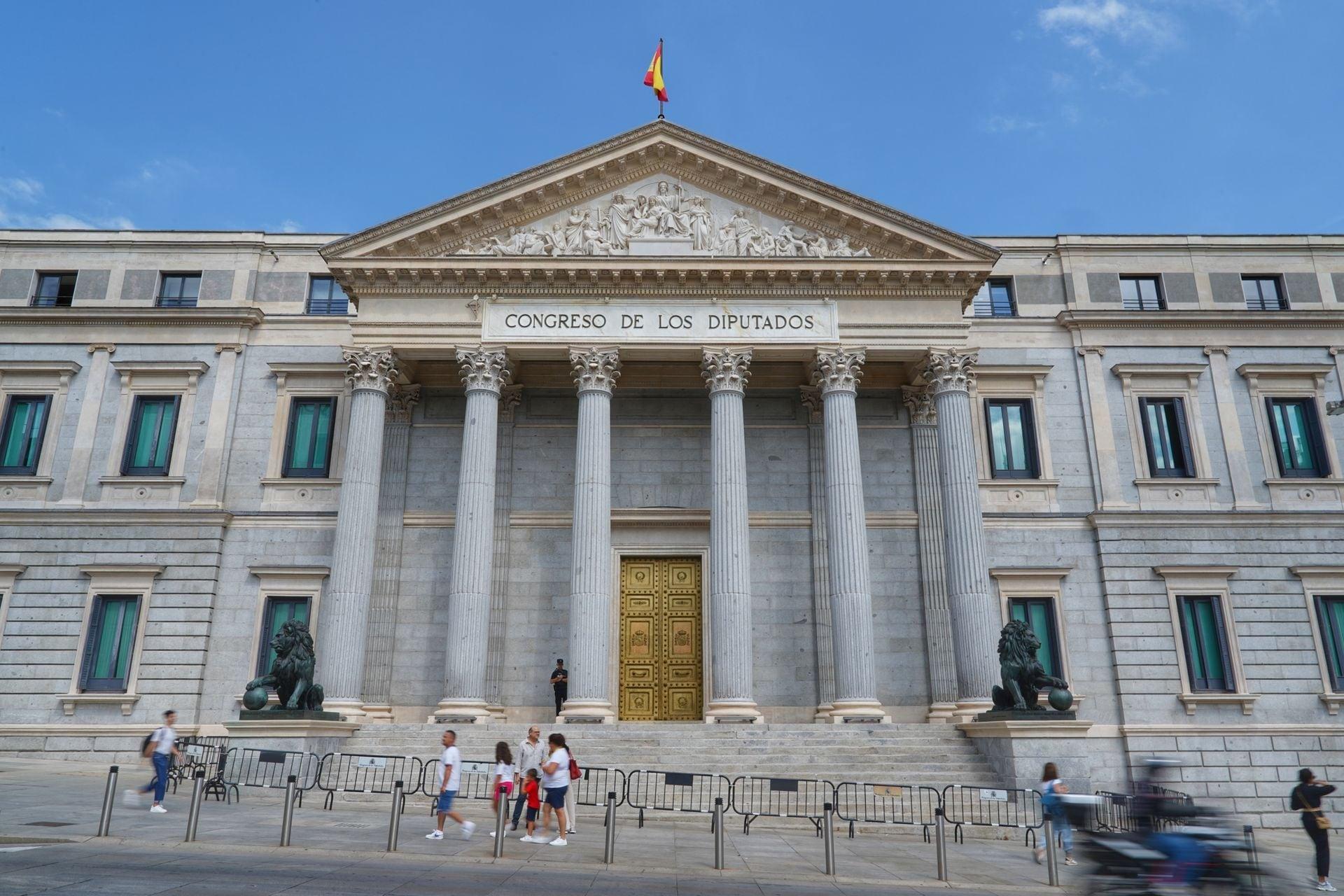
Plaza de las Cortes: Cervantes, His Lion and the Congreso Lions