Retiro Park: The King's Garden Given to Madrid
70 min · 2.8 km · easy
The Retiro is a king's garden the city won. In the 1630s Philip the Fourth's chief minister built him a palace and pleasure ground on the eastern edge of Madrid, the Buen Retiro, with a great lake and formal gardens. Napoleon's army later left it in ruins. Then in November 1868, after the revolution that sent Queen Isabel the Second into exile, the new government handed the estate to the city. People had long been let into much of it by permission. The decree turned that permission into a right, and Madrid set about furnishing a royal garden as its own.
The king's water
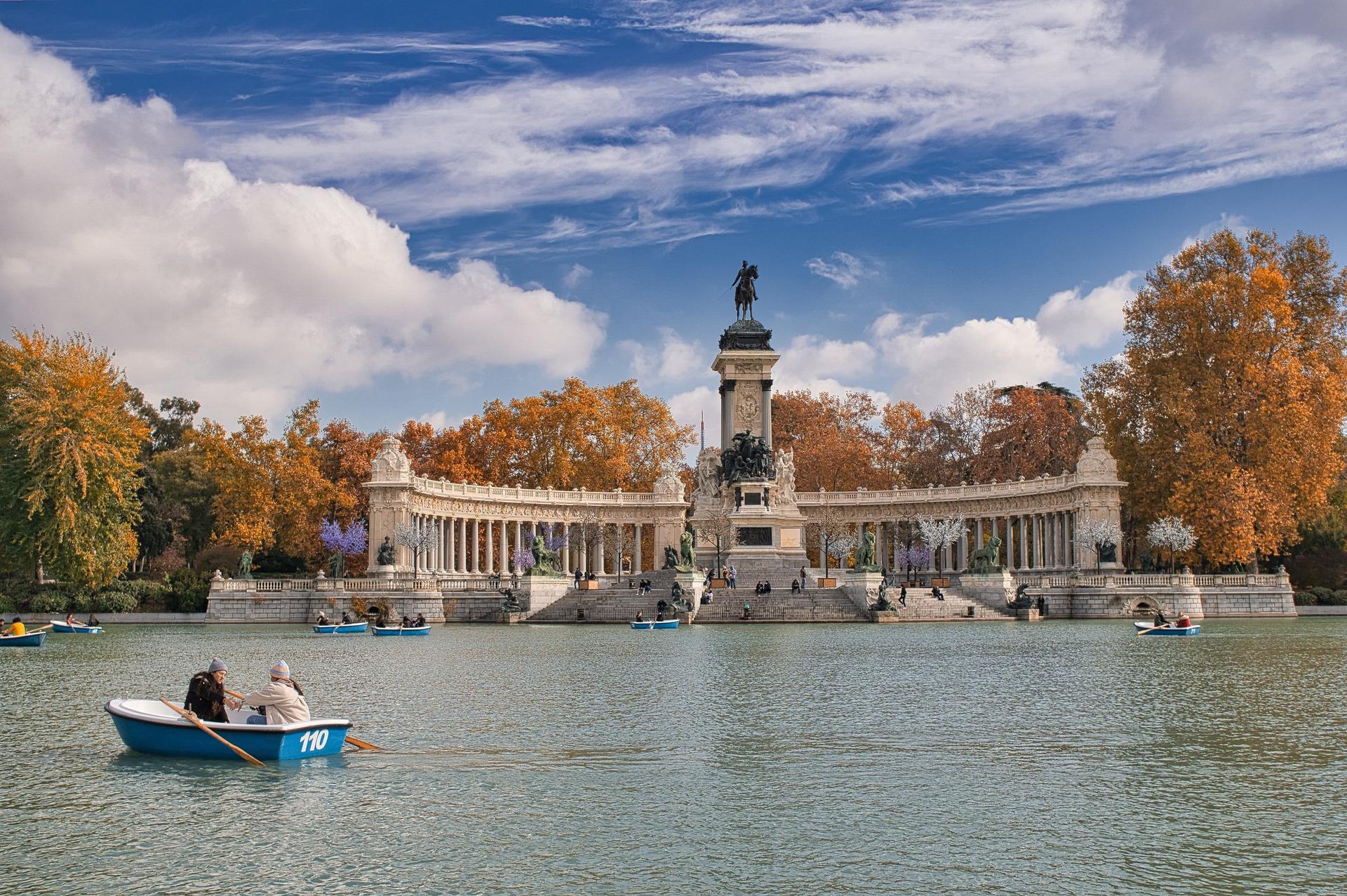
The oldest things in the Retiro are not buildings but water. The Estanque Grande, the great pond, was dug for Philip the Fourth in the 1630s, and it is surprisingly shallow, about 1.8 meters. It was a stage as much as a lake: there was once a small island with an open-air theater, and a channel ran from it to a chapel so the court could watch mock sea battles. Today about a hundred rowing boats float over carp so heavy that some six thousand had to be moved out when the lake was last emptied, in 2001.
The other survivor of the royal garden is the Estanque Ochavado, the eight-sided pond, each side curving outward like a petal. Madrid's great map of 1656 already shows a lobed pond here with a little pavilion in the middle. The pavilion has changed with every century: a small tower reached by a footbridge, then a Chinese kiosk hung with little bells that gave the pond its other name, the pond of the little bells, and finally the rockwork you see now. Of the palace itself, only two buildings still stand, outside the railings: the Casón and the Salón de Reinos, both now part of the Prado.
War, and a French garden rebuilt
Hear a stop from this walk
Bosque del Recuerdo
In the Napoleonic wars the French army camped in the Retiro, cut its trees for firewood and left the palace in ruins. The formal Parterre, laid out in the French manner under Philip the Fifth, the first Bourbon king, was wrecked and replanted. In it stands the Ahuehuete, a Montezuma cypress from Mexico with several great limbs rising from one swollen base. Its age is disputed: the city's tourism office dates it to the 1630s, while the city's own park guide thinks it was probably planted in the 1800s. The story of French soldiers hiding cannon in it is, even by the tourism office's account, a legend.
What the decree allowed
The 1868 decree did more than open the gates. It gave the city the right to build concert halls, libraries and gardens for new plants in the park, and Madrid used that permission to the letter.
In 1879 the city moved the Galápagos Fountain, a public drinking fountain of 1832 made in honor of the infant Isabel, out of a downtown square and into its new park. In 1883 Ricardo Velázquez Bosco built the brick and tile Palacio de Velázquez for a national exhibition of mining, ceramics and glass, its walls an advertisement for exactly those materials. In 1887 he built the Palacio de Cristal, an iron and glass greenhouse put up in five months for the General Exhibition of the Philippines. That exhibition also displayed people from the islands in the park, and the Museo Reina Sofía, which runs the palace today, calls it the first human zoo in Spain.
Then came the monuments. Ricardo Bellver's Fallen Angel, a bronze Lucifer thrown out of heaven, was inaugurated on its fountain in 1885. The great colonnade to Alfonso the Twelfth, paid for by public subscription and designed by José Grases Riera, was opened across the lake in 1922. In 1915 the city's own head gardener, Cecilio Rodríguez, laid out the Rosaleda on the model of the Bagatelle rose garden in Paris, on ground that had once been a pond where Madrid skated in winter.
Even the palace's discarded kings ended up here. Statues of Spanish rulers carved in the 1740s to stand on the Royal Palace's cornice were taken down under Carlos the Third, stored for decades, and in 1847 thirteen of them were set along the Paseo de la Argentina. A fourteenth plinth, added empty in 1989, has carried Juana the First of Castile since 2021.
The city's own memorial
The last stop is the most recent layer. After the train bombings of 11 March 2004, several of them a few hundred meters away at Atocha, the city planted the Bosque del Recuerdo, a mound of cypresses and olives ringed by water, in 2005. A king's garden ends with the city's own grief, planted in trees.
Walking it
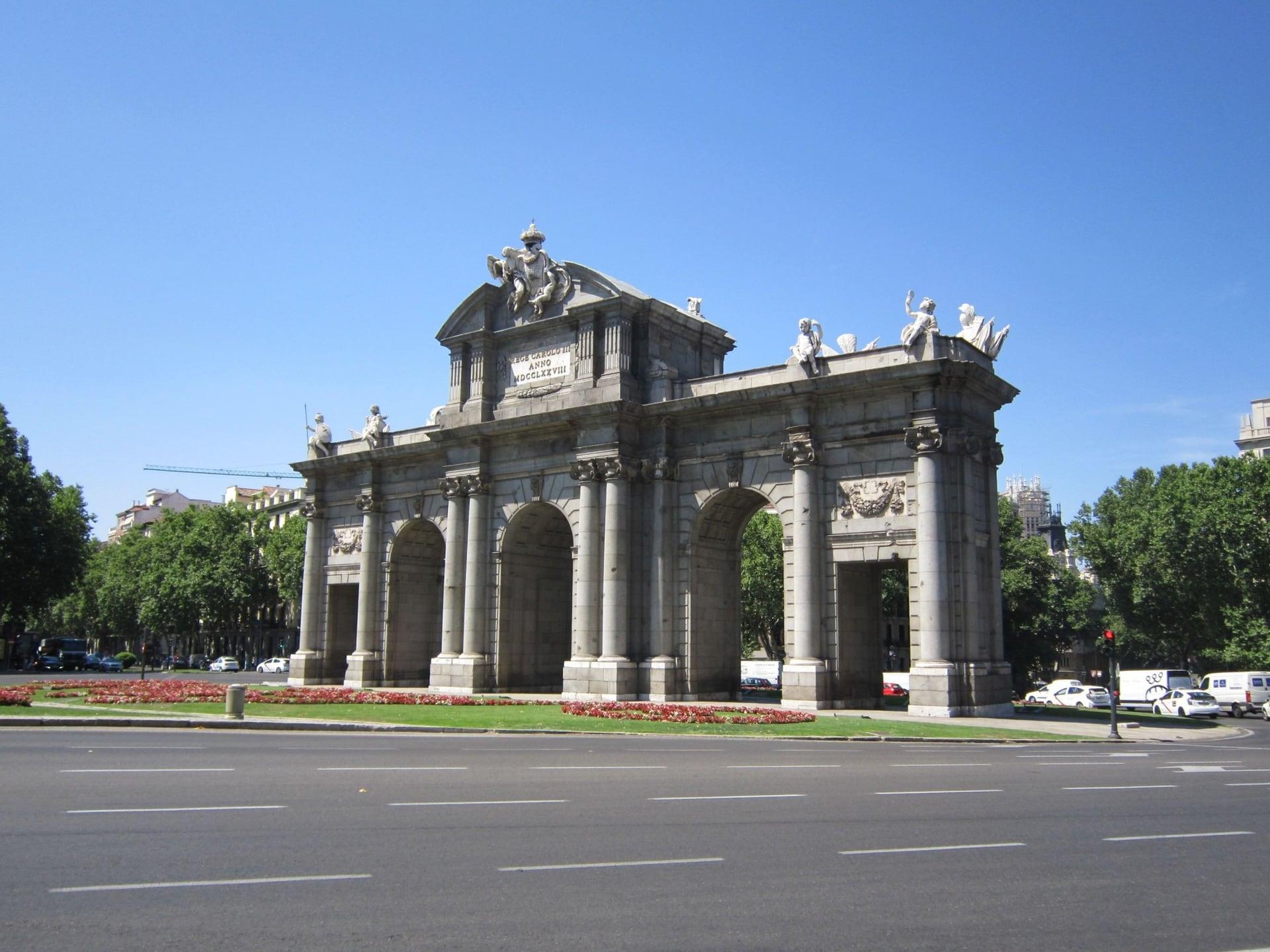
The walk runs eleven stops over about 2.8 kilometers and takes about seventy minutes, from the Puerta de Alcalá, Sabatini's five-arched gate of 1778, to the memorial grove near the Prado and Atocha exits. Paths are gentle, with steps in one place. The park closes on red weather alerts for wind or heat, so check before you set out. With no group to keep up with, you can sit by the lake as long as you like or skip the rose garden when its gate is shut.
Start at stop 1 of Retiro Park: The King's Garden Given to Madrid. See all routes on the Madrid page.
Sources
- Gaceta de Madrid no. 312, 7 November 1868: the decree ceding the Buen Retiro to the city as the Park of Madrid, for the recreation of its residents.
- esMadrid, Parque del Retiro: 125 hectares, the Palacio de Cristal built for the 1887 Philippines Exhibition, the Alfonso the Twelfth monument by José Grases Riera.
- Museo Reina Sofía, architectural heritage: the Palacio de Velázquez and Palacio de Cristal as the museum's galleries in the Retiro.
Ready to experience it?
Retiro Park: The King's Garden Given to Madrid
70 min · 2.8 km · easy
More from Madrid
Explore more at your own pace.
Barrio de las Letras: Madrid's Writers' Quarter in Three Layers
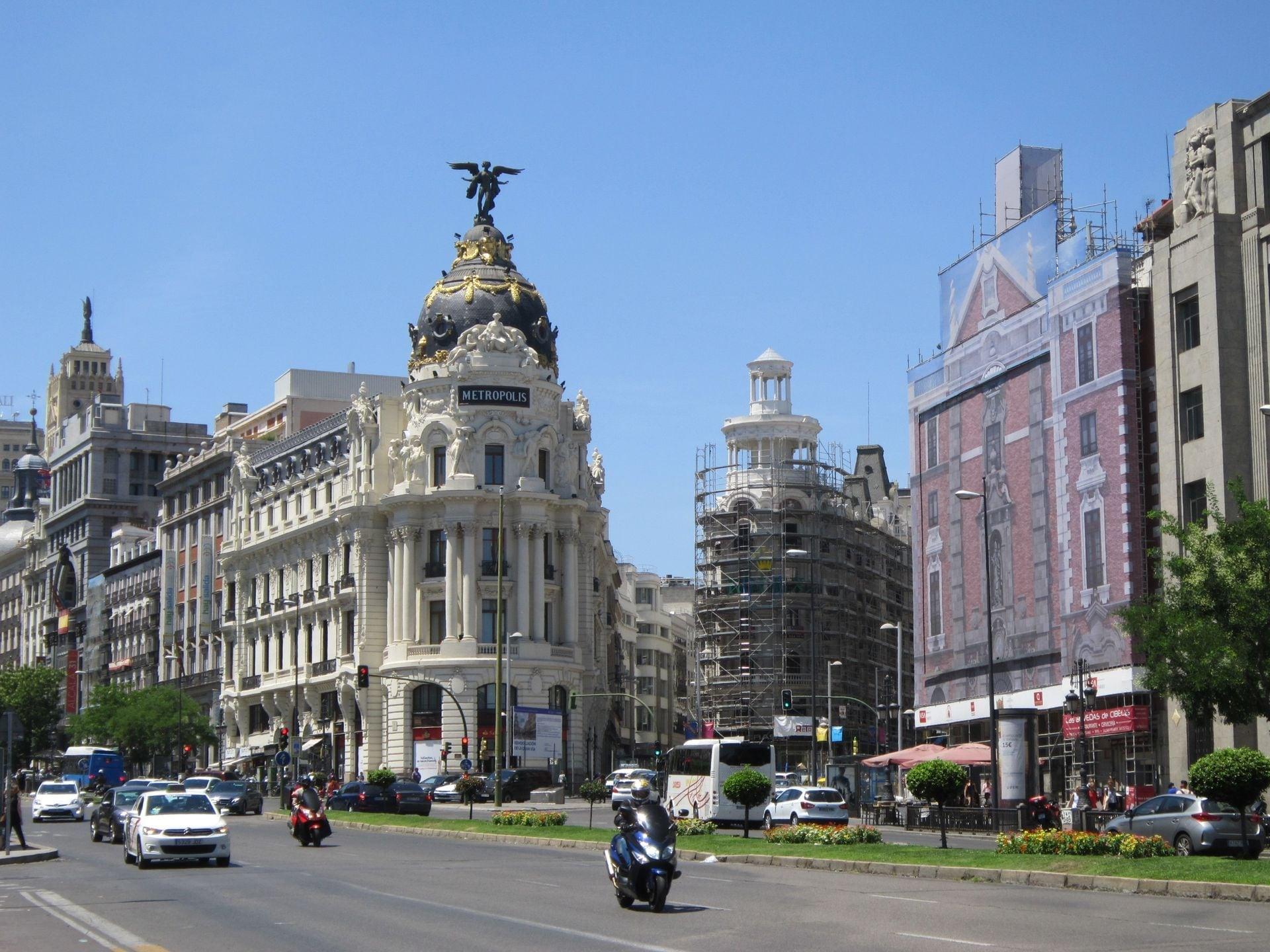
Gran Vía: How Madrid's Great Way Grew Wider and Taller as It Was Cut
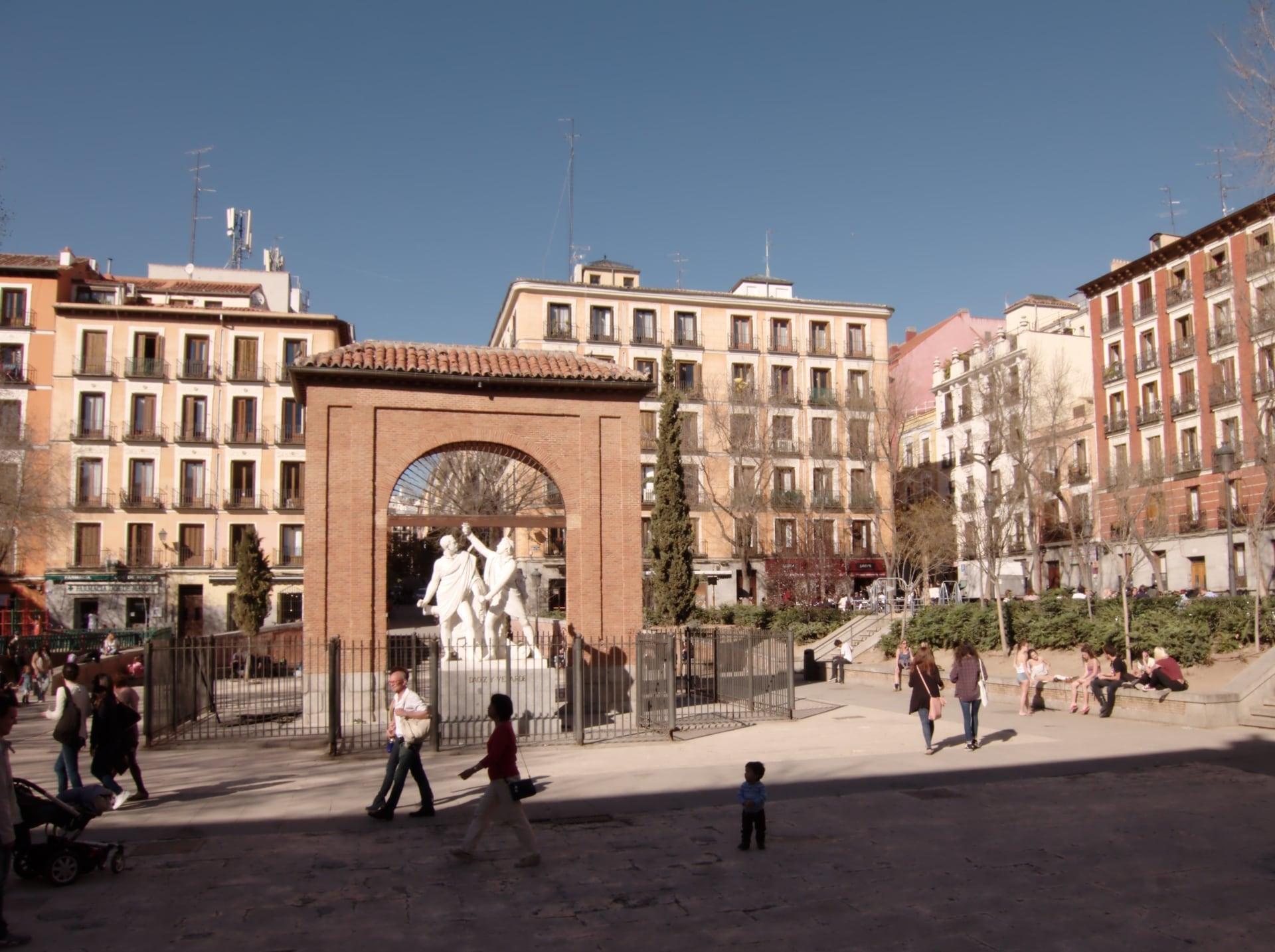
Malasaña and Chueca: Madrid's Old Northern Edge, Taken Back by the City
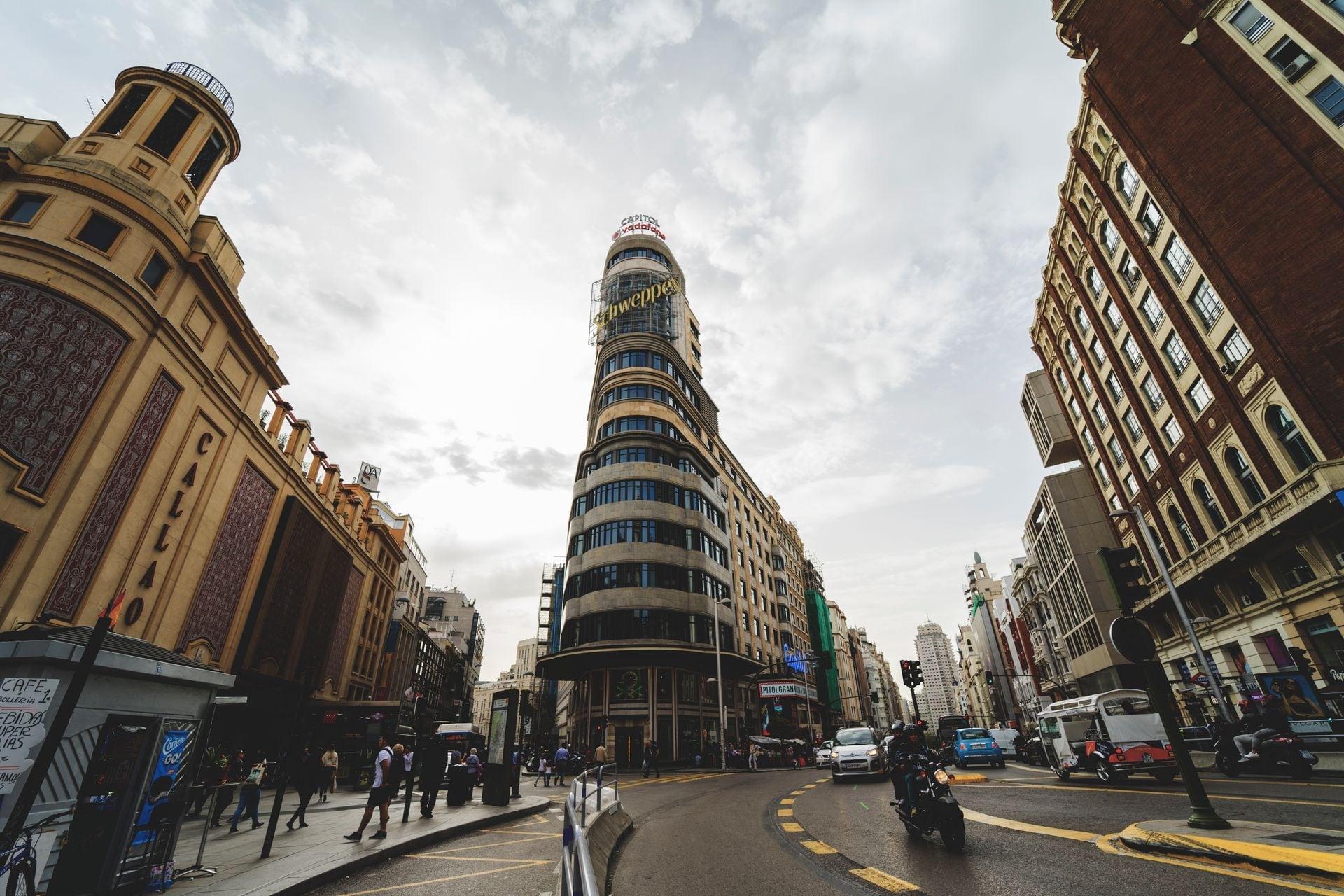
Edificio Carrión: The Curved Corner at Callao and the Sign That Stayed
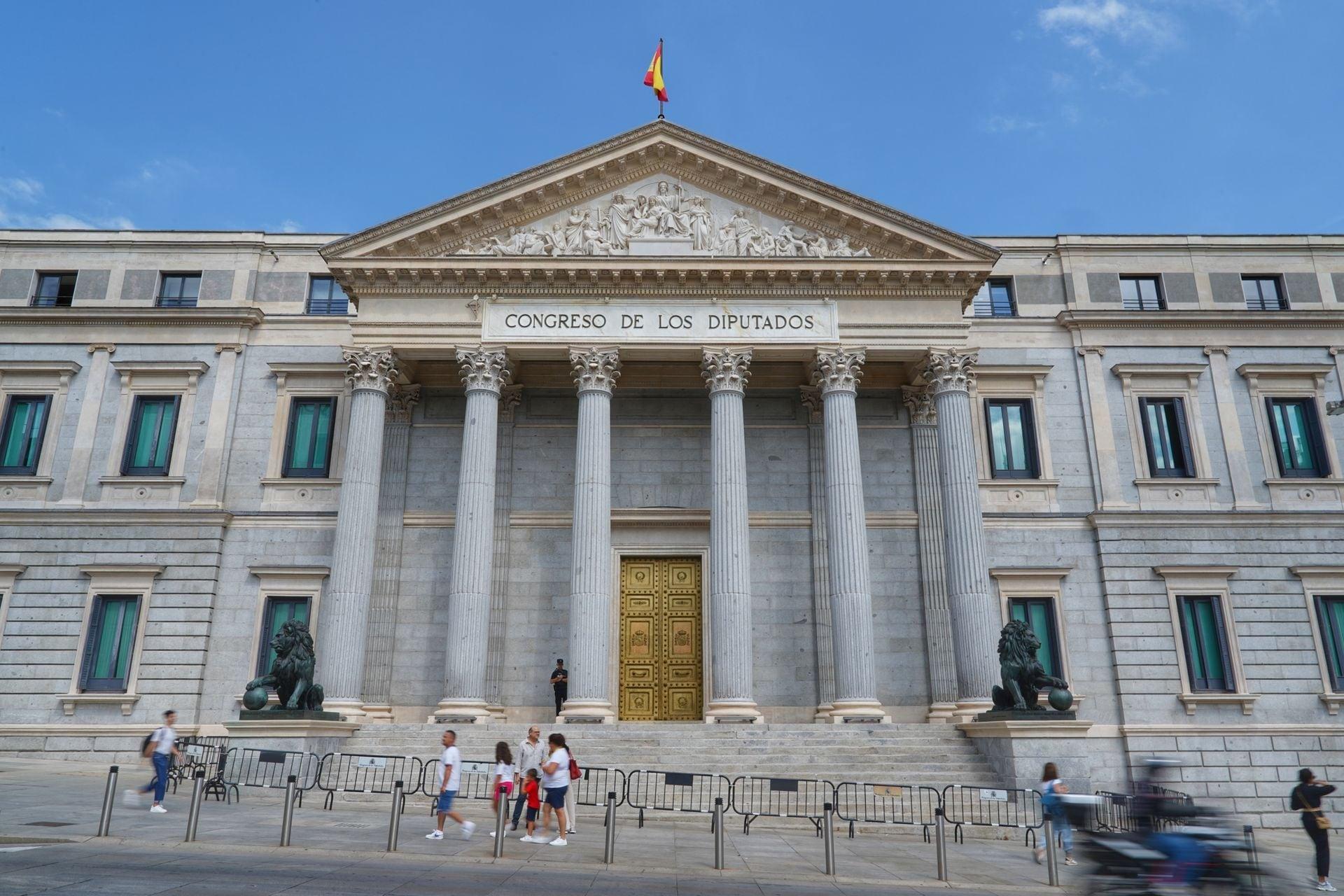
Plaza de las Cortes: Cervantes, His Lion and the Congreso Lions