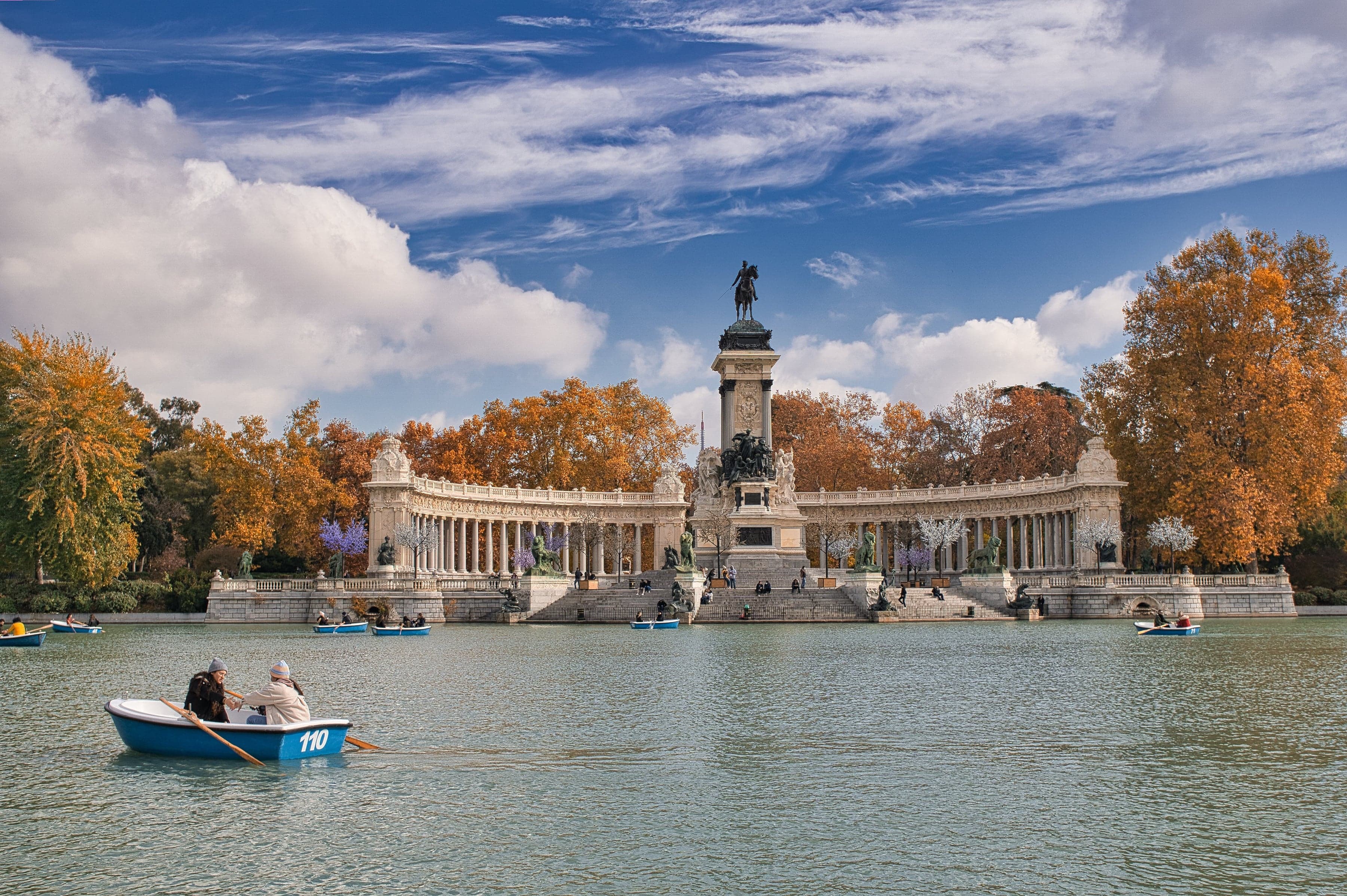
Walk the Retiro from the Puerta de Alcalá past an avenue of stone kings, a Mexican cypress and Philip IV's lake to the 1880s exhibition palaces, the rose garden, the Fallen Angel and the 11 March memorial grove.
Start · Puerta de Alcalá
DirectionsStops
- The Alcalá Gatewhere the city meets the park
- 1
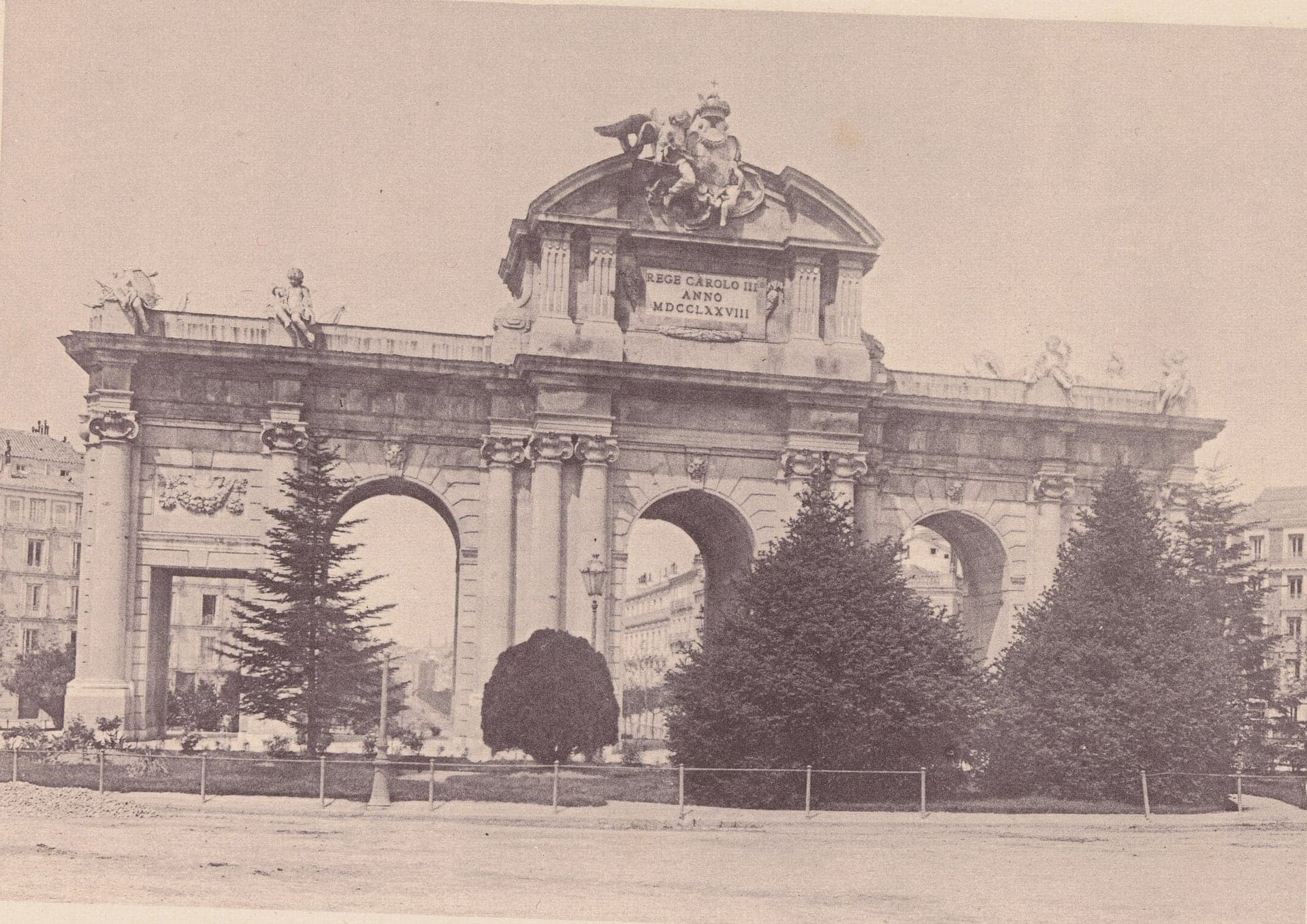
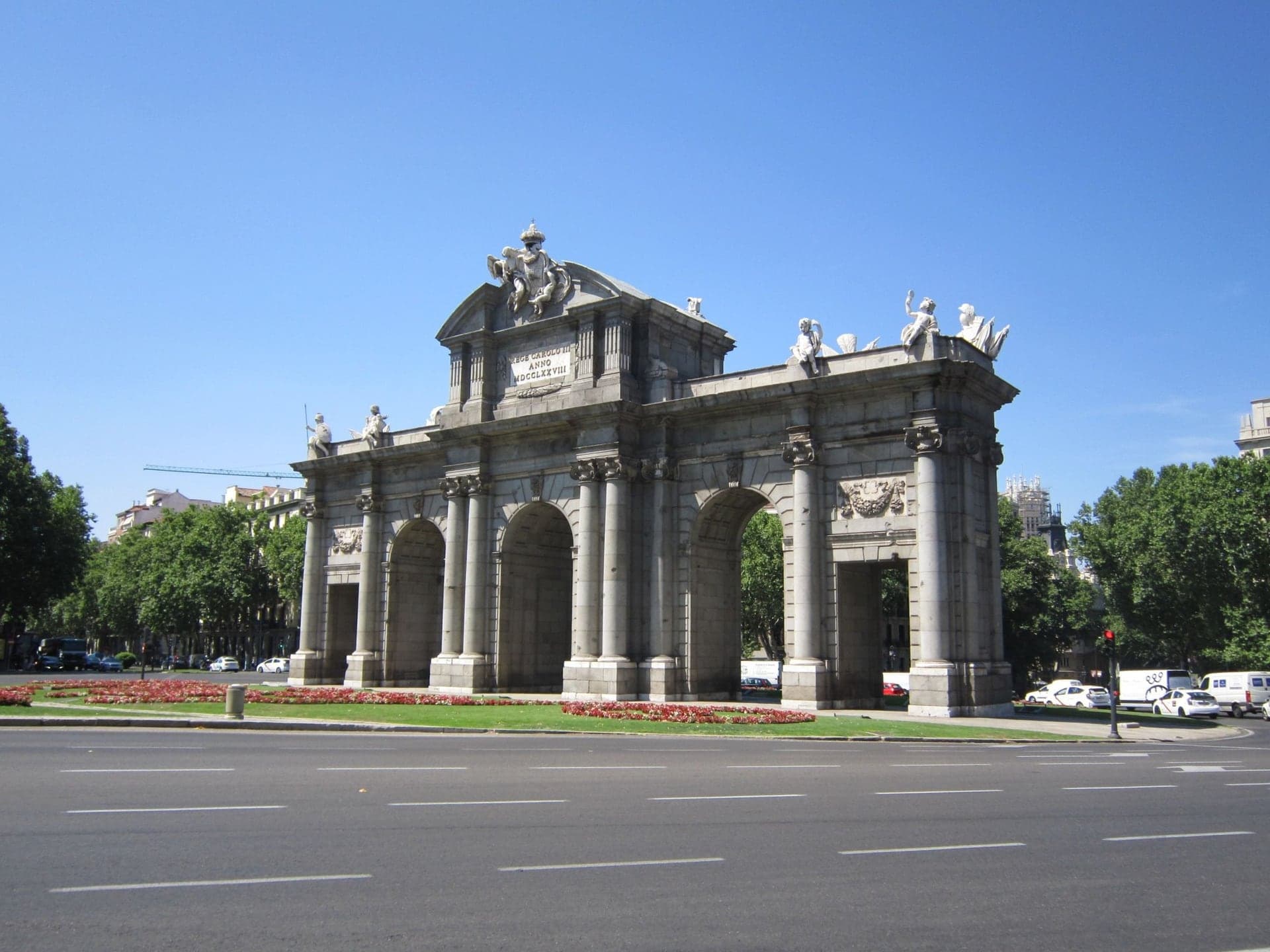
Puerta de Alcalá
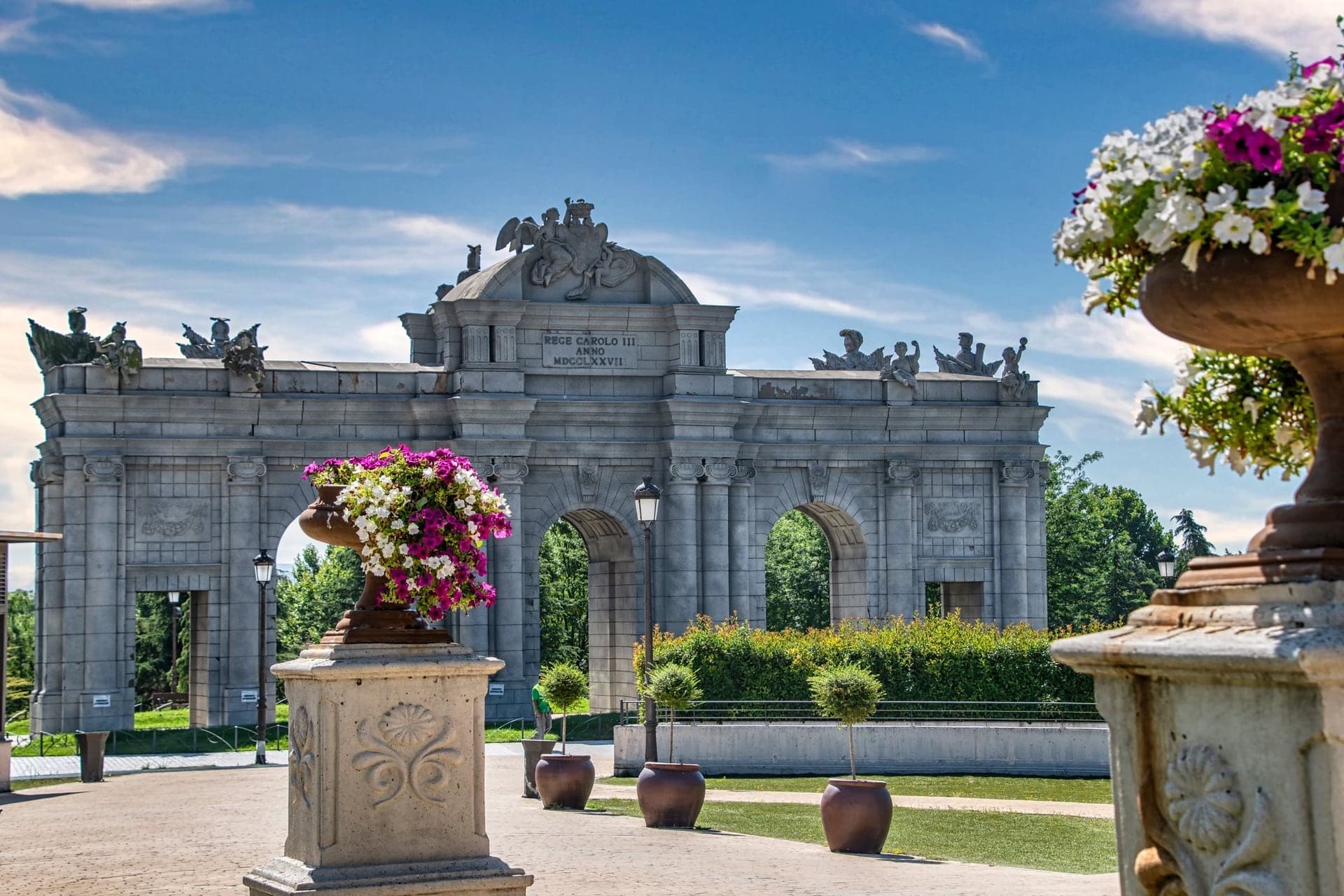
Carlos III's granite gate of 1778 has five openings, and its showy face still greets arriving travelers.
- 2
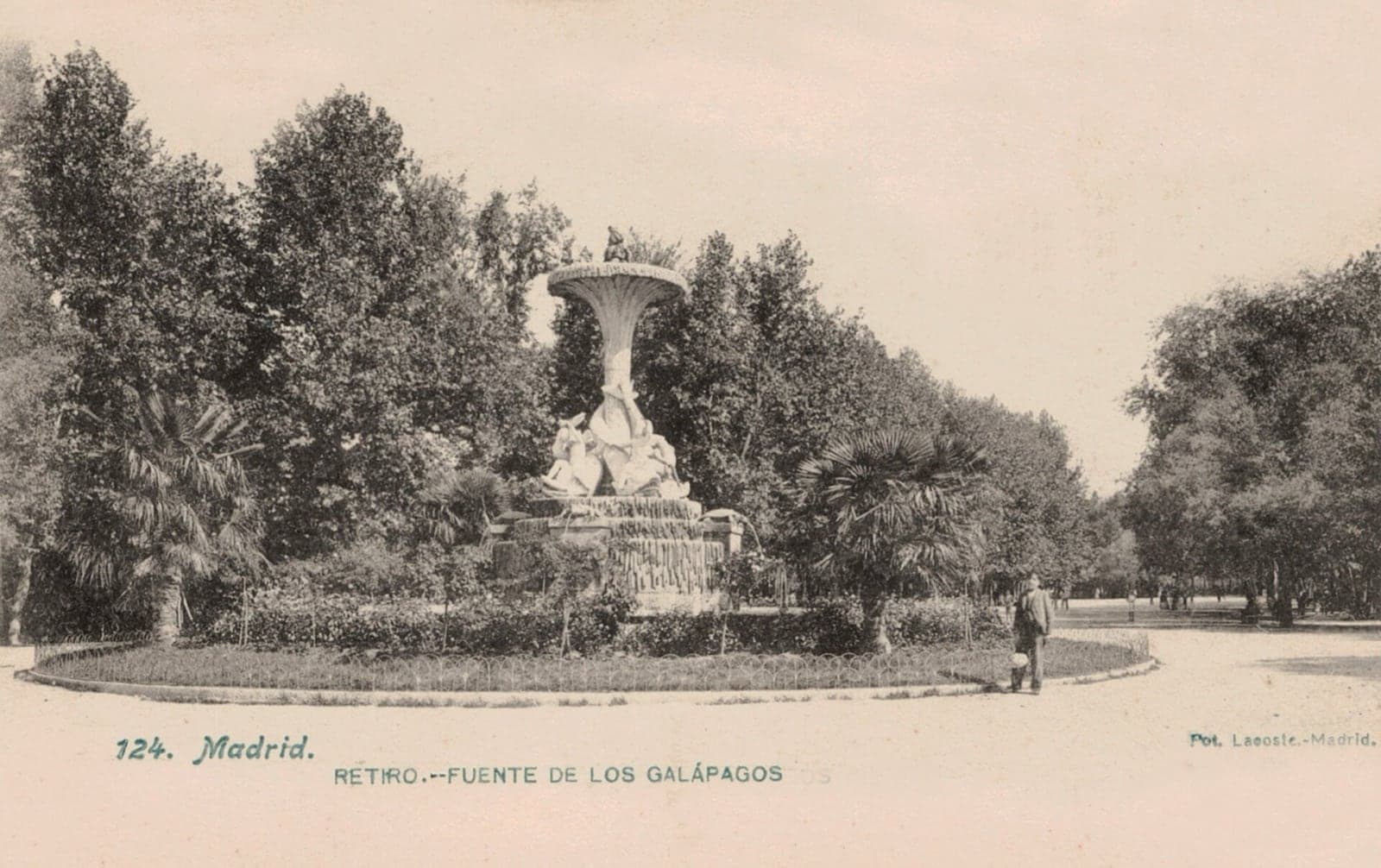
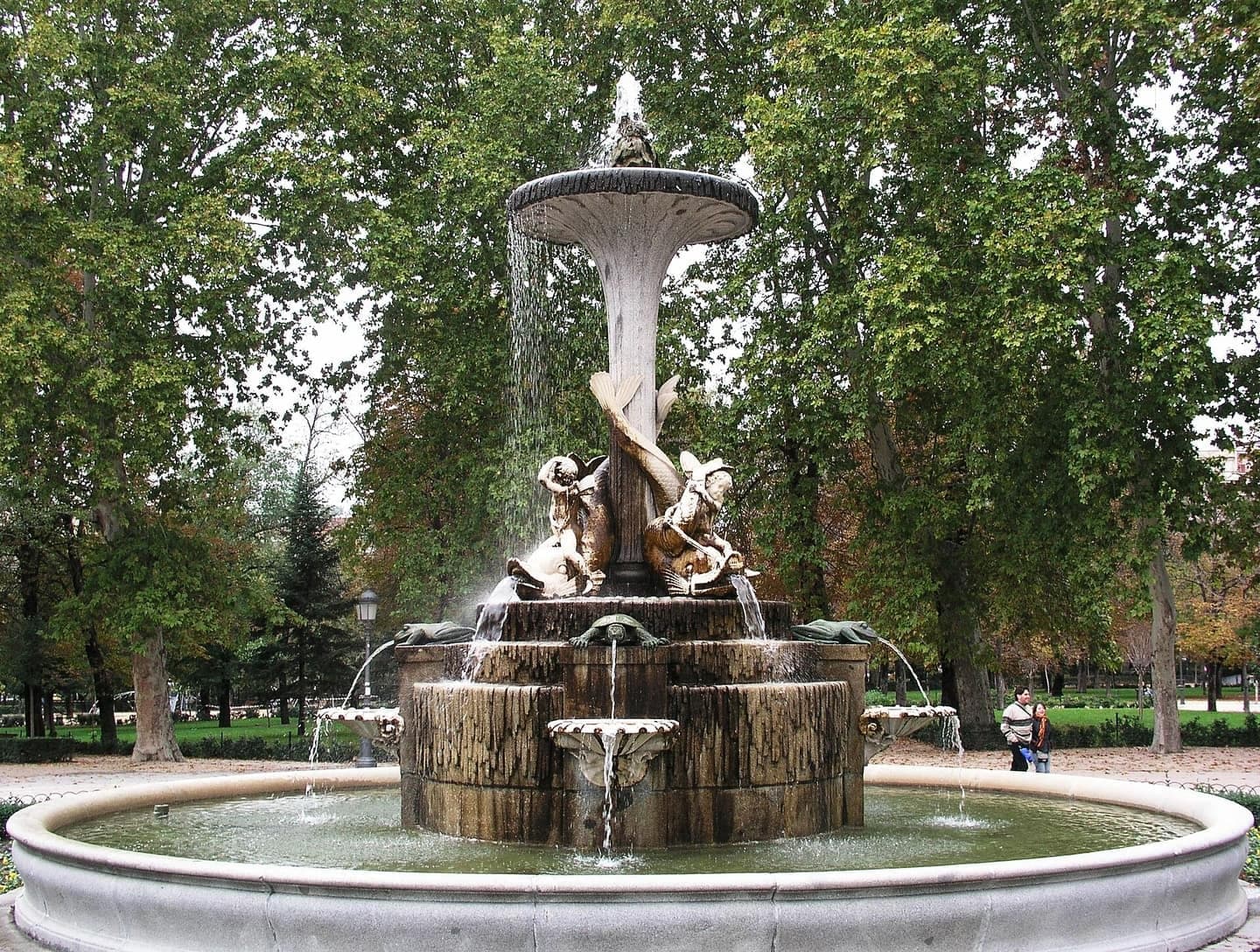
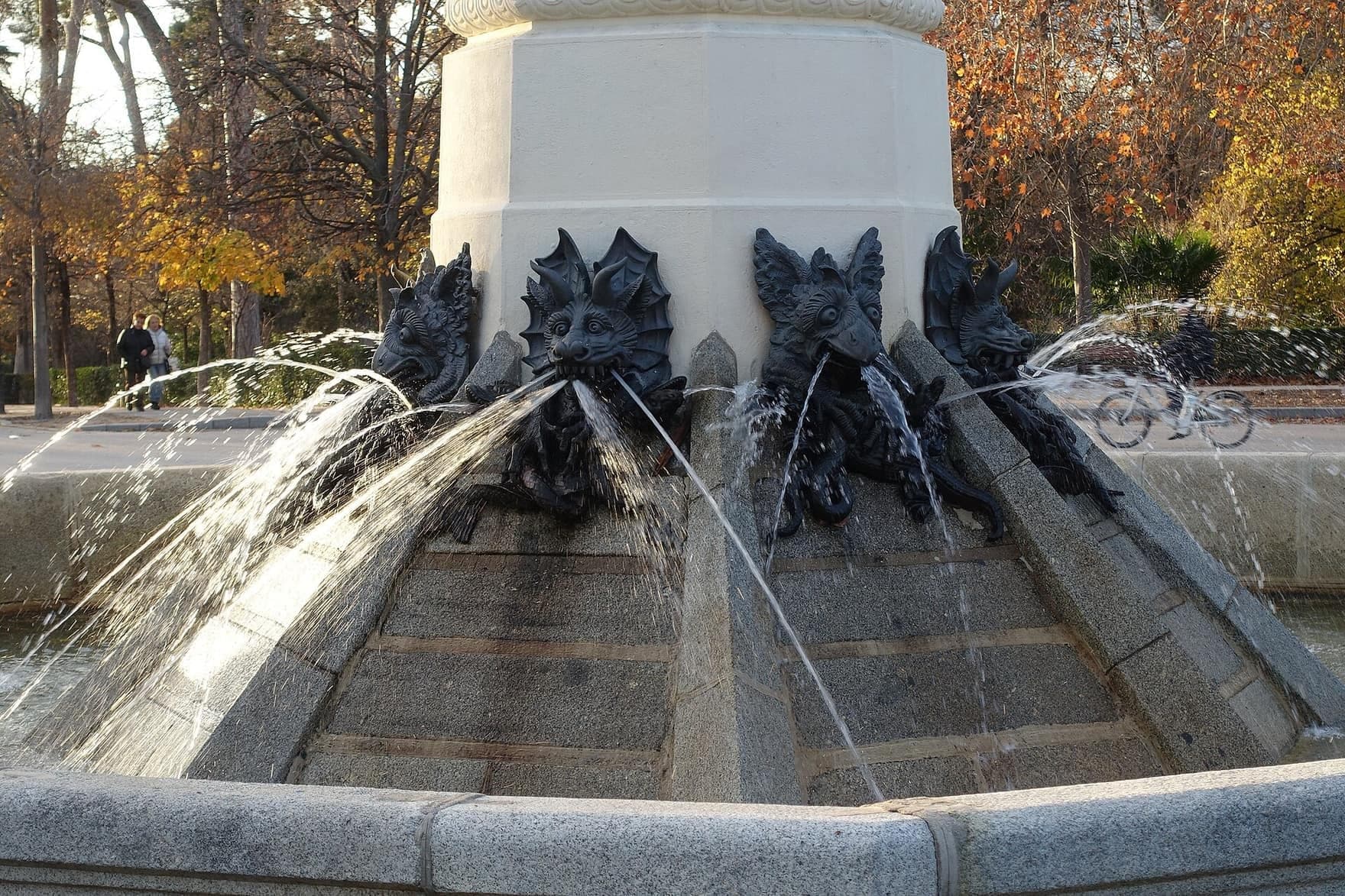
Galápagos Fountain
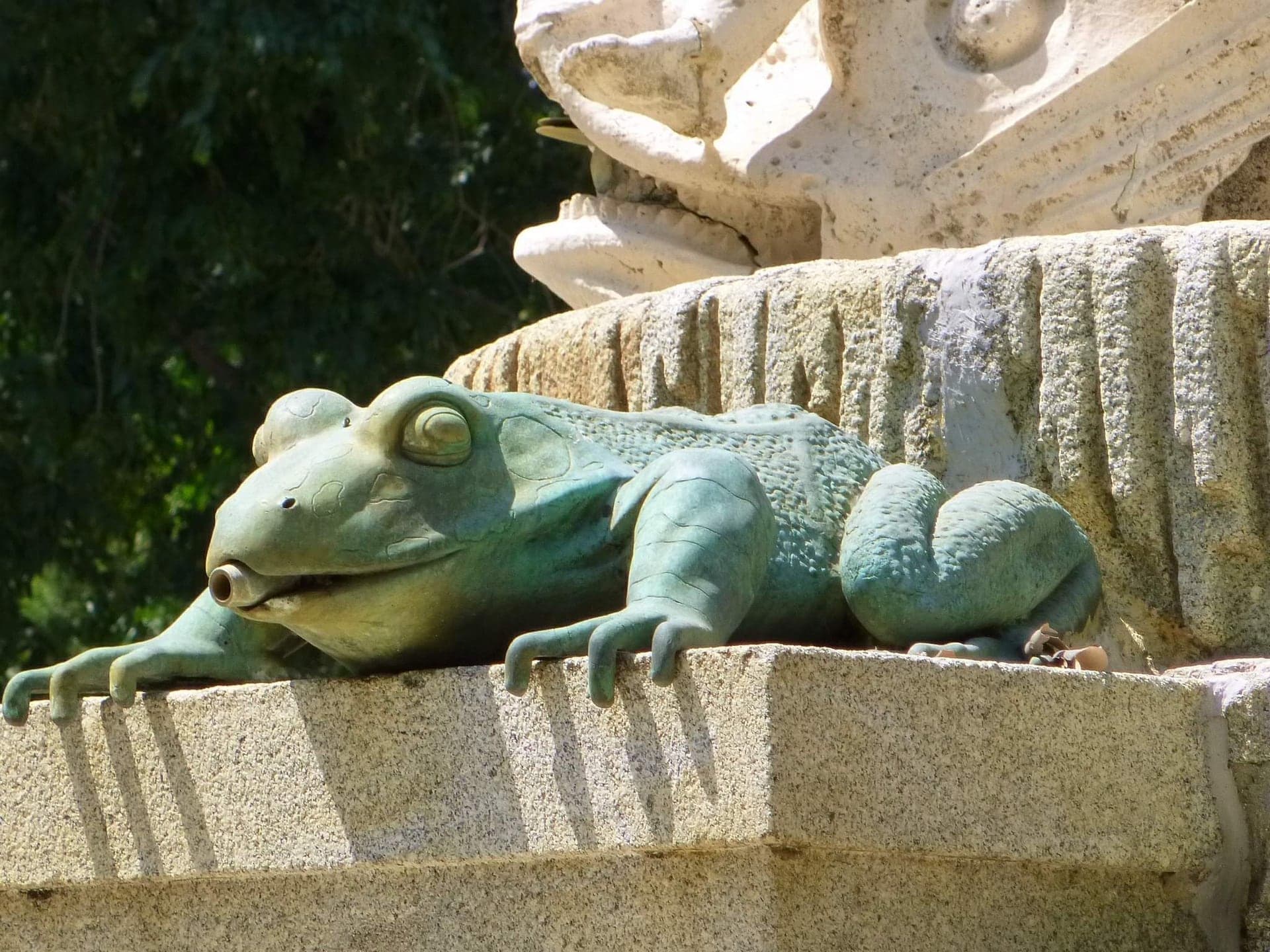
A city drinking fountain of 1832 spouts through frogs and turtles, moved into the new park in 1879.
- The King's Gardenwhat is left of the Buen Retiro
- 3
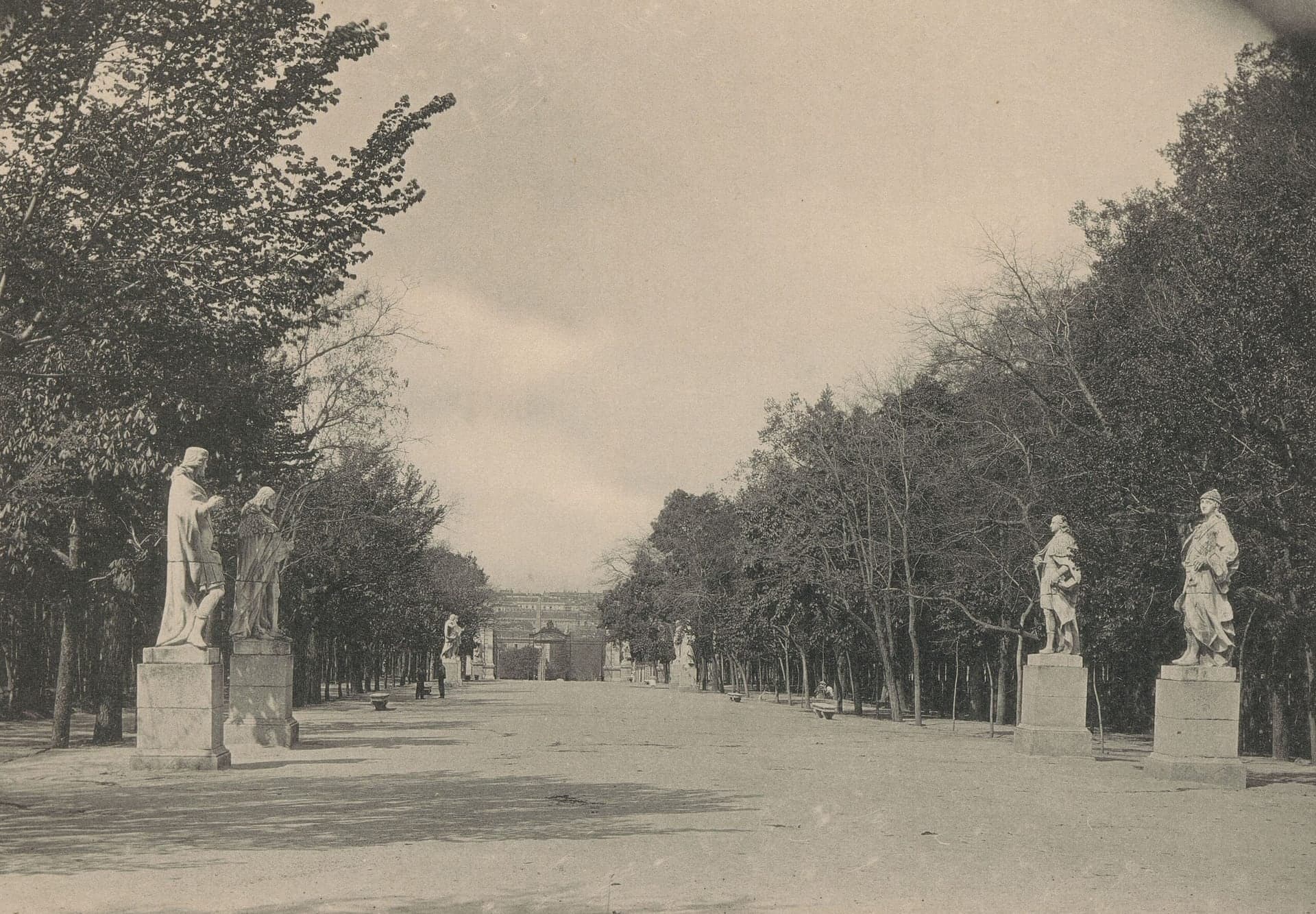
Paseo de la Argentina: Kings Off the Palace Roof
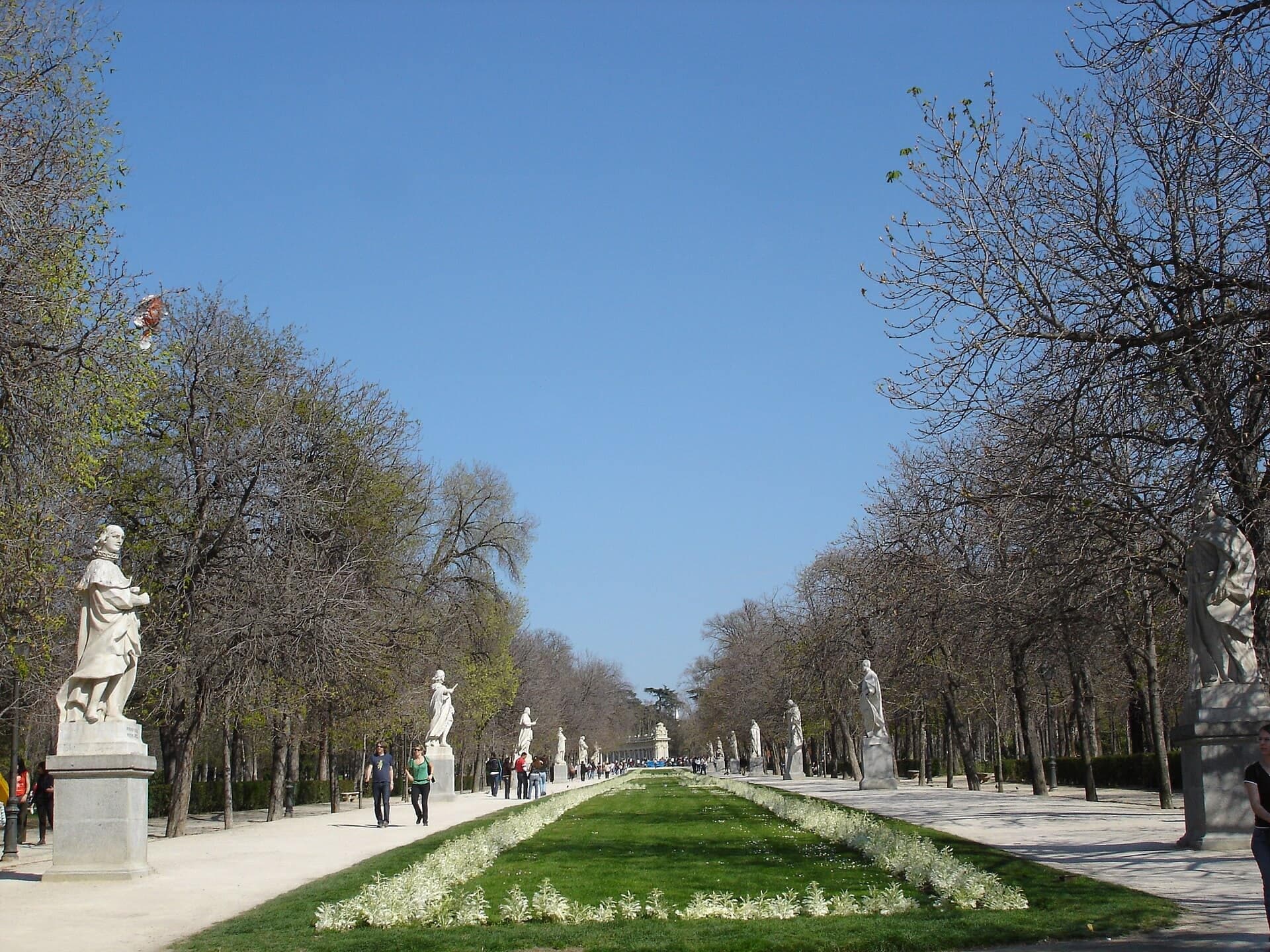
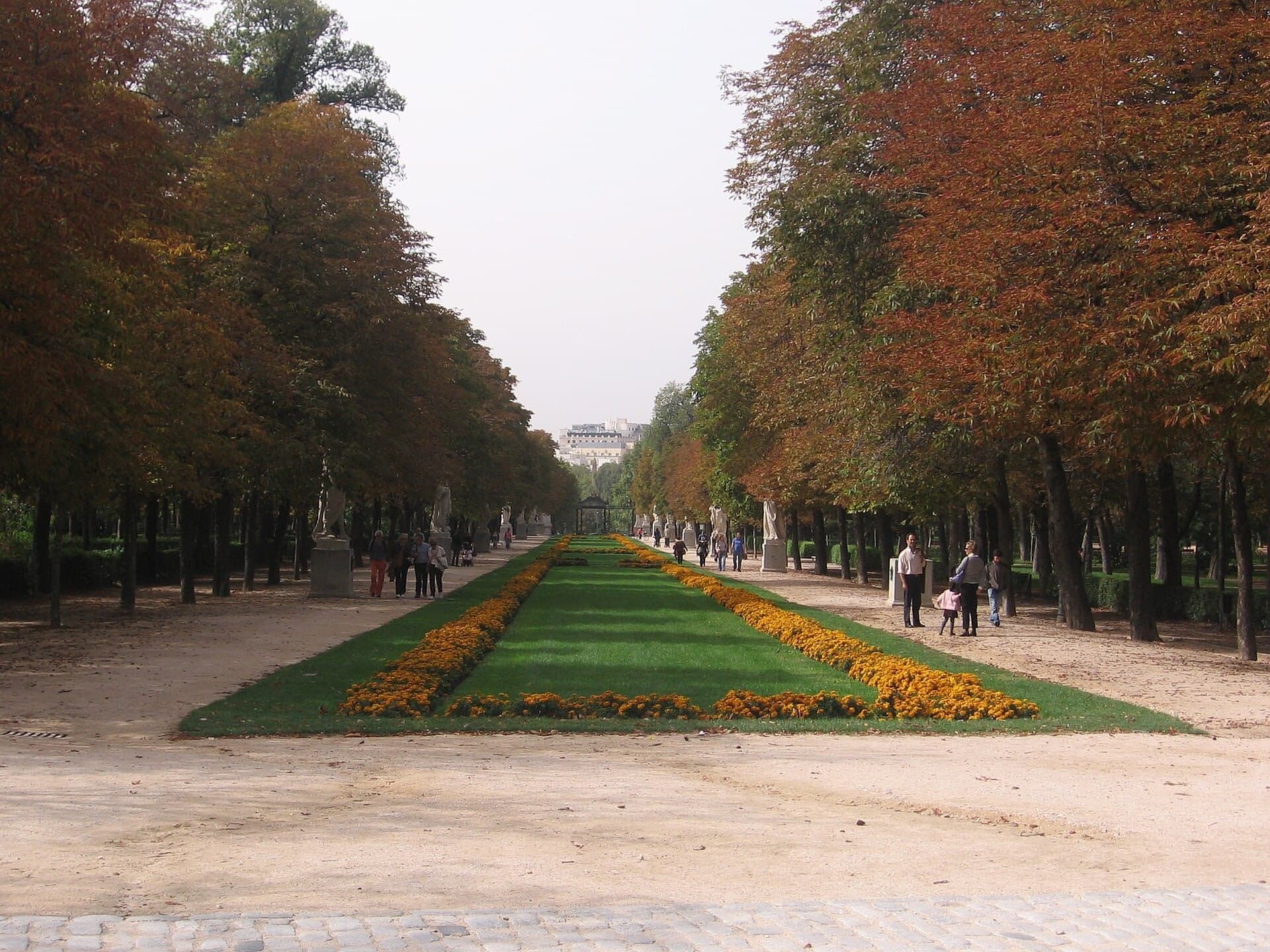
Stone kings carved for the Royal Palace's roof now line this avenue, with one queen added in 2021.
- 4
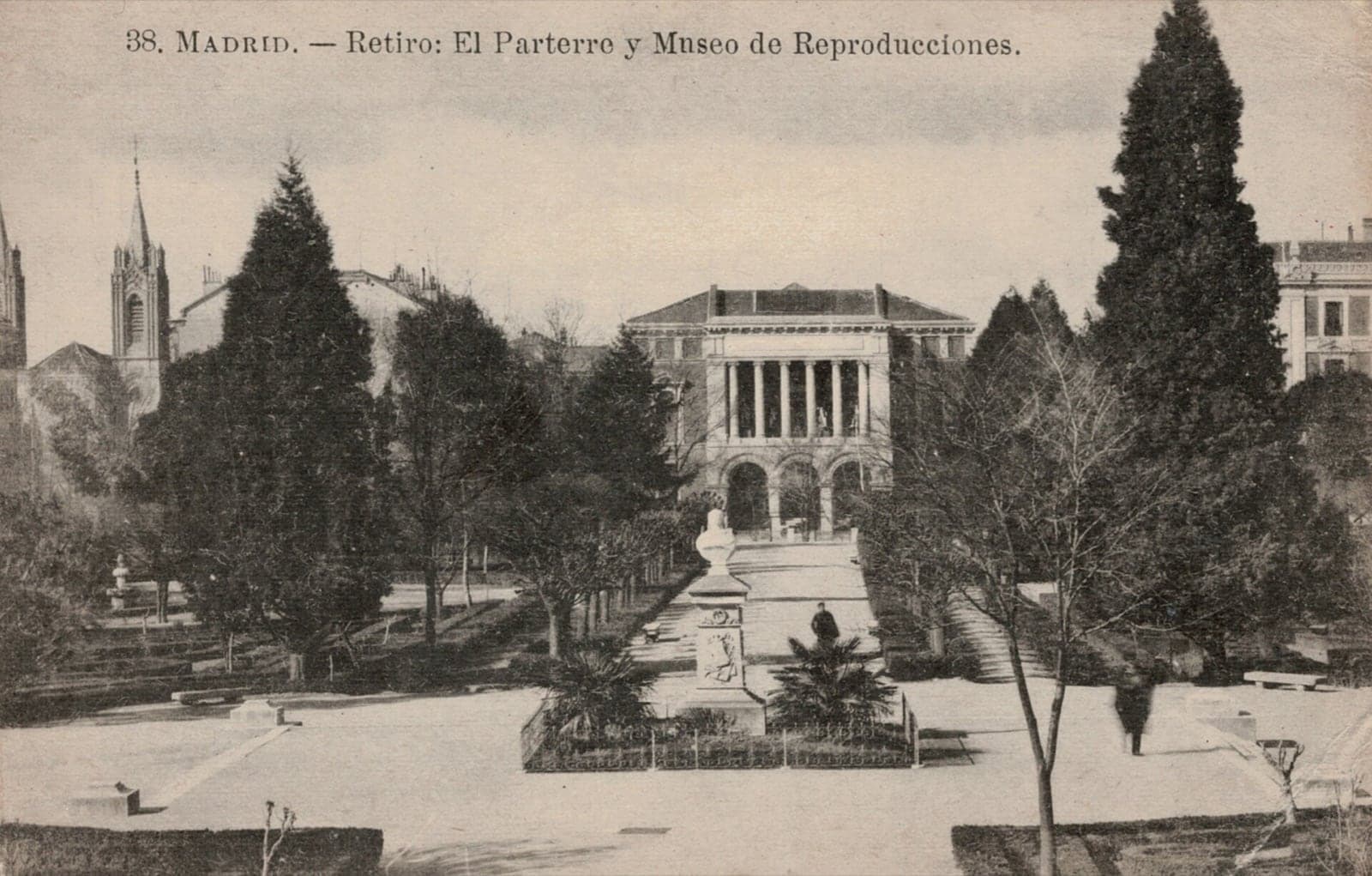
Parterre and the Ahuehuete
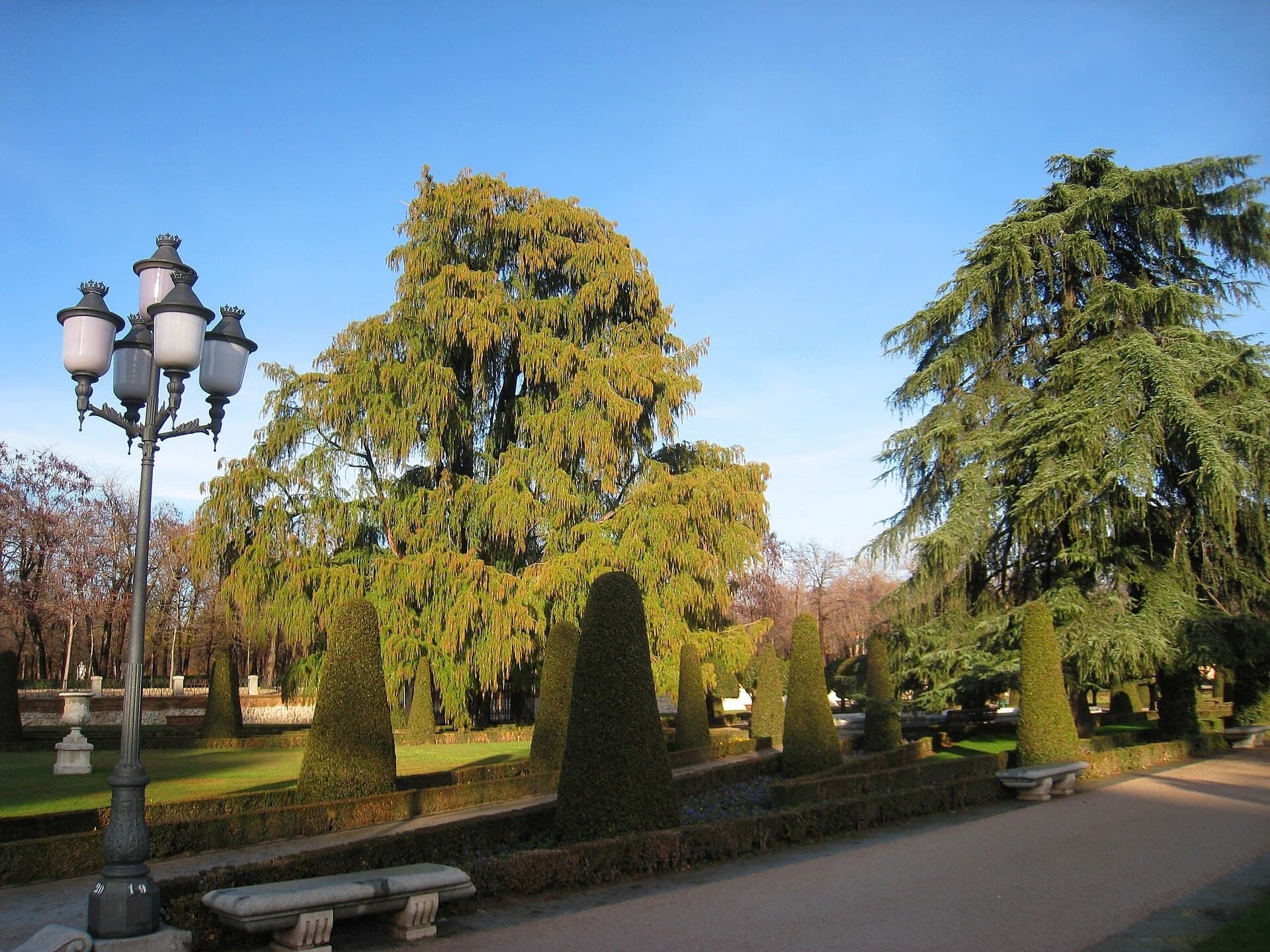
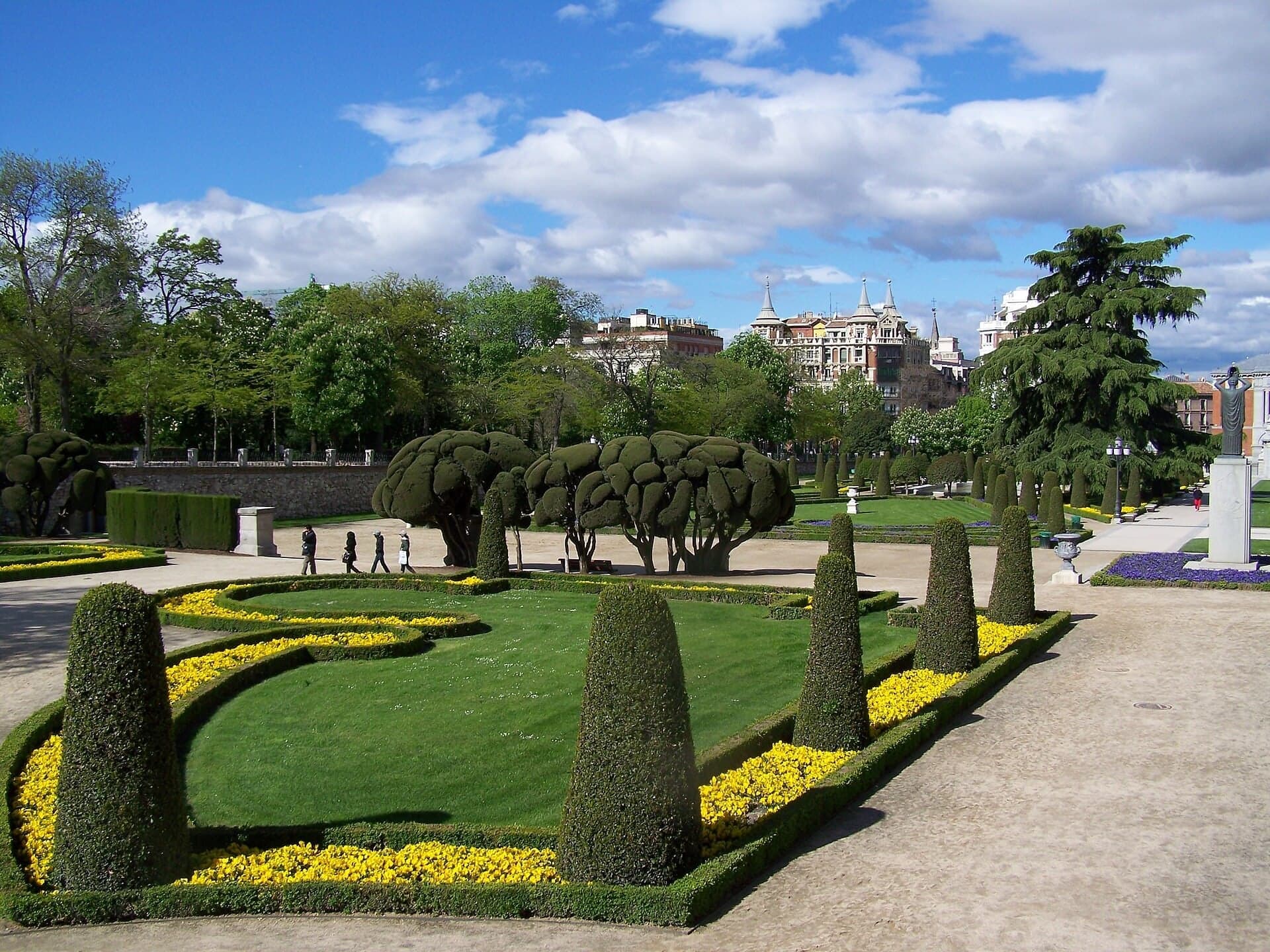
A Mexican cypress with candelabra limbs grows in the French garden, and nobody agrees on its age.
- 5
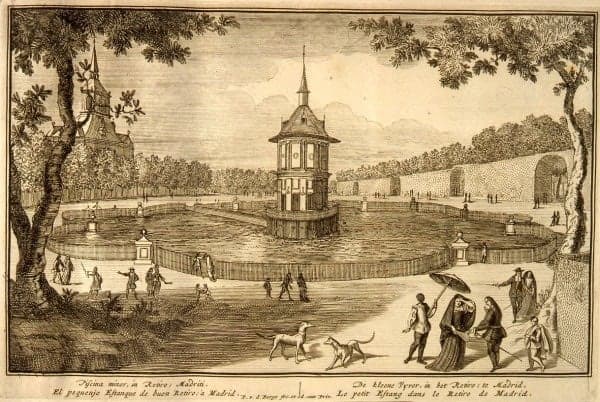
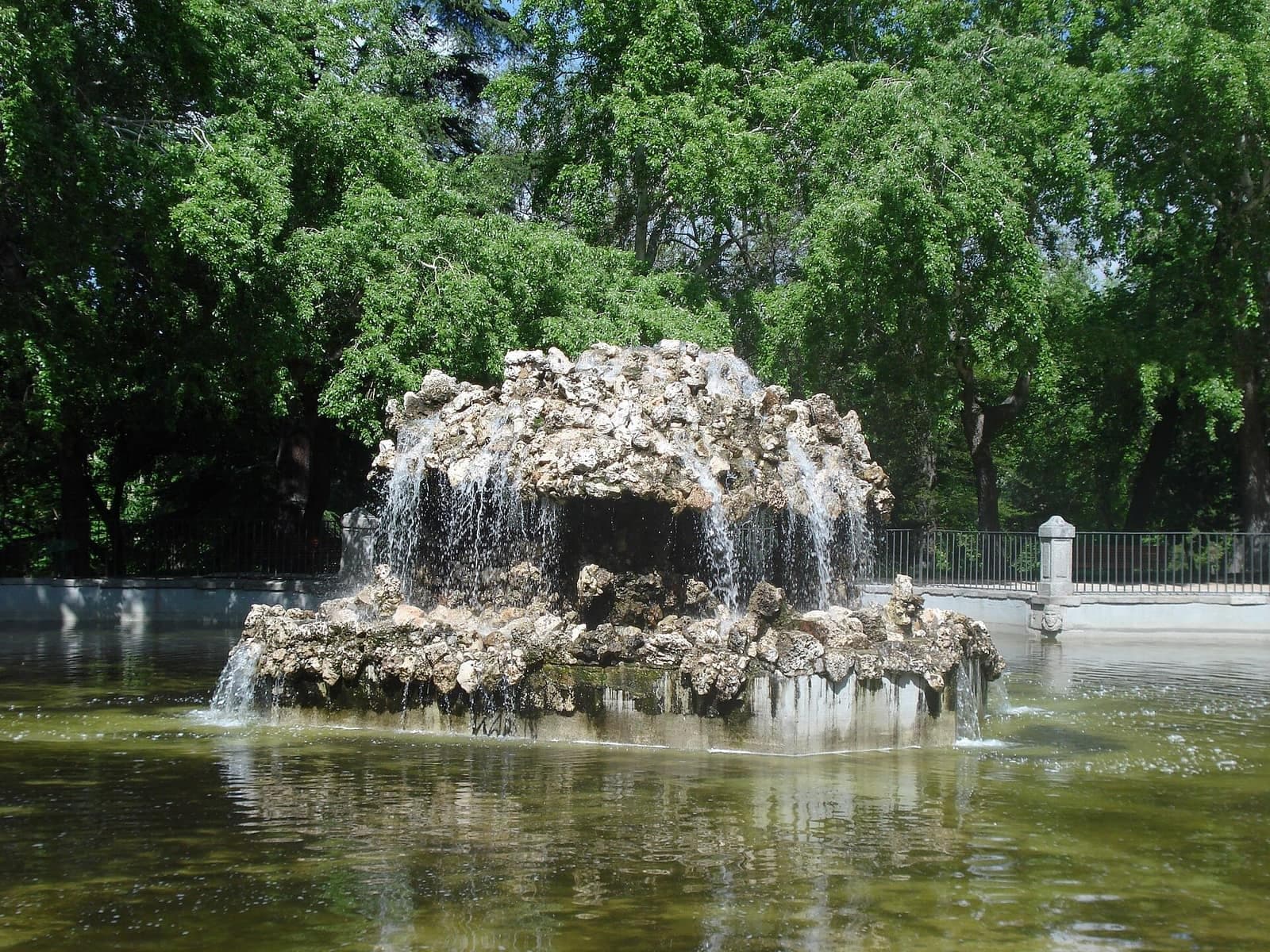
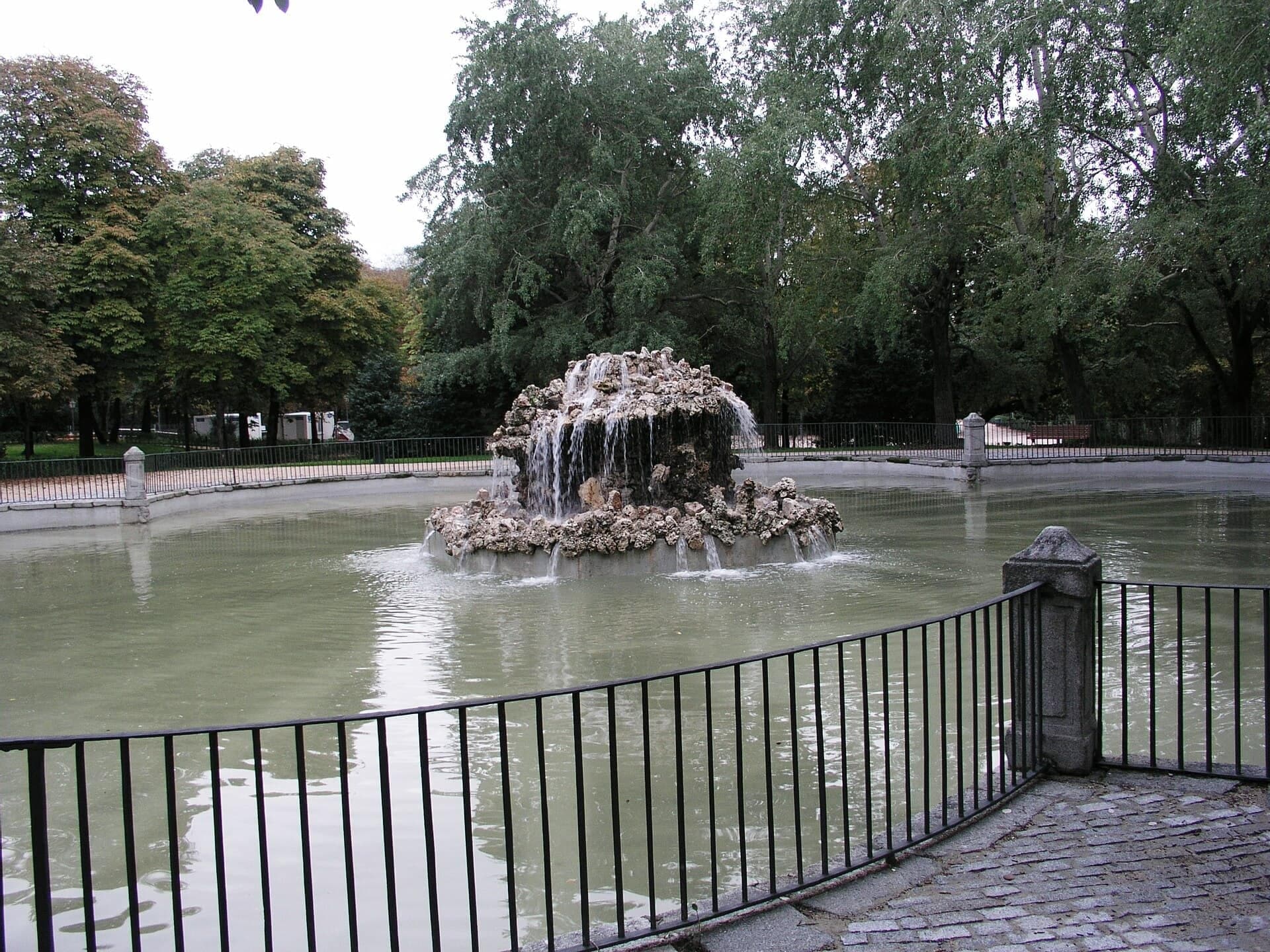
Estanque Ochavado
An eight-lobed pond survives from Philip IV's garden, once crowned by a tower, then a kiosk of little bells.
- 6
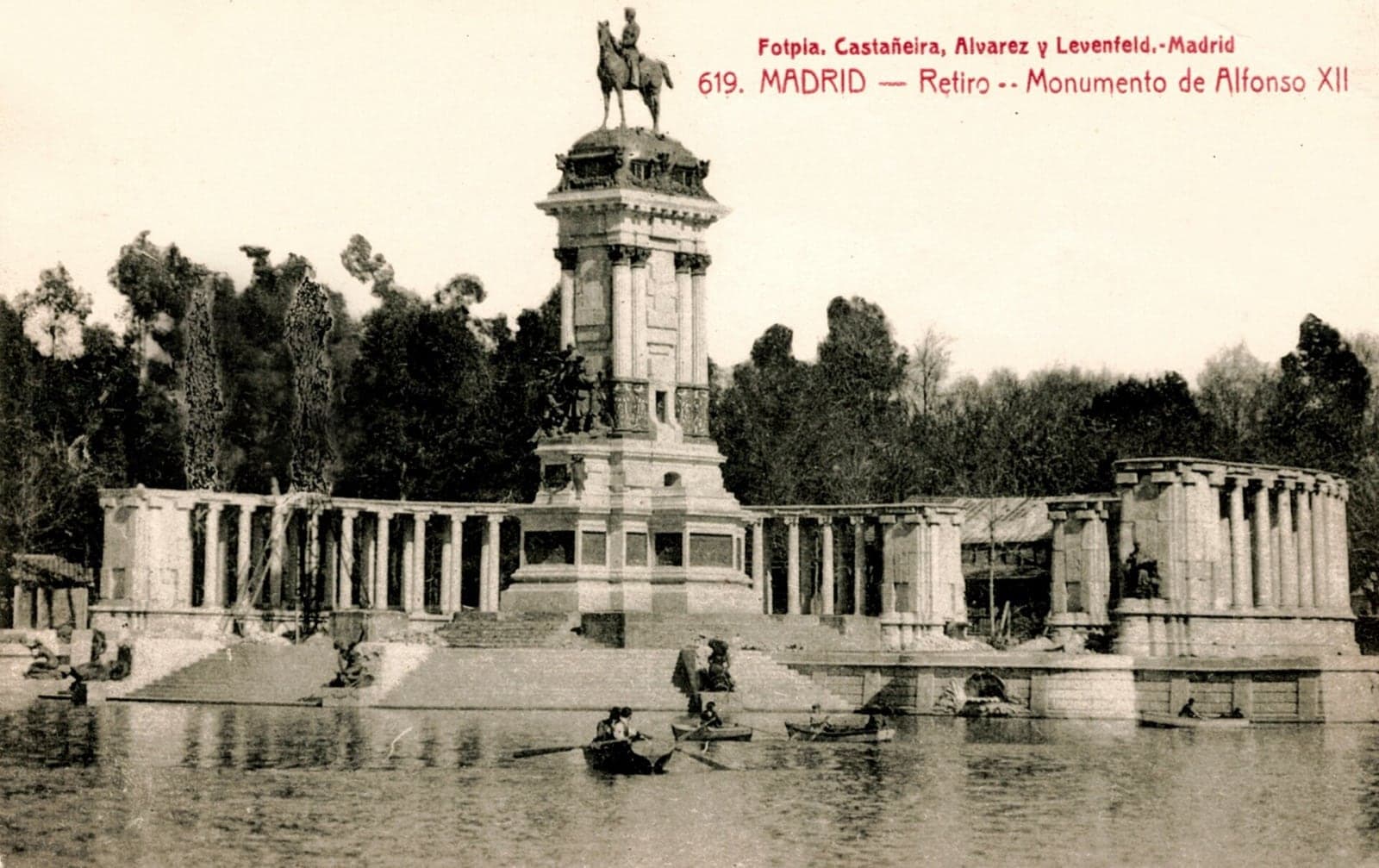
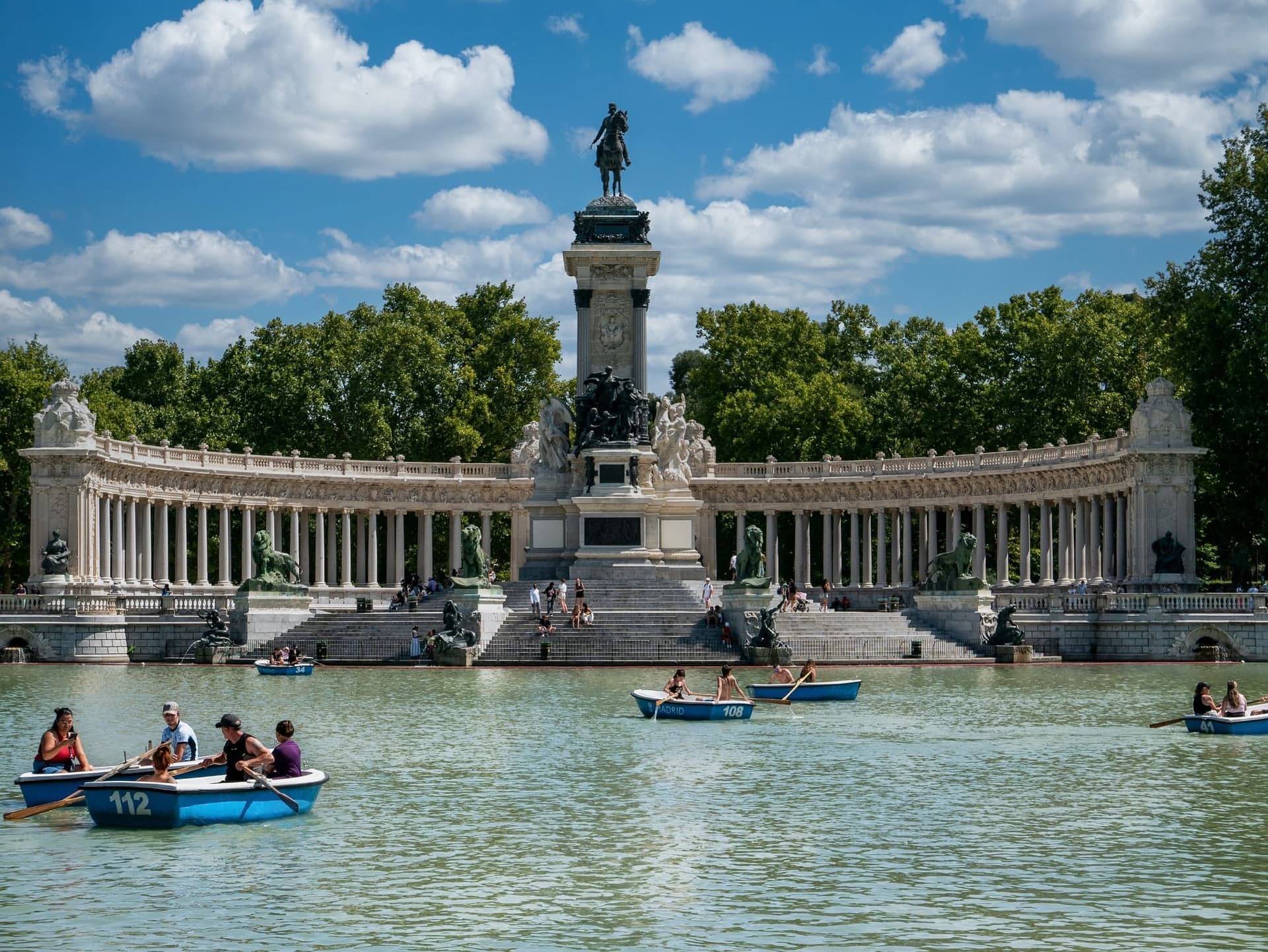
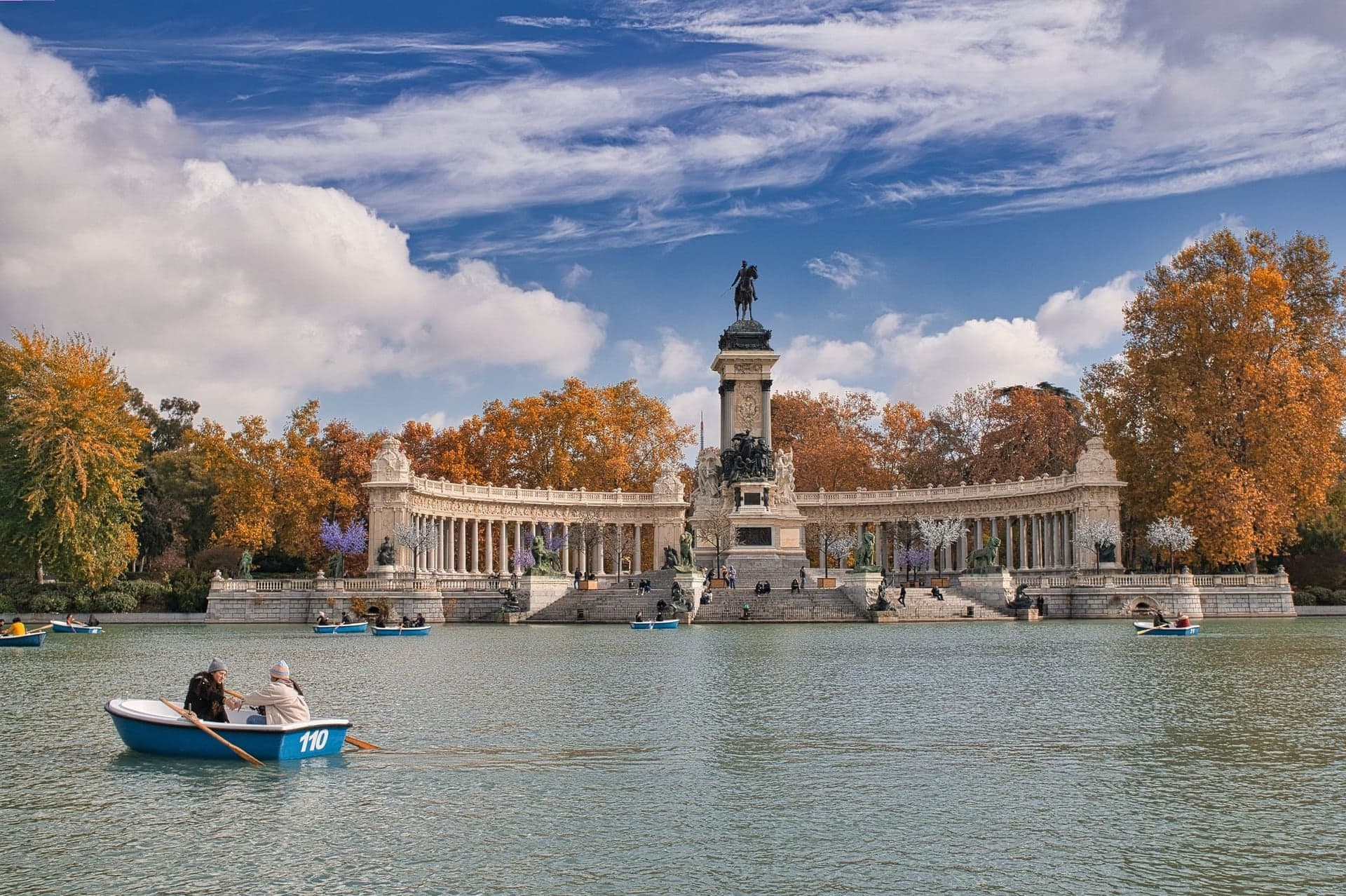
Estanque Grande and Alfonso XII
Philip IV's 1630s lake faces the Alfonso XII colonnade, paid for by public subscription and finished in 1922.
- The Exhibition Pavilionsbrick, tile and glass of the 1880s
- 7
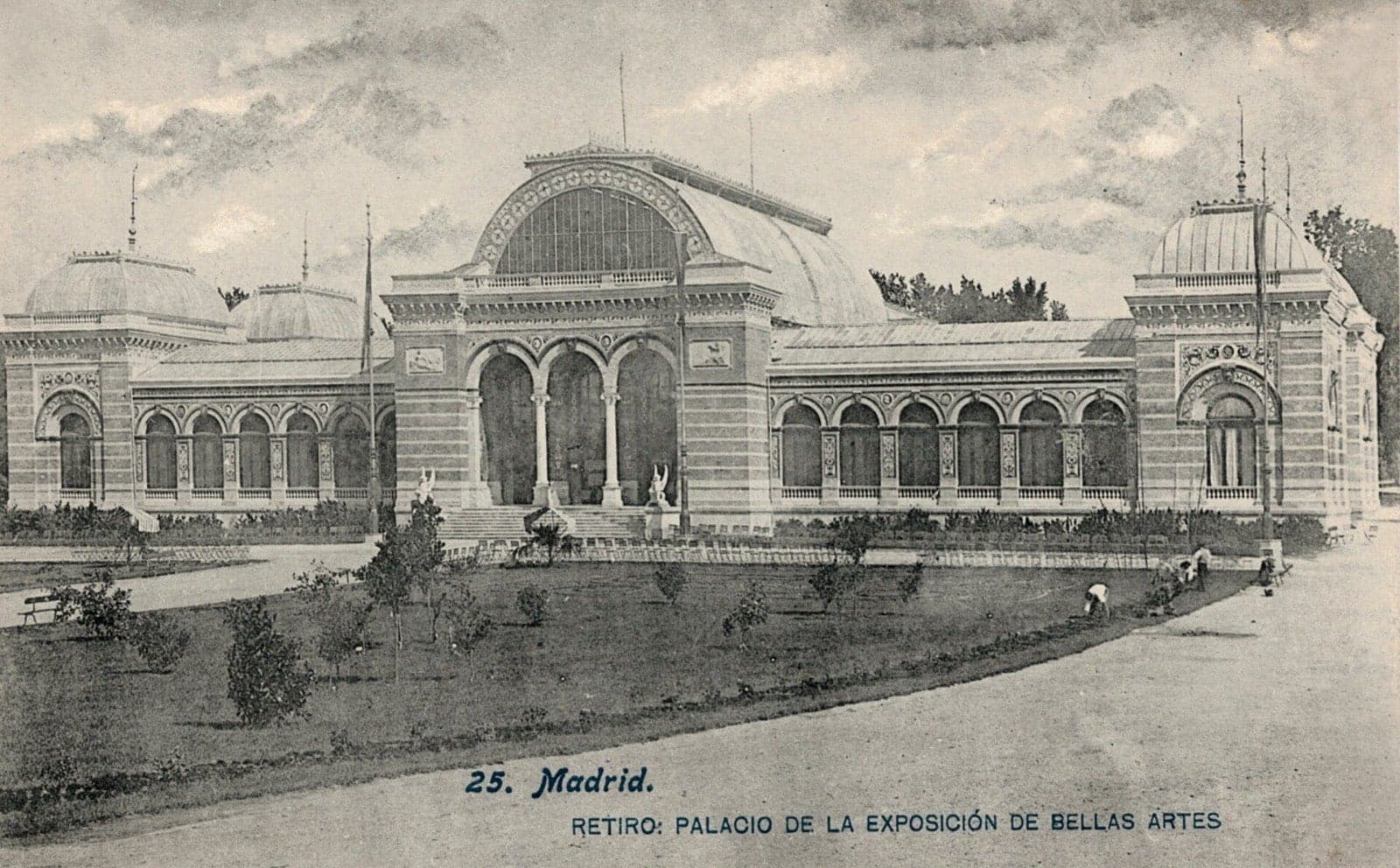
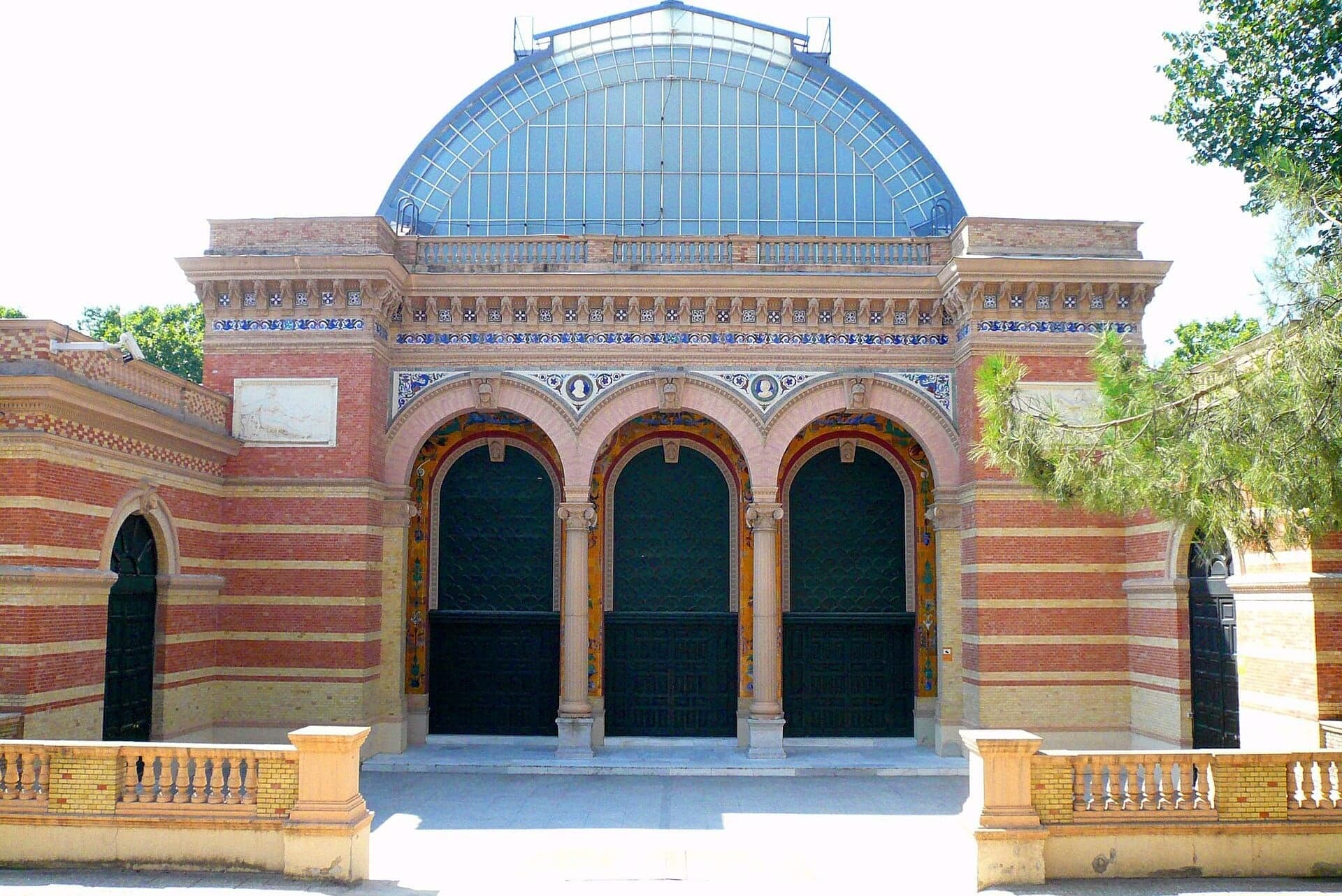
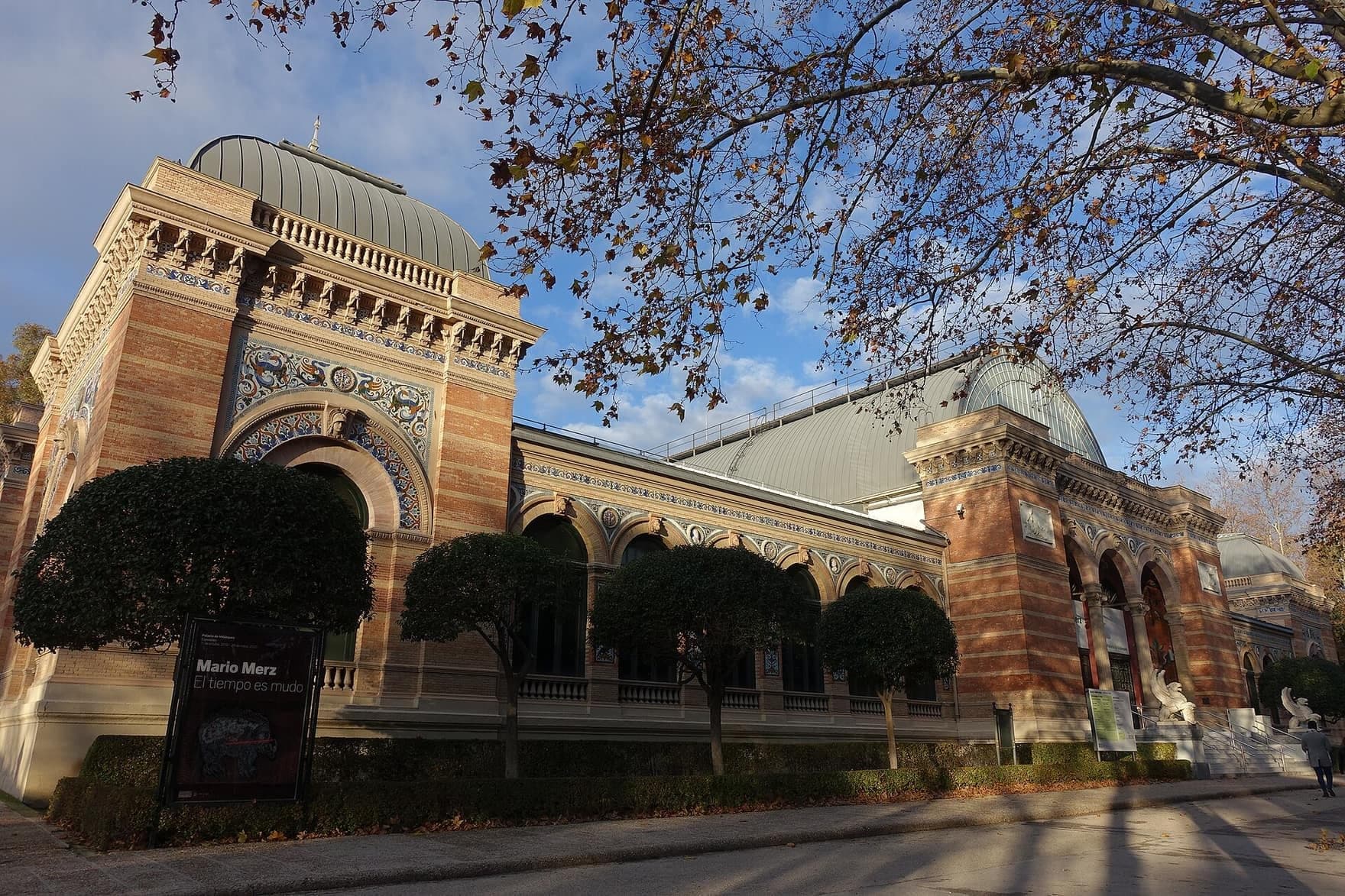
Palacio de Velázquez
A mining fair's hall of 1883 shows off its iron, glass, two-tone brick and Zuloaga tiles.
- 8
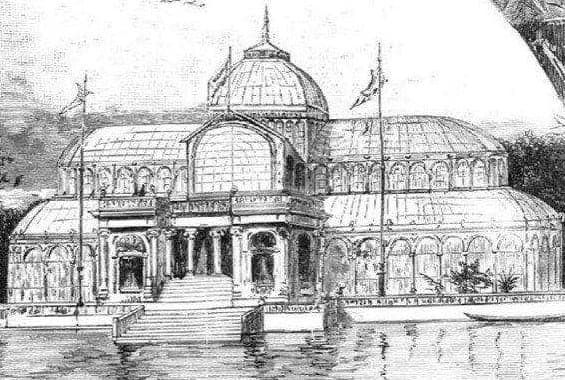
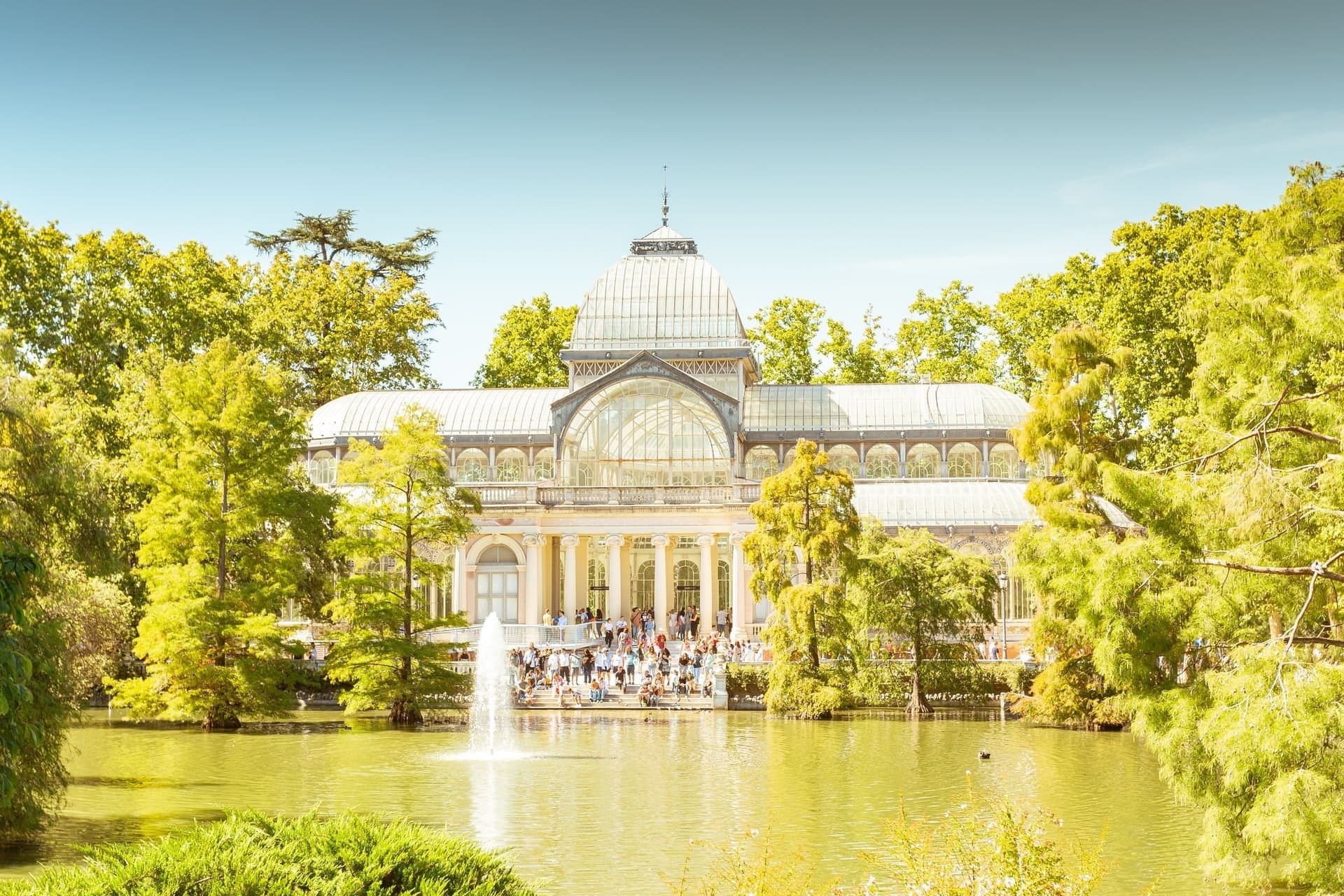
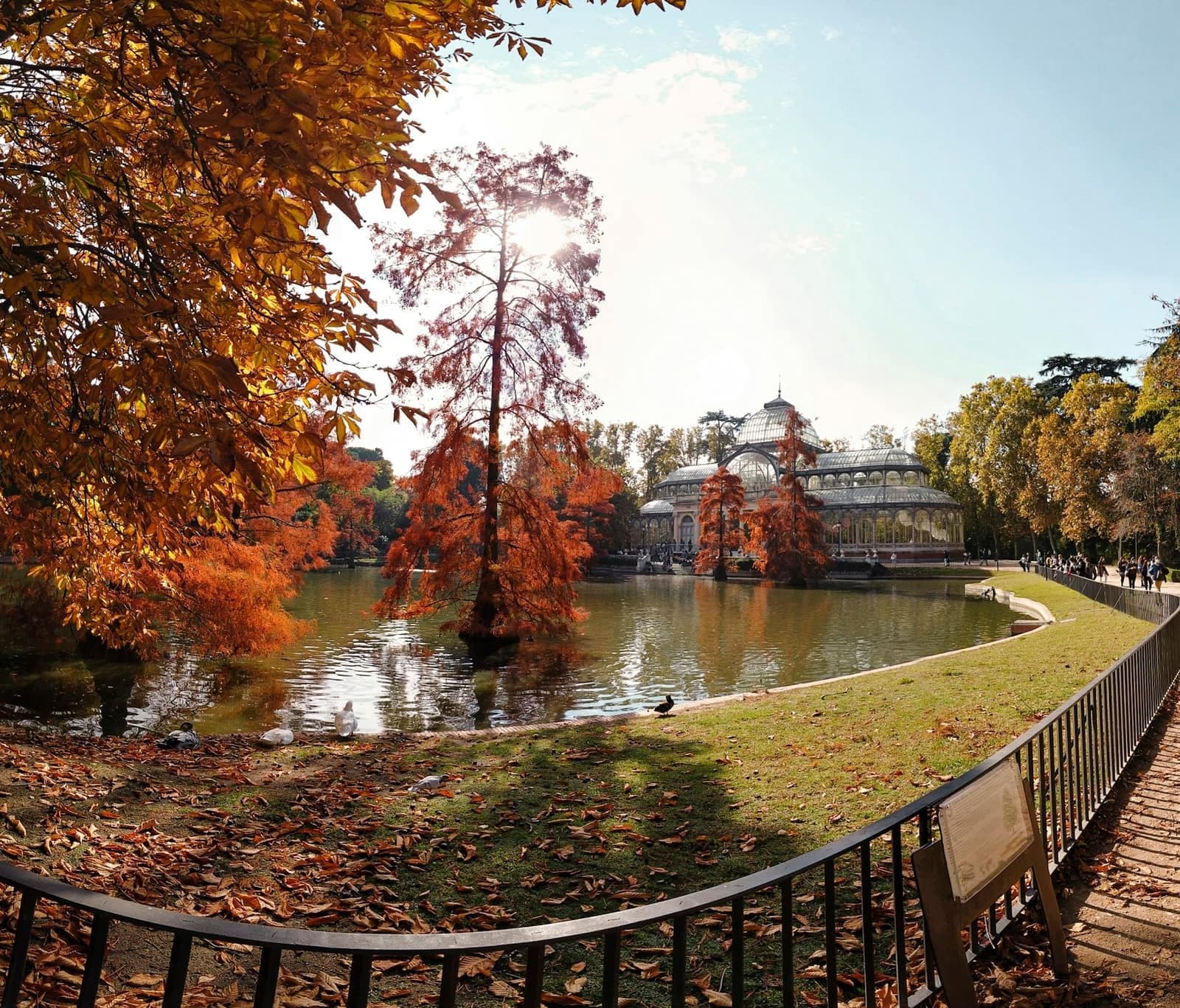
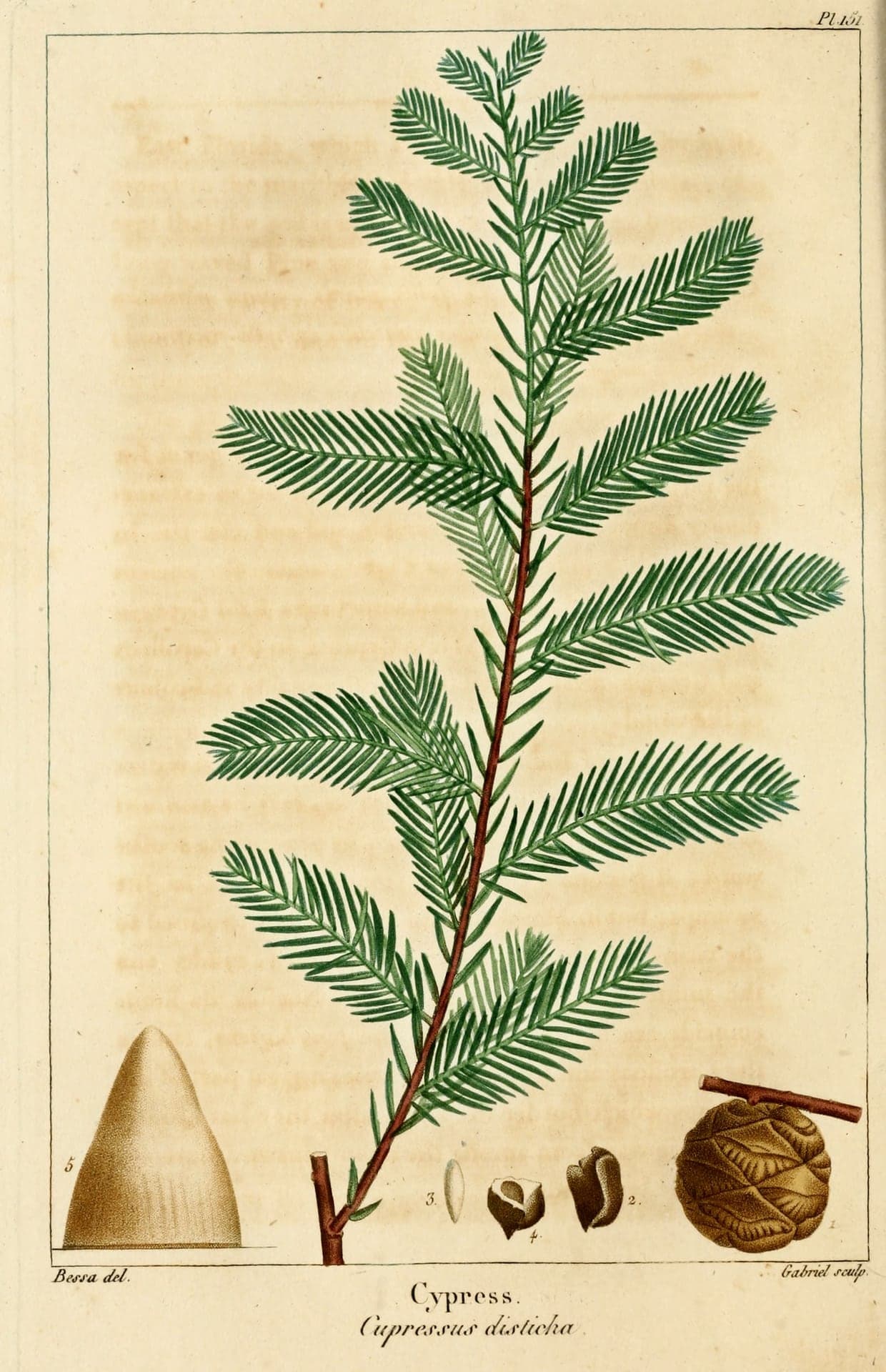
Palacio de Cristal and the Swamp Cypresses
A glasshouse went up in five months for an 1887 colonial exhibition, with swamp cypresses standing in its pond.
- Roses, the Angel and the Grovethe southern park to the memorial
- 9
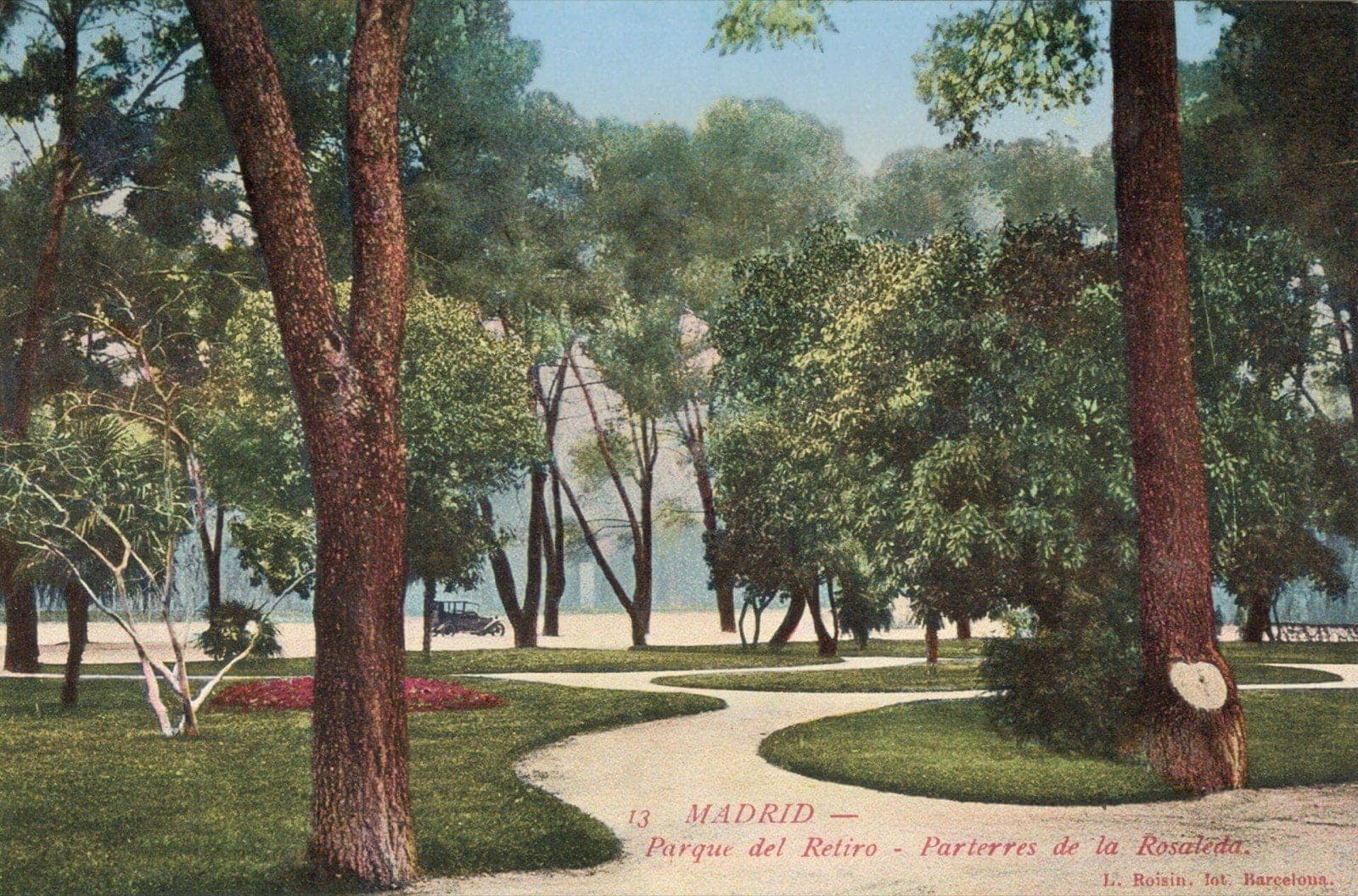
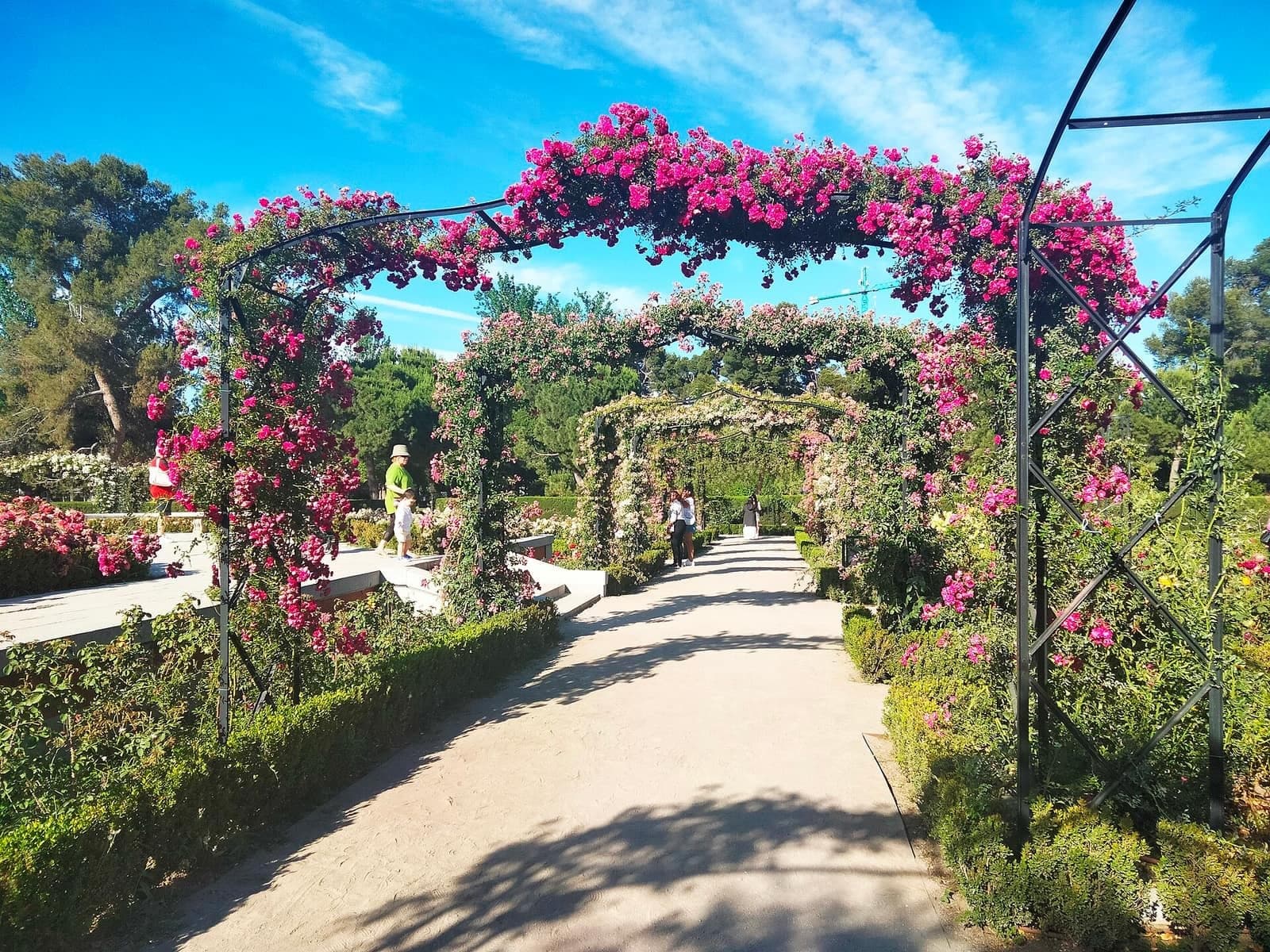
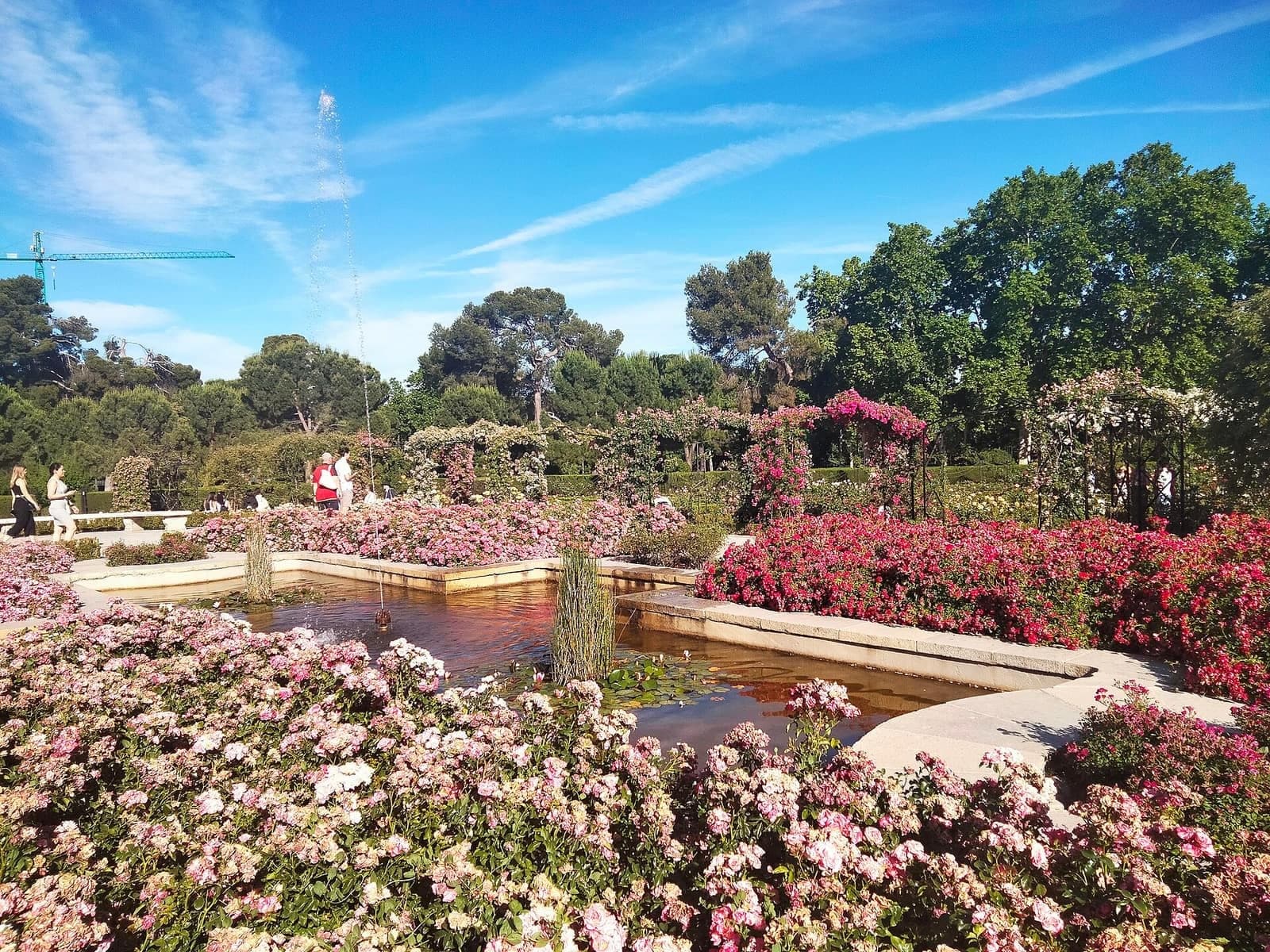
Rosaleda
The city's head gardener laid out this rose garden in 1915, on the model of the Bagatelle in Paris.
- 10
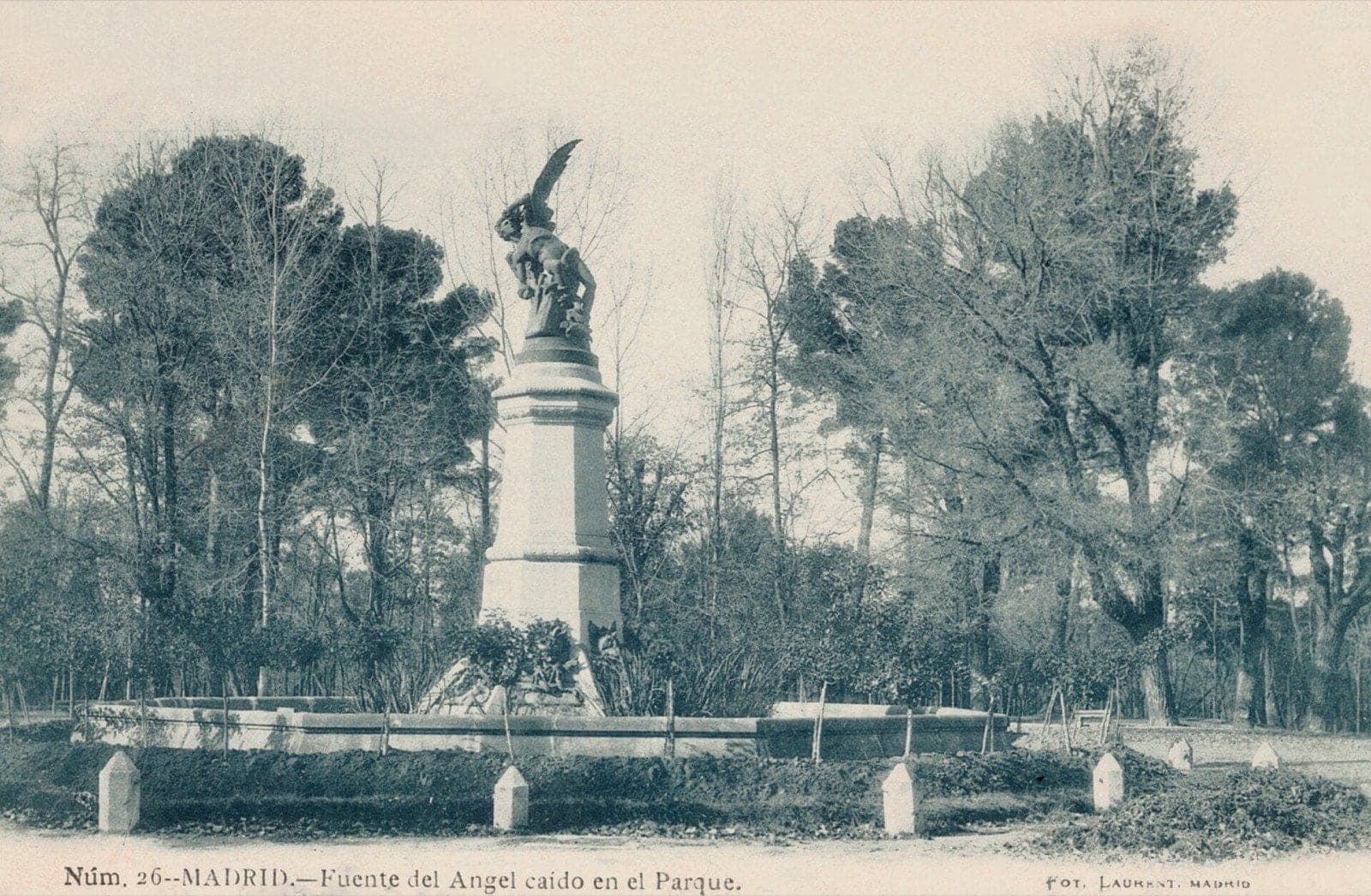
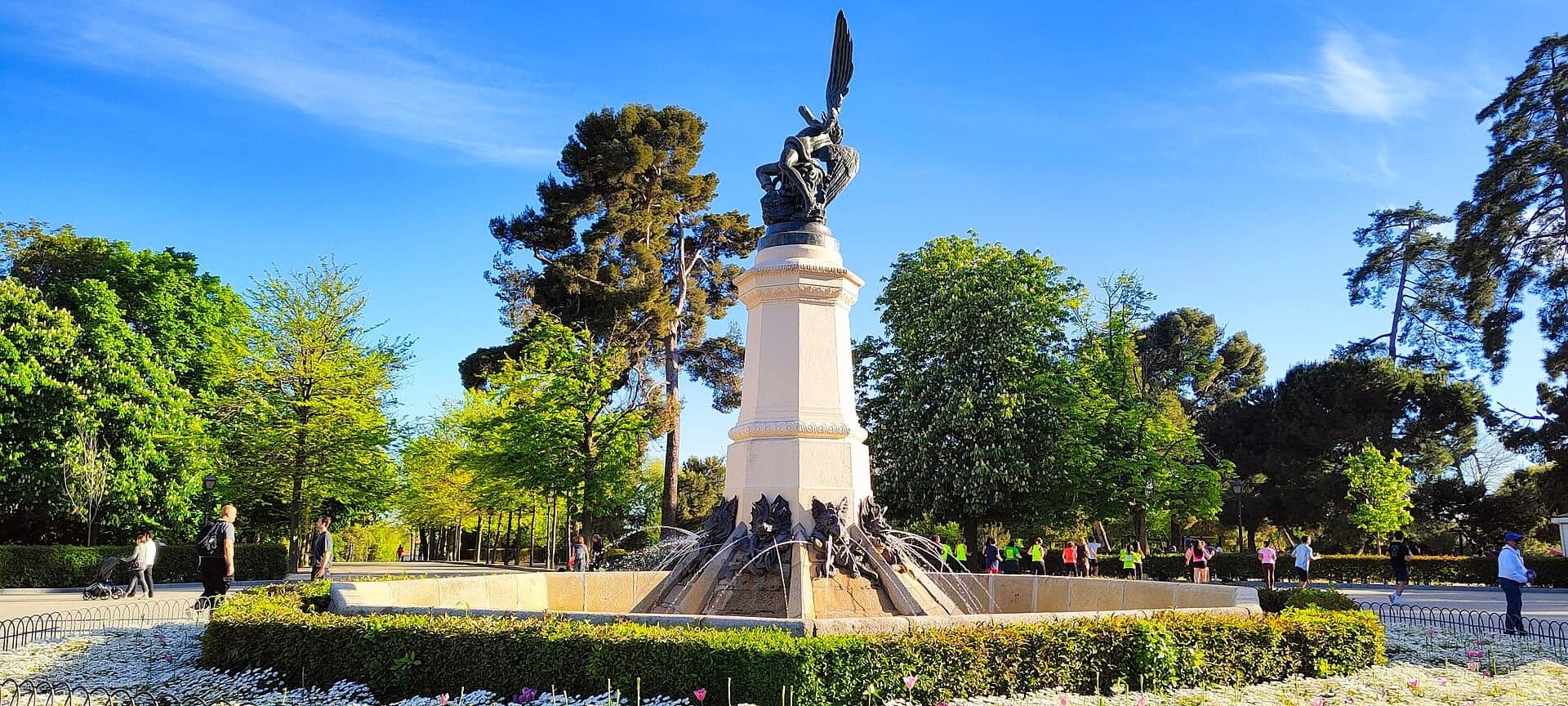
Fallen Angel
Ricardo Bellver's bronze Lucifer falls from heaven, on a fountain inaugurated here in 1885.
- 11
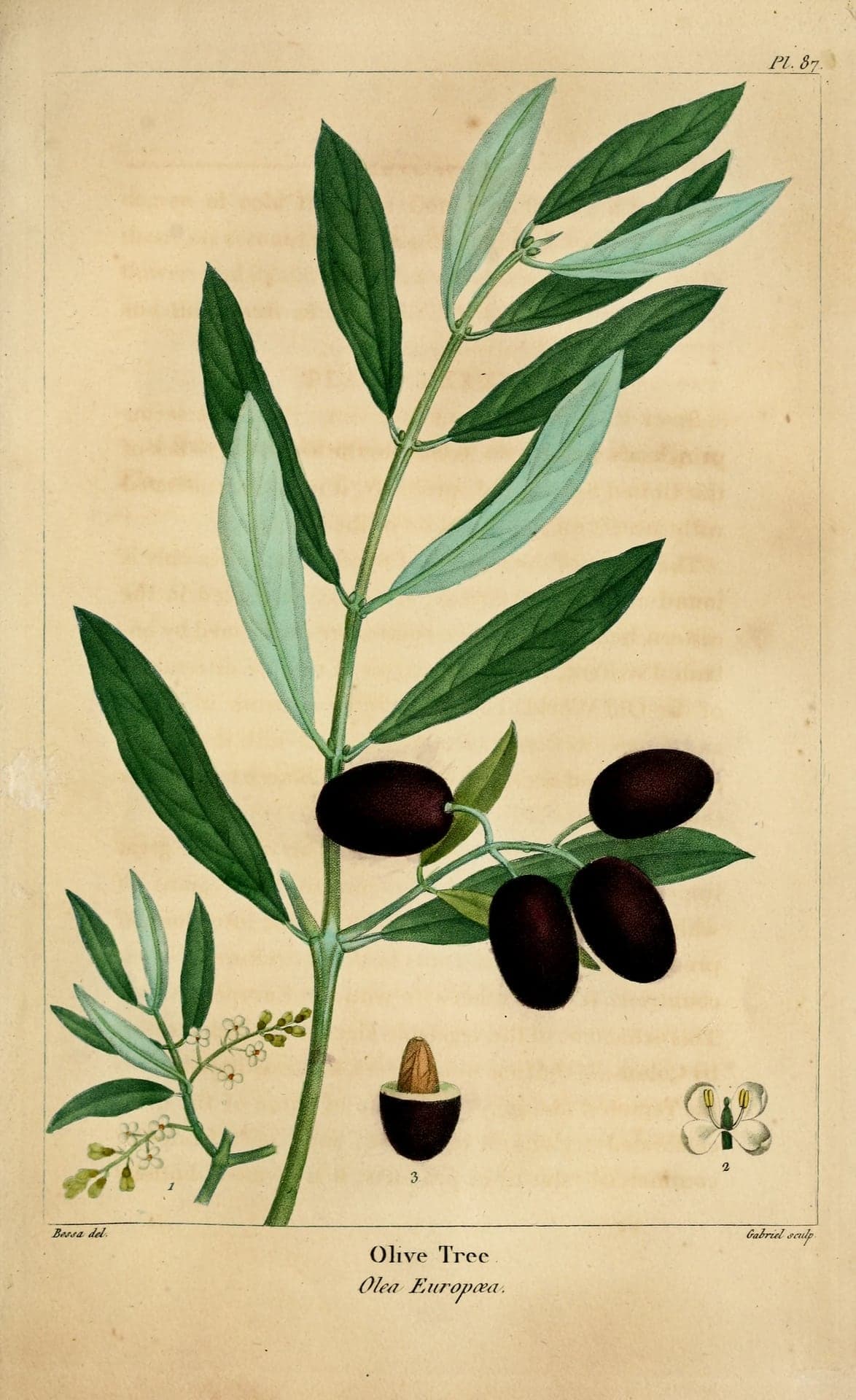
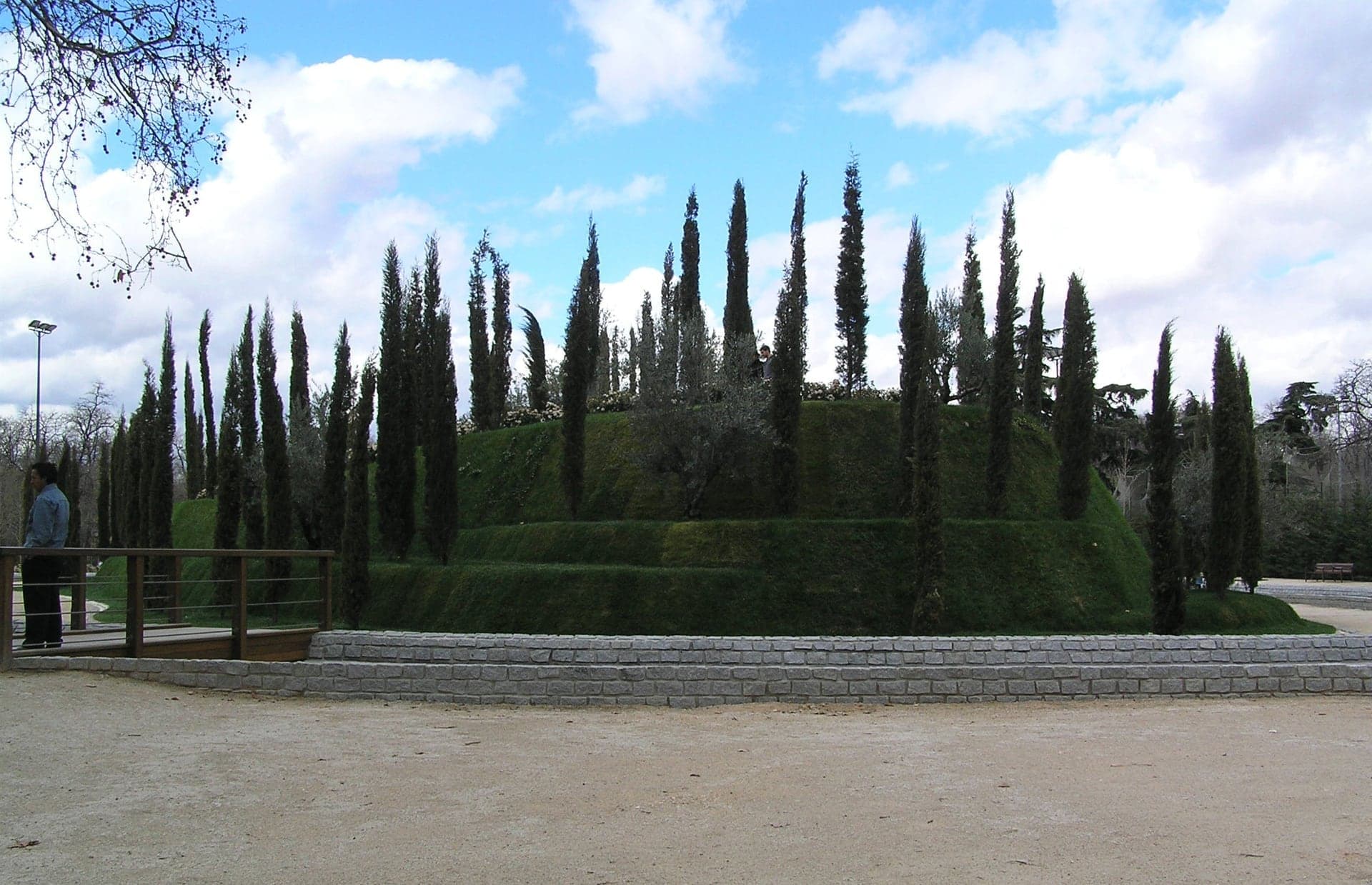
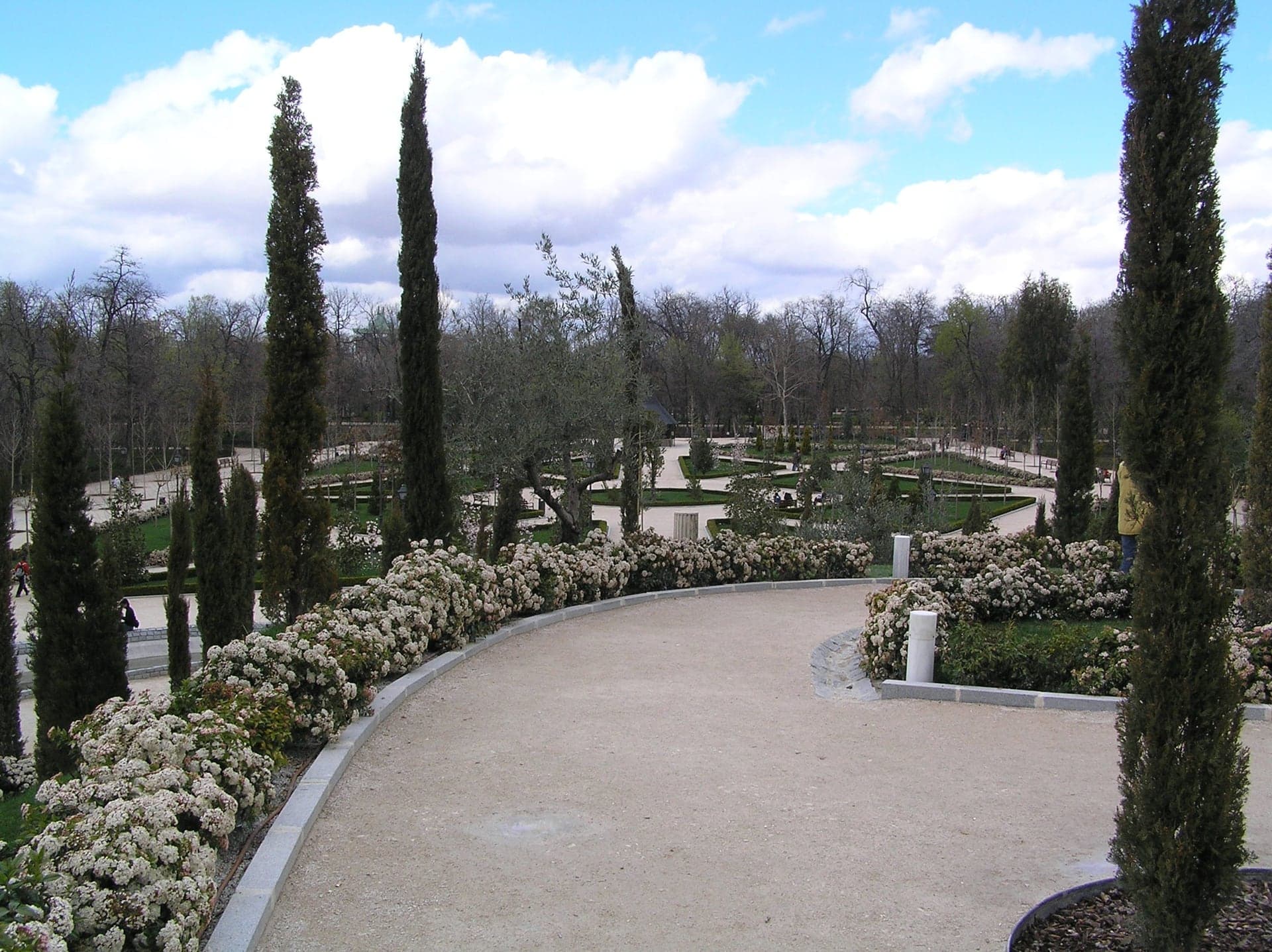
Bosque del Recuerdo
A grove of olives and cypresses remembers the 2004 train bombings, on a mound ringed by water.
Details
Best Time to Visit
Any day: the park is free and open from 6am every day. A weekday morning is quietest; the lake is busiest on weekend afternoons, and the colonnade across the water is lit from behind you in the afternoon. The Rosaleda is at its best in May and June; the horse chestnuts flower in April and May and drop their conkers in September and October; the bald cypresses at the Palacio de Cristal turn rust-brown in late autumn and stand bare through winter. Avoid days with a red weather alert for wind or heat, when the park closes. Checked 14 October 2026.
Pro Tips
- •Getting to the start: stop 1 is on the pavement just outside the park's Puerta de la Independencia, on the park side of the Plaza de la Independencia. From Metro Retiro (line 2), walk about 160 m along Calle de Alcalá on the park side: no road to cross. From Metro Banco de España (line 2) and Cibeles, walk about 600 m up Calle de Alcalá and cross at the traffic lights at the plaza's south-west corner, by Calle de Alfonso XII. Never cross to the arch itself: it stands on a traffic island with no crossing. Checked 14 October 2026.
- •Park hours: open every day, free; October to March 6am to 10pm, April to September 6am to midnight (esMadrid, updated 19 August 2026). Checked 14 October 2026.
- •Weather closures: the Retiro may have taped-off areas or close completely when the city issues a red weather alert for wind or heat (protocol updated 18 June 2026). Alerts are posted on the city's X account, @MADRID, and on the screens at the gates in Spanish and English two hours before they take effect. Checked 14 October 2026.
- •Step-free: the whole walk is step-free except leaving the Parterre after stop 4, where the route climbs a short flight and then 7 steps at the garden's curved east end. For a step-free way, leave the Parterre by the gate you came in by and follow the path along its north side to the octagonal pond (about 560 m instead of 320, part of it walked twice).
- •The Rosaleda (stop 9) is free with its own hours: April to September 10am to 8pm, October to March 10am to 6pm. The stop is told through the gate, so it works when the garden is shut. Checked 14 October 2026.
- •The Palacio de Velázquez (stop 7) is a free Museo Reina Sofía exhibition hall: November to February 10am to 6pm, October and March 10am to 7pm, April to September 10am to 10pm; closed 1 and 6 January, 1 May and 25 December. The Palacio de Cristal (stop 8) is closed for restoration until 2027. Checked 14 October 2026.
- •The viewing room inside the Alfonso XII monument (stop 6) opens only on booked visits through the city's programme: 97 steps, no lift. Rowing boats are hired at the landing on the lake's west bank; check times and prices there.
- •Leaving: from stop 11, the Puerta de Murillo is about 200 m north-west, for the Prado and the Botanic Garden; the Puerta del Ángel Caído is about 250 m south-west, for Atocha. Atocha has Metro line 1 at Atocha and Estación del Arte (renamed in 2023 from Atocha Renfe and Atocha) and the Cercanías local trains. Checked 14 October 2026.
Safety & Precautions
- •Do not walk the tour on a red weather alert: the park is evacuated and closed, and it reopens only after the trees have been checked. On an orange alert the park has stayed open in past years, with the city advising people to leave and not to stand under trees.
- •The Parterre (stop 4) is a railed garden inside the park, and its own gate hours are not confirmed. If it is locked, tell stop 4 from the avenue outside its west railings by the Puerta de Felipe IV, where the Ahuehuete can be seen over the railings, then follow the path round the Parterre's north side to the octagonal pond.
- •The Palacio de Cristal (stop 8) is closed and wrapped for restoration until about 2027 (esMadrid, checked 14 October 2026). The pond and its paths stay open.
- •Bicycles share the wide paseos (the Paseo de México, the Salón del Estanque, the Paseo de Venezuela, the Paseo de Fernán Núñez): keep to the side.
- •Keep bags closed and in front of you by the lake and the boat landing on busy weekends.
- •Please never release pets into the ponds: most of the turtles at the Palacio de Cristal are released American species, listed as invasive in Spain. The Galápagos fountain's spouts may be switched off.
Travel advisory: Exercise Increased Caution (Level 2).
Gallery
Related Reading
Go deeper on what you'll see, hear, and walk through.
Overview
Madrid Travel Guide: How Many Days, Getting Around, When to Go (2026)
5 min
Overview
One Day in Madrid: A Walkable Center-to-Prado Itinerary (2026)
6 min
Thematic
Best Nature Walking Tours in Madrid (2026)
2 min
Thematic
Capital by Decree: Why Madrid Is the Capital of Spain
5 min
Companion
Reading Madrid's Historic Center: The Wall You Cannot See
6 min
Companion
The Paseo del Prado: An Avenue Built to Teach, and the Buildings That Changed Their Jobs
5 min
Read the walk
The full story of Retiro Park: The King's Garden Given to Madrid, in words. Prefer to listen? Play it narrated, from home or on location.
Introduction
Madrid, the capital of Spain, owes its favorite park to a king who wanted a garden and a revolution that gave it away. In the sixteen thirties, Philip the Fourth's chief minister built him a palace here, the Buen Retiro, with a great lake and formal gardens. Napoleon's army later left it in ruins. Then, in November eighteen sixty-eight, the revolutionary government handed the whole estate to the city. People had long been let into much of it by permission; the decree turned that permission into a right.
Three people matter here. Philip the Fourth, whose lake and ponds are still here. Carlos the Third, who built the gate at the start and had a row of stone kings taken down from his palace. And the architect Ricardo Velázquez Bosco, who built two of the park's exhibition halls.
The walk takes the old royal garden first, then the pavilions of the eighteen eighties, then the quieter south. It is eleven stops over about two point eight kilometers, a mile and three quarters, on gentle paths with steps in one place, and takes about seventy minutes. It ends at a memorial grove near the gates for the Prado and Atocha station.
The park is free, but it closes on red weather alerts for wind or heat, so check before you set off. Stop one is just outside the park's corner gate, by the Puerta de Alcalá.
1. Puerta de Alcalá
Welcome to the Retiro. Before you go in, stay on this side of the traffic and look across the roundabout at the great stone arch standing on its island. That is the Puerta de Alcalá, the Alcalá Gate. Please don't try to cross to it: there is no crossing to the island, and the view is best from here.
It was one of the royal gates into Madrid, where a road came into town. Carlos the Third had it built to replace an older gate, and his architect, Francesco Sabatini, finished it in seventeen seventy-eight: a granite triumphal arch, the kind of free-standing gateway built to celebrate a ruler. Count the openings. Most triumphal arches have three. This one has five.
Now look at the decoration, because the two faces are not the same. The side facing you was the one travelers saw as they arrived, so it is the showy one, with the royal coat of arms on top and figures of children standing for the four cardinal virtues. The far side, which faced the town, is plainer, with trophies of arms and lions' heads. A gate, in other words, built as an advertisement for the king.
The city restored it recently, with lime mortars and hand tools, the way it was first built. The work won a European heritage award in twenty twenty-five, and while the scaffolding was up, more than twelve thousand people climbed it. Sensors now watch the stone for damp and vibration, and to keep the pigeons off, the city flies birds of prey.
Now turn to the park railings beside you. Follow the route in through the gate, up the path beside the short flight of steps and on along the wide avenue, to a fountain at the corner of the lake.
2. Galápagos Fountain
Walk on into the little square at the corner of the lake and stop near the stone fountain, with the water and the boat landing beyond it.
This is the Fuente de los Galápagos, the Turtle Fountain, and it was not made for a park. It was built in eighteen thirty-two as a public drinking fountain for a square in the city center, in honor of the infant princess Isabel, the future Isabel the Second. Why exactly is not known: her birth, her first birthday and her oath as heir have all been suggested.
Look low on the fountain for the spouts. The water comes out of the mouths of two frogs and two turtles, and a galápago, in Spanish, is a freshwater turtle; nothing to do with the islands. Above them are dolphins and children. The city's own park guide reads the turtles as wishes for a long life.
This was working plumbing, carved in granite and limestone. The city's guide says each spout was bored to the width of a coin, the real de vellón, and that width was used to work out how much water flowed. Then, from eighteen fifty-eight, a new canal, the Canal de Isabel Segunda, brought piped water into Madrid, and this fountain stopped serving.
Here is where the park comes in. In eighteen sixty-eight the city was given the Retiro. Eleven years later, in eighteen seventy-nine, it moved this fountain out of the street and into its new park. It is the first sign on this walk of the city furnishing a king's old garden as its own.
Follow the route on between the lawns, to a long avenue lined with stone kings.
3. Paseo de la Argentina: Kings Off the Palace Roof
Walk on along the avenue toward the gate, and stop between the last two kings on this side of the path. Ahead of you is the gate at this end of the avenue. Carved on it are the words Parque de Madrid, the Park of Madrid: the name the eighteen sixty-eight decree gave the park.
Now turn your back on the gate, so the double row of statues runs away from you toward the lake. This is the Paseo de la Argentina, known as the avenue of the statues: fourteen rulers of the old Spanish kingdoms.
They were never meant to stand at eye level. In seventeen forty-three a Benedictine scholar drew up a series of more than a hundred rulers, and over the next five years sculptors carved them to stand along the cornice of the new Royal Palace, the top edge of the building, high above the street. Not long after, under Carlos the Third, they were out of fashion. They were taken down and stored in the palace basements for decades, and in eighteen forty-seven thirteen of them were set up here.
Read the two plinths on your side of the path. The one ahead of you is Carlos the First, the Spanish king who was also the emperor Charles the Fifth. The one behind you, toward the gate, is Gundemaro, a Visigothic king, the oldest ruler on the avenue.
In nineteen eighty-nine a fourteenth pedestal was added, empty, just to make the rows even. Since twenty twenty-one it has carried Juana the First of Castile, by a modern sculptor: the only figure here not made for the palace.
Look up: about one tree in three in the Retiro is a horse chestnut, like these: white candles of flowers in spring, spiny husks and glossy brown conkers in autumn.
Follow the route back past the gate and round into a formal garden, toward a huge many-limbed tree.
4. Parterre and the Ahuehuete
Walk on into the formal garden and stop by the little basin near its corner, with the huge tree you have just passed close behind you.
That tree is the Ahuehuete, and look at its shape first. Instead of one trunk, several great limbs rise from a short, swollen base and spread like the arms of a candelabra. It is a Montezuma cypress, a conifer from Mexico, the only one in the park and one of its oldest trees. It is six meters round and more than twenty meters tall, and its Mexican name is usually explained as old tree of the water.
How old is it? Nobody agrees. The city's tourism office says it has stood here since the sixteen thirties. The city's own park guide points out that the eighteenth-century ahuehuetes at Aranjuez, outside Madrid, are bigger than this one, and thinks it was probably planted in the eighteen hundreds. There is a story of French soldiers hiding cannon in its branches, but even the tourism office calls that a legend.
What is documented is the war. During the Napoleonic wars, the French army camped in the Retiro, cut its trees for firewood and left the palace in ruins. This garden was wrecked too, and rebuilt.
The garden is a parterre, a level garden of low clipped hedges laid out in patterns, made to be looked at from above. It was laid out in the French manner under Philip the Fifth, the first Bourbon king of Spain, who was born at Versailles. Look along it to the basins and the dark clipped cypresses, trimmed for years so their crowns look like clouds. The city's guide says people here call them the little brains.
Follow the route along the garden's central walk and up two short flights of steps at its far end, to a small eight-sided pond.
5. Estanque Ochavado
Walk on to the railed pond beside the path and stop where you can see across it. Count its sides. This is the Estanque Ochavado, the eight-sided pond, and each of its eight sides curves outward in a half circle, like the petals of a flower. It was made in the reign of Philip…
Full narration for this stop unlocks with the tour.
6. Estanque Grande and Alfonso XII
Walk on to the promenade along the lake and stop by the railing, facing out across the water. This is the Estanque Grande, the great pond, and Philip the Fourth had it dug in the sixteen thirties. It is not deep, about one point eight meters. It was a stage as much as a lake.…
Full narration for this stop unlocks with the tour.
7. Palacio de Velázquez
Walk on along the path at this end of the lake and stop where a long building of brick and tile stands across the lawn. That is the Palacio de Velázquez, and it has nothing to do with the painter. It is named after its architect, Ricardo Velázquez Bosco. Today it is an…
Full narration for this stop unlocks with the tour.
8. Palacio de Cristal and the Swamp Cypresses
Walk on to the path beside the pond and stop there, then turn to face the water. The building across it is the Palacio de Cristal, the Crystal Palace. It is closed and wrapped for restoration, so the story is told from here. It was built in eighteen eighty-seven by the same…
Full narration for this stop unlocks with the tour.
9. Rosaleda
Walk on to the opening in the tall hedge and stop by the gate. The hedge is too high to see over, so look in through the gate, straight down the garden's central walk toward the pool in the middle, which is shaped like a cross. This is the Rosaleda, the rose garden. It is free,…
Full narration for this stop unlocks with the tour.
10. Fallen Angel
Walk on into the round plaza and stop on its edge, facing the fountain and the dark bronze figure on top of its column. That figure is Lucifer, falling. This is the Ángel Caído, the Fallen Angel, by the Madrid sculptor Ricardo Bellver, and it shows a scene from an English poem,…
Full narration for this stop unlocks with the tour.
11. Bosque del Recuerdo
Walk on to the path beside the water and stop where you can see the grove on its mound across the channel. This is the Bosque del Recuerdo, the Forest of Remembrance. On the eleventh of March, two thousand and four, bombs exploded on commuter trains in Madrid, several of them a…
Full narration for this stop unlocks with the tour.
- Fuente de los Galápagos, Jardines del Buen Retiro, Madrid, Spain — Håkan Svensson (Xauxa), CC BY 2.5 · source
- The Paseo de la Argentina is a sculpture walk and open air museum along a landscape avenue (allée) in Retiro Park (Jardines del Buen Retiro — Matthew Verso from Dublin (Ireland), CC BY 2.0 · source
- The Paseo de la Argentina is a sculpture walk and open air museum along a landscape avenue (allée) in Retiro Park (Jardines del Buen Retiro — Gellerj, CC BY-SA 3.0 · source
- Topiary in the Retiro park in Madrid. — Jérôme, CC BY-SA 3.0 · source
- Fuente de rocalla en el centro del Estanque Ochavado (o de Campanillas). Parque del Buen Retiro Madrid. — losmininos, CC BY-SA 2.0 · source
- Jardines del Buen Retiro, Madrid, Spain. Estanque de las Campanillas. — Håkan Svensson (Xauxa), CC BY 2.5 · source
- El Retiro Park - Palacio de Velázquez — Jeremy Thompson from Los Angeles, California, CC BY 2.0 · source
- La Rosaleda, Parque del Retiro (Madrid), pèrgola — Enric, CC BY-SA 4.0 · source
- La Rosaleda, Parque del Retiro (Madrid), estany — Enric, CC BY-SA 4.0 · source
- Fuente del Ángel Caído - Parco del Retiro — Jumk18, CC BY-SA 4.0 · source
- El Retiro Park - Fountain of the Fallen Angel — Jeremy Thompson from Los Angeles, California, CC BY 2.0 · source
- Bosque de los Ausentes (memorial for the victims of the 11-M terror blasts in Madrid), parque del Retiro, Madrid, Spain — No machine-readable author provided. Mr. Tickle assumed (based on copyright clai, CC BY 2.5 · source
- Bosque de los Ausentes (memorial for the victims of the 11-M terror blasts in Madrid), parque del Retiro, Madrid, Spain — No machine-readable author provided. Mr. Tickle assumed (based on copyright clai, CC BY 2.5 · source
Images may be cropped or resized. Other photos via Unsplash and Pexels.