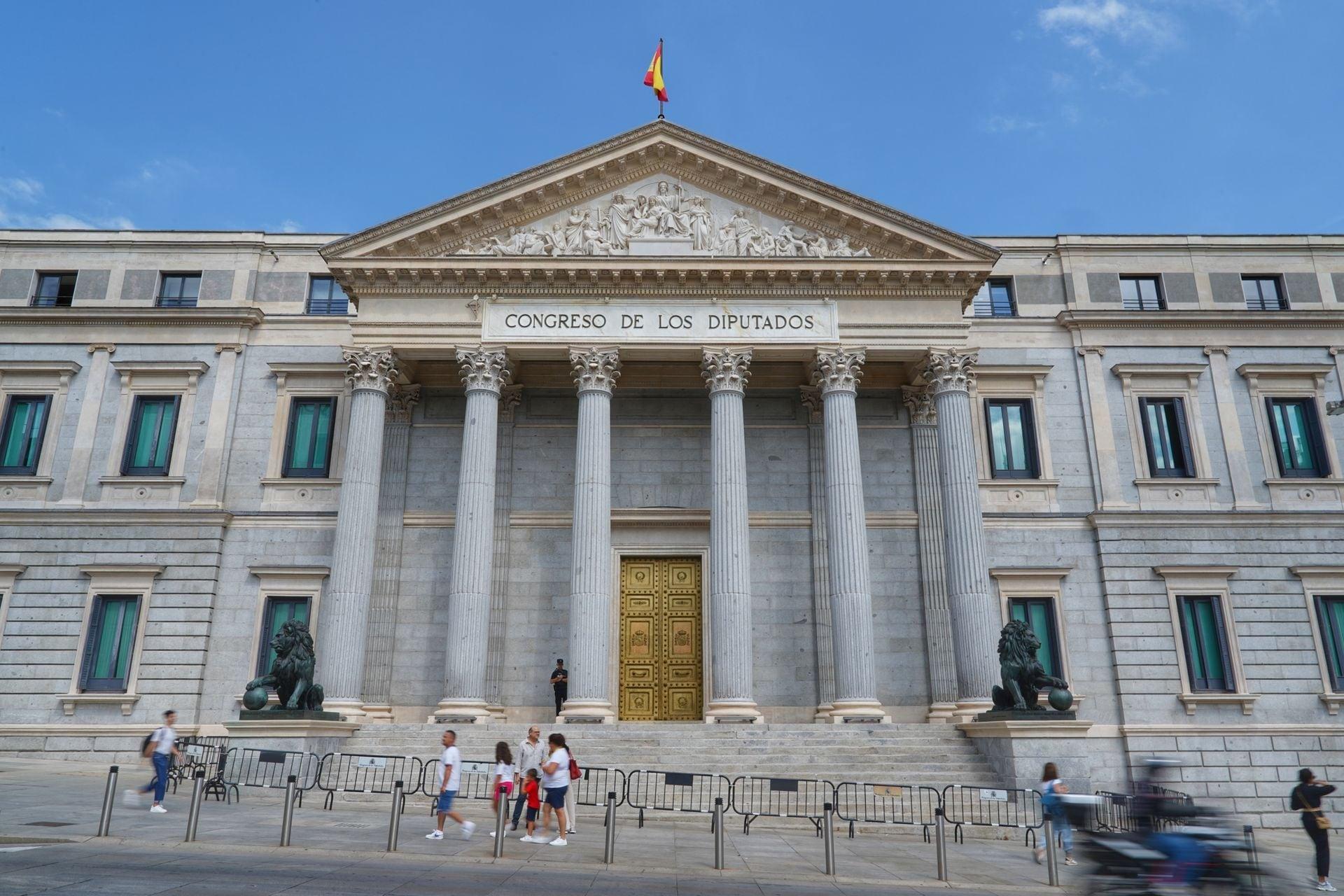
Two lion stories face each other across the Plaza de las Cortes. In the square's small garden stands a bronze Cervantes, set up in 1835, and on its pedestal a relief shows Don Quixote challenging a lion in its cage. Across the street, two bronze lions guard the steps of the Congreso de los Diputados, Spain's parliament, and they took three attempts and many years to get right. One lion is fiction, the other pair is politics and bronze, and both belong to the same idea: the nineteenth century dressing Madrid in monuments.
The writer in the garden
The Cervantes statue went up in 1835, close to the house on Calle del León where Cervantes spent his last years and died in 1616. It is one of the earliest statues of a writer in Madrid. The bronze figure is by the sculptor Antonio Solá, and the reliefs on the pedestal take scenes from Don Quixote. The one to look for is the adventure of the lions, from the second part of the novel: the knight, sure of himself, demands that a cage be opened so he can fight the lion inside.
The date matters. The statue belongs to the same years in which Madrid lost the real house where Cervantes died, pulled down in 1833, and renamed the street outside it after him. The city was replacing what it had with what it could carve.
The parliament and its slope
Hear a stop from this walk
Plaza de Santa Ana: The Playhouse Site
Look past the statue to the columns. The Congreso was built between 1843 and 1850 on the site of an old church. Six Corinthian columns carry the porch, with a pediment above and steps rising between the two lions. The site was not easy. The street slopes, and the parliament's own history notes that the slope broke the symmetry such a front needs. Stand where you can see the whole width of it and you can watch the building make its peace with the hill: the steps and the base do the work so that the portico can sit level.
Three tries at a lion
The lions are the best part. According to the Congreso's own archive, the sculptor Ponciano Ponzano first modeled a pair in plaster. At that size and in that material, they were judged not majestic enough, though his design, a seated lion with one paw on a ball, was kept. The parliament's commission then ordered a second pair from José Bellver, carved this time in stone from Colmenar. The archive is blunt that these were not to be the final lions either; their sculptor asked for money to go to Paris and study real lions.
Then the decision fell on bronze. As the African War of 1859 to 1860 ended, the commission decided the lions should be cast from enemy cannon captured in that war. The casting dragged on, and only in 1872 was it reported finished. Some tourist accounts describe them as iron; the parliament's own records say bronze, cast from the guns.
Madrileños call the lions Daoíz and Velarde, after two artillery officers killed in the rising of 2 May 1808 against Napoleon's troops. It is an affectionate nickname, not an official name. No document of the parliament calls them that.
What to look at
From the paving of the square, with the statue on your right, the lion on the right of the steps is usually the clearer one; the other can be half hidden by a tree when the garden is in leaf. Look for the paw resting on the ball, Ponzano's idea that survived two rejected pairs. Then look back at the small relief on the Cervantes pedestal, too small to read from a distance but worth walking closer for. The caged lion in the novel does not fight. It turns its back on the knight and lies down again. The real lions across the street never had the choice.
Police guard the parliament steps, so photographs are best taken from the square side.
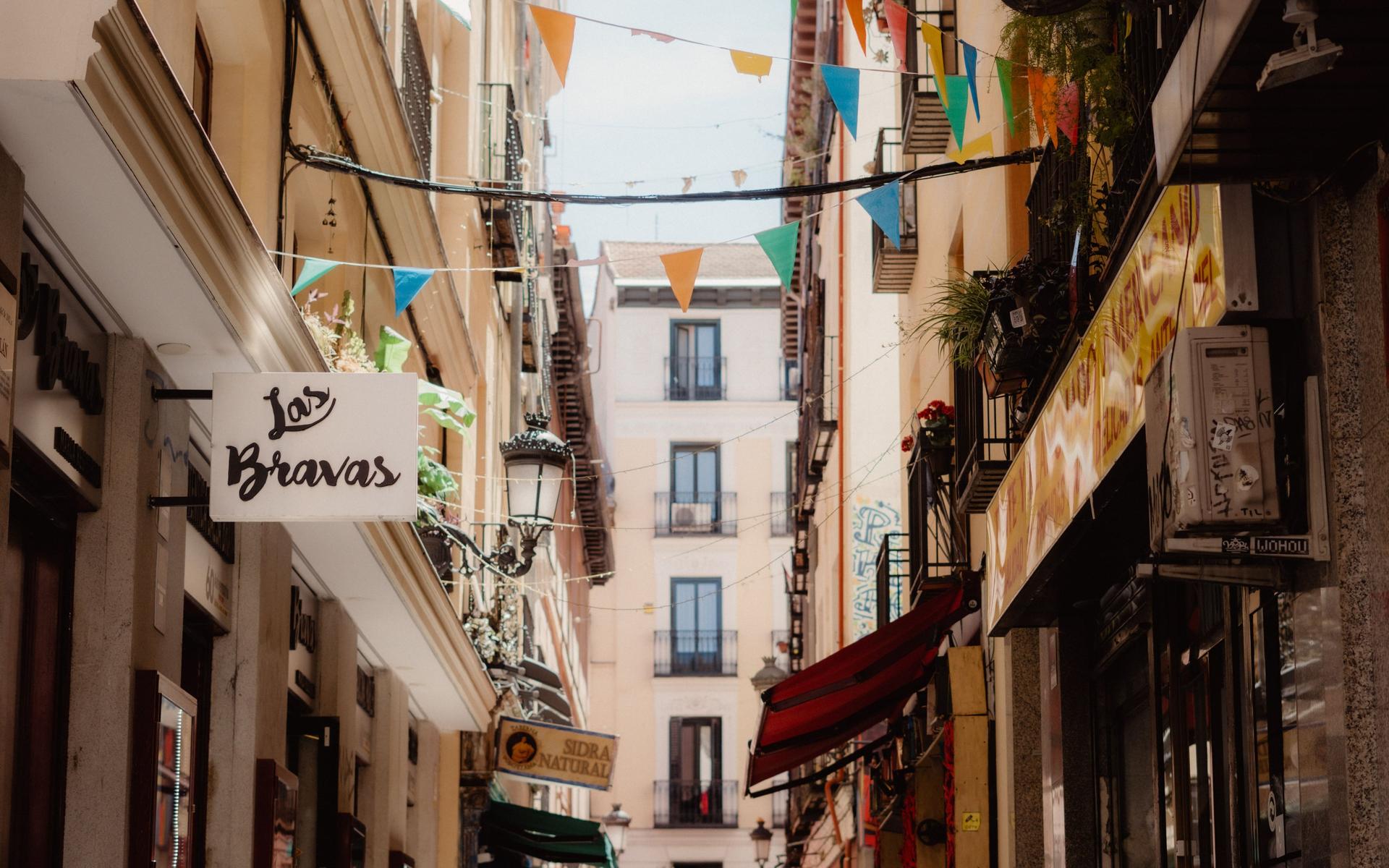
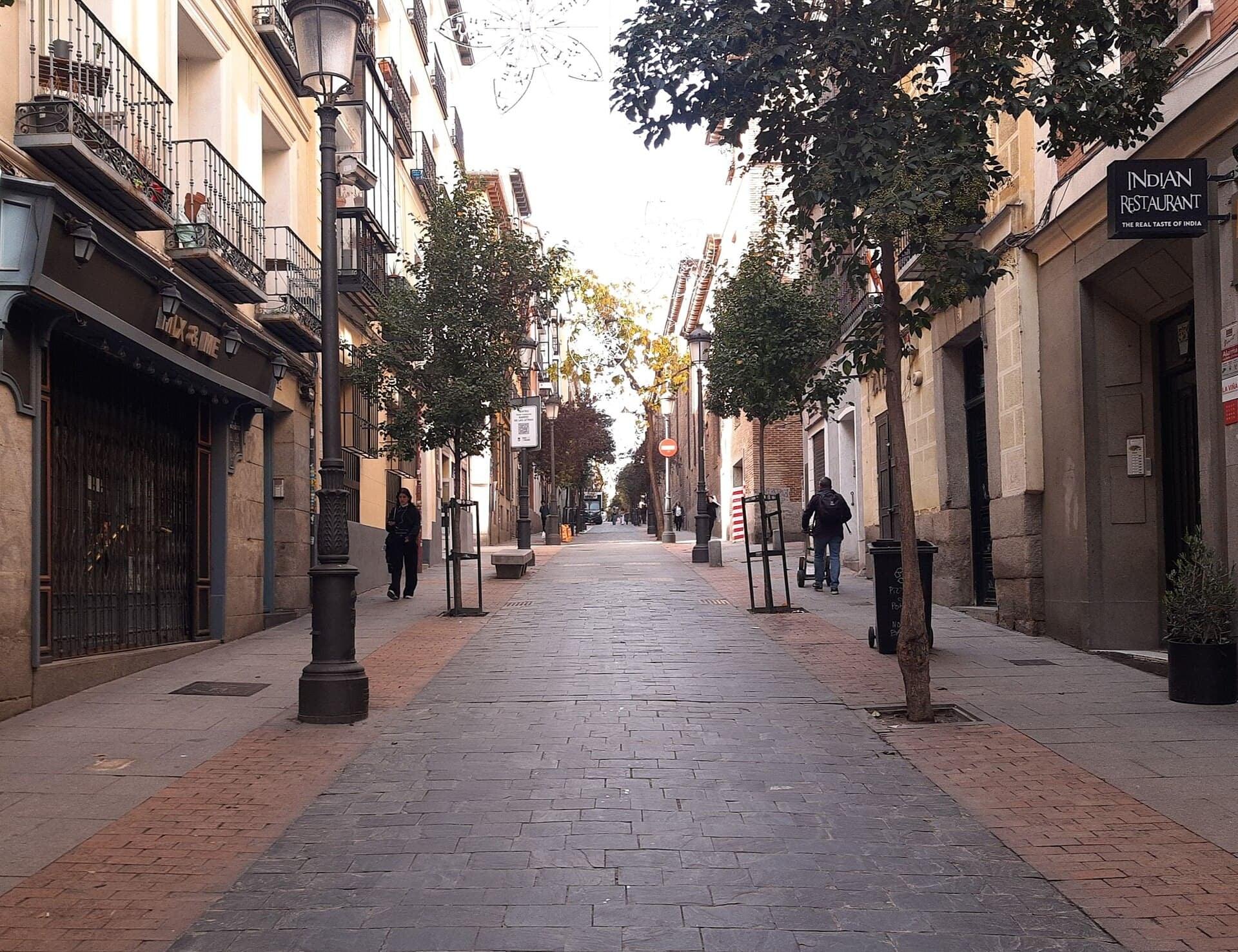
The square is stop 3 of Barrio de las Letras: Cervantes, Lope and the Playhouses, a ten-stop walk you can take at your own pace from the Teatro de la Comedia to the Plaza de Santa Ana. The whole quarter is explained in Madrid's writers' quarter in three layers. See all routes on the Madrid page.
Sources
- Congreso de los Diputados, "Los leones del Congreso": Ponzano's plaster pair judged not majestic, Bellver's pair in Colmenar stone, the decision for bronze at the end of the African War, the lions cast from enemy cannon, the casting reported finished in 1872.
- esMadrid, Barrio de las Letras: Cervantes's last home and death on Calle del León.
- María Rosa Fernández Peña, "Cuentapaseos por Madrid", Universidad Complutense: the Solá statue of 1835 and the pedestal relief of the adventure of the lions (cited from the tour's fact dossier).
Ready to experience it?
Barrio de las Letras: Cervantes, Lope and the Playhouses
60 min · 1.4 km · easy
More from Madrid
Explore more at your own pace.
Barrio de las Letras: Madrid's Writers' Quarter in Three Layers
Gran Vía: How Madrid's Great Way Grew Wider and Taller as It Was Cut
Malasaña and Chueca: Madrid's Old Northern Edge, Taken Back by the City
Retiro Park: How a King's Garden Became Madrid's
Edificio Carrión: The Curved Corner at Callao and the Sign That Stayed