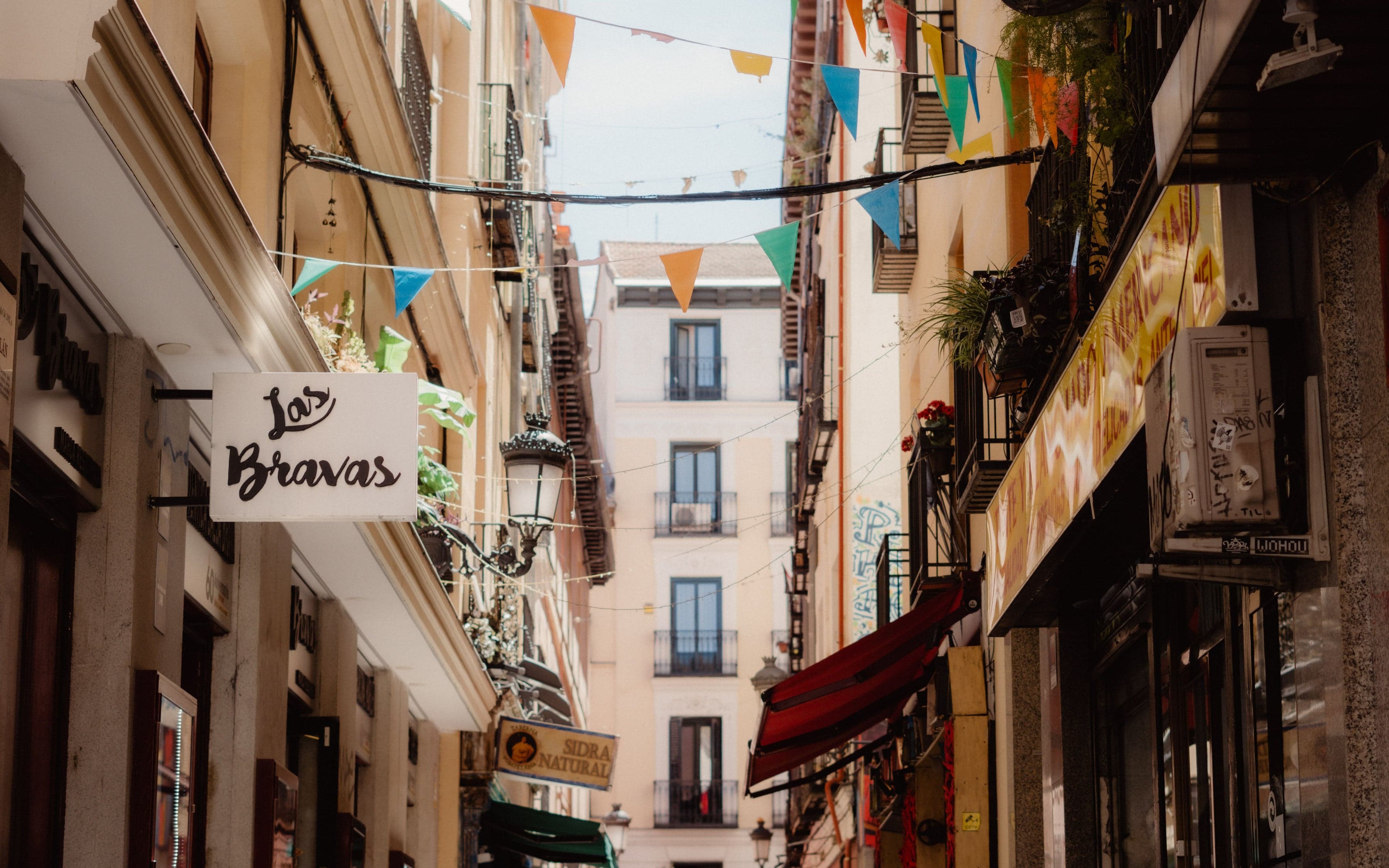
Walk from the Teatro de la Comedia past the Ateneo, the Congress lions, Lope de Vega's house and Cervantes's grave, over Calle de las Huertas' brass quotations to a palace doorway, its copy and the Plaza de Santa Ana.
Start · Teatro de la Comedia
DirectionsStops
- 1
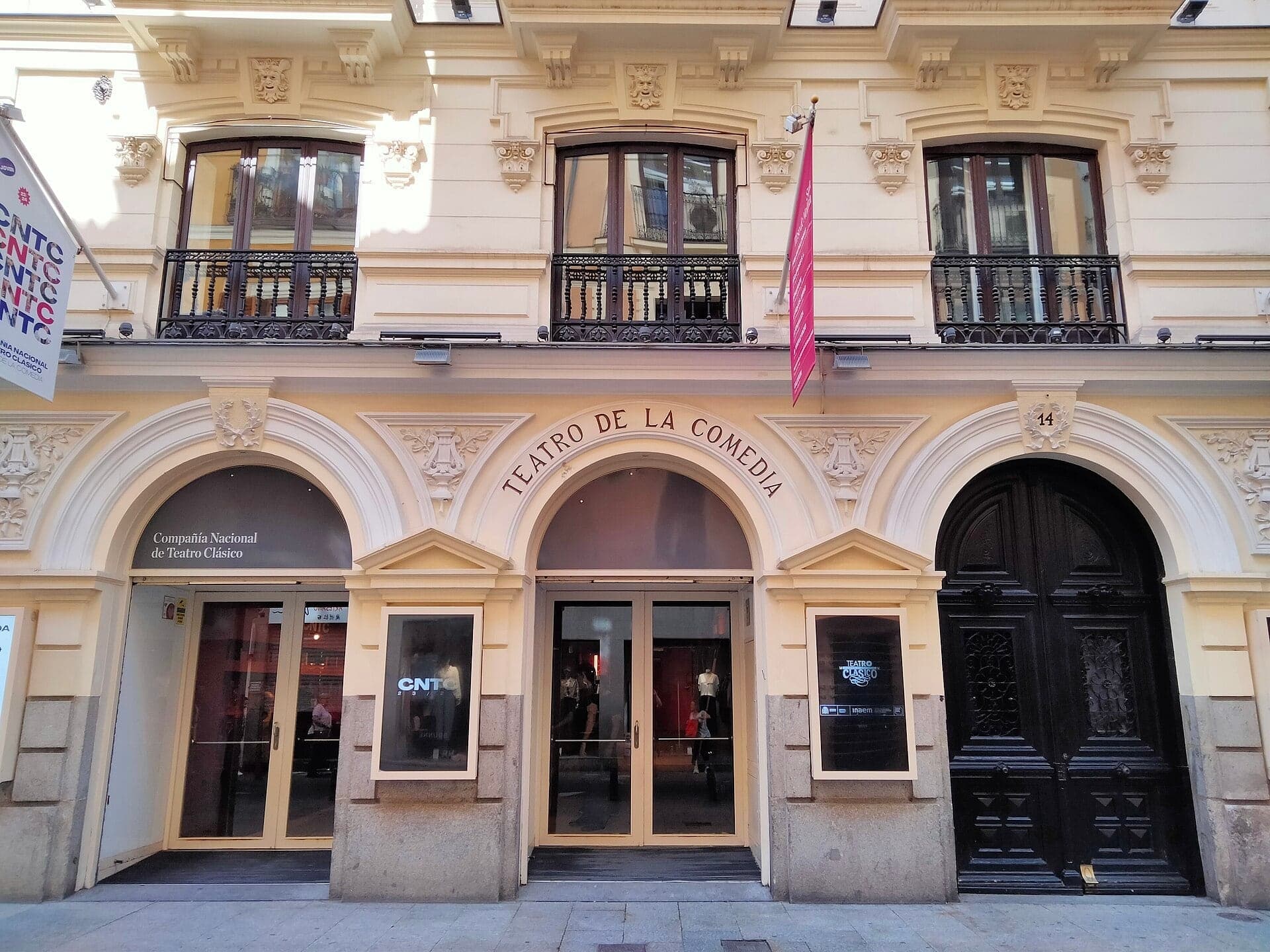
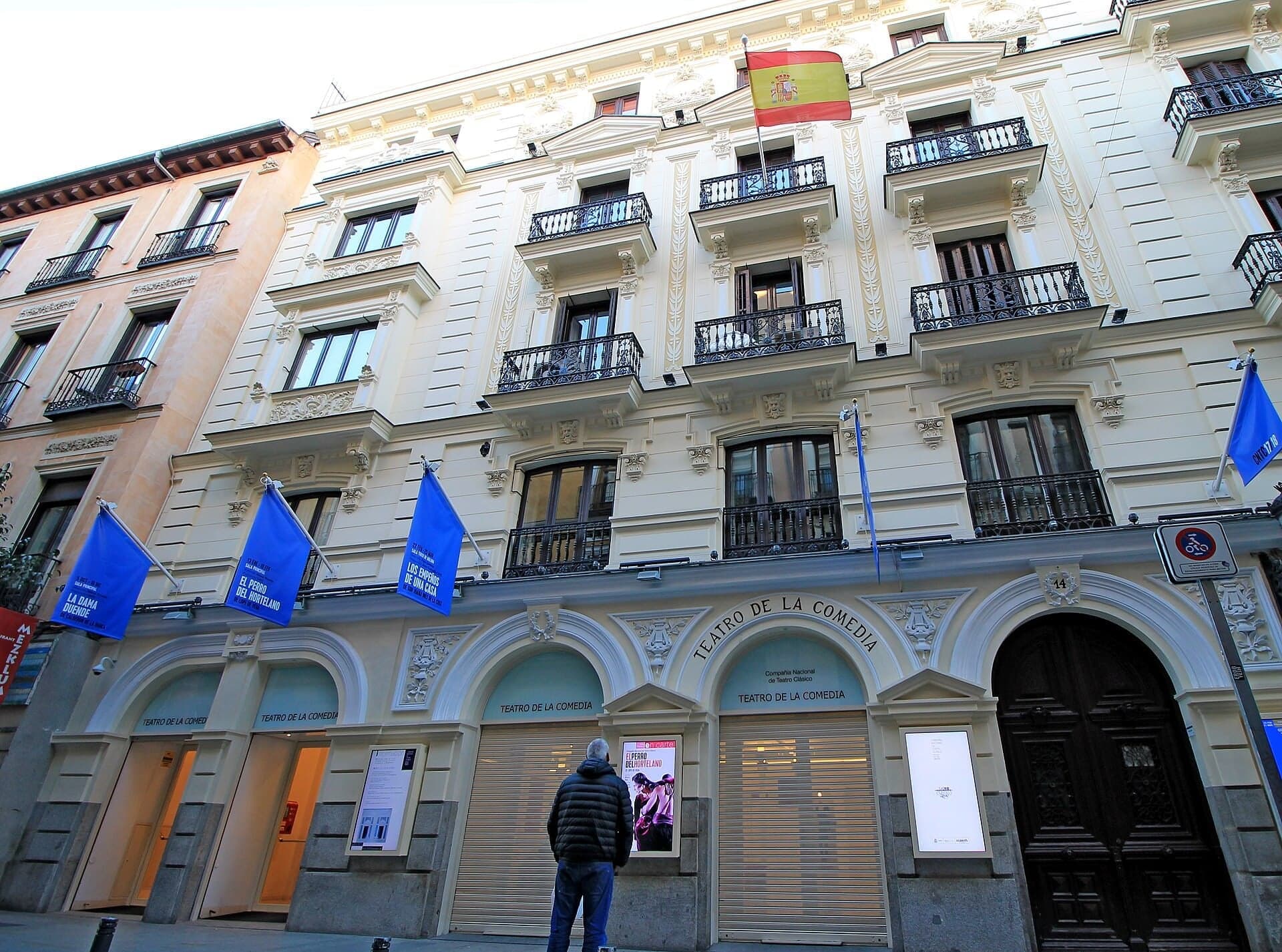
Teatro de la Comedia
An iron theater of 1875 stands in the playhouse street, now home to Spain's national company for classical drama.
- 2
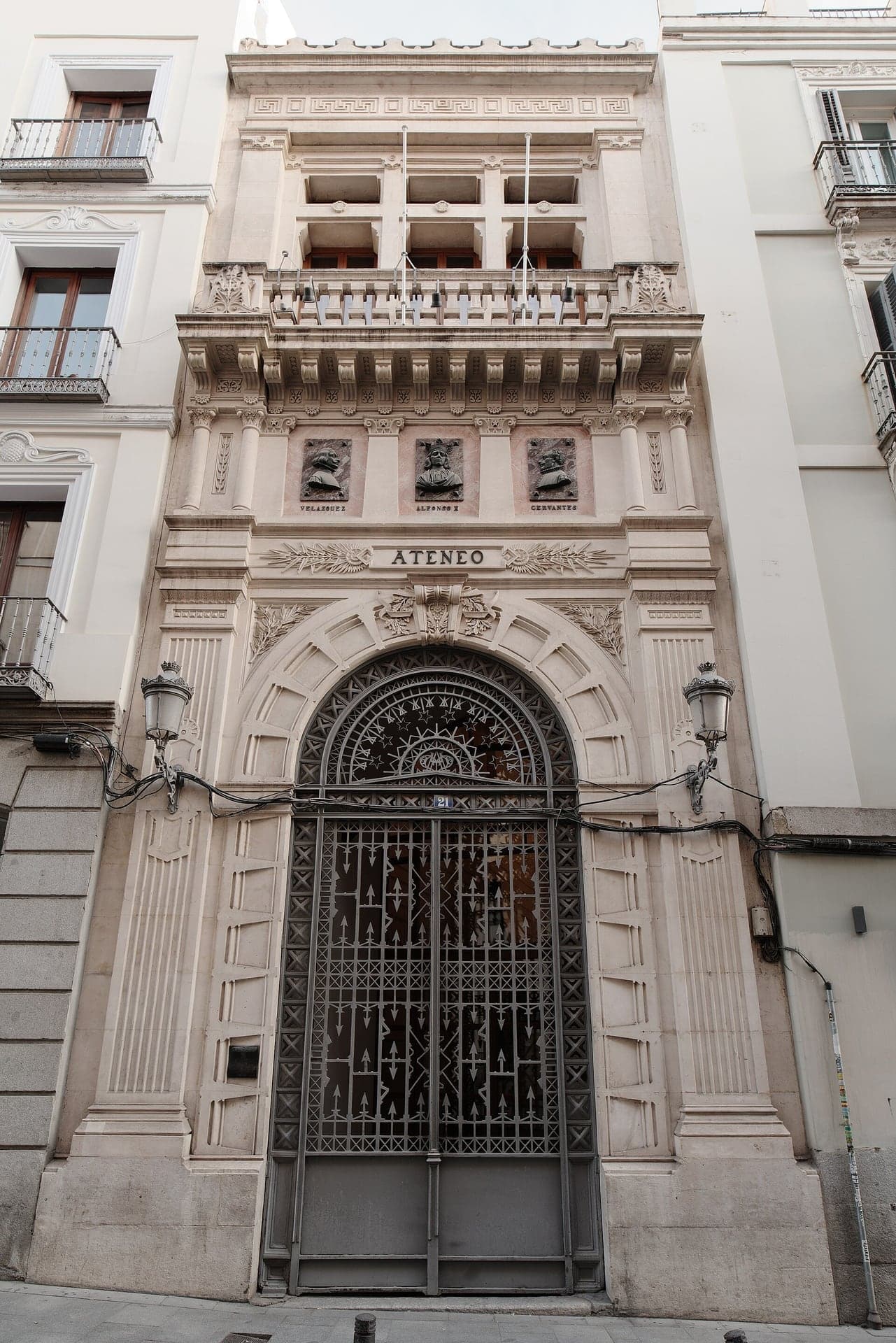
Ateneo de Madrid: A Club Built to Argue
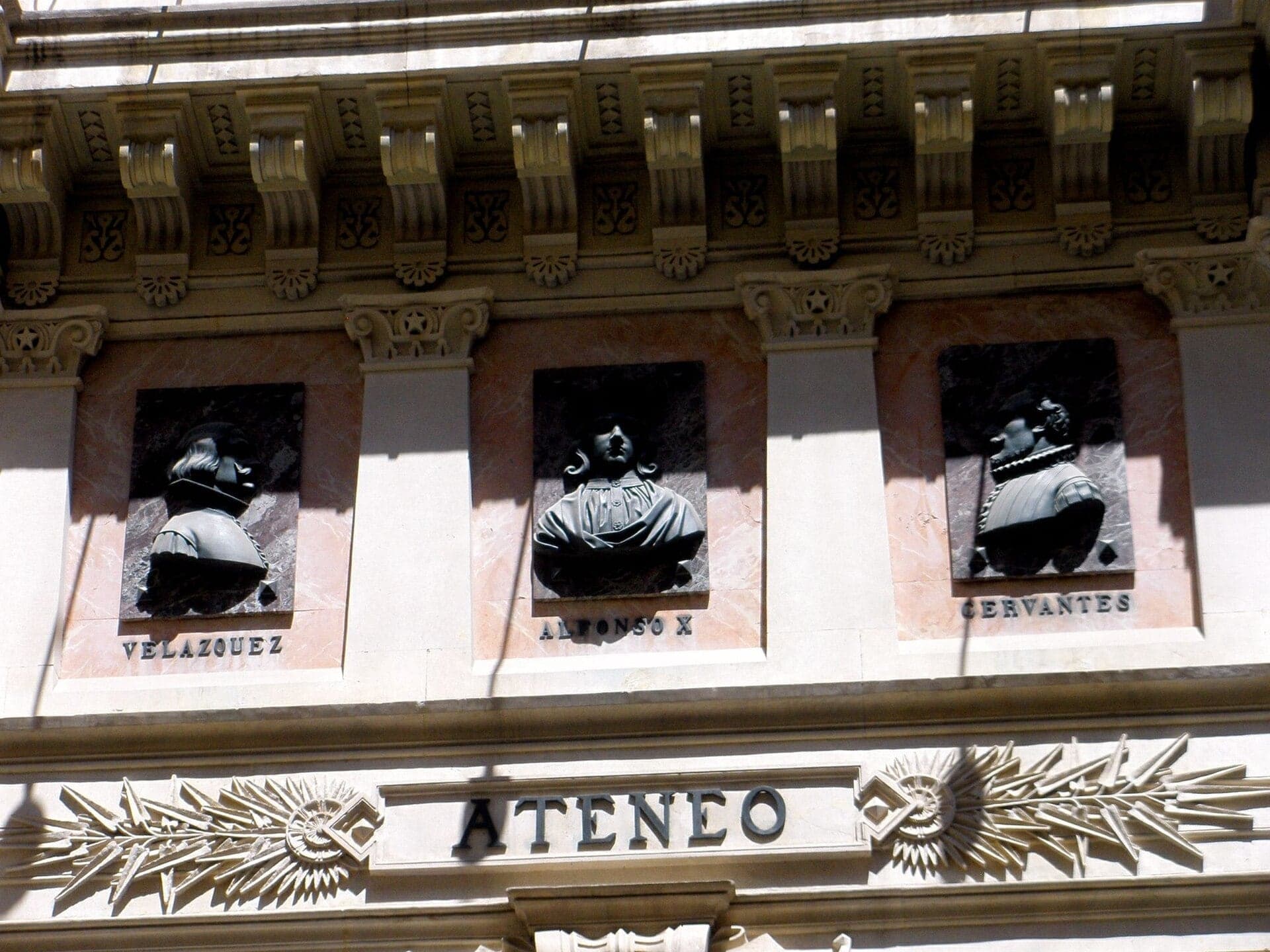
A private club founded by liberals back from exile in 1835, with Cervantes among the medallions on its front.
- 3
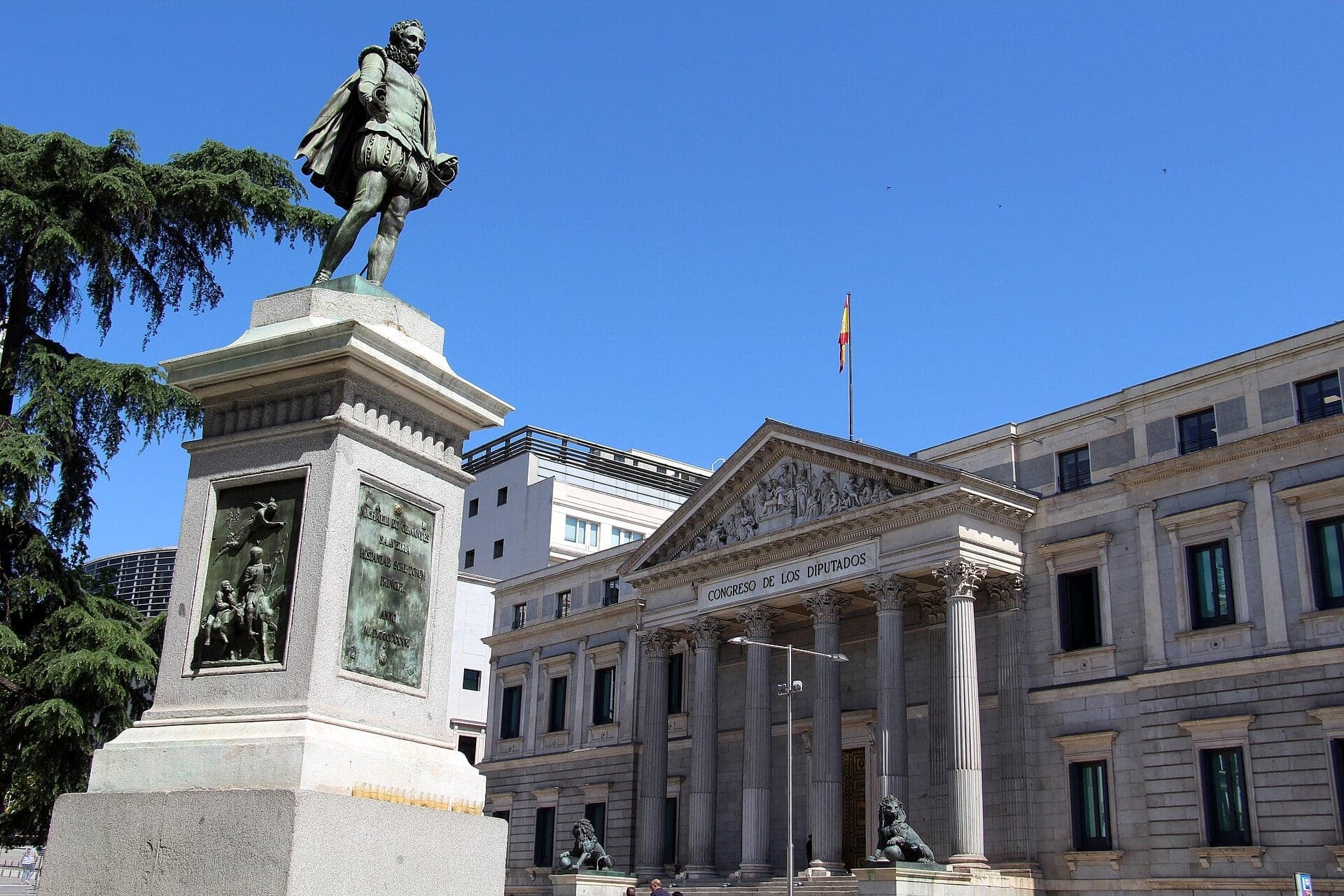
Plaza de las Cortes: Cervantes and the Lions
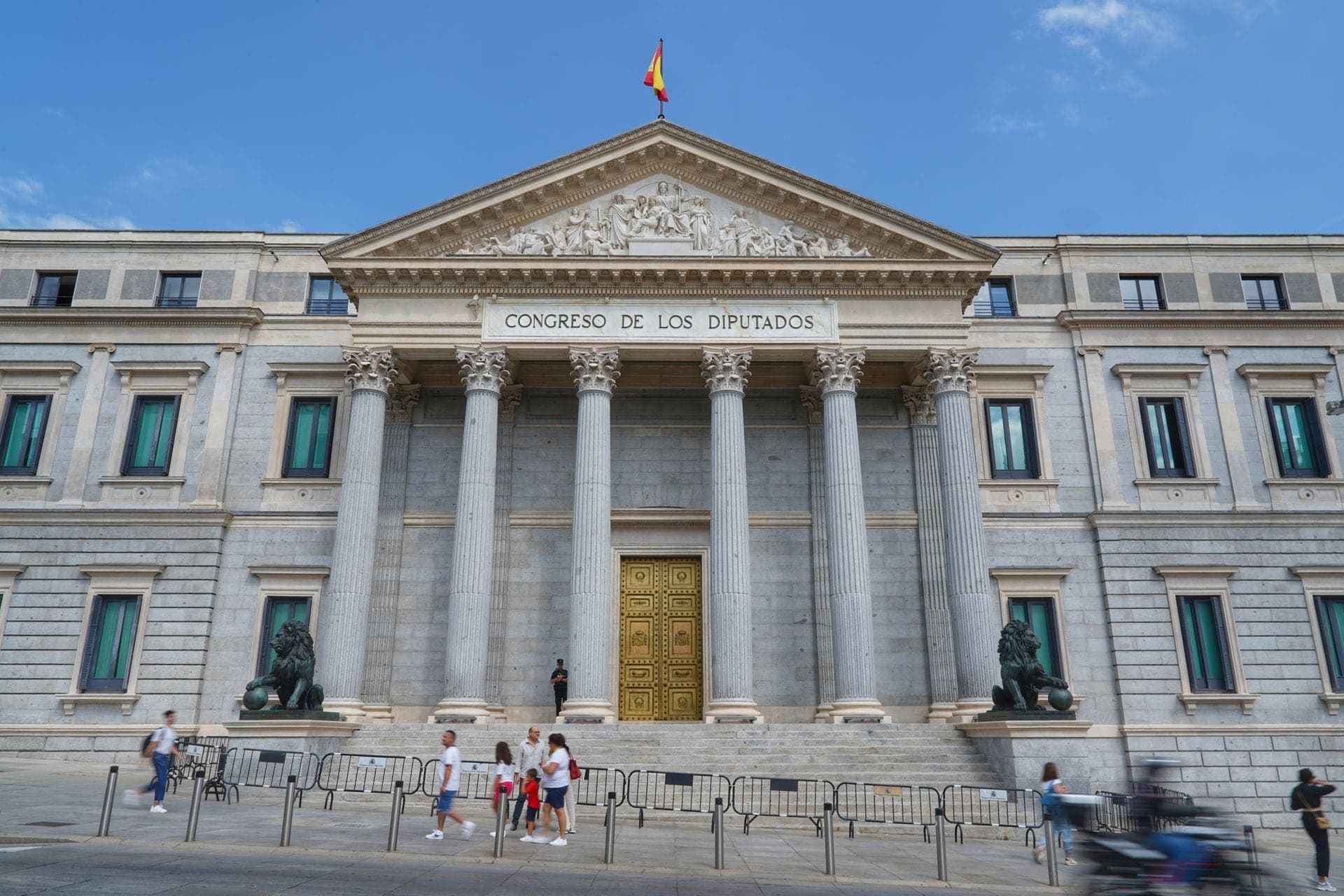
Cervantes in bronze faces the Congress of Deputies, whose lions were cast from captured cannon at the third attempt.
- 4
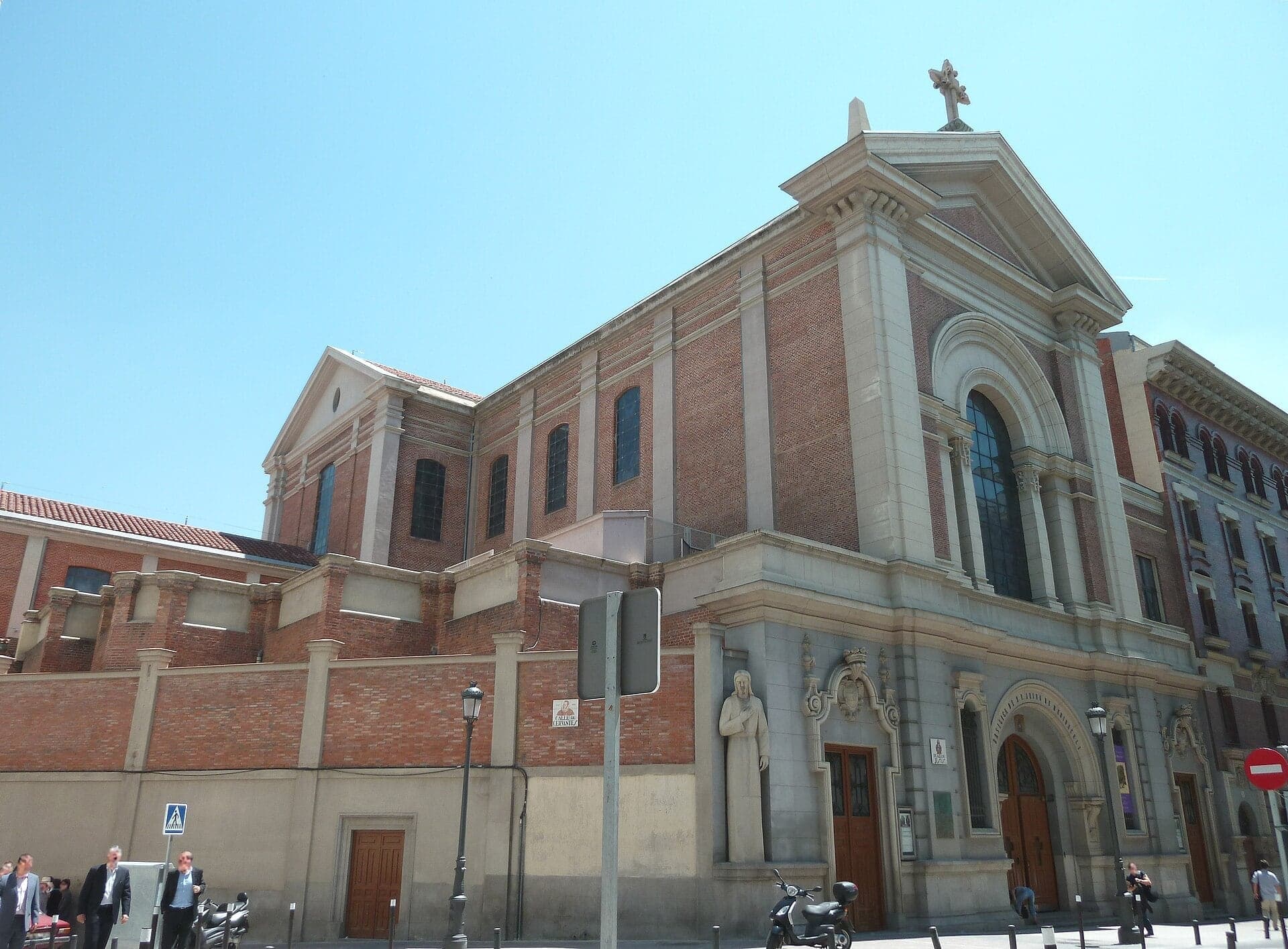
Basílica de Jesús de Medinaceli
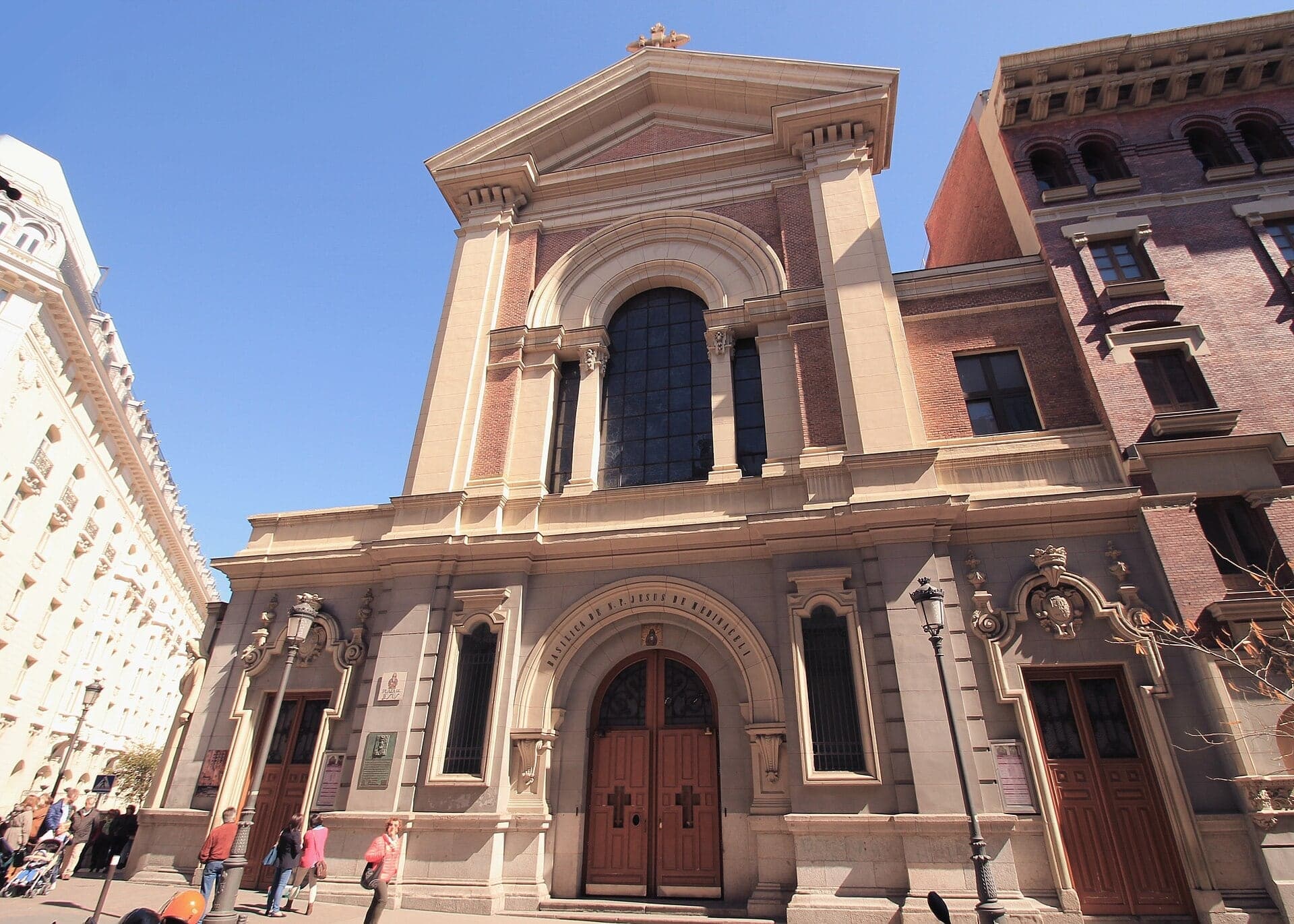
A carved Christ brought to Madrid in 1682 draws a Friday queue, as people line up to kiss its foot.
- 5
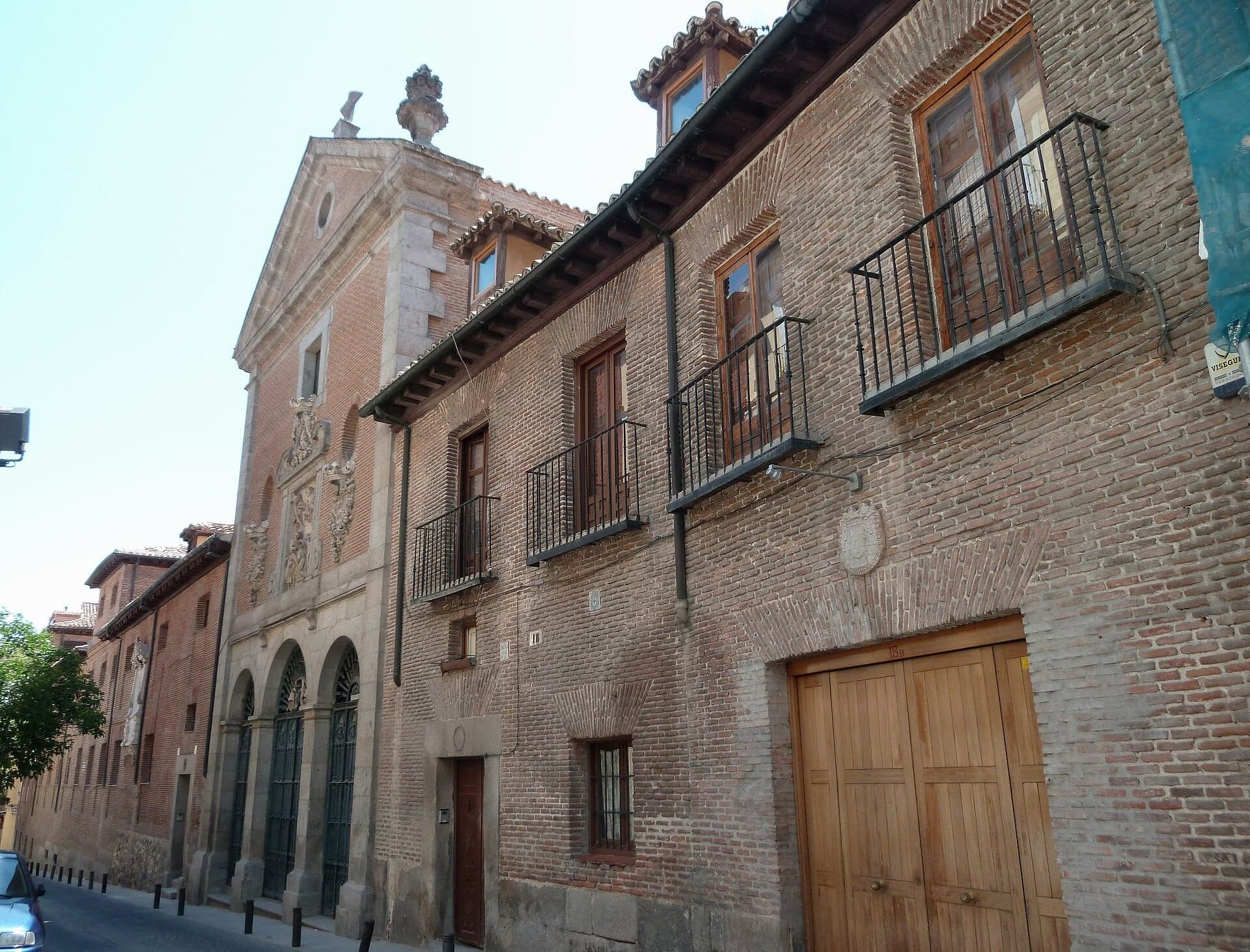
Trinitarias: Where Cervantes Was Buried
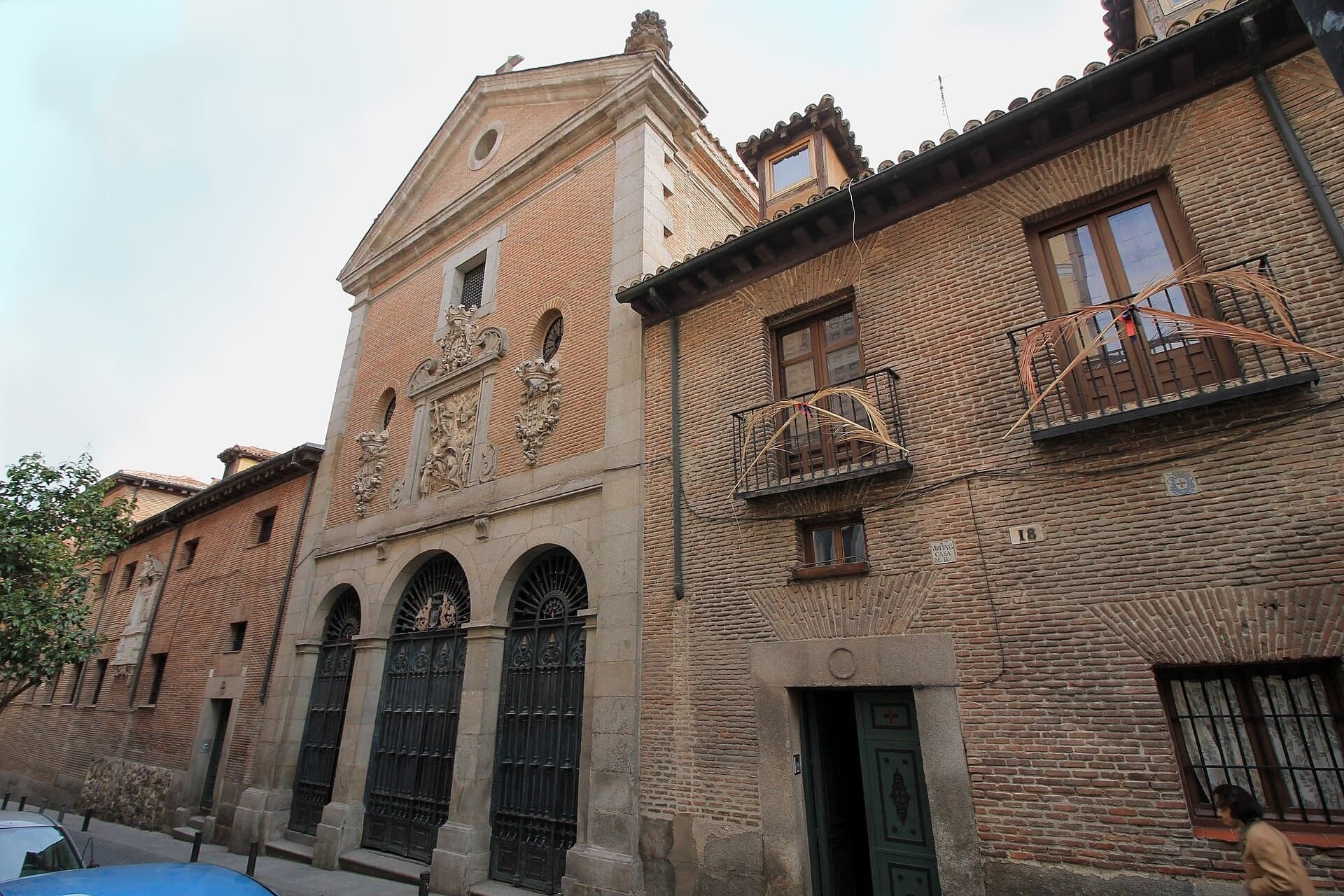
Behind this plain convent wall Cervantes was buried in 1616, and a 2015 monument now holds his probable remains.
- 6
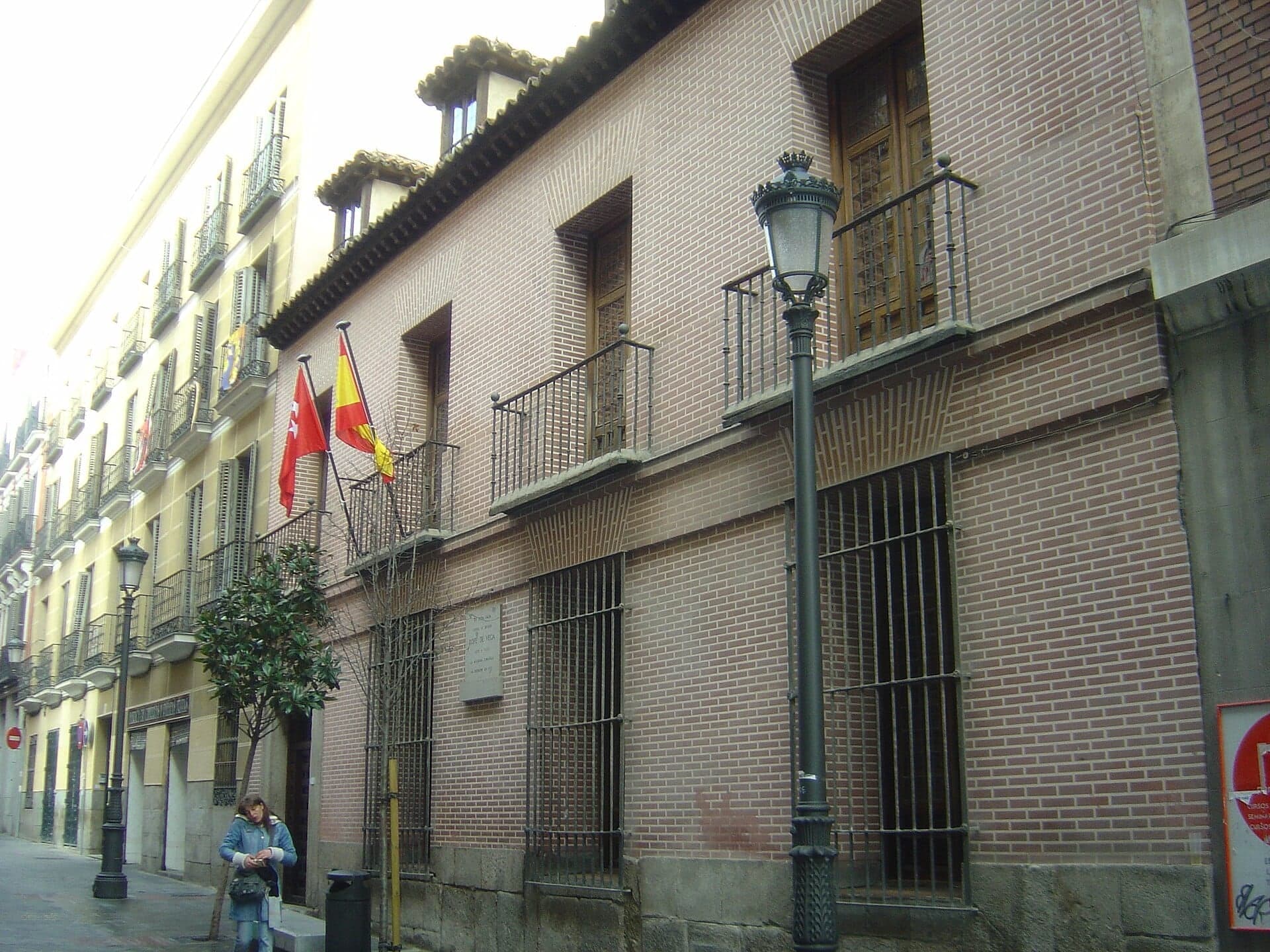
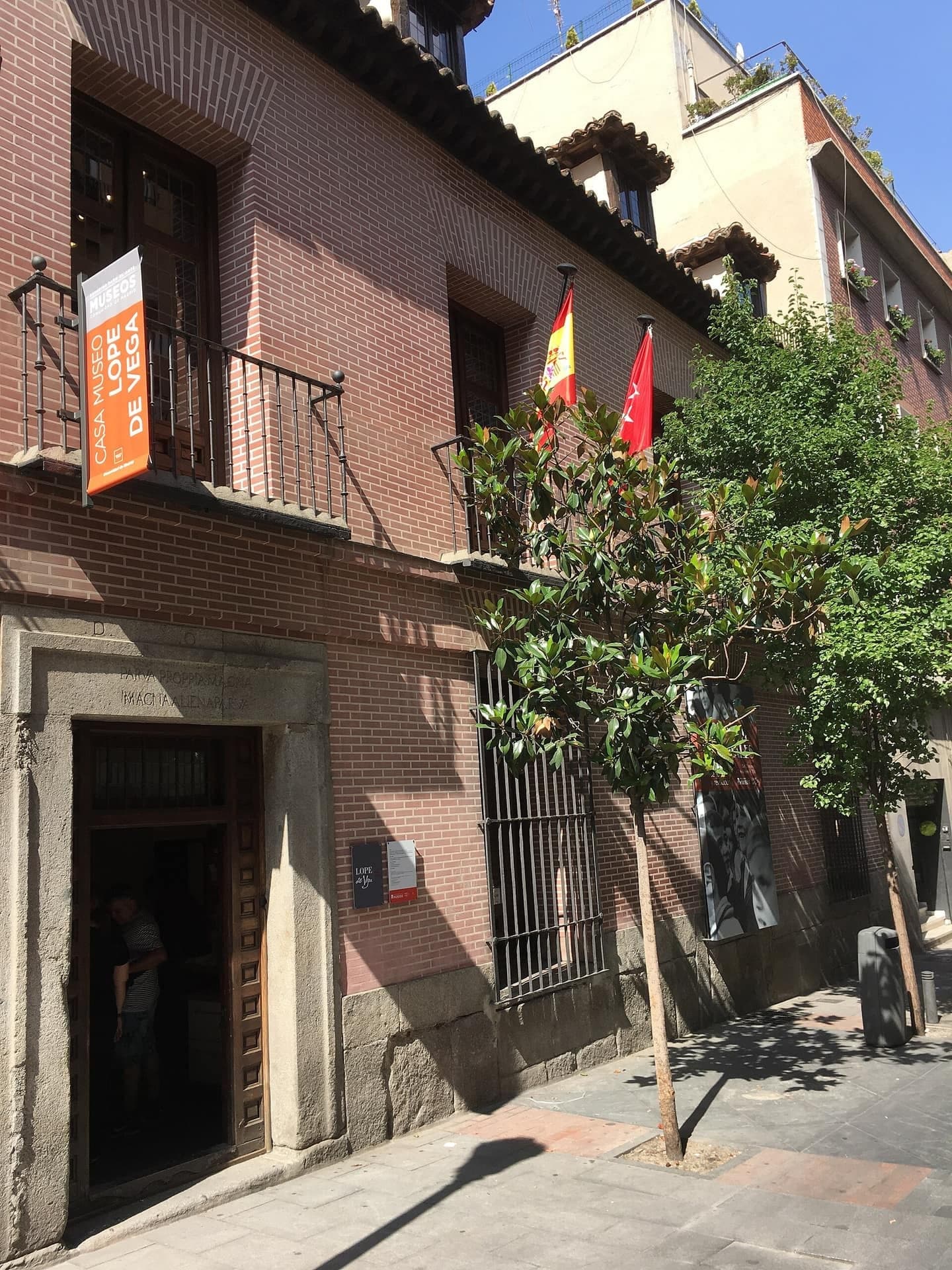
Casa Museo Lope de Vega
Lope de Vega lived his last 25 years in this 1578 house, on the street named after Cervantes.
- 7
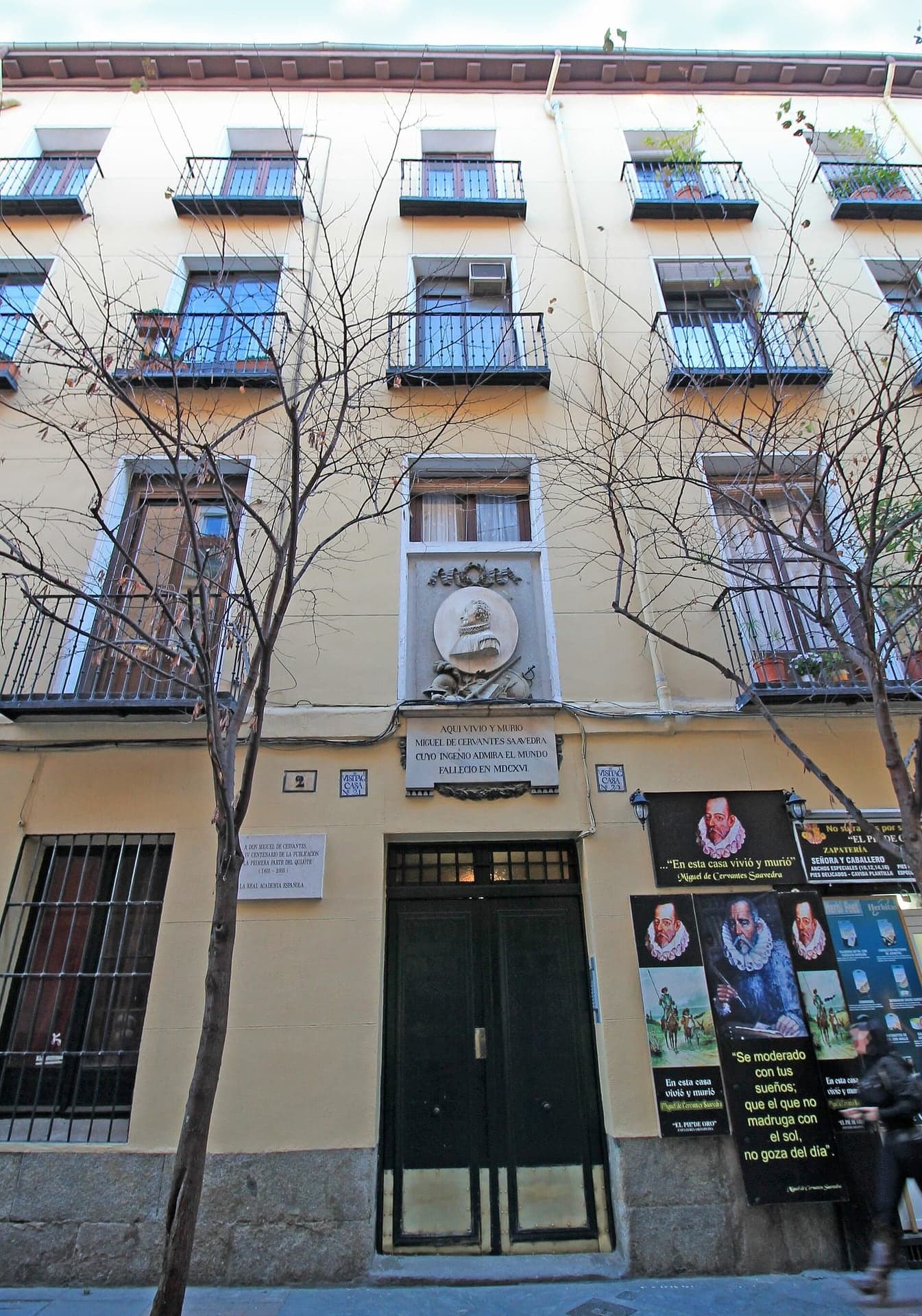
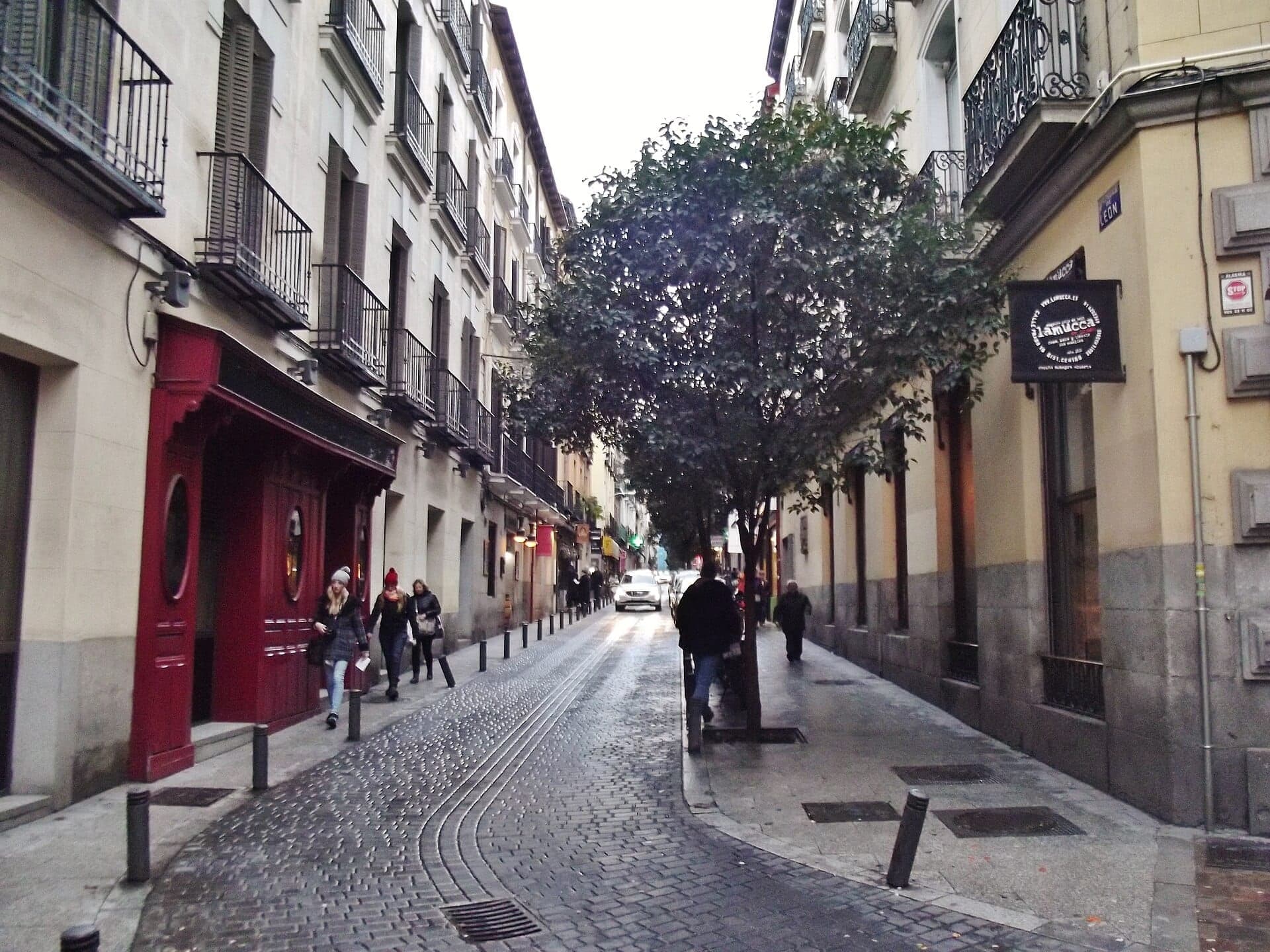
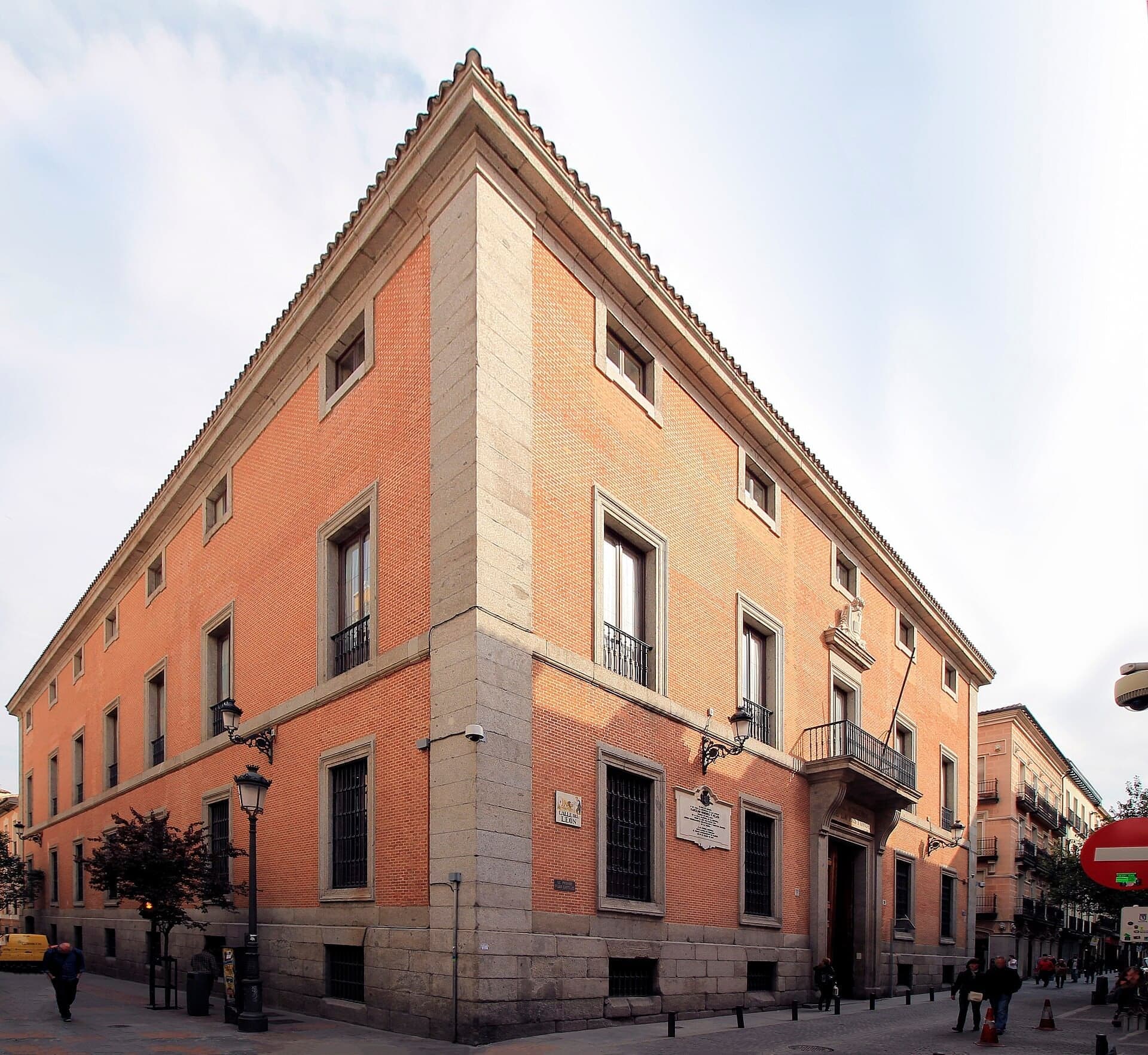
Where Cervantes Died: Calle del León
Cervantes died in a house on this corner in 1616. It was pulled down in 1833, leaving a portrait relief instead.
- 8
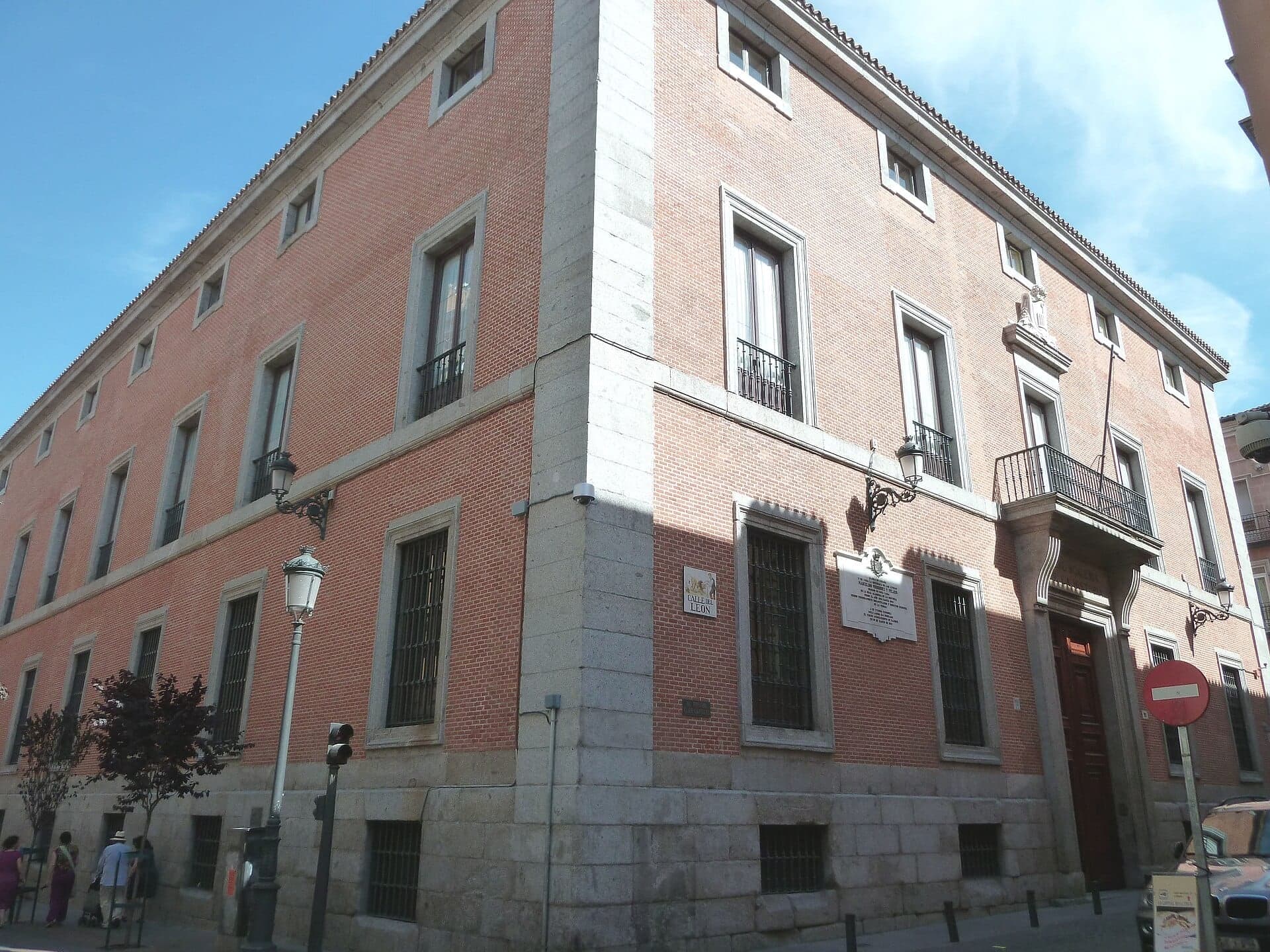
Real Academia de la Historia: A Fireproof Book Store
Juan de Villanueva's 1788 depot for prayer books has no wooden floors, and Don Quixote's first line lies underfoot.
- 9
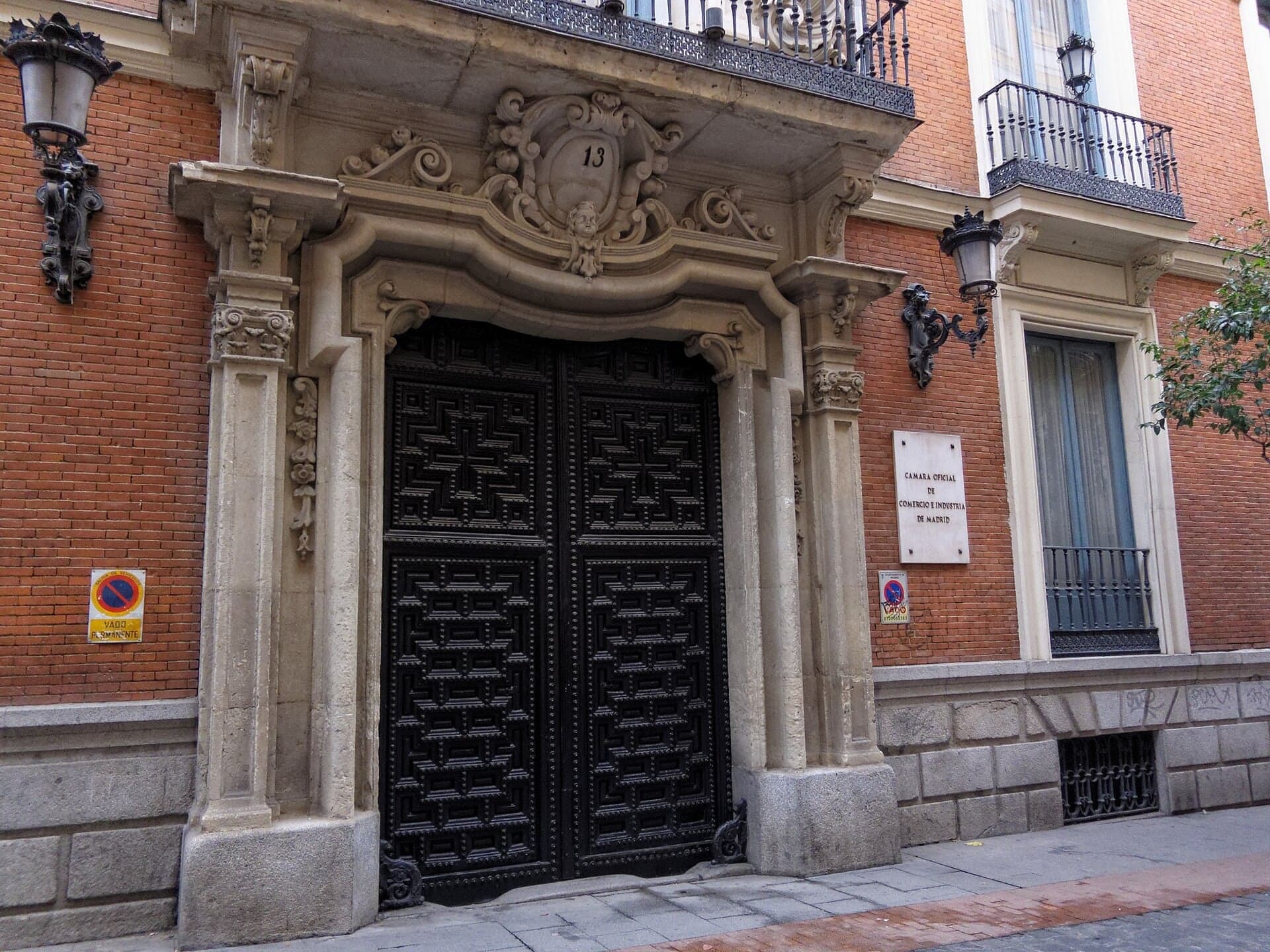
Palacio de Santoña: One Doorway, Twice
Pedro de Ribera's 1730s granite doorway faces Calle del Príncipe, while an 1874 copy fronts Calle de las Huertas.
- 10
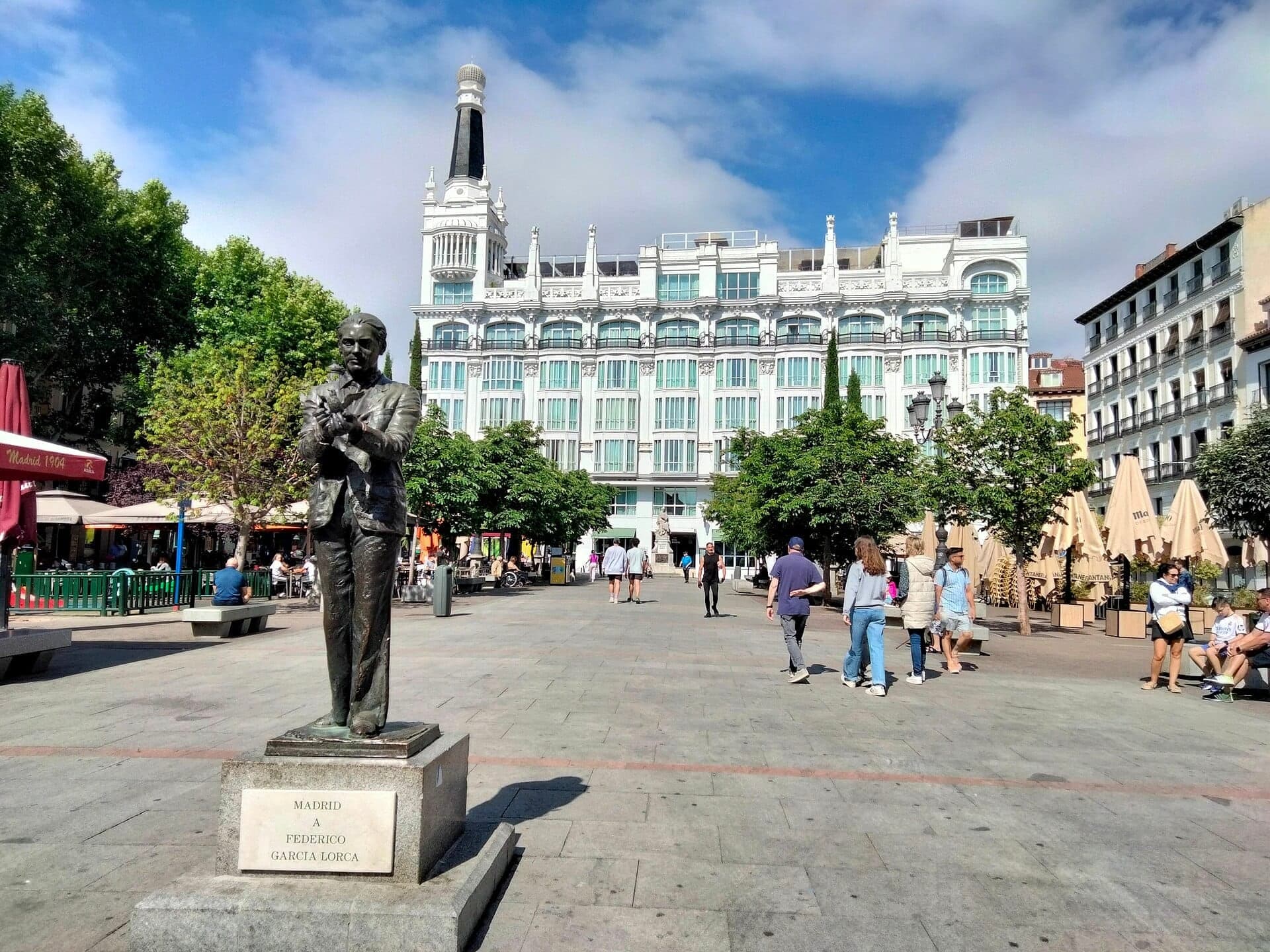
Plaza de Santa Ana: The Playhouse Site
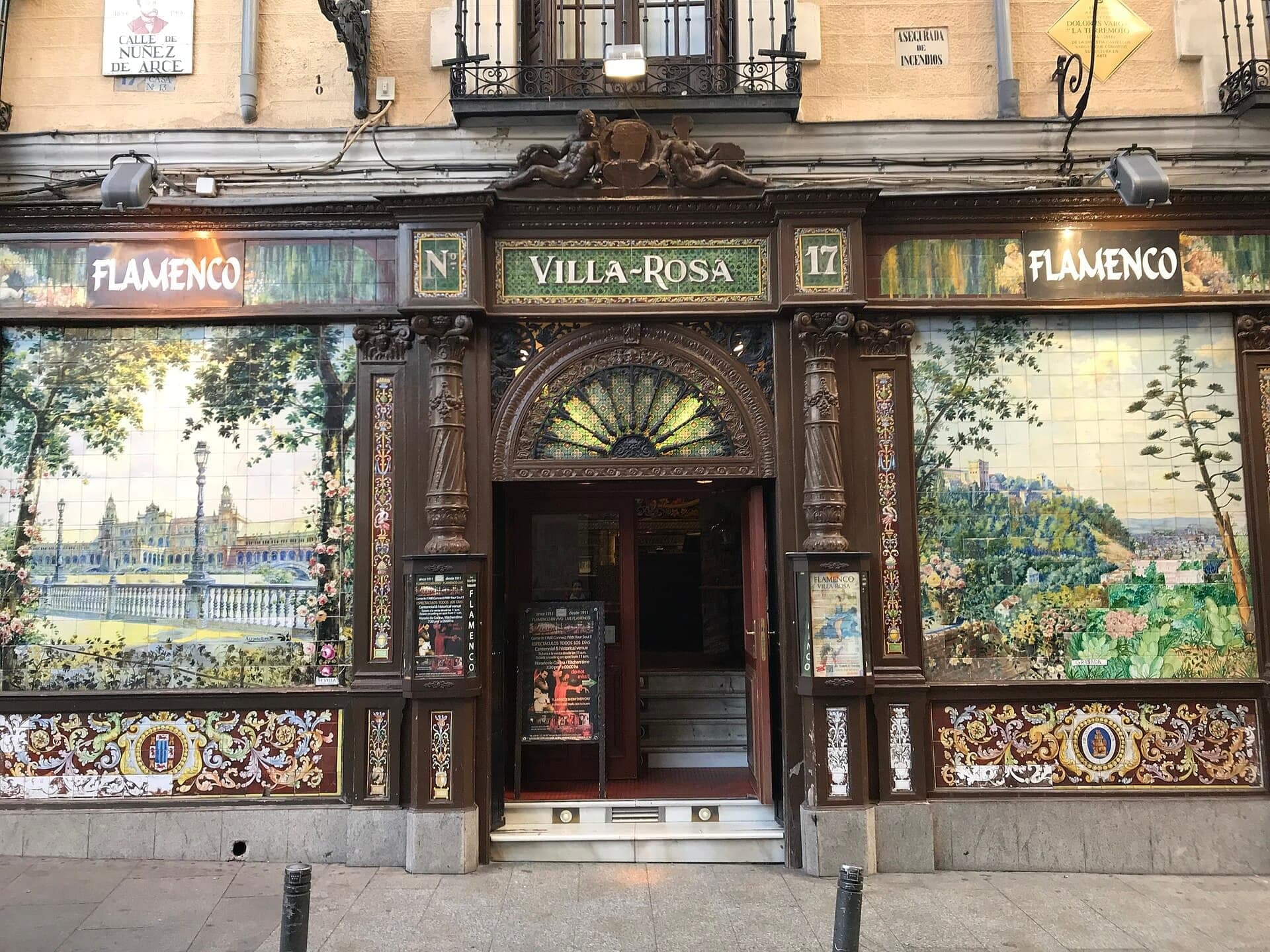
The walk ends at a theater on a 1580s playhouse site, with Calderón, Lorca and a tiled flamenco front.
Details
Best Time to Visit
Tuesday to Sunday by day. Lope de Vega's house is closed on Mondays and can only be visited on a free guided tour booked ahead (Tuesday to Sunday 10am to 6pm, last visit 5pm), so book a slot that fits the middle of the walk. Late afternoon is a good finish: the sun from the west lights the Teatro Español's front, and the Plaza de Santa Ana fills up for the evening. Fridays bring a long queue at the Basílica de Jesús de Medinaceli, and on the first Friday of March the square in front of it is packed. Checked 14 October 2026.
Pro Tips
- •Getting to the start: Sevilla Metro (line 2) is about 250 meters north of the Teatro de la Comedia, with an entrance on Calle de Alcalá; Sol (lines 1, 2 and 3, and Cercanías trains) is about 300 meters north-west. From Sevilla, walk south down Calle del Príncipe. Straight-line distances. Checked 14 October 2026.
- •Getting away from the end: Antón Martín Metro (line 1) is about 300 meters from the Plaza de Santa Ana and has no lifts (about 65 steps to the platforms); Sol is about 300 meters north-west. Halfway, Estación del Arte (line 1) is about 350 meters from the Basílica de Jesús de Medinaceli.
- •Casa Museo Lope de Vega (stop 6): free, guided visits only, up to 15 people, every 30 minutes, about 35 minutes, in Spanish, English, Italian or French. Book ahead by phone, (+34) 91 429 92 16, or by the museum's email. Tuesday to Sunday 10am to 6pm, last visit 5pm; closed Mondays. Checked 14 October 2026 at casamuseolopedevega.org.
- •Teatro de la Comedia (stop 1): performances are ticketed; in October 2026 the national classical company is playing Lope de Vega's El caballero de Olmedo, Tuesday to Sunday until 22 November. Guided visits of the building run on Wednesdays and Thursdays at noon, up to 20 people, about an hour. Checked 14 October 2026 at esmadrid.com.
- •Congreso de los Diputados (stop 3): visits by booking only. Individuals on Fridays at 12 noon and Saturdays at 10.30am, 11.15am and 12 noon; bookings open at 1pm on the Saturday before. No visits in August or on parliamentary and institutional days. Checked 14 October 2026 at esmadrid.com.
- •Basílica de Jesús de Medinaceli (stop 4): Monday to Thursday 7am to 1.30pm and 5pm to 8.45pm; Saturday 8.30am to 1.30pm and 5pm to 8.45pm; Sunday and holidays 8.30am to 2pm and 5pm to 8.45pm; Fridays from 6.30am into the night for the veneration. The image is in the crypt. Checked 14 October 2026 at esmadrid.com.
- •Trinitarias (stop 5): an enclosed convent; the church opens only around Mass times (from half an hour before Mass). Group visits can be arranged by phone, +34 91 429 56 71. Checked 14 October 2026 at esmadrid.com.
- •Teatro Español (stop 10): box office Tuesday to Sunday 4.30pm to 8.30pm, closed Mondays. Checked 14 October 2026 at esmadrid.com.
- •Los Gabrieles, the tavern on Calle de Echegaray passed between stops 1 and 2, reopened on 20 April 2026 after 21 years; its painted tiles are inside. Sunday to Wednesday noon to 1am, Thursday to Saturday noon to 2am. It is a bar: no ticket, a drink expected. Checked 14 October 2026 at esmadrid.com.
- •The Tablao Flamenco 1911 on the Plaza de Santa Ana holds four shows a day, at 6pm, 7.30pm, 9pm and 10.30pm. Checked 14 October 2026 at esmadrid.com.
- •Lope de Vega was buried in the church of San Sebastián on Calle de Atocha, about a hundred meters south of the Plaza de Santa Ana, past the Plaza del Ángel, if you want to extend the walk.
- •The Ateneo (stop 2) is a private members' club with a members-only library; check its program for public events.
- •The whole route is flat and step-free, on setts and paving stones, with asphalt at the east end of Calle de Cervantes.
Safety & Precautions
- •Between stops 4 and 5 the route crosses three marked crossings with no lights round the Plaza de Jesús, over Calle del Duque de Medinaceli and into Calle de Lope de Vega. Check which way the traffic is coming before stepping out.
- •Calle del Príncipe, Calle del Prado and the lanes round the Plaza de Santa Ana are shared sett streets: residents' cars, taxis and delivery vans move slowly among walkers. The last leg crosses a short sett lane into the square.
- •Fridays: a queue for the Medinaceli image forms on the church steps and along the street; do not stand in it. On the first Friday of March the Plaza de Jesús is packed for hours.
- •The Plaza de Santa Ana and Calle de las Huertas are busy and noisy on Thursday to Saturday nights; keep your phone and bag close on the terraces.
- •Calle de Cervantes, Calle de Lope de Vega, Calle de Quevedo and Calle del León are residential, and the Trinitarias is a working enclosed convent: keep voices low, and do not ring doorbells.
- •Police guard the Congress of Deputies: photograph the lions from the Plaza de las Cortes. The route does not cross the Carrera de San Jerónimo.
- •Interior visits to the Palacio de Santoña are suspended. Checked 14 October 2026.
- •Antón Martín Metro, nearest to the end, has no lifts; use Sol if you need step-free access.
Travel advisory: Exercise Increased Caution (Level 2).
Gallery
Related Reading
Go deeper on what you'll see, hear, and walk through.
Read the walk
The full story of Barrio de las Letras: Cervantes, Lope and the Playhouses, in words. Prefer to listen? Play it narrated, from home or on location.
Introduction
Madrid, the capital of Spain, was the stage of Spain's Golden Age of writing, and two of its greatest writers, Miguel de Cervantes and Lope de Vega, lived and died in the few streets this walk crosses. Madrid calls them the Barrio de las Letras, the quarter of letters.
The quarter has three layers. The first is real: the house Lope de Vega bought, the convent where Cervantes was buried, and the street where one of the open-air playhouses of their day stood. The second came in the eighteen hundreds, when Madrid set out to remember them, with a statue, a carved portrait on a rebuilt house, and a street renamed after Cervantes. The third belongs to our own century: lines of writing set in brass in the paving, and a new monument over bones that are very probably Cervantes's own.
Three people shape what you will see: Cervantes, the author of Don Quixote; Lope de Vega, poet and playwright; and Juan de Villanueva, the architect of the Prado, whose work you will meet twice.
The walk is ten stops over just under one and a half kilometers, less than a mile, and takes about an hour. It is flat and step-free, and crosses no main road. Every stop works from the street. It begins at the Teatro de la Comedia, near Sevilla Metro, and ends in the Plaza de Santa Ana, in front of a theater.
1. Teatro de la Comedia
Welcome to Calle del Príncipe, where this walk begins. The theater on this narrow street is the Teatro de la Comedia. The street is only about ten meters wide, so step back against the far side to see its front.
It opened in eighteen seventy-five. In nineteen fifteen a fire gutted it, and it was rebuilt the same year. It closed again for a long restoration and reopened in twenty fifteen, and in twenty twenty-five Spain declared it a protected monument, as a clear example of Madrid's iron architecture. That iron is inside, in the structure of the auditorium, so from the street you see only the front.
Today it is the home of the Compañía Nacional de Teatro Clásico, Spain's national company for its classical theater. And this is the right street for it.
In the fifteen and sixteen hundreds, Madrid's plays were staged in open-air playhouses called corrales de comedias. Two of them stood in this quarter, the Corral de la Cruz and the Corral del Príncipe, and the Corral del Príncipe stood a little further down this very street. A theater still stands on its site, the Teatro Español, and this walk ends in the square in front of it.
That is the first layer of the quarter: the real one, the age of Lope de Vega, whose plays were staged a few steps from here. The building in front of you belongs to the next layer, a new theater of the eighteen hundreds, built in a street that already had one.
Follow the route down this street and along a narrow pedestrian lane. As you cross Calle de Echegaray, the old tavern just up it is Los Gabrieles, founded in nineteen oh seven. It reopened in April twenty twenty-six after twenty-one years closed, and its famous painted tiles are inside. Next is a club founded to argue.
2. Ateneo de Madrid: A Club Built to Argue
Walk on along Calle del Prado and stop across the street from number twenty-one, the narrow front on your left. This is the Ateneo de Madrid. It is a private members' club, so this stop is from the street.
Look up and find three round medallions on the front. They are portraits of three figures the club holds up: King Alfonso the Wise, Cervantes, and the painter Velázquez. Learning, letters and art, carved into a front on a side street.
The club's roots go back to eighteen twenty, when a society was set up in Madrid to defend free thought and its expression through free discussion. Three years later that liberal moment ended, and its members carried the society on in exile, in London. The Ateneo itself was founded in eighteen thirty-five, by liberals back from exile.
It moved from house to house until this one. In eighteen eighty-four this building was opened with a famous speech, and the king and queen came to hear it. Inside there is a library of more than two hundred thousand volumes, and a debating room the members call the Cacharrería. The Ateneo says six heads of government and all of Spain's Nobel Prize winners have passed through its doors.
This is the second layer of the quarter. In the eighteen hundreds, Madrid's writers and politicians organized, argued, and began to honor the Golden Age. Here, Cervantes is already part of the decoration, on the front of a club founded more than two hundred years after his death.
Follow the route on along Calle del Prado. Next is Cervantes himself, standing in front of the parliament.
3. Plaza de las Cortes: Cervantes and the Lions
Walk on into the square and stop on its paving, with the statue of Cervantes in its garden ahead and to your right. This is the Plaza de las Cortes, and the building with the columns across the street is the Congreso de los Diputados, the Congress of Deputies, Spain's parliament.
Start with the statue. This bronze Cervantes was set up here in eighteen thirty-five, close to the house where he spent his last years, and it is one of the earliest statues of a writer in Madrid. On its pedestal, too small to read from here, a relief shows a scene from Don Quixote: the knight challenging a lion in its cage.
Now look past the statue to the columns. The parliament was built between eighteen forty-three and eighteen fifty, on the site of an old church. Six columns carry the porch, and steps rise to it between two lions. The street slopes, and the parliament's own history notes that the slope broke the symmetry such a front needs.
The lions took three attempts. The first pair was modeled in plaster, and judged not majestic enough. A second pair was carved in stone, and its sculptor asked for money to go to Paris and study real lions. Then the decision fell on bronze, cast from enemy cannon captured in the African War of eighteen fifty-nine to eighteen sixty. Only in eighteen seventy-two was the casting reported finished. Madrileños call them Daoíz and Velarde, after two artillery officers killed in the rising of the second of May, eighteen oh eight, but that is only a nickname.
From here, the lion on the right is the clearer one; the other may be partly behind a tree. Police guard the steps, so take your photographs from this side.
Follow the route out of the square and down quiet streets. Next is a church where people queue every Friday.
4. Basílica de Jesús de Medinaceli
Walk on to the end of Calle de Cervantes and stop before the crossing, with the church front ahead of you across a small square. This is the Basílica de Jesús de Medinaceli, one of Madrid's six basilicas, a title it was given by the Pope in nineteen seventy-three. The front you…
Full narration for this stop unlocks with the tour.
5. Trinitarias: Where Cervantes Was Buried
Walk on along Calle de Lope de Vega and stop at the corner of Calle de Quevedo, beside the long plain wall on your left. Behind it lives an enclosed community of nuns, the Discalced Trinitarians. Their church opens only around Mass times, so this is a stop to keep voices…
Full narration for this stop unlocks with the tour.
6. Casa Museo Lope de Vega
Walk on up Calle de Quevedo and stop where it meets Calle de Cervantes. Lope de Vega's house is just along Calle de Cervantes to your right, on its far side: the plain two-story front at number eleven. It is a museum, free to visit, but only on a guided tour booked ahead, and it…
Full narration for this stop unlocks with the tour.
7. Where Cervantes Died: Calle del León
Walk on to the end of Calle de Cervantes, where it meets Calle del León, and stop at the corner. Find the carved portrait of Cervantes on the corner house: a relief of his head and shoulders, with an inscription. People live here, so keep to the street. Cervantes lived in a…
Full narration for this stop unlocks with the tour.
8. Real Academia de la Historia: A Fireproof Book Store
Walk on down Calle del León and stop where it crosses Calle de las Huertas. Look down. Set into the paving here, in brass letters, is the first sentence of Don Quixote: En un lugar de la Mancha, de cuyo nombre no quiero acordarme. In a place in La Mancha, whose name I do not…
Full narration for this stop unlocks with the tour.
9. Palacio de Santoña: One Doorway, Twice
Walk on to the end of this stretch of Calle de las Huertas, turn right up Calle del Príncipe, and stop beside the palace on your left, with its carved stone doorway. This is the Palacio de Santoña. It belongs to Madrid's Chamber of Commerce, and its visits are suspended, so this…
Full narration for this stop unlocks with the tour.
10. Plaza de Santa Ana: The Playhouse Site
Walk on along the south side of the Plaza de Santa Ana, with the square on your right, and stop opposite the statue of the playwright Calderón. This is where the walk ends. Cross the little lane, watching for cars, to stand near it. Now turn round and look back along the square…
Full narration for this stop unlocks with the tour.
- Teatro de la Comedia, c. Príncipe 14 (Madrid) — Enric, CC BY 4.0 · source
- Façade of Teatro de la Comedia (a theatre) in Madrid (Spain). — Luis García (Zaqarbal), CC BY-SA 4.0 · source
- Exterior view of the Ateneo de Madrid (Spain). — Javier Perez Montes, CC BY-SA 4.0 · source
- Huertas | Plaza de las Cortes — Fred Romero from Paris, France, CC BY 2.0 · source
- Façade of Basílica de Jesús de Medinaceli in Madrid (Spain). — Luis García (Zaqarbal), CC BY-SA 3.0 · source
- West façade of Basílica de Jesús de Medinaceli in Madrid (Spain). — Luis García (Zaqarbal), CC BY-SA 3.0 ES · source
- North façade of Convento de las Trinitarias Descalzas (a convent) in Madrid (Spain). — Luis García (Zaqarbal), CC BY-SA 3.0 · source
- North façade of Convento de las Trinitarias Descalzas (a convent) in Madrid (Spain). — Luis García (Zaqarbal), CC BY-SA 3.0 ES · source
- House-Museum Lope de Vega, Madrid — DIMSFIKAS, CC BY-SA 3.0 · source
- Casa de Lope de Vega. Madrid. — Miguel Hermoso Cuesta, CC BY-SA 4.0 · source
- Housing building at 2nd Calle de Cervantes (street) in Madrid (Spain). Writer Miguel de Cervantes lived some years and died in this place. — Luis García (Zaqarbal), CC BY-SA 3.0 ES · source
- Calle del León — Asqueladd, CC BY-SA 3.0 · source
- Former Nuevo Rezado in Madrid, home of the Spanish Royal Academy of History. — Luis García (Zaqarbal), CC BY-SA 3.0 · source
- Former Nuevo Rezado in Madrid, home of the Spanish Royal Academy of History. — Luis García (Zaqarbal), CC BY-SA 3.0 ES · source
- El Palacio de Santoña se encuentra en la esquina de las calles Huertas y Príncipe, Madrid. Es la sede de la Cámara de Comercio e Industria d — Barcex, CC BY-SA 3.0 · source
- Plaza de Santa Ana (Madrid), monument a García Lorca i hotel Reina Victoria — Enric, CC BY 4.0 · source
- Madrid - Barrio de las Letras — Triplecaña, CC BY-SA 4.0 · source
Images may be cropped or resized. Other photos via Unsplash and Pexels.