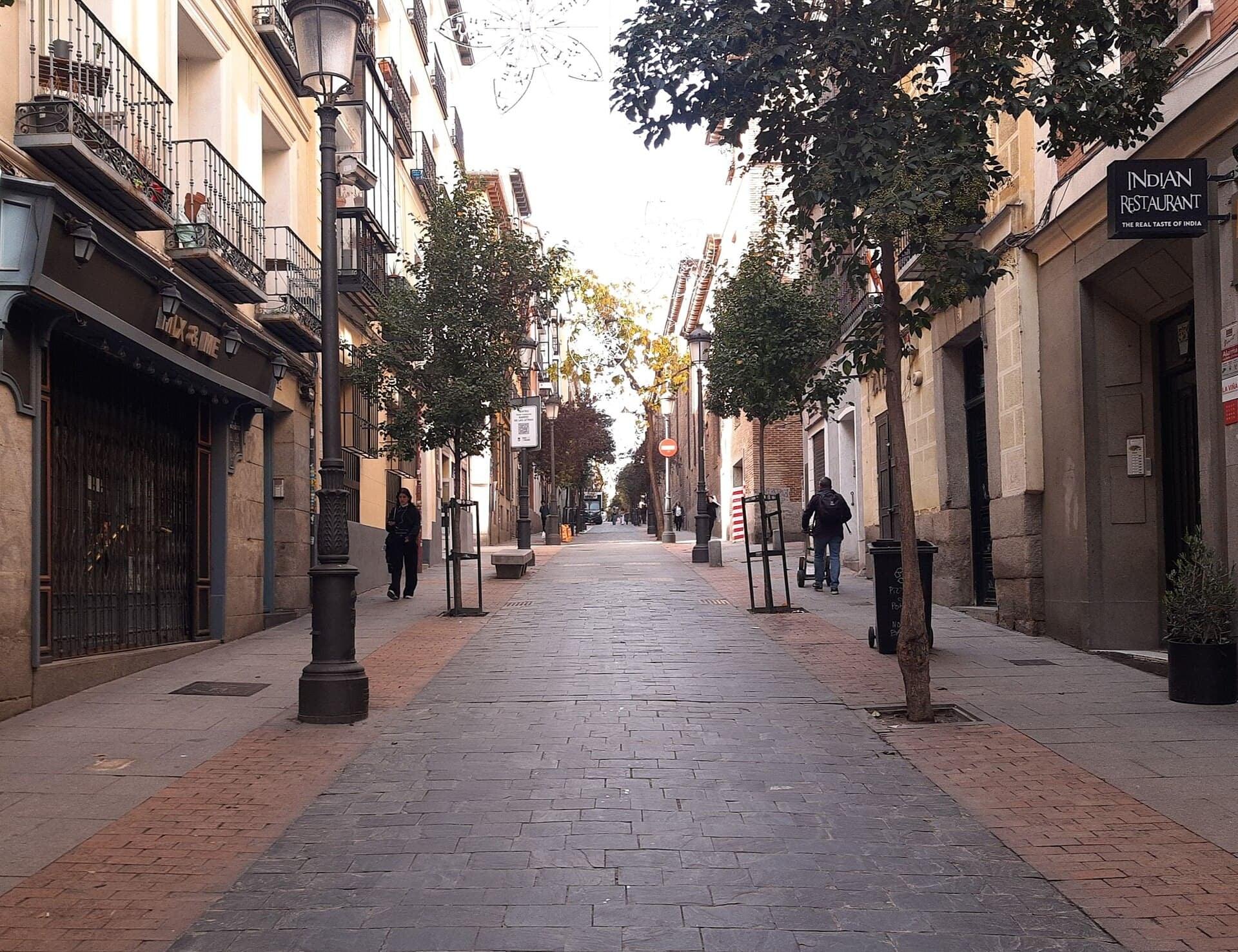
The writers' quarter is a stage set built on top of the real one. In a few streets east of Madrid's center, Miguel de Cervantes and Lope de Vega lived, wrote and died, and the city calls the area the Barrio de las Letras, the quarter of letters. But very little of what you see there is what they saw. The quarter has three layers: the Golden Age itself, the nineteenth century's effort to remember it, and our own century's additions. Once you can tell them apart, every corner reads differently.
The real layer
Start with what is genuinely old. Lope de Vega's house on Calle de Cervantes was built in 1578, a plain two-story front about fifteen meters long. Lope bought it on 7 September 1610, lived there for the last twenty-five years of his life and died there on 27 August 1635. Behind the street wall is a garden whose plants he named in his verses: orange trees, a pomegranate, laurels, a cypress, a fig.
A few minutes away, behind a long, almost undecorated wall, is the convent of the Discalced Trinitarians, founded in 1612. Cervantes was buried in it in 1616. The link was personal: Trinitarian friars had ransomed him from captivity in Algiers in 1580. Lope's daughter became a nun in the same convent in 1623.
The third real thing is a site rather than a building. Madrid's plays in the late 1500s and 1600s were staged in open-air playhouses called corrales de comedias, and one of them, the Corral del Príncipe, stood on what is now the east end of the Plaza de Santa Ana. A theater has stood on that spot ever since. Its stage saw first performances of plays by Cervantes, Lope and Calderón, and much later by Lorca.
The commemoration layer
Hear a stop from this walk
Plaza de Santa Ana: The Playhouse Site
The second layer arrived in the 1800s, when Madrid decided to remember its writers, sometimes just after losing what was left of them.
The clearest case is the corner of Calle del León where Cervantes died on 22 April 1616. In 1833 the owner pulled the old, ruinous house down. A writer protested in the press, the king proposed that the State buy it, and the owner refused. What the city got instead was a carved portrait of Cervantes and an inscription on the new house, and a street name: the old Calle de Francos became Calle de Cervantes. That is why Lope's house now stands on a street named for his rival, while Cervantes lies in a convent on Calle de Lope de Vega.
The same decades produced the bronze Cervantes in the Plaza de las Cortes, set up in 1835 near his last home, and the Ateneo de Madrid, a club of liberals founded in 1835 whose 1884 house on Calle del Prado carries three medallions: Alfonso the Wise, Cervantes and Velázquez. Even the Palacio de Santoña plays the game. Its Baroque granite doorway by Pedro de Ribera dates from the 1730s, and in 1874 the owner's architect set an identical copy around a new door on the Huertas front. One building, an original and its faithful copy.
The Teatro Español belongs here too. A great fire in 1802 left little more than its front standing, and Juan de Villanueva, the architect of the Prado, rebuilt it. In 1849 it took the name it carries now.
The newest layer
Look down on Calle de las Huertas. Set into the paving in brass letters are lines of Spanish literature, the first sentence of Don Quixote among them, at the crossing with Calle del León. They went in when the street was made pedestrian, under a project approved in 2002. Further along are lines by Góngora and by two Romantic poets.
The newest layer of all is underground. In 2015 a forensic team searched the crypt of the Trinitarian convent and concluded that fragments of Cervantes are very probably among a mixed group of broken bones found in its floor. No DNA test was possible, so "very probably" is as far as anyone can go. Since 2015 those remains have rested in a monument inside the church.
How to read the quarter
The habit the walk teaches is simple: at every stop, ask which layer you are looking at. The Teatro de la Comedia on Calle del Príncipe is an 1875 theater built on a street that already had a playhouse. Villanueva's Real Academia de la Historia, begun in 1788 as a fireproof depot for the Escorial's prayer books, has no wood in its floors at all. Each building is real, but each tells a different century's idea of the Golden Age.
The walk is ten stops over about 1.4 kilometers and takes about an hour, flat and step-free, from the Teatro de la Comedia near Sevilla Metro to the Plaza de Santa Ana. Every stop works from the street, so you can go at your own pace, linger at the corner where Cervantes died, or skip ahead to the square when you have had enough of convent walls.
It is all in Barrio de las Letras: Cervantes, Lope and the Playhouses, and stop 3 has its own story in the Congreso lions and the Cervantes statue. See all routes on the Madrid page.
Sources
- esMadrid, Barrio de las Letras: Cervantes at Calle Cervantes 2 and his death on Calle del León, his remains at the Trinitarias, Lope's house where he lived his last 25 years, the Corral del Príncipe as today's Teatro Español, the literary excerpts along Calle de las Huertas.
- Casa Museo Lope de Vega: the house museum on Calle de Cervantes.
- Congreso de los Diputados, "Los leones del Congreso": the parliament facing the Cervantes statue across the Plaza de las Cortes.
- Eva García Álvarez, "Inscripciones en el pavimento de la calle de las Huertas de Madrid", Ab Initio, 2015: the brass letters and the pedestrianisation project approved in April 2002 (cited from the tour's fact dossier).
Ready to experience it?
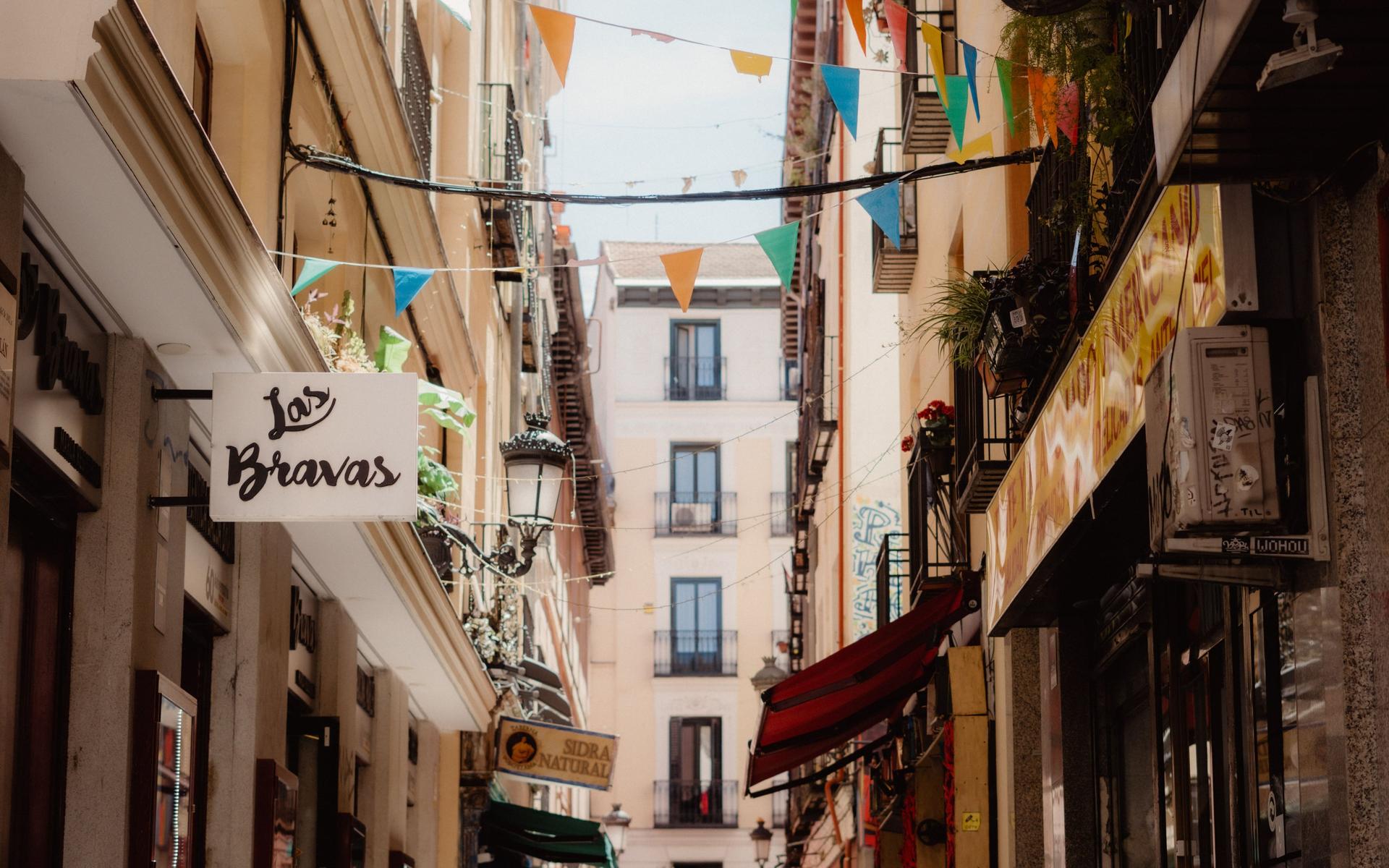
Barrio de las Letras: Cervantes, Lope and the Playhouses
60 min · 1.4 km · easy
More from Madrid
Explore more at your own pace.
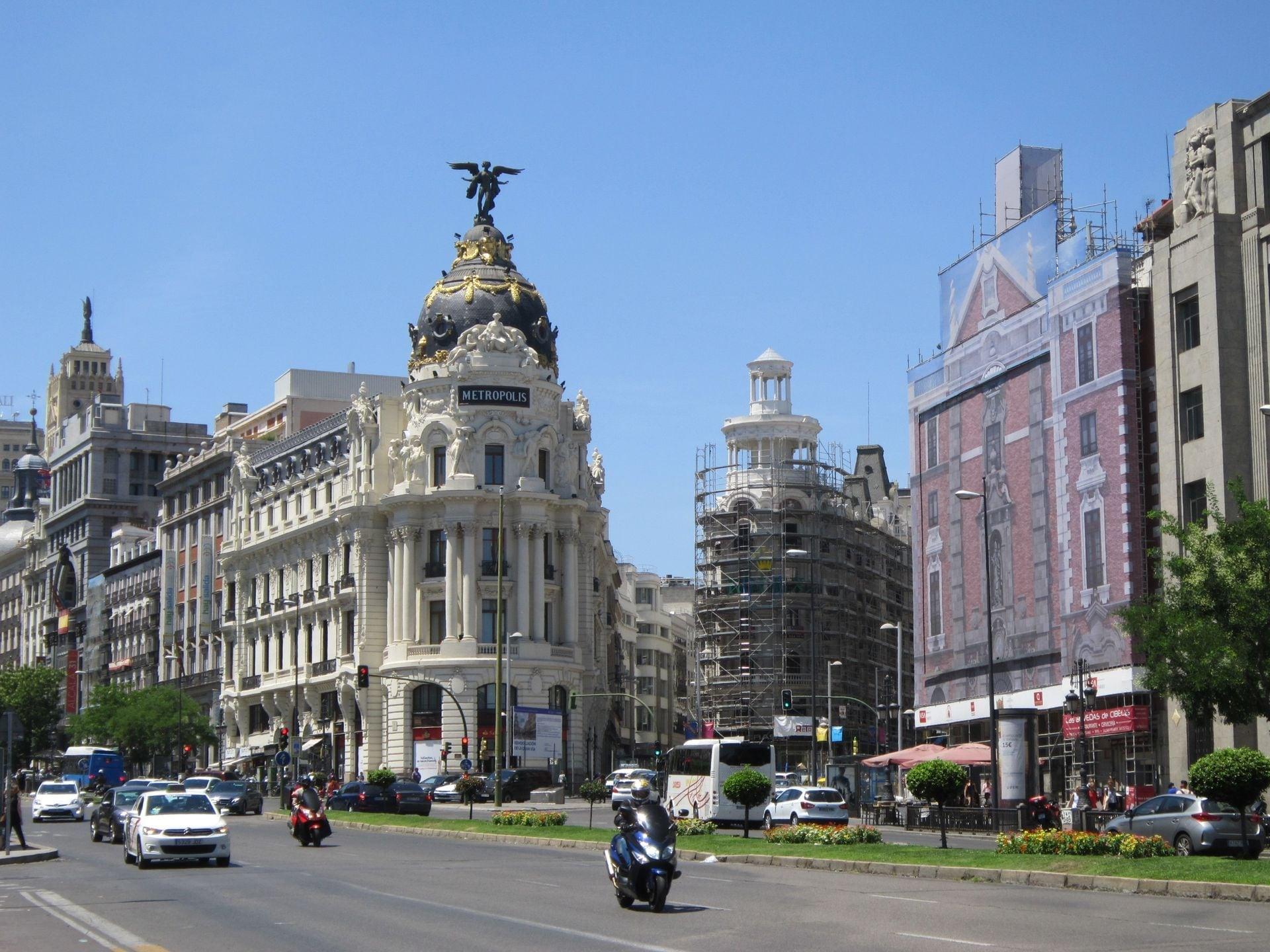
Gran Vía: How Madrid's Great Way Grew Wider and Taller as It Was Cut
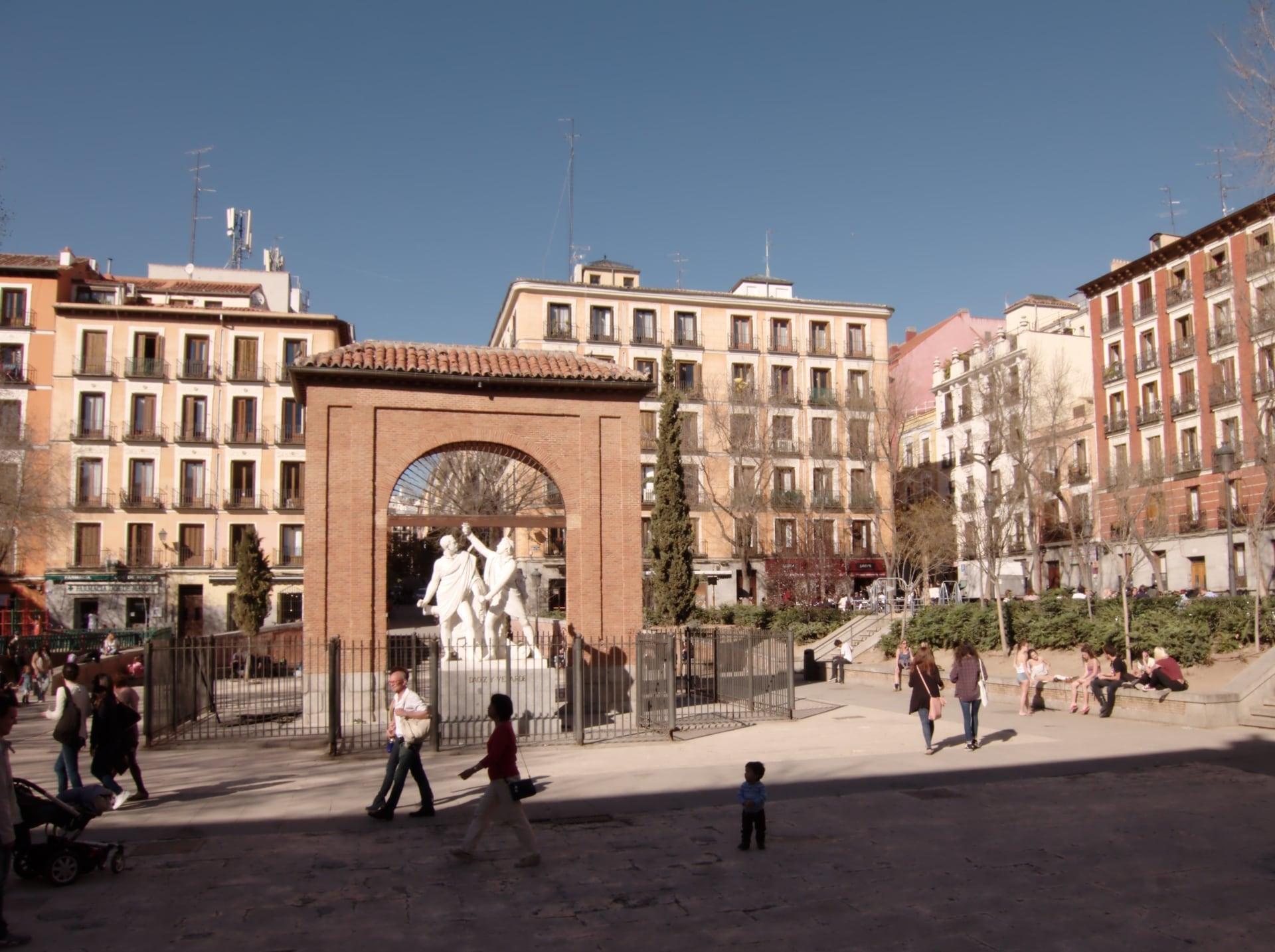
Malasaña and Chueca: Madrid's Old Northern Edge, Taken Back by the City
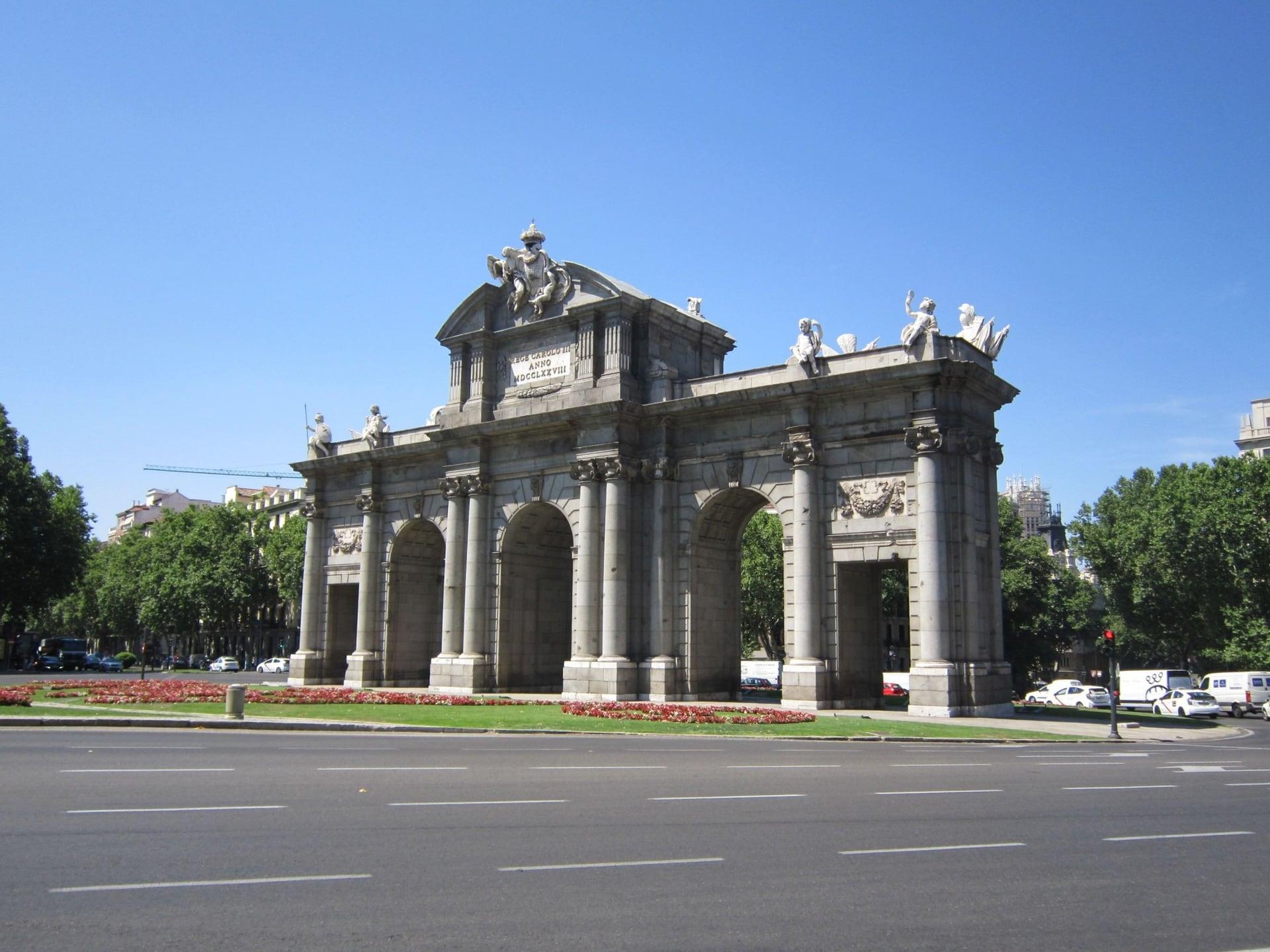
Retiro Park: How a King's Garden Became Madrid's
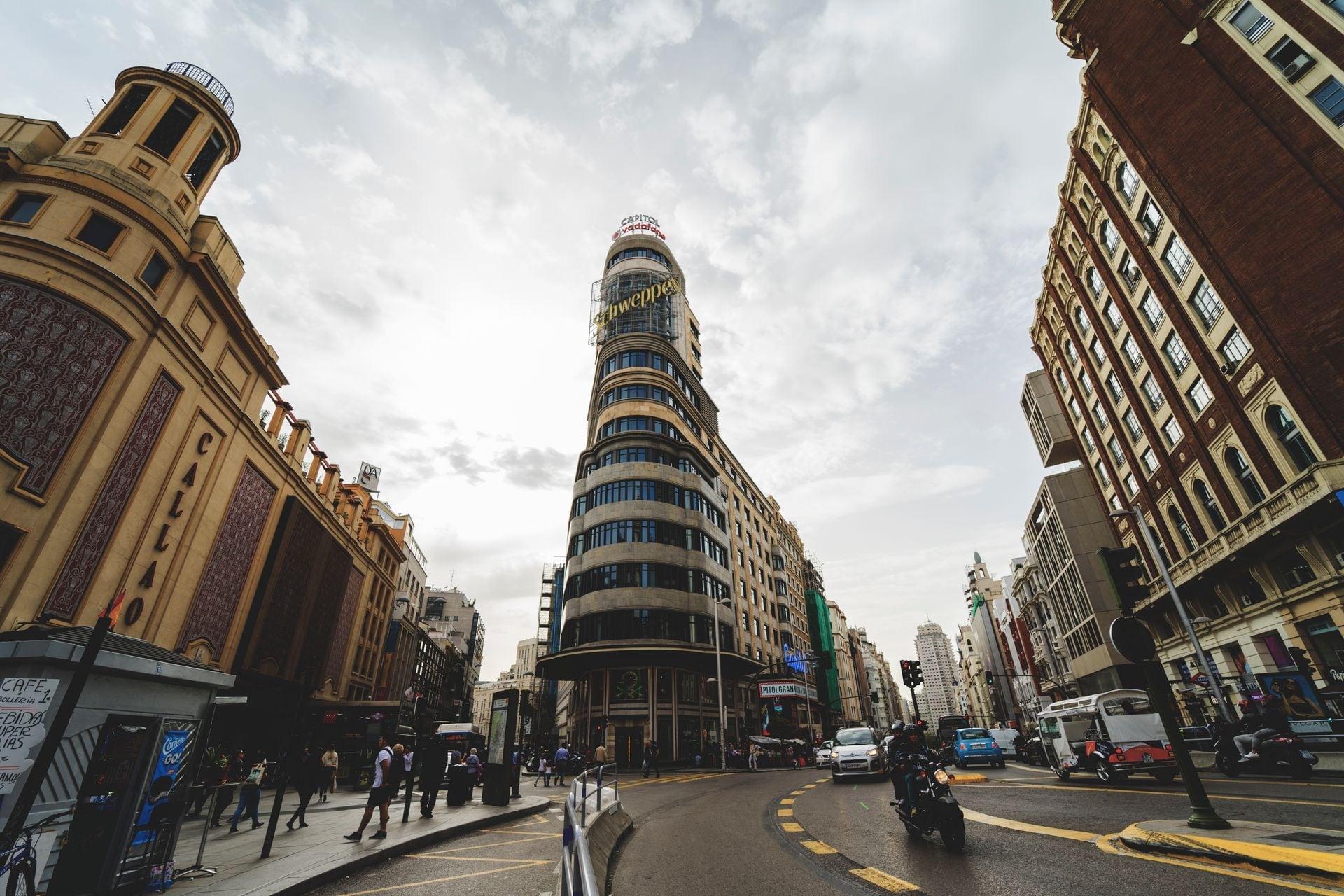
Edificio Carrión: The Curved Corner at Callao and the Sign That Stayed
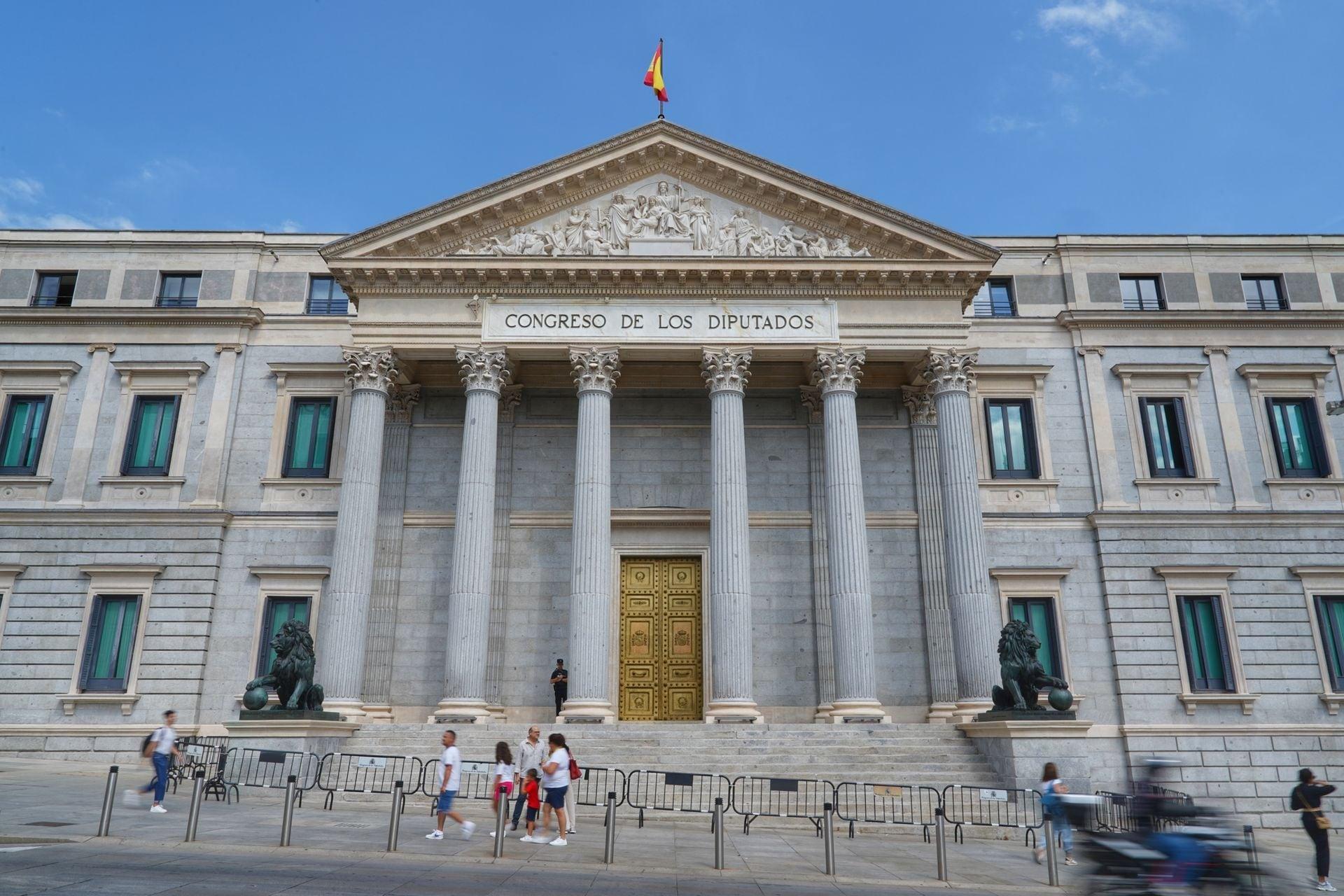
Plaza de las Cortes: Cervantes, His Lion and the Congreso Lions