From the Puerta del Sol past the Descalzas Reales and San Ginés to the Plaza Mayor, the Mercado de San Miguel, Plaza de la Villa, San Pedro el Viejo's mudéjar tower, La Latina and the Cava Baja, ending at Puerta Cerrada.
Start · Puerta del Sol: Kilómetro Cero
DirectionsStops
- 1
Puerta del Sol: Kilómetro Cero
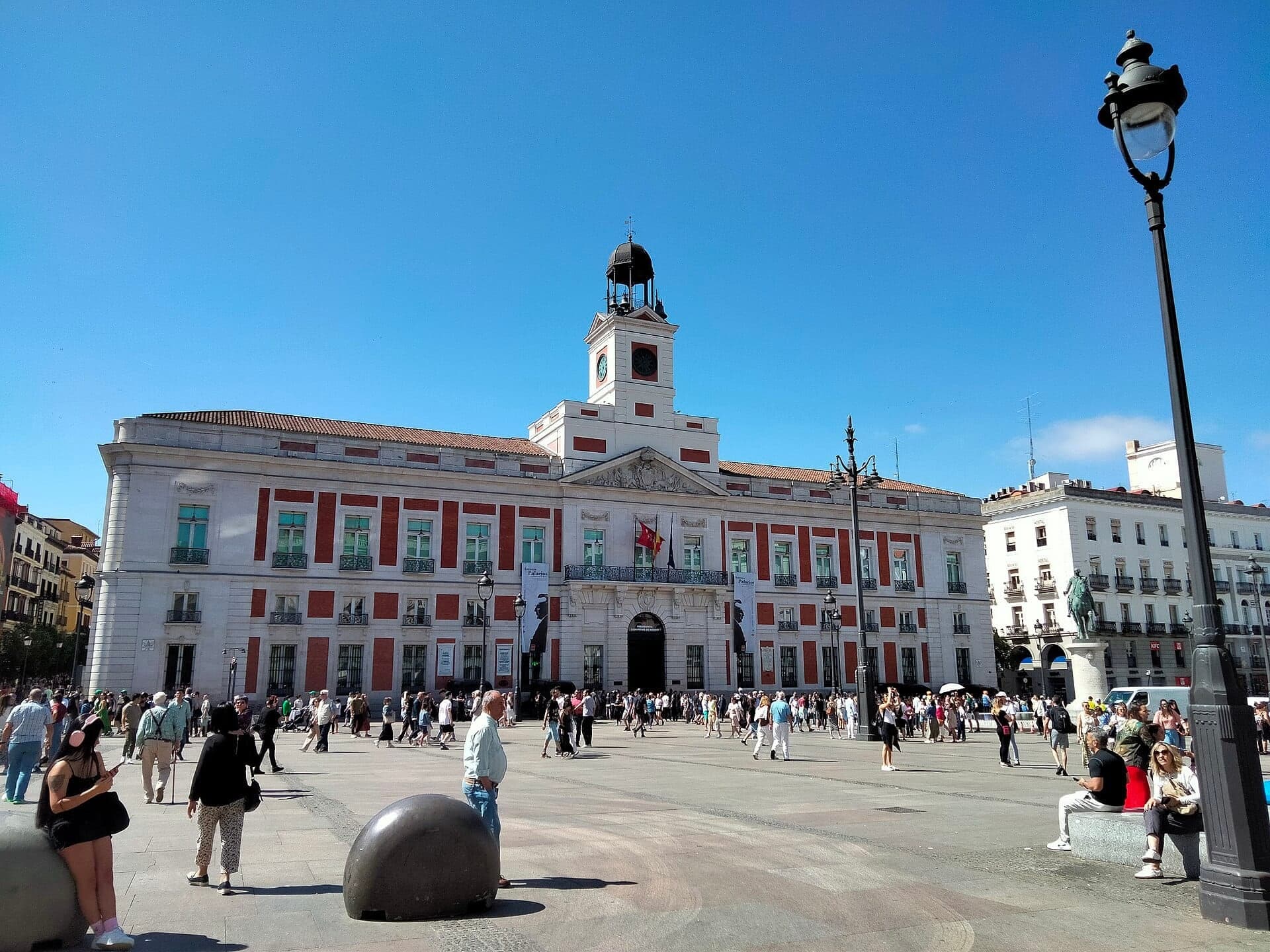
Spain's Kilometre Zero sits beneath the clock that rings in the year. The square is named for a gate in the vanished medieval wall that carried a sun.
- 2
Descalzas Reales: The Plain Royal Wall
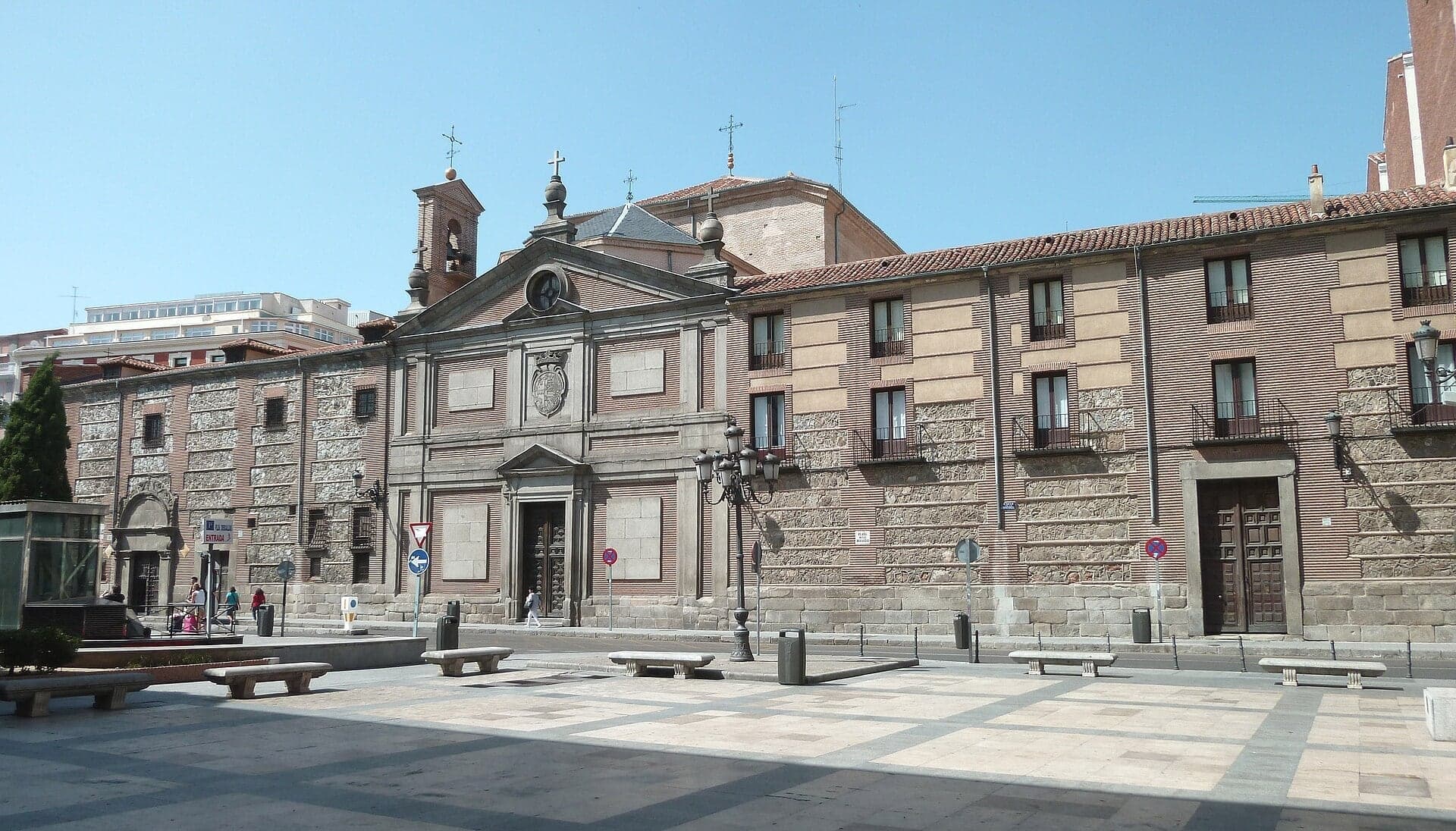
A royal convent hides behind a plain wall of granite and brick, a few steps from a carved Baroque doorway by Pedro de Ribera.
- 3
San Ginés: The Chocolate Passage
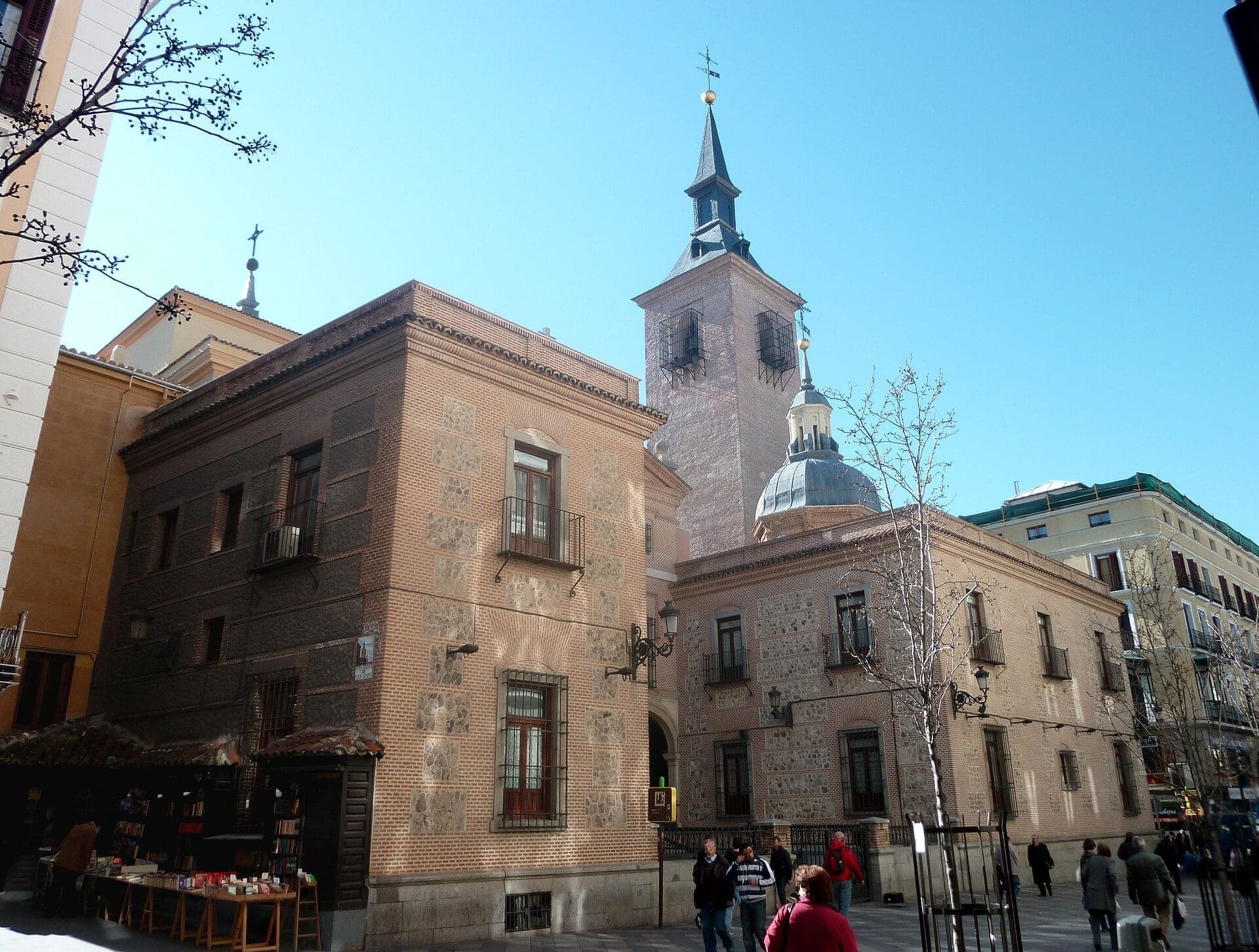
A narrow passage runs along one of Madrid's oldest parishes, past a chocolate shop open since 1894.
- 4
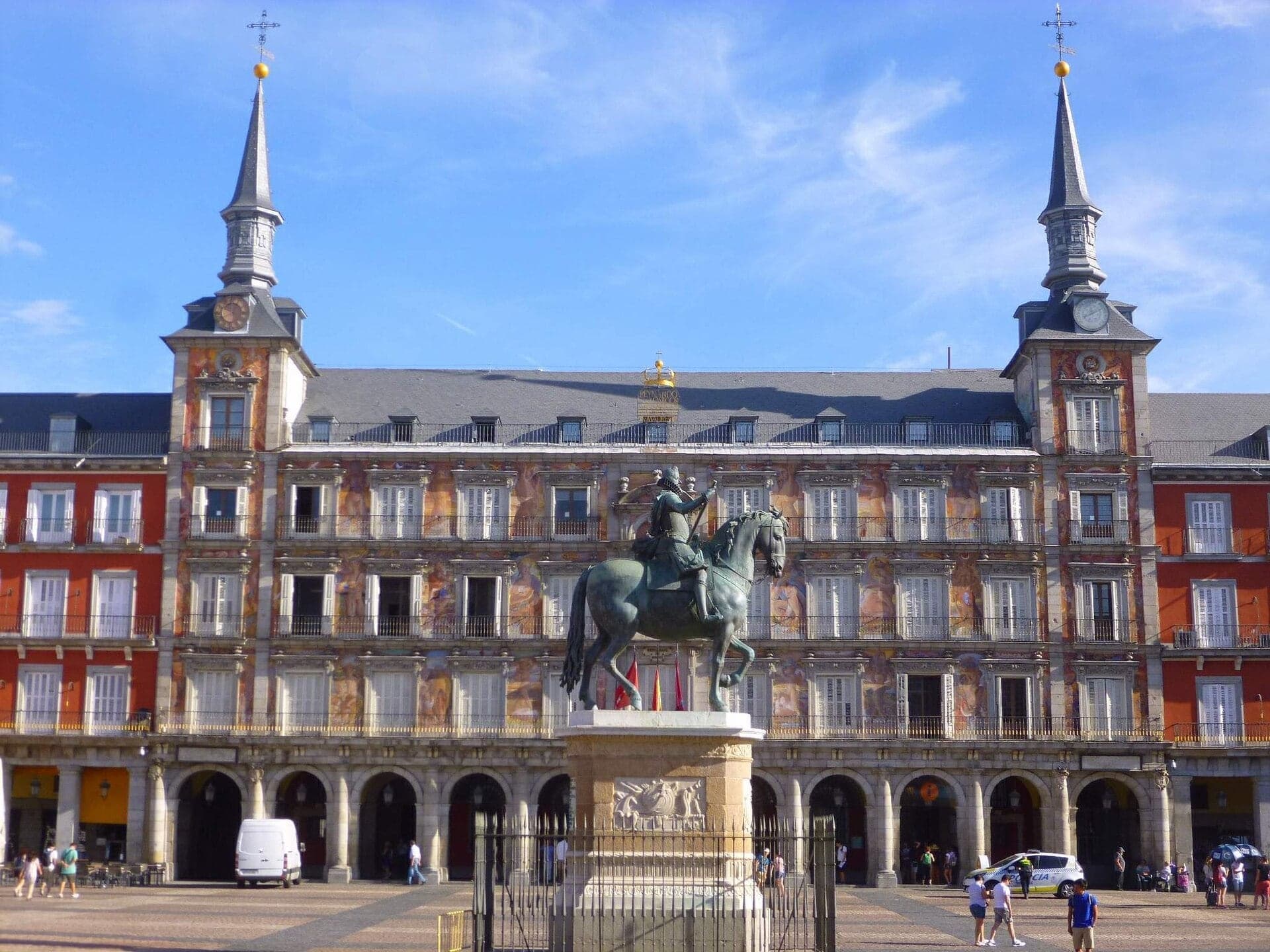
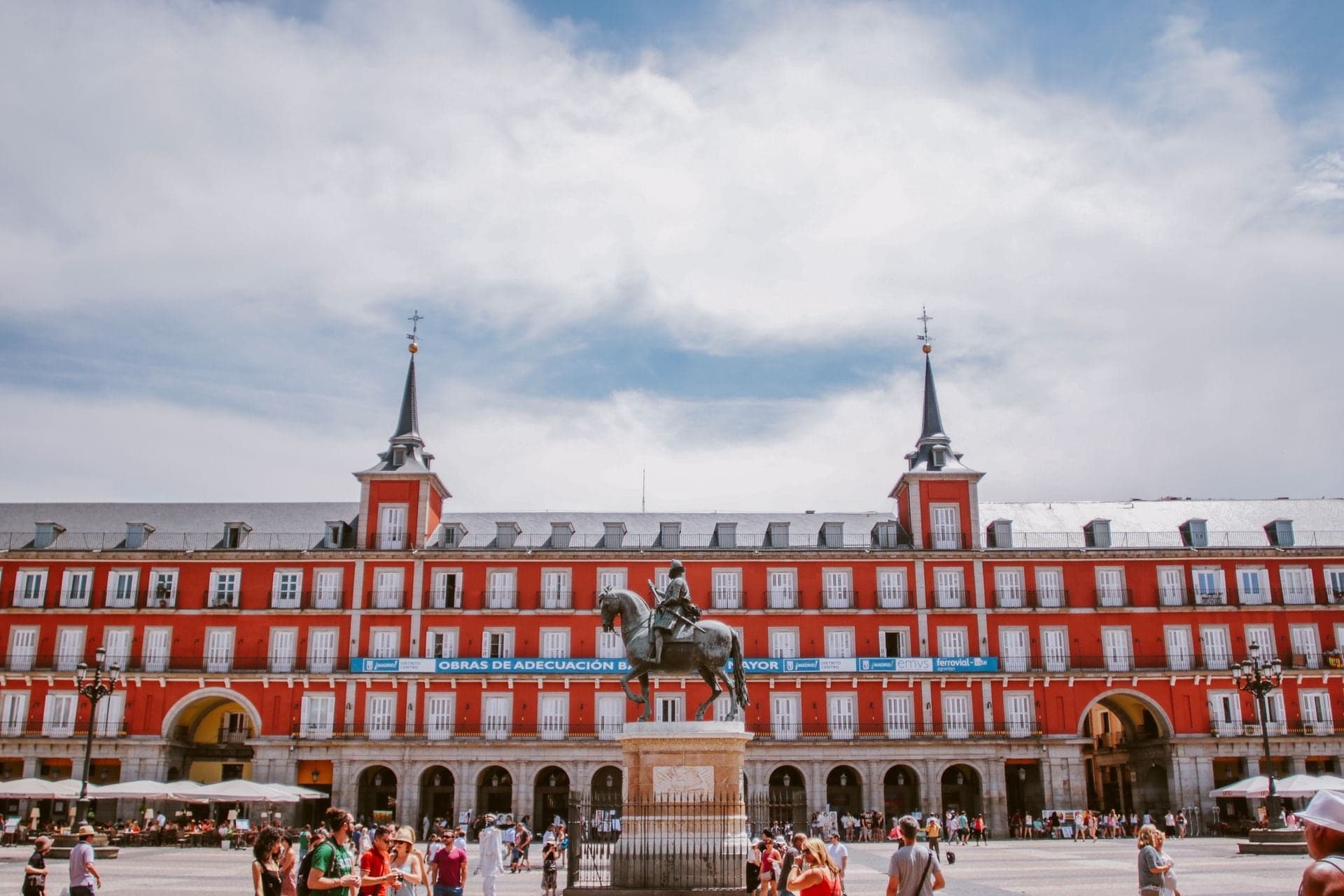
Plaza Mayor: A Square on a Terrace
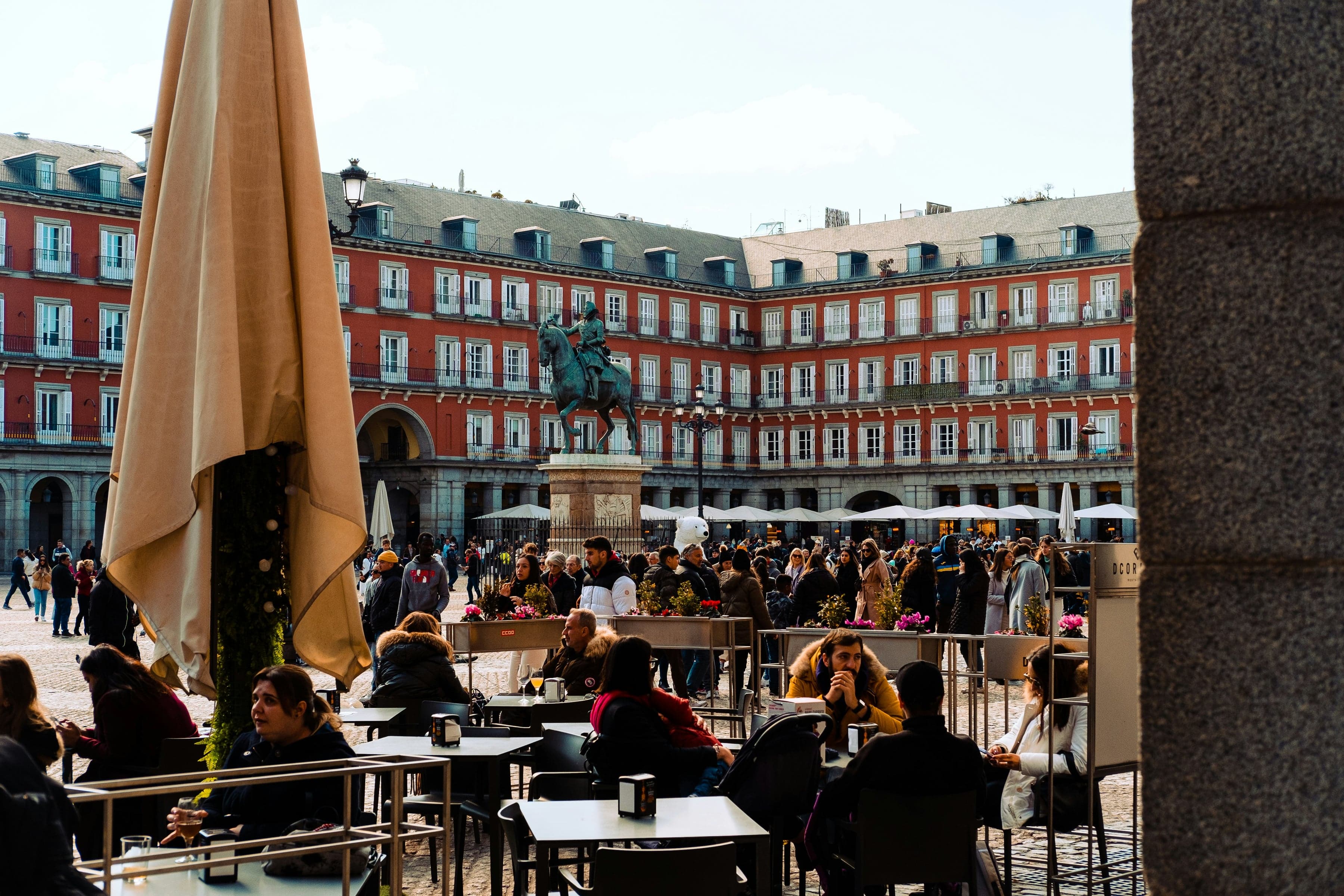
The Plaza Mayor stands level on a man-made terrace of earth. After the 1790 fire every house was rebuilt to the height of the bakers' house, whose front Carlos Franco painted in 1992.
- 5
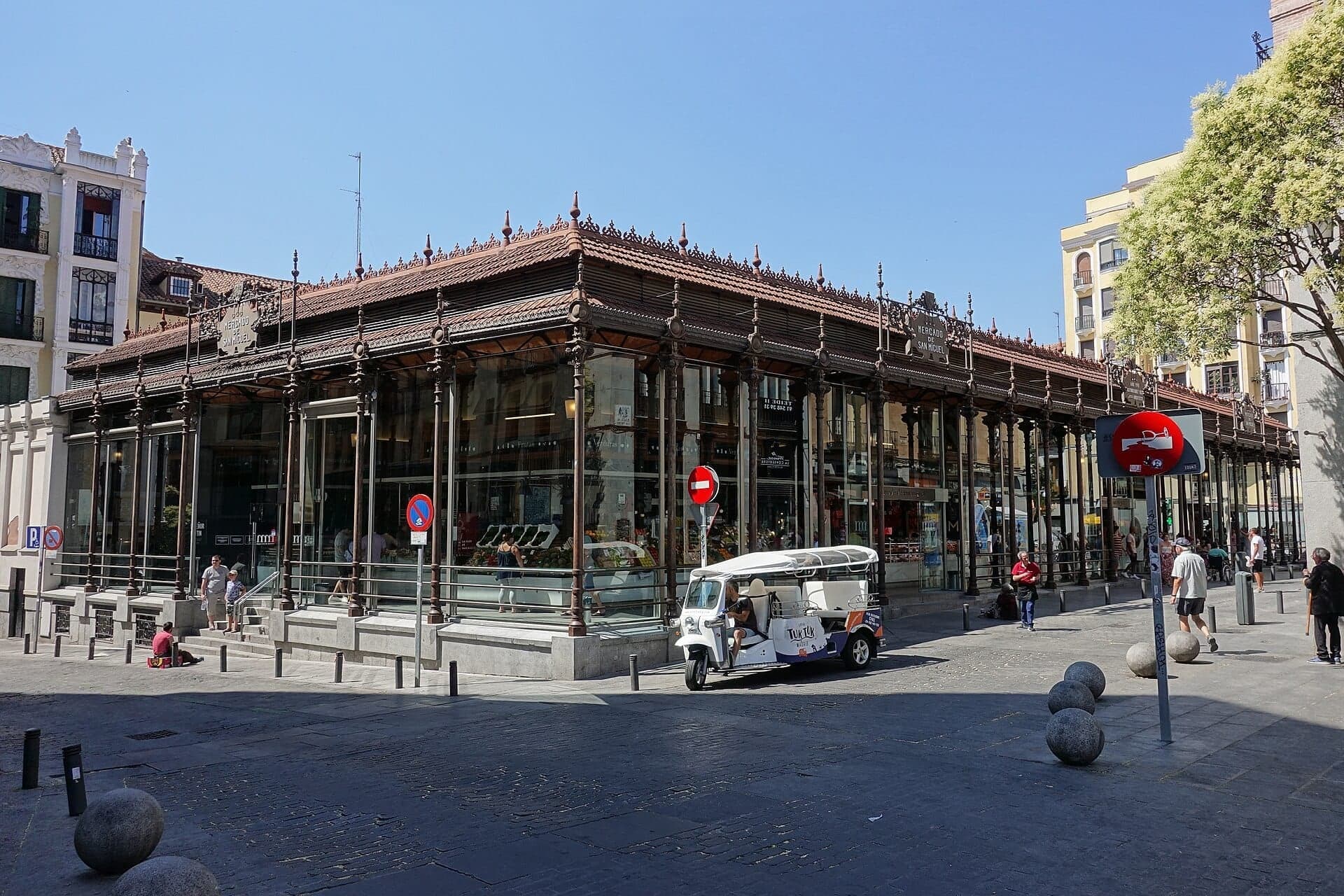
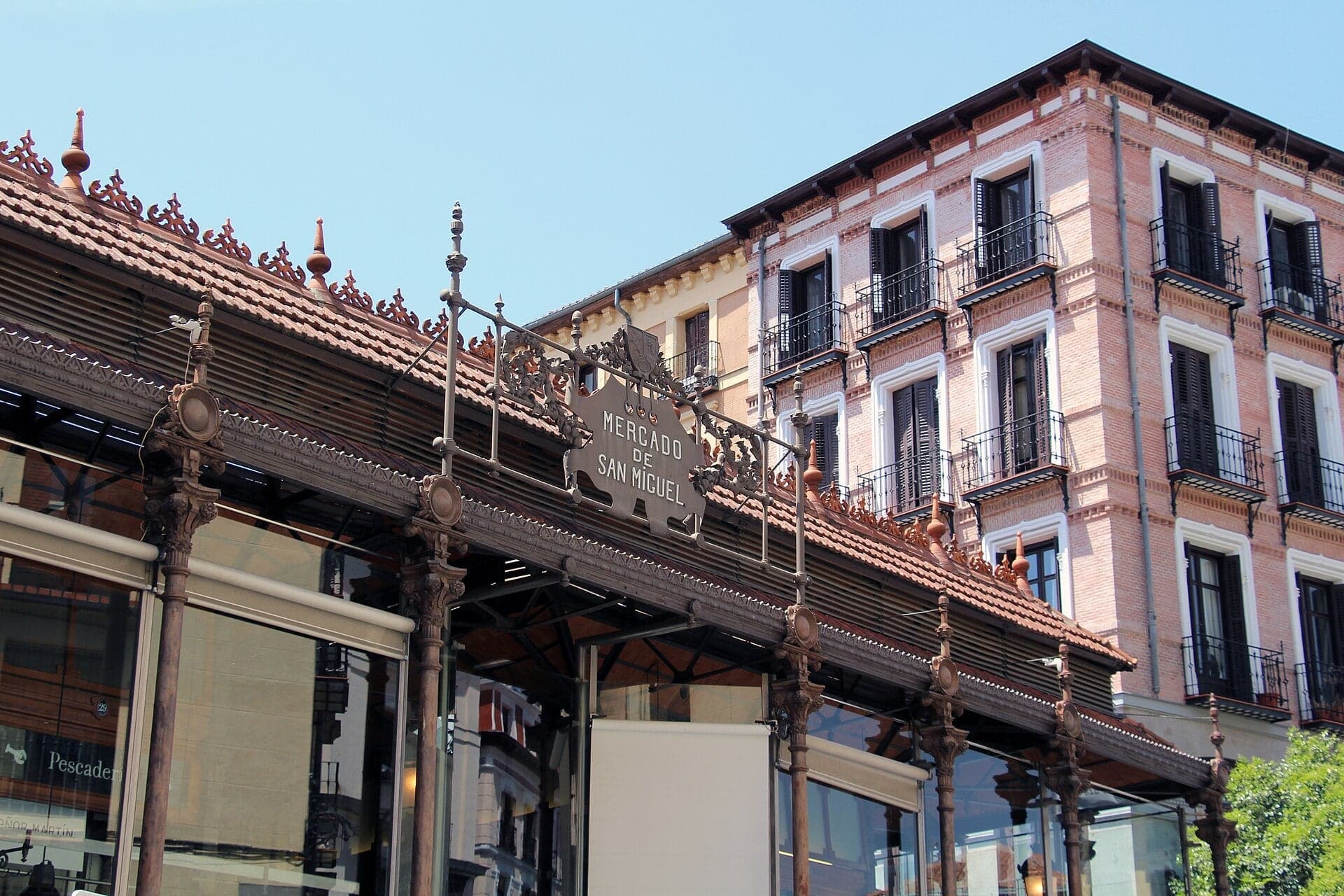
Mercado de San Miguel: Iron Above the Ditch
Madrid's last iron market hall stands beside the medieval wall's ditch, where the Plaza Mayor's buttress walls drop to the Cava de San Miguel.
- 6
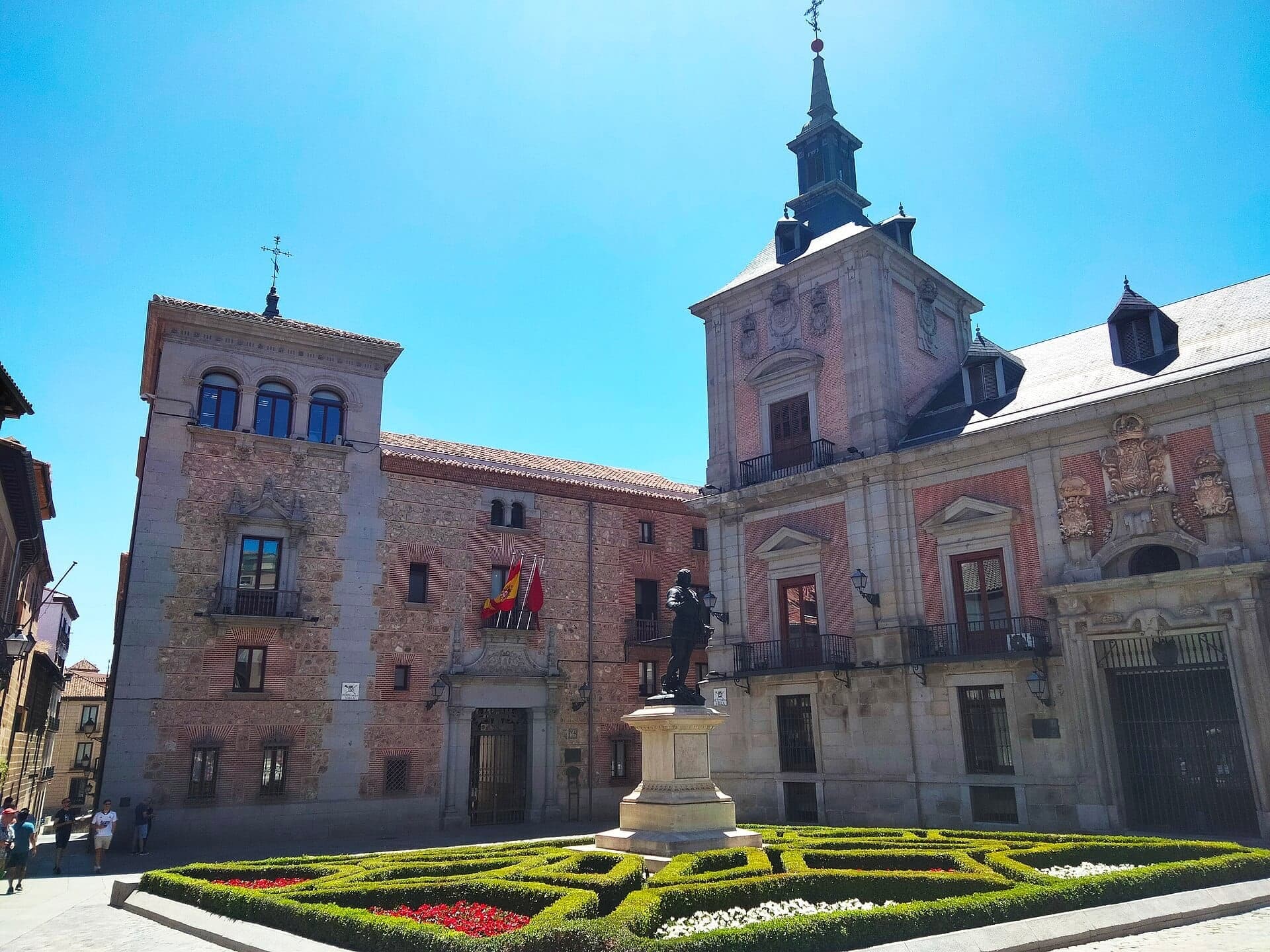
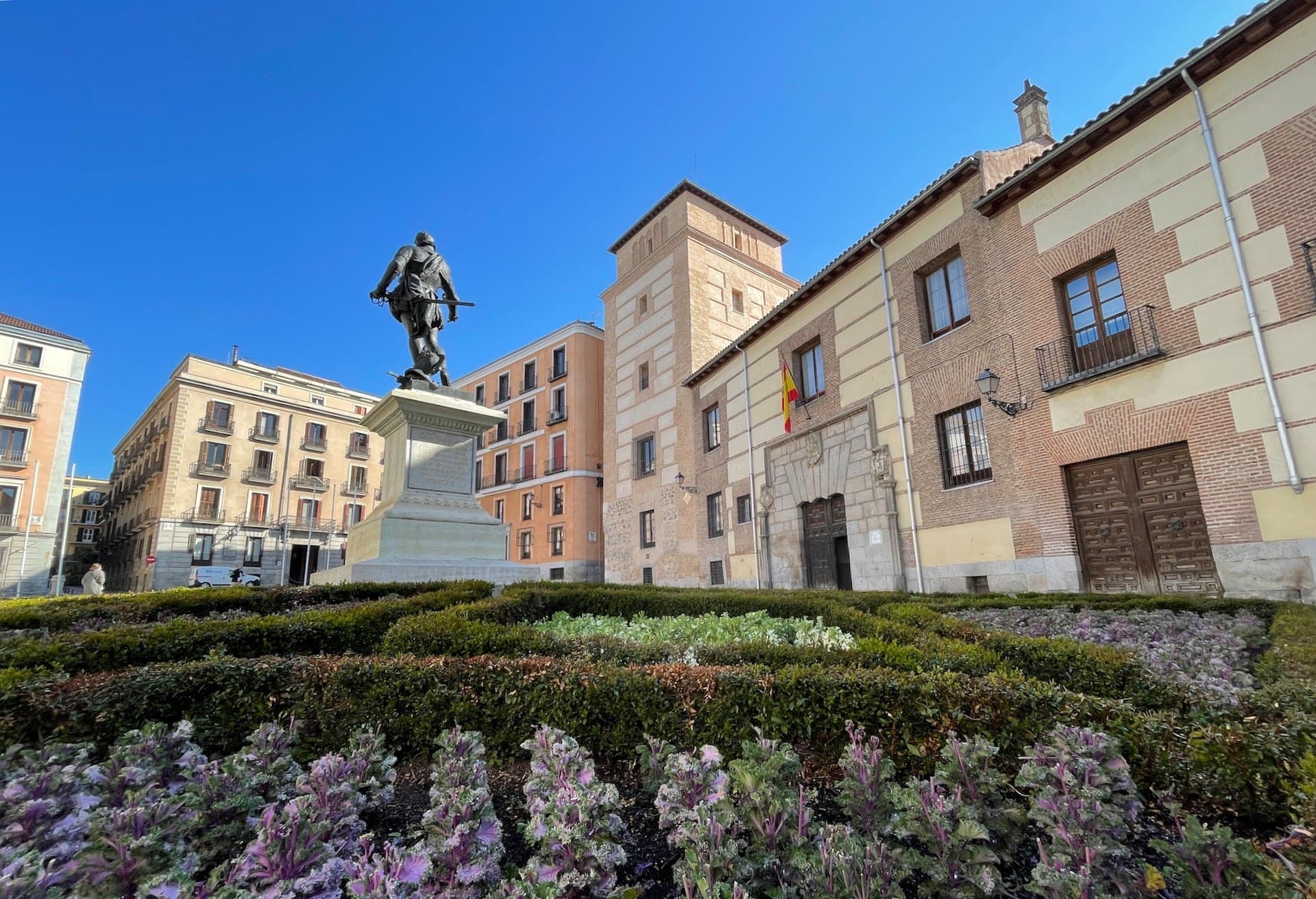
Plaza de la Villa: The Old Town Hall
Madrid's old town hall rises in granite and brick under slate spires. A fifteenth-century tower and a Renaissance palace share the little square.
- 7
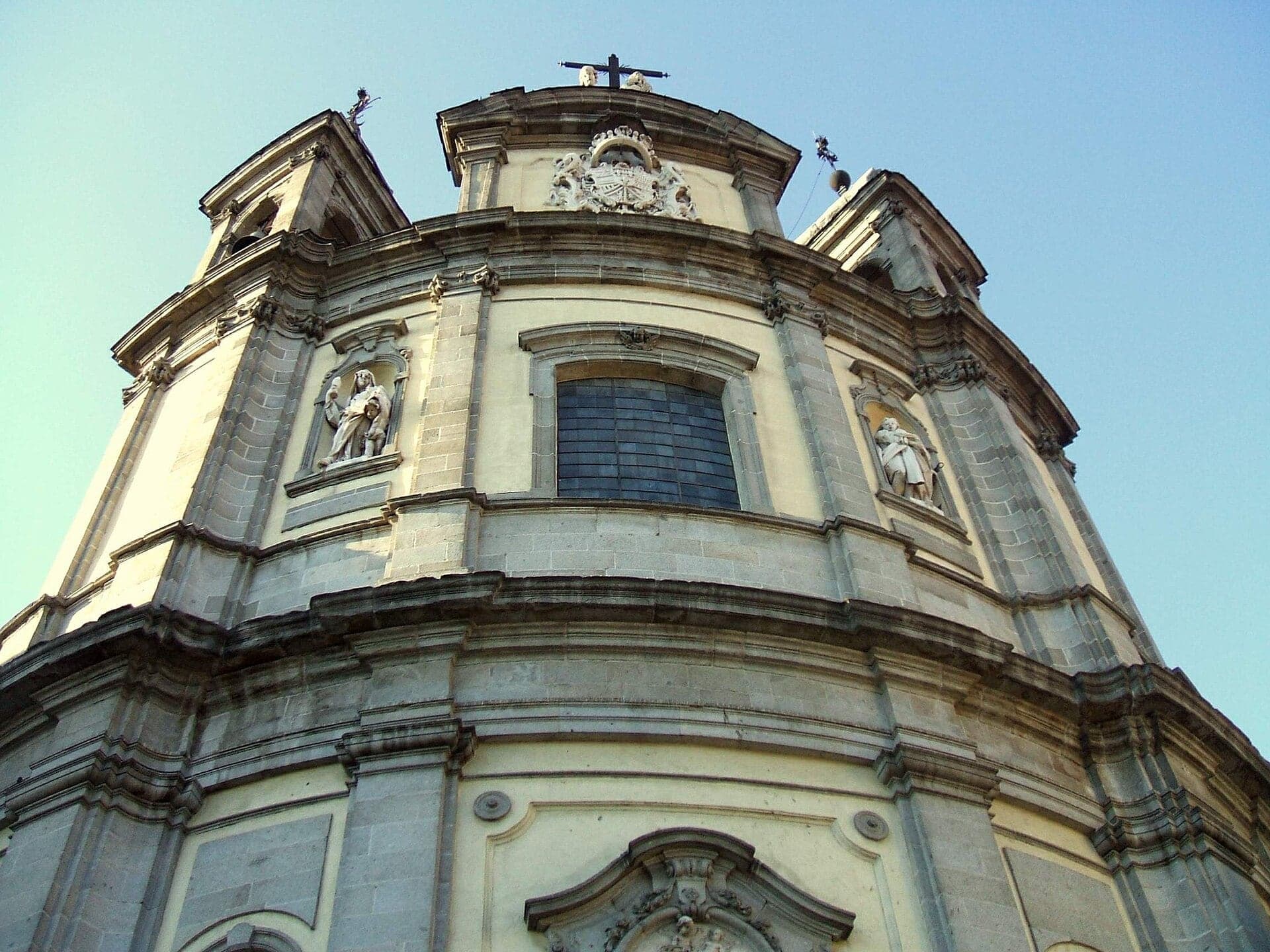
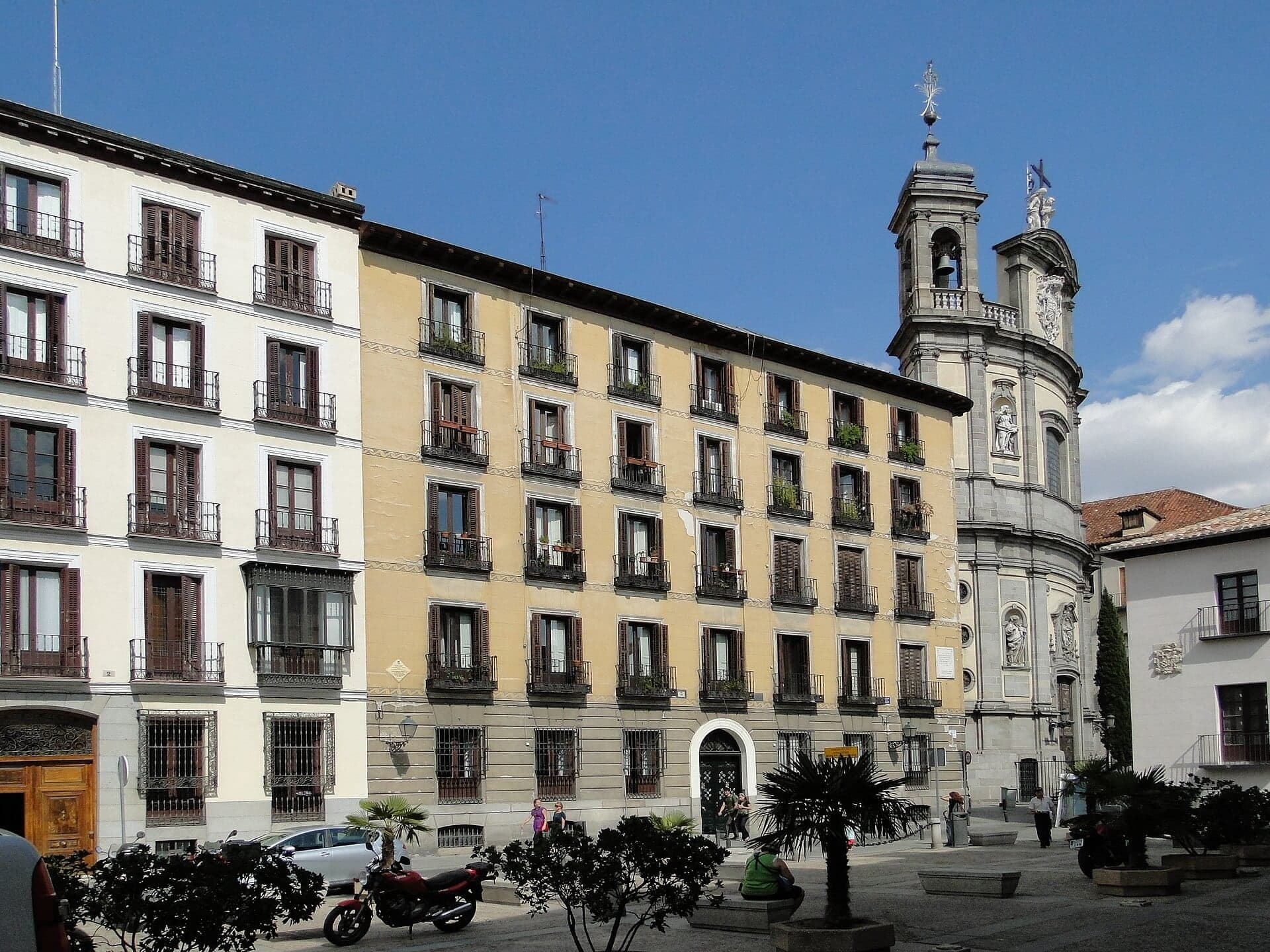
Basílica de San Miguel: The Curving Front
A Baroque church front curves outward into a medieval lane, a shape rare in Spain and unique in Madrid.
- 8
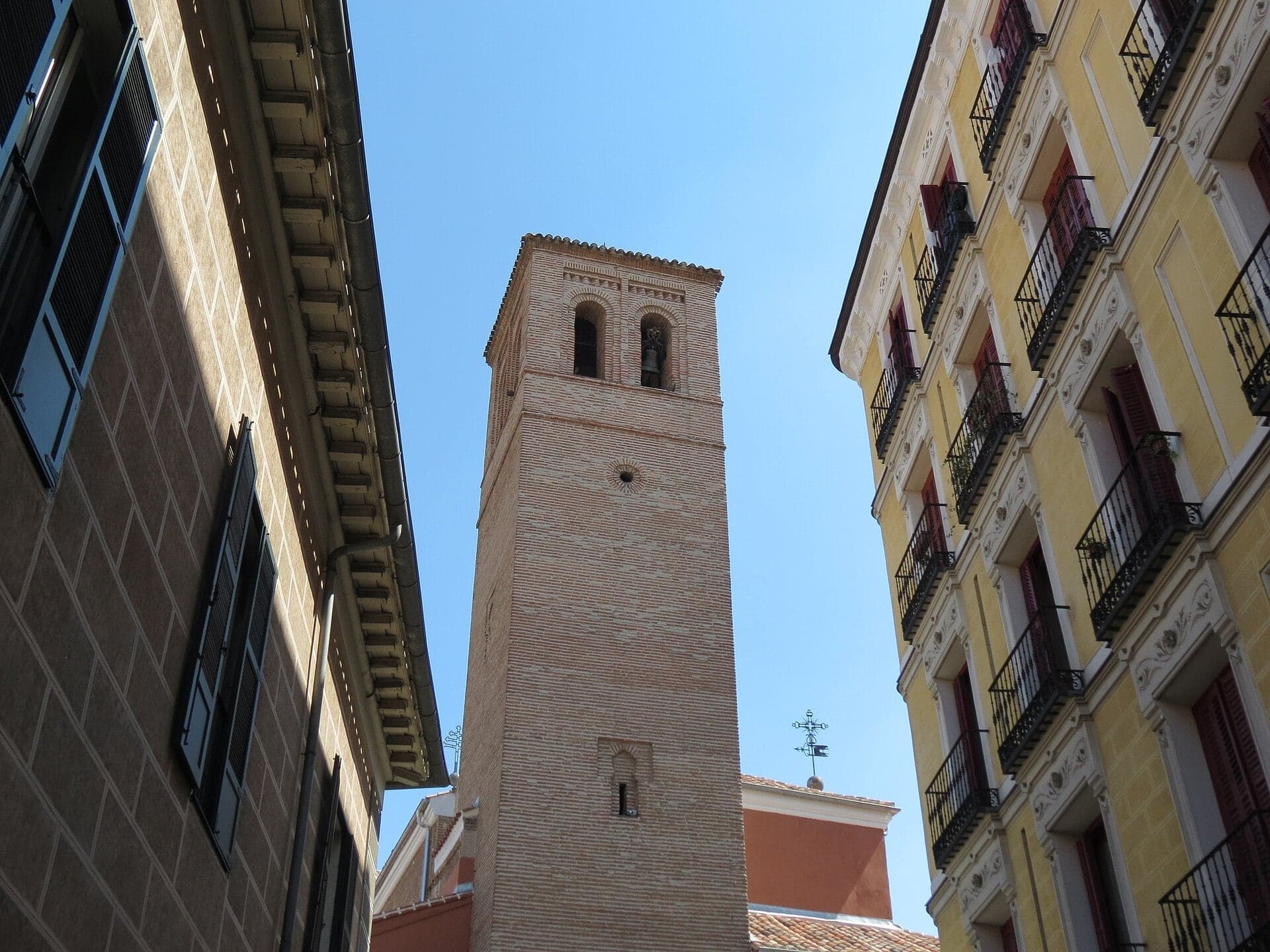
San Pedro el Viejo: The Mudéjar Tower
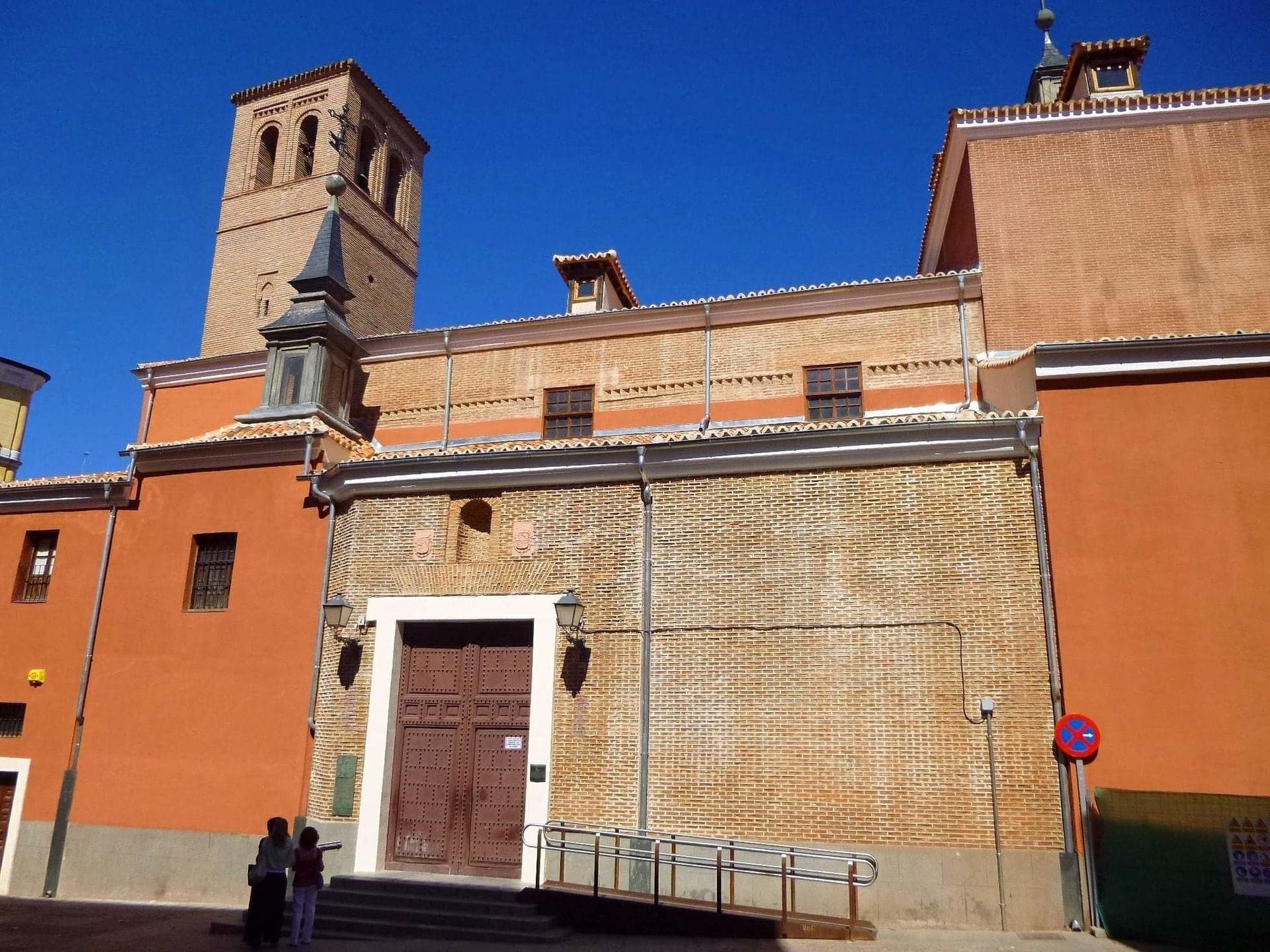
A brick mudéjar tower from the 1340s rises over Calle del Nuncio. Its windows are horseshoe arches.
- 9
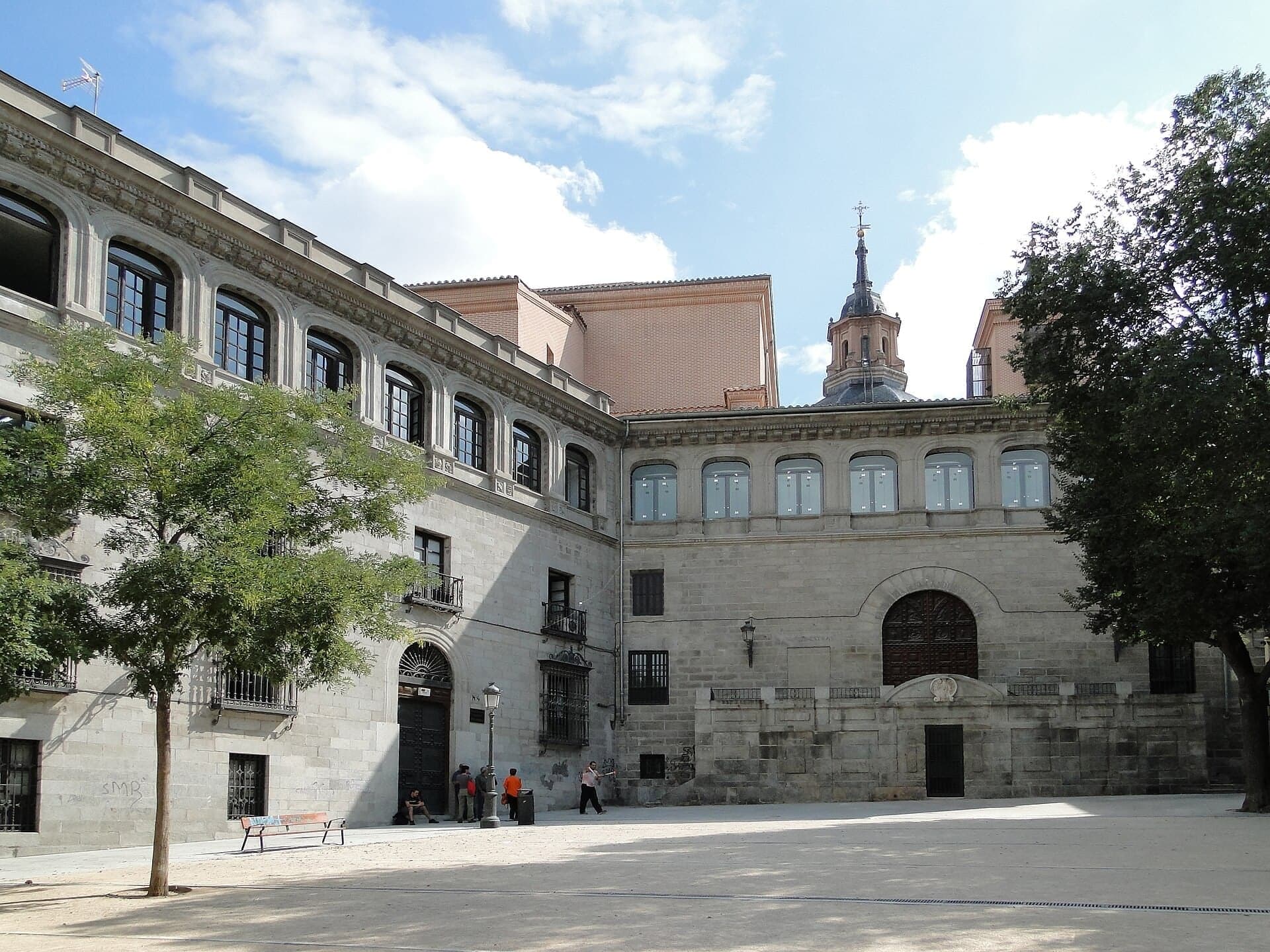
Plaza de la Paja: The Bishop's Chapel
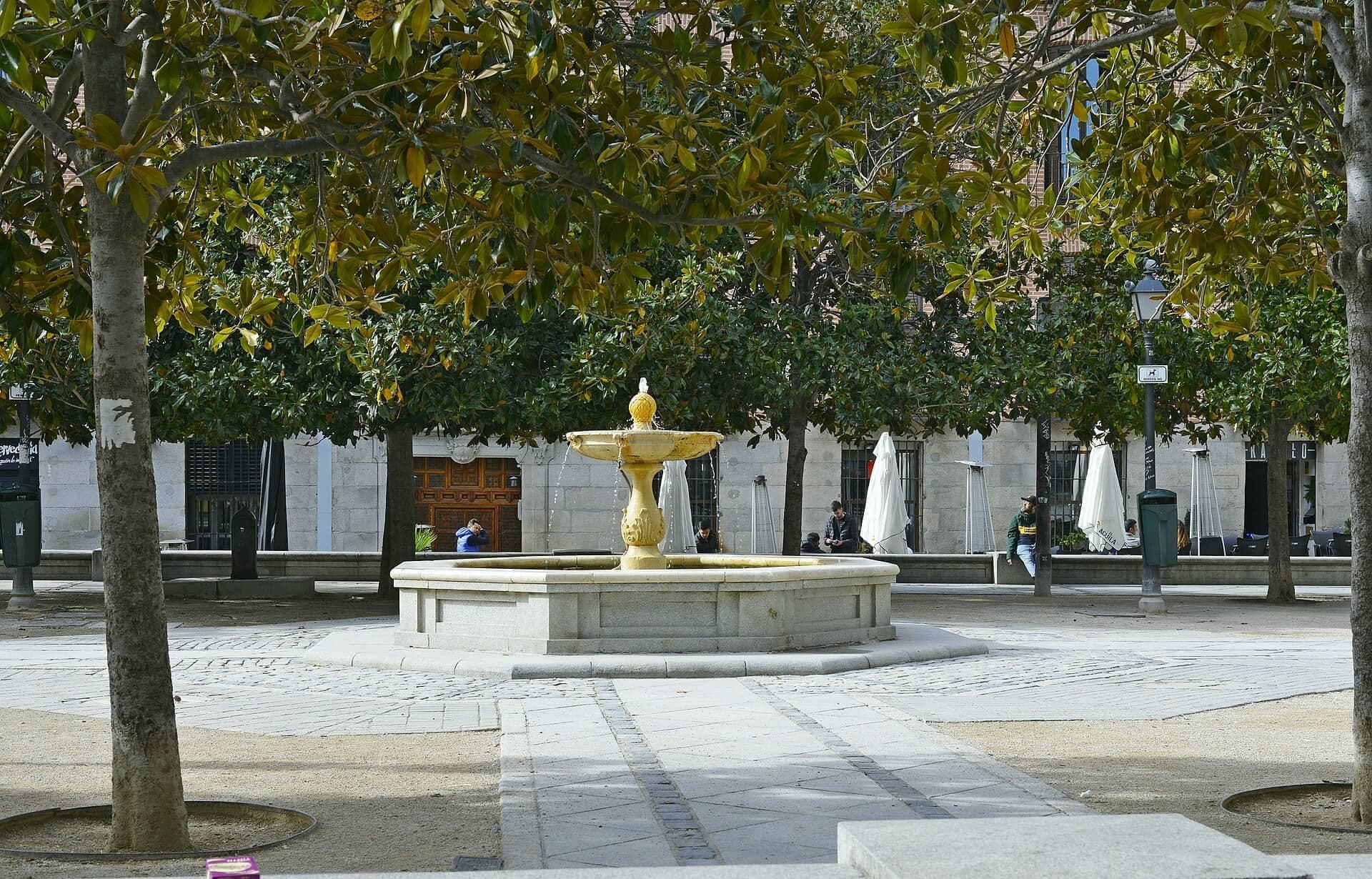
A sloping La Latina square is ruled by a Gothic burial chapel. A walled palace garden lies at its foot.
- 10
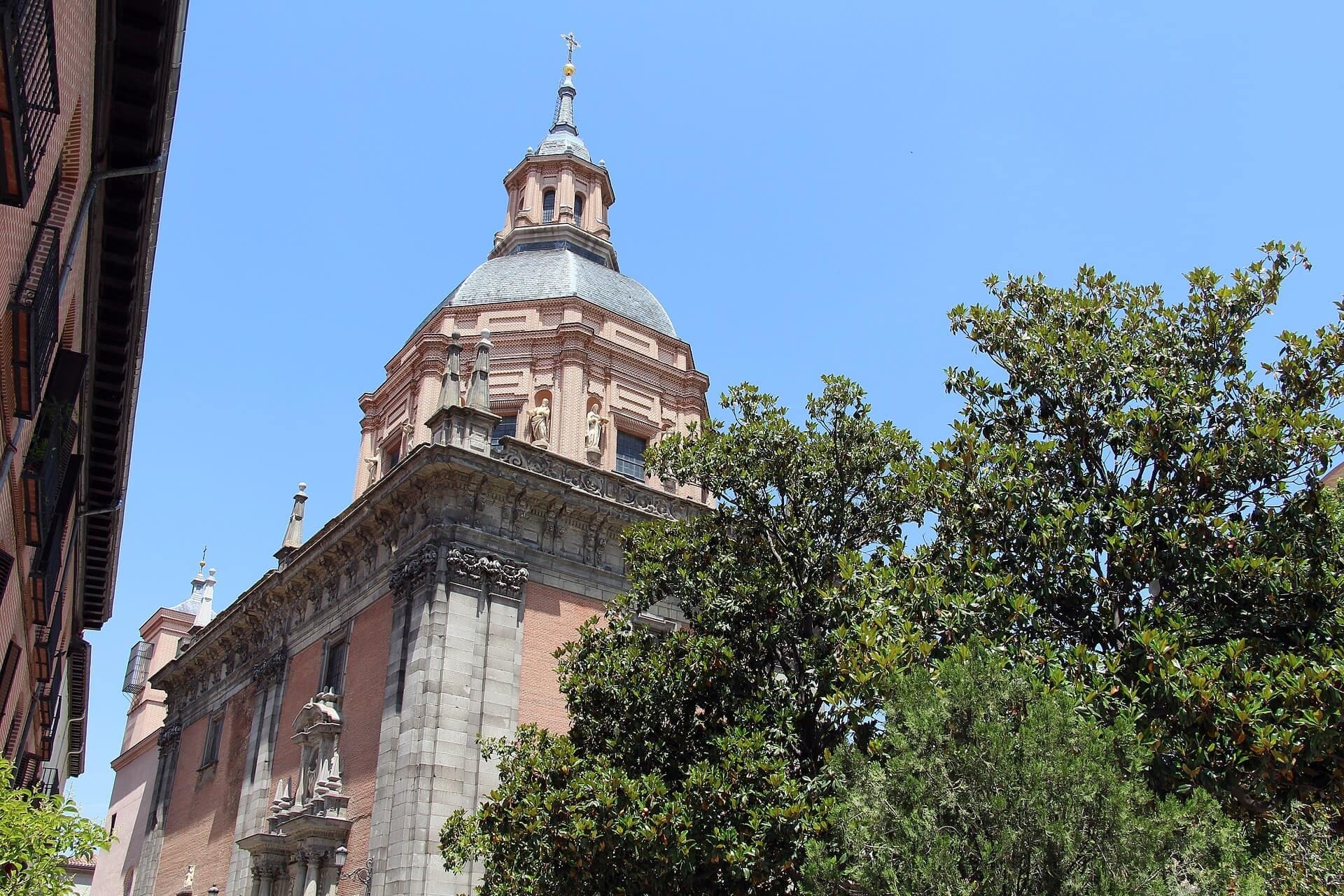
Plaza de los Carros: San Isidro's Dome
The dome of San Isidro's chapel rises over the Plaza de los Carros. Its interior, burned in 1936, was rebuilt from old photographs.
- 11
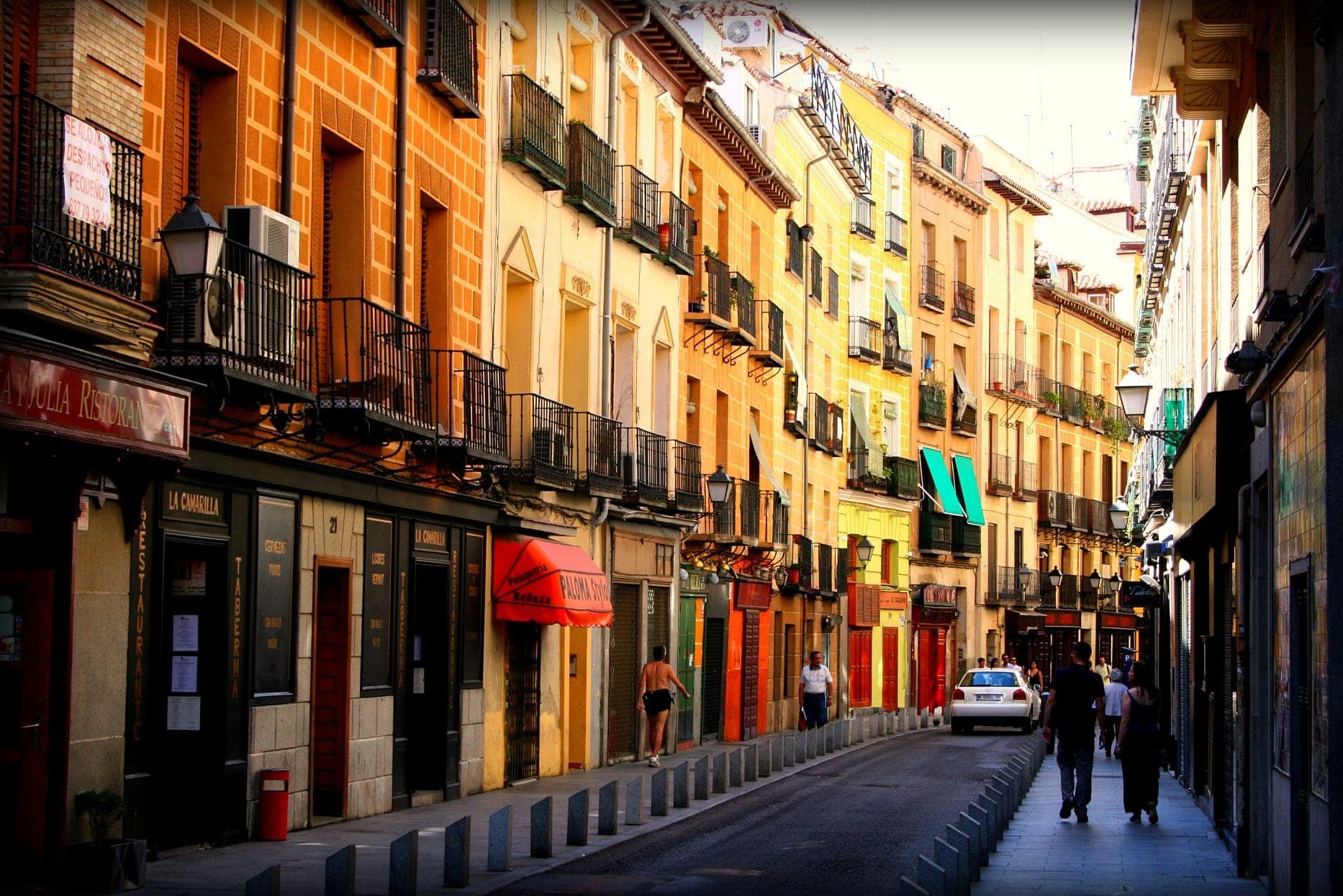
Cava Baja: The Street in the Ditch
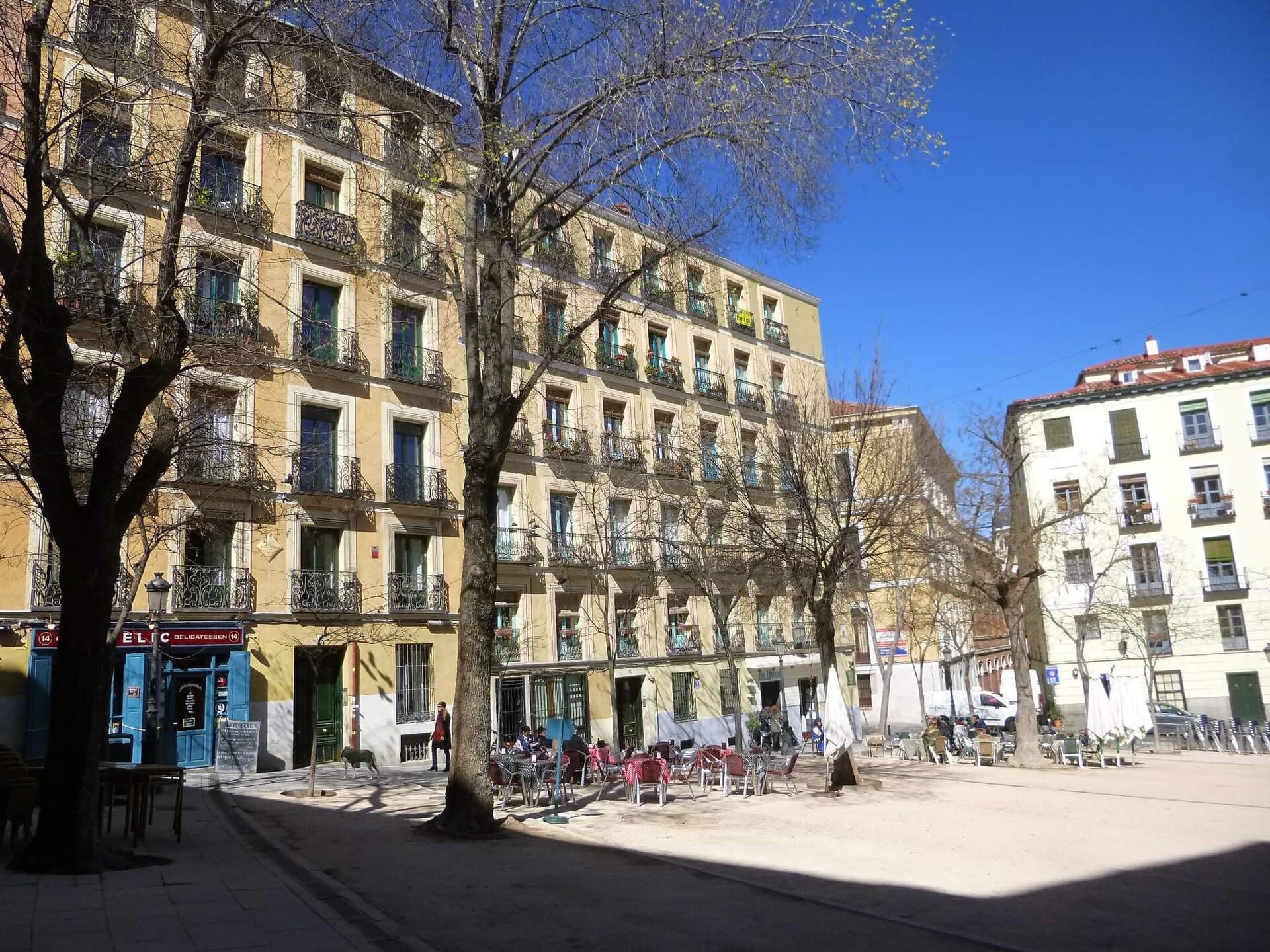
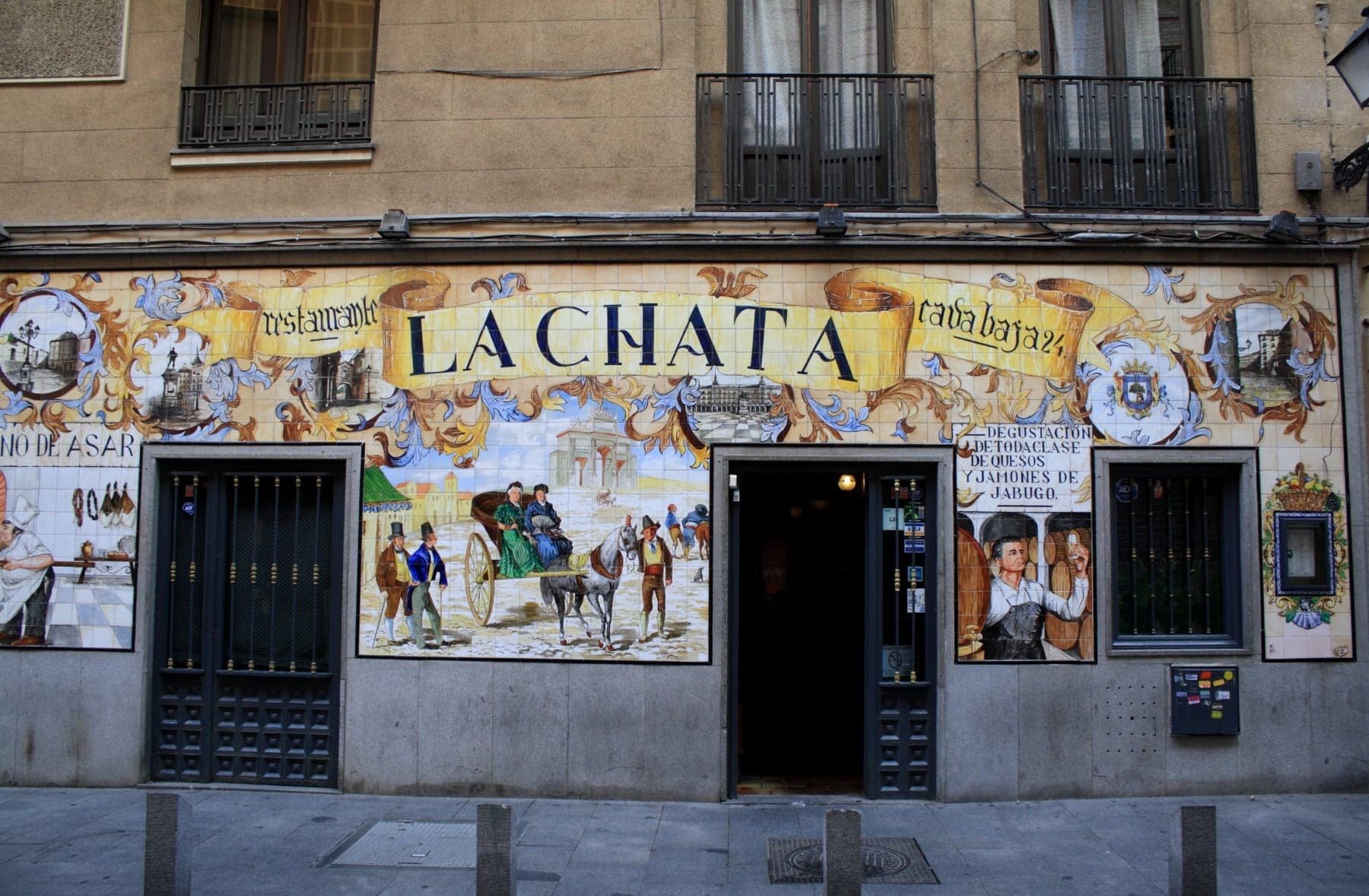
La Latina's tapas street runs in the ditch outside the medieval wall, whose stones survive in the backs of its houses.
- 12
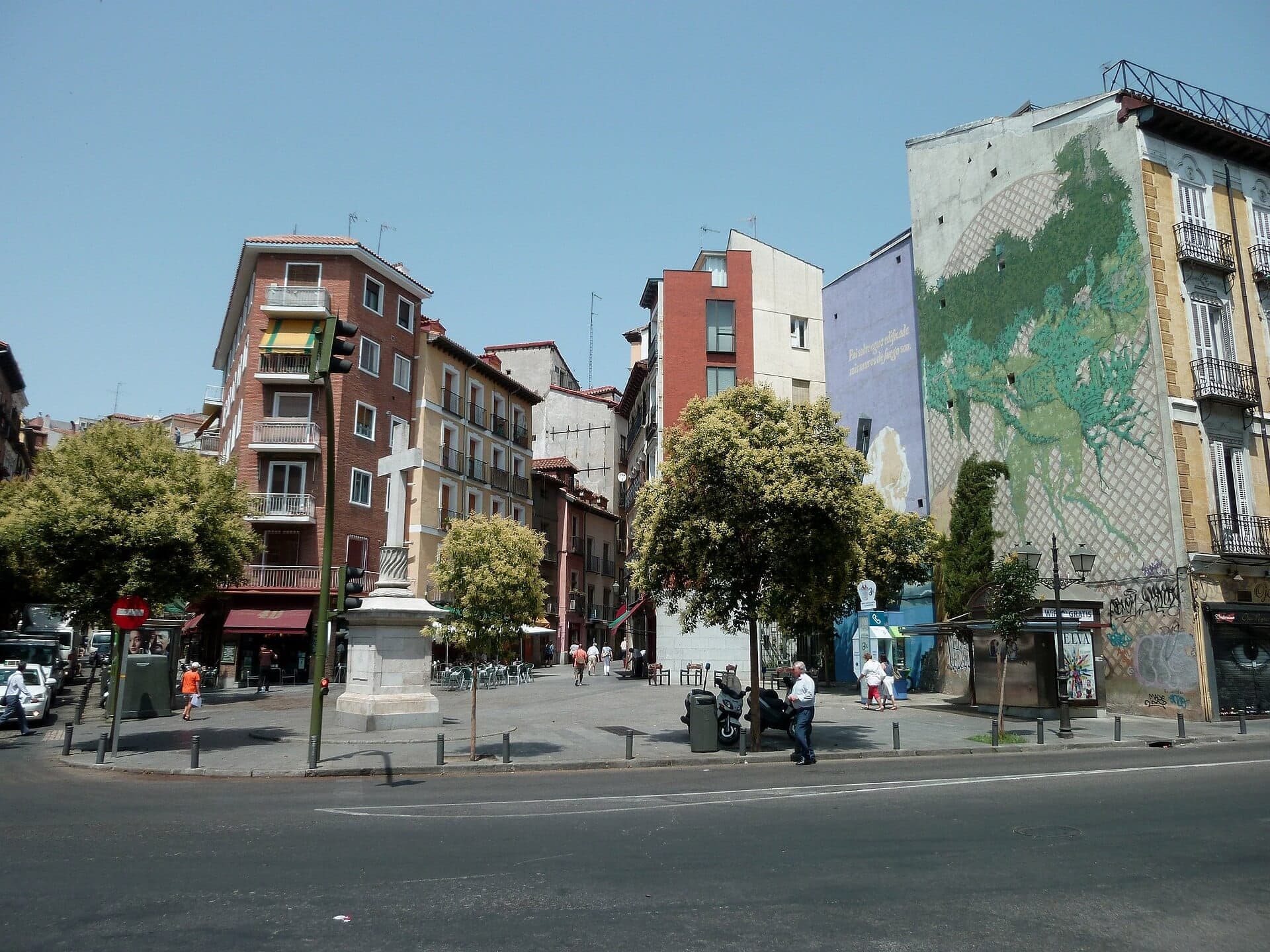
Puerta Cerrada: The Closed Gate
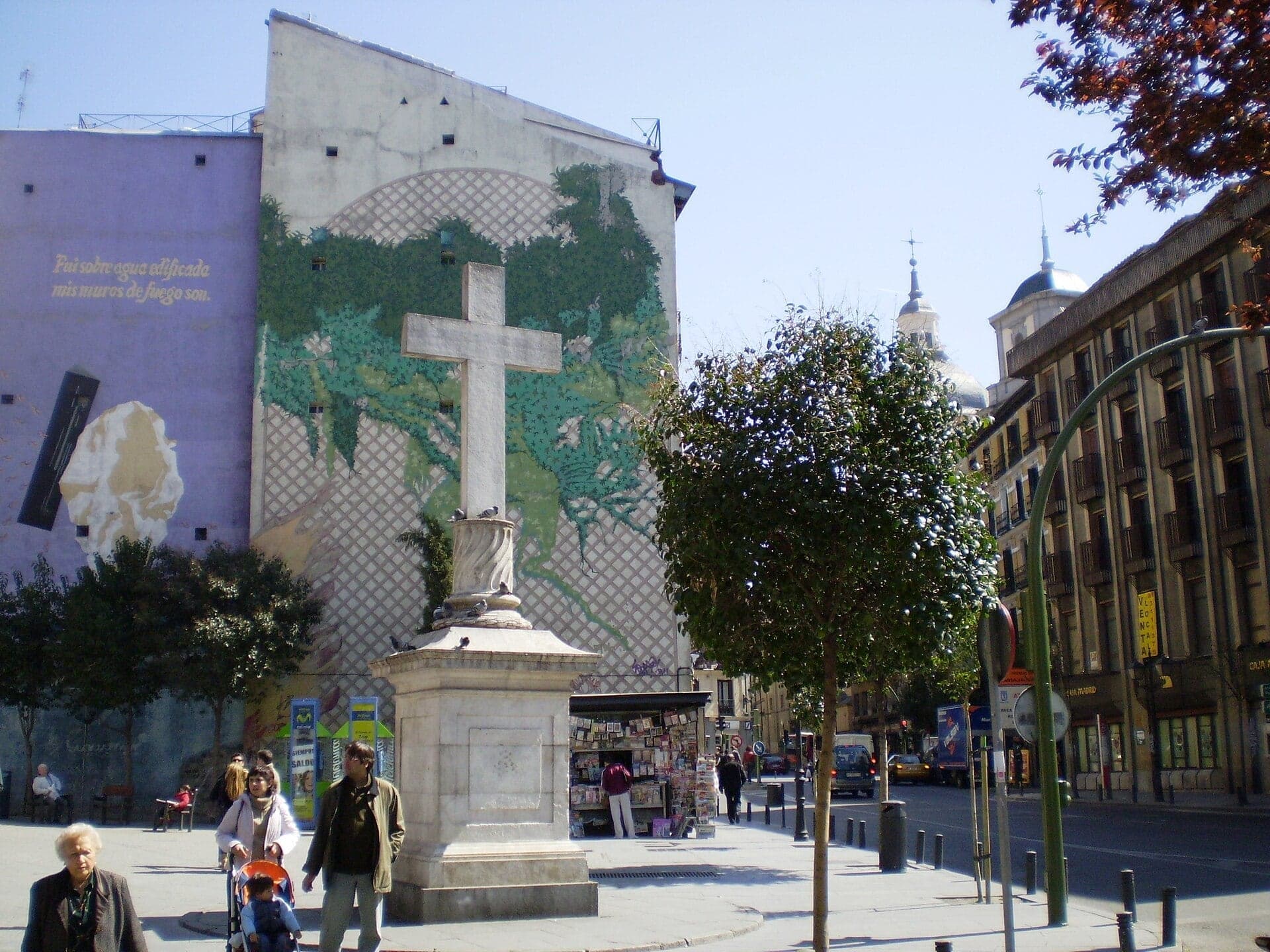
The Closed Gate was walled up because robbers hid there. From its square, the Plaza Mayor's buttressing walls rise at the top of Calle de Cuchilleros.
Details
Best Time to Visit
A weekday morning, Tuesday to Saturday: Sol and the Plaza Mayor are quietest early. The Descalzas Reales is closed on Mondays, the Capilla del Obispo opens only on Wednesday mornings (11:00 to 14:00), and the Carboneras nuns' turntable opens 9:30 to 13:00 and 16:30 to 18:15. The Casa de la Panadería's painted front faces south and is in sun most of the day. For tapas, the Cava Baja is liveliest in the evening and at weekend lunchtimes. Checked 14 October 2026.
Pro Tips
- •Getting to the start: Sol Metro (L1, L2, L3) and Cercanías Sol open straight onto the square. Ópera (L2, L5, R) and Callao (L3, L5) are close to stop 2. The walk ends at Puerta Cerrada: La Latina (L5) is about 270 metres away at the Plaza de la Cebada, Tirso de Molina (L1) about 450 metres; Sol is about 600 metres back up Calle de Cuchilleros (steps at the arch) and across the Plaza Mayor.
- •Descalzas Reales (stop 2): guided visits only, closed Mondays; prices, hours and the English tour time are on that stop's card. Checked 14 October 2026.
- •San Ginés church (stop 3): open Monday to Friday 08:45 to 13:00 and 18:00 to 20:45; Wednesday 08:45 to 13:30 and 17:30 to 20:45; Saturday 08:45 to 13:00 and 17:45 to 20:45; Sundays and holidays 09:45 to 13:45 and 17:45 to 20:45. The El Greco can be seen every day except Wednesday, outside mass. Checked 14 October 2026.
- •Plaza Mayor (stop 4): the tourist information centre in the Casa de la Panadería is open daily 09:00 to 20:00. The café terraces charge for the view. Checked 14 October 2026.
- •Mercado de San Miguel (stop 5): free to enter; Sunday to Thursday 10:00 to 24:00, Friday, Saturday and the eves of holidays 10:00 to 01:00. It reopened on 26 February 2026 after foundation works. Checked 14 October 2026.
- •Carboneras convent (between stops 6 and 7, Plaza del Conde de Miranda): the nuns sell home-made sweets through a turntable from 9:30 to 13:00 and 16:30 to 18:15, by the right-hand door where the Calle del Codo comes out into the square. Checked 14 October 2026.
- •Basílica de San Miguel (stop 7): free; from 29 September to 30 June, Monday to Saturday 09:45 to 13:15 and 17:30 to 21:15, Sundays and holidays 09:45 to 14:15 and 18:00 to 21:15; guided tours on weekdays at 11:15, booked ahead. Checked 14 October 2026.
- •Step-free alternative between stops 7 and 8 (the route has steps down the Pasadizo del Obispo and 22 steps up the Travesía del Nuncio): go west along Calle de San Justo, down Calle Doctor Letamendi to Calle de Segovia, east along Segovia's pavement to Puerta Cerrada, then up Calle del Nuncio. About 240 metres longer. It passes through Puerta Cerrada, so the last stop's audio may start early: pause it and play it again at the end.
- •San Pedro el Viejo (stop 8): free; Monday to Thursday and Saturday 09:00 to 12:30 and 17:00 to 20:00 (summer 18:00 to 21:00), Friday 07:00 to 21:00, Sundays and holidays 09:00 to 12:30. Checked 14 October 2026.
- •Capilla del Obispo (stop 9): free, unaccompanied visits every Wednesday 11:00 to 14:00 (since November 2025). Jardín del Príncipe de Anglona (gate at Plaza de la Paja 6): free, October to February 10:00 to 18:30, March to September 10:00 to 22:00 (some guides give 18:00 in winter). Checked 14 October 2026.
- •From stop 10, the Las Vistillas gardens are about 300 metres north-west, with a view over the west of the city, and the dome of San Francisco el Grande about 300 metres south-west.
- •Near stop 11, a restored stretch of the Christian wall with a semicircular tower stands in the municipal garden at Calle del Almendro 15 to 17. Opening hours not checked.
- •Near the end, the Colegiata de San Isidro stands on Calle de Toledo, about 150 metres east of Puerta Cerrada, on a busy traffic street.
Safety & Precautions
- •Pickpockets work the crowds in the Puerta del Sol, in the arches of the Plaza Mayor and at the Mercado de San Miguel's doors. Keep bags closed and in front of you.
- •Between stops 3 and 4 the route crosses Calle Mayor, where buses and taxis run: use the zebra crossing.
- •Between stops 5 and 6 the route follows Calle Mayor, a bus street: stay on its south pavement, the same side as both squares.
- •Between stops 7 and 8: steps down the Pasadizo del Obispo (handrails), then a few metres along Calle de Segovia's pavement and across the road itself, just before Calle Doctor Letamendi: a two-lane road with traffic up to 50 km/h and no lights, so cross with care. Then 22 steps up the Travesía del Nuncio, with no handrail and no lighting at night. A step-free alternative is in the tips.
- •The Calle del Codo (between stops 6 and 7) is a narrow lane that drops steeply; take it slowly.
- •The Cava Baja (stops 10 to 12) is a single-lane street with narrow pavements; cars and delivery vans come down it toward you. Keep to the pavement.
- •At the end of the Cava Baja, cross the street's end on the zebra and the Puerta Cerrada road at the traffic lights.
- •The paved strip at the Mercado de San Miguel (stop 5) is narrow and the door queue gathers there, and the San Ginés passage (stop 3) fills with the chocolate shop's queue in the evenings and at weekends: stand to the side.
- •The churches on the route are places of worship: visit outside services, quietly.
- •La Latina is a lived-in neighborhood: keep your voice down by the houses and do not go into doorways or courtyards.
- •The Real Casa de Correos (stop 1) is the seat of the regional government: exterior only. Its façade was under works in 2025; part of it may still be covered. Checked 14 October 2026.
- •On Sunday mornings the Rastro market brings big crowds to the streets a few hundred metres east of the end.
Travel advisory: Exercise Increased Caution (Level 2).
Gallery
Related Reading
Go deeper on what you'll see, hear, and walk through.
Overview
Best Self-Guided Walking Tours in Madrid (2026)
6 min
Overview
Madrid Travel Guide: How Many Days, Getting Around, When to Go (2026)
5 min
Overview
One Day in Madrid: A Walkable Center-to-Prado Itinerary (2026)
6 min
Thematic
Best History Walking Tours in Madrid (2026)
2 min
Thematic
Capital by Decree: Why Madrid Is the Capital of Spain
5 min
Thematic
Eating Through Lavapiés: A Neighborhood You Can Taste in Layers
3 min
Thematic
What to Eat in Madrid: A Food Guide (2026)
5 min
Companion
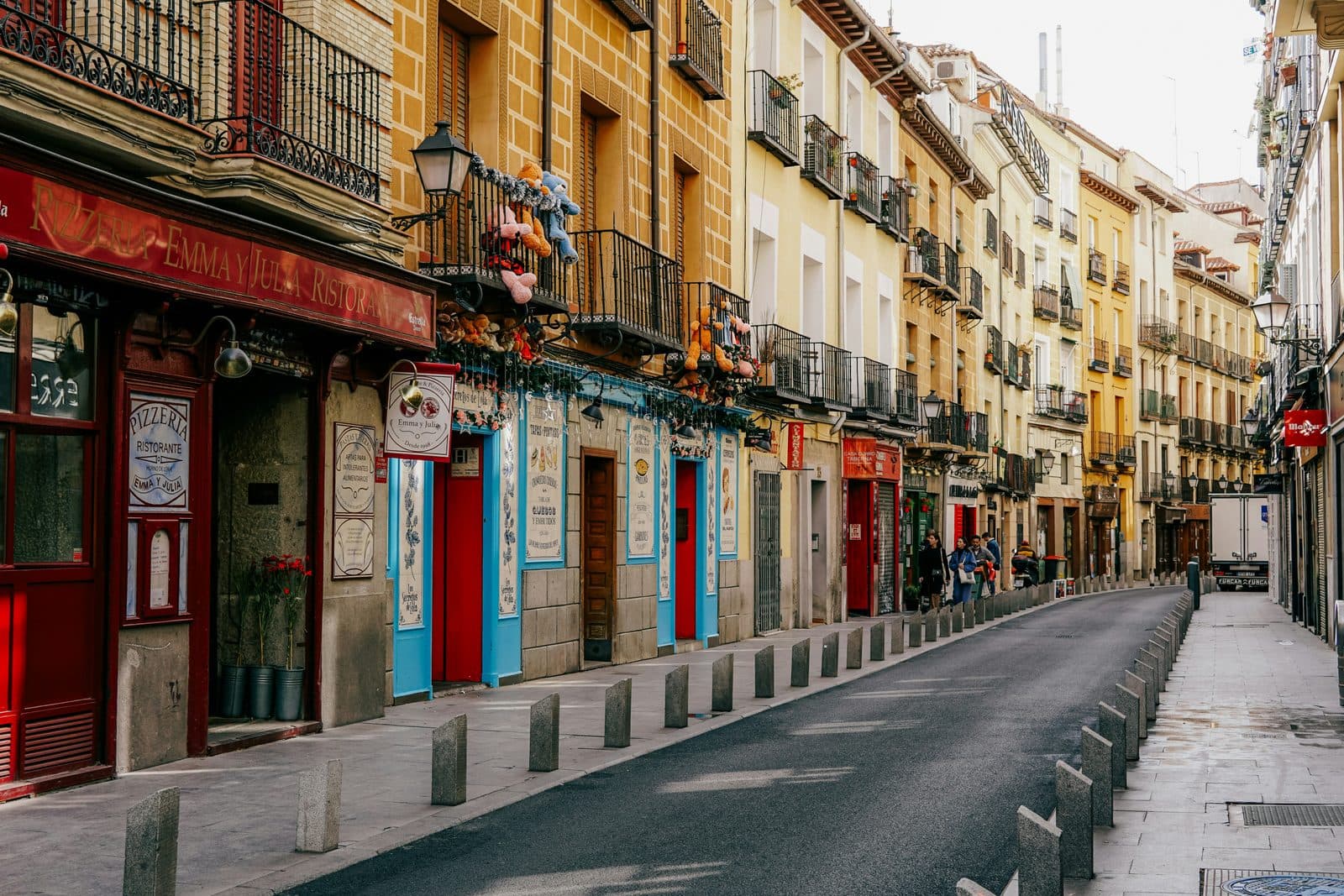
El Rastro and Lavapiés: Down the Hill to the Factory Gate
6 min
Companion
Reading Madrid's Historic Center: The Wall You Cannot See
6 min
Deep dive
Plaza Mayor: The Square Built as a Stage, Rebuilt After Three Fires
5 min
Read
Barcelona vs Madrid: Which Should You Visit?
4 min
Read the walk
The full story of Historic Center: The Wall Madrid Built Over, in words. Prefer to listen? Play it narrated, from home or on location.
Introduction
Madrid, the capital of Spain, grew up inside a wall that has almost entirely disappeared. This walk follows its traces through the historic center, the old Habsburg town that Madrid calls the Madrid de los Austrias.
The Christian town began its wall after the conquest of Toledo and worked on it until twelve twelve. You will see very little of the wall itself, but a great deal of what it left behind: a square named after one of its gates, a great square built just outside it on a man-made terrace, a street that runs in its ditch, and the gate where the walk ends.
Watch the materials, too: grey granite, red brick and dark slate. And three people stand behind much of what you will see: Juan Gómez de Mora, the architect of the Plaza Mayor and the old town hall; Juan de Villanueva, who rebuilt the square after the fire of seventeen ninety; and the painter Carlos Franco, whose figures cover the bakers' house on the Plaza Mayor.
The walk is twelve stops over about two point four kilometers, a mile and a half, and takes about an hour and a half. It is mostly gentle, with one steep lane down and two short flights of steps; a step-free way round is in the tips. It begins in the Puerta del Sol and ends at Puerta Cerrada, in La Latina, a few minutes from the Metro.
1. Puerta del Sol: Kilómetro Cero
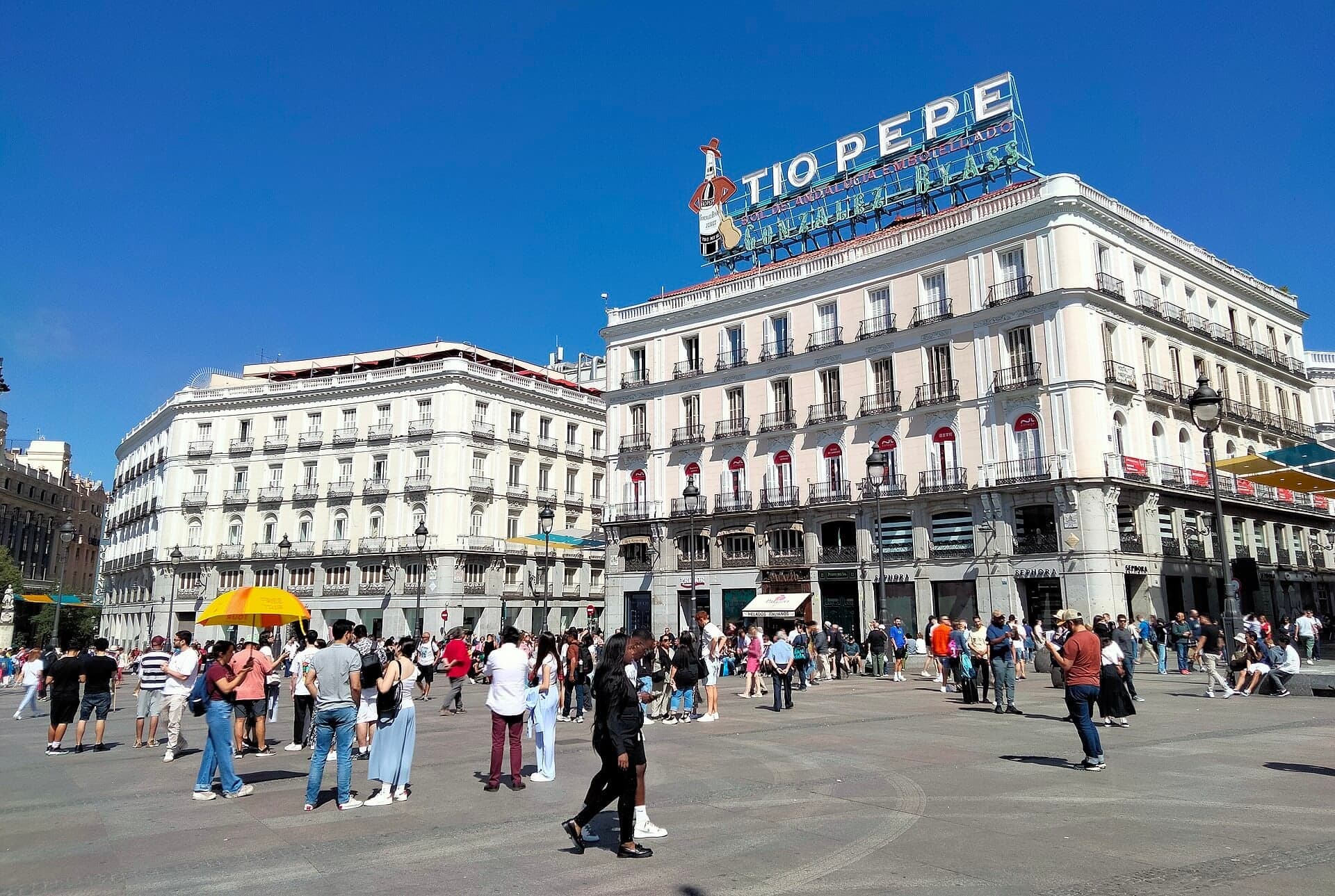
Welcome to the Puerta del Sol. Walk on into the square and stop where you can see the long building with the clock tower.
Sol, the Plaza Mayor and its arches are among the busiest places in Madrid, and pickpockets work the crowds. Keep your bag closed and in front of you.
The square is named for a gate. A small gate in the medieval wall stood near here, and it was decorated with a sun. The wall was pulled down in the sixteen hundreds, and the name stayed.
Now compare the two sides of the square. The straight side is the old Royal Post Office, the Real Casa de Correos, finished in seventeen sixty-eight for King Carlos the Third, to a design by a French architect. Look at its two colors: red brick, framed in white stone. The curved side opposite is younger. It was designed as a single front in the eighteen fifties and built between eighteen fifty-nine and eighteen sixty-two.
The clock on the tower was a gift to the city in eighteen sixty-six. Every thirty-first of December it rings in the new year, and people eat a grape on each of its twelve strokes.
In the pavement in front of the door is Kilometer Zero. In eighteen fifty-four the Puerta del Sol was fixed as the point from which Spain's main radial roads are measured. The first plaque went down in nineteen fifty, and the granite and brass one you see was laid in two thousand nine.
The Second Republic was proclaimed from this building's balcony in April nineteen thirty-one. Under the Franco dictatorship it was the headquarters of the security police, which the regional government itself describes as a center of detention and torture of political dissidents.
Follow the route out of the square, toward a quiet royal convent.
2. Descalzas Reales: The Plain Royal Wall
Walk on into the small Plaza de las Descalzas and stop on the open paving. Then turn round to face the long, plain front across the square, beyond the ramp and the low wall.
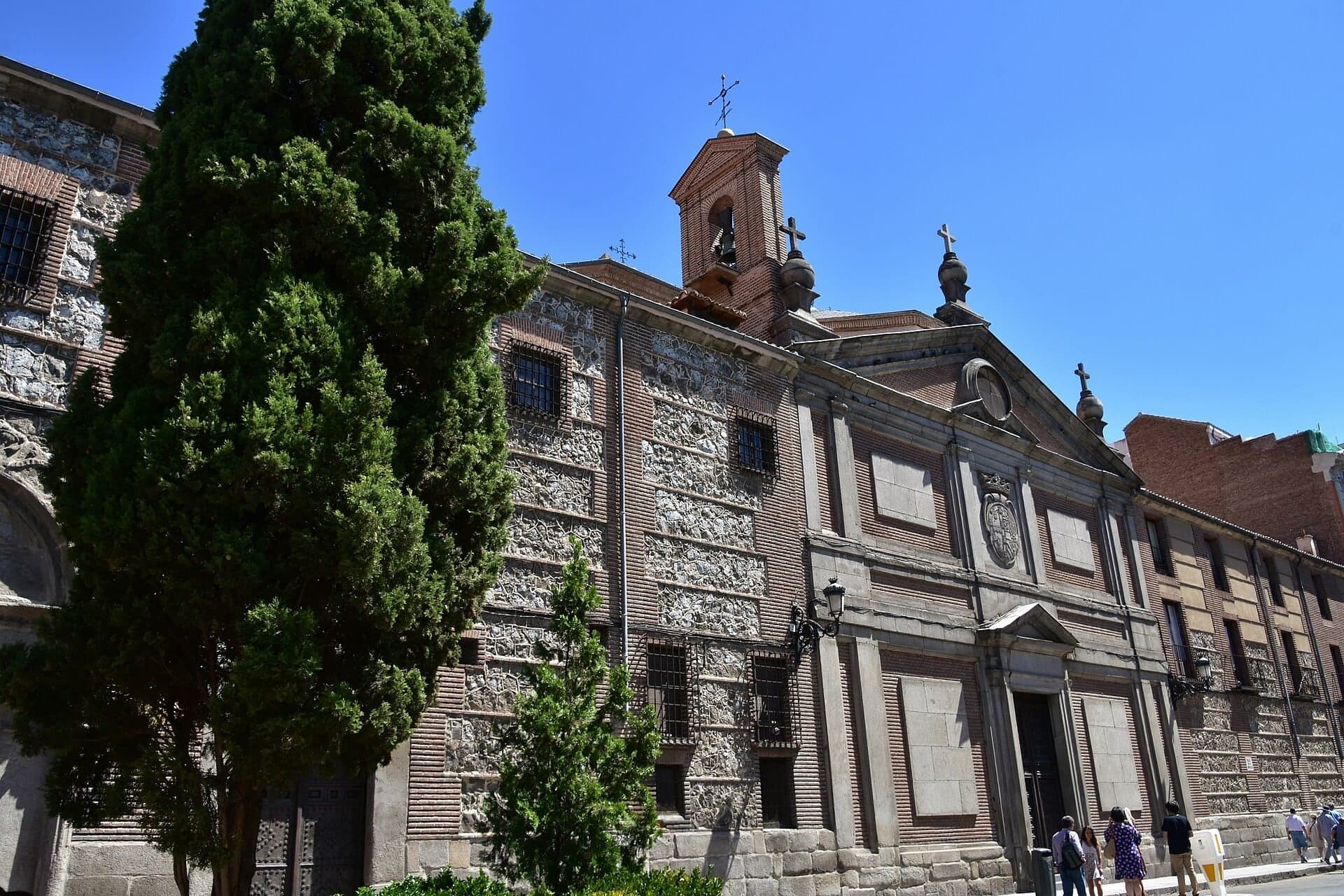
This is the Monasterio de las Descalzas Reales, the royal convent of the barefoot nuns, home to a community of Poor Clares. It opens only for guided visits, which are ticketed and closed on Mondays. The details are on this stop's card.
Joanna of Austria, the sister of King Philip the Second, founded it in fifteen fifty-nine, in the palace where she had been born.
Now look at how plain the wall is. It is granite rubble, rough blocks of grey stone, framed by bands of red brick. On the church front, panels of brick and smooth plaques of granite make an almost grid-like pattern, under a triangular top with a round window. Remember that pairing of granite and brick. It is the recipe of Habsburg Madrid, and you will meet it again at the old town hall.
Behind this modest wall, the convent gathered a collection of tapestries and paintings that you can see only on the guided visit. During the Civil War the building was protected from the bombs, and its treasures were carefully moved away.
Then find the carved stone doorway close by, on the square. It is Baroque, from the seventeen hundreds, and it was the door of the chapel of the Monte de Piedad, a charitable pawn bank. The convent's own chaplain founded it in seventeen-oh-two, to save the poor from moneylenders. So here are two ideas of a front, side by side: a royal wall that says almost nothing, and a doorway that is all carving.
Follow the route down toward Calle del Arenal, and a passage beside a church.
3. San Ginés: The Chocolate Passage
Walk on into the narrow Pasadizo de San Ginés and stop against the church wall, out of the way of the chocolate shop's queue.
The wall beside you belongs to the church of San Ginés, dedicated to Saint Genesius of Arles, a French saint, and one of the oldest foundations in Madrid. The church that stands here was built in sixteen forty-five, on the site of what is thought to have been a Mozarabic chapel, a church of the Christians who lived under Muslim rule. Its street front, round the corner on Calle del Arenal, is brick and tile from eighteen seventy. It was damaged in the Civil War, and afterwards its ornament was taken off.
Inside, the church has three naves, and in it hangs a painting by El Greco, the Purification of the Temple. It can be seen outside mass times, on every day except Wednesday.
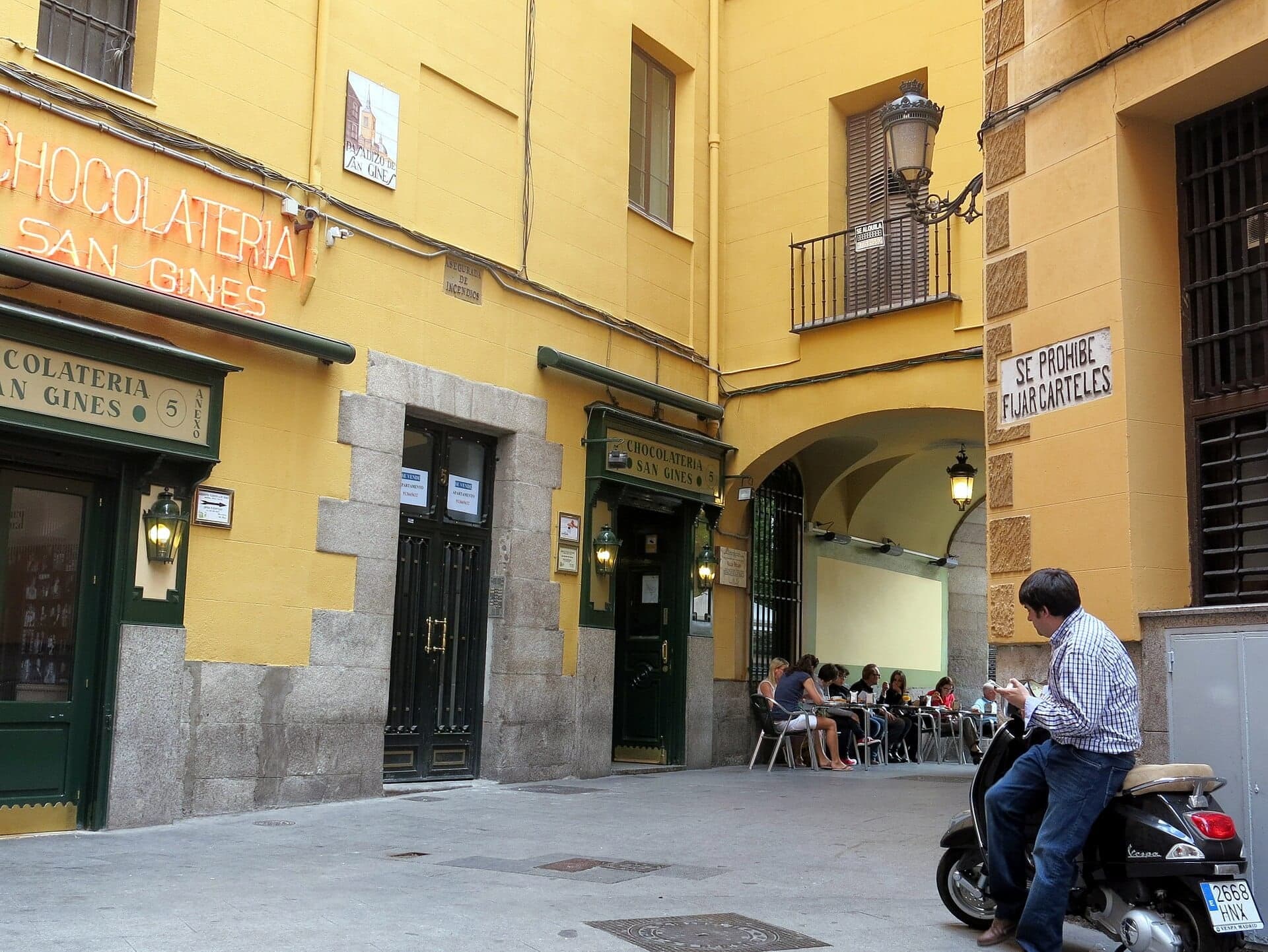
In the passage itself is the Chocolatería San Ginés. It has served thick hot chocolate and churros since eighteen ninety-four, and from the start it was a favorite of theater audiences. The city now lists it among its historic shops.
Look ahead down the passage. Its last stretch runs underneath a house, through a covered tunnel, before it comes out on Calle Mayor.
Follow the route through the passage, and cross Calle Mayor on the zebra, toward the Plaza Mayor.
4. Plaza Mayor: A Square on a Terrace
Walk on along the arcade and out onto the square, and stop on the paving a few steps clear of the café tables. Then turn right, to face the building with the painted front and two slate spires across the square.
This is the Plaza Mayor. It began outside the medieval town, as the Plaza del Arrabal, the square of the outskirts, where the roads from Toledo and Atocha met. In fifteen ninety the first building of a new square went up, the one you are facing, the Casa de la Panadería, the bakers' house. Then, from sixteen seventeen, the architect Juan Gómez de Mora closed the square in, with exposed red brick, timber frames and lead roofs.
Brick, timber and lead: that is why it kept burning. Fire broke out in sixteen thirty-one, again in sixteen seventy-two, when the bakers' house was destroyed and rebuilt, and worst of all in seventeen ninety, when a large part of the square burned.
The rebuilding went to Juan de Villanueva. The bakers' house had survived, so every building would be held to its height. Work went on until eighteen fifty-four. Look at the result: one roofline, granite pilasters along the arcades, slate roofs with dormer windows, all the way round.
Now look at the painted front. The figures are not old. Carlos Franco painted them in nineteen ninety-two, replacing paintings from nineteen fourteen, with figures tied to the history of Madrid, among them the goddess Cybele. Below them runs an arcade of round granite arches. Above, two corner towers carry slate spires, which Madrid calls chapiteles.
This floor is level only because people made it so. The ground falls away to the west, and the tall houses on that side hold up a great bank of earth. You will see their backs at the next stop.
Follow the route across the square, to the arch on the way to the market.
5. Mercado de San Miguel: Iron Above the Ditch
Walk on beside the glass walls of the market hall and stop on the paved strip next to it. If the doors are busy, step to the wall side. This is the Mercado de San Miguel, built between nineteen thirteen and nineteen sixteen. It is the only iron market hall that survives in…
Full narration for this stop unlocks with the tour.
6. Plaza de la Villa: The Old Town Hall
Walk on into the small Plaza de la Villa and stop at its edge, where its old buildings are in view. The big building with towers on its corners is the Casa de la Villa, Madrid's old town hall. Juan Gómez de Mora, the architect of the Plaza Mayor, drew it in sixteen twenty-nine,…
Full narration for this stop unlocks with the tour.
7. Basílica de San Miguel: The Curving Front
Walk on along Calle de San Justo to the little square on its far side, and stop there. Then look up across the lane at the church front. You have come down off the ridge, and the lane is narrow, so the front rises steeply above you. This is the Basílica de San Miguel, built…
Full narration for this stop unlocks with the tour.
8. San Pedro el Viejo: The Mudéjar Tower
Walk on along Calle del Nuncio, the cobbled lane, and stop where the brick church tower is in view ahead. This is the tower of San Pedro el Viejo, Old Saint Peter's. It was built in the middle of the thirteen hundreds, between about thirteen forty-five and thirteen fifty-five,…
Full narration for this stop unlocks with the tour.
9. Plaza de la Paja: The Bishop's Chapel
Walk on into the Plaza de la Paja, the sloping square, and stop in the middle of it, with the tall stone chapel at its upper end in view. You are in the heart of La Latina. This is a lived-in neighborhood, so keep your voice down by the houses, and leave the doorways to the…
Full narration for this stop unlocks with the tour.
10. Plaza de los Carros: San Isidro's Dome
Walk on down into the Plaza de los Carros and stop near its edge. Then turn round, and look back up at the great dome and lantern rising over the church of San Andrés. That dome rises over the chapel of San Isidro, Madrid's patron saint, a chapel larger than the church it was…
Full narration for this stop unlocks with the tour.
11. Cava Baja: The Street in the Ditch
Walk on up the Cava Baja, keeping to the pavement, as cars come down the single lane toward you, and stop where you can see the long, gentle curve of the street ahead. You came into this street past the Puerta de Moros, a square named for another gate of the same old wall. From…
Full narration for this stop unlocks with the tour.
12. Puerta Cerrada: The Closed Gate
Walk on into the open square of Puerta Cerrada, and stop near the stone cross, where you can look up the street that climbs ahead, Calle de Cuchilleros. This is where the walk ends. A gate in the twelfth-century wall stood here. It was first called the Puerta de la Culebra, the…
Full narration for this stop unlocks with the tour.
- Puerta del Sol (Madrid), al fons la Real Casa de Correos, seu de la Comunidad de Madrid — Enric, CC BY 4.0 · source
- Puerta del Sol, 10-11 (Madrid) — Enric, CC BY 4.0 · source
- Main façade of Monasterio de las Descalzas Reales, a convent at Plaza de las Descalzas (square) in Madrid (Spain). — Luis García (Zaqarbal), CC BY-SA 3.0 · source
- Monasterio de las Descalzas Reales, Madrid, 16th century — Richard Mortel from Riyadh, Saudi Arabia, CC BY 2.0 · source
- View of St. Genesius Church in Madrid (Spain) from the north-east angle. — Luis García (Zaqarbal), CC BY-SA 3.0 · source
- al rico chocolate — M a n u e l from Valdemoro, Spain, CC BY 2.0 · source
- Mercado de San Miguel — CrisNYCa, CC BY-SA 4.0 · source
- Los Austrias | Plaza San Miguel — Fred Romero from Paris, France, CC BY 2.0 · source
- Casa de Cisneros i Casa de la Villa, Plaza de la Villa 4-5 (Madrid) — Enric, CC BY 4.0 · source
- La Torre de los Lujanes alberga la Real Sociedad Económica Matritense de Amigos del País, institución creada por Carlos III en 1775 — Antonello Dellanotte, CC BY-SA 4.0 · source
- Plaza del Cordon and the St. Michael's Basilica at the right, Madrid, Spain — Bernard Gagnon, CC BY-SA 3.0 · source
- This is a photo of a monument listed in the Spanish heritage register of Bienes de Interés Cultural under the reference RI-51-0004365. — ECsonka, CC BY-SA 3.0 ES · source
- Iglesia de San Pedro el Viejo (Madrid) — Zarateman, CC BY-SA 3.0 · source
- The Vargas Palace (on the left) and the Bishop's Chapel (on the right) on Plaza da la Paja, Madrid, Spain — Bernard Gagnon, CC BY-SA 3.0 · source
- La Latina | Plaza San Andrés — Fred Romero from Paris, France, CC BY 2.0 · source
- Cava Baja, Madrid — Juan Antonio Segal from Madrid, Spain, CC BY 2.0 · source
- Restaurante La Chata — M.Peinado from Alcalá de Henares, España, CC BY 2.0 · source
- View of Plaza de Puerta Cerrada (square) in Madrid (Spain). — Luis García (Zaqarbal), CC BY-SA 3.0 ES · source
- Puerta Cerrada Square. Madrid, Spain — Esetena, CC BY-SA 4.0 · source
Images may be cropped or resized. Other photos via Unsplash and Pexels.