
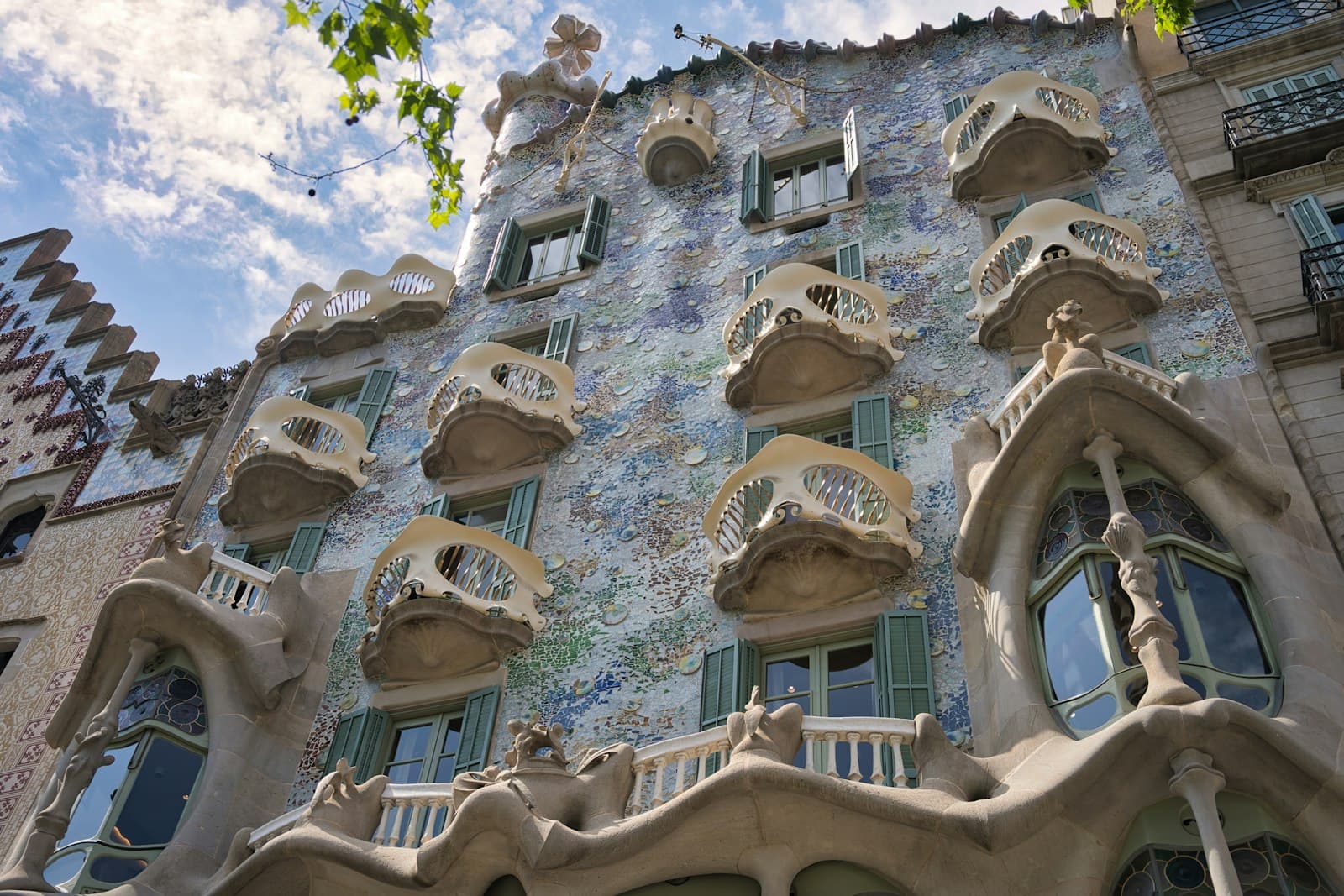
Casa Batlló and La Pedrera: The Grid and Its Showpieces
75 min · 2 km · easy
Barcelona and Madrid are not the same Spain served twice. Barcelona is coastal, Catalan, and shaped by architects: Gaudi's buildings, a medieval old quarter, and a beach at the end of the metro line. Madrid is the landlocked capital, denser and less showy, built around monumental plazas, three of the great art museums in Europe, and a tapas-and-late-nights social life that is among the most intense in the country. If you want icons and the sea, lean Barcelona. If you want art, plazas, and the pulse of a real capital, lean Madrid. And with a two-and-a-half-hour train between them, you rarely have to choose for good.
Barcelona vs Madrid at a glance
| Barcelona | Madrid | |
|---|---|---|
| Setting | Coastal, on the Mediterranean | Landlocked, high central plateau |
| Signature draw | Gaudi and Modernisme, the beach | Art museums, grand plazas |
| Identity | Catalan, its own language and pride | Spanish capital, national mix |
| Feel on foot | Old quarter plus a planned grid | Dense, flat, monumental centre |
| Nightlife | Lively, beach-adjacent | Later and more intense |
| Ideal stay | 3 to 4 days | 3 to 4 days |
The case for Barcelona
Hear a stop from this walk
Jardinets de Gràcia: The Top of the Passeig
Barcelona is the more instantly iconic city, and most of that is architecture. At the turn of the twentieth century a movement called Modernisme reshaped the city, and Antoni Gaudi gave it a visual signature that no other place has. Add a walkable medieval core, the ordered grid of the Eixample, and a Mediterranean beach, and you get a city that packs an enormous amount into a compact footprint. Barcelona is also unmistakably Catalan, with its own language, holidays, and sense of identity distinct from the rest of Spain.
Barcelona rewards walking above almost anything else. Our Casa Batlló and La Pedrera: The Grid and Its Showpieces walk reads Cerdà's grid and the Modernisme houses on it, and Gothic Quarter: Roman, Royal and Rebuilt traces the Roman, royal and twentieth-century layers of the old town. For the full set of routes, see our best walking tours in Barcelona guide.
Choose Barcelona if you want a single, iconic, architecture-and-sea city you can cross on foot.
The case for Madrid
Madrid is the quieter sell that grows on people. It became Spain's capital by royal decree in the sixteenth century, and the city still reads as a stage for the nation: enormous plazas, royal palaces, and a spine of monuments running through the centre. Its trump card is art. The Prado, Reina Sofia, and Thyssen-Bornemisza sit within walking distance of one another along the Paseo del Arte, holding Velazquez, Goya, and Picasso's Guernica among them. Madrid also has the most committed food-and-nightlife culture in the country, with dinners starting late and neighborhoods that stay awake.
Madrid is flat, dense, and made for walking its core. Our Historic Center: The Wall Madrid Built Over walk runs from the Puerta del Sol through the Plaza Mayor to La Latina, and Paseo del Prado: The Avenue Built to Teach covers the three-museum art mile from Cibeles to the Reina Sofía. The full lineup is in our best walking tours in Madrid guide.
Choose Madrid if you want art, grand plazas, tapas, and the feel of an unfiltered national capital.
Can you do both in one trip?
Yes, and it is one of the easiest pairings in Europe. The AVE high-speed train connects Barcelona Sants and Madrid's central station in roughly 2 hours and 30 minutes, with dozens of departures a day. Because both stations are in the city centre, the journey is often faster and simpler than flying once you count airport transfers.
A week split between the two is a classic Spain itinerary: three to four days each, with the train as a comfortable middle and optional day trips to Toledo or Segovia from Madrid, or the beach and Montjuic from Barcelona.
So which should you choose?
If you can do both, do both. If you must pick one:
- Pick Barcelona for Gaudi, the medieval quarter, the beach, and a compact, image-defining city.
- Pick Madrid for the great art museums, monumental plazas, and the deepest food-and-nightlife culture in Spain.
Whichever you choose, the historic core is best experienced on foot at your own pace. Start with our best walking tours in Barcelona and best walking tours in Madrid.
Frequently asked questions
- Is Barcelona or Madrid better for first-timers?
- Both work well. Barcelona is the more famous first stop thanks to Gaudi, the beach, and its compact old quarter, and it tends to win visitors who want a single iconic city. Madrid suits travelers who prioritize art museums, grand squares, and an authentic capital-city rhythm. Many first-timers to Spain do both.
- Can you visit both Barcelona and Madrid in one trip?
- Yes, and it is easy. The AVE high-speed train links Barcelona Sants and Madrid in roughly 2 hours and 30 minutes, city center to city center, with dozens of departures a day. A week split between the two is a classic Spain itinerary.
- How many days should I spend in each?
- Three to four days each is a comfortable baseline. Barcelona's Gaudi sites and old quarter fill three full days; Madrid's art museums and plazas do the same, with easy day trips to Toledo or Segovia if you want more.
- Which city is better for walking?
- Both are strong walking cities. Barcelona's Gothic Quarter and the Eixample grid are made for it, and Madrid's centre is dense and flat with grand connecting avenues. Neither requires a car, and both reward doing the historic core on foot.