The Palatine Quartet is a set of two violins, a viola and a cello made by Antonio Stradivari and decorated with ivory inlay, now in the Royal Palace of Madrid. The Crown bought them in the 1770s for the future Charles IV. Both violas were stolen in the Peninsular War, and the smaller one was bought back in 1951. Patrimonio Nacional still uses the instruments in concerts.
Royal Palace of Madrid audio guide
Madrid · 2 floors · stories room by room
If you are asking where to see Stradivarius instruments in Madrid: in the Stradivarius room of the Royal Palace, just before the Crown Room. If you are asking why they are special: the quartet is decorated, it has stayed with the Spanish court, and it is still played.
What you see
Five instruments by Antonio Stradivari of Cremona stand in the room: two violins, a viola and a cello that form the decorated Palatine quartet, and a plain solo cello of 1700. Look at the edges of the fronts for a band of tiny ivory circles and diamonds set into the wood, and at the pegboxes for plant designs. Patrimonio Nacional calls the decorated quartet unique in the world, and notes that an earlier decorated set Stradivari made for the Medici did not stay together.
A set bought for a prince
Hear a stop from this walk
Puerta Cerrada: The Closed Gate
Stradivari had been making inlaid instruments since 1687. In 1702 he hoped to present a set to Philip the Fifth, who passed through Cremona during the War of the Spanish Succession, but the king moved on too fast and they never met. In the 1770s the Crown bought five decorated instruments with labels dated 1709 from the maker's youngest son, Paolo, for the future Charles the Fourth, a keen music lover. Restorers later found that only the violins may date from then; the viola and cello are from the 1690s. They were altered over the centuries to suit changing music and to give them more power.
The viola that came home
The set had two violas, a small one and a larger tenor. Both were stolen from the palace in the Peninsular War, the war against Napoleon's armies. The tenor viola has never been found. The smaller one, made in 1696, turned up in London with the dealers Hill, and the Spanish government bought it back in 1951. A concert at the palace on 12 December 2026 is planned to pair this viola and the 1700 cello with the Royal Chapel organ, so they may be off display that day.
Instruments that are played
Since 1984 Patrimonio Nacional's chamber music season has put them in the hands of leading players, in the Hall of Columns, and more than a hundred musicians have played them. In January 2025 the quartet travelled across Madrid under guard to play at the Teatro Real, in a concert to help rebuild the cultural life of the towns hit by the floods around Valencia, its first time outside the palace this century. The room before it holds an Amati double bass, a gift to the future Charles the Fourth's wife, María Luisa, in 1779: Nicolò Amati is described by Patrimonio as Stradivari's master.
How to see it
Displays move from time to time, so check the room on the day. Photographs are allowed for personal use without flash. In the Roamer guide the Palatine quartet, the viola and the 1700 cello each have a story, and the quartet is a stop on The Royal Palace in an Hour and The Palace and the Armoury in Two Hours routes. You can listen at your own pace, with no group, and skip anything you do not want. The guide is independent and not affiliated with the palace, and admission is separate. Start here: the Royal Palace of Madrid guide, or read the whole visit in Royal Palace of Madrid: what to see, room by room.
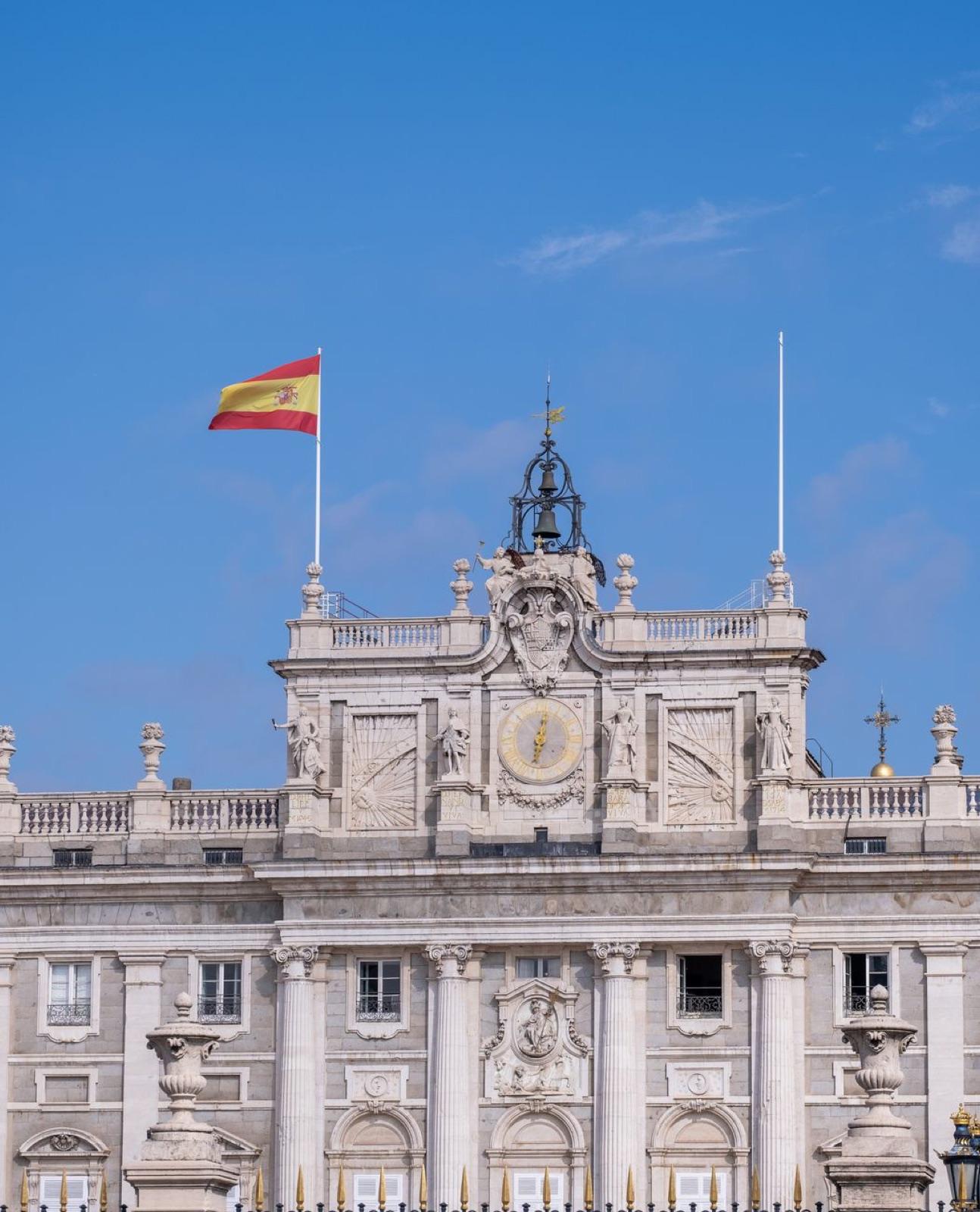
Cover: the clock pediment on the palace's central pavilion. Photograph by Joost van Os, Pexels. The palace interiors are not photographed here.
Ready to experience it?
Historic Center: The Wall Madrid Built Over
75 min · 2.4 km · easy
More from Madrid
Explore more at your own pace.
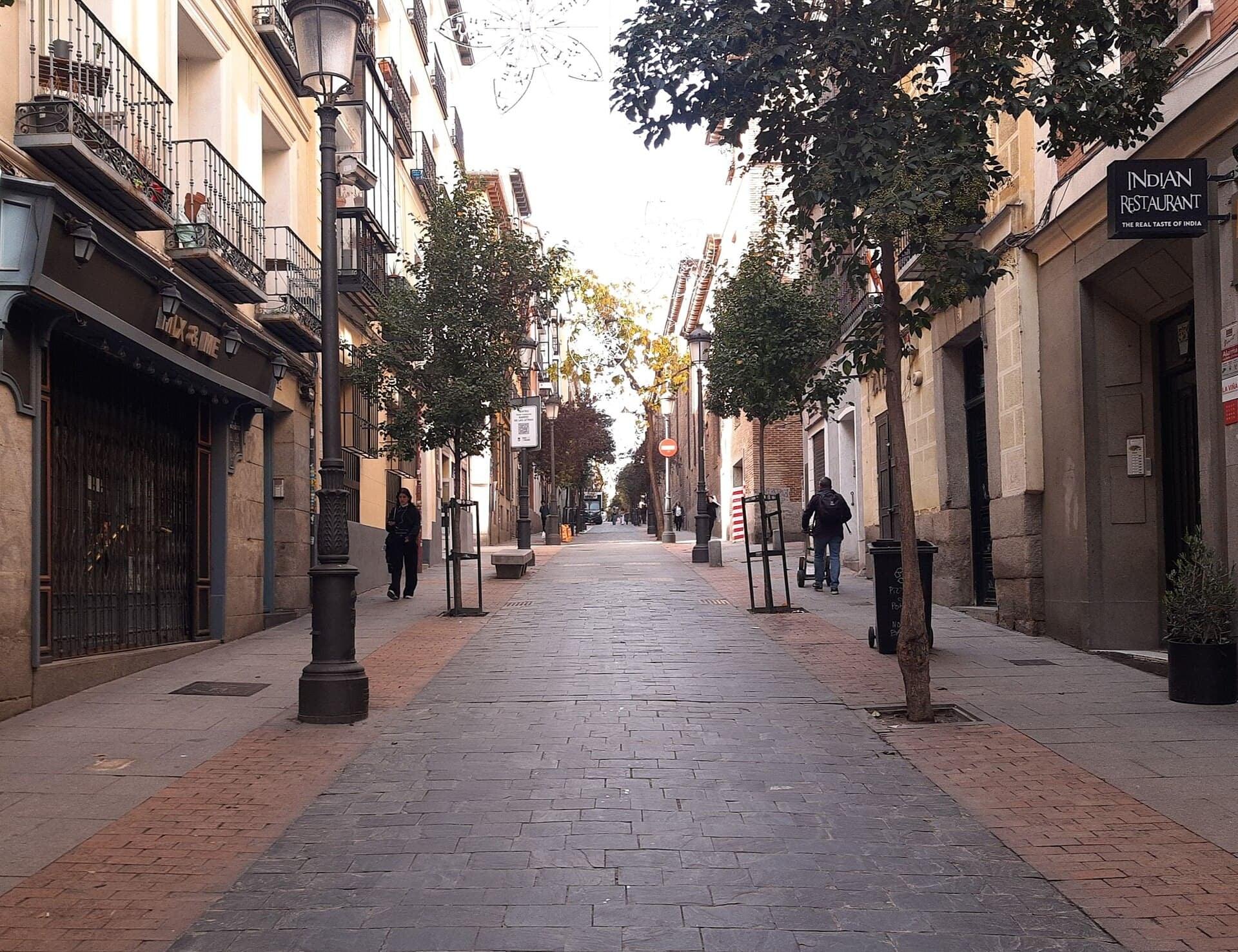
Barrio de las Letras: Madrid's Writers' Quarter in Three Layers
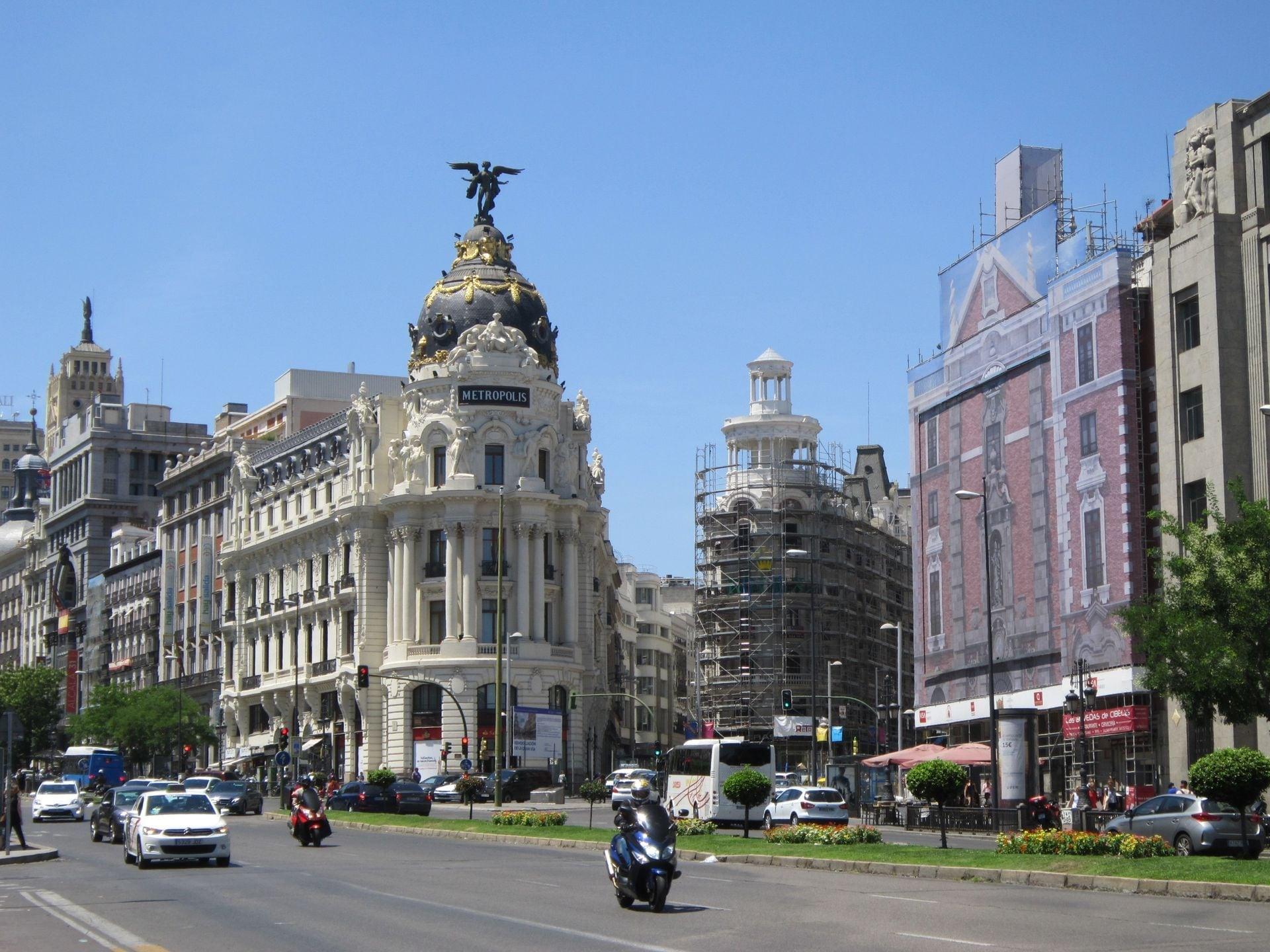
Gran Vía: How Madrid's Great Way Grew Wider and Taller as It Was Cut
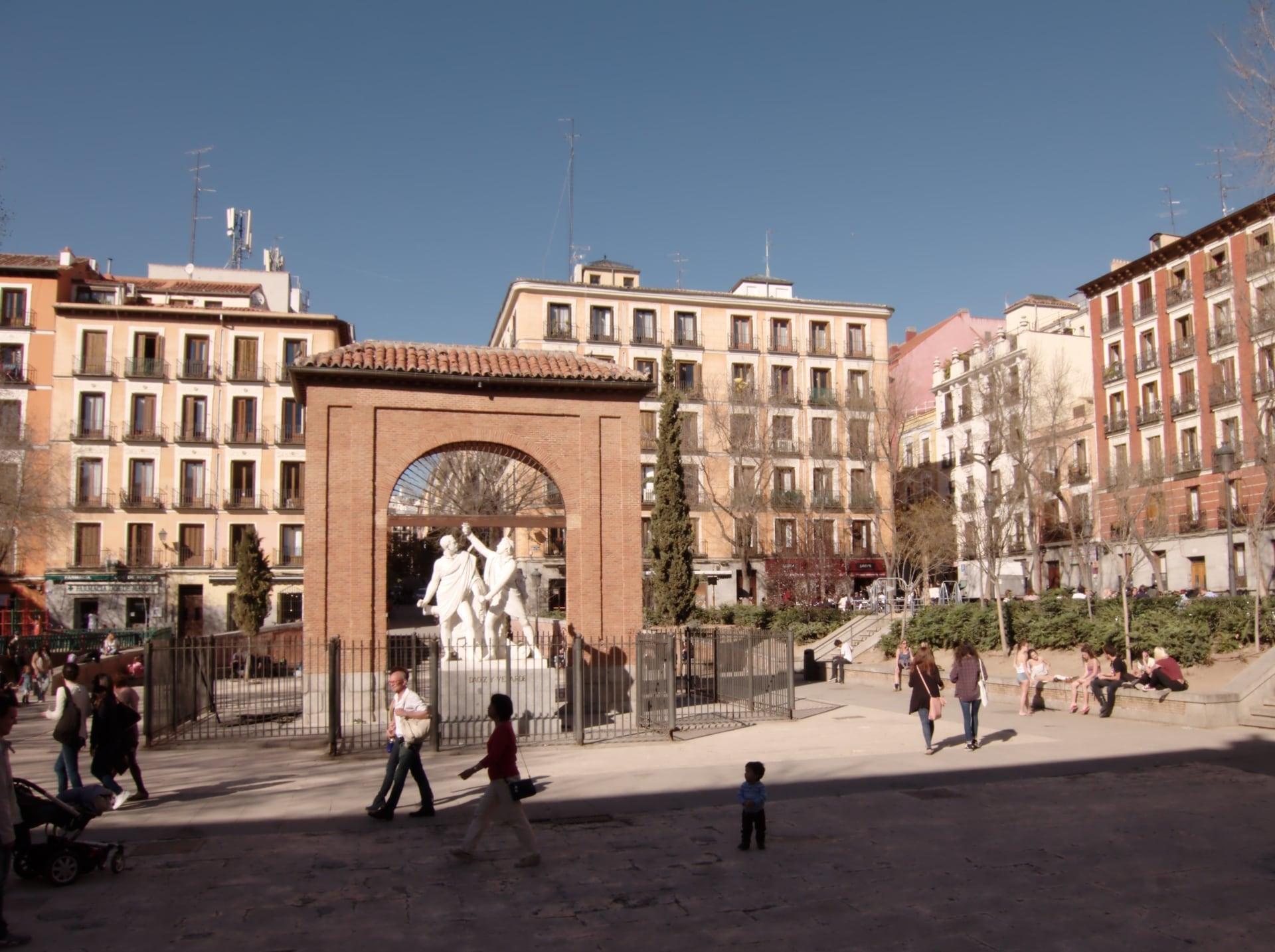
Malasaña and Chueca: Madrid's Old Northern Edge, Taken Back by the City
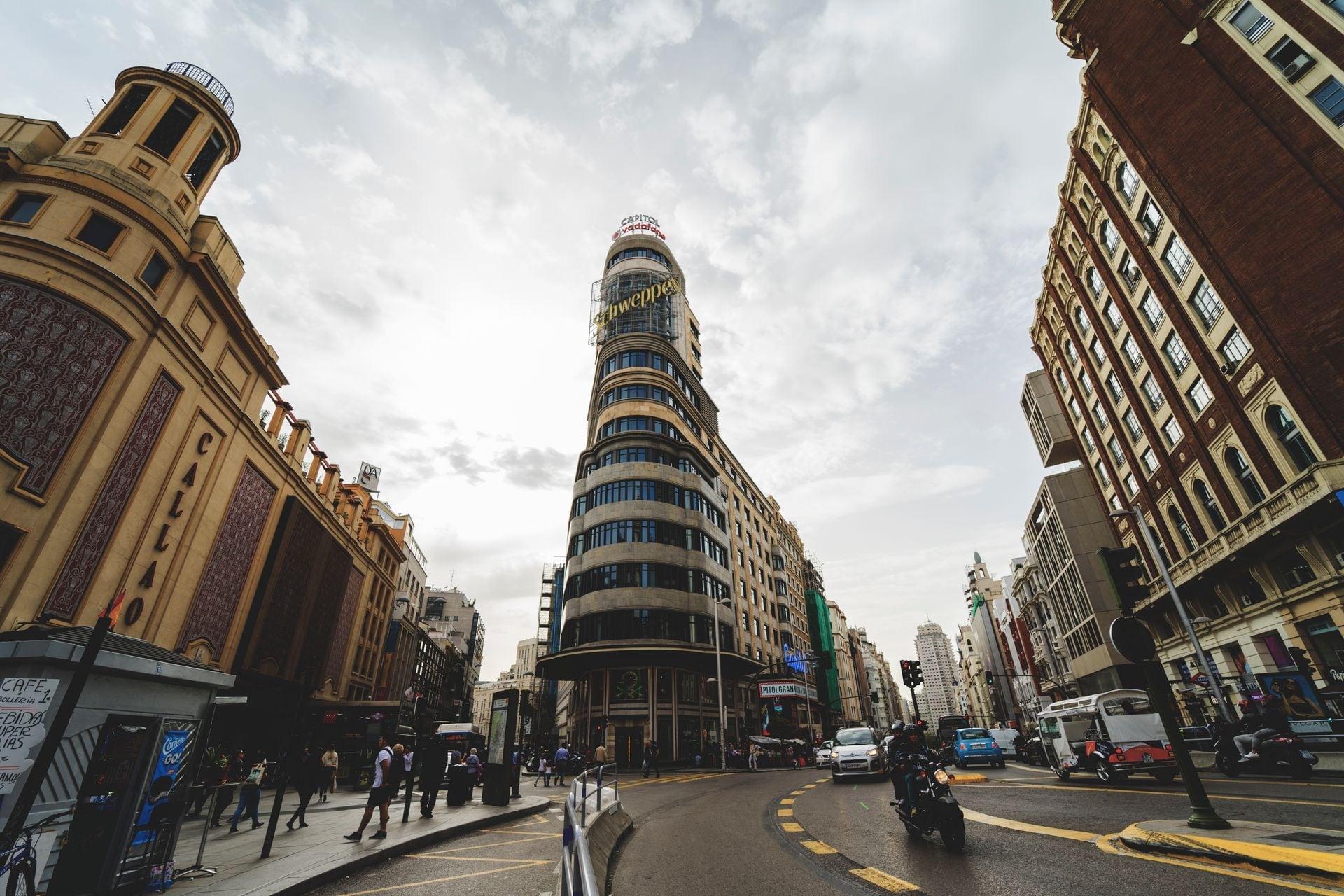
Edificio Carrión: The Curved Corner at Callao and the Sign That Stayed
Plaza de las Cortes: Cervantes, His Lion and the Congreso Lions