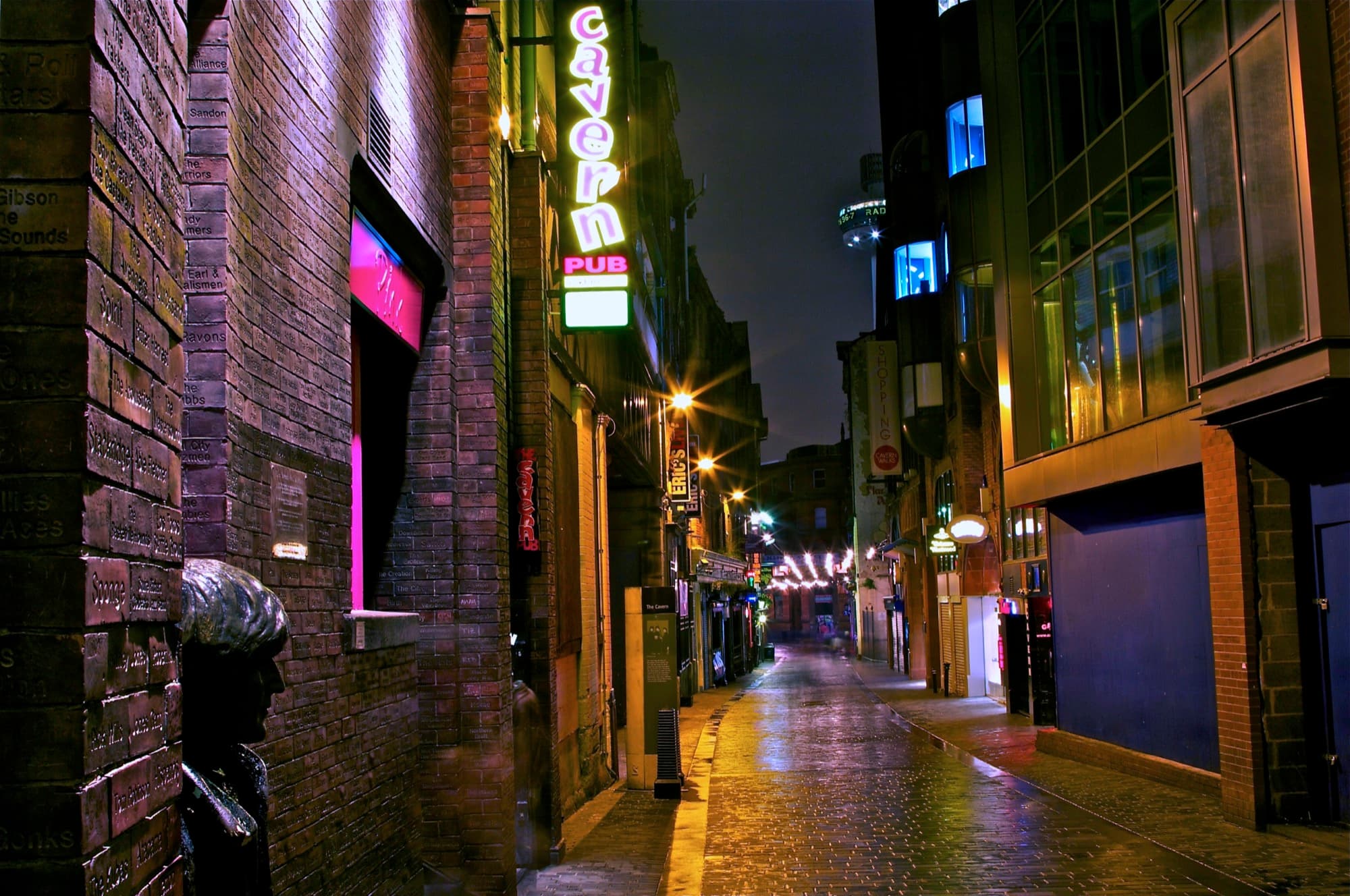
Most Beatles tours are shrine walks. You stand in front of a plaque, you take a photo, you move on. The Cavern Quarter tour is doing something different. It reads Mathew Street as a trade route, and it argues that the most important thing about the Beatles is not the songs but the direction of travel. American music had been coming ashore in Liverpool for two centuries. In one cellar, four teenagers sent it back. Here is how the walk builds that case across seven stops.
The basement, and an honest disclaimer
The tour opens at the Cavern Club, 10 Mathew Street, and it tells you the truth straight away: most of what you are looking at is 1984. The original Cavern opened in 1957 as a jazz club, the Beatles played it around 300 times, and it closed in 1973 when British Rail issued a compulsory purchase order for a rail ventilation shaft that was never built. The cellar was filled with rubble; the land sat as a car park; the reconstruction of the 1980s used the original bricks where it could. Knowing this makes the stop better, not worse. You are standing on the real site of a room that no longer exists, which is a more interesting thing than a preserved relic.
The scene, not the shrine
Hear a stop from this walk
Beatles Statue, Pier Head: The City's Acknowledgement, Fifty-One Years Late
The strength of this walk is that it refuses to treat the four as a miracle with no context. At the Cilla Black statue you learn she worked the Cavern coat-check before Brian Epstein signed her in 1963, out of the same cellar economy, same booker, same manager. On North John Street you meet Bill Harry and the newspaper Mersey Beat, which named a whole Liverpool guitar-and-harmony sound in 1961. The Beatles were the best band in a real scene, not four aliens who landed in a car park.
The record counter where it turned
The most important stop is the least photogenic: 12 to 14 Whitechapel, where nothing original survives. This was NEMS, the Epstein family record shop, where Brian Epstein managed the record department. On 28 October 1961 a customer asked for a record the shop did not stock. Epstein went looking for it, found the band, and the rest followed. The tour makes you stand on an unremarkable stretch of pavement precisely because that is where an ordinary retail counter became a hinge in cultural history. This is the same instinct behind the Case History suitcases up on Hope Street, which insist that the real Liverpool story is bigger than its four most famous sons.
Down to the water, fifty-one years late
The walk ends where the waterfront history tour begins, at the Pier Head, and this is the payoff. The Beatles statue there, four bronze figures by Andy Edwards, was unveiled on 4 December 2015, funded by the Cavern Club for its sixtieth anniversary. That is fifty-one years after the band conquered America. The city that produced them took half a century to put up a statue.
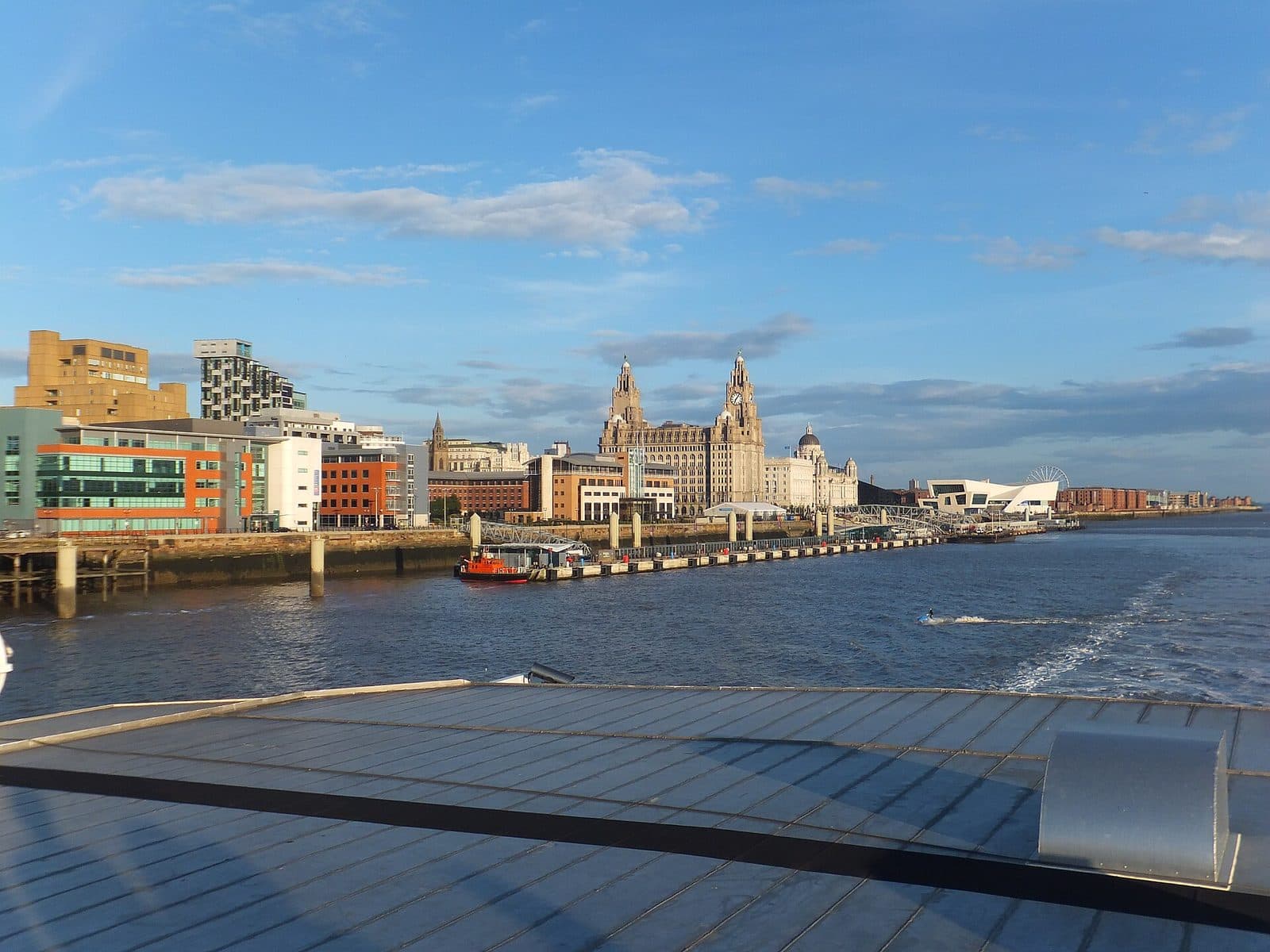
And the figures are walking west, toward the river, toward the Atlantic. That orientation is the whole thesis in bronze. For two centuries American music crossed this water eastward, ragtime to jazz to rock and roll, arriving on the same Cunard liners that ran the trade routes. The Beatles' first Cavern sets were mostly American songs. Then they crossed the water the other way and changed American music forever. The statue faces the direction the music finally traveled back out. The second port of empire thesis sets out how everything in this city, cargo, people and records alike, arrived and left by that same water.
How to walk it
It is a compact route, about 1.6 kilometres over roughly 90 minutes, from the Cavern Quarter down to the river. The Mathew Street stretch gets crowded and loud in the evenings; a morning walk is quieter and lets the audio breathe. Wear something you can stand up on cobbles in. The last stretch to the Pier Head is exposed to the Mersey wind.
If you want the wealth-and-reckoning story that the port rests on, walk the Pier Head waterfront tour either side of this one; they share their final stop. Start the Cavern Quarter tour free in the Roamer app.
Ready to experience it?
Mathew Street: The Four Boys Who Broke American Music
90 min · 1.6 km · easy
More from Liverpool
Explore more at your own pace.
The Georgian Quarter: Liverpool's Arts District, Two Cathedrals and the Half-Mile Between
The Second Port of Empire: How the Sea Built Liverpool, and What It Carried
Hope Street on Foot: Two Cathedrals, Half a Mile, and the Argument Between Them
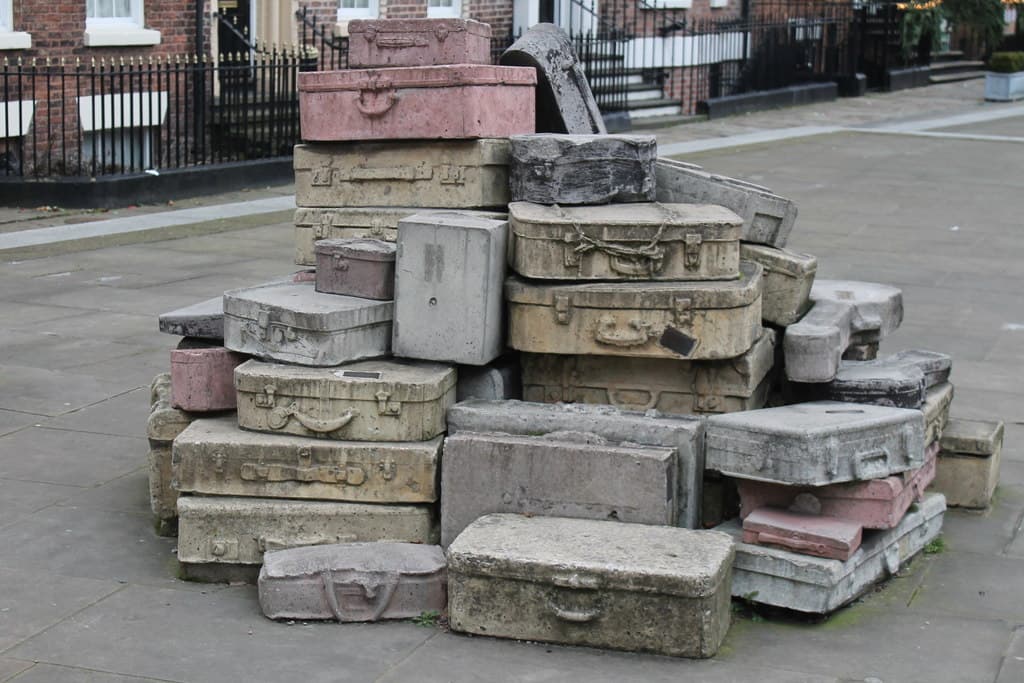
A Case History: The Hope Street Suitcases Are About Emigration, Not the Beatles
The International Slavery Museum: The Reckoning Inside the Warehouse of the Wealth