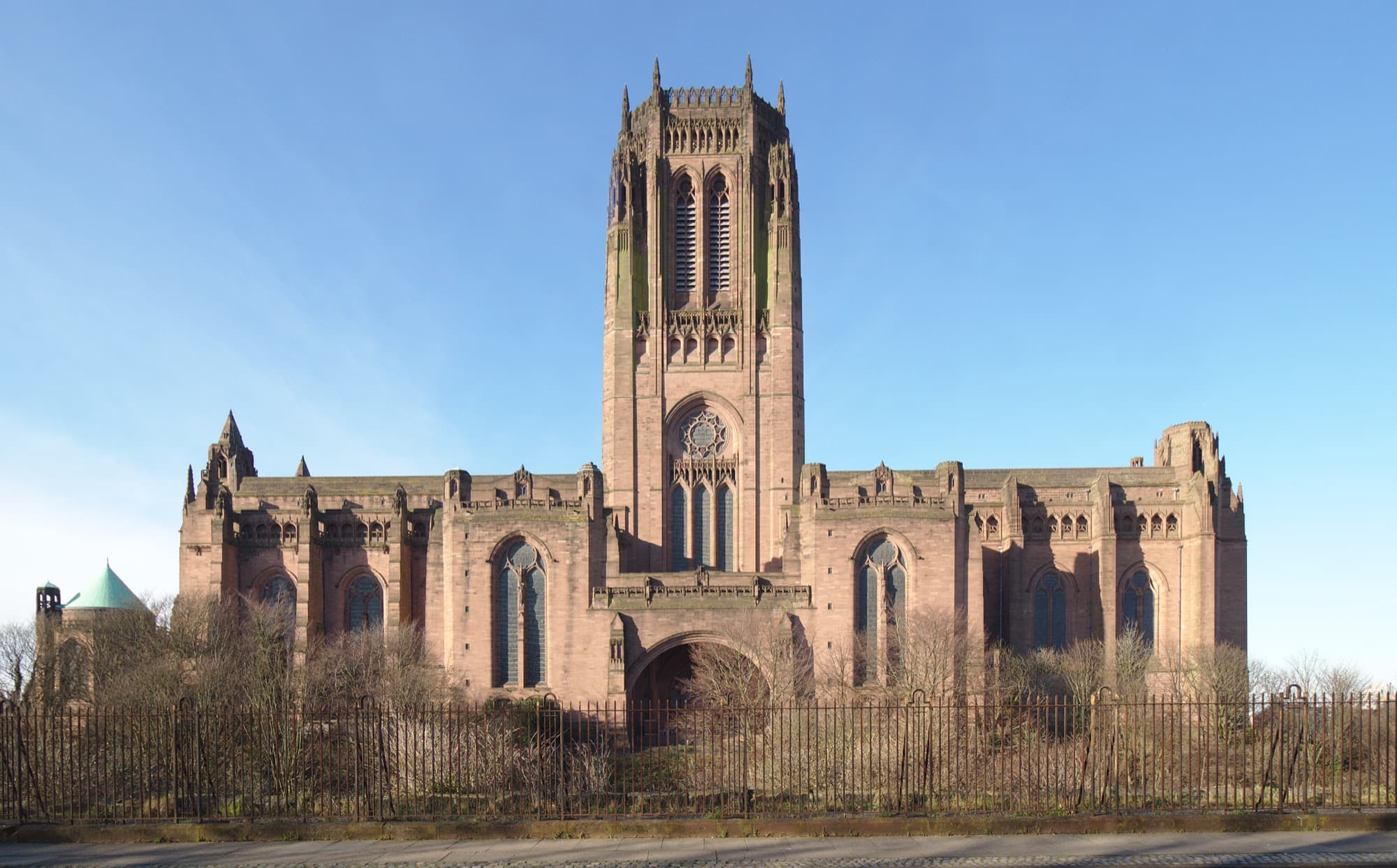
Stand at the west doors of Liverpool's Anglican Cathedral and look up. The tower is 101 metres above your head. The building runs 189 metres from end to end, the longest cathedral in the world, the largest religious building in Britain, the eighth largest church anywhere. Now hold one more fact against that scale: the man who designed it was 22 years old and had never completed a building in his life.
The competition
In 1901 the Diocese of Liverpool launched an open competition for a new cathedral, and 103 entries arrived, including work from Charles Rennie Mackintosh and the practice of Austin and Paley. In 1903 the assessors made their recommendation. They chose Giles Gilbert Scott, who was still an articled pupil in Temple Moore's office and had nothing built to his name.
It was an extraordinary gamble, and the competition organisers seem to have half-known it. Scott came from a dynasty of architects, his grandfather George Gilbert Scott had built much of Victorian Gothic England, so the name carried weight. But the design was the young man's own, and the assessors backed the drawing over the resume. To manage the risk, they paired the untested winner with the experienced George Frederick Bodley as joint architect. Bodley died in 1907, and Scott was left with the largest church commission in the country and the rest of his working life to deliver it.
The 74-year build
Hear a stop from this walk
Liverpool Metropolitan Cathedral: Gibberd Above, Lutyens Below
The foundation stone was laid in 1904. The cathedral was not completed until 1978. Scott spent the whole of his career on it and did not live to see it finished; he died in 1960, and the last stones were set eighteen years later.
Over those decades Scott kept redesigning. The building you see is not the 1903 competition drawing. He revised the tower, unified the two original transepts into one massive central space, and refined the proportions again and again as the money came in and the walls rose. The result is a single coherent vision that nonetheless absorbed 74 years of second thoughts. It is neo-Gothic, but it is not a copy of anything medieval; it is one man's twentieth-century argument about what Gothic could still do at colossal scale.
The hand that also drew the telephone box
Here is the detail that makes the cathedral sit strangely in the mind. The same Giles Gilbert Scott who spent his life on this vast sandstone Gothic mountain also designed the red telephone box, the K2 of 1924 and the more common K6 of 1935, one of the most recognisable objects Britain ever produced. He designed Battersea Power Station and Bankside Power Station, the latter now the Tate Modern, and he designed Waterloo Bridge. One architect drew the largest church in Britain, the national phone box and two of the most monumental power stations in London. The cathedral is his masterpiece; the phone box is arguably his most-seen work. Both came from the same drawing hand.
What to do when you are there
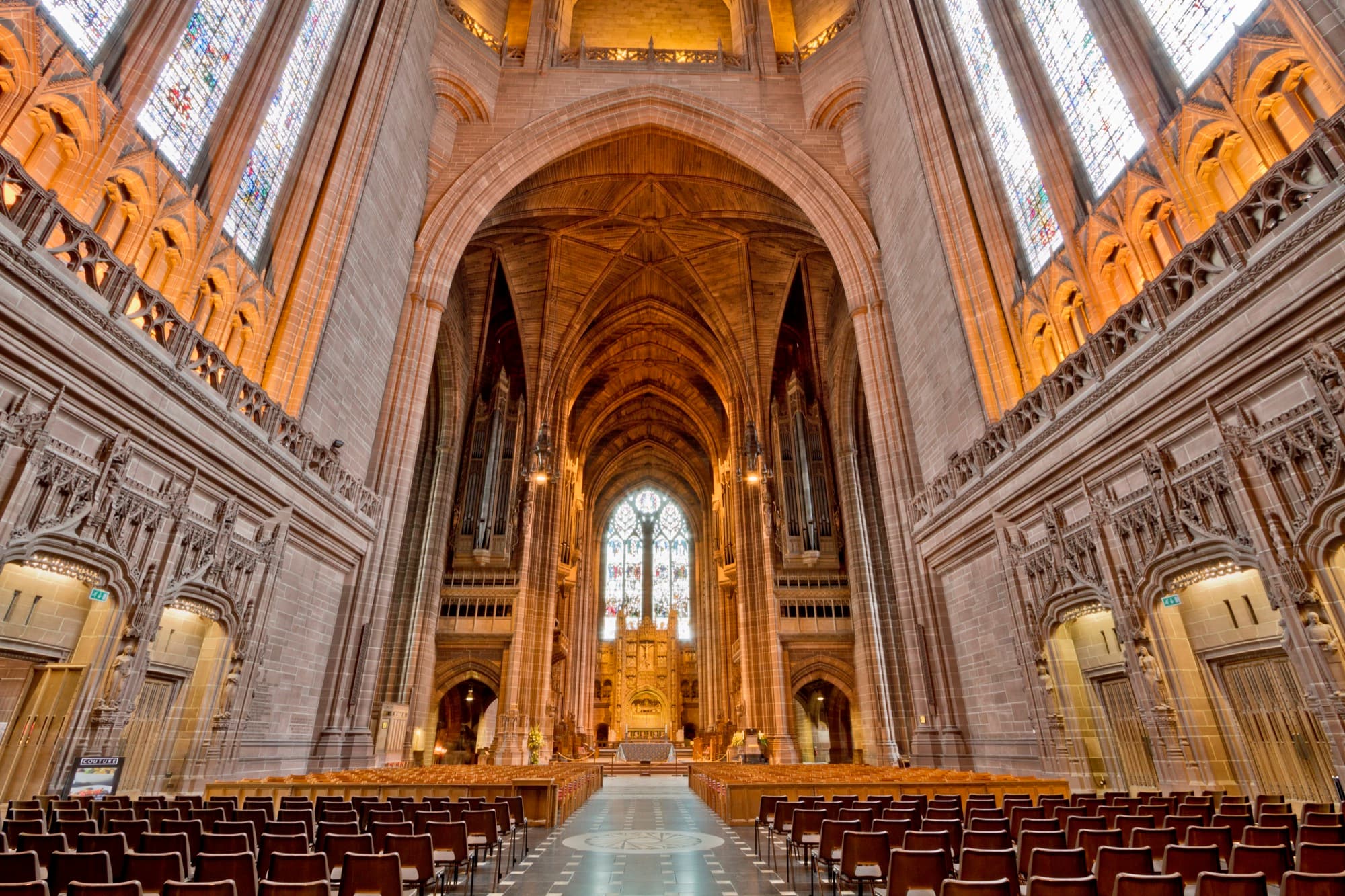
The cathedral is free to enter and the interior is the point: the scale that photographs cannot convey, the way a single vast volume opens above you rather than a nave-and-aisles division. Pay for the tower experience if you can. Two lifts and a short climb take you to the top of the 101-metre tower, and on a clear day the view runs over the whole city, the river, the Wirral and the hills of North Wales beyond. It is one of the best views in the north of England, and it makes the argument of the whole Hope Street architecture tour legible from above: this cathedral at one end of the street, and the modernist Catholic crown at the other.
Because that is the pairing that matters. This building is one half of Liverpool's defining architectural debate. Half a mile north stands the Metropolitan Cathedral, Frederick Gibberd's 1962 modernist answer built on the crypt of an unbuilt Lutyens scheme, the opposite reply to the same question about how a city should build faith. Reading the two together is what the architecture tour companion is built to do, and the second port of empire thesis explains why a city made rich by the sea decided it would have two cathedrals rather than one.
Walk the full argument on the Hope Street architecture tour, free to start in the Roamer app.
Ready to experience it?
Hope Street: A Protestant Cathedral and a Catholic Cathedral, and Half a Mile Between
90 min · 1.2 km · easy
More from Liverpool
Explore more at your own pace.
The Georgian Quarter: Liverpool's Arts District, Two Cathedrals and the Half-Mile Between
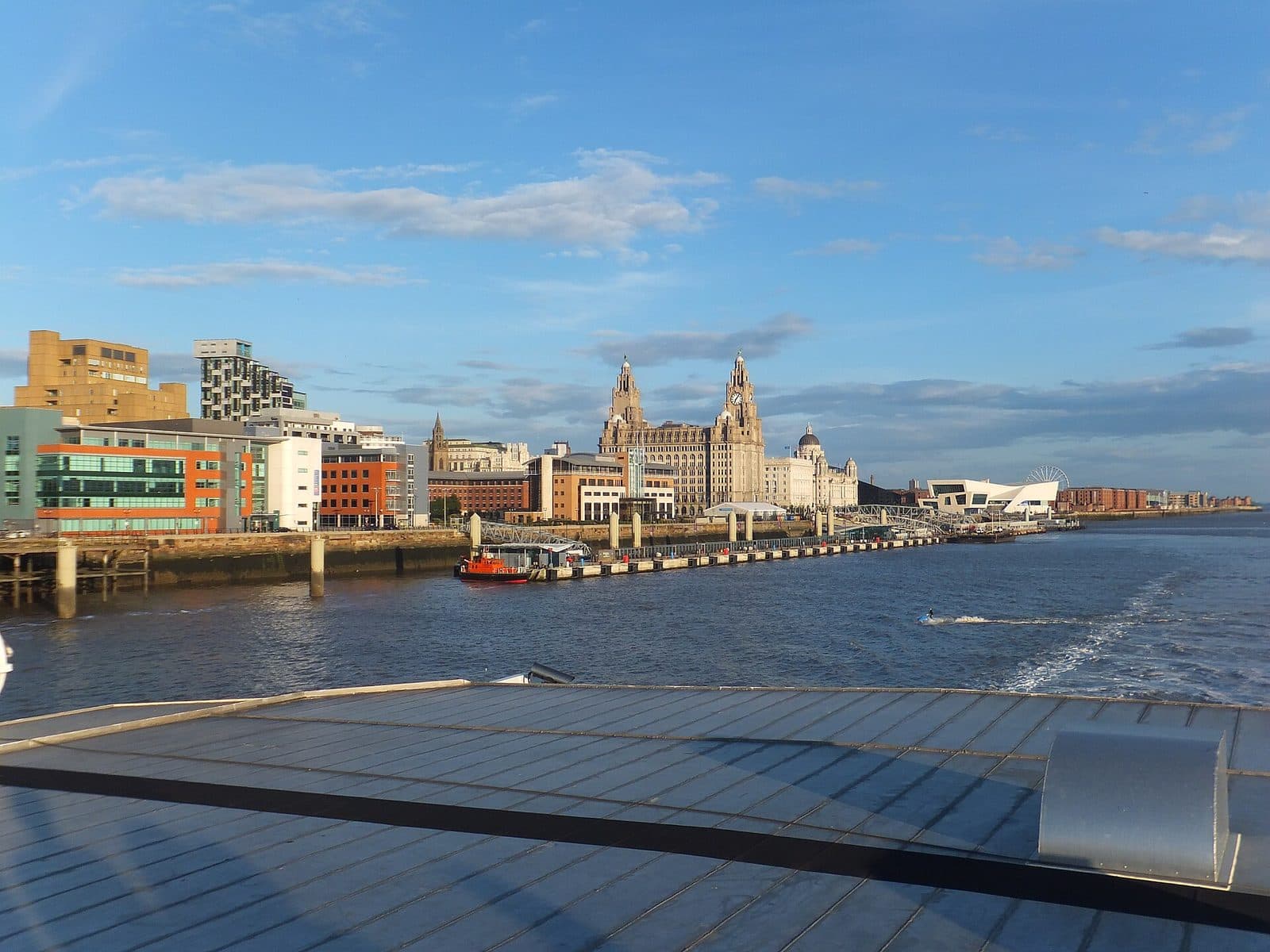
The Second Port of Empire: How the Sea Built Liverpool, and What It Carried
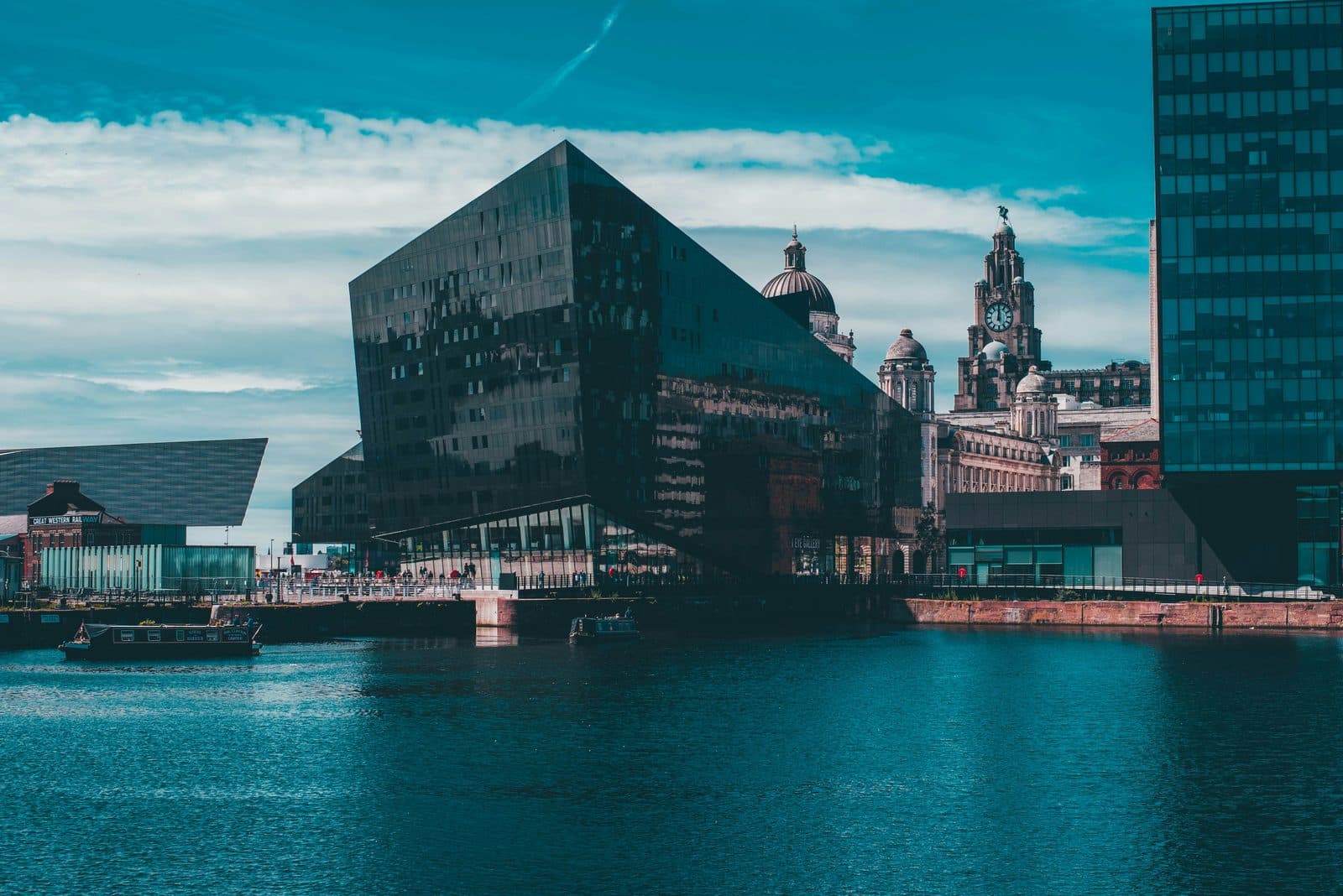
Hope Street on Foot: Two Cathedrals, Half a Mile, and the Argument Between Them
Mathew Street on Foot: The Cellar That Reversed the Atlantic Music Trade
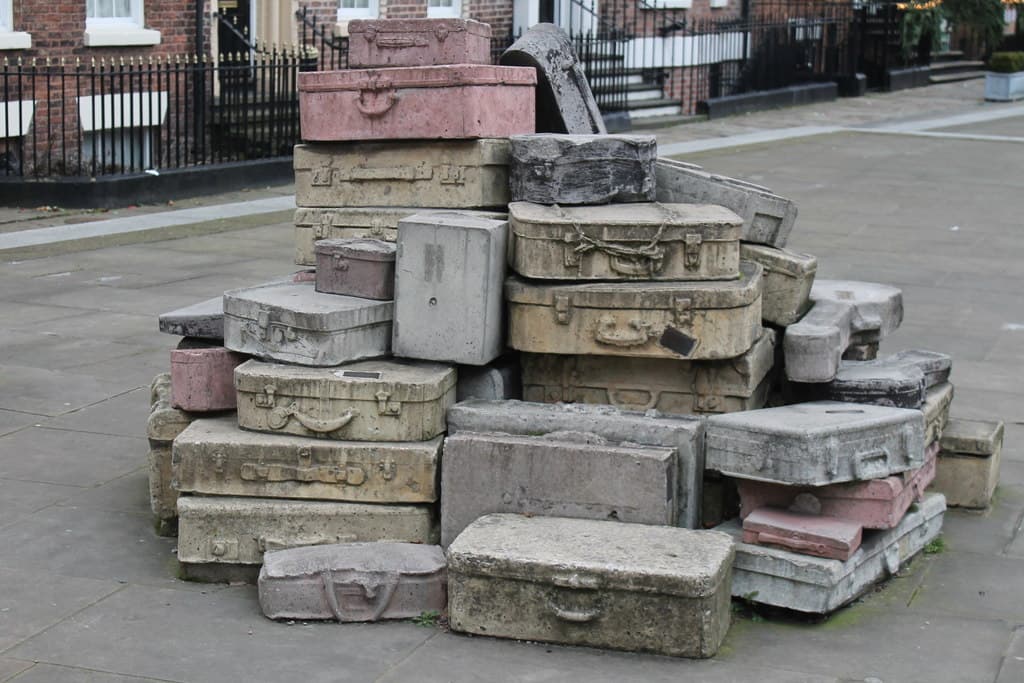
A Case History: The Hope Street Suitcases Are About Emigration, Not the Beatles