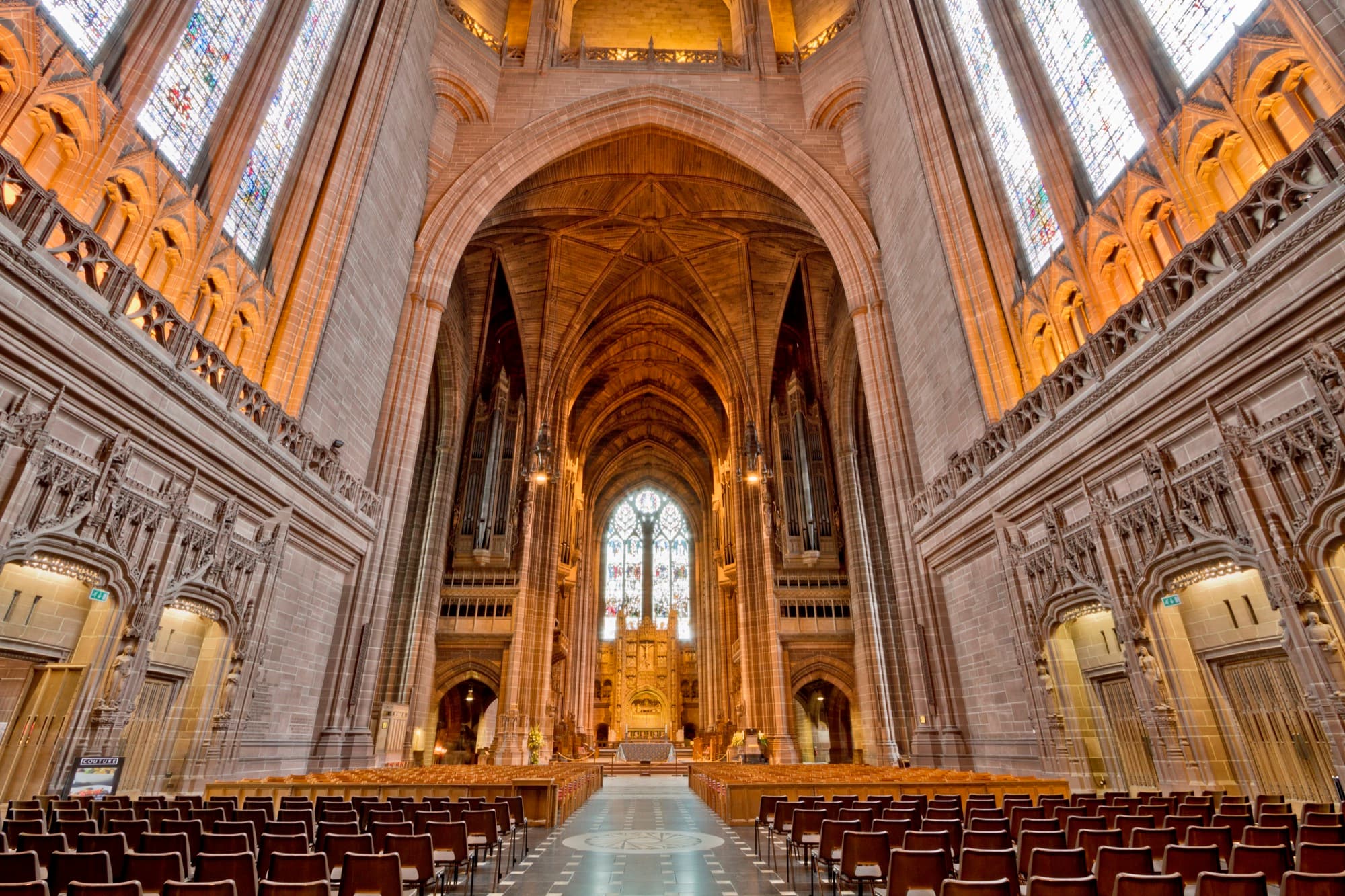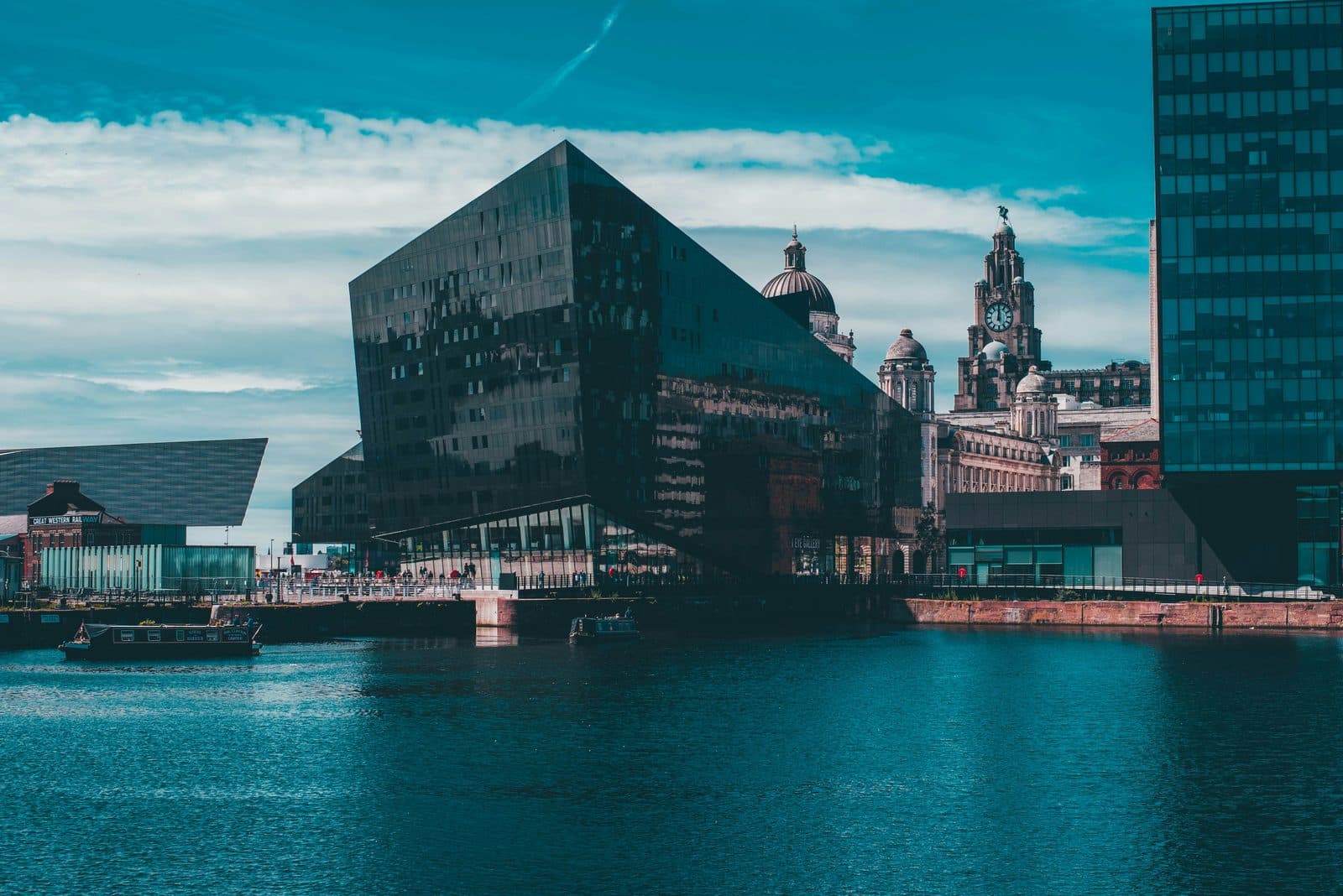
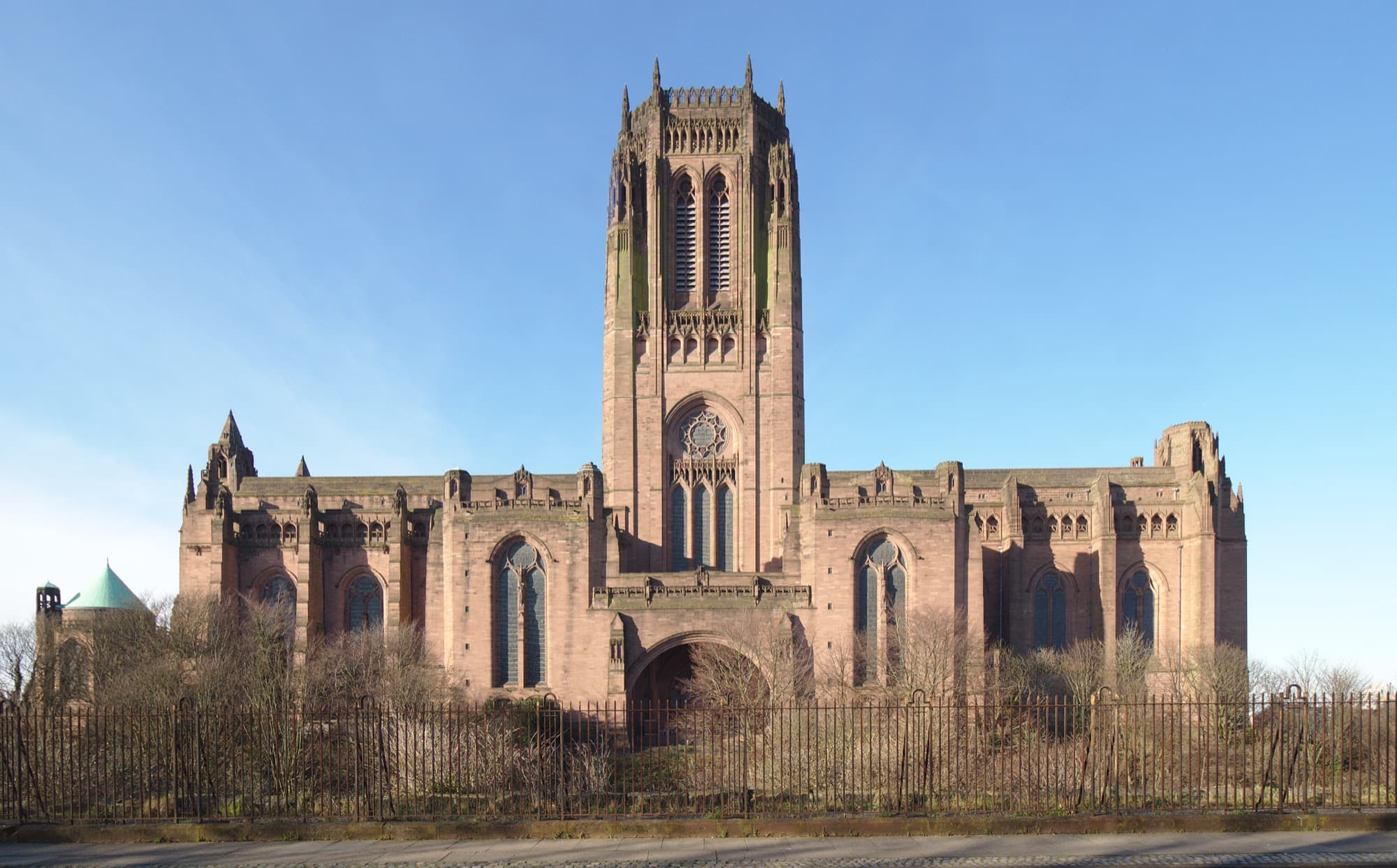
Hope Street is a straight half-mile with a cathedral at each end and an argument running between them. The Anglican cathedral at the south end is the longest in the world, a neo-Gothic sandstone mountain that took 74 years to build. The Catholic Metropolitan Cathedral at the north end is a modernist crown of concrete and stained glass that went up in five. They were designed by different men, in different centuries of taste, to answer the same question in opposite ways: how should a great city build faith in the twentieth century? The architecture tour walks the argument from one end to the other. Here is how it holds together.
The south end: the mountain
The walk starts at the west doors of the Anglican cathedral, looking up at a tower 101 metres high. The building is 189 metres long externally, the longest cathedral in the world, the largest religious building in Britain, the eighth largest church anywhere. And it was won in a 1903 competition by Giles Gilbert Scott, who was 22 years old and still an articled pupil with no completed building to his name.
That is the astonishing fact the tour opens on, and it deserves its own read: how a competition judged by the leading architects of the age handed the largest church in the country to a young man with nothing built, and how he then spent the rest of his life on it. The dedicated piece on the Anglican cathedral covers Scott, the 74-year build, and why the same hand later designed the red telephone box.
The middle: the sediment
Hear a stop from this walk
Liverpool Metropolitan Cathedral: Gibberd Above, Lutyens Below
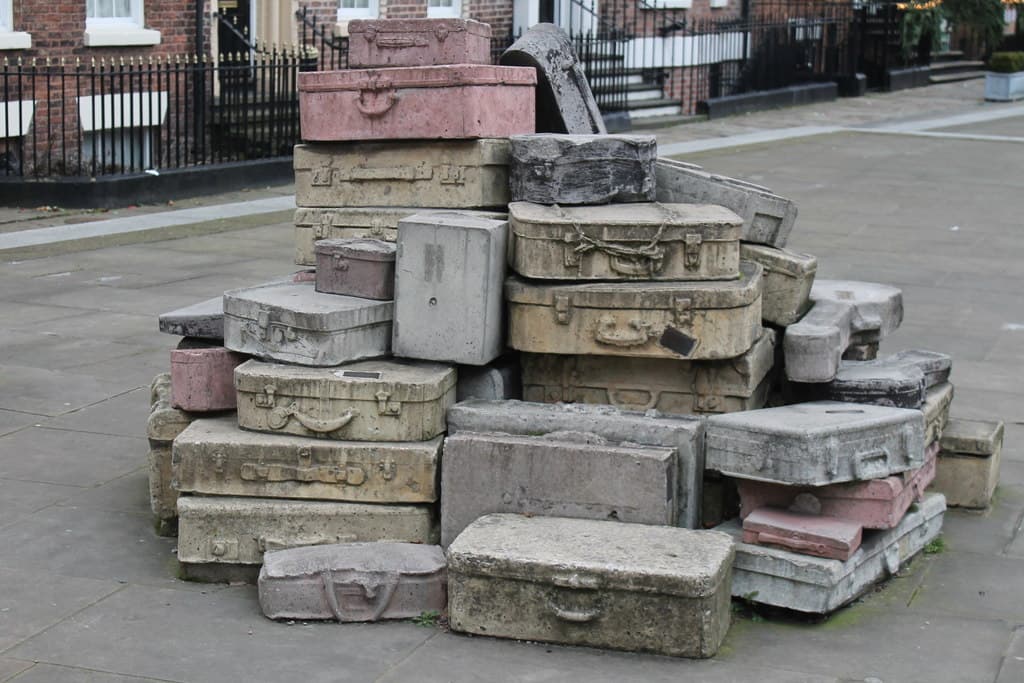
Between the two cathedrals, the tour slows down for the ordinary city, and this is what separates it from a two-monument dash. At the corner of Hope Street stand the Philharmonic Hall, a 1939 Streamline Moderne rebuild by Herbert Rowse, and opposite it the Philharmonic Dining Rooms, an 1898 pub so ornate it is a Grade One listed building you can order a pint in. Further along, John King's 1998 sculpture "A Case History" piles concrete suitcases on the pavement. It is often mistaken for a Beatles tribute, and it is not; it is a monument to Liverpool as a city people emigrated from, a port that people left. The full story of the suitcases is one of the walk's quiet highlights.
Then LIPA, the Liverpool Institute for Performing Arts, in the 1837 school building where Paul McCartney and George Harrison were once pupils, rescued from dereliction by McCartney in the 1990s. Even on the architecture tour, the music keeps surfacing. It always does in this city; the Mathew Street music tour tells that half of the story in full.
The north end: the crown
The walk pivots at the north terminus, where the street was named in the 1790s for a merchant called William Hope, before either cathedral existed. Then it arrives at the Metropolitan Cathedral of Christ the King, and here the tour makes you keep two architects straight. Above ground is Frederick Gibberd's 1962 to 1967 design, a circle of sixteen concrete buttresses around a central glazed lantern, the stained glass by John Piper and Patrick Reyntiens. Below your feet is the crypt of a completely different, far larger cathedral by Edwin Lutyens, begun before the Second World War and never finished. Gibberd's competition brief was to build a modern cathedral on top of Lutyens' surviving crypt.
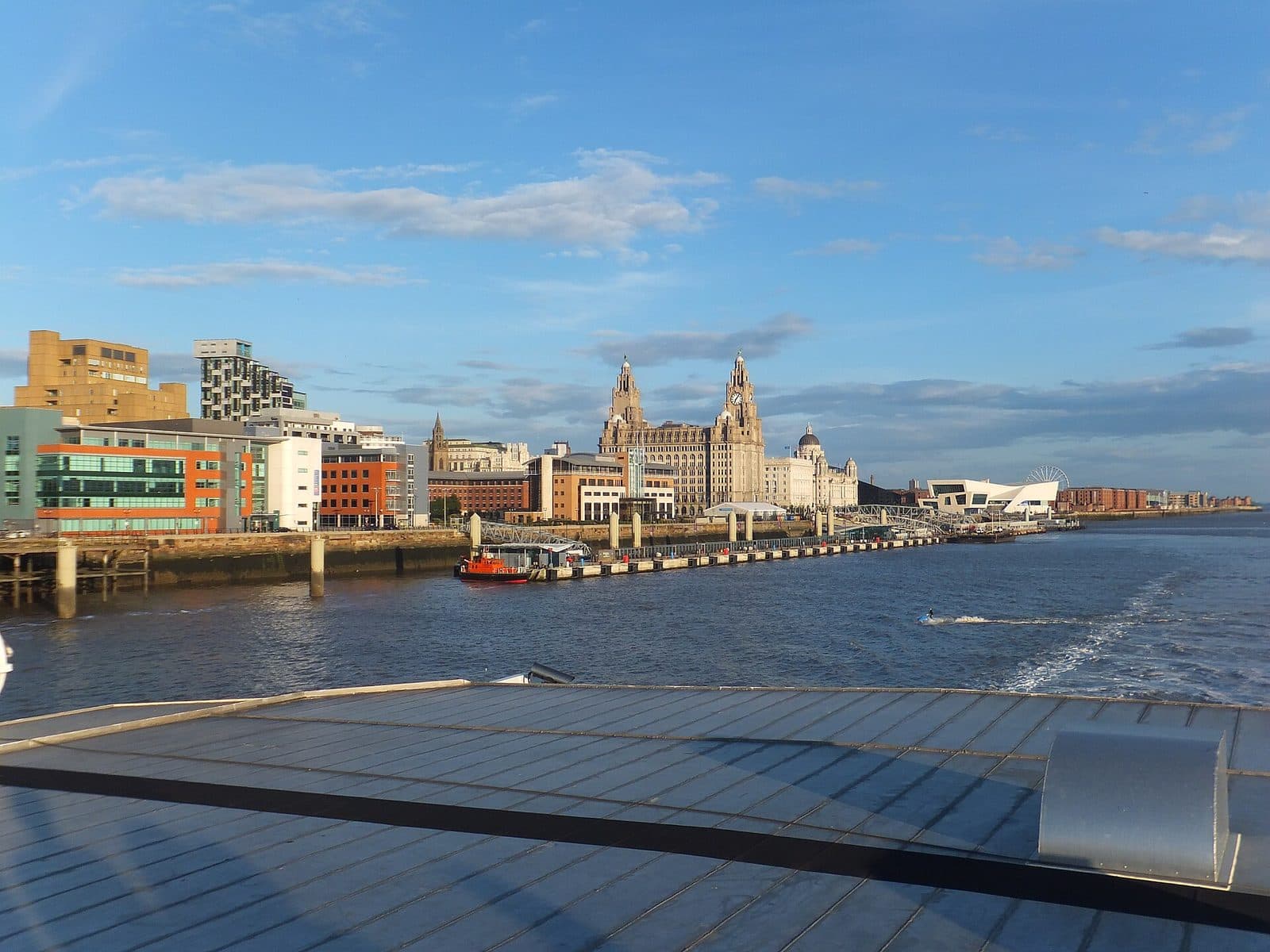
So the Catholic end of Hope Street holds two ideas of a cathedral stacked on top of each other: the grandest neo-Baroque scheme Britain never built, and the radical modern answer that got built instead. Set against Scott's neo-Gothic mountain half a mile south, the whole street becomes a debate about permanence, ambition and faith rendered in stone and concrete. The second port of empire thesis explains why a city with only a river and its trade decided it needed two cathedrals at all.
How to walk it
The route is about 1.2 kilometres, roughly 90 minutes, and it is the gentlest incline of the three Liverpool walks. Both cathedrals are free to enter and both are extraordinary inside; if you can, time the walk so you can go into each. The Anglican cathedral tower has a paid viewing platform with one of the best views in the north of England. The Philharmonic Dining Rooms is worth a stop for the interior alone.
Start the Hope Street architecture tour free in the Roamer app; the introduction and first stop play in full before any purchase.
Ready to experience it?
Hope Street: A Protestant Cathedral and a Catholic Cathedral, and Half a Mile Between
90 min · 1.2 km · easy
More from Liverpool
Explore more at your own pace.
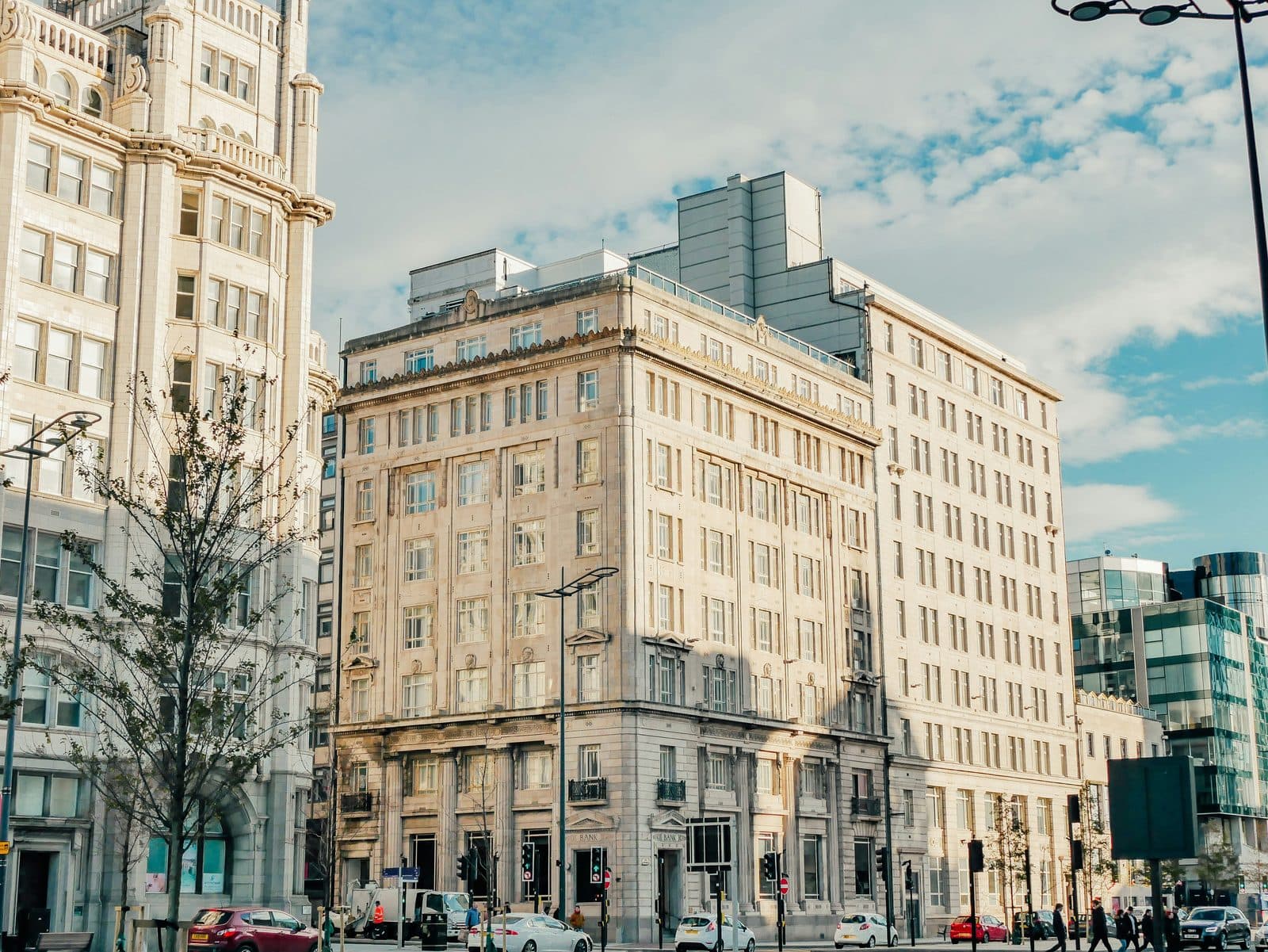
The Georgian Quarter: Liverpool's Arts District, Two Cathedrals and the Half-Mile Between
The Second Port of Empire: How the Sea Built Liverpool, and What It Carried
Mathew Street on Foot: The Cellar That Reversed the Atlantic Music Trade
A Case History: The Hope Street Suitcases Are About Emigration, Not the Beatles
The International Slavery Museum: The Reckoning Inside the Warehouse of the Wealth