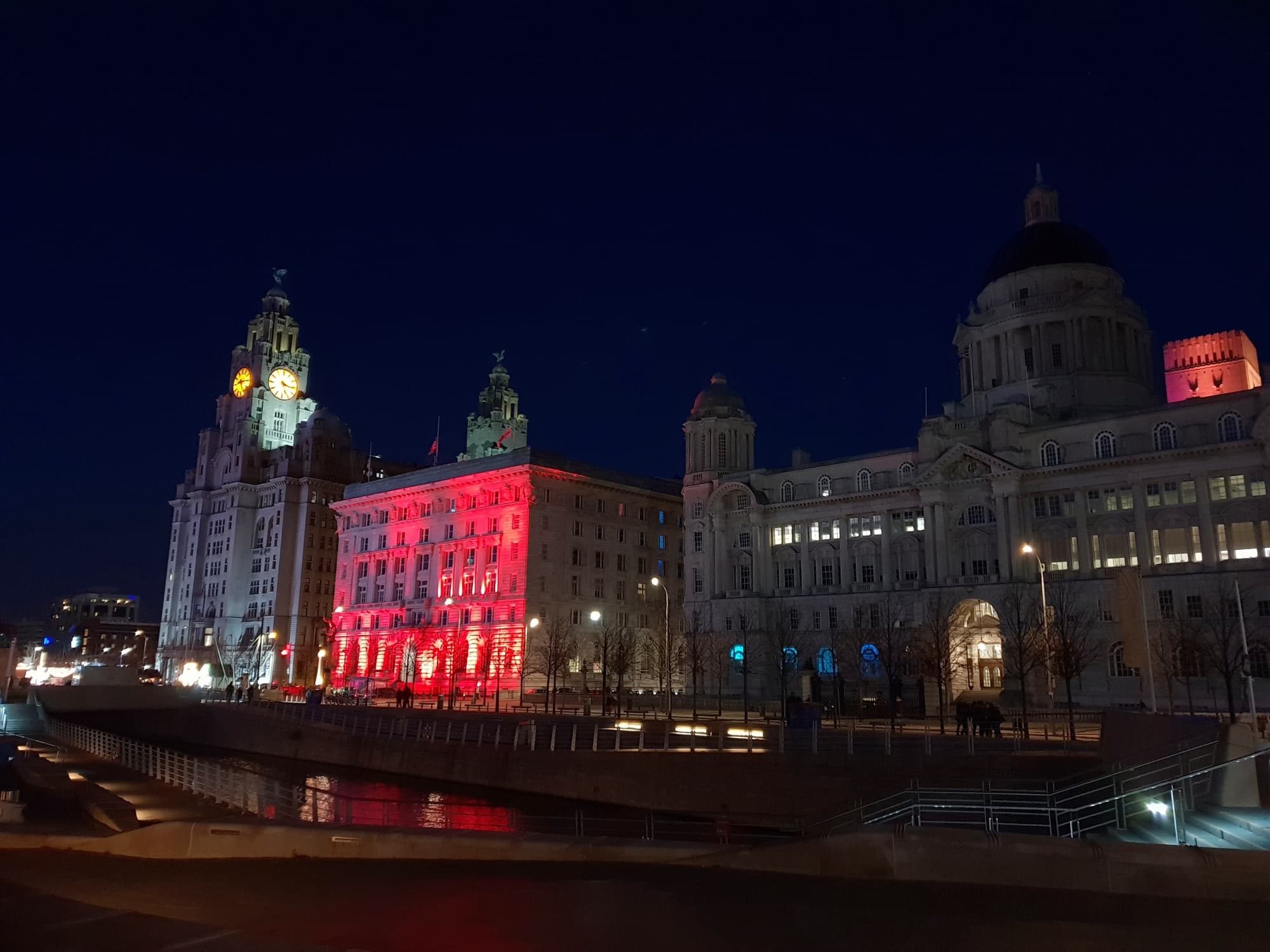
The Pier Head: The Port That Built the Empire, and Reckons With What It Carried
4.63·7 Stops·95 minutes·2.1 km
Liverpool was the second city of the British Empire by tonnage handled. Roughly forty percent of the transatlantic slave trade by all nations departed from this port between seventeen hundred and eighteen oh seven. The Three Graces, the Albert Dock, the closed International Slavery Museum, and the buried Old Dock under Liverpool ONE. The architecture and the reckoning, walked as one conversation.
Start · Pier Head and the Three Graces: The Empire-Wealth Architecture
DirectionsStops
- 1
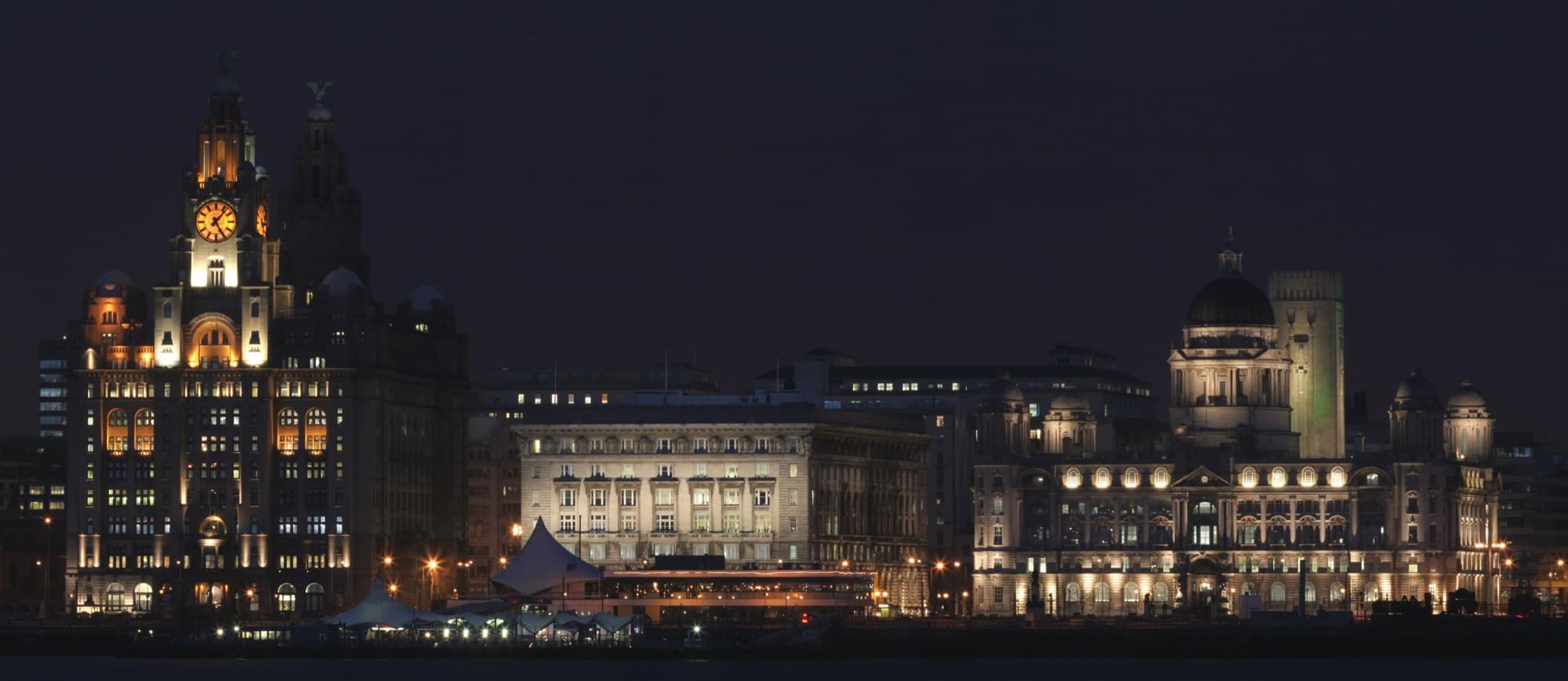
Pier Head and the Three Graces: The Empire-Wealth Architecture
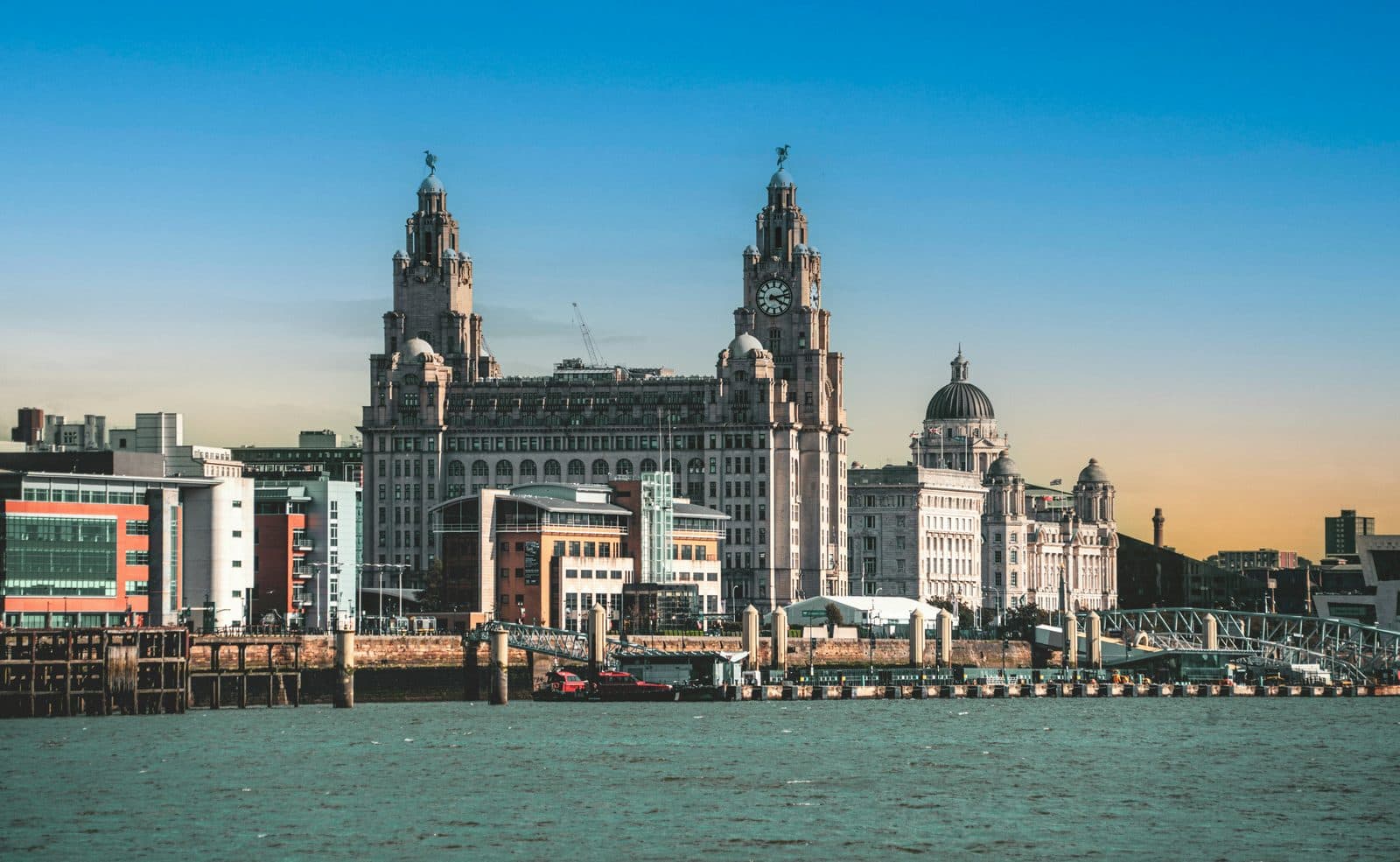
Royal Liver Building (Walter Aubrey Thomas, 1908 to 1911, Grade I), Cunard Building (Willink and Thicknesse with Arthur J. Davis as interior consultant, 1914 to 1917, Grade II star), Port of Liverpool Building (Sir Arnold Thornely and F.B. Hobbs with Briggs and Wolstenholme, 1904 to 1907, Grade II star). All three on reclaimed George's Dock land.
- 2
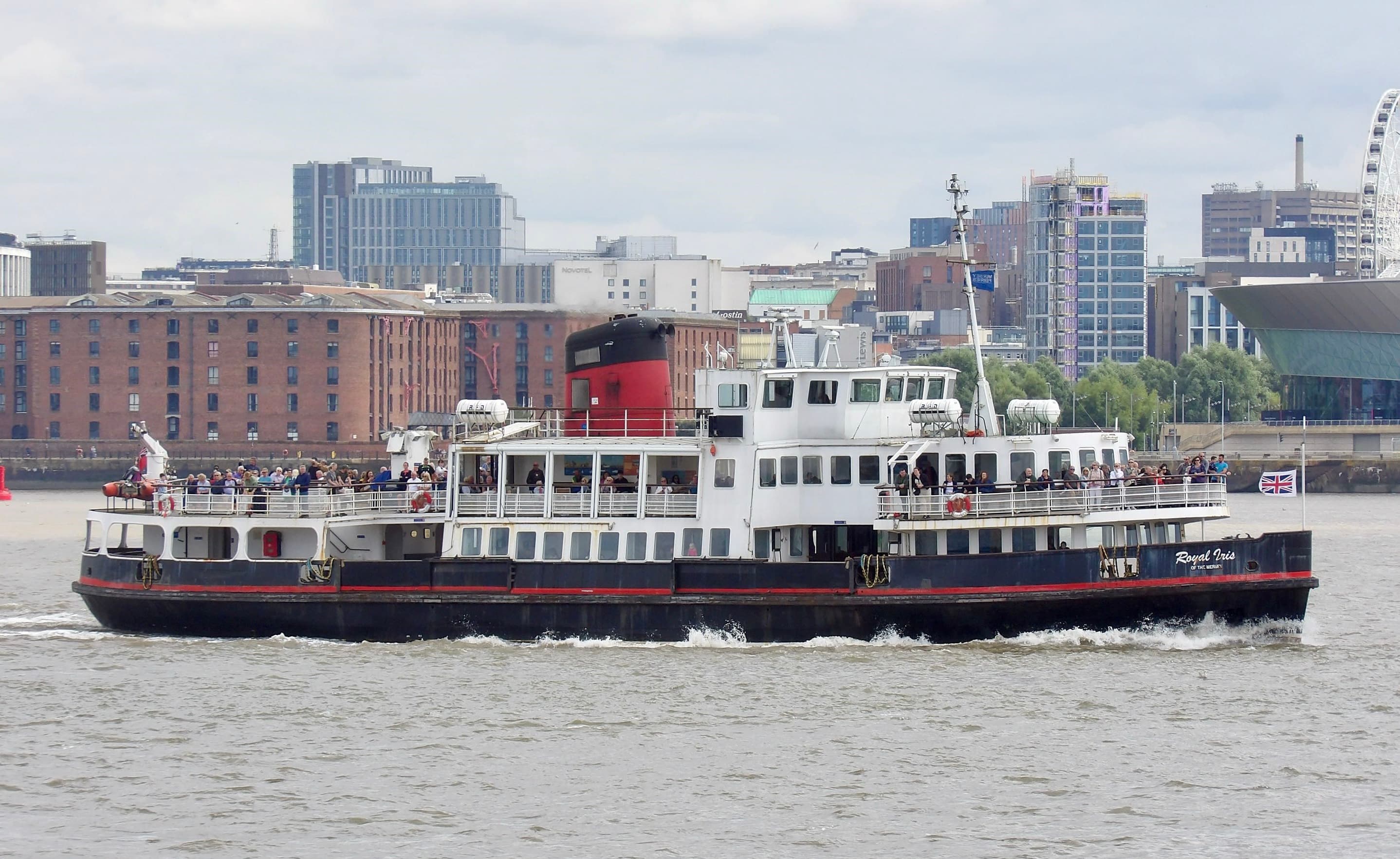
Mersey Ferries Terminal: The Working Infrastructure That Survived the Empire
Continuous ferry service across the Mersey since at least the twelfth century. The first floating landing stage on the river dates to 1847. The ferries predate every dock and every Grace, and outlasted every era.
- 3
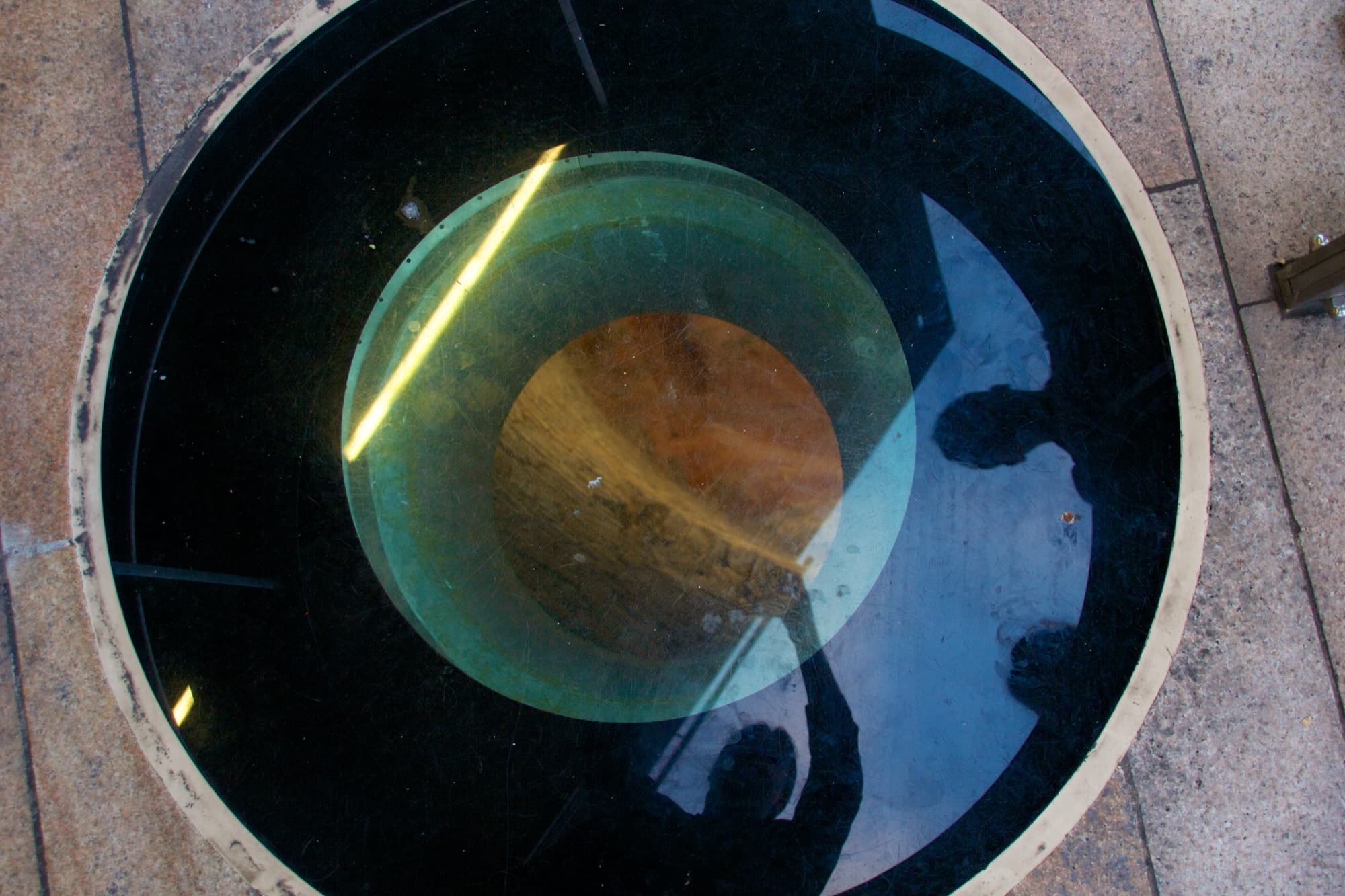
Old Dock site: The Buried Foundational Dock
The world's first commercial enclosed wet dock. Designed by Thomas Steers, opened 31 August 1715, cost £12,000. Liverpool's full entry into the slave trade was the Blessing and the Liverpool Merchant in 1700; the dock then turned the trade into a city-scale economy. Now buried under Liverpool ONE.
- 4
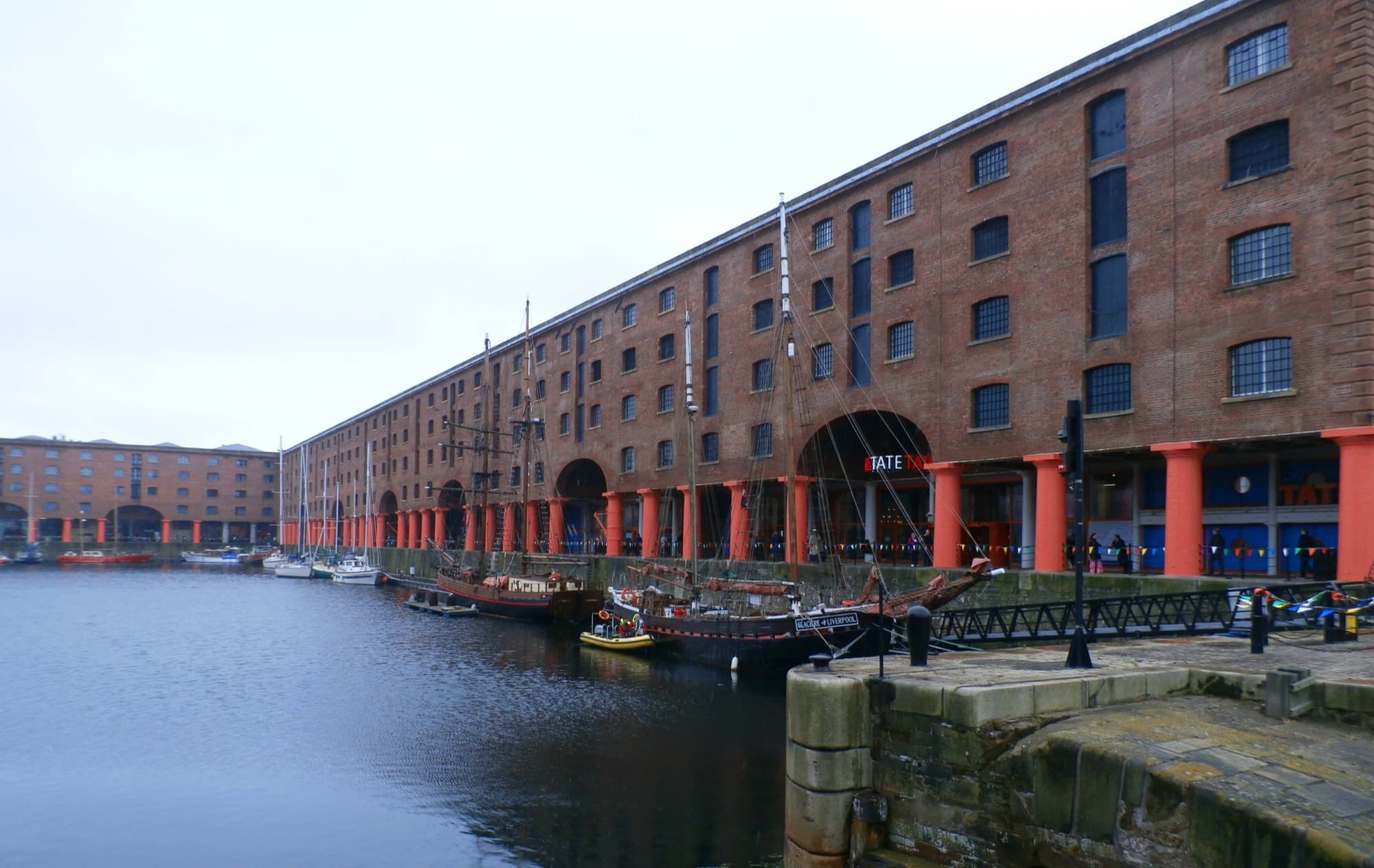
Royal Albert Dock: The Engineering Apotheosis
Designed by Jesse Hartley and Philip Hardwick. Opened 1846 by Prince Albert. The first structure in the United Kingdom built from a combination of cast iron, brick, and stone without using wood for any structural element. The first non-combustible warehouse system in the world. Renamed Royal Albert Dock by Royal Charter at Tate Liverpool, 6 June 2018.
- 5
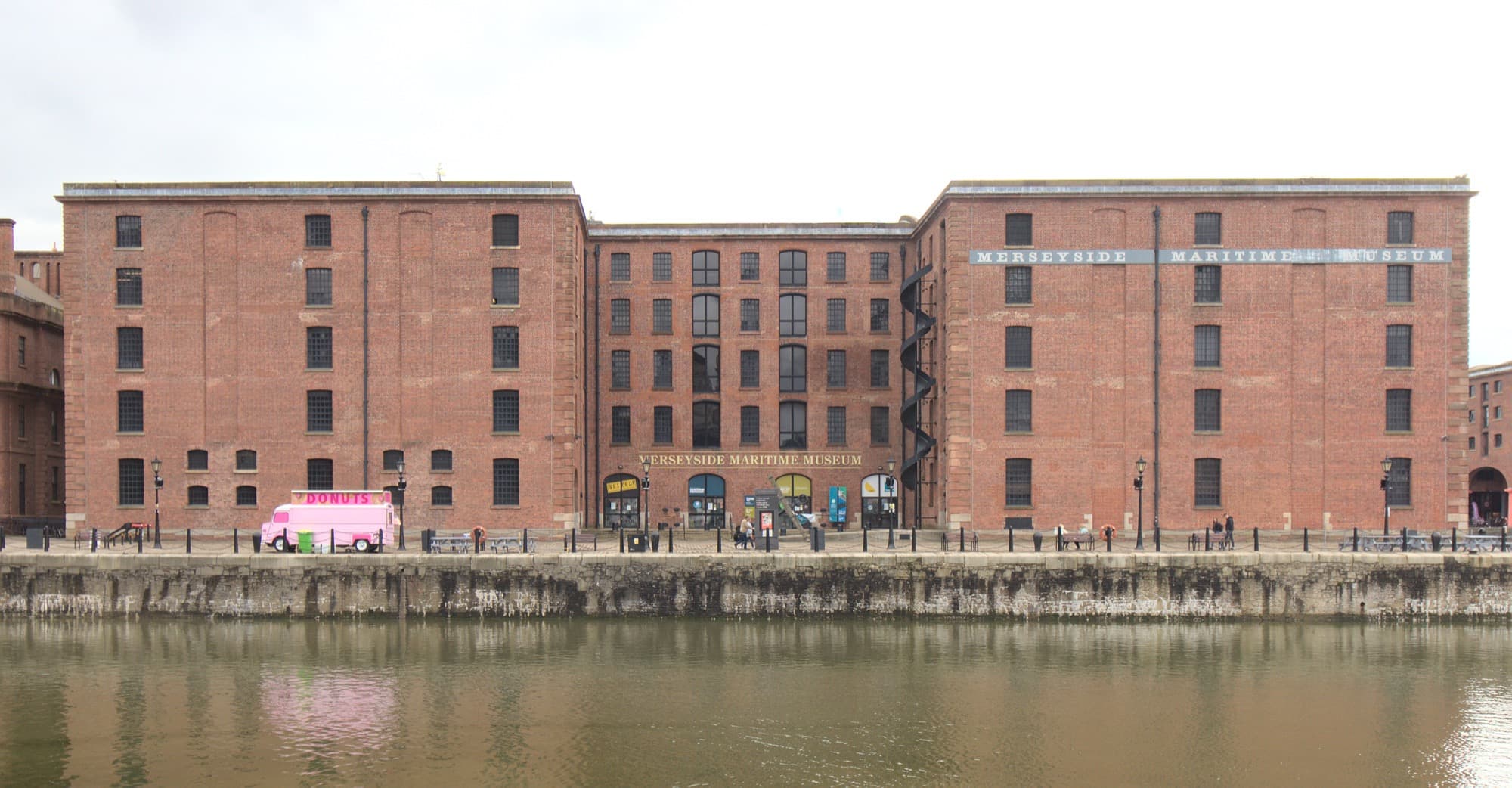
International Slavery Museum: The Institutional Reckoning, Mid-Renovation
Opened 23 August 2007 on the third floor of the Merseyside Maritime Museum building. Part of National Museums Liverpool. Closed early 2025 for £58m redevelopment by Feilden Clegg Bradley Studios with Ralph Appelbaum Associates; reopening 2028 to 2029. The Roamer tour treats the closed building as the active institutional reckoning beat. The narrative does not depend on listener entry.
- 6
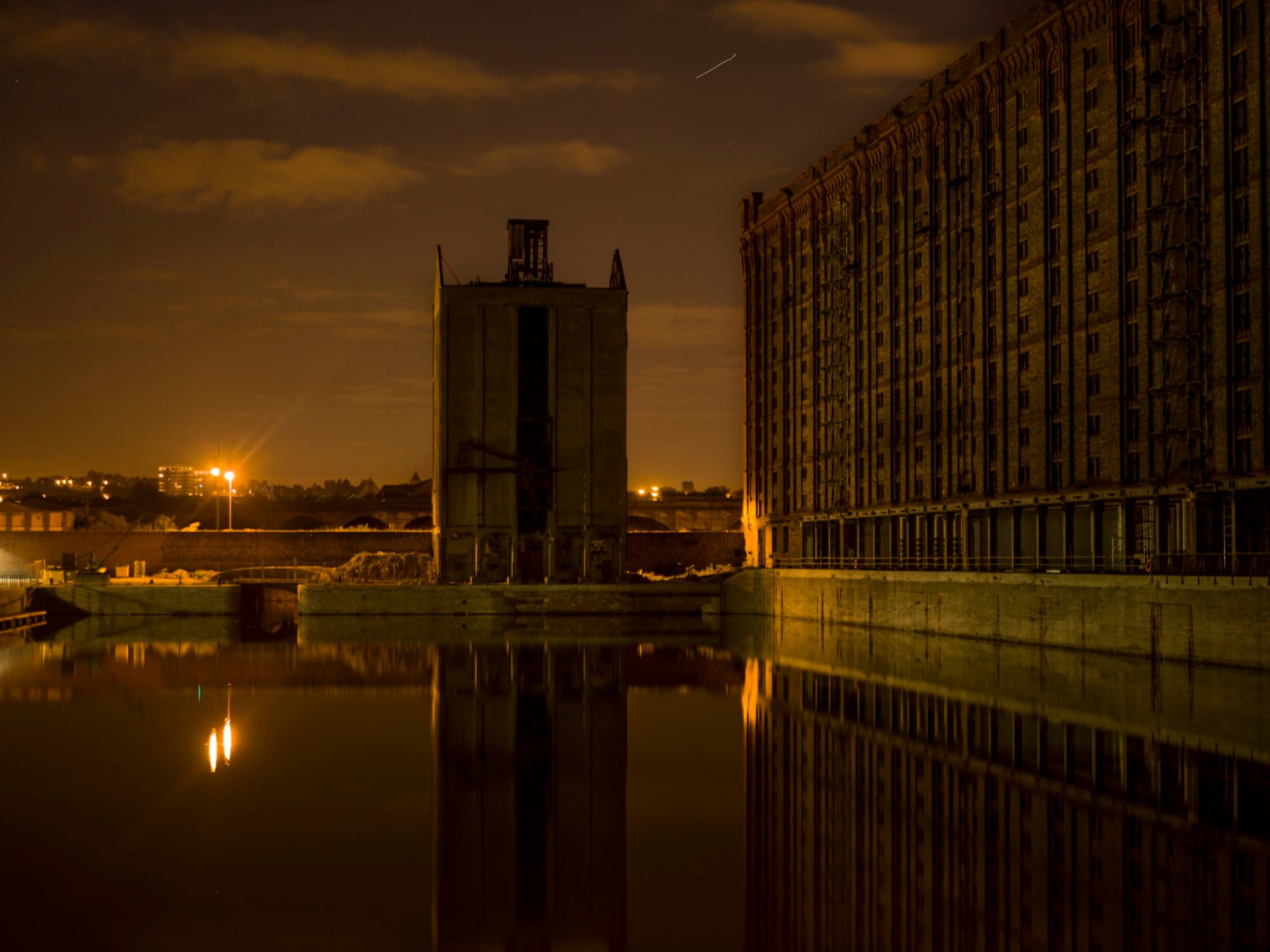
Stanley Dock vantage: Seven Miles of Docks
Merseyside Maritime Museum holds the wider maritime collection; the Slavery Museum sits on its third floor. Stanley Dock (Jesse Hartley, opened 4 August 1848, Grade II star). Stanley Dock Tobacco Warehouse (Anthony George Lyster, 1897 to 1901, 14 storeys, Grade II), the world's largest brick warehouse at construction. The Liverpool dock system at peak ran seven miles north and south of Pier Head.
- 7
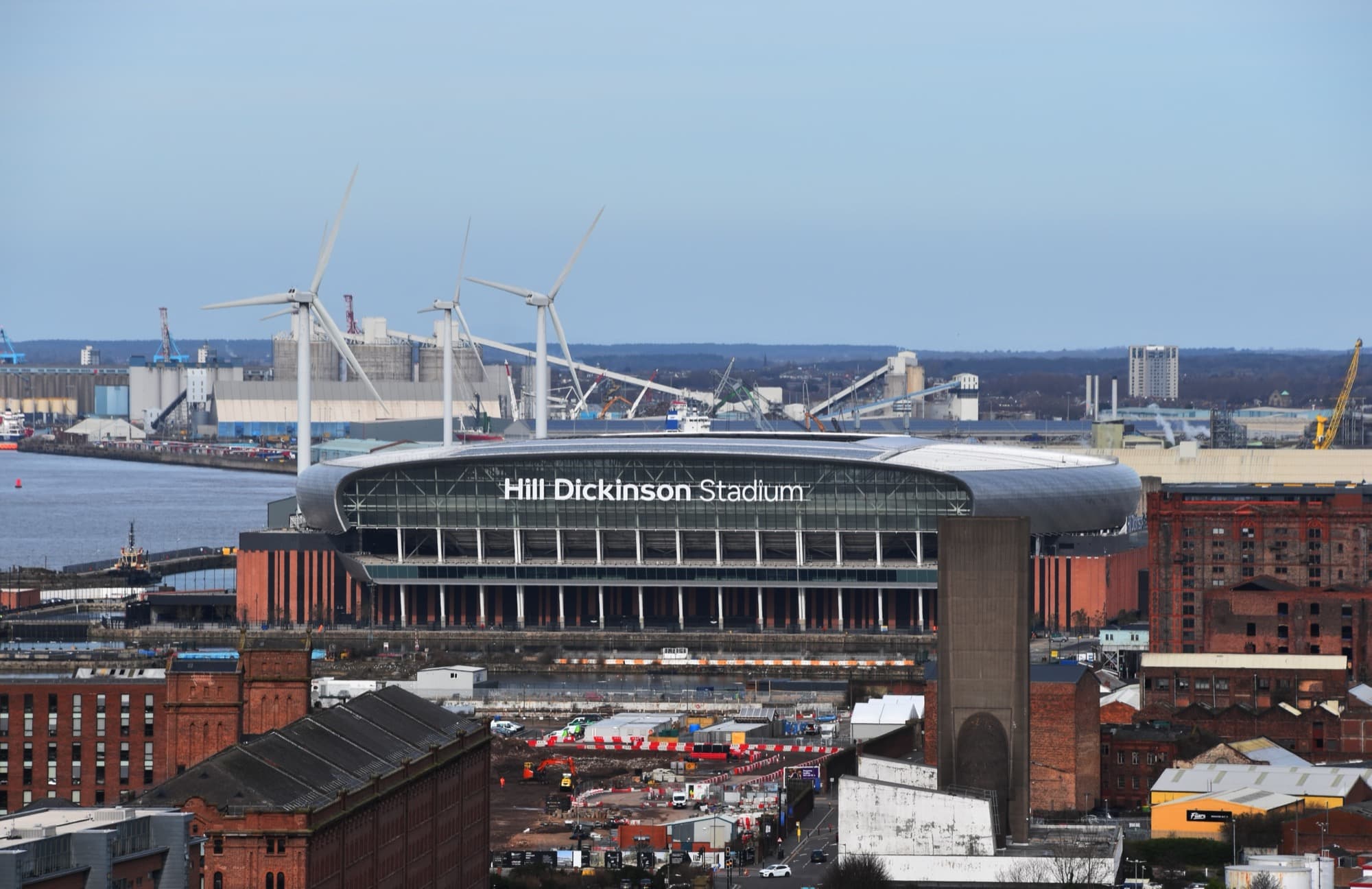
Bramley-Moore Dock and the UNESCO-Delisting Viewpoint: The Reckoning Is Ongoing
UNESCO inscribed Liverpool, Maritime Mercantile City (ref 1150) at the 28th session in Suzhou, 2004. Placed on World Heritage in Danger 2012. Delisted 21 July 2021 at the 44th session, vote 13 to 5 with 2 abstentions, citing irreversible loss of attributes conveying the outstanding universal value of the property. Third site ever delisted. Hill Dickinson Stadium (Everton FC) opened on Bramley-Moore Dock for the 2025 to 2026 season.
Details
Best Time to Visit
Wednesday through Saturday, late morning to mid afternoon. The Old Dock viewing window at Stop 3 is accessible during Liverpool ONE shopping centre hours, typically ten in the morning to eight in the evening; an earlier walk after opening time is quieter. The Royal Albert Dock complex at Stops 4 to 6 is open access at all hours, but reads more fully during museum opening hours when the Merseyside Maritime Museum is admitting visitors and the dockside is animated. The Mersey Ferries Beatles cruise schedule is heavier on weekends; if you want to see the Royal Iris of the Mersey or the Snowdrop at the berth or out on the river, weekday late mornings are reliable. The International Slavery Museum at Stop 5 is closed throughout the build window (early 2025 to 2028 or 2029); the exterior anchor works at any hour. The Bramley-Moore viewpoint at Stop 7 reads best in afternoon light when the new stadium silhouette catches the sun on the way to Wallasey.
Pro Tips
- •The International Slavery Museum at Stop 5 is closed for a fifty-eight million pound redevelopment from early 2025 through 2028 or 2029 per National Museums Liverpool. The audio anchors on the exterior of the Merseyside Maritime Museum building and treats the closed building as the climax beat. Plan a return visit when the Museum reopens; the Roamer tour is complementary, not a replacement.
- •The Old Dock at Stop 3 is visible through a pavement-level glass viewing window inside Liverpool ONE on Thomas Steers Way; that view is free and accessible during shopping centre hours. National Museums Liverpool also runs guided tours into the basement chamber from the Merseyside Maritime Museum, typically Wednesdays, Fridays, and alternate Thursdays and Saturdays at ten-thirty in the morning, twelve, and two-thirty in the afternoon. Verify the booking schedule at the National Museums Liverpool website on your walk day.
- •Mersey Ferries at Stop 2 sell singles, returns, and a longer river cruise that includes a Beatles audio commentary. Audio prices vary; check the ferry kiosk or the Mersey Ferries website on your walk day. The Roamer audio at Stop 2 works whether or not you take the ferry; if you want the cross-river view of the Three Graces from Birkenhead, the river cruise is the move.
- •Royal Albert Dock at Stop 4 is open access; the individual museums inside (Tate Liverpool, Merseyside Maritime Museum, the Beatles Story) charge separately or are free with variable hours. The Roamer reads the dock as Jesse Hartley and Philip Hardwick's eighteen forty-six engineering project; if you want the Beatles Story, the Liverpool Beatles and Cavern Quarter Roamer tour holds that material.
- •The Bramley-Moore viewpoint at Stop 7 is approximately one and a half kilometres north of the Pier Head. The audio anchor works from the elevated walkway near Princes Dock without walking the full distance. If you want to walk further north along Princes Parade to see the new Hill Dickinson Stadium up close, allow an extra twenty to thirty minutes round trip.
- •The Royal Liver Building offers a paid interior tour with rooftop access to the clock tower base and Liver Bird viewing. Tickets via the Royal Liver Building 360 website. The Roamer audio at Stop 1 anchors on the riverside exterior; the interior tour is optional.
- •Cunard Building at Stop 1 has been Liverpool City Council offices since 2014; the ground-floor lobby is partially accessible during business hours but the building is not a public visitor attraction. The architecture is read from the exterior.
Safety & Precautions
- •The Pier Head and the riverside walk are exposed to wind off the Mersey; even on warm days the gust on the dockside can be sharp. A light windbreaker is sensible year round.
- •Strand and the dock-edge cobbles at Stops 1, 4, 5, and 6 are uneven in places; flat closed shoes are recommended. The cast-iron column bases inside Albert Dock are easy to catch a foot on in low light.
- •Liverpool ONE at Stop 3 is a private retail estate. The Old Dock viewing window is on Thomas Steers Way, a publicly accessible diagonal cut through the complex, but signage on side passages can be inconsistent; if you cannot find the window, ask a Liverpool ONE concierge for Thomas Steers Way.
- •Mersey Ferries at Stop 2 operate from an active dockside; do not cross the working berth lines on the quay. The terminal building has clearly marked passenger entrances.
- •Royal Albert Dock at Stops 4 to 6 is partially under construction works for the Slavery Museum redevelopment from early 2025 through 2028 or 2029. Pedestrian routing around the Dock Traffic Office and the north-side warehouse may be diverted; signage from National Museums Liverpool and the Albert Dock company is on site. The Roamer audio at Stop 5 anchors on whichever exterior face of the Merseyside Maritime Museum is accessible on your walk day.
- •The Bramley-Moore viewpoint at Stop 7 is on a quayside walkway with no rail on the seaward side; keep clear of the edge, especially in wind or with children. The new stadium grounds at Bramley-Moore Dock itself, further north along Princes Parade, are private property and not part of the walk.
- •Liverpool weather is genuinely changeable; carry rain protection year round. The walking time of the route is roughly twenty-five to thirty-five minutes plus stop dwell, total under two hours for the standard pacing.
Travel advisory: Exercise Increased Caution (Level 2).
Gallery
Related Reading
Go deeper on what you'll see, hear, and walk through.
Overview
Best Self-Guided Walking Tours in Liverpool (2026)
4 min
Overview
Liverpool Travel Guide: How Many Days, Getting Around, When to Go (2026)
5 min
Overview
One Day in Liverpool: A Walkable City-Centre Itinerary (2026)
6 min
Thematic
The Second Port of Empire: How the Sea Built Liverpool, and What It Carried
6 min
Thematic
What to Eat in Liverpool: A Food Guide (2026)
5 min
Companion
Walking the Liverpool Waterfront: The Three Graces, the Docks, and the Reckoning
5 min
Deep dive
The International Slavery Museum: The Reckoning Inside the Warehouse of the Wealth
4 min
Read the walk
The full story of The Pier Head: The Port That Built the Empire, and Reckons With What It Carried, in words. Prefer to listen? Play it narrated, from home or on location.
Introduction
A question, at the river's edge. The Mersey runs brown and broad out to Birkenhead. The Three Graces stand behind. The Royal Liver Building, the Cunard Building, the Port of Liverpool Building. Built between nineteen oh four and nineteen seventeen. Edwardian Baroque. The architecture of a city at the peak of its empire-commercial wealth.
What did the port that built this architecture actually carry?
Between seventeen hundred and eighteen oh seven, approximately five thousand three hundred slave-trade voyages departed from Liverpool. Roughly half of all British transatlantic slave voyages in that window, and roughly forty percent of voyages by ships of all nations. Liverpool ships carried approximately one and a half million Africans into transatlantic enslavement. The Three Graces are not slave-trade-era buildings. They were built a century after the eighteen oh seven Slave Trade Act, on land reclaimed by infilling George's Dock, on wealth the trade generated and that compounded into the cotton, sugar, and shipping fortunes the buildings commemorate. The temporal lag is the argument.
The history you will hear has been interpreted by the International Slavery Museum since it opened at the Merseyside Maritime Museum building in two thousand and seven. It is closed from early twenty twenty-five for redevelopment, reopening twenty twenty-eight. This Roamer walk is complementary, not a replacement.
The walk is seven stops, two point one kilometres, ninety minutes. When you arrive at the Pier Head riverside railing, begin with stop one.
1. Pier Head and the Three Graces: The Empire-Wealth Architecture
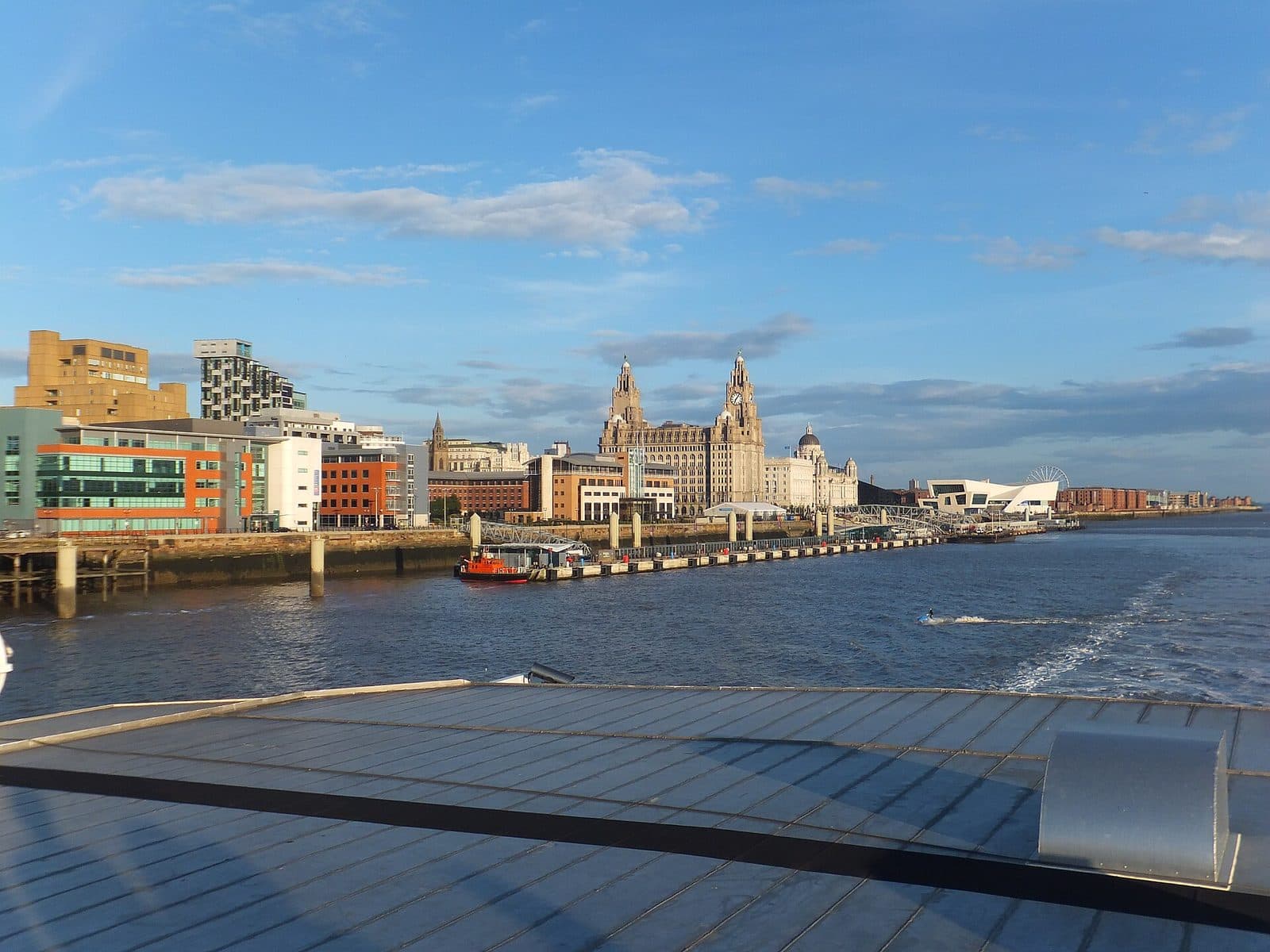
You have arrived at the Pier Head. Stand at the riverside railing between the Royal Liver Building and the Cunard Building. The Three Graces run north to south behind you.
First the architects. The Royal Liver Building, to your right as you face the river, is by Walter Aubrey Thomas. Foundation stone laid the eleventh of May, nineteen oh eight. Officially opened the nineteenth of July, nineteen eleven, by Lord Sheffield. Edwardian Baroque. Grade One listed by Historic England, designation number one three five six three seven oh. The twin Liver Birds on the clock towers are by the sculptor Carl Bernard Bartels, each one about eighteen feet tall. The Cunard Building, in the middle, is by William Edward Willink and Philip Coldwell Thicknesse. Construction nineteen fourteen to nineteen seventeen. The interior design consultant was Arthur J. Davis of the firm Mewes and Davis, who modelled the facade on the Farnese Palace in Rome. Grade Two star listed. The Port of Liverpool Building, to your left, with the large central dome, is by Sir Arnold Thornely and F.B. Hobbs, in collaboration with the firm Briggs and Wolstenholme. The design competition was launched by the Mersey Docks and Harbour Board committee under Robert Gladstone in nineteen hundred. The design was finalised in nineteen oh three. Construction ran nineteen oh four to nineteen oh seven. Grade Two star listed.
Now what those facts mean.
The ground under your feet is reclaimed water. This was George's Dock, built in seventeen seventy-one, the third dock the city ever built. The Mersey Docks and Harbour Board decided to close and infill George's Dock in eighteen ninety-eight. The land was sold to Liverpool Corporation in nineteen hundred, with the Board retaining the southern strip for its own new headquarters, which became the Port of Liverpool Building. The infill finished by nineteen oh seven. The Three Graces sit on what used to be open dock water.
These buildings are not slave-trade-era. The British slave trade ended with the eighteen oh seven Slave Trade Act. The Three Graces were constructed a hundred years later. What they commemorate is the wealth the trade generated, compounded across the long nineteenth century into the cotton, the sugar, the palm oil, and the shipping fortunes of a port that had become, by tonnage handled, the second city of the British Empire. The argument of this tour, per Quentin Hughes's canonical Seaport: Architecture and Townscape in Liverpool, is that this is empire-commercial architecture built on slave-trade-derived capital that the city had spent the nineteenth century quietly compounding.
Now turn north along the riverside walk. The next stop is the white-and-blue terminal between the Cunard and the Museum of Liverpool, on your right hand side.
2. Mersey Ferries Terminal: The Working Infrastructure That Survived the Empire
You have arrived at the Mersey Ferries Terminal. Stand at the railing facing the dockside. The black-and-white funnel of the Royal Iris of the Mersey, or the Snowdrop, will be at the berth or out on the river. Across the Mersey are Birkenhead and Wallasey, on the Wirral peninsula.
Here is the thing about the ferry. It is the oldest continuous transport function in this city.
Ferries have crossed the Mersey at this point since at least the twelfth century. Per National Museums Liverpool's Archive Sheet twenty-seven on Mersey Ferries, monks of the Priory of Birkenhead carried passengers across the river by the twelve hundreds. The first floating landing stage on the Mersey, the one that rose and fell with the tide, opened in eighteen forty-seven. The triangular service today runs Pier Head, Seacombe, Woodside in Birkenhead, on two vessels. The Royal Iris of the Mersey and the Snowdrop. Both were launched in the nineteen sixties as the Mountwood and the Woodchurch, then renamed and refitted.
Now the contrast. The Three Graces are a hundred years old. The Albert Dock is a hundred and eighty. The Old Dock under Liverpool ONE is a little over three hundred. The Mersey ferries have run for at least eight hundred years.
They kept running through the slave trade. They kept running through the cotton boom and the Edwardian zenith. They kept running through two world wars, through the post-war decline, through the Beatles, through the Toxteth riots of nineteen eighty-one, through the two thousand and four UNESCO inscription, through the twenty twenty-one delisting. The ferries do not commemorate the empire. They survived it. They are the only piece of waterfront infrastructure on this walk that operated continuously through every other thing the rest of the tour names.
Now walk south along Strand. You will pass Mann Island on your left. Cross into Liverpool ONE shopping centre through the Paradise Street entrance and look for the diagonal pedestrian cut called Thomas Steers Way. There is a glass viewing window set into the pavement.
3. Old Dock site: The Buried Foundational Dock
You have arrived at the Old Dock viewing window, on Thomas Steers Way inside the Liverpool ONE shopping centre. Stand at the glass. You are looking down through the pavement at a section of original dock wall preserved in the basement.
This is the city's first dock. The Old Dock. Also known as Thomas Steers' Dock.
The engineer was Thomas Steers. Construction ran from seventeen ten to seventeen sixteen. The dock opened on the thirty-first of August, seventeen fifteen. It cost twelve thousand pounds, which is approximately three million pounds in current money. It measured roughly six hundred and sixty feet by three hundred and thirty feet. Per National Museums Liverpool's Ten Fascinating Facts about Liverpool's Old Dock, it was the world's first commercial enclosed wet dock. A wet dock keeps a ship at a constant water level by holding the tide back behind gates. Before Steers built this one, ships at Liverpool had to ground in the river mud at low water. The Old Dock changed how a port functioned.
And here is the chronology.
Liverpool's first two slave-trade voyages departed in seventeen hundred, fifteen years before this dock opened. The ships were called the Blessing and the Liverpool Merchant, per the Wikipedia trace-back to the Richardson, Tibbles, and Schwarz scholarship and to the Encyclopedia dot com Liverpool Slave Trade entry. They sailed from the river, before the dock existed. After this dock opened in seventeen fifteen, the trade scaled. By the mid-seventeen forties, Liverpool had overtaken Bristol as the pre-eminent slave-trading port in Britain. By the seventeen eighties, Liverpool was the largest slave-trading port on the Atlantic. The dock that you are standing on top of is the infrastructure that turned the trade into a city-scale economy.
The dock was infilled in eighteen twenty-six to make way for the Custom House. The Custom House was bombed during the May Blitz of nineteen forty-one and demolished. The site sat under car parks and then under the Liverpool ONE retail development, which opened in two thousand and eight. The dock was excavated archaeologically between two thousand and one and two thousand and eight. A portion of the original wall was preserved and is what you can see through this glass.
The foundational dock of the slave-trade economy is buried under a shopping centre. That sentence is the layer this tour is reading.
Now walk south on Paradise Street to Strand. Cross to the riverside and walk south past Mann Island. The Albert Dock entrance is on Hartley Quay.
4. Royal Albert Dock: The Engineering Apotheosis
You have arrived at the Royal Albert Dock. Stand on the cobbles inside the main entrance, looking across the central dock basin. The four-storey brick warehouses on cast-iron Doric columns surround you on all four sides. The Dock Traffic Office, the smaller stone building to one…
Full narration for this stop unlocks with the tour.
5. International Slavery Museum: The Institutional Reckoning, Mid-Renovation
You have arrived at the Merseyside Maritime Museum building. The International Slavery Museum is on the third floor, behind the works-hoardings. This is the climax of the tour. Slow down. The building you are standing in front of is one of the warehouse buildings Hartley and…
Full narration for this stop unlocks with the tour.
6. Stanley Dock vantage: Seven Miles of Docks
You have arrived at the north edge of the Albert Dock complex. Look north along the riverside. The dark-brick mass you can see at distance, roughly a kilometre and a half north along the line of the river, is the Stanley Dock Tobacco Warehouse. First the building at your back.…
Full narration for this stop unlocks with the tour.
7. Bramley-Moore Dock and the UNESCO-Delisting Viewpoint: The Reckoning Is Ongoing
You have arrived at the viewpoint north of the Pier Head. Stand on the elevated walkway near Princes Dock and look north along the Mersey. The silhouette of the new Everton stadium is visible at distance, roughly a kilometre and a half north of where you stand. The Three Graces…
Full narration for this stop unlocks with the tour.