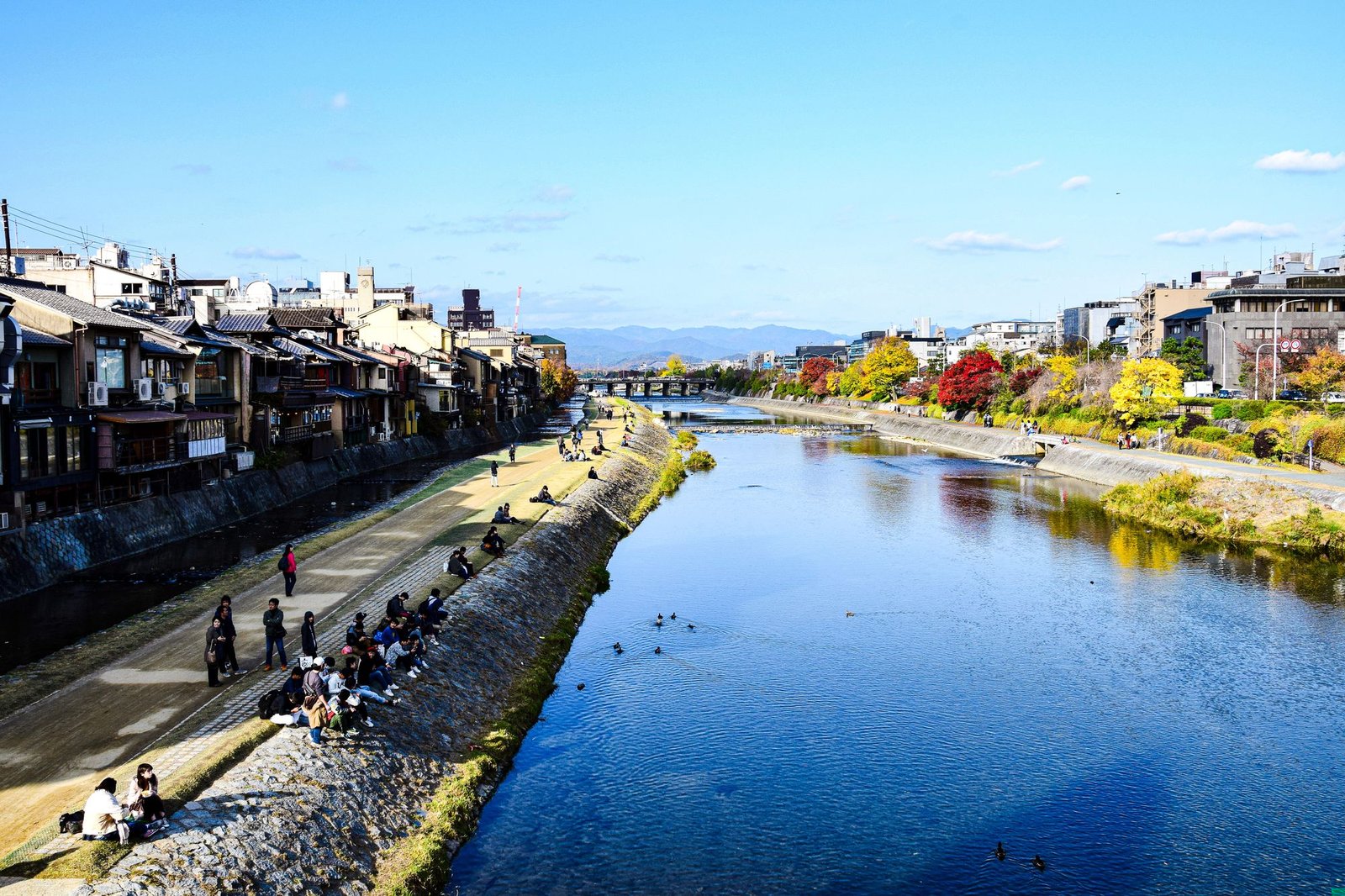
Every stop on this walk is about water. Nishiki Market grew on cold wells, and Nishiki Tenmangu has its own spring. The Takase is a merchant's canal dug just outside Hideyoshi's earthwork. Pontocho, a geiko district, stands on riverbed reclaimed in about 1669, above a channel that feeds that canal, and the walk ends on the Kamo itself. Running inside that story is a single year, 1872, when Kyoto reinvented its nightlife after the capital left for Tokyo. Roamer's walk follows the water from Kyoto's kitchen down to the river.
It is ten stops over just under two kilometers and takes about an hour and a quarter, more if you stop to eat. It is flat all the way. Nishiki's shops keep their own hours and many close on Wednesdays, so go in the daytime.
Wells and a spring
Stops 1 and 2 walk Nishiki Market, which its association calls Kyoto's kitchen. It dates fish merchants on the street to a record of 1311 and licensed fish wholesalers to 1615. The groundwater here stays at 15 to 18 degrees all year, and shops once used their own wells as natural refrigerators. Under the pillarless arcade, finished in 1993, you can still read the street as a line of narrow, deep shops facing each other across a lane only a few meters wide. The association asks shoppers to eat at or inside the shop where they bought the food, not while walking. In 1771 the market was nearly closed by a lawsuit, and the painter Ito Jakuchu, born into a vegetable wholesaler's family here, helped rally the supplying villages until it reopened in 1774.
Stop 3 is Nishiki Tenmangu at the market's east end, a shrine of Sugawara no Michizane. Its history traces it to the house of Michizane's father, and in 1587 Hideyoshi's city plan moved it here. Look up at the stone torii over the lane: its ends are pressed into the shops on both sides, a remnant of the precinct from before the next street was cut. The shrine's spring rises from about 30 meters down.
A street cut through temple land
Hear a stop from this walk
Shijo Bridge and the Kamo River
Stop 4, Shinkyogoku, is that street. In 1872 the councillor Makimura Masanao cleared temple grounds to make a new street and lift the spirits of a city left behind by the move of the capital. By around 1900 it ranked among Japan's great amusement quarters. Its opening in 1872 is what cut Nishiki Tenmangu's grounds down. Seigan-ji, facing the arcade, is a temple that dictionaries say moved to this spot in 1591.
A merchant's canal
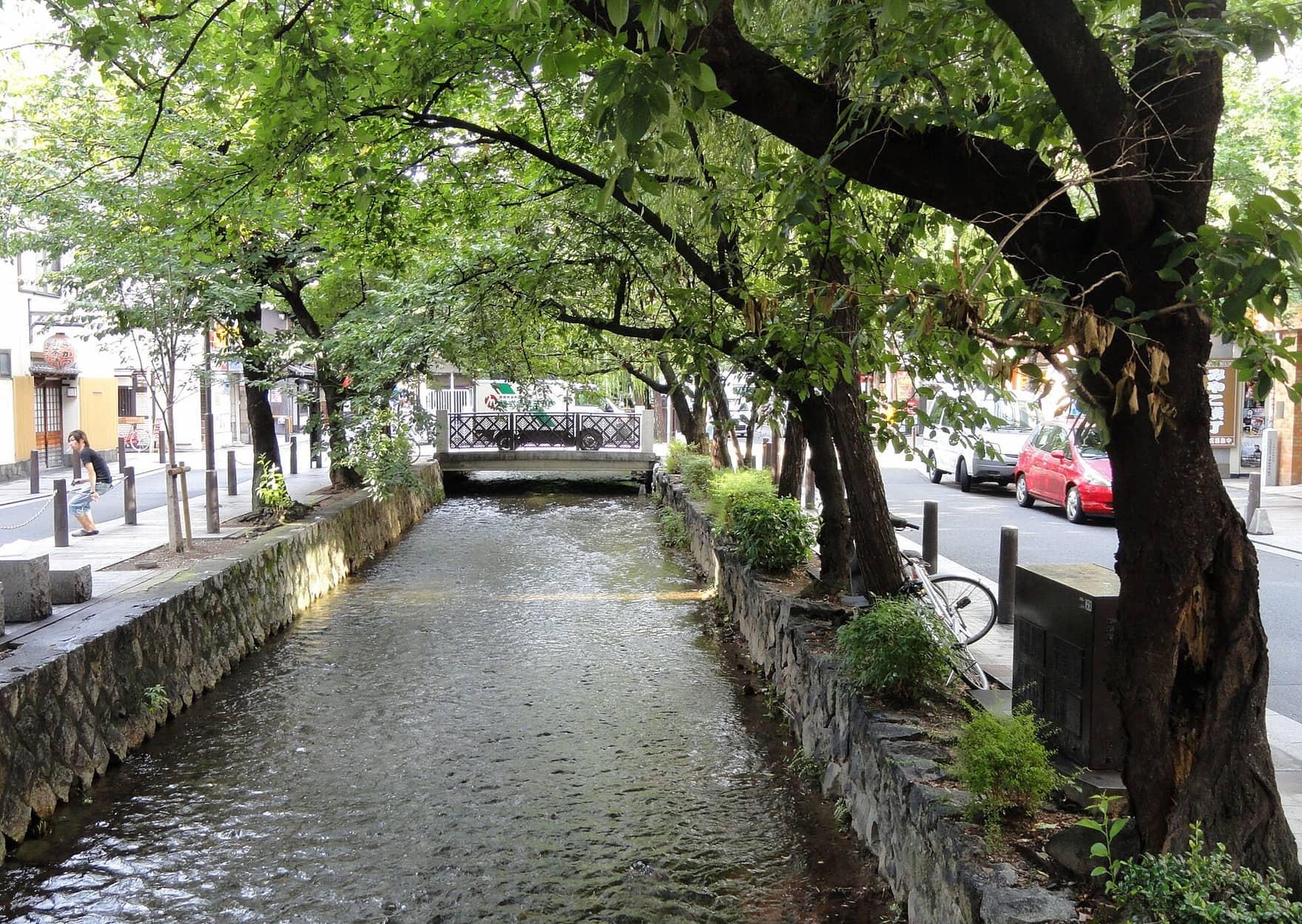
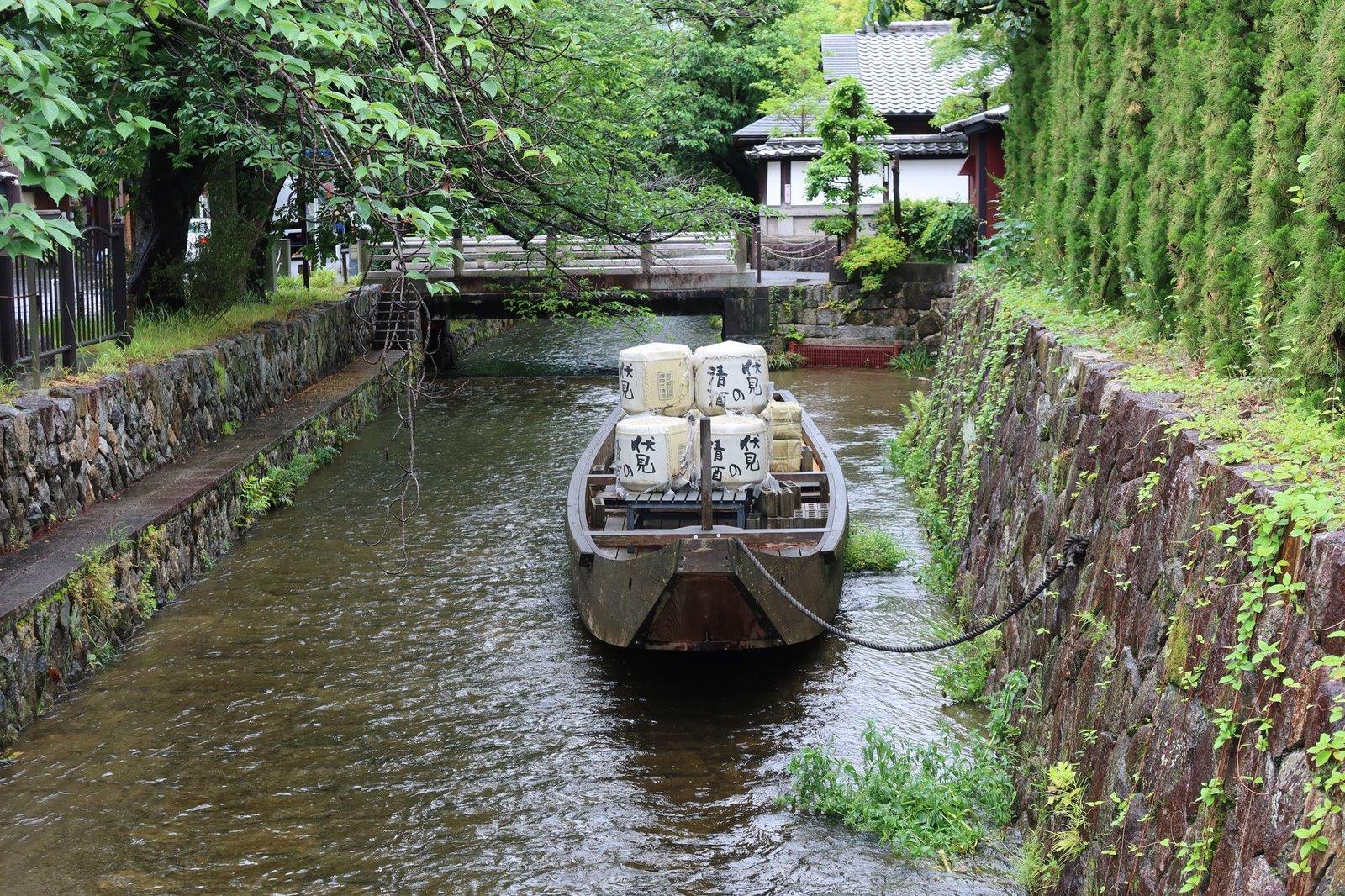
Stop 5 is the Takase, a narrow canal Suminokura Ryoi opened in 1614 to link Kyoto with Fushimi and Osaka. It ran just outside Hideyoshi's earthwork, and its flat boats carried rice, timber and charcoal until traffic ended in 1920. Look at how shallow and straight it is: a channel engineered for cargo, not a river. Kyoto City rebuilt its banks from 2010, finishing in December 2025.
Stop 6 is the Sanjo bridge, the western starting point of the Tokaido road. Its wooden railing with giboshi finials follows Hideyoshi's repair of 1590, and Kyoto Prefecture identifies the large stones under its west end as the embankment of about 1669 that made Pontocho's ground.
A district on the riverbed
Stop 7 is the Pontocho Kaburenjo, home of the Kamogawa Odori, which began in 1872 to draw visitors to the first Kyoto Expo. The present hall dates from 1927. Stop 8 walks Pontocho Alley itself, 490 meters long and in places 1.6 meters wide. The city buried its cables from 2015 to 2021, removing seventeen poles, so the eaves, lattice and reed blinds read cleanly. Stop 9, Pontocho Park, shows the backs of the houses: riverside rooms built facing the Kamo from mid-Meiji, which is why they look uniform, and the summer platforms called noryo-yuka set out over the Misosogi channel that feeds the Takase.
Stop 10 ends on the Shijo bridge over the Kamo, facing Minami-za, the theatre Shochiku calls the one with the oldest history in Japan. From here every thread of the walk, wells, spring, canal, embankment and channel, resolves into the river.
The walk is easy to take on your own schedule: eat as you go, skip a stop, or come back to the alley after dark on another day.
The canal is stop 5 of Nishiki Market and Pontocho: Kyoto's Kitchen to the River, which ends on the Shijo bridge. See all routes on the Kyoto page.
Sources
- Nishiki Tenmangu, about the shrine: the link to Sugawara-in, the move to Nishikikoji in 1587 under Hideyoshi, independence and the reduction of the grounds when Shinkyogoku opened in 1872.
- Kamogawa Odori, official history: the dance's start in 1872 for the first Kyoto Expo and its gaps.
- Roamer's audited tour research for this walk (the Nishiki Market association, Kyoto Prefectural Library and Archives on the 1771 lawsuit, the Shinkyogoku association, Kyoto City's Takase, Sanjo bridge and Pontocho documents, the Kamo noryo-yuka cooperative, Shochiku), as summarised in the stops' historical notes.
Ready to experience it?
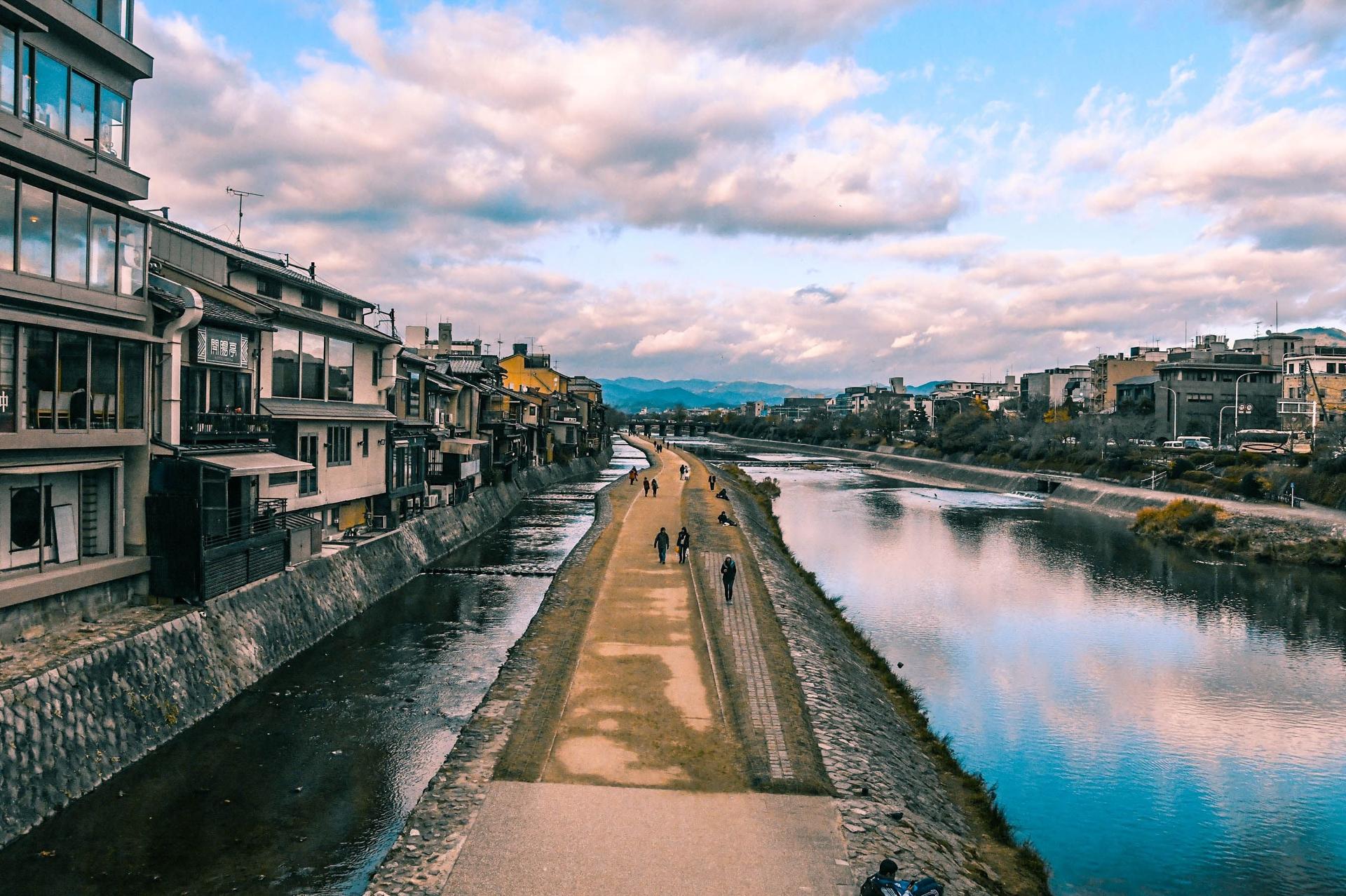
Nishiki Market and Pontocho: Kyoto's Kitchen to the River
75 min · 1.9 km · easy
More from Kyoto
Explore more at your own pace.
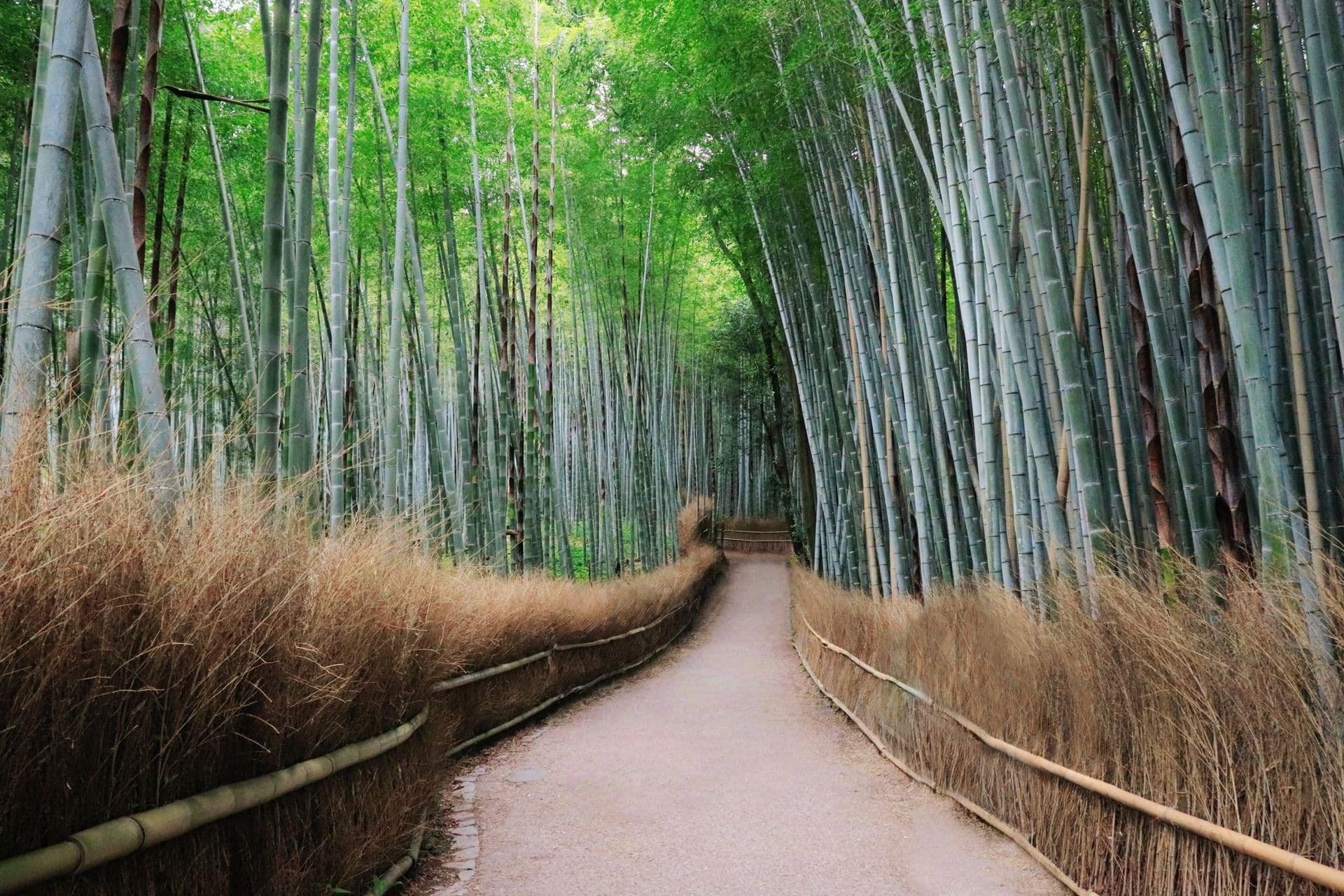
Arashiyama Walking Tour: Who Arranged Kyoto's Most Famous Views
Fushimi Inari Hike: How Ordinary People Filled a Burned Mountain With Gates
Gion Walking Tour: Reading Kyoto's Geiko Quarter Through Its Thresholds
Higashiyama Walking Tour: Kyoto's Old Hillside Was Kept on Purpose
Philosopher's Path Walk: The Factory Canal That Became Kyoto's Quietest Stroll