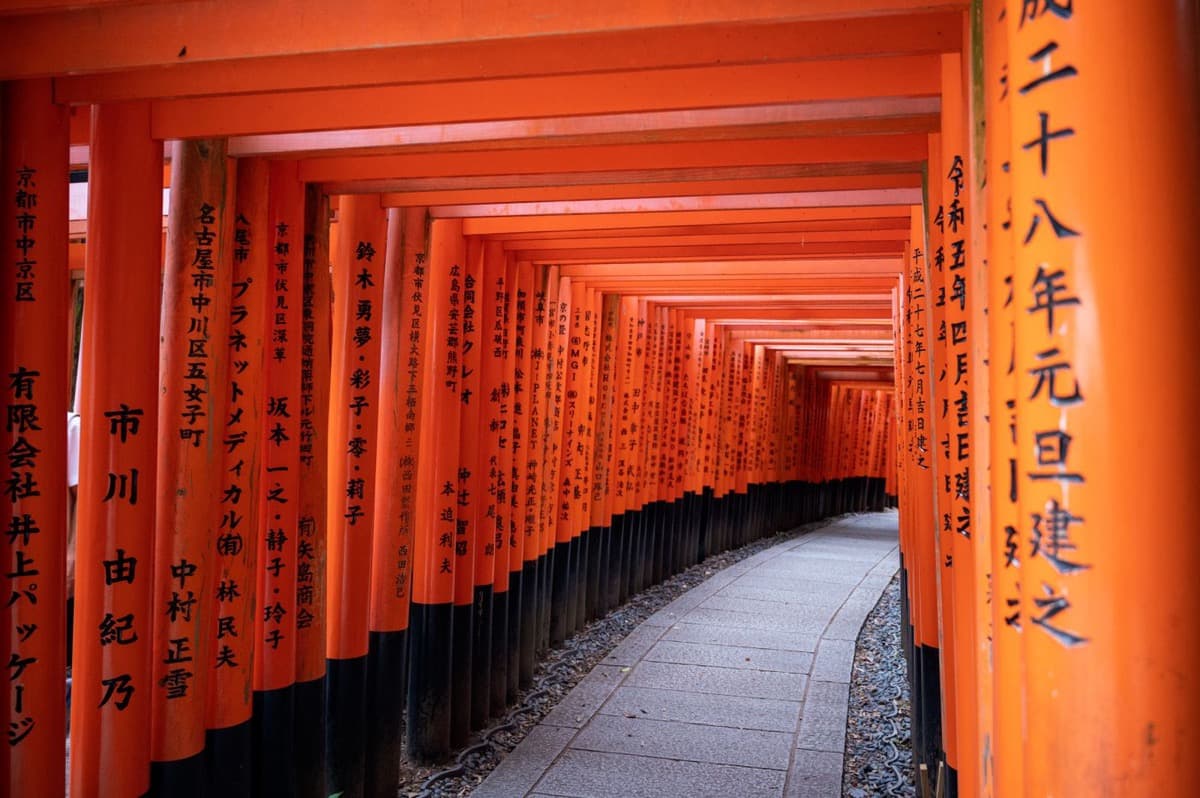
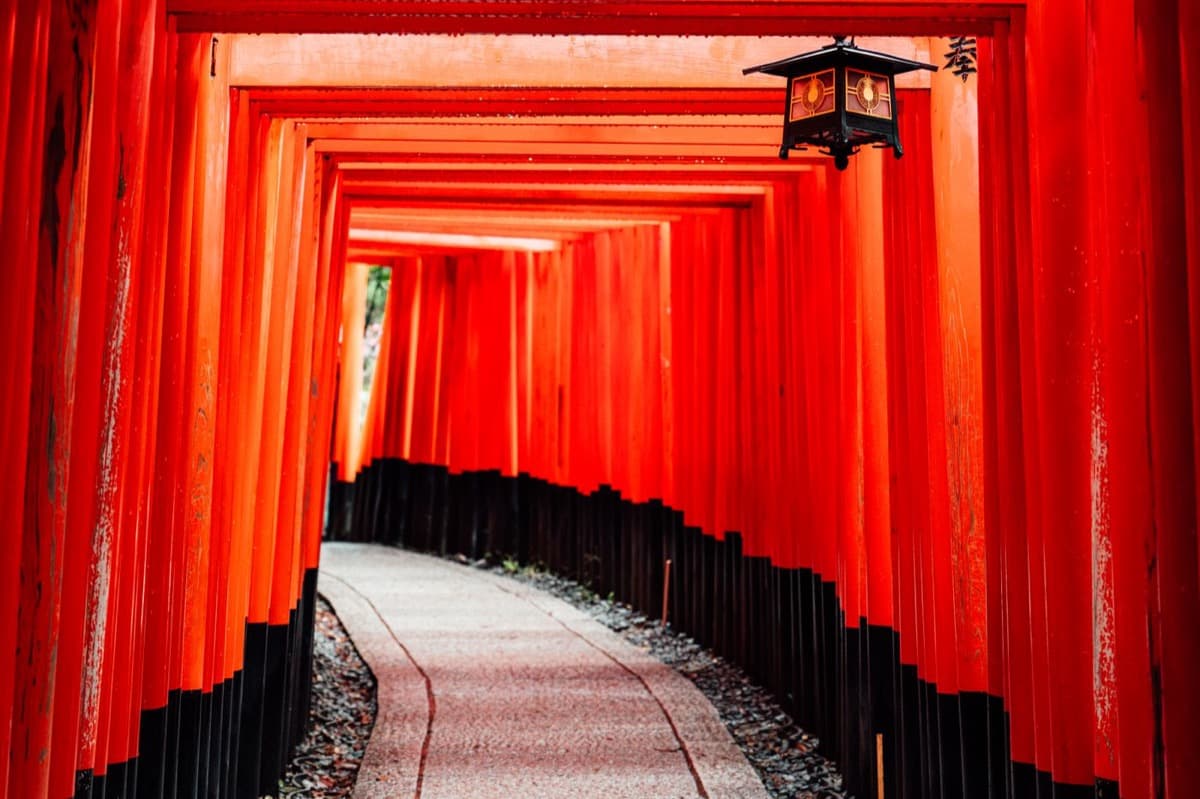
The tunnels of vermilion gates climbing the mountain at Fushimi Inari are the single most famous image of Kyoto, and one of the most misunderstood. It is easy to walk through them thinking of them as scenery, a beautiful red corridor built for effect. They are nothing of the kind. Each gate was paid for by a real person or business, and each one carries the donor's name inscribed on its back. The gates are a ledger of prayers for prosperity, thousands of them, stacked up the slope. Read them that way, and Fushimi Inari stops being a photo tunnel and becomes what it truly is: a mountain of accumulated hope for good fortune.
Inari, the god who became the god of business
To understand the gates you first have to understand the god. Fushimi Inari-taisha is the head shrine of Inari, and Inari was originally, and remains, the kami of rice and agriculture, the deity you prayed to for a good harvest. But as Japan's economy grew beyond the rice field, Inari's portfolio grew with it. Merchants and companies came to worship Inari as the patron of business and prosperity, so that the god of the harvest became also the god of commercial success. That shift is the key to the gates. A modern business praying to Inari is praying, in an old form, for the same thing a farmer prayed for: abundance.
The gates are donations, and they are inscribed
Hear a stop from this walk
Senbon Torii: Reading the Back of the Gates
Here is the fact that transforms the walk. Each of the roughly ten thousand torii on the mountain was donated by a Japanese business or individual, as an offering to Inari and a prayer for prosperity. And on the back of each gate, the side you see as you walk away from the shrine and up the mountain, is inscribed the name of the donor and the date of the donation. So the tunnels are not anonymous. They are signed. Every gate is a company or a family saying, in vermilion and black, we came here, we asked for good fortune, and we paid to leave our mark on the mountain.
The cost is real. Donating a smaller gate begins around several hundred thousand yen, and a large one runs to over a million. These are serious offerings, and the sheer number of them, packed so densely they form continuous tunnels, is a measure of how many people over how many years have come to Inari to ask for prosperity and to give thanks for it. The color itself carries meaning: vermilion is the traditional Shinto color to ward off evil and mark the divine.
The mountain, not just the gate
The other misunderstanding is that Senbon Torii, the thousand gates, is a single spot. In truth the name refers to a famously dense section of about eight hundred gates near the base that form the classic tunnel, but the torii continue far beyond it. They line trails that climb the whole of Mount Inari, a sacred mountain rising to over two hundred meters, on a route of some four kilometers that takes roughly two hours to walk to the summit and back through the smaller shrines along the way. Most visitors turn back at the crossroads partway up, which means the higher, quieter stretches of gates, and the sense of the whole mountain as a sacred ledger, are reserved for those who keep climbing. Roamer's Fushimi Inari: Ten Thousand Gates tour reads the ascent from the warlord's Romon gate at the entrance up through the tunnels to the higher shrines.
Reading it in place
Walk the gates reading them. As you climb, look at the backs of the torii and see the inscribed names and dates, and understand that each gate is a paid prayer for prosperity, an offering to the god of business. Do not stop at the famous first tunnel. Keep going past the crossroads where most people turn back, and the crowds thin while the gates continue, and the true scale of the mountain reveals itself. Go early in the morning or late in the day to walk the lower tunnels without the crush, and give yourself the time to climb higher than the photograph.
The gates anchor Roamer's Fushimi Inari: Ten Thousand Gates. To plan a day, see one day in Kyoto, and for the full set of routes, browse Kyoto walking tours.
Sources
- Wikipedia (Fushimi Inari-taisha), Japan-guide, and the shrine's official material: Inari as the kami of rice and agriculture and also the patron of business worshipped by merchants, the roughly ten thousand torii each donated by a business or individual with the donor's name and date inscribed on the back of the gate, donation costs starting around 400,000 yen and rising above one million, the Senbon Torii as a dense section of roughly 800 gates forming the tunnel, the vermilion color used in Shinto to ward off evil and mark the divine, and Mount Inari at 233 meters with about 4 kilometers of trails taking around two hours.
- Roamer tour transcript, Fushimi Inari: Ten Thousand Gates (kyoto-fushimi-inari), fact-audited: reading the backs of the gates and the climb up the mountain of torii.
Ready to experience it?
Fushimi Inari: Ten Thousand Gates
120 min · 4 km · hard
More from Kyoto
Explore more at your own pace.
Kyoto Travel Guide: How Many Days, Getting Around, When to Go (2026)
One Day in Kyoto: A Walkable South-East Itinerary (2026)

What to Eat in Kyoto: A Food Guide (2026)
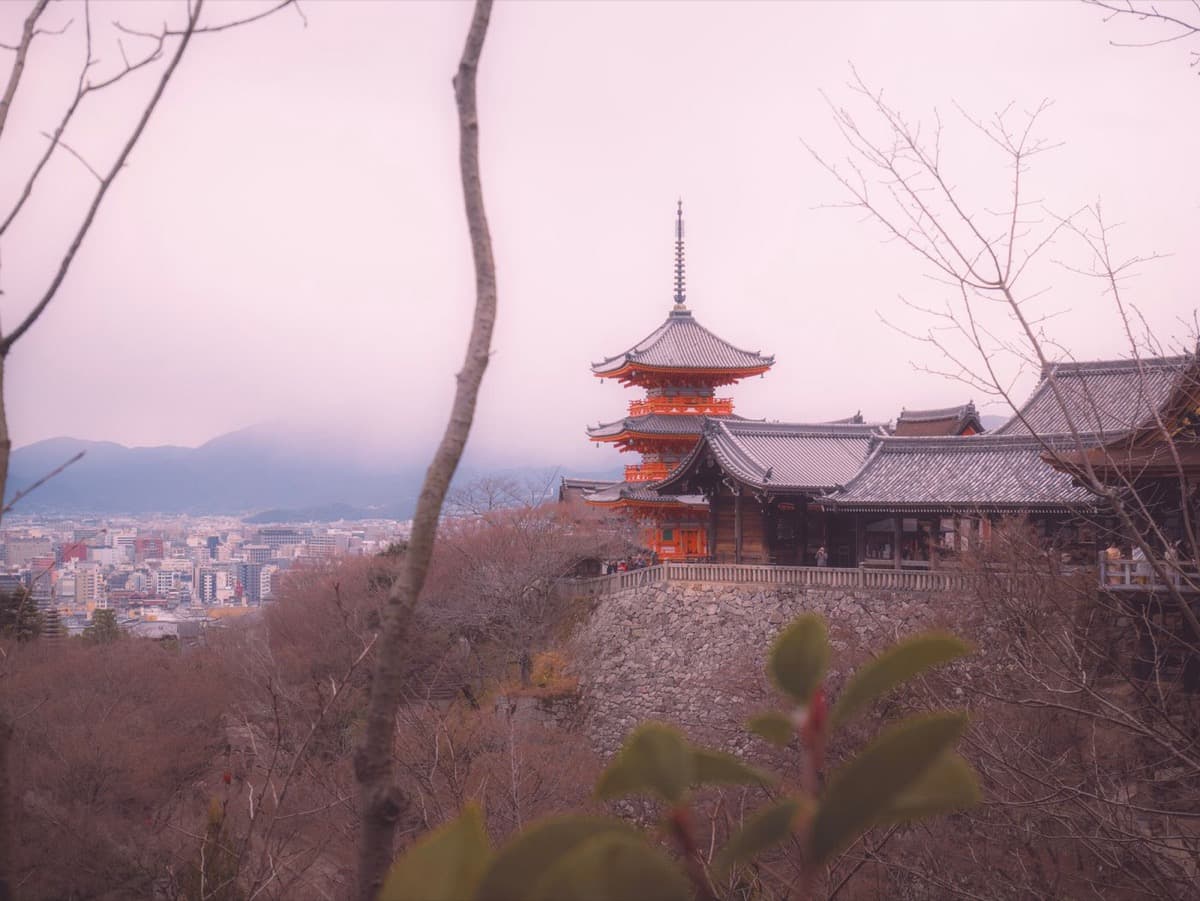
Kiyomizu-dera's Wooden Stage: The Icon of Ancient Kyoto That Was Rebuilt in 1633
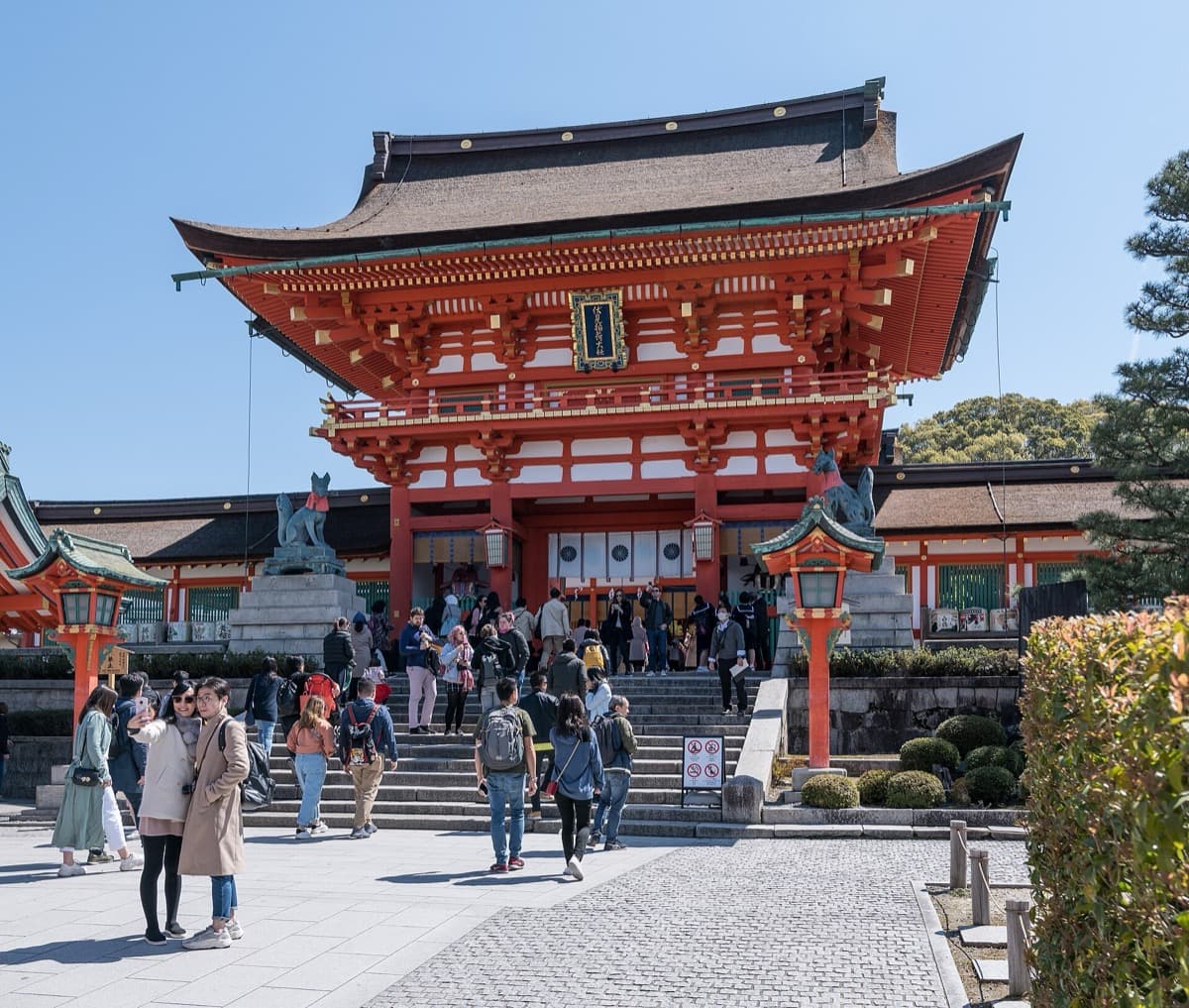
The Romon Gate at Fushimi Inari: A Warlord's Receipt for a Prayer