Old Town: Europe's Great Medieval Square
100 min · 1.5 km · moderate
Krakow reads as three places on one line: the great medieval square, the coronation hill, and the Jewish quarter that survived. Poland's old royal capital came through the twentieth century almost whole while Warsaw was flattened, so the medieval plan laid out under the town charter of twelve fifty-seven still stands, the kings still lie where they were buried on Wawel, and the synagogues of Kazimierz still ring a street even after the community that filled them was destroyed. Walk those three grounds at your own pace and you have walked the city itself: the town that governed and traded, the hill that crowned and buried, and the quarter that was emptied and came back to life.
The square: a medieval room still laid out as designed
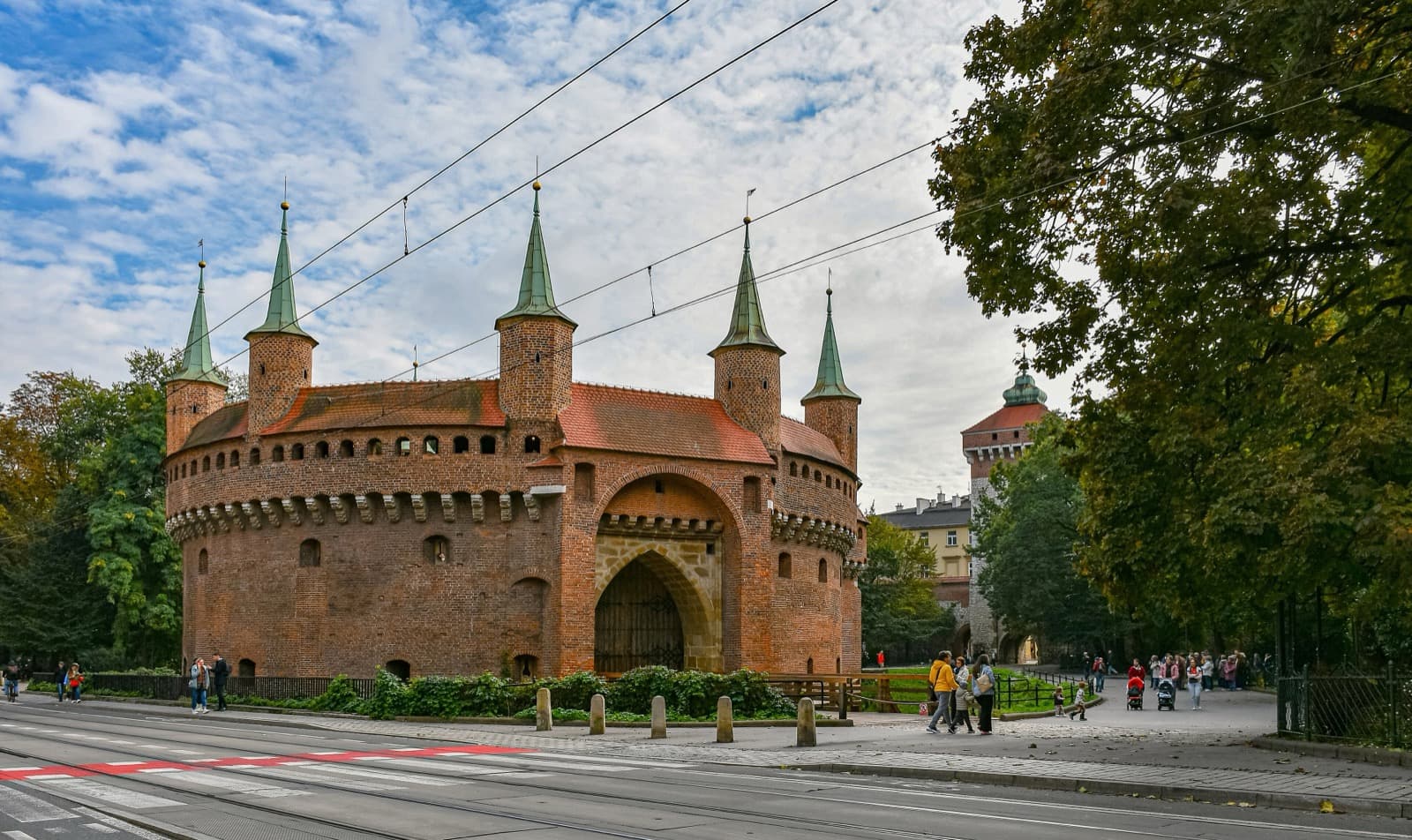
Start where kings entered. The Old Town walk follows the old Royal Route from the round brick Barbican, built around fourteen ninety-eight, through St Florian's Gate, the only one of the medieval city's original eight gates never pulled down. Both survived by a near thing: in the nineteenth century, under Austrian rule after the Partitions, the emperor ordered Krakow's walls removed, and a professor named Feliks Radwanski argued in eighteen seventeen to keep this stretch. The rest came down and became the Planty, the green park ring that still traces the vanished walls.
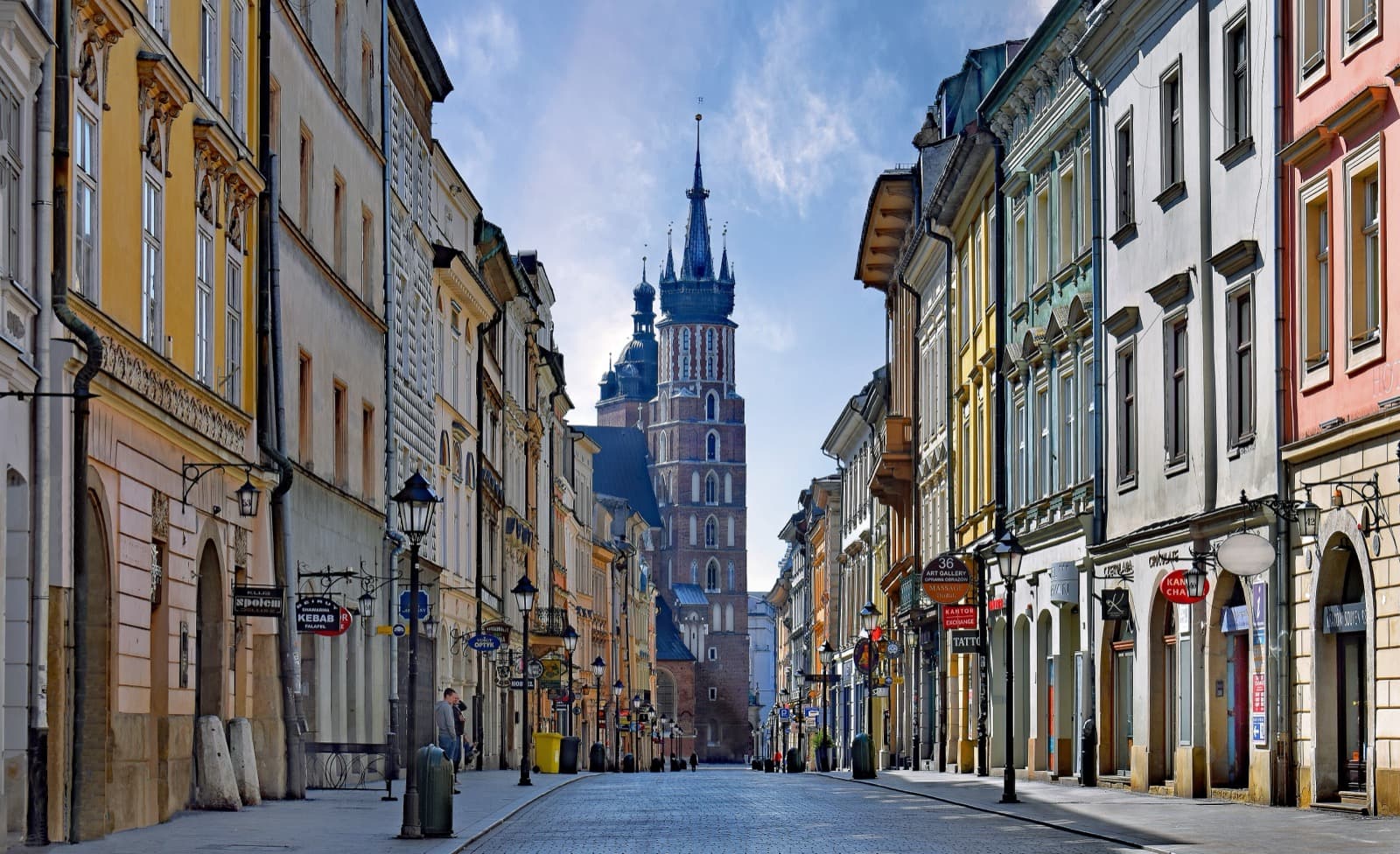
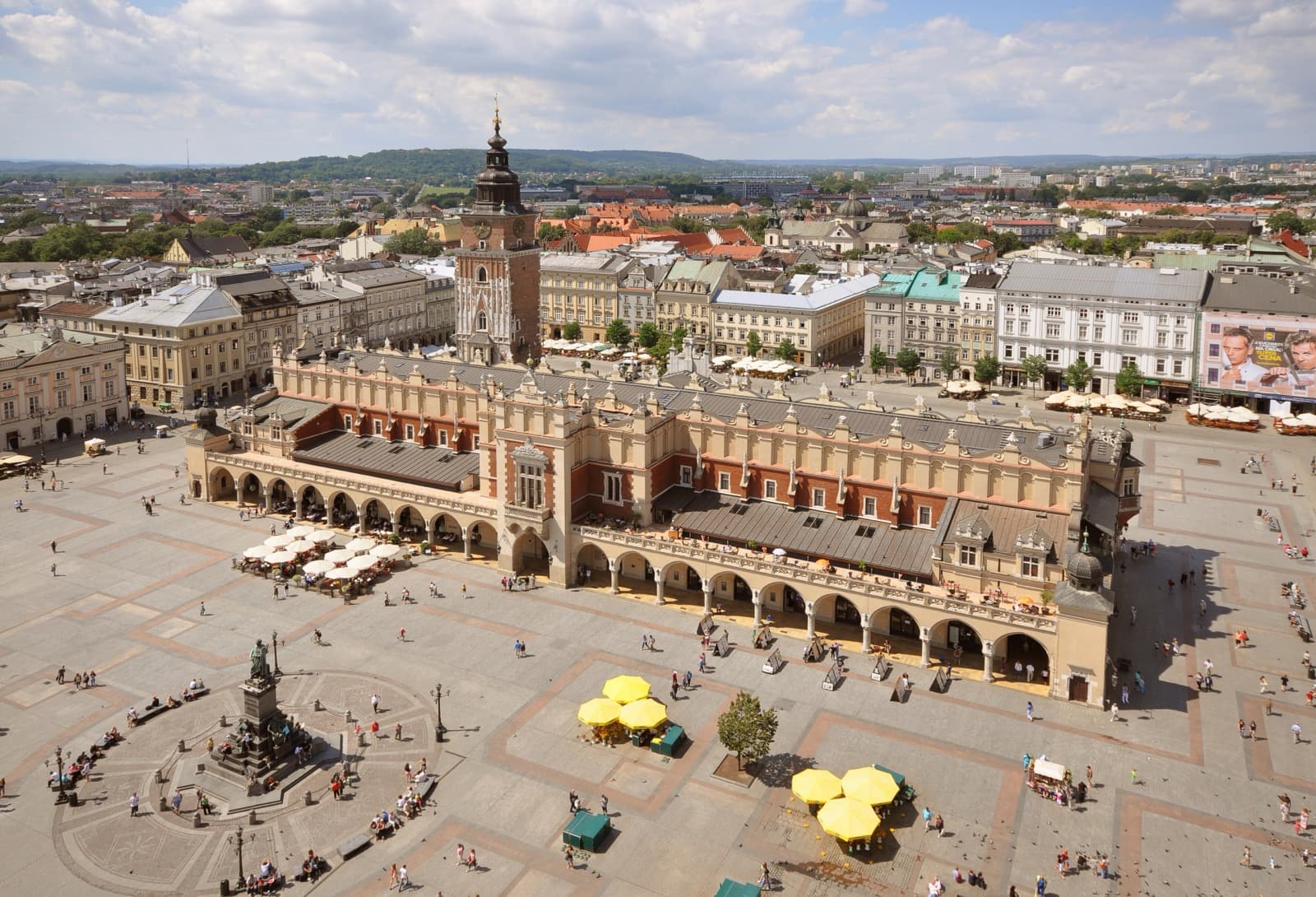
From the gate, Florianska Street runs about three hundred and thirty-five metres straight into the Rynek Glowny, the Main Market Square. UNESCO's listing states plainly that Krakow has Europe's largest market square: roughly two hundred metres on each side, about forty thousand square metres of open ground. Prince Boleslaw the Chaste granted the city rights under Magdeburg law in twelve fifty-seven, in the years after the Mongol invasion of twelve forty-one, and the strict grid he ordered still governs the plan of the whole Old Town. Because Krakow escaped the wartime destruction that flattened Warsaw, you are standing inside a nearly eight-hundred-year-old room still laid out as it was drawn.
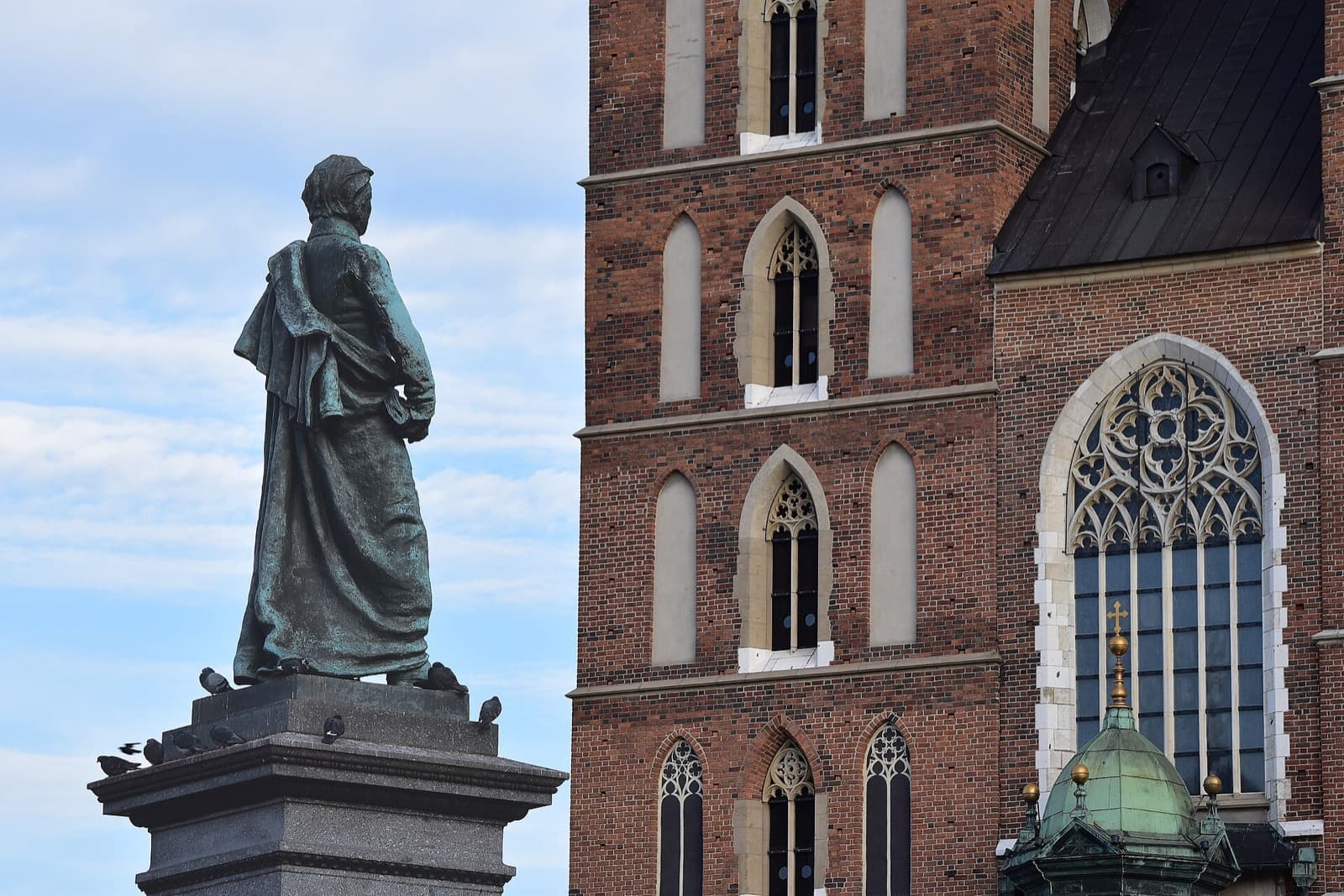
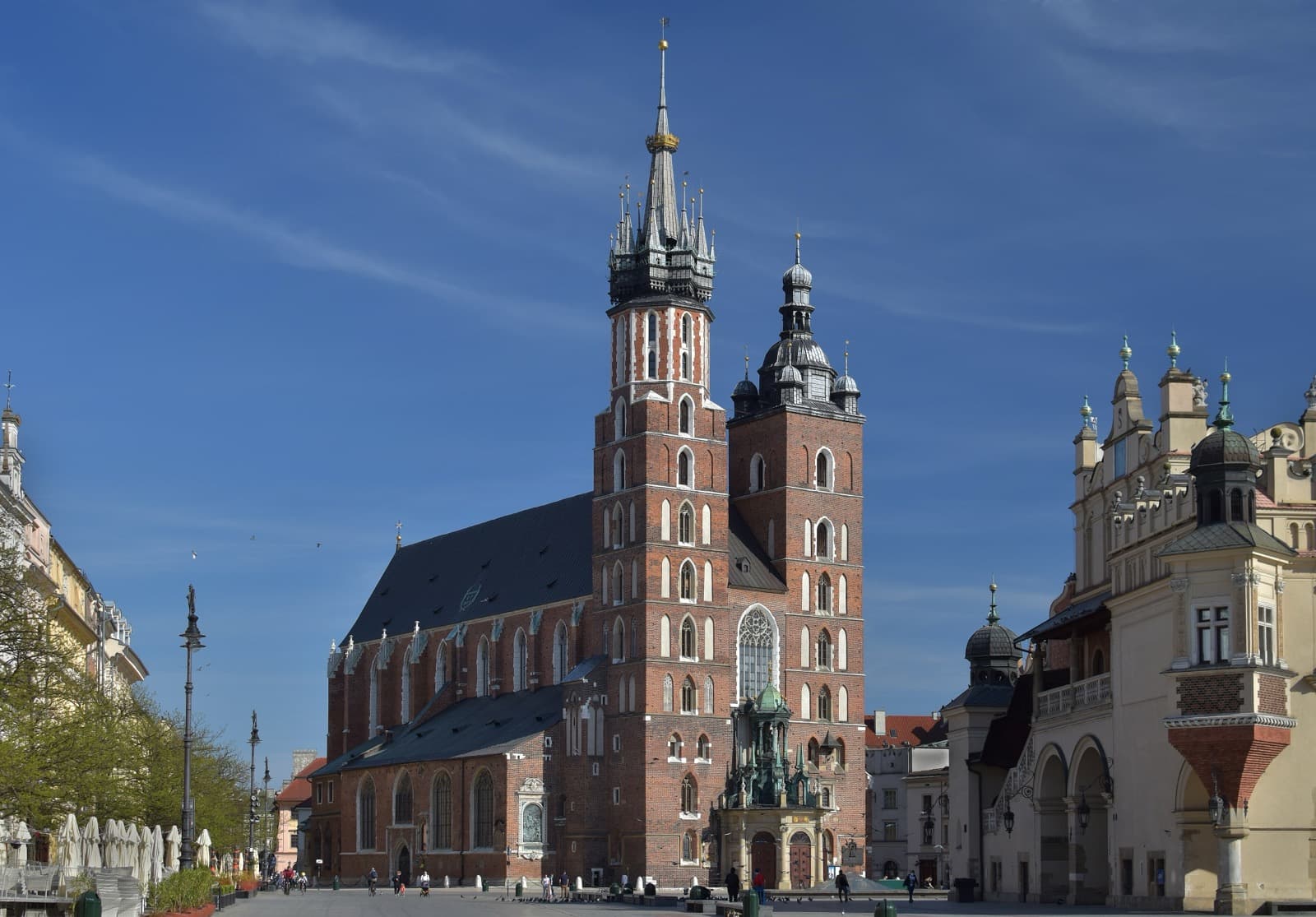
The pieces that fill it carry their own long time. St Mary's Church, a brick Gothic basilica founded in the early twelve twenties, holds the Veit Stoss altarpiece, carved between fourteen seventy-seven and fourteen eighty-nine and the largest Gothic altarpiece in the world, about thirteen metres high with more than two hundred figures. From its taller tower, some eighty metres up, a trumpeter plays the hejnal every hour and breaks off mid-note, unfinished. The tale that it honours a trumpeter struck in the throat by a Mongol arrow is legend, popularized by an American novel published in nineteen twenty-eight, not documented history. Down the centre of the square runs the Sukiennice, the Cloth Hall, a covered market for the better part of seven hundred years, rebuilt in Renaissance form and completed in fifteen fifty-nine. Nearby the Town Hall Tower leans about fifty-five centimetres after a storm in seventeen oh three, the only surviving piece of a medieval town hall demolished in eighteen twenty. A short walk west, the arcaded courtyard of the Collegium Maius, the oldest surviving building of the Jagiellonian University (founded on the twelfth of May, thirteen sixty-four, by Casimir the Great), is where a student named Nicolaus Copernicus studied in the fourteen nineties.
The hill: where Poland was crowned and buried
Hear a stop from this walk
The Cloth Hall: Seven Centuries of Market
Above the Vistula rises Wawel, a Jurassic limestone bluff only about two hundred twenty-eight metres above sea level that carried an entire kingdom. The Wawel walk reads the hill from the top down. Its cathedral, the Archcathedral Basilica of Saint Stanislaus and Saint Wenceslaus, did two enormous things at once: from thirteen twenty until the final coronation in seventeen sixty-four, Polish monarchs were crowned here, and since the fourteenth century it has been their principal burial place. Kings including Casimir the Great and John the Third Sobieski lie here, alongside national heroes Tadeusz Kosciuszko and Jozef Pilsudski and the Romantic poets Adam Mickiewicz and Juliusz Slowacki. Karol Wojtyla served as Archbishop of Krakow from nineteen sixty-four to nineteen seventy-eight before his election as Pope John Paul the Second, having celebrated his first Mass as a priest in a crypt of this cathedral on the second of November nineteen forty-six.
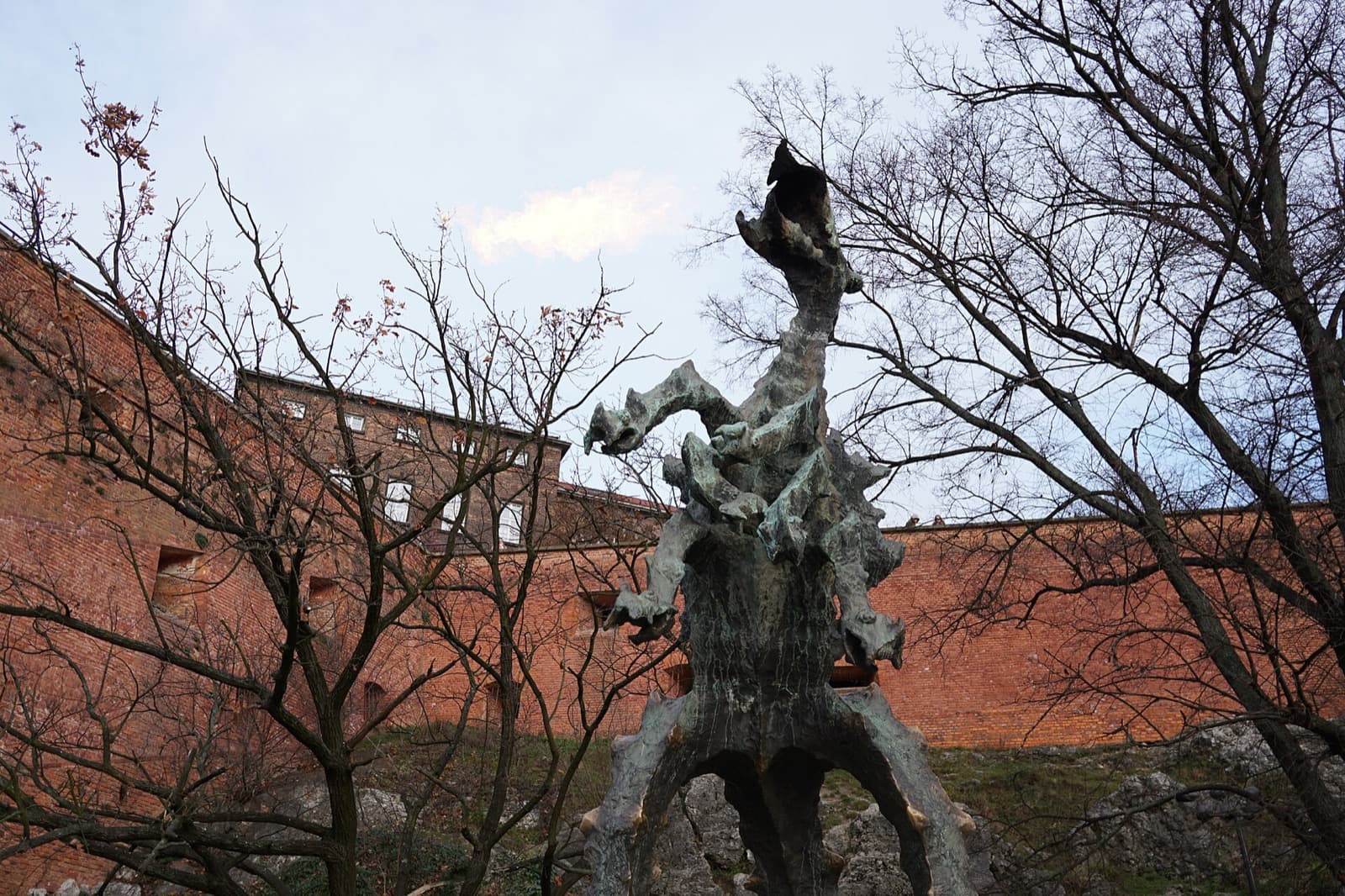
The hill is where a foreign style became a national one. The Sigismund Chapel, built between fifteen nineteen and fifteen thirty-three by the Italian architect Bartolomeo Berrecci and crowned by a golden dome, is described as the most beautiful example of the Tuscan Renaissance north of the Alps. After a fire in fourteen ninety-nine, King Sigismund the First the Old rebuilt the castle as a Renaissance palace, its work running from fifteen oh seven to fifteen thirty-six under Italian masters. Look up at its courtyard and you see the accent that makes it Polish: the uppermost arcade is deliberately taller than the tiers below, a proportion unknown in Italy. Inside the treasury sits Szczerbiec, the notched coronation sword used from thirteen twenty until seventeen sixty-four, the only surviving piece of the medieval Polish crown jewels, evacuated all the way to Canada during the Second World War before returning to Poland in nineteen fifty-nine. Then the tone changes on purpose. Down at the river is Smocza Jama, a real limestone cave running some two hundred seventy-six metres, and at its mouth a bronze fire-breathing dragon by Bronislaw Chromy, installed in nineteen seventy-two, tied to the legend of the Wawel dragon first recorded by Bishop Wincenty Kadlubek in the thirteenth century.
The quarter: destroyed, and standing
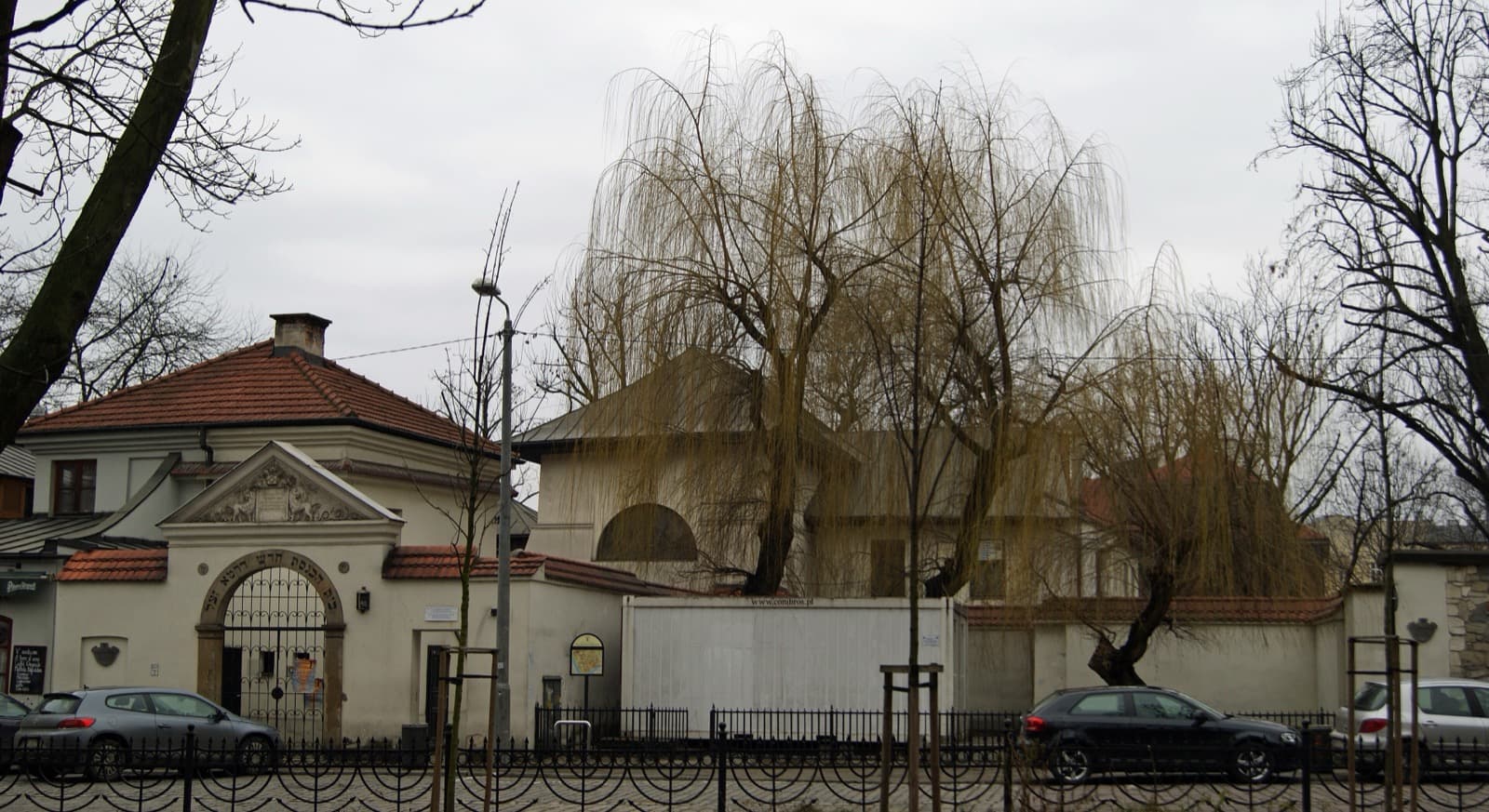
Just to the south lies Kazimierz, for centuries one of the great centres of Jewish life in Europe. Casimir the Great chartered it as a separate town on the twenty-seventh of March, thirteen thirty-five, and named it after himself. The Kazimierz walk holds two truths at once, honouring the dead without letting the revival erase what was lost. It centres on Szeroka Street, so wide it reads as a long square, ringed by surviving synagogues: the Old Synagogue, the oldest surviving synagogue building in Poland, its earliest form from the fifteenth century and rebuilt by the Italian architect Mateo Gucci in fifteen seventy; and the Remuh, still active, built about fifteen fifty-seven and named for the great legal scholar Moses Isserles, whose grave remains a place of pilgrimage. Beside it, the Remuh Cemetery holds the Wailing Wall, assembled from broken headstones uncovered in a nineteen fifty-nine excavation, a wall made of grief and endurance at once.
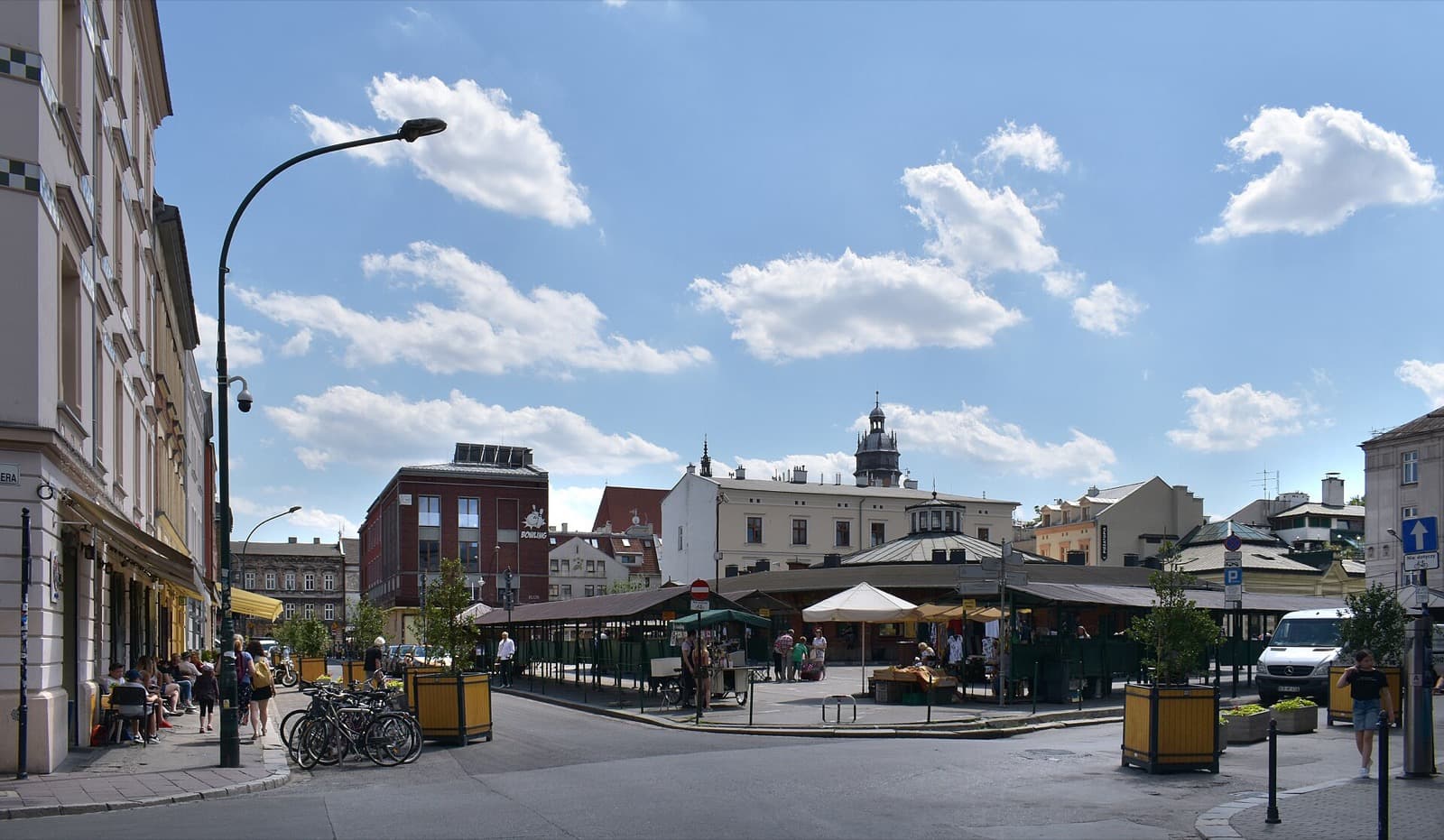
The story runs through loss and return. The German occupation and the Holocaust destroyed that Jewish world, forcing its people across the Vistula into the Podgorze ghetto, established by decree of the third of March nineteen forty-one and liquidated on the thirteenth and fourteenth of March nineteen forty-three, and murdering most of them, the overwhelming majority at the German-run Auschwitz-Birkenau camp about sixty to seventy kilometres west. Yet the physical quarter survived almost intact, and since the nineteen nineties its lanes have filled again. Plac Nowy's round market hall, once a Jewish poultry slaughterhouse, is now the buzzing daily heart of the quarter. Corpus Christi Basilica, founded by Casimir the Great in the same charter year of thirteen thirty-five, is a reminder that Kazimierz was always a shared Christian-and-Jewish town. And Ulica Jozefa, where Steven Spielberg filmed much of Schindler's List in nineteen ninety-three, carries the revival that followed.
Reading Krakow at your own pace
The through-line is preservation that let three different kinds of memory endure side by side: a working market, a royal necropolis, and a destroyed community's standing stones. All three are yours to read slowly, under the towers, on your own clock. For the fuller picture and other routes through the city, see the Krakow walking tours hub.
Sources
- UNESCO World Heritage Centre, Historic Centre of Krakow (inscribed 1978), which records Europe's largest market square.
- Wawel Royal Castle official information on the cathedral, Sigismund Chapel, Renaissance courtyard, and Szczerbiec.
- Museum of Krakow, Old Synagogue and Town Hall Tower branch materials on Kazimierz and the Main Market Square.
- Auschwitz-Birkenau State Memorial and Museum, records of those murdered at the camp.
- Jagiellonian University Museum (Collegium Maius) on the university's founding and Copernicus.
Frequently asked questions
- Why did Krakow survive World War Two so well preserved?
- Krakow escaped the wartime destruction that flattened Warsaw, so its medieval plan survives almost whole. The Main Market Square, laid out after the town charter of twelve fifty-seven, still follows its original grid, and the historic centre was inscribed in nineteen seventy-eight as part of the first UNESCO World Heritage list.
- Is Krakow's Main Market Square really the largest in Europe?
- UNESCO's listing for the Historic Centre of Krakow states plainly that the city has Europe's largest market square. The Rynek Glowny measures roughly two hundred metres on each side, about forty thousand square metres of open ground, and was laid out under Magdeburg law after the twelve fifty-seven charter granted by Prince Boleslaw the Chaste.
- What is the trumpet call from St Mary's tower?
- Every hour, on the hour, a trumpeter plays the hejnal from the taller tower of St Mary's Church, about eighty metres up, and it always breaks off abruptly mid-note. The story that it honours a trumpeter struck in the throat by a Mongol arrow is legend, popularized by an American novel published in nineteen twenty-eight, not documented history. The live call itself is entirely real.
- What happened to the Jewish community of Kazimierz?
- The German occupation and the Holocaust destroyed Kazimierz's Jewish world, forcing its people across the Vistula into the Podgorze ghetto and murdering most of them, the overwhelming majority at the German-run Auschwitz-Birkenau camp about sixty to seventy kilometres west. The physical quarter survived almost intact, and since the nineteen nineties its lanes have filled again with culture and returning Jewish life.
- Why is Wawel Hill so important to Poland?
- On Wawel, Polish monarchs were crowned in the cathedral from thirteen twenty until the final coronation in seventeen sixty-four, and it has been their principal burial place since the fourteenth century. The hill also holds the golden-domed Sigismund Chapel, the Renaissance royal palace, and Szczerbiec, the only surviving piece of the medieval Polish crown jewels.
Ready to experience it?
Old Town: Europe's Great Medieval Square
100 min · 1.5 km · moderate
More from Krakow
Explore more at your own pace.
Krakow Travel Guide: Days, Transport, Timing, and Safety
Rynek Glowny: Why Krakow's Main Market Square Is the Whole Tour
The Remuh Synagogue and Cemetery: Kazimierz's Wall of Broken Headstones
Plac Nowy and the Okrąglak: The Round Hall Where Kazimierz Still Gathers
St Mary's Basilica in Krakow: The Trumpet That Stops Mid-Note