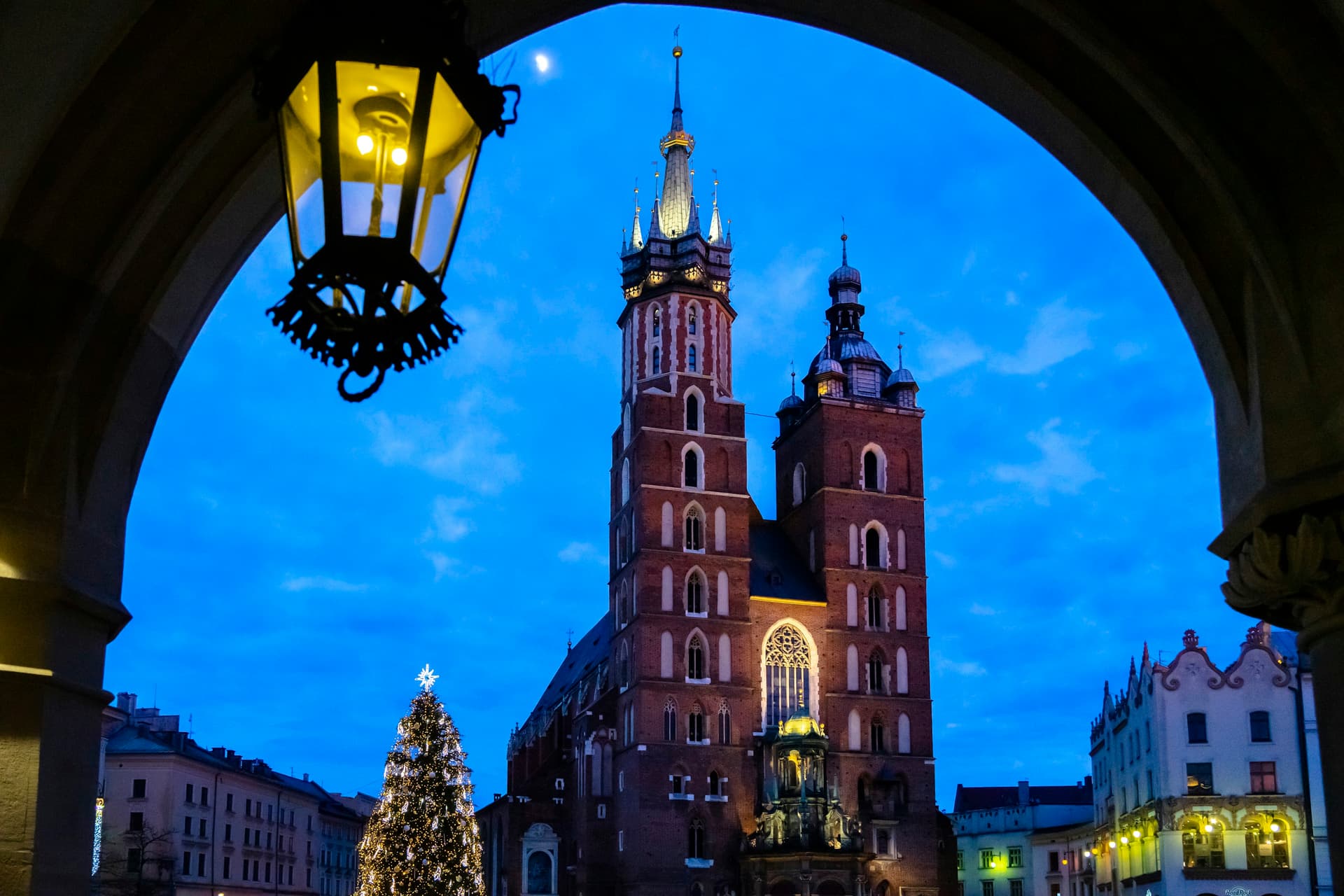
Walk the Royal Route from the Barbican to the foot of Wawel Hill, through the Main Market Square, St Mary's Basilica and the Cloth Hall, and find out how much of Krakow's medieval heart is a choice the city made, defended and remade.
Start · Barbican: The Fortress Before the Gate
DirectionsStops
- 1
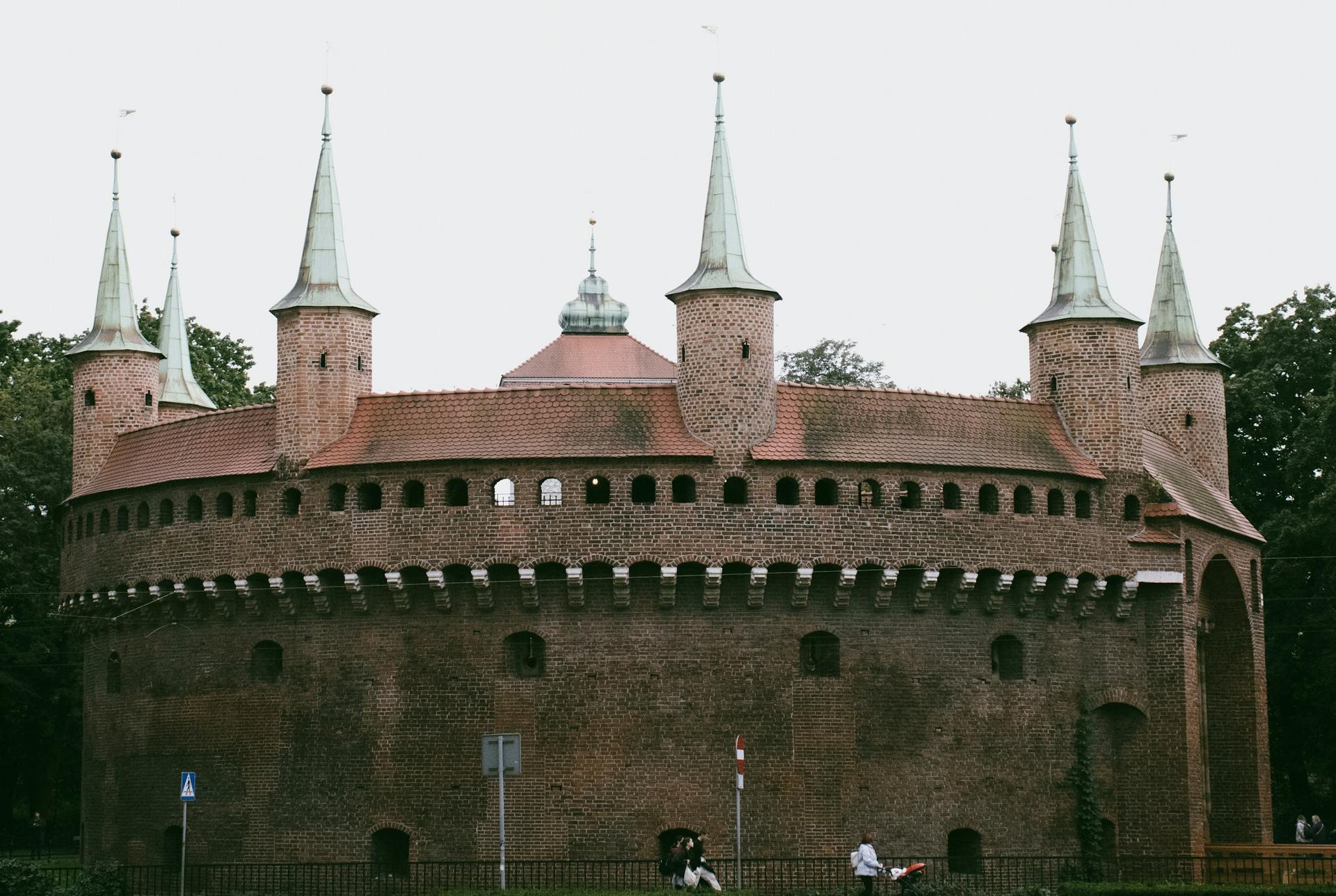
Barbican: The Fortress Before the Gate
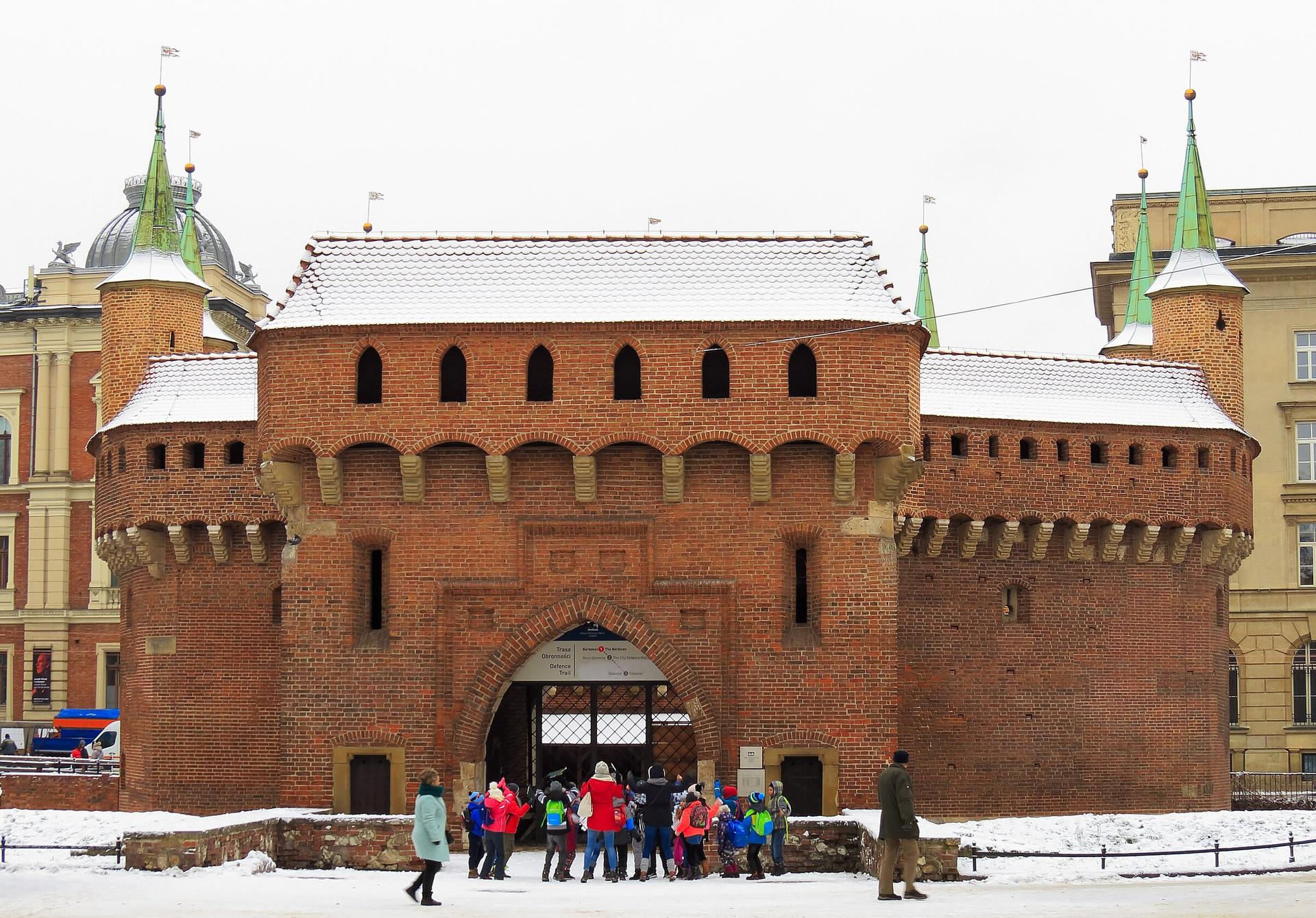
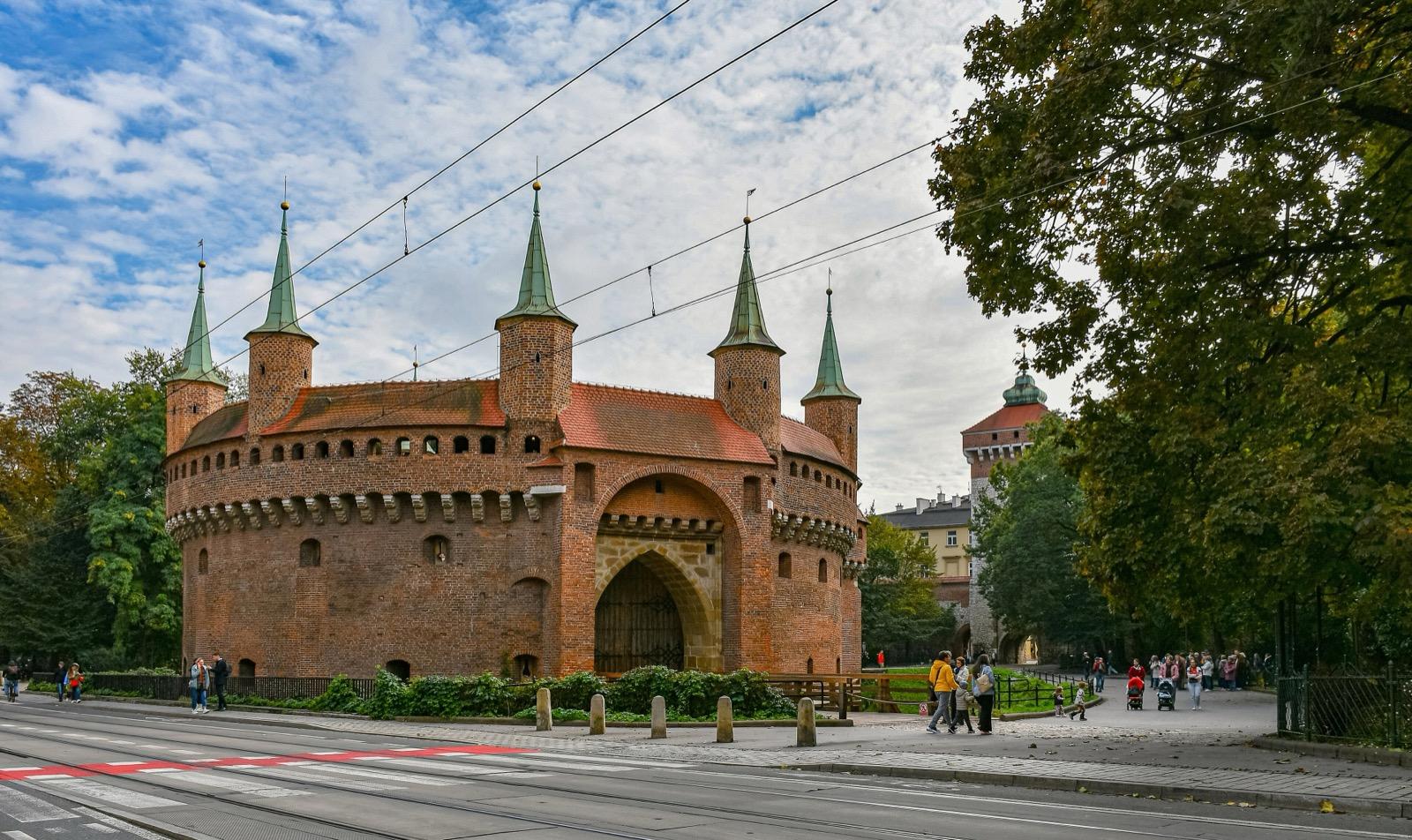
A brick fortress built in two years to guard the city's main gate. The Royal Route, the road of coronations and royal funerals, passed through it.
- 2
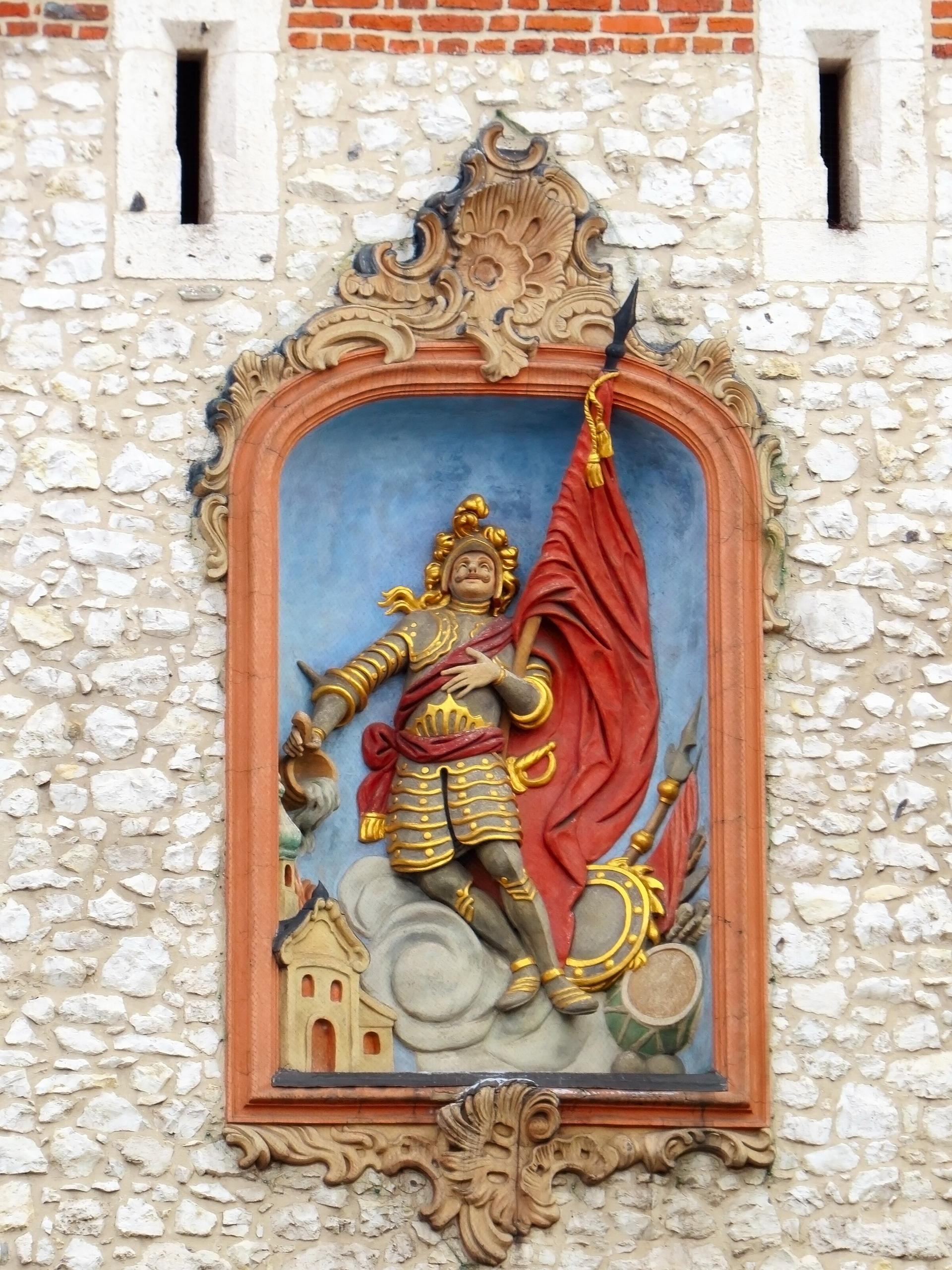
St Florian's Gate: Saved by a Winter Wind
The last of the city's gates, and its stretch of wall, kept in 1817. One senator argued that without them the winter wind would howl into the square.
- 3
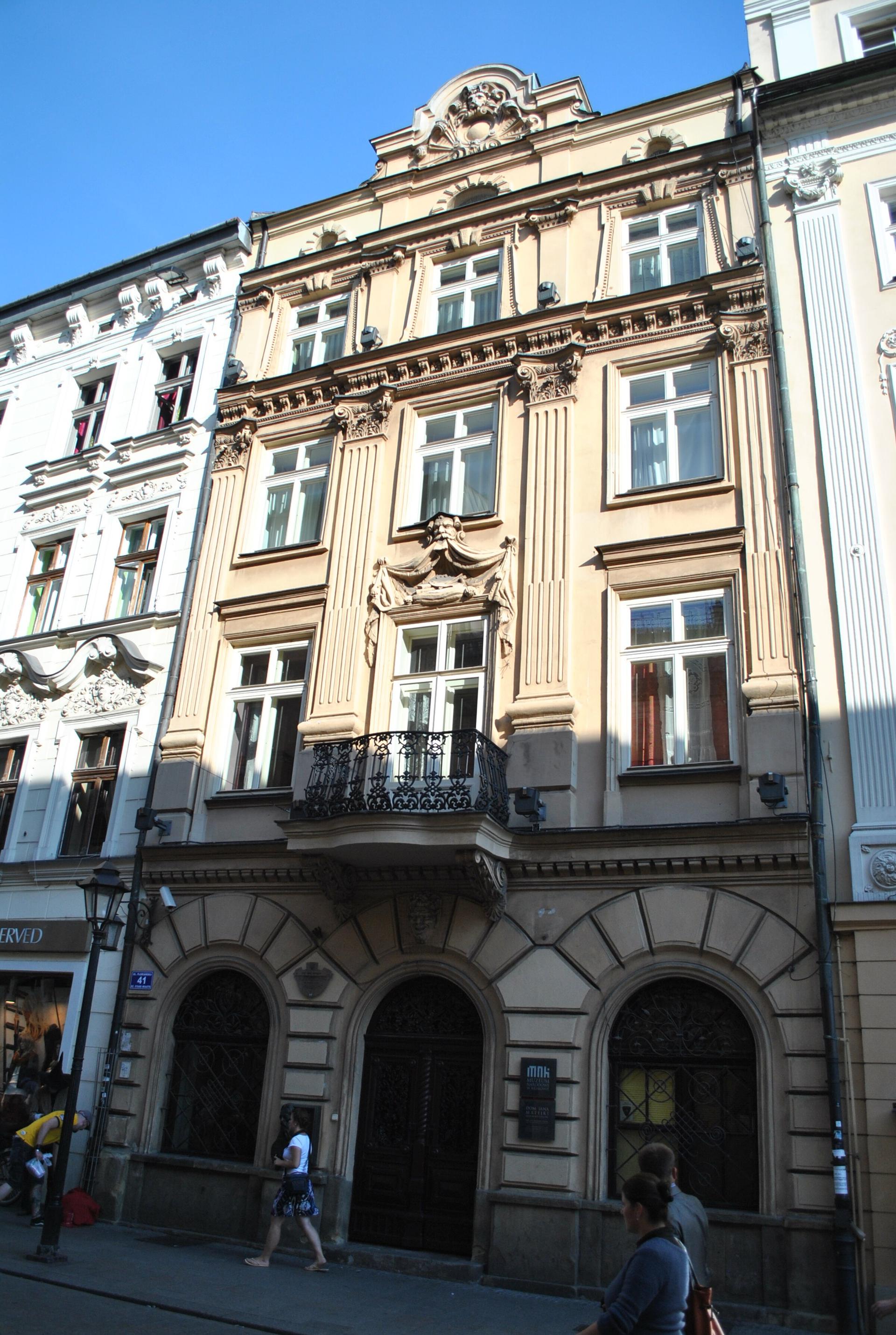
Florianska Street: The Painter's House
The house where Jan Matejko was born, painted and died. He designed the eagle on the gate and gave the nation its history in paint.
- 4
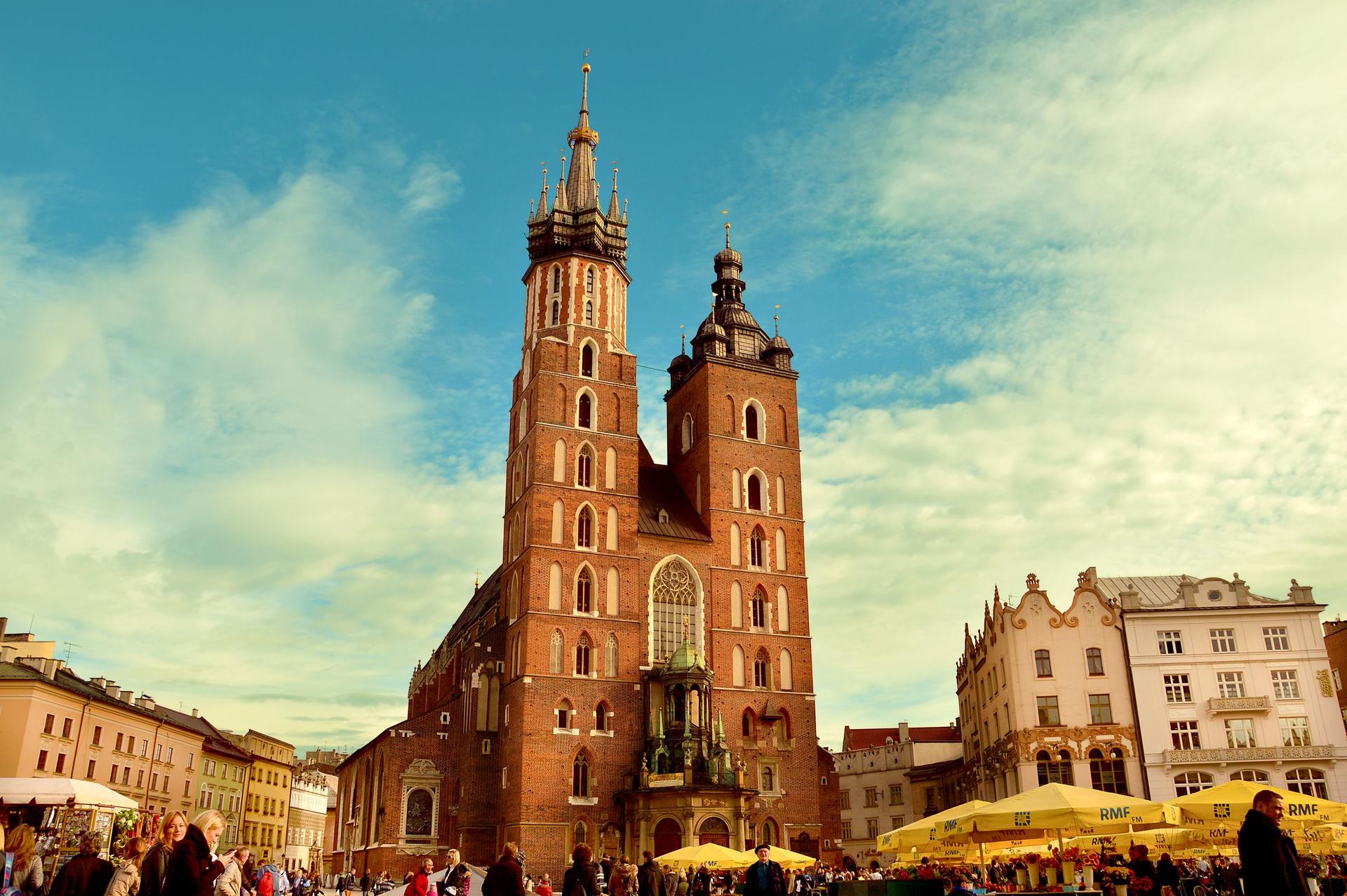
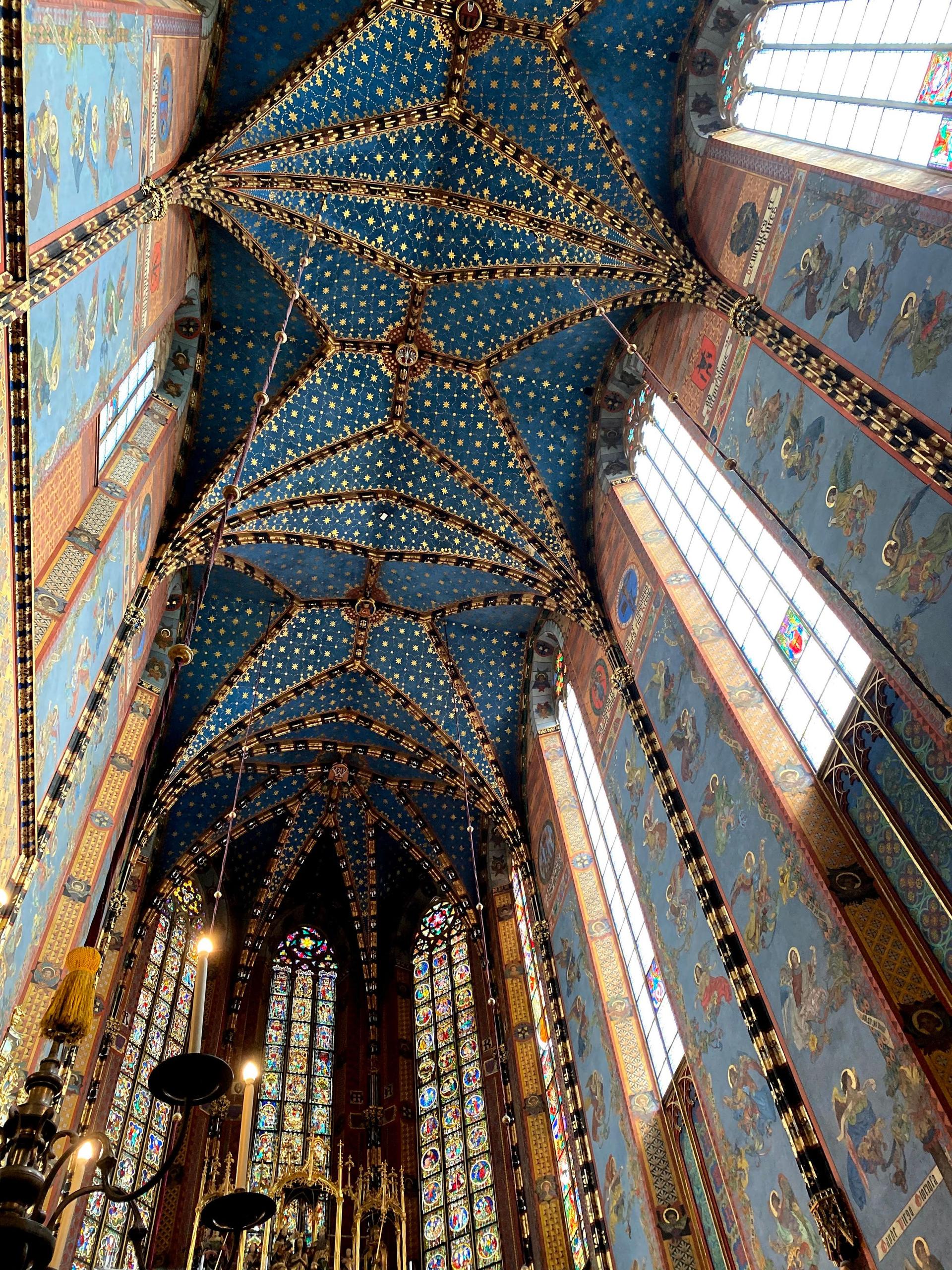
St Mary's Basilica: The Call That Breaks Off
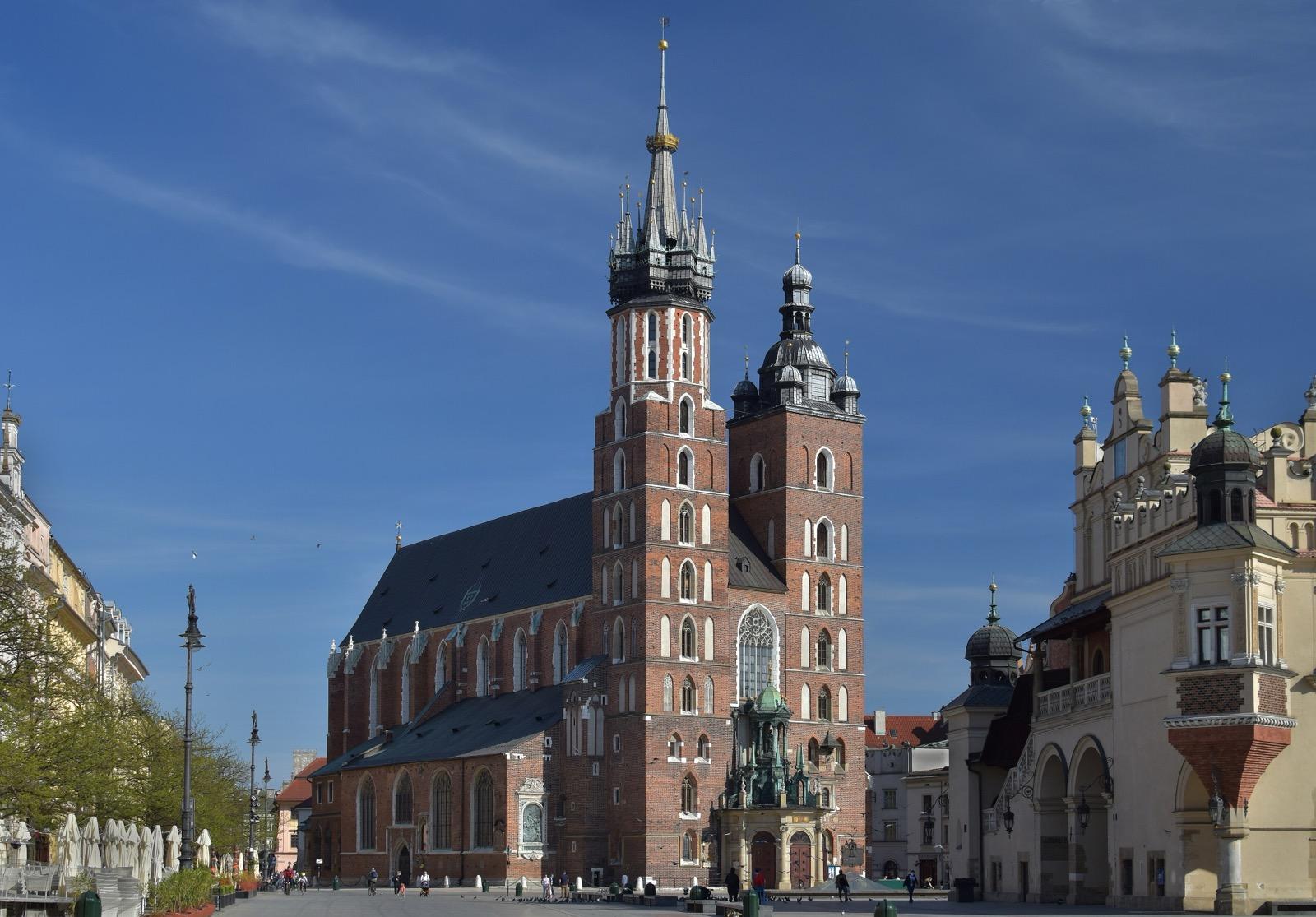
Two unequal towers and an hourly trumpet call. The call breaks off mid-tune, and inside is the altarpiece of Veit Stoss.
- 5
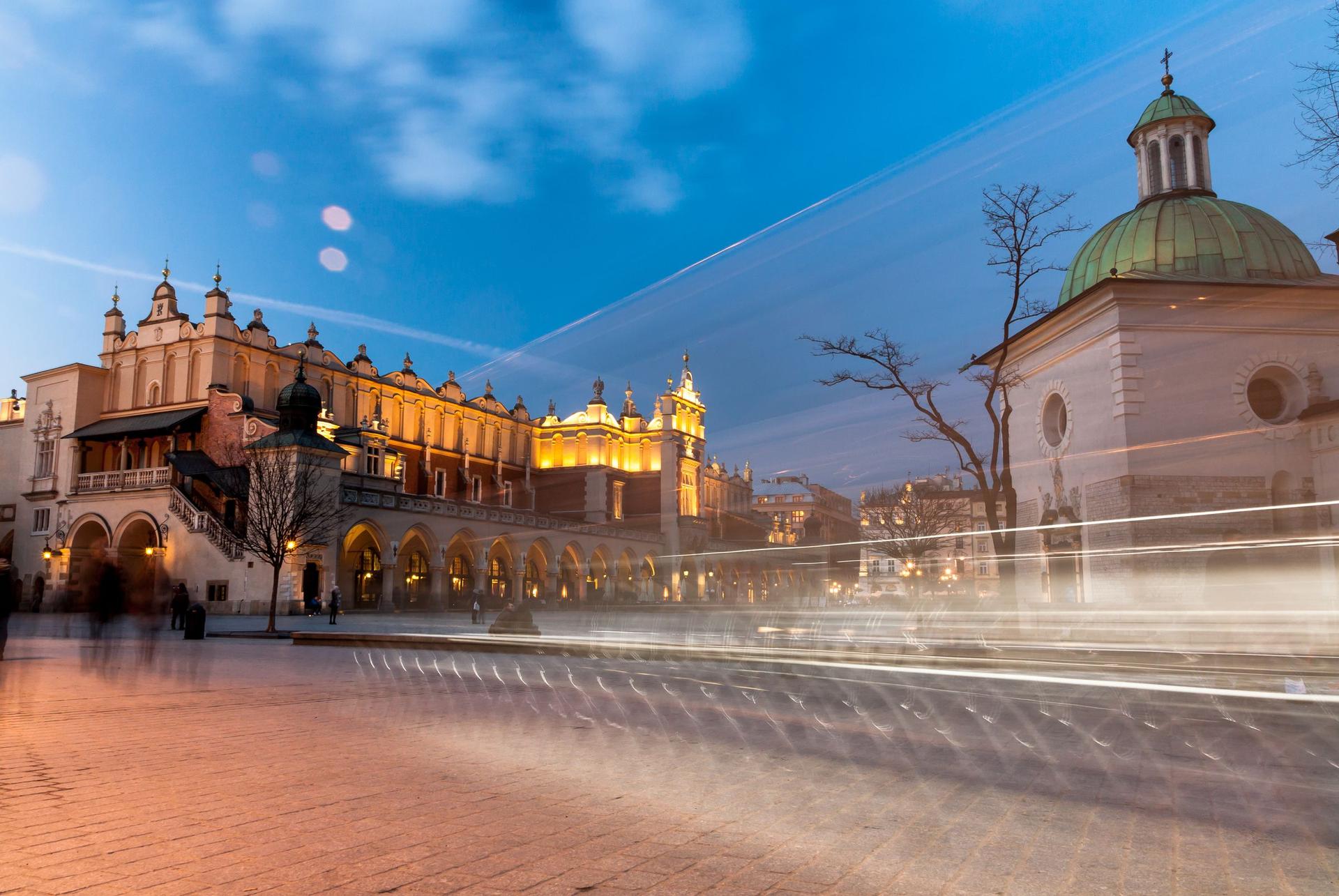
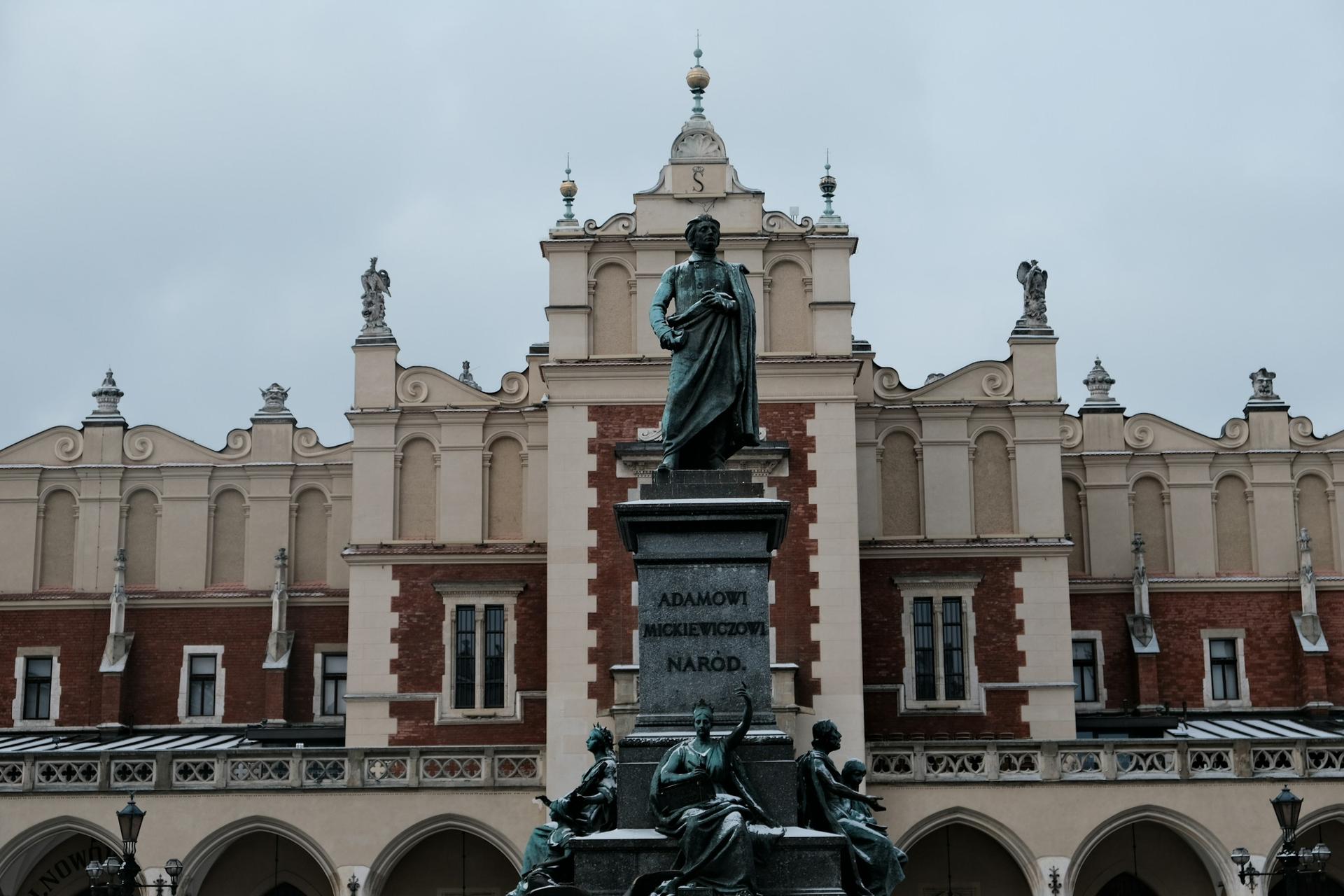
Cloth Hall: A Museum for a Missing Country
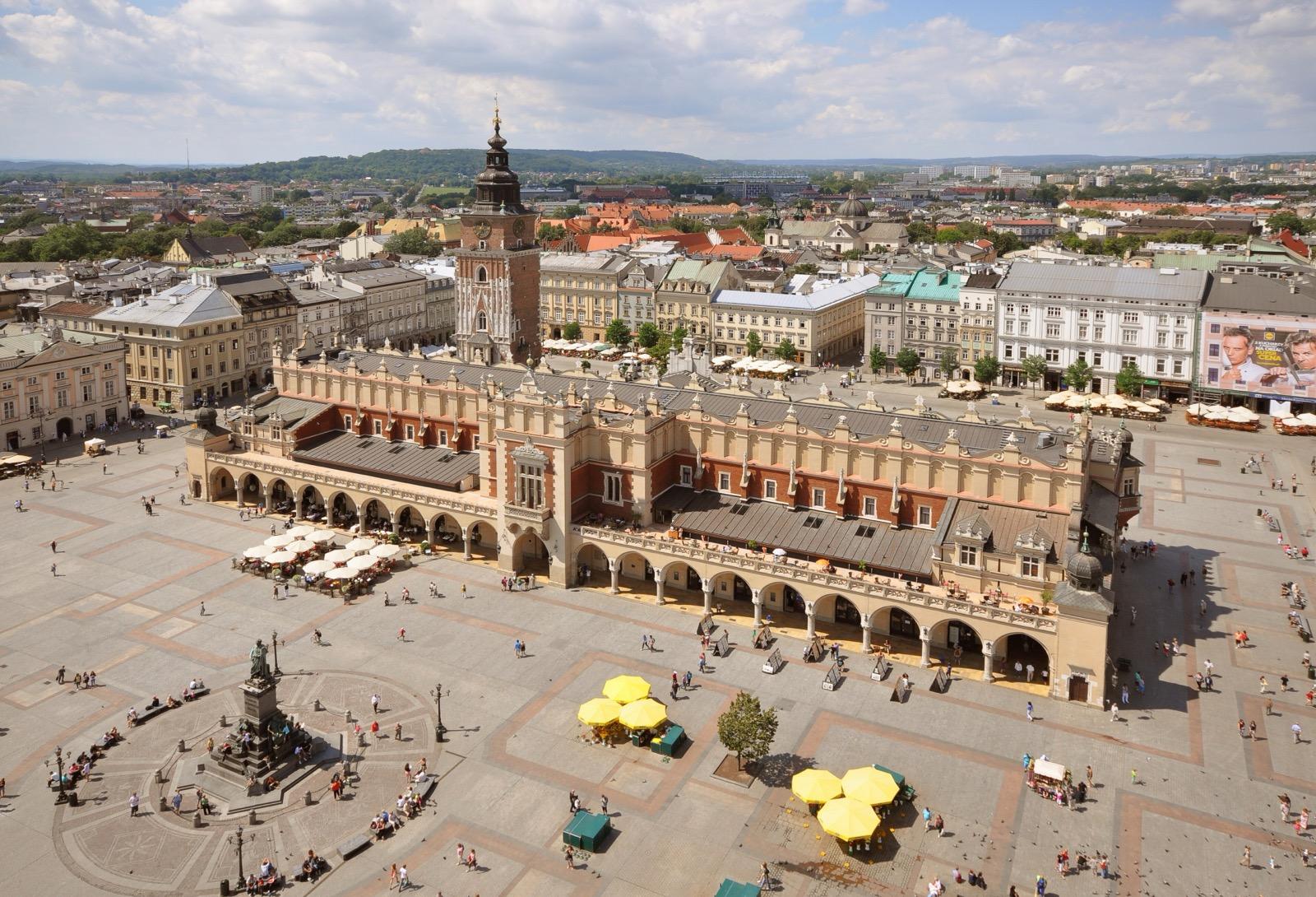
A market hall restored in the 1870s as a national shrine. It was a museum for a nation without a state, with the poet Mickiewicz and a church older than the square beside it.
- 6
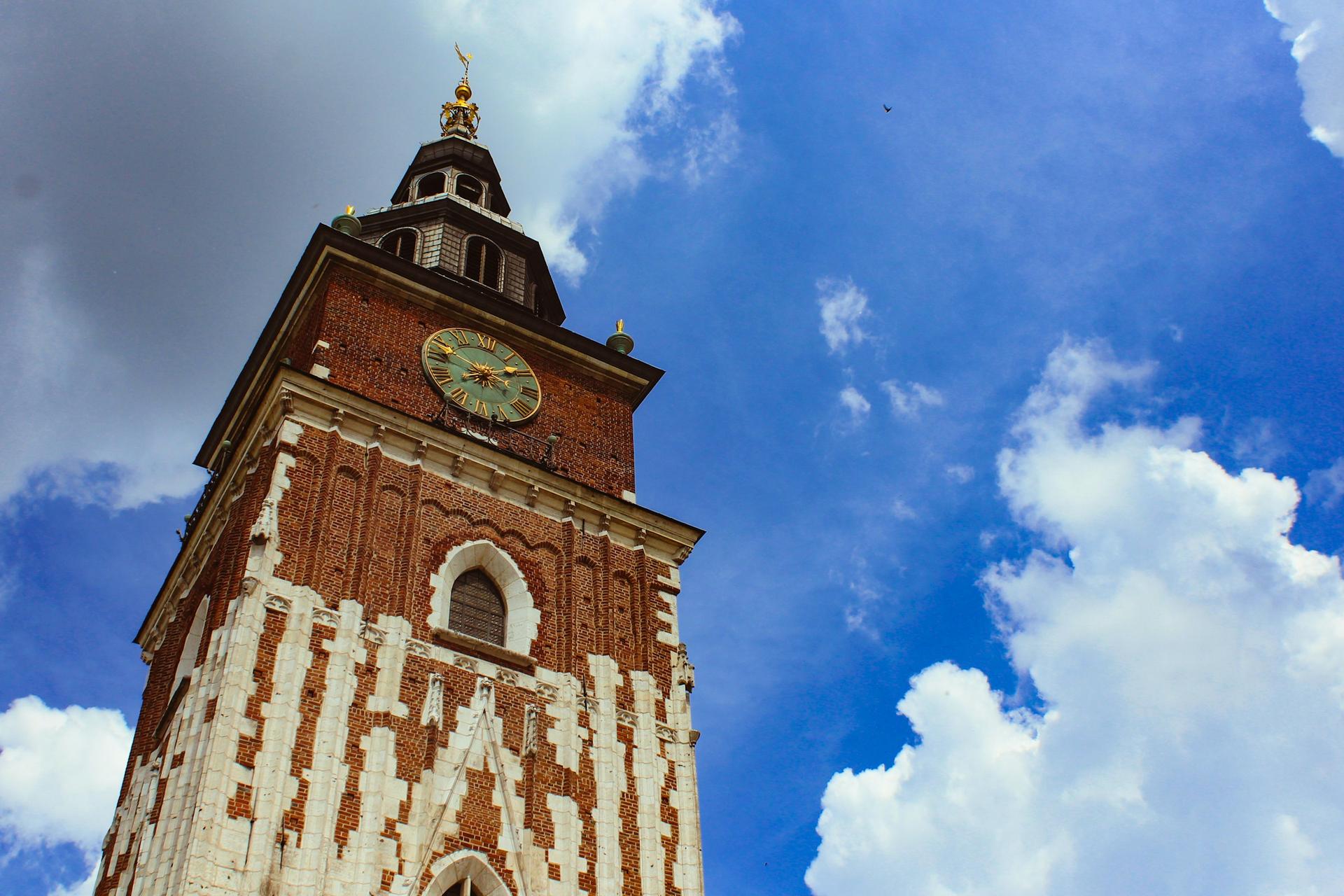
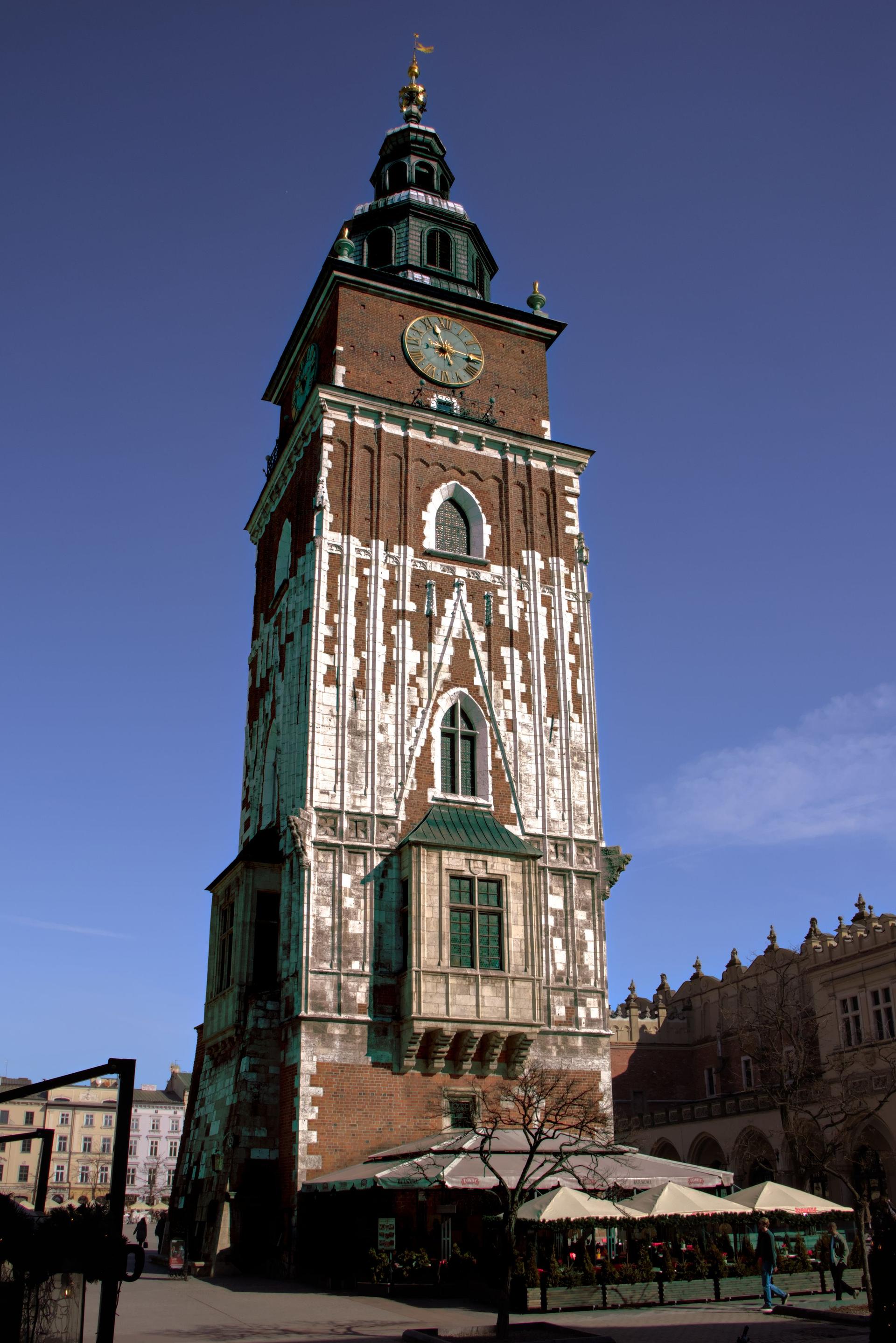
Town Hall Tower: The Building That Isn't There
The last part of Krakow's town hall still standing above ground, which the free city pulled down itself in 1820. Kosciuszko's oath and the Prussian Homage are marked in the paving nearby.
- 7
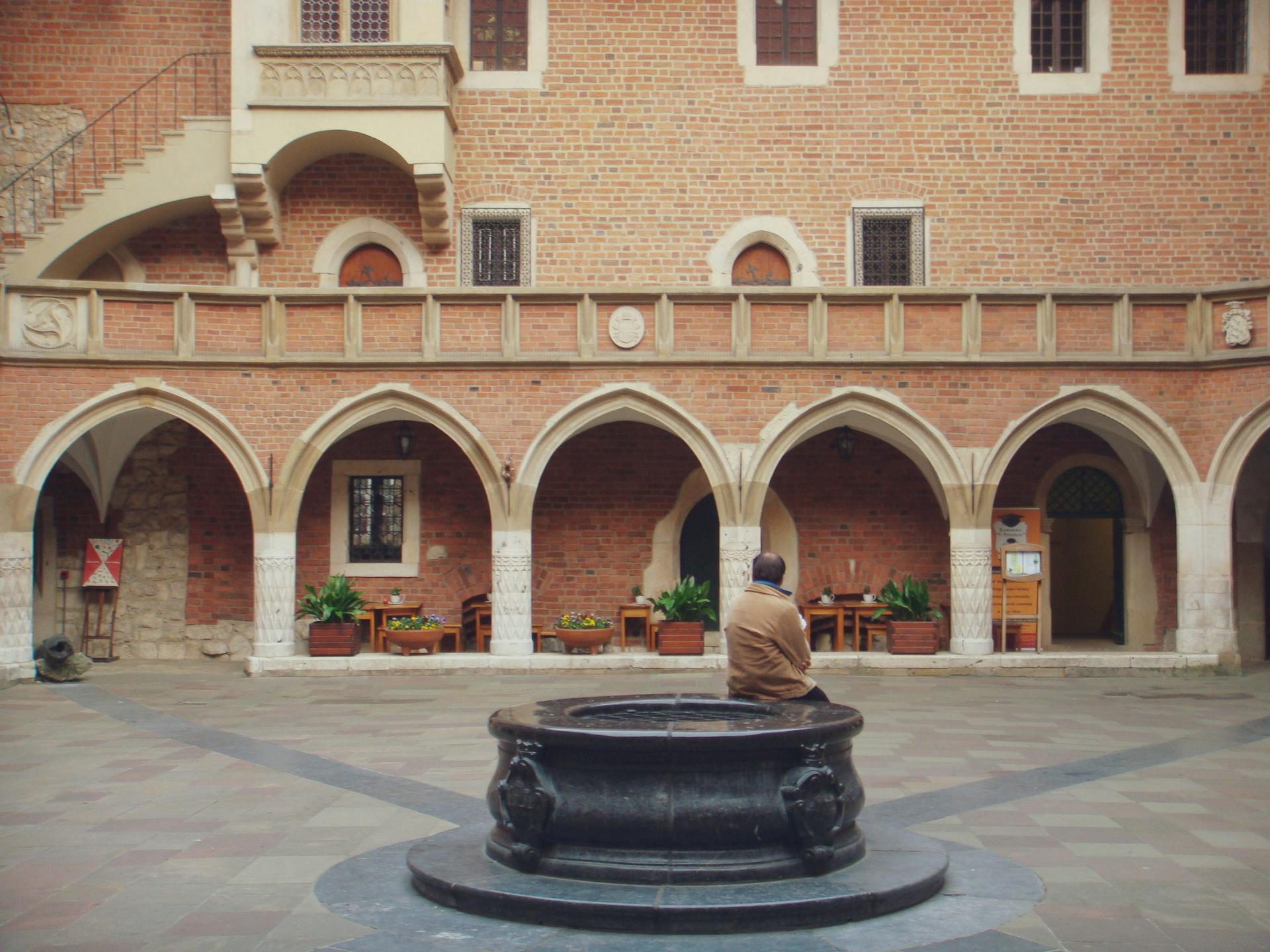
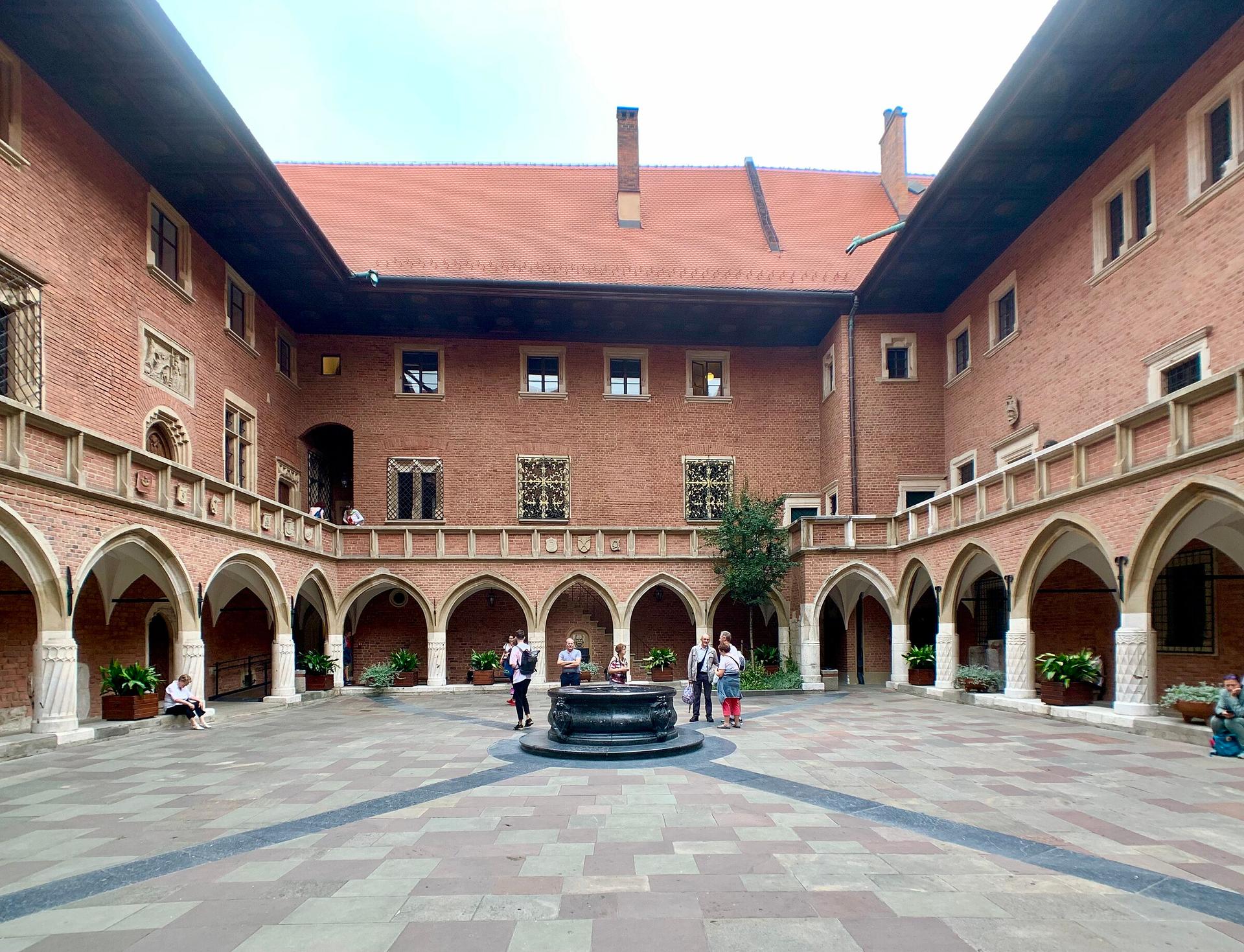
Collegium Maius: Gothic Twice Over
The oldest building of the Jagiellonian University, where Copernicus enrolled in 1491. Its medieval look was stripped away and brought back.
- 8
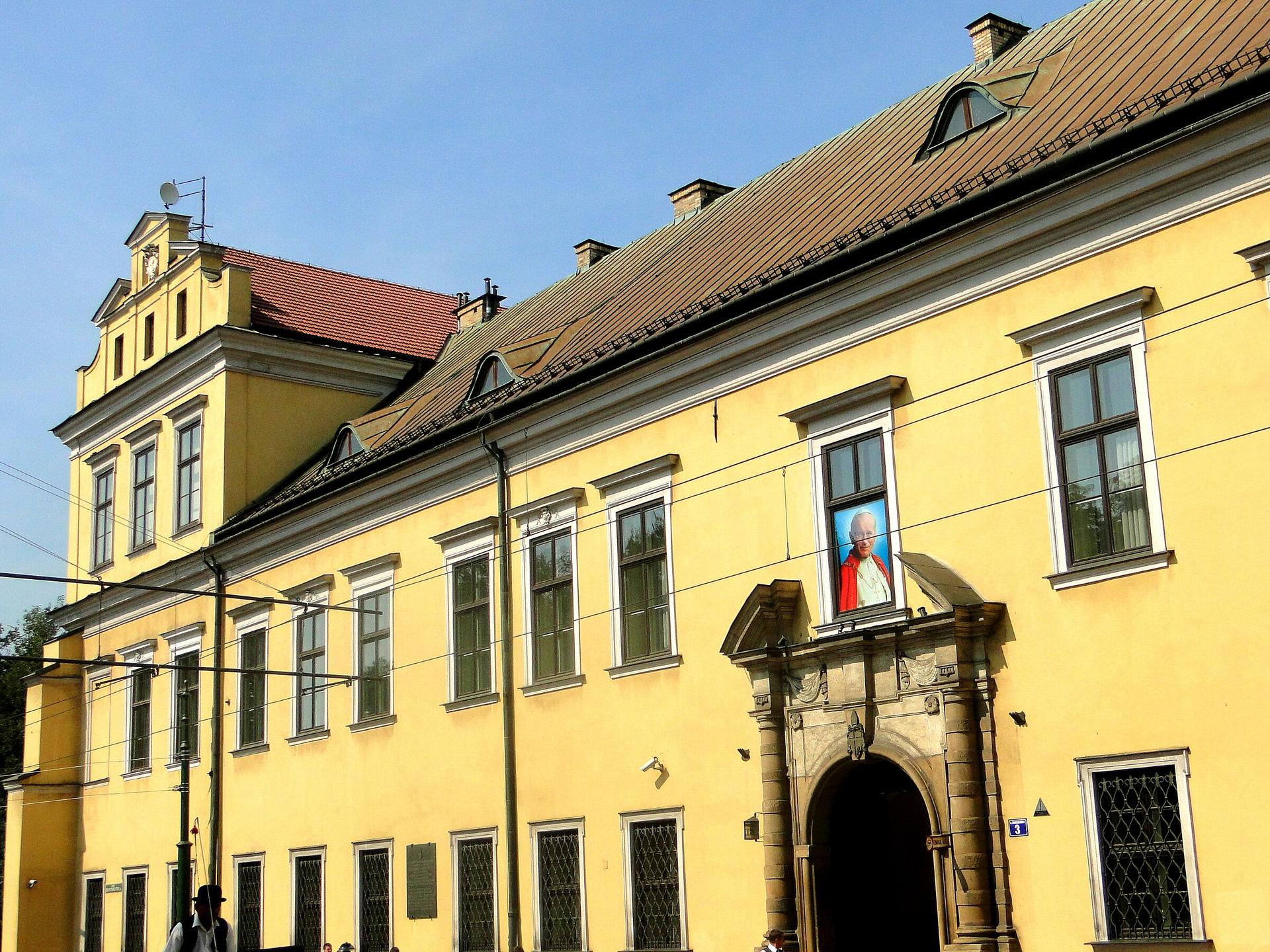
Papal Window: Where a Pope Said Goodbye
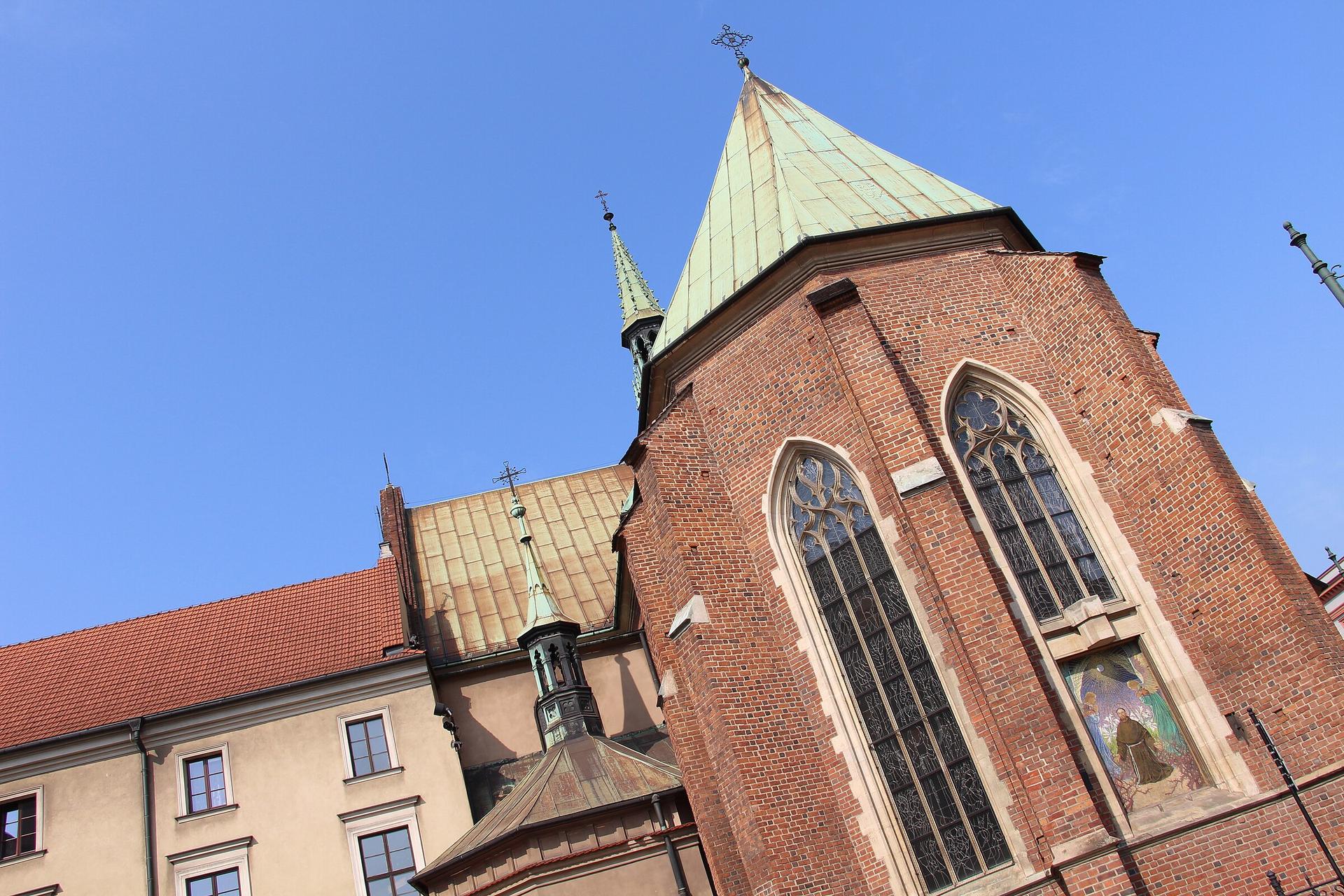
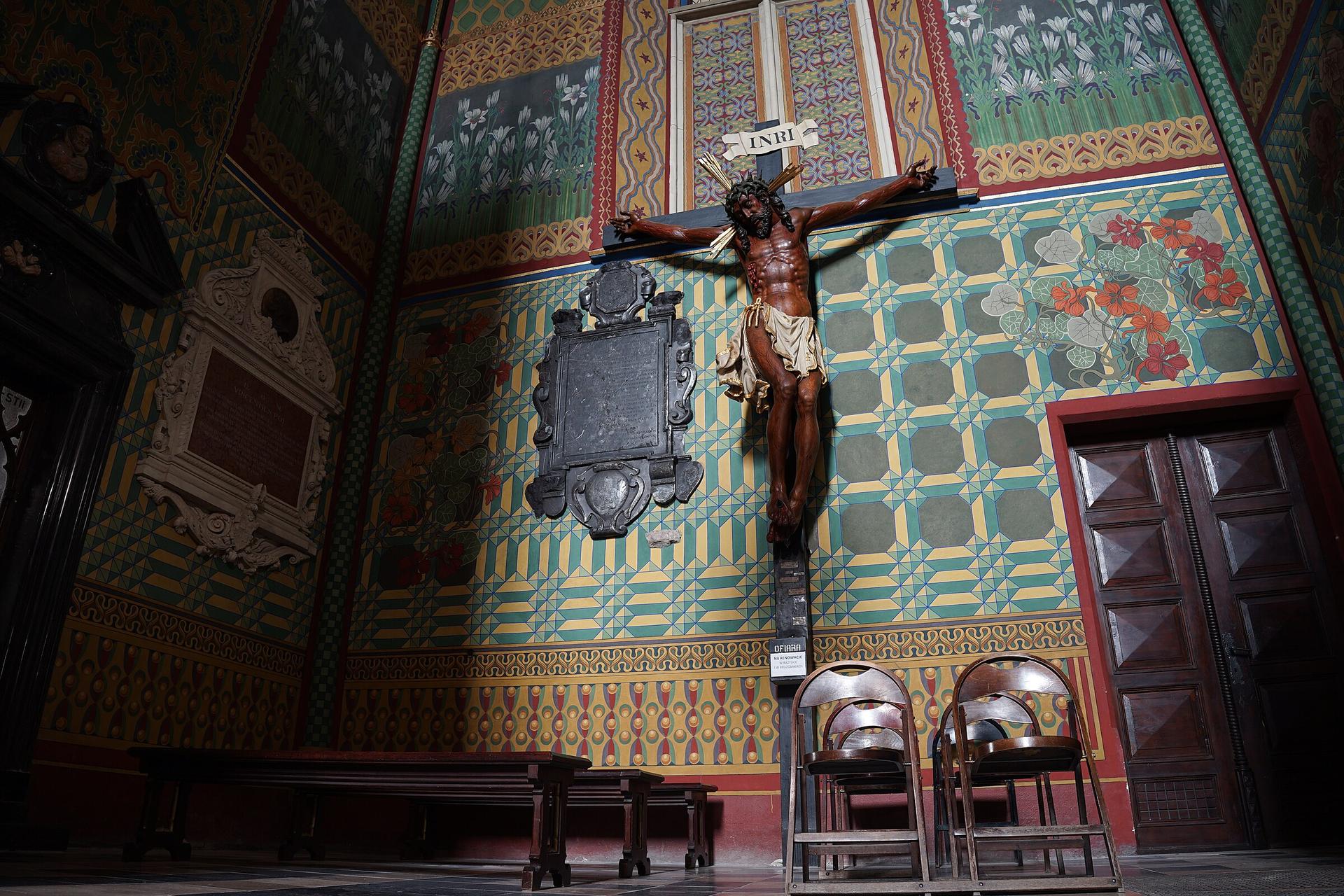
A window where John Paul II talked with crowds from 1979 to 2002. Opposite is the Franciscan church that Wyspianski filled with colour after the great fire.
- 9
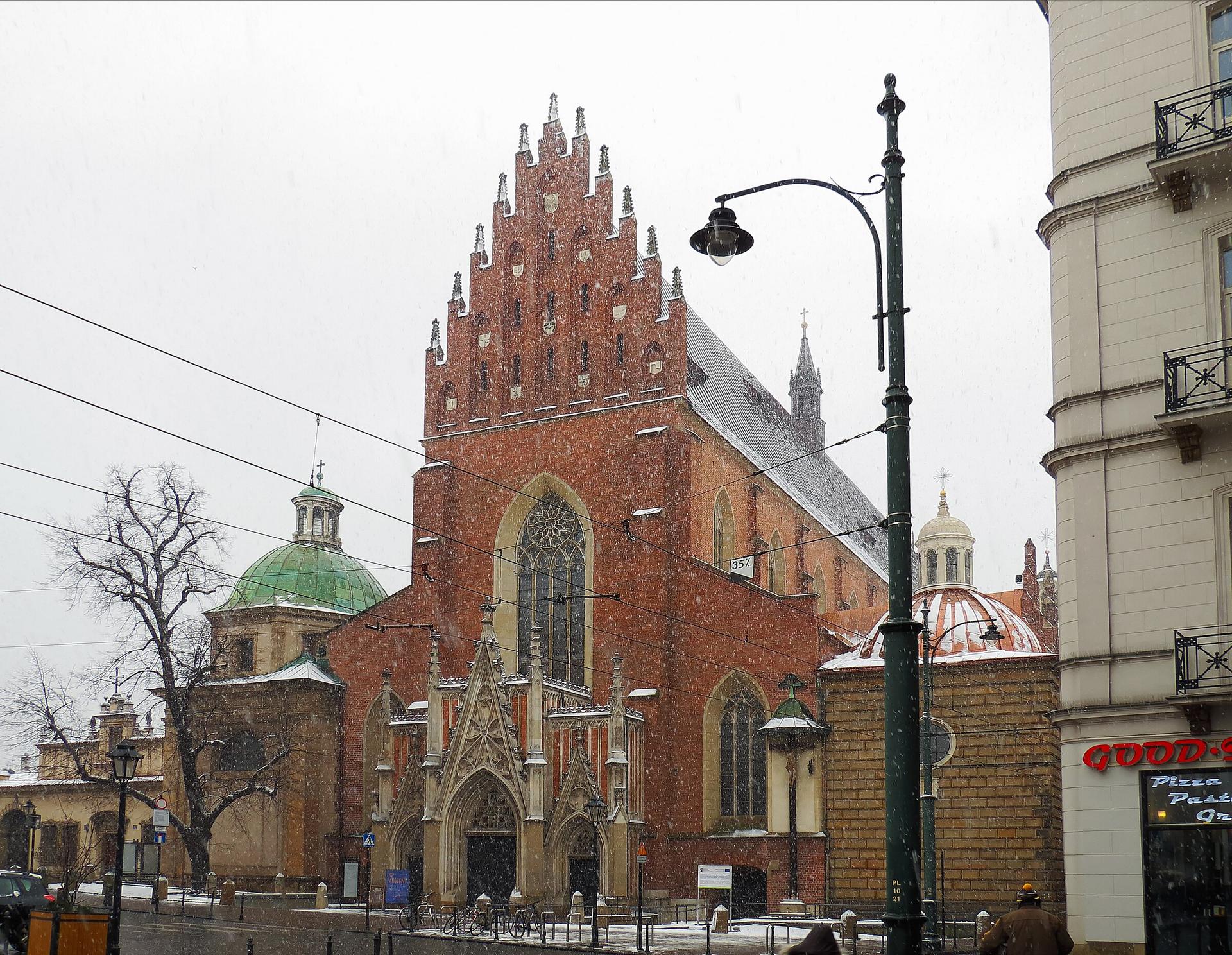
Dominican Basilica: After the Great Fire
A Gothic church of the Dominicans, gutted in the fire of 1850. Its Gothic-looking porch is from 1875 and hides a real medieval doorway.
- 10
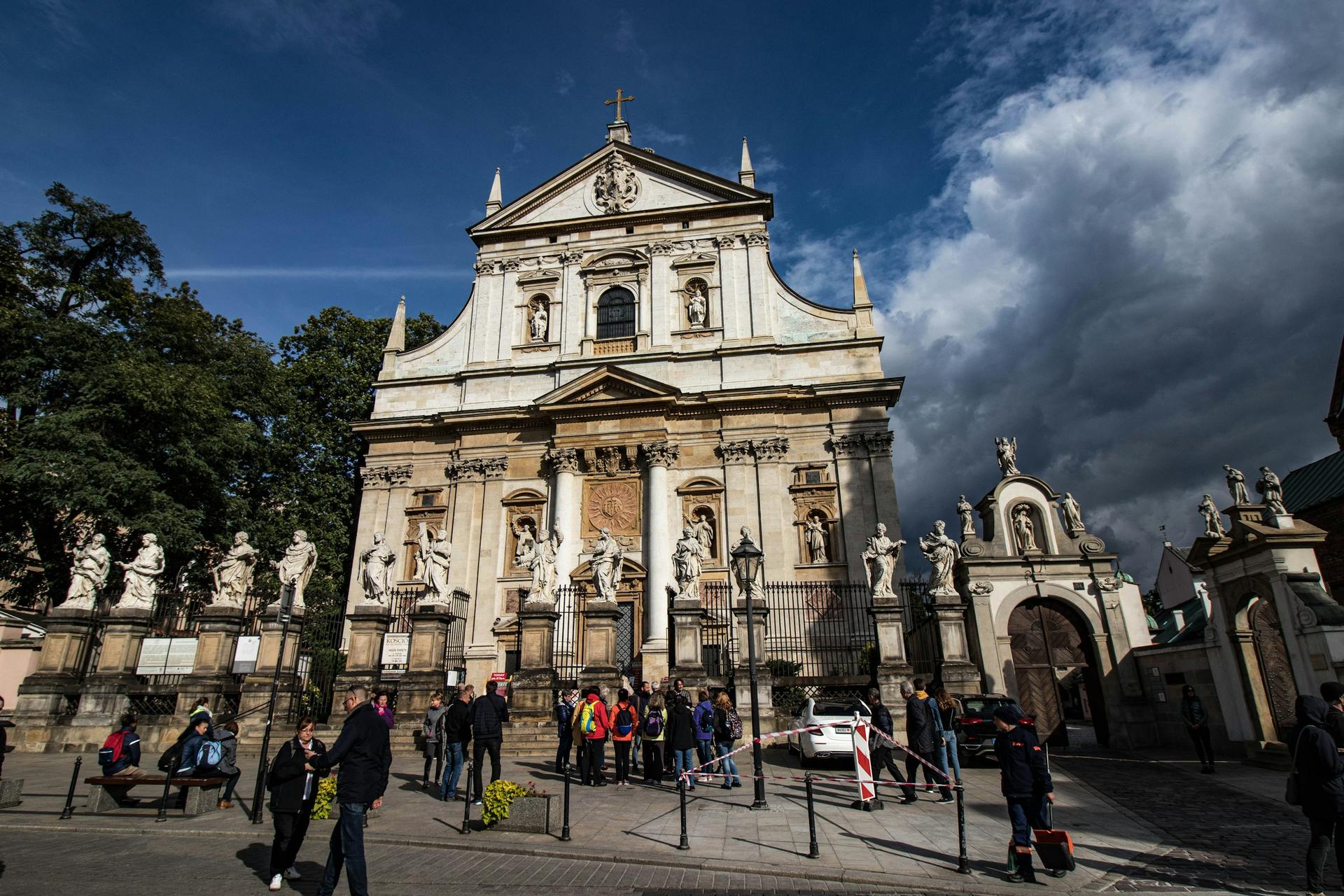
Grodzka Street: The Last Leg to the Castle
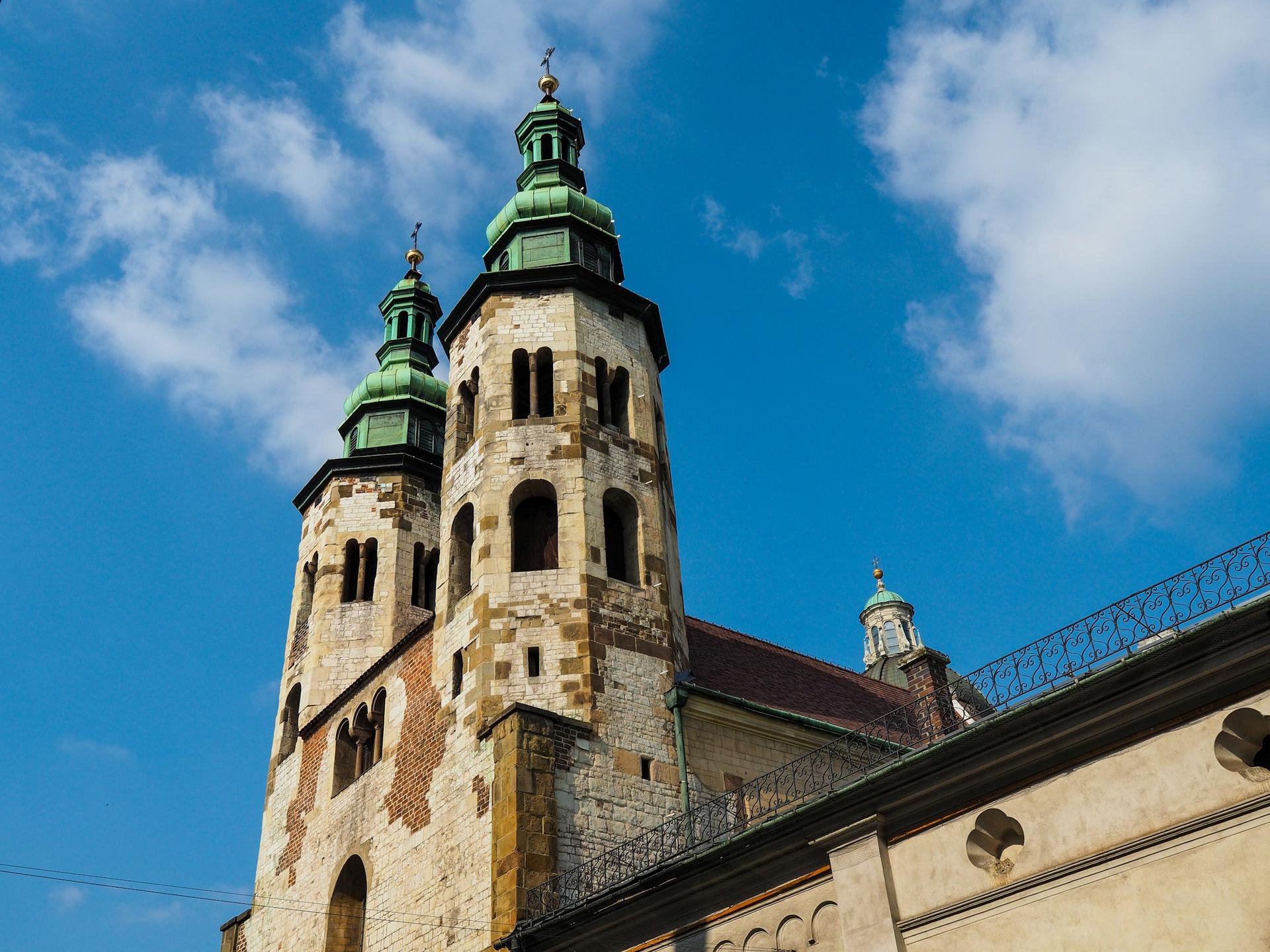
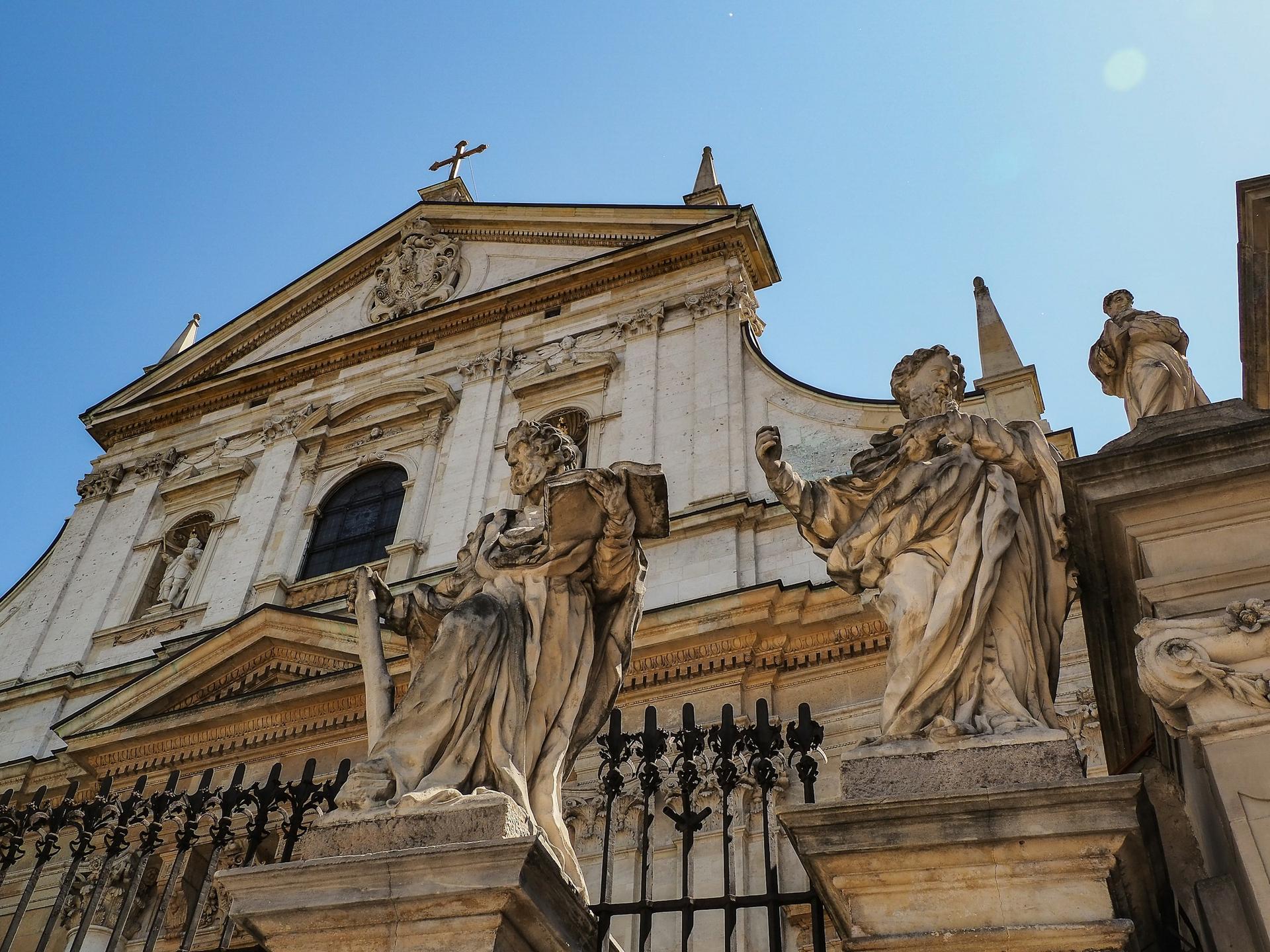
Two churches on the last leg of the Royal Route. The Jesuits' Saints Peter and Paul and the Romanesque stone church of St Andrew, on the way to Wawel Hill.
Details
Best Time to Visit
Weekday mornings before ten and the hour before dusk are the calmest in the Main Market Square, and the brick of St Mary's and the Cloth Hall glows in low sun. The hejnal sounds from the taller tower every hour, so you can time stop four to catch it. Summer is busiest; spring and autumn are gentler; the square under snow is magical, though museum hours shorten. The whole route is outdoors and free, so it works at any hour of daylight.
Pro Tips
- •Checked 23 September 2026: on days the Barbican is open (Tuesday to Sunday, 10 May to 30 October), the St Mary's trumpeter walks up Florianska after the 10:00 hejnal and the Barbican's gate is ceremonially opened at 10:20. Start at the Barbican at 10:15 to catch it.
- •Checked 23 September 2026: St Mary's asks tourists to use the SOUTH side entrance with a ticket bought at Plac Mariacki 7 (20 PLN), Monday to Saturday 11:30 to 18:00 and Sunday 14:00 to 18:00. The altarpiece opens at 11:50 Monday to Saturday. The main west door is for prayer.
- •Checked 23 September 2026: the Collegium Maius courtyard is free, daily 9:00 to 18:00, and the clock's procession plays at 9, 11, 13, 15 and 17. The museum inside is free on Wednesdays.
- •Checked 23 September 2026: many museums on the route are free one day a week. Matejko House and the Cloth Hall gallery on Tuesdays, the Town Hall Tower on Mondays (open 8 March to 30 November).
- •The Foucault pendulum at Saints Peter and Paul swings on Thursdays at 10:00, 11:00 and 12:00 (checked 23 September 2026).
- •The Franciscan basilica is open for sightseeing Monday to Saturday, 10:00 to 16:00 (checked 23 September 2026). Wyspianski's God the Father window glows best in the afternoon.
- •You set the pace. Every stop is skippable, and nobody is waiting for you: sit in the square with a coffee, go into a church, or move straight on.
- •Wawel Hill is a few minutes past the last stop. Our Wawel tour starts there, and Kazimierz, the old Jewish quarter, is a short walk further south.
Safety & Precautions
- •The Old Town is paved in old stone setts that are uneven and slippery after rain. Wear shoes with grip.
- •The route crosses tram tracks once, where Grodzka meets All Saints' Square on the way to the last stop; the crossing has no lights or markings, so look both ways for trams. Visiting the Franciscan basilica means crossing the tracks on Franciszkanska: use the zebra crossing at Bracka Street.
- •Florianska and the Main Market Square are crowded in high season; keep phones and bags zipped and in front of you.
- •From 17 August 2026 to the end of 2027 part of the Barbican is under scaffolding for roof and turret repairs; the route past it stays open.
- •St Mary's, the Franciscan and Dominican churches and Saints Peter and Paul are working churches. Dress respectfully, keep quiet inside, and do not wander during Mass.
- •Checked 23 September 2026: the parish of Saints Peter and Paul reports works on its fence and walls, so the apostle statues at the last stop may be partly screened.
Travel advisory: Exercise Normal Precautions (Level 1).
Gallery
Related Reading
Go deeper on what you'll see, hear, and walk through.
Overview
Best Self-Guided Walking Tours in Krakow (2026)
4 min
Overview
Krakow Travel Guide: Days, Transport, Timing, and Safety
6 min
Overview
One Day in Krakow: A Walkable Morning-to-Evening Itinerary
9 min
Thematic
Best History Walking Tours in Krakow (2026)
2 min
Thematic
Krakow: The Great Square, the Coronation Hill, and the Quarter That Survived
8 min
Companion
Rynek Glowny: Why Krakow's Main Market Square Is the Whole Tour
8 min
Deep dive
St Mary's Basilica in Krakow: The Trumpet That Stops Mid-Note
7 min
Read
What to Eat in Krakow
7 min
Read the walk
The full story of Old Town: The Royal Road Krakow Chose to Keep | Krakow, in words. Prefer to listen? Play it narrated, from home or on location.
Introduction
This is the Old Town of Krakow, in southern Poland, walked the way the kings came in: down the Royal Route, from the fortress at the northern gate to the foot of Wawel Hill. Ten stops, just under two kilometres, about an hour and a half at an easy pace. It is tempting to call this a medieval city that simply survived. The truth is more interesting. Krakow came through the Second World War with its old centre standing, but a great deal of what stands was chosen. In the nineteenth century, with Poland divided among its neighbours, this city argued over which of its old walls to keep, demolished its own town hall and kept the tower, and then turned its market square into a shrine for a nation that had no state. When the German occupiers set about dismantling that shrine in 1940, they went for exactly those symbols. Along the way you will meet a senator who saved a gate with a weather forecast, a painter whose designs are on the gate, the market hall and the great church, and a pope who talked to crowds from a window. No group, no fixed start time, nobody waiting on you. Linger in the square, step into a church, skip whatever you like. When you arrive at the Barbican, the round brick fortress at the north edge of the Old Town, begin with stop one.
1. Barbican: The Fortress Before the Gate
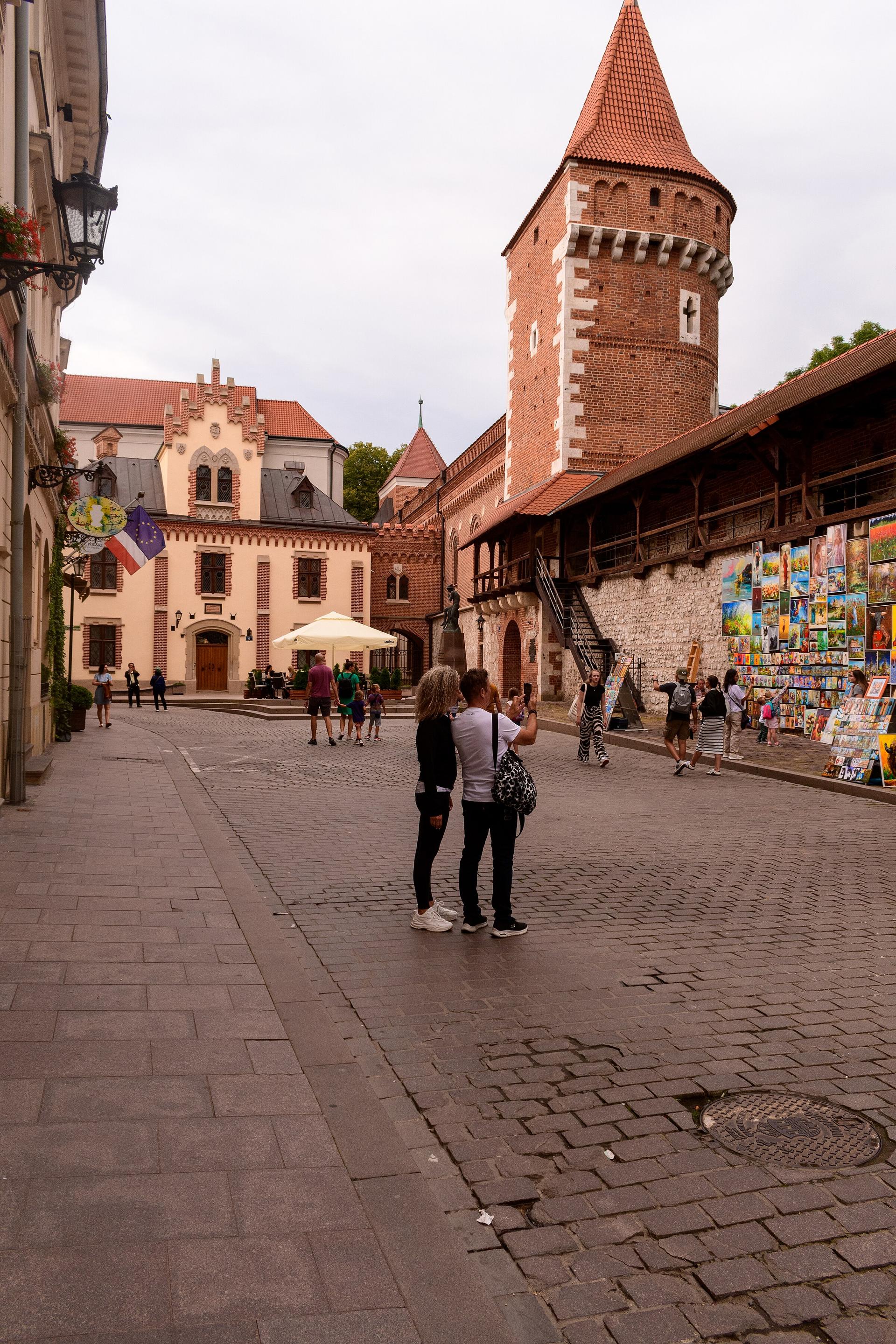
Welcome to Krakow. This first stop sits between two fortifications: the round brick Barbican in the park, and the tall gate tower on the old city wall. Start with the Barbican. It went up fast, in fourteen ninety-eight and fourteen ninety-nine, when raids by Wallachians, Tatars and Turks were reaching the edge of this part of Poland, and a city manuscript of the time records that King John Albert laid the first stone himself. It is not quite a full circle, about twenty-four metres across inside, with walls more than three metres thick in places. It carries a hundred and thirty gun loopholes in four staggered tiers. Along the top runs a gallery with holes in its floor, for dropping stones, or boiling oil, on anyone below, and seven small turrets crown it. A moat twenty-six metres wide once ran round the outside. If part of it is wrapped in scaffolding, that is the Museum of Krakow renewing the roof and all seven turrets, work begun in August twenty twenty-six and planned to run to the end of twenty twenty-seven. It did its job. In October fifteen eighty-seven a Habsburg archduke, Maximilian, came to take the Polish crown by force, and was turned back at these walls. A walled passage called the neck once joined the Barbican to the gate, about where you are now. Kings came in this way. The Royal Route, the road of coronations and royal funerals, started at a church a few hundred metres north of here and ran through this fortress, and you will follow it all the way to the castle. Before you go, look at the face of the gate turned toward the Barbican, and the carved eagle high on it. That eagle is not medieval. Remember it: you will meet the man who designed it in two stops. Now walk through the gate. Stop just inside it, before the street narrows between the houses, where you can see the wall running off on both sides, and turn round to face the gate.
2. St Florian's Gate: Saved by a Winter Wind
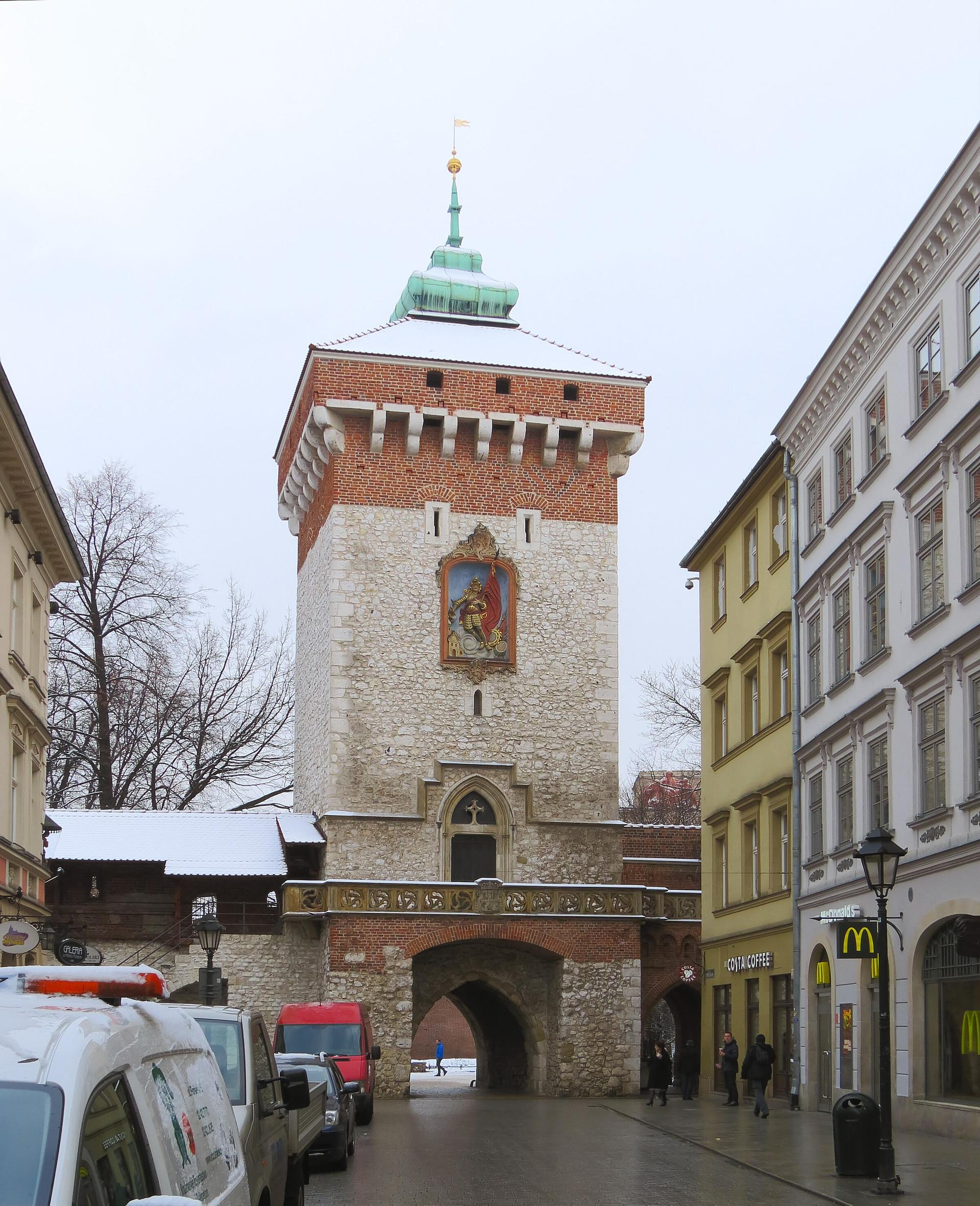
If you have not already, turn round and face the gate from the city side. This is Saint Florian's Gate, first mentioned in thirteen-oh-seven. A brick storey was added at the end of the fourteen hundreds, and today it stands thirty-four metres high. On this face is a Baroque relief of Saint Florian, the patron saint against fire. The balcony above it belongs to a chapel inside the tower, and was added in eighteen forty. In the vaulted passage you just walked through is a small altar of Our Lady, moved in from the demolished neck in eighteen thirty-five. Now look along the wall on either side. About two hundred metres of it survive, with three towers, and that is almost all that is left of a ring of walls that once had eight gates. In eighteen-oh-six the Austrian emperor ordered them down, and the demolition began in eighteen ten. Then, in January eighteen seventeen, the Senate of what was by then the Free City of Krakow took up a motion to pull down this stretch too: the Barbican, this gate and its towers. The stone was wanted for bridges. One senator objected in writing: Feliks Radwanski, an architect and a professor at the university. According to a historian who quotes his memorandum, he began with history. This was the gate where kings returning from war were welcomed home. Then, apparently unsure that would be enough, he tried the weather. Take away the wall, he warned, and the north wind would drive blizzards straight down the street into the market square, and the city's women and children would suffer catarrh, rheumatism and worse. The Senate dropped the plan. The argument had to be made again in eighteen twenty-seven, and the walls were threatened once more in eighteen seventy-four. Where the rest of the walls had stood, the city laid out a ring of gardens in the eighteen twenties, the Planty. You will walk a stretch of it later. Now turn back toward the city and follow the street, Florianska. After about a hundred metres, stop by the house at number forty-one, on your left.
3. Florianska Street: The Painter's House
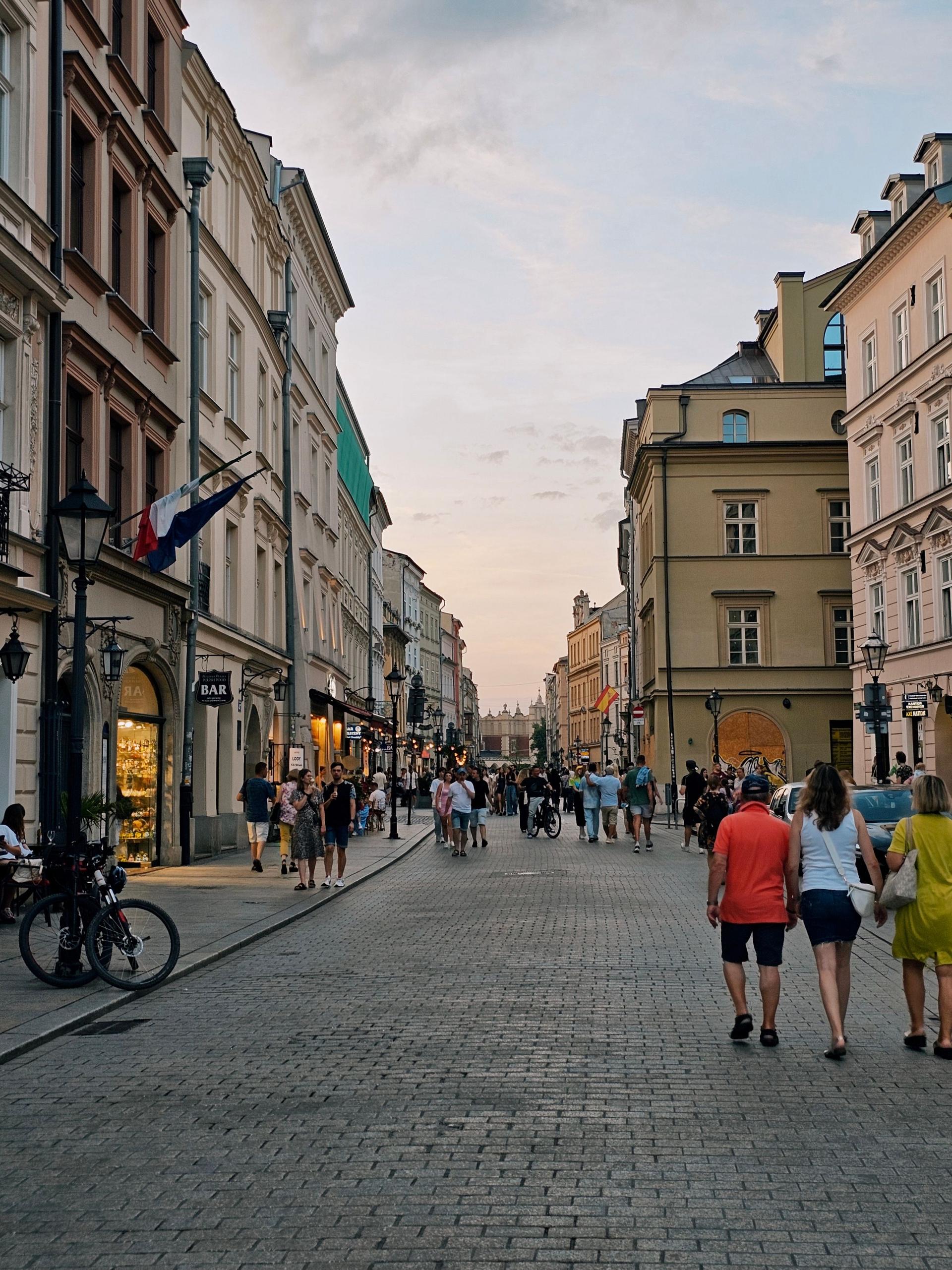
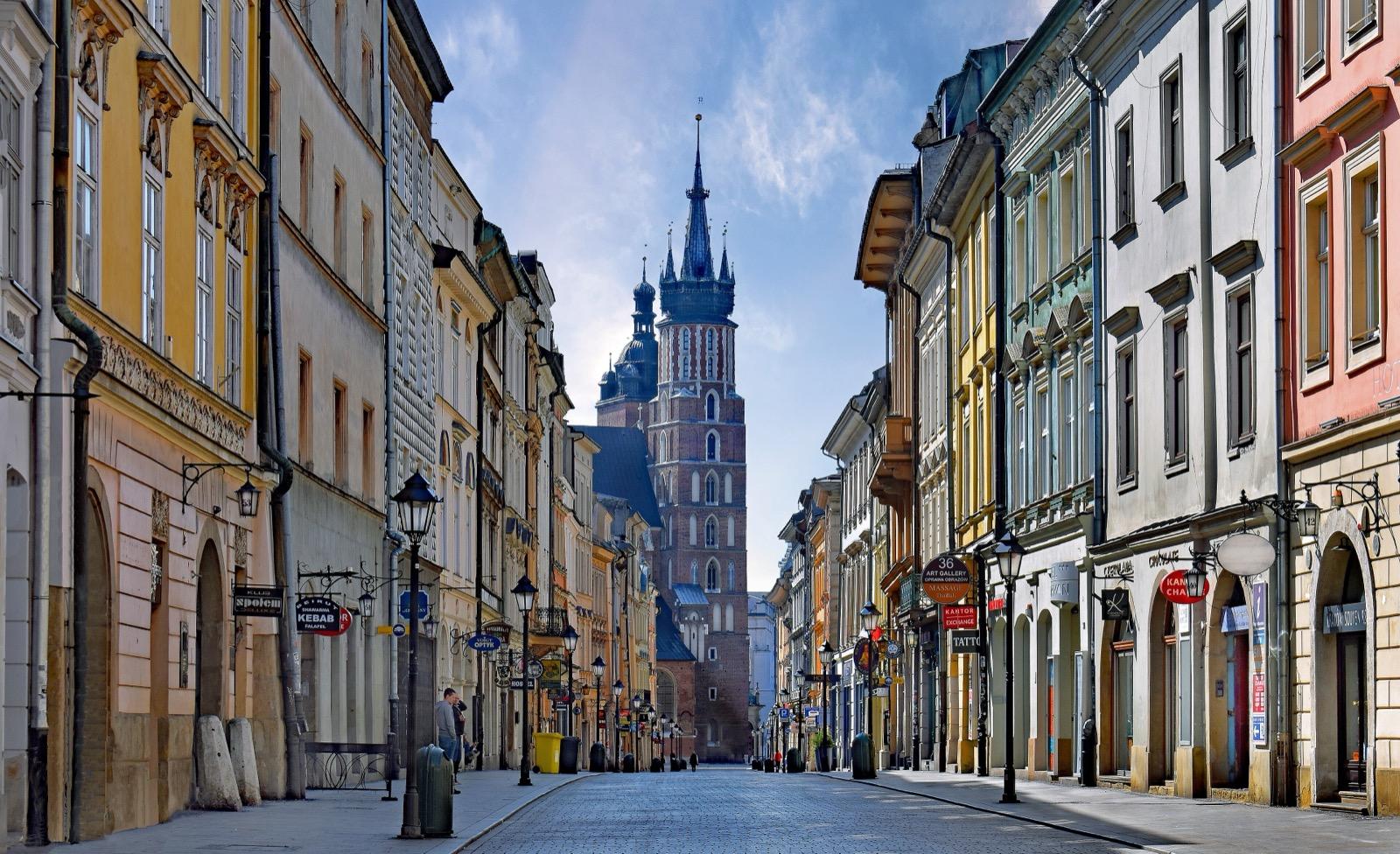
The house on your left, number forty-one, with a top floor that looks a little newer than the rest, belongs to the story of almost everything you have seen so far. This is the house of Jan Matejko, the painter. He was born here in eighteen thirty-eight, came back to it, rebuilt it in the eighteen seventies with a studio on the top floor, and died here in November eighteen ninety-three. It opened as a museum in eighteen ninety-six. Matejko painted Polish history on enormous canvases, battles and kings and treaties, for a country that had been divided among Russia, Prussia and Austria before he was born. That eagle on the outer face of the gate? He designed it, in eighteen eighty-two. In the same year he gave his huge canvas The Prussian Homage to the nation, and the city made him an honorary citizen. In a few minutes you will stand near the plaque that marks where that homage took place. You are walking the Royal Route. Kings rode down this street to be crowned in Wawel Cathedral, and from thirteen twenty to seventeen thirty-four every Polish king but one was crowned there. That is the strange part. The royal court drifted away to Warsaw around sixteen hundred, yet the ceremonies kept coming back here for more than a century. In January seventeen thirty-four the new king, Augustus the Third, rode in to be crowned. The next day, the coffin of King John the Third Sobieski, the victor of Vienna, came down this route from the church beyond the Barbican to Wawel. He had died thirty-seven years earlier. A few doors back on this side, at number forty-five, a cake shop opened in eighteen ninety-five and became a famous artists' café, the Den, where a cabaret called the Green Balloon played from nineteen-oh-five. Now carry on down Florianska. The street ends at the corner of the Main Market Square, beside a church with two unequal brick towers. Walk out into the square, about forty metres, to the flower stalls, then turn round to face the towers.
4. St Mary's Basilica: The Call That Breaks Off
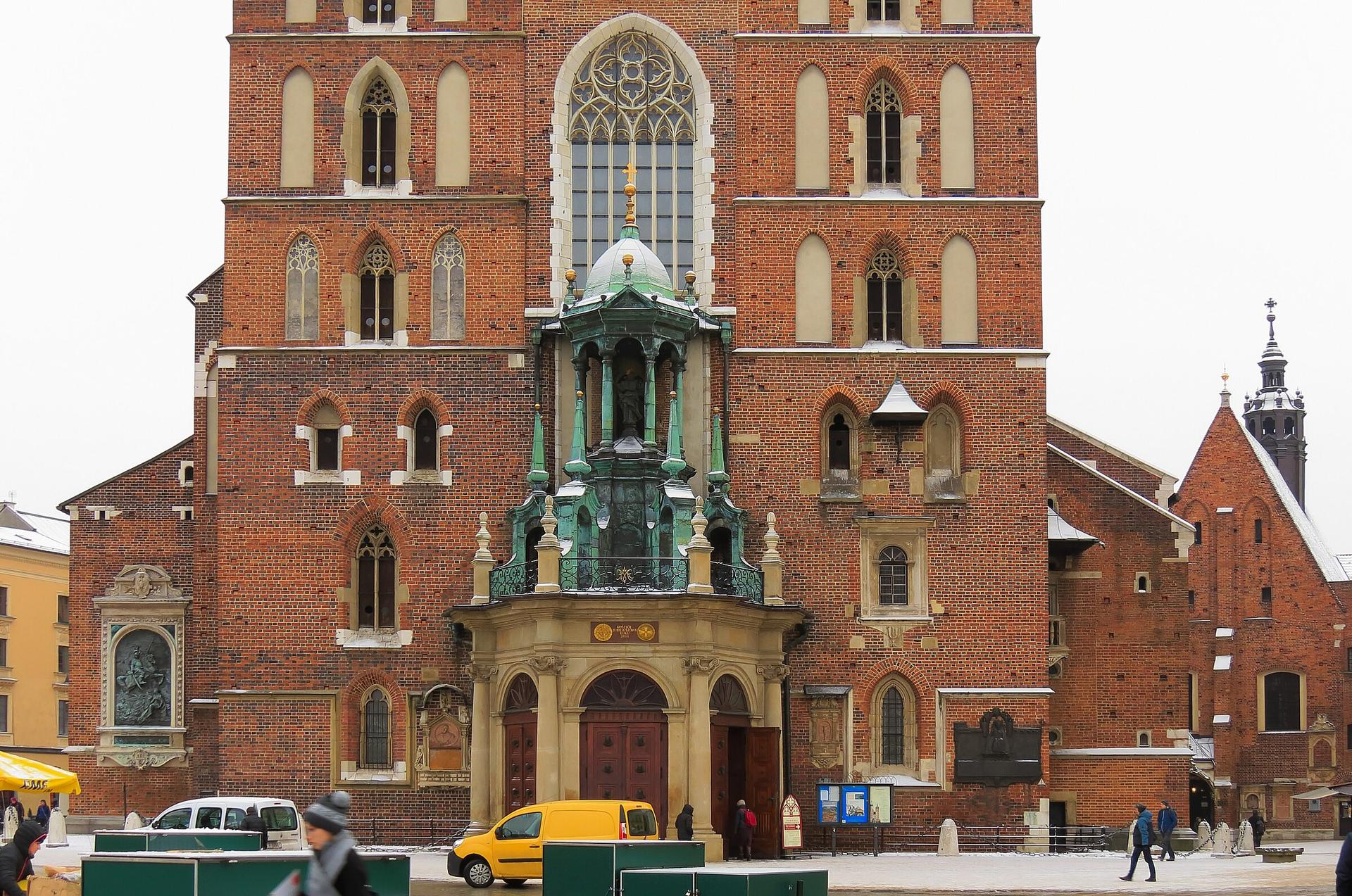
If you have not already, turn to face the church with the two brick towers. This is Saint Mary's Basilica. The church you see was begun in the late twelve hundreds and consecrated around thirteen twenty. The two towers do not match. The taller one, on your left, is eighty-two…
Full narration for this stop unlocks with the tour.
5. Cloth Hall: A Museum for a Missing Country
You are beside the Cloth Hall, the long market building that has filled the middle of the square in one form or another since the town charter of twelve fifty-seven allowed a cloth trade here. King Casimir the Great paid for a masonry hall in thirteen fifty-eight. It burned in…
Full narration for this stop unlocks with the tour.
6. Town Hall Tower: The Building That Isn't There
You are standing beside a building that is no longer here. Krakow's town hall, first mentioned in thirteen sixteen, stood between this tower and the Cloth Hall, running alongside the hall, and this tower was its tower. The tower is recorded from the late thirteen hundreds and…
Full narration for this stop unlocks with the tour.
7. Collegium Maius: Gothic Twice Over
The long brick building on your right is the Collegium Maius, the oldest surviving building of Krakow's university. King Casimir the Great founded the university in thirteen sixty-four, and it faded after his death. In fourteen hundred King Jagiello refounded it, paid for with…
Full narration for this stop unlocks with the tour.
8. Papal Window: Where a Pope Said Goodbye
On your left, on the palace's first floor, is a window with a portrait in it, often with flowers. This is the palace of the bishops of Krakow, and the portrait is of Pope John Paul the Second. As Karol Wojtyla he lived here as Archbishop of Krakow, until he left for the conclave…
Full narration for this stop unlocks with the tour.
9. Dominican Basilica: After the Great Fire
The brick church ahead is the Dominican basilica of the Holy Trinity. The Dominicans came to Krakow in the early twelve twenties, in twelve twenty-two by their own account, brought from Bologna by the bishop of Krakow, and one of their first friars here, Hyacinth, became a…
Full narration for this stop unlocks with the tour.
10. Grodzka Street: The Last Leg to the Castle
On your left, set back behind a fence lined with statues of the twelve apostles, is the church of Saints Peter and Paul. The statues you see are copies. The church was built between fifteen ninety-seven and sixteen nineteen for the Jesuits, founded by King Sigismund the Third:…
Full narration for this stop unlocks with the tour.
- St Mary's through an arch with lantern, blue hour, Christmas tree — Jeffrey Zhang, Unsplash License · source
- Barbican front — Andrey Volk, Unsplash License · source
- Barbican in snow, from the city side? — Аимаина хикари, CC0 · source
- St Florian relief on the gate — Аимаина хикари, CC0 · source
- Pijarska wall and towers — Simon Cobb, CC0 · source
- St Florian's Gate, inner (Floriańska) side — Аимаина хикари, CC0 · source
- Jan Matejko House, Floriańska 41, full facade — Maatex, CC BY-SA 3.0 pl · source
- Floriańska street, evening — zeydeey, Pexels License · source
- St Mary's two unequal towers — Caio, Pexels License · source
- St Mary's west porch — Аимаина хикари, CC0 · source
- St Mary's interior vault — Amanda Collins, Pexels License · source
- Cloth Hall + St Adalbert's — Dawid Zawiła, Pexels License · source
- Mickiewicz monument before Cloth Hall — Noemi Palmieri, Unsplash License · source
- Town Hall Tower low angle — Severinus Dewantara, Unsplash License · source
- Town Hall Tower — Piotr Kalinowski, Pexels License · source
- Collegium Maius courtyard — Mateus Campos Felipe, Unsplash License · source
- Collegium Maius courtyard — Chris Olszewski, CC BY-SA 4.0 · source
- Bishops' Palace, Franciszkańska 3, window above portal — Mateusz Giełczyński, CC BY-SA 3.0 pl · source
- Franciscan Basilica exterior — Fred Romero from Paris, France, CC BY 2.0 · source
- Franciscan interior, Wyspiański wall painting — Strumyczek, CC BY-SA 4.0 · source
- Dominican Basilica facade — Аимаина хикари, CC0 · source
- Sts Peter and Paul facade + apostles — Tamara Bitter, Unsplash License · source
- St Andrew's towers — Michał Lis, Unsplash License · source
- Apostle statues — Lidia Stawinska, Unsplash License · source
Images may be cropped or resized. Other photos via Unsplash and Pexels.