In Kazimierz, the old Jewish quarter of Krakow, a single wall built from broken headstones holds the whole argument of this walk: a community was destroyed, and its stones were gathered up and kept. That wall stands beside the Remuh Synagogue and Cemetery, the third stop on a seven-stop, roughly ninety-minute route through the quarter, and it is the clearest place to understand why Kazimierz is a rare thing among Holocaust sites. Most of Europe's Jewish worlds were erased in both people and buildings. Here the people were murdered, but the synagogues and the cemetery survived the war almost intact. Walking Kazimierz means holding those two facts at once, and the Remuh is where they meet most plainly.
The scholar's grave, and why people still come to it
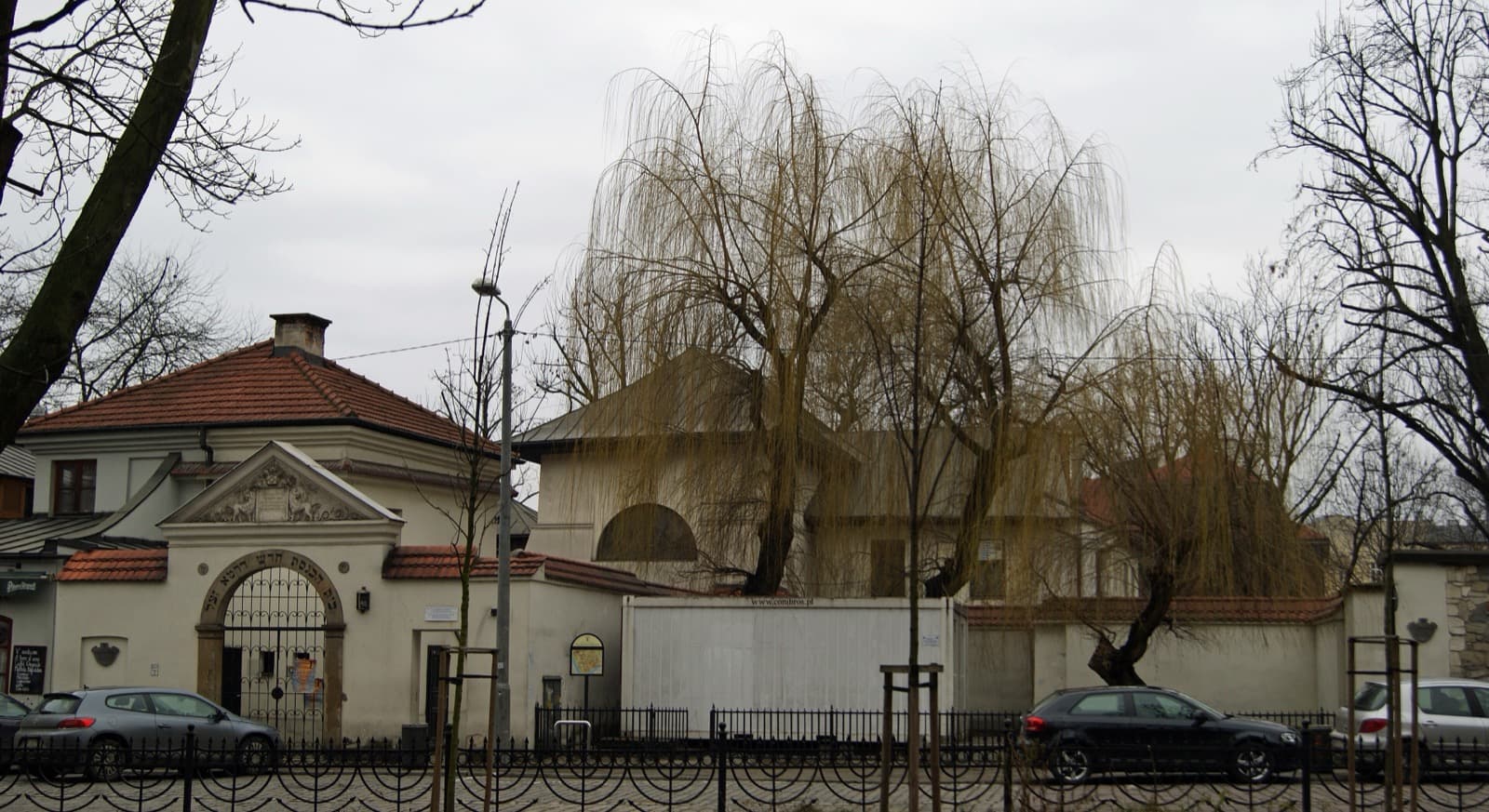
The Remuh Synagogue sits at the northern end of Szeroka Street, at number forty, small and, unlike the grand Old Synagogue at the street's south end, still active as a house of prayer. It was built around 1557 and named for Rabbi Moses Isserles, known by the Hebrew acronym the Remuh, one of the great Jewish legal scholars of the sixteenth century. Sources disagree on his exact birth year, citing dates from about 1520 to 1530, and he died in 1572. His additions to the Shulchan Aruch, a body of work called the Mappah, made that legal code authoritative for Ashkenazi Jews across the world. That is not local trivia. It means the halakhic decisions worked out by a rabbi buried in this small Krakow cemetery still shape how millions of people keep the law today.
His grave, in the adjoining Remuh Cemetery, remains a place of pilgrimage. People travel from far away to stand at the resting place of the Remuh. The cemetery around it was established in the years 1535 to 1551, making it one of the oldest Jewish cemeteries in Poland, with its first tombstones dating from 1552. If you have walked other old cemeteries in Europe, you will notice something different here almost immediately: the density and the age of the markers, and the sense that this ground was in continuous use for centuries before the catastrophe of the twentieth century reached it.
A wall built from grief
Hear a stop from this walk
Corpus Christi Basilica: The Tall Gothic Church of the Christian Half
The second half of the Remuh's story is what makes it the emotional center of the whole tour. In a 1959 excavation, hundreds of tombstones that had been buried under soil and debris were uncovered. Many of them were re-erected. But some had been broken, and the fragments that could not be made whole again were built into the interior of the cemetery wall. That surface, assembled from shattered headstones, is called the Wailing Wall.
Read it slowly and it does something no plaque can. It is a wall made of grief and endurance at the same time: the broken markers of the dead, pieced back into something that stands. It refuses the two easy stories. It is not a ruin, because it was rebuilt. It is not a restoration, because the breaks are still visible. It is the two truths of Kazimierz set into stone, side by side. This is why the tour treats the Remuh as sacred ground and asks you to move through it quietly, lingering only as long as feels right. There is no group here rushing you to the next thing. The point of walking Kazimierz at your own pace is that a place like this deserves silence, and you get to decide how much of it you need.
Reading the anchor as the key to the whole route
The Remuh is stop three, and the tour is built so that everything around it deepens what you feel here. The walk opens on Szeroka Street itself, so wide it reads as a long square, the market and communal heart of a Jewish town that Casimir the Great chartered on the twenty-seventh of March, 1335. At the street's south end stands the Old Synagogue, the oldest surviving synagogue building in Poland, ransacked during the German occupation, used as a warehouse, and now a branch of the Museum of Krakow keeping the community's memory. A short way west, the Isaac Synagogue rises as the largest in Kazimierz, a tall Baroque hall funded by the banker Isaac Jakubowicz and returned to the Jewish community in 1989.
Then the route deliberately turns toward life. Plac Nowy, the New Square, centers on a round brick market hall from 1900 that once served as a ritual poultry slaughterhouse for the Jewish community and now anchors the buzzing daily life of the quarter. Corpus Christi Basilica, the tall Gothic church founded by the same king in the same charter year of 1335, reminds you that Kazimierz was never only Jewish: it was a shared town where two communities lived side by side for centuries. The walk closes on Ulica Jozefa, emblematic of the revival that has filled these lanes since the 1990s, and from there it holds the memory of the ghetto the Germans established across the Vistula in Podgorze, and of the Auschwitz-Birkenau camp about sixty to seventy kilometres west.
That arc is why the Remuh matters as the anchor. The survived cemetery, the murdered community, and the returning life are all present at that one stop, and the six stops around it let you sit with each strand in turn. If you are deciding whether this walk is for you, the Remuh is the test: if standing at the Wailing Wall of broken headstones is something you want to do slowly, without a guide steering you, this is your tour.
Walking it well
A few practical notes flow from the nature of the place. The Remuh Cemetery and the active synagogues are places of worship and burial, so dress respectfully, keep your voice low, cover your head where asked, and do not treat them as photo backdrops. Carry a little cash in zloty, since several synagogues and the cemetery charge a small entry fee. Most synagogues in Poland close for the Jewish Sabbath, from Friday evening through Saturday, so plan interiors around that if a particular one matters to you. Late morning is a good time to begin, when the Old Synagogue museum is open and the light falls softly along Szeroka Street, and the cemetery is quieter and more contemplative earlier in the day.
For the broader context of the city and other routes through it, see our guide to Krakow walking tours and the Krakow city page. Kazimierz rewards slowness. Give yourself room to read the wall, sit in the square, and close the map whenever the quiet asks for it.
Sources
- Remah Synagogue, Wikipedia. Address at 40 Szeroka Street, 1557 founding, and connection to Rabbi Moses Isserles.
- Remah Cemetery, Wikipedia, and the Jewish Community of Krakow. Establishment in 1535 to 1551, first tombstones of 1552, the 1959 excavation, and the Wailing Wall built from broken headstones.
- Moses Isserles, Wikipedia. The disputed birth year (about 1520 to 1530), death in 1572, the Mappah, and his additions to the Shulchan Aruch that made it authoritative for Ashkenazi Jews.
- Old Synagogue, Museum of Krakow. Its role as a branch of the Museum of Krakow keeping the community's memory, anchoring the tour's opening stops.
- The Krakow (Cracow) Ghetto, USHMM Holocaust Encyclopedia, and the Auschwitz-Birkenau State Museum. The Podgorze ghetto and the scale of the murders at the camp west of Krakow, cited on the walk's closing stop.
Ready to experience it?
Kazimierz: The Jewish Quarter That Survived
90 min · 0.8 km · easy
More from Krakow
Explore more at your own pace.
Krakow Travel Guide: Days, Transport, Timing, and Safety
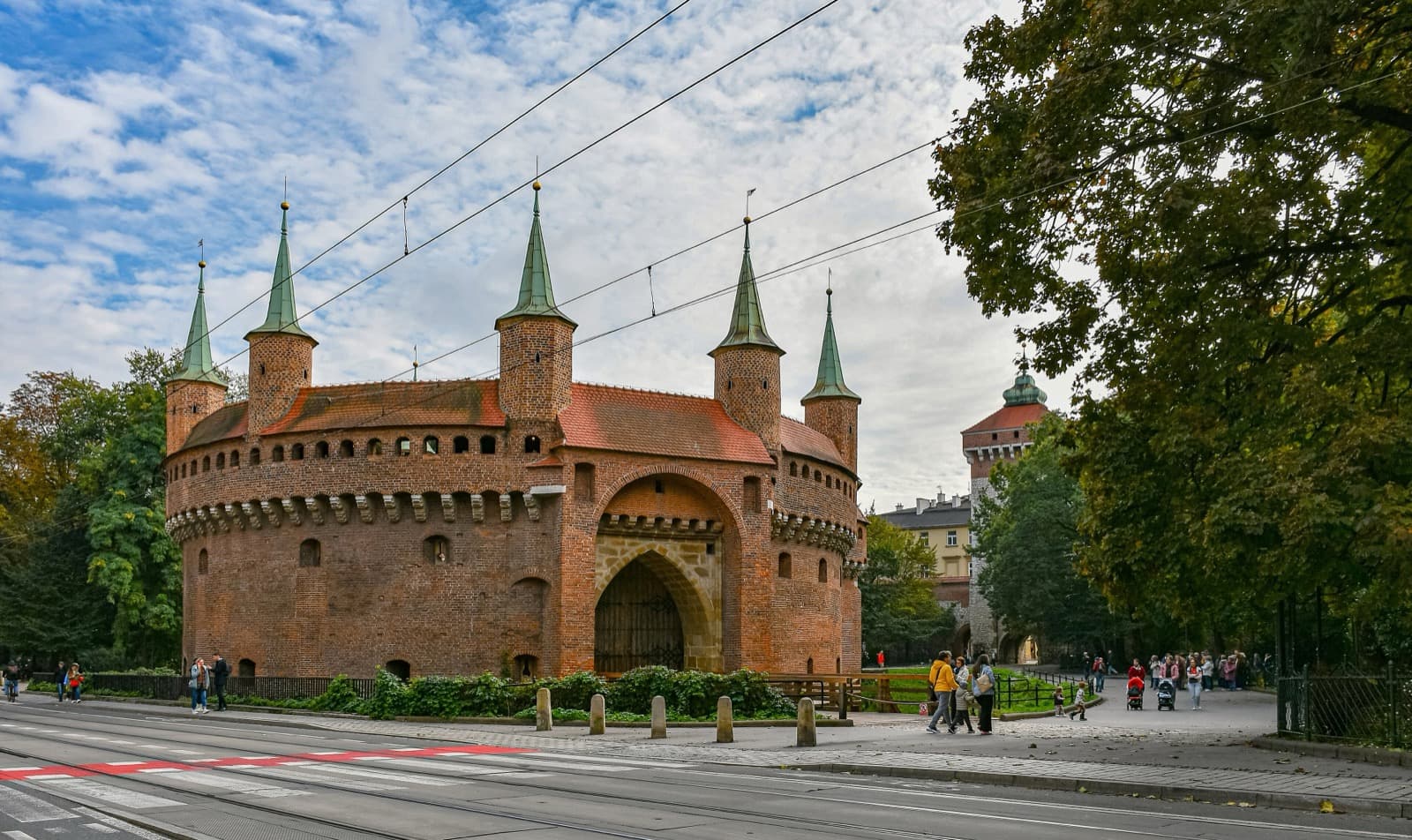
Krakow: The Great Square, the Coronation Hill, and the Quarter That Survived
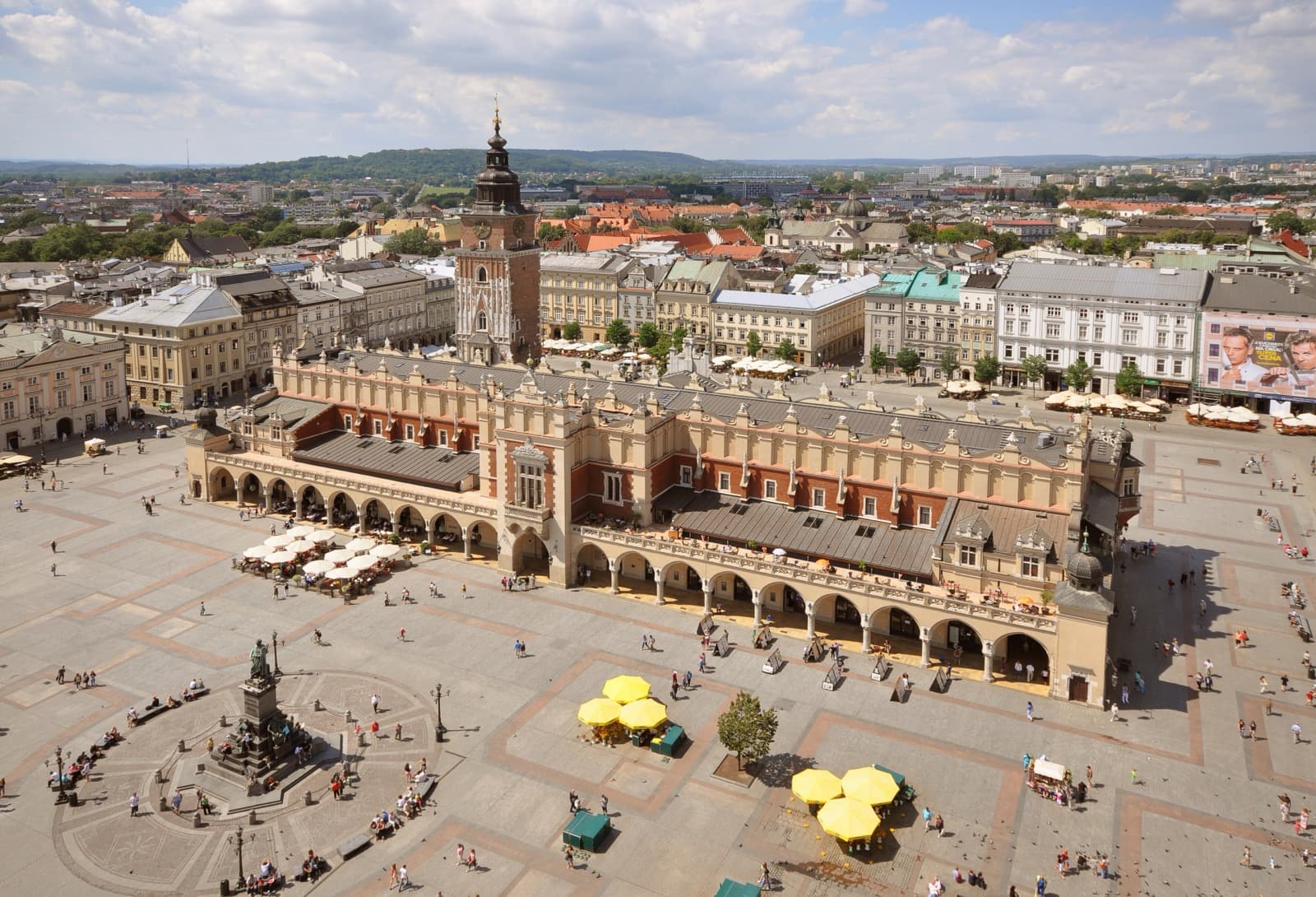
Rynek Glowny: Why Krakow's Main Market Square Is the Whole Tour
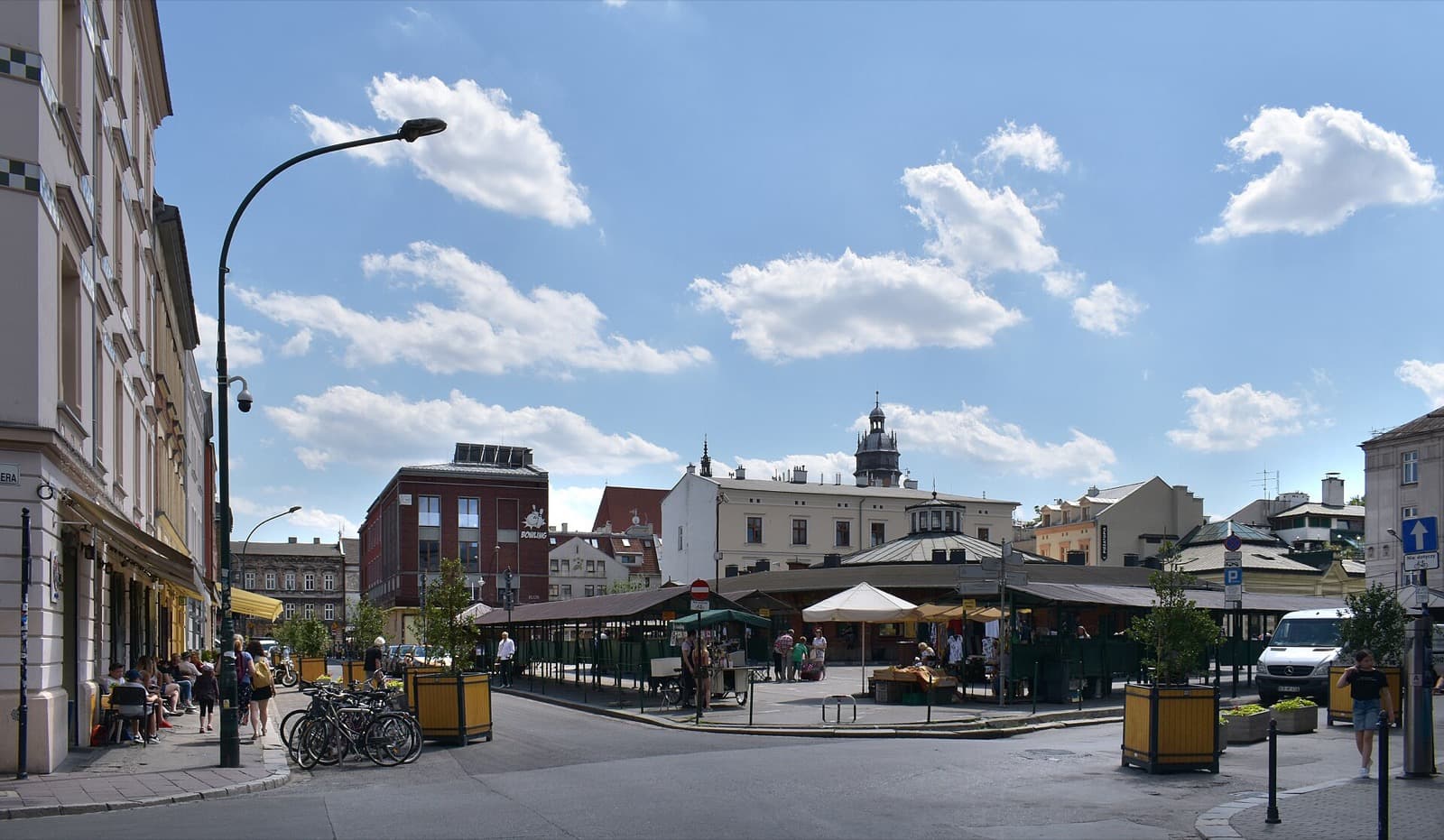
Plac Nowy and the Okrąglak: The Round Hall Where Kazimierz Still Gathers
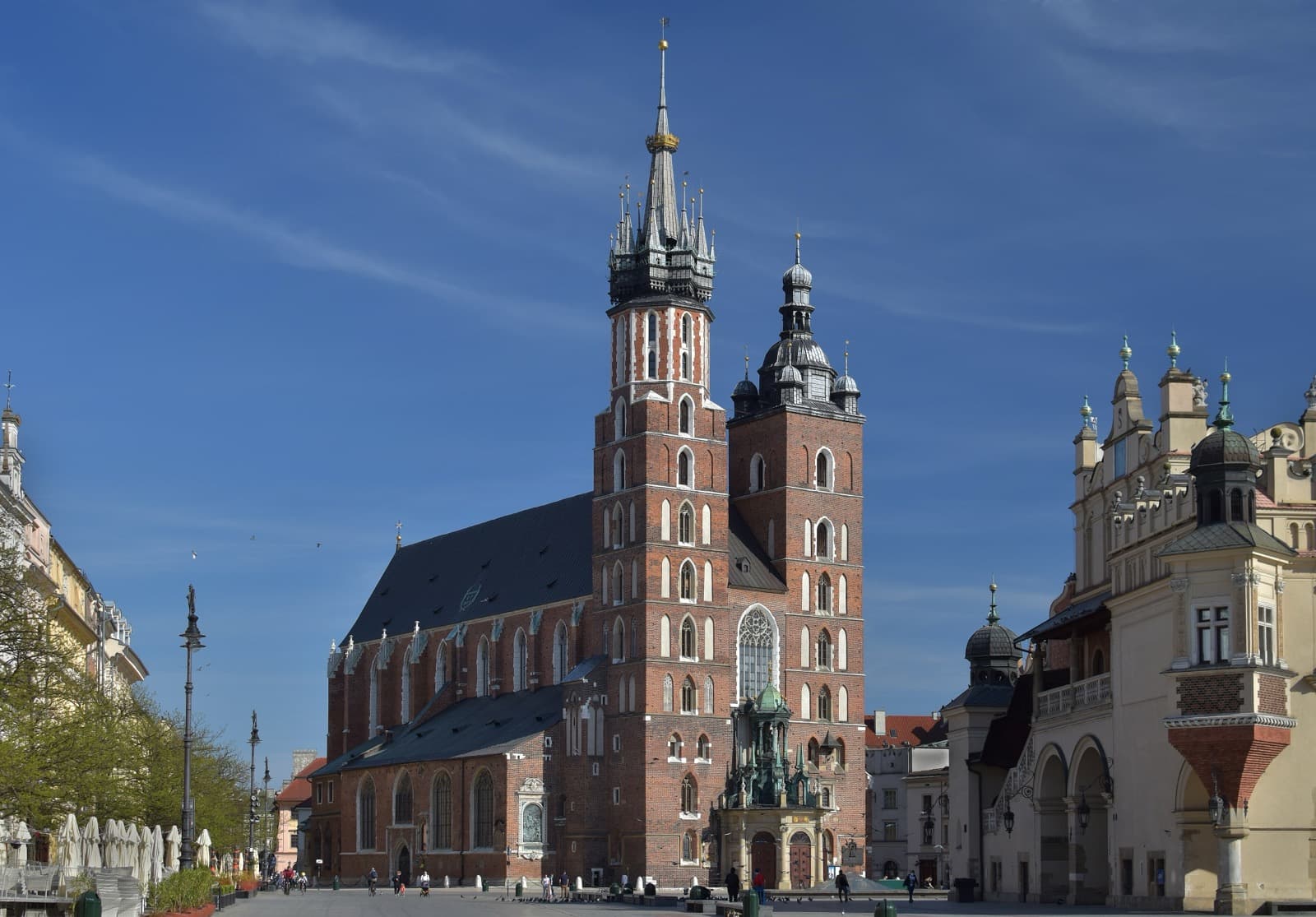
St Mary's Basilica in Krakow: The Trumpet That Stops Mid-Note