Roman Temple of Évora: Two Thousand Years on One Hill
85 min · 2.2 km · easy
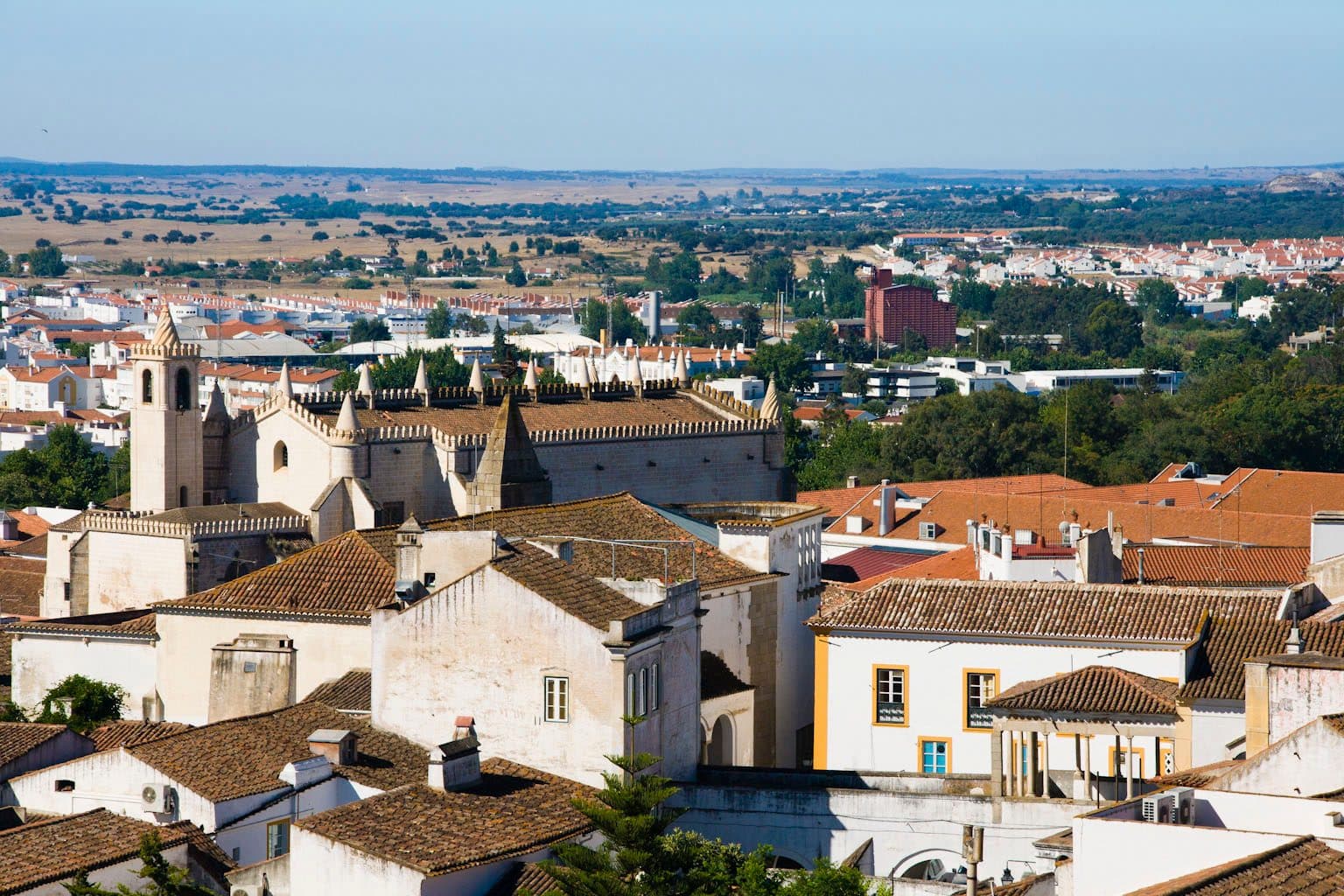
Evora is a walled museum city of the Alentejo that never stopped being lived in. On one small inhabited hill in the dry interior of southern Portugal, the town stacks a Roman temple, a medieval cathedral, a chapel built from the dead, and a Renaissance aqueduct directly on top of one another, and every layer is still in daily use. UNESCO inscribed the whole historic centre on the World Heritage List in 1986, calling it a museum city whose golden age came in the fifteenth and sixteenth centuries, when Portuguese kings kept a residence here. The through-line that unifies the town is continuity made visible: each monument is a different century using the same ground, and the honest history recorded in the stones is usually stranger than the pretty stories layered over it.
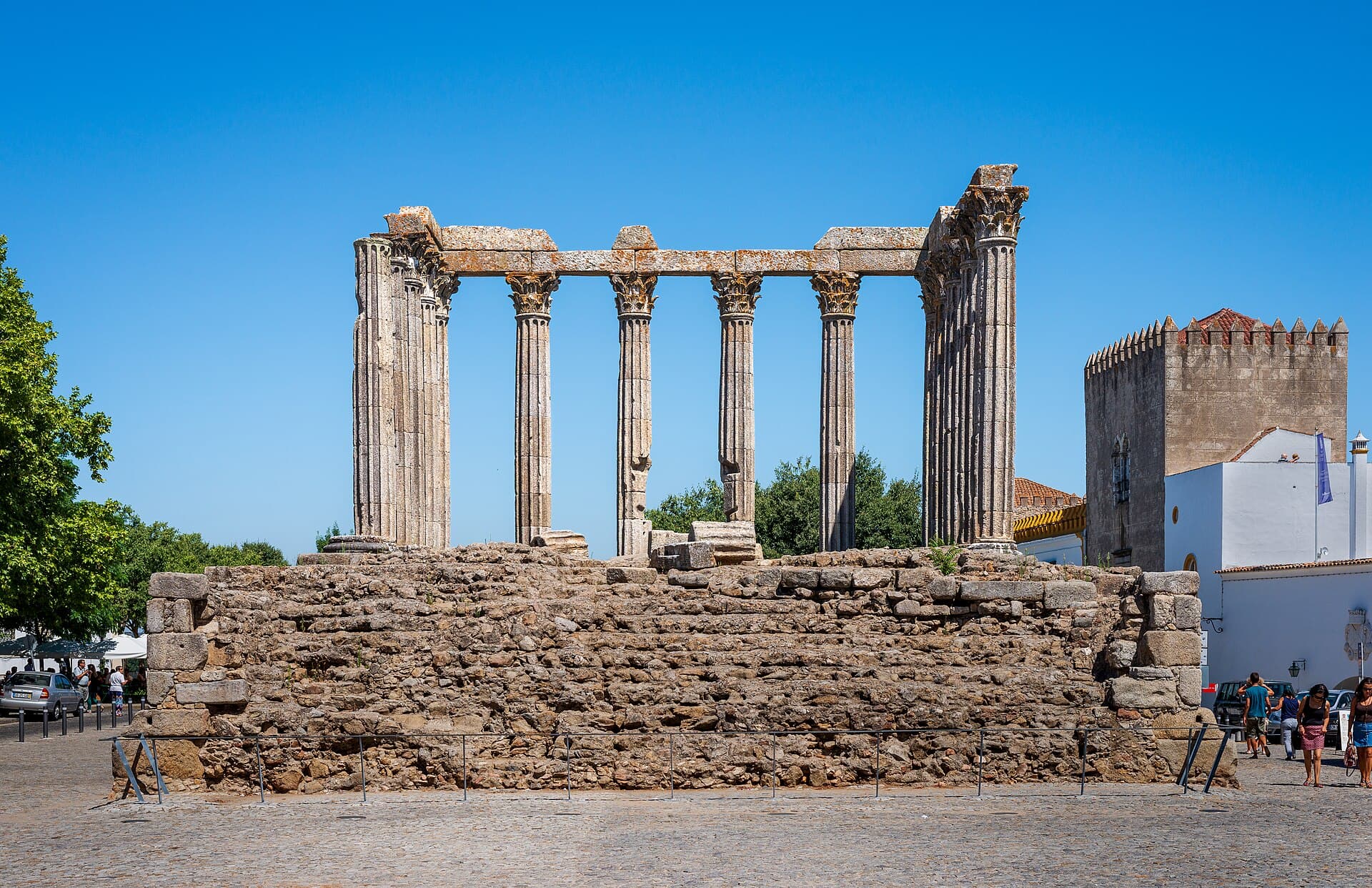
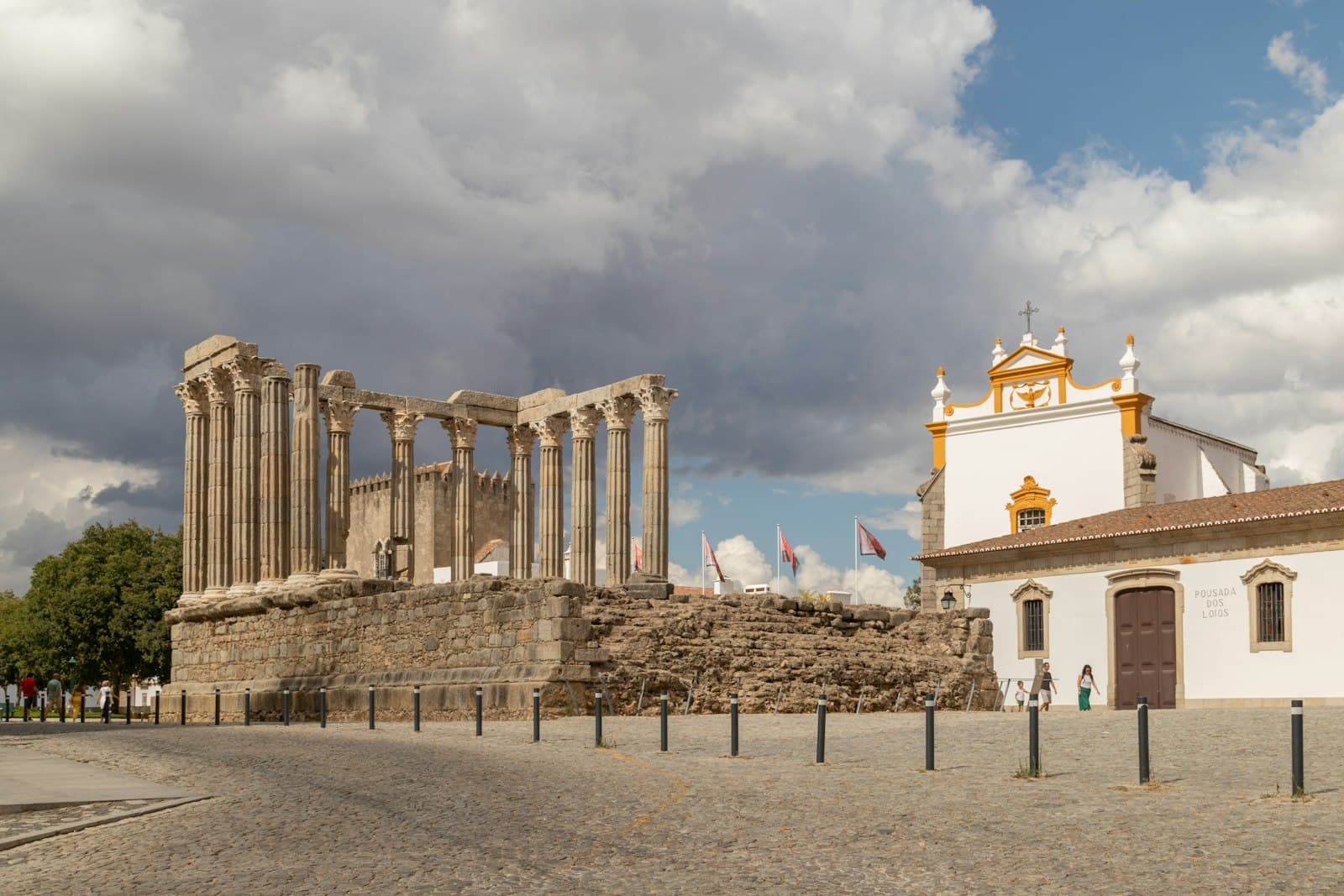
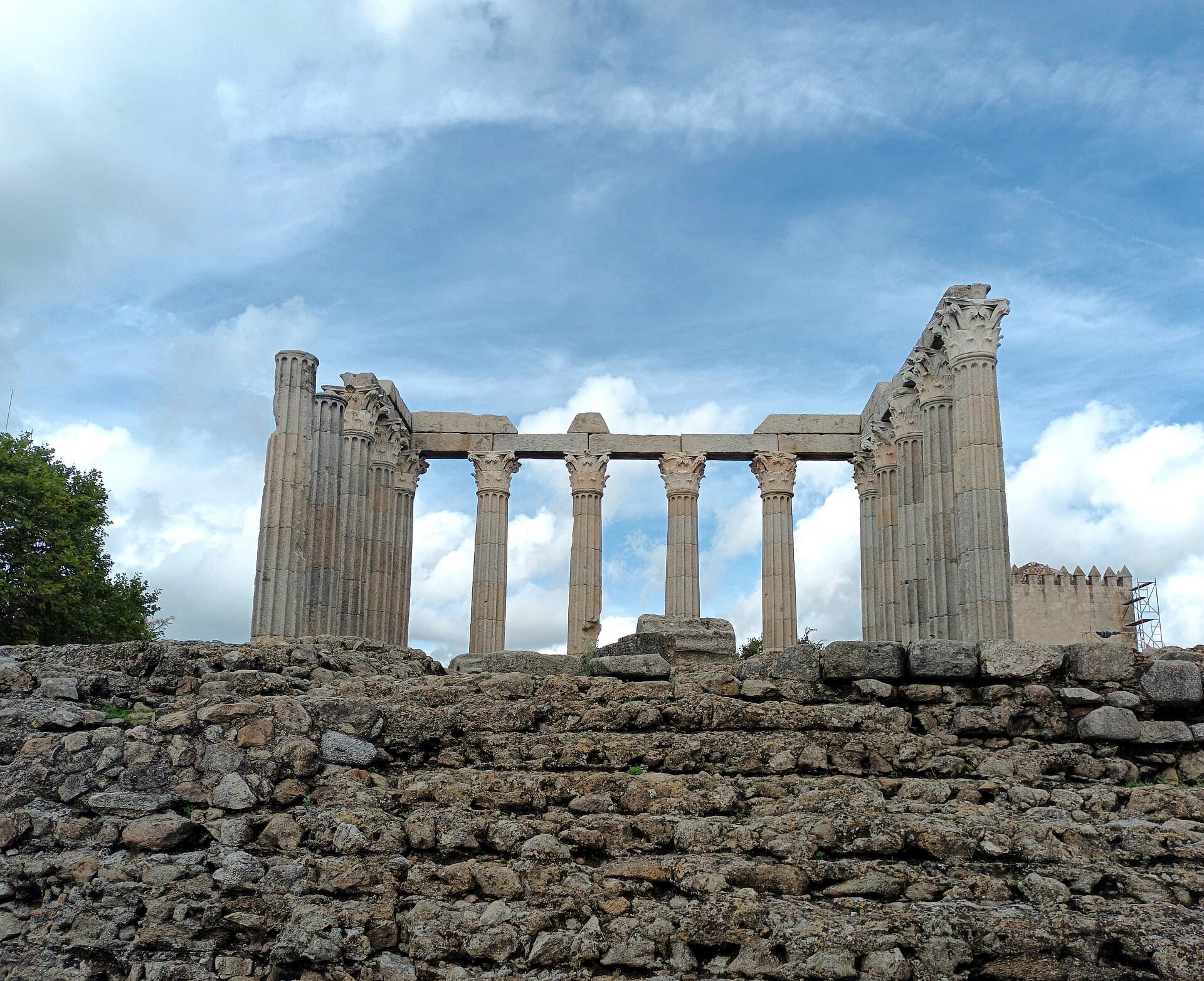
Start at the top, because the hill itself is the argument. Read from the Roman temple down through the great cathedral and the Jesuit university and you walk two thousand years in about two kilometres of gentle descent. On the highest ground stands the Templo Romano, six granite columns still rising after roughly the first century of the common era, described today as one of the best-preserved Roman monuments on the Iberian Peninsula. You will hear it called the Temple of Diana. That name is a seventeenth-century invention attributed to a priest named Manuel Fialho, with no archaeological basis, and the temple's true dedication, most likely the imperial cult, is unknown. The astonishing part is why it survived. It was walled into a medieval castle tower and served as a butcher shop from the fourteenth century until 1836, and that crude reuse is exactly what protected the columns from being quarried away. An architect named Giuseppe Cinatti uncovered and restored it, finishing by 1872.
One hill, every century in use
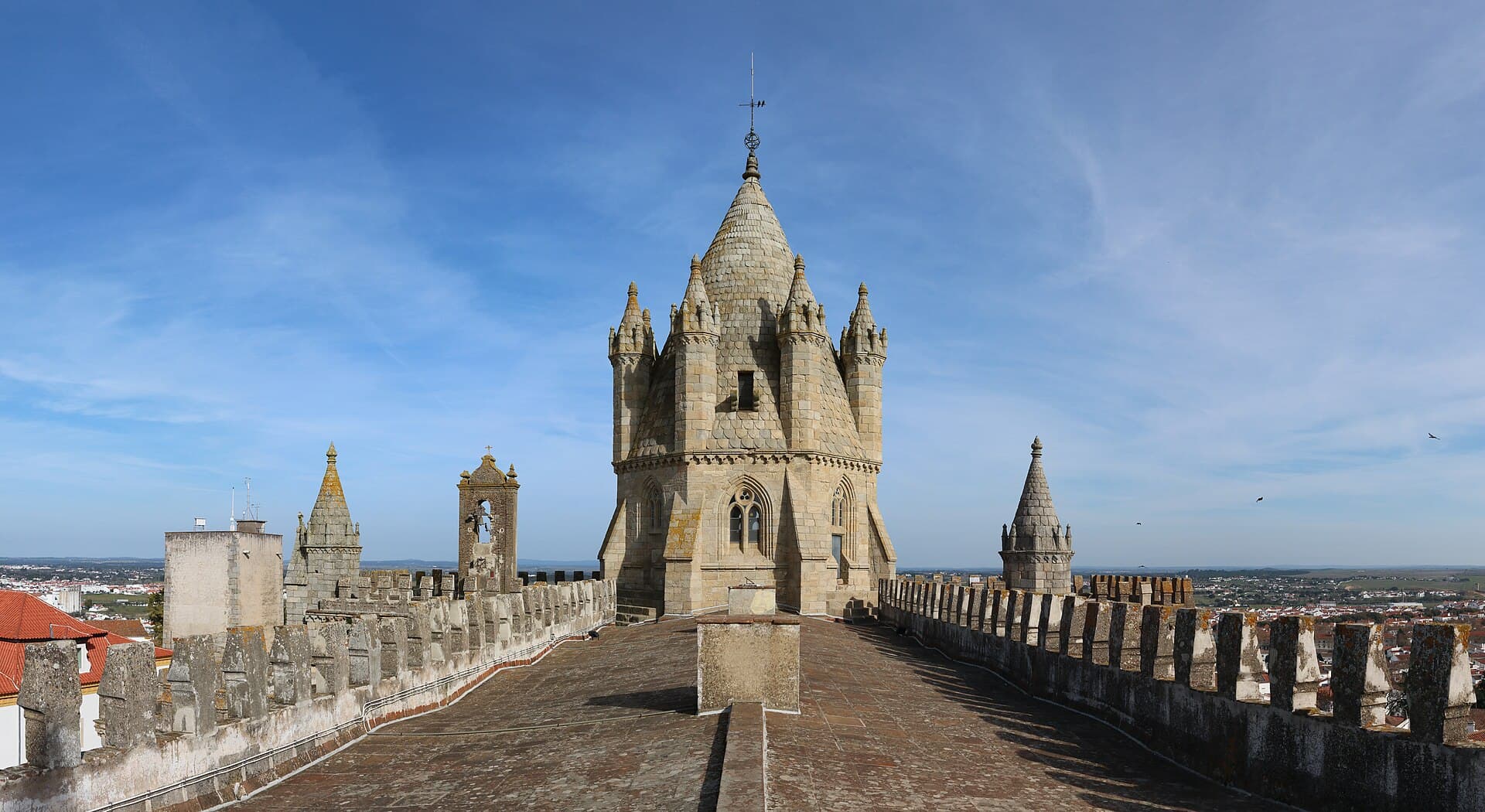
The rest of the sacred hill reads the same way. Just downhill rises the Se, a granite fortress with an altar inside, widely received as the largest of Portugal's medieval cathedrals, its foundations laid in 1186 and its main enlargement running roughly from 1280 to 1340. By tradition the standards of Vasco da Gama's fleet were blessed here in 1497 before he sailed for India, though that is a lovely maybe rather than a documented event. Beside the temple, the Igreja de Sao Joao Evangelista, founded in 1485 and consecrated in 1491, wraps its interior floor to ceiling in blue-and-white azulejos date-marked 1711, the work of a Lisbon master named Antonio de Oliveira Bernardes. The church adjoins the palace of the Dukes of Cadaval, which remains their private residence, so a Roman temple, a Renaissance church, and a living aristocratic house all touch on one patch of hilltop. The walk ends at the Universidade de Evora, founded in 1559 as a Jesuit college by Cardinal Dom Henrique, closed in 1759 when the Marquis of Pombal expelled the Jesuits, and refounded as a state university in 1973. Its cloister tiles illustrate the very subjects once taught in each room, a curriculum written in ceramic.
A city that answered death out loud
Hear a stop from this walk
Templo Romano de Evora: The Crown of the Hill
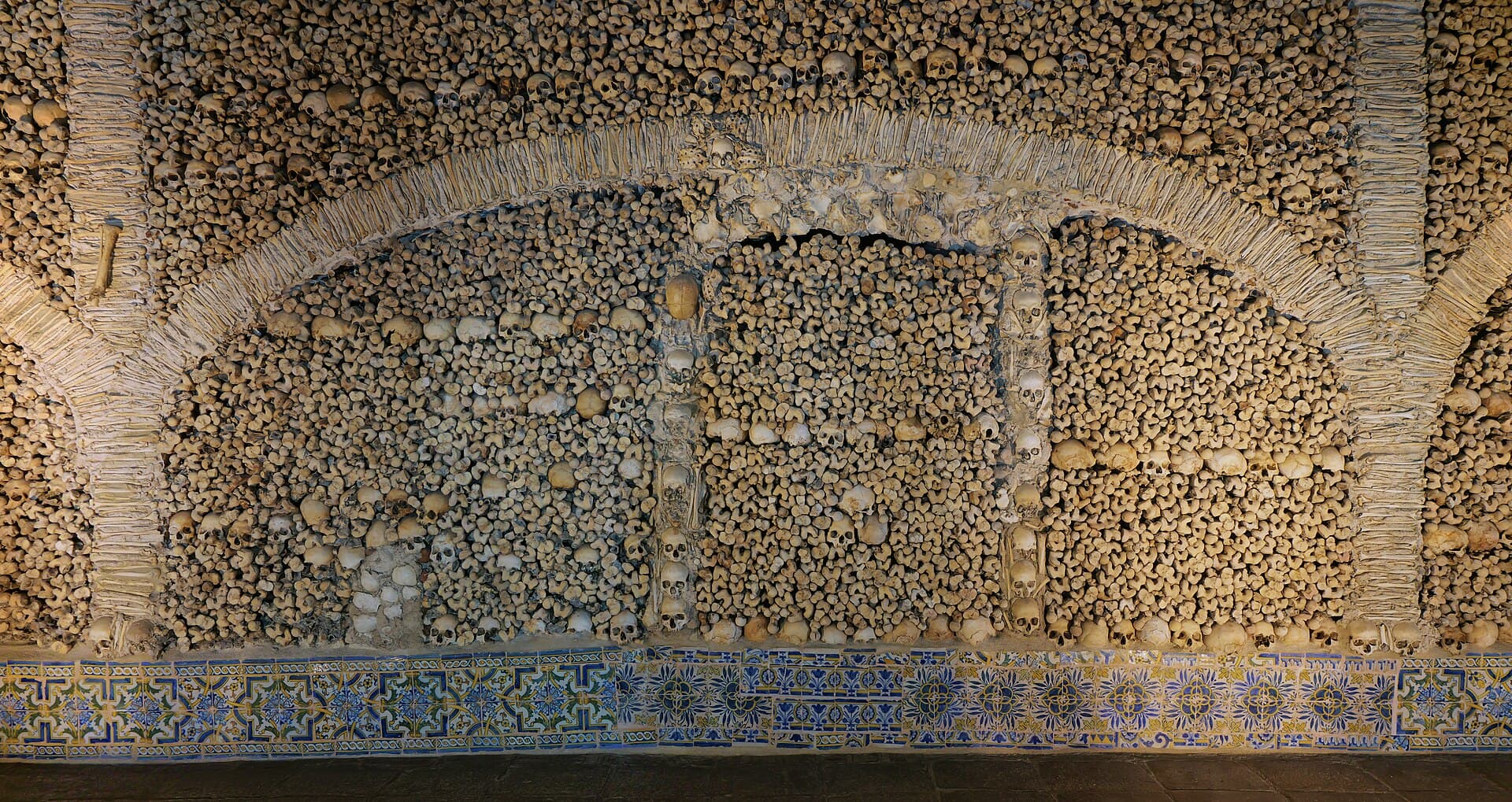
The same wealth and faith that raised the cathedral also produced the town's most notorious room. The chapel built of the dead sits inside the large Gothic Igreja de Sao Francisco, and its walls and eight pillars are lined with the bones of roughly five thousand people, according to Wikipedia exhumed from Evora's overcrowded medieval cemeteries. A line carved at the door reads, in Portuguese, "We bones that are here await yours." The Franciscan friars who assembled it, most likely in the late fifteen hundreds or early sixteen hundreds, meant it not as a fright but as a memento mori, a reminder to slow down and sit with mortality. The church that houses it was built roughly between 1475 and the 1550s and carries the emblems of two kings above its door: the pelican of Joao the Second and the armillary sphere of Manuel the First, the same device still on the flag of Portugal. It has been a National Monument since 1910.
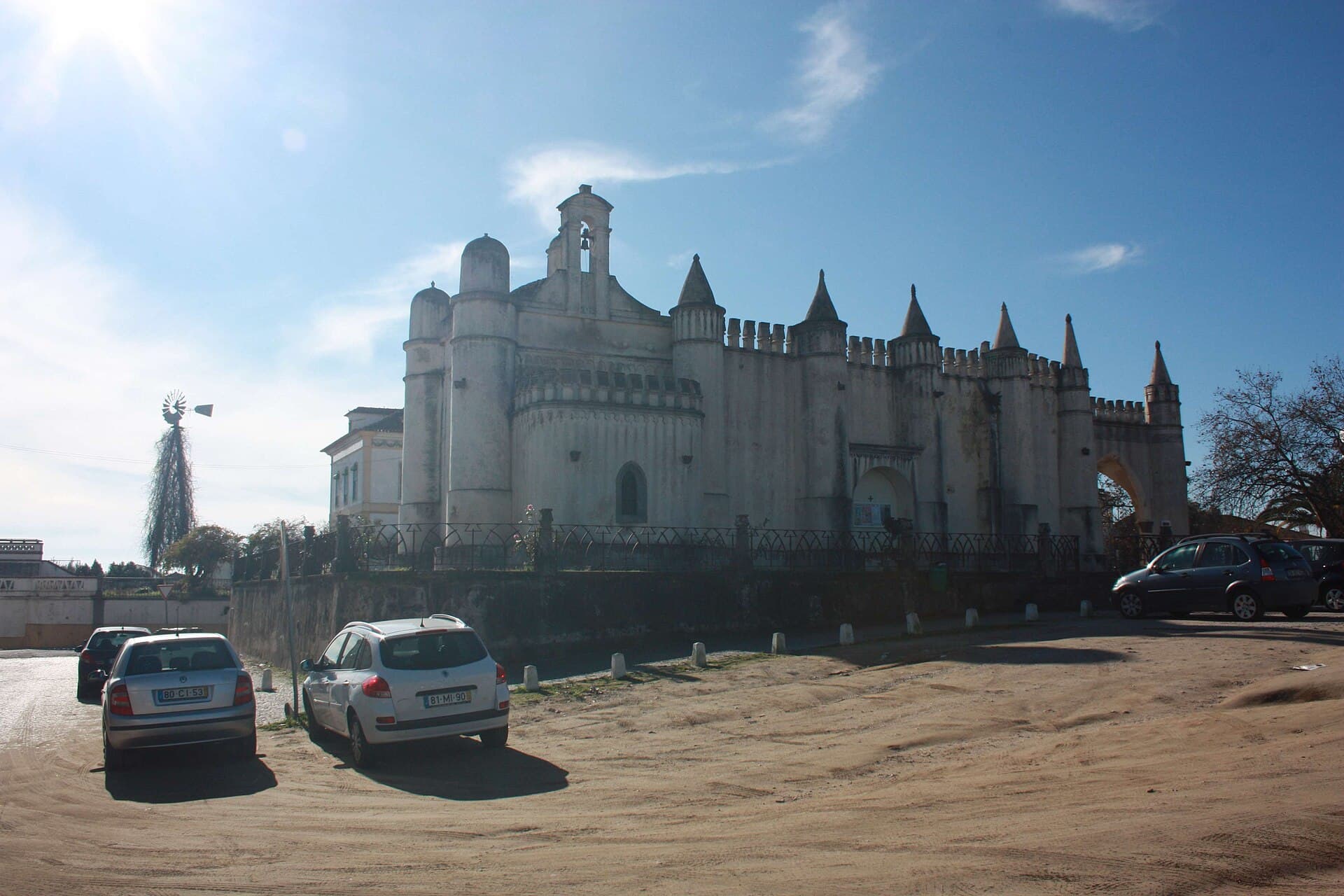
This walk shows why a bone chapel is legible here as a sermon rather than a curiosity. Two minutes from the chapel, the municipal market on Praca 1 de Maio still trades the Alentejo's country bread, sheep's cheeses, olives, and wine, so death and daily bread sit deliberately side by side. At the southern edge, the Ermida de Sao Bras, ordered by Joao the Second with its license granted on the seventh of September 1480, looks like a fortress braced for a siege but was raised against plague, on the site of a temporary plague hospital, dedicated to Saint Blaise. And in the Jardim Publico stands the Palacio de Dom Manuel, the sole surviving pavilion of Evora's royal palace, from which by tradition Vasco da Gama was commissioned to lead the sea voyage to India in 1497. Evora was rich, royal, pious, a seat of the Portuguese Inquisition, and unafraid to make death the loudest voice in the room.
Water made the whole thing possible
None of this is livable without water, which is why the fourth reading of the hill follows the aqueduct as it walks into the city. In the 1530s King Joao the Third had fresh water carried roughly eighteen kilometres across the dry plain on the granite arcades of the Agua de Prata, the Silver Water. Construction began around 1532 and water arrived about 1537, and the designer was the royal architect Francisco de Arruda, the same man who had built the Torre de Belem in Lisbon between 1514 and 1519. The engineers followed, and in places overlaid, older Roman waterworks, so watering this hilltop was an ancient problem the Renaissance solved again.
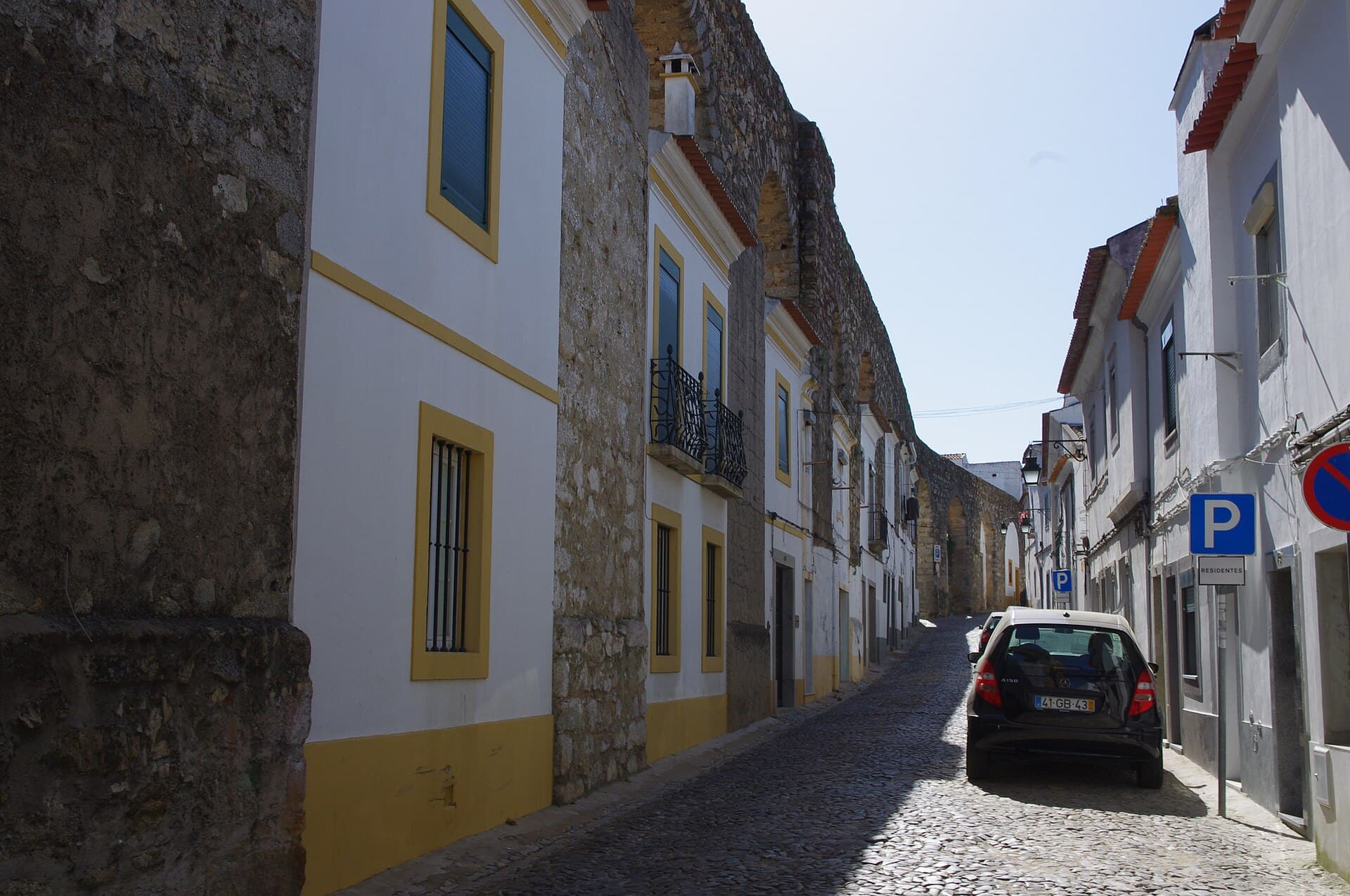
Then the people of Evora did something the king never planned. Along Rua do Cano, the street of the water channel, townspeople built homes, shops, and workshops directly inside and beneath the arches: an arch becomes a doorway, a span becomes a wall. The grand monument was colonised from below and made domestic. The water was delivered ceremonially at Praca do Giraldo, where the Fonte Henriquina of about 1570 still runs, its eight spouts said to stand for the eight streets feeding the square. The same square, long the town's civic heart, was also an Inquisition execution ground where a Duke of Braganca was beheaded in the 1480s, so celebration and cruelty share the same stones. Cardinal Dom Henrique, whose hand shaped much of Renaissance Evora, sponsored both the Igreja de Santo Antao on the square, built between 1557 and 1563, and the marble globe fountain at Portas de Moura, inaugurated in 1556 and carved from Estremoz marble.
Four walks, one hill, one continuous argument: Evora is a place where Roman stone, medieval faith, Renaissance ambition, and ordinary domestic life were never separated into a museum and a town. They remain the same town. Browse the full set of Evora walking tours to choose the layer you want to read first.
Sources
- UNESCO World Heritage Centre, Historic Centre of Evora (inscribed 1986)
- Roamer self-guided audio tour, Two Thousand Years on One Hill (Evora Roman and sacred hill)
- Roamer self-guided audio tour, The Chapel Built of the Dead (Evora bones and faith)
- Roamer self-guided audio tour, The Water That Walks Into the City (Agua de Prata aqueduct)
- Camara Municipal de Evora records on the Agua de Prata aqueduct construction (circa 1532 to 1537)
Frequently asked questions
- Why is Evora a UNESCO World Heritage Site?
- UNESCO inscribed the Historic Centre of Evora on the World Heritage List in 1986, describing it as a museum city whose golden age came in the fifteenth and sixteenth centuries, when Portuguese kings kept a residence there. The town preserves Roman, medieval, and Renaissance layers stacked on one inhabited hill, from the first-century Roman temple to the Renaissance aqueduct. Its whitewashed walls, Gothic churches, and continuous daily life are all part of what earned the designation.
- Is the Temple of Diana in Evora really dedicated to Diana?
- No. The name Temple of Diana is a seventeenth-century invention attributed to a priest named Manuel Fialho, with no archaeological basis. The temple's true dedication is unknown, most likely to the imperial cult, since the emperor Augustus was declared a god. The temple dates to roughly the first century of the common era and is described today as one of the best-preserved Roman monuments on the Iberian Peninsula.
- How many people's bones are in the Chapel of Bones in Evora?
- The Capela dos Ossos, inside the Church of Saint Francis, is lined with the bones of roughly five thousand people, according to Wikipedia exhumed from Evora's overcrowded medieval cemeteries. Franciscan friars arranged the walls and eight pillars, most likely in the late fifteen hundreds or early sixteen hundreds. A line carved at the door reads, in Portuguese, 'We bones that are here await yours,' intended as a meditation on mortality rather than a fright.
- What is the Agua de Prata aqueduct in Evora?
- The Agua de Prata, or Silver Water aqueduct, was commissioned in the 1530s by King Joao the Third to carry fresh water roughly eighteen kilometres across the dry Alentejo plain into Evora. Construction began around 1532 and water arrived about 1537, designed by the royal architect Francisco de Arruda, who had earlier built the Torre de Belem in Lisbon. Along Rua do Cano, townspeople later built homes and shops directly inside its granite arches.
- How long do you need to see Evora's main sights?
- Evora's historic centre is compact, and its layers can be read across a few short walks of one and a half to two and a half kilometres each, roughly ninety minutes to two hours at an unhurried pace. The Roman-and-sacred hill runs about two kilometres downhill, the bones-and-faith route about two and a half kilometres, and the aqueduct walk about one and a half kilometres. Late afternoon suits the open-air stops for golden light, while late morning is best for church and market interiors.
Ready to experience it?
Roman Temple of Évora: Two Thousand Years on One Hill
85 min · 2.2 km · easy
More from Evora
Explore more at your own pace.
Evora Travel Guide: Days, Transport, Best Time, Safety, and Budget
Rua do Cano: How Evora Moved Into a King's Aqueduct
The Chapel of Bones in Evora: Why a City Lined a Wall With Its Dead
Why Evora's Roman Temple Survived as a Butcher Shop
Ermida de Sao Bras: The Fortress Chapel Evora Built Against the Plague