Capela dos Ossos: The Chapel Built of the Dead
90 min · 2.6 km · easy
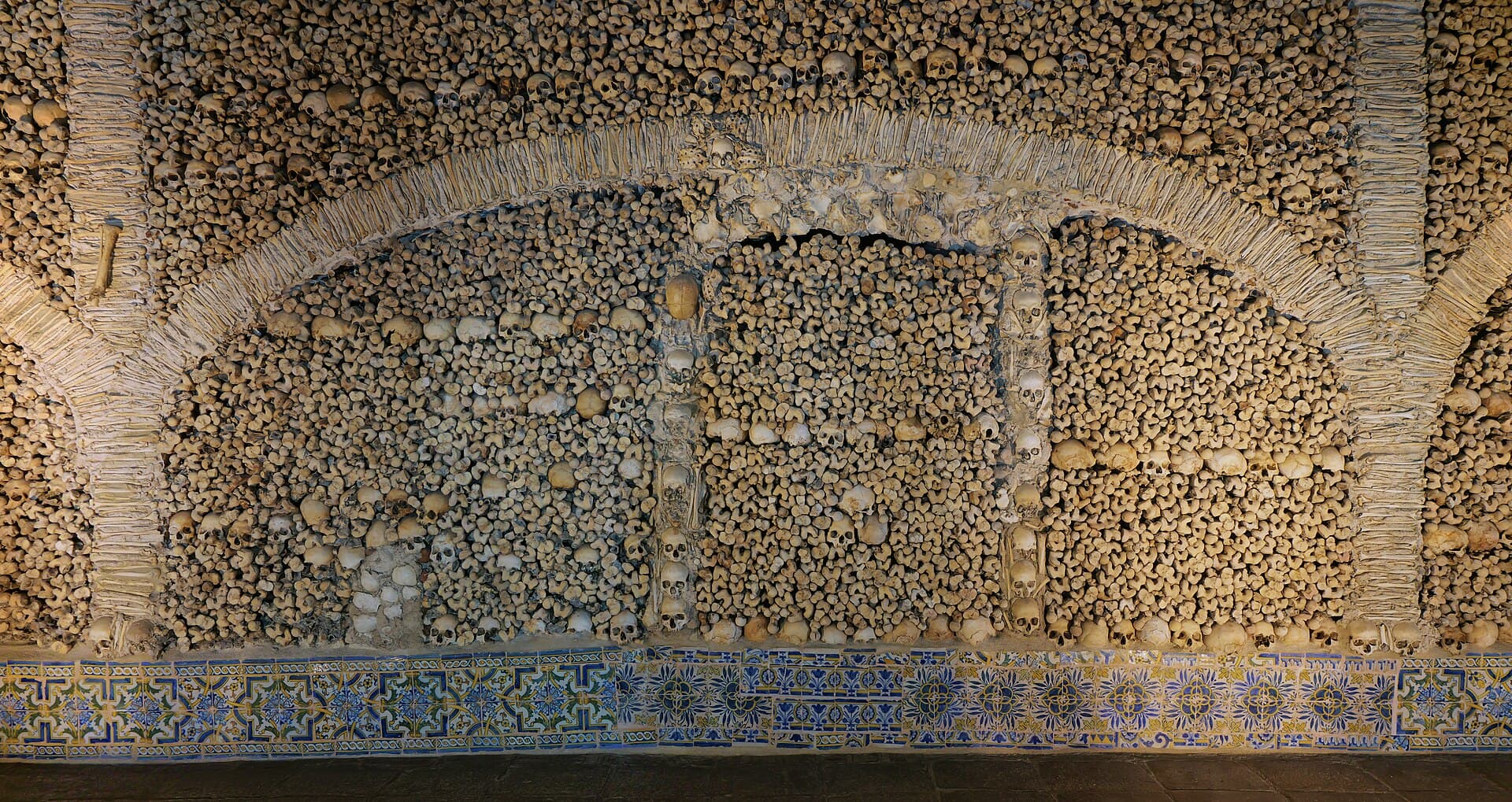
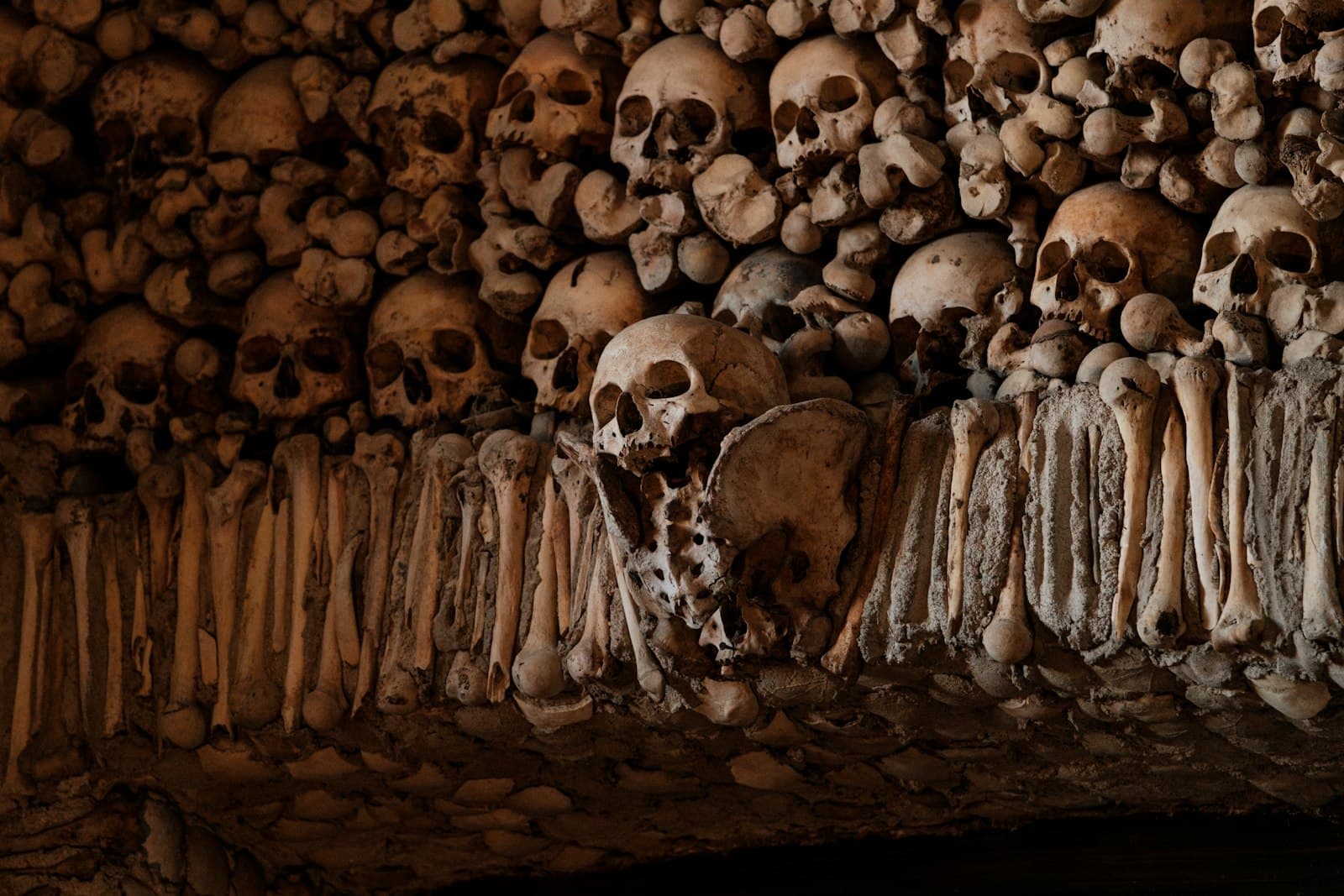
Evora built a chapel from the dead, and it meant the gesture kindly. The Capela dos Ossos lines its walls and its eight pillars with the bones of roughly five thousand people, arranged in patterns by Franciscan friars, and it greets you at the door with a single carved line. This is the room most visitors come to Evora to see, and it is the honest entrance to a much larger story: a royal, pious, fearful city in the Alentejo that answered mortality with stone and beauty rather than looking away. Walk it well and the chapel stops being a curiosity. It becomes the argument.
Read the line before you look up
The friars arranged the room so that you would read before you understood. In Portuguese the inscription says: Nos ossos que aqui estamos, pelos vossos esperamos. We bones that are here await yours. Only then are you meant to look up and let the walls resolve into what they actually are.
The chapel is small, roughly eighteen point seven metres long and eleven metres wide, which is part of the point. Every surface is dense with bone and skull, and the smallness turns that density into a physical fact you cannot edge around. According to Wikipedia, the bones came from roughly five thousand corpses exhumed from Evora's overcrowded medieval cemeteries. That detail matters, because it means the chapel solved two problems at once. It cleared a burial-space crisis in a growing, prosperous town, and it delivered a sermon.
The sermon is a memento mori, a reminder that you will die. It was built when Evora was rich and its citizens comfortable, most likely in the late fifteen hundreds or early sixteen hundreds. The sources genuinely disagree on the exact year, so the tour does not invent one, and neither will this piece. What is not in dispute is the intent. The friars were not trying to frighten anyone. They were trying to slow you down, to make you sit with the transience of everything you were chasing out in the sunlight. A second inscription on the ceiling, drawn from the book of Ecclesiastes, puts it plainly: better is the day of death than the day of birth.
Two desiccated bodies rest in glass cases in the chapel, one of them a child. A dramatic tale about a cursed adulterer travels with them. That story is folklore, not record, so hold it lightly. The room rewards stillness, which is exactly what it was designed to demand.
The kings built the stage the friars filled
Hear a stop from this walk
Praca 1 de Maio: the medieval lower town and its market
The chapel is only a side room. Step back into the main body of the Igreja de Sao Francisco, the Church of Saint Francis, and the scale changes completely. This large Gothic church, built roughly between fourteen seventy-five and the fifteen fifties on the footprint of a Romanesque predecessor from the year twelve twenty-six, was a royal church. Look above the main doorway and it tells you so. You will find the pelican, the emblem of King Joao the Second, and the armillary sphere, the emblem of King Manuel the First, who reigned from fourteen ninety-five to fifteen twenty-one. That same armillary sphere still appears on the flag of Portugal today.
So the labor divided cleanly. The friars built the sermon of bones. The crown built the stage that houses it. Wikipedia describes the church's single groin-vaulted nave as one of the largest of its kind in Portuguese churches, spanning roughly thirty-six by thirty-four by twenty-four metres. Worship has continued on this exact spot for roughly eight centuries. You cannot understand the chapel without standing in the church around it, which is why the two make up the first pair of stops on the walk.
Then the city itself
From there the route steps outward, and each stop turns the chapel's theme a different way. Just beside the church sits Praca 1 de Maio, the First of May Square, home to the municipal market where the Alentejo brings itself to town: country bread, sheep's cheeses, olives and olive oil, cured meats, honey, wine. It is the antidote to the hush of the bone. A chapel built of the dead sits barely a two-minute walk from where people buy their lunch, and that closeness was not an accident. Death here was meant to sit beside daily life, not be sealed away from it.
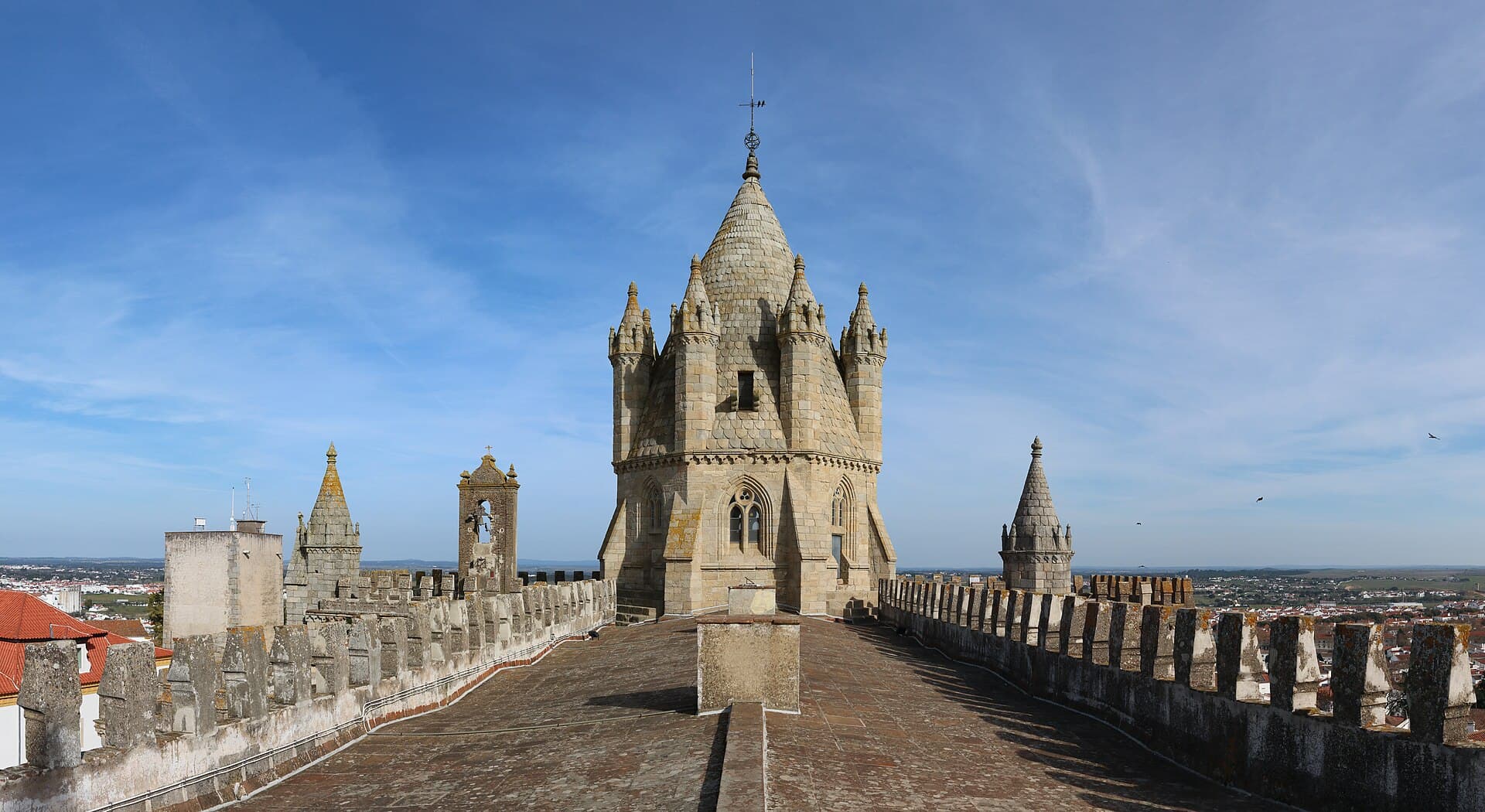
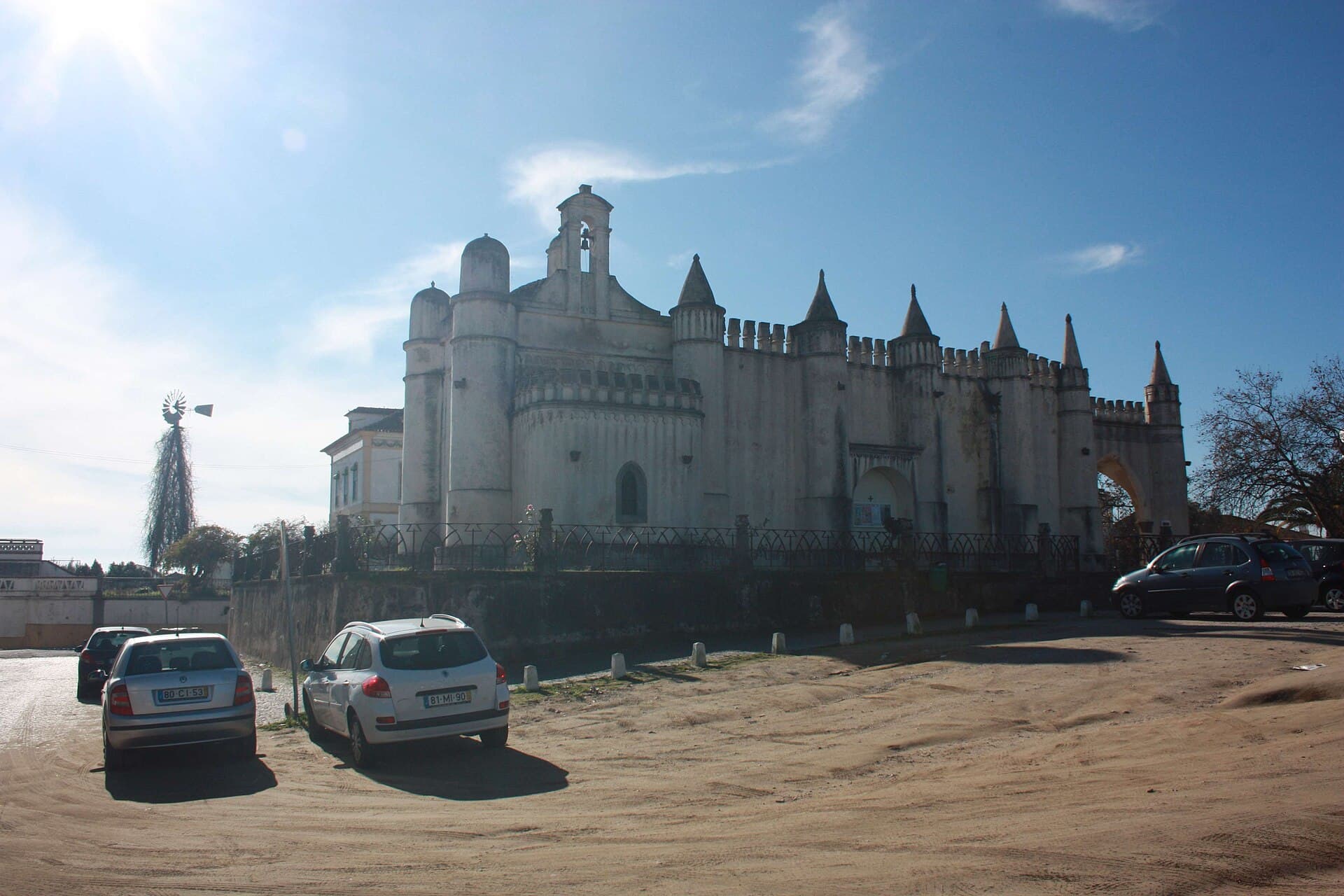
Walk to the southern edge of the old town and you reach the Ermida de Sao Bras, the Hermitage of Saint Blaise, which does not look like a chapel at all. Cylindrical buttress-towers, battlements, conical spires: it looks braced for a siege. It was built against death, not armies. Ordered by King Joao the Second, with its ecclesiastical license granted on the seventh of September, fourteen eighty, it rose on the site of a temporary hospital that had served during a plague outbreak, and it is dedicated to a saint invoked against epidemics. It makes the same argument as the bone chapel, turned inside out: there, death is displayed to calm you; here, death is walled against.
The Jardim Publico offers a green pause and a survivor, the Palacio de Dom Manuel, the sole remaining pavilion of Evora's former royal palace. By tradition, it was tied to this royal court that Vasco da Gama was invested to lead the sea voyage to India in the year fourteen ninety-seven. A fleet that remade global trade was launched, in effect, from a small inland hilltop town. The walk closes near the former University of Evora, the Colegio do Espirito Santo, founded by Cardinal Henry in fifteen fifty-nine and recorded by Wikipedia as the second-oldest university in Portugal. This was a seat of the Portuguese Inquisition and a Counter-Reformation stronghold. That concentration of religious certainty is what makes the bone chapel legible as a sermon rather than a shock.
The full route is six stops, about two and a half kilometres, roughly ninety minutes at your own pace. You can skip any stop and the thread still holds. The audio guide reads the inscriptions with you, separates the record from the folklore, and lets you stand as long as the room asks. Plan the walk from the Evora walking tours hub, or start from the city page for Evora and let the chapel be your way in.
Sources
- Chapel of Bones, Wikipedia: dimensions, the roughly five thousand exhumed bodies, and both door and ceiling inscriptions.
- Igreja de Sao Francisco (Evora), Wikipedia: construction dates, the royal emblems over the portal, and the scale of the nave.
- Igreja de Sao Francisco / Capela dos Ossos, Visit Portugal: official context on the church and chapel as a combined visit.
- University of Evora, Wikipedia: Cardinal Henry's founding in fifteen fifty-nine and its standing as the second-oldest university in Portugal.
- Ermida de Sao Bras, Visit Portugal: the hermitage's plague-hospital origin and dedication to a saint invoked against epidemics.
Ready to experience it?
Capela dos Ossos: The Chapel Built of the Dead
90 min · 2.6 km · easy
More from Evora
Explore more at your own pace.
Evora Travel Guide: Days, Transport, Best Time, Safety, and Budget
Evora: The Museum City That Never Stopped Being Lived In
Rua do Cano: How Evora Moved Into a King's Aqueduct
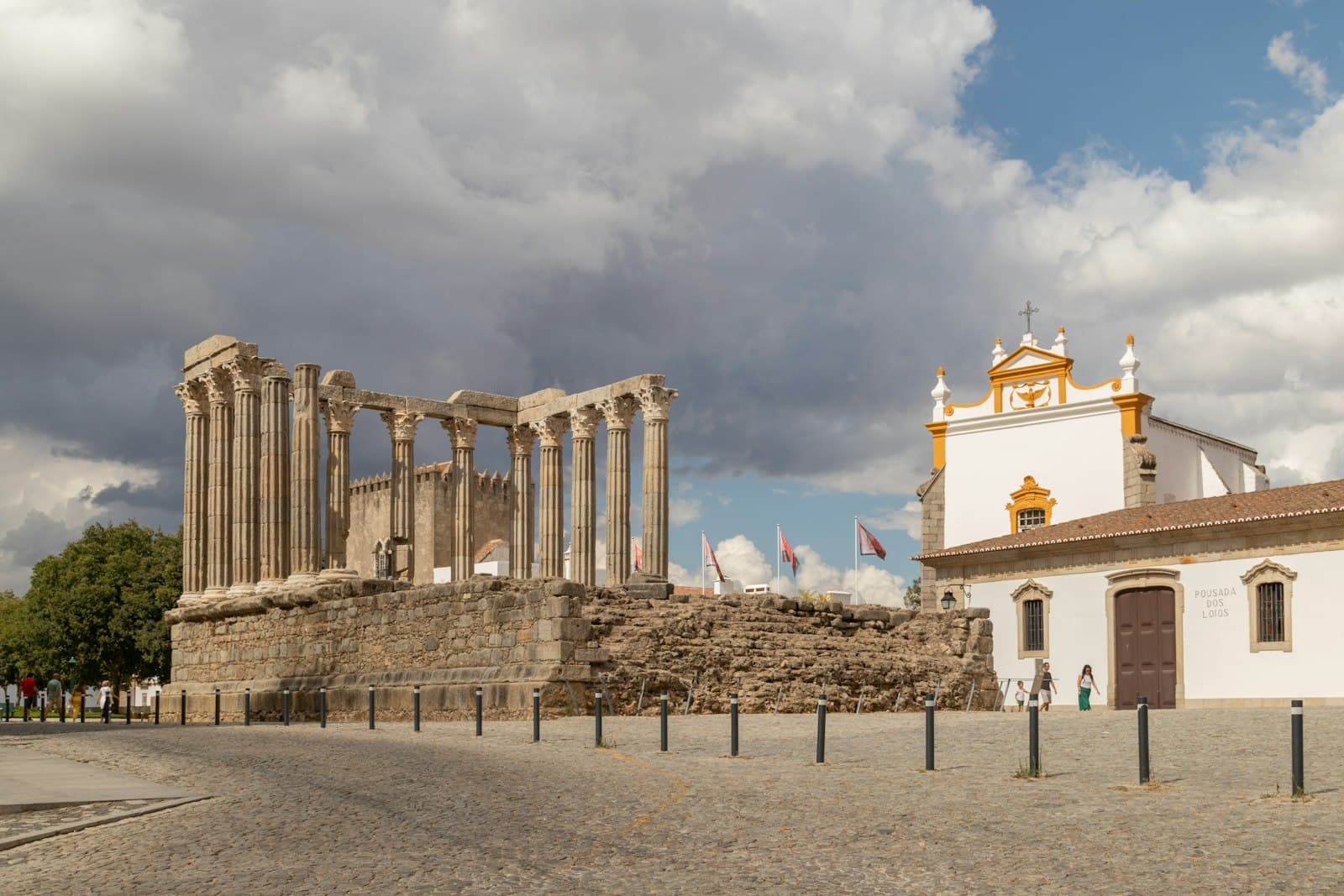
Why Evora's Roman Temple Survived as a Butcher Shop
Ermida de Sao Bras: The Fortress Chapel Evora Built Against the Plague