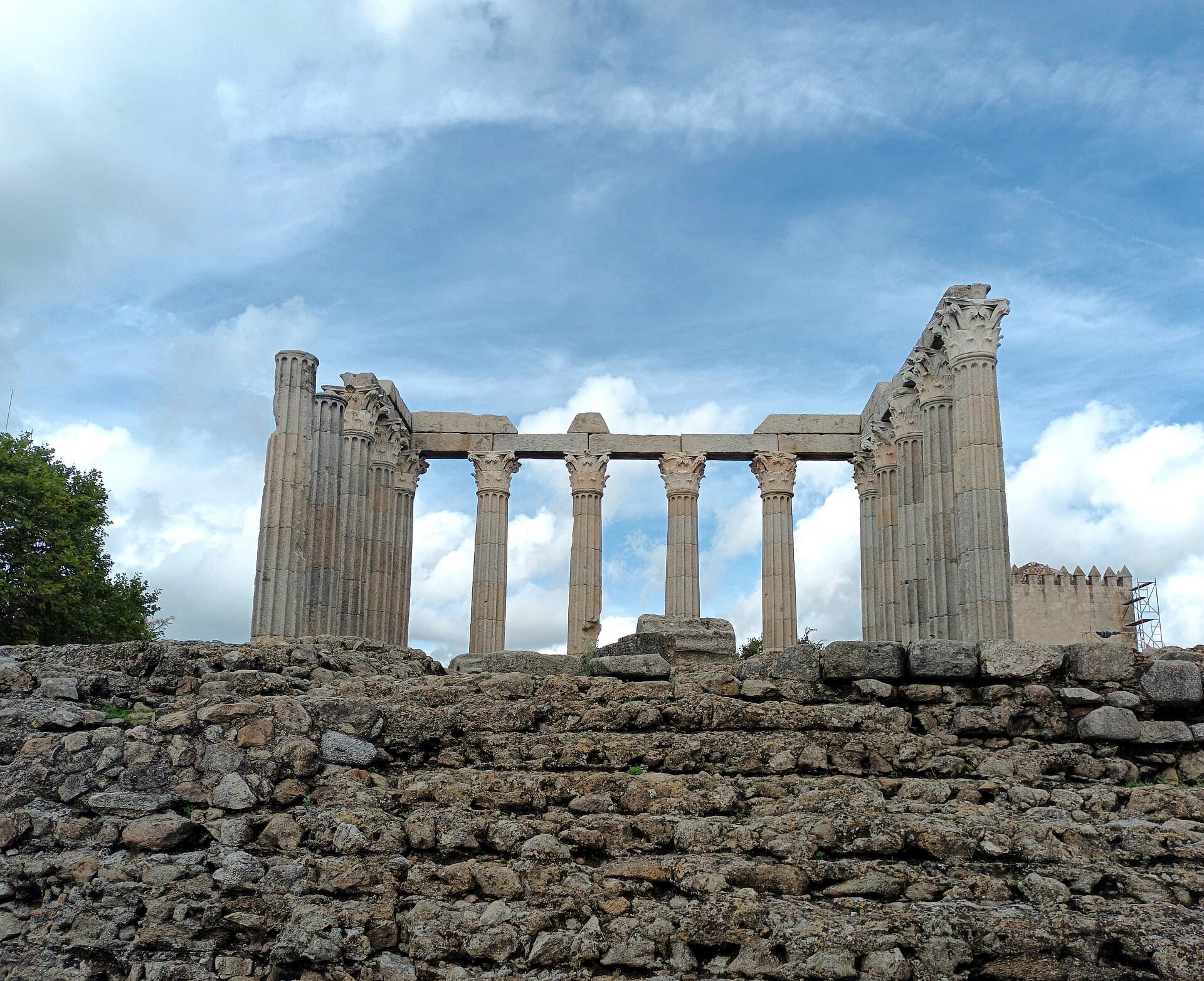
Six granite columns still stand on the highest ground of Evora, and the story of how they survived nearly two thousand years is not a story of reverence. It is a story of a butcher shop. The Templo Romano de Evora, the crowning stop of the Roman Sacred walk, is one of the best-preserved Roman monuments on the Iberian Peninsula, and it endured precisely because people stopped caring about it as a temple and started using it as a slaughterhouse. That contradiction is the doorway into everything this walk is about: reading one small walled hill top to bottom, and telling apart what the stones actually record from the pretty stories layered over them.
The temple that was never Diana's
The first thing to set aside is the name. You will hear these columns called the Temple of Diana, and the label has stuck so hard that the garden next door borrows it too. But the dedication to the goddess of the hunt is a legend, attributed to a seventeenth-century priest named Manuel Fialho. Archaeology supports none of it. The temple's true dedication is unknown, and the strongest scholarly guess is the imperial cult: the worship of a deified emperor, most likely Augustus, who was declared a god after his death.
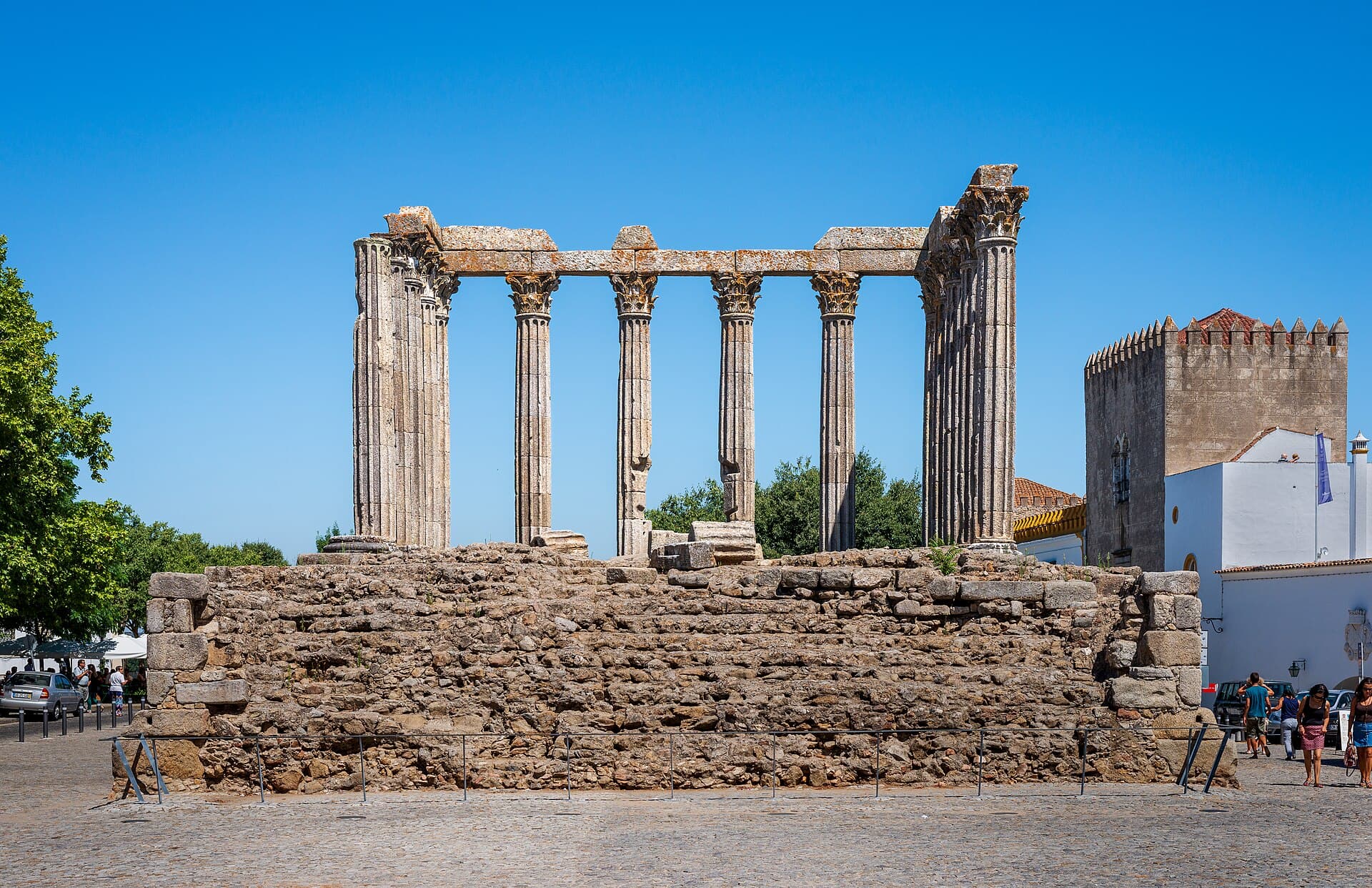
What is certain is the setting. These columns once stood at the center of Roman Ebora's forum, the civic and religious heart of the town, and the podium of granite blocks beneath them dates to roughly the first century of the common era. The original portico was hexastyle, meaning six columns ran across the front. Six survive today on the north face, with a few more along the sides. When you stand on the podium and take a slow turn, you are standing on the exact ground where a Roman town governed itself.
Why the columns outlived the empire
Hear a stop from this walk
Templo Romano de Evora: The Crown of the Hill
Here is the part that rewards a visit rather than a photograph. This temple did not survive because anyone protected it. It survived because it was buried inside a fortress. Sometime in the medieval centuries the structure was walled up and swallowed into a castle tower, and from the fourteenth century until the year eighteen thirty-six it worked as a butcher shop, a slaughterhouse in the middle of town. For roughly five centuries the most Roman thing in Evora was a place where meat was cut.
That crude reuse is the whole reason the columns are still here. Freestanding ancient marble and granite were quarried away across Europe for new buildings. Evora's columns were hidden inside thick walls where no mason could reach them. Only in eighteen seventy-two were they uncovered and restored, in a Romantic style, by an architect named Giuseppe Cinatti. So the ruin you admire is honest and strange at once: ancient stone, a false name, and a slaughterhouse for its guardian angel. That is the tour's method in miniature. The honest version is usually more astonishing than the myth.
Reading the hill downward
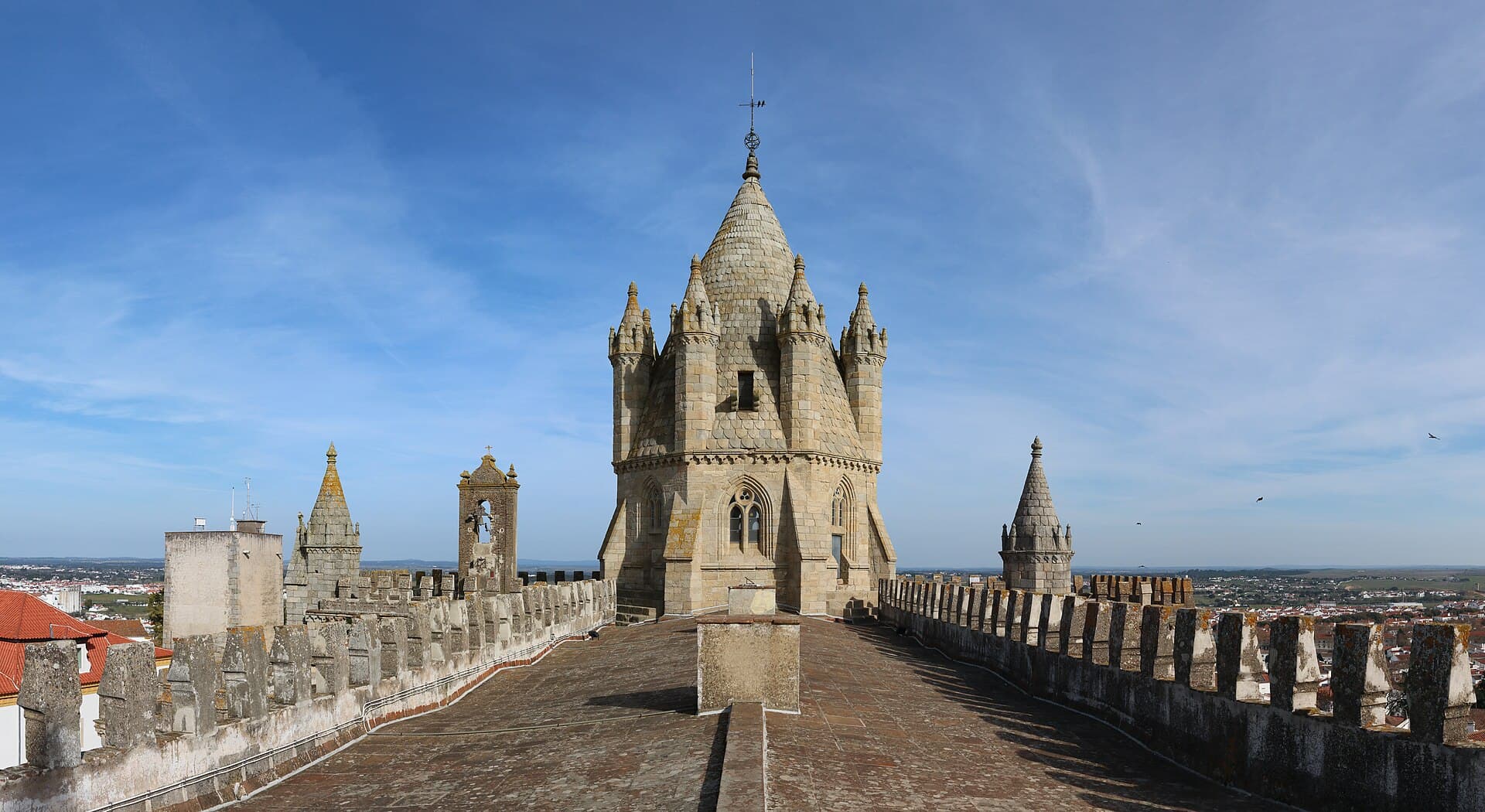
The temple is stop one because it sits at the crown, and the walk reads the hill as a stratigraphy, each stop a different century using the same ground. Just downhill rises the Se, the cathedral, and the word fortress fits it better than church. Its granite walls carry battlements and stone corbels, and it is widely described as the largest of Portugal's medieval cathedrals. Groundbreaking came in the year eleven eighty-six, when a first modest building went up before the great Gothic enlargement of the late thirteenth and early fourteenth centuries. Tradition holds that in fourteen ninety-seven the standards of Vasco da Gama's fleet were blessed here before he sailed for India, though that remains a lovely maybe rather than a documented fact. The rooftop terrace, reached by a spiral stair of about one hundred and thirty-five steps, opens onto the whole walled town.
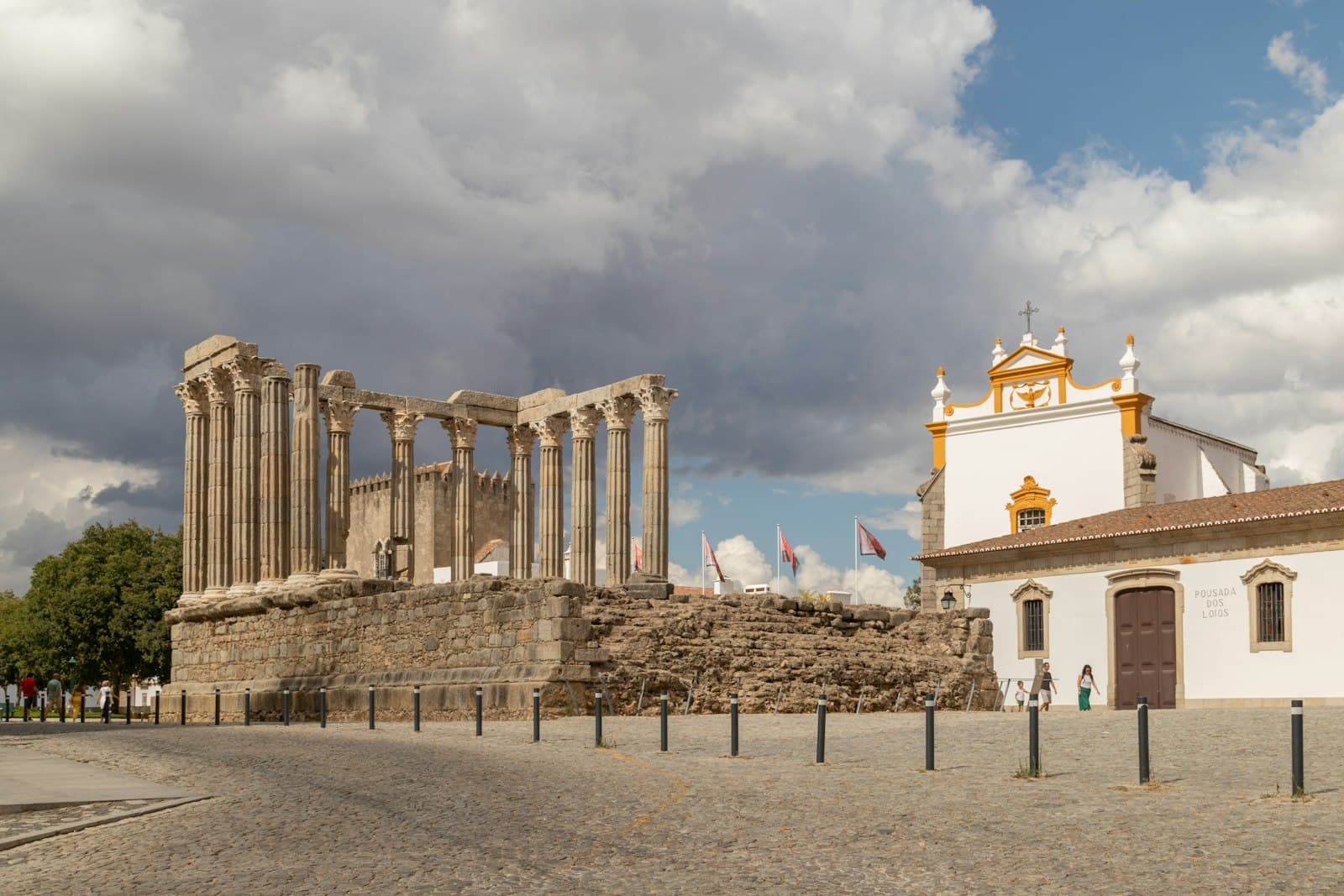
A few steps from the temple sits the Igreja de Sao Joao Evangelista, the Church of the Loios, founded in fourteen eighty-five and consecrated in fourteen ninety-one. From outside it is modest. Inside, the walls run floor to ceiling in blue-and-white azulejo tiles by the Lisbon master Antonio de Oliveira Bernardes, date-marked seventeen eleven, telling a saint's life across entire walls like a painted book you can stand inside. The church adjoins the palace of the Dukes of Cadaval, still the family's residence today. On one small patch of hilltop you have a Roman temple, a Renaissance church, and a living aristocratic house, all touching.
Step out beside the temple into the Jardim de Diana, the garden viewpoint sometimes called Evora's acropolis. From its railing the land falls away into the wide Alentejo plain of cork oaks and wheat, and on a clear day you can trace the long line of the medieval Agua de Prata aqueduct, whose name means silver water, marching in from the countryside. This is defensive logic two thousand years deep: whoever holds the hill sees anyone coming. The garden is free and open around the clock, which makes it the one stop you can return to at sunset when the plain turns gold.
Down in the lower town waits the Praca do Giraldo, long called the Praca Grande and renamed in eighteen sixty-nine for Geraldo Sem Pavor, Gerald the Fearless, who by tradition took Evora from its Moorish rulers around eleven sixty-five. Its marble fountain dates from fifteen seventy-one, and its eight spouts are said to stand for the eight streets that feed the square. The square also served as an Inquisition execution ground, where a Duke of Braganca was beheaded in fourteen eighty-four. The walk ends at the Universidade de Evora, founded in fifteen fifty-nine as a Jesuit college by Cardinal Dom Henrique, closed in seventeen fifty-nine when the Marquis of Pombal expelled the Jesuits, and refounded as a state university in nineteen seventy-three. Its cloister tiles illustrate the very subjects once taught in each room: a curriculum written in ceramic.
Walking it yourself
UNESCO inscribed the whole historic center on the World Heritage List in nineteen eighty-six, calling it a museum city that never stopped being lived in. The route is roughly two kilometres, mostly a gentle descent, and takes about two hours at an unhurried pace. Start at the temple in late afternoon, when the low sun warms the granite columns, and end in the lower town before the light goes. If you want to plan the whole route or compare it with the city's other walks, see the full set of Evora walking tours, or read more about visiting Evora itself. The temple is where the hill begins, and once you understand why its columns survived, the rest of the town reads like open pages.
Sources
- Roman Temple of Evora, Wikipedia: dating, hexastyle portico, medieval fortification, butcher-shop reuse until 1836, and the 1872 Cinatti restoration.
- Evora Cathedral, Wikipedia: 1186 groundbreaking, fortress form, twin towers, rooftop terrace, and the Vasco da Gama blessing tradition.
- Church of the Loios, Wikipedia: 1485 founding, 1491 consecration, Antonio de Oliveira Bernardes azulejos, and the Dukes of Cadaval palace.
- UNESCO World Heritage Centre, Historic Centre of Evora: 1986 inscription and the museum-city framing of the fifteenth and sixteenth century golden age.
- University of Evora, Wikipedia: 1559 Jesuit founding, Pombal's 1759 expulsion of the Jesuits, and the 1973 refounding as a state university.
Ready to experience it?
Roman Temple of Évora: Two Thousand Years on One Hill
85 min · 2.2 km · easy
More from Evora
Explore more at your own pace.
Evora Travel Guide: Days, Transport, Best Time, Safety, and Budget
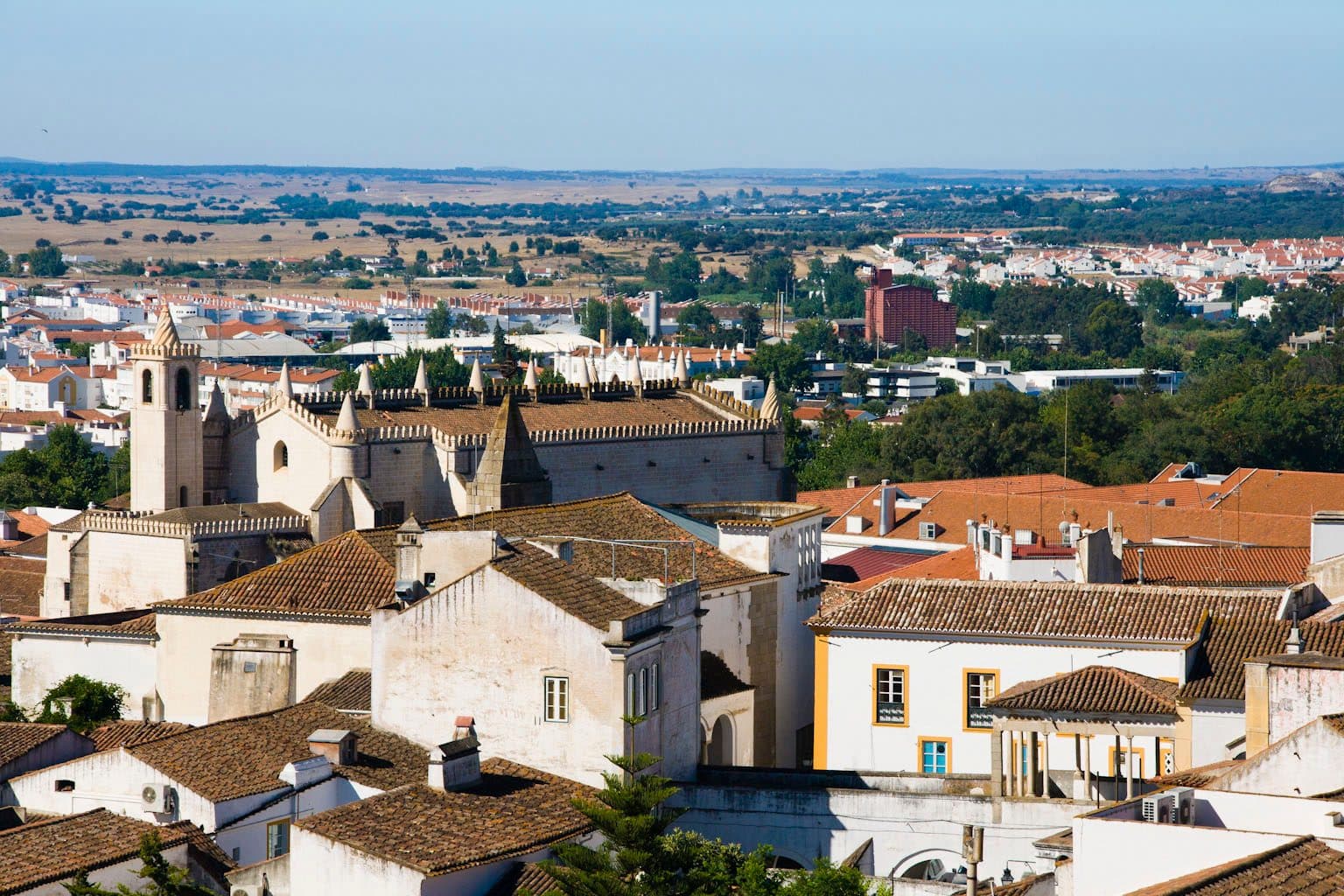
Evora: The Museum City That Never Stopped Being Lived In
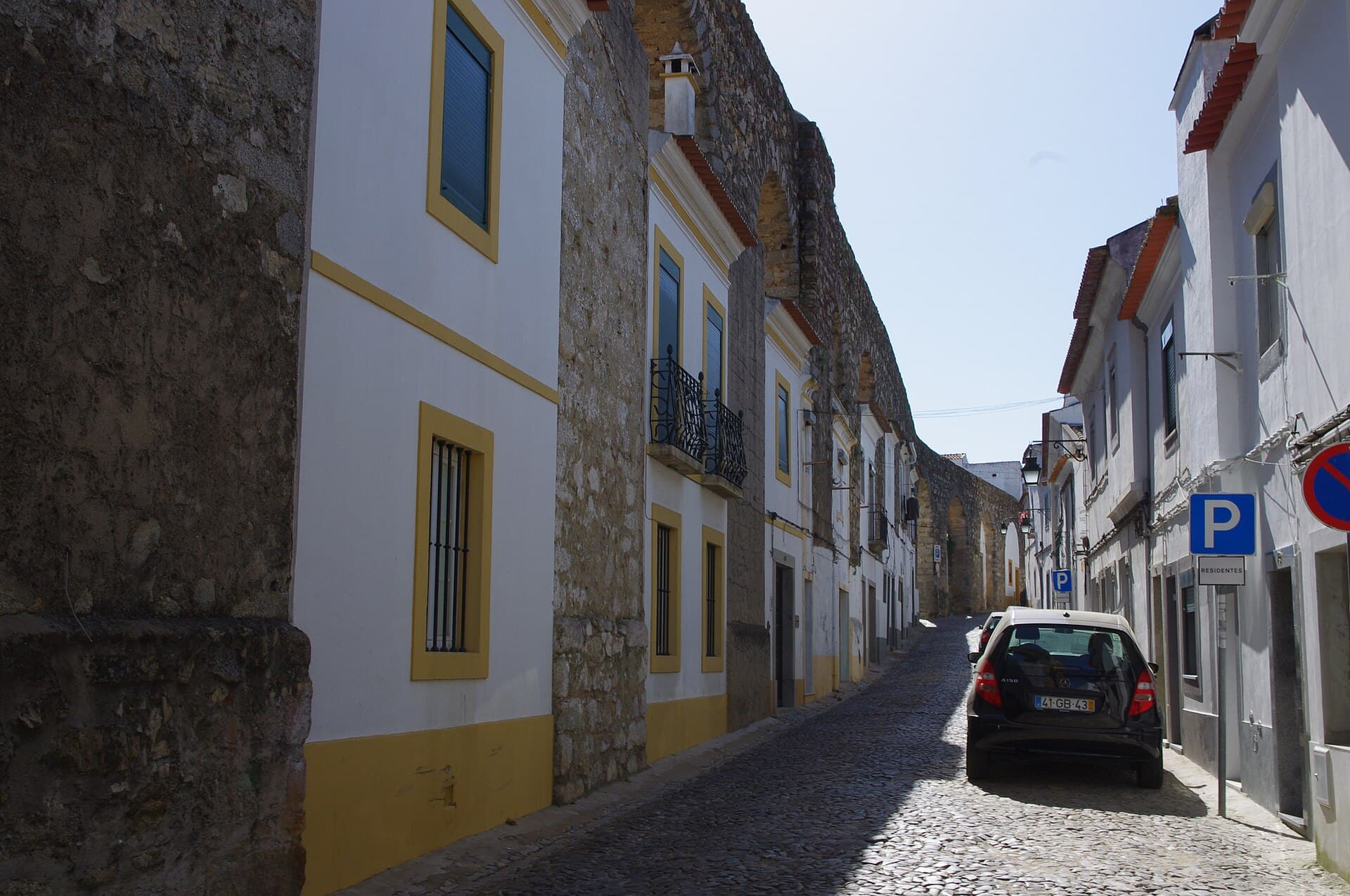
Rua do Cano: How Evora Moved Into a King's Aqueduct
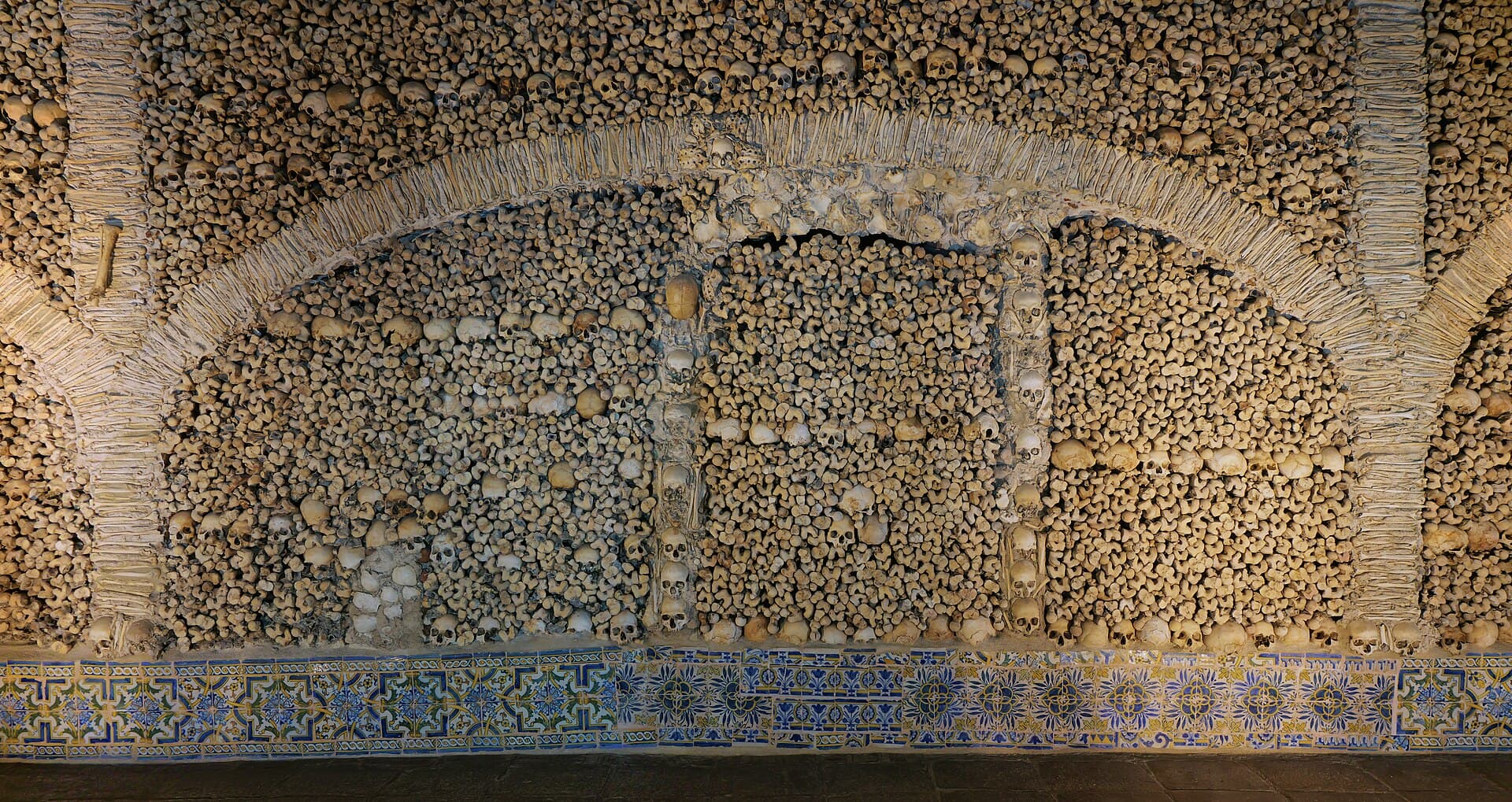
The Chapel of Bones in Evora: Why a City Lined a Wall With Its Dead
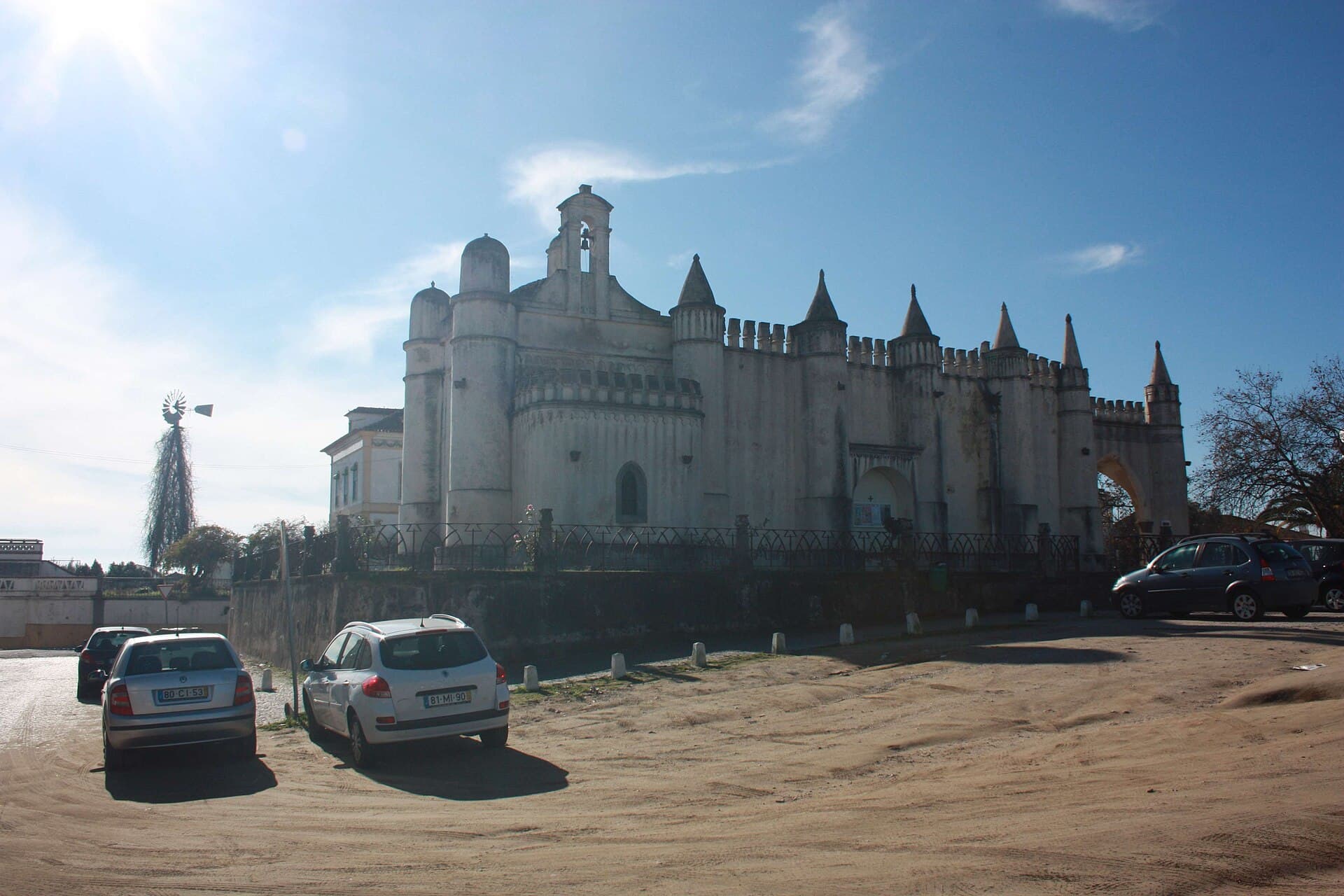
Ermida de Sao Bras: The Fortress Chapel Evora Built Against the Plague