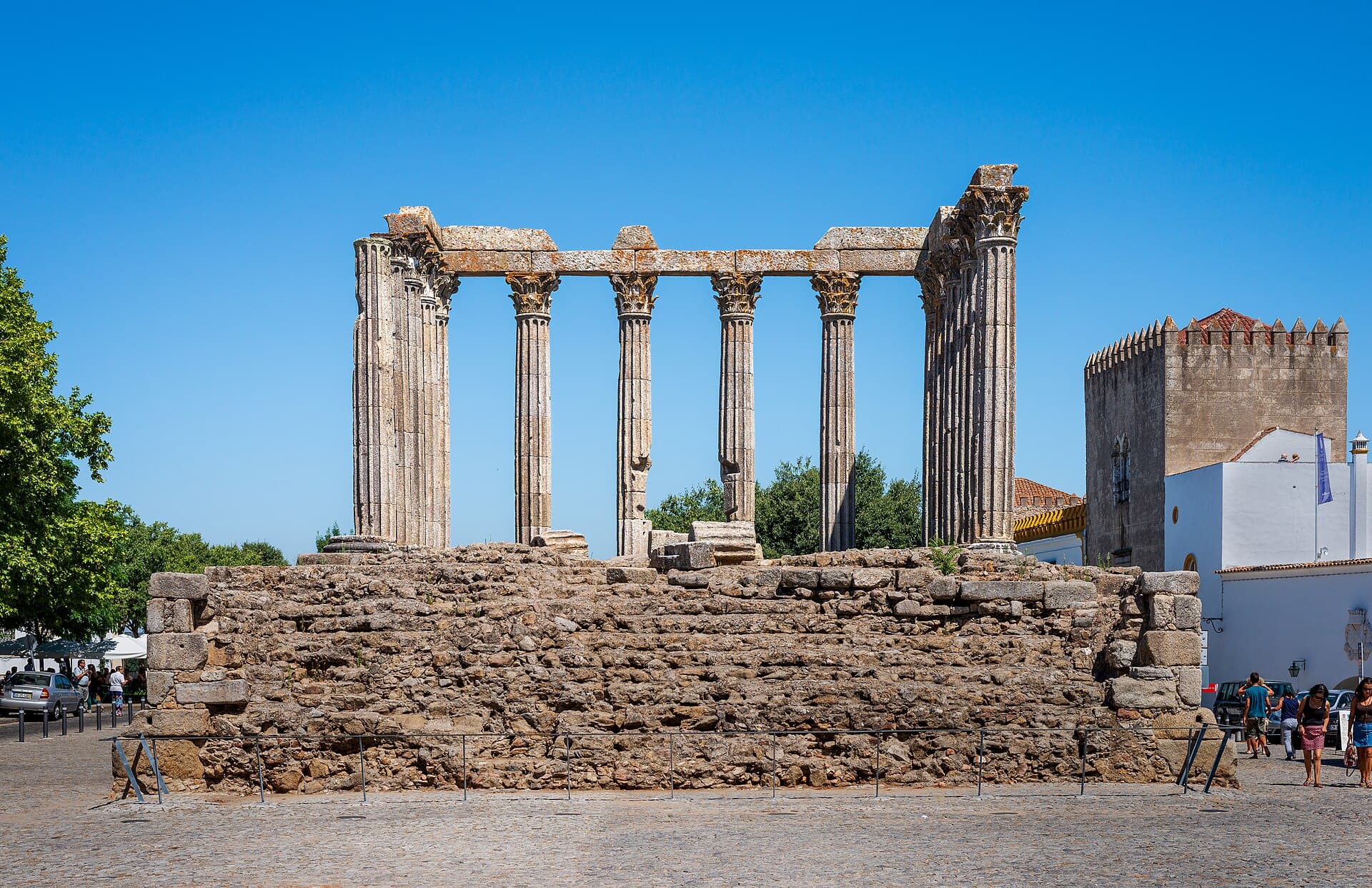
Two Thousand Years on One Hill
On one small walled hill in the Alentejo, Evora stacks Roman, medieval, and Renaissance Portugal on top of each other, and at the crown a Roman temple still stands after nearly two thousand years. This walk reads the hill top to bottom as a stratigraphy of Portuguese history, separating what the stones record from the pretty stories layered over them.
4.26|85 minutes|2.2 km|6 Stops
Start
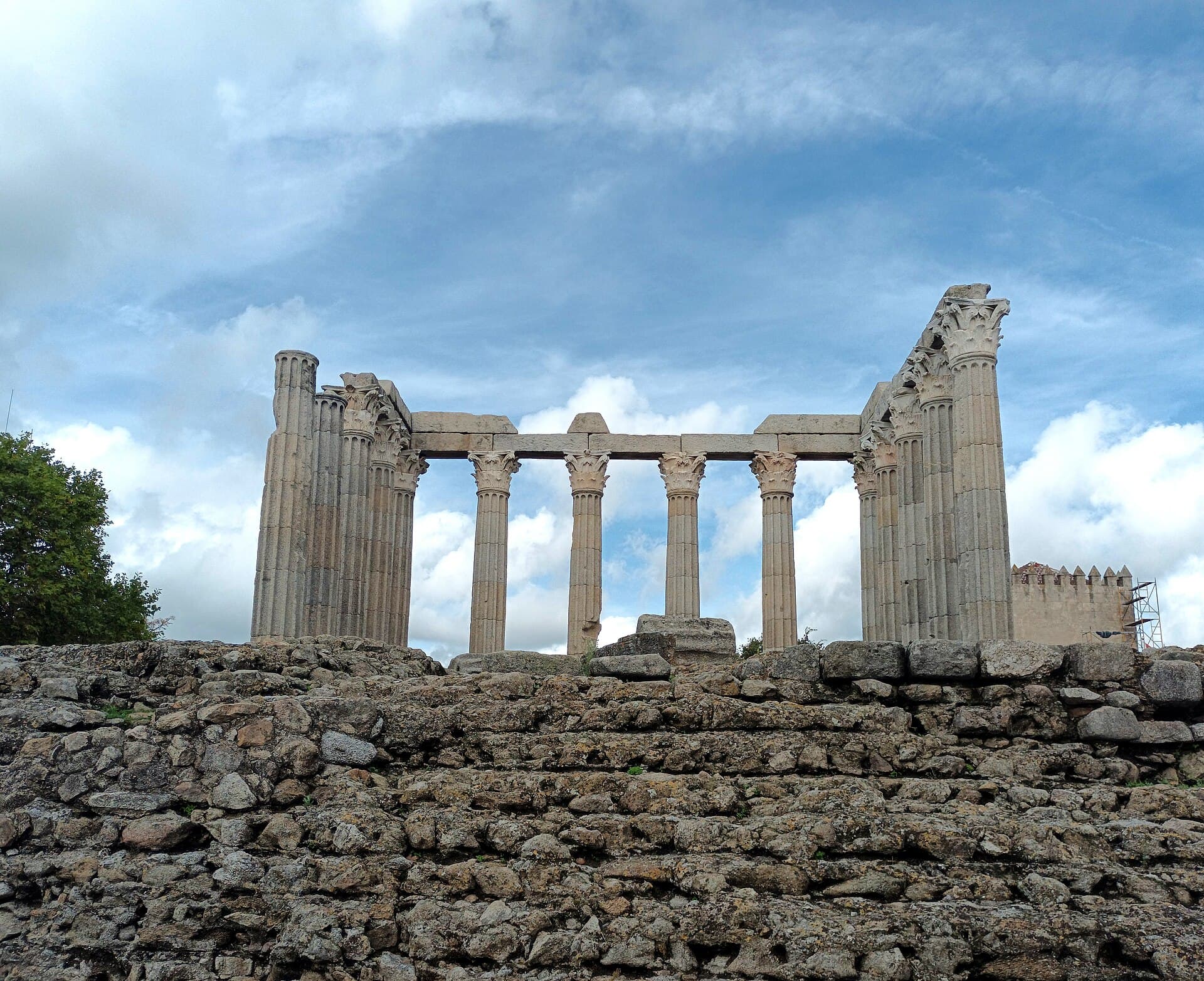
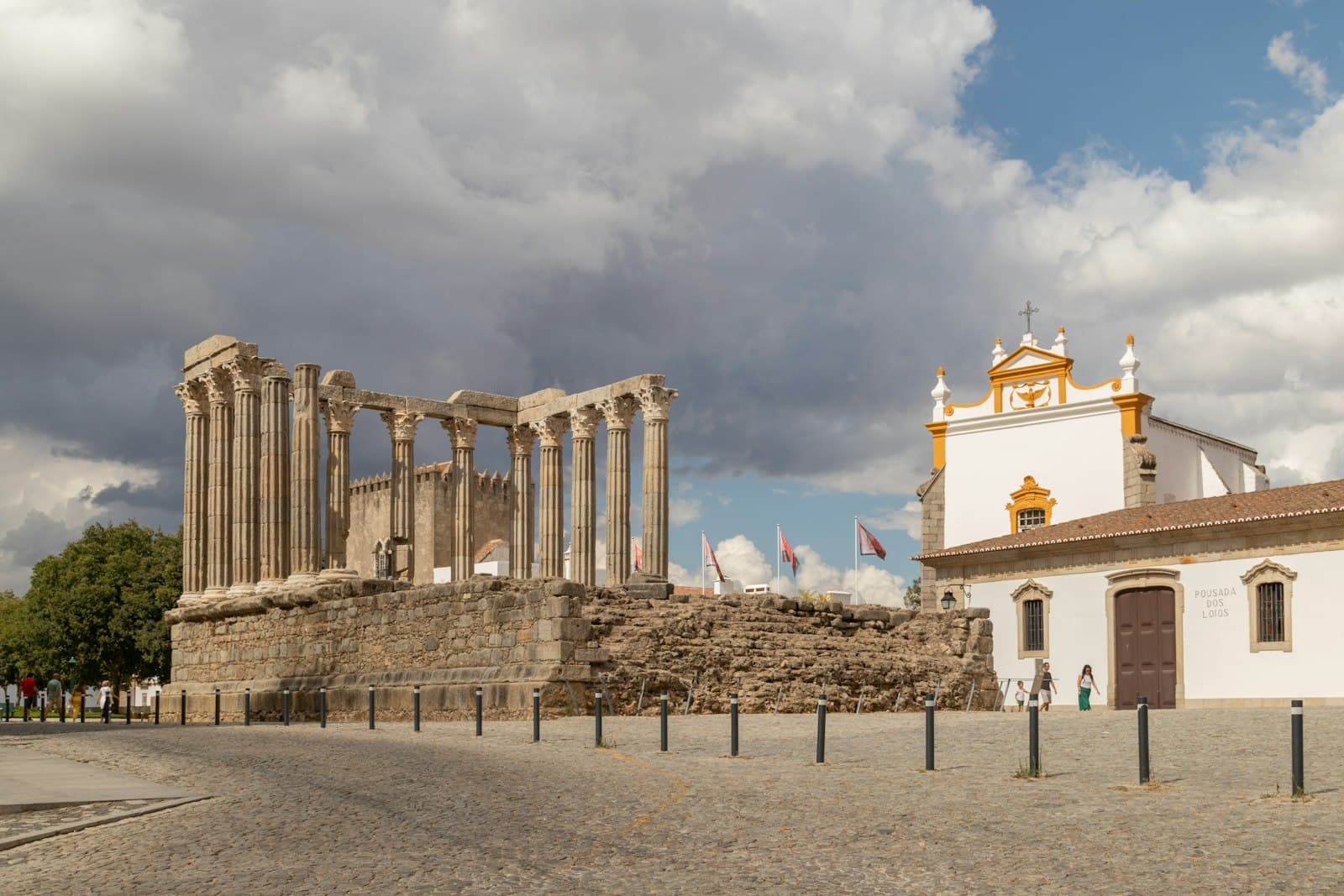
Templo Romano de Evora: The Crown of the Hill
1
Templo Romano de Evora: The Crown of the Hill
A first-century Roman temple on the highest ground of the old town, one of the best-preserved Roman monuments on the Iberian Peninsula, famous under a name that was never truly its own.
2
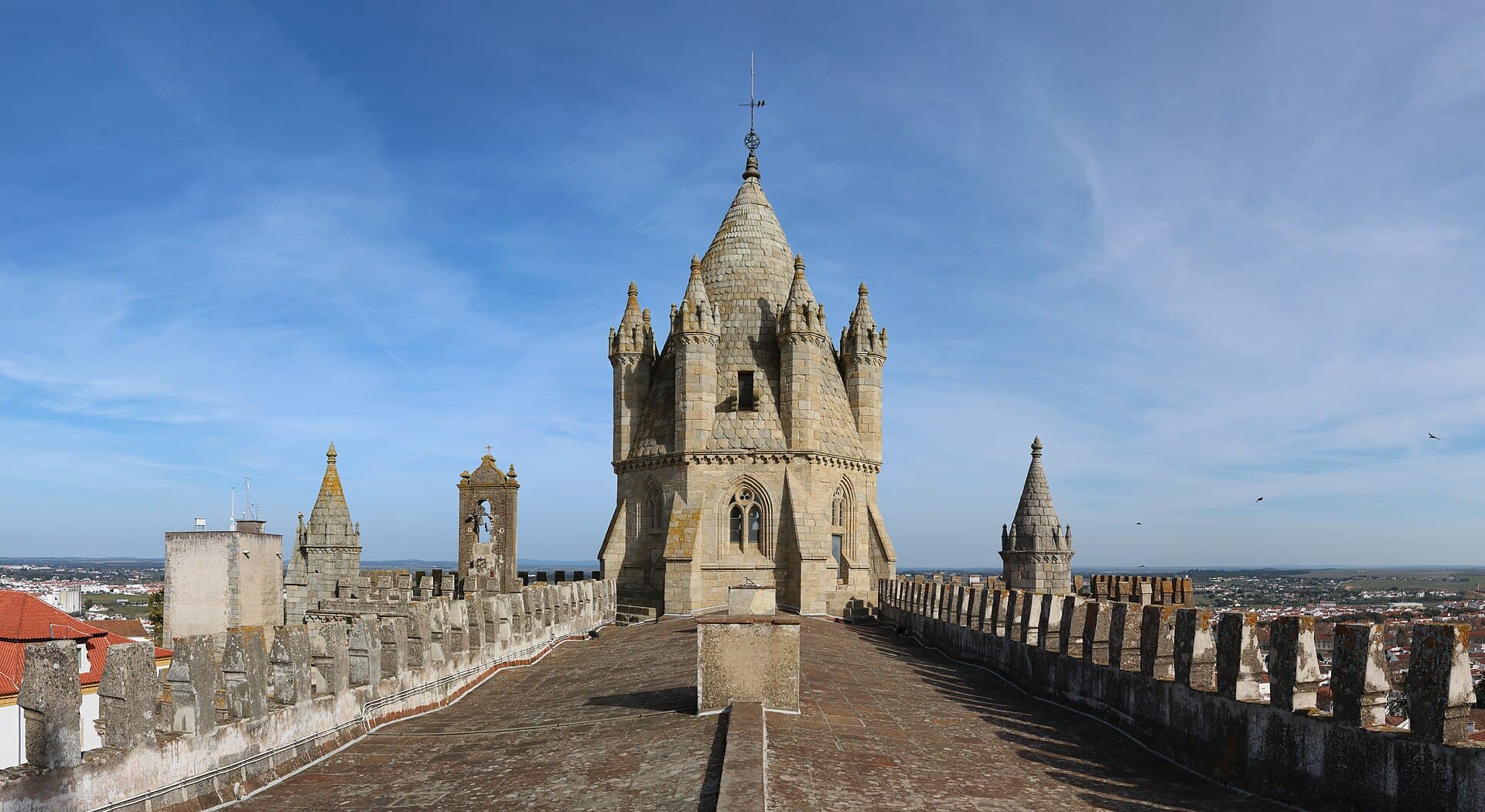
Se de Evora: The Fortress Cathedral
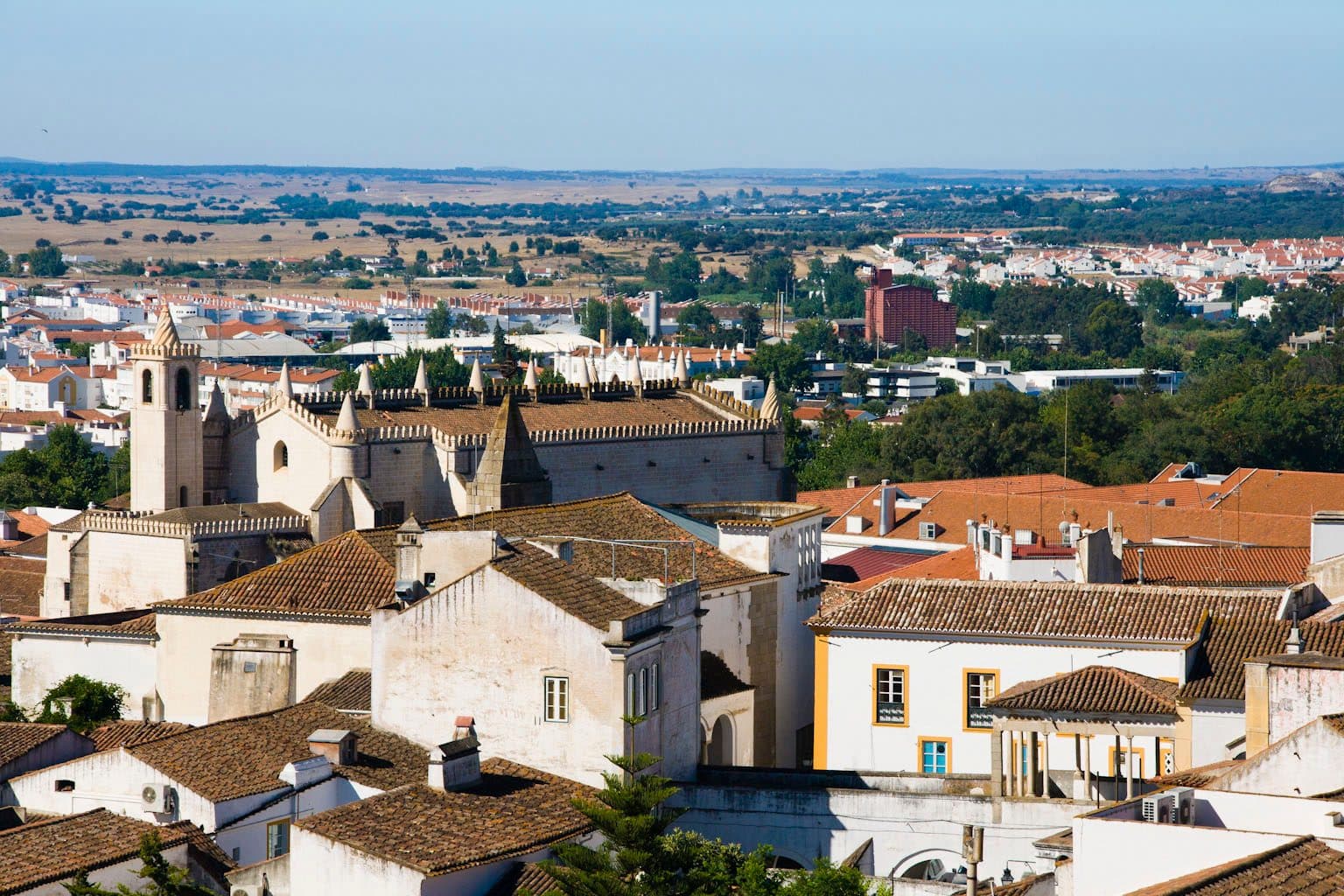
Portugal's largest medieval cathedral, a granite fortress begun in the twelfth century, tied by tradition to the departure of Vasco da Gama's fleet.
3
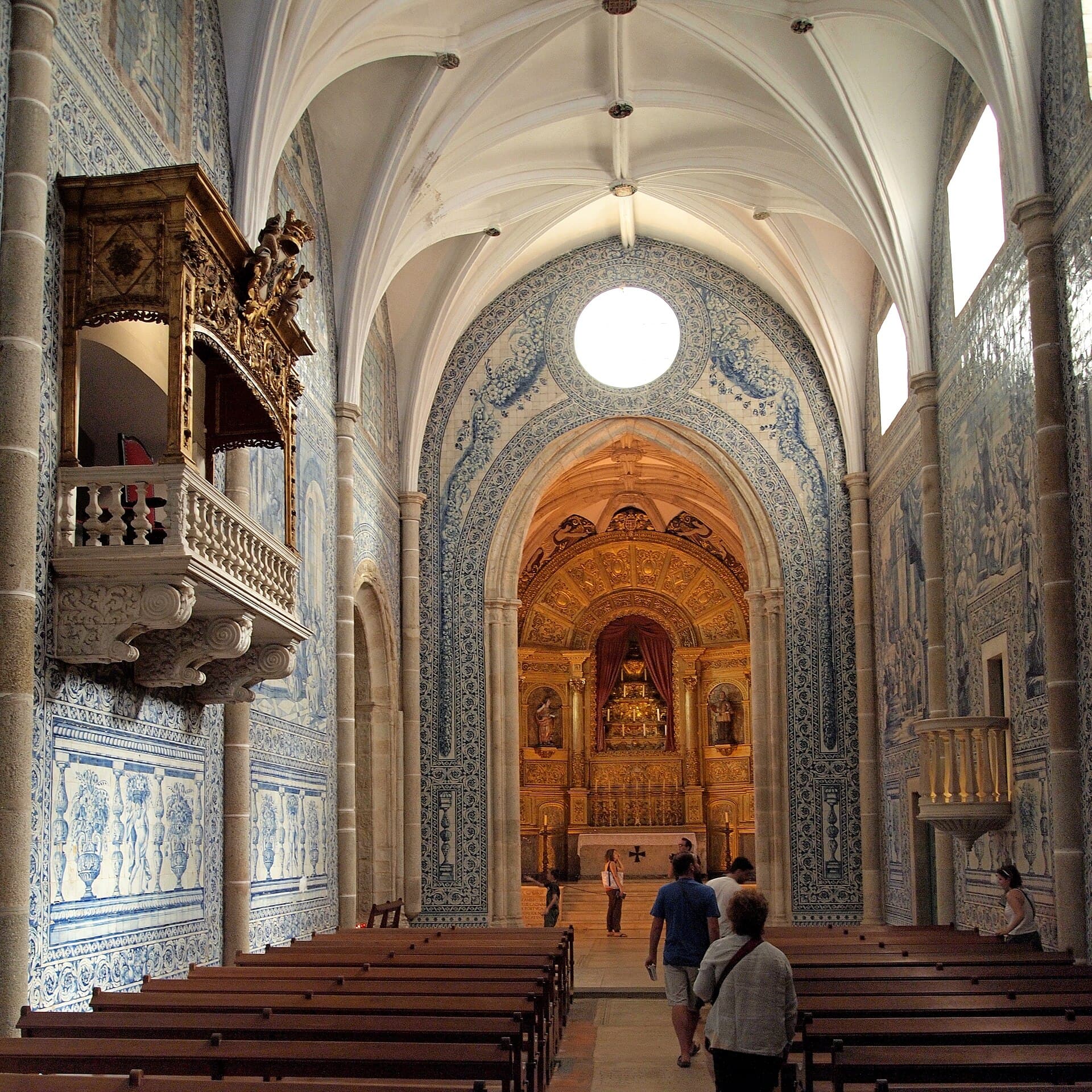
Igreja de Sao Joao Evangelista and the Palace of the Dukes of Cadaval
A late-fifteenth-century church beside the Roman temple, wrapped floor to ceiling in monumental blue-and-white tiles, adjoining a palace still held by the Dukes of Cadaval.
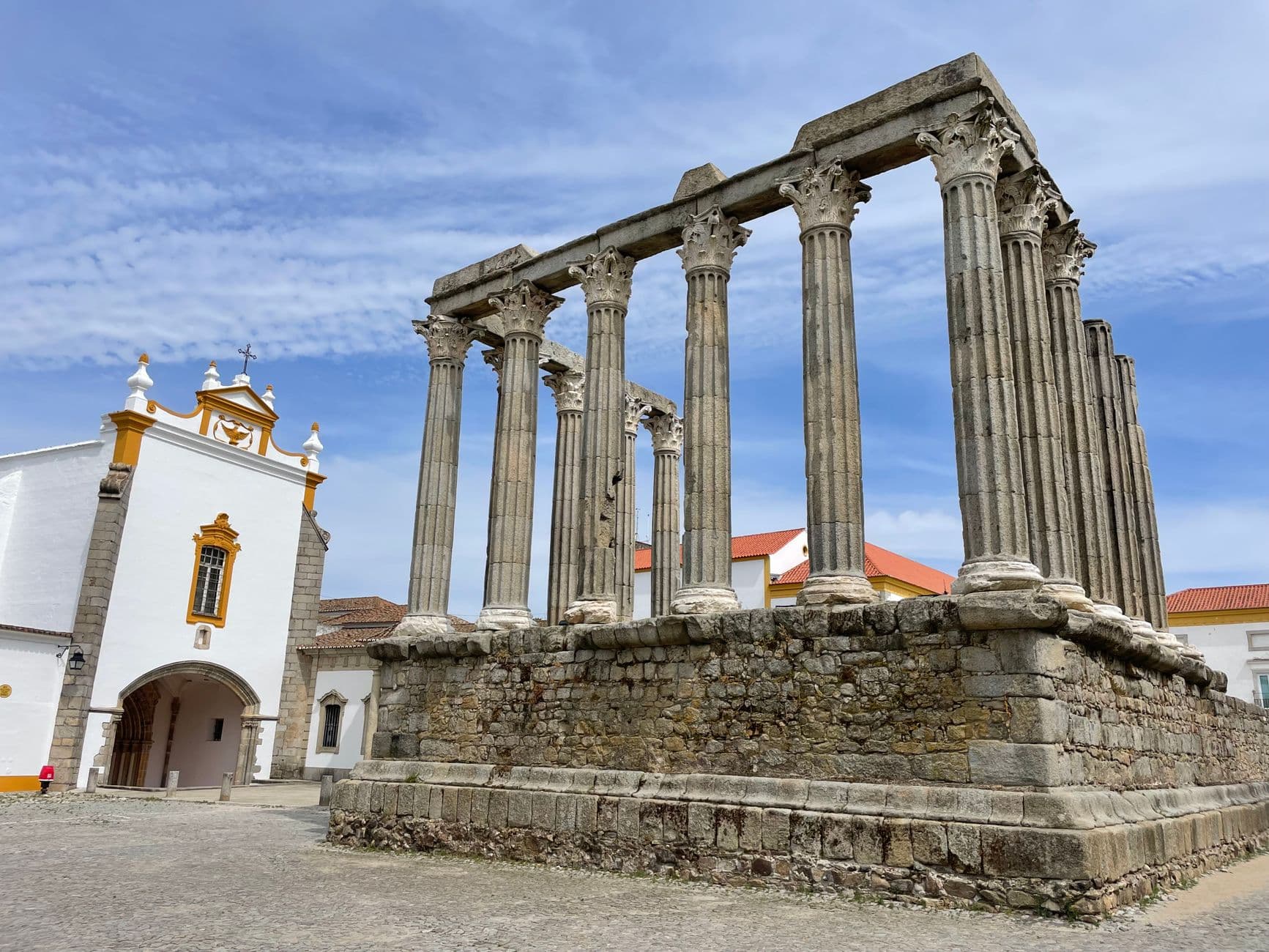
4
Jardim de Diana: The View Over the Alentejo
A free public garden and viewpoint on the crown of the hill beside the Roman temple, opening onto the medieval aqueduct and the wide Alentejo plain.
5
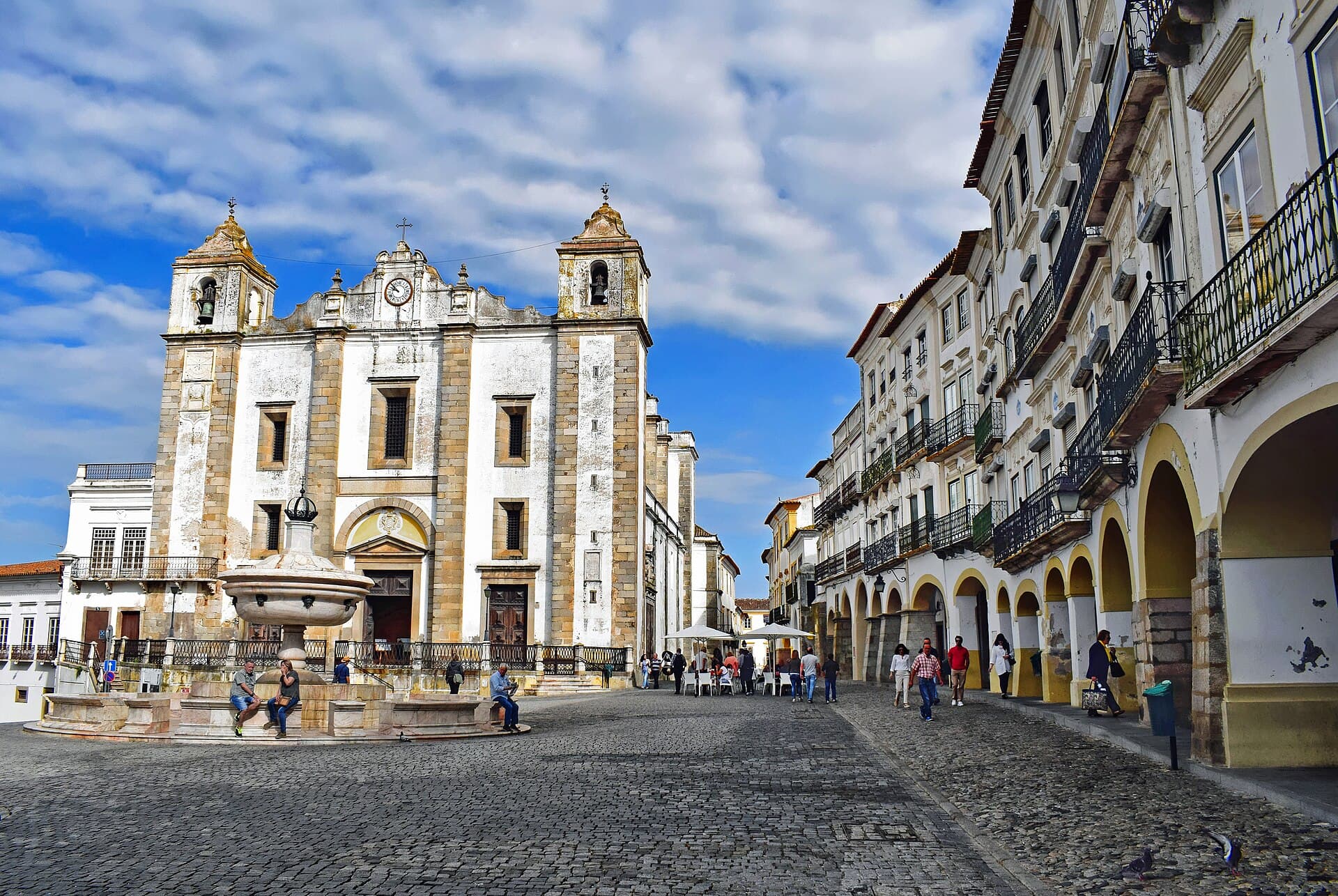
Praca do Giraldo: The Square of the Fearless Knight
The main square of the lower town, named for the knight who by tradition took Evora from the Moors, centered on a Renaissance marble fountain.
6
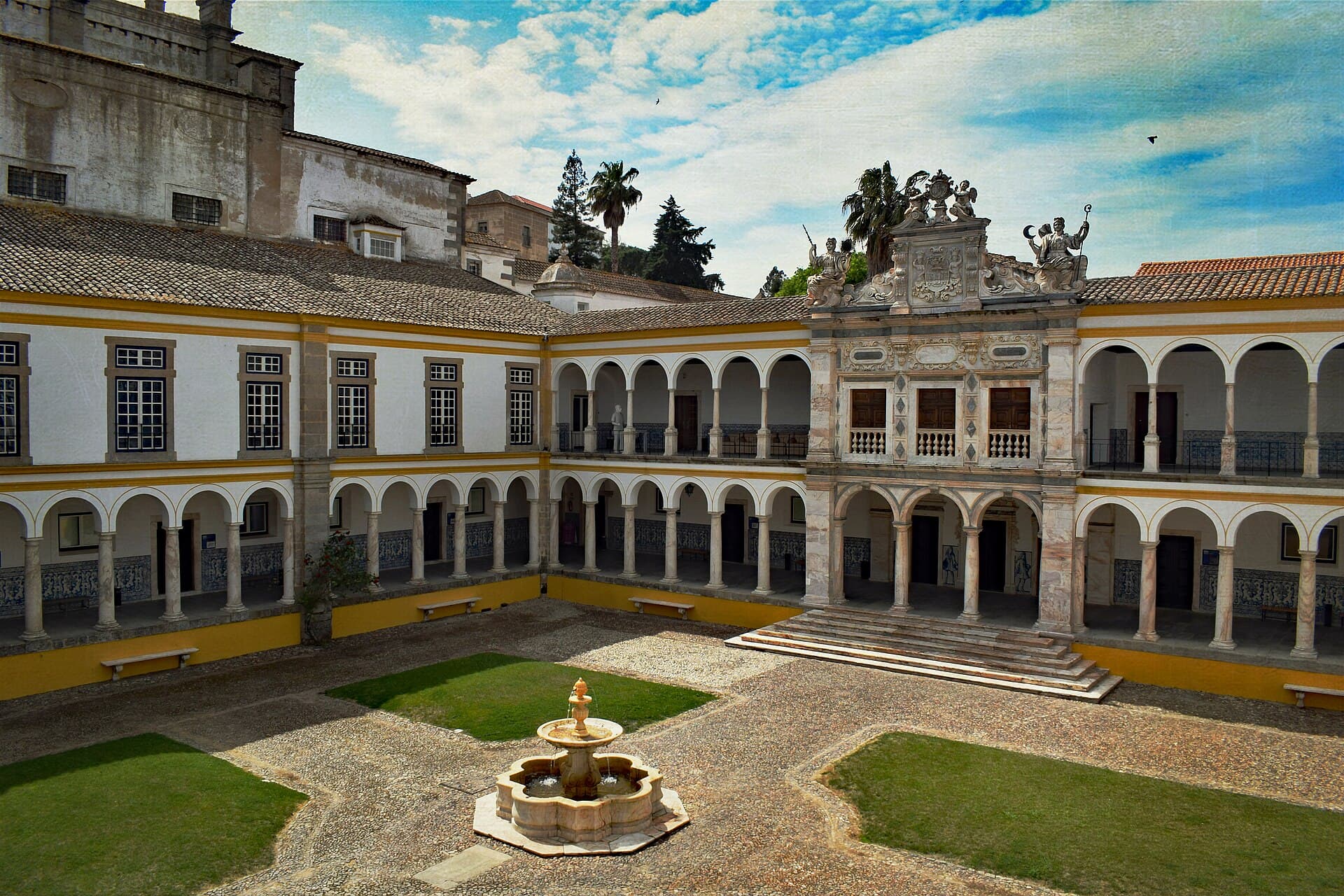
Universidade de Evora: Where the Golden Age Turned to Learning
A Jesuit university founded in fifteen fifty-nine, its cloister lined with Baroque tiles depicting the subjects once taught here, closed for a century and refounded in the modern era.
Best Time to Visit
Late afternoon on a clear day is the sweet spot. The low sun warms the temple's granite columns and lengthens shadows across the garden viewpoint, and the worst of the Alentejo midday heat has passed. Spring and autumn are the most comfortable seasons overall, with mild days and long light. If you want the temple and the garden nearly to yourself, arrive early in the morning before the tour coaches reach the top of the hill. Note that the cathedral, the Church of Sao Joao Evangelista, and the university keep daytime hours and some close on Mondays or Sundays, so an afternoon start lets you see the interiors before they shut while saving the open-air stops for golden light.
Pro Tips
- •The route runs downhill overall, so starting at the Roman temple at the top and ending at the university spares your knees the steepest climbs.
- •Buy the tiered cathedral ticket that includes the rooftop terrace if you have the legs for it. The spiral stair of about one hundred and thirty-five steps rewards you with a view over the whole walled town.
- •The garden beside the temple is free and open at all hours, so it makes an easy return trip at sunset even after the ticketed monuments have closed.
- •Carry small coins and a little cash. The monument entry fees are modest, a couple of euros here and there, and small sites sometimes prefer cash.
- •Check opening days before you set out. The Church of Sao Joao Evangelista closes Mondays, the university closes Sundays and public holidays, and the cathedral runs daily daytime hours.
- •Wear shoes with real grip. The historic lanes are paved in calcada, polished limestone cobbles that turn slick underfoot, especially on the slopes.
Safety & Precautions
- The old town is built on a hill and paved in calcada cobblestones that become genuinely slippery when wet or worn smooth. Take the slopes slowly and watch your footing.
- The Alentejo is hot and exposed in summer, and Evora sits inland with little shade on the open squares and the garden viewpoint. Carry water, use sun protection, and pace yourself in the heat of the day.
- The cathedral and the churches are active places of worship. Dress modestly with shoulders and knees covered, keep your voice low, and be mindful of services in progress.
- Major monuments can draw queues and keep set hours, and the narrow lanes carry cars and occasional traffic despite feeling pedestrian. Allow extra time at ticket desks and stay alert on the tight cobbled streets.
Gallery
Related Reading
Go deeper on what you'll see, hear, and walk through.
Overview
Best Self-Guided Walking Tours in Evora (2026)
3 min
Overview
Evora Travel Guide: Days, Transport, Best Time, Safety, and Budget
7 min
Overview
One Day in Evora: A Morning-to-Evening Walking Itinerary
9 min
Thematic
Evora: The Museum City That Never Stopped Being Lived In
7 min
Companion
Why Evora's Roman Temple Survived as a Butcher Shop
7 min
Deep dive
Se de Evora: The Fortress Cathedral on the Hill
6 min
Read
What to Eat in Evora: The Alentejo Dishes and How to Order Them
7 min