Roman Temple of Évora: Two Thousand Years on One Hill
85 min · 2.2 km · easy
A well-paced one day in Evora walks the compact walled old town from the Roman temple at the top of the hill down to the lower squares, fitting the cathedral, the Chapel of Bones, the Renaissance churches, and the Jesuit university into a single unhurried day of morning-to-evening walking. The whole historic center sits inside medieval walls covering roughly 105 hectares, so you cross it in minutes rather than hours, and the day is less about distance than about timing your indoor stops around opening hours and saving the free open-air viewpoints for golden light. This guide lays out that day hour by hour and points you to the three self-guided Evora walking tours that narrate it as you go.
The short answer: one full day is enough
Evora rewards a single focused day. The monuments cluster tightly on and around one hill, and you can see the headline sights, the Roman Temple, the Se cathedral, the Capela dos Ossos, the Church of the Loios, Praca do Giraldo, and the University, on foot without ever needing a car or bus inside town. UNESCO inscribed the historic center on the World Heritage List in 1986 as a museum city, and the practical upshot for a day-tripper is that the museum is walkable end to end.
If you are coming from Lisbon, Evora works well as a day trip. The train from Lisbon's Oriente station runs about an hour and a half, and the Rede Expressos coach from Sete Rios takes roughly an hour and twenty minutes. Both the train station and the bus terminal sit within walking distance of the old town, so you arrive ready to start. On weekdays the train is comfortable and scenic; on weekends, when train departures thin out, the intercity bus is the more flexible option. Check current timetables before you travel, since the schedule changes seasonally. For a fuller planning picture, including when to visit, what it costs, and honest safety notes, see the Evora travel guide.
How to spend one day in Evora on foot
Hear a stop from this walk
Templo Romano de Evora: The Crown of the Hill
The most sensible order for a single day follows the hill downward, so gravity does the work. Start high and early at the free, always-open Roman Temple and the garden beside it, drop through the ticketed churches while they keep their daytime hours, break for a slow lunch in the lower town, then use the cooler afternoon for the Chapel of Bones, the university, and the open-air aqueduct before climbing back up for sunset. Because the ticketed interiors close in the mid-to-late afternoon and a few shut on set days, front-load the paid stops and leave the free outdoor ones for last.
At a glance, the day runs: the Roman Temple and Jardim de Diana, the Church of the Loios, the Se cathedral, lunch on Praca do Giraldo, the Chapel of Bones, the University of Evora, the aqueduct along Rua do Cano, and a return to the temple at golden hour. Each block below sets out the hours, prices, and the honest caveats worth knowing.
If you would rather have the day narrated as you walk it, Roamer's three self-guided Evora audio tours are triggered by GPS as you reach each stop, work on iPhone, Android, or any mobile browser, download for offline use where the signal is thin, and are free to start: the introduction and first stop play in full, and every later stop plays a short preview before you decide to unlock the rest. Compare them on the best walking tours in Evora hub, or browse the full catalog on /explore.
Morning: start at the top of the hill
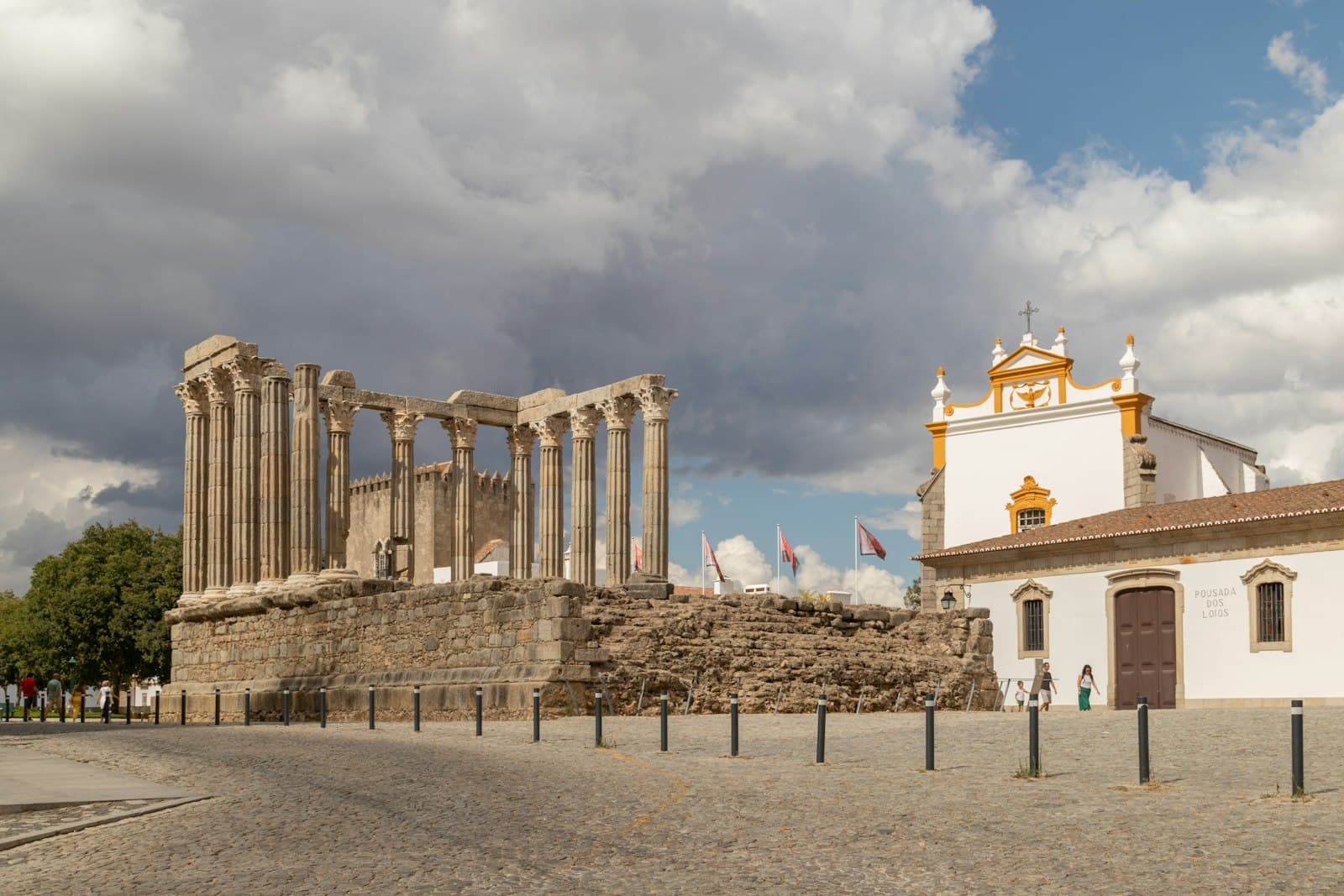
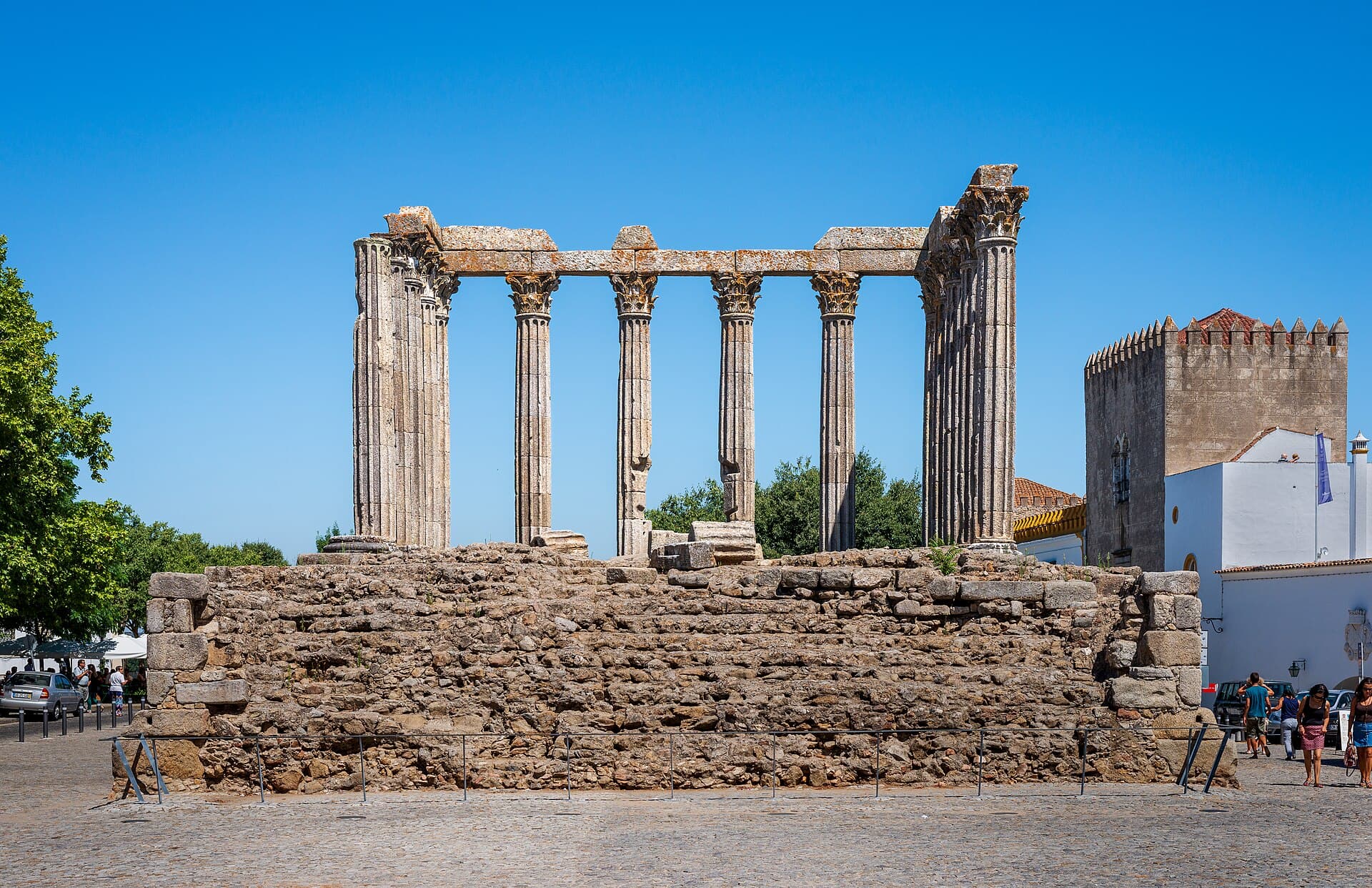
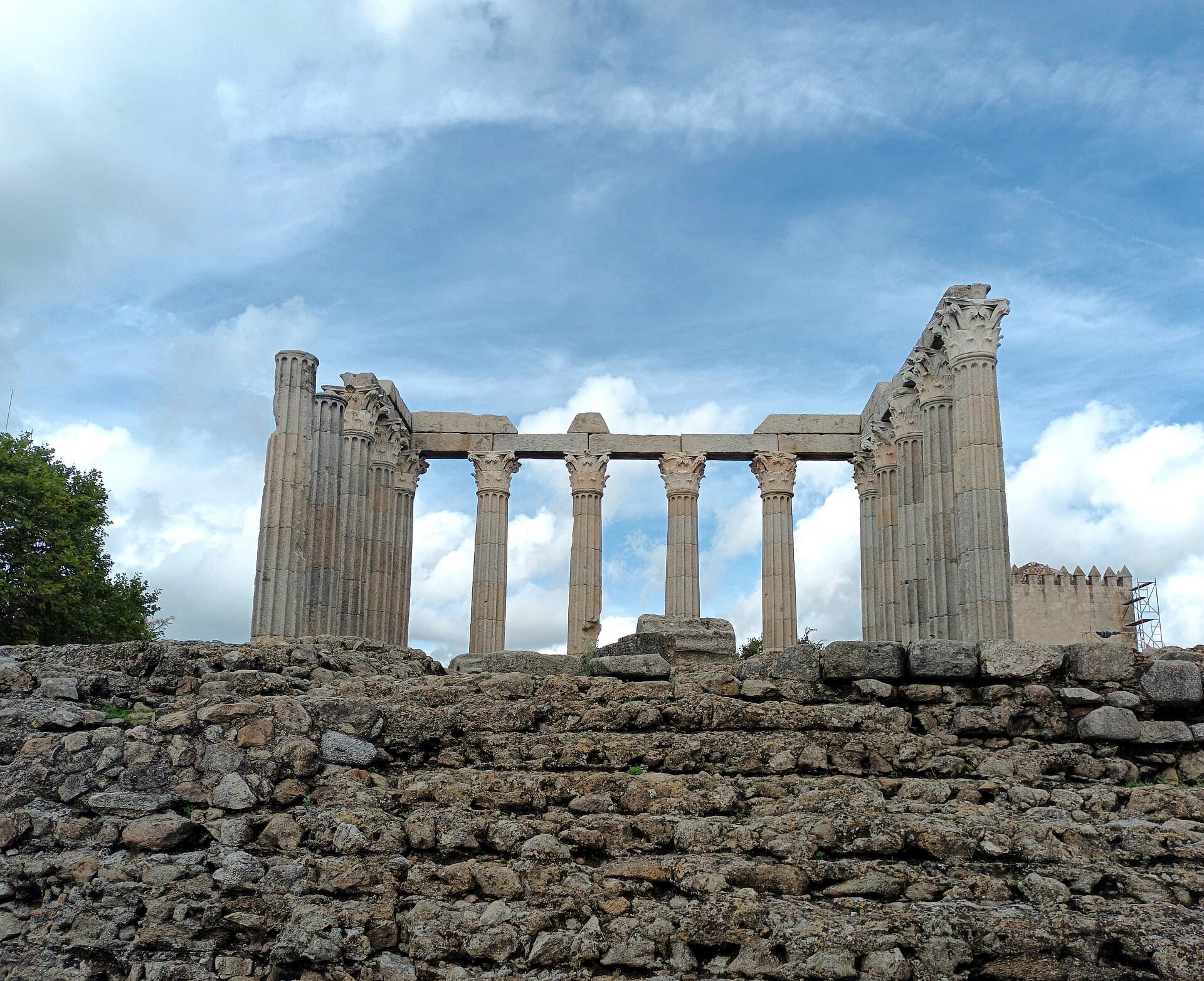
Begin where the city began, on the highest ground. The Roman Temple of Evora stands on the crown of the old town, six granite columns still rising on its north face after nearly two thousand years. The story of how the Roman Temple survived the centuries, including a long stint walled up as a butcher shop, is worth reading before you go. It is often called the Temple of Diana, but that name is a seventeenth-century invention with no archaeological basis, attributed to a priest named Manuel Fialho. The true dedication is unknown, most likely the imperial cult. The temple is free, open-air, and never closes, which is why early morning is the ideal moment to have it nearly to yourself before the coach tours reach the top.
Right beside it, the Jardim de Diana is a free public garden and viewpoint open around the clock. Walk to its railing for the reason the Romans chose this hill: the land falls away into the wide Alentejo plain, and on a clear day you can trace the long line of the Agua de Prata aqueduct marching in from the countryside. This is the opening arc of Roamer's Two Thousand Years on One Hill self-guided audio walk, a roughly two-hour, two-kilometer route that reads the hill top to bottom as a stratigraphy of Portuguese history. Full details are on the Evora city page.
From the garden, step into the Church of Sao Joao Evangelista, also called the Church of the Loios, founded in 1485. Its plain exterior hides an interior covered floor to ceiling in blue-and-white azulejo tiles by the Lisbon master Antonio de Oliveira Bernardes, date-marked 1711. The church opens Tuesday to Sunday, roughly from mid-morning, and closes on Mondays, so if you are visiting on a Monday, plan to admire the temple and garden and skip the tiled interior. There is an entry fee, and a single ticket usually also covers the exhibitions in the adjoining Palace of the Dukes of Cadaval, which remains a private family residence. Quoted prices vary between sources, so confirm the current fee at the door.
Late morning: the fortress cathedral
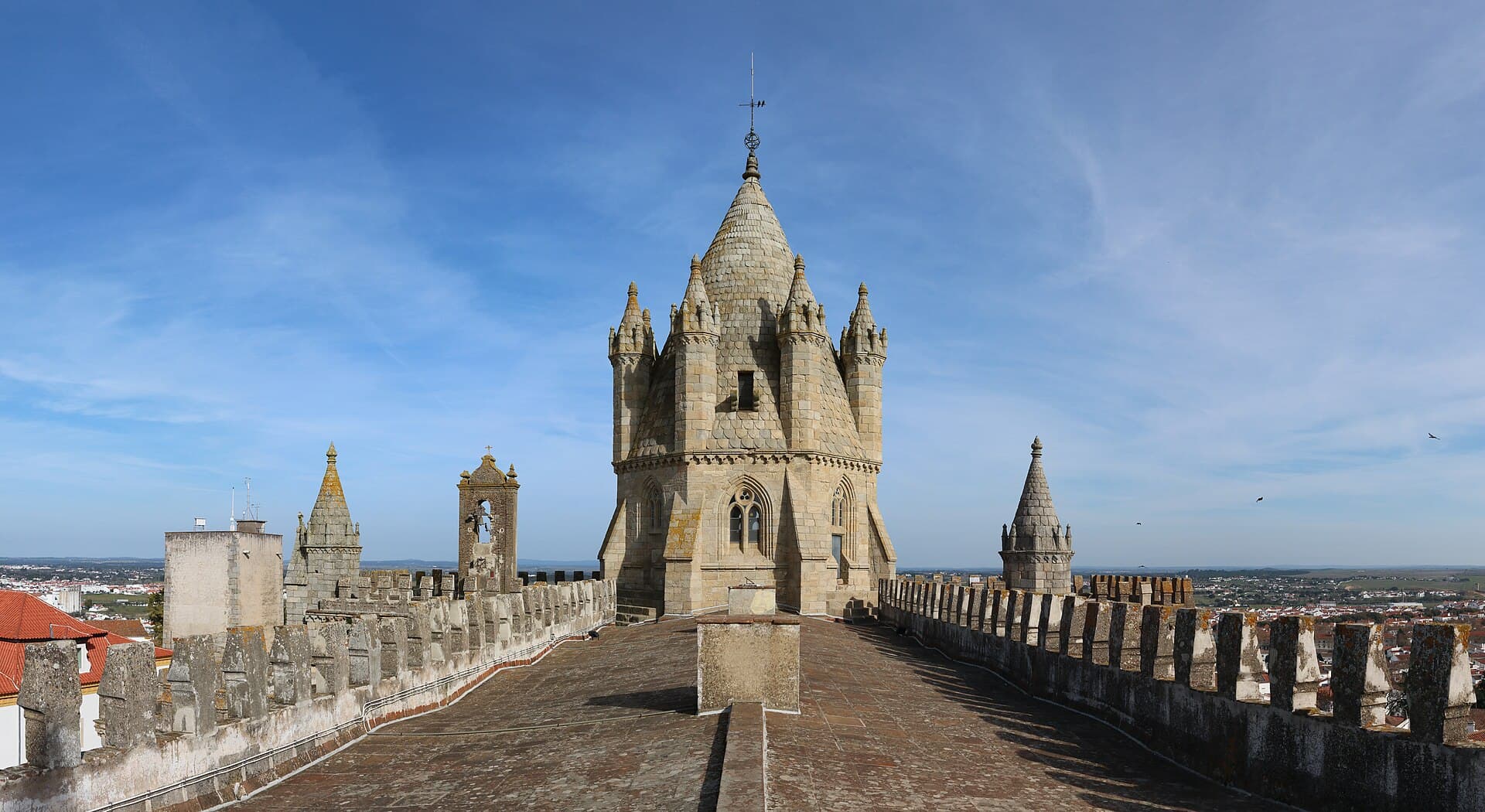
A short walk downhill brings you to the Se, Evora's cathedral and the largest of Portugal's medieval cathedrals. Groundbreaking was in 1186, and the building reads as a fortress with an altar inside, granite walls carrying battlements and two towers crowned with conical spires. By tradition the standards of Vasco da Gama's fleet were blessed here in 1497 before he sailed for India, though that is received as tradition rather than a documented event.
The cathedral opens daily, generally from morning through late afternoon, with the last entrance to the panoramic terrace in the mid-afternoon (around 16:30) and the museum closed on Mondays. Tickets are tiered: a church-and-cloister entry runs about 2.50 euros, and the fuller option covering the rooftop panoramic view and the sacred-art museum is still under 5 euros. If your knees are willing, buy the tier that includes the rooftop and climb the spiral staircase of about 135 steps for a view over the entire walled town. It is the best paid view in Evora, and worth planning your morning around its afternoon cutoff.
Midday: lunch on Praca do Giraldo
Descend into the lower town and you reach Praca do Giraldo, the main square and the natural place to pause for lunch. For centuries it was simply the Praca Grande, renamed in 1869 for Geraldo Sem Pavor, Gerald the Fearless, the knight who by tradition took Evora from its Moorish rulers around 1165. At its center stands a marble fountain built in 1571, and its eight spouts are said to represent the eight streets that feed into the square. The square carries a somber past too: it served as a ground for Inquisition executions.
Cafes and restaurants ring the square and the streets running off it, so this is the sensible spot to sit, eat, and let the worst of the midday Alentejo heat pass. If you want to know what to order, our guide to what to eat in Evora walks through the Alentejo dishes worth seeking out. The plain is hot and exposed in summer, and Evora sits inland with little shade on the open squares, so a slow lunch here is good pacing, not lost time.
Early afternoon: the Chapel of Bones
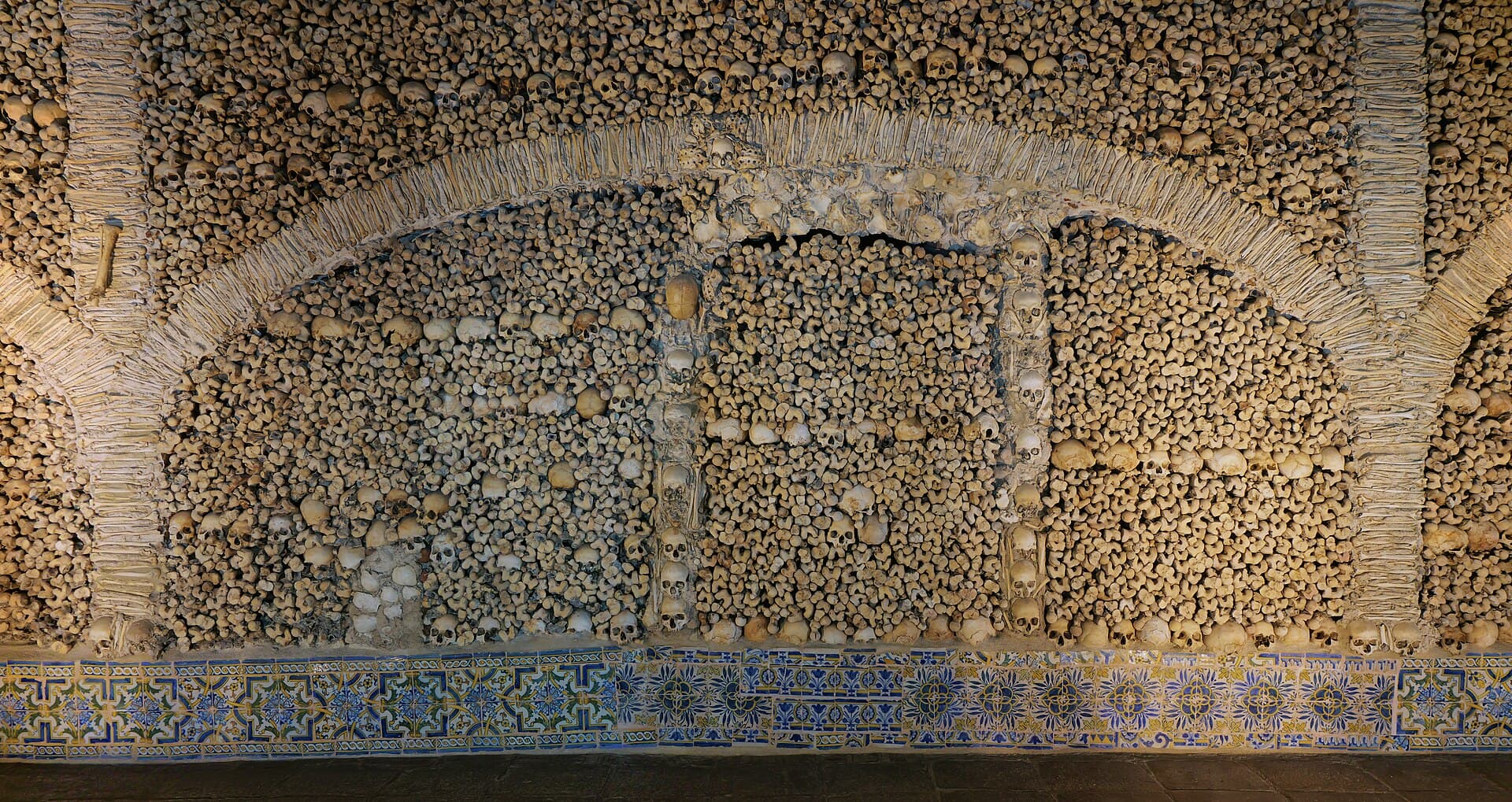
After lunch, walk south to the Igreja de Sao Francisco and its famous Capela dos Ossos, the Chapel of Bones. Its walls and pillars are lined with the bones of thousands of the dead, arranged as a Baroque meditation on mortality. It is the anchor of Roamer's second Evora self-guided walk, the bones-and-faith route through the southern old town, which weaves the chapel together with the Franciscan church, the public market on Praca 1 de Maio, and the Jardim Publico.
The chapel opens daily. In summer it typically runs from morning until early evening (roughly until 18:30), with shorter winter hours (closer to 17:00) and a later Sunday opening. Admission is a modest fee, in the region of 6 euros for adults with concessions for youths and seniors, and it usually includes a small religious-art collection and nativity display. Because it is one of the most visited sights in town, arrive either just after the lunch lull begins to clear or later in the afternoon to avoid the tour-group crush in the middle of the day.
Late afternoon: the university and the aqueduct
Head east to the University of Evora, founded in 1559 as the Jesuit Colegio do Espirito Santo by Cardinal Dom Henrique, who later briefly became king. The Jesuits were expelled in 1759 under the Marquis of Pombal and the college eventually closed until it was refounded as a state university in 1973. Walk into the Patio dos Gerais and look at the cloister walls: Baroque azulejo panels illustrate the very subjects once taught in each room, from mathematics and astronomy to the fine arts, a curriculum written in ceramic. The college interior opens Monday to Saturday, from 09:30 to 17:00, and closes on Sundays and public holidays, with an entry fee of about 3 euros and an audio guide for about 1.50 euros. That Sunday closure matters: if your day trip lands on a Sunday, save the university for another visit and lean on the free outdoor stops instead.
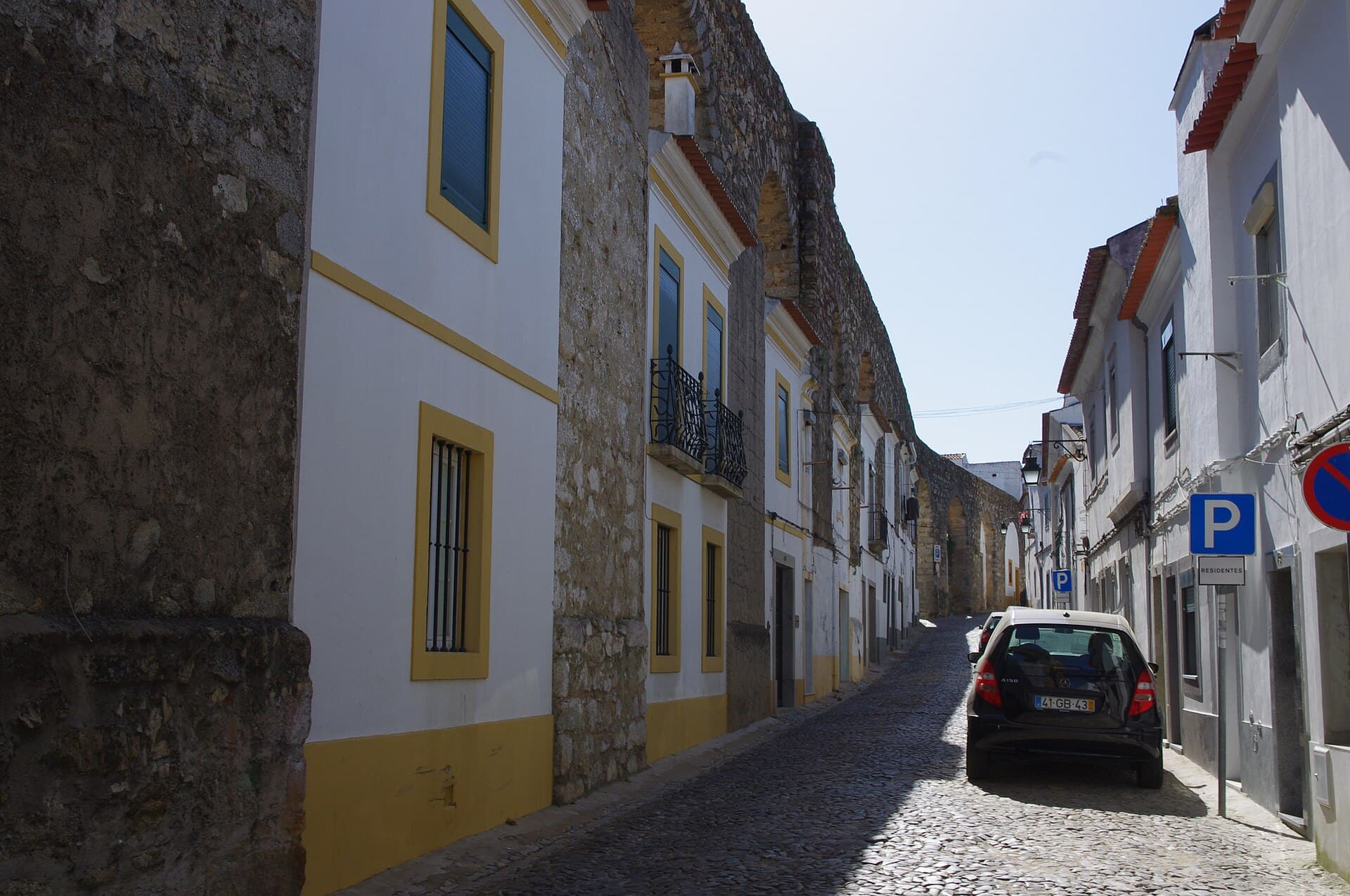
If you still have energy, trace the Agua de Prata aqueduct where it strides into town and see how ordinary homes and shops were built directly into its granite arches along Rua do Cano. This is the spine of Roamer's third self-guided walk, the water-and-aqueduct route, a gentle 1.5-kilometer loop that reads the city through its water supply, from imperial engineering above to human life underneath. All the aqueduct-route stops are free and open-air, which makes it a good low-cost close to the day.
Evening: back up for sunset
End where you began. The Jardim de Diana and the Roman Temple are free and open at all hours, so climb back to the top of the hill as the light goes long. Late afternoon on a clear day is the sweet spot in Evora: the low sun warms the temple's granite columns, the Alentejo plain turns gold, and the ticketed monuments have closed while the best open-air view stays free. Find a bench in the garden, look out over the plain, and let the day settle.
Practical notes for the day
Wear shoes with real grip. Evora's historic lanes are paved in calcada, polished limestone cobbles that turn genuinely slippery when wet or worn smooth, and the old town runs on a slope. Carry small coins and a little cash, since monument fees are modest, a couple of euros here and there, and small sites sometimes prefer cash. Check opening days before you set out: the Church of the Loios closes Mondays, the university closes Sundays and holidays, and the cathedral runs daily with a mid-afternoon cutoff for the rooftop. The cathedral and churches are active places of worship, so dress modestly and keep your voice low. Evora is a calm, low-crime town by day; the honest caution is footing on the cobbles and the summer heat, not safety.
Sources
- Evora Cathedral 2026 Tourist Guide (hours and ticket tiers)
- Capela dos Ossos (Chapel of Bones) 2026 visitor guide
- University of Evora, Colegio do Espirito Santo visiting information
- Igreja dos Loios / Sao Joao Evangelista tourist guide
- Lisbon to Evora bus and train 2026 transportation guide
- Historic Centre of Evora, UNESCO World Heritage Centre
Frequently asked questions
- Can you see Evora in one day?
- Yes. Evora''s historic center sits inside medieval walls covering roughly 105 hectares, so the main monuments cluster within a few minutes'' walk of each other. A single unhurried day on foot covers the Roman Temple, the Se cathedral, the Chapel of Bones, the Church of the Loios, Praca do Giraldo, and the University without needing a car. The day is less about distance than about timing your indoor stops around opening hours and saving the free open-air viewpoints for golden light.
- Is Evora worth a day trip from Lisbon?
- Yes. The train from Lisbon''s Oriente station takes about an hour and a half, and the Rede Expressos coach from Sete Rios takes roughly an hour and twenty minutes. Both the train and bus stations are within walking distance of the old town, so you arrive ready to start. UNESCO inscribed Evora''s historic center on the World Heritage List in 1986 as a museum city, and it is walkable end to end, which makes it well suited to a single focused day. On weekends, when train departures thin out, the intercity bus is usually the more flexible option, so always check current timetables before you travel.
- What should you see in Evora in one day?
- Work down the hill. Start at the Roman Temple and the free Jardim de Diana viewpoint at the top, then the Church of the Loios and the Se cathedral, break for lunch on Praca do Giraldo, and spend the afternoon on the Chapel of Bones at the Church of Sao Francisco, the University of Evora, and the Agua de Prata aqueduct along Rua do Cano. End back up at the Roman Temple for sunset, since it and the garden are free and open at all hours.
- Is Evora walkable?
- Yes. The whole historic center sits inside medieval walls covering roughly 105 hectares, so you cross it in minutes rather than hours and never need a car or bus inside town. The one caution is the surface: the historic lanes are paved in calcada, polished limestone cobbles that turn slippery when wet or worn smooth, and the old town runs on a slope, so wear shoes with real grip and take the descents slowly.
- What is the Chapel of Bones?
- The Capela dos Ossos, part of the Igreja de Sao Francisco, is a chapel whose walls and pillars are lined with the bones of thousands of the dead, arranged as a Baroque meditation on mortality. It opens daily, typically from morning until early evening in summer (around 18:30) and shorter hours in winter (closer to 17:00), with a later opening on Sundays. Admission is a modest fee, in the region of 6 euros for adults with concessions for youths and seniors, and usually includes a small religious-art collection and nativity display. Prices vary between sources, so check the current fee before you go.
Ready to experience it?
Roman Temple of Évora: Two Thousand Years on One Hill
85 min · 2.2 km · easy
More from Evora
Explore more at your own pace.
Evora: The Museum City That Never Stopped Being Lived In
Rua do Cano: How Evora Moved Into a King's Aqueduct
The Chapel of Bones in Evora: Why a City Lined a Wall With Its Dead
Why Evora's Roman Temple Survived as a Butcher Shop
Ermida de Sao Bras: The Fortress Chapel Evora Built Against the Plague