Roman Temple of Évora: Two Thousand Years on One Hill
85 min · 2.2 km · easy
Eat in Evora the way the Alentejo cooks: bread, pork, sheep, and eggs, turned by centuries of thrift into some of Portugal's most confident food. The plain is dry and hot, the black Iberian pig fattens on acorns under the cork oaks, sheep graze the same slopes the Romans farmed, and stale bread never gets thrown away, it gets rebuilt into a meal. That logic runs through almost every regional dish here. Below are the specific things to order, where each one comes from, and how to ask for them like someone who lives here rather than someone reading a menu for the first time.
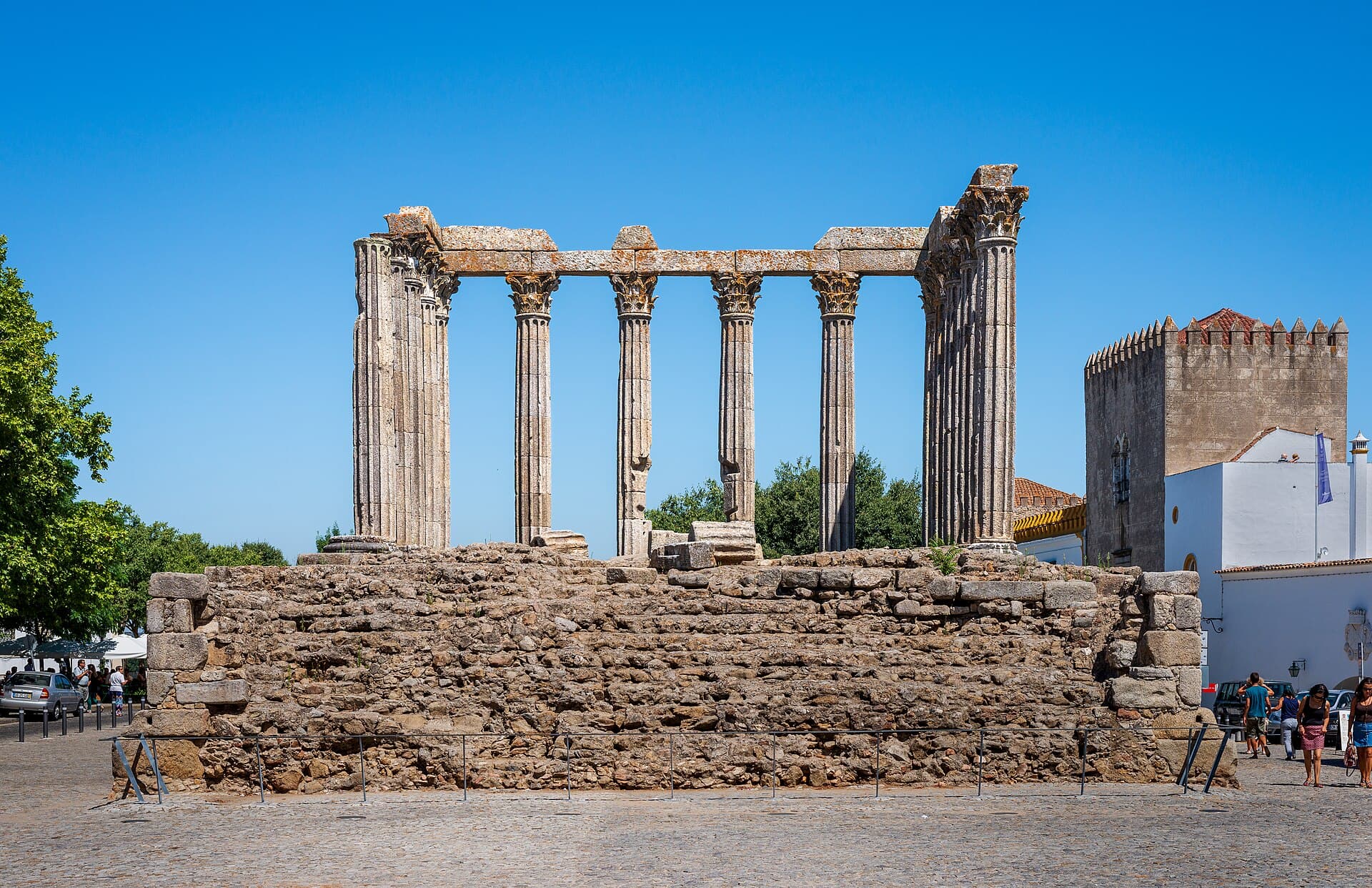
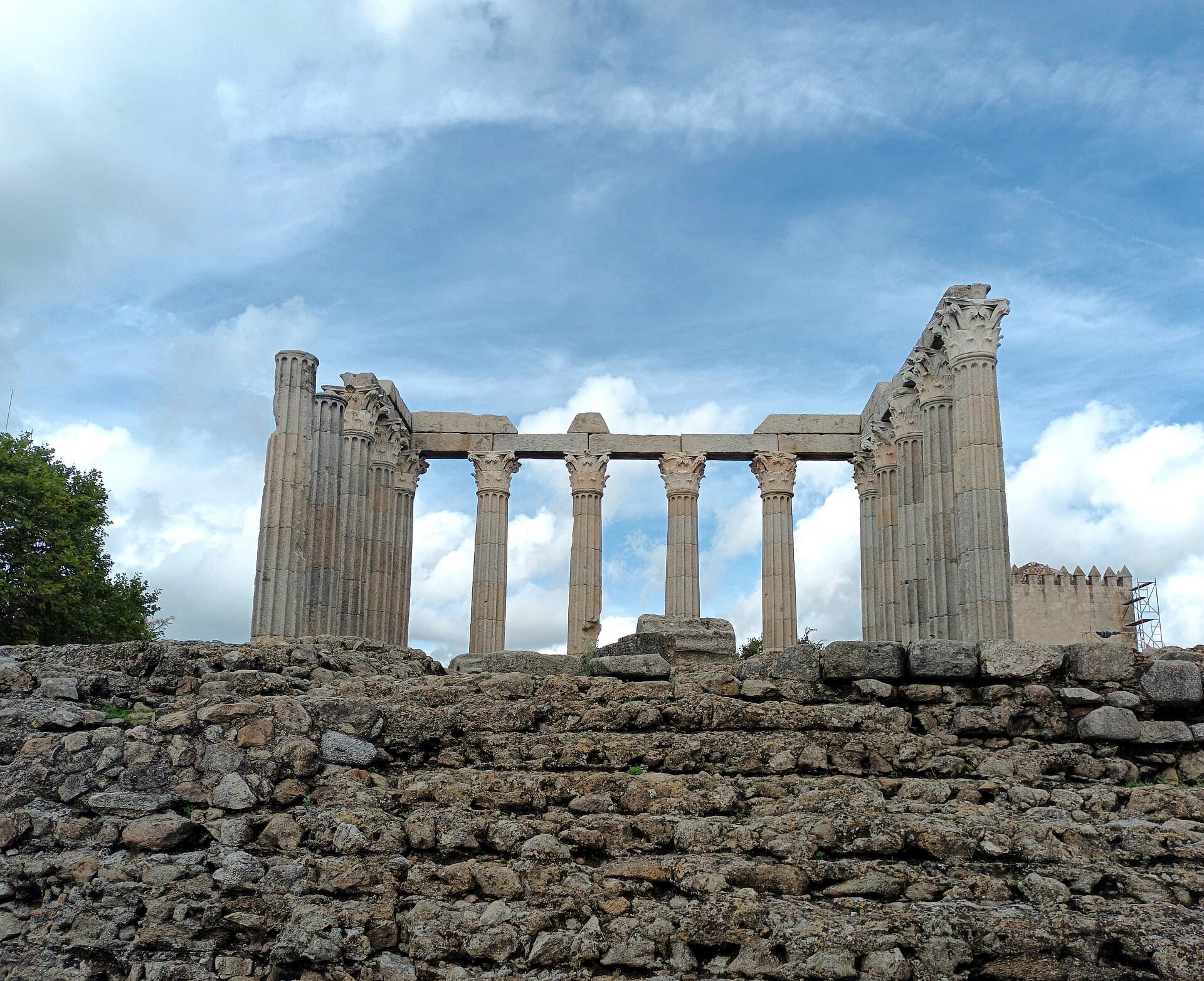
Evora is the capital of the Alentejo, so its kitchen is the whole region concentrated in one walled town. If you are walking the hill on a Roamer self-guided tour, you are already standing on the ground the food describes: the cork oaks and wheat fields you see from the Jardim de Diana viewpoint are where the pork and bread come from, and the amphora wine tradition below traces straight back to the Roman temple at the top of the hill.
The two bread dishes to try first: acorda and migas
Two dishes explain the Alentejo more than any others, and both start with bread that would otherwise be thrown out.
Acorda alentejana is the lighter of the two: stale country bread revived with garlic, olive oil, fresh coriander, and a poached egg, loosened with hot water or a light broth. It is not a thick stew. It arrives as a loose, fragrant bowl, and the point is that the bread carries the meal while costing almost nothing. Order the plain version your first time. Cod (bacalhau) and other additions exist, but the plain garlic-and-coriander bowl is the honest original and the clearest taste of the tradition.
Migas alentejanas is the drier cousin: breadcrumbs fried with garlic and olive oil until they bind into a soft, golden mass, usually served alongside pork, ribs (entrecosto), or regional sausage. When wild asparagus is in season in spring, ask specifically for migas de espargos. That version tastes of the Alentejo landscape itself, foraged and green, rather than just rural economy. A useful ordering tip: migas is almost always a side to meat, so it usually shows up next to pork rather than on its own.
The pork: porco preto and carne de porco a alentejana
Hear a stop from this walk
Templo Romano de Evora: The Crown of the Hill
The Alentejo's black Iberian pig, porco preto, roams the cork and holm oak woodland and feeds on fallen acorns (bolota). That acorn diet is what gives the meat its depth, and it is worth ordering simply grilled (grelhado) to taste it plainly, as a chop (secretos or plumas are prized cuts).
The dish that surprises people is carne de porco a alentejana: marinated pork cooked with clams, garlic, white wine, paprika, coriander, and fried potatoes. Pork and shellfish together, hundreds of kilometres from the coast, is not a mistake. It is a conversation between inland pork country and Portugal's long love of the sea, and it has become one of the most recognized Portuguese dishes nationwide. If you only order one pork plate in Evora, this is the memorable one.
The lamb and the cheese: ensopado de borrego and queijo de Evora
Ensopado de borrego is Alentejo lamb stew, cooked with onion, garlic, white wine, olive oil, and mint or pennyroyal, then ladled over slices of bread laid in the bottom of the dish to soak up the broth. In Evora it still carries the feel of a Sunday or Easter table and follows the spring pasture cycle, so it is most at home in cooler months.
Order queijo de Evora as a starter with bread and olives, the way locals treat it. The real thing is a small, round cured cheese made from raw sheep's milk of the Merino Branca breed, set not with animal rennet but with an infusion of wild thistle (Cynara cardunculus), which gives it a distinctive, gently bitter, slightly citric edge. It earned Protected Designation of Origin (DOP) status in 1996. Be aware that industrial versions using other milk and standard rennet circulate widely, so a table that names its cheese, or a specialist like Botequim da Mouraria that serves it simply with bread and olives, is the surer bet for the authentic version.
The sweets, straight from the convents
Evora's desserts come from its nuns. Portuguese convents used enormous quantities of egg yolks (egg whites were used to starch habits and clarify wine), and the leftover yolks became a whole tradition of conventual sweets built on eggs, almonds, sugar, and doce de gila (a jam made from chila squash).
The one to seek out is pao de rala, a flourless almond-and-egg-yolk sweet created by the Poor Clare nuns at the Convento de Santa Helena do Calvario in Evora, wrapped around a filling of fios de ovos (fine sweet egg-yolk threads) and doce de gila. The other regional classic is sericaia, a soft, egg-based baked pudding scented with cinnamon and lemon, traditionally served with sweet plums from the nearby town of Elvas (ameixas de Elvas). You can buy pao de rala from Pastelaria Conventual Pao de Rala, a specialist convent-sweet bakery in town.
What to drink: vinho de talha, the Roman amphora wine
The most Evora thing you can drink is vinho de talha, wine fermented in tall clay pots (talhas) partly buried in the ground, skins and seeds included, the mass stirred by hand for the ten to fifteen days of fermentation. This method reaches back to Roman winemaking on the Iberian Peninsula, when clay amphorae were the standard vessel. Most of Europe abandoned it for barrels and steel; the Alentejo quietly never did, which makes it one of the few places where an ancient amphora system is still in continuous use. That direct line to Rome is the same one you can read in stone at the Roman temple crowning Evora's hill. If a menu offers vinho de talha by the glass, it is the drink that ties the plate to the place. Broader Alentejo DOC reds, generous and warm, are the everyday pour.
How to order like a local
A few practical habits. Bread, olives, cheese, and sausage brought to the table before you order (the couvert) are not free; you pay for what you eat and can wave away what you do not want. Lunch is the big meal in the Alentejo, so the fuller dishes are often best at midday. Meat mains are frequently sized to share, and it is normal to order one main plus extra migas or salad between two people. And do not rush the sweets: a small pao de rala or a slice of sericaia with a coffee (uma bica) is how the meal is meant to close.
If you want to build a day around it, pair a long Alentejo lunch with an unhurried afternoon on foot. See the Evora walking tours to read the same landscape your food came from, or head straight to the Evora city page to pick a route.
Sources
- Alentejo Food: 9 Regional Dishes That You Have to Eat, Portugalist
- Queijo de Evora PDO, Produtos Tradicionais Portugueses (DGADR)
- Pao de rala, Wikipedia
- Vinho de Talha: Alentejo's Ancient Amphora Wine Tradition, Cooltour Oporto
- Traditional Food in Evora: 8 Local Dishes and Where to Eat Them, World Free Tours
Frequently asked questions
- What food is Evora famous for?
- Evora, the capital of Portugal's Alentejo region, is known for bread-based dishes like acorda alentejana and migas, acorn-fed black Iberian pork (porco preto), lamb stew (ensopado de borrego), sheep's-milk cheese (queijo de Evora), and convent sweets such as pao de rala and sericaia. The regional drink is vinho de talha, wine fermented in clay pots.
- What is acorda alentejana?
- Acorda alentejana is a light Alentejo bread soup made from stale country bread revived with garlic, olive oil, fresh coriander, and a poached egg, loosened with hot water or broth. It is loose and fragrant rather than a thick stew, and grew out of the rural habit of never wasting bread. Order the plain version first to taste the original.
- What is queijo de Evora and what makes it special?
- Queijo de Evora is a small, round cured cheese made from raw sheep's milk of the Merino Branca breed, set with an infusion of wild thistle (Cynara cardunculus) rather than animal rennet, which gives it a slightly bitter, citric edge. It received Protected Designation of Origin (DOP) status in 1996. Industrial versions using other milk exist, so it is worth choosing a place that serves the authentic cheese with bread and olives.
- What sweets should I try in Evora?
- Look for pao de rala, a flourless almond-and-egg-yolk sweet created by Poor Clare nuns at the Convento de Santa Helena do Calvario in Evora, filled with fios de ovos and doce de gila. Also try sericaia, a soft baked egg pudding scented with cinnamon and lemon, served with sweet plums from Elvas. Both come from the region's convent-sweet tradition and can be bought at specialist bakeries like Pastelaria Conventual Pao de Rala.
- What wine should I drink in Evora?
- Order vinho de talha, wine fermented in tall clay pots (talhas) partly buried in the ground, a method that traces back to Roman amphora winemaking and survives in continuous use in the Alentejo. If it is offered by the glass, it is the most local pour. Broader Alentejo DOC reds are the everyday choice, generous and warm.
- Why does carne de porco a alentejana combine pork and clams?
- Carne de porco a alentejana pairs marinated pork with clams, garlic, white wine, paprika, coriander, and fried potatoes, even though Evora sits far inland. The combination reflects a link between the Alentejo's pork country and Portugal's national love of shellfish, and it has become one of the most recognized Portuguese dishes across the country.
Ready to experience it?
Roman Temple of Évora: Two Thousand Years on One Hill
85 min · 2.2 km · easy
More from Evora
Explore more at your own pace.
Evora: The Museum City That Never Stopped Being Lived In
Rua do Cano: How Evora Moved Into a King's Aqueduct
The Chapel of Bones in Evora: Why a City Lined a Wall With Its Dead
Why Evora's Roman Temple Survived as a Butcher Shop
Ermida de Sao Bras: The Fortress Chapel Evora Built Against the Plague