Al Fahidi Historic District: The Wind-Tower City
80 min · 2.7 km · easy
Dubai grew from a small pearling and trading town on a tidal saltwater creek into a global city of record-setting towers, all within living memory, and the city still carries both stories at once. Walk it and you can read the whole arc in a single day: coral-and-gypsum courtyard houses cooled by wind towers along Dubai Creek, wooden ferries that still cross the water for a single dirham, merchant souks of gold and spice where cargo is loaded by hand, and then, a few miles inland, a master-planned vertical district raised from bare desert around the tallest building on earth. The creek and the crown of the tower belong to the same city. Roamer's three self-guided audio walks trace that line end to end, at your own unhurried pace, so you meet the old trading port and the new engineered skyline as one continuous place.
The town that lived on the creek
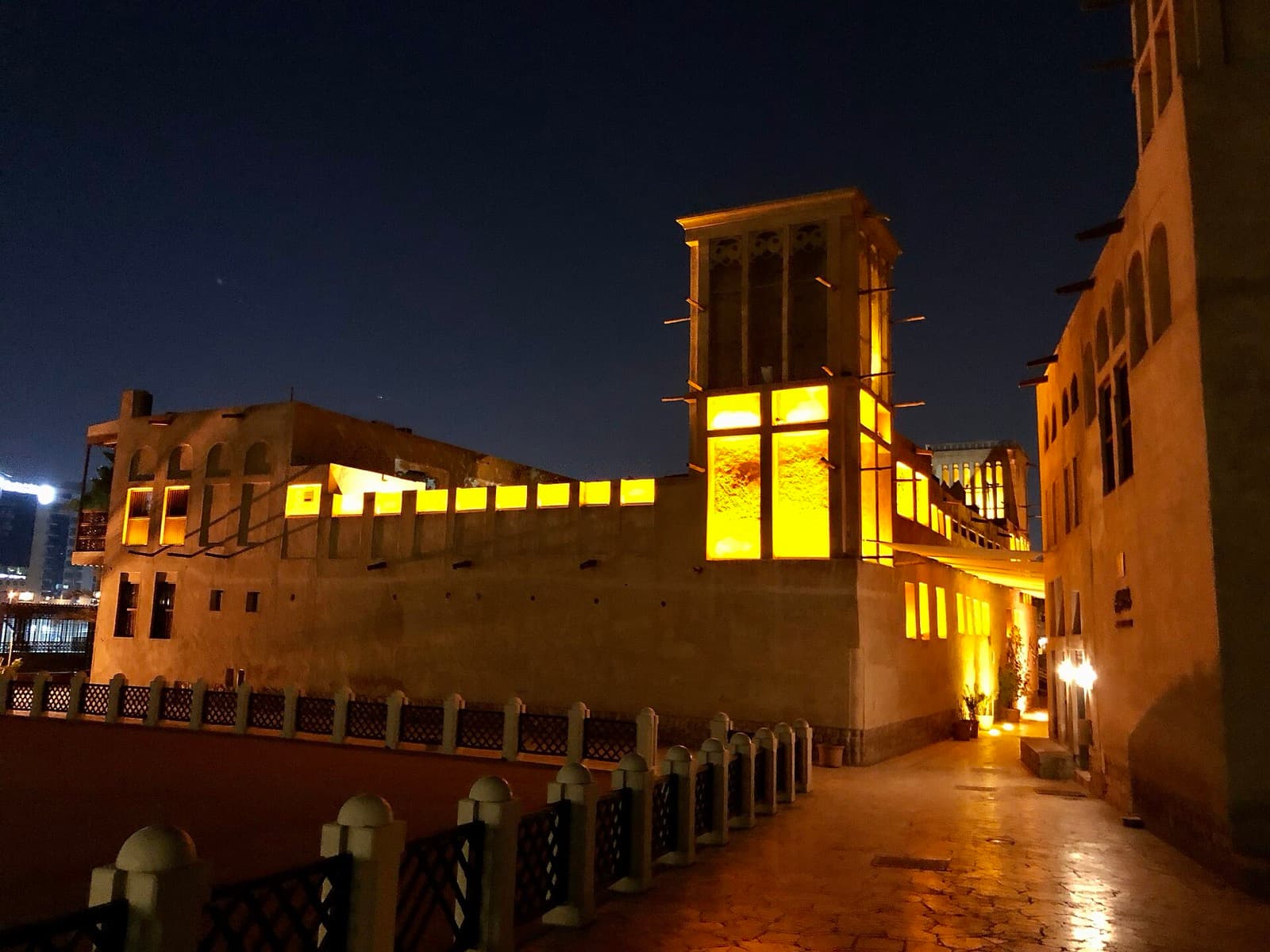
Before oil, Dubai was a poor town of a few thousand people whose ingenuity was social and climatic rather than financial. The Al Fahidi Historic District walk reads that origin along the Bur Dubai bank of Dubai Creek, the tidal inlet Arabic speakers call the Khor Dubai. The Al Fahidi quarter, long known as Bastakiya, was established in the eighteen nineties by wealthy Persian merchants from the town of Bastak in southern Iran, who gave it their name. Its walls are coral stone quarried from the sea, bound with gypsum and finished with teak and sandalwood, and its winding pedestrian lanes are called sikkas.
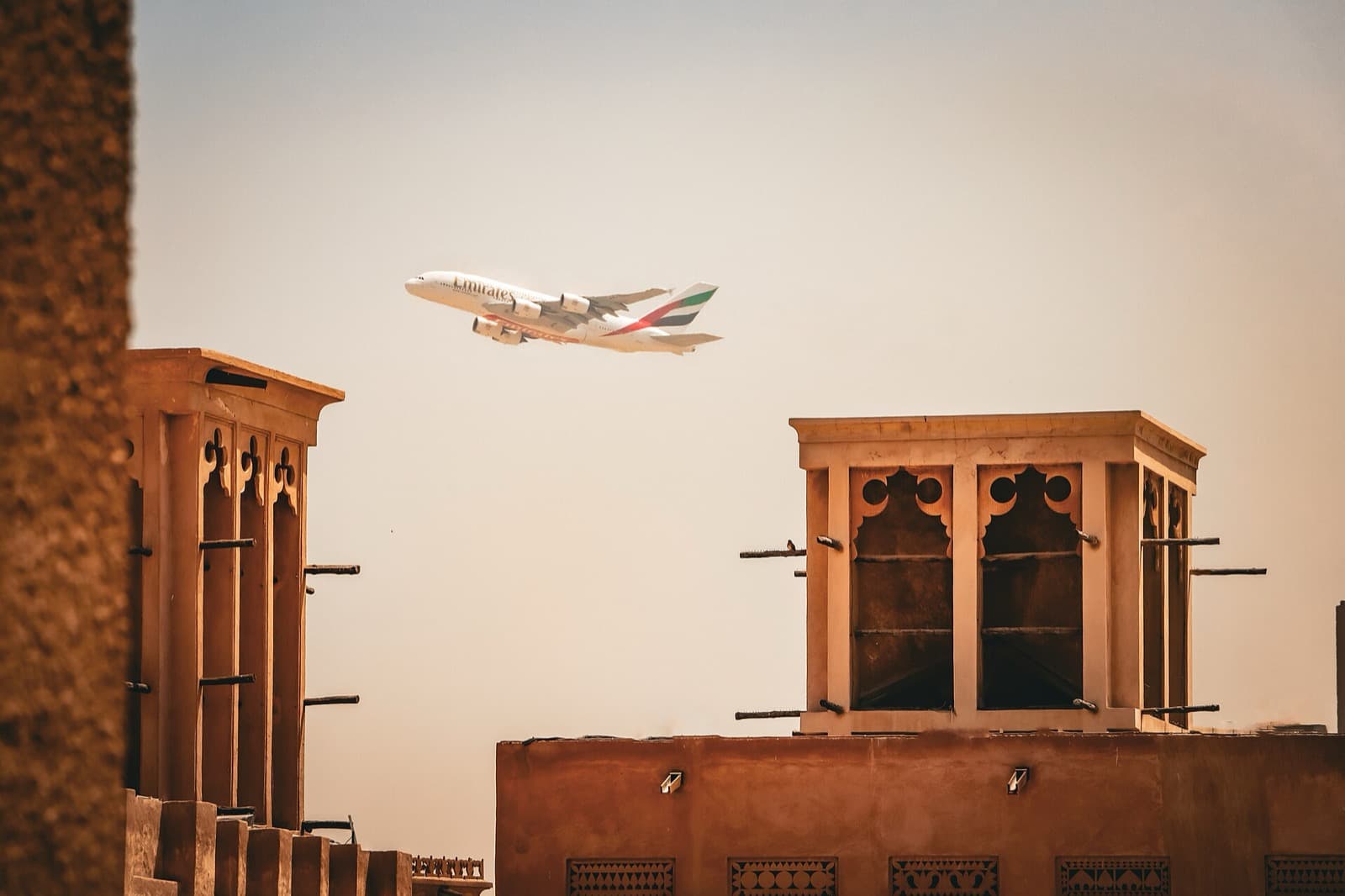
The real skyline of that old town was not vertical glass but the barjeel, the wind tower. This is passive cooling that needed no electricity, because there was none: an open-sided tower rises above a courtyard, catches breeze from whatever direction it blows, and funnels it down into the rooms below, then reverses in still air to act as a chimney. The design travelled here from Persia along the Gulf coast, carried by the same merchants who built the quarter. The grandest example sits at the mouth of the creek, on the Sheikh Saeed Al Maktoum House at Al Shindagha, built around eighteen ninety-six and carrying four wind towers. Sheikh Saeed ruled Dubai from nineteen twelve to nineteen fifty-eight, and his heir Sheikh Rashid bin Saeed Al Maktoum grew up in that house before leading the town's transformation.
Nearby, Al Fahidi Fort holds the oldest stone in the city: its oldest tower was built around seventeen eighty-seven and is believed to be the oldest existing building in Dubai. It served in turn as ruler's palace, garrison and prison, and in nineteen seventy-one it became the Dubai Museum. The lanes lead down to the covered Textile Souk of Bur Dubai, dating to the nineteenth century, and finally to the water itself, where wooden abras still cross to Deira for one dirham per person, exactly as they did a century ago.
The merchant city that oil never replaced
Hear a stop from this walk
Shindagha and the Sheikh Saeed Al Maktoum House: The Ruler's Wind-Tower House
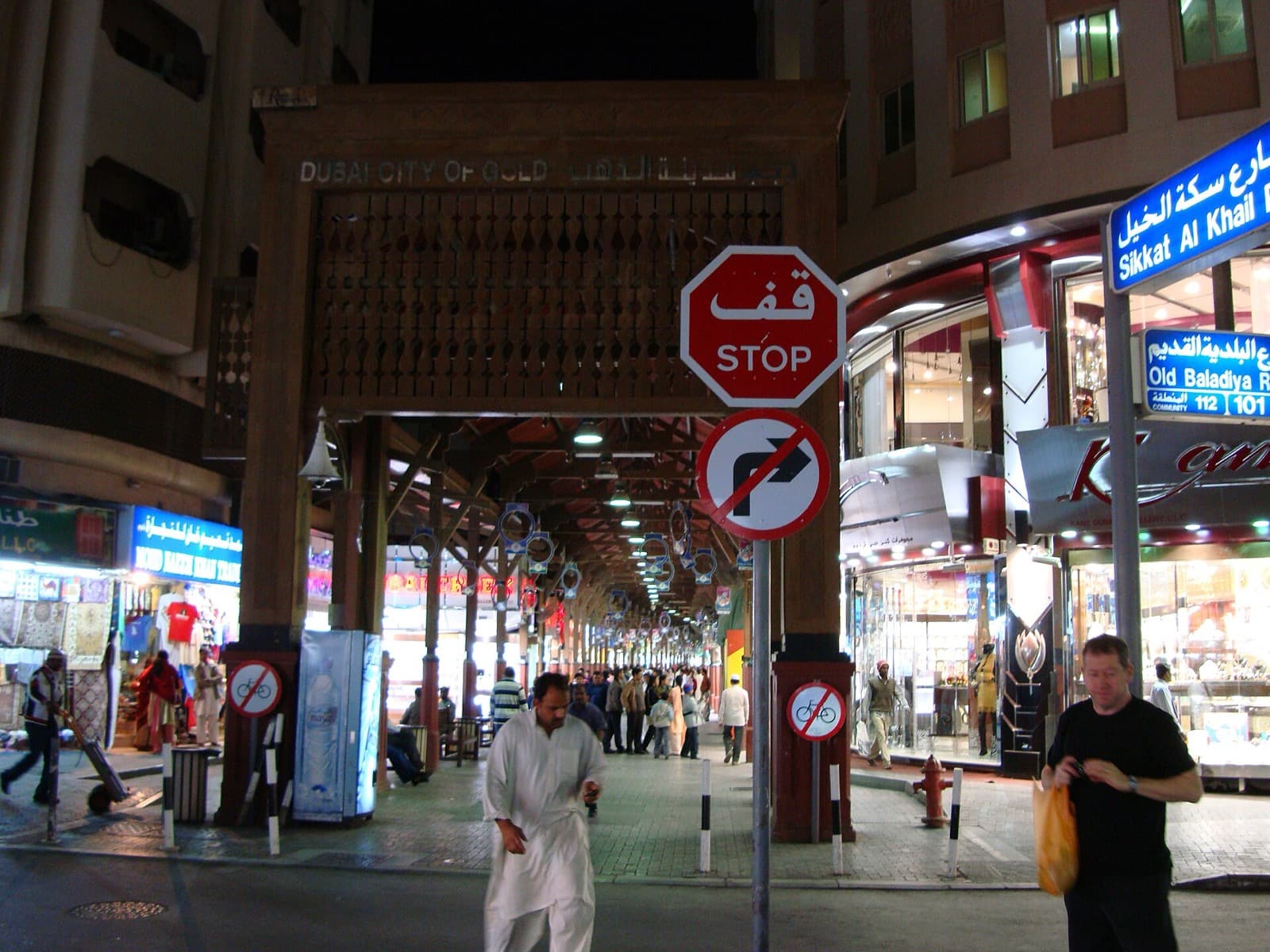
Cross the creek and the trading Dubai keeps working. The Deira and the Creek Souks walk follows the eastern bank through markets that never became museum pieces. Dubai did not mine gold; it moved it. For more than a century this was an entrepot, a port where goods land, change hands and sail on, and the merchants who ran Deira kept import duties low. The Gold Souk holds over three hundred shops trading almost entirely in gold jewellery, with by some estimates roughly ten tonnes of gold present at any given moment. Because the metal itself is priced against the international rate, what you negotiate is the craftsmanship, not the gold.
A few steps away, the Perfume Souk trades oud, the dark resinous wood from the agarwood tree, alongside bakhoor, attars and rosewater, inside a Gulf tradition of scent that predates the towers by centuries. In the quieter lanes of Al Ras stand two coral buildings that tell the human side of the pearling years: the Al Ahmadiya School, Dubai's oldest known formal school, founded in nineteen twelve by the pearl merchant Sheikh Ahmed bin Dalmouk, whose early pupils included the future ruler Sheikh Rashid; and next door the Heritage House, built in eighteen ninety by Matar Saeed bin Mazina and passing in nineteen ten to Sheikh Ahmed bin Dalmouk, its courtyard arranged around a majlis and cooled by wind towers.
The Spice Souk on Baniyas Street heaps saffron, cardamom, dried limes and frankincense into open sacks, every smell a trade route from the Indian Ocean and the Gulf. The walk ends at the Dhow Wharfage, where wooden cargo ships tie up several deep and are loaded by hand for Iran, India, Somalia, Oman and East Africa, moving well over a million tonnes of goods a year, some of the vessels themselves over a century old and still in service. The postcard city and the working city turn out to be the same city.
The vertical city drawn in a single hand
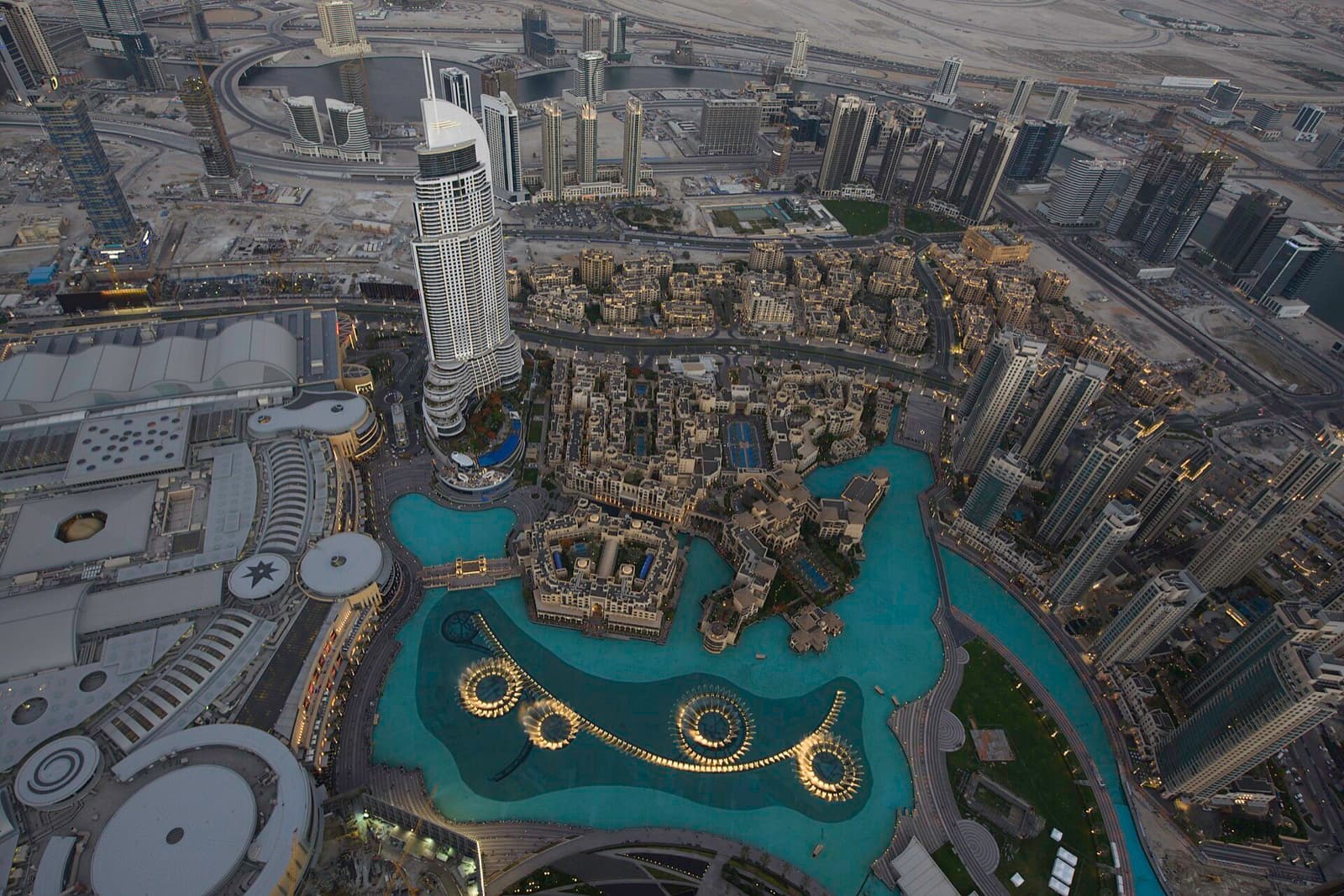
A few miles inland the story flips to the future. The Burj Khalifa and Downtown Dubai walk reads a district that did not grow street by street over centuries but was drawn on paper and raised almost all at once, on land that was open desert within living memory. Downtown Dubai was master-planned and developed by a single company, Emaar Properties, from about the year two thousand, across roughly two square kilometres, at an estimated cost of about twenty billion American dollars.
At its centre is the Burj Khalifa, which rises about eight hundred and thirty metres including its antenna and is by a clear margin the tallest building in the world and the tallest free-standing structure ever built. It opened on the fourth of January, two thousand and ten, designed by Adrian Smith of Skidmore, Owings and Merrill and engineered by Bill Baker of the same firm. It was originally called Burj Dubai and renamed for Sheikh Khalifa bin Zayed Al Nahyan after Abu Dhabi and the federal government lent Dubai tens of billions during the two thousand and eight financial crisis, so the name records a real moment of rescue.
Around the tower's foot sits a choreographed grammar of the boom. The Dubai Fountain, inaugurated in May two thousand and nine on a wholly artificial twelve-hectare lake, was designed by WET Design of California, the same firm behind the Bellagio fountains in Las Vegas. The Dubai Mall, opened in November two thousand and eight, is the largest mall in the world by total land area and works less like a shopping centre than an air-conditioned town square in a climate too hot for midday streets. Souk Al Bahar borrows old forms built new to soften the geometry, and the Dubai Opera, opened in August two thousand and sixteen, is shaped like a dhow, casting the memory of the old sea trade in glass and steel at the base of the tower.
Read the whole arc at your own pace
The through-line is honest and recent: a pearling society whose market collapsed in the nineteen thirties, that found oil in the nineteen sixties, federated into the United Arab Emirates on the second of December nineteen seventy-one, and chose within a single lifetime to build the highest thing ever made, largely by a workforce drawn from South Asia. The three Roamer walks let you hold that whole story at once, from a coral fort more than two centuries old to a spire that reaches into the sky. Plan the sequence with the full set of Dubai walking tours, start early to beat the heat, and end each walk on the water, where the abras still cross for a single coin.
Sources
- Roamer self-guided audio tour, Al Fahidi Historic District: The Wind-Tower City (Dubai Creek, Al Fahidi Fort, wind towers, Shindagha, abra crossing).
- Roamer self-guided audio tour, Burj Khalifa and Downtown Dubai: The Vertical City (Burj Khalifa, Dubai Fountain, Dubai Mall, Souk Al Bahar, Dubai Opera, Emaar Boulevard).
- Roamer self-guided audio tour, Deira and the Creek Souks: Gold, Spice and the Dhow Wharfage (Gold Souk, Perfume Souk, Al Ahmadiya School, Heritage House, Spice Souk, Dhow Wharfage).
- Dubai Museum and Al Fahidi Fort, historical galleries on pre-oil Dubai, pearling and the Creek.
Frequently asked questions
- Can you see both old and modern Dubai on foot?
- Yes. The old town reads along Dubai Creek on the Bur Dubai and Deira banks, with coral houses, wind towers and merchant souks, while the modern city is concentrated in Downtown Dubai around the Burj Khalifa a few miles inland. Roamer offers three self-guided walks covering the Al Fahidi Historic District, the Deira creek souks, and Burj Khalifa and Downtown Dubai. Together they trace the full arc from the pearling-era creek to the tallest building on earth.
- What is a wind tower in old Dubai?
- A wind tower is called the barjeel in Arabic and the badgir in Persian, where the design originated. It is passive cooling that needs no electricity: an open-sided tower rises above a courtyard, catches breeze from any direction, and funnels it down into the rooms below, and in still air it reverses to act as a chimney. The design travelled to Dubai from Persia along the Gulf coast. The grandest local example, the Sheikh Saeed Al Maktoum House at Al Shindagha, carries four of them.
- How much does the abra ferry across Dubai Creek cost?
- A crossing on a traditional motorised abra costs one dirham per person, paid directly to the driver, with air-conditioned boats at two dirhams. The boats leave every few minutes and are described as the oldest form of public transport in the city. Dubai's Creek marine network carries more than sixteen million passengers a year. The CR-One route runs from the Deira Old Souk station across to Bur Dubai.
- How tall is the Burj Khalifa and when did it open?
- The Burj Khalifa reaches about eight hundred and thirty metres including its antenna and is the tallest building and tallest free-standing structure in the world. It opened on the fourth of January, two thousand and ten, designed by Adrian Smith of Skidmore, Owings and Merrill and engineered by Bill Baker. It was originally called Burj Dubai and renamed for Sheikh Khalifa bin Zayed Al Nahyan after Abu Dhabi helped Dubai during the two thousand and eight financial crisis.
- What is the best time of year to walk Dubai's old town?
- The comfortable season runs from about November to March, when Dubai's winter is mild and walking the coral lanes and creek is genuinely pleasant. Avoid the extreme summer heat from about June to September, when midday temperatures make outdoor walking difficult and even risky. If you go in summer, start at dawn or in the last hour before sunset. During Ramadan, eating, drinking and smoking in public during daylight hours are restricted.
Ready to experience it?
Al Fahidi Historic District: The Wind-Tower City
80 min · 2.7 km · easy
More from Dubai
Explore more at your own pace.
Al Fahidi: The Coral-and-Wind Town That Dubai Grew From
Emaar Boulevard: Reading the Grammar of a City Built All at Once
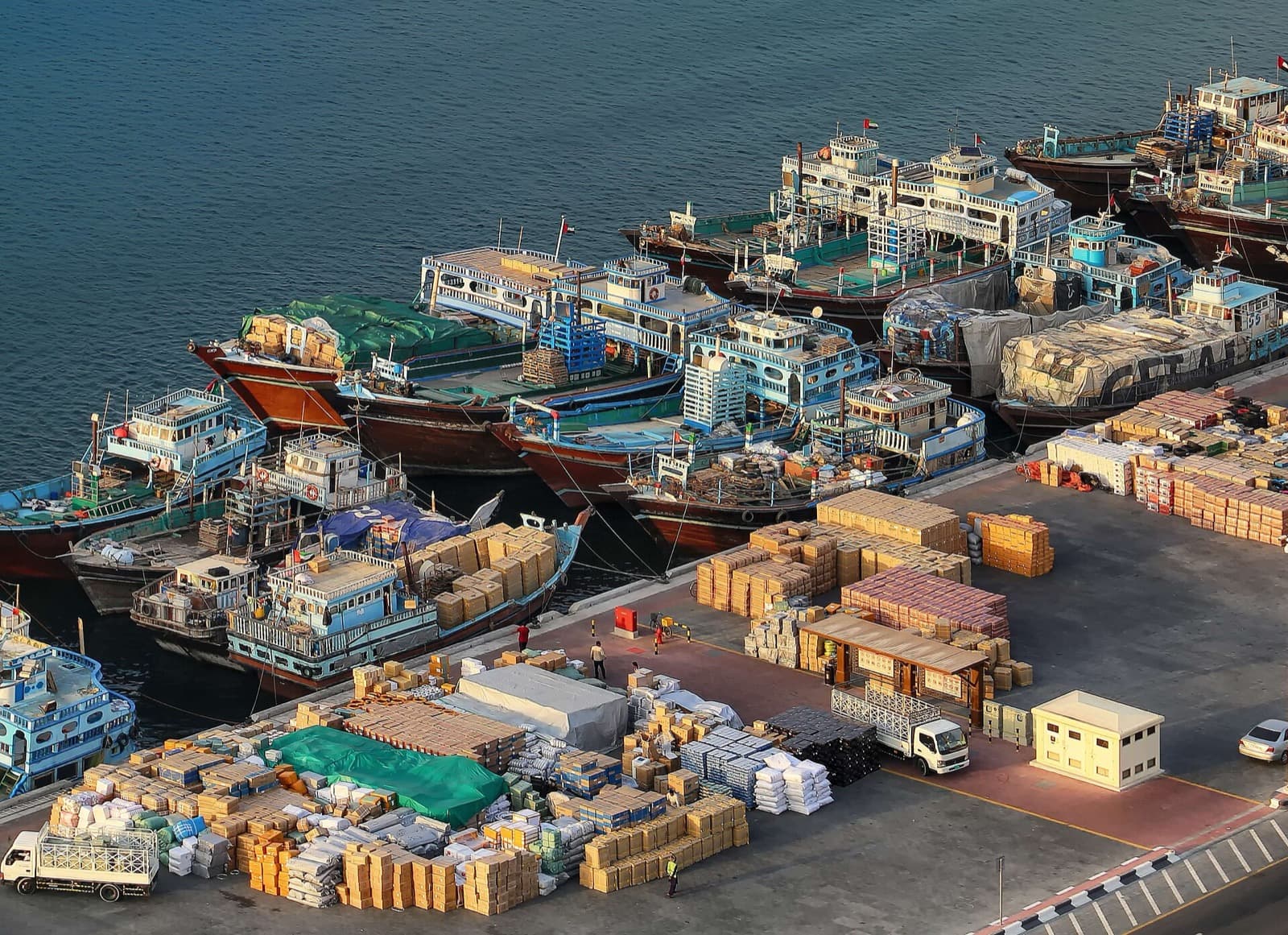
The Dhow Wharfage: Where Old Dubai Still Loads Cargo by Hand
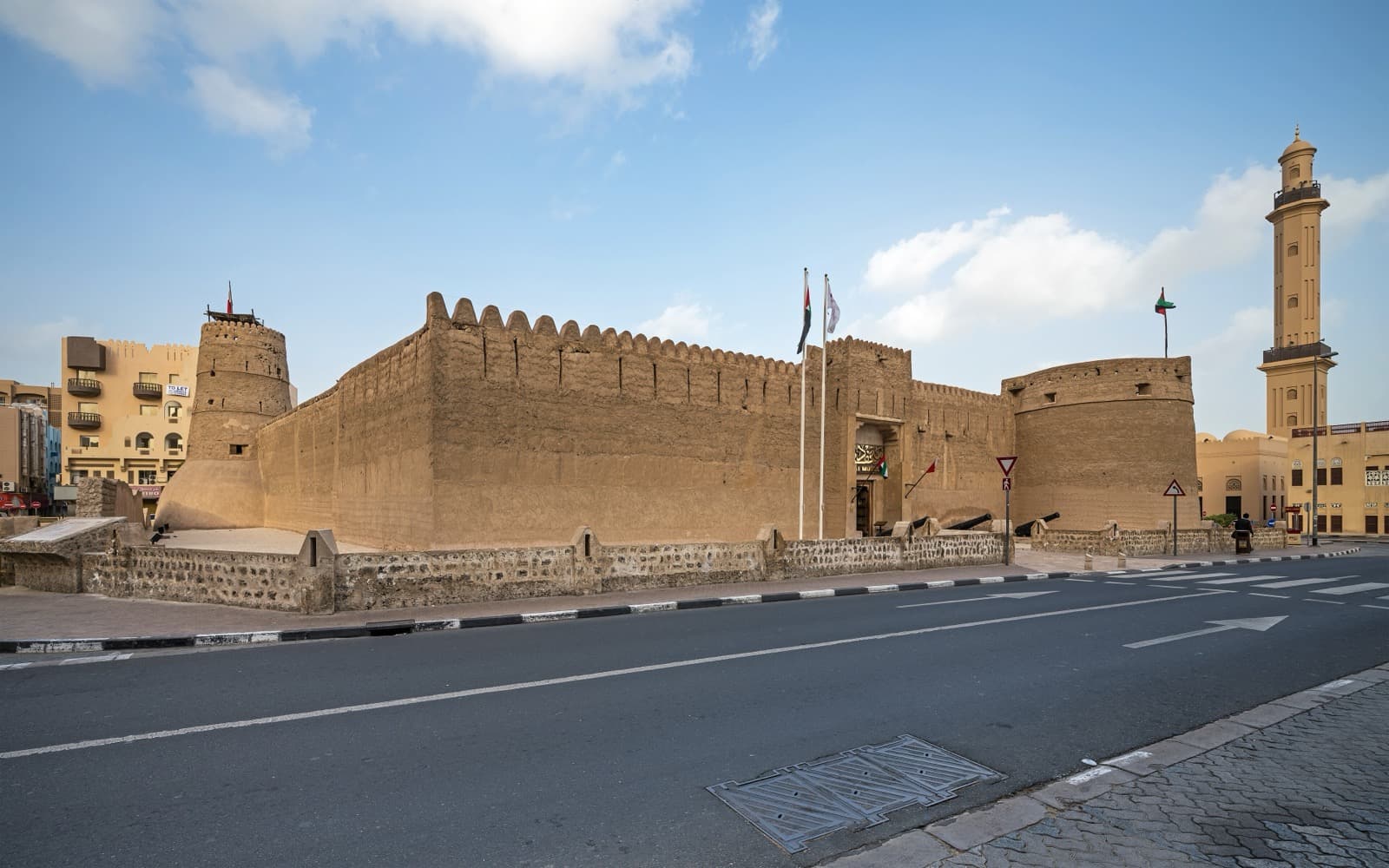
Al Fahidi Fort and the Dubai Museum: The Oldest Stone in the City
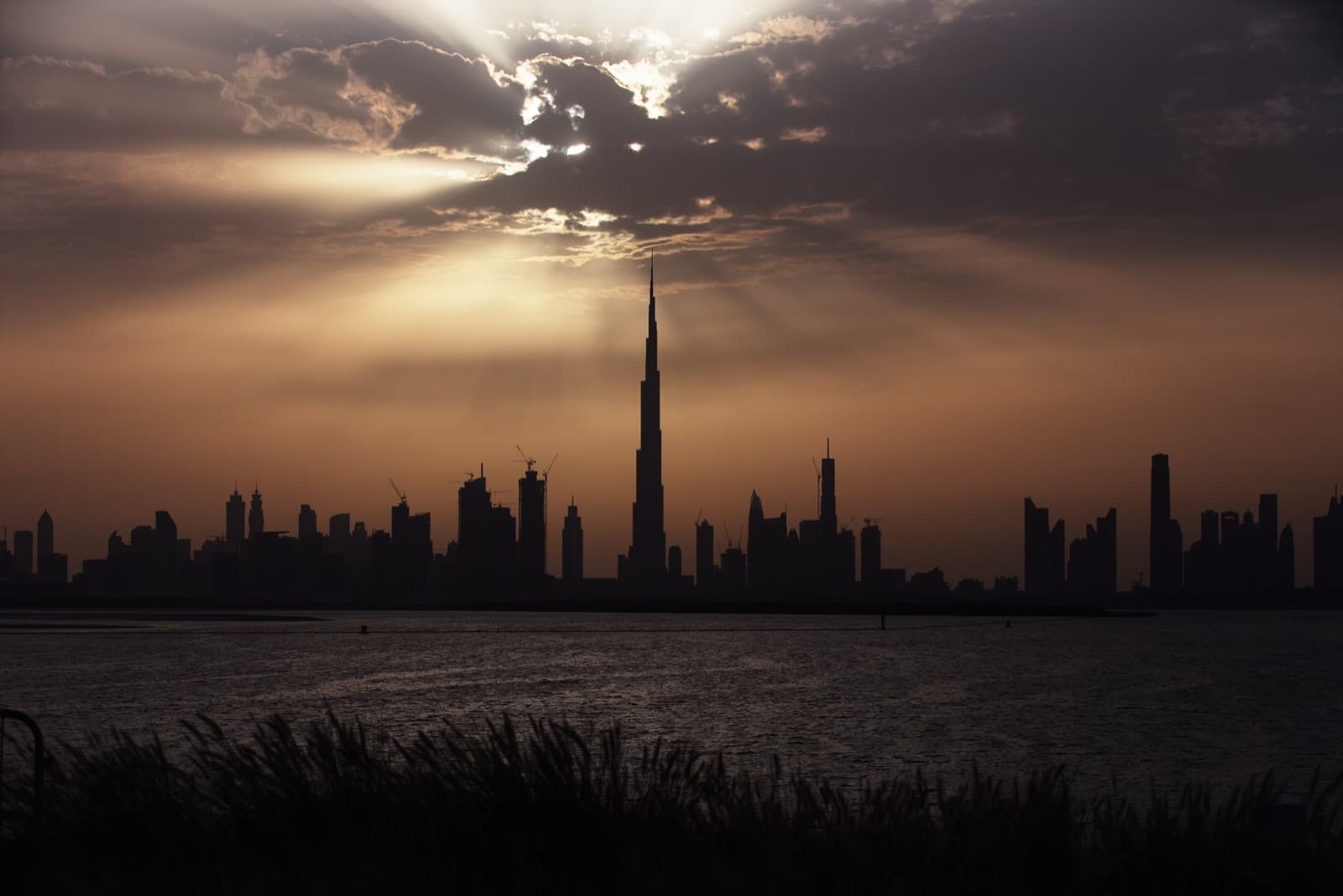
Burj Khalifa: How the Tallest Building on Earth Actually Stands Up