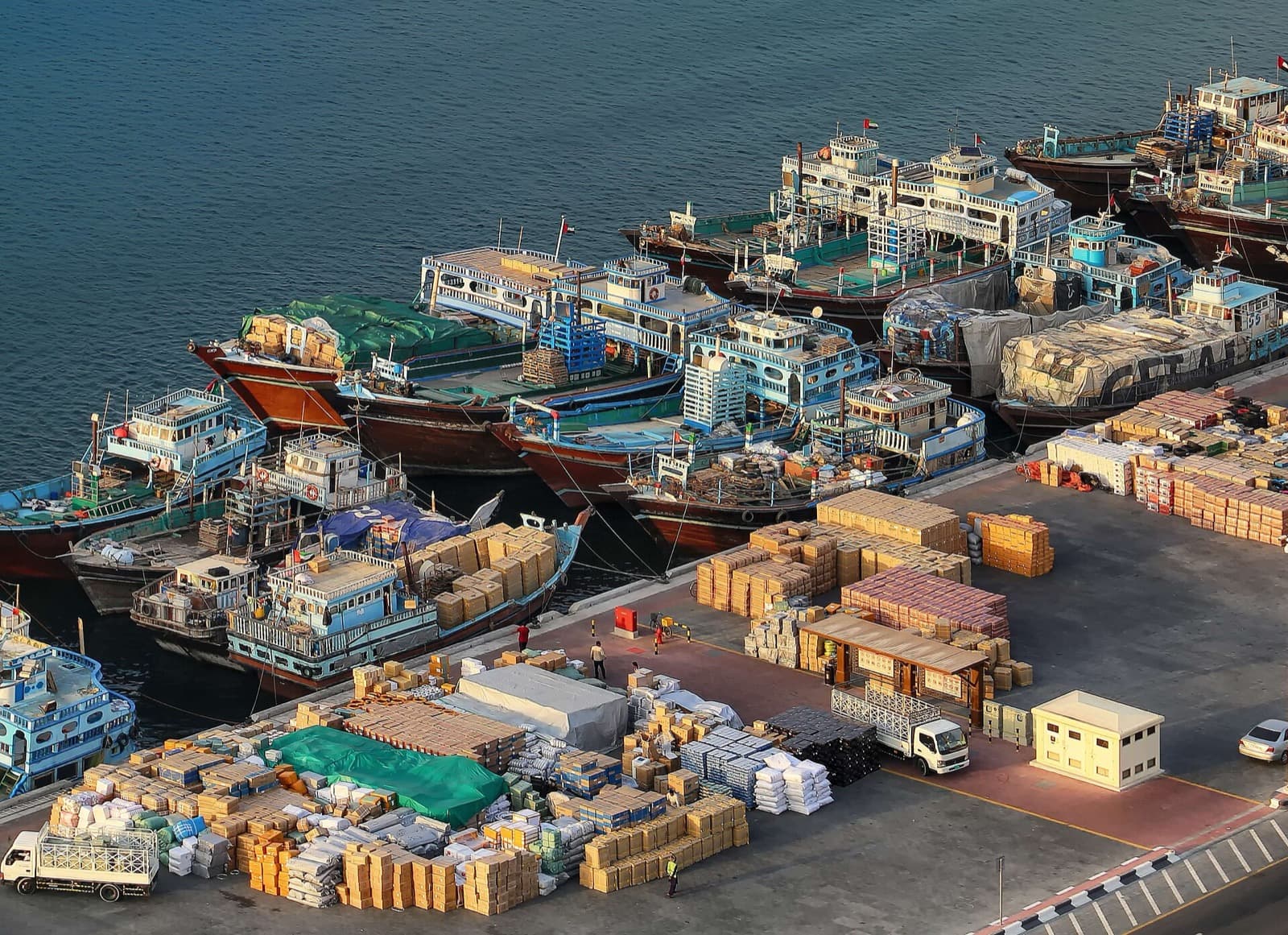
Along the Deira bank of Dubai Creek, a line of wooden ships stretches into the distance, moored two and three deep against the quay, and cargo goes on and comes off them by hand. This is the Dhow Wharfage, and the ships are not here for the photograph. They are working. Refrigerators and air conditioners, tyres, bags of rice, fishing nets, boxes of electronics: all of it lashed high on the decks and bound for Iran, India, Somalia, Oman and the ports of East Africa. Together these vessels move well over a million tonnes of goods through Dubai every year. The story you already know about the city is vertical, new and made of glass. The wharfage tells the older story, and it is the argument this walk exists to make.
The whole city in one view
Stand at the wharfage and the two Dubais sit in a single frame. Behind the ships rise the towers, the city built in a single lifetime out of oil money. In front of you, wooden dhows load for the same ports Dubai has served for more than a hundred years, in more or less the same way. Some of the ships moored here are over a century old and still in service. There are no cranes doing the real labor. The crews, largely South Asian men who load, sail and unload season after season, carry it up gangplanks and along the rails. They are skilled working people doing hard work in the open heat, and they are the ones who keep this trade alive.
That is the payoff of the walk, but it lands harder if you arrive on foot, having read the trading city first. The wharfage is stop seven. The six stops before it lay out how a poor pearling and re-export port on a saltwater creek, the khor that cuts the city in two, became wealthy by keeping import duties low and moving other people's cargo onward. When the pearl market collapsed in the nineteen thirties, and when oil arrived in the nineteen sixties, and when the United Arab Emirates was founded in nineteen seventy-one, that trading instinct did not vanish. It is still tied up at the quay.
Reading the souks toward the water
Hear a stop from this walk
The Dhow Wharfage: Wooden Ships Still Loading by Hand
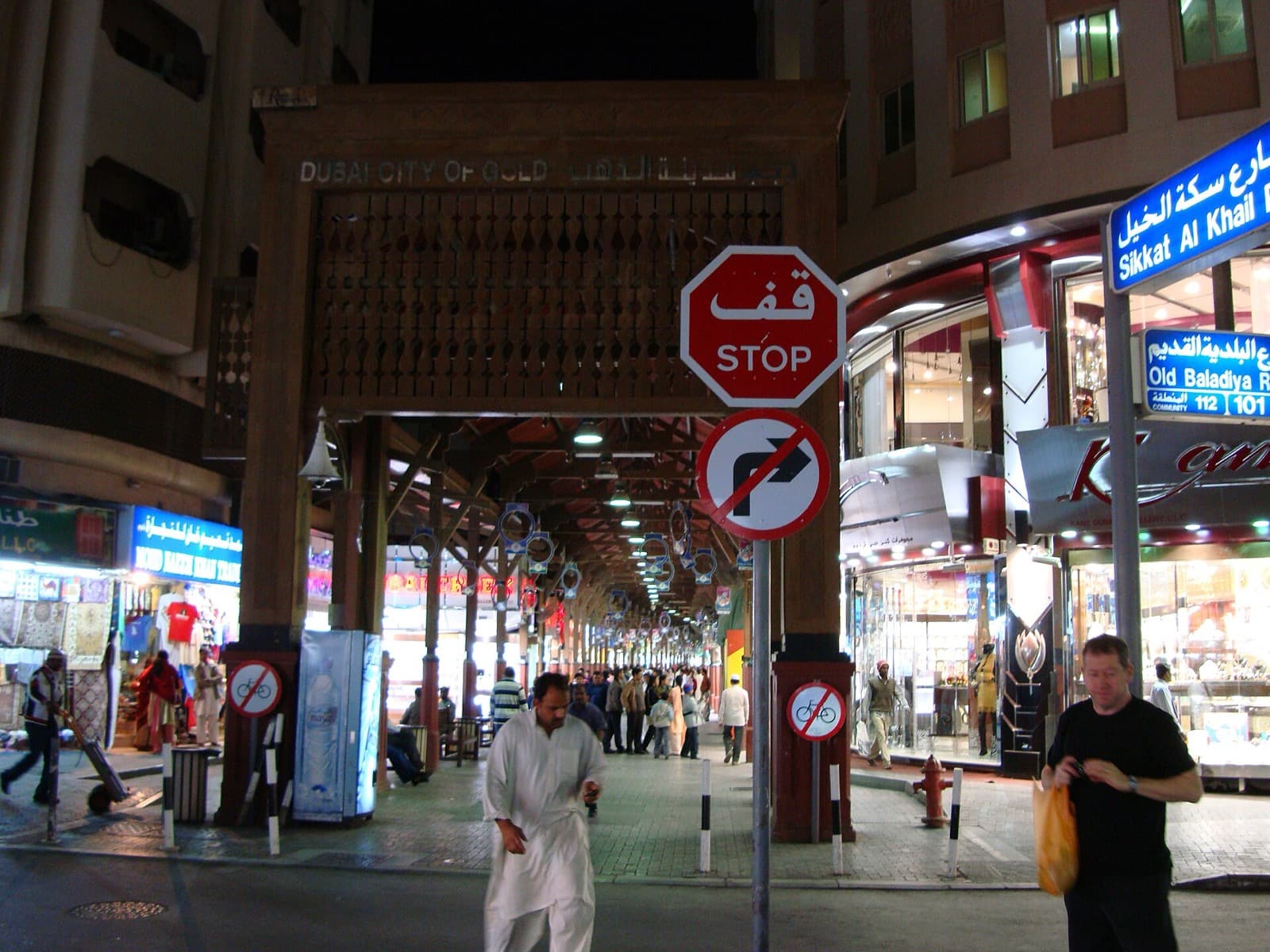
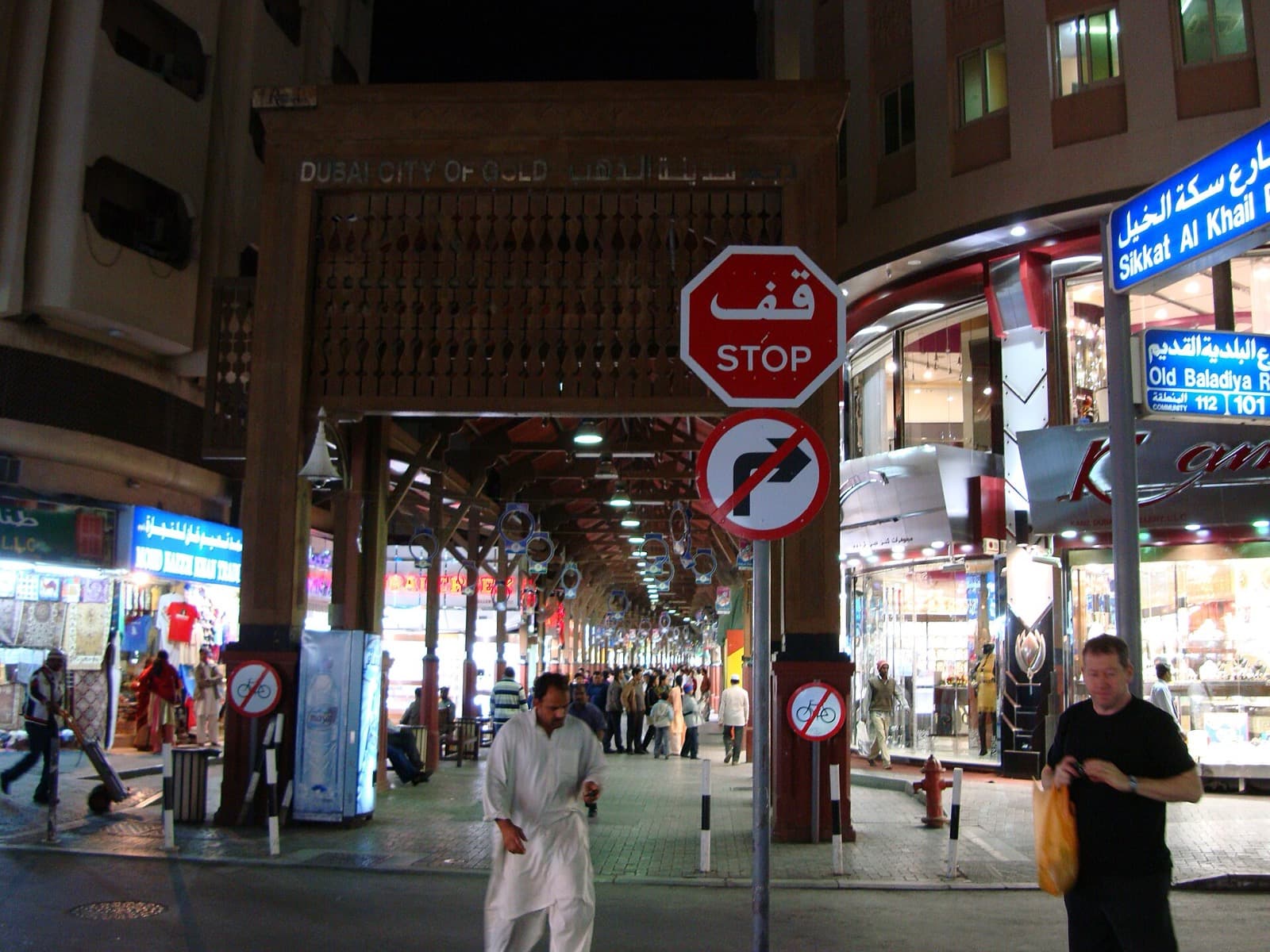
The walk begins in the Gold Souk, a covered lane in the Al Ras and Al Dhagaya districts of Deira where window after window is a solid wall of gold. It holds over three hundred shops trading almost entirely in gold jewellery, and by some estimates about ten tonnes of gold sit here at any given moment. It is widely described as one of the largest gold markets in the world. Dubai did not mine this gold. It moved it. The metal is priced against the daily international rate, so what you negotiate is the craftsmanship, not the gold. That single fact tells you what kind of city this always was: an entrepot, a port where goods land, change hands and sail on.
A few steps away the air changes at the Perfume Souk on Sikkat Al Khail Road, thick with oud, the dark aromatic wood from the agarwood tree, and with bakhoor, attars and rosewater. Many of the perfumers are family businesses that have traded on this street for generations. The ingredients themselves map the sea routes: agarwood and sandalwood from Southeast Asia and India, roses from Persia, frankincense from the Arabian Peninsula. Ask to smell the oud on a warmed strip and notice how it deepens over a minute rather than fades.
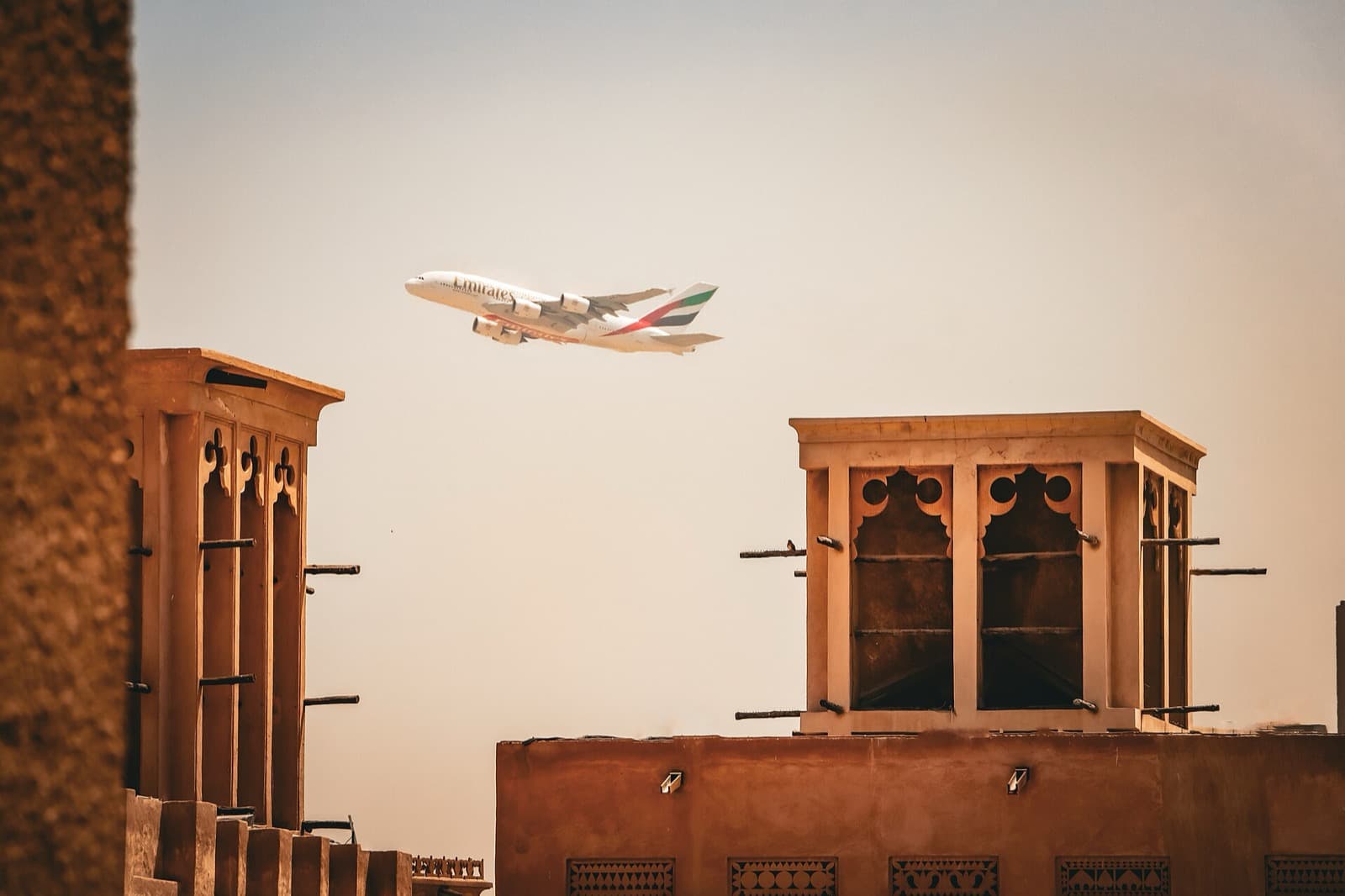
Then the lanes of Al Ras quiet down, and the walk turns inward. The Al Ahmadiya School is the oldest known formal school in Dubai, founded in nineteen twelve by the pearl merchant Sheikh Ahmed bin Dalmouk. A man who made his fortune diving pearls chose to spend part of it teaching boys to read, and among the early pupils was Sheikh Rashid bin Saeed Al Maktoum, later the Ruler of Dubai who drove much of its modern transformation. Next door stands the Heritage House, built in eighteen ninety by the merchant Matar Saeed bin Mazina and passed in nineteen ten to bin Dalmouk. It is coral, gypsum, sandalwood and teak arranged around a courtyard, with a majlis where guests are received and a barjeel, the wind tower that cools the rooms below using nothing but airflow. Walk the courtyard and you are inside the wealth of the pearling years made solid. Hold the other half of it too: that wealth rested on pearl divers who held their breath on weighted ropes for wages that kept many in permanent debt, until Japanese cultured pearls and the Great Depression destroyed the market in the nineteen thirties.
The Spice Souk on Baniyas Street heaps saffron, cardamom, dried limes and lumps of frankincense straight into the walkway. Every smell is a trade route compressed into a few dozen shopfronts. Be clear-eyed: this is a surviving market, not a booming one. As supermarkets took over everyday shopping, the spice trade here stopped growing, which makes it more worth slowing down for, not less. Just before the water, the Deira Old Souk Abra Station launches small wooden ferries across the Creek. The abra is described as Dubai's oldest form of public transport, the traditional crossing still costs one dirham, and Dubai's Creek marine network carries more than sixteen million passengers a year. On this walk you stay on the Deira bank and watch the crossing rather than take it.
Walk it before the wharfage
By the time the Creek widens at the Dhow Wharfage, you have earned the view. You have handled the gold, breathed the oud, stood in a merchant's courtyard, and watched the oldest boat on the water still doing its job. The postcard city and the working city turn out to be the same city, and you will have walked from one into the other over about two kilometres and roughly seventy-five minutes. The full route is a Roamer self-guided audio tour, timed so GPS triggers each stop as you reach it and you finish on the Creek in the cooler, later light.
Plan the rest of your visit with our guide to Dubai walking tours, or browse everything on the Dubai city page.
Sources
- Deira Wharfage, DP World: official port operator description of the working dhow trade on Dubai Creek and its cargo routes.
- Dubai Gold Souk, Wikipedia and Visit Dubai: shop counts, gold volume, and the market's role as a re-export gold entrepot.
- Al Ahmadiya School, Dubai Culture: founding date of nineteen twelve, founder Sheikh Ahmed bin Dalmouk, and its status as Dubai's oldest known school.
- Heritage House, Dubai Culture: the eighteen ninety coral courtyard house, its wind towers and majlis, and its pearling-era ownership.
- Abras in Dubai, Bayut: abra fares, the CR-One Creek route, and Creek marine passenger figures.
Ready to experience it?
Deira & the Creek Souks: Gold, Spice and the Dhow Wharfage
75 min · 2.1 km · easy
More from Dubai
Explore more at your own pace.
Dubai From the Creek to the Crown of the Tower
Al Fahidi: The Coral-and-Wind Town That Dubai Grew From
Emaar Boulevard: Reading the Grammar of a City Built All at Once
Al Fahidi Fort and the Dubai Museum: The Oldest Stone in the City
Burj Khalifa: How the Tallest Building on Earth Actually Stands Up