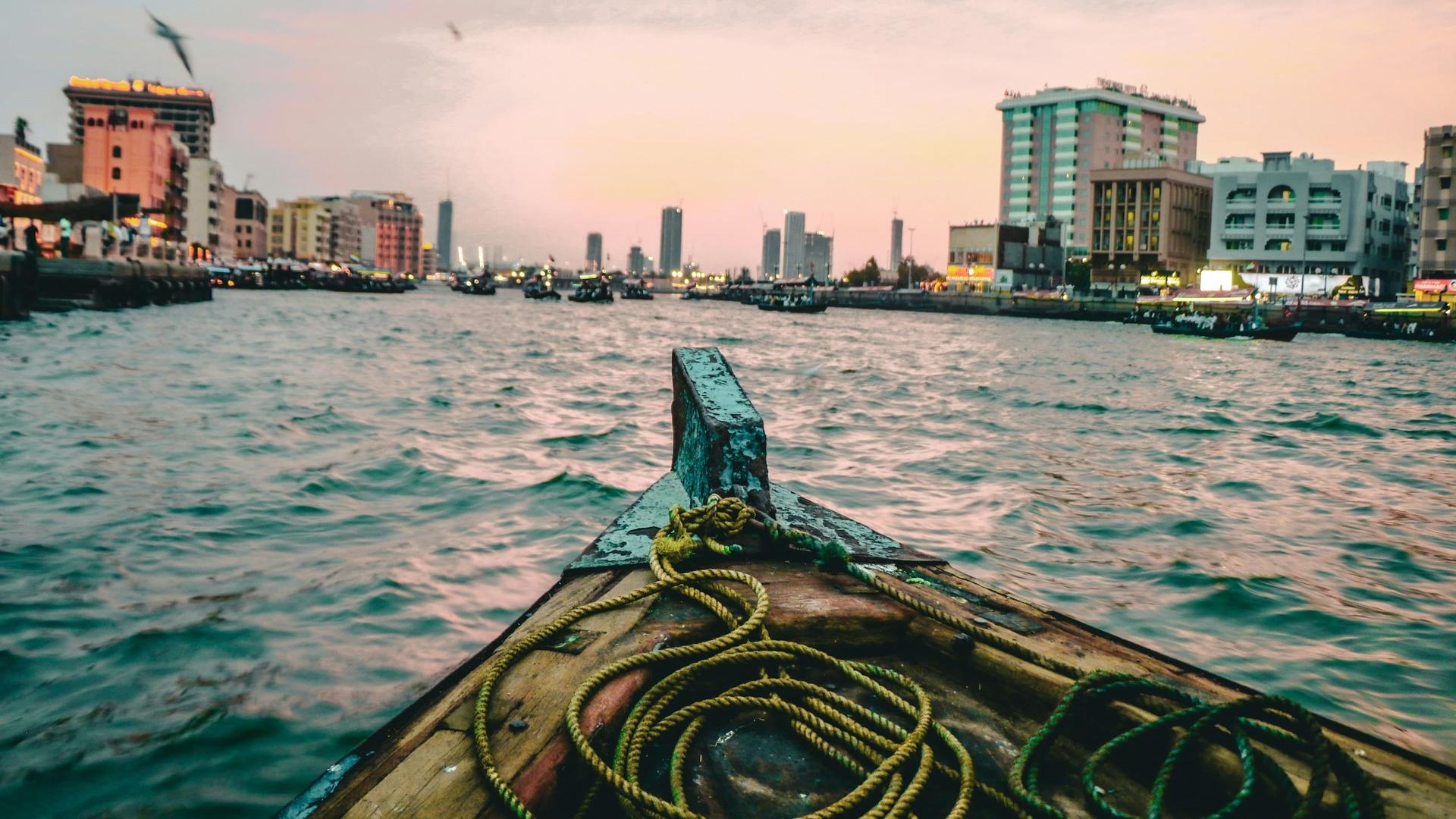
From Al Seef's new heritage-style lanes on Dubai Creek into the wind-tower lanes of the Al Fahidi Historical Neighbourhood, past Al Fahidi Fort, the Grand Mosque's minaret and the Krishna temple's lane to the Dubai Old Souq abra landing.
Start · Al Seef Heritage Quarter: Old Style, New Build
DirectionsStops
- 1
Al Seef Heritage Quarter: Old Style, New Build
A copy of the old creek town. Al Seef's heritage-style lane on Dubai Creek, built from 2017 and aged on purpose, with teak doors, palm-frond shades and rooftop shapes made to look like wind towers.
- 2
Souk Al Seef: The Building Kit
Learn the old building kit here. Shop fronts under palm-frond barasti shades at Souk Al Seef, where the materials of the real old houses, named by Dubai Culture, are copied in new walls.
- 3
Creek Edge at Al Seef
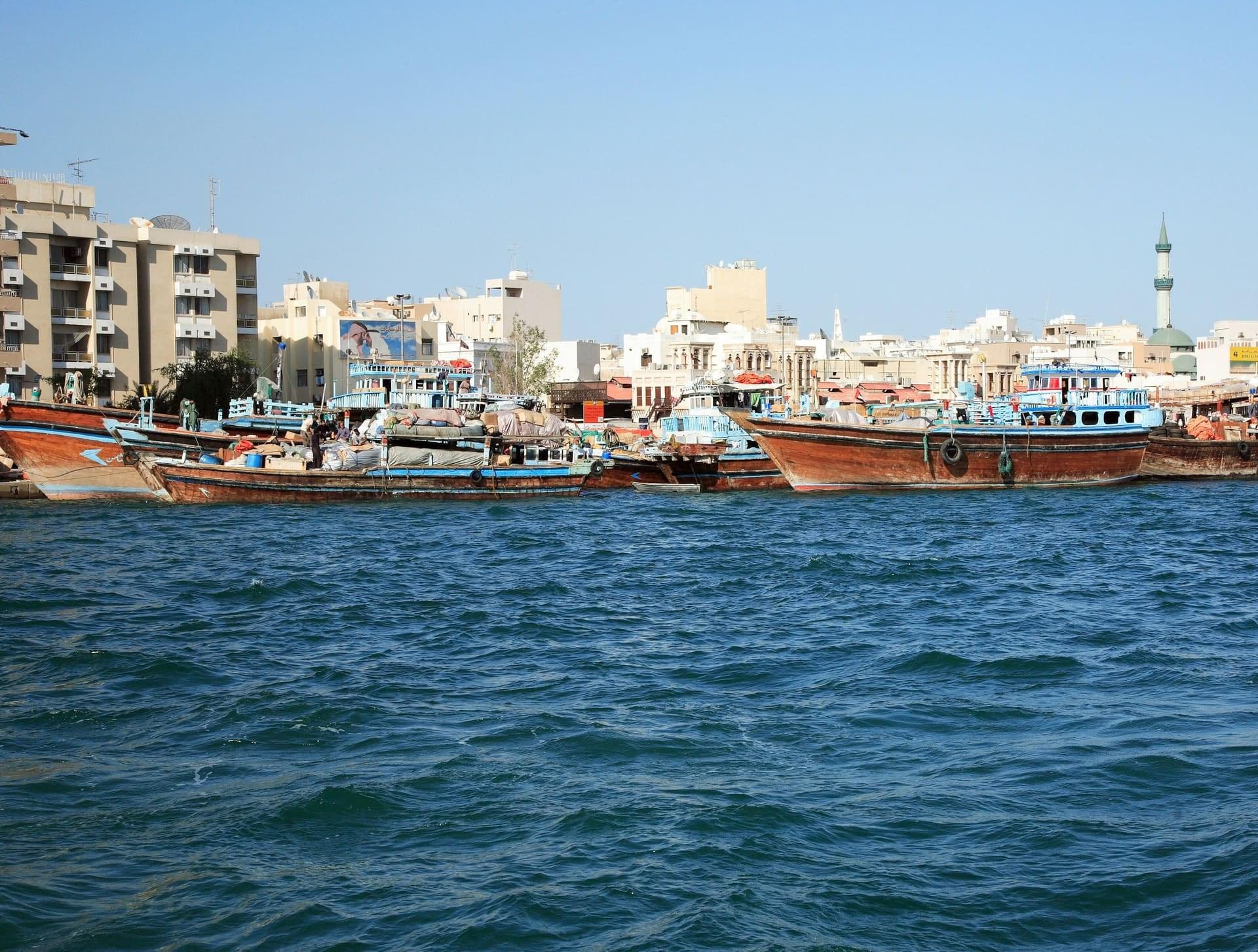
The harbor that made the town. Dubai Creek and the Deira bank opposite, the 1587 mention of Dubai's pearling, the 1930s pearl collapse and Dubai's 2012 World Heritage bid, later withdrawn.
- 4
Al Fahidi Abra Station: Dredging the Creek
How the creek was opened to ships. The Al Fahidi abra landing on the creek wall, the 1955 harbor plan and the dredging that began in 1959, paid for with a loan from Kuwait and the merchants' own money.
- 5
Coins Museum Square
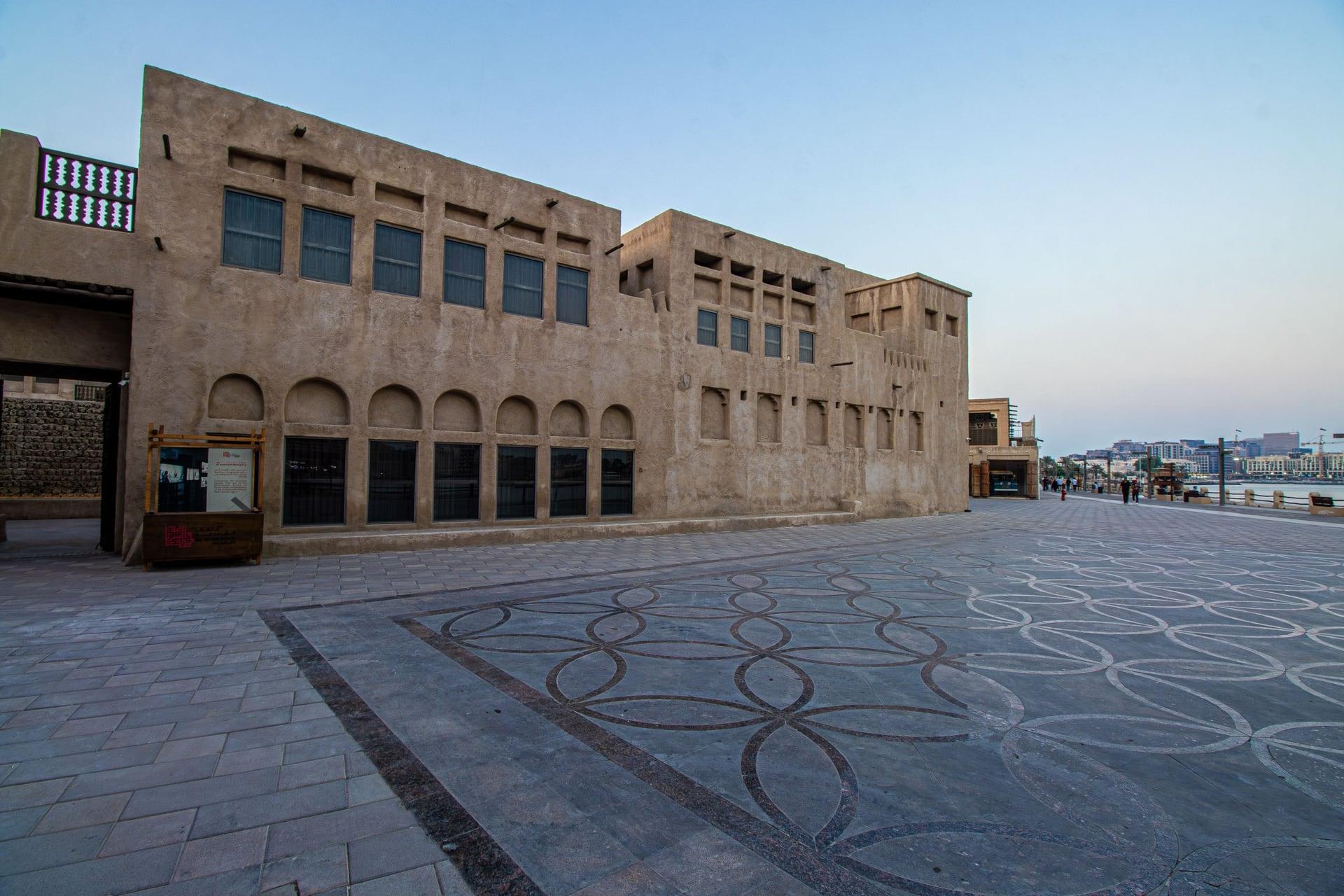
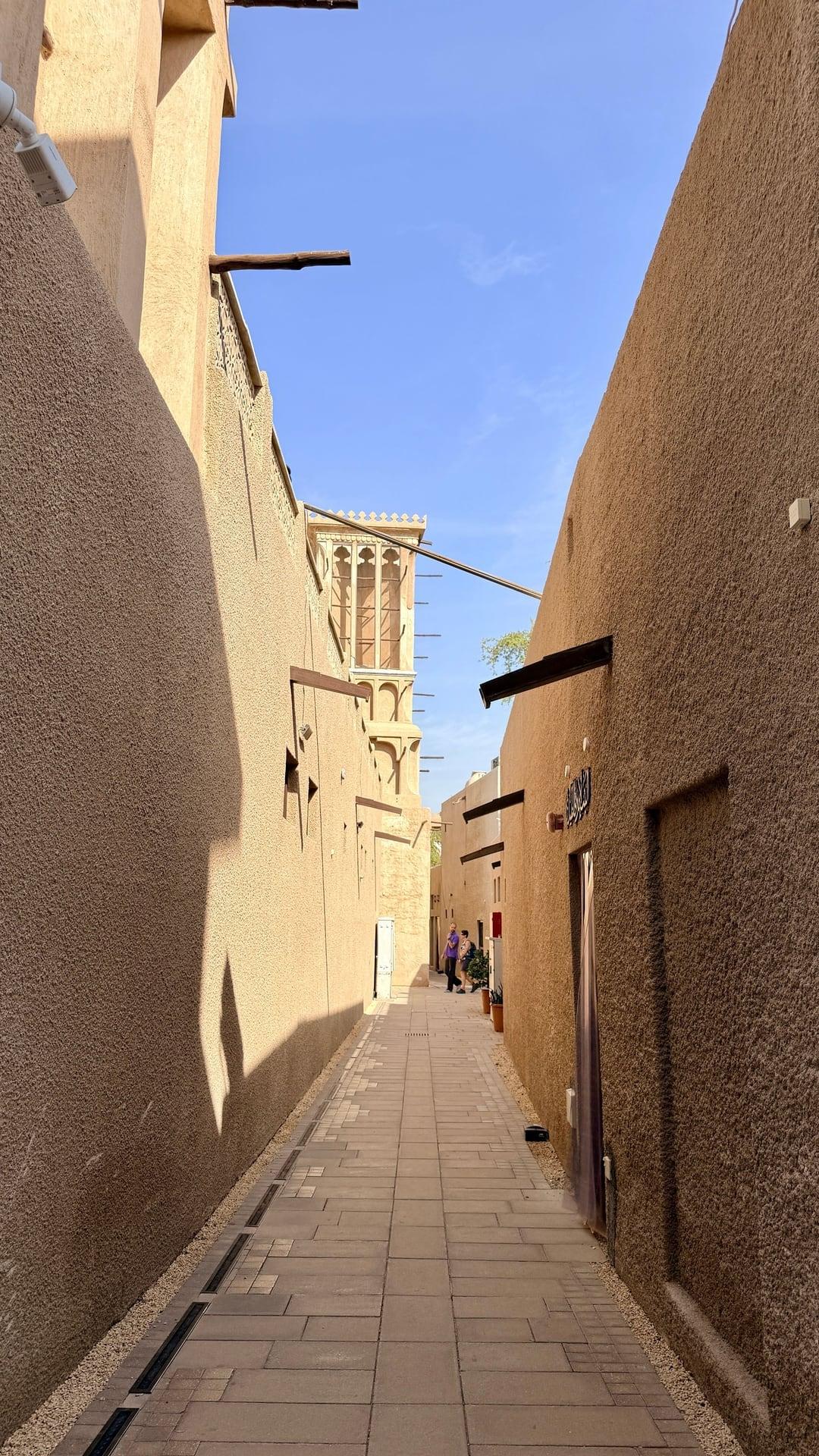
Where the Bastak merchants built homes. The north square of the Al Fahidi Historical Neighbourhood, once Bastakiya, with the Coins Museum's carved door, a small mosque's dome and the first wind towers.
- 6
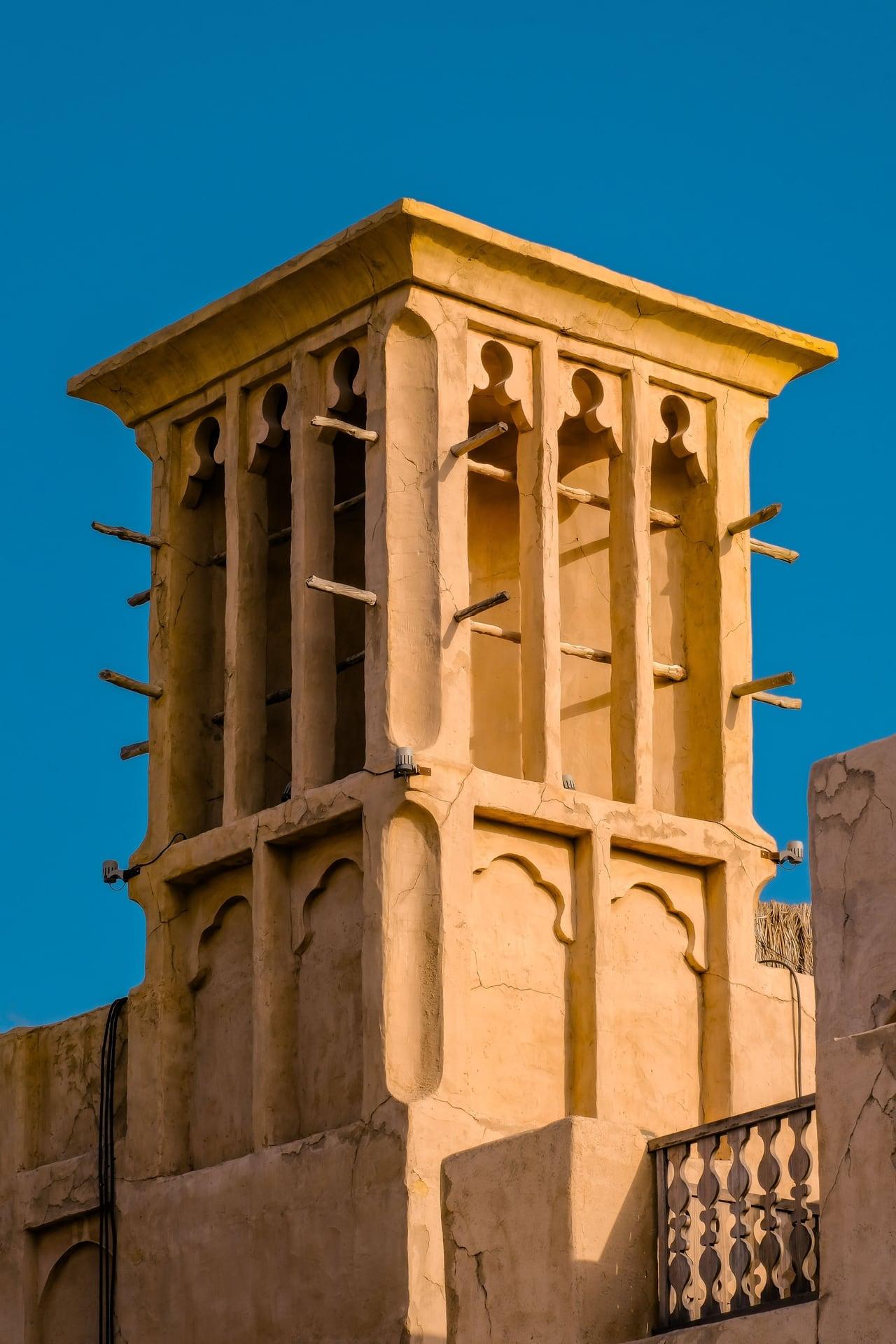
Wind Tower Square: How the Barjeel Works
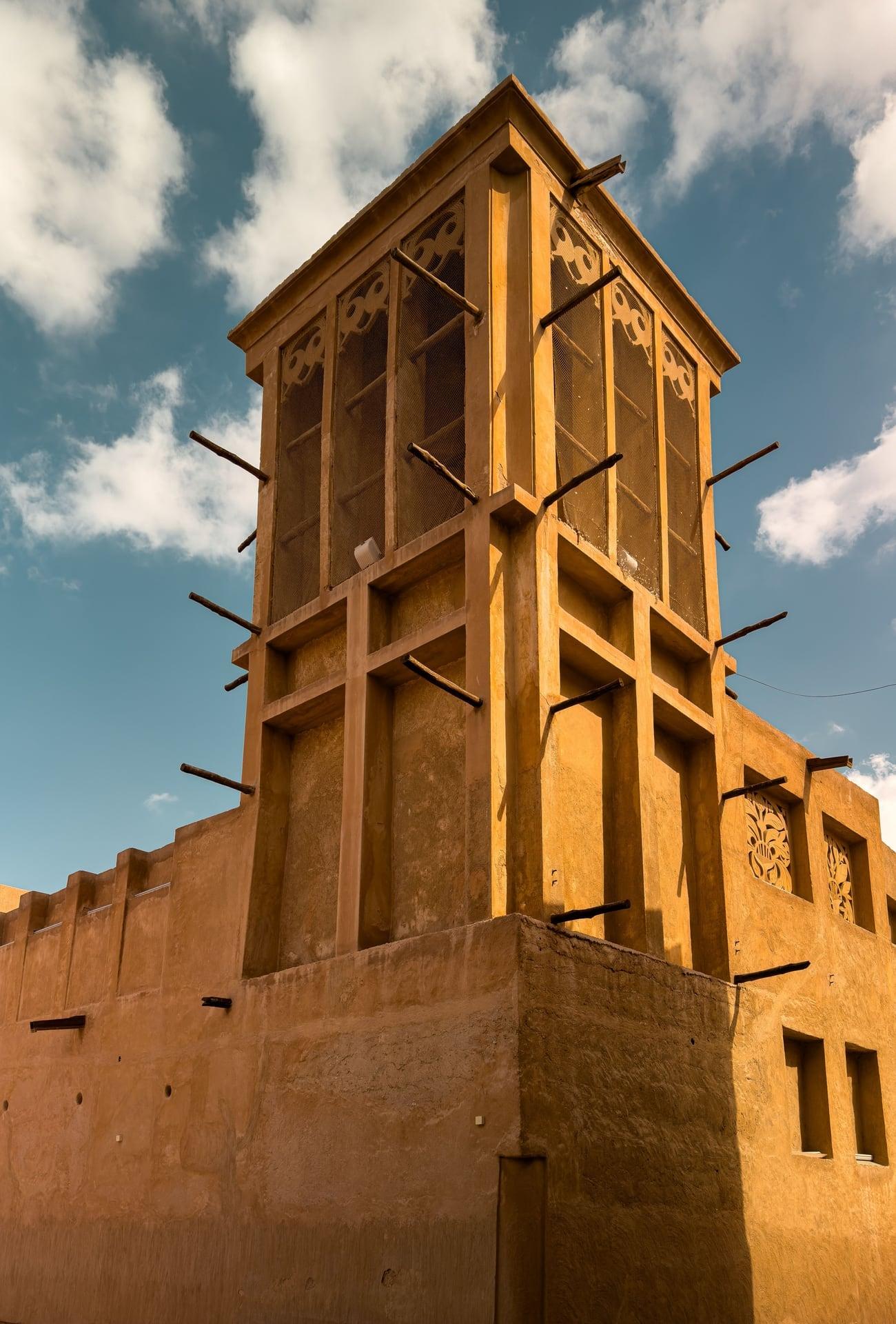
Towers that turned the breeze down. Wind Tower Square, where square barjeel rise above stone-and-gypsum walls beside the Sheikh Mohammed Centre for Cultural Understanding's house.
- 7
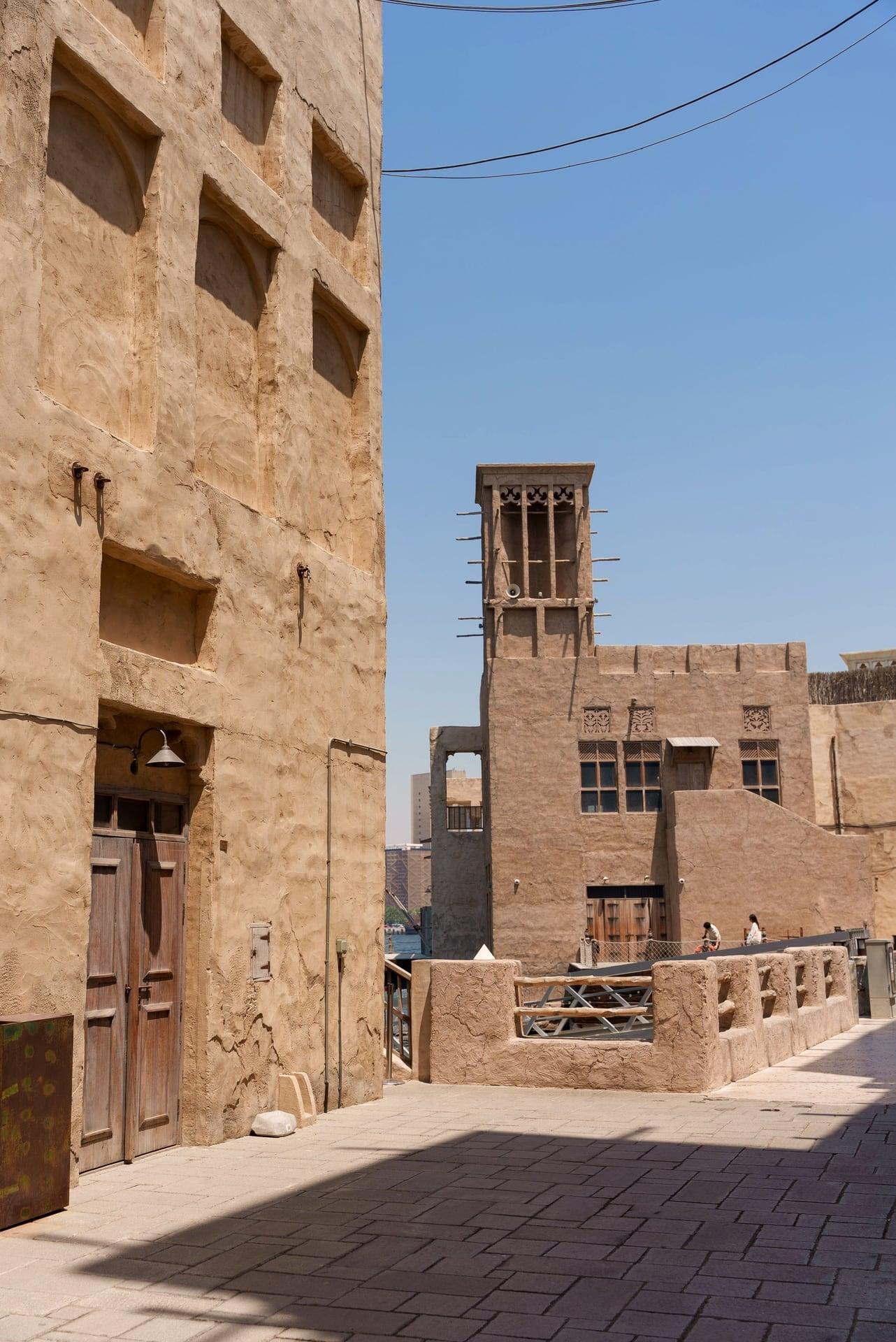
Coffee Museum Square: The Quarter Saved
How the old quarter was saved. The Coffee Museum's square, the 1980s clearances, the 1989 royal visit credited with saving what was left, and the restorations by Dubai Municipality that followed.
- 8
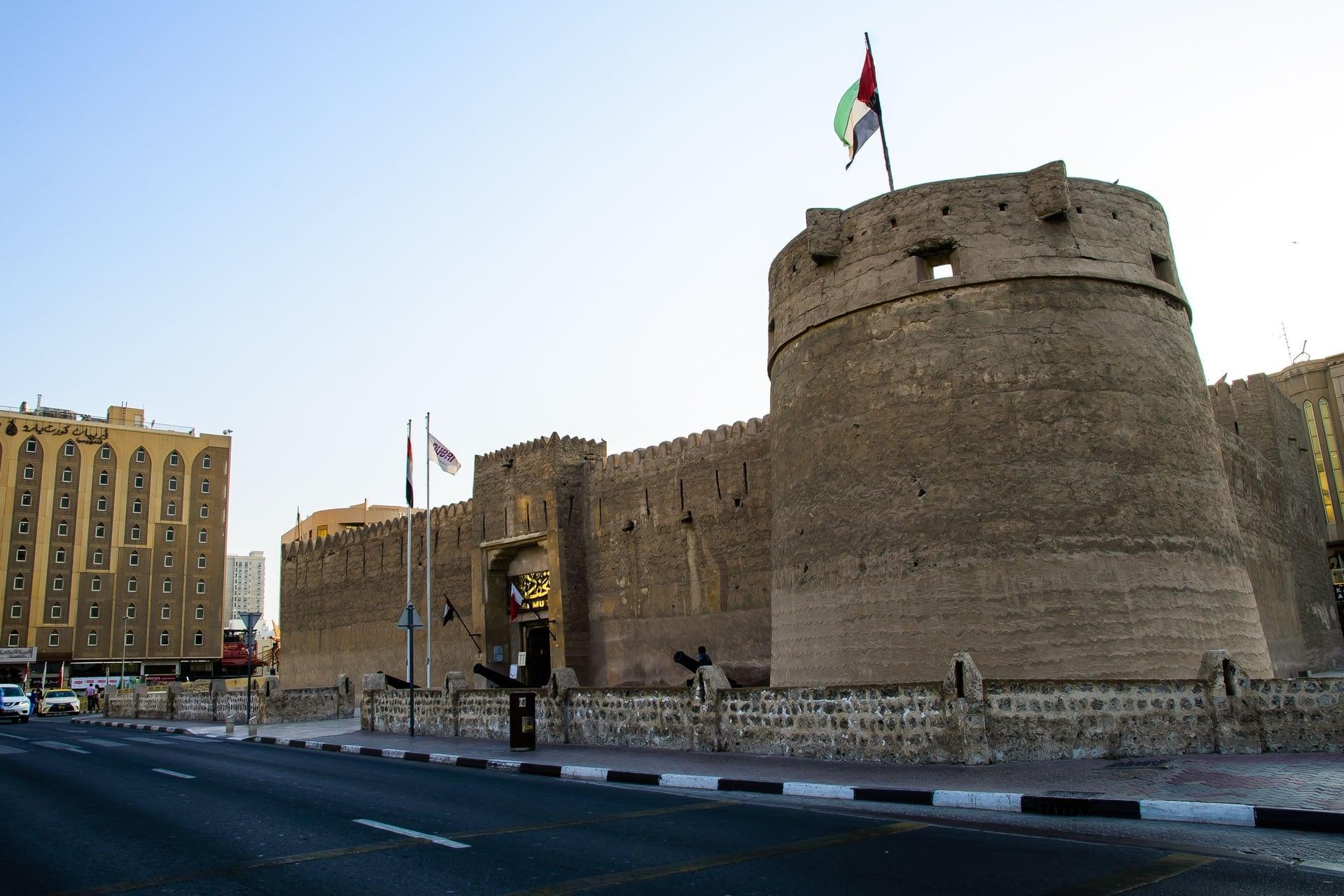
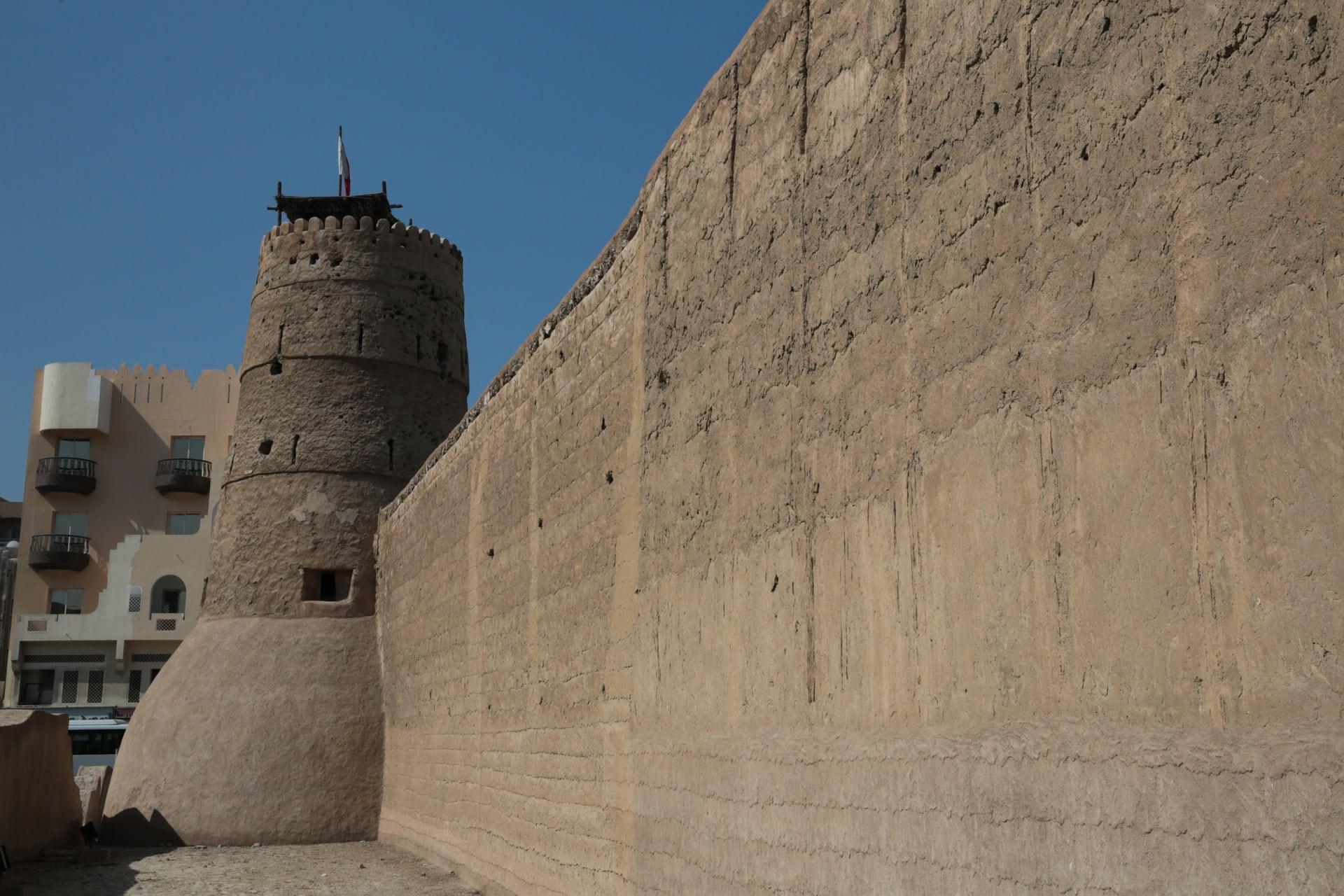
Al Fahidi Fort
The fort that held the government. Al Fahidi Fort's coral-stone east wall and gate, dated by Dubai to about 1787, home of the Dubai Museum from 1971 and closed for restoration since 2021.
- 9
Grand Mosque Minaret
A school that became a mosque. The Grand Mosque's minaret rising over the old town, above a modern rebuild of a mosque that began, by most accounts, as a Quran school.
- 10
Temple Lane
A Hindu temple by the minaret. The narrow lane of the Krishna temple, which stayed when the nearby Shiva temple and gurdwara moved their worship to Jebel Ali in January 2024.
- 11
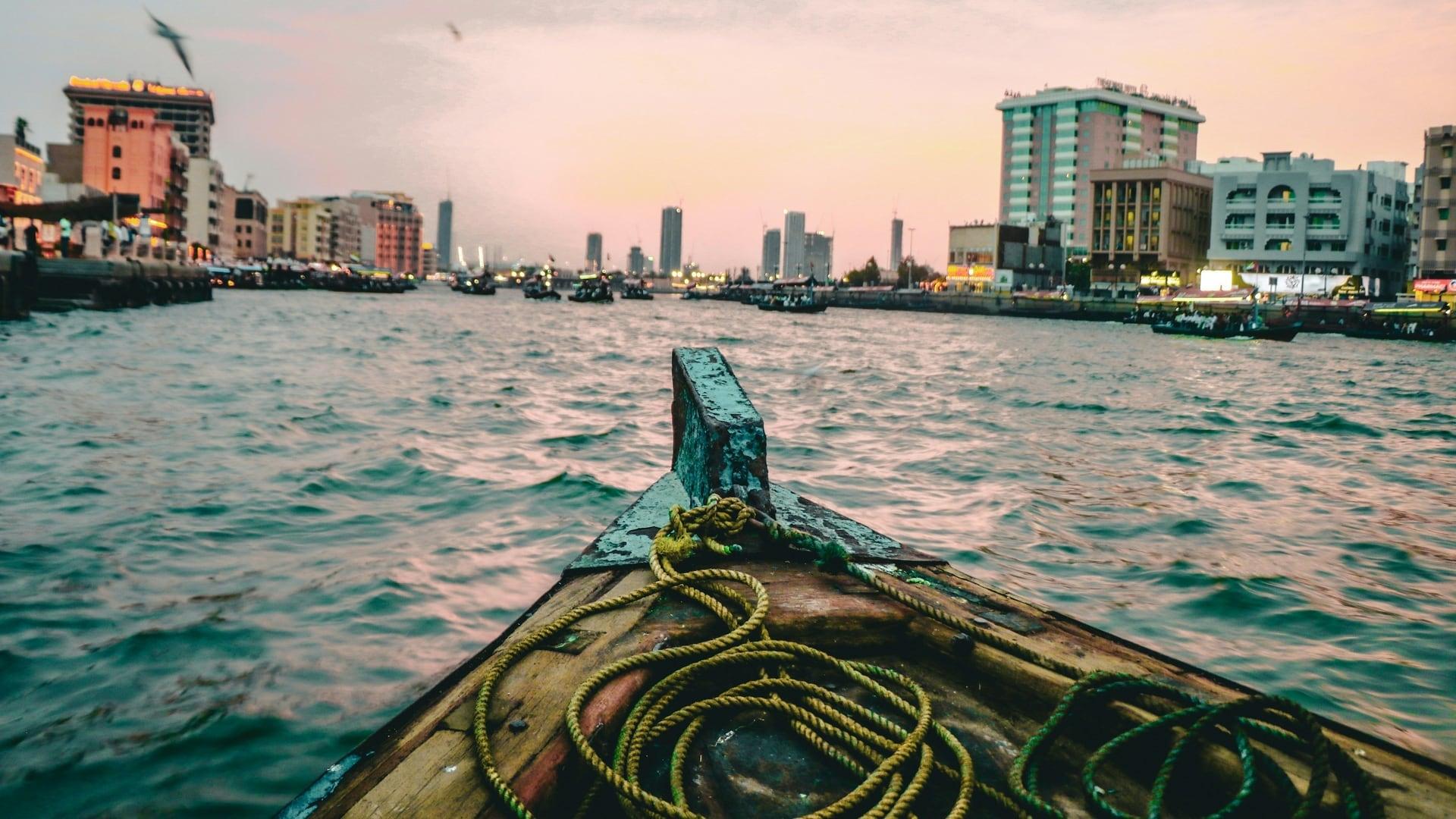
Dubai Old Souq Abra Station
The boats that join the banks. The Dubai Old Souq abra landing on the creek, where abras cross to Al Sabkha and Baniyas in Deira, and where the Al Shindagha walk begins.
Details
Best Time to Visit
November to March, in the morning (the Al Fahidi quarter is listed open daily from 7:00) or the late afternoon. The Al Seef lane (stops 1 to 3) and Al Fahidi Street (between stops 7 and 8) have little shade at midday; the Al Fahidi lanes are shaded most of the day. Walk the quarter (stops 5 to 7) inside its listed hours, 7:00 to 20:00 daily (Dubai Culture). The Coffee Museum (stop 7) is open Sunday to Thursday 9:00 to 17:00 and closed Friday. The sidewalk at the Grand Mosque (stop 9) is busy around the five daily prayers and at Friday noon. Checked 10 November 2026.
Pro Tips
- •Start in Al Seef's main lane, by Souk Al Seef on Al Seef Street. Come by abra to Al Seef station, about 370 m along the waterfront, or by taxi to Souk Al Seef.
- •By abra: RTA's abra timetable (September 2026) lists heritage route CR6 between Baniyas, on the Deira side, and Al Seef, at AED 2, with cash, nol card or bank card. Check routes and times on rta.ae before you go. Checked 10 November 2026.
- •By metro: BurJuman (Red and Green Lines) is about 1.3 km from the start on foot, partly along the edge of busy Sheikh Khalifa bin Zayed Road, so a taxi or the abra is easier. Sharaf DG (Green Line, once called Al Fahidi) is nearer the fort and the finish.
- •Getting away from the end: abras from the Dubai Old Souq landing cross to Al Sabkha (CR2, AED 1, cash only) and Baniyas (CR3, AED 2, cash, card or nol), per RTA's abra timetable of September 2026. Our Deira souks walk starts at Al Sabkha; our Al Shindagha walk starts at the souk lane beside the landing. Checked 10 November 2026.
- •Metro from the end: Al Ghubaiba (about 0.8 km, west through the Bur Dubai Souk) and Sharaf DG (about 1.1 km, south past the fort), both on the Green Line. Distances routed over OpenStreetMap, not walked: check your map app.
- •Al Fahidi Fort and the Dubai Museum (stop 8) have been closed for restoration since 2021. The official target of the first half of 2026 passed; in September 2026 the museum's director said it would reopen 'in the coming weeks or months' (Euronews). Check dubaiculture.gov.ae before you go. Checked 10 November 2026.
- •Coffee Museum (stop 7): free, Sunday to Thursday 9:00 to 17:00, closed Friday (Dubai Culture). The Sheikh Mohammed Centre for Cultural Understanding (stop 6) runs ticketed programs that are booked ahead. Checked 10 November 2026.
Safety & Precautions
- •The Al Fahidi quarter is listed open daily 7:00 to 20:00 (Dubai Culture). Whether its lanes and its south-west gate are shut after 20:00 is not confirmed: walk stops 5 to 8 inside those hours. If you find them shut, follow the creek promenade west from stop 4 to the temple lane and the abra landing (no stops, no photos), missing the fort and the minaret.
- •Road crossings: between stops 8 and 9, cross to the Grand Mosque only at the junction when the traffic signal stops the cars, never mid-block; if you cannot cross safely there, go round by the marked crossings west of the fort. Between stops 7 and 8, watch for cars at the two driveways on Al Fahidi Street, then use the zebra to the fort's gate. Between stops 4 and 5, the paved walk crosses a taxi drop-off loop: look both ways. Jaywalking is fined in Dubai.
- •Government buildings stand near stops 4, 8 and 9: never photograph them. Ask before photographing people: UAE law protects privacy. Drones need a permit.
- •Dress modestly (shoulders and knees covered) in the old quarter and near the Grand Mosque, the Al Bastakiya Mosque and the Krishna temple, all working places of worship: the walk does not go inside. The sidewalk at the Grand Mosque is busy around prayer times and at Friday noon.
- •Sun: there is little shade on the Al Seef lane and on Al Fahidi Street at midday. Carry water and a hat. The route is flat, with no steps.
- •Ramadan is expected to begin about 8 February 2027, subject to the moon sighting: opening hours shift, and you should avoid eating or drinking openly in the street in daylight.
- •GPS can drift in the narrow lanes of the Al Fahidi quarter and the temple lane (stops 5 to 7 and 10): if a stop does not start on its own, start it by hand.
- •The last few meters to the abra landing may run under the covered souk's roof: keep on to the jetties.
Travel advisory: Reconsider Travel (Level 3).
Gallery
Related Reading
Go deeper on what you'll see, hear, and walk through.
Overview
Best Self-Guided Walking Tours in Dubai (2026)
5 min
Overview
Dubai Travel Guide: How Many Days, Best Time, Getting Around, and Costs
8 min
Overview
One Day in Dubai: A Walkable Old-to-New Itinerary
9 min
Thematic
Best History Walking Tours in Dubai (2026)
2 min
Thematic
Dubai From the Creek to the Crown of the Tower
9 min
Companion
Al Fahidi: The Coral-and-Wind Town That Dubai Grew From
8 min
Deep dive
Al Fahidi Fort and the Dubai Museum: The Oldest Stone in the City
6 min
Read
What to Eat in Dubai: Emirati Dishes and Where to Find Them
7 min
Read the walk
The full story of Old Dubai: Al Fahidi's Wind Towers and the Creek, in words. Prefer to listen? Play it narrated, from home or on location.
Introduction
Dubai grew up on its creek, and the best of its old trading town survives on this bank, in the Al Fahidi Historical Neighbourhood, with its square wind towers. The walk starts with a copy, the new heritage-style lanes of Al Seef, so you can learn the old building kit before you meet the real thing. Then it goes past the old fort and the Grand Mosque's minaret to a temple lane and the abras.
There are eleven stops over about two kilometers, about a mile and a quarter, and it takes about seventy-five minutes, flat, with no steps. One road crossing matters, at the junction between the fort and the Grand Mosque: cross only when the traffic signal stops the cars. Jaywalking is fined in Dubai.
The sun is strong even in winter: bring water and a hat. Dubai Culture lists the Al Fahidi quarter open from seven in the morning to eight at night; walk it inside those hours. The fort is closed for restoration, and no stop needs a shop or museum to be open. Dress modestly, with shoulders and knees covered, and ask before you photograph anyone. In Ramadan, expected to begin about the eighth of February twenty twenty seven, hours shift: avoid eating or drinking openly in the street in daylight.
Come by abra to Al Seef station, or by taxi to Souk Al Seef. The walk ends at the Dubai Old Souq abra station, where boats cross to Deira. When you arrive at Al Seef Heritage Quarter, begin with stop one.
1. Al Seef Heritage Quarter: Old Style, New Build
You are standing in Al Seef's main lane, among sand-colored walls, heavy wooden doors and shades made of palm fronds. Look around. It all looks a hundred years old. It is not.
Al Seef is a new waterfront, about one point eight kilometers long on Dubai Creek. The developer Meraas opened its first phase in twenty seventeen, and its own announcement said the heritage area was patterned after old architecture in Dubai. Today it trades under the name Souk Al Seef.
The builders aged these walls on purpose. The architects' project notes describe water marks, caulking and bulging edges, all added so that new buildings would look weathered. The doors are African teak. The plaster is tinted to look like local sandstone, and some of the fittings were reclaimed from old buildings. They even faked two periods side by side. Some buildings were made to look like the nineteen sixties, with darker walls and simpler detail. Others were made to look later and richer.
So treat this lane as a lesson. Look at the timber beams poking through the walls, the frond shades over the lane, and the tall square shapes on the rooftops, built to look like wind towers. Remember them. Later on this walk you will stand among the real ones, and you will be able to tell the difference.
The shops keep their own hours, but the lane is public ground, and it works at any hour.
Follow the route along the lane, with the creek showing through the gaps. Next is a small court where the building kit itself is on show.
2. Souk Al Seef: The Building Kit
Walk on to the small open court where the lane bends, and stop there, under the open sky, before the lane goes into its covered stretch.
Around you are shop fronts under shades of timber and palm frond. Al Seef's builders call that kind of palm shade barasti. Look up through it and you will see the sky broken into strips.
This court is a sample book. Dubai Culture lists what the real old houses of the Al Fahidi quarter were built from: stone, gypsum, teak, sandalwood, palm fronds and palm wood. Here you can find most of that list, copied. The walls are new, finished in plaster tinted to look like sandstone. The doors and windows are teak. The shades are fronds.
Keep the list in your head. Stone and gypsum for the walls. Teak and palm wood for the beams and the doors. Fronds for shade. When you reach Al Fahidi, you will meet the same list again, this time on houses that families lived in, from the middle of the eighteen hundreds until the nineteen seventies, in Dubai Culture's words.
One honest note about these shops. Al Seef is a shopping street, built for visitors, and that is fine: it is a good place for a cold drink before the old quarter. The history starts at the end of this lane.
Follow the route on along the lane to its far end, then a short way to the water. Next is the creek itself.
3. Creek Edge at Al Seef
Walk on to the creek-side path and stop where the water opens in front of you.
This is Dubai Creek. Dubai's own heritage submission to UNESCO describes it as a natural inlet of sea water, about fourteen kilometers long and between a hundred and five hundred meters wide, dividing the city in two: Bur Dubai, the bank you are standing on, and Deira, across the water.
Look across. Along the Deira bank you will usually see wooden dhows, the cargo boats of the Gulf, tied up at the wharves. The small boats crossing between the banks are abras, the creek's ferries. Our Deira souks walk tells the story of that far bank.
The creek is the reason the town is here. The same submission says the creek was likely the real reason Dubai was founded: a sheltered harbor on a shallow coast. And the first written mention of Dubai that it cites comes from fifteen eighty seven, from Gasparo Balbi, a Venetian pearl merchant, who wrote about its pearling.
Pearls were the town's old wealth. In the nineteen thirties, cultured pearls from Japan and the world slump ruined the pearl trade. The harbor remained, and so did the traders.
In twenty twelve, Dubai put this creek forward for World Heritage status, as a traditional merchants' harbor. The bid was later withdrawn, so the creek is not a World Heritage Site. But the case it made is the story of this walk: a safe harbor, and the people who settled beside it to trade.
Follow the route along the water to the abra landing. Next, how the creek was made deep enough for ships.
4. Al Fahidi Abra Station: Dredging the Creek
Walk on along the promenade to the head of the abra pier, and turn to face the water. One note first: government buildings stand along this stretch of the creek, so keep your camera on the water.
This is the Al Fahidi abra landing. Heritage abras leave from here for the Deira bank. We will come to the fare at the last stop.
Now look at the creek wall under your feet, and the water beyond it. The creek was not always this easy for boats. Dubai's heritage submission says that when it was first dredged, in nineteen sixty one, the aim was to let boats drawing seven feet of water pass through at all times.
The plan came first. In nineteen fifty five, a British engineering firm reported on how to improve the harbor. It proposed a channel sixty meters wide and nine hundred and fourteen meters long, from the bend of the creek out to the sea, at an estimated cost of about three hundred and eighty-eight thousand pounds. Work began in nineteen fifty nine. It was paid for with a loan from Kuwait and money raised from the town's own merchants, to be repaid over ten years from customs.
The creek was dredged again in the nineteen sixties and seventies, and in nineteen seventy two a new port, Mina Rashid, opened for bigger ships. So the town's own merchants helped pay to open their harbor.
Follow the route back off the pier and into the old quarter. Where the paved walk crosses the taxi drop-off loop, look both ways: cars come from both directions. Next is the first square of Al Fahidi.
5. Coins Museum Square
Walk on into the small square where the lanes meet, and stop there, among the low walls. You are now in the real thing: the Al Fahidi Historical Neighbourhood. On the square is the carved wooden door of the Coins Museum. Close by, a small white dome rises over the Al Bastakiya…
Full narration for this stop unlocks with the tour.
6. Wind Tower Square: How the Barjeel Works
Walk on into the square and stop where you can see the towers above the rooftops. Look up. Square towers rise above the two-story walls, open near the top on all four sides. This is the barjeel, the wind tower, and Dubai Culture counts these high air towers among the defining…
Full narration for this stop unlocks with the tour.
7. Coffee Museum Square: The Quarter Saved
Walk on into the small square and find the door of the Coffee Museum, and stop in front of it. The Coffee Museum is free, and open Sunday to Thursday from nine to five; it is closed on Fridays. Inside, it tells the story of coffee, from the highlands of Ethiopia to Arabic…
Full narration for this stop unlocks with the tour.
8. Al Fahidi Fort
Walk on to the zebra crossing in front of the fort's gate, cross, and stop in front of the gate. One note first: government buildings stand near this junction, so keep your camera on the fort. This is Al Fahidi Fort. Dubai's government dates it to about seventeen eighty seven,…
Full narration for this stop unlocks with the tour.
9. Grand Mosque Minaret
Walk on along the sidewalk with the mosque on your left, and stop where you can look up at the minaret, at the mosque's far corner. This is the Grand Mosque. By most accounts it began as a kuttab, a school where children learned the Quran, though the dates given for it differ.…
Full narration for this stop unlocks with the tour.
10. Temple Lane
Walk on along the narrow lane to the temple's street door, and stop there. A minute from the Grand Mosque's minaret is a Hindu temple. This is a Krishna temple, and by its community's account it has stood here for generations. Until recently it had neighbors. A Shiva temple…
Full narration for this stop unlocks with the tour.
11. Dubai Old Souq Abra Station
Walk on down the path to the abra landing, and stop at the top of the jetties, with the water in front of you. This is the Dubai Old Souq abra station. Watch the boats come and go. An abra is a small wooden boat, and Dubai's heritage submission says that crossing the creek once…
Full narration for this stop unlocks with the tour.
- Al Fahidi Fort (also known as Dubai Fort) — Rye jb23, CC BY-SA 4.0 · source
- Al Fahidi Fort (also known as Dubai Fort) — Chris Waits, CC BY 2.0 · source
Images may be cropped or resized. Other photos via Unsplash and Pexels.