Al Fahidi Historic District: The Wind-Tower City
80 min · 2.7 km · easy
Start with the dishes: in Dubai you eat machboos (spiced rice slow-cooked with meat or fish and loomi, the dried lime), harees (wheat and meat cooked down overnight into a savory porridge), luqaimat (fried dough balls soaked in date syrup), and balaleet (sweet saffron vermicelli under a thin omelette). You drink gahwa, cardamom-scented Arabic coffee served with dates, and karak, the strong sweet milk tea sold at every roadside cafeteria. Most of that food is not in the towers. It is in old Dubai, on the two banks of the Creek, a short walk from the souks and the heritage houses this guide's Dubai walking tours already take you through.
Here is the part travelers get wrong. "Dubai food" is really three cuisines sharing one city. There is genuine Emirati home cooking, which is quieter and harder to find than you would expect. There is the food of the South Asian, Iranian and Levantine communities who built and still run much of the city, which is everywhere and often the best value. And there is the global fine-dining scene the marketing sells. This guide is about the first two, the regional and traditional food, and where to order it well.
The Emirati dishes to know, and how they taste
Machboos is the anchor. It is a one-pot rice dish, close cousin to Gulf kabsa and biryani, built on basmati rice cooked with chicken, lamb, or fish and a spice base of loomi (dried black lime), cinnamon, cardamom and turmeric. Order it and you get a mound of fragrant rice with the meat buried inside or laid on top. The dried lime is the signature note: sour, slightly fermented, unmistakable once you learn it. Machboos is widely called the national dish of the UAE, so it is the single most useful thing to order if you want one meal that means "Emirati."
Harees is the opposite of showy. Wheat and meat are cooked together low and slow, often overnight, then beaten until they collapse into a smooth, savory porridge. It tastes of comfort and patience rather than spice, and it appears at almost every Ramadan table. Thareed is another slow dish worth ordering: a meat-and-vegetable stew ladled over torn pieces of thin bread that soak up the sauce.
For dessert, luqaimat are the ones to get. They are small balls of yeasted dough, fried until the outside crackles and the inside stays soft, then drenched in date syrup and sometimes dusted with sesame. They are sold at cultural meals, at Ramadan tents, and at the traditional restaurants below.
Breakfast is its own small world. Balaleet is sweet vermicelli fried with sugar, cardamom, saffron and a little rose water, topped with a savory omelette, so one plate is sweet and savory at once. Alongside it you will see chebab, a saffron-and-cardamom pancake eaten with date syrup and cheese, and regag, a paper-thin crisp flatbread. These are the dishes an Emirati breakfast tray is built from.
Gahwa and karak: the two drinks that explain the city
Hear a stop from this walk
Shindagha and the Sheikh Saeed Al Maktoum House: The Ruler's Wind-Tower House
Two very different drinks bracket Dubai's day. Gahwa is Arabic coffee, brewed light and often golden with cardamom and sometimes saffron, poured only a quarter full into a tiny handleless cup, and served with dates. It is a ritual of hospitality, not a caffeine hit. Arabic coffee was inscribed on the UNESCO Representative List of the Intangible Cultural Heritage of Humanity in 2015, listed jointly by the UAE, Saudi Arabia, Oman and Qatar. If a host offers it, take at least one cup.
Karak is the everyday counterweight. It is a strong, sweet, tan-colored milk tea, usually made with evaporated milk and spiced with cardamom, and it arrived in the Gulf with the Indian diaspora in the 1960s during the early oil years. Today it is sold around the clock at small cafeterias and drive-up windows all over Dubai, often for a couple of dirhams. Drinking a karak from a roadside stall is one of the cheapest and most honest food experiences in the city.
Where to eat it: Al Fahidi and the old banks
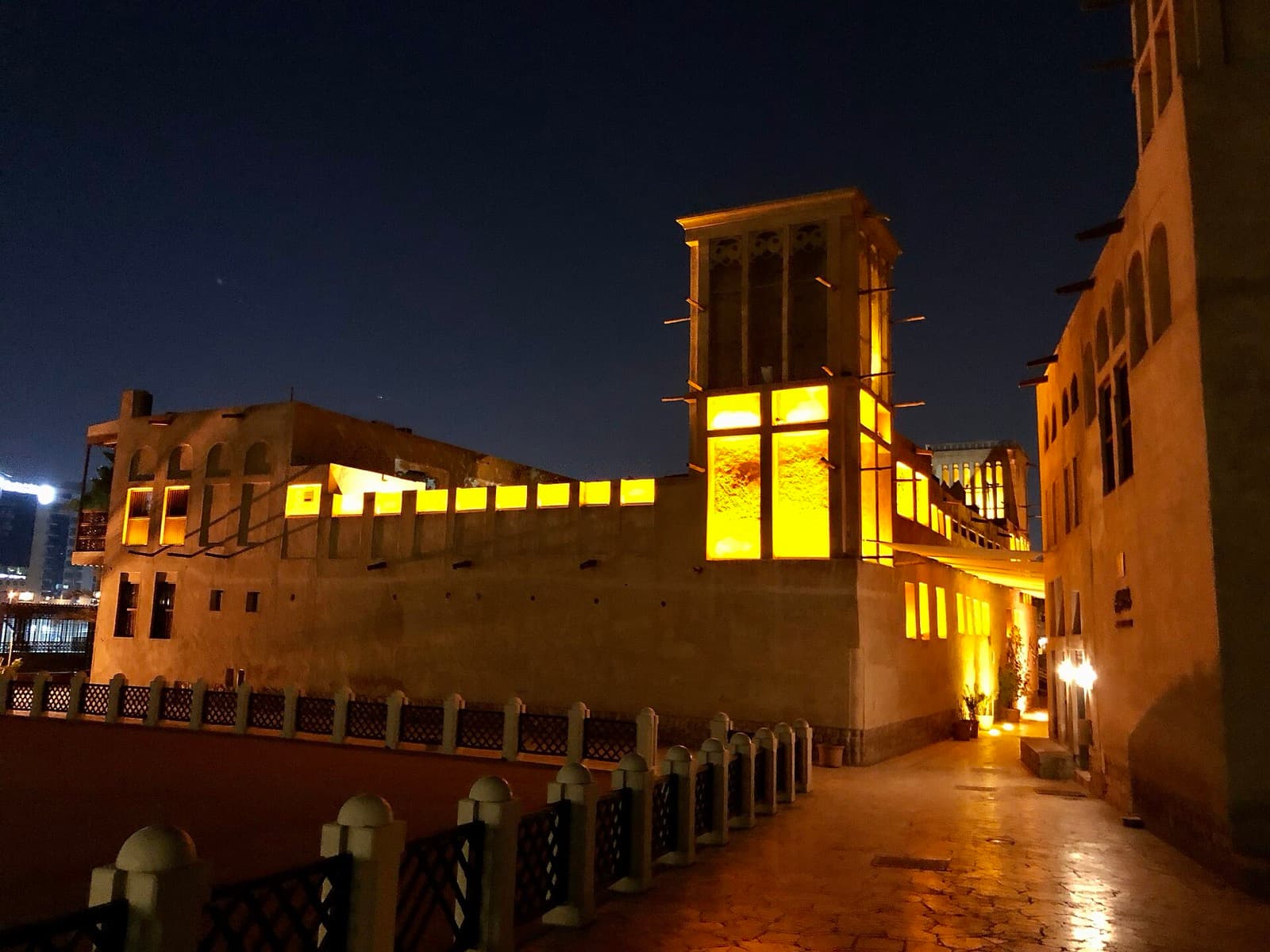
The most reliable neighborhood for traditional food is Al Fahidi, the old wind-tower quarter on the Bur Dubai side that our Al Fahidi Historic District walk reads stop by stop. Two things there are worth planning around.
The first is the Arabian Tea House in Al Fahidi, a courtyard restaurant that has become a local standard for Emirati breakfast and dishes like machboos and luqaimat. Its Emirati breakfast tray is a good way to taste balaleet, chebab, chickpeas and beans in one sitting. The second is the Sheikh Mohammed Centre for Cultural Understanding (SMCCU), which has run cultural meals in Al Fahidi under its motto "Open Doors. Open Minds." since it opened in 1998. You sit down to a traditional Emirati meal while an Emirati host explains the food and answers any question you have, which is the single fastest way to actually understand what you are eating. Cultural meals are scheduled on set days and should be booked in advance through the centre; check current days and prices on the official site before you go rather than turning up.
For a full sit-down Emirati meal elsewhere, Al Fanar recreates 1960s Dubai and serves classic machboos and harees, and Logma does a lighter, modern take on Gulf comfort food. If you want the more unusual end, camel appears on Emirati menus as burgers, stews and grills; several old-Dubai restaurants serve it, and camel meat is leaner and milder than most people expect.
Eating the other Dubai: the souks and the migrant kitchens
Do not confine yourself to Emirati restaurants, because much of the best food in old Dubai comes from the communities who trade here. On the Deira side, the Deira and Creek Souks walk runs through the Spice Souk on Baniyas Street, where you can buy saffron by weight, dried limes for your own machboos, cardamom, frankincense and blends of Arabic coffee spice to take home. Have a shopkeeper crush a dried lime under your nose before you buy, and expect friendly bargaining.
Around the souks and across Bur Dubai and Deira, the everyday food is Indian, Pakistani, Iranian and Levantine: shawarma wraps, freshly griddled kebabs, Iranian rice and grilled fish, South Indian dosas and biryani. This is where you eat well for very little, and it is as much a part of Dubai's food identity as any national dish, because it reflects the migrant labor that runs the port, the souks and the dhow wharfage to this day. Prices are low, cash is welcome, and portions are generous.
Practical notes: seasons, budget, and respect
Timing matters more than in most cities. Dubai's comfortable season runs roughly November to March; from about June to September the heat and humidity make midday outdoor eating and souk walking genuinely unpleasant, so aim for evenings. During Ramadan, do not eat, drink or smoke in public during daylight hours, which is both a legal and a cultural expectation across the UAE, but the evenings become the best food time of the year, with iftar spreads and late souk hours.
On budget: a karak and a shawarma cost a few dirhams; a sit-down Emirati meal at a traditional restaurant runs to a normal restaurant bill; a cultural meal at SMCCU is a fixed booked experience. Carry small cash for the souks and roadside stalls, which often prefer it. Dress modestly in the older quarters, covering shoulders and knees, and always ask before photographing a shopkeeper or a cook. Alcohol is served in licensed hotels and restaurants but not at the traditional souks or heritage-district cafes, so plan your drinks accordingly.
Put simply, eat Emirati at least once, ideally as a cultural meal or a courtyard breakfast in Al Fahidi, then spend the rest of your appetite in the souks and the migrant kitchens of the old banks. That combination, walked rather than driven, is the real food map of Dubai.
Sources
- Gahwa (Arabic Coffee), UNESCO Intangible Cultural Heritage element
- Sheikh Mohammed bin Rashid Al Maktoum Centre for Cultural Understanding, Cultural Meals
- The UAE's Favourite Tea: Meet Karak Chai, MICHELIN Guide
- Traditional UAE Food: A Guide to Emirati Cuisine, ICCA Dubai
- Sheikh Mohammed Centre for Cultural Understanding, Visit Dubai
Frequently asked questions
- What is the national dish of the UAE?
- Machboos is widely regarded as the national dish of the UAE. It is a one-pot spiced rice dish cooked with chicken, lamb, or fish, cardamom, cinnamon, turmeric, and loomi, the dried black lime that gives it a distinctive sour note. It is closely related to Gulf kabsa and to biryani. Order it if you want one meal that best represents Emirati cooking.
- Where can I eat traditional Emirati food in Dubai?
- The most reliable area is Al Fahidi, the old wind-tower quarter on the Bur Dubai side. The Arabian Tea House there serves Emirati breakfast, machboos, and luqaimat in a courtyard, and the Sheikh Mohammed Centre for Cultural Understanding runs booked cultural meals where an Emirati host explains the food. Al Fanar and Logma are other well-known Emirati restaurants across the city.
- What is karak and where do I get it?
- Karak is a strong, sweet milk tea usually made with evaporated milk and cardamom. It arrived in the Gulf with the Indian diaspora in the 1960s and is now sold around the clock at small roadside cafeterias and drive-up windows across Dubai. It typically costs only a couple of dirhams and is one of the cheapest, most authentic food experiences in the city.
- What is gahwa and how is it served?
- Gahwa is Arabic coffee, brewed light and often golden with cardamom and sometimes saffron, and poured only a quarter full into a small handleless cup. It is served with dates as a gesture of hospitality. Arabic coffee was inscribed on the UNESCO Intangible Cultural Heritage list in 2015, jointly by the UAE, Saudi Arabia, Oman, and Qatar. Accepting at least one cup is polite.
- Can I eat during the day in Dubai during Ramadan?
- During Ramadan you should not eat, drink, or smoke in public during daylight hours, which is both a legal and a cultural expectation across the UAE. Many restaurants adjust their hours and serve after sunset. Evenings during Ramadan are actually one of the best times for food in Dubai, with iftar spreads and late souk hours.
- Is Dubai food only fine dining and international restaurants?
- No. Alongside the global fine-dining scene, Dubai has genuine Emirati home cooking and the everyday kitchens of its South Asian, Iranian, and Levantine communities. Around the souks and in Bur Dubai and Deira you will find shawarma, kebabs, biryani, Iranian rice, and dosas at very low prices. This migrant food is as central to Dubai's identity as any national dish.
Ready to experience it?
Al Fahidi Historic District: The Wind-Tower City
80 min · 2.7 km · easy
More from Dubai
Explore more at your own pace.
Dubai From the Creek to the Crown of the Tower
Al Fahidi: The Coral-and-Wind Town That Dubai Grew From
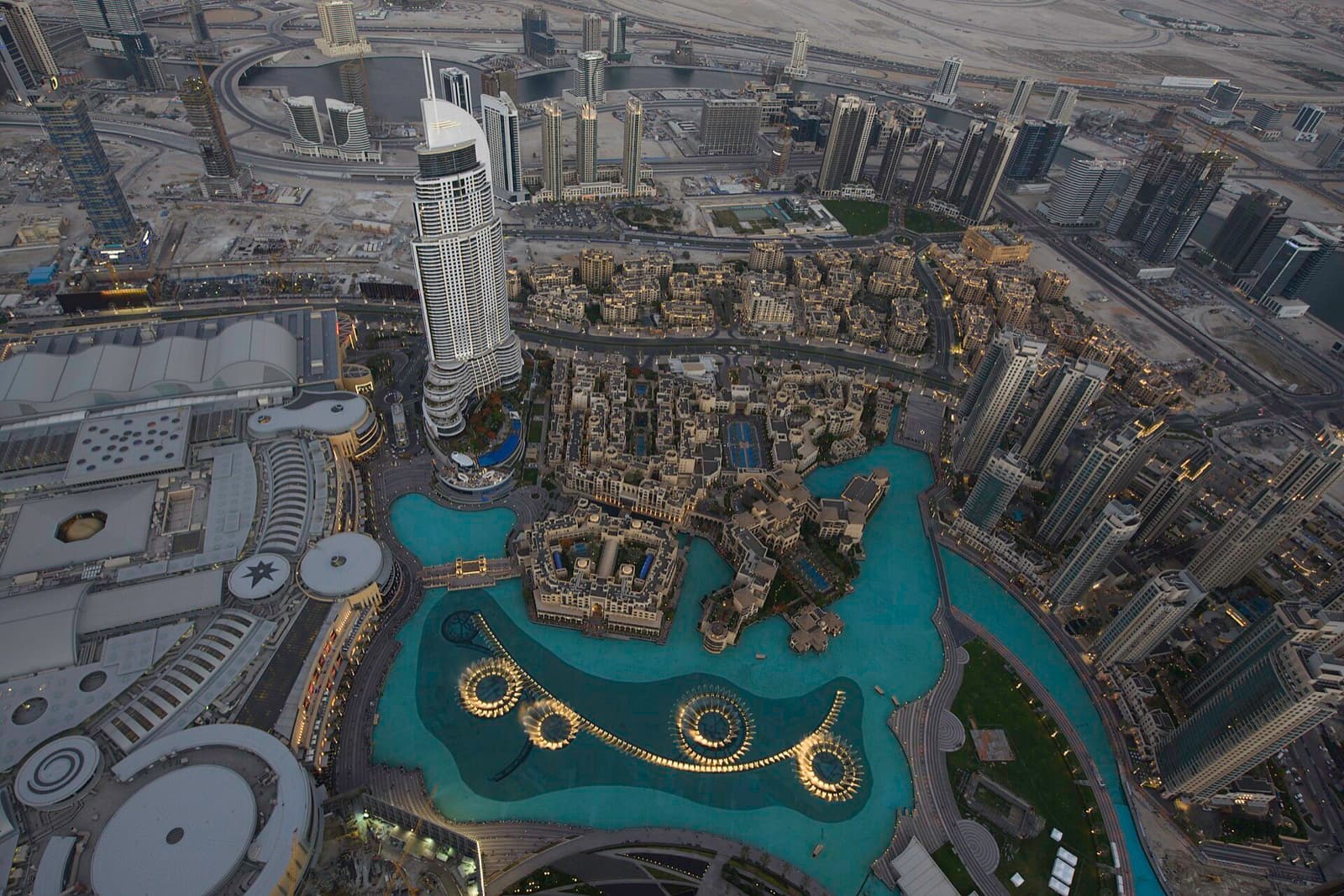
Emaar Boulevard: Reading the Grammar of a City Built All at Once
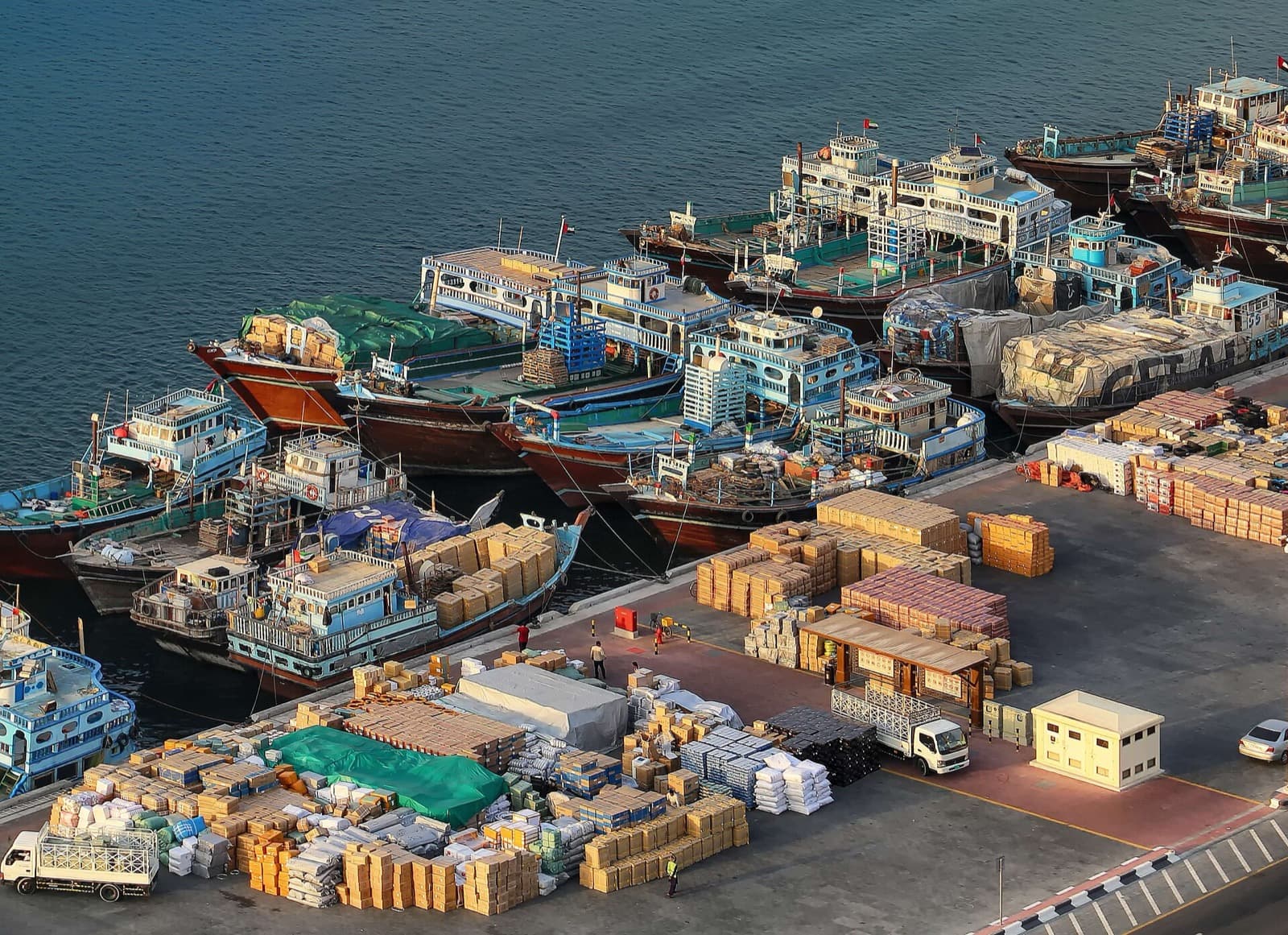
The Dhow Wharfage: Where Old Dubai Still Loads Cargo by Hand
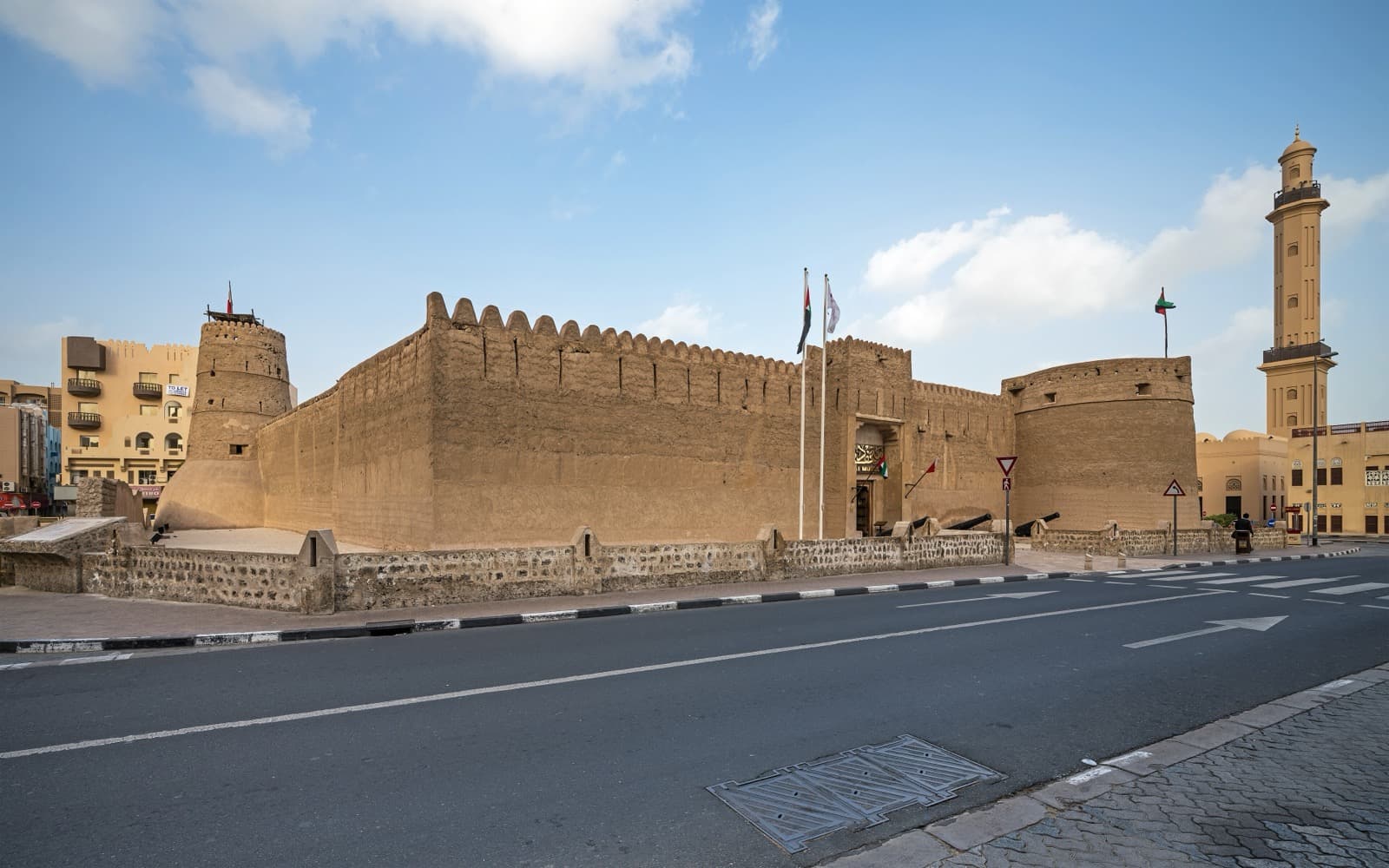
Al Fahidi Fort and the Dubai Museum: The Oldest Stone in the City