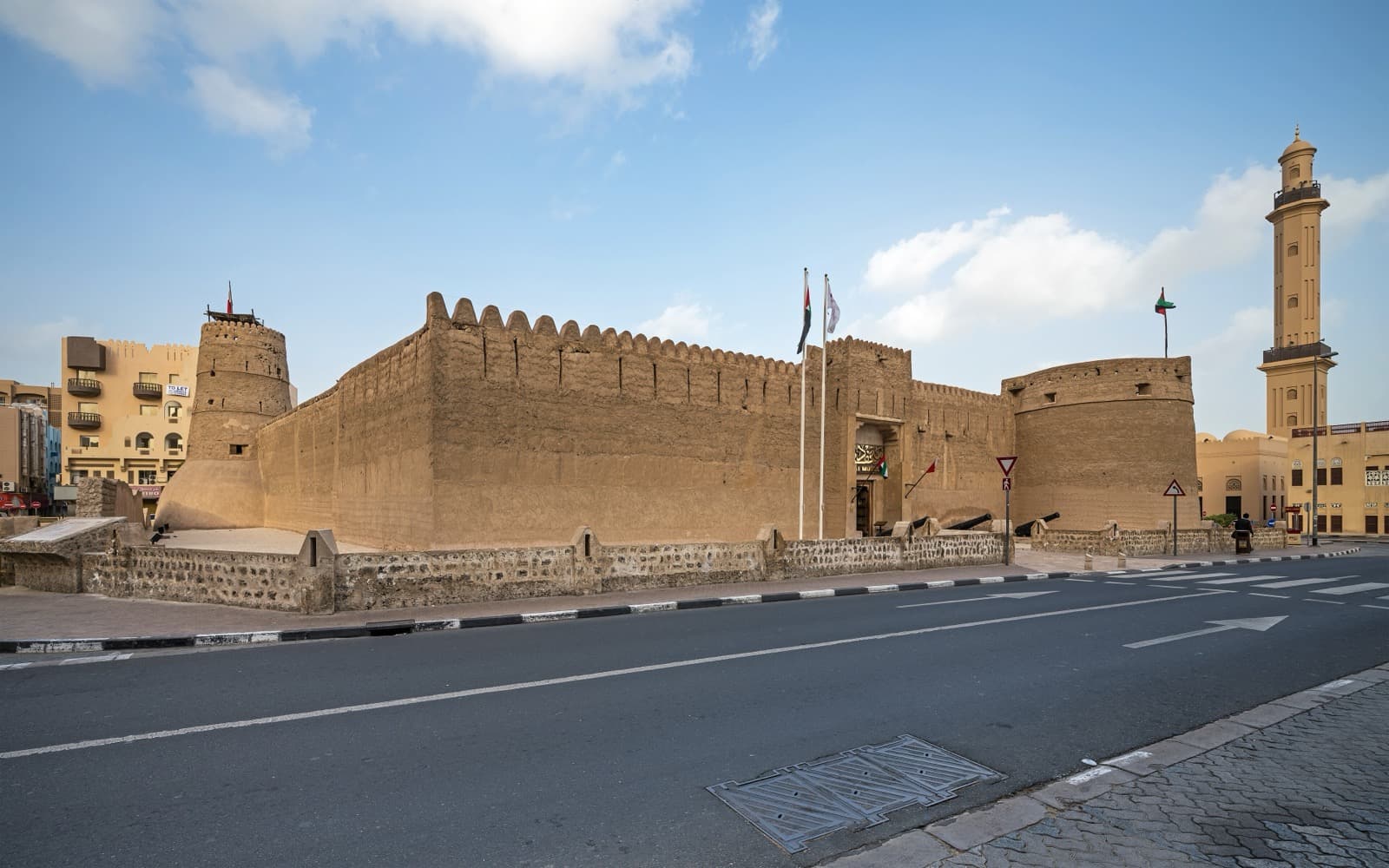
Al Fahidi Fort holds the oldest surviving building in Dubai. Its oldest tower was built around seventeen eighty-seven, a squat structure of coral stone quarried from the sea and bound with mortar, and for most of its life it guarded a small pearling and trading town. That town is now one of the great cities of the world. The fort is the stone it grew from, and today it houses the Dubai Museum on the Bur Dubai bank of the Creek. To understand Dubai, the visitor standing in front of these low, thick coral walls should hold one fact steady: everything vertical and glass and financed by oil came later, and this came first.
The oldest stone in the city
The material is the point. Look at the walls and you are looking at coral rock, the same stuff the sea gives up along this coast, cut into blocks and set with mortar. It is the same building method used in the coral houses of the surrounding Al Fahidi neighbourhood, and it explains why the fort sits so low and heavy on the ground. Thick coral walls hold their cool through the heat of the day, an old and practical answer to a hard climate, the same problem the wind towers of the quarter were built to solve in a different way.
The plan is roughly square, with towers standing at three of its corners. Near the southern wall there is a reconstruction of the old city walls, and at the main gate on the eastern wall two old cannons still stand watch. The whole compound covers around four thousand square metres. That is not large by the standards of the city that surrounds it now, but it was the strongpoint of the town, the place a small settlement retreated to and defended from.
A fort that did several jobs at once
Hear a stop from this walk
Shindagha and the Sheikh Saeed Al Maktoum House: The Ruler's Wind-Tower House
Across the centuries the building did not settle into one role. It guarded the landward approaches to the town, the direction trouble came from when it came by land rather than off the water. It served in turn as the ruler's palace, as a garrison for the guard, and as a prison. A single squat coral fort was, at different times, the seat of government, the barracks, and the jail. That range tells you something about the scale of old Dubai: a town small enough that its most important building could be all of those things at once, and often within living memory of the same people.
The families who governed here, the Al Maktoum, descend from the Bani Yas confederation of the desert and the coast. Their living, and the town's, came from the pearl banks and the harbour, not from anything under the ground. When you read the fort as their strongpoint, you are reading the physical centre of a society whose wealth was social and climatic and maritime long before it was financial.
From strongpoint to museum
The turn from fort to museum came in the middle of the twentieth century. In nineteen sixty-nine an expert was requested from Kuwait to help set up a museum in the building, and in nineteen seventy-one the fort became the Dubai Museum. The timing is worth pausing on: nineteen seventy-one is also the year the United Arab Emirates was founded. At the very moment the country was coming into being and the oil-financed transformation was beginning, someone made the deliberate choice to turn the oldest building in Dubai into a place that told the story of the town's life before all of that.
That is what the museum does. Inside, it tells the story of the pearling, the trade, the crafts and the desert, the ordinary hard living of a coast that dived for pearls and sailed dhows to the ports of India, Persia and East Africa. The fort is not a monument to conquest or to a dynasty's glory. It is a monument to a way of life that had almost ended by the time the museum opened, preserved on purpose inside the town's oldest stone.
What to understand standing in front of it
There is a practical note before you plan a visit. The fort and museum have been undergoing restoration, so if you want to see the galleries inside, it is worth checking whether they are open before you go. Even closed, the exterior makes the argument on its own.
Here is the one thing to hold onto. This coral fort, low and thick-walled and built more than two centuries ago, once guarded a small town that lived by pearling and trade. Everything the name Dubai now conjures, the towers, the scale, the speed, is younger than the museum that occupies this building. The fort is older than all of it, and it is made of the sea. Stand at the eastern gate between the two cannons and you are standing at the beginning of the story, on the ground the rest was built from.
The fort sits at the third stop of a walk through the oldest surviving quarter of the city, and it reads best in sequence, with the coral lanes and wind towers of Al Fahidi before it and the Creek, the souk and the ruler's house at Shindagha after. The self-guided Al Fahidi Historic District: The Wind-Tower City audio tour takes you through all of them at your own pace, in about eighty minutes over a little under three kilometres, ending at the water where the wooden abras still cross for a single dirham. If you want to see how this one stone fits the wider old town, the full list of Dubai walking tours is the place to start.
Sources
- Dubai Museum (Al Fahidi Fort), Wikipedia. Encyclopedia entry on the fort's construction around 1787, its coral-rock-and-mortar build, its square plan with towers at three corners, the two cannons on the eastern wall, the roughly four thousand square metre area, its roles as palace, garrison and prison, the 1969 request for a museum expert from Kuwait, and its opening as the Dubai Museum in 1971.
- "Dubai's oldest surviving structure: History of Al Fahidi Fort," The National (2026). News feature on the fort's history and standing as the oldest existing building in Dubai ahead of its restoration reopening.
- Al Bastakiya, Wikipedia. Background on the surrounding Al Fahidi (Bastakiya) coral-and-gypsum quarter, its wind towers and its preservation.
- Roamer tour transcript, "Al Fahidi Historic District: The Wind-Tower City" (fact-audited, 2026). Primary source for the fort's place in the walk, the abra fare of one dirham, and the tour's length and duration.
Ready to experience it?
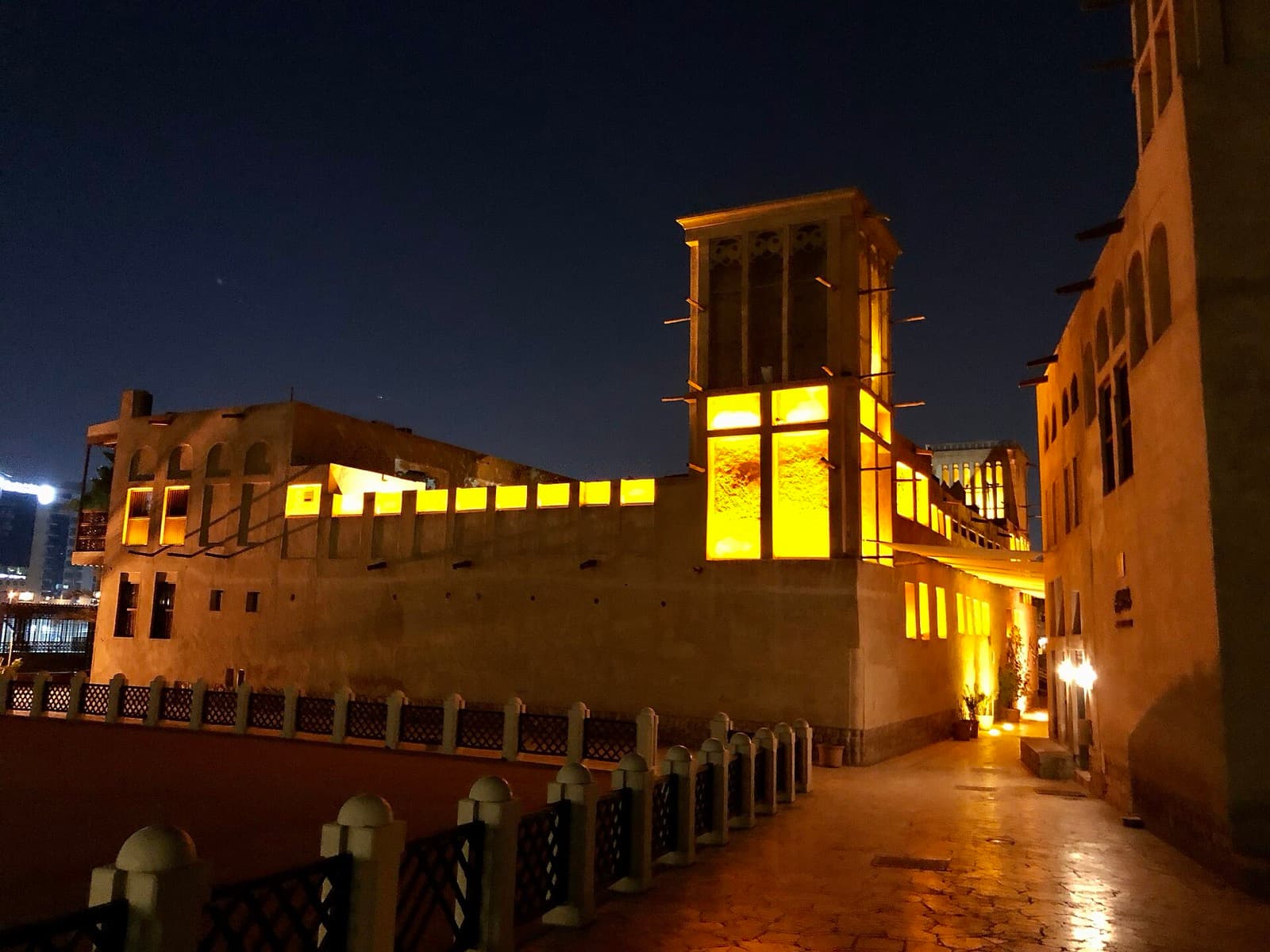
Al Fahidi Historic District: The Wind-Tower City
80 min · 2.7 km · easy
More from Dubai
Explore more at your own pace.
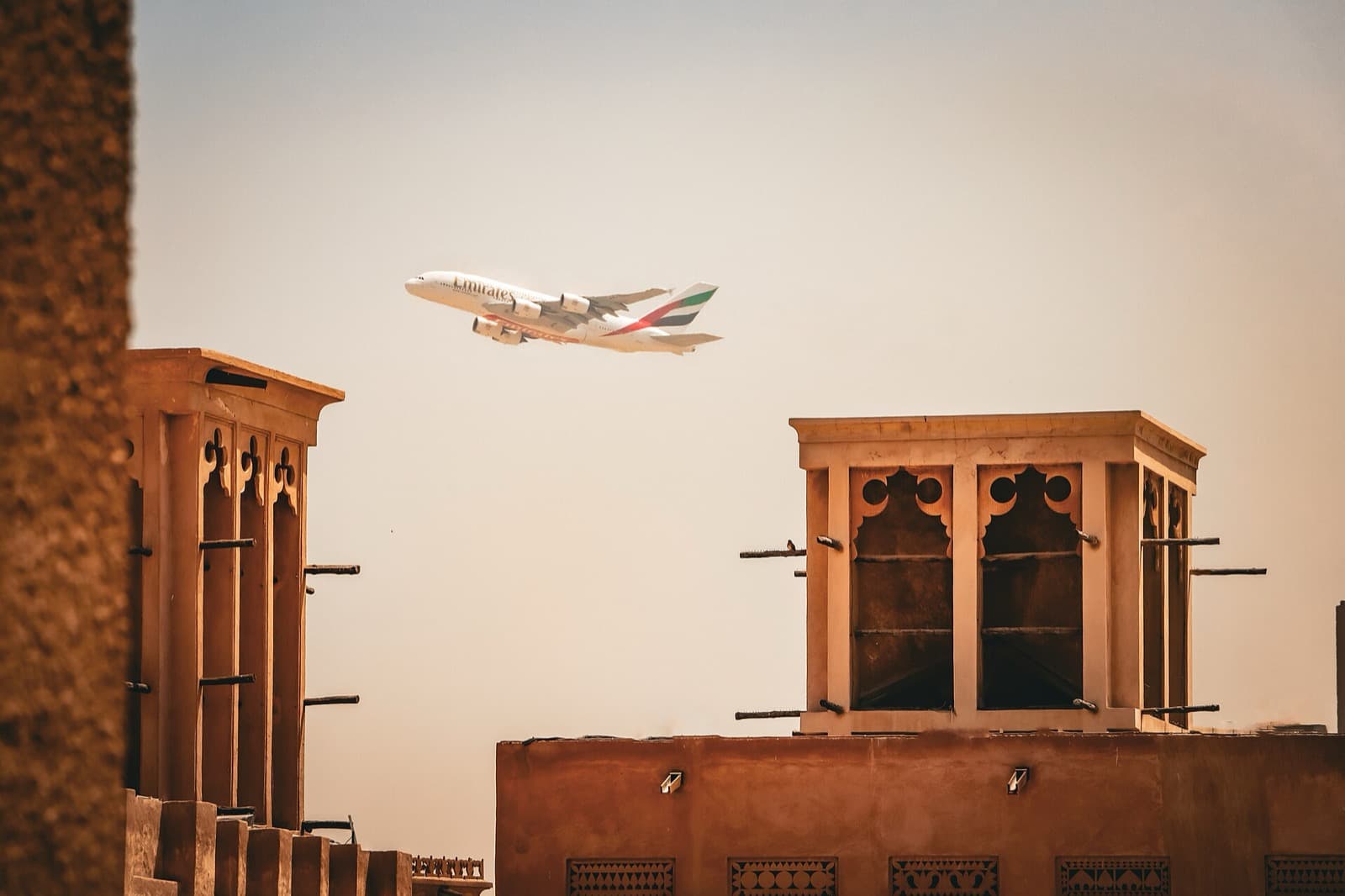
Dubai From the Creek to the Crown of the Tower
Al Fahidi: The Coral-and-Wind Town That Dubai Grew From
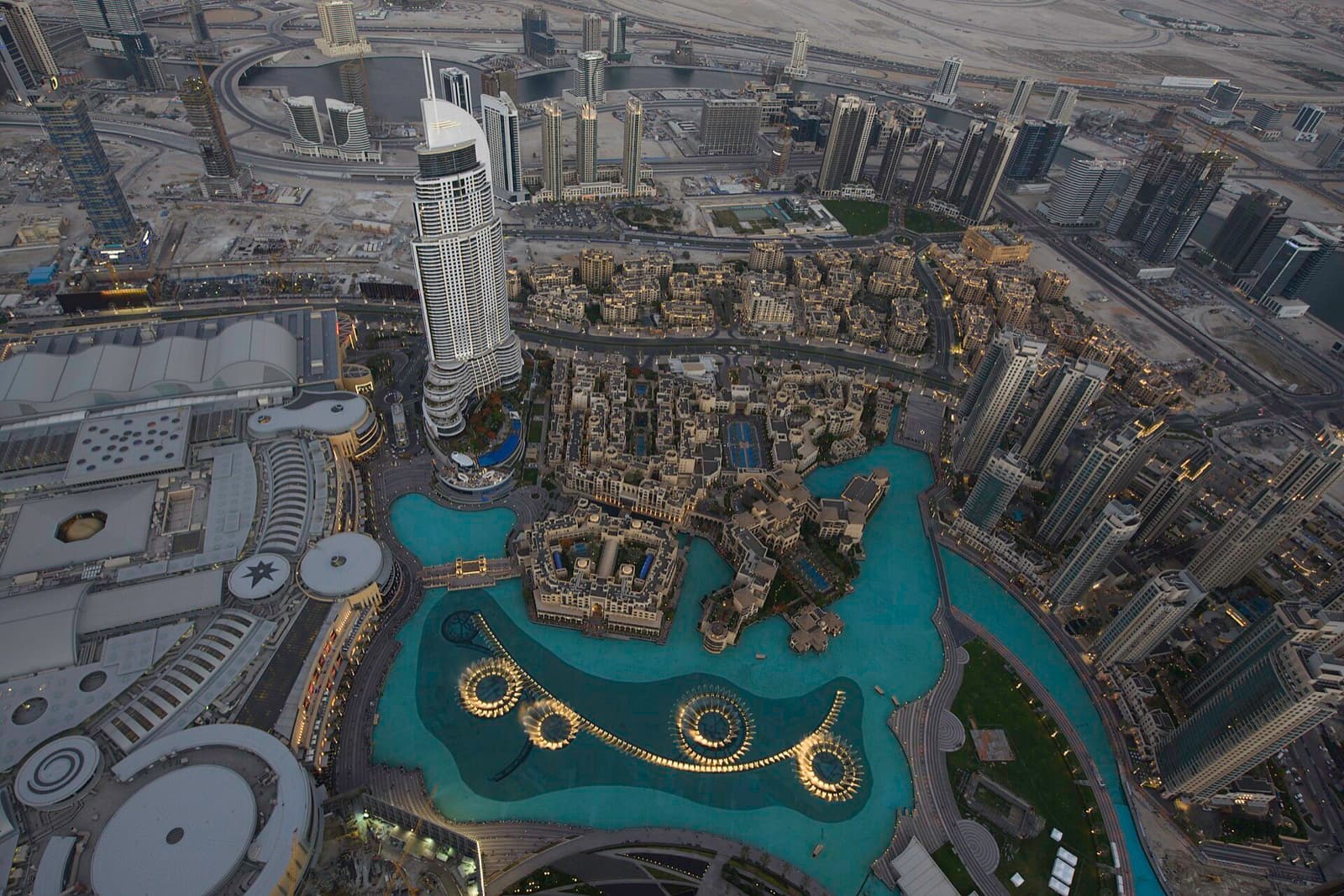
Emaar Boulevard: Reading the Grammar of a City Built All at Once
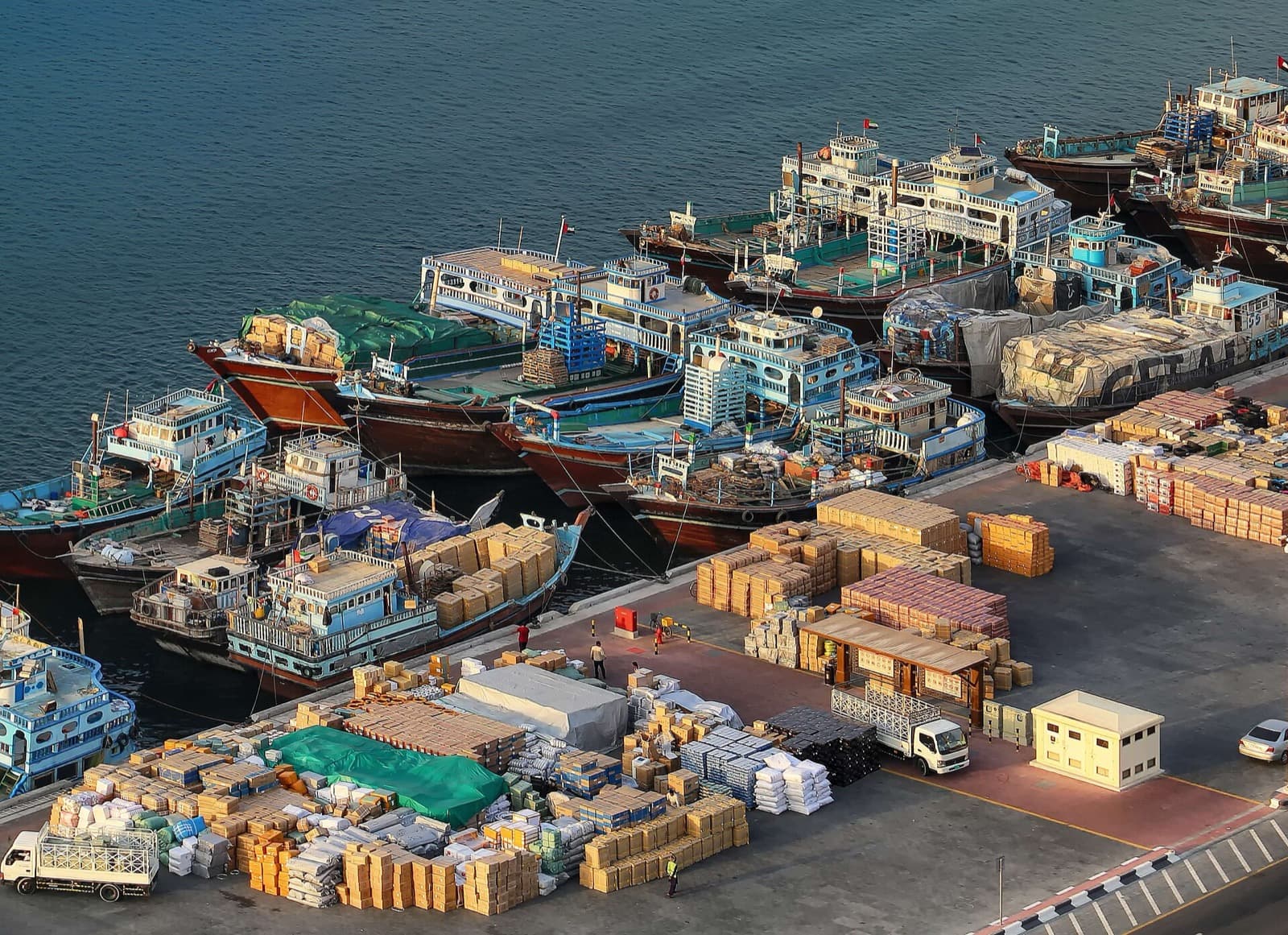
The Dhow Wharfage: Where Old Dubai Still Loads Cargo by Hand
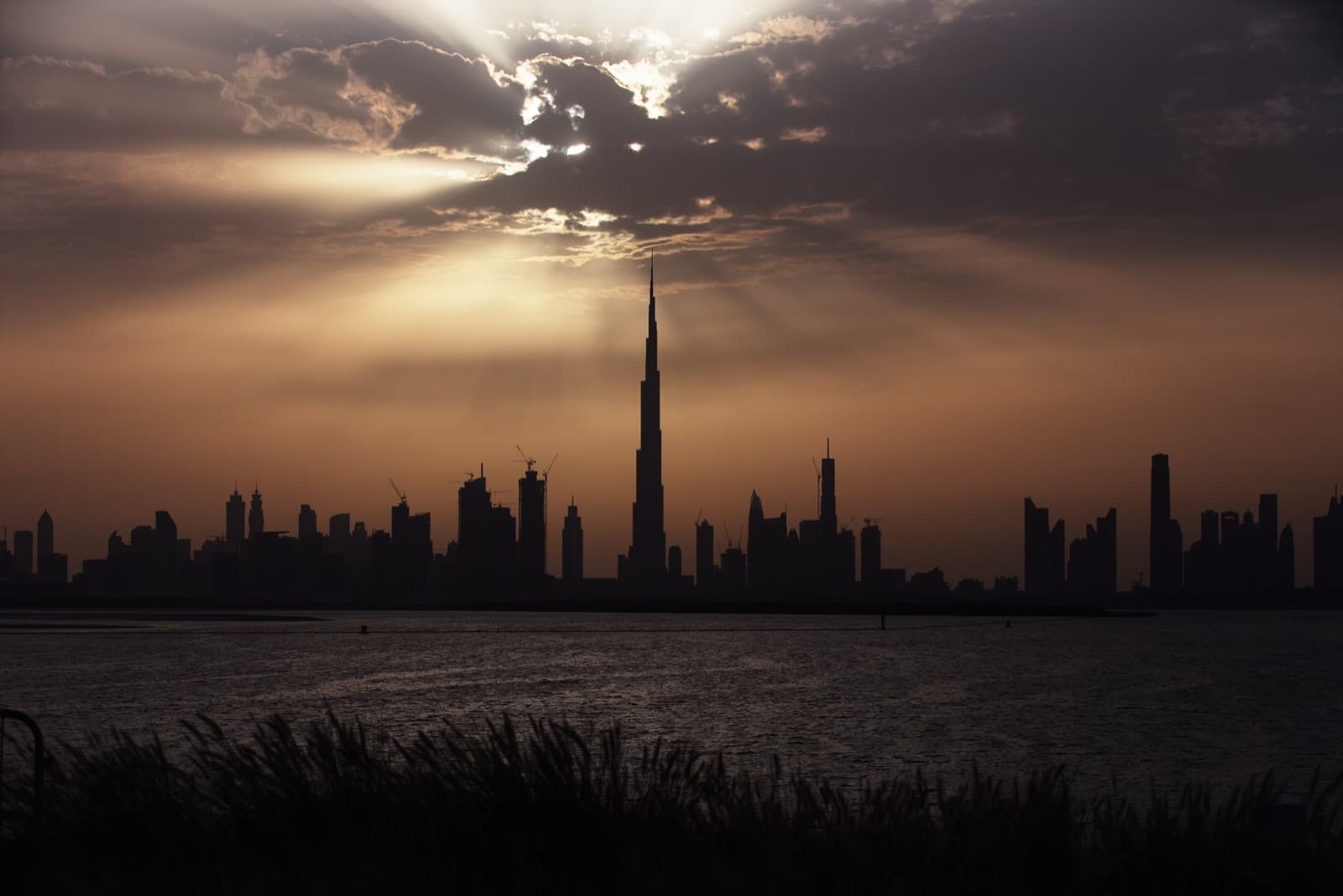
Burj Khalifa: How the Tallest Building on Earth Actually Stands Up